Winter Wedding Invitations: 4 Styles to Compare
Choosing winter wedding invitations is less about finding the most glittering snowflake and more about deciding what your guests should feel when they open the envelope. Do you want a formal evening mood, a warm mountain setting, a clean modern celebration, or a botanical winter scene that feels seasonal without looking like a Christmas card? The right invitation gives guests that answer while making the date, location, dress code, RSVP process, and travel details easy to find.
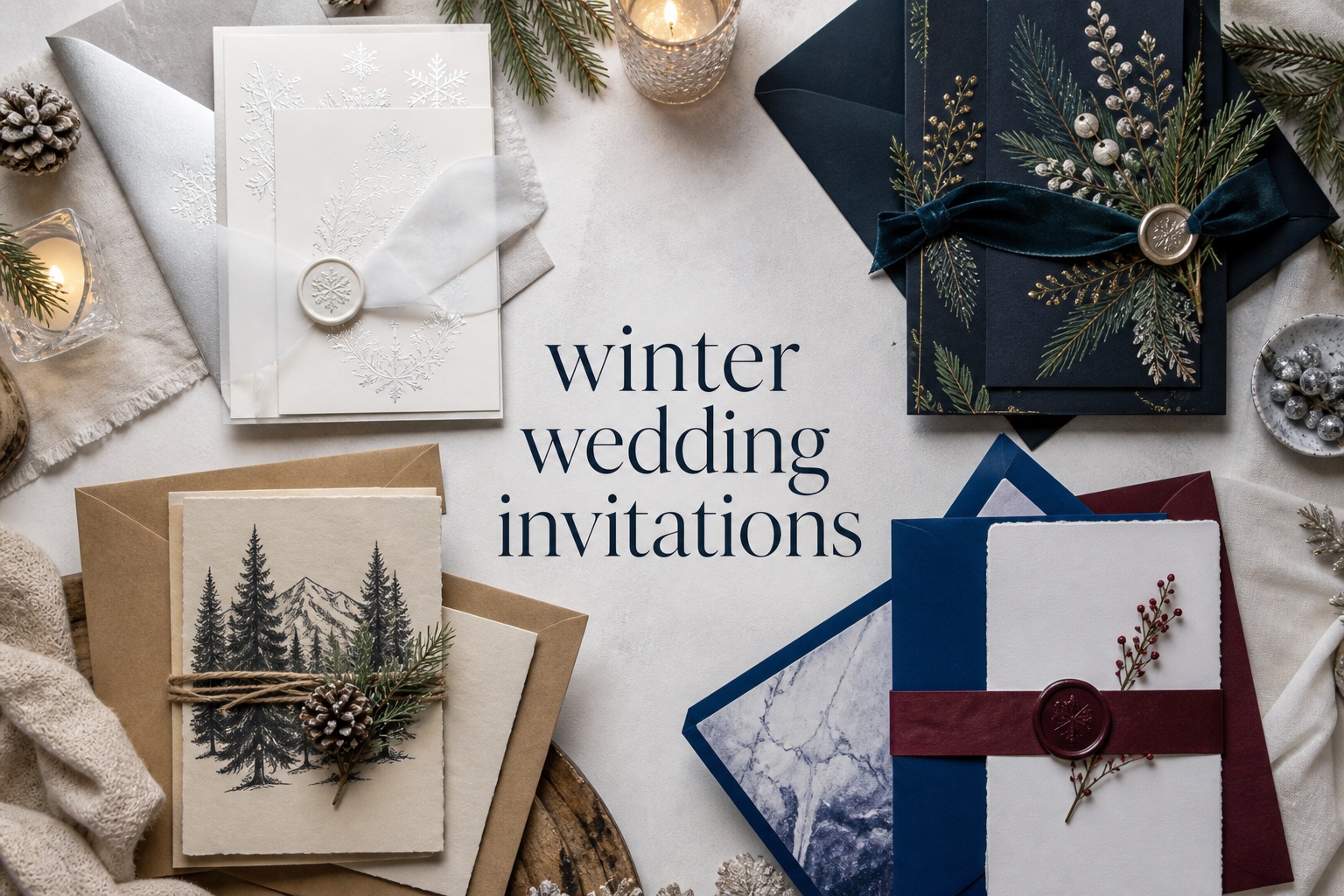
This comparison guide puts four strong directions side by side: frosted formal, dark botanical, cozy lodge, and modern editorial. Each can look beautiful, but each makes different demands on color, paper, typography, construction, budget, and mailing. Use the criteria below to choose a suite that matches the actual wedding rather than simply copying a pretty image.
Start with the winter mood you want guests to understand
Before choosing a palette, write one sentence that describes the experience. For example: “An intimate black-tie dinner in a candlelit hotel,” “a relaxed celebration at a snowy lodge,” or “a January city wedding with clean, architectural details.” That sentence becomes a filter for every stationery decision. If a design looks attractive but does not support the sentence, it is probably the wrong direction.
Winter is a broad visual language. It can mean frost, bare branches, candlelight, evergreen, deep night, velvet, wool, metallic light, or a quiet neutral palette. You do not need to use snowflakes, red and green, or holiday illustrations to make a winter impression. January and February weddings often feel more refined when they use icy blue, smoky gray, midnight navy, plum, pine, ivory, or soft silver instead of a clearly Christmas-centered palette.
Turn wedding inspiration into a plan you can actually follow.
Zarellea brings your guest list, budget, vendors, and day-of details into one shared space — so no beautiful idea gets lost in the shuffle.
Frosted formal
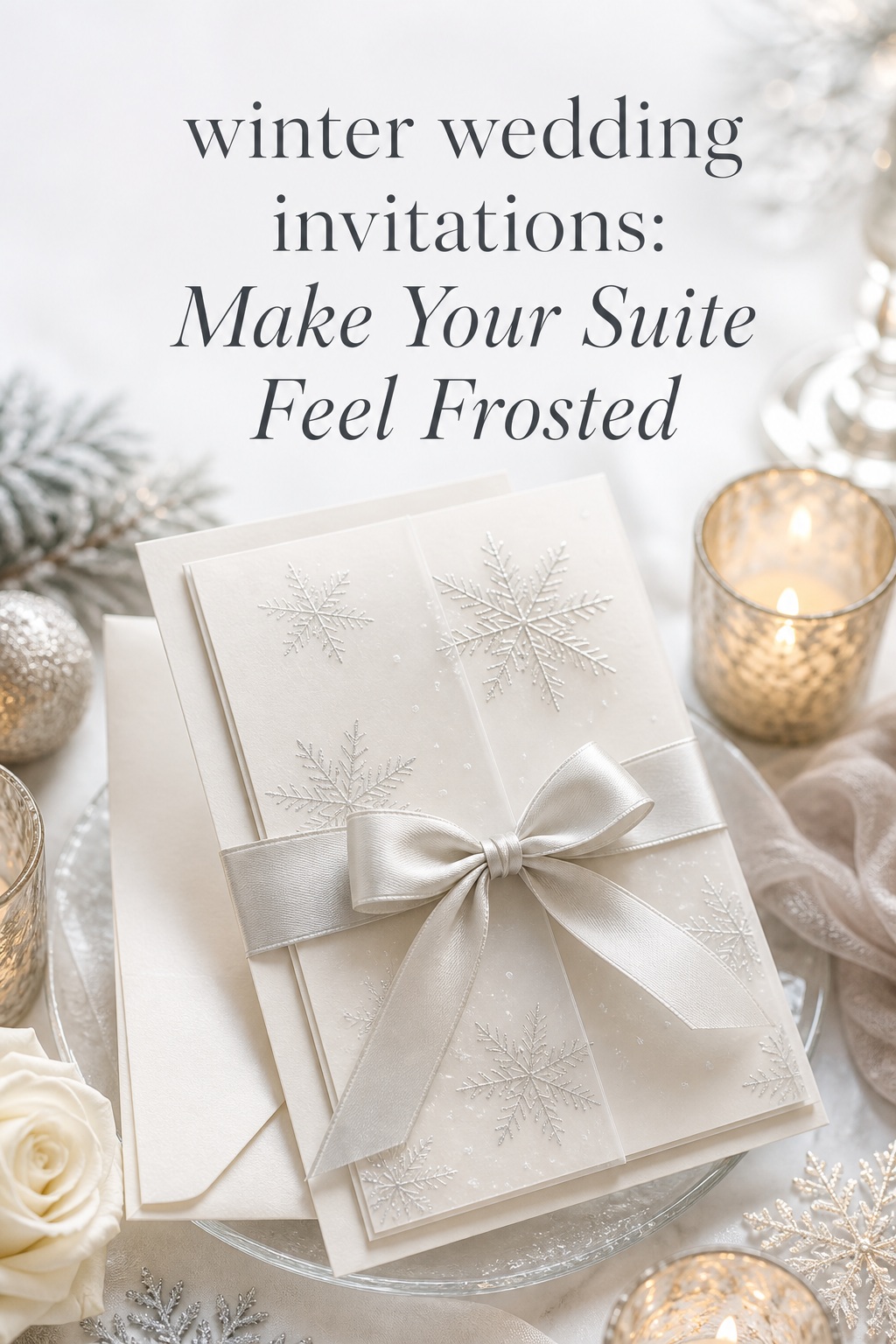
Frosted formal invitations suit a ballroom, historic venue, black-tie dress code, or evening ceremony. Picture substantial ivory or white cotton paper, silver or pale gold foil, a restrained snowflake or branch motif, and typography with plenty of breathing room. A vellum overlay can add a translucent layer that feels like a frozen window, especially when the names are printed in a metallic ink.
This direction is strongest when the materials do the work. Choose one statement detail, such as foil names, a deckled edge, a wax seal, or a gatefold construction. Combining every luxury feature can make the suite heavy, expensive, and difficult to mail. The invitation should still be readable at a glance, so test metallic text in the actual ink and paper combination before ordering the full quantity.
Dark botanical
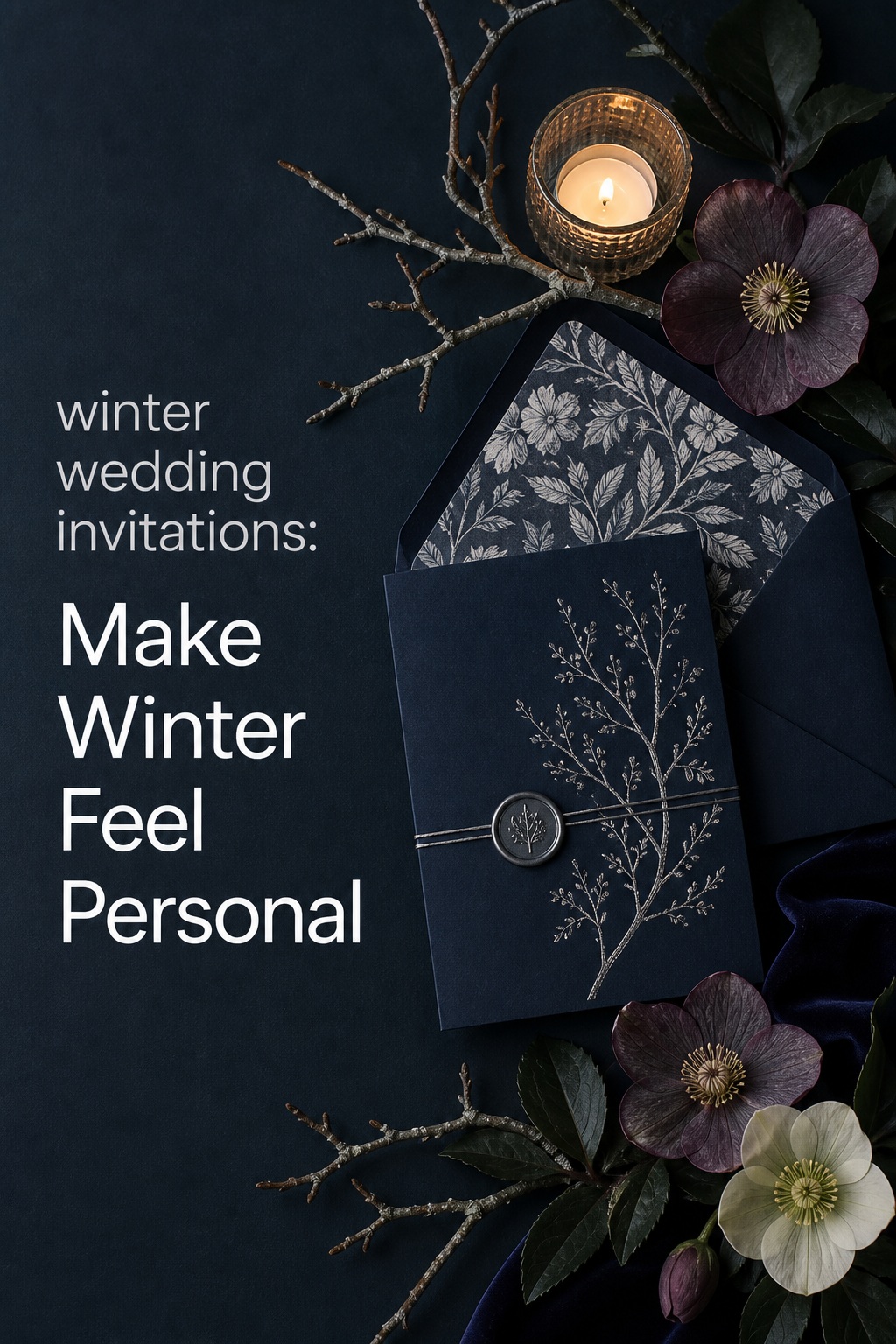
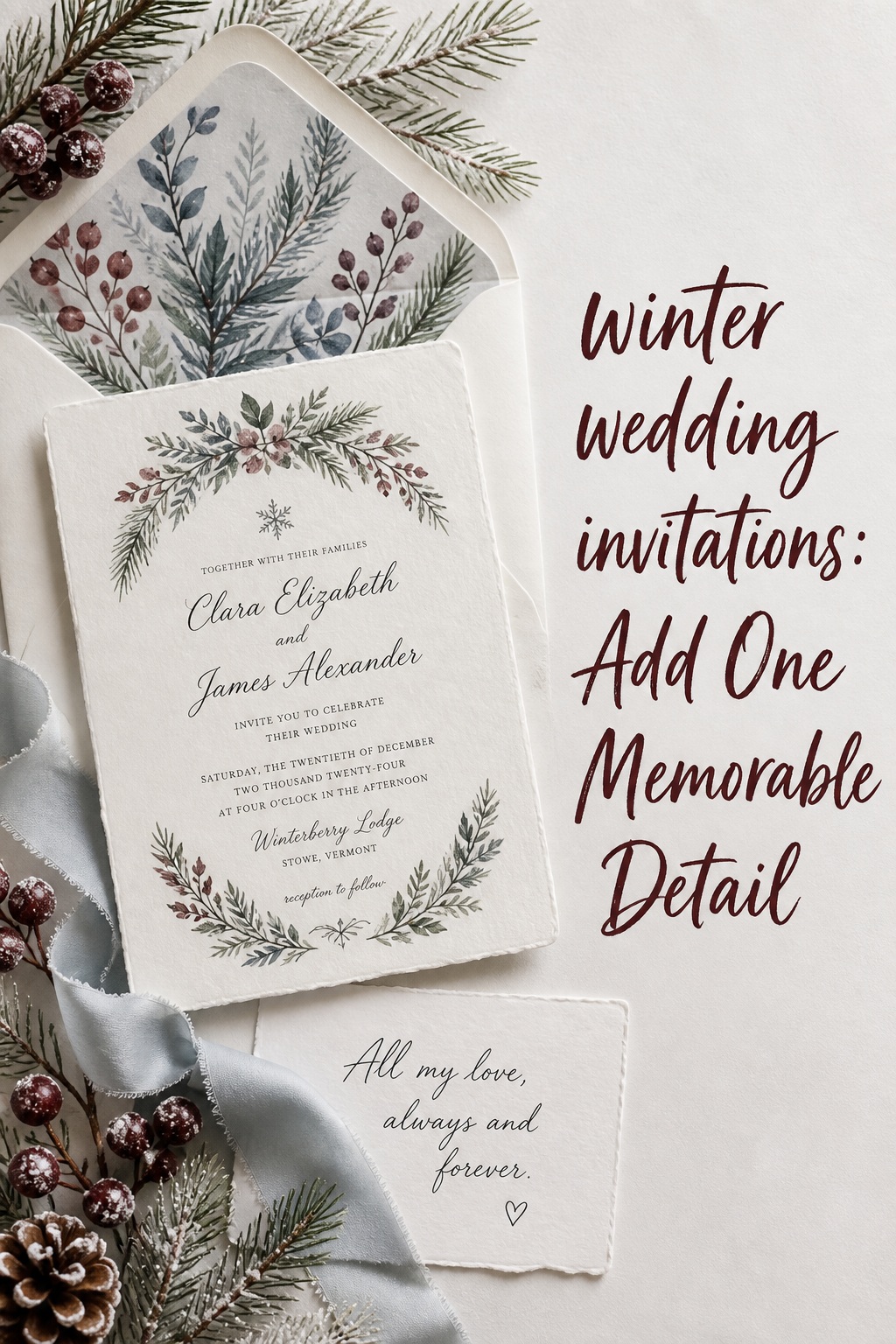
Dark botanical invitations are ideal for couples who want winter atmosphere without an obvious holiday theme. A deep navy, charcoal, forest green, plum, or warm black background can support ivory type and a fine botanical illustration. Bare branches, hellebore, eucalyptus, pine, berries, or abstract leaves bring the season in quietly. This style can feel romantic, editorial, or dramatic depending on the typeface and level of contrast.
Dark paper requires careful proofing. Small script in silver or pale gray can disappear when the card is viewed in low light, and some digital printers handle white ink differently from a screen mockup. Keep the main details in a high-contrast typeface, then reserve a more decorative font for names or one short line. If guests must read the information from a website or phone, make sure the digital version has the same clarity as the physical card.
Cozy lodge
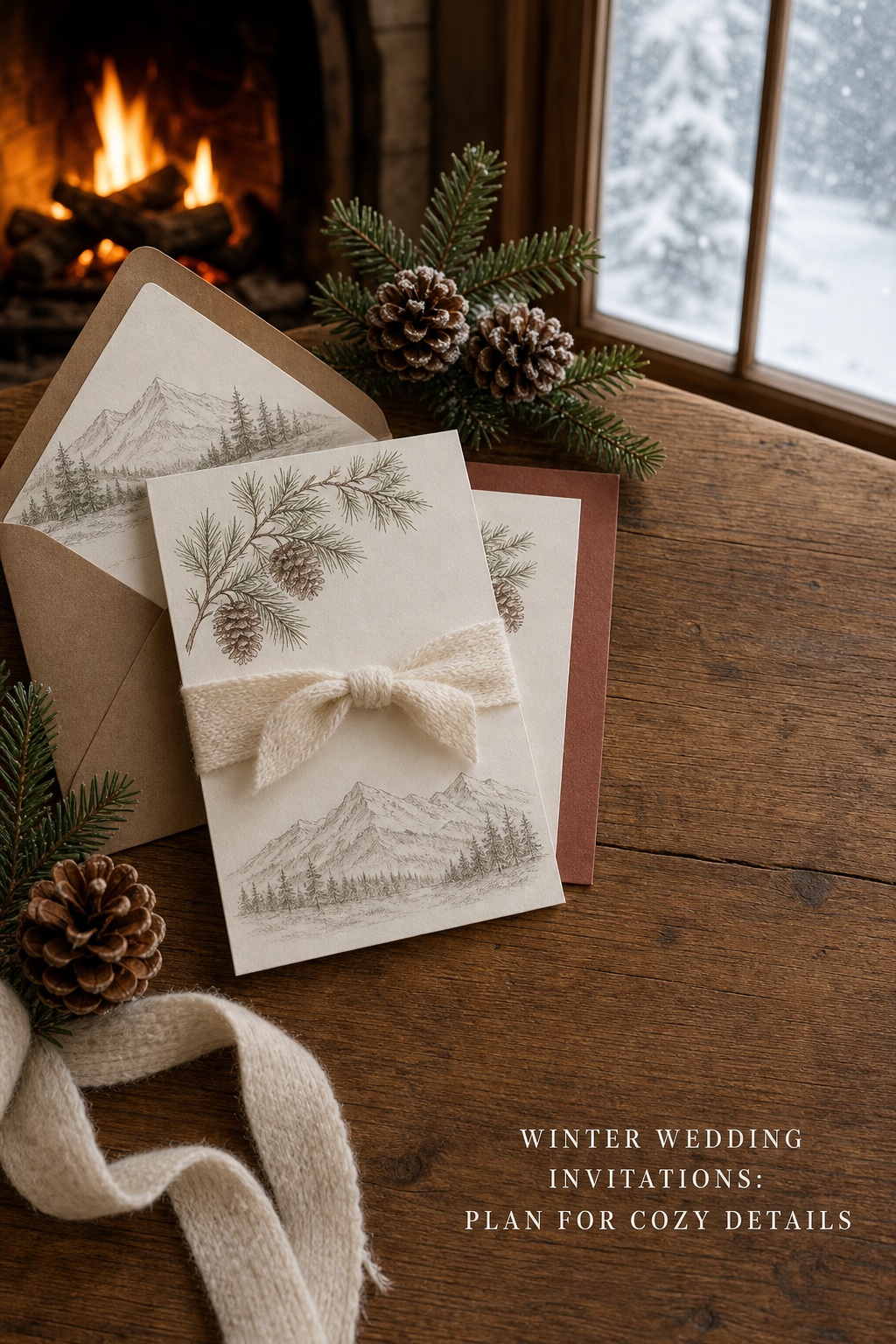
Cozy lodge invitations work for mountain weddings, cabins, ski weekends, heated farmhouses, and celebrations with a relaxed dress code. Warm white paper, kraft accents, woodgrain, illustrated evergreens, pinecones, wool textures, or a hand-drawn venue can make guests feel welcomed before they arrive. The look does not need to be rustic in a rough or overly themed way. A clean illustration with an elegant serif can feel polished while still being personal.
Think about how much information your guests need. A lodge celebration may require accommodation details, shuttle instructions, weather notes, a packing suggestion, and a weekend itinerary. A folded invitation, pocket suite, or separate details card can handle that information more gracefully than shrinking the type. If you choose a textured or handmade paper, confirm that envelopes can be addressed and sealed without cracking.
Modern editorial
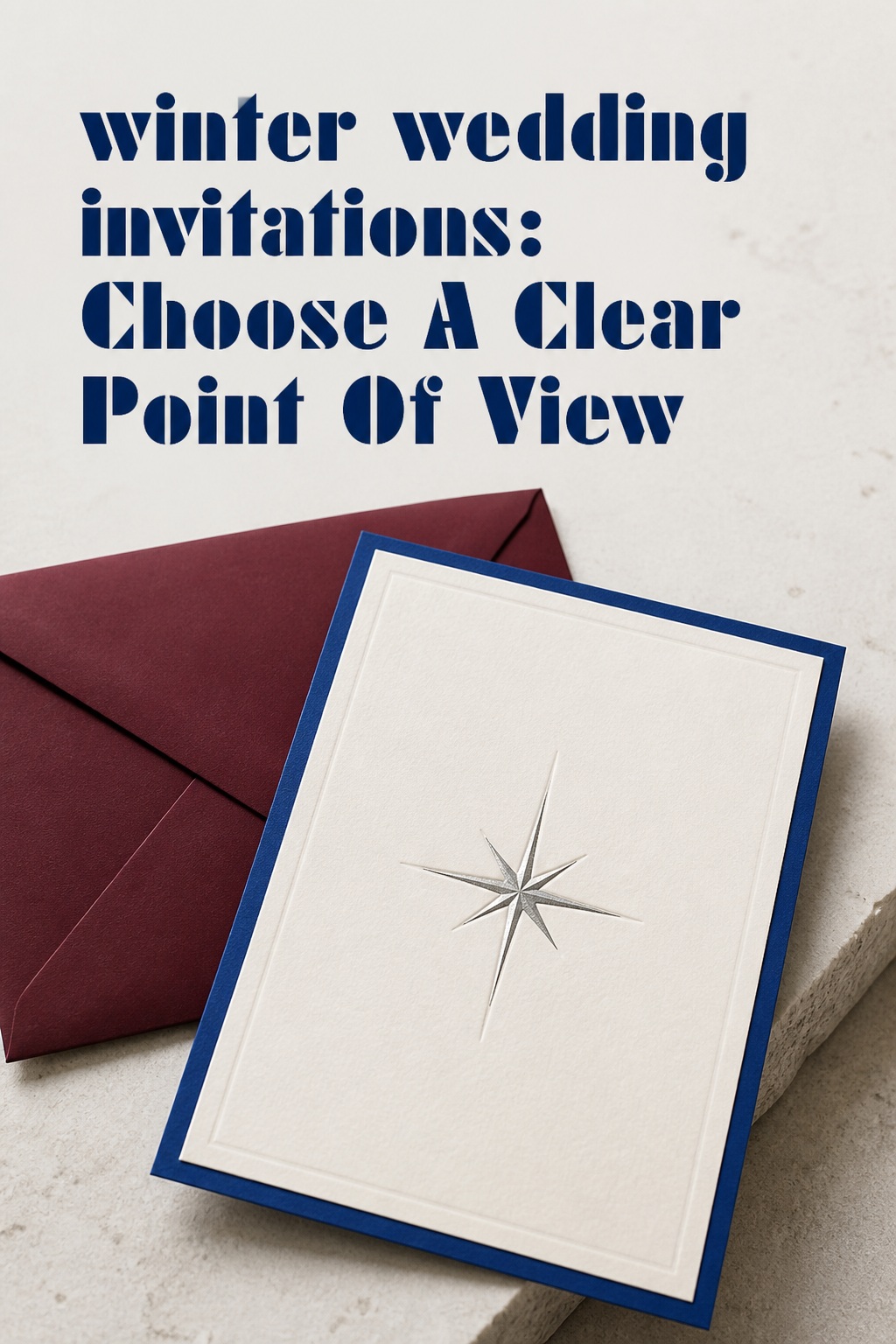
Modern editorial invitations suit a city ceremony, gallery venue, restaurant reception, or couple who prefers design restraint. Start with an unexpected proportion, a narrow border, a single bold color, a sculptural monogram, or typography that feels more like a fashion invitation than a traditional wedding card. Cream and oxblood, cobalt and ivory, pale blue and graphite, or white with one metallic accent can all suggest winter without relying on illustrations.
The danger is making the invitation so minimal that it becomes vague. Guests should not have to decode an artistic layout to learn who is getting married or where to go. Use hierarchy deliberately: names, invitation line, ceremony information, reception information, and response instructions should each have a clear visual role. A modern suite can be distinctive and still be generous to the reader.
Compare paper, printing, and construction before you fall in love with a design
A design is not only a picture. It is an object that will be held, opened, read, photographed, assembled, mailed, and possibly saved. Paper weight changes the way colors appear and the way a suite feels in the hand. Cotton stock gives letterpress a soft, tactile impression. Vellum creates transparency but can reduce contrast. Recycled or handmade paper adds character, yet its fibers can make fine lines look less precise.
Ask your stationer or printer for physical samples, not only digital proofs. Look at the invitation near a window, under warm indoor light, and beside the envelope color. Read it from arm’s length and on a phone photograph. This simple test catches pale type, crowded margins, and metallic details that look impressive online but disappear in person.
Choose a print method that supports the mood
Letterpress creates a pressed impression and works especially well for formal, editorial, and romantic suites. It is beautiful for names, borders, and short lines, but large areas of color or very fine illustrations may need another process. Foil stamping gives a reflective metallic finish that pairs naturally with frosted formal and art deco directions. Digital printing offers flexibility for illustrations, photographs, complex colors, and smaller quantities.
White ink on dark stock can be striking, but it should be proofed carefully for legibility. Flat foil can provide a metallic look with a simpler production process than a deeply pressed foil stamp. If you want several pieces in the suite, use the most special technique where it will have the greatest impact, such as the invitation names or a small monogram, rather than applying it to every card.
Decide whether the construction earns its extra work
Gatefolds, pockets, vellum wraps, belly bands, detachable RSVP cards, and unusual shapes can make a suite feel memorable. They can also increase assembly time, postage, and the chance that a piece will shift or arrive damaged. A belly band is useful when it keeps several cards together. A pocket is worthwhile when guests need a map, weekend schedule, or accommodation card. A special shape is less practical if it requires nonstandard envelopes or adds a surcharge for every household.
Choose construction based on the guest experience. If opening the invitation feels like a small ceremony, the extra layer may be justified. If guests need to find the RSVP deadline quickly, a simpler layout may serve them better. Every decorative element should either create a meaningful reveal, protect the cards, organize information, or make the suite easier to use.
- Best for maximum readability: flat card, high-contrast type, standard envelope, separate details card.
- Best for a formal reveal: gatefold or vellum overlay with one metallic accent.
- Best for a weekend wedding: pocket suite or folded card with clearly grouped logistics.
- Best for a tactile winter mood: cotton, linen, velvet, or textured stock used selectively.
- Best for a smaller guest list: letterpress, custom illustration, or a more labor-intensive assembly detail.
Budget the complete mailed piece rather than the invitation card alone. Include the main card, inserts, envelope, liner, seal, addressing, assembly, postage, extra pieces for mistakes, and a few keepsake copies. A suite that costs less per card can become more expensive after a rigid envelope, irregular size, or heavy enclosure changes the postage category.
Build wording that feels seasonal but stays useful
Winter wording can be warm, poetic, playful, or formal, but the invitation still has a job to do. The first card should answer the essential questions: who is hosting or inviting, who is getting married, what is happening, when it happens, where it happens, and how guests respond. If the celebration is close to Christmas, New Year’s Eve, a religious holiday, or a long weekend, give guests enough context to plan thoughtfully.
Traditional wording remains a good foundation when the event is formal. More relaxed wording can be appropriate for a backyard gathering, destination weekend, or second marriage. The important choice is consistency. A very formal invitation line paired with casual slang can feel accidental, while a friendly opening can work beautifully when the rest of the information is organized and polished.
Use seasonal language as an accent
A short line such as “Join us for a winter evening of dinner and dancing” or “Warm hearts, winter vows” can establish the mood without replacing the details. Keep the seasonal phrase separate from the ceremony information so guests do not mistake it for the date, venue, or dress code. If the wedding is not religious or not connected to Christmas, use language about candlelight, snow, gathering, or the season rather than automatically adding holiday symbols.
For a destination or mountain event, state practical information plainly. Mention whether transportation is provided, whether guests should expect snow or uneven paths, and where the wedding website contains updates. A beautiful invitation should reduce questions, not create a mystery that the couple must solve through individual messages.
Separate invitation facts from weekend information
Keep the main invitation focused on the ceremony and reception. Use a details card or wedding website for hotel blocks, shuttle schedules, attire notes, weather planning, registry information, and extra events. A QR code can be useful, but never make it the only way to access a critical detail. Print the website address in readable type and make sure the page works well on mobile.
Dress code language deserves special care in winter. “Black tie,” “formal,” “cocktail,” and “festive attire” are not interchangeable. If outdoor photographs or a snowy transfer are likely, add a helpful note on the details card rather than crowding the invitation. Guests appreciate guidance that respects the event’s style and the weather they may encounter.
Proof names, dates, and response instructions in layers
Proofing should happen in three passes. First, check the facts against the venue contract, ceremony plan, and guest communication. Second, read the wording aloud for tone and missing words. Third, ask someone who is not involved in planning to find the date, location, attire, and RSVP deadline without help. If that person hesitates, revise the hierarchy before approving the print proof.
Do not rely on decorative typography for essential information. Your names can use a script, but the ceremony time, address, response deadline, and website should be easy to read. Also check honorifics, spelling, accents, middle names, hosted-by language, and whether the wording reflects the couple’s actual preferences. Etiquette is a guide, not a reason to use words that do not sound like you.
Plan the timeline and mailing details around winter realities
Winter weddings often involve travel, holiday calendars, weather concerns, and limited vendor availability. Work backward from the date your guests need to respond, not only from the day you hope to put invitations in the mailbox. A local wedding may use a six to eight week invitation window, while a destination wedding or holiday weekend usually deserves more notice. If you skip save-the-dates, give guests additional time to organize travel and time off.
For a January or February wedding, save-the-dates commonly go out several months earlier, especially when many guests will fly or reserve lodging. Invitations can follow the usual schedule if the save-the-date already gave everyone the date. If your guest list includes many people who need winter travel plans, move the entire schedule earlier and make the website useful as soon as the save-the-date is sent.
A practical backward planning schedule
Start by asking your caterer and venue when final guest numbers are due. Set the RSVP deadline early enough to contact nonresponders, confirm meal counts, and resolve address questions. Then allow time for printing, assembly, addressing, postage, and delivery. A winter mailing can be delayed by holiday volume or severe weather, so avoid treating the postal date as the arrival date.
- Six to twelve months before: choose the visual direction, guest information needs, paper, printer, and website basics.
- Six to eight months before: send save-the-dates for a local wedding, earlier when travel or a holiday weekend is involved.
- Four to six months before: finalize wording, addresses, venue details, inserts, and the RSVP method.
- Ten to twelve weeks before: mail invitations for a destination event, holiday weekend, or guest list with substantial travel.
- Six to eight weeks before: mail invitations for many local or regional weddings, assuming save-the-dates were sent.
- Three to four weeks before the wedding: set the RSVP deadline, adjusted to your vendors’ final-count requirements.
- After mailing: monitor returned envelopes, update the website, and contact guests who need a clearer travel or weather note.
Order extra envelopes and keep a small number of complete suites for your records. Before mailing, weigh and measure the assembled invitation at the post office or with your postal provider. Wax seals, square envelopes, rigid layers, and unusual thickness can change postage. If a design is especially delicate, ask whether an outer envelope or protective wrap is worthwhile.
Make the final choice with a comparison scorecard
When two designs are competing, score each one from one to five for five categories: fit with the venue, clarity of essential information, guest travel support, production and postage practicality, and emotional connection. The best invitation does not need a perfect score in every category, but it should not fail the category that matters most for your event. A lodge wedding with extensive travel needs a strong logistics score. A small black-tie dinner may justify a higher production score.
Look at the full suite together, including the envelope and details card. The invitation should create anticipation, the inserts should answer questions, and the package should arrive in good condition. If the design is beautiful but the words are cramped, simplify the construction. If the wording is perfect but the suite feels generic, add one meaningful visual detail instead of several unrelated decorations.
Winter wedding invitations are most successful when the season is a point of view rather than a costume. Frosted formal, dark botanical, cozy lodge, and modern editorial can all be elegant. Choose the direction that tells the truth about your venue, your guests, and the kind of day you are building. Then give every material, line of text, and mailing decision the same job: make the celebration feel inviting before it begins.
FAQ
When should I send winter wedding invitations?
For a local or regional wedding, six to eight weeks before the date is a common planning window when guests already received save-the-dates. Send them around ten to twelve weeks ahead for a destination wedding, a holiday weekend, or a guest list with significant travel. Work backward from your RSVP deadline and vendor requirements.
Do winter wedding invitations have to use snowflakes?
No. Evergreen, bare branches, candlelight, velvet, deep color, metallic details, celestial motifs, and textured paper can all create a winter mood. Choose the visual cue that fits your venue and avoid adding snowflakes if they make the suite feel less personal.
How can I make a winter invitation feel seasonal without looking like Christmas?
Use winter elements that are not tied to one holiday, such as icy blue, smoky gray, midnight navy, plum, ivory, evergreen, frost textures, branches, stars, or candlelight. Keep the typography and wording focused on the wedding rather than on holiday symbols.
What paper is best for winter wedding invitations?
There is no single best paper. Cotton stock feels substantial and works well for letterpress. Textured or handmade paper adds warmth to a lodge or botanical suite. Vellum creates a frosted layer, while dark stock can support a dramatic design. Request physical samples and test readability before ordering.
Should I include a details card with my winter invitations?
A details card is especially helpful when guests need hotel, transportation, weather, attire, or weekend information. Keep the main invitation focused on the ceremony and reception, then use the details card and website to organize supporting information without shrinking the type.
Can I use a QR code on a winter wedding invitation?
Yes, a QR code can make the wedding website easy to reach, particularly for travel updates and online RSVPs. Do not make it the only way to access important details. Print the website address too, test the code on the final paper, and make sure the landing page works well on a phone.
Do wax seals affect winter invitation postage?
They can. A wax seal, rigid enclosure, square envelope, or unusual thickness may change how the piece is processed and priced. Assemble a complete sample and have it weighed and measured before purchasing postage for the full mailing.
What information should go on a winter wedding website?
Include the schedule, venue address, travel and hotel information, transportation, attire guidance, weather planning, accessibility notes, RSVP instructions, and updates. For a destination or mountain wedding, add realistic guidance about roads, transfers, footwear, and winter conditions.