Asian Bridal Dresses: A Practical Choice Checklist
Choosing Asian bridal dresses is less about finding one universally perfect gown and more about making a series of thoughtful decisions. The right outfit may be a lehenga, saree, qipao, qun kwa, hanbok, áo dài, kebaya, bridal kimono, or a modern design that borrows from your own heritage. It should look beautiful in photographs, respect the meaning of the ceremony, and let you move through a long wedding day without constantly adjusting it.
This checklist is designed for brides planning an Asian wedding, a multicultural celebration, or several ceremonies in the United States. It keeps the focus on your culture and family rather than treating Asian bridal fashion as one single category. Work through the decisions in order, then use the final review before you place an order or approve a custom design.
1. Set the Brief Before You Shop
Start with the wedding-day facts that will shape the outfit. A dress selected for a short indoor tea ceremony has different requirements from one worn through a full outdoor ceremony, dinner, dancing, and a formal portrait session. Write the answers down before opening a shopping app. This prevents attractive details from making the decision for you.
Confirm which tradition you want to represent
First identify the cultural reference, region, and family expectation behind your look. A Chinese qipao is not the same garment as a South Asian lehenga, and a Korean hanbok should not be described as a generalized Asian dress. If your family uses a regional name, ask which spelling and garment details they prefer. This small conversation can prevent a costly mismatch between an online description and the outfit your relatives recognize.
Turn wedding inspiration into a plan you can actually follow.
Zarellea brings your guest list, budget, vendors, and day-of details into one shared space — so no beautiful idea gets lost in the shuffle.
It is also fine to choose a contemporary interpretation. Cultural respect does not require copying an outfit from a museum photograph. It does require understanding which parts carry meaning, then deciding which parts you want to preserve. Keep a reference folder with family photographs, ceremony notes, and examples from designers who work within the tradition.
Match the outfit to each ceremony
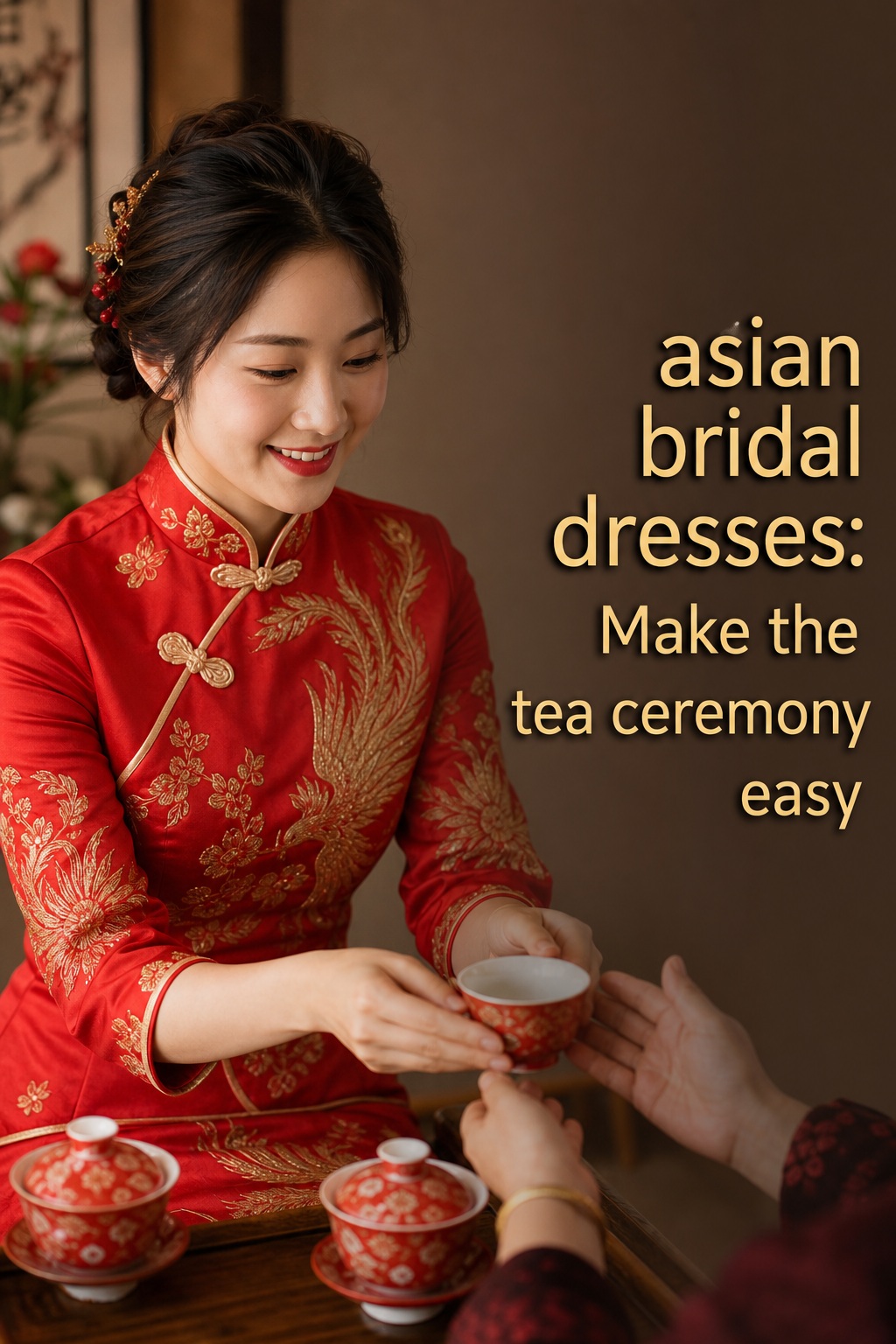
- Tea ceremony: Prioritize a culturally specific outfit that is easy to stand, kneel, greet elders, and serve tea in.
- Religious or traditional ceremony: Check sleeve, neckline, hem, head covering, and color expectations before finalizing the design.
- Western ceremony: Choose whether your cultural look comes first, follows the gown, or appears as a second look.
- Reception: Consider a silhouette that supports dinner, photographs, table visits, and dancing without a heavy train.
- Portrait session: Use embroidery, a cape, jewelry, or a dramatic color if this is the moment you want the most visual impact.
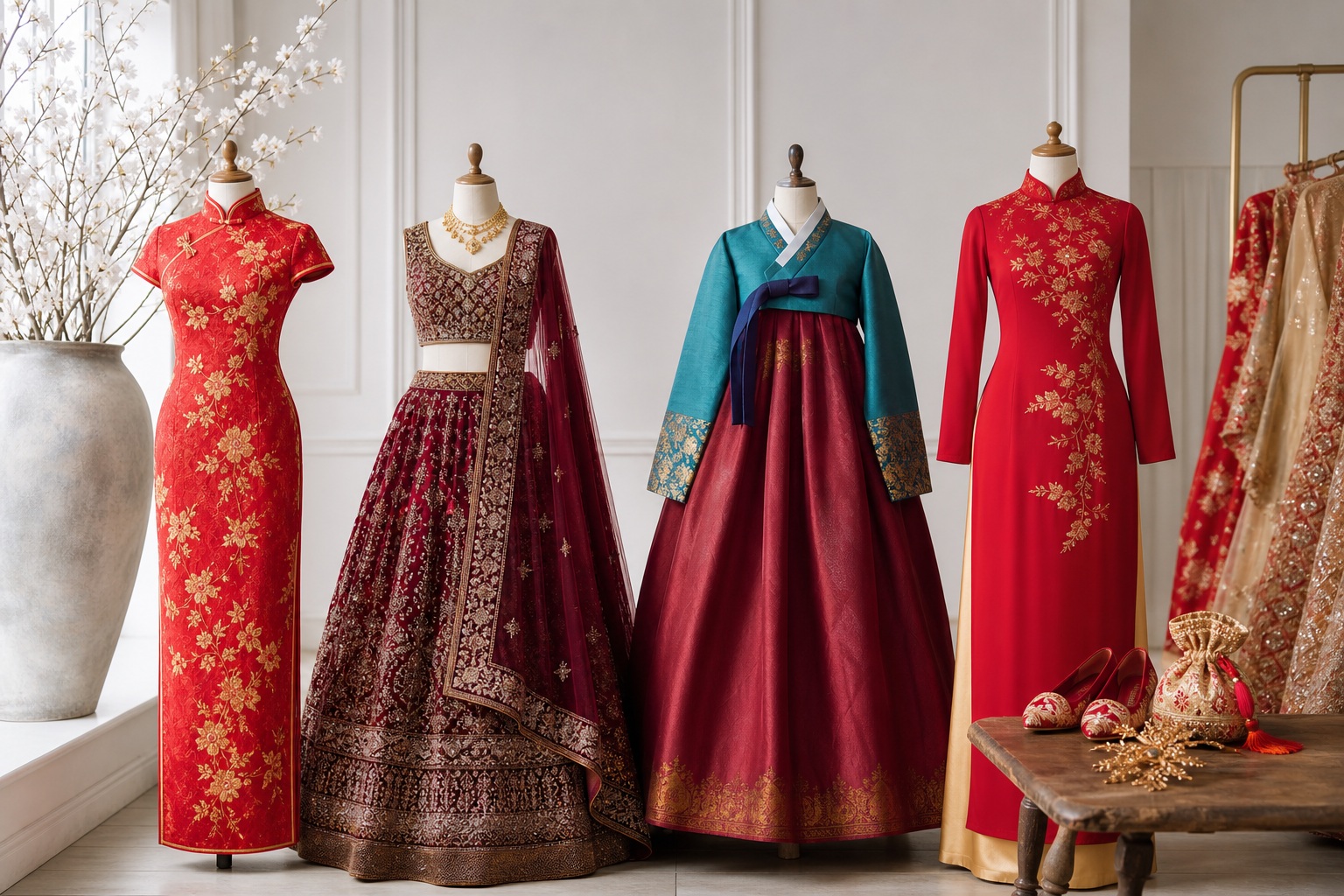
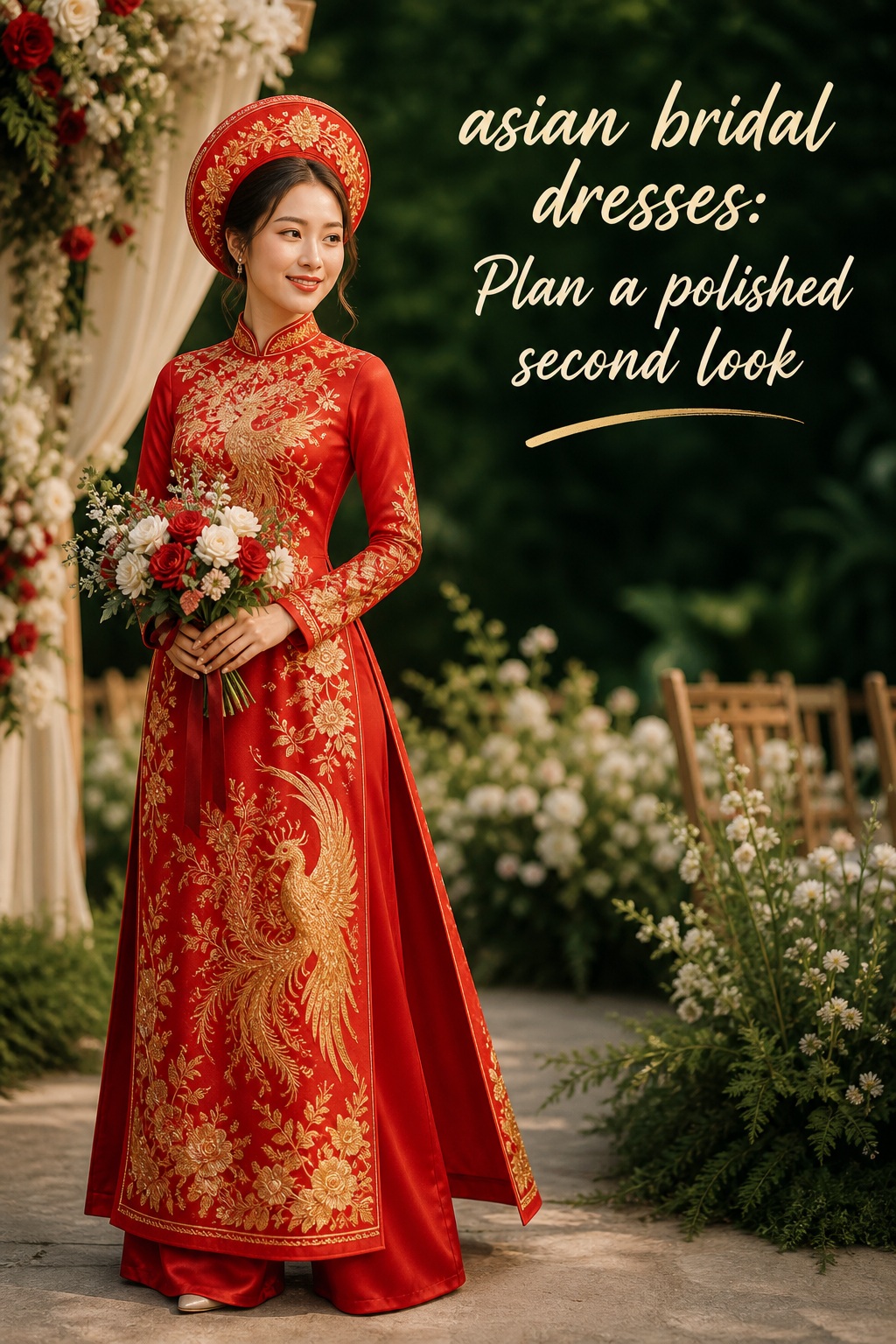
Many couples wear two or more looks. A Chinese bride may choose a qun kwa for the tea ceremony and a qipao for the reception. A Korean American bride may wear a white gown for the ceremony and a hanbok for paebaek. A Vietnamese bride may wear an áo dài for the family procession, then change for the main reception. The sequence is yours, but each outfit should have a job.
Write down movement, weather, and venue constraints
Note whether you will walk on grass, climb stairs, sit on a low platform, kneel, travel between venues, or dance for several hours. Measure the doorway and aisle width if you are considering a very full skirt. For a summer wedding, silk, cotton blends, breathable lining, and strategic ventilation may matter more than an extra layer of beading. For a winter event, plan a shawl, cape, lined coat, or warm underlayer without hiding the key details of the garment.
2. Compare the Main Asian Bridal Directions
Once the brief is clear, compare silhouettes by what they do rather than by how dramatic they look online. The most useful questions are: How does the garment fit? Which ceremony suits it? How much tailoring does it need? What accessories complete it? The following overview gives you a starting point while leaving room for regional differences.
South Asian lehengas and sarees
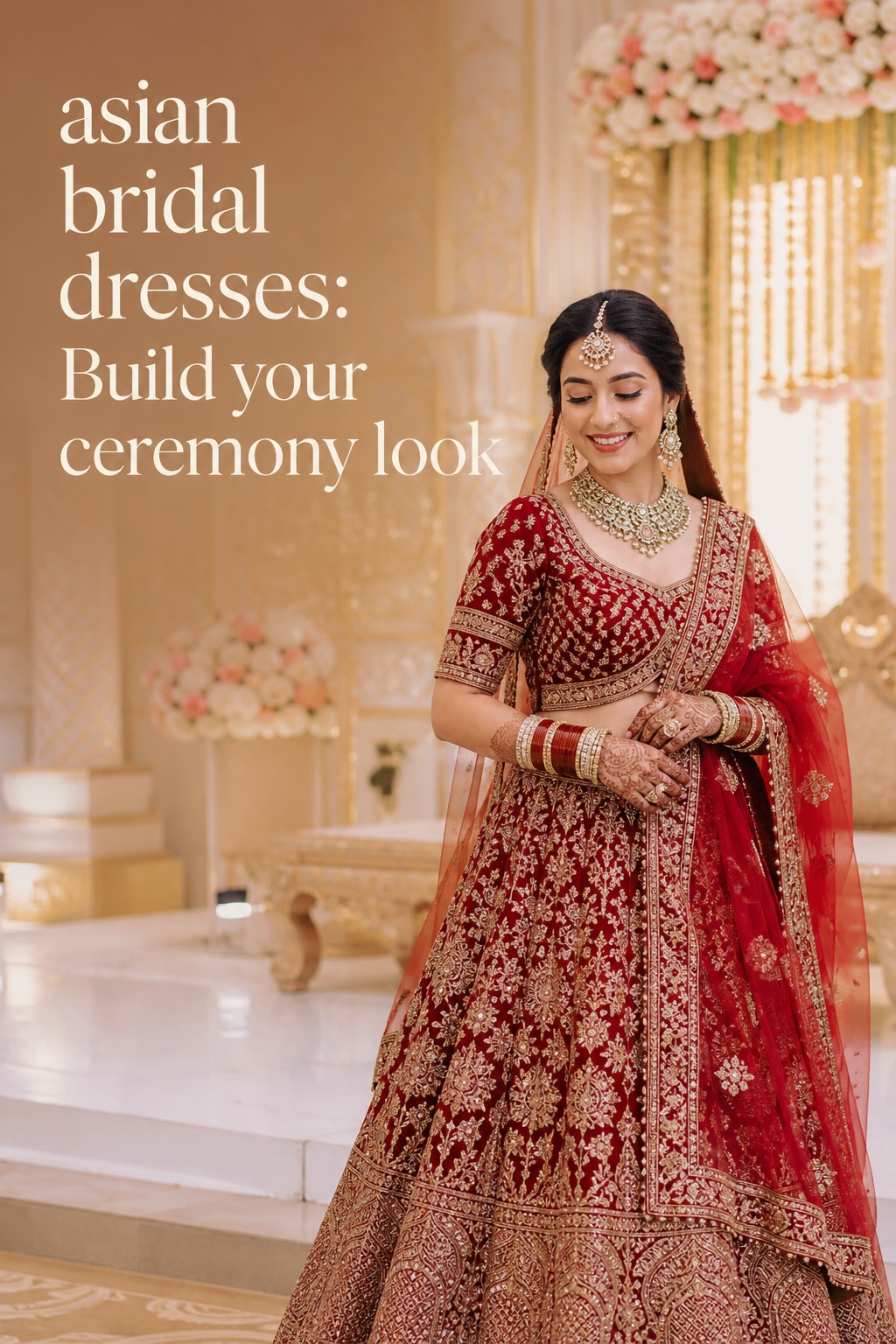
A lehenga usually combines a blouse or choli, a full skirt, and a dupatta. It creates a clear three-part outfit, so you can adjust the amount of coverage, structure, and embellishment in each component. A saree offers a different kind of movement: the drape creates a long line, but the pleats, pallu, and blouse fit need careful styling. Red remains important in many South Asian bridal traditions, although jewel tones, blush, champagne, ivory, and pastels are also common choices.
For a lehenga, check the skirt weight and waistband comfort first. Sit down in the complete outfit, walk up stairs, and test the dupatta fastening. For a saree, have the drape pinned by someone who understands the intended style, then practice walking and using the restroom. A lightweight reception saree or pre-stitched drape can be a practical second look without losing the visual language of the outfit.
Chinese qipaos, qun kwas, and modern fusion
A qipao, also called a cheongsam, is generally a fitted one-piece dress with a high or mandarin collar, side opening, and precise construction. A qun kwa is a two-piece jacket and skirt set often associated with southern Chinese weddings, with elaborate embroidery and symbolic motifs. A xiuhefu is a more modern embroidered jacket-and-skirt direction. These choices are visually distinct even when they share red and gold coloring.
The qipao rewards an accurate measurement and a fitting plan because the silhouette is close to the body. Ask for a comfortable walking slit, sleeve mobility, and a closure that can be handled quickly. A qun kwa gives you more ease through the skirt and can feel comfortable for a tea ceremony. Modern options may use ivory silk with red embroidery, a simpler gold motif, a detachable overskirt, or a Western neckline while retaining Chinese textile and fastening details.
Japanese kimono and Korean hanbok
Japanese bridal kimono is a layered system rather than one Western-style gown. Shiromuku is an all-white formal look, iro-uchikake uses a colored embroidered outer layer, and hikifurisode is a long-sleeved kimono without the same overcoat structure. The choice changes the visual mood and ceremony context. Because the layers, obi, sleeves, and headwear create the shape, use a specialist dresser or rental studio if you are unfamiliar with the process.
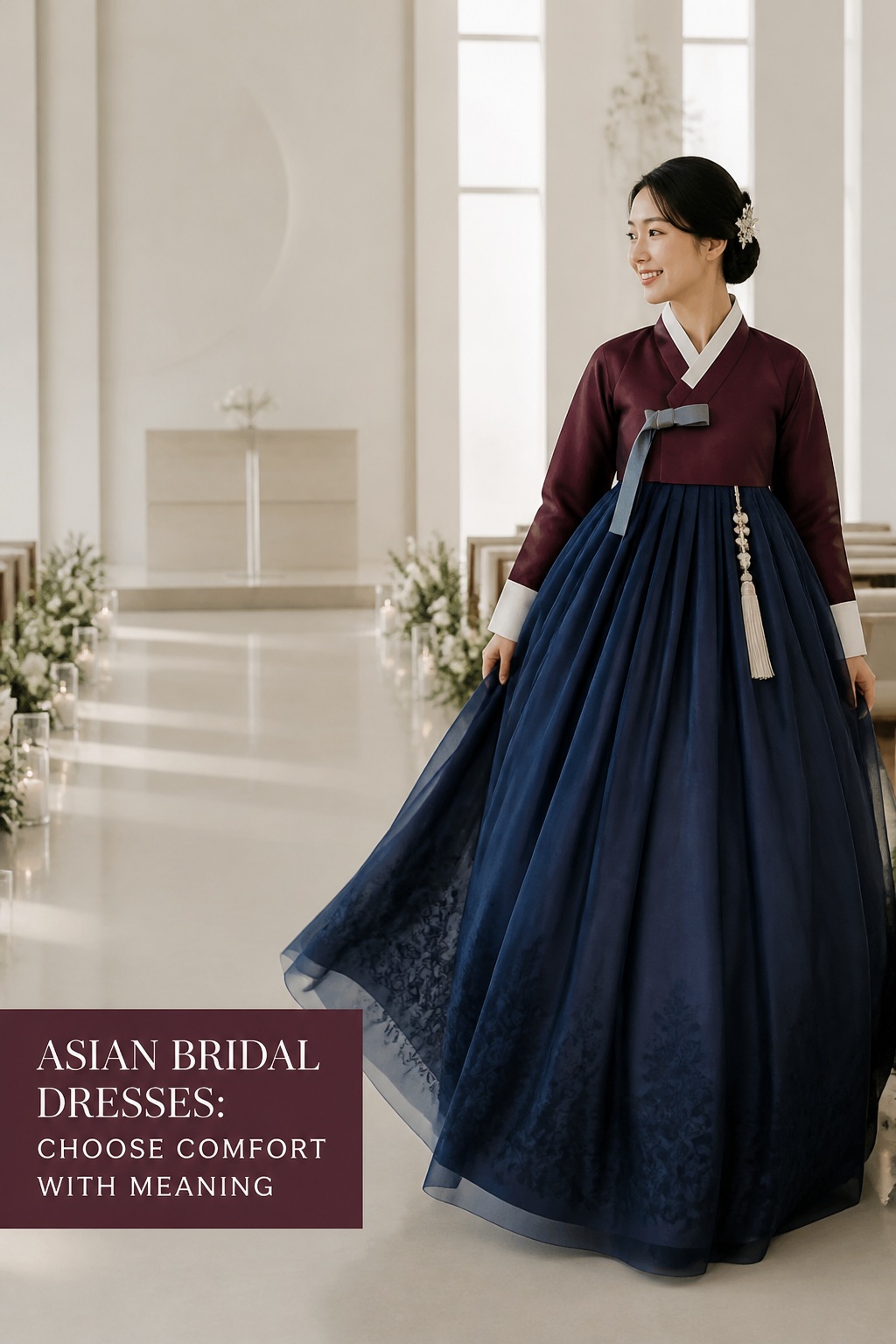
Hanbok typically pairs a jeogori jacket with a high-waisted chima skirt. The skirt gives generous movement, while the jacket and sleeve proportions need careful attention. For a Korean wedding or paebaek, ask about the appropriate colors, headpiece, shoes, and bowing movements. A rental can be an excellent way to wear a meaningful look for one portion of the day, especially when a custom garment would exceed your budget or timeline.
Vietnamese áo dài, Thai silk, and Indonesian kebaya
An áo dài is a fitted long tunic with front and back panels worn over trousers. It creates a graceful vertical line and can be made in red, gold, white, jewel tones, or soft modern shades. Check the length of the panels, the opacity of the fabric, and the waistband of the trousers. Practice walking in the full set, because the tunic should move elegantly without restricting your stride.
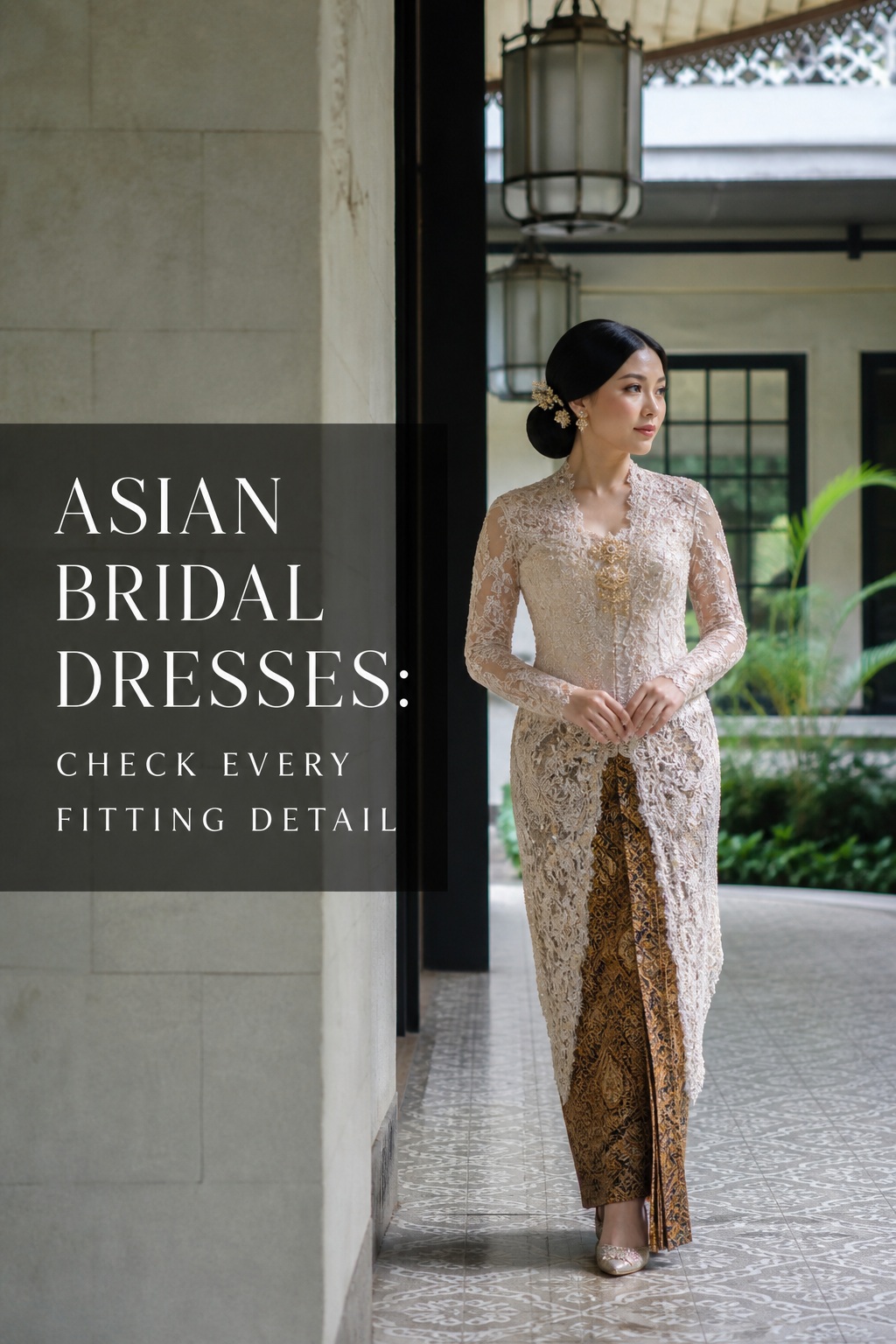
Thai bridal directions may use a wrapped skirt or sarong with a matching sabai shoulder drape, often in silk with metallic thread or beadwork. Indonesian bridal looks may include a fitted kebaya top with a long skirt, lace, sequins, embroidery, or batik. These descriptions are starting points, not a substitute for regional advice. Ask a family member or specialist designer which form is appropriate for your ceremony and community.
3. Build the Look Around Real Decisions
After narrowing the direction, use a decision checklist instead of chasing every beautiful detail. A successful outfit balances meaning, proportion, comfort, photography, and cost. If one element becomes very elaborate, simplify another. The goal is a coherent bridal look that still feels like you when the wedding day is busy.
Choose color with intention
Color can carry family, religious, regional, and personal meaning. Red and gold are strongly associated with happiness, prosperity, and good fortune in many Chinese and South Asian wedding contexts, but the meaning is never identical across every community. White may be formal and beautiful in one setting and sensitive in another. Ask your family rather than relying on a generic color chart.
For a modern palette, choose one anchor color and two supporting tones. A red qipao can use antique gold and warm ivory in the accessories. A jewel-toned lehenga can use a quieter dupatta and metallic shoes. A blush áo dài can keep the embroidery traditional while the base color feels contemporary. Photograph fabric swatches in daylight and under the venue lighting before you approve the final shade.
Prioritize the details that photographs will show
- Place major embroidery where it will remain visible when seated or holding a bouquet.
- Check that the collar, neckline, and shoulder details are not hidden by hair or jewelry.
- Use a veil, dupatta, cape, or shawl to create movement in portraits without adding unnecessary weight.
- Choose motifs that are meaningful to your family or region instead of adding symbols only because they are trending.
- Ask the photographer for full-length, close-up, seated, and movement references before the final fitting.
Remember that phone photographs often compress detail. Dense tonal embroidery can disappear from a distance, while a clear border, strong sleeve shape, or contrasting drape reads immediately. If the design is intricate, make sure the silhouette still has a visible outline.
Plan accessories as part of the outfit
Do not leave accessories until the week before the wedding. A qipao may need a hair ornament and specific earrings. A hanbok may call for a headpiece and embroidered shoes. A lehenga may depend on the dupatta arrangement, bangles, necklace length, and footwear. An áo dài may look unfinished without the appropriate headwear or a coordinated trouser color. Build a complete look on one appointment day and photograph it from every angle.
Comfort matters here too. Test the weight of a bridal crown, the grip of shoes, and the security of hairpins. If you will change outfits, decide which jewelry can transfer between looks. A small set of dependable pieces often photographs better and feels more personal than wearing every accessory at once.
4. Shop, Tailor, and Schedule Without Surprises
The shopping method should match the complexity of the garment. Online shopping can offer access to specialist designers and lower prices, while a local boutique gives you fabric, fitting, and alteration support. Neither path is automatically better. The important part is knowing what you are responsible for after the purchase.
Set a realistic timeline
Begin with a broad search at least six to nine months before the wedding when possible. Custom work, international shipping, multiple ceremonies, and complicated embroidery can require more time. Korean hanbok buying guides commonly recommend starting four to six months ahead, while any overseas order also needs a buffer for customs and local tailoring. A ready-to-wear piece still needs time for fitting, steaming, and backup planning.
- Six to nine months out: confirm culture, ceremony sequence, budget, designer, and approximate colors.
- Four to six months out: place a custom order or reserve a rental; schedule the first fitting.
- Two to three months out: confirm shoes, undergarments, jewelry, and movement adjustments.
- Two to four weeks out: complete the final fitting, steam the outfit, and practice each ceremony movement.
- Wedding week: pack every look by ceremony, with pins, fashion tape, sewing supplies, and a named dresser or helper.
Budget for the invisible costs
Compare the full price, not only the garment listing. Add shipping, customs, rush fees, local alterations, pressing, petticoats, shapewear, shoes, jewelry, rental deposits, and return postage. A lower-cost outfit that needs extensive reconstruction may be less economical than a better-sized piece. Ask for a written quote with the fabric, embroidery, lining, closures, timeline, and alteration policy.
For a one-hour ceremony look, renting can make sense. For an outfit you want to preserve or pass down, purchase or custom work may be worth the investment. If you are planning several looks, allocate the largest budget to the garment that carries the greatest cultural or emotional importance, then simplify the others.
Verify fit through movement, not only standing photos
At every fitting, sit, walk, turn, raise your arms, bow, kneel if required, and hold the bouquet or tea set you will actually use. Check whether the collar rubs, the sleeve pulls, the waist shifts, or the hem catches under your shoes. Wear the undergarments and intended footwear to the final fitting. A skilled tailor can preserve the design while improving mobility, but only if you describe the actual problem.
Keep a photo of the finished outfit and a written dressing order. Include which layer goes first, where the pins sit, and how the train or drape is managed. This turns a complex wedding morning into a repeatable process and helps a family member or stylist step in if needed.
5. Complete the Final Wedding-Day Review
Use this final review two weeks before the wedding, then repeat the practical parts at the rehearsal. The best Asian bridal dresses are not simply beautiful in a product photograph. They support the people, rituals, photographs, and pace of your actual day.
- The outfit represents a specific culture, region, or family story that you can explain with confidence.
- The ceremony sequence and outfit changes are written into the timeline, including dressing and undressing time.
- The color, motifs, neckline, sleeves, and accessories have been checked with the relevant family members or cultural specialist.
- The garment has been fitted in the correct undergarments and shoes, with room for walking, sitting, bowing, and dancing.
- The photographer knows which details deserve close-ups and which outfit should be photographed first.
- All alterations, shipping, rental, steaming, and emergency supplies are accounted for in the budget.
- A trusted dresser knows the layers, closures, pins, and ceremony movements.
- Each look has a labeled garment bag, accessories pouch, shoes, and backup fastenings.
If two options still feel equally strong, choose the one that makes the day easier for your future self. The dress with slightly less decoration may win if it lets you greet grandparents comfortably. The rental may win if it gives you the correct ceremony silhouette without creating a long-term storage problem. A fusion look may win if it honestly reflects your family rather than trying to satisfy an outside idea of tradition.
FAQ
What are the most popular Asian bridal dresses?
Popular choices include South Asian lehengas and sarees, Chinese qipaos and qun kwas, Japanese bridal kimonos, Korean hanbok, Vietnamese áo dài, Thai silk bridal looks, Indonesian kebaya, and modern fusion gowns. Popularity should not replace cultural fit, so begin with the ceremony and family tradition you want to honor.
Can I wear a traditional Asian look with a Western wedding gown?
Yes. Many brides wear a traditional look for a tea ceremony, procession, paebaek, or reception and a Western gown for another part of the day. Plan the order around dressing time, photography, weather, and the meaning of each ceremony. A modern fusion gown can also combine cultural details with a Western silhouette.
How far in advance should I order an Asian bridal dress?
Start researching six to nine months ahead when possible. Custom garments, overseas shipping, dense embroidery, rentals, and multiple fittings need extra time. Ready-to-wear pieces should still be ordered early enough for alterations and a second fitting.
Is it better to buy or rent a traditional bridal outfit?
Rent if you need a specialist garment for one ceremony and want a lower total commitment. Buy or commission a piece if preservation, repeated wear, heirloom value, or exact customization matters. Compare the complete cost, including fitting, shipping, deposits, alterations, and care.
How do I make an Asian bridal dress comfortable?
Use a specialist fitting, choose breathable or lighter materials when appropriate, test the garment while sitting and walking, and tailor the closures and hem for real movement. Wear the intended undergarments and shoes during the final fitting. Schedule breaks and assign someone to manage layers or drapes.
What colors are appropriate for Asian bridal fashion?
Red, gold, jewel tones, pastels, ivory, white, and many other colors can be appropriate depending on the culture, region, ceremony, and family. Do not rely on a single pan-Asian rule. Ask the people whose traditions are represented, then choose a palette that carries meaning and suits your personal style.
How can I choose a respectful modern fusion dress?
Work with a designer who understands the source tradition, identify the details you want to preserve, and avoid combining unrelated symbols as decoration. A modern cut, lighter fabric, new color, or detachable layer can feel contemporary while the construction, motif, or ceremony use remains culturally grounded.