Spring Wedding Flowers: Build a Beautiful Floral Capsule
Spring wedding flowers are easy to fall in love with and surprisingly easy to overcomplicate. One saved bouquet leads to another, then a centerpiece, an arch, a boutonniere, and a long list of flowers that may not all be available on your date. A better approach is to build a small floral capsule: a few dependable ingredients that can create a complete wedding look without making every arrangement identical.
This guide shows you how to choose that capsule for March, April, or May, then adapt it across the bouquet, ceremony, reception, and personal flowers. You will choose one or two hero blooms, add supporting flowers and structure, plan substitutions, and spend your budget where guests will notice it most. The goal is not to force a particular flower into every design. It is to give your florist a clear visual direction with enough flexibility to use the freshest stems.
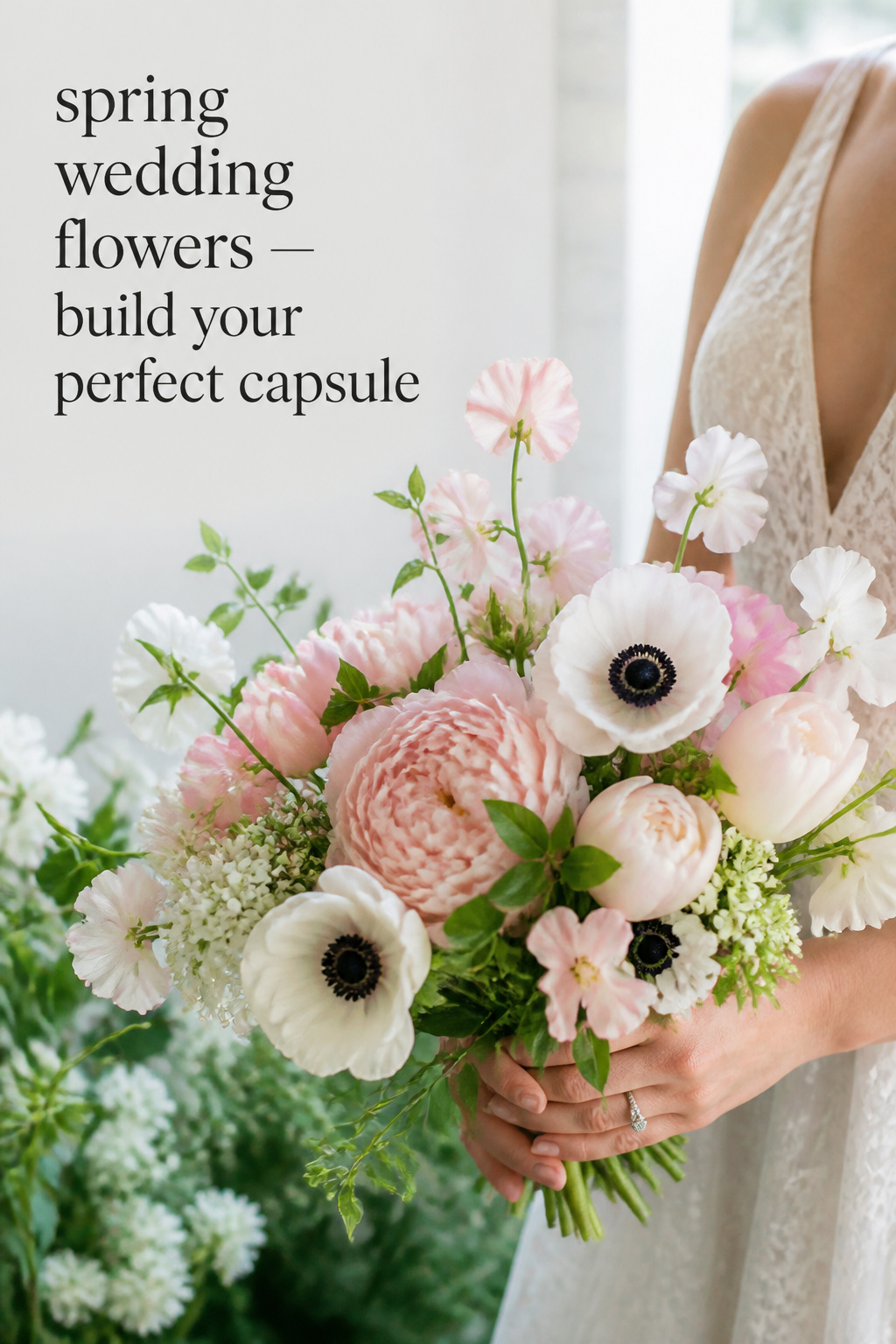
Build a spring wedding flower capsule instead of a long flower list
Think of a floral capsule the way you might think of a well-edited wardrobe. It needs a few reliable foundation pieces, one or two memorable choices, and enough texture to make combinations feel different. For a wedding, the foundation is not a particular color or flower name. It is the job each ingredient performs in the design.
Choose one or two hero blooms
A hero bloom is the flower you most want people to notice. It establishes the emotional tone and usually appears in the bouquet, a ceremony feature, or the head table. Peonies, garden roses, ranunculus, tulips, anemones, sweet peas, and poppies can all lead a spring design, but they create very different impressions. Peonies and garden roses feel lush and romantic. Ranunculus feels layered and delicate. Tulips feel clean and lively. Anemones add a graphic dark center, while sweet peas bring movement and fragrance.
Turn wedding inspiration into a plan you can actually follow.
Zarellea brings your guest list, budget, vendors, and day-of details into one shared space — so no beautiful idea gets lost in the shuffle.
One hero flower can be enough for a refined look. Two can create a richer story if their shapes are different. Try peonies with anemones, tulips with sweet peas, or ranunculus with poppies. Avoid choosing five focal flowers and expecting the arrangement to look abundant. When every bloom is trying to be the star, the eye has nowhere to rest.
Add two or three supporting blooms
Supporting blooms fill space, bridge colors, and make the hero flower look intentional. Garden roses, lisianthus, spray roses, hydrangeas, stock, feverfew, chamomile, and small seasonal tulips can all work in this role. Choose flowers with a different scale from your hero. A large peony beside another large peony may look lush, but a smaller ranunculus or airy sweet pea helps the arrangement breathe.
- Romantic garden capsule: peonies or garden roses, ranunculus, sweet peas, and soft foliage.
- Fresh and graphic capsule: tulips or anemones, white roses, lisianthus, and a narrow-leaf green.
- Meadow capsule: poppies or ranunculus, chamomile, Queen Anne’s lace, larkspur, and grasses.
- Colorful modern capsule: one saturated tulip or ranunculus color, a contrasting anemone, lisianthus, and restrained greenery.
Give the design structure and movement
Flowers alone do not create shape. Branches, foliage, vines, grasses, berries, and pods help an arrangement move up, out, or slightly down. Cherry blossom and dogwood branches can give a ceremony installation height. Eucalyptus, ferns, and olive branches can create volume and a calm base. Jasmine vine, sweet peas, amaranthus, or trailing greenery can soften the edge of a bouquet or bring life to a modern arch.
Use structure deliberately. If the venue already has strong trees, stone, or a garden view, a loose capsule with visible negative space may be more beautiful than a dense floral wall. If the room is plain, a tall branch arrangement or a grounded meadow can supply the architecture. Ask your florist what should be seen first from the ceremony entrance, the aisle, and the reception doorway.
Set a color hierarchy
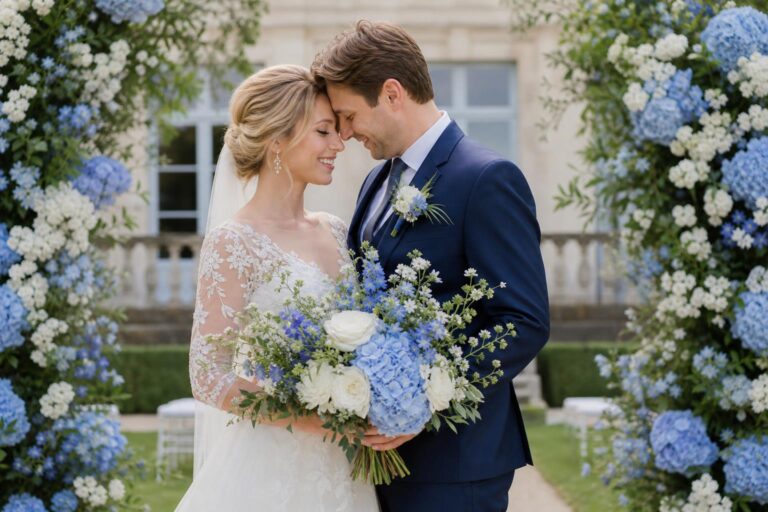
Start with a dominant color, a supporting color, and a small accent. Blush, ivory, and pale peach feel soft when the flowers are loose and textural. Yellow, coral, and fresh green feel sunny and welcoming. Lavender, blue, and white can feel cool and garden-inspired, while burgundy, plum, and blush create a more dramatic spring evening palette. White and green are not a default you settle for; with contrasting flower shapes, they can feel modern and sophisticated.
Show your palette beside the venue, attire, linens, stationery, and tableware. A color that looks delicate on a screen may disappear against pale walls. A saturated coral may become very bright beside warm wood. Your florist needs to understand the surrounding colors because spring wedding flowers are part of the room, not isolated objects.
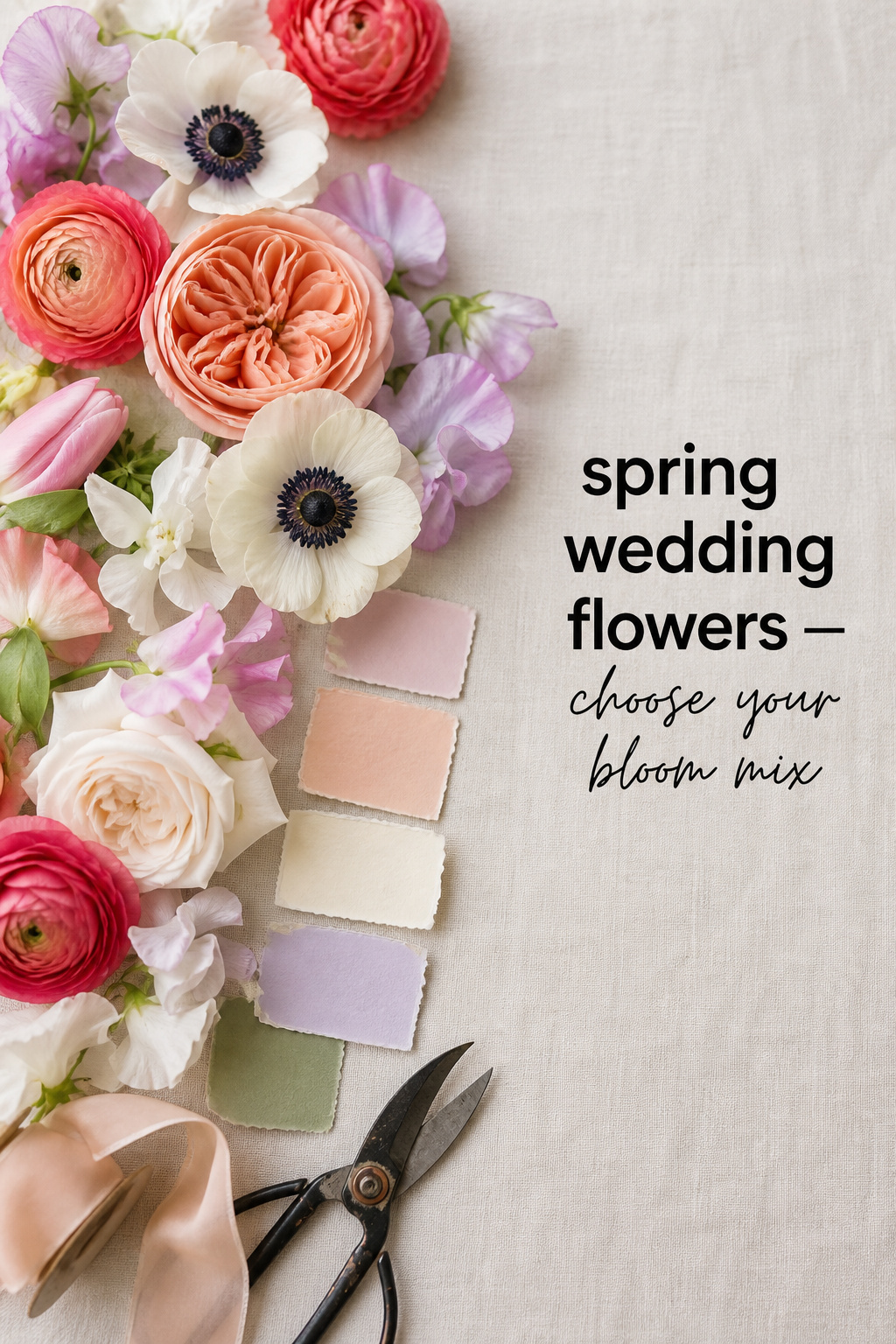
Edit the capsule for March, April, or May
Spring is not one uniform flower season. In the United States, availability changes by region, weather, greenhouse supply, and the exact week of your wedding. Treat month-by-month guidance as a creative starting point, then ask a local florist to confirm what will be reliable. The strongest brief describes the color, shape, scale, and feeling you want, with a short list of flowers you would love to use if they are healthy and reasonably priced.
March: bulbs, layers, and lively movement
March can be a beautiful month for tulips, ranunculus, anemones, sweet peas, daffodils, hyacinths, hellebores, and other early-season ingredients, depending on your region. These flowers are useful when you want a capsule with movement and detail rather than a heavy, fully open look. Tulips continue to grow after cutting, which can give an arrangement a natural, shifting quality. Anemones add a crisp center, while ranunculus supplies tightly layered petals.
For a March capsule, choose a shape that benefits from variation. Pair blush ranunculus with white anemones, pale tulips, sweet peas, and silver-green foliage. For something brighter, combine yellow or coral tulips with orange ranunculus and a small amount of blue or purple. If fragrance matters, discuss hyacinth and sweet peas early, especially if anyone in the wedding party is sensitive to strong scents.
April: the bridge month
April often bridges early spring flowers and the fuller romance of late spring. Depending on location, you may find garden roses beginning, limited peonies, lilacs, lily of the valley, viburnum, fritillaria, tulips, ranunculus, anemones, and flowering branches. This is a useful month for couples who want a capsule that feels both airy and lush. Use one early-season flower for movement and one rounded bloom for softness.
A practical April formula is garden roses or limited peonies as the hero, ranunculus or anemones as support, lilac or sweet peas for movement, and a branch or foliage element for structure. If your wedding falls early in the month, do not build the entire design around peonies. Ask for a comparable rounded flower such as a garden rose, or use peonies only in the bouquet where fewer stems can make a visible difference.
May: lush romance and the widest capsule
May is often a strong month for peonies, garden roses, sweet peas, ranunculus, clematis, foxglove, delphinium, and many of the flowers that make a spring design feel full. Peonies are generally more budget-friendly when they are at peak availability, but regional conditions still matter. May also offers enough variety to build a layered capsule without importing every flower.
Use the extra choice to simplify, not to add everything. A May garden capsule might pair coral peonies with blush roses, lavender sweet peas, white anemones, and airy greenery. A clean white capsule could combine peonies, tulips, sweet peas, and black-centered anemones so the arrangement has contrast through shape. For a bold palette, let one saturated color lead and use white or soft green as breathing room.
Plan substitutions before the wedding week
Weather can shift bloom timing, and a flower may arrive with weak stems or a color that does not match the sample. Decide which qualities are non-negotiable. You might say, “I need a rounded blush focal flower,” “I need a dark-centered graphic accent,” or “I need a delicate trailing texture.” That gives your florist a useful substitution brief. It is more resilient than saying one exact variety must appear regardless of availability.
- Shape: rounded, cupped, spiky, airy, trailing, or branching.
- Color: warm blush, blue-lilac, lemon yellow, coral, ivory, or another precise family.
- Scale: focal, medium filler, small detail, or structural line.
- Feeling: romantic, crisp, playful, wild, formal, or quietly modern.
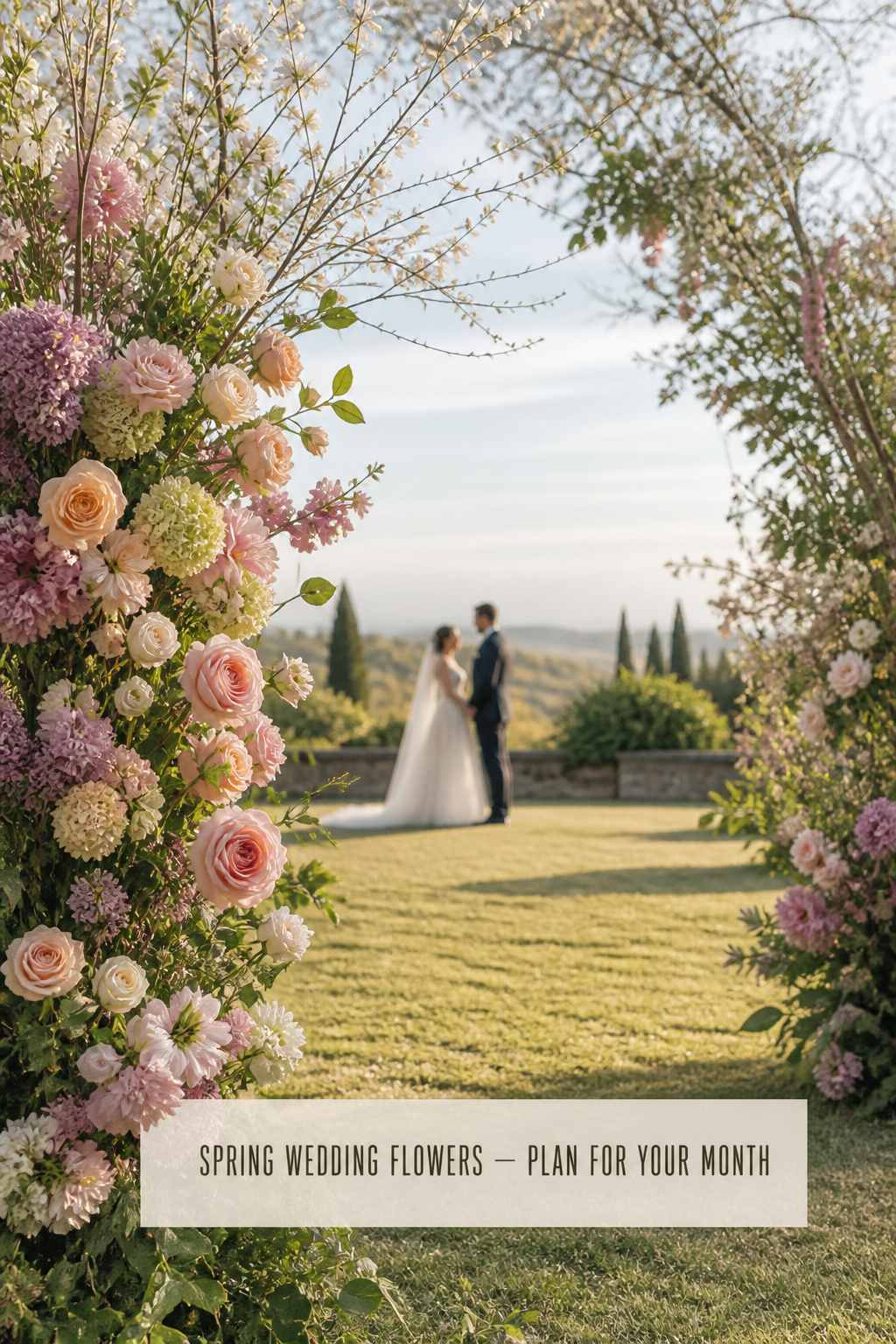
Use the same capsule across the wedding day
A cohesive floral plan does not require matching bouquets and centerpieces. It needs repetition with variation. Let the bouquet carry the most detailed version of the capsule, use the ceremony to show its structure, and make reception flowers simpler and more repeatable. One shared flower, color, or foliage element can be enough to connect the spaces.
Make the bouquet the close-up version
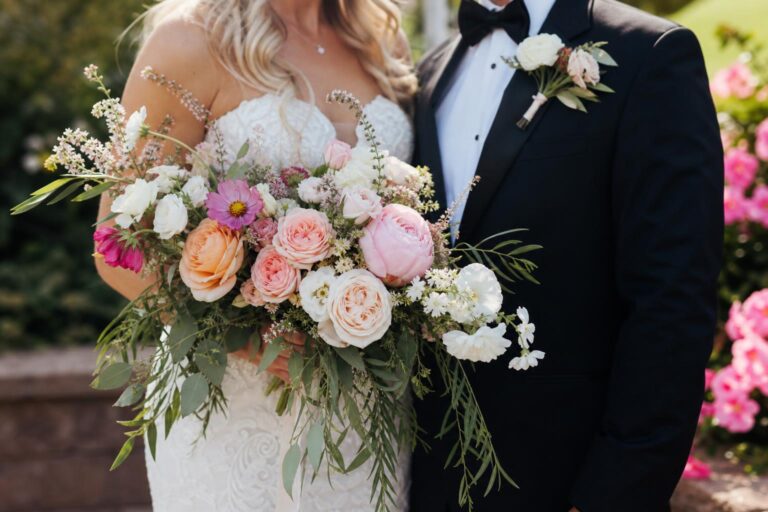
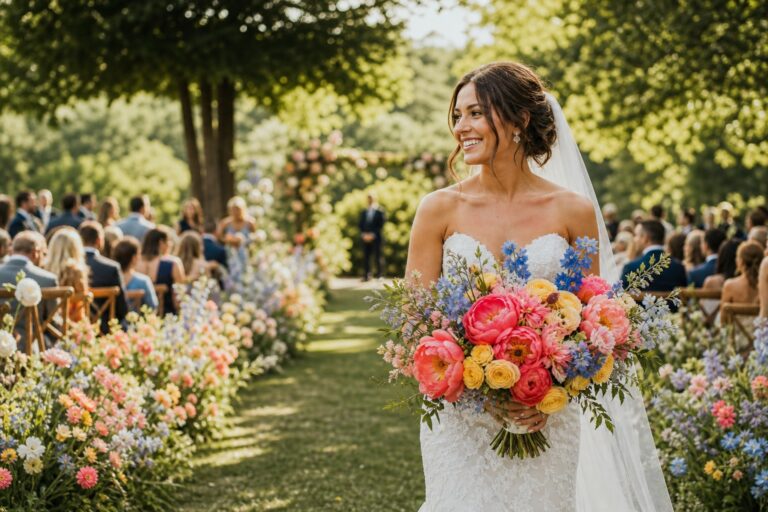
The bouquet is photographed beside the face, dress, rings, and hands, so it can include the most nuanced combination of your capsule. Use the hero bloom generously, then add one small-scale flower and one movement element. A rounded bouquet of peonies, ranunculus, and sweet peas feels romantic. Tulips, anemones, and a few branches feel cleaner. A meadow-inspired mix of poppies, chamomile, grasses, and garden flowers feels natural but still intentional.
Consider comfort and weather. Heavy bouquets become tiring during portraits. Fragile petals need protection from heat, wind, and long waits. Ask how the stems will be wrapped, where the bouquet will rest during dinner, and how long it can safely be outside for portraits. Beautiful spring wedding flowers should also be practical to carry.
Let the ceremony show the capsule’s structure
Choose one ceremony moment with the greatest visual return: an asymmetrical arch cluster, two aisle-end arrangements, a grounded meadow, or flowers at the entrance. Negative space can make the flowers feel more considered and lets the venue remain visible. A fully covered arch is not automatically more impressive than a partial one. Place flowers where the couple will be framed and where photographs will be made.
If the ceremony and reception share a location, design the feature for a second life. A large arrangement may move behind the sweetheart table, to the bar, or beside the dance floor. Confirm who will move it, whether water will be available, and how much time the transition requires. A reuse plan is only helpful when it is safe and assigned to someone.
Make reception flowers repeatable
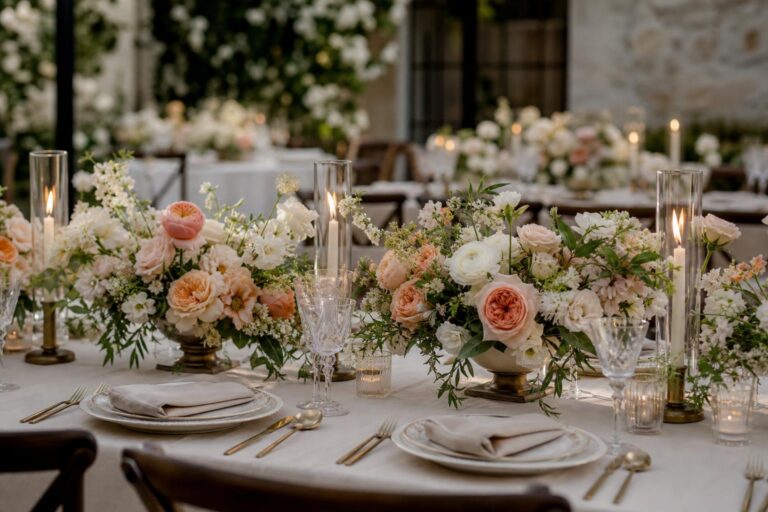
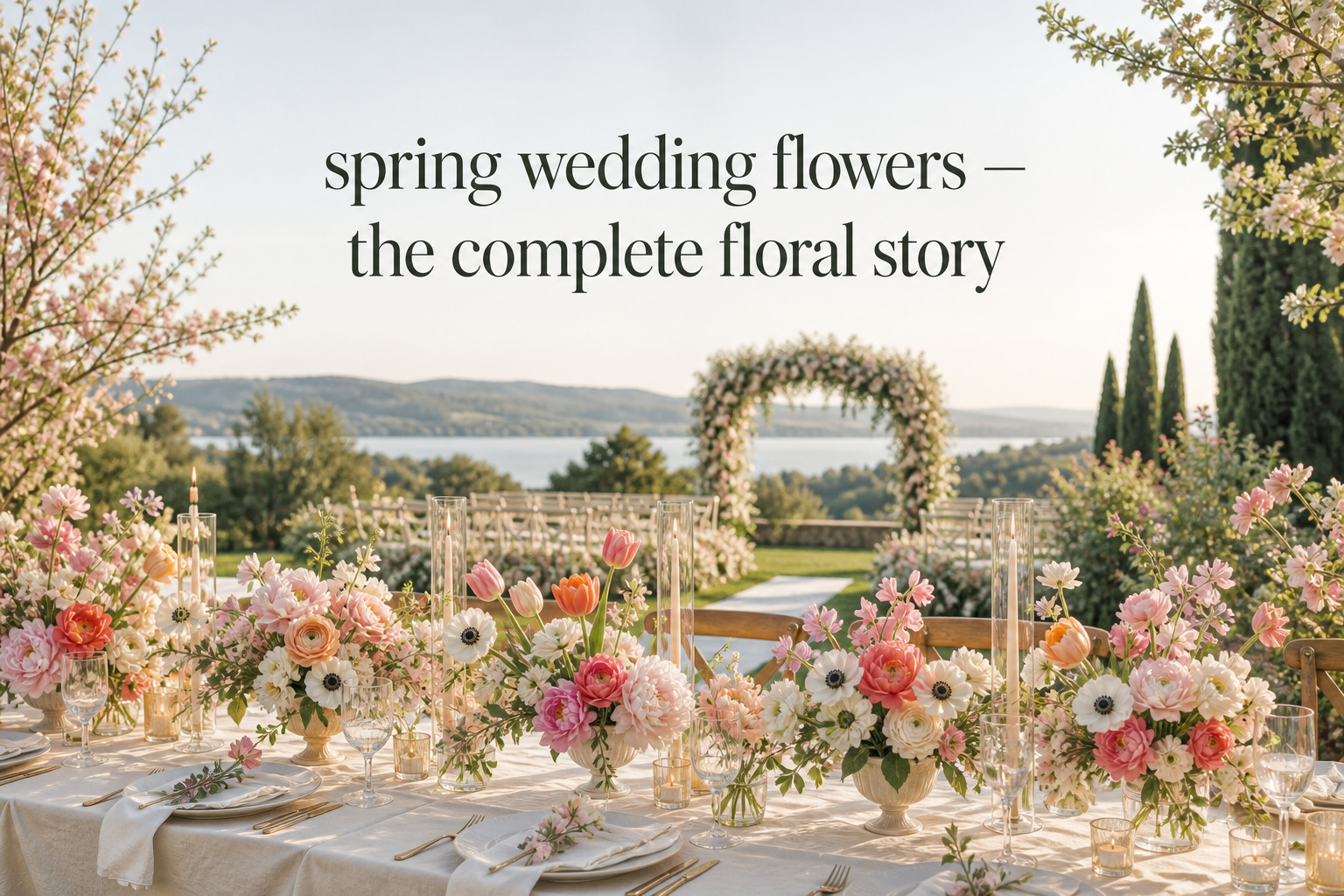
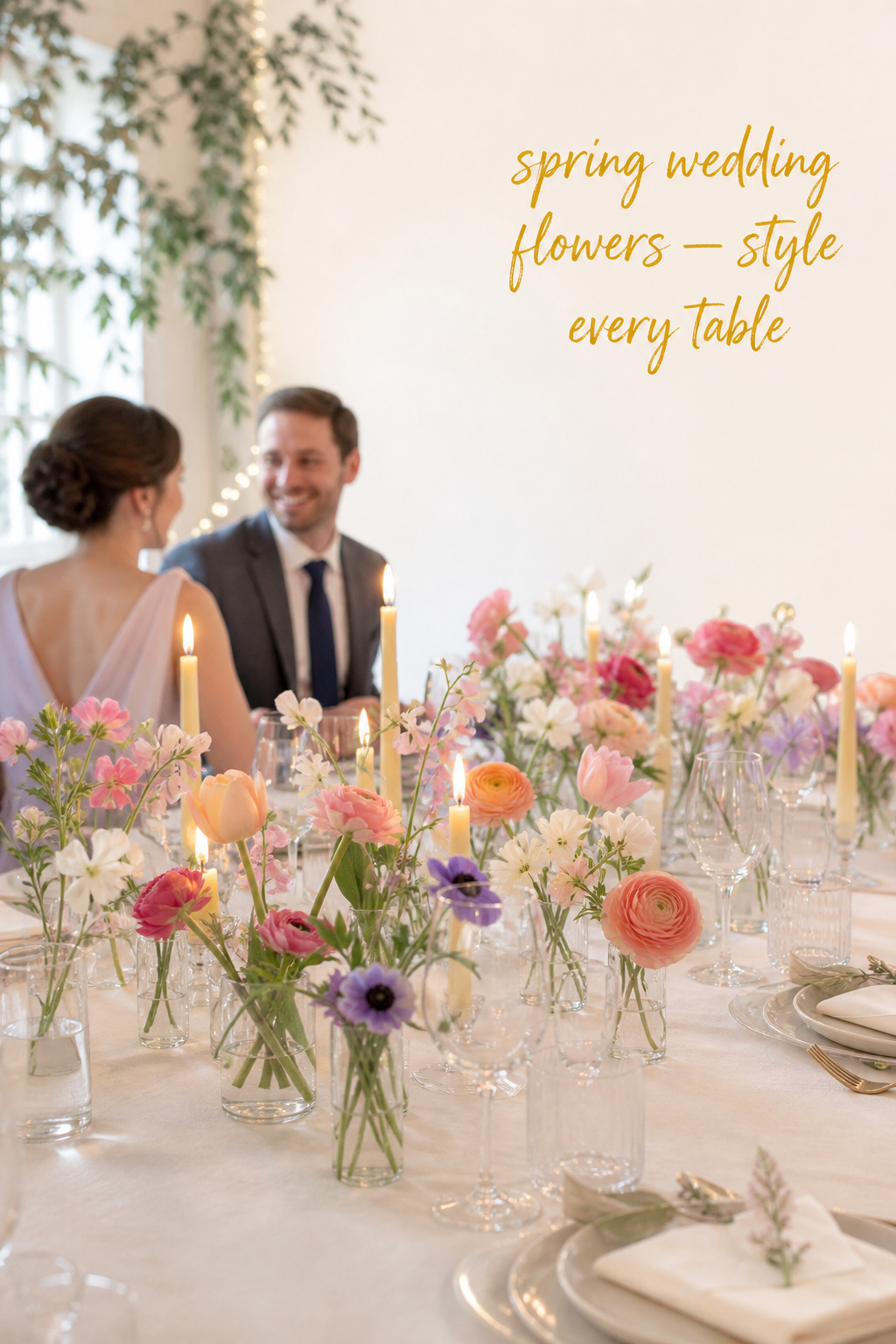
Reception tables benefit from formulas that can be repeated without looking mechanical. Low bud-vase clusters are excellent for tulips, ranunculus, anemones, and sweet peas. A continuous meadow runner can use greenery and supporting blooms while reserving hero flowers for selected moments. Tall arrangements can add height to a large room, but keep the base open enough for guests to see one another.
Use containers to control the mood. Clear glass feels light and garden-like. Ceramic vessels make a capsule feel collected and modern. Colored glass can extend the palette without adding more flower varieties. If you use varied vessels, keep the flower formula consistent. If the flowers are varied, simple vessels create calm.
Use personal flowers as small punctuation
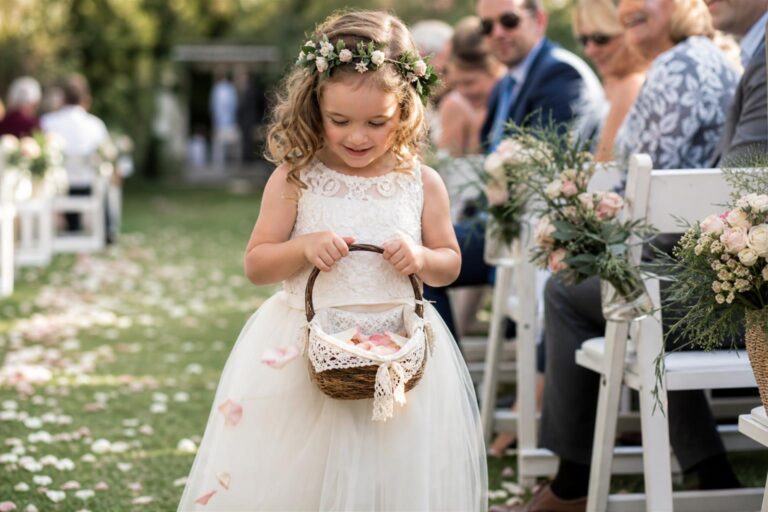
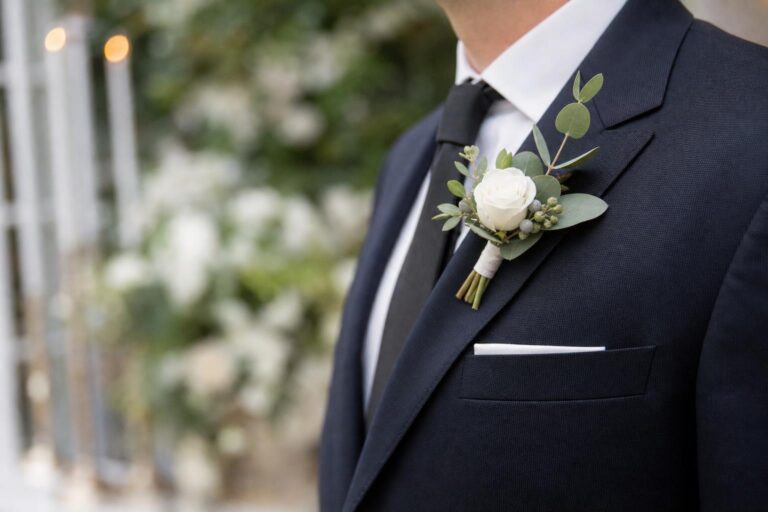
Bridesmaid bouquets can echo the bridal bouquet with fewer varieties or a single color family. Boutonnieres do not need to be miniature bouquets; one anemone, tulip, ranunculus, or garden rose with a small foliage detail is often enough. Corsages, flower-girl petals, the welcome sign, escort display, cake table, and bar can carry one tiny repeat of the capsule.
- Use the hero flower most generously in the bridal bouquet or one ceremony feature.
- Repeat one supporting flower in reception vessels so the eye recognizes the connection.
- Reserve fragile or strongly scented blooms for areas where they can be enjoyed and protected.
- Use greenery, branches, candles, ribbon, fruit, and colored glass to stretch the visual story.
Make the capsule practical for budget, weather, and the florist
The prettiest spring wedding flowers plan can still fail if it ignores transport, venue conditions, labor, and the number of arrangements required. A capsule helps because it limits the number of ingredients, but it does not remove the need to make priorities. Tell your florist what must feel abundant, what can be simple, and what can be reused.
Spend on the moments that change the room
Start with the bouquet, ceremony focal point, and the reception area where guests spend the most time. A well-designed bar, escort display, or sweetheart table can communicate the capsule more effectively than adding one small arrangement to every surface. If the budget is tight, use premium hero flowers in close-up locations and build volume with seasonal supporting blooms, greenery, branches, candles, and simple vessels.
Ask which ceremony pieces can move later. A grounded arrangement may be easy to repurpose; a delicate installation attached to a structure may not be. If the reuse requires a ladder, special mechanics, or a tight turnaround, the labor may cost more than expected. Include that question in the proposal rather than treating repurposing as free.
Account for climate and fragrance
Spring weather can mean cool mornings, warm afternoons, wind, rain, or sudden heat. Ask where flowers will be held before the ceremony, how long they can remain outdoors, and whether a bouquet can be kept hydrated. Delicate petals and fragrant flowers need different care from hardy greenery. If the wedding is in a warm region, discuss flowers that can tolerate outdoor portraits and whether some dried or preserved elements would improve durability without changing the look.
Fragrance should be intentional. Lilac, hyacinth, sweet peas, gardenias, and some lilies can be noticeable in a small room. That may be wonderful for a garden ceremony and uncomfortable at a dinner table. Tell the florist about allergies, sensitivities, and whether you want guests to notice scent at all.
Bring a florist-ready brief
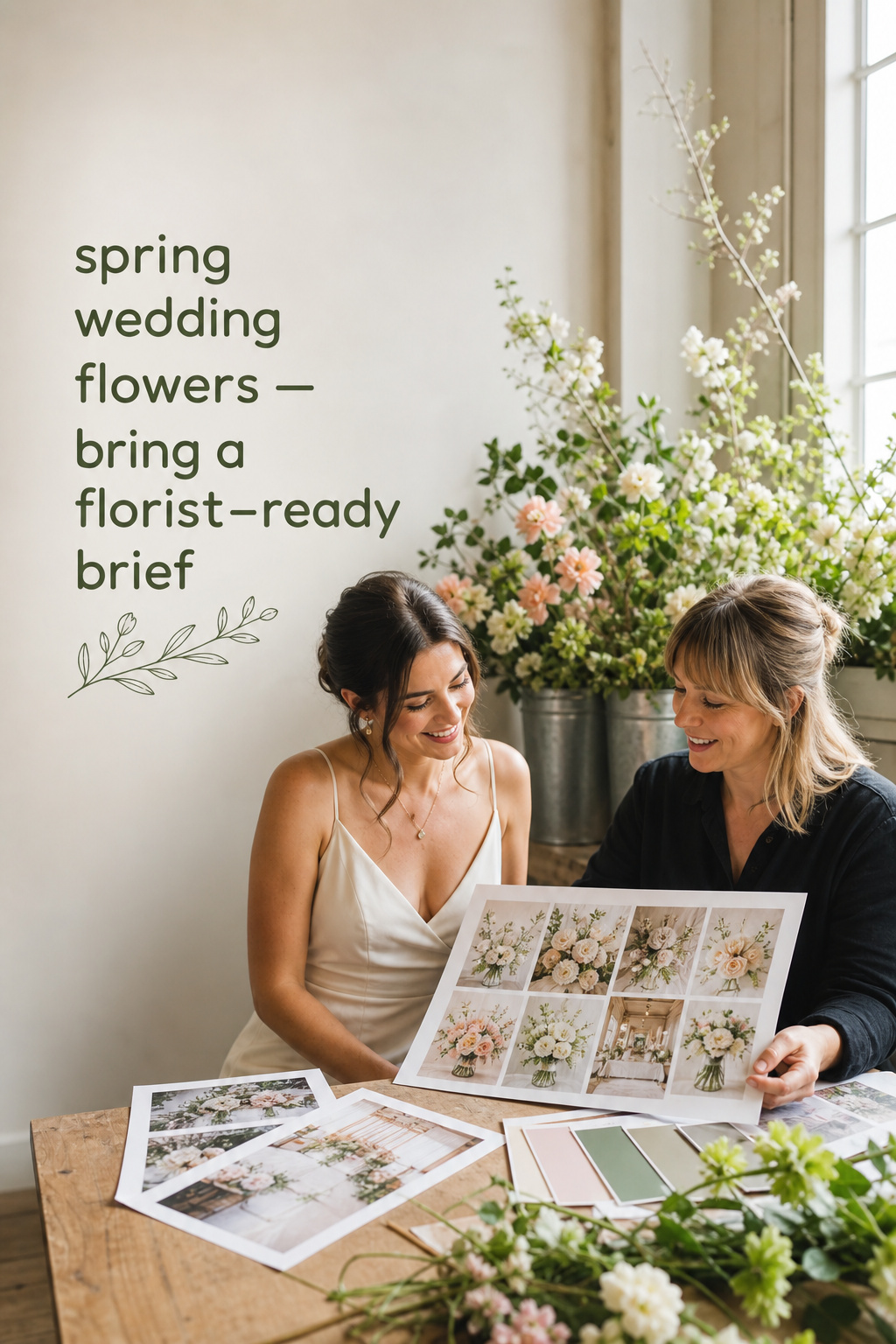
Before your consultation, write three mood words and one sentence describing the desired result. Add your wedding month, location, venue photos, attire colors, guest count, table shapes, ceremony layout, budget range, and the three moments you want to prioritize. Bring a short group of inspiration images and label what you like in each: color, shape, density, flower, container, negative space, or lighting.
Then write your capsule in jobs rather than only names. For example: “one coral rounded hero flower, one airy lavender support flower, one graphic white accent, soft green structure, and a small amount of trailing movement.” You can add preferred names in parentheses, but the job description protects the design when the market changes.
- Which flowers are most reliable for my exact wedding month and region?
- Which two flowers should be my heroes, and what are their closest visual substitutes?
- Where will the capsule have the greatest photographic and guest impact?
- Which ceremony flowers can safely be moved after the vows?
- How will heat, wind, rain, fragrance, and transport affect the plan?
- What can candles, ribbon, branches, fruit, colored glass, or greenery do instead of more premium blooms?
Finally, approve the visual language, not just the flower names. A spring wedding flowers plan succeeds when the bouquet, ceremony, tables, and small details feel like members of the same family. If a flower must be replaced, the color, shape, scale, and mood should still make sense. That flexibility is what lets the finished design look fresh, intentional, and true to the season.
FAQ
What flowers are in season for a spring wedding?
Common spring wedding flowers include tulips, ranunculus, anemones, sweet peas, daffodils, hyacinths, lilacs, garden roses, peonies, poppies, flowering branches, and many types of greenery. Exact availability varies by region and weather, so confirm the list with your florist for your date.
Are peonies available for all spring weddings?
No. Peonies generally become more available in late spring, and timing differs by growing region and supplier. If your date is early spring, ask for garden roses or another rounded, layered bloom with a similar color and silhouette. You can also reserve peonies for the bouquet rather than using them everywhere.
How many flower varieties should a wedding capsule include?
A useful starting point is one or two hero blooms, two or three supporting blooms, one or two structural ingredients, and a small accent. You can use fewer for a minimalist design or add another texture for a meadow look, but assigning each ingredient a job keeps the arrangements from feeling random.
How can I save money on spring wedding flowers?
Choose flowers that are available near your date, spend premium blooms on a few high-impact moments, use seasonal supporting flowers and greenery for volume, and plan safe ceremony-to-reception reuse. A flexible color and shape brief usually saves more than insisting on one exact out-of-season flower.
What spring wedding flower colors look modern?
White and green, blush with peach, lavender with blue, coral with lemon yellow, and saturated single-color arrangements can all look modern. The result depends on proportion, flower shape, vessel choice, and negative space. You do not need to use pastel colors just because the wedding is in spring.
How should I explain substitutions to my florist?
Describe the quality you need rather than only the name of the flower. Say whether the substitute should be rounded, airy, graphic, trailing, branching, blush, coral, ivory, or another precise color family. Also identify the desired scale and feeling. This gives your florist room to protect the design when availability changes.