Wedding Table Flowers: Choose the Right Look
Wedding table flowers have one job beyond looking beautiful: they should make the reception feel welcoming without getting in the way of dinner, conversation, photographs, or the people serving the meal. That is why the best centerpiece is not automatically the biggest, rarest, or most expensive arrangement. It is the one that fits your table shape, venue, guest count, season, and actual wedding-day logistics.
This guide compares the most useful approaches to wedding table flowers, from low bud-vase groupings and long floral runners to elevated centerpieces, potted herbs, silk rentals, and seasonal fruit-and-flower designs. Use the comparisons to choose where flowers should make a statement, where supporting details can do the work, and how to create a reception that feels intentional from the sweetheart table to the last guest table.
Start With the Real Decision: What Should Your Flowers Do?
Before choosing a flower variety or sending a Pinterest board to your florist, define the experience you want the tables to create. A candlelit dinner in a historic ballroom may call for height and drama. A family-style meal on long wooden tables may look better with a low, continuous line of foliage and flowers. An outdoor summer reception may need arrangements that tolerate heat and wind, while a small brunch can feel complete with a few compact bud vases.
Turn wedding inspiration into a plan you can actually follow.
Zarellea brings your guest list, budget, vendors, and day-of details into one shared space — so no beautiful idea gets lost in the shuffle.
Think of wedding table flowers as part of a system with four responsibilities. They establish the visual focal point, connect the table to the wider wedding design, leave room for guests to see one another, and survive the practical conditions of the reception. If a centerpiece succeeds at only the first responsibility, it may photograph well but frustrate guests in person.
Compare visual impact with conversation comfort
Tall arrangements create an immediate sense of occasion and can make a large room feel finished. They work especially well when the flowers are elevated above eye level on a stand or narrow vessel, leaving the table surface open below. The risk is a wide arrangement at face height. It can divide the table, block views, and make guests lean around the flowers to talk.
Low arrangements feel more relaxed and generous. They are easy to combine with candles, menus, and place settings, and they generally make dinner conversation comfortable. The trade-off is that they need enough width or repetition to feel intentional in a large room. A single tiny vase in the center of a ten-person round table can disappear.
Compare a signature look with a repeatable plan
A highly varied tablescape can feel personal, but repeating a clear formula usually creates a more polished reception. You might vary the flower shape or vessel while keeping the palette consistent, or use one arrangement design on guest tables and a fuller version on the sweetheart table. Repetition also helps a florist order flowers efficiently and helps a DIY team assemble pieces in batches.
Decide where the visual emphasis belongs. If your ceremony arch, bouquet, or venue already has a strong floral moment, guest tables can use simpler wedding table flowers. If the room is plain, the tables may need more color, texture, or height to establish the atmosphere. Concentrating the budget in the places guests photograph and visit most often is usually more effective than making every surface equally elaborate.
Round Tables vs. Long Tables: Which Flower Formula Fits?
Table shape is the most practical starting point because it changes how arrangements are seen from every seat. Round tables naturally point attention toward a center. Long tables create a horizontal sightline, so one centerpiece can look isolated unless it has enough scale or is repeated along the length. Match the flower shape to the geometry instead of forcing one design onto every table.
Round tables: choose a centered or elevated focal point
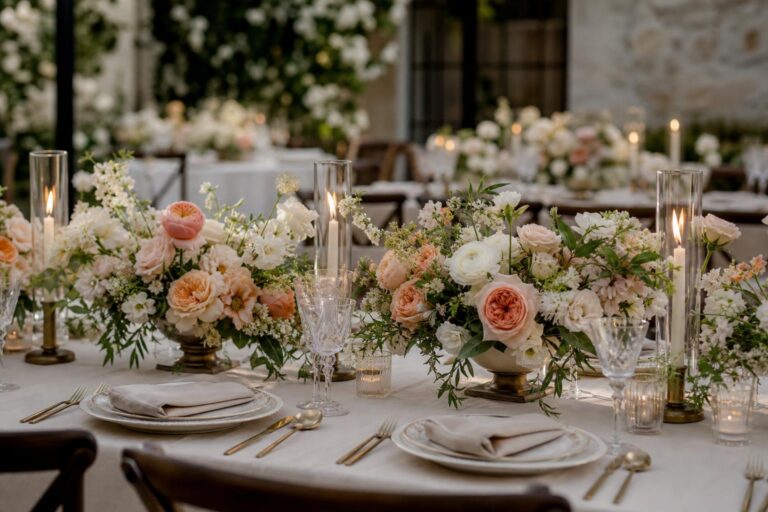
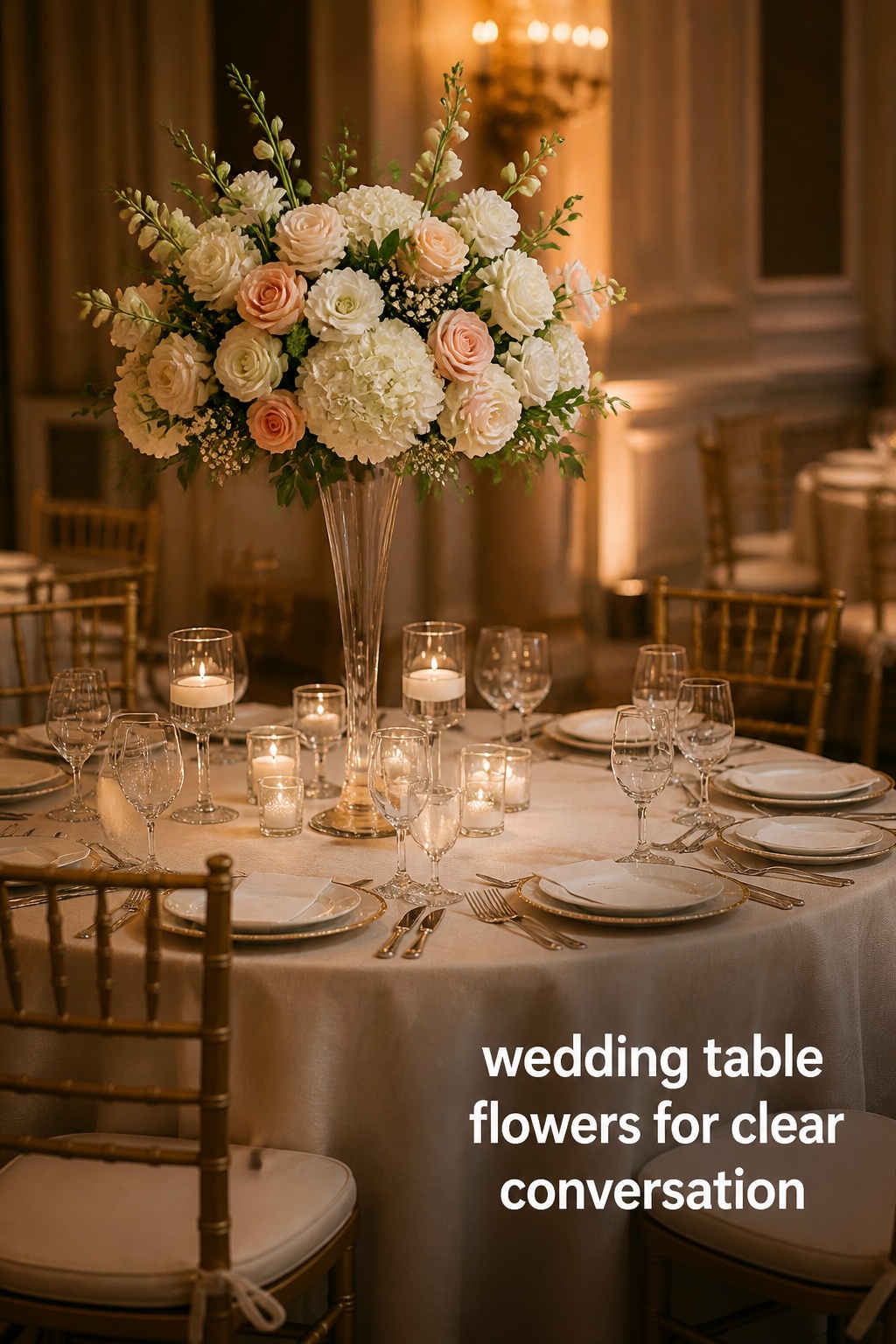
For round tables, a compact low bowl, a cluster of bud vases, or an elevated arrangement can all work. A low garden-style centerpiece is good for a warm, conversational dinner. Use flowers such as garden roses, lisianthus, seasonal blooms, and airy greenery in a vessel that is wide enough to balance the table but not so broad that it crowds plates and glasses.
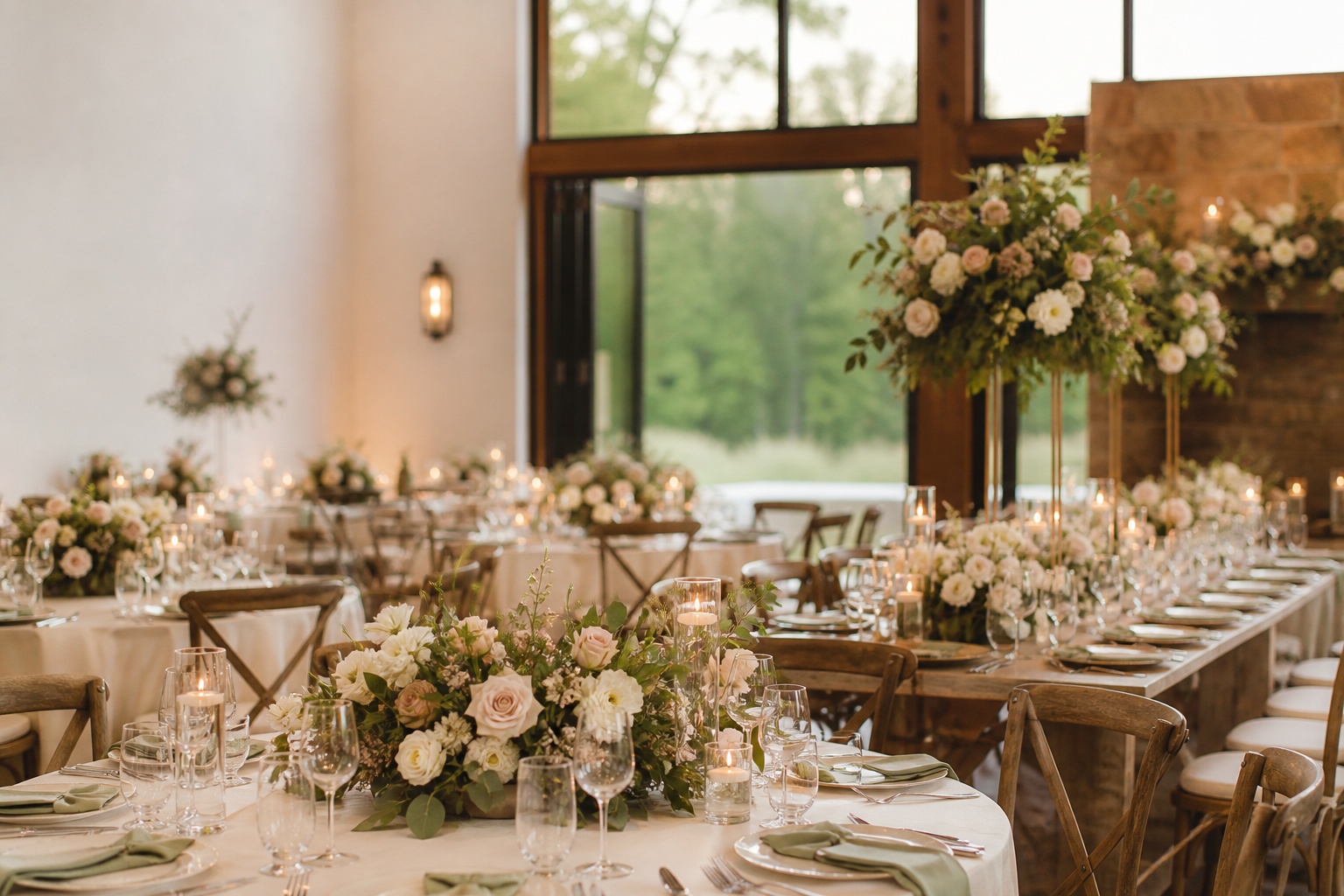
An elevated centerpiece is useful when you want drama without sacrificing sightlines. Ask your florist to keep the base narrow and the flowering shape above the seated eye line. Clear glass, slim metal stands, or simple pedestal vessels can provide height while allowing light and conversation to move around the table. Confirm the arrangement will not wobble, drip, or require a base that competes with the place settings.
Long tables: build rhythm instead of one oversized center
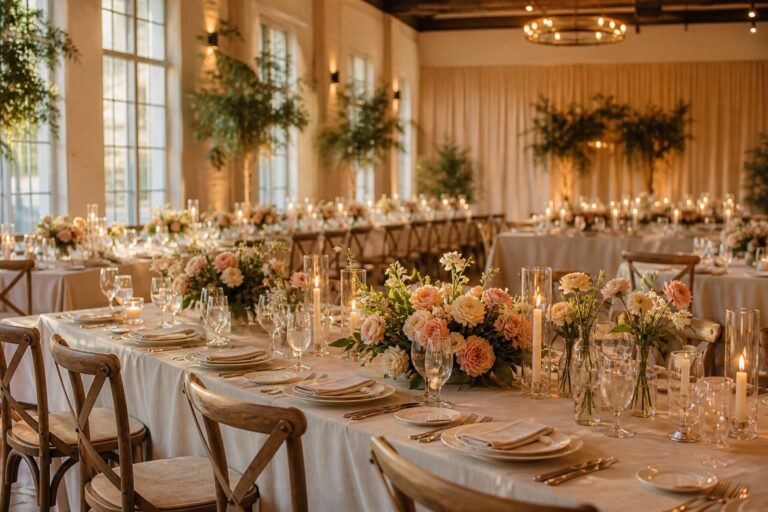
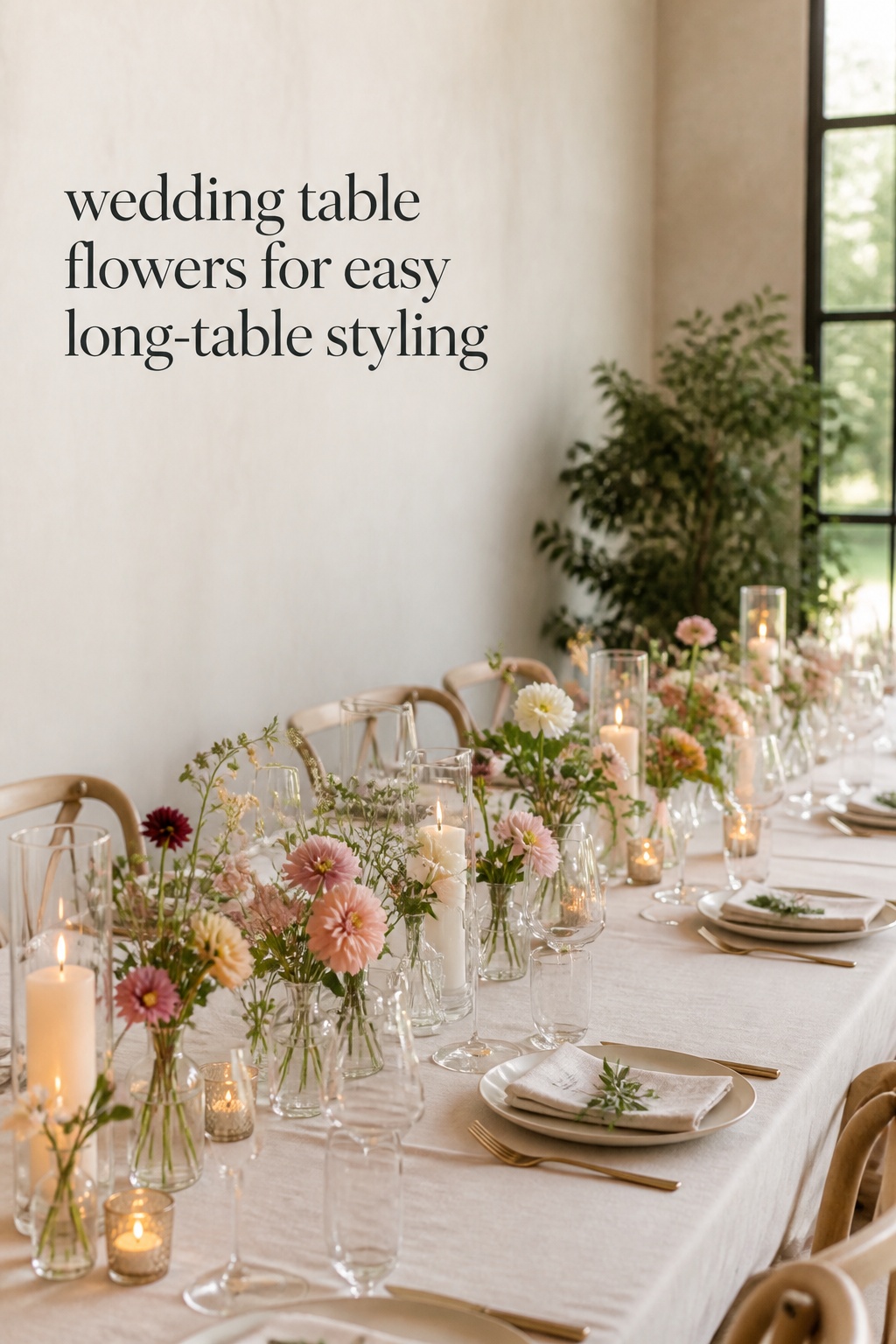
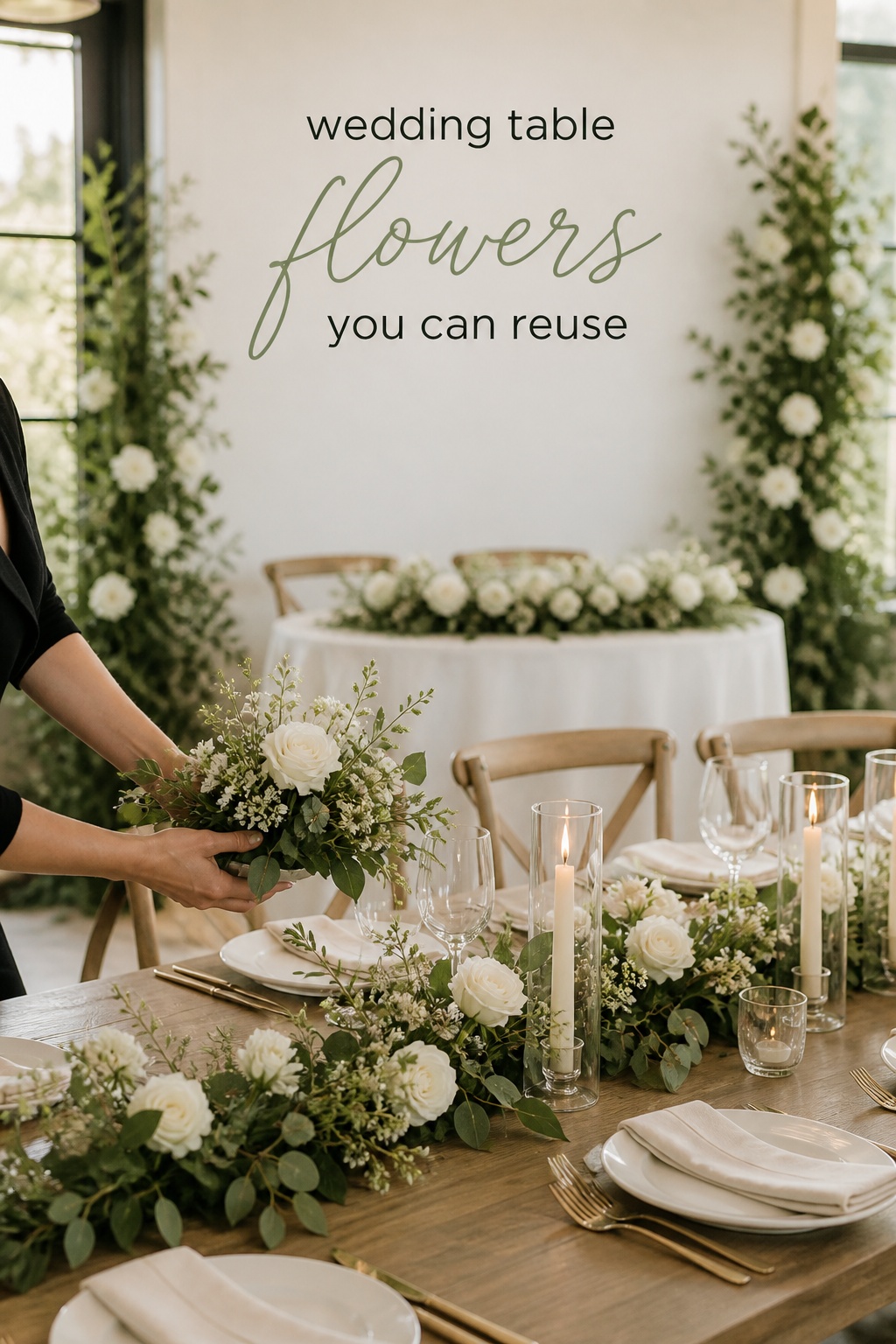
Long banquet or trestle tables are ideal for a low floral runner, a series of small arrangements, or a mix of flowers and candles. Repeating vessels every few settings creates a visual rhythm and makes the table feel abundant from the entrance and from the ends. On a bare wood table, loose foliage, linen runners, and small floral clusters can look relaxed without hiding the material of the table.
A floral runner should not become a wall. Keep most of the flowers low, leave clear gaps for serving dishes if the meal is family-style, and make sure the design does not tangle with glassware or sleeves. If you love a lush look, use a few larger moments connected by foliage rather than filling every inch with blooms. This reduces cost and makes setup, photography, and cleanup easier.
Mixed table plans: keep the language consistent
Some receptions use rounds, a sweetheart table, a head table, cocktail tables, and a cake or welcome table. These do not need identical arrangements. They do need a shared visual language. Repeat one or two flowers, the same vessel finish, or a recognizable foliage detail across the room. A fuller arrangement at the couple’s table can echo the smaller guest-table pieces without making the sweetheart table look disconnected.
For cocktail tables, choose flowers that stay narrow and stable. For the cake table, keep the arrangement low enough to preserve the cake as the focus. For a welcome table, a small statement piece may be enough. Count these destinations before ordering so your florist can design a complete plan instead of discovering on the wedding day that the non-guest tables were forgotten.
Four Wedding Table Flowers Formulas by Style and Budget
The most useful comparison is not “luxury versus budget.” It is how each formula spends flowers, structure, labor, and supporting details. A simple design can feel elevated when the scale is right and the palette is controlled. A large design can feel unfinished when it has no relationship to the linens, chairs, lighting, or tableware.
Classic romantic: full bowls with candlelight
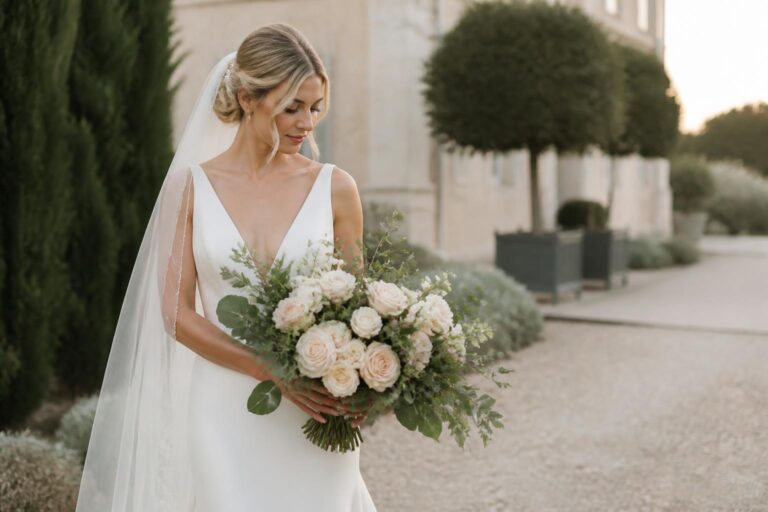
Choose rounded bowls of roses, hydrangeas, lisianthus, and seasonal filler when you want a familiar romantic reception. Keep the palette narrow—perhaps ivory and blush, white and green, or soft peach with one deeper accent. Add candles at varied but safe heights around the arrangement. The flowers provide softness while the candlelight adds atmosphere after sunset.
This formula is beautiful for round tables and formal venues, but it can become expensive when every table requires a dense, flower-heavy bowl. To control the budget, reserve the most premium blooms for the sweetheart table and use a foliage-forward version for guest tables. A consistent vessel and candle plan can make the entire room feel cohesive even when flower quantities vary.
Garden-inspired: loose shapes and seasonal movement
A garden formula uses flowers at different stages, natural movement, and greenery that looks gathered rather than tightly arranged. Garden roses, cosmos, sweet peas, delphinium, tulips, and local seasonal flowers can create a generous look with an editorial edge. Use ceramic compotes, colored glass, or simple stoneware if the venue is a barn, greenhouse, garden, or outdoor patio.
The strength of this approach is character. The risk is inconsistency if every arrangement becomes a different color story. Give your florist a clear palette and a limit on the number of accent colors. For a lower-cost version, repeat a few strong shapes and use foliage to create volume. The result can feel abundant without requiring a dozen premium flower varieties.
Modern minimal: bud vases and one strong accent
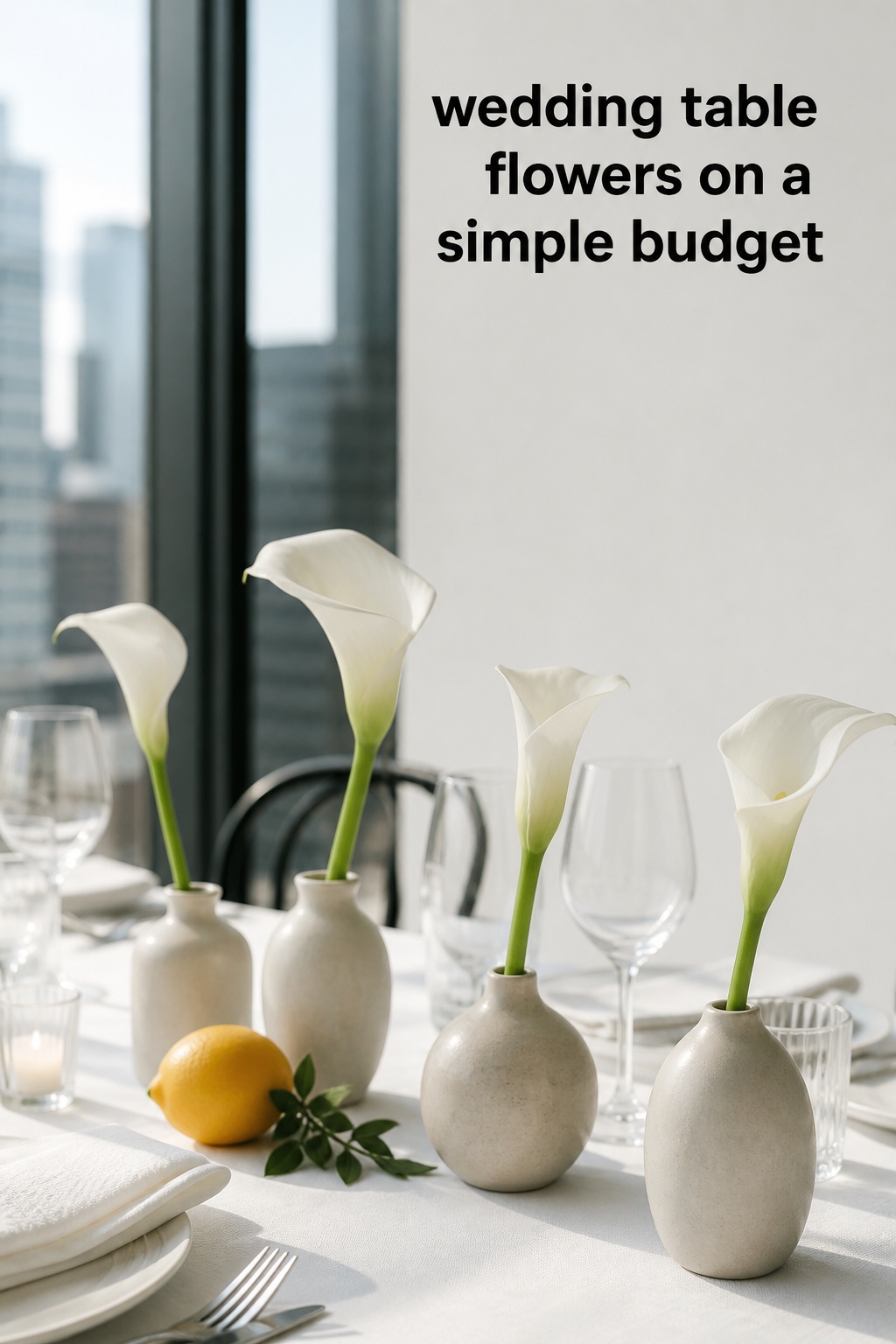
Modern wedding table flowers often look best when they are edited. Place several bud vases along a round table or down a long table, using one stem or a small cluster in each. Choose one flower family, one color accent, or one sculptural element such as anthurium, calla lily, flowering branch, or a single statement bloom. Repeat the shape rather than filling every vase with the same amount.
This approach can reduce flower volume, but it is not automatically effortless. Many small vessels require careful transport, water management, and placement. Choose vases with a stable base, check that they do not crowd the table, and ask who will fill and place them. Add a clean runner, refined napkin, or simple menu to give the flowers enough context without adding visual noise.
Seasonal and sensory: flowers with fruit, herbs, or plants
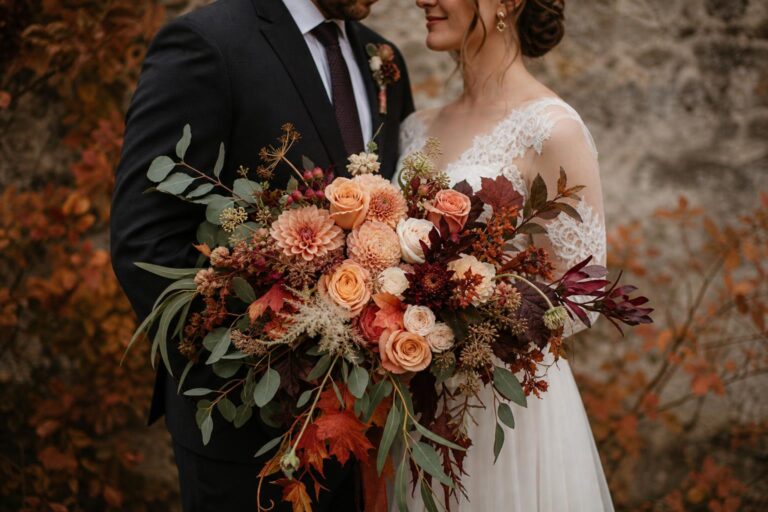
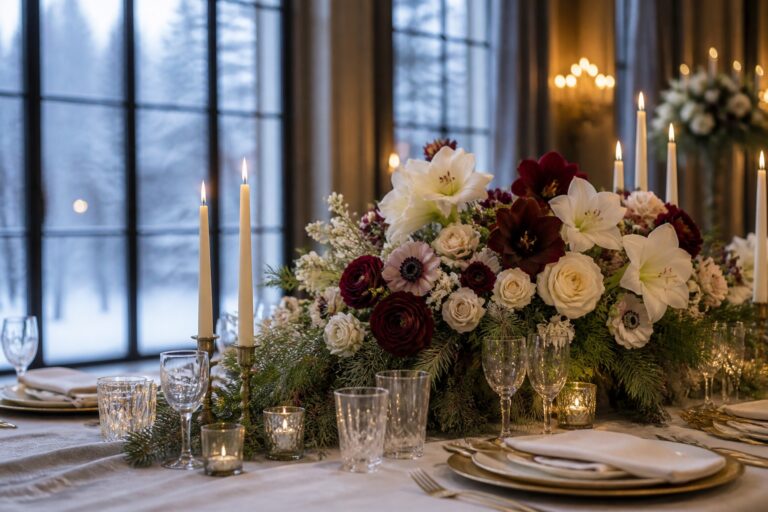
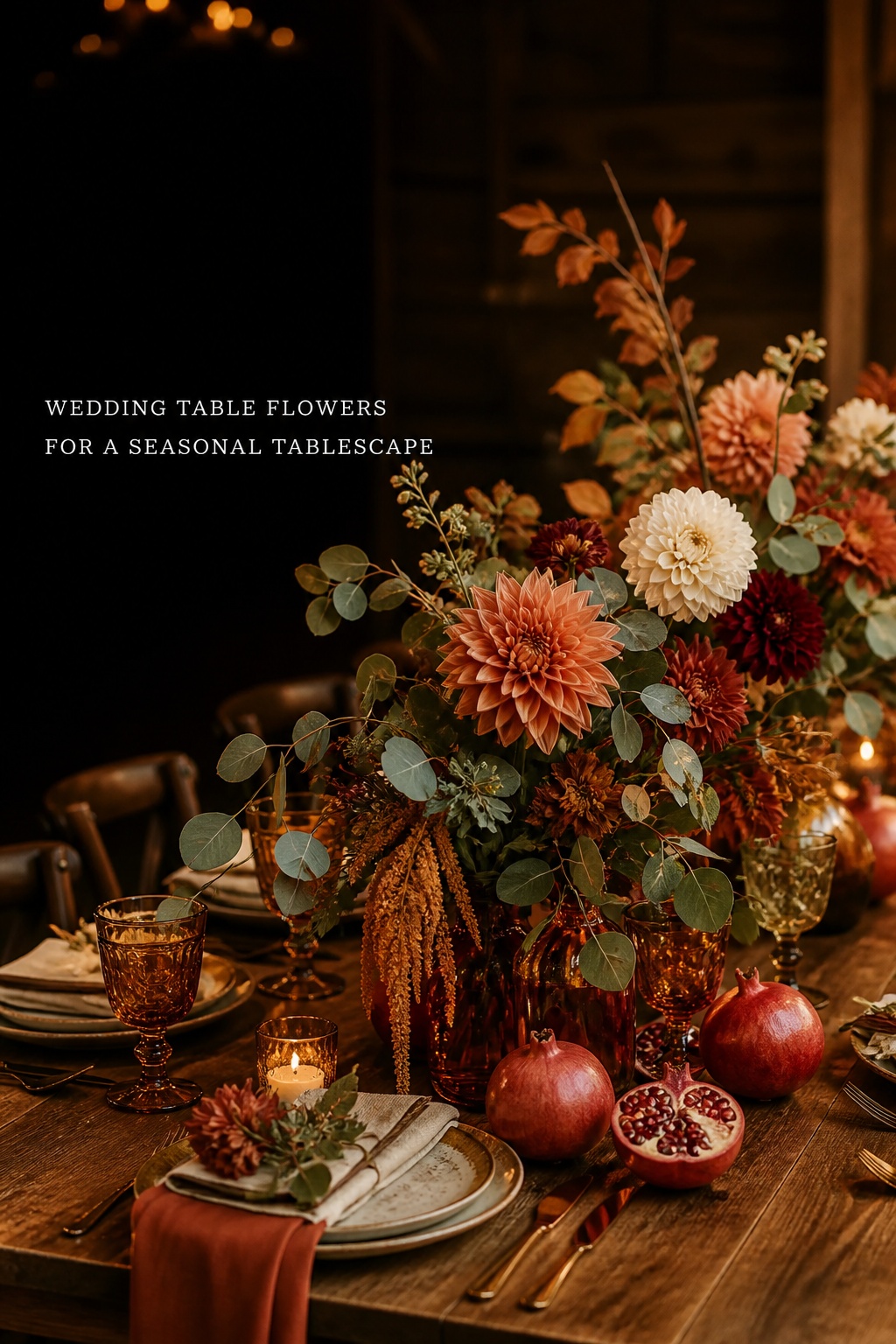
Seasonal wedding table flowers can feel especially connected to the venue and the meal. Spring tables might use tulips, flowering branches, and soft greens. Summer tables can pair bright blooms with citrus, berries, or herbs. Fall tables can add dahlias, chrysanthemums, foliage, apples, pears, pomegranates, or small branches. Winter tables can lean on evergreens, berries, dried elements, and candlelight.
Potted herbs, succulents, or small plants are useful when you want a centerpiece that can become a favor. They also suit a relaxed brunch, farm dinner, or sustainable celebration. Make sure the plants look healthy, the containers match the tablescape, and guests are given a clear way to take them home. Avoid strong fragrance near food and check venue rules before using loose fruit, soil, or natural materials.
Make the Flowers Work Harder on the Wedding Day
Beautiful wedding table flowers become a better investment when they are planned for more than one photograph. Ask your florist what can move after the ceremony and who will move it. Aisle clusters can become guest-table arrangements, ceremony urns can frame the sweetheart table, and a welcome-table piece can move to the cake table later. Reuse is only a saving if transport, labor, and timing are included in the plan.
Design around service and guest comfort
Show your florist the actual table layout, not just a generic photo. Mention charger plates, family-style serving, water carafes, menus, favors, and any required table numbers. Keep arrangements away from candles that can scorch petals and away from food where loose leaves might fall. If guests include people with allergies or sensitivities, choose low-fragrance flowers and avoid overly scented foliage.
Plan for the room as it will look during the meal. A centerpiece that feels perfect on an empty table may be too wide once plates and glasses are added. Ask for a mock-up at the approximate table size, and take a photograph from a seated eye level. If the flowers cover the person across from you in the test, they will probably do the same at the reception.
Choose fresh, faux, dried, or hybrid flowers honestly
Fresh flowers offer scent, softness, and natural variation, but they need water, careful timing, and protection from heat. Silk or faux arrangements can be prepared earlier, rented, reused, or resold, and they can be helpful for long receptions or destination weddings. Dried flowers add texture and can work beautifully with grasses, but brittle materials need careful packing and may not fit every formal style.
A hybrid plan can be the most practical. Use fresh flowers where guests will look closely, such as the sweetheart table, and use realistic faux greenery, dried accents, or candlelight on some guest tables. The key is consistency. If materials are mixed, repeat the color and silhouette so the room feels deliberate rather than assembled from unrelated sources.
Build a complete flower count before approving the quote
List every location that needs attention: guest tables, sweetheart or head table, cocktail tables, welcome table, seating chart, bar, cake table, gift table, and any memorial or lounge area. Then decide which pieces are essential and which can be supported by candles, linens, fruit, or greenery. This list lets you compare quotes accurately because two proposals may include the same number of guest centerpieces but very different amounts of labor and coverage.
Ask what happens after setup. Some florists include delivery and placement but not moving arrangements later. Some rental companies require vessel returns the same night. A friend or venue employee may be willing to distribute small arrangements, but do not assign a delicate floral transfer to someone who is also coordinating transportation or caring for the wedding party.
Trade-Offs and Mistakes to Avoid
The most common mistake is choosing wedding table flowers from a single close-up image. A close-up tells you about color and flower type, but not scale, sightlines, table width, ceiling height, service style, or the number of arrangements needed. Always zoom out and ask how the design behaves across the room.
- Do not block conversation. Use low designs or elevate tall ones above seated eye level.
- Do not ignore the table shape. Repeat flowers down long tables and center a stronger focal point on round tables.
- Do not overfill the palette. A limited color story usually looks more intentional than every flower you love at once.
- Do not forget heat and timing. Outdoor flowers may need shade, water, and a later setup window.
- Do not count only guest tables. Cake, bar, welcome, and sweetheart areas often appear in important photos.
- Do not assume DIY is free. Include buckets, vessels, conditioning time, transport, setup, cleanup, and a backup plan.
- Do not leave reuse vague. Name the person, destination, timing, and transportation for every moved arrangement.
If you are stuck between two looks, choose the one that solves more than one problem. A cluster of bud vases may provide flowers, table numbers, and flexible placement. A potted herb may provide a centerpiece and favor. A low floral runner may soften a long table while leaving the view open. A rented silk design may protect the schedule when fresh flowers would be difficult to manage.
Finally, ask whether your chosen flowers still make sense in the room after the candles are lit and dinner is served. The most successful reception tables are not just pretty at the start. They remain comfortable, legible, and welcoming for the whole evening.
FAQ
How many flowers should go on each wedding table?
It depends on table size, arrangement style, and whether candles or other details share the surface. A round table may need one balanced centerpiece or a cluster of three to seven small vessels. A long table usually needs repeated pieces or a low runner so the flowers feel connected across the full length. Ask for a table mock-up before finalizing quantities.
Should wedding table flowers be tall or low?
Choose low flowers when conversation and family-style service are priorities. Choose tall flowers when you want drama and can keep the flowering shape above seated eye level. On round tables, elevated arrangements can create height without blocking views. On long tables, low runners and repeated clusters are usually easier to live with.
What are budget-friendly wedding table flowers?
Bud vases, seasonal flowers, foliage-forward designs, potted herbs, and a mix of candles with smaller arrangements can all reduce flower volume. Concentrate premium blooms on the sweetheart table and use a simpler repeatable formula for guest tables. Reusing ceremony flowers can help, but include the cost and responsibility of moving them.
Are silk flowers a good choice for wedding tables?
Silk flowers can be a good choice when you need early preparation, reliable availability, rentals, reuse, or easier transport. They are especially useful for destination weddings and long receptions. Choose realistic materials, confirm the color in your venue lighting, and repeat the same quality level throughout the room so the result feels cohesive.
How do flowers work on long banquet tables?
Use a low floral runner, repeated bud vases, or a rhythm of small arrangements and candles. Leave clear spaces for serving dishes and keep flowers from catching on sleeves. A few connected floral moments often look more elegant and cost less than one oversized arrangement that dominates the table.
Can wedding table flowers include fruit or herbs?
Yes. Citrus, berries, apples, pears, pomegranates, herbs, and small potted plants can add color, texture, and a seasonal connection. Keep food clean and stable, avoid strong fragrance near the meal, and check with the venue or caterer before using loose produce, soil, or edible elements in the centerpiece.
How can couples reuse ceremony flowers at the reception?
Ask in advance whether aisle clusters can move to guest tables, ceremony urns can frame the sweetheart table, or arch flowers can be used behind the cake or lounge. Assign a named person or florist team to move each piece at a specific time. Reuse works best when the design is built for safe transport and the plan includes water, containers, and cleanup.