Blue Wedding Flowers for Romantic or Dramatic Style
Blue wedding flowers hold a special place in wedding styling because they can feel both romantic and striking at the same time. Yet that same quality is what makes them difficult to use well. In one wedding, blue florals can create an airy, refined atmosphere that feels calm and editorial. In another, they can lean dramatic, saturated, and bold. The difference is not simply color choice. It is mood, restraint, placement, and the way the floral story interacts with the rest of the day.
Many couples are drawn to blue because it photographs beautifully, feels memorable without being overly expected, and offers a refreshing alternative to more common wedding palettes. But blue wedding flowers can easily become visually inconsistent if the overall styling direction is unclear. A soft powdery interpretation creates one emotional world, while a richer, deeper blue composition creates another entirely. Understanding that distinction helps every other decision feel easier, from venue selection to bridal fashion to reception lighting.
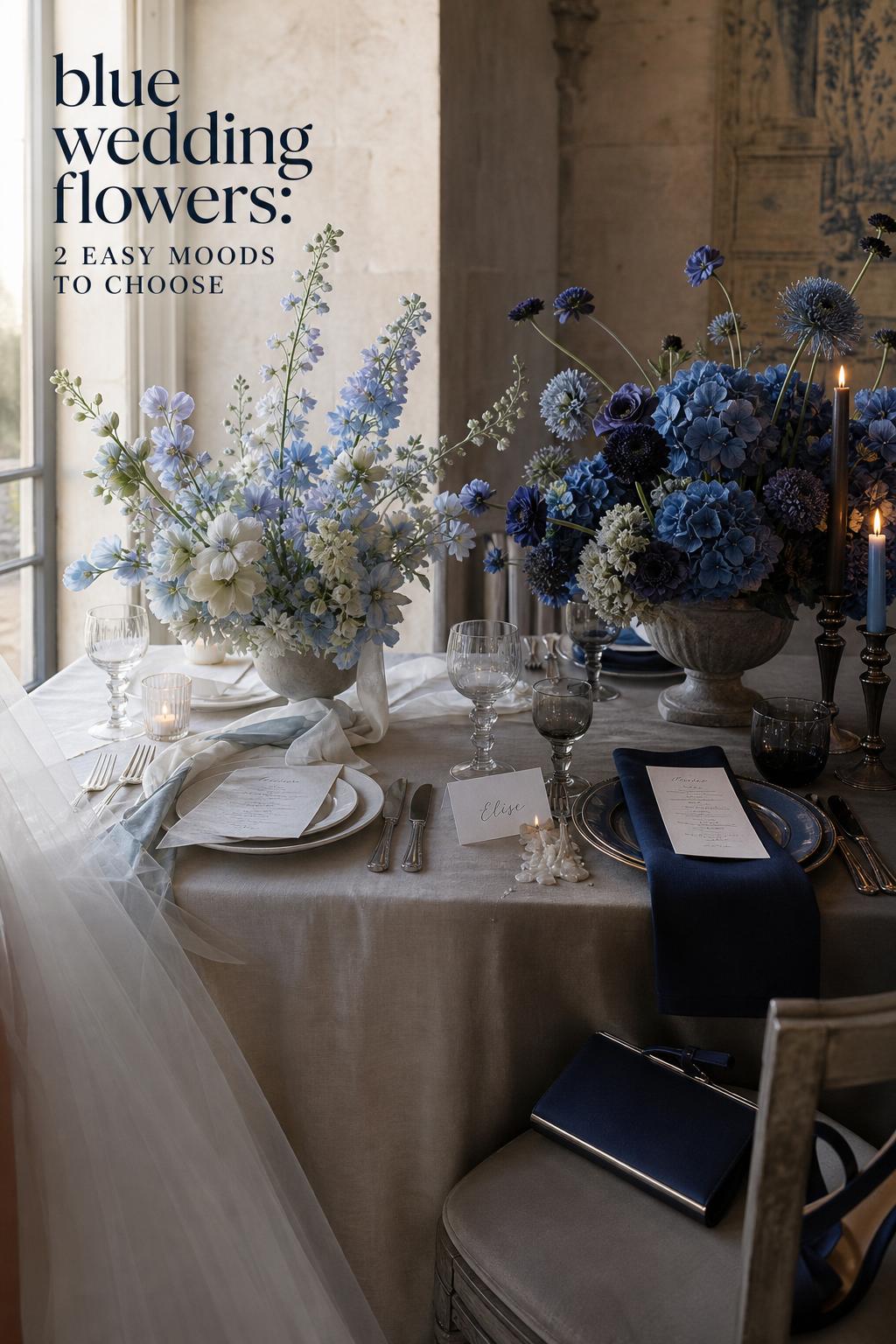
This guide explores the most important style breakdown within blue wedding flowers: soft romantic blue florals versus bold dramatic blue florals. Both are beautiful. Both can be elegant. But they serve different wedding personalities, different venues, and different emotional goals. By the end, you should be able to tell not only which version you love, but which one will actually feel cohesive on your wedding day.
Why blue wedding flowers often create confusion
Blue is one of those wedding colors that seems simple at first and surprisingly complex in practice. Couples often imagine a single “blue floral look,” when in reality blue can behave more like a styling direction than a fixed palette. It can read gentle and almost misty, or it can feel moody and architectural. That shift changes the emotional atmosphere of the ceremony, the reception energy, and even how guests interpret the formality of the day.
Turn wedding inspiration into a plan you can actually follow.
Zarellea brings your guest list, budget, vendors, and day-of details into one shared space — so no beautiful idea gets lost in the shuffle.
The confusion usually happens when the floral color is chosen before the wedding mood is defined. A couple may love blue flowers in inspiration images, but those images may belong to completely different wedding aesthetics. One might pair blue with soft candlelight, garden movement, and delicate texture. Another might use blue against cleaner lines, deeper contrast, and more sculptural styling. Without recognizing that difference, the final wedding can feel caught between visions.
That is why a comparison matters here. This is not only about choosing flowers that are blue. It is about deciding whether blue should whisper through the wedding or anchor it.
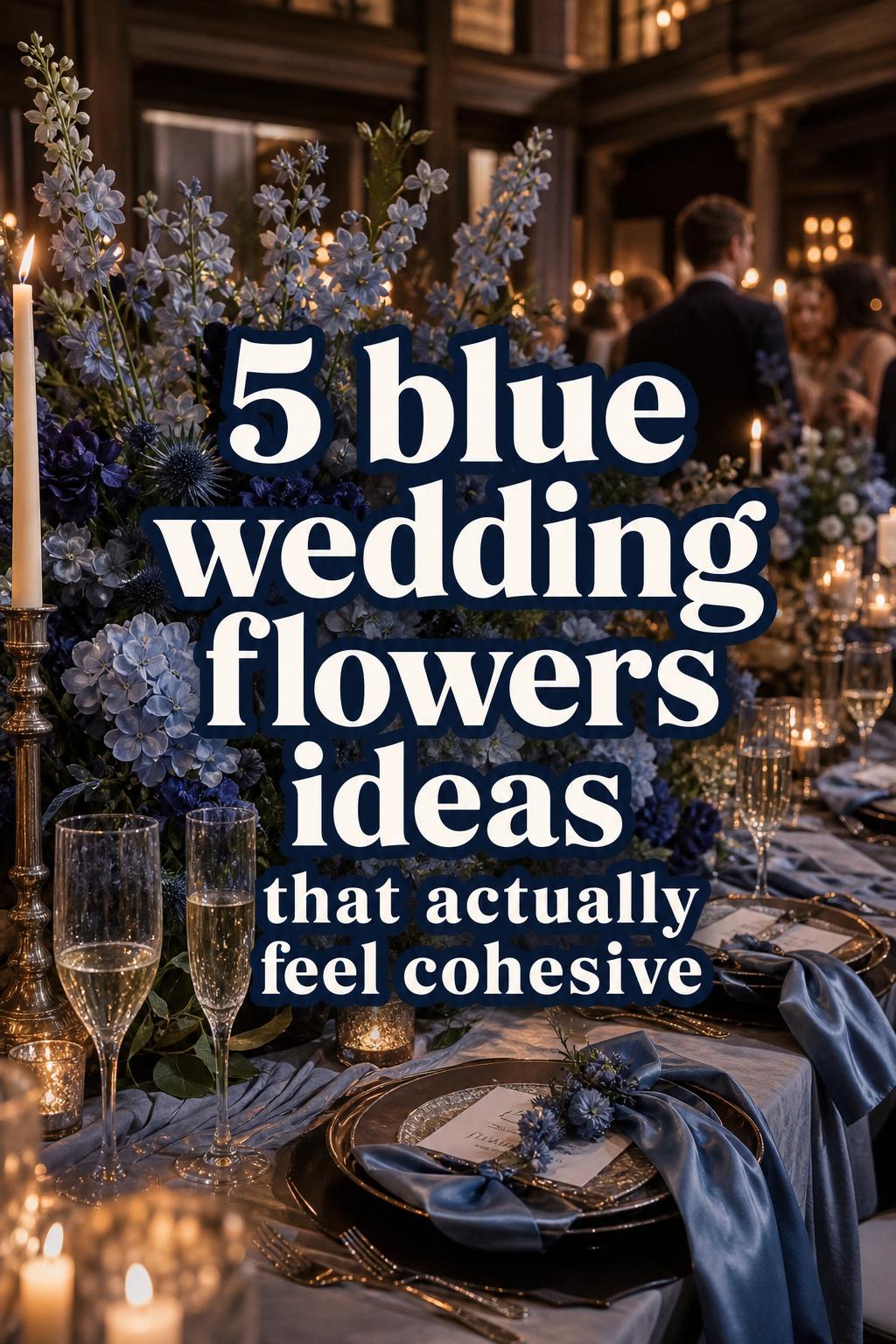
Style overview: soft romantic blue florals
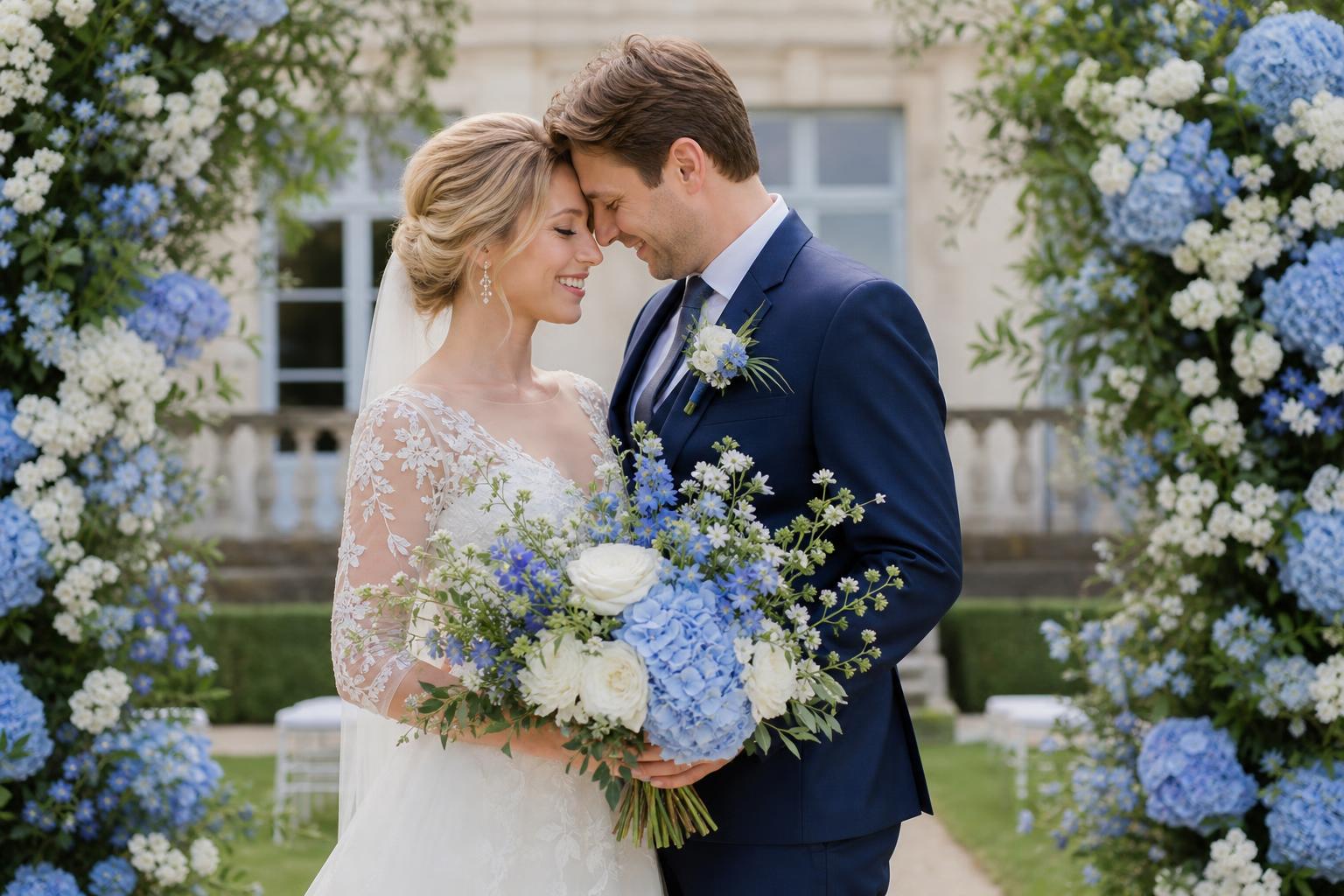
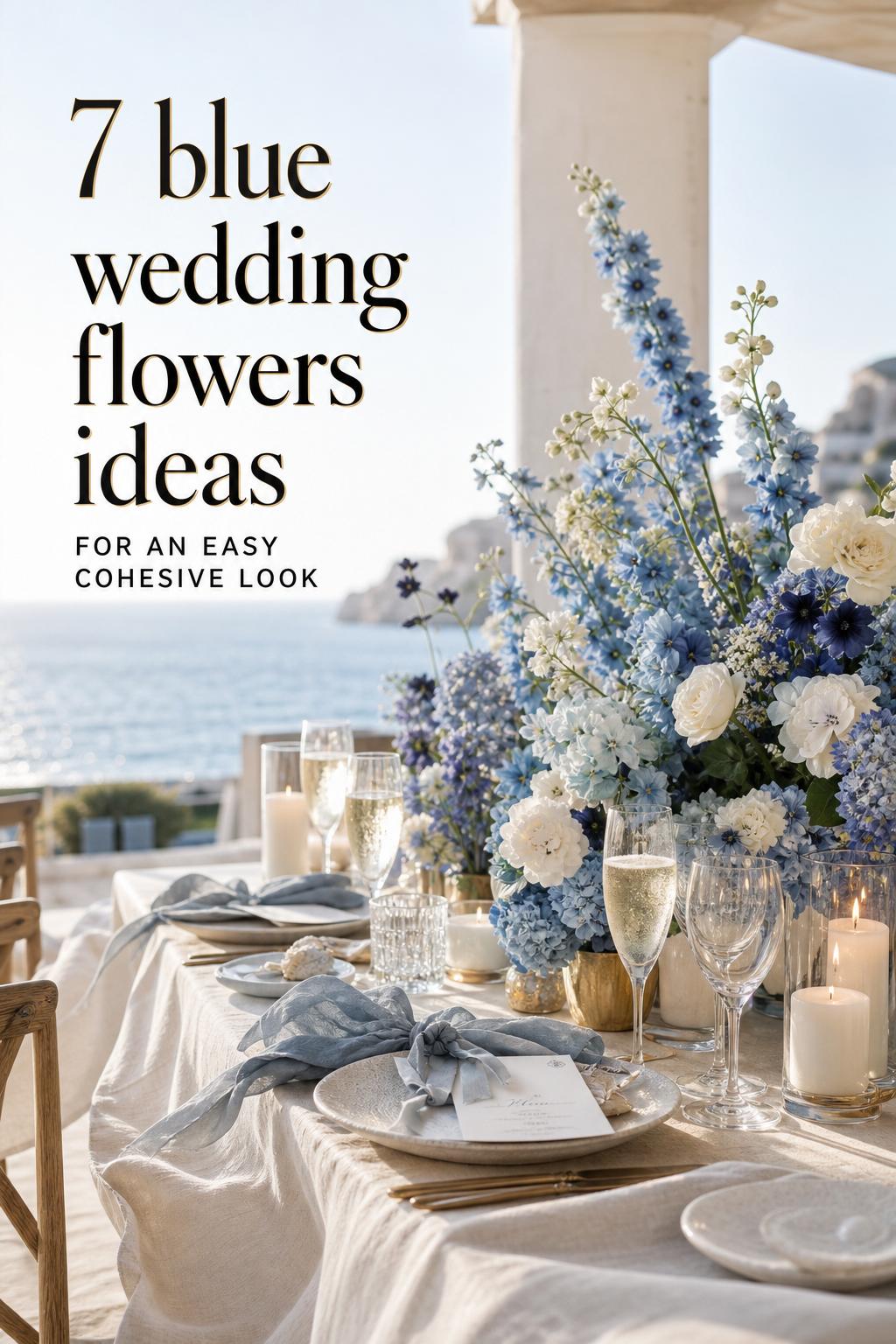
Soft romantic blue florals are the gentler interpretation of blue wedding flowers. This style tends to feel ethereal, layered, and emotionally open. Blue is used as a watercolor note rather than a visual command. It usually works through pale, dusty, powdery, or muted blue tones blended with supportive neutrals and soft surrounding textures. The impression is graceful rather than sharp.
In a real wedding setting, this style often behaves best when there is natural light, movement, and some softness already present in the environment. Garden venues, outdoor ceremonies, light-filled estates, tented receptions, and settings with a romantic architectural backdrop all support this floral direction naturally. The flowers do not need to fight the venue. They simply continue the atmosphere.
The emotional mood is tender, intimate, and quietly luxurious. Guests tend to experience this style as welcoming and dreamy. It rarely feels rigid. Even when the wedding is formal, the flowers soften that formality and make the day feel emotionally accessible.
Color-wise, soft romantic blue florals usually need tonal support. They work best when blue is allowed to blend rather than stand alone. This creates a more nuanced visual identity and avoids a harsh or overly themed result. The palette often feels airy, elegant, and layered rather than high-contrast.
Bridal styling that suits this approach often includes softer silhouettes, flowing fabric, delicate details, and styling choices that move naturally. The floral story and the fashion need to belong to the same emotional world. If the bouquet is airy and painterly but the bridal look is severe and highly structured, the wedding can start to feel visually divided.
Photography in this style tends to feel luminous and romantic. Blue appears gentler in natural light, and the floral styling often creates depth without heaviness. This is the version of blue wedding flowers that tends to suit couples who want softness in both the lived experience and the final images.
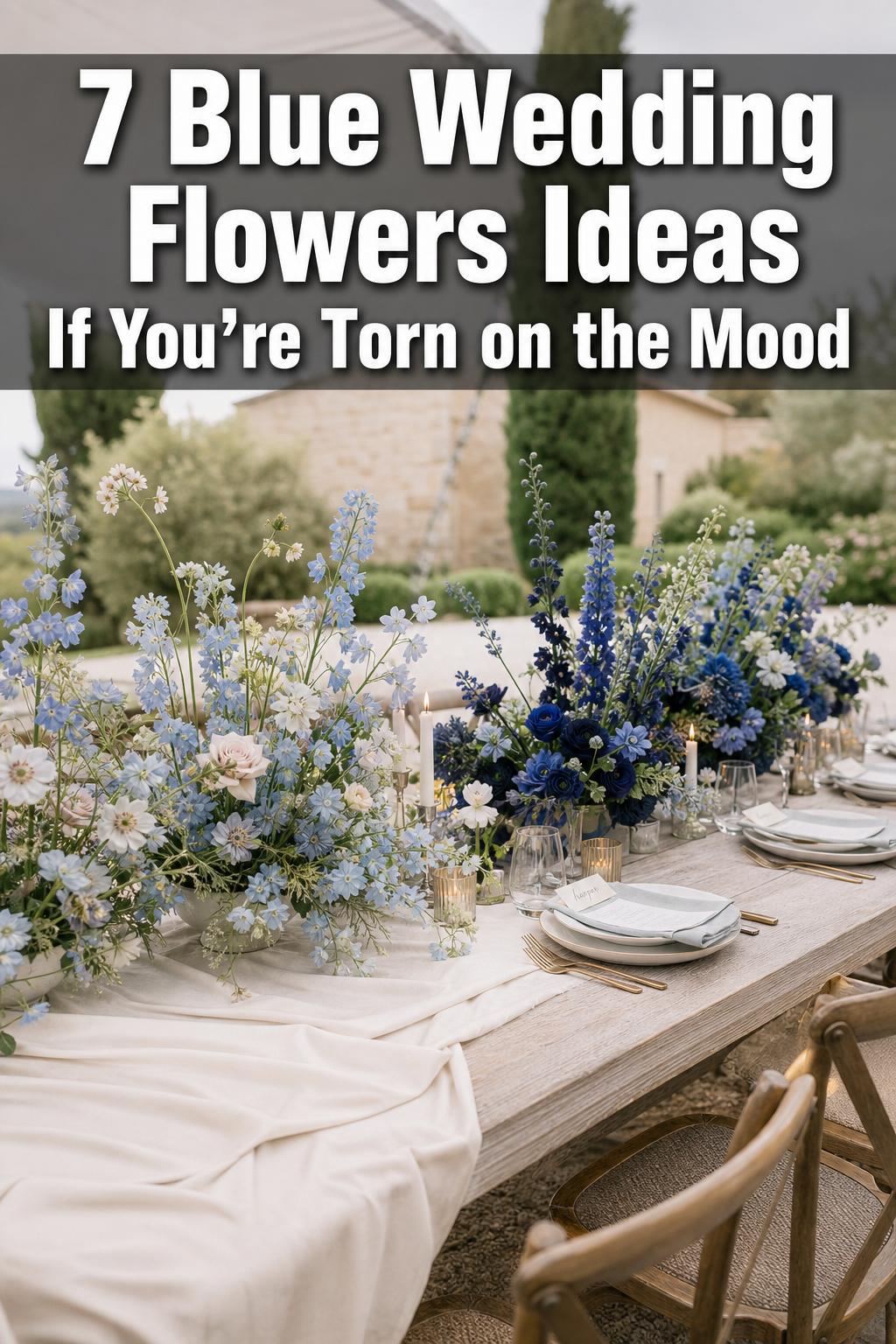
Style overview: bold dramatic blue florals
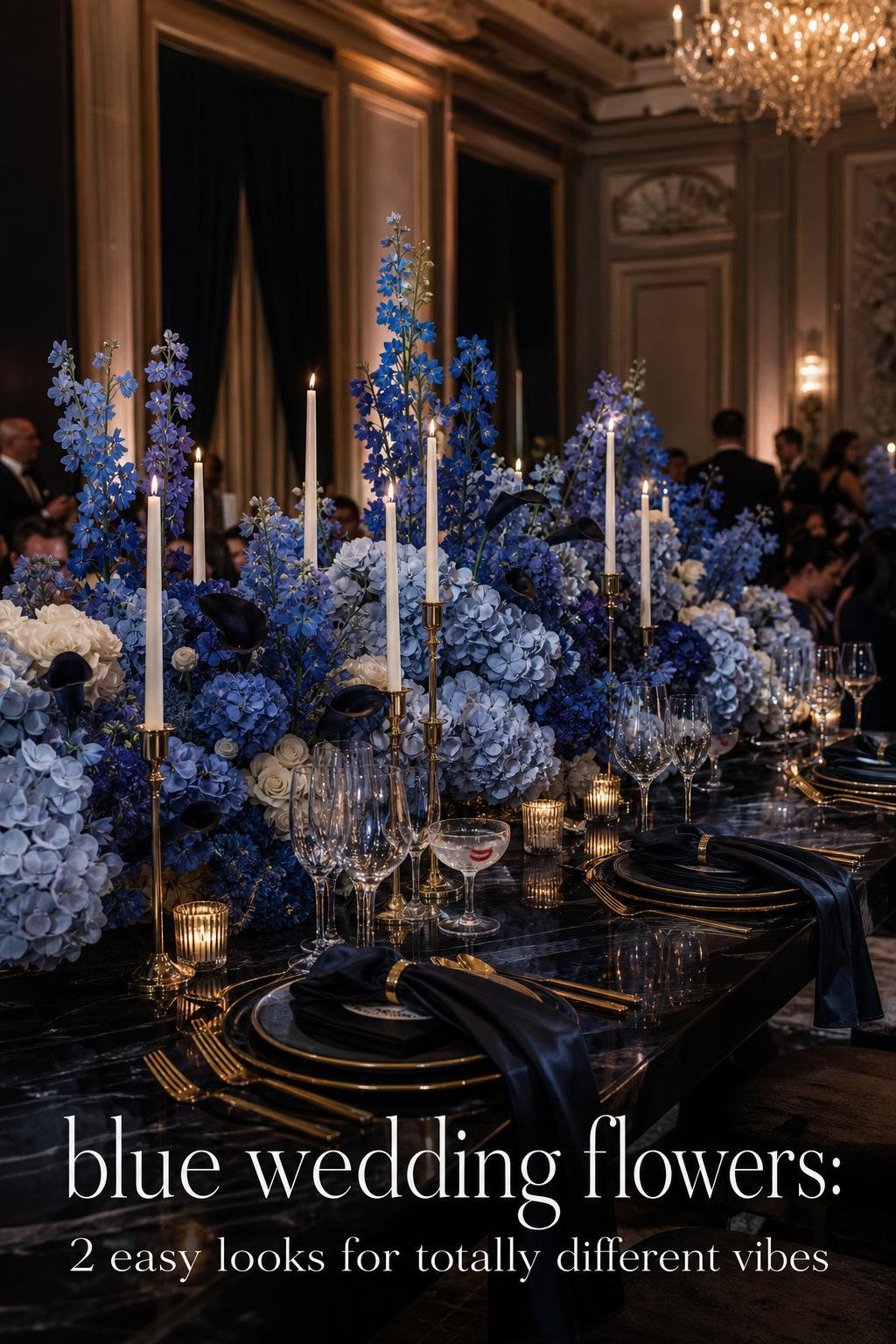
Bold dramatic blue florals approach the same color from a completely different perspective. Here, blue is not background emotion. It becomes visual punctuation. The palette feels stronger, more intentional, and more graphic. Instead of blending into an airy floral cloud, blue takes on a more sculptural role within the wedding design.
This style often suits venues with more structure or visual authority. Indoor spaces with stronger architectural lines, evening receptions, formal rooms, or settings that can support a richer atmosphere are often more compatible. In these environments, dramatic blue flowers feel grounded rather than overpowering.
Emotionally, this version of blue wedding flowers feels more confident, more cinematic, and often more fashion-led. Guests may experience it as elevated, memorable, and visually intentional. It can create a sense of occasion very quickly, especially when used in concentrated arrangements or more defined floral moments.
The palette in this style is less about softness and more about contrast and depth. Even when the arrangement itself is romantic, the overall impression tends to feel more composed and more dramatic. Blue becomes part of the wedding’s identity rather than a gentle accent within it.
Bridal fashion that pairs well with this direction often has clearer lines, stronger shape, or a more editorial presence. This does not mean the dress must be minimalist, but it does mean the styling usually benefits from confidence and clarity. Accessories, bouquet scale, and even hair and makeup choices tend to matter more because every element is more visible against the bolder floral direction.
In photos, dramatic blue florals can create stronger focal points and more visual tension. They often read beautifully in evening light and in spaces where depth, shadow, and contrast contribute to the atmosphere. This version suits couples who want their floral design to feel distinctive and intentional rather than softly blended into the background.
The emotional difference between these styles
The most important difference between soft and dramatic blue wedding flowers is not shade alone. It is emotional temperature. Soft blue florals tend to feel tender, poetic, and open-hearted. They create an atmosphere where guests settle into the romance of the day almost without noticing. The beauty arrives gently.
Dramatic blue florals create a different response. They announce themselves more clearly. The atmosphere feels more curated and more stylized. Guests are likely to notice the floral identity immediately because it defines the visual mood with more authority. That can be incredibly effective for formal weddings, evening celebrations, or couples who want a stronger design signature.
Photography also shifts with the emotional direction. Soft blue flowers often appear like part of the air around the wedding, supporting candid moments, movement, and luminous portraits. Dramatic blue flowers create more visual punctuation. They can make the images feel more editorial, more composed, and more deliberate.
Neither emotional world is better. The right choice depends on whether you want your wedding to feel like a romantic unfolding or a visually defined statement.
Where the visual identity separates most clearly
Floral styling and arrangement shape
Soft romantic blue wedding flowers usually work through looseness, movement, and visual diffusion. Arrangements tend to feel gathered rather than engineered. The beauty comes from softness at the edges. Bold dramatic blue florals usually rely on stronger composition. Even when the flowers themselves are lush, the result feels more defined. This affects not only how the florals look, but how much visual attention they demand in every part of the venue.
Color behavior throughout the wedding
In the softer version, blue is often part of a tonal conversation. It feels integrated. In the more dramatic version, blue acts as contrast or emphasis. This changes everything from bridesmaid styling to table linens to stationery. A soft blue floral palette usually forgives slight variation. A bold blue palette requires more discipline to avoid visual conflict.
Venue compatibility
Soft blue florals generally adapt more naturally to outdoor or light-filled settings because they echo atmosphere rather than dominate it. Dramatic blue florals often perform better where there is enough architectural weight or evening mood to support them. In a very delicate venue, a strong blue floral design can feel too forceful. In a formal room, a very pale blue floral direction can sometimes feel underpowered unless lighting and scale are handled carefully.
Decor density and styling philosophy
Soft romantic blue weddings can accommodate a more layered look because softness helps blend details together. Dramatic blue weddings usually need more editing. Since the color already creates emphasis, too many additional decorative moments can make the design feel crowded. In practical terms, stronger blue often benefits from fewer but more intentional styling points.
Guest dress code feel
The floral direction subtly influences guest expectations. Soft blue florals usually suggest a romantic, graceful dress code that feels approachable and elegant. Dramatic blue florals suggest a more polished, possibly more formal guest experience. Guests may instinctively read the event as more elevated and style-conscious, especially if the florals are paired with structured decor and evening lighting.
Wedding style logic: what works in practice
This is where many blue wedding flower decisions become more practical than aesthetic. A floral idea may be beautiful in isolation but difficult in the wrong setting. Blue is visually expressive, so execution matters more than couples often expect.
Which style is more forgiving visually
Soft romantic blue florals are generally more forgiving because their charm comes from blending and atmosphere. Small differences in texture, placement, or tone often feel natural rather than disruptive. Bold dramatic blue florals are less forgiving because they create stronger focal points. Any mismatch in decor, fashion, or venue styling becomes more visible.
How lighting changes the result
Lighting affects blue more than many couples realize. Soft blue florals usually thrive in daylight, especially when the goal is a romantic and airy mood. Dramatic blue florals can become especially compelling at dusk or in candlelit interiors, where depth and contrast add richness. If your venue is naturally dark, very soft blue may disappear unless supported carefully. If your venue is extremely bright and delicate, a dramatic blue palette may feel more forceful than intended.
Budget reality
Couples often underestimate the cost impact of trying to make blue florals feel highly specific. The more exact the mood, the more cohesion is required across bouquets, ceremony pieces, reception arrangements, textiles, and styling details. Soft blue can sometimes stretch more gracefully because tonal variation feels organic. Dramatic blue usually asks for tighter visual control, which can increase styling pressure and make every surrounding choice more important.
What often goes wrong
- Choosing blue flowers without defining whether the wedding should feel soft or bold.
- Pairing delicate blue florals with a venue that is too heavy or dark for them to register.
- Using dramatic blue arrangements in a setting that calls for more softness and air.
- Creating a disconnect between bridal fashion and floral mood.
- Adding too many unrelated textures, which makes blue feel accidental rather than intentional.
Visual style breakdown across the wedding day
Bridal fashion
With soft romantic blue wedding flowers, bridal fashion often feels best when it echoes fluidity. Movement in the dress, gentleness in styling, and a sense of softness around the face all help the bouquet feel integrated rather than separate. With dramatic blue florals, stronger fashion direction usually creates better balance. The dress does not need to compete, but it should feel intentional enough to stand beside the florals rather than dissolve into them.
Bridesmaid styling
Soft blue floral weddings often suit bridesmaid styling that feels tonal and romantic, where the group contributes to the atmosphere without becoming too visually segmented. Dramatic blue florals tend to reward cleaner coordination. Because the flowers already create a defined color statement, bridesmaid styling usually works best when it supports visual discipline rather than introducing too many additional directions.
Ceremony design
A ceremony built around soft blue florals usually feels immersive and emotional. The flowers soften the transition into the vows and create a setting that feels naturally romantic. A dramatic blue ceremony setup feels more framed. It can be striking and beautiful, but the emphasis is different. Guests are more aware of the floral design as a deliberate visual feature.
Reception tablescape
Soft blue on reception tables often reads best through layering and subtle rhythm. It can feel inviting and elegantly relaxed. Dramatic blue tablescapes usually need restraint. Since blue already anchors the table visually, too many decorative additions can make the setting feel dense. In this style, negative space and editing often make the wedding feel more expensive.
Stationery and small details
Soft blue floral styling usually benefits from stationery that feels delicate and blended into the larger mood. Dramatic blue styling often calls for more confidence in printed details so that the paper story does not feel disconnected from the floral direction. This is one of the easiest places to lose cohesion, because blue flowers may suggest one emotional world while the invitation suite suggests another.
Example comparison: ceremony styling
Imagine the same couple in two different ceremony versions. In the soft romantic interpretation, blue wedding flowers are arranged to feel almost like part of the landscape. The aisle and floral focal points create movement, but there is still breathing room. The result is emotional and tender, with the flowers supporting the moment rather than staging it too aggressively.
In the bold dramatic interpretation, the ceremony feels more visually framed. The blue florals define where the eye should go. There is a stronger sense of styling intention, and the flowers contribute to the ceremony as a major visual event. This can be incredibly effective for couples who want the ceremony to feel cinematic and memorable in photographs.
The practical difference is important. The softer version usually depends on atmosphere and natural integration. The bolder version depends on confidence, placement, and clear design control.
Example comparison: bridal fashion direction
With soft blue wedding flowers, bridal fashion typically feels best when the look carries a certain gentleness. A bouquet with airy blue tones next to a highly severe silhouette can feel emotionally mismatched, even if each element is beautiful on its own. The goal is harmony of feeling.
With dramatic blue florals, the bridal look can hold more visual authority. Structured lines, clearer shape, or a more editorial approach often feel natural beside florals that already have stronger presence. This style asks the bride to stand within the design rather than simply soften it.
What matters most is not whether the dress is simple or detailed, but whether it belongs to the same visual language as the flowers.
Example comparison: reception atmosphere
A soft blue floral reception usually feels like an extension of the romance established earlier in the day. Guests experience the room as layered, calm, and inviting. The atmosphere supports conversation, intimacy, and warmth. Even a larger wedding can feel emotionally softened by this floral direction.
A dramatic blue floral reception creates more impact on entry. The room feels styled, deliberate, and visually memorable. This can be perfect for couples who want the reception to feel like a distinct reveal. However, it usually works best when the surrounding details are edited carefully so the florals remain elegant rather than heavy.
If the reception is your main design priority, this is often the moment that clarifies which blue floral style suits you best: immersive romance or visual statement.
Example comparison: destination wedding version
For a destination wedding, soft blue wedding flowers often feel especially natural when the setting itself is part of the romance. The florals can gently reflect sky, water, or open air without making the design feel too literal. This makes the color feel connected to place in a graceful way.
A dramatic blue destination wedding can be beautiful too, but it requires more care. If the location already has strong visual personality, bold blue florals can either create stunning contrast or visual competition. The key is deciding whether the destination should be the backdrop or whether the floral design should share equal attention.
For travel-based weddings, blue works best when the color story respects the environment rather than trying to overpower it.
Example comparison: intimate wedding interpretation
At a smaller wedding, soft blue florals can make the day feel deeply personal and emotionally textured. Because guests are physically closer to every detail, the softness reads beautifully and never feels overstated. It creates a sense of closeness.
In an intimate setting, dramatic blue florals can feel almost couture if handled with restraint. A smaller guest count gives each floral moment more attention, so bold blue must be edited carefully. One strong arrangement can feel far more luxurious than several competing ones.
This is one of the clearest examples of how scale changes floral logic. Small weddings reward precision. Blue becomes more noticeable, so every decision matters more.
Style personality match
Some couples are naturally drawn to weddings that feel emotionally soft, fluid, and quietly romantic. For them, blue wedding flowers usually work best when interpreted with gentleness. This style supports couples who want guests to feel enveloped rather than impressed from a distance.
Other couples want the wedding to feel designed, elevated, and visually unmistakable. They are not necessarily less romantic, but they are more likely to value impact, contrast, and a stronger sense of curation. For them, a bolder blue floral identity often feels more honest and more memorable.
The easiest way to tell which one is yours is to think about what you want people to feel in the first five minutes. Soothed and swept into the atmosphere, or immediately aware of the wedding’s point of view.
Best season and venue pairing notes
Soft blue wedding flowers generally feel most natural in seasons and settings that already support lightness. Venues with gardens, outdoor ceremony options, or soft interior light tend to enhance this direction because the flowers become part of a larger romantic environment.
Bold dramatic blue florals often become more compelling in settings with stronger mood, more architectural definition, or evening emphasis. Richer surroundings can handle stronger floral contrast without making the wedding feel unbalanced.
- Choose soft blue when the venue already offers air, light, and natural romance.
- Choose dramatic blue when the space benefits from floral structure and visual definition.
- Be careful with blue in venues whose existing style strongly opposes your floral direction.
- Always judge blue by the actual light conditions of the venue, not by inspiration photos alone.
What makes blue wedding flowers feel expensive
Luxury in blue floral styling rarely comes from excess alone. It comes from cohesion. Blue feels expensive when it appears intentional across the wedding without becoming repetitive or forced. Tonal layering, thoughtful restraint, and a clear relationship between flowers, fashion, and venue are what create that elevated result.
Lighting is another major factor. Blue can look sophisticated and dimensional in the right light, or flat and disconnected in the wrong one. The same is true of surrounding textures. When fabrics, paper goods, and tablescape choices support the floral mood, blue feels integrated. When they compete, the wedding can lose refinement quickly.
One of the most common misconceptions is that stronger color automatically creates a more luxurious effect. In reality, blue feels most elegant when it has room to breathe.
What ages better in photos
Timelessness depends less on whether the flowers are blue and more on how forcefully the blue is used. Softer blue wedding flowers often age beautifully because they create atmosphere rather than visual insistence. They become part of the emotion of the image.
Dramatic blue florals can also age well when the design is disciplined and not overloaded with competing trends. The strongest long-term results usually come from weddings where blue was used with confidence but not excess. If the floral statement is so dominant that everything else feels secondary, the images may feel more tied to a specific aesthetic moment.
If timeless photography matters deeply to you, ask whether you want your flowers to define the image or deepen it. That answer usually points you in the right direction.
Can you combine these styles?
Yes, but only if one approach remains dominant. The most successful blended blue wedding flower designs usually use soft romantic styling as the base and then add a few stronger blue moments for emphasis. This keeps the wedding emotionally coherent while still allowing for visual depth.
Where couples often struggle is trying to divide the wedding evenly between softness and drama. That usually creates a stop-start feeling. The ceremony might feel airy, the reception might feel severe, and the bride’s look may belong to neither. Blending works best when there is a clear emotional anchor.
If you love both, decide first what you want the wedding to feel like overall. Then use the second style as a supporting note rather than a competing identity.
Tips for choosing your blue floral direction with confidence
- Start with atmosphere, not color alone. Decide whether you want the day to feel soft and romantic or bold and defined.
- Evaluate your venue honestly. Blue flowers should work with the existing space, not battle it.
- Make sure bridal fashion and florals speak the same visual language.
- Consider how your wedding will be lit from ceremony through reception.
- Edit surrounding decor carefully, especially if your blue flowers are dramatic.
- Think about the guest experience, not just the floral close-up.
A helpful planning exercise is to describe your ideal wedding in emotional terms before mentioning flowers at all. If your words are calm, airy, intimate, and poetic, soft blue wedding flowers are likely the better fit. If your words are cinematic, striking, elevated, and polished, the dramatic route may be more aligned.
Another useful test is to imagine your ceremony and reception separately. Some couples discover they want softness for the vows and more definition for the evening celebration. That can work beautifully as long as the transition feels intentional rather than like a change of theme.
The decision that matters most
The real choice is not whether blue wedding flowers are right for a wedding. It is what version of blue romance feels true to the day you want to create. Soft blue offers emotion through atmosphere. Dramatic blue offers emotion through presence. Both can be elegant, memorable, and deeply personal when they are used with clarity.
When couples choose a floral direction that matches their venue, their fashion, and the emotional tone they want guests to feel, the entire wedding becomes more cohesive. That is what makes a color story feel beautiful in practice, not just in inspiration images. Blue is at its best when it supports the wedding’s identity rather than trying to invent one after the fact.
If you are deciding between the two, trust the version that feels most like your wedding when you close your eyes and picture the day unfolding. The most memorable floral styling is not only beautiful. It feels inevitable, as though it could never have been anything else.
FAQ
Are blue wedding flowers better for romantic weddings or modern weddings?
Blue wedding flowers can suit both, but the styling approach changes the result. Softer blue florals usually feel more romantic and airy, while bolder blue florals tend to feel more modern, dramatic, or editorial.
How do I keep blue wedding flowers from feeling too themed?
The key is restraint and cohesion. Blue feels more elegant when it is integrated into the wedding atmosphere rather than repeated too literally in every detail, especially when the venue, fashion, and decor all support the same overall mood.
Do blue wedding flowers work better indoors or outdoors?
Soft blue floral styling often works beautifully outdoors or in bright natural light, while dramatic blue floral styling can feel especially strong indoors or in evening settings with more depth and contrast. The right choice depends on the mood of the venue and the available light.
What is the biggest mistake couples make with blue wedding flowers?
The most common mistake is choosing blue as a color before deciding what emotional atmosphere the wedding should have. Without that clarity, the flowers can feel disconnected from the venue, the bridal styling, or the reception design.
Are soft blue wedding flowers more timeless than bold blue ones?
Soft blue often feels more timeless because it creates mood gently and blends naturally into photographs. Bold blue can also age beautifully, but it usually requires more editing and visual discipline to keep the design from feeling overly tied to a specific aesthetic moment.
Can I use blue wedding flowers for a small intimate wedding?
Yes, and they can be especially effective in smaller weddings because guests notice every detail more closely. Soft blue can make the day feel deeply romantic, while dramatic blue can feel very elevated if used selectively and with restraint.
How do blue wedding flowers affect reception styling?
Blue flowers often become one of the strongest visual elements in the room, so they influence how much decor the reception can comfortably hold. Softer blue usually allows for more layering, while stronger blue often looks best when the tablescape and surrounding details are edited carefully.
Can I mix soft and dramatic blue wedding flowers together?
You can, but the wedding needs one dominant direction. The easiest way to blend them is to keep the overall floral mood soft and romantic, then introduce a few stronger blue accents for depth instead of trying to split the design evenly between both styles.