Autumn Wedding Flowers for a Romantic Editorial Mood
Autumn wedding flowers carry a kind of emotional richness that few other seasonal florals can match. They can feel romantic and painterly, rustic and textural, or refined and editorial depending on how they are styled. That is exactly why so many couples are drawn to them, and also why choosing a clear floral direction matters so much. The same season can hold berry-filled bouquets, airy boho arrangements with pampas grass, or elegant designs built around dahlias, ranunculus, and garden roses.
Many fall wedding flower styles share the same ingredients: burgundy, rust, amber, orange, dried leaves, eucalyptus, chrysanthemums, scabiosa, and spray roses all appear again and again in autumn arrangements. But the feeling they create is not the same. A rustic bouquet with maple leaves behaves very differently in a barn celebration than a romantic bouquet with lisianthus and ranunculus in a city venue. Both may be beautiful, yet one can feel grounded and harvest-inspired while the other feels softer, more polished, and quietly luxurious.
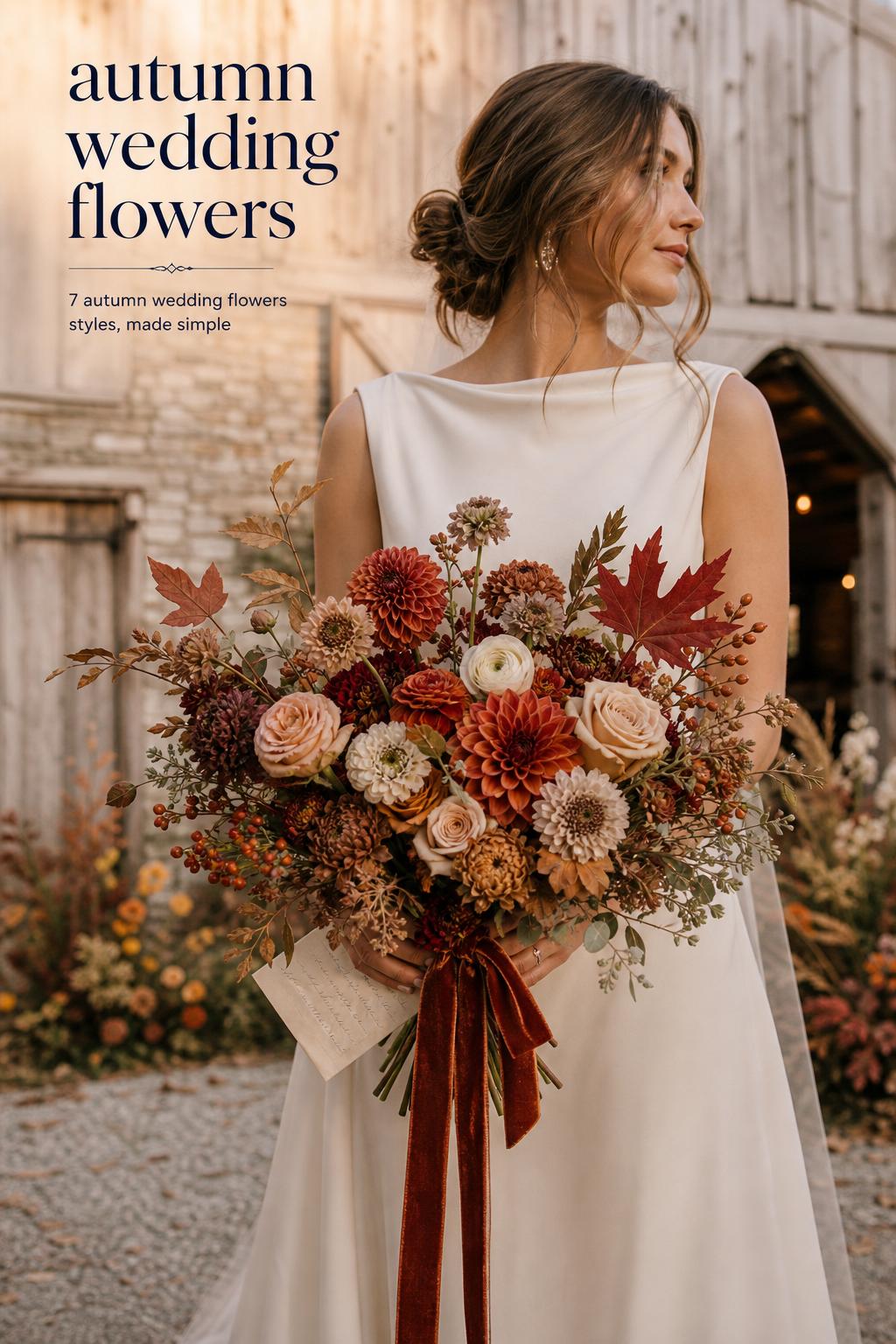
This guide looks closely at the most recognizable directions in autumn wedding flowers so you can choose with confidence. You will see how the styles differ visually, how they shape the atmosphere of a wedding, what venues they suit best, and how to make practical decisions about color palette, bouquet structure, florals, foliage, and florist communication without losing the emotional heart of the season.
The autumn flower styles couples compare most often
In real wedding planning, autumn wedding flowers are rarely chosen bloom by bloom in isolation. Couples usually respond first to a feeling. They save an image because it feels warm, moody, festive, romantic, airy, or timeless. From there, floral design tends to fall into a few recurring style families: rustic harvest, boho autumn, and elegant romantic fall.
Turn wedding inspiration into a plan you can actually follow.
Zarellea brings your guest list, budget, vendors, and day-of details into one shared space — so no beautiful idea gets lost in the shuffle.
These aesthetics overlap enough to create confusion. Dahlias may appear in all three. So can ranunculus, chrysanthemums, scabiosa, eucalyptus, dried foliage, and deep seasonal tones. The real distinction is not whether a bouquet includes a certain bloom, but how the bouquet is built, what textures dominate, how much looseness or structure it has, and what atmosphere it creates alongside the venue, fashion, and reception styling.
Understanding these differences prevents a wedding from feeling visually divided. A loosely gathered boho bouquet can look disconnected in a highly formal setting, while a compact romantic bouquet may feel too restrained for a harvest-inspired celebration with layered foliage and organic texture. Autumn flowers are generous in possibility, but they are most beautiful when the floral direction behaves consistently across the day.
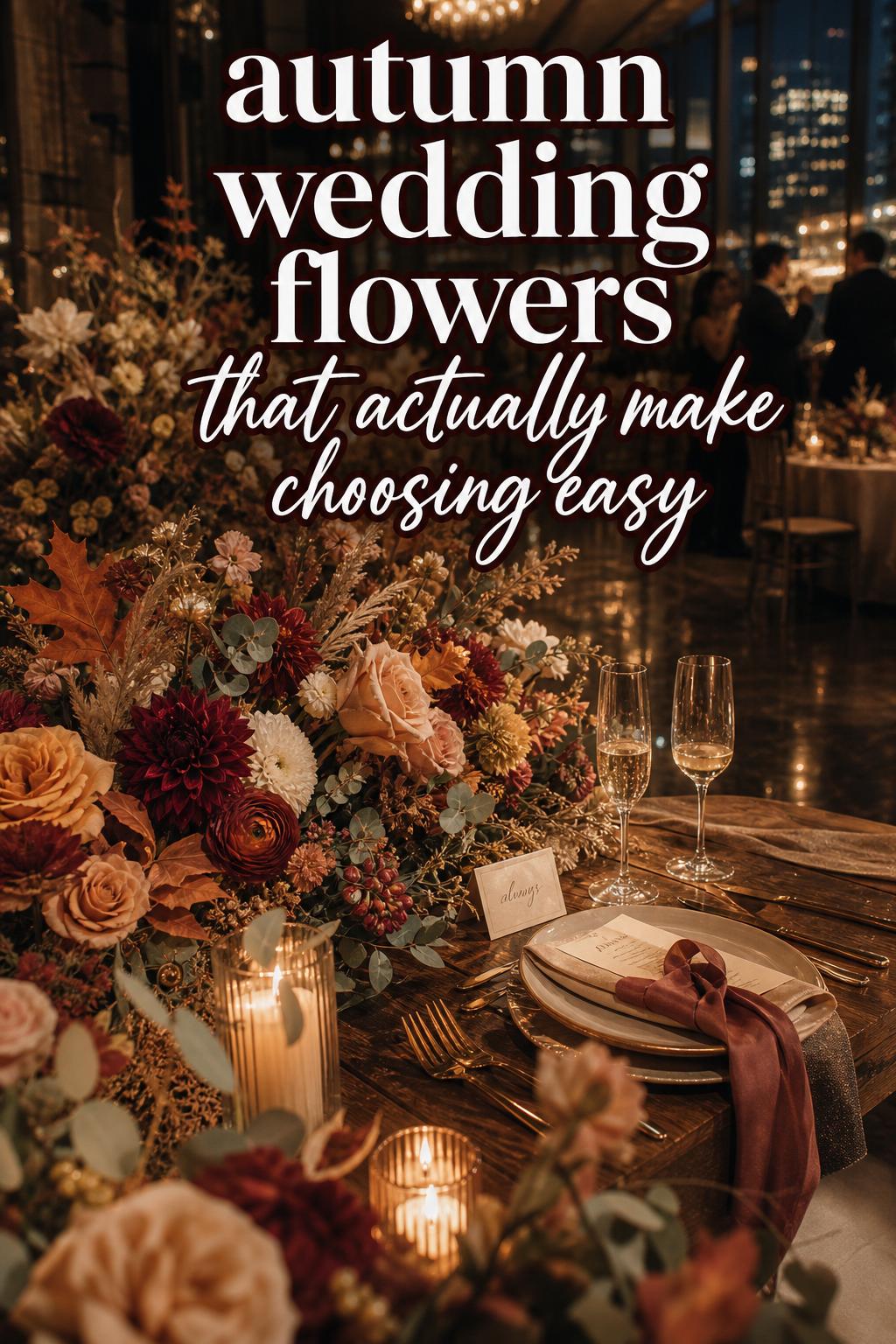
Style overview: rustic autumn wedding flowers
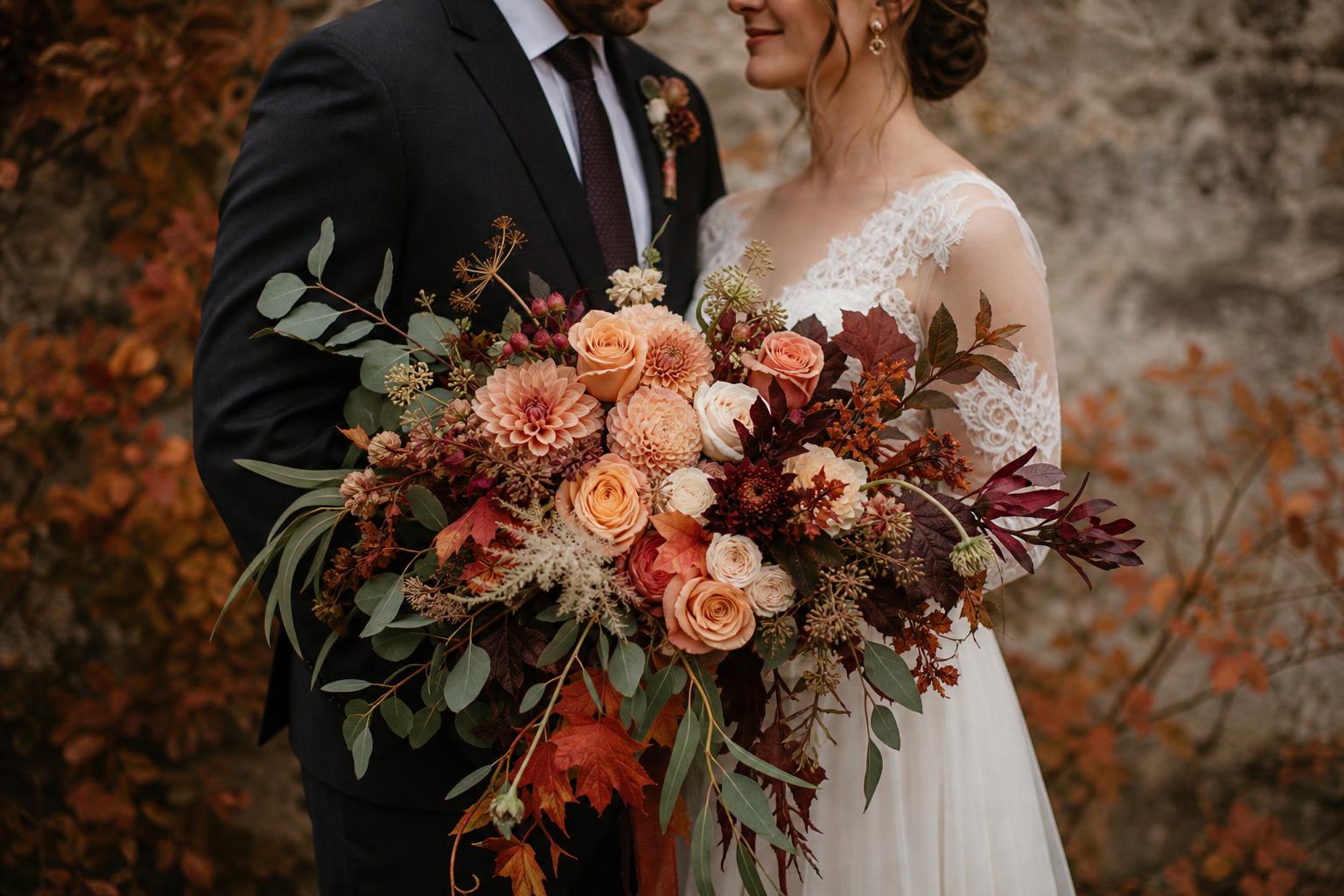
Rustic autumn wedding flowers are usually the most immediate expression of the season. They lean into abundance, texture, and the sense that the arrangement belongs to the landscape around it. Think dahlias, chrysanthemums, berries, dried leaves, maple leaves, and fern-like foliage gathered into bouquets that feel slightly untamed in the best way.
The emotional atmosphere here is warm, welcoming, and grounded. Rustic florals often suit barn weddings, countryside celebrations, and venues where wood, stone, or natural surroundings already set the tone. Instead of trying to polish away autumn’s rough edges, this style uses them. Dried foliage, berry accents, and earthy movement become part of the beauty.
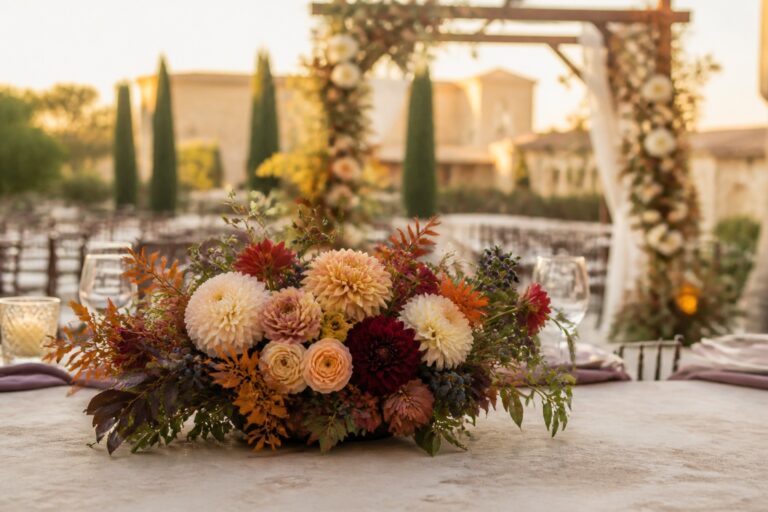
Color palette matters deeply in this style. Burgundy, rust, amber, orange, and cream often work together, with darker accents creating depth rather than drama for its own sake. The bouquet may include statement dahlias alongside mums or scabiosa for texture, then be softened with eucalyptus or dried fern elements. The result feels layered, seasonal, and emotionally generous.
In photographs, rustic autumn bouquets tend to read as dimensional and tactile. They catch light in many places because they contain more visible shape variation. That texture is one reason this style remains so appealing in gallery-led wedding features from editorial platforms such as The Knot, WeddingWire, and Wedding Forward.
What defines rustic autumn florals in practice
- Textural blooms such as dahlias, chrysanthemums, and scabiosa
- Seasonal accents like berries, dried leaves, and maple leaves
- Warm earth tones including rust, burgundy, amber, orange, and cream
- Looser bouquet shaping with visible foliage and natural movement
- A setting that supports an organic, harvest-inspired atmosphere
Style overview: boho autumn wedding flowers
Boho autumn wedding flowers also love texture, but they express it differently. Where rustic design feels grounded and harvest-centered, boho florals feel freer, airier, and more directional. Pampas grass, eucalyptus, dried elements, and open-form bouquets are often used to create movement and negative space rather than a densely gathered look.
The emotional atmosphere is relaxed, artistic, and slightly whimsical. A boho autumn bouquet may still contain dahlias or spray roses, but it tends to use them with more breathing room. Instead of reading as full and abundant, the arrangement reads as curated and expressive. Texture is still essential, yet the styling philosophy is less about seasonal fullness and more about shape, softness, and flow.
This style often suits couples who want autumn florals without feeling too traditional or too obviously harvest-themed. The palette can still include rust, amber, burgundy, and muted orange, but the tones are usually arranged with more tonal restraint. Dried foliage, pampas grass, and eucalyptus help blur the line between floral arrangement and installation-like styling.
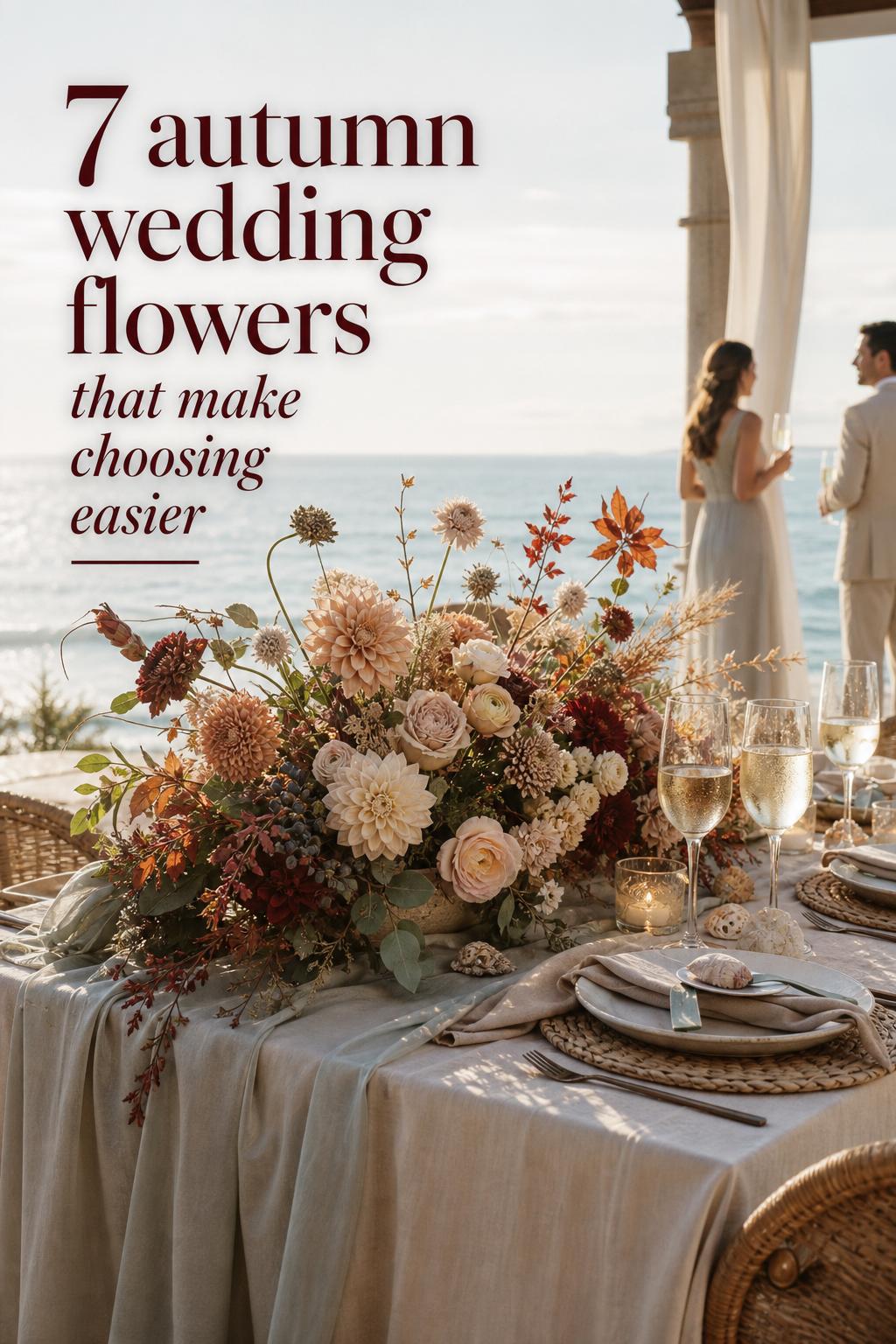
In real weddings, boho autumn flowers pair best with venues that already allow visual looseness: open-air ceremonies, softly styled indoor spaces, and celebrations where guests are meant to feel at ease rather than formally staged. The bouquet becomes part of a wider mood, not just a centerpiece accessory.
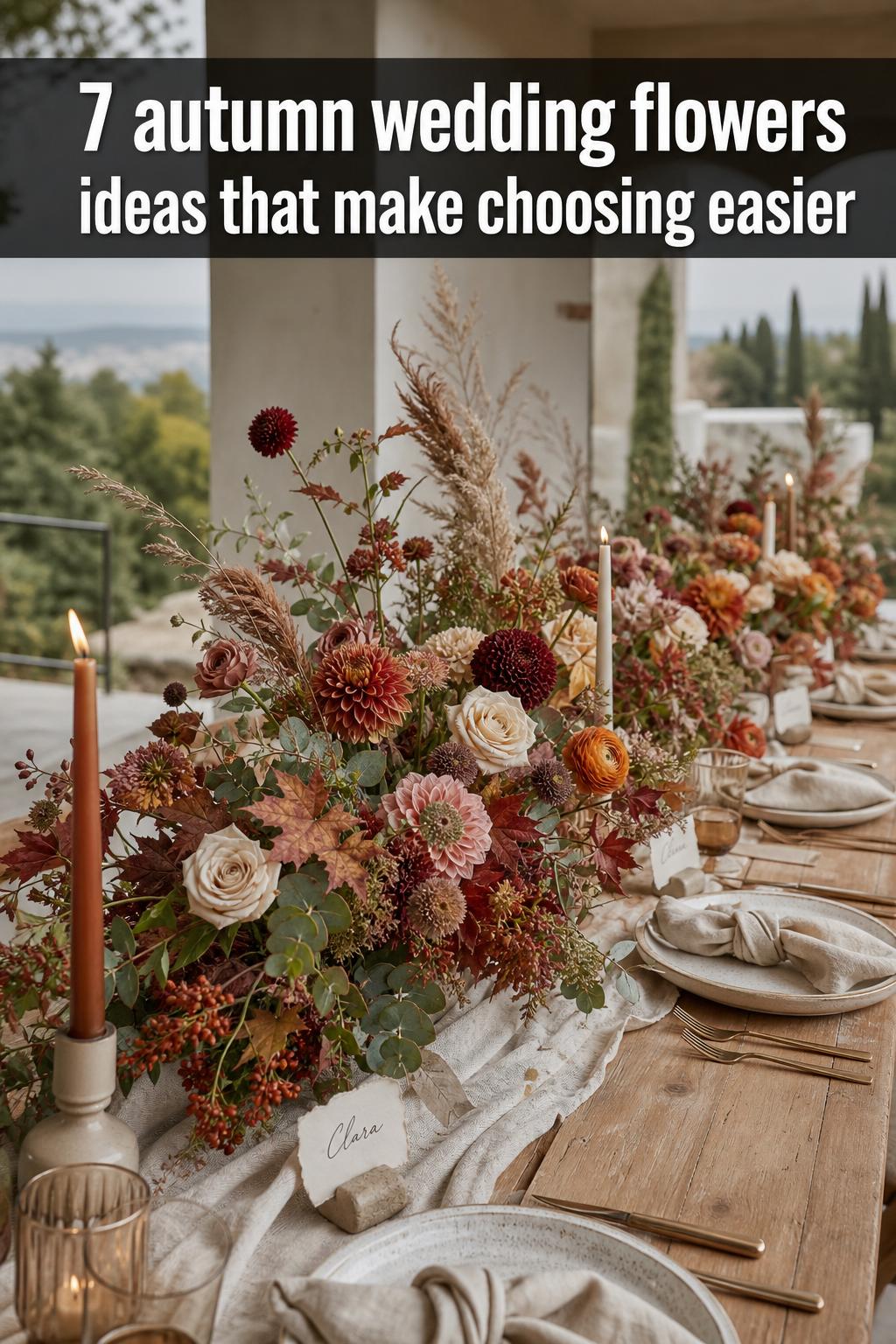
What gives boho autumn flowers their signature mood
- Airier bouquet composition with visible spacing between blooms
- Pampas grass, eucalyptus, dried foliage, and other texture-driven materials
- A softer approach to structure and formality
- Muted or blended seasonal palettes rather than sharply defined color blocking
- An overall atmosphere that feels relaxed, artistic, and movement-led
Style overview: elegant and romantic autumn wedding flowers
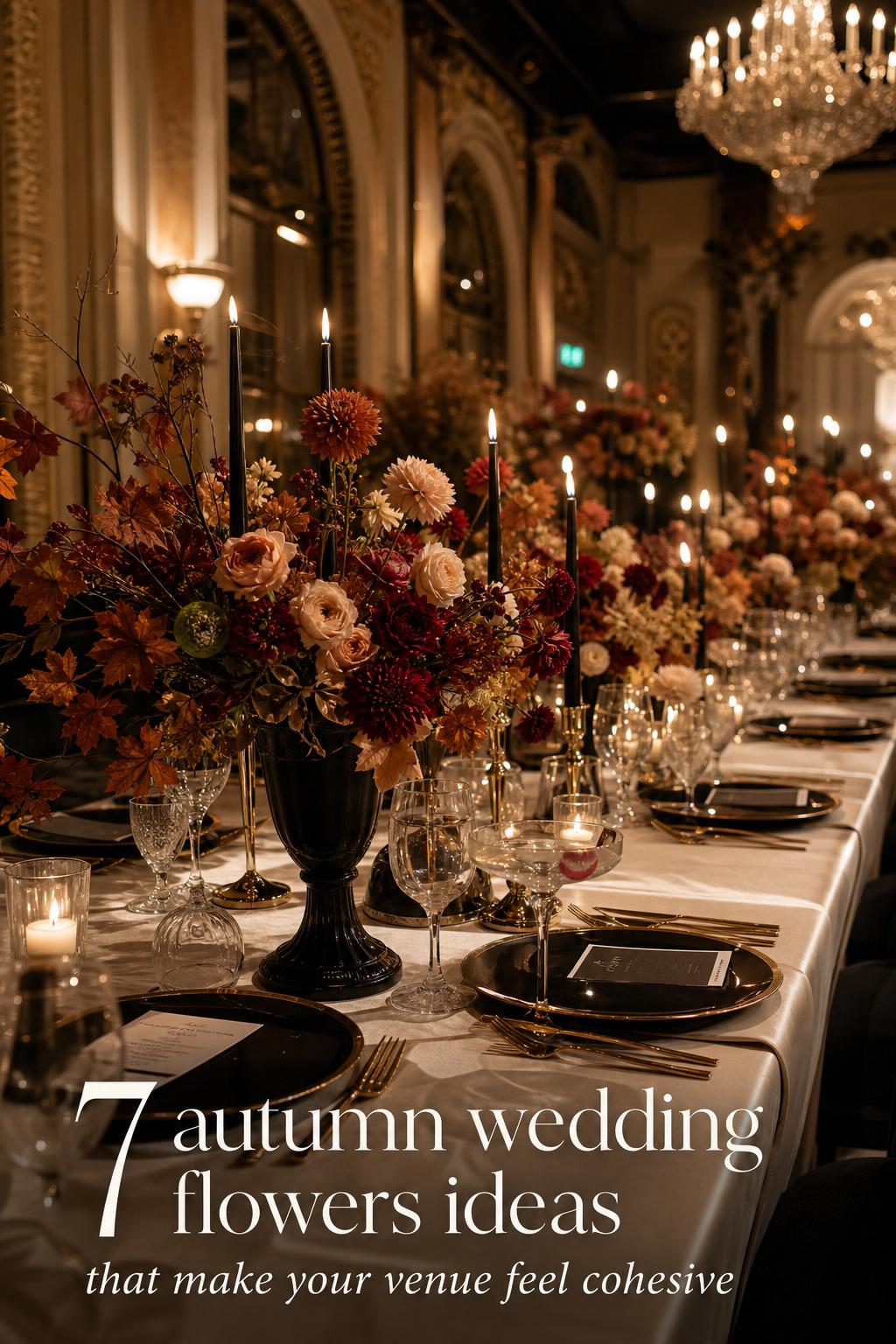
Elegant and romantic autumn wedding flowers take the season’s richness and refine it. This is where ranunculus, garden roses, lisianthus, spray roses, dahlias, and carefully chosen foliage come together in a more polished silhouette. The palette still belongs to fall, but the arrangement feels softer, more intentional, and often more formal.
Emotionally, this style creates intimacy and quiet drama rather than rustic warmth or boho freedom. It suits couples who want their wedding to feel deeply seasonal but still classic in photographs. Burgundy, amber, and cream may appear, but often with more tonal control. Darker hues are balanced with lighter blooms so the bouquet feels romantic rather than heavy.
Venue compatibility is important here. Elegant autumn flowers work beautifully in city venues, formal indoor receptions, and celebrations where the floral design needs to support a cohesive editorial atmosphere. They can still include textural flowers such as scabiosa or mums, but those elements are usually edited more carefully so the bouquet maintains shape and refinement.
This is often the style that appeals to couples browsing inspiration from Zola, Inside Weddings, or image-led real wedding galleries credited to creatives such as Rebecca Yale Photography, Christina Childress, Saffron & Grey, This Humble Abode, and Putnam & Putnam. The emotional pull comes from softness and cohesion, not simply from seasonal abundance.
The visual signature of romantic fall bouquets
- Structured but not stiff bouquet shapes
- Refined use of dahlias, ranunculus, garden roses, lisianthus, and spray roses
- Seasonal tones balanced with cream or softer neutrals
- Foliage used for polish and contrast rather than wildness
- A photography mood that feels timeless, intimate, and composed
The emotional difference between these autumn flower styles
The easiest way to choose among autumn wedding flower styles is to ask how you want the wedding to feel before you ask how you want it to look. Rustic flowers create warmth. Guests tend to experience them as inviting, generous, and seasonal in a very immediate way. They support a celebration that feels lived-in and connected to the landscape.
Boho autumn flowers feel more expressive and free. They often create a softer guest experience, one where styling feels atmospheric rather than highly orchestrated. In photographs, this style often emphasizes movement, texture, and negative space. It can feel especially personal because it does not insist on perfect symmetry.
Elegant romantic autumn flowers tend to create emotional closeness through visual restraint. The wedding feels considered, polished, and gently dramatic. In photos, the bouquet reads clearly, the palette looks cohesive, and the overall atmosphere feels timeless. This style is often chosen by couples who want autumn richness without visual busyness.
None of these directions is inherently better. The question is whether your flowers should greet guests with warmth, surround them with softness, or frame the day with refinement. That emotional answer usually points to the right floral style faster than a flower list ever could.
How autumn blooms behave across different floral aesthetics
One reason autumn wedding flowers can be difficult to finalize is that the same bloom can support multiple aesthetics. Dahlias are the clearest example. In a rustic bouquet, they often become plush focal flowers surrounded by berries, mums, and dried leaves. In a boho bouquet, they may appear more sparingly, with visible space around them and softer structural support from pampas grass or eucalyptus. In a romantic bouquet, they are usually edited into a more balanced shape and paired with ranunculus, lisianthus, or spray roses.
Ranunculus and garden roses usually pull a bouquet toward softness and romance, especially when they are used to lighten deep fall palettes. Chrysanthemums and scabiosa tend to add texture and seasonal identity. Maple leaves, dried ferns, and berries push a bouquet toward a stronger autumn statement, while eucalyptus and pampas grass often soften the mood or make it feel more contemporary.
This matters because floral decisions do not live in isolation. A couple may say they want a romantic wedding but keep saving very textural berry-filled bouquets. Or they may think they want rustic flowers because they love fall color, when what they actually respond to is the softness of ranunculus and roses. Looking at how the blooms behave together is more useful than judging any flower on its own.
Core autumn blooms and what they tend to signal
- Dahlias: statement, fullness, strong seasonal identity
- Ranunculus: softness, layered petals, romantic texture
- Garden roses and spray roses: polish, familiarity, elegance
- Chrysanthemums or mums: texture, autumn depth, fuller composition
- Scabiosa: fine texture and visual interest
- Lisianthus: delicate romantic softness
- Maple leaves and dried foliage: unmistakable autumn character
- Eucalyptus and pampas grass: movement, airiness, and a modern boho edge
Color palettes that shape the mood of autumn wedding flowers
Autumn wedding flowers are often discussed through color as much as through bloom choice, and for good reason. Palette is what turns the same flowers into different emotional experiences. Burgundy and rust can feel rustic and harvest-inspired when paired with berries and dried leaves. The same burgundy can feel elegant and romantic when balanced with cream lisianthus or softer ranunculus.
Warm earth tones usually support rustic and boho aesthetics best. Amber, orange, rust, and muted cream make arrangements feel connected to the season without becoming too formal. Deep jewel tones, by contrast, often pull florals toward a richer and more dramatic mood, especially when paired with polished bouquet shapes and controlled foliage.
Visual harmony matters more than intensity. Autumn palettes look most convincing when the tones feel like they belong together naturally rather than competing for attention. A bouquet can include strong seasonal color and still feel restrained if the transitions are smooth. This is one of the main reasons refined autumn florals often look more expensive in photos: they rely on tonal layering instead of visual noise.
Tips for choosing a fall wedding flower palette
- If you want warmth and familiarity, lean into rust, amber, orange, and cream.
- If you want romance, keep deeper shades but soften them with lighter blooms.
- If you want boho ease, use muted transitions and let texture do more work than color contrast.
- If your venue is already visually busy, choose a more controlled palette so the flowers do not compete with the setting.
- If your venue is simple, the bouquet can carry more texture and stronger seasonal contrast.
Visual style breakdown: bouquet shape, foliage, and decor density
Shape is one of the clearest distinctions among autumn wedding flower styles. Rustic bouquets are often fuller and more layered, with visible transitions between blooms, berries, and foliage. They look generous in the hand and usually feel integrated with the overall event styling. They are forgiving visually because the beauty comes from abundance and variation rather than precision.
Boho bouquets use shape differently. They often allow individual stems and textures to remain visible, creating more movement and more negative space. This can be striking in photos, but it also means every ingredient matters. If a boho bouquet is not balanced well, it can look unfinished instead of intentional.
Elegant romantic bouquets rely more on silhouette. Their beauty often comes from balance, layering, and restraint. The bouquet may still feel lush, but the eye understands it quickly. This makes the style especially effective for formal portraits, editorial-style photography, and weddings where flowers need to feel integrated with a polished overall visual plan.
Decor density follows the same logic. Rustic styling can support more visible floral and foliage volume across the ceremony and reception. Boho styling benefits from selective placement and atmospheric detail. Romantic styling usually looks best when the abundance feels edited, so each floral moment contributes to a cohesive whole.
Wedding style logic: what is easier, what is forgiving, and what costs more attention
From a planning perspective, not every autumn flower style behaves the same. Rustic florals can be visually forgiving because texture does a lot of the work. Variations in shape often feel natural rather than problematic. If your venue already has character, rustic flowers tend to settle into it easily.
Boho autumn flowers ask for a careful eye. Their apparent looseness is deceptive. Because they rely on spacing, movement, and selective texture, they can look off-balance more quickly if the styling is inconsistent. This is especially important when the bouquet, ceremony florals, and reception arrangements are all meant to feel connected without becoming repetitive.
Elegant romantic florals often require the greatest cohesion. The arrangement itself may be cleaner and more controlled, but that means every mismatch becomes visible. If the bouquet feels refined while the reception flowers feel too rustic, the wedding can lose its visual thread. This style rewards clarity and consistency.
Flowers also influence budget logic through quantity and focal blooms. Statement flowers such as dahlias often draw the eye, while ranunculus, garden roses, and lisianthus can shape the softness and finish of the design. Couples often underestimate how much the overall style—not just the flower count—affects floral planning. A heavily textural design with many supporting ingredients can be just as complex to execute as a more polished bouquet with fewer visible components.
What often goes wrong with autumn wedding flowers
- Mixing rustic foliage with a very formal bouquet shape without a clear reason
- Using too many unrelated textures so the arrangement loses its identity
- Choosing a boho bouquet for a highly formal venue without adjusting the rest of the floral plan
- Letting dark seasonal colors dominate without enough tonal balance
- Creating a disconnect between bridal styling and the flowers
Best venue pairings for each autumn floral direction
Venue and flowers should support each other, not compete. Rustic autumn flowers naturally belong in spaces where texture and warmth are already present. Barns, countryside settings, and receptions with visible wood or stone often benefit from berry-filled bouquets, dried foliage, and layered arrangements that feel integrated with the environment.
Boho autumn flowers fit venues that welcome softness and movement. Open ceremony sites, less rigidly formal indoor spaces, and celebrations with an intentionally relaxed atmosphere can all support bouquets with eucalyptus, pampas grass, and airy shaping. This style likes room to breathe.
Elegant romantic flowers are especially strong in city venues and polished reception environments. If the architecture is clean, the bouquet can become a major storytelling element without needing to fight for attention. Inside Weddings and Zola-style editorial inspiration often leans in this direction because the floral design reads clearly against refined surroundings.
A simple rule helps: the more structured your venue, the more intentional your floral editing should be. The more organic your venue, the more freedom you have to let texture, foliage, and seasonal accents speak loudly.
How bridal fashion and guest experience change the floral story
Autumn wedding flowers do not just decorate a wedding; they shape how the wedding is experienced. A rustic bouquet with visible leaves and berries can make bridal styling feel softer and more approachable. It often pairs naturally with a wedding atmosphere where guests feel warmly welcomed into the season rather than formally staged within it.
Boho bouquets influence the body differently in photos and movement. Because they tend to be airier and more directional, they can create a sense of motion and personality. This works beautifully when the entire wedding shares that ease. If the rest of the styling is too structured, the bouquet may look emotionally disconnected even if the colors technically match.
Romantic autumn flowers usually create the strongest visual bridge between bridal styling and reception formality. A bouquet with ranunculus, lisianthus, spray roses, and carefully placed dahlias often feels instantly wedding-specific. It can elevate portraits and make the entire event feel composed without losing seasonal warmth.
Guest experience follows suit. Rustic flowers often make a wedding feel convivial and inviting. Boho flowers create softness and atmosphere. Romantic flowers create polish and intimacy. When floral choices align with the emotional goals of the day, guests feel the cohesion even if they cannot name exactly why.
Real wedding scenario comparison: ceremony styling
Imagine the same autumn ceremony interpreted three ways. In a rustic floral design, the aisle and ceremony area might feel full of seasonal presence. Dahlias, mums, berries, dried leaves, and eucalyptus would likely create visual warmth and an immediate sense of harvest celebration. The mood is welcoming and tactile.
In a boho interpretation, the ceremony styling would likely feel lighter and more sculptural. The flowers might use pampas grass, looser foliage, and selective autumn tones to create movement rather than fullness. Guests would experience the space as atmospheric and artistic rather than dense with decor.
In an elegant romantic version, the ceremony flowers would be shaped more intentionally. Dahlias or ranunculus would likely act as focal points within a balanced palette of burgundy, cream, or amber tones. The effect would be composed, soft, and visually clean in photographs. The atmosphere would feel intimate rather than rustic, and seasonal rather than themed.
Real wedding scenario comparison: bridal bouquet direction
A rustic fall bouquet often carries visible texture all the way to the edges. Maple leaves, berries, scabiosa, chrysanthemums, and statement dahlias may all remain distinct enough to notice individually. The bouquet tells a seasonal story at first glance.
A boho autumn bouquet is more likely to emphasize line and movement. The eye travels through the bouquet rather than simply reading it as a mass of flowers. Eucalyptus and pampas grass can shape the silhouette as much as the blooms themselves.
An elegant romantic bouquet usually feels more centered. The flowers are still layered, but the composition is easier to read. Ranunculus, lisianthus, spray roses, and dahlias work together to create softness within structure. This kind of bouquet often photographs as timeless because it feels complete from multiple angles.
Real wedding scenario comparison: reception atmosphere
At the reception, rustic autumn wedding flowers create atmosphere through abundance and texture. Centerpieces and floral accents often feel like a continuation of the bouquet, using the same seasonal language of foliage, berries, and warm tones. The room feels enveloped by autumn.
Boho reception florals usually feel less dense and more selective. Instead of trying to fill every surface, they shape the room through placement, movement, and softness. A few well-positioned arrangements can do a great deal because the style depends on mood as much as volume.
Elegant romantic florals turn the reception into a cohesive visual composition. Tablescapes, bouquets, and larger floral moments tend to feel carefully related to one another. If the ceremony flowers introduced burgundy and cream with lush romantic blooms, the reception usually continues that language with control rather than escalation.
Regional planning and seasonal availability mindset
One of the most practical realities of autumn wedding flowers is that seasonality does not look identical across the United States. Availability can shift by region, and that matters when couples are building their floral expectations from national inspiration galleries. A design that feels straightforward in one area may require more flexibility in another.
That is why it helps to think in categories, not just exact replicas. If your inspiration depends on dahlias, ranunculus, chrysanthemums, scabiosa, and seasonal foliage, the more useful conversation with a florist is about which of those elements are essential to the identity of the bouquet and which are there to support the mood. The style can remain intact even when the exact mix is adjusted.
This is also where florist communication becomes more valuable than image collecting. Platforms and publications such as The Knot, Zola, WeddingWire, and Inside Weddings offer strong visual direction, but your final floral plan still needs to reflect local timing, venue conditions, and the specific atmosphere you want to create.
Tip for planning with seasonal flexibility
Build your floral brief around three layers: must-have blooms, must-have colors, and must-have mood. If a regional availability shift affects one flower, your florist can preserve the overall style by protecting the palette and emotional character of the design.
Working with a florist without losing your aesthetic clarity
The strongest autumn floral plans are usually the ones that move beyond “I like fall colors” into a more precise visual language. A florist can do more with a clear style direction than with a long collection of unrelated images. Saying you want rustic warmth, boho airiness, or romantic polish gives shape to every floral decision that follows.
If you love the real wedding work of Saffron & Grey, This Humble Abode, or Putnam & Putnam, look closely at what you are responding to. Is it the fullness of the bouquet, the dried elements, the palette, the looseness, or the balance of romantic blooms with autumn texture? Those details help translate inspiration into an actionable brief.
Photography references matter too. Image credits associated with creatives such as Rebecca Yale Photography or Christina Childress often show how flowers behave in real light and real wedding settings. A bouquet that looks stunning in a close portrait may need different support to carry the same feeling across ceremony and reception spaces.
What to bring to your florist conversation
- Your preferred autumn floral style: rustic, boho, romantic, or a dominant blend
- Two or three palette words such as burgundy, rust, amber, or cream
- A short list of blooms you love, such as dahlias, ranunculus, mums, scabiosa, or spray roses
- Notes about your venue type and whether the setting is formal, relaxed, outdoor, or indoor
- Examples of bouquet shapes you are drawn to
Can you combine these autumn flower styles successfully?
Yes, but only if one style remains clearly dominant. The most natural blend is often rustic with romantic, or boho with romantic. These combinations work because they share some floral ingredients while expressing them differently. For example, dahlias and seasonal foliage can give a bouquet autumn texture, while ranunculus or garden roses keep the overall feel soft and elevated.
The hardest blend is usually rustic and highly polished elegance without a transitional middle ground. If one part of the wedding features maple leaves, berries, and dried foliage while another feels tightly refined and almost formal, the overall atmosphere can become confused. The wedding stops feeling intentional and starts feeling assembled from separate ideas.
If you do combine styles, choose which quality should lead the emotional experience. Should guests feel warmth first, softness first, or refinement first? Once that answer is clear, supporting elements from another style can add dimension without disrupting cohesion.
When to choose each floral direction
Rustic autumn wedding flowers are often the strongest fit for couples who want the season to feel visible and generous. They suit venues with natural texture, weddings that lean relaxed rather than formal, and celebrations where the flowers should help create warmth and atmosphere throughout the day.
Boho autumn flowers are best for couples who want seasonal texture with more freedom and movement. They suit celebrations where visual softness matters more than traditional fullness, and where the atmosphere is meant to feel artistic, relaxed, and lightly whimsical rather than highly structured.
Elegant romantic autumn flowers are ideal when the goal is timelessness, intimacy, and a more editorial kind of beauty. They work especially well when photography, venue refinement, and visual cohesion are high priorities. This style tends to age beautifully in photos because the palette and bouquet shape are more carefully controlled.
Style personality match
- Choose rustic if you want warmth, harvest character, and visible seasonal texture.
- Choose boho if you want movement, relaxed atmosphere, and a softer free-form floral story.
- Choose elegant romantic if you want polished softness, timeless portraits, and a refined autumn mood.
What makes autumn wedding flowers feel especially beautiful in photos
The most memorable autumn florals usually succeed because they are cohesive, not because they are complicated. Photography responds well to bouquets that have a readable silhouette, a controlled but expressive palette, and enough texture to create depth without visual confusion.
Rustic flowers photograph best when the texture feels intentional rather than crowded. Boho flowers photograph best when their movement is supported by the rest of the styling. Romantic flowers photograph best when lighter and darker tones are balanced so the bouquet feels dimensional instead of dense.
One small but important truth is that flowers do not need to match every detail to feel integrated. They need to repeat the wedding’s emotional language. If your celebration feels soft and intimate, the flowers should support that. If it feels festive and harvest-inspired, the bouquet should carry some of that story in its texture and palette.
What often feels more expensive
- Tonal layering instead of too many competing shades
- Clear bouquet structure that matches the venue and overall mood
- Thoughtful use of foliage such as eucalyptus, maple leaves, or dried ferns
- Consistent floral language from bouquet to reception
- Restraint, especially in romantic and elegant autumn styling
A final note on building a cohesive autumn floral plan
The real beauty of autumn wedding flowers is not just that they offer rich color and abundant texture. It is that they can tell very different love stories using many of the same ingredients. Dahlias, ranunculus, mums, scabiosa, spray roses, eucalyptus, pampas grass, berries, and dried leaves can become rustic, boho, or romantic depending on how they are arranged and what emotional atmosphere they are asked to create.
If your flowers feel aligned with your venue, palette, photography goals, and guest experience, the wedding will feel visually settled. That sense of cohesion is what turns inspiration into memory. Choose the floral direction that feels most like the day you want to live inside, not just the bouquet you want to hold for a moment.
FAQ
What flowers are most commonly used in autumn wedding flowers?
The most commonly referenced autumn wedding flowers include dahlias, ranunculus, chrysanthemums or mums, scabiosa, spray roses, garden roses, and lisianthus, often supported by seasonal foliage such as eucalyptus, maple leaves, pampas grass, dried leaves, and dried ferns.
How do I choose between rustic and romantic fall wedding bouquets?
Choose rustic if you want visible texture, berries, dried foliage, and a warm harvest-inspired atmosphere. Choose romantic if you want a more polished bouquet shape, softer bloom layering, and a timeless look that feels refined in portraits and formal wedding settings.
Are dahlias a good choice for fall wedding bouquets?
Dahlias are one of the strongest statement flowers for fall wedding bouquets because they carry seasonal character and work across multiple styles, from rustic and berry-filled arrangements to elegant romantic bouquets with ranunculus, lisianthus, or roses.
What colors work best for autumn wedding flowers?
Burgundy, rust, amber, orange, and cream are among the most recognizable autumn wedding flower colors. Warm earth tones usually support rustic and boho styles, while deeper shades softened with lighter blooms often create a more elegant and romantic fall palette.
Can autumn wedding flowers look elegant instead of rustic?
Yes, autumn wedding flowers can look very elegant when the bouquet shape is more controlled, the palette is tonally balanced, and romantic blooms such as ranunculus, garden roses, lisianthus, and spray roses are used alongside seasonal flowers and foliage with more restraint.
How can I make sure my fall wedding flowers match my venue?
Your flowers should reflect the behavior of the venue as much as the season. Rustic venues usually suit fuller textural arrangements, relaxed venues suit airy boho florals, and polished city or formal indoor venues tend to pair best with elegant romantic bouquets that feel visually refined.
What should I ask my florist about autumn wedding flowers?
Ask your florist about the overall style you want, the blooms you love most, the color palette you want to protect, and how regional availability may affect the final design. It also helps to discuss bouquet shape, venue conditions, and how your ceremony and reception flowers will stay visually connected.
Do boho autumn flowers always need pampas grass or dried foliage?
No, but pampas grass and dried foliage are common because they help create the airy texture and movement associated with boho autumn styling. What matters most is the free-form composition and relaxed mood, not any single ingredient on its own.
How can I keep my autumn bouquet cohesive with the rest of the wedding?
Keep the bouquet, ceremony flowers, and reception arrangements connected through the same palette, texture language, and emotional direction. Even if the scale changes, the flowers should feel like they belong to the same wedding story rather than separate design ideas.
Can I mix multiple autumn wedding flower styles together?
You can, but the wedding works best when one style remains dominant. Rustic and romantic or boho and romantic often blend well, while a very rustic approach and a highly formal floral plan can feel disconnected unless there is a clear visual bridge between them.