

Classic Wedding Decor: Tables, Ceremony Details and Personal Touches
Classic wedding decor can draw on ivory linens, white flowers, glassware and personal stationery. Start with the venue’s existing features and the way your guests will use the space. Choose the table setting and ceremony view you enjoy, then add the formal details that fit your event. The style does not require a chandelier, monogram or white cake.

Work with the ceremony location
In a church or cathedral, ask the ceremony team what decoration and placement it permits before ordering pew markers, candles or an arch. Existing architecture may provide the whole frame for the ceremony. Keep any added arrangements out of the route and within the approved locations.
For a garden ceremony, compare the actual view from the guest seats with a proposed floral frame or paired arrangements. Keep the aisle usable. If you plan to move arrangements to the reception, agree which pieces can move and who handles them.
Tent structures, added chandeliers and overhead draping need a supplier’s installation plan and the venue’s approval. The silhouette of a sailcloth tent does not tell you which fixtures or supports are suitable. Check the complete design before booking decorative additions.
Turn wedding inspiration into a plan you can actually follow.
Zarellea brings your guest list, budget, vendors, and day-of details into one shared space — so no beautiful idea gets lost in the shuffle.

Choose a table setting around the meal
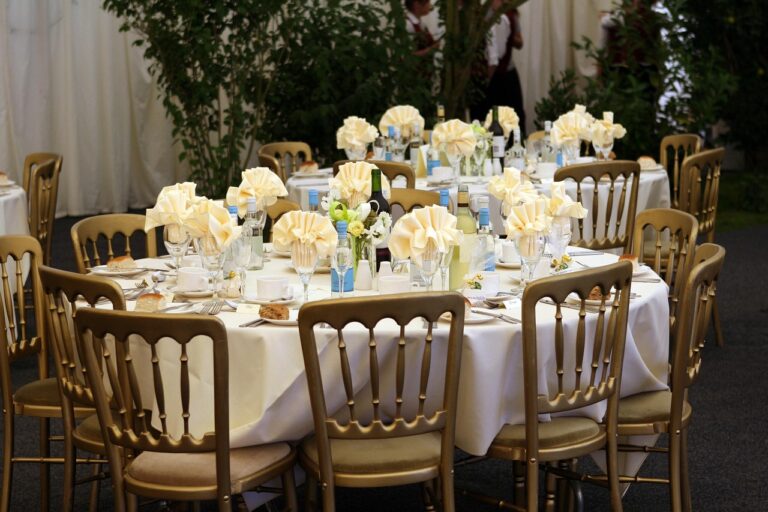
Use the actual table, chair, dinnerware and glassware for a mockup. Add napkins, menus and any shared dishes before arranging flowers. Sit at the table and check the view across it as well as the space for the meal.
White, ivory and champagne offer a restrained starting palette. Compare them with the walls, flowers and lighting rather than assuming that items labeled neutral will match. Glassware, a small metallic finish or a textured napkin can provide variation without a large color change.
A low floral arrangement is one option; a taller design needs to be assessed from the actual seats. Ask the florist to show the vessel and arrangement together. Choose the scale that leaves guests comfortable instead of increasing height simply because the ceiling is high.
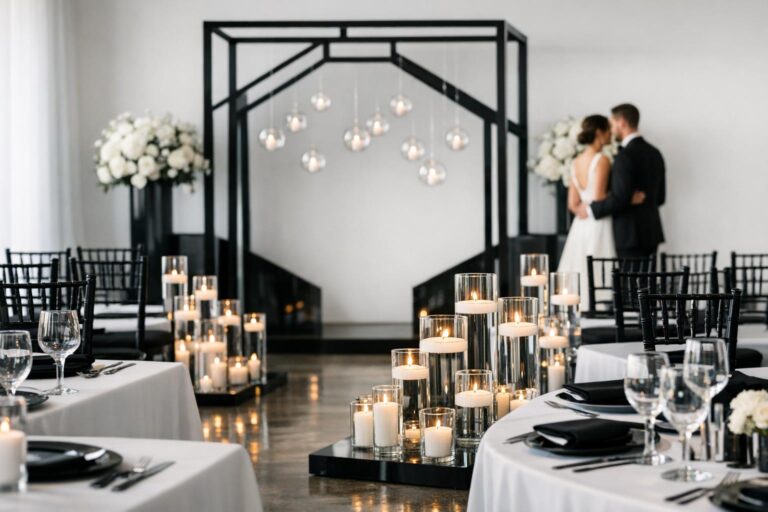
For a greener version, compare the sage table combinations. If you prefer a graphic accent, see the black and white decor options for tables and signs.

Separate the room lighting from the decorative accents
Ask the venue to demonstrate the lighting for dinner and the later part of the reception. Check the tables, signs, steps, cake display and service areas. Existing chandeliers may already provide the visual feature you want; confirm what other illumination the room needs.
Discuss candles with the venue before ordering. Have the proposed holders, flowers and textiles considered as one placement plan, and ask about approved alternatives if flame is restricted. Decorative glow should complement the visibility people need to read, move and dine.
Share the table and backdrop references with the photographer. A soft palette, reflective glass or a particular fixture is a design choice rather than a promise about the resulting photographs.
Make formal stationery readable
Calligraphy can suit place cards and menus, but inspect a final-size sample. Names and table assignments should be easy to find without an enlarged digital proof. Use clearer lettering for the information guests need quickly if the decorative script is difficult to read.
Check seating charts from the arrival direction and leave room for guests to pause. Match table numbers and place cards to the seating plan. A monogram or newly designed personal emblem is optional; use it where it has meaning to you rather than on every available surface.

Give the cake and personal details suitable places
A white tiered cake can connect with a restrained table palette, or you can choose another design you prefer. Have the cake supplier approve the display position and coordinate any surrounding flowers. Leave room for service and check the lighting before deciding on the backdrop.
Vintage-inspired glass, lace napkins, a patterned paper detail or a family object can add personality. Compare a few pieces with the table instead of collecting every category associated with the style. If you include a champagne tower or another service feature, plan it with the catering team as well as the decorator.
Compare the standard package with specific upgrades
Ask what the venue includes: linens, chairs, glassware, lighting, sign stands and any fixed decor. List the items you want to change and request quantities and full installed costs. Delivery, collection, cleaning and damage terms belong in the comparison.
Try one upgraded place setting beside the standard version. Keep the change you actually prefer, whether it is a napkin, a glass or a fuller arrangement. A style label does not establish which upgrade offers the most value for your wedding.

Finish with an inventory and a guest walkthrough
For each area, list what arrives, who supplies it, who installs it and who removes it. Include which ceremony pieces move and the time available. Give the setup team a reference photograph of repeated arrangements and a final seating list.
Walk from arrival to the ceremony, dinner and restrooms. Read the signs and check the route with chairs in position. A formal room should still be straightforward to use. If an extra display makes those activities harder, simplify the display before adding more decoration.
Can a modern venue suit classic decor?
Yes. Compare restrained linens, balanced flowers and personal paper details with the room’s existing lines. Keep what works in the venue rather than trying to disguise all of its character.
Which details should we prioritize?
Start with usable tables, the ceremony view and sufficient light. Then compare the floral, glassware and stationery details that matter to you within the remaining budget.


2 Comments