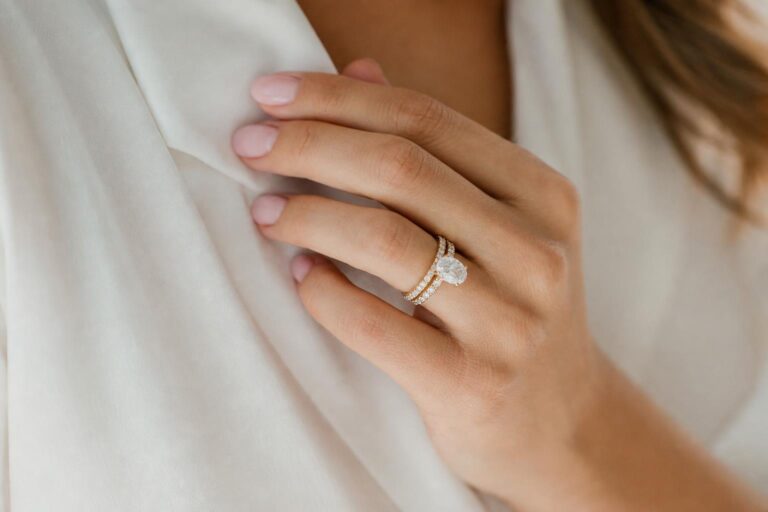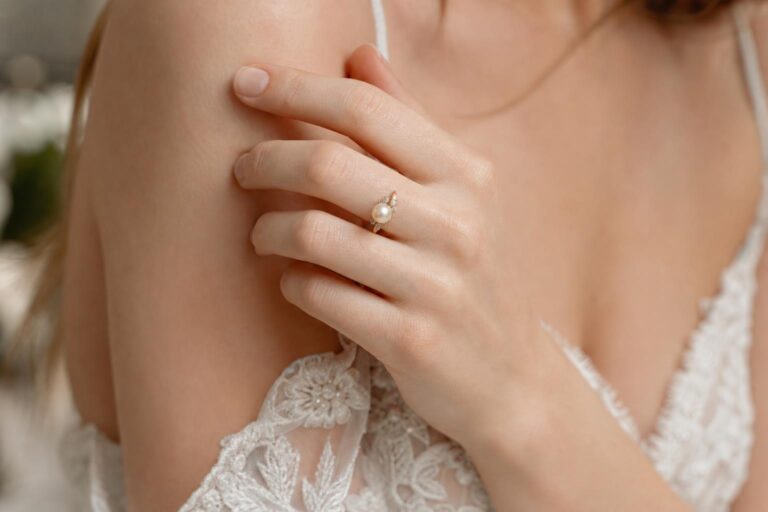
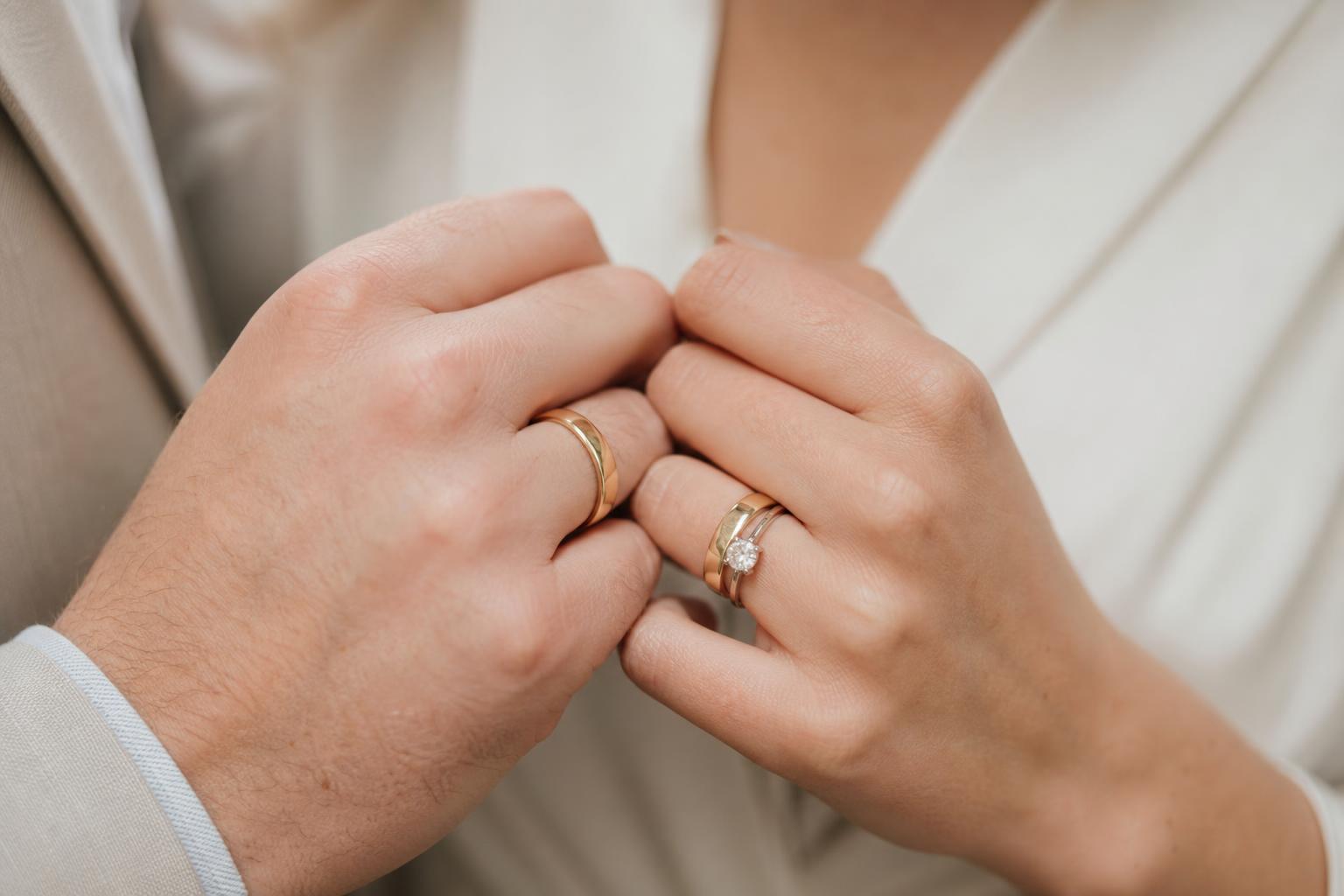
Why Matching Wedding Bands Feel Timeless and Personal
Choosing matching wedding bands sounds simple until a couple actually starts comparing styles, metals, widths, finishes, engraving options, and how each ring will sit beside an engagement ring. What looks seamless in a product gallery can become surprisingly complicated in real life, especially when one person wants a minimalist band, the other wants diamond accents, and both want the rings to feel connected without looking forced.
This is where many couples feel stuck. They want symbolism, unity, and beautiful photography, but they also need comfort, durability, realistic pricing, and a look that still feels right years after the wedding season has passed. A ring is one of the few wedding details that is not just for the ceremony or the reception. It has to work every day.
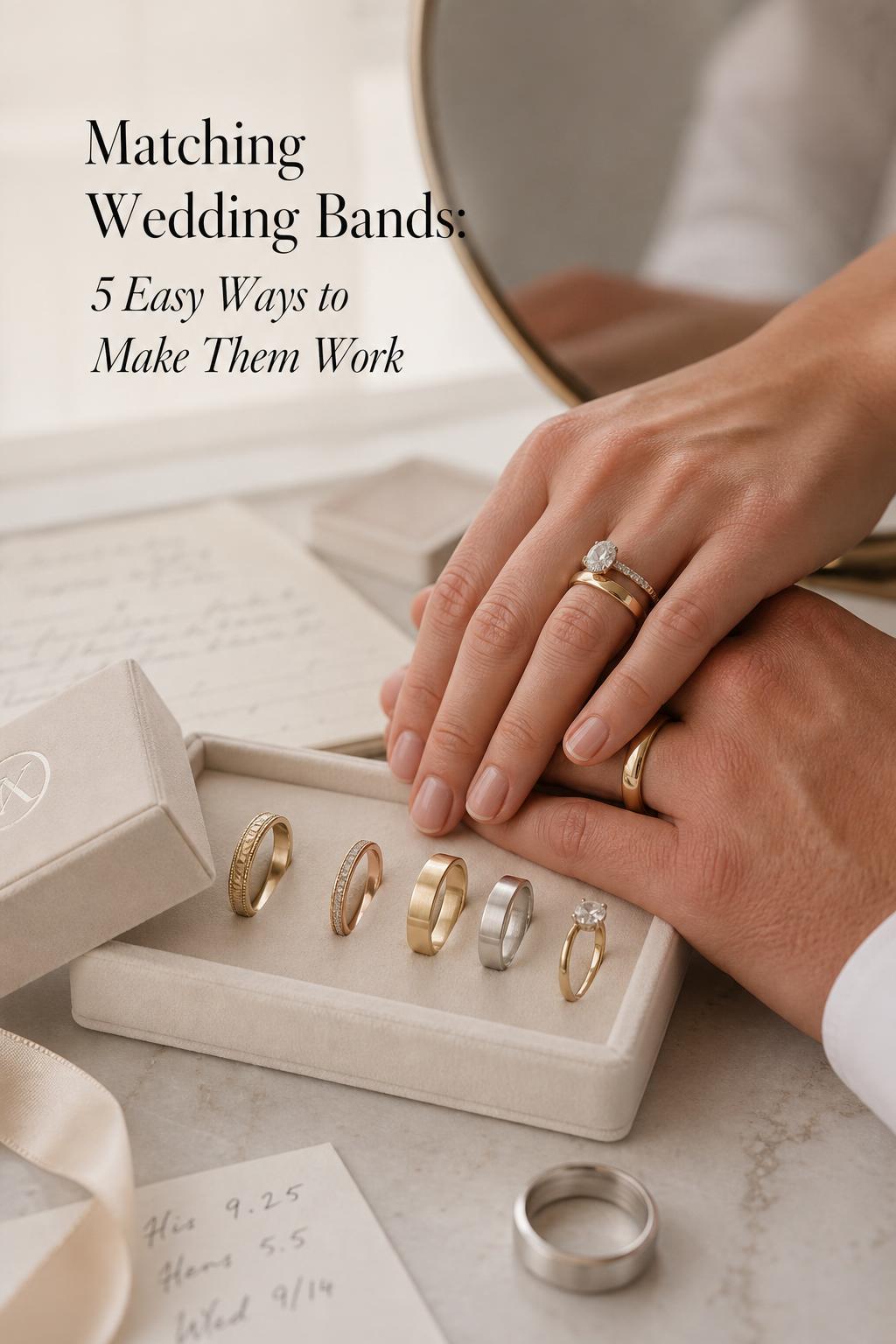
This guide is designed to solve that exact problem. You will find a calm, practical approach to matching wedding bands, from his and hers wedding bands and couple rings to engagement ring compatibility, customization, vintage styling, materials, fit, and pricing. The goal is not to chase a single ideal look. It is to help you create a pair that feels intentional, wearable, and truly yours.
Why this wedding challenge happens
Matching bands carry more pressure than most couples expect because they sit at the intersection of style, emotion, and daily practicality. One ring may need to coordinate with an existing engagement ring, while the other needs to stand on its own. Some couples imagine perfectly identical wedding band sets, but once they begin trying on bands, they realize that different hands, lifestyles, and comfort preferences often call for different choices.
Turn wedding inspiration into a plan you can actually follow.
Zarellea brings your guest list, budget, vendors, and day-of details into one shared space — so no beautiful idea gets lost in the shuffle.
Visual cohesion is another reason this decision becomes difficult. A pair can look coordinated in a jewelry case and feel disconnected once worn. Width, edge profile, diamond placement, finish, and metal color all affect whether matching rings feel elegant or mismatched. A yellow gold band beside a platinum engagement ring, for example, can be beautiful if the pairing is intentional, but awkward if no one considered the overall composition.
Budget also complicates the process. Luxury names such as Tiffany & Co. position couples rings around craftsmanship, customization, and prestige, while retailers like Fascinating Diamonds, Rockford Collection, Jewlr, Jewelry by Garo, Napoleon Bands, Antique Jewelry Mall, VRAI, and Etsy sellers span very different price points and design priorities. Couples are often comparing not only styles, but also very different shopping experiences.
Then there is timing. Wedding planning already includes venue decisions, guest logistics, photography planning, attire, and the emotional weight of making choices that feel meaningful. Ring shopping can become stressful when couples assume they must find a perfect mirrored pair immediately. In reality, thoughtful coordination usually works better than strict sameness.
The styling principles that make matching bands feel effortless
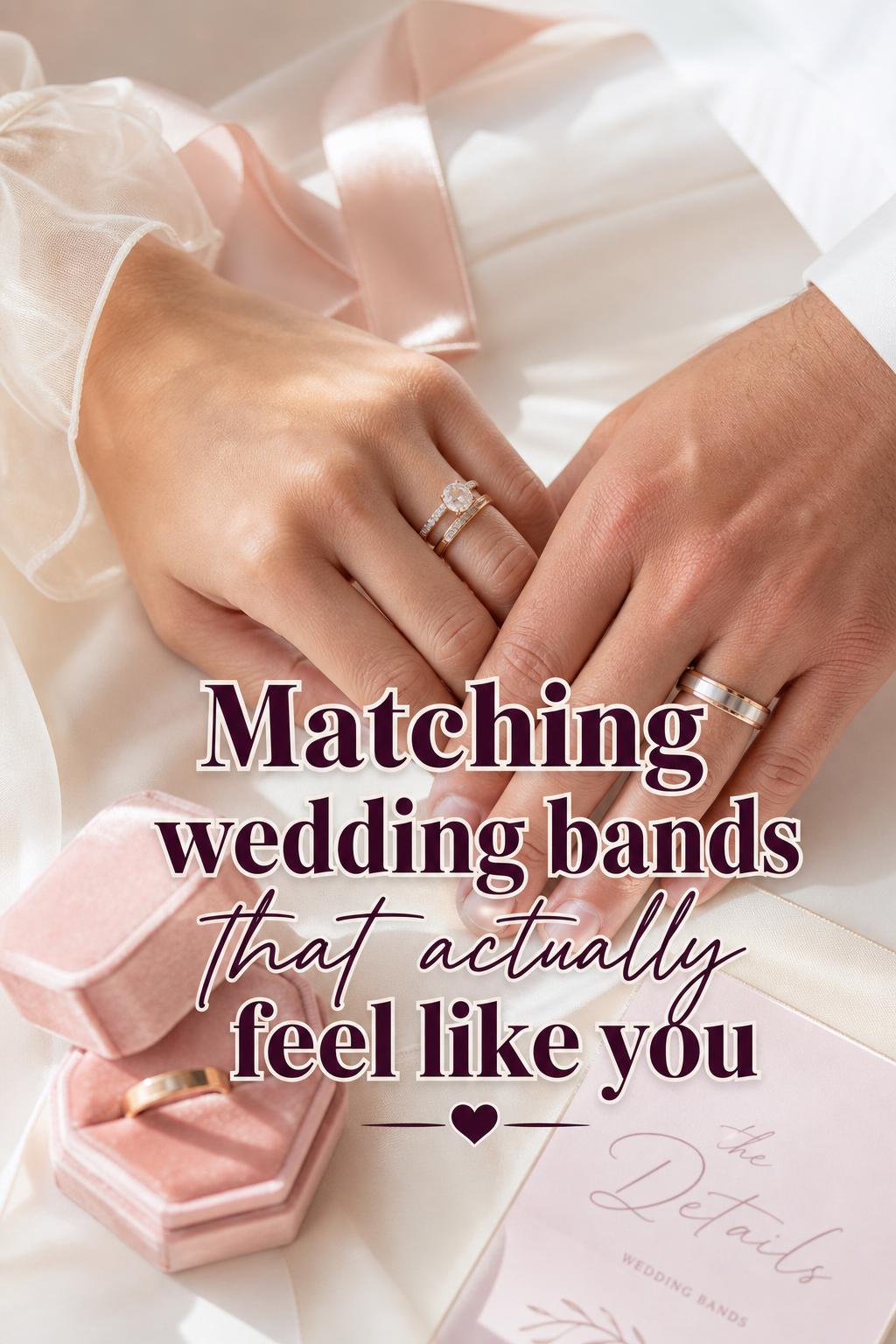
The most successful matching wedding bands usually follow a few clear principles. They do not rely on excess decoration or trend-driven novelty alone. Instead, they create connection through shared design language: metal tone, finish, engraving style, edge detail, stone accents, or overall mood. That is what makes a pair feel cohesive even if the rings are not identical.
A good pair also balances symbolism with wearability. Couples often focus first on what the rings mean, which is understandable, but comfort, maintenance, and long-term use matter just as much. A band that looks beautiful but feels bulky, catches constantly, or does not sit well next to an engagement ring can become frustrating very quickly.
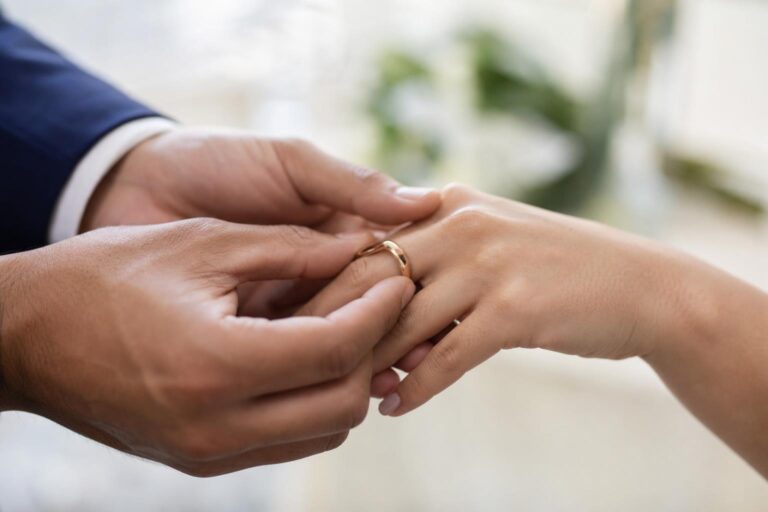
Another useful principle is to design for both close-up viewing and everyday life. Wedding bands are photographed in detail, especially during getting-ready photos, ceremony ring exchanges, and hand shots. Yet they also need to work during errands, workdays, anniversaries, and ordinary routines. The best choices tend to feel special without becoming impractical.
- Choose one or two shared features rather than trying to match every detail.
- Let each band suit the wearer’s hand shape and style preferences.
- Prioritize fit and comfort before decorative extras.
- Consider how the bands will look in wedding photos and in daily wear.
- Keep the overall mood consistent: minimalist, modern, vintage, luxury, handmade, or antique-inspired.
What couples usually overlook before they start shopping
Many couples begin with surface-level preferences such as white gold versus yellow gold or plain versus diamond-accented. Those matter, but they are not the whole picture. The deeper questions are usually more useful: Should the pair read as obviously coordinated or subtly related? Will one band need to align with a solitaire, halo, pavé, vintage, or three-stone engagement ring? Is personalization more important than visible matching?
Another overlooked issue is finish. Two rings in the same metal can look surprisingly different if one is mirror polished and the other is satin. Likewise, a vintage-inspired ring with engraving or milgrain-style detailing can feel out of place next to a starkly modern band unless there is some bridge between them.
Customization is often the answer here. Brands such as Jewlr emphasize engraving and personalization, while artisanal approaches from Jewelry by Garo lean into handmade and vintage-inspired details. VRAI highlights modern couples rings with customization flexibility, while Rockford Collection focuses on custom matching band sets. Customization does not always mean designing from scratch. Sometimes it simply means adjusting width, finish, or inscription to create harmony.
Wedding solution: choose a shared design language, not necessarily identical rings
The most common problem with matching rings is assuming “matching” means identical. That can lead couples into bands that do not suit one or both wearers. A slim polished band may flatter one hand beautifully while a wider ring with stronger presence feels more balanced on the other. Forcing exact duplication can make one ring feel like a compromise rather than a celebration.
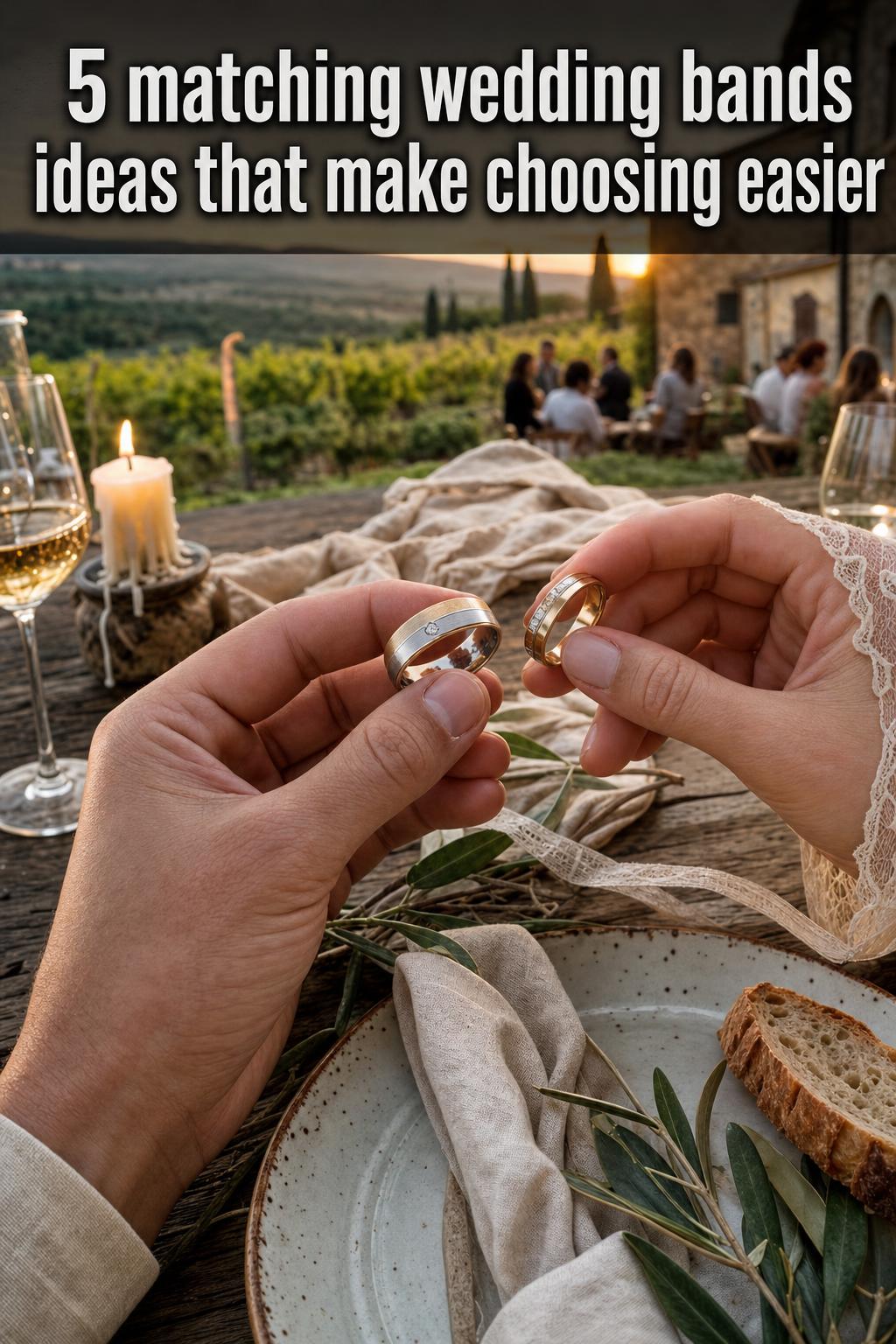
A better solution is to build connection through shared design elements. You might choose the same metal, such as yellow gold, white gold, rose gold, or platinum, and then vary width or stone accents. Or you may use the same finish and edge profile while allowing one band to remain simple and the other to include diamonds. His and hers wedding bands often work best when they echo each other rather than repeat exactly.
The result is more elegant and more personal. The pair feels united, but each ring still reflects the person wearing it. This kind of coordination also photographs well because the rings look intentionally chosen together, not randomly mixed or overly rigid. Emotionally, it reduces pressure. Couples can prioritize meaning and comfort without feeling they have failed the idea of a matching set.
Styles that create beautiful coordinated pairs
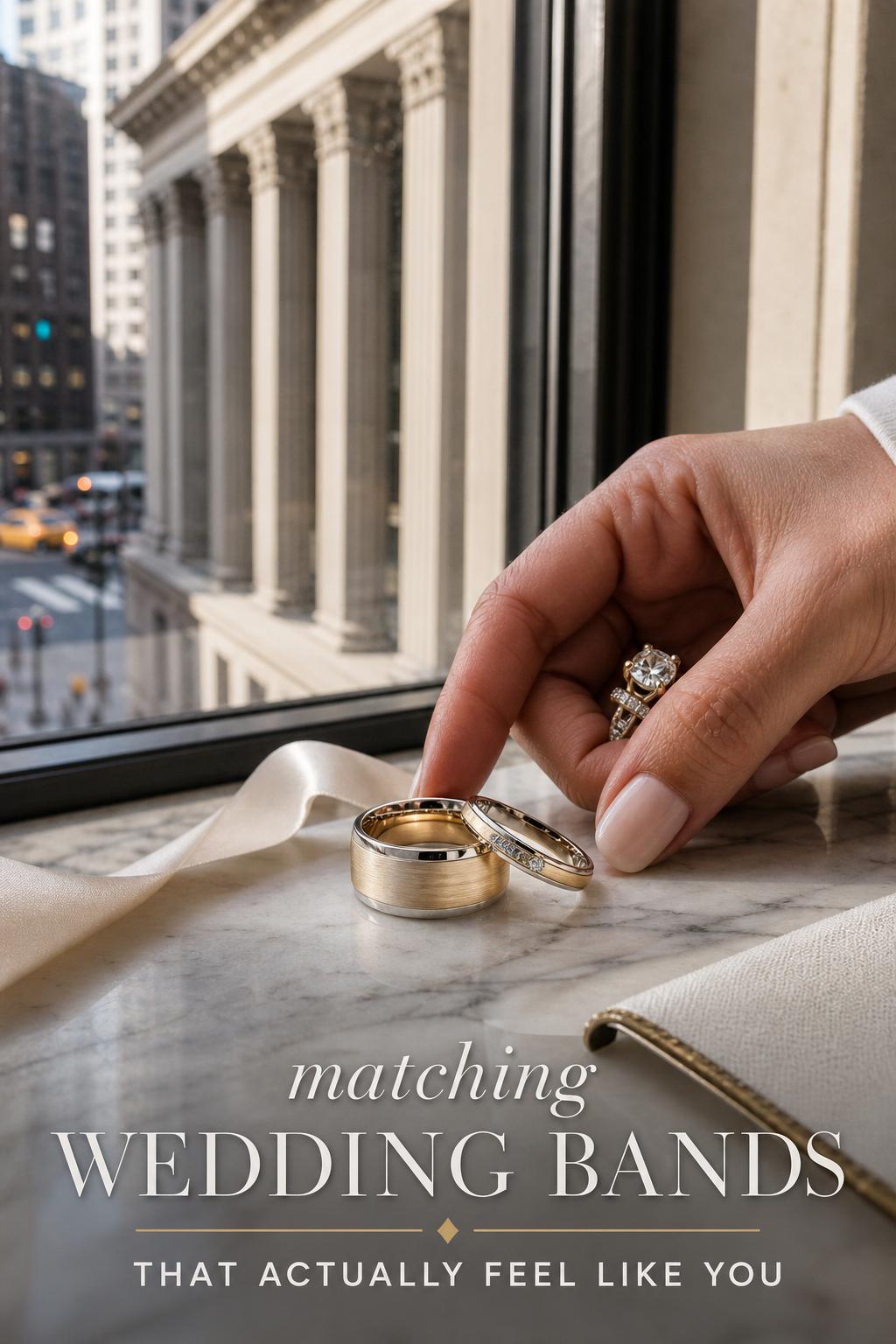
Across the wedding band market, several style families appear again and again because they translate easily into couple rings. Minimalist bands are the most versatile. They are easy to pair with engagement rings, they age well visually, and they can be elevated through finish, width, or engraving. Diamond-accented matching bands bring more sparkle and can feel especially cohesive when the stone placement is balanced rather than overly ornate.
Eternity-inspired looks and vintage matching wedding bands appeal to couples who want more detail. Antique Jewelry Mall leans into vintage and antique character, while Jewelry by Garo highlights hand-engraved and vintage-inspired sets. These options can feel deeply romantic, but they work best when both partners genuinely like the aesthetic. Vintage details are beautiful when intentional and less successful when one ring looks antique and the other feels purely contemporary.
Inlay-driven and alternative-material looks offer a more modern direction. Napoleon Bands emphasizes durable materials, inlays, natural stones, and contemporary aesthetics. Etsy sellers also bring a broad handmade range, including custom variations that can suit couples who want something less traditional. These styles can create strong visual identity, especially for couples who want matching wedding bands for couples that feel distinctive rather than conventional.
- Minimalist: clean lines, subtle finishes, timeless appeal
- Diamond-accented: added light and detail without overwhelming the design
- Eternity-inspired: more decorative and often more statement-driven
- Vintage or antique-inspired: engraving, classic motifs, historical character
- Inlay or mixed-material looks: modern, design-focused, and highly individual
How to keep the pair visually balanced
If one ring includes diamonds, engraving, or a stronger decorative element, let the other ring pick up one quieter detail from that design rather than trying to copy it completely. Shared finish, profile, or metal tone is often enough. That restraint is what keeps coordinated bands refined instead of busy.
Wedding solution: match the bands to the engagement ring, not just to each other
One of the biggest practical mistakes is shopping for the wedding bands as if they exist in isolation. For many couples, at least one ring must work beside an engagement ring every day. If that relationship is ignored, the final set can feel awkward, with visible gaps, competing shapes, or a mismatch in design language that distracts from both rings.
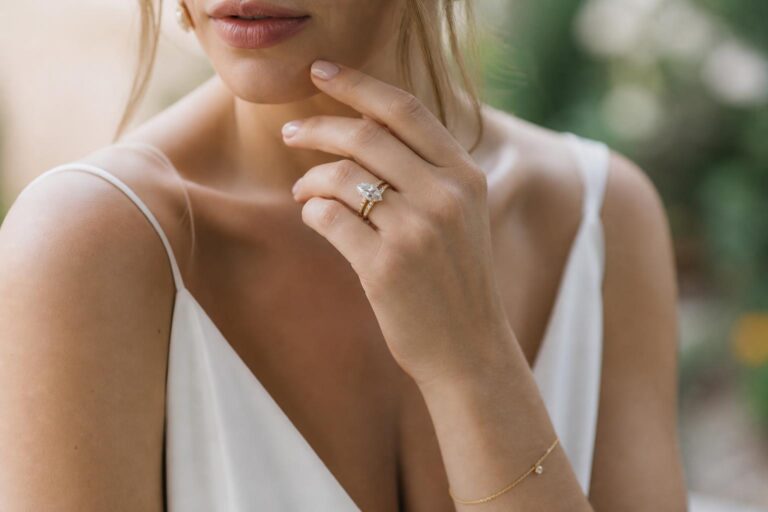
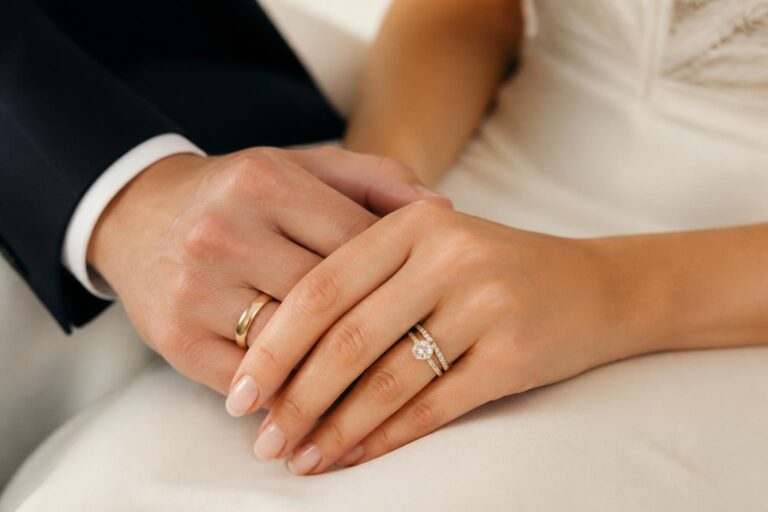
The solution is to evaluate compatibility first. A solitaire engagement ring often offers flexibility, while halo, pavé, vintage, and three-stone designs may require more care in band selection. This is where flush-fit and curved-fit thinking becomes useful. A flush-fit band sits closely and cleanly; a non-flush or more separated look can still be beautiful, but it should feel intentional. Coordinate the wedding band with the engagement ring’s style, then build the partner band around the same design mood.
When this is done well, the full effect is calmer and more elevated. The engagement ring and wedding band read as a considered set, and the partner band echoes that same tone. This creates a stronger visual story in photographs and daily wear. It also prevents one partner’s ring from feeling heavily designed while the other looks disconnected from the couple’s shared choice.
Photography perspective
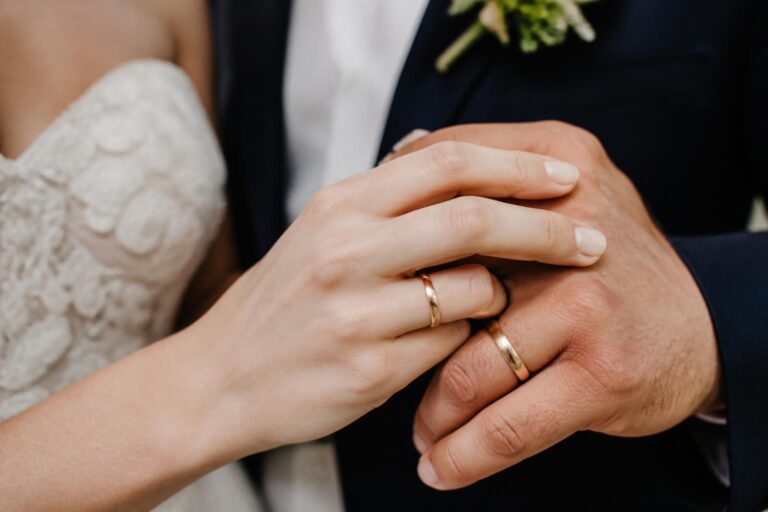
Ring close-ups highlight tiny differences. A band that sits neatly beside an engagement ring tends to photograph more intentionally than one with an unexpected gap or clashing profile. Even couples who prefer a relaxed style usually appreciate that extra coherence once they see the images.
Materials and finishes: what affects look, feel, and price
Material choice shapes nearly every part of the experience: the visual tone, how formal the pair feels, daily comfort, long-term wear, and price range. Gold remains a central option across the market, including yellow gold, white gold, and rose gold. Platinum appears repeatedly in premium and luxury offerings, often associated with durability and elevated craftsmanship. Diamonds are the most common stone accent, whether as subtle detailing or a more statement-led band.
Alternative materials also play an important role in modern couple rings. The strongest examples in current collections emphasize tungsten, ceramic, and inlay-led designs. These can appeal to couples who want durability, a contemporary profile, or a less traditional look. In practical terms, the finish matters almost as much as the material. Mirror polish feels formal and classic, while satin or brushed textures can soften the look and make a wider band feel more understated.
Price usually rises with precious metals, diamond accents, customization, and brand positioning. Tiffany & Co. represents a luxury end of the market focused on heritage and craftsmanship. Mid-market and customizable retailers such as Fascinating Diamonds and Jewlr offer more flexibility across price tiers. Etsy introduces handmade variation and a broad spread of pricing, while antique and vintage-focused retailers can appeal to couples who value character over a purely contemporary finish.
- Gold: versatile, classic, available in multiple tones
- Platinum: premium feel, often chosen for refined durability
- Diamond accents: add light and detail, but also increase cost
- Tungsten and ceramic-led options: modern, strong visual identity
- Polished finishes: brighter and more formal
- Satin or brushed finishes: softer, understated, and practical-looking
Budget-conscious alternatives
If a luxury brand aesthetic appeals to you but the price does not, focus on the design principles rather than the label. A clean metal choice, strong proportion, subtle customization, and a consistent finish can create a polished pair without requiring the highest-end purchase.
Wedding solution: use customization to make the rings feel personal without overdesigning them
Couples often worry that simple rings will not feel meaningful enough, so they add too many symbolic elements at once: engraving, stones, dramatic finishes, mixed motifs, and highly specific decorative themes. The result can feel crowded, or it may date more quickly than expected. The opposite problem also happens: a couple chooses plain bands quickly and later wishes they had added something personal.
Customization works best when it supports the emotional meaning of the rings rather than overpowering it. Engraving is one of the most practical options because it adds intimacy without changing the exterior silhouette. Jewlr highlights engraving and personalization, and handmade-oriented options from Jewelry by Garo can bring a more artisanal touch. Couples can also personalize through subtle differences in width, a meaningful finish choice, or a shared design motif that appears in both bands in different ways.
This approach creates emotional depth without visual clutter. The rings still feel elegant on the wedding day and years later, but they also carry a private layer of meaning. That combination often feels more luxurious than obvious decoration because it shows restraint, intention, and confidence.
The simplest way to elevate the look
Pick one personalized detail and let it be enough. A carefully chosen inscription or a handcrafted engraved texture often feels more refined than multiple competing additions.
Fit, sizing, and comfort are part of the design
Couples sometimes treat size and comfort as a final administrative step, but these factors shape whether the rings actually feel good to wear. A beautiful band that pinches, spins, sits awkwardly, or feels too heavy can become a daily annoyance. This is especially important with wedding band sets because the fit may affect how coordinated the pair appears when worn, not just how they look in a box.
Comfort-fit interiors, profile shape, and band width all influence wearability. Wider rings can feel more substantial and may suit some hands better, but they also need careful sizing and comfort consideration. If one partner wants a broader ring and the other prefers something finer, the pair can still feel related through metal, finish, or engraving style. For engagement ring pairings, flush-fit thinking matters again. A close, clean fit usually feels more integrated, while a deliberate gap-fit look should be chosen on purpose rather than discovered later.
When couples prioritize fit early, the emotional tone of the decision improves. Instead of worrying whether the rings look perfect for one day, they start choosing bands that support years of wear. That shift tends to reduce stress and lead to smarter, calmer decisions.
Tips for sizing and long-day comfort
- Try on bands in the widths you actually plan to buy.
- Check how the wedding band sits beside the engagement ring, not separately.
- Do not assume two rings in the same stated size will feel identical if their widths differ.
- If comfort and style conflict, choose the version you will realistically enjoy wearing daily.
Wedding solution: decide where to shop based on your real priority
Shopping becomes overwhelming when couples compare every retailer as if they serve the same need. They do not. A luxury house, a customizable mid-market retailer, a handmade marketplace, and a vintage specialist offer very different strengths. Without a clear priority, couples can spend weeks circling between options and still feel uncertain.
Start with the true goal. If heritage, prestige, and refined craftsmanship are central, Tiffany & Co. may fit the vision. If modern couples rings with flexibility matter, VRAI may feel aligned. If custom matching band sets are the focus, Rockford Collection offers a more specific direction. For engraving and accessible personalization, Jewlr has a clear identity. For vintage or hand-engraved character, Jewelry by Garo and Antique Jewelry Mall make more sense. For broad handmade variety and price range, Etsy sellers can be useful. For durable, modern alternative-material aesthetics, Napoleon Bands offers a different lane altogether.
Once the shopping path fits the actual goal, ring selection becomes easier and more enjoyable. The couple stops trying to solve every possible version of the problem and starts solving their own. That usually leads to a pair that feels more authentic, and a planning process that feels much less chaotic.
Where to buy by style priority
- Luxury and heritage: Tiffany & Co.
- Modern and ethically positioned design: VRAI
- Custom set focus: Rockford Collection
- Personalization and engraving: Jewlr
- Vintage-inspired handmade character: Jewelry by Garo
- Broad marketplace variety: Etsy
- Modern durability and inlays: Napoleon Bands
- Vintage and antique-focused sets: Antique Jewelry Mall
- Mid-market matching collections: Fascinating Diamonds
Common mistakes that make matching bands harder
One frequent mistake is prioritizing a product photo over the reality of wear. A ring pair may look striking in a catalog grid but feel unbalanced in daily life. Another is overlooking how one ring functions beside an engagement ring. Couples also run into trouble when they choose a heavily symbolic concept first and only later ask whether the rings actually suit their style, budget, or comfort needs.
Mixing too many design directions can also weaken the result. A vintage-engraved ring, a minimalist mirror-polish band, and a strongly inlaid alternative-metal ring rarely feel naturally connected unless there is a clear artistic reason. The problem is not difference itself. The problem is a lack of design logic. Matching bands should feel curated, not accidental.
Finally, many couples underestimate how reassuring it is to keep the decision simple. You do not need the most elaborate couple rings to create emotional significance. Cohesion, comfort, and intention usually matter more than visual complexity.
What photographs best on the wedding day
Wedding photography tends to reward proportion, consistency, and finish. Rings with a clear relationship to each other photograph beautifully in flat lays, exchange moments, and close-up hand shots. Matching wedding bands do not need to be dramatic to be memorable. A polished pair with thoughtful width balance and one or two shared design details often reads more elegantly on camera than a busier pair with no strong visual anchor.
Diamond accents can catch light beautifully, but they work best when they support the ring rather than dominate it. Vintage engraving and antique-inspired detailing can also photograph richly, especially in intimate close-ups. The key is clarity. When the pair has a coherent visual story, the images feel more romantic and less cluttered.
Guest experience and emotional atmosphere
Guests may not analyze ring profiles or finishes, but they do notice when a wedding feels thoughtful. Rings are part of that emotional language. A coordinated pair reinforces the sense that the celebration is personal and intentional. Small, well-made choices often create more feeling than highly elaborate ones.
How to make matching bands feel timeless, not trend-led
Timelessness usually comes from editing, not from stripping away all personality. A timeless pair often uses classic materials such as gold or platinum, balanced proportions, and decoration that supports the design rather than overwhelms it. Even vintage matching wedding bands can feel timeless when their details are integrated with care. The same is true of modern bands with clean inlays or subtle customization.
If you are unsure whether a design will age well, ask a simple question: does this still feel like us without the wedding context around it? If the ring only makes sense because of current planning excitement, it may not have the lasting clarity you want. If it still feels right as an everyday object, it is probably a stronger choice.
This is also why simplicity photographs so beautifully over time. It leaves room for the couple’s story, rather than locking the rings too tightly to one passing style moment. Thoughtful details matter more than excessive ones.
A calm decision framework for couples choosing their pair
If ring shopping has started to feel too emotional or too fragmented, step back and narrow the process. Most couples do not need more inspiration. They need a better order of decisions. Start with the visual mood, then choose the material, then solve compatibility, then personalize. This sequence keeps practical needs from being buried under surface preferences.
- Define your shared mood: minimalist, modern, vintage, antique-inspired, luxury, or handmade.
- Choose the primary material: gold, platinum, or an alternative metal direction.
- Check engagement ring compatibility, especially for flush-fit or curved-fit needs.
- Decide whether the pair should be identical, closely coordinated, or subtly connected.
- Add personalization through engraving, finish, or small design adjustments.
- Compare retailers based on your actual priority, not just broad popularity.
This framework helps couples avoid decision fatigue. It also creates space for reassurance. You are not trying to design the most impressive ring pair in the market. You are choosing a set of wedding bands that will feel right in photographs, in the ceremony, in everyday life, and in the quiet years after the wedding is over.
FAQ
Do matching wedding bands have to be identical?
No. In many cases, matching wedding bands look better when they share a design language rather than every exact feature. A common metal, finish, engraving style, or overall aesthetic can create a coordinated pair while still allowing each ring to suit the individual wearer.
How do I choose a wedding band that works with an engagement ring?
Start by checking how the band sits next to the engagement ring in real wear, not just on its own. Solitaire rings often allow more flexibility, while halo, pavé, vintage, and three-stone styles may need more careful pairing. Flush-fit and curved-fit compatibility are especially important if you want a seamless look.
What are the most popular materials for couples rings?
Gold and platinum remain the most recognizable core choices, with yellow gold, white gold, and rose gold offering different visual moods. Diamond accents are also common. For a more modern direction, some couples choose alternative materials such as tungsten or ceramic-led styles, especially when durability and contemporary design are priorities.
Are his and hers wedding bands still in style?
Yes, but the modern version usually feels more personalized than rigidly matched. His and hers wedding bands now often focus on coordinated design, comfort, and customization rather than identical copies. That makes the final pair feel more natural and wearable.
Is engraving worth it on matching wedding bands?
For many couples, yes. Engraving adds meaning without changing the outer appearance of the ring too dramatically. It is one of the simplest ways to personalize a pair, especially if you want the bands to remain timeless and elegant on the outside while still carrying private significance.
What is the difference between vintage matching wedding bands and modern matching bands?
Vintage matching wedding bands usually emphasize engraving, antique character, classic motifs, or reproduction styling, while modern bands tend to focus on cleaner lines, minimal decoration, alternative materials, or sharper silhouettes. Neither is better universally; the right choice depends on the couple’s overall aesthetic and whether the rings need to coordinate with an existing engagement ring.
Where can I buy matching wedding bands for couples?
Different retailers serve different goals. Tiffany & Co. is associated with luxury and craftsmanship, VRAI with modern couples rings, Jewlr with personalization, Rockford Collection with custom sets, Jewelry by Garo and Antique Jewelry Mall with vintage-oriented styles, Etsy with handmade variety, Napoleon Bands with modern durable materials, and Fascinating Diamonds with a broad matching collection approach.
How can we keep matching rings meaningful without making them too elaborate?
Focus on one or two intentional details rather than many decorative elements at once. A shared metal, a carefully chosen finish, or a simple engraving usually creates more emotional depth than overdesigning the rings. Meaning often feels strongest when the design is clear, wearable, and personal.
Do matching wedding bands need to come from the same brand?
No. A pair can feel beautifully coordinated even if the rings come from different sources, as long as the design relationship is thoughtful. What matters most is compatibility in metal tone, finish, proportion, and overall style, especially if one ring must also work beside an engagement ring.
What should couples prioritize first: style, price, or comfort?
The strongest decisions usually begin with overall style direction, then move quickly into comfort and compatibility, with price guiding which retailers and materials make sense. A ring should feel right visually, but because wedding bands are worn daily, comfort and practical wear should never be treated as secondary details.