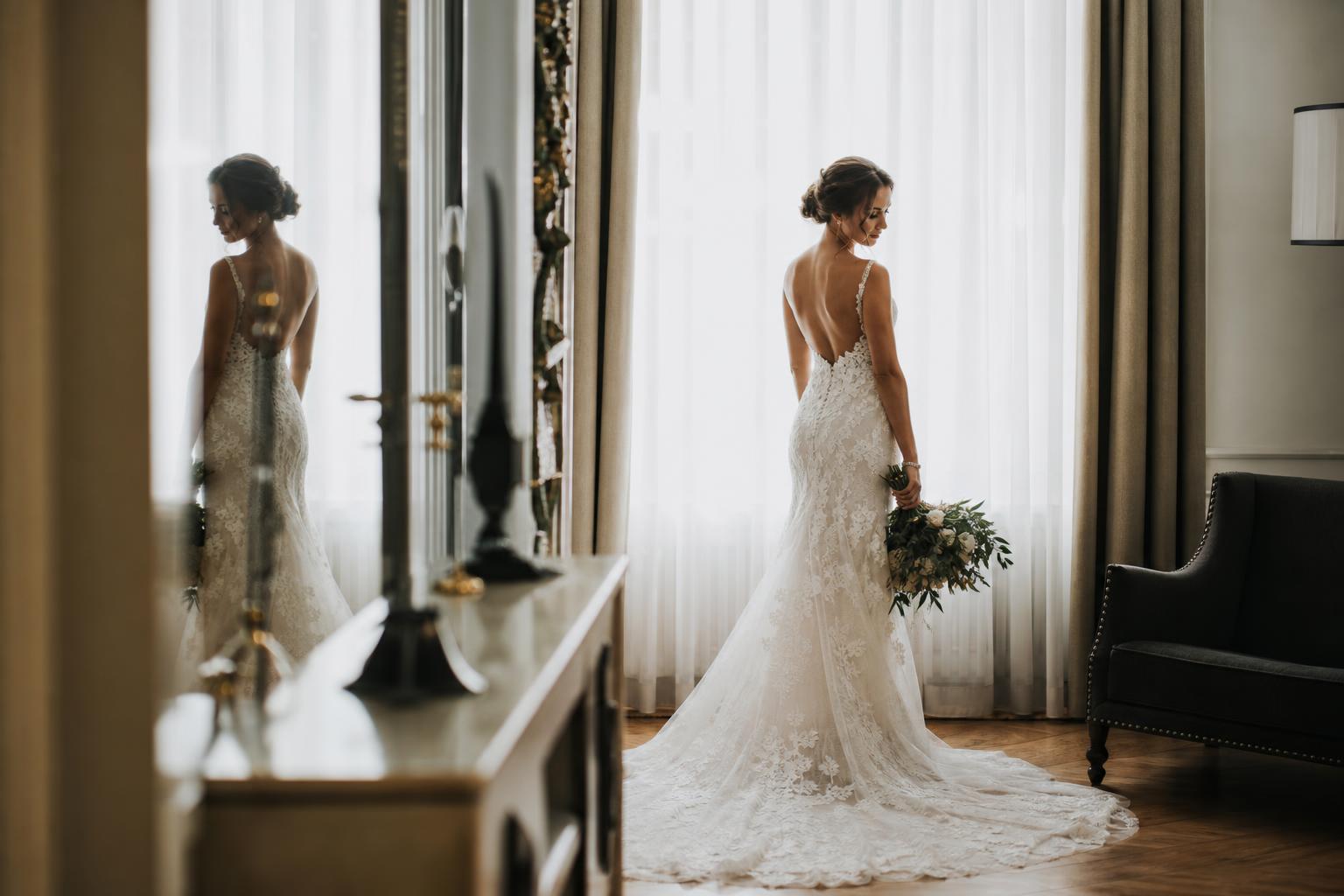
Wedding Dress Photo Ideas with an Editorial Feel
Dress photo ideas that turn a beautiful outfit into a memorable wedding story
A dress is never just a dress in wedding photography. It is the quiet beginning of the day, the detail that carries the mood of the ceremony, and often one of the most emotional visual threads running through the entire celebration. The strongest dress photo ideas do more than show fabric, shape, or styling. They help tell the story of anticipation, movement, setting, and personality in a way that feels true to the couple and practical for the wedding day itself.
For brides planning real timelines, real budgets, and real venue logistics, that distinction matters. A photo idea may look appealing in theory, but if it requires too much setup, clashes with the venue, ignores lighting, or disrupts the flow of the morning, it can become more stressful than meaningful. The best approach is to choose dress photos that fit naturally into the day and support the overall wedding vision, whether that vision feels romantic, minimalist, garden-inspired, modern, coastal, vintage, boho, or quietly luxurious.
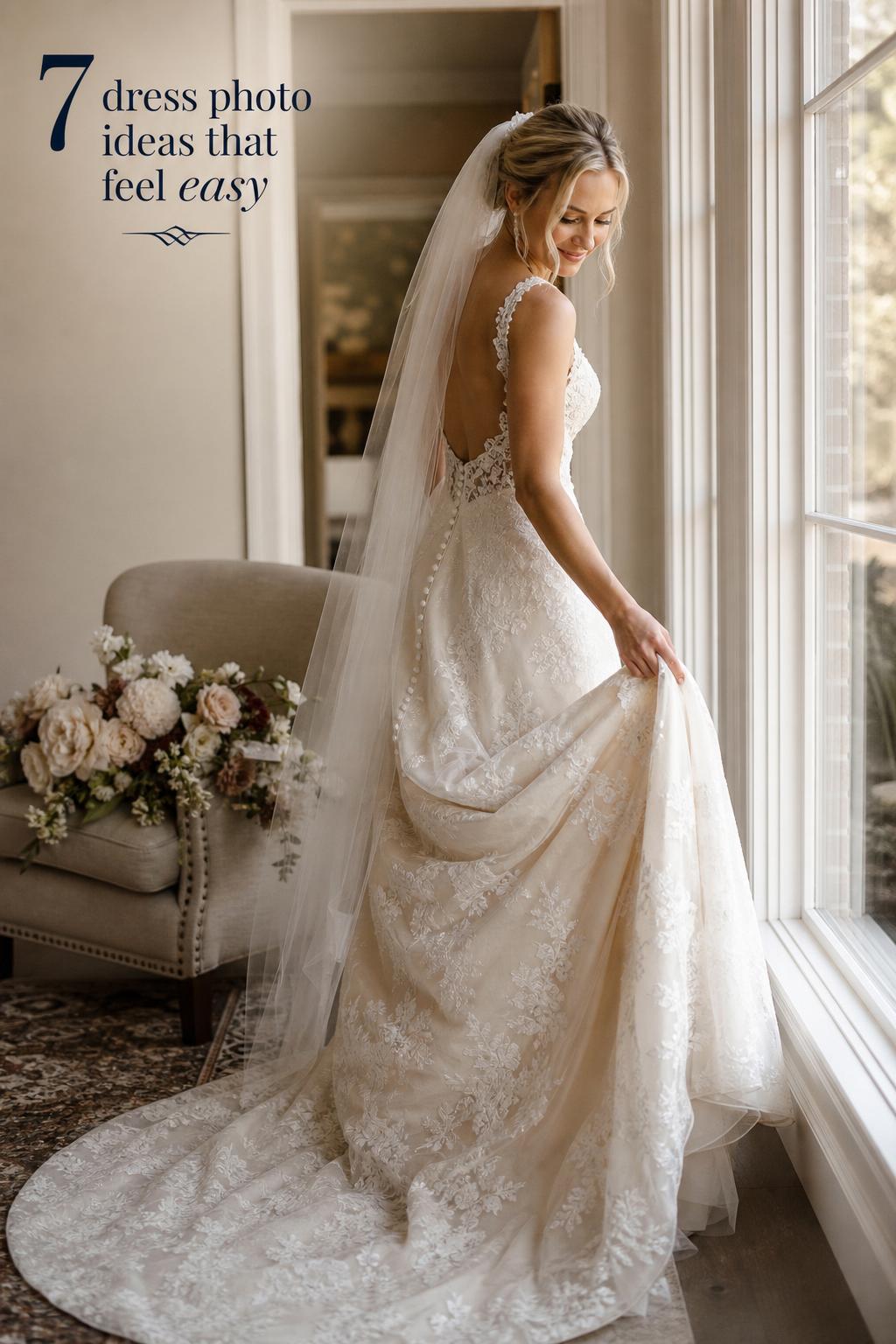
This guide explores dress photo ideas through a wedding-planning lens, so each one is not only visually inspiring but also useful in practice. You will see where certain ideas work best, how to style them realistically, what to avoid, and how to adapt them for different seasons, budgets, and venues.
Start with the dress before anyone gets dressed
Some of the most timeless wedding images happen before the room becomes busy. Photographing the dress on its own gives it breathing room and creates a calm opening chapter for the gallery. This works especially well if the gown has distinctive structure, lace, beading, a dramatic train, or a silhouette that deserves a full unobstructed frame.
Turn wedding inspiration into a plan you can actually follow.
Zarellea brings your guest list, budget, vendors, and day-of details into one shared space — so no beautiful idea gets lost in the shuffle.
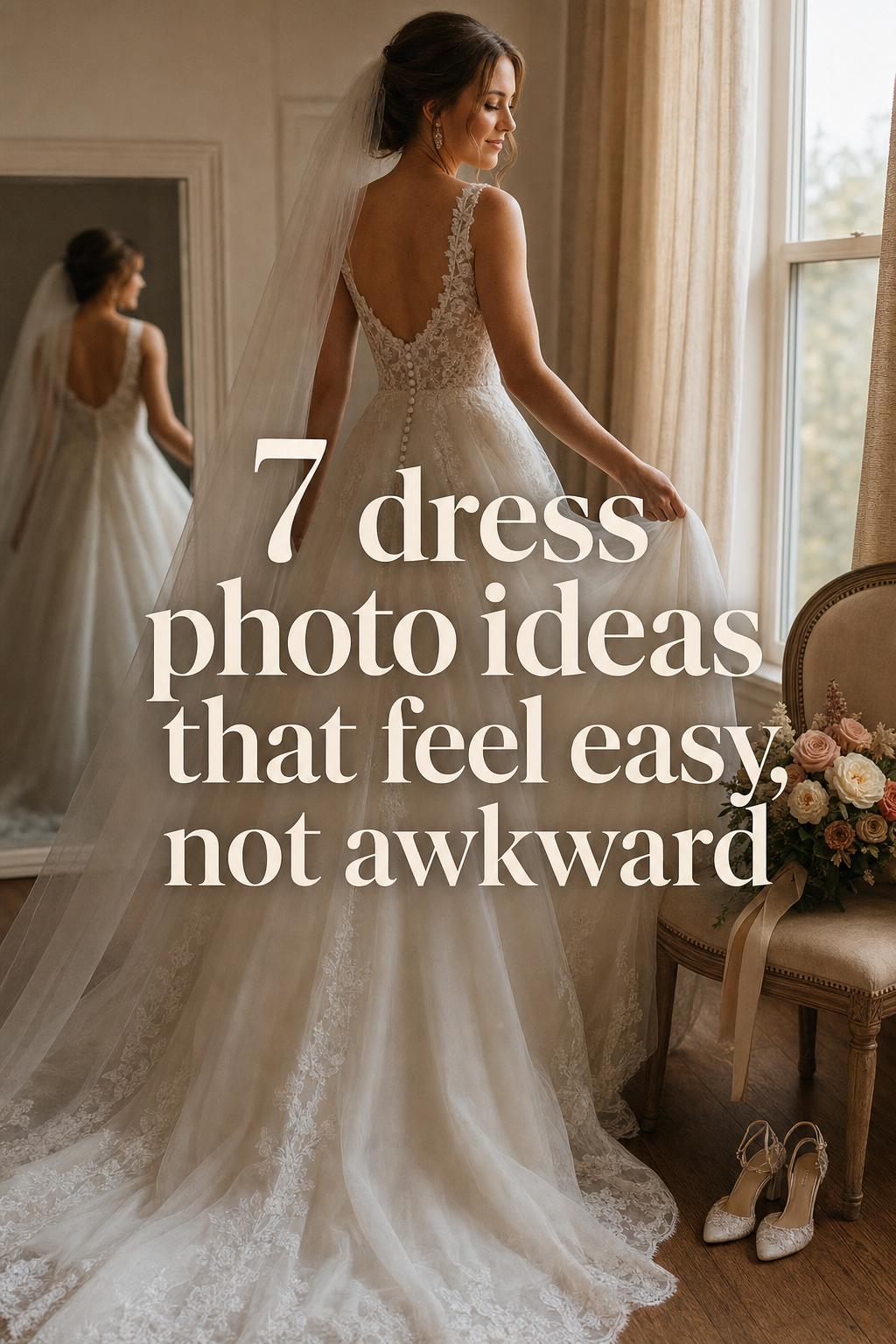
The hanging dress portrait
This idea focuses on the gown displayed on a hanger, usually in natural light near a window, doorway, or architectural feature. It works best for weddings where the venue itself contributes to the visual story, such as a room with clean lines, soft drapery, interesting doors, or an elegant bed-and-breakfast feel. It also suits couples who want editorial calm before the day becomes emotional and fast-moving.
Why it works is simple: the dress becomes the subject, not an accessory to the room. It gives the photographer time to capture fabric texture, shape, and overall style without distraction. It also creates a useful transition image that pairs beautifully with flat lays, invitation details, shoes, and jewelry if those are part of the wedding coverage.
To make it work, choose a location with enough vertical space so the hem is not awkwardly bunched. If the venue is busy or dark, a plain wall or clean window frame is usually better than a cluttered background. Ask your photographer and planner to identify the photo spot before hair and makeup begin so the dress can be moved only once.
Budget tip: if your venue does not offer a naturally beautiful backdrop, do not overspend trying to create one. A simple area with good light often photographs better than an overdecorated corner.
Common mistake to avoid: hanging the dress somewhere too high, too low, or too cramped. If the train pools in a messy way or the hanger cuts into the neckline shape, the final image can feel accidental rather than intentional.
Real-life styling tip: switch to a quality hanger before the wedding morning. Even a well-photographed gown can lose impact if it is hanging on the plastic hanger from the bridal salon.
The dress with meaningful details nearby
Another strong variation is to photograph the gown with a few carefully chosen companion items close by. This idea works best for couples who want the images to feel personal and layered without becoming crowded. A veil, shoes, earrings, invitation suite, or perfume can support the story if arranged sparingly.
The logic behind this setup is emotional clarity. Instead of showing every accessory at once, it connects the dress to the wedding morning and gives context to the look. In a smaller wedding or intimate venue, this can make the gallery feel more cohesive without requiring elaborate décor.
- Best for intimate weddings, boutique venues, and couples with meaningful accessories
- Works well when the overall wedding style is romantic, minimalist, or vintage-inspired
- Most effective when only a few details are included
Budget tip: borrow or reuse styling surfaces already at the venue, such as a chair, antique mirror, or bed linen, instead of renting extra pieces for setup.
Common mistake to avoid: placing too many objects around the gown. The dress should still lead the image.
Real-life styling tip: if the dress has heavy embellishment, keep surrounding details simple. If the dress is clean and minimal, a few textured accents can help the image feel complete.
Movement gives dress photos life
A still portrait can show the dress clearly, but movement reveals how it behaves. That matters because many couples fall in love with a gown based not only on how it looks standing still, but on how it moves during the ceremony, while walking, turning, or dancing. This is where dress photo ideas become more expressive and less static.
Walking shots with the train following behind
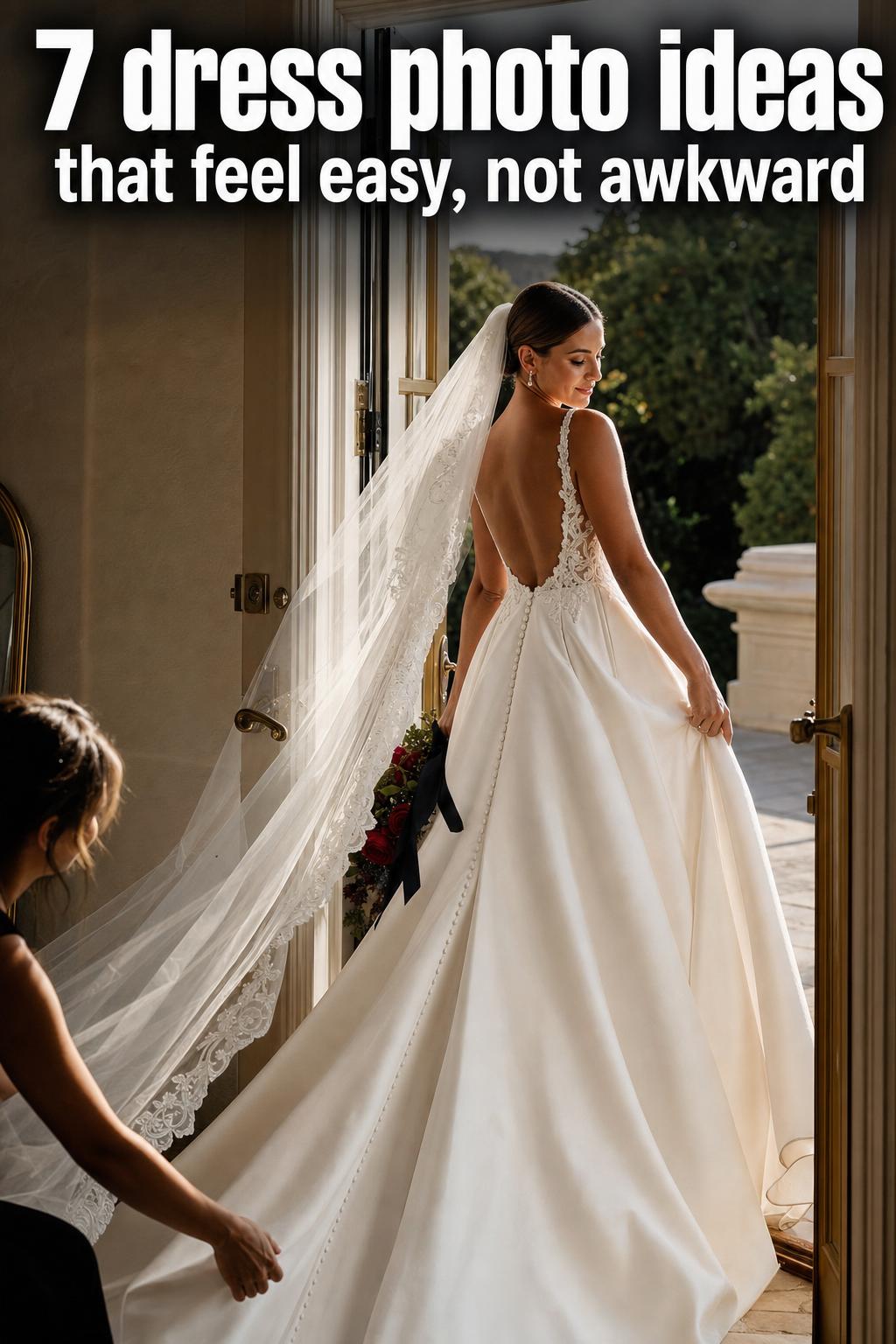
This is one of the most practical photo ideas because it fits naturally into the day. The bride is already moving between spaces, toward the ceremony, across the venue grounds, or into the reception. The photographer simply uses that movement intentionally. It works especially well for gowns with trains, soft layers, slit details, or fabric that catches light as it moves.
Best for outdoor weddings, large venues, formal entrances, and ceremonies with a clear walkway or path. It also helps couples who feel uncomfortable posing because walking gives them something natural to do.
Why it works: movement relaxes the body, softens posture, and shows proportion more realistically than a fully posed frame. It can also make a structured dress feel less stiff in photos.
How to make it work: choose a route free of visual clutter and ask your coordinator to clear water bottles, bags, signage, and vendor cases from the frame. If the train is long, assign a bridesmaid or stylist to set it before each shot so it falls neatly and does not twist.
Budget tip: you do not need a grand staircase or luxury venue for this idea. A clean path, open field edge, terrace, or simple aisle can be enough if the light is good.
Common mistake to avoid: walking too fast. The movement should feel fluid, not rushed, especially if the dress has layers that need time to open and settle.
Real-life styling tip: practice holding your bouquet slightly lower than feels natural. Many brides lift it too high, which shortens the torso and hides important dress details.
The turn or gentle spin
A turn can highlight volume, lightness, and fabric movement in a way a straight-on portrait cannot. This works best with dresses that have soft skirts, layered tulle, or enough width to create motion. It is less effective with very fitted silhouettes unless the focus is on the train rather than the skirt itself.
This idea is especially useful for romantic garden weddings, sunset portraits, and less formal celebrations where the mood is relaxed. It can also bring softness into a modern or minimalist wedding by adding motion to a clean visual setting.
How to make it work: the turn should be slow and controlled. Fast spinning can distort the bodice, lift the hem awkwardly, and create facial expressions that look tense instead of natural. If the dress is heavy, a partial turn is often better than a full spin.
Common mistake to avoid: using this idea with a dress that does not naturally move well. Some fabrics are better showcased with stillness and structure.
Real-life styling tip: do one practice turn before portraits begin so the photographer can see how the skirt opens and where the fabric falls best.
Close-up dress photos that capture craftsmanship and feeling
Not every meaningful dress image needs a full-body frame. Close-up photography can reveal construction, texture, and emotion in a quieter way. This is particularly valuable when the gown includes details that may disappear in wider shots, such as lace placement, buttons, sleeve shape, neckline finishing, or beaded elements.
Buttoning, zipping, and fastening moments
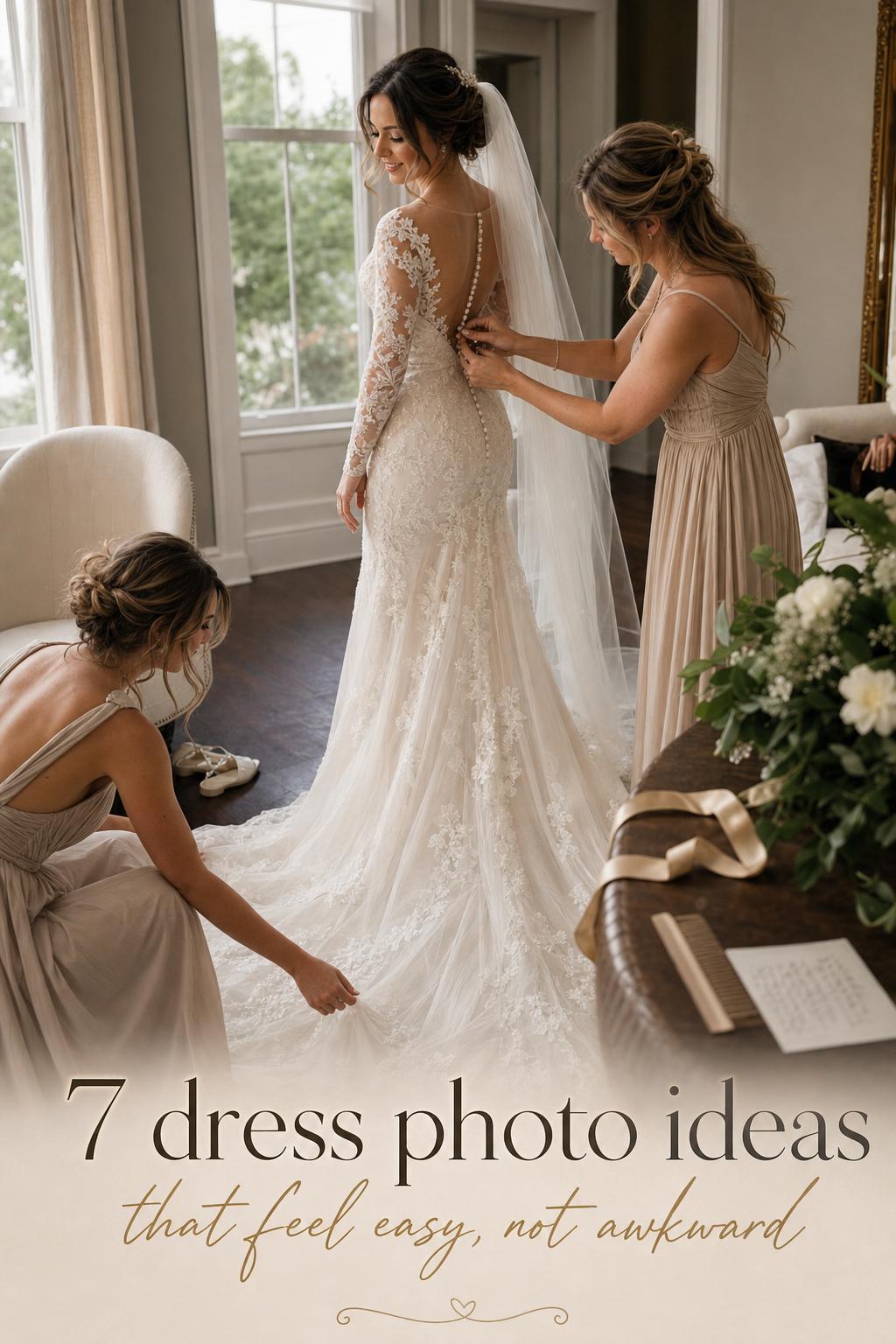
These images often become favorites because they combine detail with human connection. A hand buttoning the back of the gown or fastening a wrist detail introduces emotion without needing a fully staged pose. This works well for classic weddings, family-focused mornings, and couples who value documentary-style moments.
Best for bridal suites with enough space and soft light. It is also ideal for dresses with visually interesting closures or a fitted back that deserves attention.
Why it works: the image shows both the dress and the transition into the wedding day. It feels personal and useful to the story, not decorative for its own sake.
How to make it work: allow extra time in the dressing schedule. If the bride is rushed, these moments feel tense very quickly. Have all undergarments, shapewear, veil, and jewelry sorted in advance so the dressing sequence can happen calmly.
Budget tip: no extra styling is needed here. Good timing matters more than extra props or rented accessories.
Common mistake to avoid: filling the room with too many people during dressing. Fewer bodies usually means cleaner photos and less stress.
Real-life styling tip: if the gown wrinkles easily, wait to fully sit down once it is on. Many dress-detail photos happen right after dressing, and creasing can show more than expected in close-up images.
Hands on fabric, veil, or sleeves
A close frame of hands lightly touching the dress can be understated and elegant, especially for gowns with texture. This idea works best when the bride wants photographs that feel calm, refined, and less performative. It is particularly effective in modern minimalist weddings, where subtle details carry more visual weight.
The reason this works is scale. It helps the viewer understand the softness of the fabric, the intricacy of beading, or the line of the sleeve. It also creates variety in the gallery without requiring a location change.
Common mistake to avoid: gripping the skirt too tightly. Hands should guide the fabric, not bunch it.
Real-life styling tip: moisturize hands, but avoid heavy oils right before this photo if the fabric is delicate or easily marked.
Use the venue to support the dress, not compete with it
Location shapes how a gown is perceived in photographs. A dramatic ballgown may feel strongest in an open, architectural space. A light boho dress may feel more natural in a garden or coastal setting. The goal is not to find the most impressive background in every case, but the one that helps the dress make visual sense.
Garden and outdoor dress portraits
Outdoor portraits work well when the dress has softness, movement, or a romantic quality that benefits from natural surroundings. Gardens, courtyards, lawns, and lightly landscaped venues all support this approach. It is especially effective in spring and summer, though early fall can also suit it if the color palette remains soft and cohesive.
Best for romantic, floral, boho, and fine-art wedding styles. It also works for smaller budgets because nature can function as the backdrop without major production.
Why it works: outdoor light often flatters fabric and skin more gently than artificial indoor lighting, and movement is easier when space is open.
How to make it work: choose areas with clean landscaping rather than random utility spaces around the venue. Watch for patchy grass, parked cars, hoses, and bright signage that can distract from the image.
Budget tip: prioritize one well-kept outdoor area instead of trying to use every part of the property.
Common mistake to avoid: ignoring weather and ground conditions. Long hems and delicate fabrics do not always perform well on wet grass or uneven stone.
Real-life styling tip: keep a clean sheet or cloth nearby so the bride can stand on it while waiting between outdoor setups, especially if the hem is light colored and the ground is damp.
Modern indoor spaces and minimalist backdrops
A clean interior can make the dress feel sharper and more fashion-forward. This works particularly well for minimalist gowns, sleek silhouettes, city weddings, and venues with strong lines or understated color palettes. In these settings, the absence of visual noise becomes an advantage.
Why it works is balance. A simple background gives shape, tailoring, and proportion room to stand out. If the gown is sleek, heavily decorated surroundings can weaken its impact instead of improving it.
- Best for modern weddings and structured gowns
- Ideal when the venue has clean walls, polished floors, or architectural windows
- Helpful for rainy-day backup plans because it can look intentional rather than second choice
Common mistake to avoid: assuming minimalist means empty. The space should still feel considered, tidy, and well lit.
Real-life styling tip: ask your photographer to watch vertical lines carefully in modern spaces. Leaning walls or windows can make the image feel unintentionally off-balance.
Dress photos with people can feel more meaningful than dress photos alone
Not every wedding gallery needs a long sequence of solo dress portraits. Some of the strongest images happen when the dress becomes part of a relationship, whether that is with a parent, bridal party, or partner. These photos usually feel less staged because there is a genuine exchange happening.
The first look with the dress as the emotional focal point
A first look naturally centers the gown because it is often the first time the partner sees the complete wedding look. This makes it one of the most powerful dress photo ideas for couples who value reaction, emotion, and storytelling over purely editorial posing.
Best for couples who want private time before the ceremony, a smoother photo timeline, or a more intimate emotional moment. It also helps reduce portrait pressure later in the day.
Why it works: the dress is seen in context, on the bride, in motion, and through the partner’s reaction. That combination often feels more memorable than a standalone fashion image.
How to make it work: choose a quiet location with enough space for both emotion and photography. Avoid crowded corridors or high-traffic paths where guests and vendors may interrupt the moment.
Budget tip: a first look can save time overall, which may help you use photography coverage more efficiently.
Common mistake to avoid: placing the first look in harsh midday light without shade. Emotion matters, but lighting still affects the final result.
Real-life styling tip: if the veil is part of the look, decide in advance whether it should be on for the first look. Both options can work, but the choice changes the silhouette and emotional reveal.
Getting-ready photos with a parent or close friend
These images work particularly well for weddings that value intimacy over spectacle. A parent smoothing the skirt, adjusting the veil, or pausing to look at the bride can turn the dress into a shared memory rather than a solo style statement.
This idea is best for emotionally close family weddings, smaller bridal parties, and mornings with enough time to be present. It may be less practical in crowded hotel rooms with tight schedules.
Common mistake to avoid: treating the moment like a performance. The strongest images happen when the interaction is real and the room is calm.
Real-life styling tip: have everyone else step back for a minute during this part of the morning. Fewer onlookers often create more authentic expressions.
Think about fabric behavior before choosing your photo plan
One practical truth many couples discover too late is that not every dress behaves the same way on camera. A flowing skirt, fitted crepe silhouette, heavy satin gown, lace sleeves, or embellished bodice all photograph differently. The most successful dress photo ideas are chosen with the fabric and structure in mind, not just the pose itself.
A lightweight dress often benefits from movement, breeze, and open space. A structured gown may need stillness, posture, and clean backgrounds. A heavily detailed dress may deserve close-up attention because the craftsmanship can disappear from far away. Thinking this through ahead of time helps avoid forcing a visual concept that does not suit the gown.
- Soft layers: prioritize motion, walking, and outdoor light
- Structured silhouettes: use stronger posture and simpler backdrops
- Detailed bodices or sleeves: add close-up frames early in the timeline
- Long trains: schedule enough setup time for full-length portraits
Real-life styling tip: ask your photographer to review the gown briefly on the wedding morning and suggest which features should be prioritized. That quick adjustment can improve the full gallery without adding extra time.
How to adapt dress photo ideas for different wedding styles
Wedding style should guide the mood of the images. A dress photo that suits a modern city celebration may feel out of place at a relaxed garden ceremony. Matching the photo approach to the overall wedding design keeps the gallery consistent and helps every image feel part of the same day.
For romantic and garden weddings
Lean into softness, movement, layered fabric, and natural light. Walking portraits, veil movement, floral-adjacent backdrops, and quiet getting-ready moments usually suit this style best. Avoid overly stark locations that flatten the gentle mood of the wedding.
For modern minimalist weddings
Choose clean backdrops, precise posture, thoughtful framing, and detail shots that emphasize line and tailoring. A calm indoor location, simple wall, or architectural hallway may work better than a busy outdoor setting. Keep accessories limited in frame so the dress remains the visual anchor.
For boho or coastal celebrations
Movement becomes especially important. Fabrics that respond to air and light tend to photograph well in these settings. Focus on natural motion, hemline interaction with the environment, and relaxed body language. Be practical about wind, sand, and uneven ground so the images stay intentional rather than chaotic.
For formal or luxury weddings
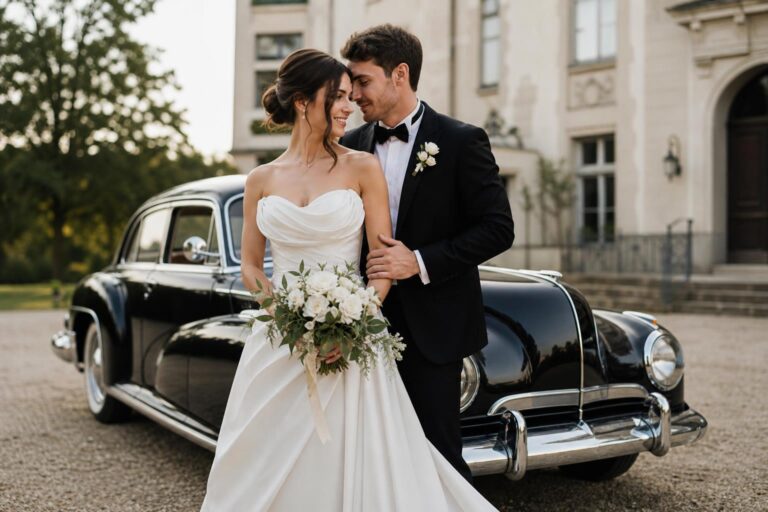
Give the dress room to feel composed. Staircases, long hallways, ceremony entrances, and full-length symmetrical portraits often support a more formal visual language. Detail photos should be polished and uncluttered, and the timing should allow proper train placement rather than rushed posing.
Where couples often go wrong with dress photos
One of the most common mistakes is treating every dress photo idea as equally necessary. In reality, a shorter list of well-chosen images usually works better than trying to recreate every trend. Wedding mornings move quickly, light changes, weather interferes, and emotional energy matters. Choosing a few ideas that fit the dress, venue, and schedule will almost always produce better results than chasing quantity.
Another issue is ignoring the practical setup. Crowded rooms, poor hangers, wrinkled fabric, visible clutter, and rushed dressing moments can all weaken otherwise strong ideas. These are not dramatic problems, but they show up clearly in final images. Small logistical decisions often matter more than dramatic styling choices.
- Trying to force outdoor photos in poor weather without a backup plan
- Overfilling detail shots with too many accessories
- Not allowing enough time to button, steam, or arrange the dress properly
- Using locations that are meaningful but visually distracting
- Choosing poses that do not suit the gown’s structure
A useful planner mindset is to ask one question before adding any photo idea to the timeline: does this help tell the story of the wedding, or does it only look appealing in isolation? That simple filter keeps the gallery more personal and less performative.
A practical timeline for fitting dress photos into the day
The best dress photos rarely happen by accident. They happen because enough time has been protected for setup, dressing, movement, and natural transitions. This does not mean building a complicated photography schedule. It means identifying a few ideal windows and making sure the dress is ready when those moments arrive.
Early in the morning is usually best for solo dress portraits and close detail shots, before the room becomes active. Dressing moments need a quiet buffer so they do not feel rushed. Walking portraits and venue-based full-length images often work best after the bride is fully ready but before guests gather everywhere. A first look, if planned, can carry some of the most meaningful dress coverage without needing extra posing time later.
If sunset portraits are part of the plan, the dress can also be photographed in a different emotional tone later in the day. The same gown may look structured and polished in the morning, then softer and more cinematic in evening light. That kind of variety often feels more valuable than ten versions of the same setup.
Tips for making dress photos feel elegant on any budget
Budget does not determine whether dress photos feel refined. Planning does. Couples with smaller budgets often get stronger results by simplifying the setup and focusing on light, timing, and one or two meaningful locations instead of trying to imitate a large production.
- Invest in steaming or pressing the dress properly before photos begin
- Choose one good hanger instead of buying many styling extras
- Declutter the getting-ready room before photography starts
- Use the venue’s strongest natural-light area rather than renting added décor
- Prioritize authentic moments with people over unnecessary props
One experienced styling principle applies almost everywhere: photographs tend to feel more expensive when they are visually calm. Clean backgrounds, thoughtful posture, and a well-prepared gown usually have more impact than adding more objects to the frame.
Choosing the dress photos you will still care about years from now
Trends in photography change, but the most lasting wedding images usually share the same qualities. They show the dress clearly, place it within the emotional rhythm of the day, and reflect the setting honestly. They do not ask the couple to become someone else for the camera. Instead, they preserve how the day felt while still honoring the beauty of the gown.
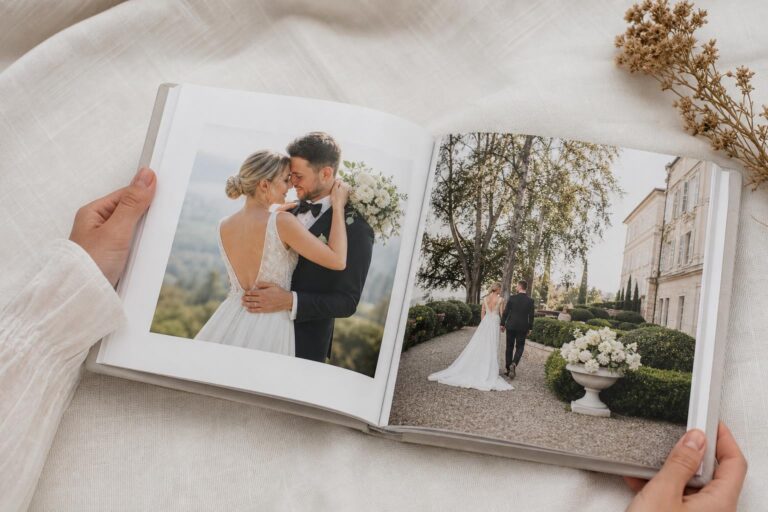
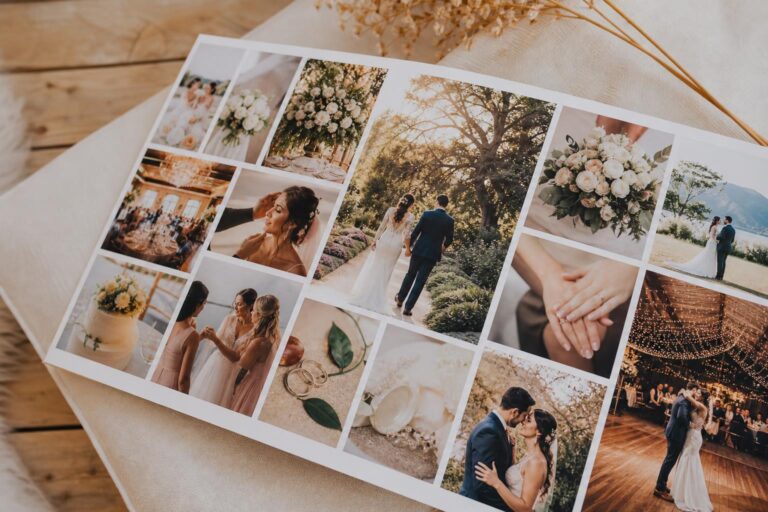
As you choose dress photo ideas, think less about collecting every possible pose and more about building a balanced visual story. Include at least one image of the dress alone, one with movement, one close-up detail, one meaningful human interaction, and one image that connects the gown to the venue or atmosphere of the wedding. That combination usually creates a gallery that feels complete, personal, and useful when you look back on it later.
The right dress photos do not need to be complicated. They need to feel intentional, well-timed, and true to the celebration you are creating. When those pieces come together, the gown becomes more than something you wore. It becomes part of the memory itself.
FAQ
What are the most important dress photo ideas to prioritize on a wedding day?
If time is limited, prioritize one photo of the dress alone, one dressing moment, one full-length portrait showing the complete silhouette, one movement shot, and one emotional image with a partner or loved one. That mix gives you variety without overwhelming the schedule.
When should dress photos be taken during the wedding day?
Solo dress photos and detail images are usually best taken early in the morning before the getting-ready space becomes busy. Dressing moments should happen with a time buffer, and full portraits often work best once the bride is ready but before the ceremony begins.
How can I make dress photos look good in a simple or inexpensive venue?
Focus on clean light, tidy backgrounds, and a few intentional setups rather than trying to disguise the entire venue. A well-lit window, uncluttered wall, doorway, or outdoor path can produce elegant images when the dress is steamed and styled properly.
Do all wedding dresses work well with movement photos?
Not always. Soft skirts and lighter fabrics usually respond best to walking or turning, while structured or heavily fitted gowns may look stronger in more still, composed portraits. The best choice depends on how the dress naturally holds shape and moves.
What should I avoid placing in the background of dress photos?
Avoid visible bags, water bottles, food trays, vendor equipment, signage, and crowded furniture. Even a beautiful gown can lose impact if the background feels accidental or busy.
Are getting-ready dress photos worth including?
Yes, especially if you want the gallery to feel personal rather than purely posed. Photos of buttoning, fastening, adjusting the veil, or a quiet reaction from a parent often become some of the most meaningful images from the day.
How many dress photo ideas should I actually plan for?
A small, thoughtful selection is usually better than a long list. Most couples do well with five to eight intentional concepts that fit the dress, venue, and schedule rather than trying to recreate every idea they have seen elsewhere.
What is the biggest mistake couples make with dress photos?
The biggest mistake is choosing ideas that look appealing on their own but do not fit the actual wedding conditions. Poor timing, rushed dressing, bad lighting, and cluttered spaces create more problems than a lack of elaborate styling.