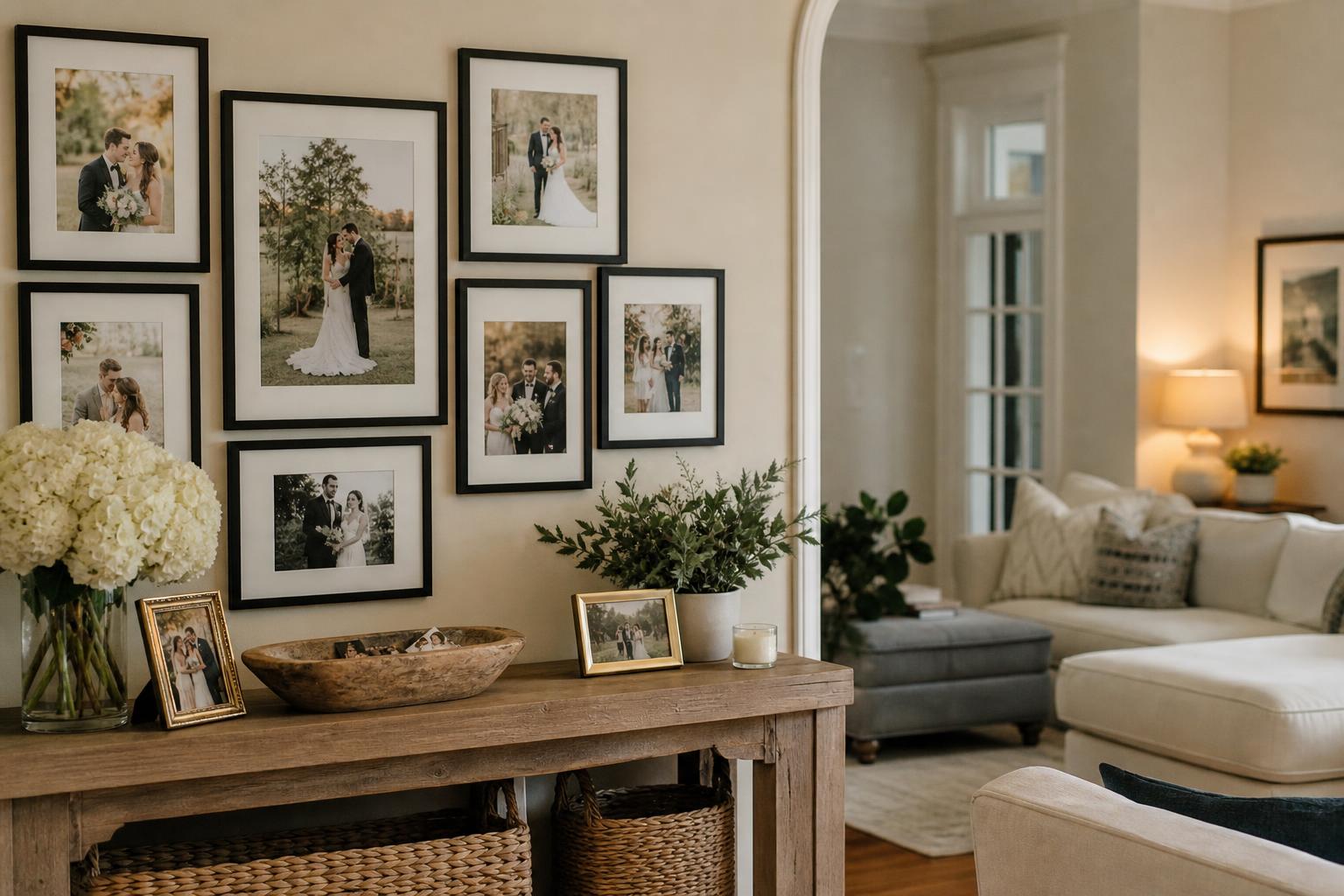
Wedding Photo Display Home Ideas With a Soft, Modern Touch
Some homes hold wedding memories in a single album tucked safely on a shelf. Others let those memories breathe in the everyday light: above a console in the entryway, layered across a bedroom ledge, or arranged into a gallery wall that turns a quiet afternoon into a return to the vows, the first look, and the first dance. A thoughtful wedding photo display home is not just about decorating with pictures. It is about giving your story a place in the rooms where real life now unfolds.
The visual identity of this style is romantic, collected, and deeply personal. It borrows from the calm polish of a well-designed interior and the emotional warmth of wedding keepsakes. You see it in floating frames, fine art prints, canvases, photo tiles, and even a digital frame that keeps the gallery gently alive. The mood can lean modern and minimal, layered and nostalgic, or softly curated with pressed flowers, a boutonniere, guest notes, and favorite portraits.
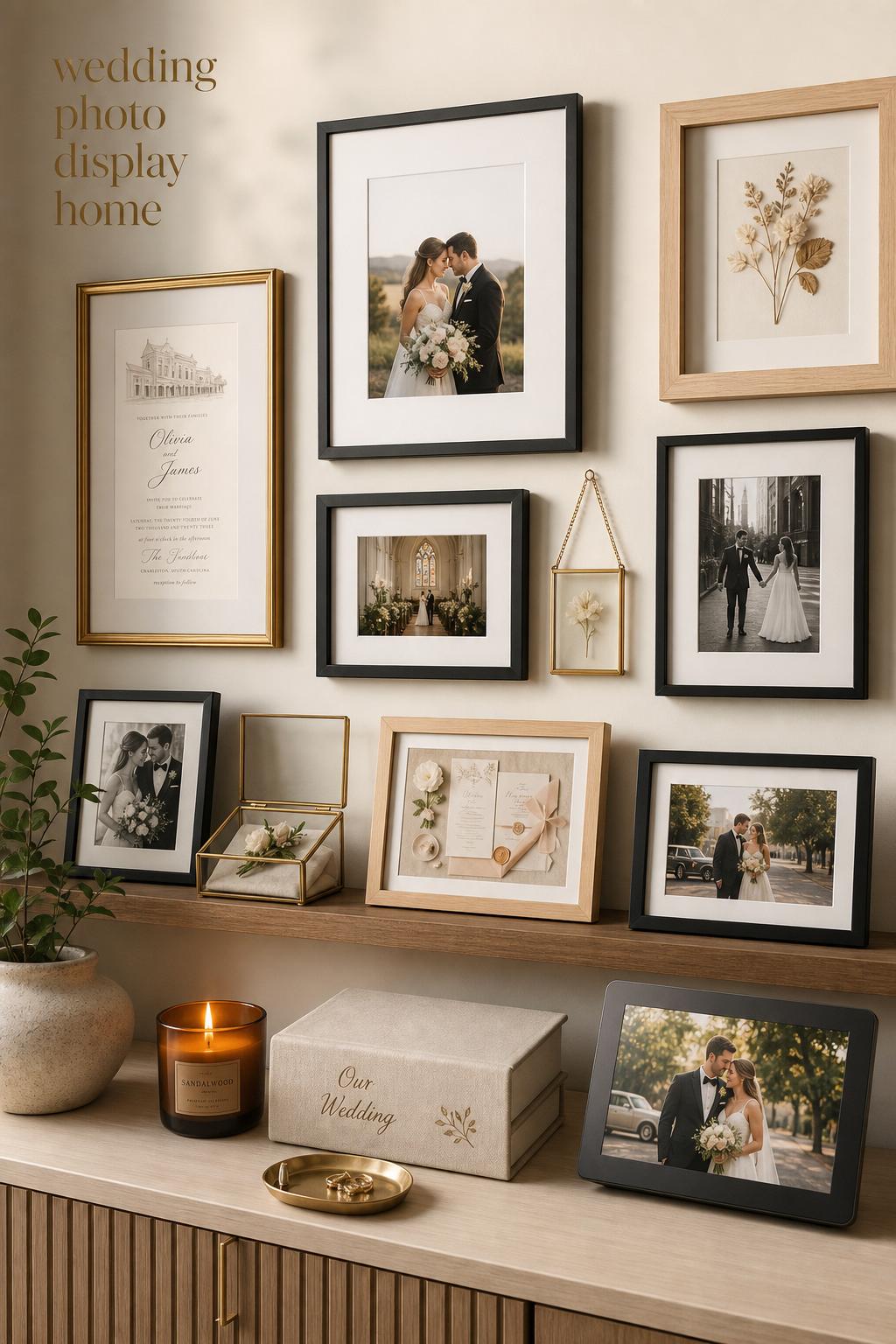
Part of the appeal is that it works in almost every kind of home, from a living room that hosts friends to a bedroom that feels private and intimate. Couples love it because it transforms wedding photography from something stored away into something lived with. And when the display is designed well, it does more than fill a wall. It tells a story with intention, balance, and beauty.
What defines a wedding photo display home
A wedding photo display home is a home design approach that treats wedding imagery as part of the décor rather than a separate keepsake category. At its heart is the wedding photo wall or wedding gallery wall, but the concept extends beyond one surface. It can include framed prints in the hallway, a Magnolia display cabinet for invitations and pressed flowers, canvases in the bedroom, and an Aura Walden digital frame that rotates meaningful moments in a more dynamic way.
Turn wedding inspiration into a plan you can actually follow.
Zarellea brings your guest list, budget, vendors, and day-of details into one shared space — so no beautiful idea gets lost in the shuffle.
This style works best when it feels cohesive rather than crowded. Interior designer Nadia Watts, based in Denver, Colorado, is associated with the idea that a wedding picture wall should tell a story, not simply show a collection of pretty images. That difference matters. Storytelling turns separate photos, mementos, and frame styles into one emotional arc. It allows the home to reflect not only what the wedding looked like, but what it meant.
In practical terms, that means choosing a visual language and carrying it through the home. A couple might use Artifact Uprising framed prints in the living room, a Minted frame for a hero portrait near the bedroom, and an Anthropologie frame for one intimate close-up on a nightstand. Another home might lean toward Mixtiles for a flexible photo wall in a smaller apartment, then add a brass and wood display box for keepsakes nearby. The style identity stays unified when the palette, spacing, and story all feel connected.
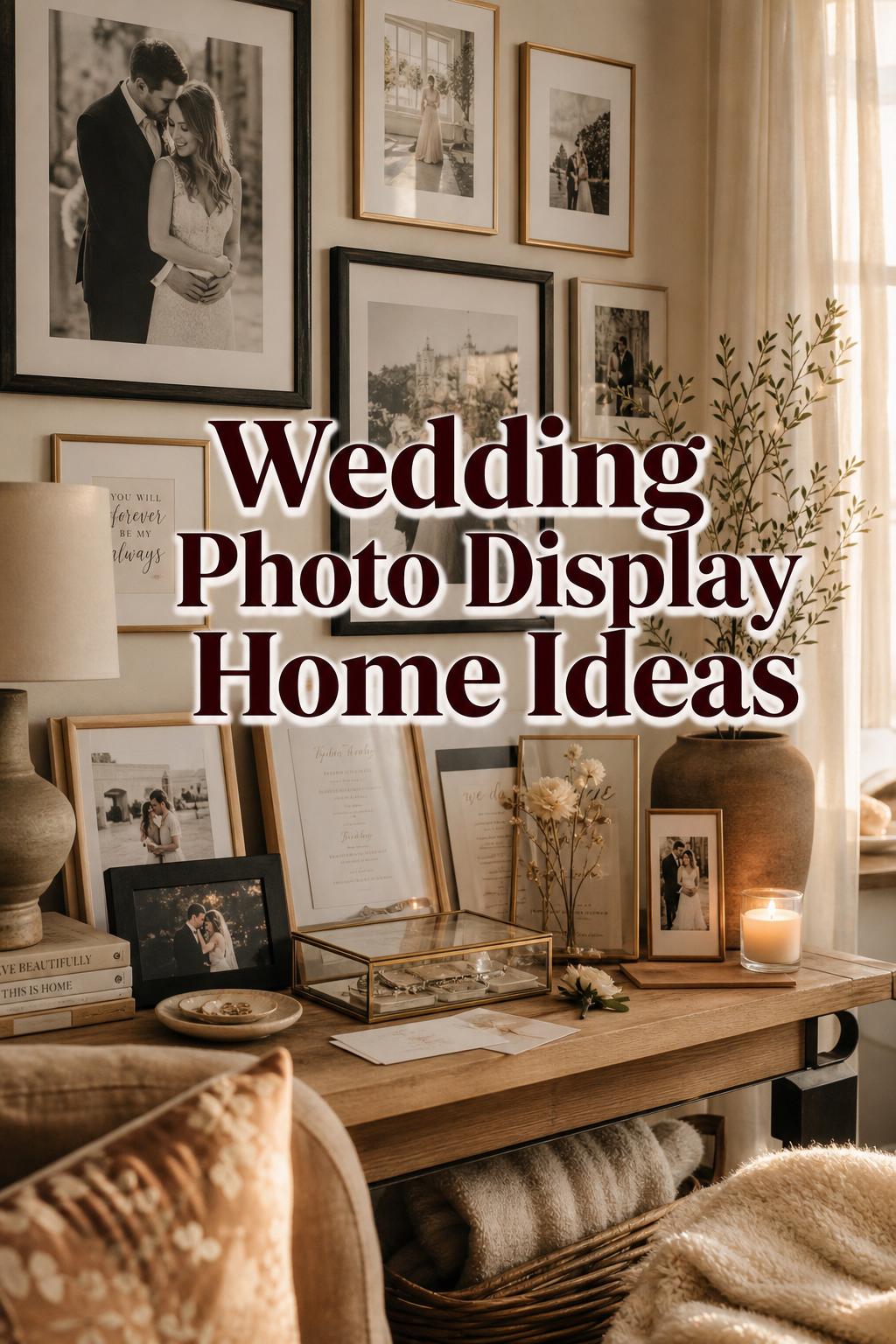
The mood board behind the look
Before choosing layouts or products, it helps to think about the emotional atmosphere you want your display to create. Some couples want their wedding photos to feel editorial and polished, almost like a small private gallery. Others want a softer, warmer effect that blends naturally with family life. Both approaches can work beautifully, but they lead to different design choices.
- A refined mood often favors clean grid layouts, black or brass frames, even spacing, and a restrained color palette.
- A more romantic, collected mood suits mixed frame finishes, layered shelves, canvases, and small keepsakes woven between prints.
- A modern living wall may combine classic framed photos with a digital frame, making the story feel active rather than fixed.
- A cozy home-centric display often uses ledges, shelves, clips, and soft room styling to keep the gallery approachable.
This is where room context matters. A foyer can handle a stronger first impression. A bedroom usually benefits from a calmer visual rhythm. A living room often needs a display that balances with furniture, sight lines, and the existing palette. The most successful wedding photo display ideas for home feel aware of the room they live in.
Core design principles that make the gallery feel elevated
Every memorable wedding gallery wall rests on a few design principles: visual balance, spacing, color harmony, and narrative sequence. These may sound technical, but they are what make the display feel graceful instead of improvised. Whether you use Artifact Uprising framed prints, Mixtiles, Minted frames, or a mix of formats from brands like Anthropologie and Crate & Barrel, the same rules apply.
Start with the story before the layout
It is tempting to begin by shopping for frames, but the stronger starting point is deciding what story the wall should tell. Some couples focus only on the wedding day. Others create a timeline wall that begins with engagement photos, moves through the ceremony and vows, and ends with the first dance or early married life. If anniversaries and later milestones will eventually be added, plan for that from the beginning so the wall can grow naturally.
Choose one visual rhythm and repeat it
A clean grid creates order and makes even emotional images feel calm and architectural. A linear arrangement suits hallways, stair runs, and longer living room walls. A heart collage or statement collage feels more expressive and romantic. Mixed media arrangements with prints, canvases, and a digital frame add texture and movement, but they require more restraint so the wall does not feel fragmented. Repetition is what keeps the display coherent.
Keep color palette and frame finish intentional
Color harmony is often what separates a wedding photo wall ideas board from a wedding photo display home that actually feels finished. If your wedding photography is light and airy, pale wood, white, or brass can echo that softness. If the imagery is more dramatic, black frames or darker woods may feel more grounded. Mixing finishes can work, but only when there is an obvious reason, such as distinguishing formal portraits from candid moments.
Use spacing as part of the aesthetic
Spacing is not an afterthought. Evenly spaced frames create polish, while uneven gaps can make the wall feel unsettled. Articles in this space frequently point to the need for practical spacing guidance because it is one of the biggest stumbling blocks for couples creating a home gallery on their own. If the display is meant to feel calm and refined, keep gaps visually consistent. If it is meant to feel organic, the variation should still look deliberate.
Tip: before hanging anything, lay the entire arrangement on the floor and view it from several angles. This simple step often reveals when one large portrait is overpowering the group or when a candid image should move closer to the keepsake section for a more emotional flow.
Look: the clean grid that feels quietly luxurious
This version of the wedding photo wall is tailored, symmetrical, and serene. It suits couples who love a polished home with clear lines and a composed visual rhythm. In a living room or entryway, the clean grid feels less like casual décor and more like a private exhibition of the day that changed everything.
The key pieces here are evenly sized framed prints, often arranged in a rectangular formation. Artifact Uprising and Minted are natural references for this mood because framed prints and floating frames support that crisp, editorial finish. Black, white, brass, or pale wood frames all work, depending on the home’s existing palette. A few couples prefer square prints for this arrangement because they create a calm, repeating geometry.
- Best for: living rooms, entryways, longer blank walls
- Works beautifully with: framed prints, floating frames, square prints
- Visual mood: refined, modern, balanced
- Ideal story type: highlight portraits, ceremony moments, first dance, wide venue shots
Why it fits the aesthetic: a clean grid lets the emotion of the images carry the romance while the layout keeps the overall room feeling composed. If your home already leans minimalist or modern, this is often the safest way to create a wedding gallery wall without competing with furniture or art already in the space.
Look: the timeline wall that tells your story in motion
There is something deeply moving about seeing the relationship unfold across a wall, not as one perfect portrait but as a progression of moments. The timeline wall creates a story arc from engagement to wedding day, from vows to celebration, and sometimes beyond. In a hallway, stair landing, or transitional living space, it turns movement through the home into movement through memory.
This display thrives on sequencing. Engagement photos, first look images, the walk down the aisle, vow exchange, guest embraces, the first dance, and quieter candid frames can all appear in order. Brands like Mixtiles are often associated with layouts that help this kind of chronological storytelling feel approachable, especially when the wall may evolve over time. Framed prints, photo tiles, and occasional captions or guest notes can reinforce the sense of a living narrative.
Why it fits the aesthetic: the timeline wall is one of the most emotionally resonant options because it mirrors the way couples remember the day itself. Rather than presenting only the most glamorous images, it honors transition, anticipation, and atmosphere. For couples who care deeply about the meaning behind each photo, this can be more satisfying than a purely decorative arrangement.
Style tip: pair key scenes with subtle context
Short captions, a printed vow excerpt, or a small note about the setting can add warmth without making the wall feel busy. This works especially well near an invitation suite, pressed flowers, or a display box that holds smaller keepsakes. The point is not to label every image, but to anchor the most meaningful transitions in the story.
Look: the romantic heart collage with a statement feel
For some couples, wedding imagery belongs at the center of the room’s emotion rather than blended quietly into the background. A heart collage or statement collage brings that feeling forward. It is more expressive, more immediately romantic, and often more playful than a strict grid. In a bedroom, dressing area, or cozy living space, it can feel intimate and celebratory at once.
This look is associated with collage layouts and photo tiles, which make it easier to shape a more sculptural composition. Mixtiles naturally fit this direction because the format supports collage-based installation. Smaller prints are usually best, especially if the wall shape itself is meant to read clearly from a distance. The palette should stay edited, otherwise the silhouette of the collage can disappear into visual noise.
Why it fits the aesthetic: this is the softer, more sentimental side of the wedding photo display home. It works for couples who want the wall to feel obviously personal and emotionally open. It is not the right choice for every room, but in the right location it creates a focal point that feels tender and joyful rather than formal.
Look: mixed media layers for a living, evolving gallery
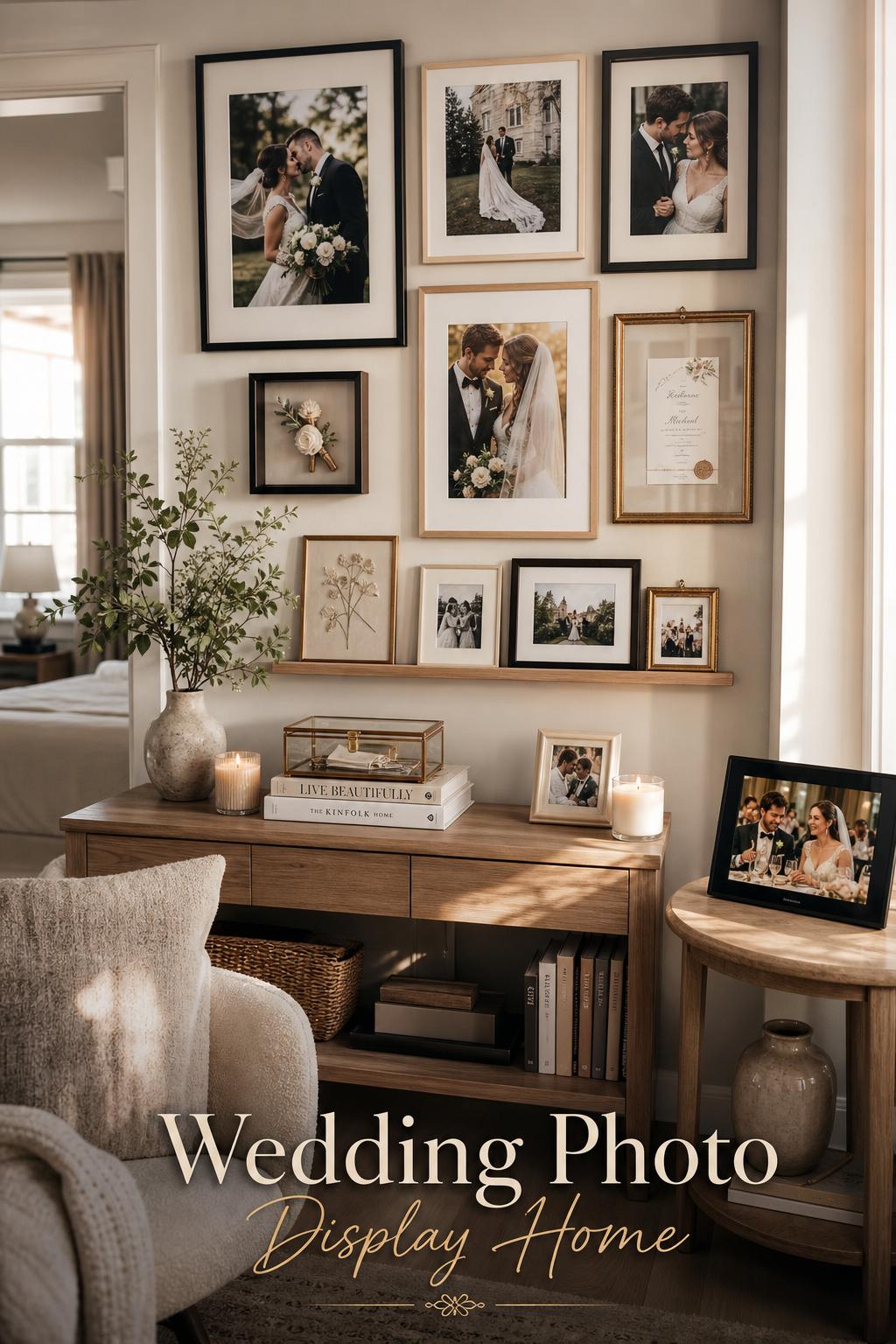
Some homes need more texture than a wall of matching frames can provide. A mixed media display answers that need by combining framed prints, canvases, ledges, and a digital frame into one layered composition. The silhouette feels dimensional and collected, as though the wedding story has been assembled over time rather than installed in one afternoon.
Artifact Uprising prints, canvases, and floating frames can work alongside an Aura Walden digital frame, especially in a family room or den where people naturally linger. A Magnolia display cabinet nearby can hold pressed flowers, a boutonniere, an invitation suite, or guest notes. This creates a relationship between imagery and objects, which makes the display feel richer and more complete. The caution here is balance: too many formats without a clear structure can make the home feel cluttered.
- Anchor the arrangement with one hero portrait or canvas.
- Add supporting framed prints around it.
- Use a digital frame where motion makes sense, not as the dominant element.
- Place keepsakes in a cabinet or box rather than scattering them across every shelf.
Why it fits the aesthetic: this look is ideal for couples who want their wedding memories to stay active in the home. The digital frame allows rotating photos, while physical prints maintain permanence. It feels especially meaningful for those who do not want the gallery to end with the wedding day alone.
Room by room: where each display style works best
The same photos can create very different moods depending on placement. A wedding photo display home feels convincing when each room holds a version of the story suited to its purpose. Rather than trying to place every favorite image in one oversized wall, it is often more elegant to distribute the narrative across the home.
Living room gallery
The living room is the public heart of the home, so displays here should feel welcoming and balanced. Clean grids, linear arrangements, and mixed media walls all work well, especially above a sofa, sideboard, or console. Because furniture already creates strong horizontal lines, the display should relate to that structure rather than ignore it. A living room gallery often benefits from the most polished framing choices, such as floating frames or coordinated framed prints from Artifact Uprising, Minted, or Crate & Barrel.
Bedroom master wall
The bedroom allows a more intimate, calming interpretation. Softer color palettes, fewer frames, and quieter moments from the wedding day tend to work better than large celebratory group scenes. Canvases, ledges, and a smaller collage can feel especially natural here. Artifact Uprising’s dreamy bedroom display concept aligns with this mood: personal, warm, and visually restful.
Entryway or foyer display
The entryway is your home’s first impression, which makes it a wonderful place for a refined wedding gallery wall. This is where a bold hero portrait, a small sequence of images, or a display cabinet with framed photos and keepsakes can greet guests beautifully. If your goal is to create a sense of welcome and story from the moment someone walks in, few spaces do it better.
How to choose between frames, prints, canvases, and tiles
Product choice shapes the entire character of the display. The best wedding photo display ideas for home do not rely on one format being universally better than another. They match format to room, story, and mood. A formal portrait may deserve a framed print. A relaxed candid might feel charming as part of a ledge arrangement. A timeline wall could benefit from photo tiles that are easy to extend.
Frames and finishes
Frames bring structure and polish. Floating frames have a lighter, more elevated feel, while traditional gallery frames can feel grounded and timeless. Brass finishes add warmth and a slightly romantic edge. Black frames introduce contrast and clarity. Wood tones soften the wall and make it easier to blend wedding photos into everyday décor. Minted, Anthropologie, Crate & Barrel, and Artifact Uprising all represent frame styles that support different versions of this home aesthetic.
Prints and paper quality
Prints are often the foundation of the display because they offer the most flexibility. Square prints work naturally in grids and ledges. Larger framed prints suit statement moments. Fine art or archival-style prints support a more luxurious feel, especially when the wedding photography itself is strong enough to hold visual focus. If the room gets steady light, it is worth prioritizing protective framing and thoughtful placement.
Canvases and softer statement pieces
Canvases often create a more relaxed and expansive mood than glass-covered frames. They can work beautifully in bedrooms or family rooms where the atmosphere is meant to feel cozy rather than formal. The trade-off is that they tend to feel less crisp in a highly tailored gallery wall. They are best used selectively, usually as a focal point rather than as the only format in the room.
Photo tiles and flexible walls
Photo tiles are especially useful for collage arrangements, small-space living, and displays that may change over time. Mixtiles connects naturally with this kind of modular storytelling. In an apartment living room or condo wall where commitment to a rigid installation feels risky, tiles can make the wedding photo wall more adaptable without losing visual impact.
Display boxes, cabinets, and digital frames
A brass and wood display box, a Magnolia display cabinet, or an Aura Walden digital frame can all expand the emotional range of the gallery. Cabinets and boxes bring in keepsakes. Digital frames introduce motion and allow more images to be enjoyed without overwhelming the walls. These options are most effective when they support the main display rather than compete with it.
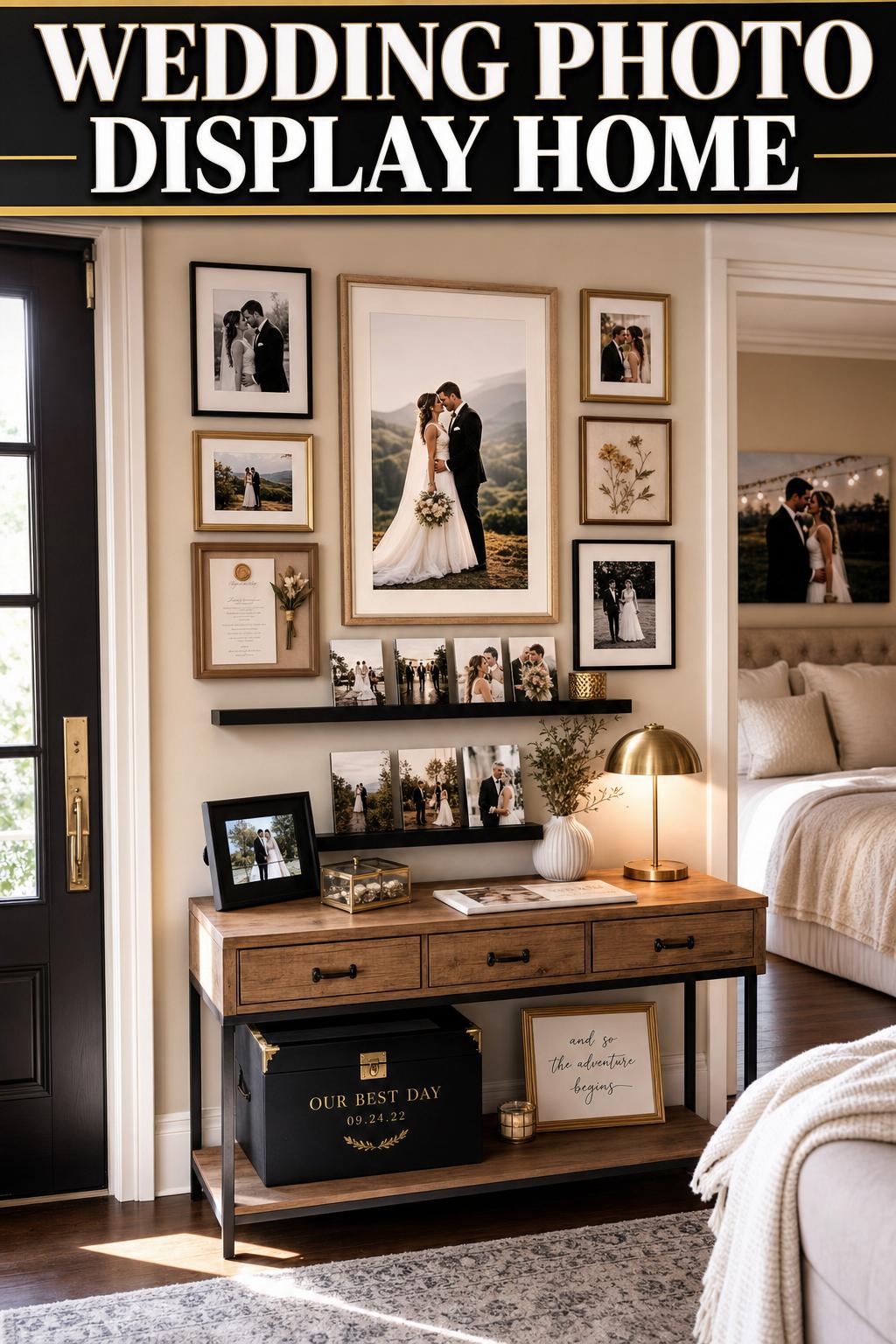
Look: the keepsake wall that blends photos with mementos
This interpretation feels less like a formal gallery and more like a layered love story. It is ideal for couples who treasure not only the photographs, but the physical traces of the day: a pressed flower, a boutonniere, a saved invitation, a guest note. In a hallway niche, foyer, or reading corner, the keepsake wall has a soft museum quality that feels deeply personal.
Frames might come from Artifact Uprising, Minted, or Anthropologie, while smaller objects live in a Magnolia display cabinet or a brass and wood display box. A few framed photos, one matted invitation suite, and one preserved floral detail are often enough. Too many objects can crowd the sentiment and make the arrangement feel like storage instead of design.
Why it fits the aesthetic: wedding décor is often fleeting, so a keepsake wall lets the celebration continue in a more tactile way. It works especially well for couples who value provenance and memory details as much as the photography itself.
Practical planning for small spaces and real homes
Not every couple has a large suburban wall waiting for a dramatic installation. Many are decorating apartment living rooms, condo entryways, or multipurpose spaces where scale and flexibility matter. This is one of the areas where many wedding photo wall ideas fall short: they offer inspiration without fully addressing the constraints of real homes. The solution is not to shrink the dream. It is to design with proportion.
- Choose one primary wall and one supporting vignette instead of trying to spread photos everywhere.
- Use vertical or linear layouts in narrow spaces like hallways or apartment entry walls.
- Let ledges and shelves carry part of the story when wall drilling is limited.
- Use photo tiles or smaller framed prints if the display may need to change or move.
- Keep the palette tighter in small rooms so the arrangement feels edited, not busy.
A realistic scenario: in a city apartment, a couple may create a linear wedding photo wall above a compact sofa using six framed prints, then place a digital frame and small display box on a nearby console. The result still feels complete because the story is split thoughtfully between wall and furniture. In a condo foyer, a single oversized portrait paired with two supporting prints may be more elegant than a dense collage.
What stylists usually recommend
When a space is limited, restraint nearly always looks more expensive and more intentional. Couples often feel pressure to include every favorite image from the wedding day, but a strong edit usually creates a more emotional effect. The photos that remain have room to breathe, and the surrounding room can still feel like a home rather than a memory archive.
Storytelling details that make the display feel personal
A beautiful wall can still feel generic if it contains only polished portraits with no narrative texture. The displays that linger emotionally are the ones that include different kinds of moments and, where appropriate, a little context. The wedding day is not only ceremony and glamour. It is anticipation, movement, people, vows, and detail.
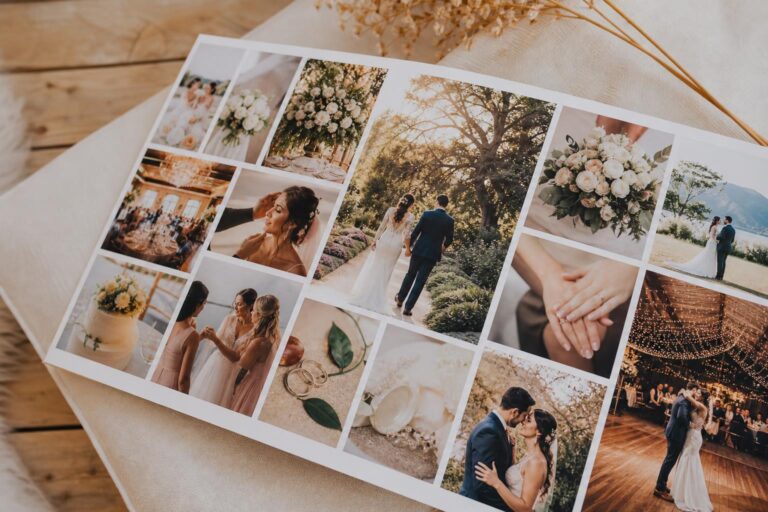
That is why many of the strongest ideas in this space return to storytelling. A sequence from engagement photo to ceremony can feel more meaningful than ten unrelated hero shots. A close-up of hands during the vows can soften the formality of a large portrait. A guest message or short caption can deepen one section without turning the wall into a scrapbook.
- Include a mix of wide shots, portraits, candid moments, and detail photos.
- Use one or two captions only where they add real context.
- Pair photos with select keepsakes, not every saved item.
- Think of the wall as a story arc, not a random album spread.
This is also where a digital frame can complement the main display beautifully. It allows the gallery to hold more motion, more candid joy, and more behind-the-scenes atmosphere while the physical frames preserve the central visual anchors of the story.
Preservation matters: how to protect the display over time
Wedding photos and keepsakes are sentimental, but they are also physical materials. Long-term display deserves some care. Preservation is often under-discussed in inspiration articles, yet it is one of the smartest parts of planning a wedding photo display home. If you are framing pieces you want to enjoy for years, materials and placement matter.
Protective measures such as UV-conscious framing choices, acid-free mats, and thoughtful placement away from humidity can make a difference, especially for paper goods and pressed flowers. Rooms with changing moisture levels may not be ideal for delicate keepsakes. If you love the idea of incorporating invitations or florals, a display cabinet or box can sometimes be safer than fully open shelving.
There is also an emotional form of preservation: archiving the full set while displaying only the best edited selection. The wall should not carry the burden of storing every memory. It should showcase the ones that feel most meaningful in the life of the home right now.
Common design mistakes that can weaken the romance
Even lovely images can lose impact when the display lacks intention. A few common mistakes appear again and again in home galleries, and avoiding them can make the finished result feel noticeably more refined.
- Using too many frame styles without a clear reason, which can make the wall feel chaotic.
- Choosing only formal portraits and skipping candid images, which flattens the story.
- Ignoring room context, especially scale relative to furniture and sight lines.
- Overloading one wall with every favorite image instead of editing with purpose.
- Adding keepsakes everywhere instead of grouping them in one dedicated section.
- Forgetting preservation needs for paper, florals, and delicate mementos.
One subtle mistake is forcing a layout style that does not match the home. A heart collage may feel charming in a bedroom but too sweet in a sleek entryway. A rigid grid may feel sophisticated in a living room but too formal for a cozy family corner. The best wedding gallery wall ideas always respond to both the photos and the room.
Budget and timeline: planning the project without losing the feeling
A wedding photo display home should feel thoughtful, not rushed. Building it in stages often produces a stronger result because it gives you time to edit images, notice how the room behaves in different light, and decide which moments deserve the most attention. It also helps with budget, especially when mixing premium framed prints with more flexible formats like tiles or shelves.
A practical approach is to start with a core set of hero images, then build outward. For example, a couple might begin with one large framed portrait from Artifact Uprising, add supporting prints from Minted or Mixtiles, then later introduce a display box or digital frame. This avoids the all-at-once pressure that often leads to overbuying or hanging too much too quickly.
A simple planning rhythm
- Edit the photo selection into story groups.
- Choose the room and define the mood.
- Select the layout style before shopping widely.
- Order one or two sample pieces if you are unsure about finish or scale.
- Lay out the arrangement physically before installing.
- Add keepsakes only after the main image structure is complete.
This kind of pacing keeps the project romantic and enjoyable. It turns the display into a continuation of the wedding story rather than just another task to complete.
Look: the room-specific styling approach for a more cohesive home
Not every wedding photo needs to be treated the same way. One of the most elegant strategies is to style displays by room mood. The living room gets the polished, welcoming portraits. The bedroom receives the quieter, more intimate images. The entryway carries the first impression. This creates variety without losing cohesion.
In practice, that could mean a clean grid of framed prints from Crate & Barrel or Minted in the living room, a softer ledge-and-canvas arrangement in the bedroom, and a single hero image with a Magnolia display cabinet in the foyer. The formats change, but the color palette and emotional tone remain connected. That consistency is what makes the full home feel curated rather than pieced together.
Why it fits the aesthetic: it respects the reality that each room serves a different purpose. The wedding memories are still unified, but they are expressed in ways that support how the room feels and functions.
Final styling notes for a home that keeps the wedding alive
The most memorable wedding photo display ideas are rarely the ones with the most frames. They are the ones with the clearest feeling. Whether your style leans clean grid, layered keepsake wall, timeline story arc, or mixed media gallery, the goal is the same: to let your wedding live beautifully inside your home rather than remain hidden away.
If you are choosing between several directions, return to three questions: what story do we want this room to tell, how formal or relaxed should it feel, and which images still move us every time we see them? Those answers usually lead to better decisions than trend-chasing alone. A wedding photo display home works because it is both decorative and deeply human. It reflects a celebration, but it also belongs to everyday life.
FAQ
How many photos should I display in a wedding photo display home?
The right number depends on the room, wall size, and display style. A clean grid may use a larger set of evenly spaced prints, while a bedroom or foyer often looks better with a smaller, more selective grouping. In most homes, a carefully edited collection feels more elegant than trying to show every favorite image at once.
What is the best order to display wedding photos on a wall?
A chronological story arc often feels most natural, especially for a timeline wall. Many couples begin with engagement photos or getting-ready moments, then move through the ceremony, vows, portraits, and celebration. If you prefer a more decorative layout, place the strongest hero image first and build supporting moments around it.
Which room is best for a wedding gallery wall?
The living room, bedroom, and entryway are the most common choices because each supports a different kind of emotional experience. A living room suits polished framed prints, a bedroom works well for softer and more intimate displays, and an entryway makes a beautiful first impression with a hero portrait or a compact gallery.
Should I use matching frames or mix different frame styles?
Matching frames usually create the calmest and most cohesive result, especially for a grid or formal gallery wall. Mixed frames can work if the room has a collected, layered style, but they need a consistent palette or finish direction to avoid feeling random. The more varied the frame shapes and materials, the more important visual restraint becomes.
Are digital frames a good idea for wedding photo displays at home?
Yes, especially if you want to enjoy more images than your wall space allows. An Aura Walden digital frame can complement a physical gallery by rotating candid moments, celebration scenes, or later milestones. It usually works best as a supporting element rather than the main focal point of the display.
How can I include keepsakes like invitations or pressed flowers?
Keep them grouped and intentional rather than scattering them throughout the room. A Magnolia display cabinet or a brass and wood display box can hold invitations, pressed flowers, or a boutonniere in a way that feels curated and protected. Pairing just a few keepsakes with framed photos often creates a more elevated effect than displaying every saved item.
What if I live in a small apartment or condo?
Small spaces often benefit from one primary display instead of several competing walls. A linear arrangement, a compact grid, or flexible photo tiles from Mixtiles can work especially well in apartments and condos. Keeping the palette consistent and editing the number of images carefully helps the display feel intentional rather than crowded.
How do I protect wedding photos and paper keepsakes over time?
Protective framing choices, acid-free mats, and thoughtful placement away from humidity are all worth considering for long-term display. Paper items and pressed florals are especially sensitive, so display cabinets and boxes can sometimes be a better option than open shelves. It is also wise to archive the full collection and display only the most meaningful selection.
What brands work well for creating a wedding photo wall?
Artifact Uprising, Mixtiles, Minted, Anthropologie, Crate & Barrel, and Magnolia all connect naturally to different parts of the wedding photo display home concept, from framed prints and photo tiles to cabinets and display pieces. The best choice depends on whether you want a polished gallery wall, a modular collage, or a mixed media arrangement with keepsakes.