Wedding Photo Background Ideas With a Soft, Cinematic Feel
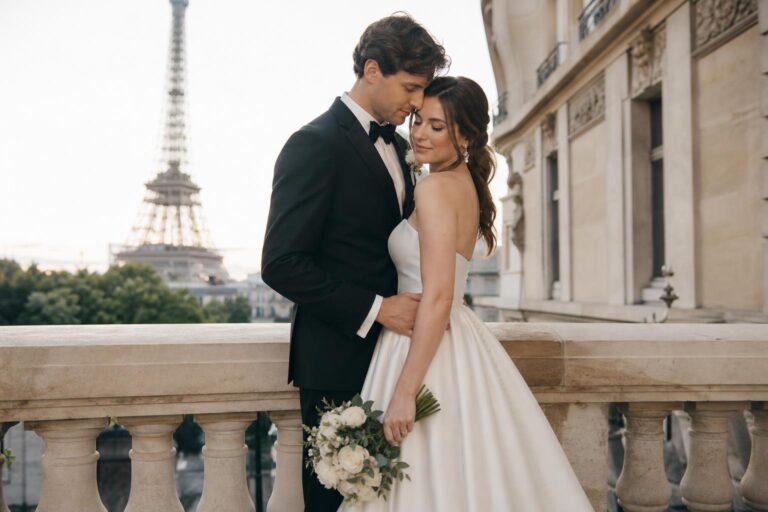
The most memorable wedding photographs rarely happen by accident. They are shaped by atmosphere, light, movement, and the setting behind the couple just as much as the pose in front of the camera. A thoughtful wedding photo background can turn a simple portrait into something cinematic, frame a ceremony with quiet romance, or give guests a beautiful place to gather for photo booth moments that feel connected to the whole celebration. Whether your wedding vision leans garden-soft, modern and minimal, rustic and warm, or full luxury glam, the background you choose becomes part of the story your photos tell for years to come.
For many couples, the challenge is not finding ideas but narrowing them down. A floral arch may feel perfect for an outdoor garden ceremony, while fabric drapes create softness in a ballroom, and a greenery wall brings texture to a wedding photo booth without overpowering the space. The best choice depends on your venue, your decor style, your lighting conditions, and how you want your wedding photography to feel. This guide brings those pieces together so you can choose a wedding photo background that is beautiful, practical, and fully aligned with your day.
What makes a wedding photo background feel truly beautiful
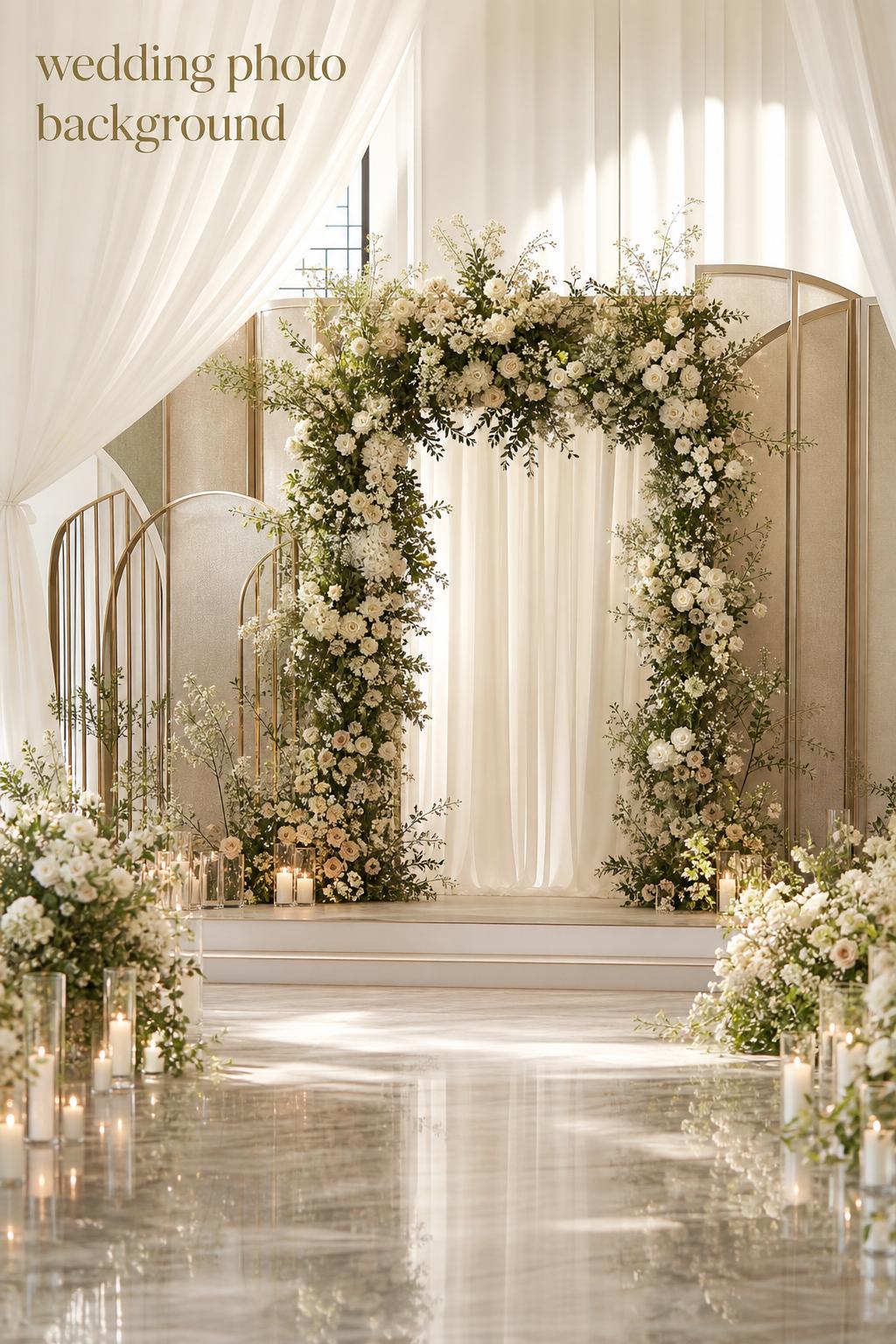
A wedding photo background is more than a decorative surface behind the couple. It is the visual frame that supports the emotion of the moment. In a ceremony, it becomes the scene behind vows, first kisses, and aisle photographs. In a reception, it can define the sweetheart table, highlight the dance floor, or anchor a photo booth where guests create relaxed, joyful images. The strongest backgrounds do not compete with the people in the photograph. Instead, they add depth, texture, and style while keeping the couple as the focus.
This is why the same backdrop idea can work beautifully in one setting and feel awkward in another. A glam metallic look may complement a formal reception but feel out of place in a vineyard setting. A boho textile installation may soften a casual outdoor celebration but not deliver the clean lines a modern wedding calls for. Good styling starts by connecting the backdrop to the wider wedding decor, then checking that it also works with space, lighting, and photo flow.
Turn wedding inspiration into a plan you can actually follow.
Zarellea brings your guest list, budget, vendors, and day-of details into one shared space — so no beautiful idea gets lost in the shuffle.
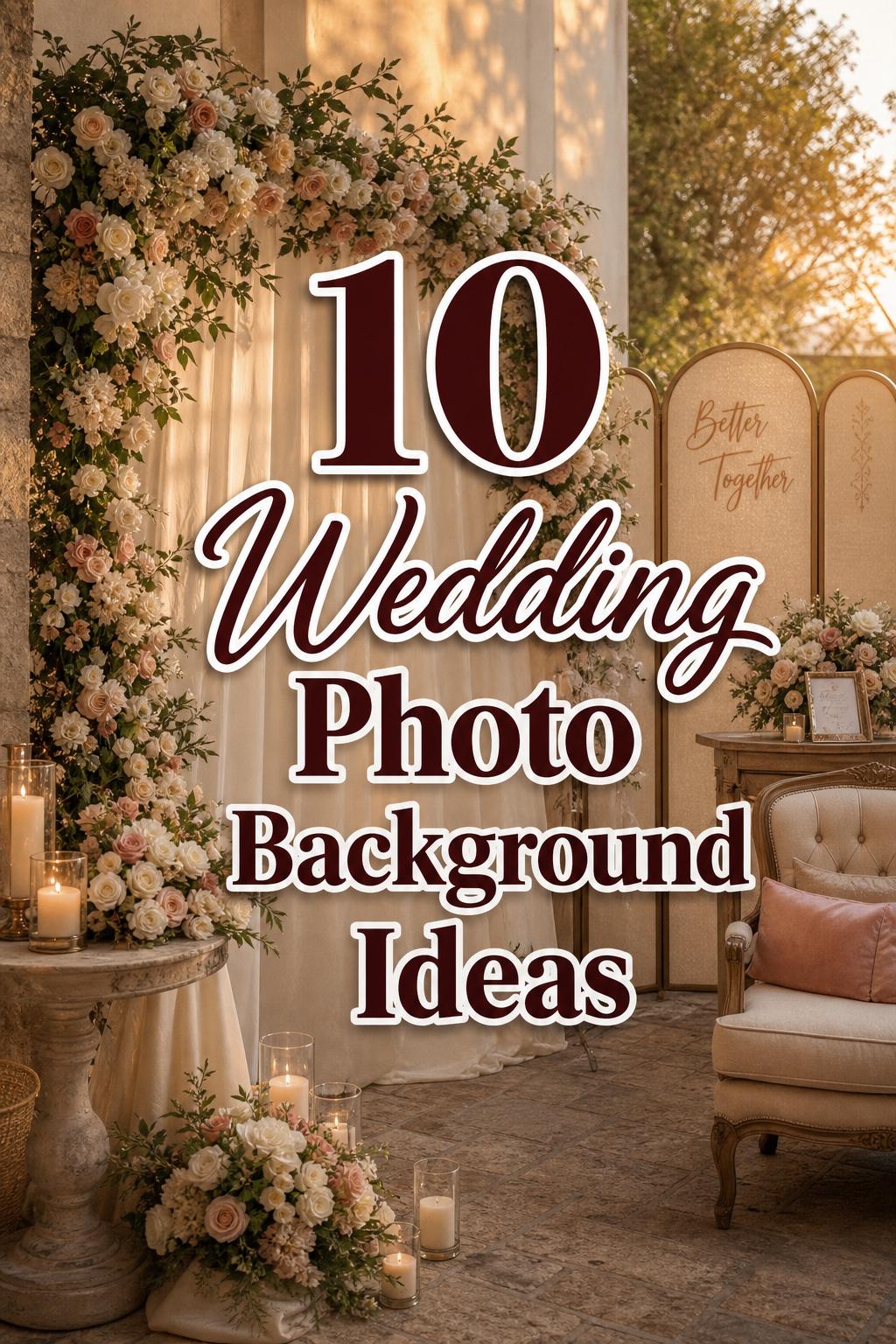
The backdrop styles couples return to again and again
Across wedding publications, backdrop suppliers, and photo booth services, a few styles appear consistently because they photograph well and adapt to different celebrations. These ideas are familiar for a reason: they are versatile, emotionally expressive, and relatively easy to integrate into both ceremony decor and reception design.
Greenery walls and floral arches
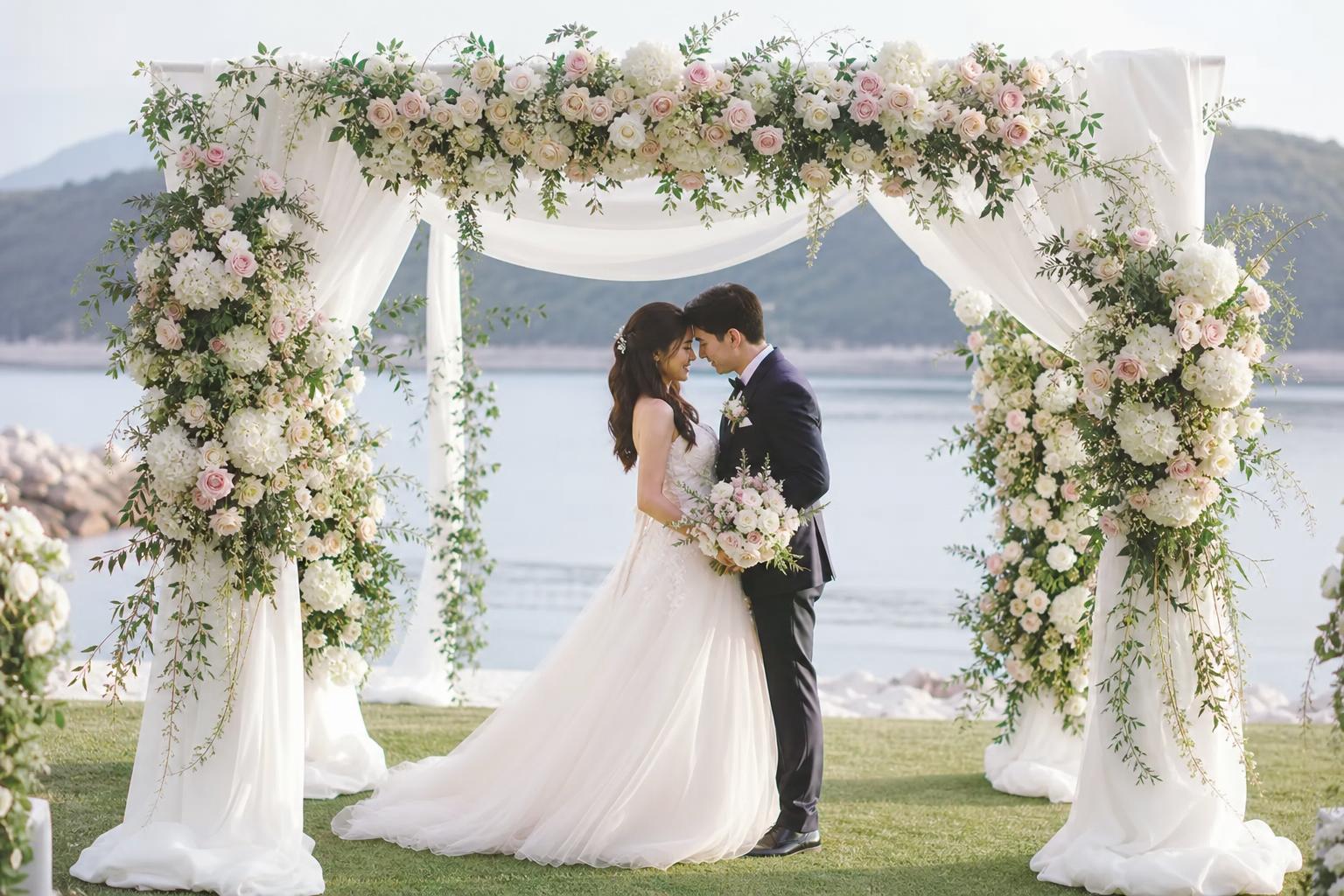
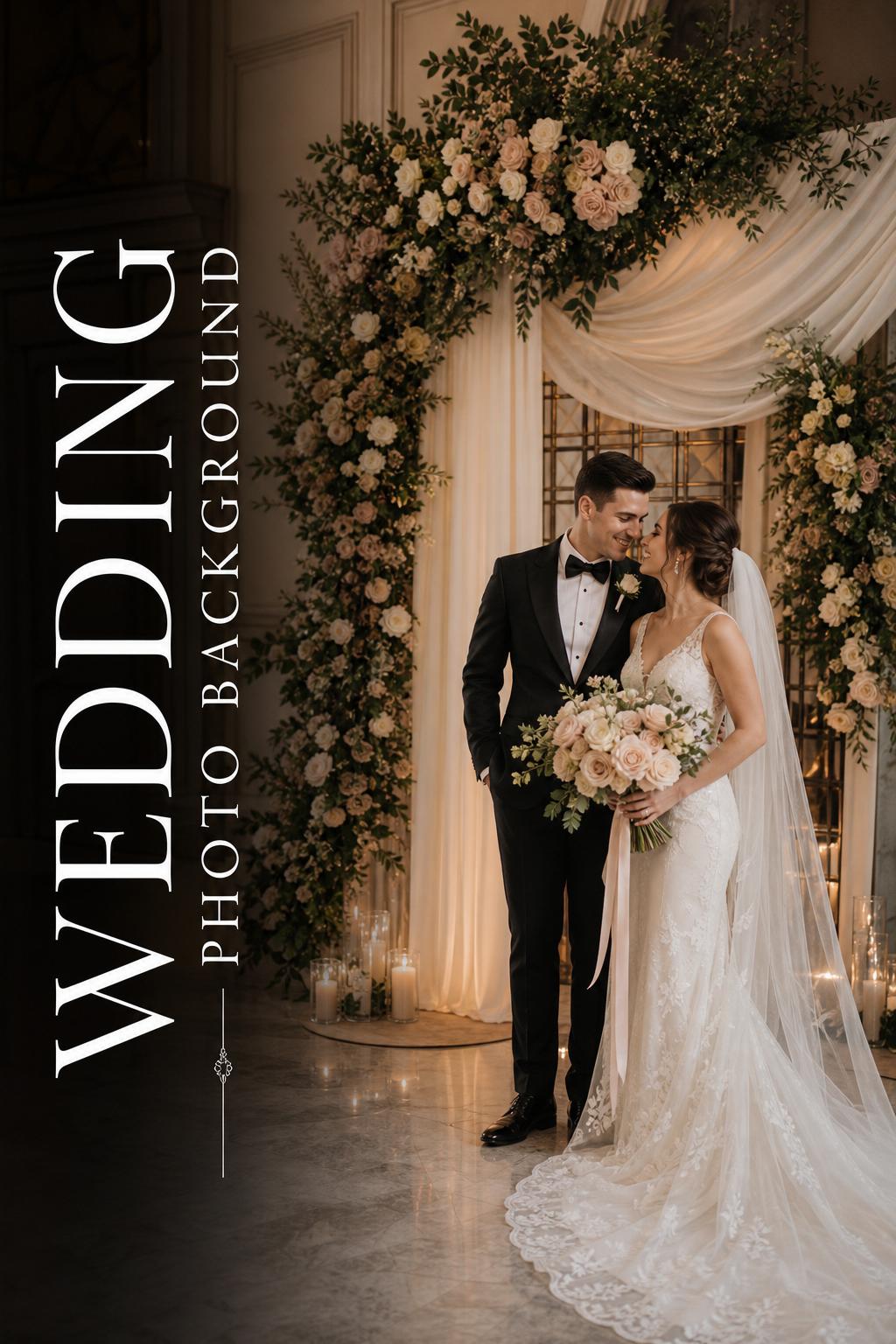
Greenery walls and floral arches sit at the center of romantic wedding styling because they create immediate texture and softness. A greenery wall works especially well for a wedding photo booth background, giving guest photos a polished finish while still feeling natural. A floral arch, by contrast, often becomes the emotional focal point of the ceremony, framing the couple during vows and carrying seamlessly into portrait sessions afterward.
These options are most effective when they match the venue rather than overwhelm it. In a garden venue, botanical elements feel organic and seamless. In a ballroom, they can bring life to a neutral interior. In a chapel or church setting, a floral arch can soften architecture while preserving a formal mood. Couples working with florists or greenery suppliers often choose these backdrops because they connect effortlessly to bouquets, centerpieces, and aisle arrangements.
Fabric drapes and soft textiles
Fabric backdrops are timeless because they create movement without visual clutter. Soft drapes can feel romantic, elegant, and light, especially in indoor settings where the atmosphere benefits from added warmth. Linen and other textile looks are often chosen for weddings with a classic or understated mood, while richer fabrics can support a more luxury glam direction.
Fabric also helps when the venue itself needs gentle visual refinement. A plain wall behind a sweetheart table, a wide ceremony space with little architectural detail, or a reception corner set aside for portraits can all be transformed with drapery. The effect is less about trend and more about mood: softness, intimacy, and a sense of intentional styling.
Modern, rustic, glam, and boho themes
Style-based backdrop choices remain some of the easiest for couples to visualize because they connect directly to the broader wedding vision. A modern backdrop usually favors clean lines and controlled simplicity. Rustic charm often pairs naturally with organic textures and warm, relaxed decor. Glam backdrops tend to feel more polished and dramatic, while boho styling leans expressive, layered, and free-spirited.
The value of choosing by theme is clarity. If your invitations, reception styling, and attire already point toward one visual direction, your wedding photo background should reinforce that same language. This creates cohesion in your wedding photography and helps every space feel related rather than assembled from separate ideas.
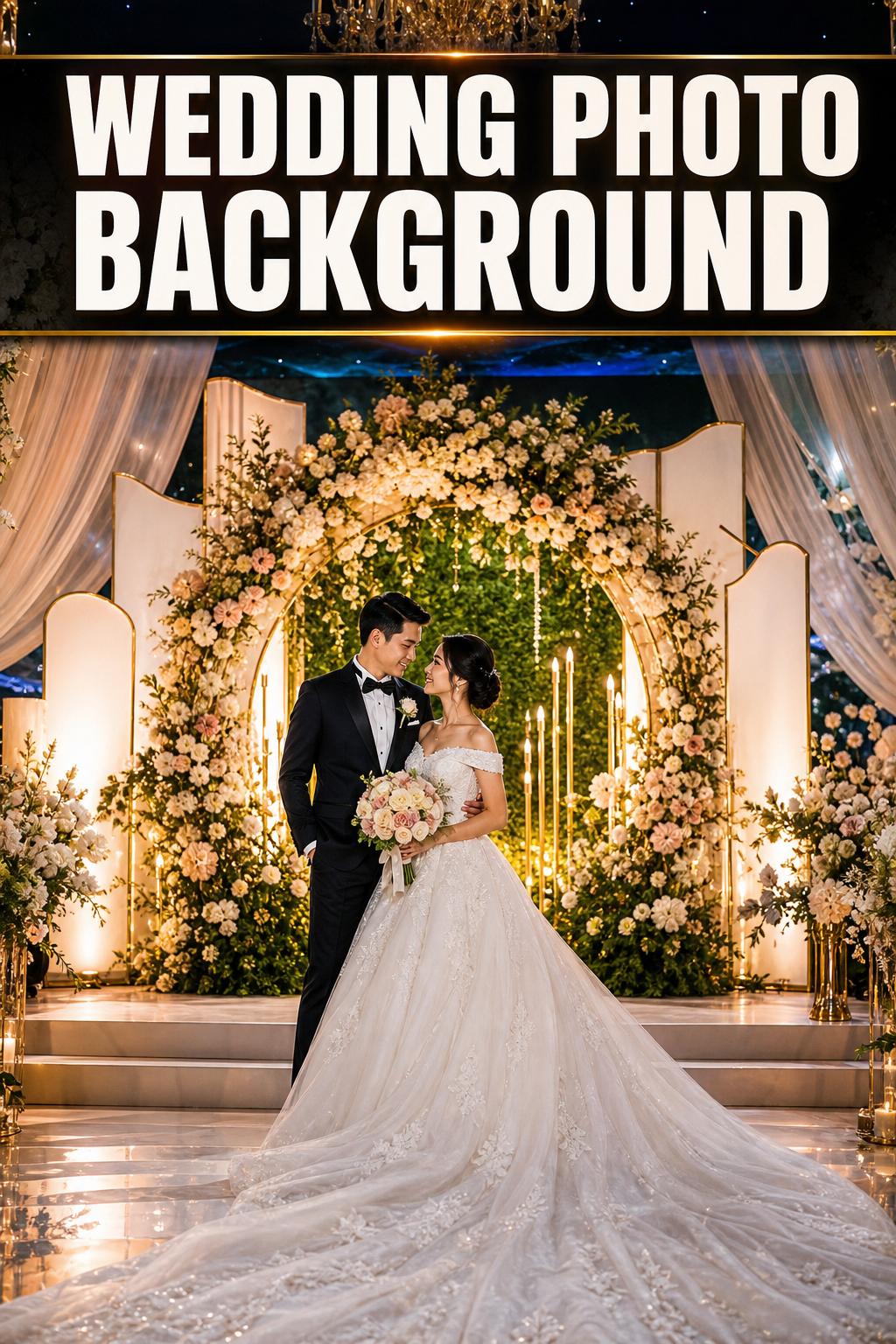
Choosing the right background for the moment you want to capture
Not every wedding photo background serves the same purpose. A ceremony backdrop is asked to carry emotional weight. A reception backdrop has to hold up through movement, mingling, and multiple uses. A photo booth backdrop must photograph a wide range of guests quickly and flatter different outfits, heights, and group sizes. Knowing the role of the backdrop makes the choice easier.
For the ceremony
Ceremony backdrops are often seen from a distance and in close-up, so they need presence without excess. Floral arches, botanical installations, and customizable grid screens are all used in ceremony decor because they create structure and define the altar area. In a beach setting, a simpler design often feels more natural. In a chapel or church, the backdrop should respect the existing architecture. In a garden, a floral or greenery installation can feel especially harmonious.
One practical truth couples often discover late is that the ceremony backdrop appears in nearly every key image from that part of the day. If there is any area worth prioritizing visually, this is often it. Even a restrained design can feel deeply romantic if it frames the couple well and fits the venue gracefully.
For the reception and photo booth
A reception backdrop has a different job. It must support a more social kind of photography. Guests may stand, laugh, move in groups, or step in for quick portraits. This is why greenery walls, streamer-inspired looks, themed installations, and fabric backdrops are commonly used for wedding photo booth areas. They are festive but dependable, and they help produce consistent photographs across the night.
Photo flow matters here. MyHiPhotoBooth and similar service-oriented wedding content often emphasize the experience of using the booth, not only how it looks. A beautiful backdrop that creates congestion, awkward shadows, or a cramped setup can frustrate guests. The most successful photo booth background balances style with easy movement and enough visual room for both couples and larger groups.
How venue type should shape your backdrop decision
One of the most useful ways to choose a wedding photo background is to start with the venue itself. The same floral wall or draped textile can feel elevated in one place and forced in another. Thinking in terms of venue compatibility helps couples avoid expensive decor choices that do not translate well in photographs.
Garden and outdoor venues
Garden settings already offer visual softness, so the backdrop should support rather than compete with nature. Greenery walls, botanical backdrops, and floral arches are natural companions here. Outdoor spaces also bring changing light, so a backdrop with texture can be more forgiving than one that depends on a very precise finish. Couples planning an outdoor photo booth should think carefully about weather exposure and setup stability before committing to delicate elements.
Ballrooms and indoor reception spaces
Indoor venues often benefit from drapery, textiles, and theme-driven installations because these elements add depth to large or neutral rooms. A ballroom can comfortably carry modern elegance, luxury glam, or even a dramatic floral wall, especially when the backdrop is tied to the rest of the reception decor. Fabric is especially useful in spaces where acoustics, softness, and visual warmth all matter.
Chapel and church settings
In chapel or church environments, restraint tends to feel more appropriate. The architecture often provides built-in beauty, which means a backdrop should complement rather than cover it. Couples frequently do best with focused ceremony decor around the altar area rather than a large installation that distracts from the space itself. Floral accents or a well-placed arch can be enough.
Beach and destination-style celebrations
Beach weddings and destination celebrations often call for practical simplicity. Travel, permits, setup constraints, and changing weather can all affect what is realistic. A backdrop for this type of wedding needs portability and adaptability. Fabric that catches too much wind or highly complex structures may be harder to manage than a more streamlined installation. The most effective approach is often one that feels easy, light, and closely connected to the setting.
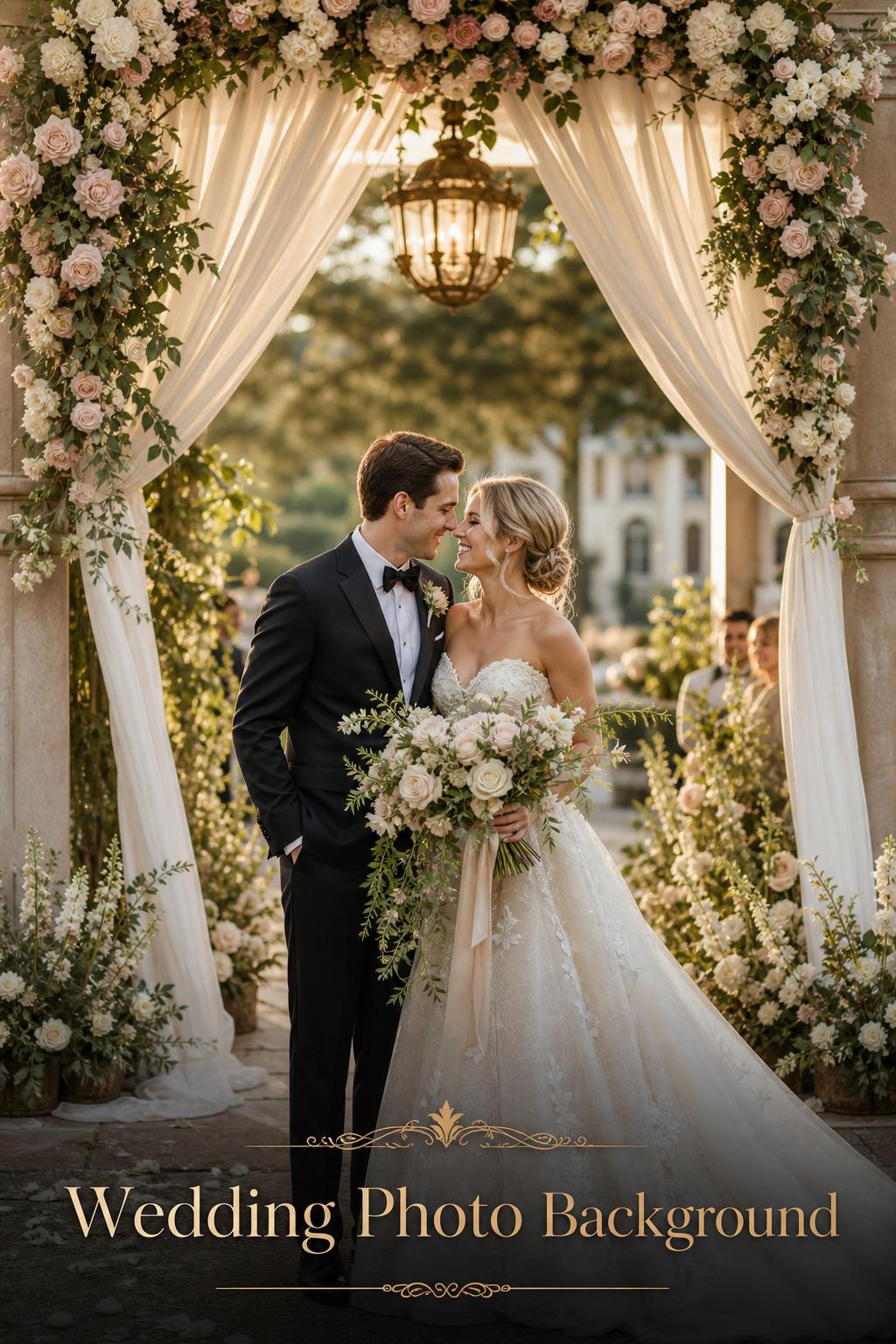
Materials matter more than couples expect
When couples first save inspiration images, they usually respond to mood and color before they think about materials. But the material of a wedding photo background affects durability, maintenance, installation, portability, and overall finish. A backdrop that looks beautiful in a static image may not hold up well through transport, heat, setup delays, or a full evening of guest use.
Natural and synthetic options
Natural materials, especially fresh florals and greenery, create softness and authenticity that many couples love. Synthetic alternatives can offer easier transport and reusability, which is why suppliers and rental companies often work across both categories. The decision is less about which is universally better and more about what fits your venue, budget, timing, and desired finish.
This is also where sustainability enters the conversation. Reusable backdrops, thoughtfully selected materials, and designs that can move from ceremony to reception are often more practical as well as more resource-conscious. Couples do not need to sacrifice beauty to make a more efficient choice; many of the most elegant backgrounds are the ones designed with flexibility in mind.
Textiles, modular screens, and 3D styling
Textiles offer softness. Grid screens bring structure and customization. More dimensional installations create a stronger visual statement. Each choice changes how photographs feel. Soft drapery gives a romantic backdrop for portraits, while modular screens can be styled to suit modern, rustic, or boho weddings depending on how they are finished. Three-dimensional elements can be striking, but they require careful planning so they do not interfere with guest movement or overwhelm the frame.
Lighting is the detail that can elevate or flatten a backdrop
Many top wedding backdrop articles mention space and style, but lighting is often the deciding factor in whether the final image feels polished. A wedding photo background does not exist separately from photography lighting. The texture of fabric, the depth of greenery, and the color of florals all change depending on how light hits them. This matters in both ceremony photography and photo booth setups.
For couples, the practical takeaway is simple: never choose a backdrop based only on daylight inspiration images if your event will be photographed mostly indoors or at night. Ask how the materials interact with available light. Consider where the photographer or booth camera will be placed. Think about whether the backdrop needs gentle illumination to avoid disappearing into the room. These are not overly technical concerns; they are the difference between a backdrop that feels alive in photos and one that feels visually flat.
Why photo booth backgrounds need their own lighting plan
A wedding photo booth background often receives repeated use over several hours, which means consistency matters. If one side of the setup is dimmer than the other, if guests cast heavy shadows, or if reflective surfaces create uneven results, the booth experience suffers. This is why service brands such as PeekABoothUSA and other photo-focused vendors tend to connect backdrop ideas with practical execution, not just aesthetics. A pretty setup should also be easy to photograph.
Couples do not need to manage camera settings themselves to benefit from this insight. They simply need to treat backdrop planning and lighting as one conversation, especially for indoor receptions, evening weddings, and highly styled installations.
Style personas that help narrow the search
One of the easiest ways to move from endless inspiration to a confident choice is to imagine your backdrop as part of a style persona. This does not lock you into a rigid label. It simply gives you a clearer emotional direction.
- Garden romance: greenery walls, floral arches, botanical textures, and soft color palettes.
- Modern minimal: clean lines, simpler installations, controlled palettes, and structured backdrop forms.
- Rustic warmth: organic materials, a relaxed setting, and backdrop ideas that feel inviting rather than formal.
- Vintage glam: polished finishes, richer textures, and a more dramatic visual statement.
- Boho magic: layered textiles, expressive decor, and a softer, more artistic mood.
This kind of decision framework is especially helpful when couples feel split between several beautiful ideas. Rather than asking which backdrop is prettiest in isolation, ask which one belongs in your wedding world.
Where brands and inspiration sources fit into the planning process
Couples often discover wedding photo background ideas through a mix of editorial inspiration, supplier blogs, and image platforms. The Knot is a common starting point because it gathers broad photo booth ideas and DIY concepts into one place. Alba Backgrounds, PeekABoothUSA, Photographer To GO, MyHiPhotoBooth, and 1021 Events represent another useful layer: service and supplier perspectives that connect inspiration with setup realities. Pixabay and Pexels are more visual resource hubs, helpful when couples want to compare moods, styles, and visual references.
Each type of source serves a different purpose. Editorial content helps with vision. Supplier and service content helps with feasibility. Stock image collections help with visual language. Couples make better decisions when they use all three thoughtfully rather than relying on a single saved image with no practical context.
A few backdrop ideas that work especially well in real weddings
The most useful inspiration is not the most elaborate concept; it is the idea that still feels beautiful under real event conditions. The following approaches are often successful because they combine visual appeal with practical flexibility.
The floral wall that doubles as a photo booth focal point
A floral wall or greenery-heavy installation can begin the evening as a decor statement and then transition into the wedding photo booth area later. This helps couples get more value from one major piece while keeping the reception visually cohesive. It works especially well when the flowers and palette relate clearly to the rest of the wedding decor.
The draped ceremony frame that softens formal interiors
In a ballroom or indoor ceremony site, fabric drapes can create a gentle sense of architecture around the altar area. The effect is flattering in photographs because it adds depth without creating distraction. It is one of the safest choices for couples who want a romantic backdrop that feels timeless rather than trend-led.
The style-led booth backdrop for guest portraits
A photo booth backdrop designed around a clear wedding style, such as rustic charm, modern elegance, luxury glam, or boho magic, gives guest photos a stronger connection to the overall event. This is often more satisfying than choosing a generic booth background that could belong to any party. Guests may not articulate the difference, but they feel it in the photographs.
The customizable grid screen for couples who want flexibility
Customizable grid screens are especially useful when couples want structure without committing to a fully floral installation. They can be styled more minimally or dressed up depending on the wedding theme. For ceremonies, they define the focal area. For receptions, they can support signage, floral accents, or a portrait area while remaining relatively adaptable.
Tips for making your backdrop look better in photos, not just in person
Some backdrops are lovely in the room but disappointing in photographs because the planning focused only on decor and not on the camera view. Couples can avoid that mismatch with a few grounded decisions.
- Choose texture over excessive detail when you want a romantic, flattering finish.
- Match the backdrop scale to the space so it feels intentional, not undersized or overwhelming.
- Think about group photos, not just couple portraits, when planning a photo booth area.
- Coordinate backdrop colors with the wedding palette so attire and florals feel connected.
- Review the backdrop at the time of day it will actually be photographed whenever possible.
- Ask whether one backdrop can serve multiple event moments to improve both budget and cohesion.
A simple example: a couple hosting a reception in Wisconsin through a local provider such as 1021 Events may be drawn to a geometric or floral wall design. If the room is narrow and guest traffic is heavy, a flatter, more contained installation might work better than a deeply layered one. The final result may look less dramatic in person but photograph more cleanly all evening. That is the kind of trade-off worth making.
Vendor conversations that save stress later
Backdrop planning becomes much easier when couples bring the right questions to florists, prop houses, rental companies, and photo booth services early. A beautiful concept is only successful if the people building it understand how it will be used.
- Can the backdrop work in the exact venue space available?
- Is it intended for ceremony use, photo booth use, or both?
- How will lighting affect the materials during the event?
- Are the materials easy to transport and install?
- Can the design be reused from one part of the wedding to another?
- Are there any venue rules, permits, or safety restrictions to consider?
- Will the setup remain accessible and comfortable for guests?
These questions are especially important for larger installations, destination weddings, or backdrops with interactive or technology-based features. Projection mapping, LED panels, and other interactive elements can create a striking effect, but they need more coordination than a static backdrop. For some weddings, that innovation will feel exciting and modern. For others, it may be more complexity than the celebration really needs.
The future-facing backdrop: interactive and tech-enabled ideas
Interactive wedding backdrops are becoming part of the conversation for couples who want something beyond traditional florals or drapery. Projection mapping and LED panels offer a more dynamic approach, especially for receptions or highly styled photo moments. These options are most aligned with modern weddings and events that want a stronger sense of spectacle.
That said, technology works best when it supports the atmosphere rather than becoming the whole point of it. A wedding should still feel emotionally grounded. If the backdrop starts to overshadow the intimacy of the celebration, it may no longer be serving the photos well. The strongest future-ready designs still follow the same core principle as classic ones: they frame the moment, not distract from it.
Common backdrop mistakes couples can avoid
Even a beautiful wedding photo background can disappoint if the planning misses a few key realities. Most backdrop problems are not style problems at all; they are context problems.
- Choosing a backdrop only from inspiration images without considering the actual venue.
- Ignoring lighting until the final setup.
- Selecting a design that works for portraits but not for group photos.
- Using a style that clashes with the wider wedding decor.
- Underestimating installation needs, especially outdoors or at destination events.
- Forgetting to ask about safety, permits, or venue restrictions.
A balanced approach is always better than an overly ambitious one. The couple who chooses a well-scaled fabric backdrop with thoughtful lighting often ends up with more elegant images than the couple who attempts a complicated installation that never quite settles into the room.
Budgeting with clarity instead of guesswork
Backdrop costs vary based on material, scale, styling complexity, and whether you are renting, purchasing, or commissioning something custom. Rather than focusing only on the initial price, think in terms of value across the event. A backdrop that can move from ceremony to cocktail hour to photo booth may justify a larger portion of the decor budget than a one-time installation used for only a few minutes.
There is also a meaningful difference between a backdrop that looks impressive in one angle and one that supports many types of photography throughout the day. Couples often get stronger value from versatile, well-placed decor than from isolated statement pieces. This is why practical supplier content often emphasizes setup and flow alongside inspiration: beauty counts most when it continues to perform under real conditions.
Bringing the whole wedding vision together
The best wedding photo background does not feel like an extra item on a decor checklist. It feels like a natural extension of the celebration itself. The flowers relate to the bouquet. The fabric echoes the softness of the room. The photo booth backdrop feels connected to the invitation style, the reception palette, and the atmosphere guests have been enjoying all night. That sense of continuity is what makes a wedding feel polished in photographs and emotionally complete in memory.
If you are choosing between several lovely directions, return to the experience you want to create. Picture the ceremony, the portraits, the laughter in front of the booth, the quiet just after sunset, the way your venue already feels before anything is installed. Then choose the backdrop that supports those moments with grace. The most beautiful wedding photos are not just decorated well. They are framed with intention.
FAQ
How do I choose the right wedding photo background for my theme?
Start by identifying the overall mood of your wedding, such as modern, rustic, glam, boho, or garden romance, and then choose a backdrop that speaks the same visual language. A greenery wall or floral arch suits botanical and romantic weddings, while fabric drapes often work beautifully for timeless indoor celebrations. The key is consistency with your venue, color palette, and decor rather than choosing a backdrop that looks attractive on its own but disconnected from the day.
What works best for a wedding photo booth background?
The most successful wedding photo booth backgrounds combine visual appeal with easy photo flow. Greenery walls, floral-inspired installations, fabric backdrops, and style-led thematic setups are strong choices because they look polished in repeated guest photos without making the area feel cramped. It also helps to choose a backdrop that allows both couples and larger groups to stand comfortably in front of it.
Are floral arches better for ceremonies than receptions?
Floral arches are especially effective for ceremonies because they frame key emotional moments like vows and the first kiss, but they can also be valuable at receptions if they are repositioned for portraits or used near a focal area. Their strongest role is usually as ceremony decor, where they appear in many of the day’s most meaningful photographs. If you want one to serve multiple purposes, ask your florist or rental company whether it can be designed for reuse.
How important is lighting when planning a backdrop?
Lighting is extremely important because it affects how texture, color, and depth appear in photographs. A backdrop that looks lovely in person can appear flat or shadowed if it is placed in poor light or photographed at night without enough support. This matters even more for indoor receptions and photo booth setups, where consistent results depend on how the backdrop and lighting work together.
Can one backdrop be used for both the ceremony and the photo booth?
Yes, in many weddings this is a smart and efficient choice, especially with floral walls, greenery installations, modular screens, or other versatile designs. The success of this approach depends on whether the backdrop can be moved easily, fits both spaces well, and still feels appropriate in each setting. Reusing one major decor piece can improve visual cohesion and make the budget work harder.
What should I ask a backdrop vendor or rental company before booking?
Ask how the backdrop will fit your venue, what materials are used, how installation works, whether lighting needs special planning, and whether there are any safety or permit considerations. It is also wise to ask if the design can be reused for different parts of the wedding and whether it remains practical for guest photos, not just staged portraits. These questions help turn inspiration into a setup that functions well on the day.
Are fabric backdrops a good choice for indoor weddings?
Fabric backdrops are often one of the best choices for indoor weddings because they add softness, warmth, and depth without overwhelming the room. They work especially well in ballrooms and formal reception spaces that need a more romantic visual layer. Their timeless quality also makes them a safe option for couples who want elegant photographs that will age well.
What backdrop style works best for outdoor weddings?
Outdoor weddings often look strongest with backdrops that feel connected to the natural setting, such as greenery walls, botanical elements, and floral arches. The practical side matters too, since weather, wind, and changing daylight can affect both setup and photography. For outdoor use, choose a design that feels visually natural and is realistic to secure and maintain throughout the event.
Should I rent or buy my wedding backdrop?
The better option depends on how custom the backdrop is, whether it can be reused, and how much setup responsibility you want to manage. Renting often makes sense for larger or more complex pieces, especially if installation is included through a rental company or service provider. Buying may be more appealing for simpler backdrops or for couples who want a specific item they can repurpose, but it should still be weighed against storage, transport, and setup demands.