Why a 3 Tier Wedding Cake Still Feels Timeless
There is a reason the 3 tier wedding cake remains such a lasting favorite in American weddings: it feels balanced. It has enough height to create a beautiful focal point at the reception, yet it rarely overwhelms the room or the budget in the way a larger display can. Couples often find themselves comparing classic, modern, floral, minimalist, and buttercream-forward versions of the same basic form because three tiers can shift so easily between styles. That flexibility is exactly why so many wedding cake ideas 3 tier are discussed together, and why the choice can feel surprisingly personal.
At first glance, many three tier wedding cakes seem similar. They share the same vertical structure, the same ceremonial role, and often the same white or neutral palette. But the mood changes dramatically once details enter the picture: smooth buttercream versus fondant-like sharpness, soft florals versus clean geometry, classic romance versus modern restraint. Understanding those differences helps a couple choose a cake that supports the whole wedding vision, from a grand ballroom reception in New York City to a garden celebration in Dallas, Los Angeles, or Chicago.
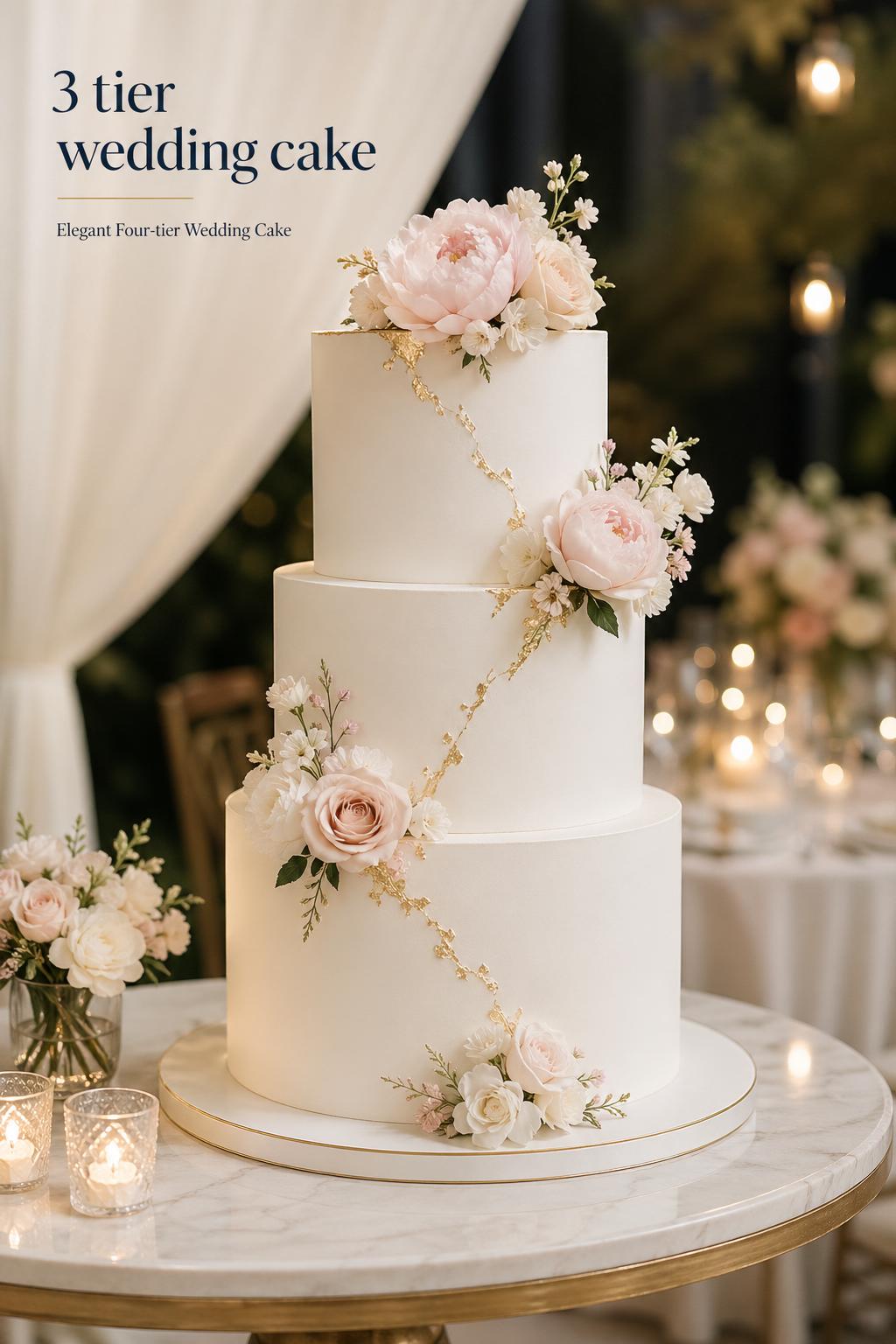
This comparison guide breaks down the most common style directions for a 3 tier wedding cake, explains how they differ visually and practically, and shows how serving size, structure, flavors, budget, and venue context shape the final decision. Along the way, it also clarifies where a three-tier cake sits in relation to an elegant four-tier wedding cake or even a 4 layer wedding cake, so couples can make a confident choice without losing the romance of the moment.
The enduring appeal of three tiers
Among today’s most visible wedding planning sources, three tiers consistently emerge as the sweet spot between presence and practicality. The format is associated with visual drama, but also with manageable structure and a useful serving range. In most planning conversations, that means a cake that can suit many U.S. weddings without demanding the scale, engineering, or footprint of a taller design.
Turn wedding inspiration into a plan you can actually follow.
Zarellea brings your guest list, budget, vendors, and day-of details into one shared space — so no beautiful idea gets lost in the shuffle.
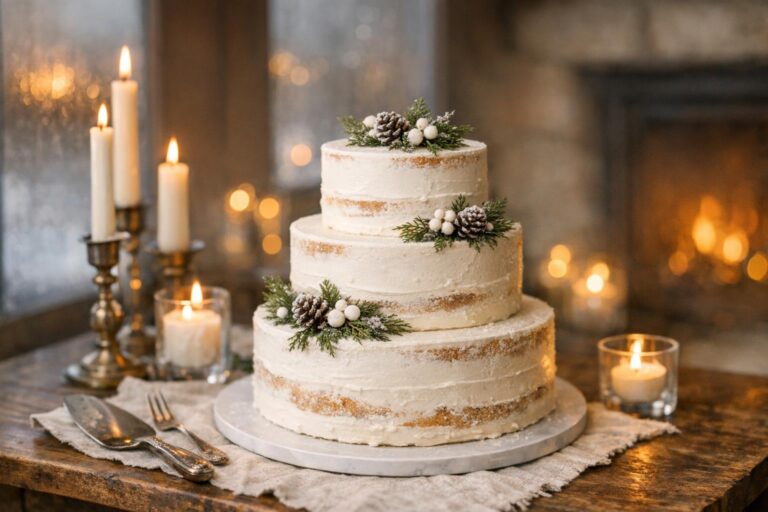
That balance is part of why The Knot, WeddingWire, and The Perfect Wedding so often connect three-tier cakes with broad design inspiration as well as practical planning. A three-tier cake can feel timeless in white buttercream with subtle texture, romantic with florals and soft pink accents, or contemporary with clean lines and negative space. The base form stays familiar, but the styling language changes.
Compared with an elegant four-tier wedding cake, three tiers usually feel less formal and easier to place in a wider range of venues. Compared with a 4 layer wedding cake, the distinction is often about presentation and event symbolism. A layered cake may be visually rich when sliced, but a tiered cake creates the vertical statement most couples imagine when they picture the reception centerpiece.
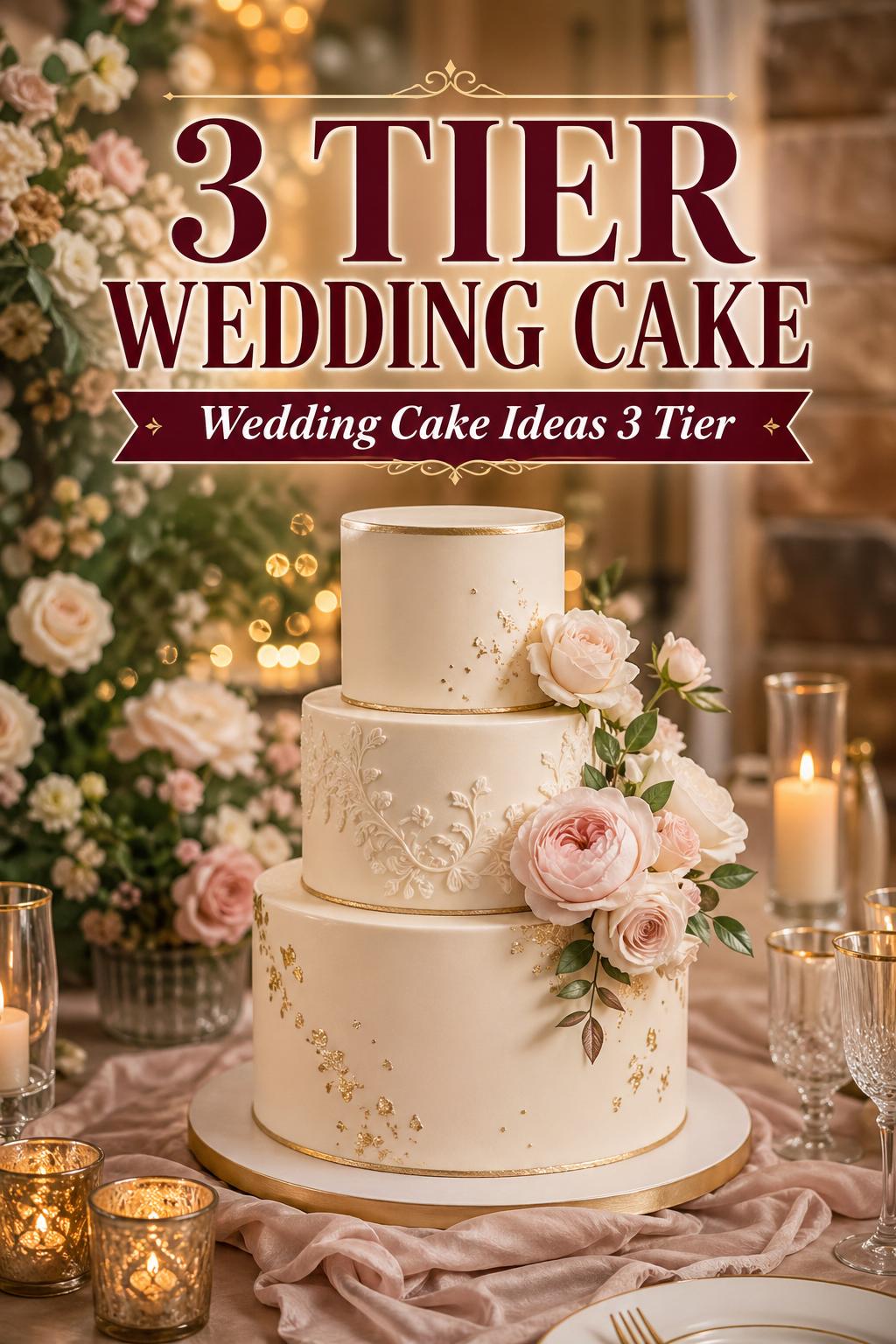
Style overview: classic romantic three-tier cakes
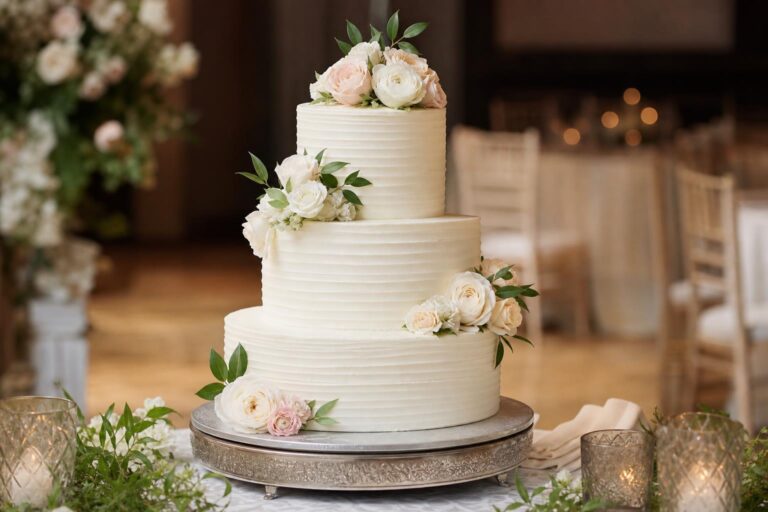
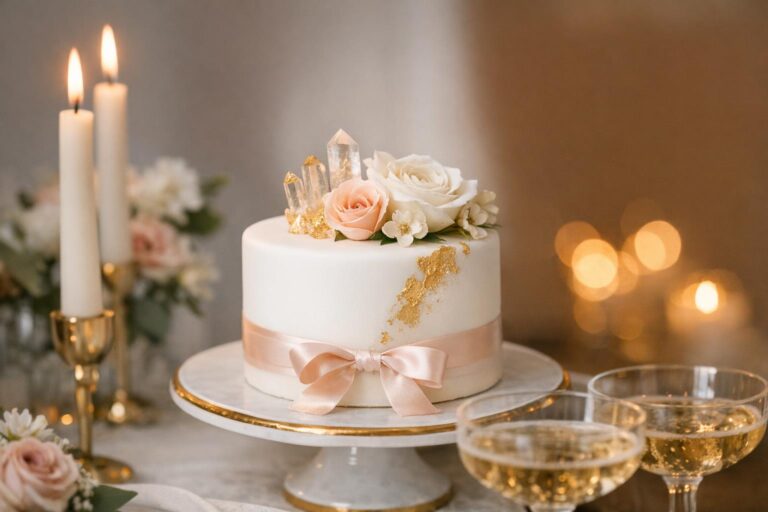
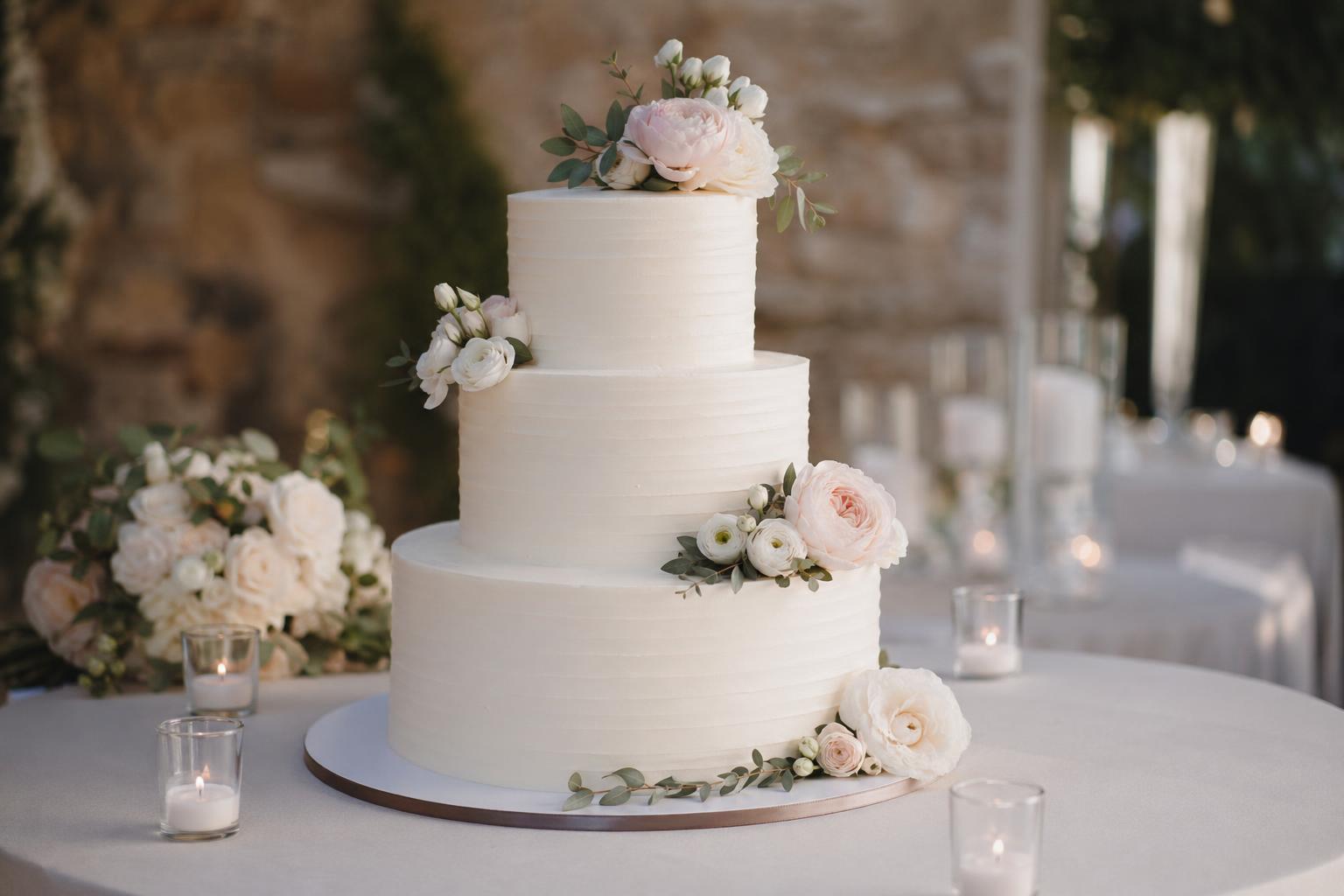
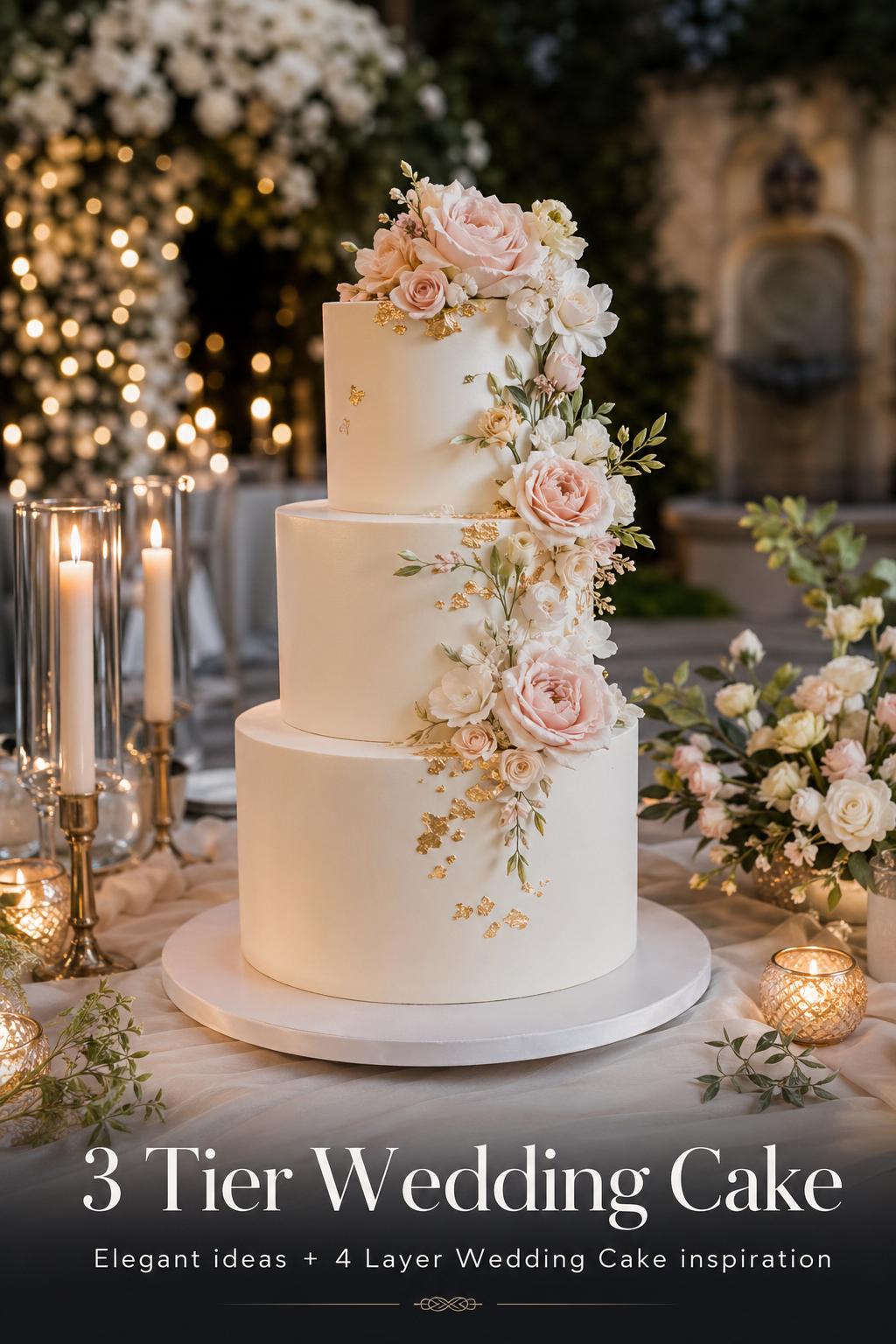
The classic romantic approach is the version many couples instinctively picture first. It leans on elegance rather than novelty, with smooth finishes, balanced proportions, and floral or pearl-like details that feel graceful instead of dramatic. In real wedding imagery, this style often appears with blush tones, pink peonies, roses, gold accents, and soft decorative motifs that connect the cake to the rest of the reception design.
Its defining characteristics are symmetry, softness, and familiarity. The silhouette is usually clean and evenly stacked. The color palette tends toward white, ivory, blush, pale pink, or restrained metallic touches. Textures stay gentle: subtle buttercream ridges, delicate floral placement, or smooth surfaces that let the form shine. The overall mood is classic, polished, and emotionally warm.
This is also the style most likely to suit couples who want their cake to feel connected to tradition. Even when it includes updated details, the visual language still reads as wedding-first rather than trend-first. It photographs beautifully in a traditional reception setting and works especially well when florists, planners, and bakers are aiming for a cohesive romantic atmosphere.
Style overview: modern and minimalist three-tier cakes
A modern three-tier cake keeps the same basic structure but changes the attitude entirely. Instead of softness and ornament, it emphasizes intention. Clean lines, geometric influence, minimal decoration, and carefully edited color choices create a design that feels architectural rather than garden-inspired. The shape itself becomes part of the statement.
In this style, silhouettes remain crisp and uncluttered. The palette is often neutral, with white, soft monochrome, black accents, or restrained metallic details used strategically rather than lavishly. Decorative elements may be sparse: a single floral moment, negative space, a clean edge, or one striking motif instead of full floral coverage. The mood is refined, contemporary, and calm.
Modern minimalist cakes are often confused with classic cakes because both can look simple from a distance. The difference is in the styling philosophy. A classic cake uses simplicity to support romance; a modern cake uses simplicity to express clarity and design control. For couples planning a sleek city reception or a venue with strong modern lines, this distinction matters.
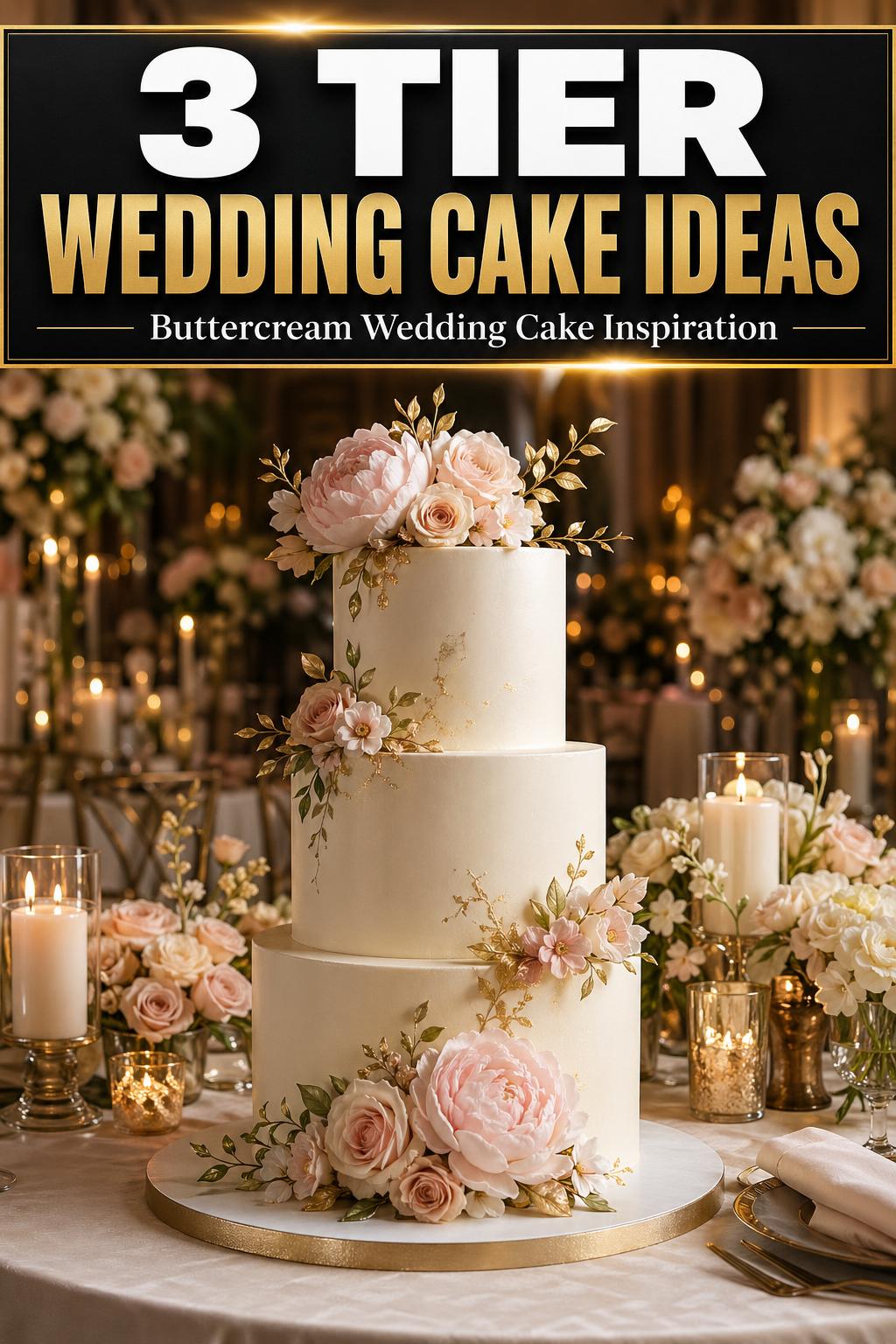
Style overview: glam and floral-heavy three-tier cakes
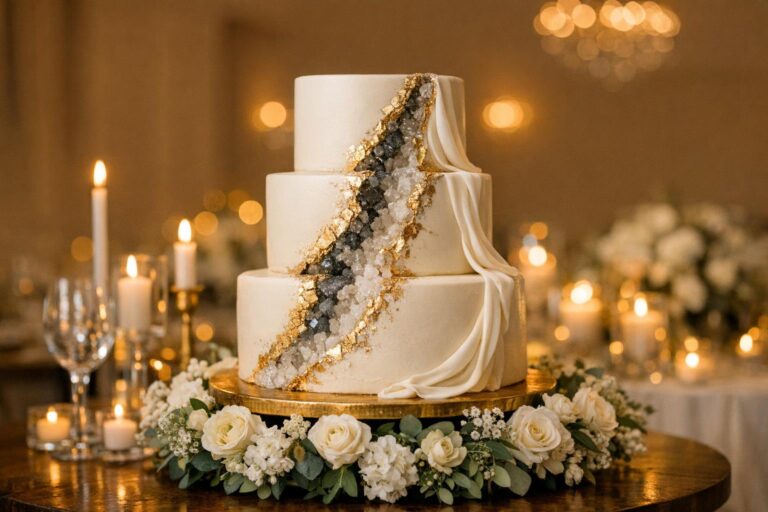
The glam or floral-heavy version of a 3 tier wedding cake takes the vertical form and makes it more decorative. Here, handcrafted sugar florals, metallic details, richer contrast, and visually lush embellishment become central. The cake is not simply part of the décor; it joins the décor as a major design element.
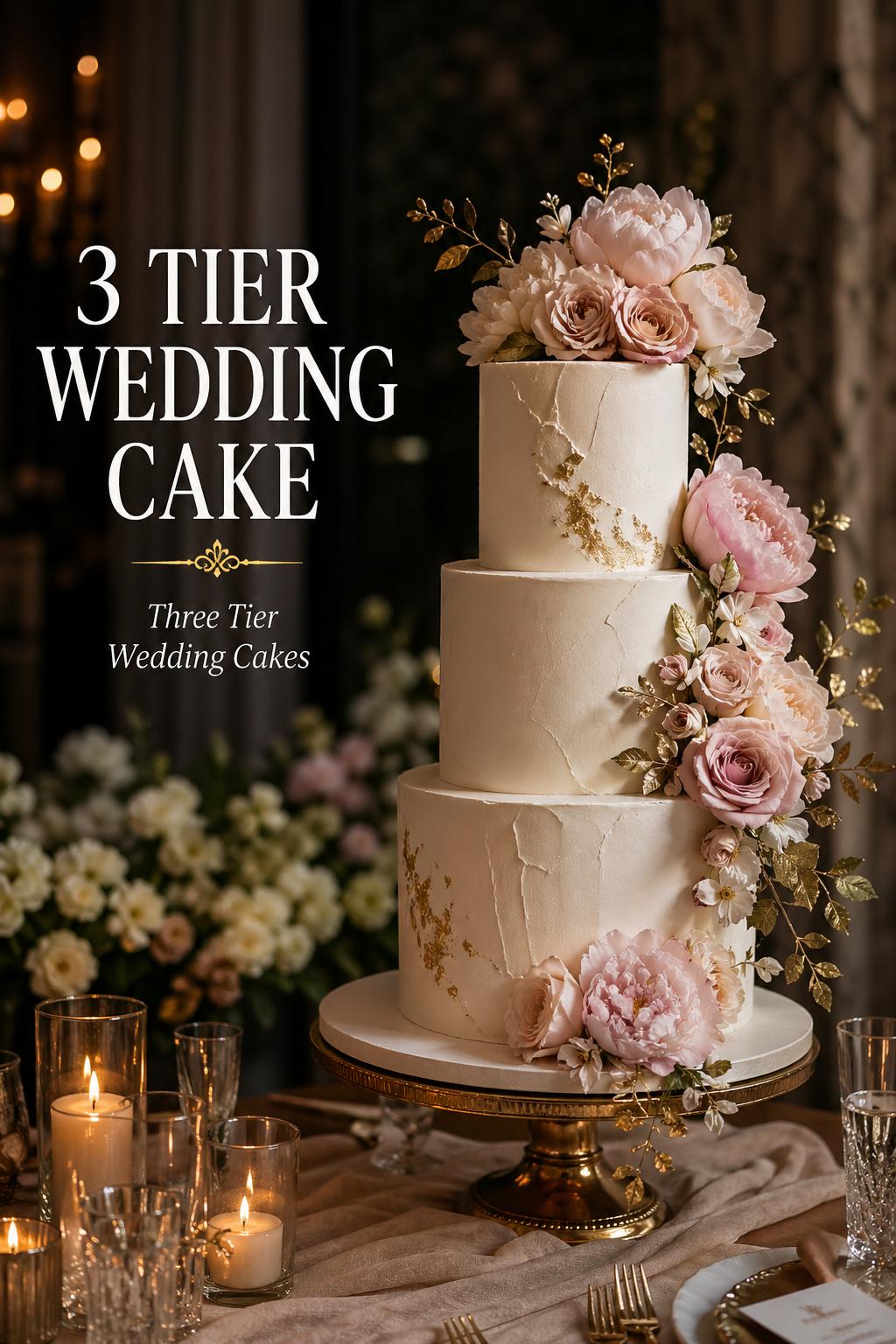
Its defining characteristics include expressive surface detail, more noticeable color accents, and stronger styling links to the reception palette. Gold accents, floral cascades, and ornate embellishments are common visual cues in this category. While the structure is still familiar, the mood shifts toward celebration, luxury, and drama.
This style often overlaps with what couples admire in an elegant four-tier wedding cake, but it can still be achieved beautifully on three tiers. That is useful when the reception needs impact without the additional scale of a fourth tier. A three-tier format with glam styling can feel generous and luxurious while remaining easier to plan, transport, and display.
Where a buttercream wedding cake fits into the comparison
A buttercream wedding cake is less a separate category than a finish-driven style direction that can move across classic, modern, and floral aesthetics. Buttercream tends to soften the look of a cake, even when the design is clean. It naturally suits romantic weddings, but it can also be surprisingly modern when used with smooth surfaces and minimal decoration.
In a classic interpretation, buttercream brings warmth and softness. In a minimalist interpretation, it can still read clean if the finish is controlled and the ornament is sparse. In a floral-heavy interpretation, buttercream offers a beautiful contrast to flowers and metallic details because it keeps the base from feeling too hard or formal.
For many couples, the question is not whether to choose a buttercream wedding cake or a three-tier cake. It is whether their three-tier cake should feel soft and romantic or sleek and sculptural. Buttercream often nudges the design toward the softer end of that spectrum, which is why it appears so often in timeless wedding cake ideas 3 tier.
The key differences between these styles
Silhouette and structure
All three styles use the same stacked concept, but they present it differently. The classic style treats the tiers as graceful layers in a harmonious whole. The modern style highlights the geometry of the tiers themselves. The glam style uses the tiers as a stage for decorative movement, often drawing the eye diagonally or vertically through florals and accents. In practical terms, all still depend on stable support systems and thoughtful assembly, but the visual effect changes based on how much of the structure is meant to stand out.
Color palette
Classic cakes usually live in white, ivory, blush, or gentle metallics. Modern cakes tend toward sharper contrast or stricter restraint, sometimes using black, white, or limited gold in a cleaner way. Glam and floral-heavy cakes welcome stronger color stories, especially when the cake is meant to echo the floral program or reception décor. If a couple already has a defined palette, the cake style should follow that emotional tone rather than compete with it.
Level of formality
A classic romantic cake feels formal in a traditional sense. A modern cake can feel formal too, but in a more editorial, understated way. A glam cake often reads as the most overtly celebratory, especially in a ballroom or luxury reception context. This is one reason some couples debate between three tiers and an elegant four-tier wedding cake: they are often really deciding between a level of ceremony and visual scale, not just tier count.
Styling philosophy
Classic styling asks, “How can the cake support the romance of the day?” Modern styling asks, “How can the cake reflect a clean design point of view?” Glam styling asks, “How can the cake become a statement piece within the room?” Once couples answer that question honestly, many design decisions become easier.
Typical decorative elements
Classic cakes often feature florals, soft piping, or subtle texture. Modern cakes favor minimal ornament, geometric rhythm, or a highly controlled finish. Glam cakes lean into sugar florals, metallic accents, and layered detail. None is inherently better. The strongest choice is the one that feels aligned with the venue, flowers, and atmosphere of the celebration.
Visual style breakdown in the reception space
On a real wedding day, the cake is never viewed in isolation. It is seen beside candles, florals, linens, place settings, and often within a rush of movement and photography. That context changes how each style reads.
A classic three-tier cake usually looks settled and graceful in the room. It blends with floral centerpieces, soft lighting, and formal tablescapes. The eye reads it as part of the wedding’s romantic rhythm. This is why so many real wedding examples on The Knot connect the cake with nearby décor details like peonies, roses, and gold touches.
A modern cake stands apart more intentionally. It does not need many accessories around it because its strength comes from shape, restraint, and negative space. In a sleek venue or a more minimalist celebration, this can be especially effective. Too much surrounding decoration, however, can dilute the clean message.
A glam cake tends to draw attention immediately. It works beautifully when the cake table is meant to be part of the visual theater of the evening. The trade-off is that it needs coordination. If florals, table décor, and venue styling are all moving in different directions, a highly embellished cake can feel disconnected instead of luxurious.
Serving math, scale, and why style decisions are not only visual
One of the strongest practical reasons couples choose three tiers is the serving range commonly associated with standard dimensions such as 6-10-14 inches. Within the research landscape around this topic, that size combination is frequently linked to approximately 75 to 100 servings. That serving logic matters because it places the 3 tier wedding cake in a very workable middle ground for many weddings in the United States.
Style should never be chosen without considering guest count. A cake can look visually perfect in inspiration photos but feel undersized or oversized once placed in a real venue. A smaller guest list may allow more decorative focus without needing extra scale. A larger guest list may push a couple to compare three tiers with a 4 layer wedding cake or an elegant four-tier wedding cake, especially if they want both visual height and more servings.
- Three tiers often suit couples who want a centerpiece with moderate to strong presence.
- Standard dimension presets help connect beauty with realistic serving expectations.
- Higher styling detail can increase impact without necessarily increasing tier count.
- Moving to four tiers usually changes both visual formality and planning complexity.
That is why some of the most useful wedding cake ideas 3 tier are not only about decoration. They connect size, guest count, venue fit, and structural ease. A beautiful cake is most successful when it feels right in the room and practical for the event.
Three tiers versus an elegant four-tier wedding cake
This is one of the most common comparison points because the two options can seem close in photographs. In reality, they send slightly different messages. A three-tier cake feels versatile, balanced, and often easier to adapt. A four-tier cake usually carries more ceremony, height, and formal presence.
Three tiers are often ideal when the reception calls for refinement but not grandeur. They work well in a wide range of spaces, from intimate venues to medium and larger receptions where décor already provides plenty of visual richness. A four-tier cake becomes more appealing when the room is especially expansive or when the couple wants the cake itself to carry more of the event’s luxury statement.
There is also a practical distinction. As tier count rises, the importance of structure, transport planning, and assembly increases. For many couples, three tiers feel simpler to manage while still delivering the iconic wedding silhouette. That helps explain why planners and inspiration sites so often present them as the most popular middle ground.
When the fourth tier truly makes sense
An elegant four-tier wedding cake may be the better choice if the venue is grand, the guest count is pushing beyond the comfortable range of standard three-tier dimensions, or the overall design vision is intentionally luxurious. If none of those conditions apply, a richly styled three-tier cake often delivers the same emotional effect with less complexity.
Three tiers versus a 4 layer wedding cake
A 4 layer wedding cake is often discussed alongside tiered cakes because couples may use the terms interchangeably in casual conversation, but visually they can lead to different outcomes. A layered cake emphasizes height within a single cake form or within each tier, while a tiered cake emphasizes stacked separation and event symbolism.
For the reception table, a three-tier cake typically delivers the more traditional wedding look. A 4 layer wedding cake may be more about interior richness, slice presentation, or a different bakery approach. If the goal is that instantly recognizable wedding centerpiece, three tiers usually communicate it more clearly. If the goal is to focus on flavor layers and cut presentation, layer language may matter more in planning conversations with the baker.
This is a subtle but useful distinction. Couples who feel torn may actually be choosing between visual ceremony and slice experience. Neither is wrong, but understanding the difference prevents disappointment later.
Flavor strategy across tiers: style is not only about the outside
One of the more thoughtful directions in current three-tier planning is using each tier to offer flavor variety. This allows the outside design to stay cohesive while the inside serves different guest preferences. It also gives the cake a sense of progression, especially at weddings where the dessert moment still feels ceremonial rather than purely functional.
Within the common planning conversation around three tier wedding cakes, flavor variety is often connected to options such as vanilla, chocolate, lemon, and berry. These pairings can support the design mood. A soft romantic cake may feel especially fitting with vanilla and berry notes, while a richer glam design can pair naturally with chocolate ganache. A fresh, lighter look may align well with lemon.
There is also a practical side to this decision. Different tiers can help accommodate preferences and, where needed, dietary considerations such as nut-free or gluten-free options. Even when only one tier is adapted, the couple can create a more inclusive dessert experience without changing the whole cake’s appearance.
- Choose flavors that feel connected rather than random.
- Let the most universally appealing flavor serve the largest tier.
- Use upper tiers for more specific or personal flavor choices.
- Discuss dietary adaptations early so the design and serving plan stay aligned.
Behind the beauty: structure, support, and delivery choices
Even the most romantic wedding cake decisions rely on practical structure. Three tiers are often favored because they offer visual height without the same level of complexity associated with taller cakes. Still, support systems matter. Current planning discussions frequently refer to dowels and internal supports because a stable cake depends on how each tier is reinforced and how weight is distributed.
This becomes especially important during transport. A cake that looks effortless in a gallery image has usually been planned carefully behind the scenes. Depending on design and logistics, some cakes are delivered stacked while others are assembled at the venue. Couples do not need to master engineering details themselves, but they should understand why a baker may recommend one method over another.
Venue conditions matter too. The wider conversation around three-tier cakes increasingly points to practical gaps such as humidity, elevation, and regional considerations. Even when those details are not always covered deeply in inspiration pieces, they are part of real-world planning. A cake for an indoor city ballroom may behave differently from one for a warm outdoor reception. The style should work with the conditions, not against them.
Tips for couples discussing structure with their baker
Ask whether the cake will be fully stacked before delivery or finished on-site, especially if the design includes extensive florals or detailed decoration. Confirm how the support system affects cutting and serving. And if the cake table location is fixed early, mention any travel distance, stairs, venue access limits, or room temperature concerns. These questions do not make the process less romantic; they protect the moment you have imagined.
How real wedding inspiration changes the decision
Gallery images are powerful because they show how three tier wedding cakes live inside actual celebrations. The Knot’s real wedding features, for example, often connect a cake directly to nearby elements such as florals, centerpieces, and reception styling. That relationship is one of the best tools couples can use when comparing styles.
A cake that feels perfect in a standalone image may not be the right fit once you picture it beside your own flowers, venue architecture, and palette. A blush floral cake with gold accents may feel magical in a classic ballroom setting, while a pared-back white design may be more striking in a modern urban space. Real wedding examples make these distinctions visible in a way isolated cake photos do not.
Photographers, florists, bakers, and planners all shape that final impression. Even when their names are not the main focus of a cake article, their combined work explains why certain cakes look so complete. Couples can learn a great deal by noticing not just the cake itself, but what surrounds it.
Budget and style: what changes the price conversation
Pricing discussions around a 3 tier wedding cake usually center on tier count, guest coverage, decoration level, flavors, delivery, and add-ons. Across the broader planning landscape, rough benchmarks often place a three-tier wedding cake in the range of about $600 to $1,500 or more depending on region and design. That range is wide for a reason: style choices change labor, complexity, and service needs.
A classic buttercream wedding cake with restrained details may be more straightforward than a heavily embellished floral design with premium finishes and intricate handwork. Likewise, a cake that requires careful on-site assembly can involve different logistics than a simpler design. Couples should think about budget not just as “price per tier,” but as “price for design vision, service, and event conditions.”
Regional context may also influence what feels standard. A vendor listing in Dubuque, Iowa, and high-demand bakery markets in cities such as Los Angeles, New York City, Chicago, or Dallas may not operate on the same pricing expectations. This is another reason broad inspiration should always be paired with local quote conversations.
- Decoration intensity often raises cost more than couples expect.
- Flavor variety across tiers can influence planning and pricing.
- Delivery, setup, and stand rental may appear as separate charges.
- Local market conditions affect what counts as a typical quote.
A venue-based way to compare cake styles
One of the most useful ways to choose among three tier wedding cakes is to stop thinking of them as isolated desserts and instead see them as venue styling decisions. This perspective often resolves uncertainty quickly.
For a classic ballroom reception
A romantic or classic cake usually feels most at home here. White or ivory tiers, floral accents, and soft metallic details mirror the formal atmosphere naturally. If the room already carries grandeur, three tiers may be enough, especially when paired with thoughtful décor.
For a modern city venue
A minimalist three-tier cake often looks stronger than a heavily embellished one in this setting. The venue’s architecture does part of the work, so the cake can remain restrained. Clean lines and careful proportion become the visual focus.
For a garden or floral-forward wedding
A classic or floral-heavy cake tends to blend beautifully with the softness of the setting. Florals on the cake can echo the ceremony and reception flowers, creating the sense that every detail belongs to the same story.
For couples considering scale without excess
If you love the presence of an elegant four-tier wedding cake but worry it may feel too large, a more dramatic three-tier version can be the compromise. Rich floral placement, metallic accents, or a well-styled cake table can increase impact without adding another tier.
Example comparisons couples can actually use
Classic romance versus modern restraint
Imagine the same reception guest count, the same three-tier structure, and the same white base color. In the classic version, the cake might include soft buttercream texture, blush florals, and a graceful, traditional mood. In the modern version, the flowers may disappear almost entirely, replaced by a cleaner finish and a sharper visual statement. The difference is not budget alone. It is whether the cake is meant to feel emotionally soft or visually disciplined.
Buttercream softness versus glam impact
Now imagine a couple choosing between a buttercream wedding cake and a more embellished floral design. The buttercream version might suit an intimate reception with candlelight and garden-inspired décor. The glam version may be better for a larger evening reception where metallic accents and statement florals already define the room. Both can be beautiful three tier wedding cakes, but each supports a different emotional tone.
Three tiers versus moving up in size
If a couple expects around the upper end of the common 75 to 100 serving range and wants a highly styled cake, three tiers may still work beautifully. But if the guest count, venue scale, and formal atmosphere all point upward, that is where comparing with an elegant four-tier wedding cake becomes reasonable. The key is not to increase size just because it seems more luxurious. Increase size only if the room, service needs, and visual goals truly call for it.
Common mistakes when choosing among three tier wedding cakes
Most cake disappointments are not about bad taste. They come from mismatched context. A cake can be lovely on its own and still feel wrong at the wedding because scale, style, and setting were never aligned.
- Choosing a design from a gallery without considering venue style.
- Focusing only on exterior appearance and forgetting servings.
- Assuming a 4 layer wedding cake and a tiered cake create the same effect.
- Adding heavy decoration when the room already feels visually full.
- Ignoring delivery and setup questions until late in the process.
A thoughtful cake decision usually comes from editing, not adding. The strongest cakes tend to feel connected: to the flowers, to the venue, to the formality of the day, and to the way the couple wants the reception to feel when guests first enter the room.
A gentle decision framework for choosing your style
If the decision still feels difficult, return to three simple questions. First, do you want the cake to blend with the wedding atmosphere or stand apart as a design statement? Second, is your priority romantic softness, modern clarity, or decorative impact? Third, does your guest count fit comfortably within a standard three-tier serving plan, or are you stretching toward a larger format?
Couples who answer “blend, softness, and moderate scale” often land on classic or buttercream-forward designs. Couples who answer “statement, clarity, and clean structure” often prefer a modern interpretation. Couples who answer “celebration, rich décor, and visual drama” are often happiest with glam floral styling, whether on three tiers or, if needed, an elegant four-tier wedding cake.
The beauty of three tiers is that they leave room for all of these directions. That is why the form remains so enduring. It can hold tradition, trend, and personal story at once.
Final thoughts on comparing styles for a 3 tier wedding cake
The core distinction between the leading 3 tier wedding cake styles is not the number of tiers but the mood those tiers are asked to carry. Classic cakes lean into romance and timelessness. Modern cakes emphasize restraint and design clarity. Glam cakes turn the same structure into a decorative focal point. A buttercream wedding cake can move among these directions, softening the look and making it feel especially warm and wedding-centered.
Once you know how to read those visual cues, identifying the right cake becomes easier. You begin to notice whether a cake belongs in a floral ballroom, a sleek city venue, or a candlelit garden reception. You also begin to see when an elegant four-tier wedding cake is truly needed and when a beautifully styled three-tier cake already says everything it needs to say.
The most memorable wedding cakes are rarely the ones with the most decoration. They are the ones that feel unmistakably at home in the celebration. When your cake reflects your venue, your guest experience, and your sense of style, it becomes more than dessert. It becomes part of the memory.
FAQ
How many guests does a 3 tier wedding cake usually serve?
A common planning reference for a three-tier cake is a 6-10-14 inch combination, which is often associated with about 75 to 100 servings. The exact number depends on slice size and how the baker portions each tier, so it is best to confirm serving expectations early in the ordering process.
Is a buttercream wedding cake a good choice for three tiers?
Yes, a buttercream wedding cake works very well for three tiers because it supports both classic and modern styling directions. It is especially appealing for couples who want a softer, more romantic look, though it can also feel clean and contemporary when decoration is minimal.
What is the difference between three tier wedding cakes and a 4 layer wedding cake?
Three tier wedding cakes emphasize stacked vertical presentation, which creates the classic wedding centerpiece effect. A 4 layer wedding cake usually refers more to internal cake layering or a different style of build, so the two options may create very different visual impressions even if they sound similar in casual conversation.
When should I choose an elegant four-tier wedding cake instead of three tiers?
An elegant four-tier wedding cake makes the most sense when the venue is especially grand, the guest count pushes beyond the comfortable serving range of a standard three-tier cake, or the overall wedding design calls for more formal visual scale. If those factors are not present, a richly styled three-tier cake is often enough.
Can each tier have a different flavor?
Yes, flavor variety across tiers is a common strategy and one of the practical advantages of a tiered cake. Couples often use this to offer a mix such as vanilla, lemon, chocolate, or berry while keeping the outside design cohesive and tailored to the wedding style.
Are three tiers easier to transport than larger wedding cakes?
In general, three tiers are often considered more manageable than taller cakes because they offer a simpler balance of height and structure. Even so, support systems, delivery method, and whether the cake is assembled on-site still matter, so transport planning should always be part of the discussion with the baker.
What design style works best for a modern venue?
A modern or minimalist three-tier cake usually works best in a sleek venue because its clean lines and restrained decoration complement architectural spaces. Too many floral or ornate details can compete with the setting instead of enhancing it.
How much does a 3 tier wedding cake typically cost?
Typical pricing discussions often place a three-tier wedding cake in the range of roughly $600 to $1,500 or more, depending on region, design complexity, flavor choices, and delivery or setup needs. Local bakery quotes are the most reliable way to understand what that style will cost in your market.
Should we save the top tier?
Saving the top tier remains one of the common questions couples ask because it connects the cake to wedding tradition and anniversary plans. Whether you choose to save it depends on your priorities, but if you do, it is worth discussing preservation timing and storage guidance with your baker in advance.