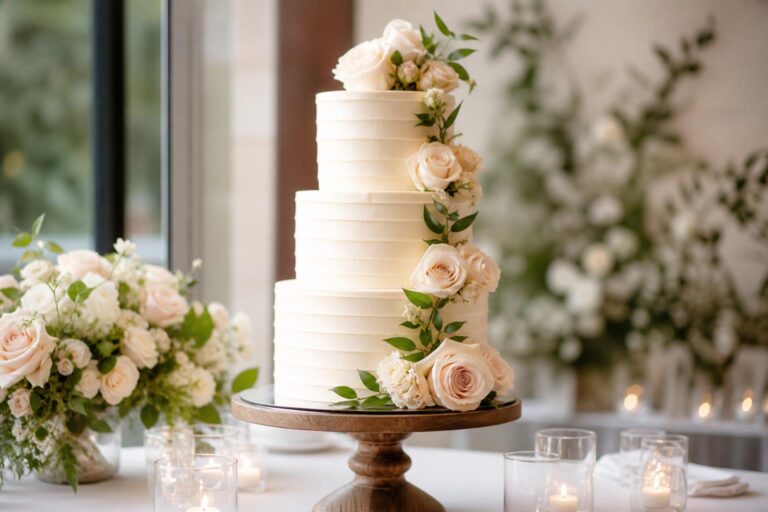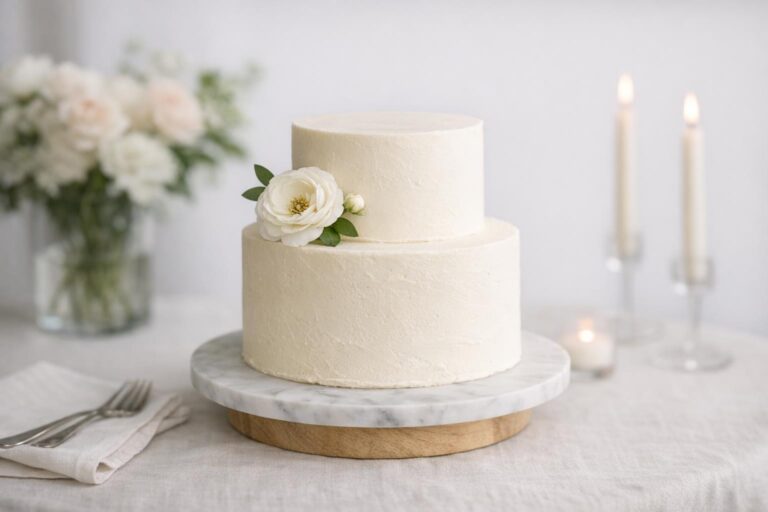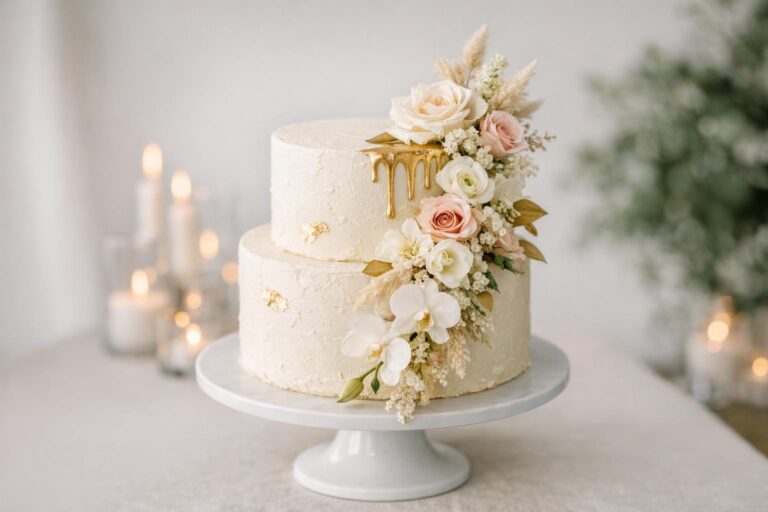
Boho Wedding Cake Inspo with Airy Textures and Desert Warmth
Boho wedding cake style, explained through the choices you actually have to make
The moment you start saving boho wedding cake photos, you’ll notice a pattern: everything looks effortless, but nothing is accidental. The “just-picked” dried florals are placed with intention. The macramé-like piping isn’t random texture—it’s a design language. Even a semi-naked cake that seems simple can be carefully tuned to a desert palette, a garden ceremony, or a rustic fall reception.
Boho cakes are also where couples most often get stuck, because the style overlaps with other looks that feel close at first glance: rustic boho, desert boho, garden boho, and more polished bohemian wedding cake ideas with gold leaf or painted finishes. Add fall wedding cakes into the mix—where terracotta, marsala, and earthy ombré shades shine—and it becomes easy to end up with a cake that doesn’t quite match the rest of the day.
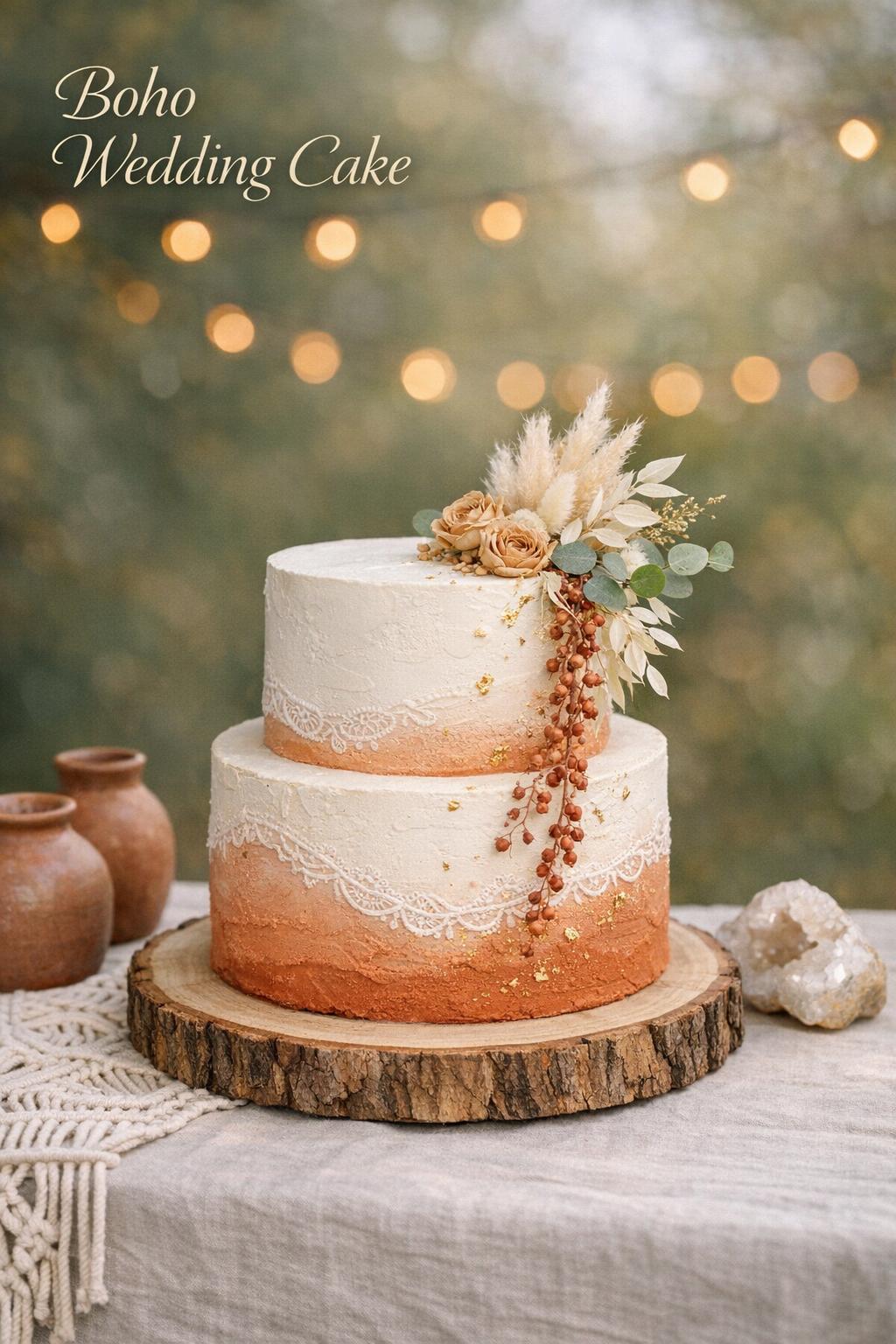
This comparison-style breakdown will help you tell the difference between the most common boho cake aesthetics, understand what each one communicates visually, and choose a direction that fits your venue and planning realities. Along the way, you’ll see different wedding cake ideas organized by silhouette, palette, texture, motifs (like dreamcatchers, feathers, geode accents, and moon phases), and display options such as cupcake towers and dessert tables.
Style overview: classic boho (the “soft wild” baseline)
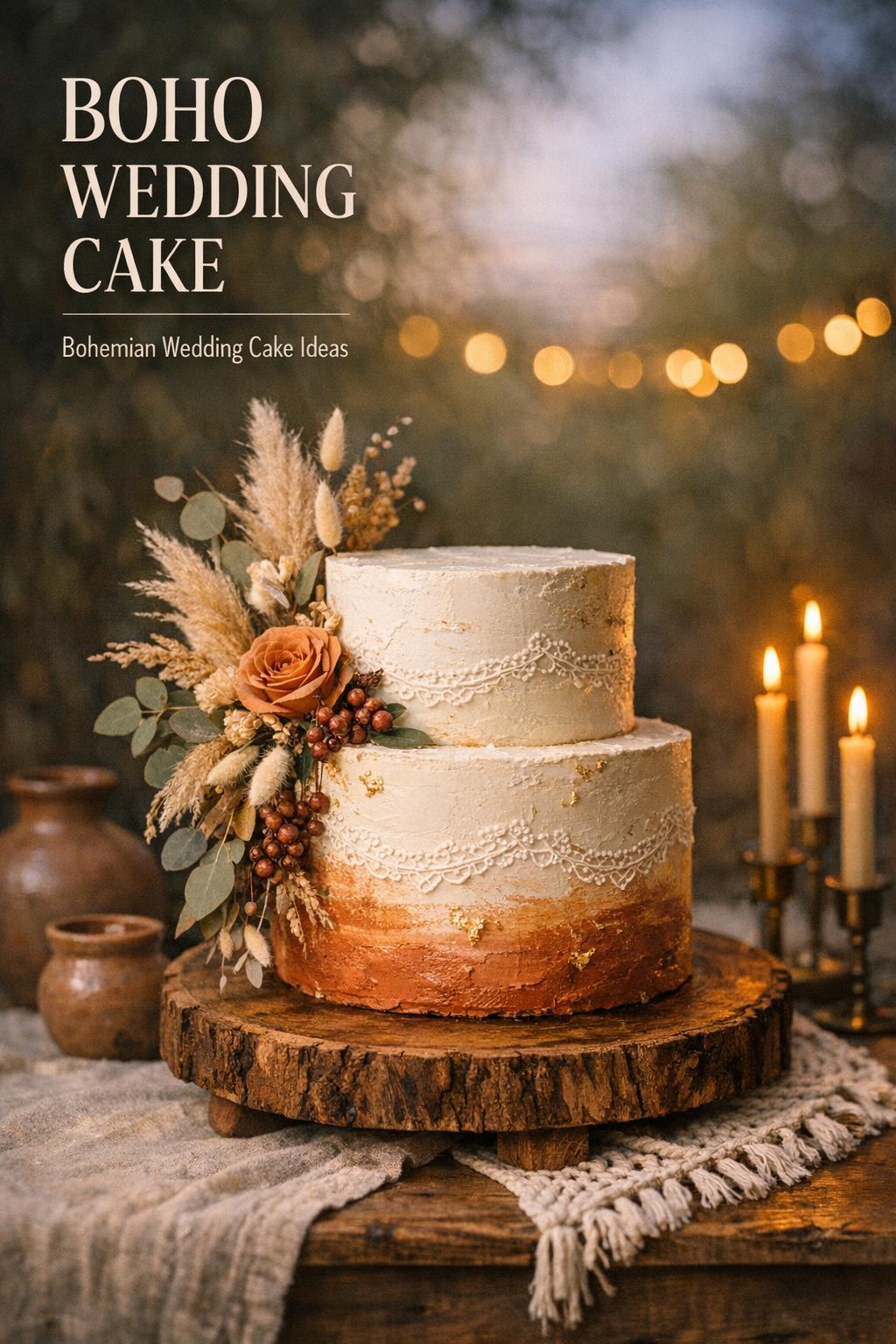
Classic boho wedding cake styling is grounded in natural materials and a relaxed, romantic mood. It often leans on earthy neutrals—ivory, taupe, and clay-adjacent tones—with gentle texture rather than sharp edges. You’ll see dried flowers and pampas grass used as a signature flourish, sometimes paired with greens like eucalyptus in a cascade that feels organic rather than symmetrical.
Turn wedding inspiration into a plan you can actually follow.
Zarellea brings your guest list, budget, vendors, and day-of details into one shared space — so no beautiful idea gets lost in the shuffle.
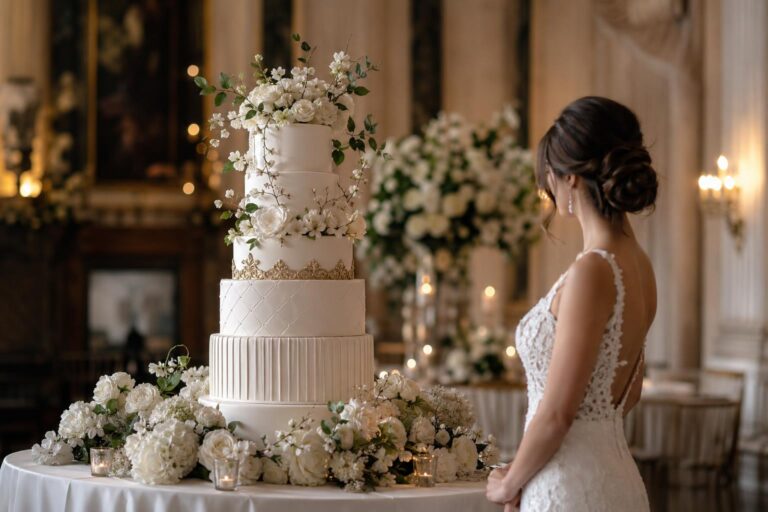
Silhouette-wise, classic boho isn’t limited to one format. It can be a single-tier minimalist cake with a striking topper, or a multi-tier centerpiece. A four-tier wedding cake can still read “boho” when the palette and motifs are right—especially when it includes handcrafted elements like dreamcatcher-inspired details, feather motifs, or subtle metallic touches.
The overall effect: romantic, airy, and tactile—like linen, lace, and sun-warmed wood translated into edible design.
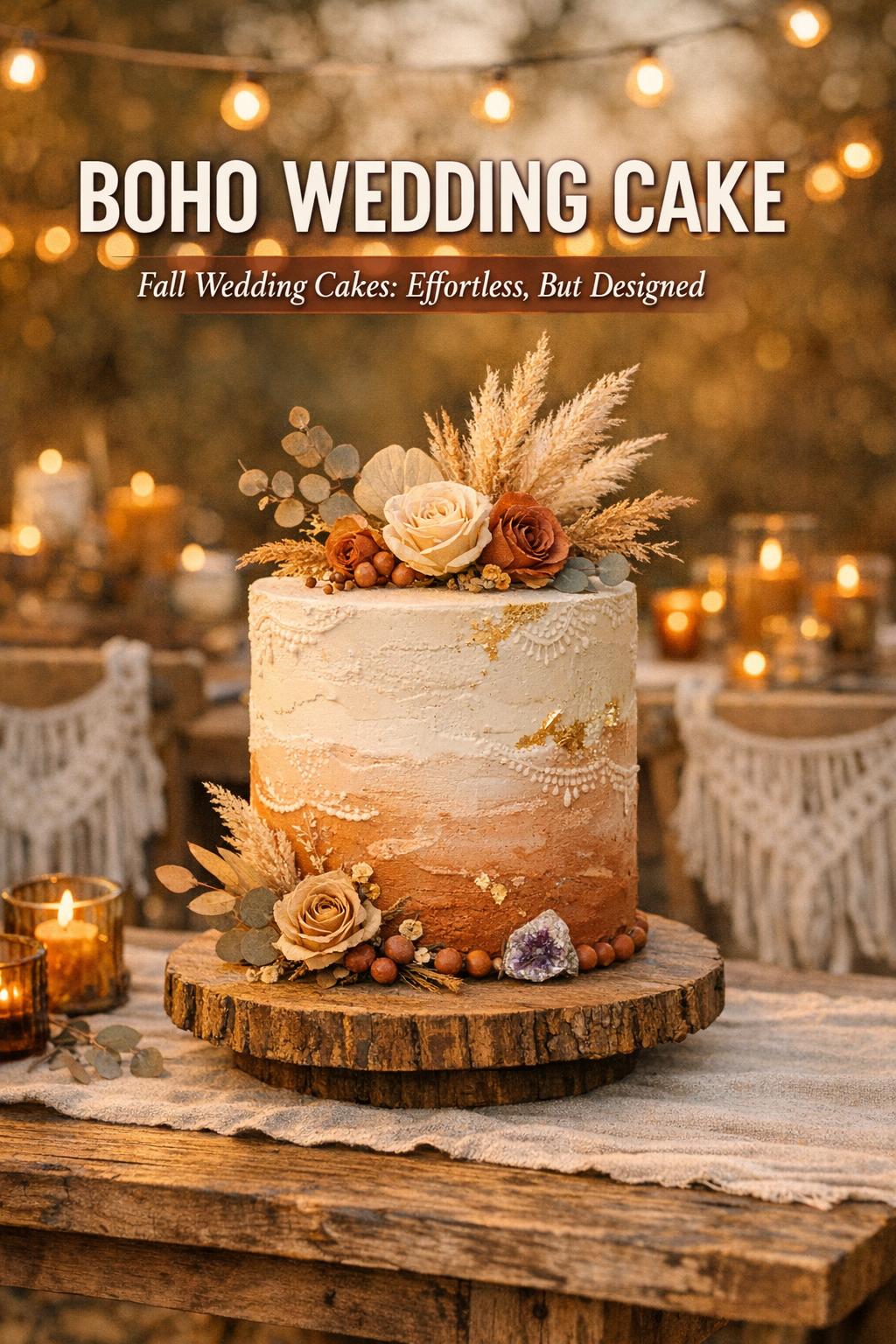
Style overview: desert boho (terracotta, clay, and sunset artistry)
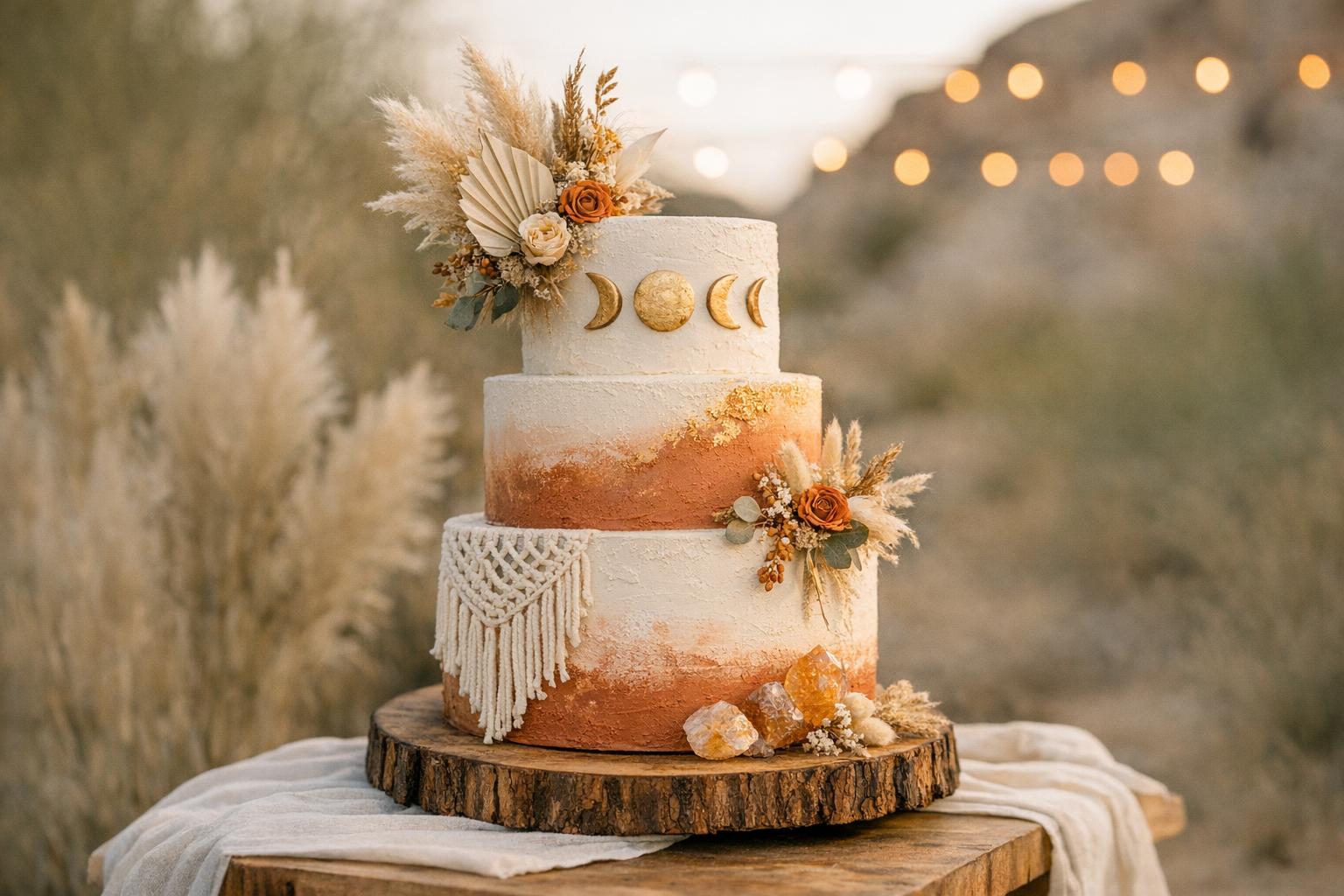
Desert boho takes the bohemian spirit and anchors it in a Southwest-leaning mood: warm terracotta and clay-inspired palettes, painted desert sunset finishes, and motifs such as desert rose themes, dried orange slices, and earthy color ombré. Compared with classic boho, desert boho is often bolder in color placement, even when the cake is minimal in form.
Texture becomes more architectural here. Plaster-like buttercream finishes, terracotta-and-white contrasts, woven hemp details, and even Moroccan tile pattern inspiration can appear. This is the branch of bohemian wedding cake ideas that loves artful surfaces—hand-painted botanical touches, watercolor washes, or carefully placed accents that feel like a landscape.
The overall effect: sunbaked romance—warm, graphic, and grounded, perfect for desert venues or couples building an earth-toned story across florals and décor.
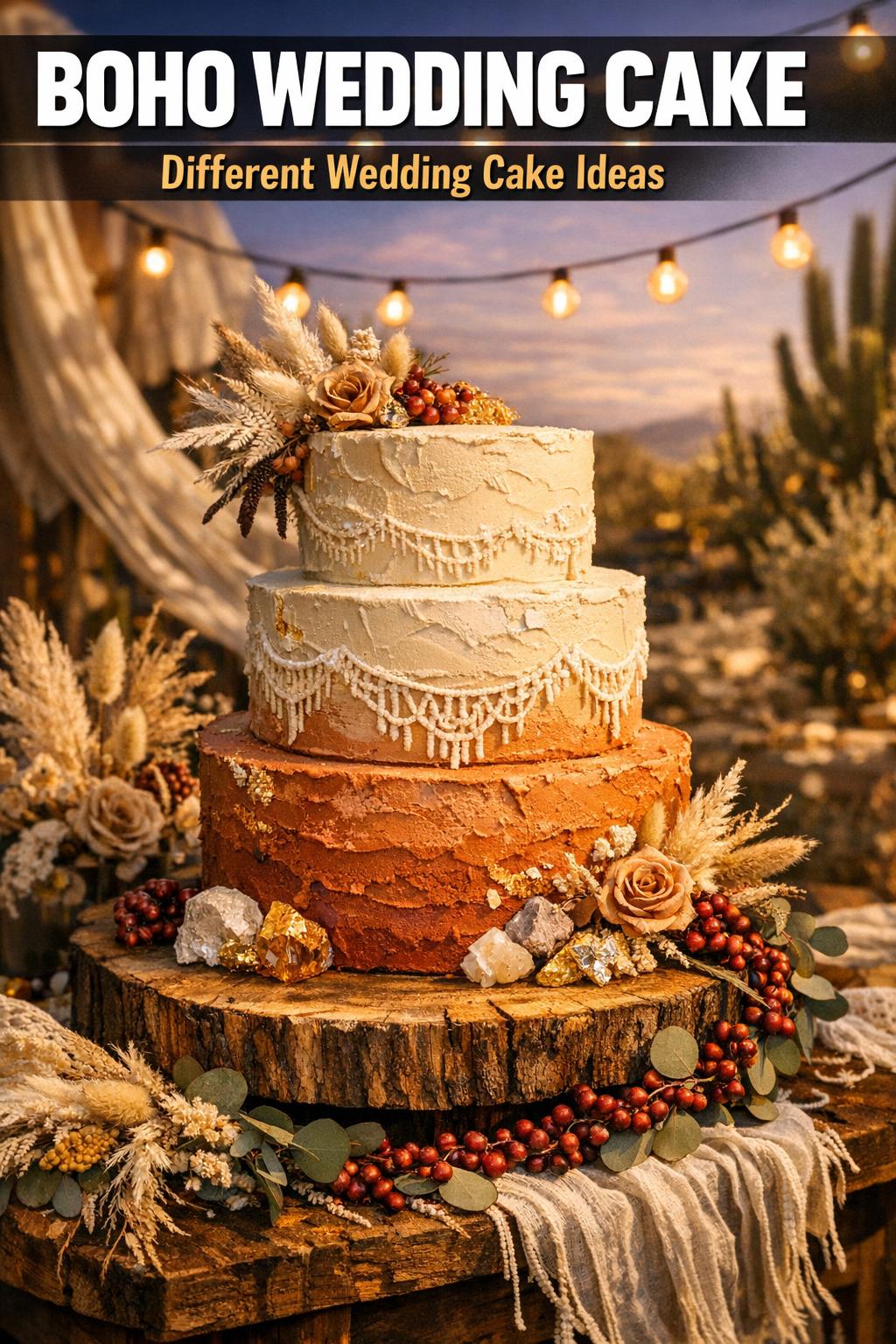
Style overview: rustic boho (wood, berries, and the “outdoor celebration” feeling)
Rustic boho sits closest to the outdoors: think wood-toned bases, natural wood tiers, berry garlands, olive branch wreath details, eucalyptus cascades, and a vibe that feels at home in open-air settings. It’s where semi-naked cakes often show up because the exposed layers and minimal icing feel casual and welcoming.
Rustic boho also overlaps beautifully with fall wedding cakes because it welcomes deeper, moodier palettes and harvest-adjacent garnishes. Marsala tones, dusty blue accents, and gold details can all live comfortably here when balanced with natural textures and floral restraint.
The overall effect: relaxed warmth—less “styled editorial,” more “gathered under string lights,” while still intentional enough to feel elevated in photos.
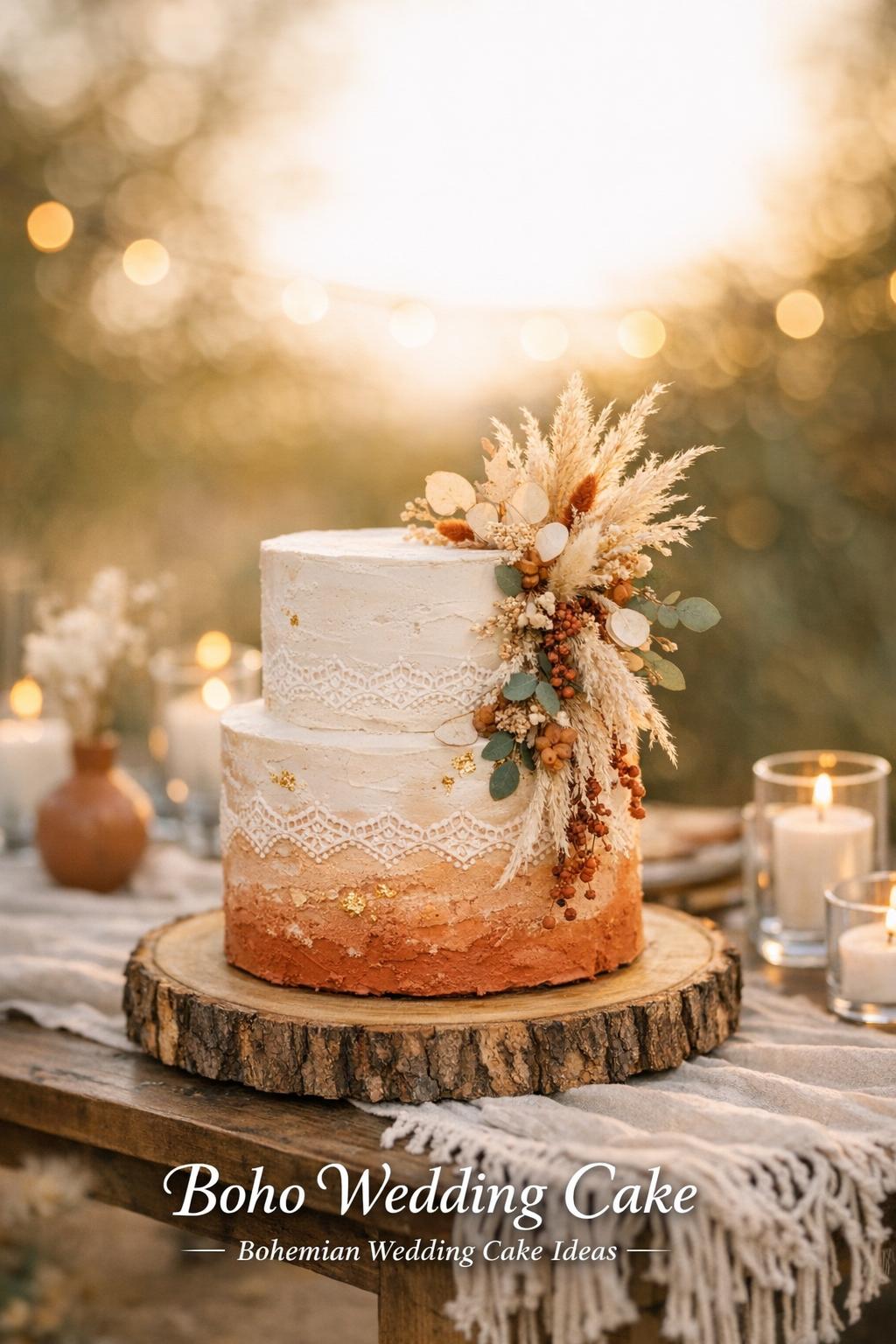
Style overview: boho luxe (gold leaf, geodes, and statement-making polish)
Boho luxe is where bohemian softness meets a sharper focal point: metallic touches like gold leaf, crystal geode accents, and dramatic contrast (such as terracotta and white) that reads more “designed” than “accidentally beautiful.” This style often keeps boho’s natural foundation—dried florals, botanical motifs, earthy palettes—but adds one bold detail meant to stop the room.
Geode and crystal accents are the signature example: they turn a cake into a centerpiece with depth and sparkle. Feather-and-gold combinations and celestial moon phases can also fall into this category when executed with clean lines or dramatic placement.
The overall effect: boho, but dressed up—ideal for couples who want nature-inspired elements without giving up a sense of formality.
The key differences that matter most (so you don’t choose the wrong “boho”)
Silhouette and structure: minimal tiers vs. layered storytelling
Classic boho and rustic boho comfortably span everything from single-tier minimalist cakes to multi-tier displays. Desert boho can be either, but tends to feel “designed” through surface artistry even when the shape is simple. Boho luxe usually benefits from a little more structure because statement accents like geodes, gold leaf placement, and bold contrast look most intentional when the tiers feel stable and composed.
Color palette: earth neutrals vs. warm desert pigments vs. fall-forward depth
If your heart is set on terracotta and clay-inspired palettes, you’re already drifting toward desert boho. If you’re drawn to fall wedding cakes with richer notes—marsala paired with gold and dusty blue, for instance—you’re leaning rustic boho with fall influence, or a boho luxe twist depending on how metallic you go. Classic boho stays more breathable: ivory, taupe, gentle greens, and dried florals that look sun-faded rather than saturated.
Texture philosophy: soft-touch buttercream vs. woven pattern motifs
All boho styles love texture, but they speak different dialects. Semi-naked and textured buttercream cakes communicate ease and softness. Macramé piping and lace-like detailing communicate craft and pattern—an especially strong signal for “boho” because it echoes textiles and handmade décor. Woven basket texture and woven hemp details read more desert/rustic depending on palette and décor around them.
Signature motifs: dreamcatchers, pampas grass, pressed wildflowers, geodes, moon phases
Motifs are where bohemian wedding cake ideas can become either unforgettable or visually noisy. Dreamcatcher-inspired designs and feather motifs often feel classic boho when paired with airy palette choices. Pressed wildflower design reads garden-meets-boho and can swing rustic if paired with berries or wood. Celestial moon phases often feel more boho luxe when paired with metallic touches. Geodes almost always push the cake into boho luxe territory because they carry drama by default.
Visual style breakdown: how each “boho” actually looks on a cake table
Classic boho visuals: airy placement and negative space
Classic boho tends to leave breathing room. Dried flowers and pampas grass might sit off to one side of a tier or trail gently rather than wrap fully around. A semi-naked finish often looks most “boho” when it’s paired with a restrained topper—wooden, crescent-moon-inspired, or a small dried floral bundle—so the cake feels like part of the tablescape instead of a separate showpiece.
Desert boho visuals: painted surfaces and warm, grounded contrast
Desert boho is often recognizable from across the room. Terracotta-and-white contrast, painted desert sunset gradients, earthy color ombré, and clay-like finishes pull the eye immediately. Dried orange slices, desert rose cues, and succulent accents can add a styled “still life” feeling. This style pairs naturally with venues that already bring the palette—desert backdrops, warm-toned outdoor settings, or a reception space styled to feel sunlit and earthy.
Rustic boho visuals: organic abundance and outdoor-friendly design
Rustic boho looks like it belongs outside. Eucalyptus cascades, olive branch wreath shapes, rustic berry garlands, and wood elements (including natural wood tiers) read instantly as grounded and welcoming. Semi-naked cakes are common here because they feel casual and celebratory. If you’re planning a fall wedding, rustic boho is often the easiest bridge between the season’s richness and boho’s softness.
Boho luxe visuals: one dramatic focal point, then restraint
Boho luxe works best when it chooses one hero element. A crystal geode accent can be that hero, or gold leaf can be the defining thread across tiers. The trick is restraint: once you introduce a bold accent, the rest of the styling should quiet down—think smoother buttercream, simpler floral placement, and a palette that supports rather than competes.
A comparison-driven menu of different wedding cake ideas (organized by the decision you’re making)
Instead of thinking “Which cake photo do I like most?”, it’s often easier to decide by category: finish, pattern, motif, palette, and display. Below are bohemian wedding cake ideas grouped by the choice you’ll make with your baker—each idea notes where it fits best across classic boho, desert boho, rustic boho, and boho luxe.
Finish choices: semi-naked vs. textured buttercream vs. painted artistry
- Semi-naked cake with dried florals: A natural fit for classic boho and rustic boho, especially for outdoor celebrations where the mood is relaxed.
- Textured buttercream cake (plaster-like, softly swirled, or intentionally uneven): Works across all boho branches; it becomes desert boho when paired with terracotta tones, and boho luxe when paired with gold accents.
- Watercolor or hand-painted botanical cake: Often reads as desert boho (especially with sunset or warm gradients), but can stay classic boho when kept light and botanical.
Pattern choices: macramé, lace, woven textures, and tile-like motifs
- Macramé cake wrap or macramé piping: The most instantly recognizable “boho textile” translation; works best for classic boho and rustic boho, and can be elevated for boho luxe with subtle metallic touches.
- Lace and boho textures: Romantic and soft; ideal when your wedding styling already includes textile elements like dreamcatchers or handcrafted décor.
- Woven basket texture / woven hemp details: Strong rustic or desert energy depending on palette—earthy neutrals feel rustic; terracotta-and-white feels desert.
- Moroccan tile pattern inspiration: Best for couples who want desert boho with a graphic, patterned twist—pair with restrained florals so the pattern remains readable.
Motif choices: dreamcatchers, feathers, pressed wildflowers, geodes, and celestial themes
- Dreamcatcher-inspired details: A classic boho statement; it can be echoed through décor like dreamcatchers on the reception tables for cohesion.
- Feather and gold: Often shifts the cake toward boho luxe because gold adds formality; keep feathers subtle to avoid a busy look.
- Pressed wildflower design: A romantic bridge between garden and boho; works beautifully with textured buttercream and soft palettes.
- Crystal geode accent: A clear boho luxe signature; use it as the main focal point and keep everything else intentionally calm.
- Celestial moon phases: Works best as a boho luxe motif, especially when paired with metallic touches and a clean background finish.
Palette choices: terracotta, earthy neutrals, greens, and fall-forward combinations
Palette is where “boho” becomes personal. Earthy neutrals—ivory and taupe—feel timeless and photograph softly. Greens paired with dried florals (pampas grass, dried flowers, eucalyptus) read naturally boho. Terracotta and clay-inspired palettes lean desert. And if you’re designing fall wedding cakes, deeper color stories like marsala with gold and dusty blue can look stunning—especially when the cake’s texture stays organic.
Real-world planning comparisons: how these styles behave at actual weddings
Outdoor venues: garden, beach, and desert settings
Many boho cakes are imagined outdoors—garden, beach, or desert—and those settings change what will look cohesive. A desert boho cake (terracotta-and-white, painted desert sunset, earthy ombré) looks like it belongs when the landscape already carries warm pigment. A garden-leaning boho cake often benefits from pressed wildflowers or a hand-painted botanical finish that echoes surrounding greenery. A beach setting can work with classic boho neutrals and dried grasses, especially when the cake table styling feels airy and uncluttered.
Fall receptions: when fall wedding cakes meet boho texture
Fall wedding cakes can go two ways: you can lean into warmth (terracotta, clay, sunset tones) for a desert boho feel, or you can embrace rustic boho with berry garlands, olive branches, and deeper accent colors. A marsala, gold, and dusty blue palette—seen in real boho-inspired celebration styling—can feel especially romantic in fall when paired with textural buttercream and a topper that nods to the couple’s story instead of overpowering it.
Formal vs. relaxed: how “polished” should your boho be?
If your day includes a more formal reception feel, boho luxe details like gold leaf or a geode accent can help the cake hold its own as a centerpiece. If the mood is intentionally relaxed—think long tables, dried grasses, soft linens—classic boho and rustic boho usually look more honest. In my experience guiding couples through these decisions, the cake feels most “right” when its level of formality matches the tablescape and florals, not when it tries to be the only glamorous object in the room.
Outfit-style comparisons, translated into cake logic (to make the choice feel intuitive)
Because boho is a styling philosophy, it helps to borrow the logic of getting dressed: texture, proportion, and one focal point. Here are a few “same occasion, different approach” comparisons—except we’re styling your cake moment.
Example comparison: the minimalist moment (single-tier statement)
Classic boho would choose a single-tier minimalist cake with textured buttercream and a small dried floral cluster—light, romantic, and quiet. Desert boho would keep the single tier but add a painted wash or earthy ombré in terracotta tones so the artistry becomes the statement. Boho luxe would keep the background clean and introduce one sharp accent—perhaps a small geode detail or a restrained sweep of gold leaf—so the minimalism still feels elevated.
Example comparison: the crafted texture moment (pattern as the focus)
Rustic boho would lean into macramé piping or a macramé cake wrap with dried grasses and eucalyptus, letting the pattern feel handmade and warm. Classic boho might use the same macramé motif but with softer neutrals and fewer added elements for more negative space. Desert boho could take that textile idea and steer it into woven hemp details paired with terracotta-and-white, making the pattern feel grounded and graphic.
Example comparison: the centerpiece moment (multi-tier drama)
A multi-tier cake can be boho without losing softness. A four-tier wedding cake can feel classic boho if it uses earth-friendly neutrals, subtle texture, and a dreamcatcher-inspired design element that ties into the décor story. Boho luxe, on the other hand, would take a multi-tier silhouette and add a singular focal point—like a crystal geode accent—then keep florals and palette intentionally restrained to maintain elegance.
Toppers and displays: where boho weddings quietly tell their story
Boho cake toppers are often where the couple’s personality shows up most clearly. A topper can be a simple wooden accent, a crescent moon shape for a celestial note, or a dried floral bundle that echoes the bouquet. The key is to treat the topper like the final accessory: if the cake already has macramé texture and dried florals, the topper should be simpler. If the cake is minimal, the topper can carry more of the theme.
Cupcake towers and dessert displays vs. a single cake centerpiece
Cupcake towers and dessert displays can be a beautiful boho move, especially if you love variety or want to reduce the pressure on one perfect cake. They also fit naturally with rustic boho receptions where the vibe is communal and abundant. A single cake centerpiece tends to suit boho luxe or desert boho best, where the cake’s artistry or statement accents deserve a clear visual stage.
Tips from the cake-table perspective: making bohemian wedding cake ideas look cohesive all day
Boho style is forgiving in spirit, but your cake table is a focal point, and small choices can make the difference between “effortless” and “unfinished.” These tips are grounded in what tends to matter most once the ceremony begins and the reception moves quickly.
- Choose one primary motif and one supporting motif. For example, macramé texture as the main theme with dried florals as support, or a geode accent as the main theme with minimal greenery as support.
- Let your palette lead your florals. Terracotta palettes pair naturally with dried grasses and warm accents; earthy neutrals pair with softer dried flowers and eucalyptus.
- Be intentional about negative space. A boho cake often looks most romantic when not every inch is decorated—especially with pressed wildflowers or hand-painted botanicals.
- Match the cake’s “formality” to the reception styling. Gold leaf and crystal details read more formal; semi-naked finishes read relaxed.
Safety and practicality tip: natural-looking décor still needs thoughtful handling
Dried florals, pampas grass, feathers, and textured wraps are part of what makes a boho wedding cake feel authentic, but they also require planning: decide with your cake maker which elements are meant to be edible-looking versus actually touching the cake, and keep the design achievable for the venue conditions. If you’re planning an outdoor wedding, prioritize a design that will look consistent from ceremony through sunset—textured buttercream and controlled floral placement often hold the “boho mood” even if the day runs long.
A real-wedding lens: translating inspiration into a personal boho story
One of the clearest examples of boho style working as storytelling is when the cake echoes personal symbolism and the broader décor. In a boho-inspired wedding setting tied to Sisters, Oregon, a couple—Paulina and Anthony—featured a four-tier cake created by Nickol. The palette and details leaned into a romantic fall feeling with marsala, gold, and dusty blue accents, and dreamcatcher-inspired elements that connected the cake to the day’s atmosphere.
The takeaway isn’t that you need the same colors or the same motif. It’s that boho cakes look most believable when they “belong” to the wedding: your invitation style, your floral choices, and your reception details can all whisper the same design language. Dreamcatchers, for example, can be too literal when used everywhere—but when used as a subtle linking motif between cake and décor, they can feel poetic and personal.
How to decide between styles in one planning conversation
If you want to make a confident choice quickly—without losing the romance—walk into your cake conversation with three decisions made: your palette family, your texture preference, and your “statement level.” That’s usually enough for a baker to recommend different wedding cake ideas that fit your day instead of forcing your day to fit the cake.
Decision shortcut: palette family
Earthy neutrals and greens tend to create classic boho. Terracotta and clay steer desert boho. Richer tones like marsala with touches of gold and dusty blue can create fall wedding cakes that feel rustic boho or boho luxe depending on how bold the metallic accents are.
Decision shortcut: texture preference
If you love textile inspiration, ask about macramé piping, lace-like patterning, or woven details. If you prefer softness, textured buttercream or semi-naked finishes keep things romantic. If you want artistry, choose watercolor or hand-painted botanical finishes and keep the rest of the design simple so the painting reads clearly.
Decision shortcut: statement level
Low statement: single-tier minimalist with a boho topper. Medium statement: textured buttercream with dried florals and a gentle palette shift. High statement: a crystal geode accent, celestial moon phases, or a dramatic painted desert sunset finish—balanced with restraint elsewhere.
Common mistakes couples make with a boho wedding cake (and how to avoid them)
Mixing too many motifs in one design
It’s tempting to combine macramé texture, pressed wildflowers, geodes, feathers, and gold leaf all at once—especially when you’re collecting bohemian wedding cake ideas from multiple sources. But boho reads most romantic when it’s edited. Choose one motif to lead and let everything else support the mood.
Choosing a palette that fights the venue
A terracotta-heavy cake can look incredible, but it may feel visually heavy in a cool-toned garden setting unless you soften it with neutrals or greenery. Similarly, an ultra-neutral classic boho cake can disappear against an earth-saturated desert backdrop unless it has enough contrast—through texture, pattern, or carefully placed accents.
Forgetting the display
Boho styling lives in the full scene. A cake designed with airy negative space can look lost on a large, empty table. A dramatic boho luxe geode cake can feel cramped if surrounded by too much décor. Decide early whether you want a clean cake moment, a lush dessert display, or cupcake towers that create abundance—then style the table to match that choice.
Where each style shines: matching boho cake aesthetics to the kind of day you’re planning
Choose classic boho if you want romance that feels light and timeless
Classic boho works beautifully for couples who want their wedding to feel soft, intimate, and textural without leaning too themed. It suits garden ceremonies, airy receptions, and anyone drawn to dried florals, pampas grass, and gentle neutral palettes.
Choose desert boho if your palette is warm and you love artistic surfaces
Desert boho is for couples who want their cake to feel like a piece of art—painted finishes, terracotta-and-white contrasts, and sunset gradients that bring the landscape into the reception. It’s especially cohesive in desert and Southwest-inspired settings, but it also works anywhere you’re building an earth-tone story.
Choose rustic boho if your reception is outdoorsy, relaxed, and community-driven
Rustic boho is an easy, heartfelt choice for outdoor celebrations, long-table dinners, and fall wedding cakes with deeper accent colors. It supports semi-naked finishes, natural wood tiers, eucalyptus cascades, olive branches, and berry garlands—details that feel welcoming rather than formal.
Choose boho luxe if you want boho soul with a more formal centerpiece
Boho luxe is ideal when your venue or guest experience leans more elevated, and you want the cake to match. Gold leaf, crystal geode accents, and celestial moon phases can add polish while still keeping boho’s natural heart—especially when the palette stays earthy and the floral placement remains intentional.
Photography and styling: capturing texture, paint, and detail without losing the mood
Boho wedding cakes are tactile, and the most meaningful details can be subtle: macramé piping, plaster-like buttercream, pressed wildflower edges, and watercolor washes. To make sure those details show up in your gallery, treat the cake like a styled moment. Give it space, avoid overly busy décor that competes with the design, and aim for photos that capture both the full silhouette and a few tight texture shots. If your cake has metallic touches like gold leaf or a geode accent, include at least one angle where the accent catches the light without overpowering the rest of the cake.
A practical note: a cake that reads “perfectly boho” in person can photograph flatter if it’s too close in tone to the table linen or backdrop. Contrast doesn’t have to mean bold color—sometimes it’s as simple as pairing a neutral cake with a wood-toned base, or adding greenery that frames rather than covers the tiers.
FAQ
What makes a cake “boho”?
A boho wedding cake typically emphasizes natural, romantic styling through earthy palettes, tactile finishes (like textured buttercream or semi-naked layers), and handcrafted-looking motifs such as macramé piping, dried florals, pampas grass, botanical painting, or thoughtful toppers that feel personal rather than overly formal.
What’s the difference between classic boho and desert boho?
Classic boho leans airy and soft with earthy neutrals, gentle greenery, and restrained dried florals, while desert boho centers warm terracotta and clay-inspired palettes, painted or ombré finishes, and Southwest-leaning motifs like desert rose themes or sunset-inspired artistry.
Do semi-naked cakes always look boho?
Semi-naked cakes often suit boho because they feel relaxed and natural, but they read most “boho” when paired with cohesive details like dried flowers, pampas grass, or a simple topper; without those supporting elements, the same finish can feel more generic than intentionally bohemian.
How can I use macramé on a boho wedding cake without it looking too busy?
Use macramé as the primary texture and keep the rest quiet: limit florals to a small dried cluster or a light eucalyptus cascade, stay within one palette family, and avoid combining macramé with multiple other statement motifs like geodes and heavy metallic accents.
Are geode and crystal accents still considered boho?
Yes—geode and crystal accents can fit boho styling, especially in a boho luxe direction, as long as the overall design keeps boho’s grounded elements like earthy tones, natural textures, and restrained floral placement so the geode becomes a single focal point rather than visual clutter.
What palette works best for fall wedding cakes with a boho feel?
Fall wedding cakes often look beautiful in earthy, warm palettes like terracotta and clay-inspired tones, and they can also incorporate richer accents such as marsala with touches of gold and dusty blue; the boho feeling comes through most clearly when those colors are paired with texture (buttercream, semi-naked layers) and natural décor like dried florals or greenery.
Should I choose a cake topper or let the cake design stand on its own?
If your cake already has strong visual features—macramé texture, painted finishes, pressed wildflowers, or a geode accent—a simple topper usually looks best; if your cake is minimalist, a boho topper (such as a wooden element, a crescent moon shape, or dried florals) can add personality and help tie the cake into the overall décor story.
When do cupcake towers and dessert displays make more sense than a traditional cake?
Cupcake towers and dessert displays can be a great fit for rustic boho celebrations or couples who want variety and a more communal, abundant dessert moment, while a single centerpiece cake often suits desert boho or boho luxe designs where painted finishes, bold palettes, or statement accents deserve a clear focal point.
How do I keep my boho cake cohesive with the rest of my wedding details?
Start with one shared palette and one shared motif across your day—like dried florals, dreamcatcher-inspired elements, eucalyptus, or terracotta tones—then repeat them lightly across the invitation style, tablescape, and cake so the design feels intentional, similar to how a coordinated look comes together through color and texture rather than matching everything exactly.