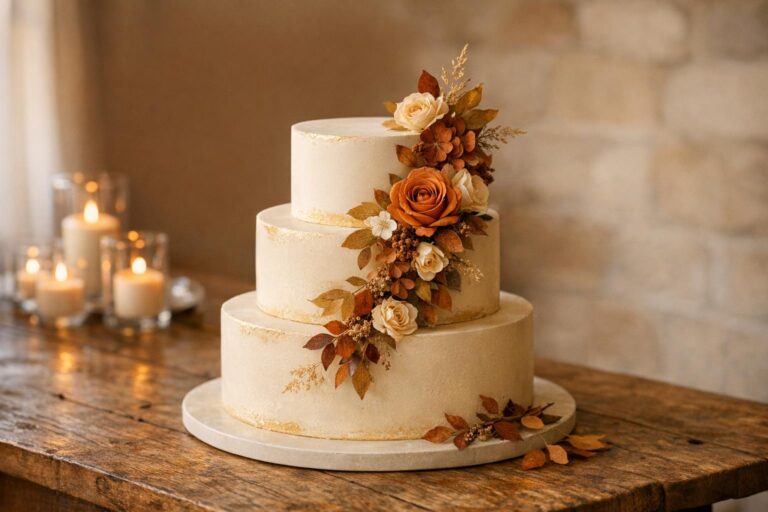
Wedding Cake Designs Elegant: Minimal, Couture-Level Looks
Wedding cake designs elegant: a couture mood for the reception
The moment a wedding cake is wheeled into the room, the reception changes pace. Glassware glints, candles settle into their glow, and suddenly every eye finds the tiers—because an elegant cake doesn’t just end the meal, it anchors the entire styling story. That’s why “wedding cake designs elegant” isn’t only about choosing something pretty; it’s about choosing a visual identity that feels as intentional as the dress, the tablescape, and the ceremony florals.
This aesthetic reads like bridal couture: refined proportions, confident restraint, and texture that looks expensive even when it’s simple. Think classic white tiers with a quiet satin finish, minimalist sculptural silhouettes, lace-like detailing that echoes a veil, and floral designs—fresh or sugar—that feel placed, not piled. You’ll see it most often in romantic ceremonies, garden weddings, ballroom receptions, modern venues, and intimate celebrations where photography is a priority and every detail is meant to be remembered.
Its appeal is easy to understand. A wedding elegant cake has the rare ability to look timeless and current at once—especially as couples plan wedding cakes 2025 with a love for minimalism, metallic accents, and thoughtful texture. The goal isn’t to chase a trend; it’s to create a cake wedding elegant enough to belong in the album forever.
What makes a wedding cake truly elegant (beyond “white and pretty”)
Elegance in wedding cakes is a design principle more than a single look. It’s the balance of proportion (how tall the tiers feel, how wide the base reads), the quality of finish (buttercream that looks intentional, fondant that looks seamless), and the discipline of detail (a floral cascade that feels composed rather than crowded). In practice, elegant cakes often rely on classic shapes—tiered round cakes most commonly—then elevate them through texture, minimal color palettes, and precise decorative choices.
Turn wedding inspiration into a plan you can actually follow.
Zarellea brings your guest list, budget, vendors, and day-of details into one shared space — so no beautiful idea gets lost in the shuffle.
Textures do the heavy lifting here: subtle buttercream movement, lace impressions, ruffles that mimic fabric, and even marble-inspired finishes. Florals and metallic accents become punctuation marks, not the entire sentence. And because weddings are photographed from every angle, elegance also means considering how the cake reads from across the room and up close—on camera, in venue lighting, and in those guest phone shots taken from the dance floor.
If you’re choosing cakes for wedding style cohesion, use a simple test: does the design still feel beautiful when you imagine removing half the details? Elegant design can handle that kind of edit—because its foundation is shape, finish, and intent.
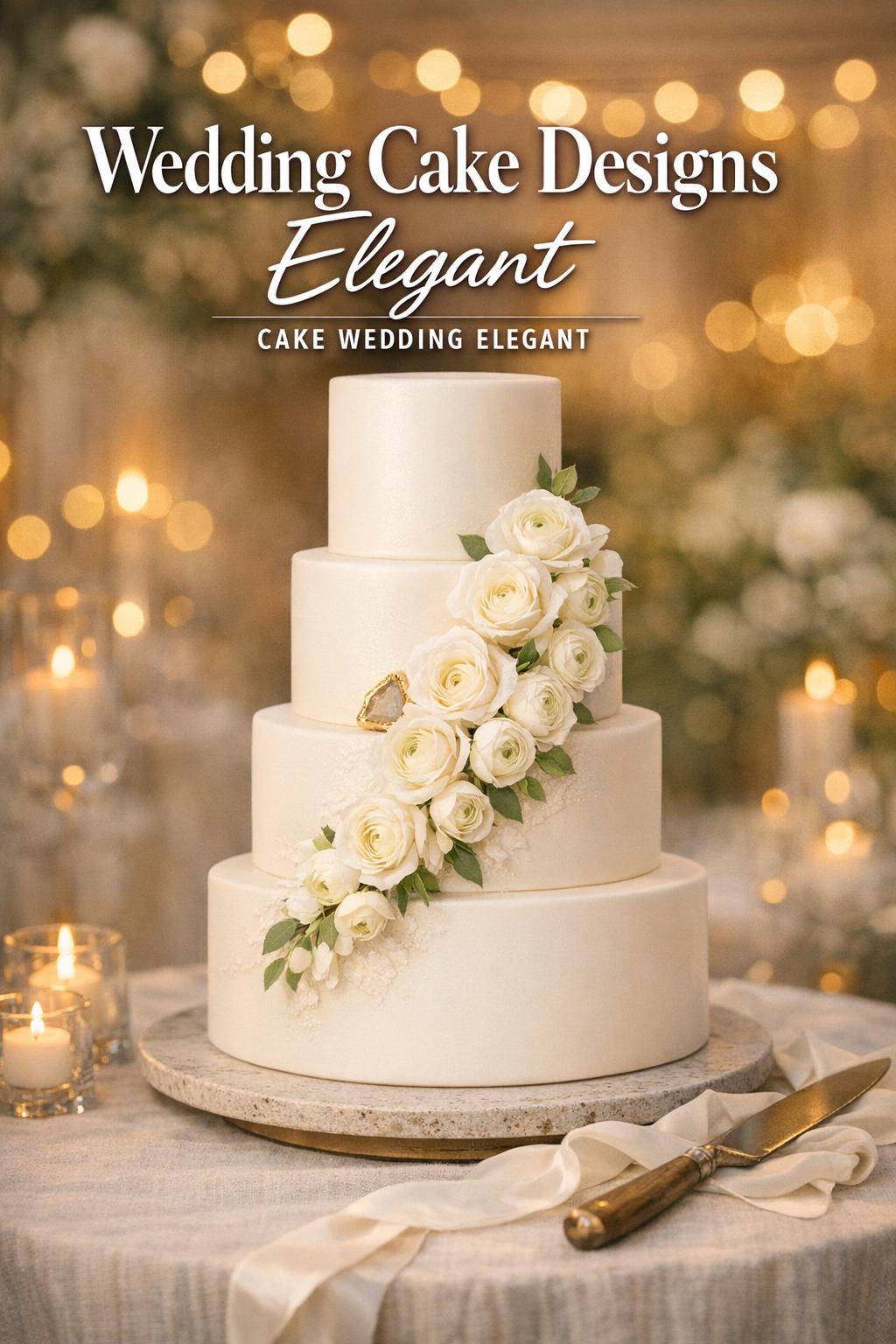
Look: classic white tiers with whisper-soft texture
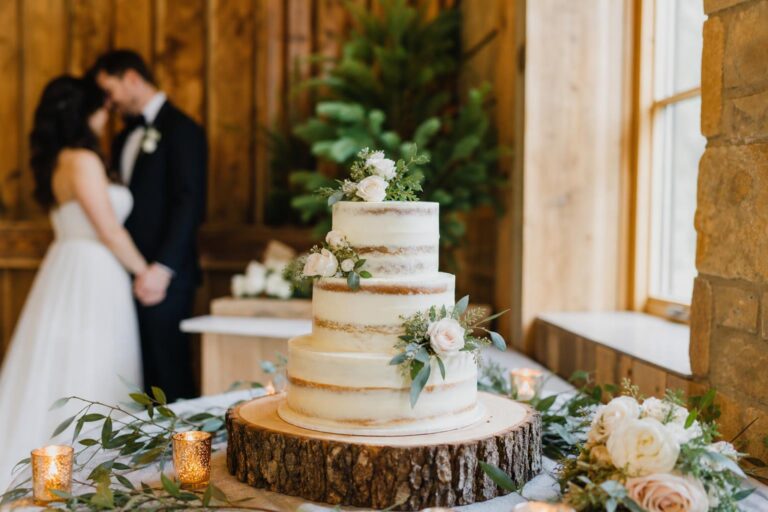
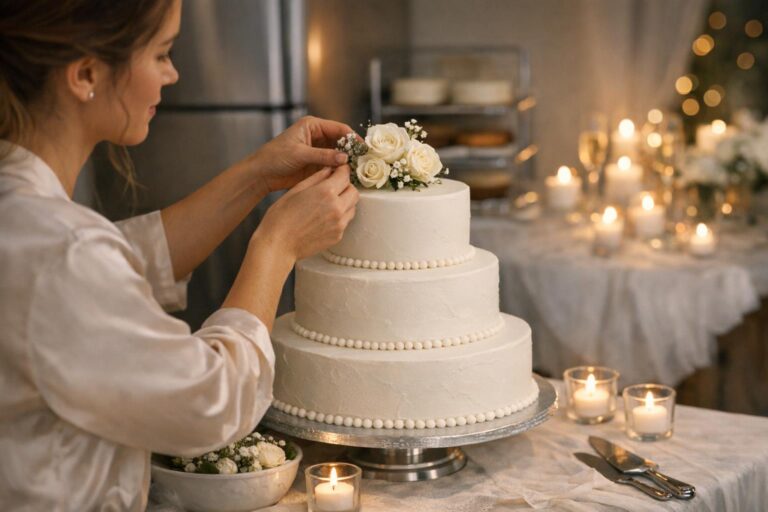
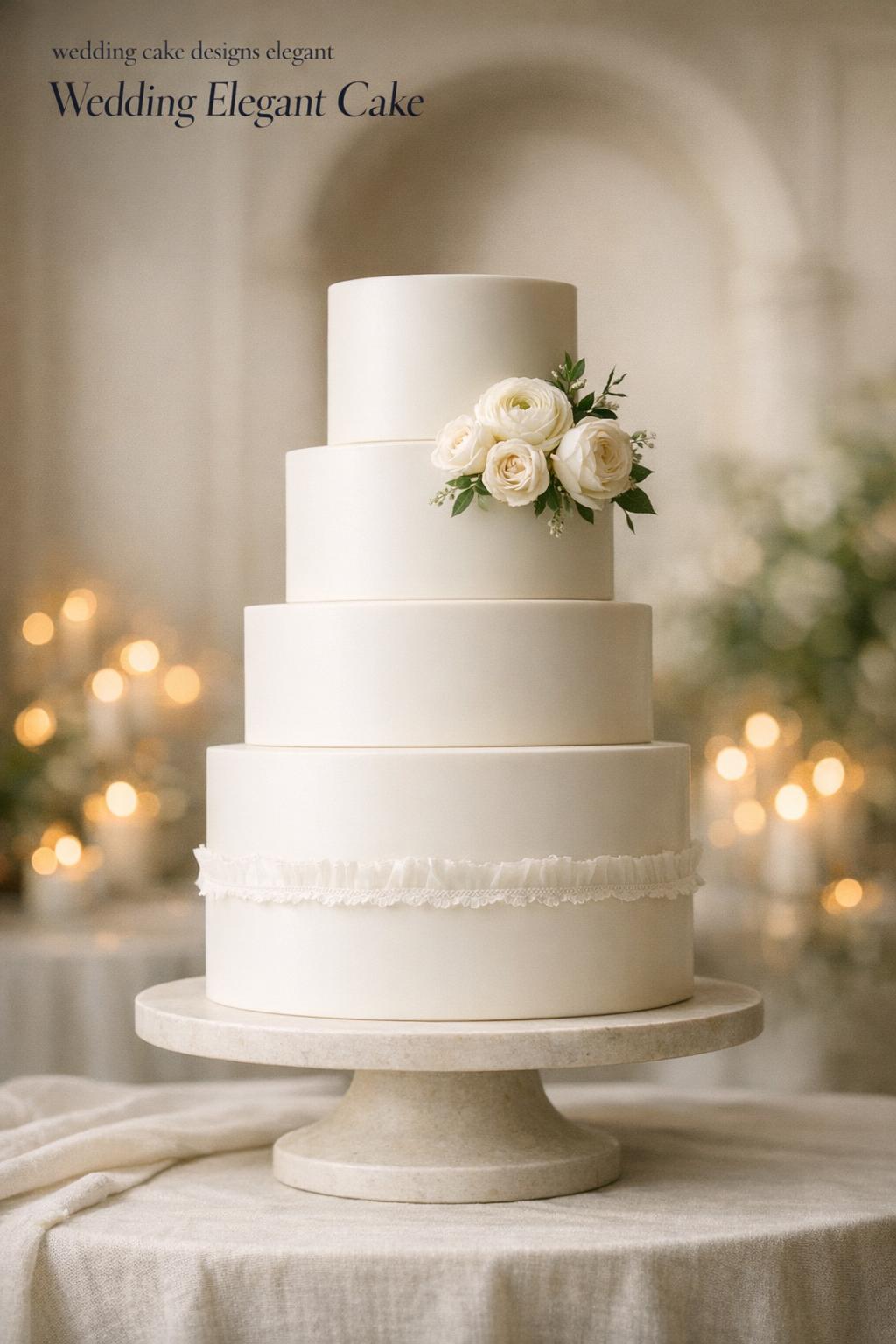
This look is the bridal equivalent of a clean, structured gown: timeless, bright, and quietly confident. The silhouette is traditional tiered cake design, but the magic is in the surface—subtle texture that catches candlelight and reads beautifully in photos without overpowering the room.
Stay within white and ivory, letting the finish create dimension. Textured buttercream can suggest petals, soft waves, or a satin-like sweep around each tier. The overall effect is “classic,” but not flat—especially when the tiers are tall and the spacing between details is generous.
- Key design cues: white-on-white, refined buttercream texture, tiered proportions
- Best pairing: classic ceremonies, formal venues, black-tie or romantic traditional styling
- Detail rule: one texture story, repeated consistently across tiers
Why it fits the elegant wedding cake mood: it relies on restraint. It doesn’t need loud color or heavy decoration to feel special, which makes it one of the safest choices when you want a universally sophisticated wedding cake design that still feels personal.
Look: garden romance with florals (fresh or sugar) that feel curated
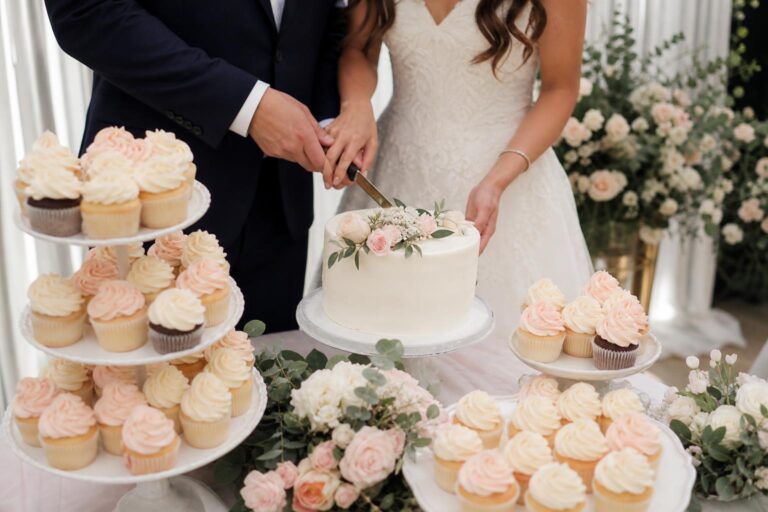
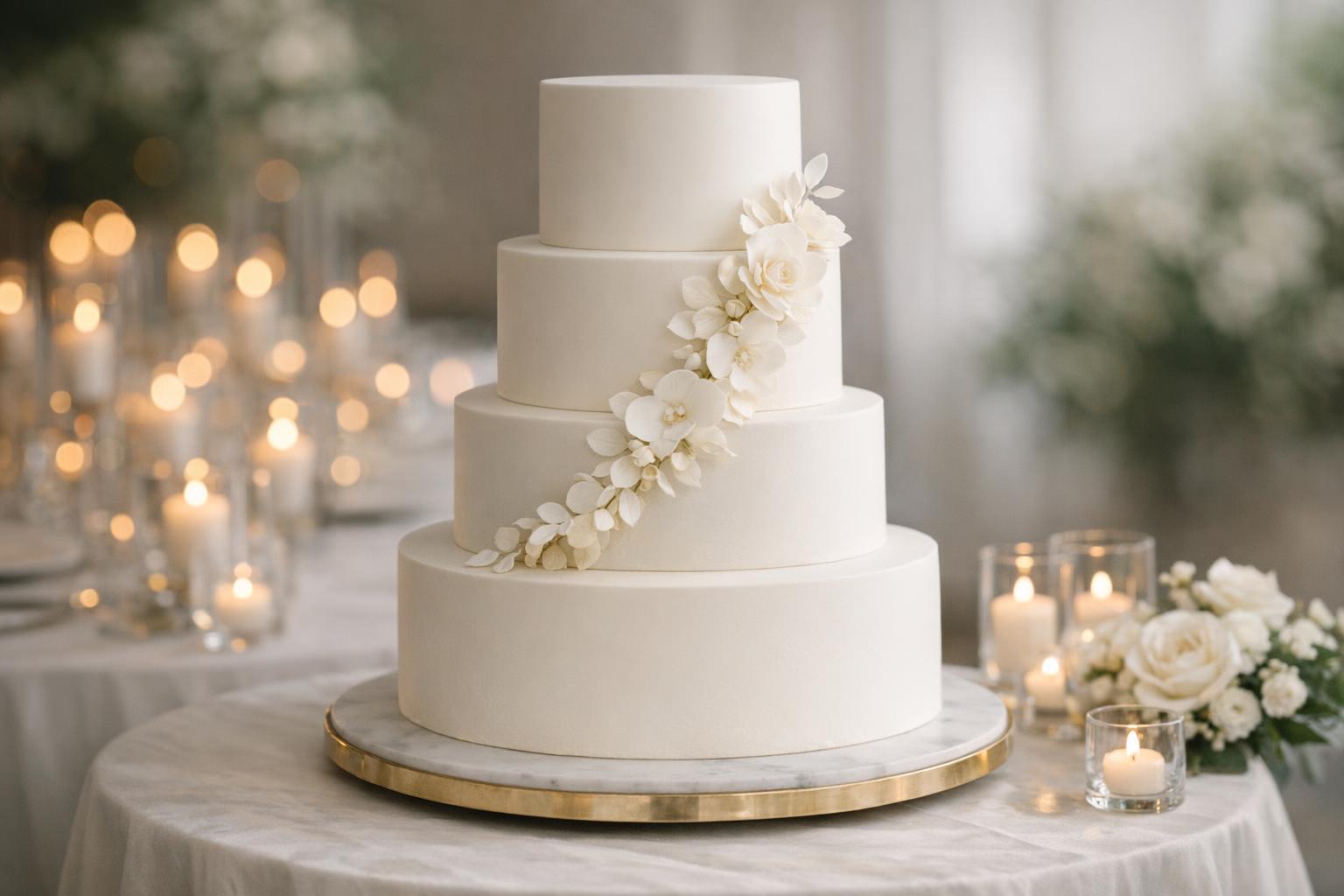
Floral elegance is less about “more flowers” and more about placement—like a bouquet designed by a stylist who understands negative space. The silhouette can stay classic and tiered, while the florals create movement: a gentle asymmetry, a cluster on one side, or a controlled cascade that guides the eye.
This is where floral designs and sugar flowers become interchangeable tools. Fresh florals bring a natural softness; sugar flowers bring control and longevity, especially for intricate blooms. Either way, the palette tends to be bridal—white, ivory, blush, and other pastels—often grounded with greenery so the design reads “garden” rather than “busy.”
Why it fits the aesthetic: it translates the ceremony florals directly into the dessert moment. If your wedding styling includes garden blooms on the tables or an arch at the ceremony, this look makes the cake feel like it belongs in the same world—an intentional continuation rather than a separate centerpiece.
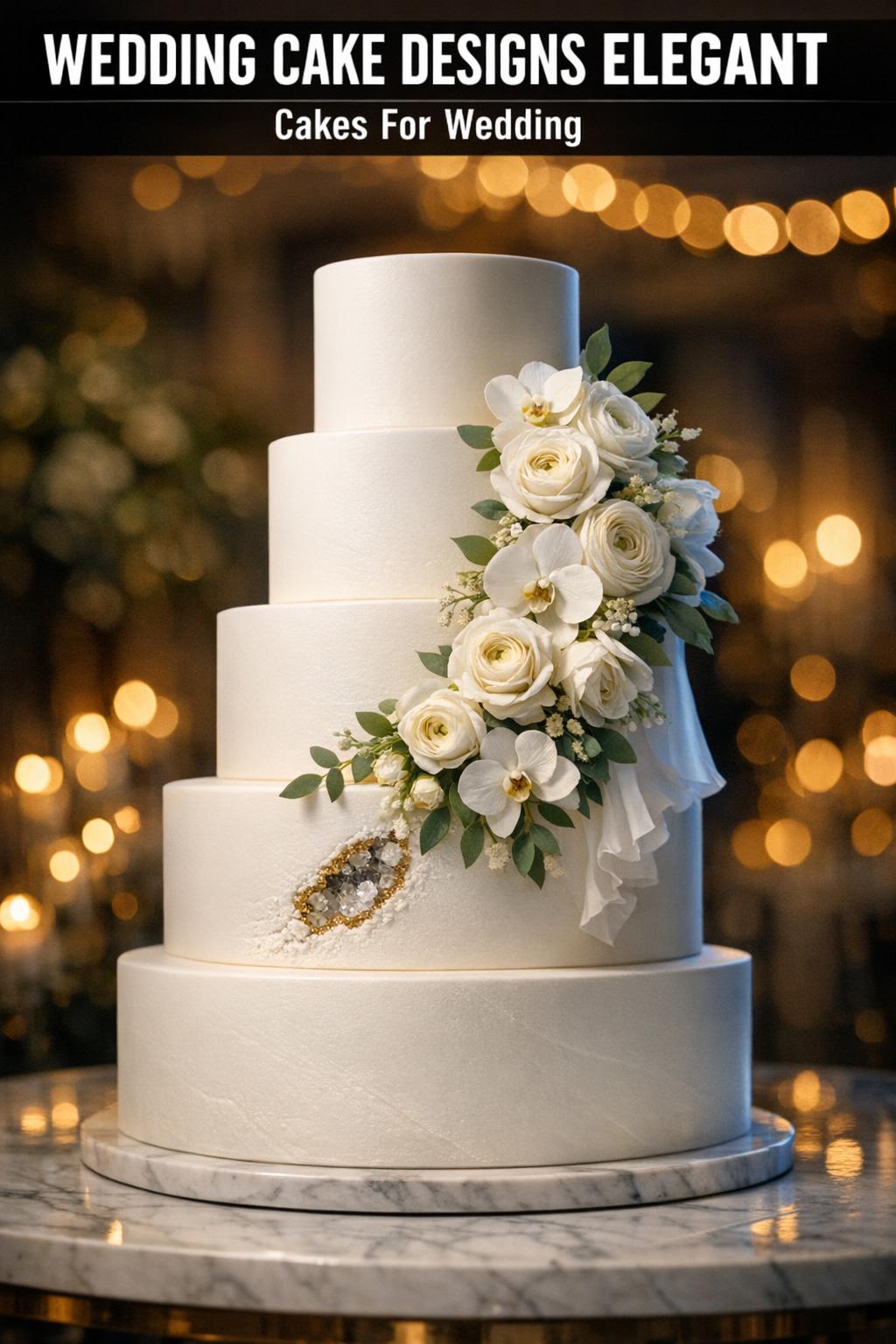
Style tip: keep florals balanced, not heavy
For an elegant result, treat florals like jewelry. Choose one “hero” floral moment—top tier cluster, mid-tier wrap, or a side cascade—and let the rest of the cake breathe. Too many flower groupings can make even expensive work look visually cluttered, especially in photos taken from a distance.
Look: lace and ruffles—fabric-inspired detailing for bridal nostalgia
This look feels like a veil turned into dessert: romantic, soft, and slightly vintage without becoming themed. The silhouette is usually tiered and traditional, but the surface becomes the statement through lace-like patterns, delicate ruffles, or a combination of both.
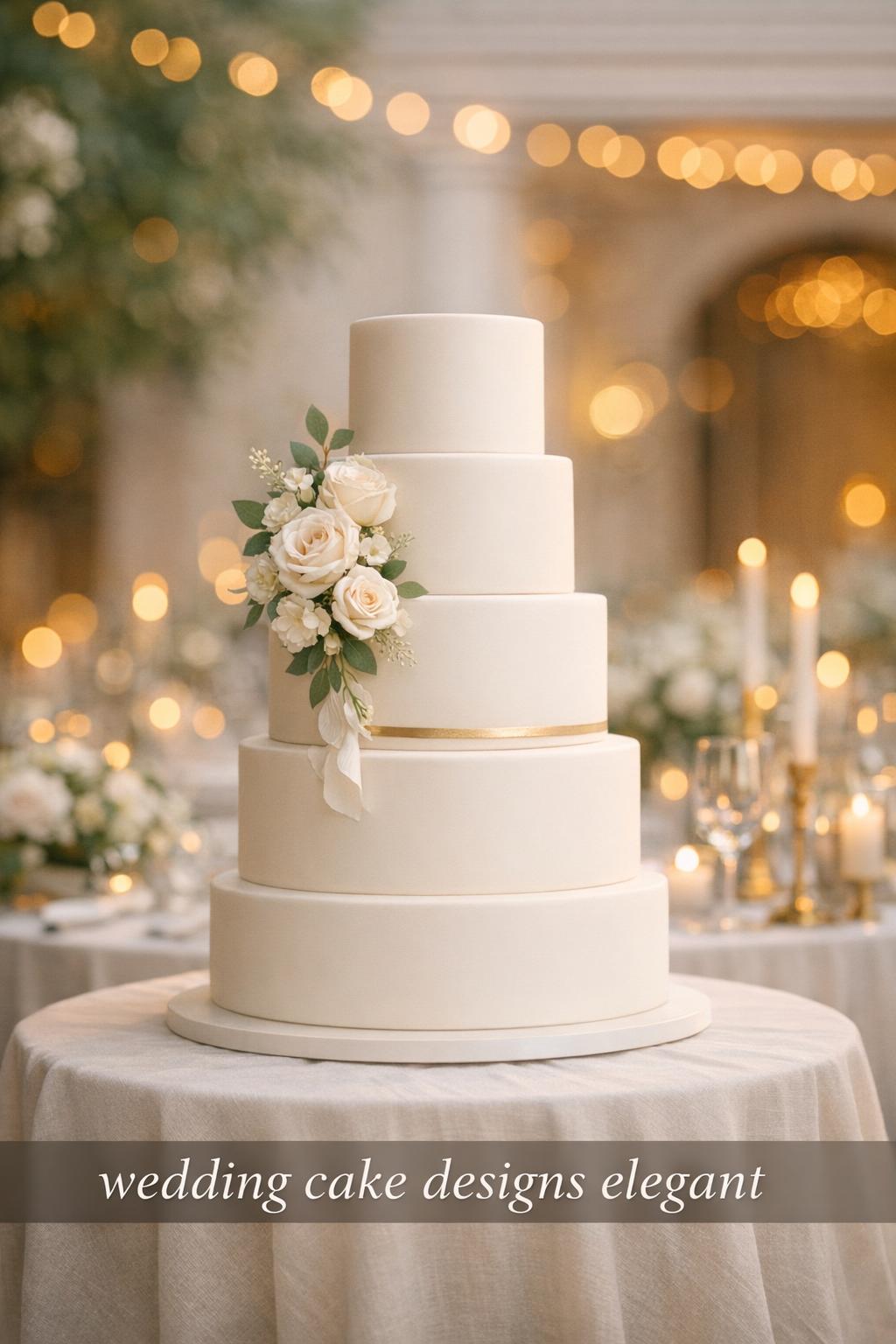
Lace detailing works beautifully on white and ivory cakes where shadows can define the pattern. Ruffles add movement and a couture feel—especially when they’re fine and consistent rather than thick and heavy. The most elegant versions keep the color palette restrained and use texture as the focal point.
- Key design cues: lace impressions, delicate ruffle texture, tonal palettes
- Best pairing: romantic ceremonies, traditional venues, bridal styling with lace or tulle
- Texture note: repeating patterns look polished; random patterns can look unplanned
Why it fits the elegant wedding cake identity: it creates detail without needing extra color or overt decoration. Lace and ruffles photograph beautifully in soft venue lighting, making this a reliable choice when your reception style leans romantic and refined.
Look: geode and metallic accents—modern luxe with a controlled edge
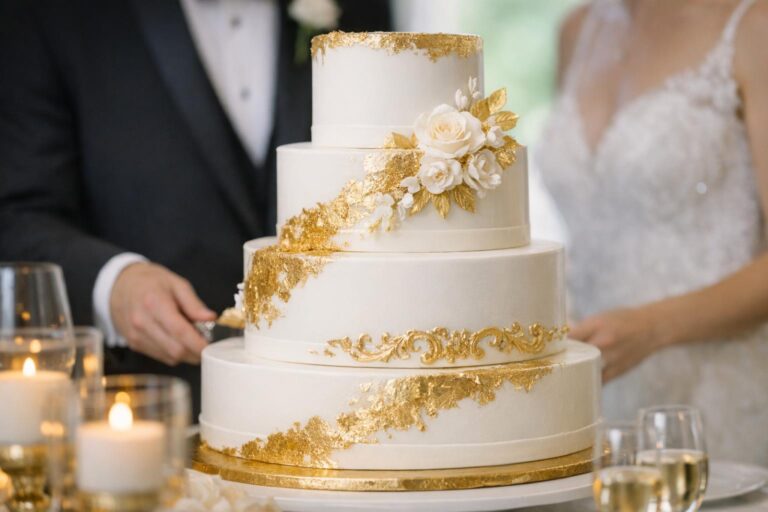
Geode design and metallic accents bring a fashion-forward mood: a little dramatic, a little editorial, but still elegant when used with restraint. The silhouette can remain classic and tiered while a single “statement” section—often a geode-style opening or a metallic panel—creates contrast and depth.
The key is to keep the surrounding palette calm so the luxe detail feels intentional. Whites, ivories, and soft neutrals give metallics room to shine. This is also a beautiful answer for couples who want luxury wedding cake ideas without committing to a fully ornate design—because one focused moment can read more expensive than an overload of effects.
Why it fits wedding cake modern elegant styling: it bridges classic formality with contemporary taste. If your venue is sleek or your décor has a modern minimal edge, geode and metallics can connect the cake to that setting without abandoning elegance.
Tips for metallics that still feel elegant
Metallic accents are most sophisticated when they look like highlights, not full coverage. Ask for controlled placement—thin lines, small geometric elements, or a single focal section—so the design doesn’t become visually loud. In reception photos, small metallic moments catch the light and read as “luxury,” while heavy metallic coverage can flatten details.
Look: minimalist sculptural tiers—architectural, clean, and quietly confident
Minimalist cakes are the bridal version of a sleek modern gown: no excess, only shape and finish. The silhouette may be tall and streamlined, with crisp edges or gently curved forms that feel sculptural. The result is serene, modern, and striking—especially in contemporary venues.
Minimalism doesn’t mean “plain.” It means every element has a job. Clean lines, smooth finishes, and restrained color (often white-on-white or ivory) create a gallery-like feel. A single floral accent, a subtle texture band, or a small metallic touch can be enough to make the design feel complete.
- Key design cues: clean lines, modern proportions, restrained decoration
- Best pairing: modern venues, minimalist décor, editorial photography moments
- Design rule: one focal point only—shape, texture, or a small floral/metallic accent
Why it fits a wedding elegant cake: it communicates confidence. Minimalist sculptural cakes feel intentional and high-end because the finish has nowhere to hide. When done well, this is one of the most memorable directions for wedding cakes 2025.
The design language gallery: match motif, texture, and mood
Elegant wedding cakes become easier to choose when you treat them like a style wardrobe: a few core “pieces” (motif, texture, palette) that combine into a cohesive look. If you’re torn between floral designs, lace, geode, or minimalist sculptural forms, choose your anchor first—then let everything else support it.
- If your anchor is florals: keep the finish soft (buttercream texture) and the palette classic (white, ivory, blush, pastels)
- If your anchor is lace or ruffles: stay tonal and let texture be the detail, not color
- If your anchor is geode/metallics: use one statement area and keep the rest calm
- If your anchor is minimalism: focus on proportion and finish, with one restrained accent
This approach helps you avoid a common mismatch: combining too many “statement” ideas at once. An elegant cake is rarely a collection of trends. It’s one clear concept expressed beautifully.
Techniques and materials that make elegance possible
Even the most inspiring cake photo can disappoint if the finish doesn’t translate in real life. When couples bring inspiration to a studio or baker, the most helpful conversations center on techniques and materials: buttercream versus fondant, hand-painted details, sugar art, and how texture is created and maintained through the wedding day.
Buttercream vs. fondant: choosing the right finish for your elegant design
Buttercream is beloved for its softness and the way it captures texture—petal-like movement, gentle ridges, and a romantic, slightly organic finish that suits florals and classic tiers. Fondant is often chosen when the goal is ultra-smooth structure and crisp lines, which can support minimalist sculptural ideas, geometric accents, and certain luxe looks. The trade-off is aesthetic character: buttercream tends to feel more romantic and tactile, while fondant tends to feel more architectural and clean.
A practical way to decide: if your dream cake relies on visible texture (ruffles, lace impressions, soft movement), buttercream often aligns naturally. If it relies on flawless smoothness and sharp edges, fondant may suit the design direction. Either can read elegant when executed with care and restraint.
Hand-painted details and sugar art: elegance through artistry
Hand-painted florals and sugar flowers introduce an artisan quality that feels personal—like custom embroidery on a dress. Painted details can be delicate and minimal, complementing white and ivory bases without shifting the whole palette. Sugar flowers can echo real bouquet blooms with a controlled, lasting finish that remains consistent from ceremony through reception. The most elegant applications feel intentional: one painted panel, a small floral story, or a composed sugar arrangement rather than a full-coverage illustration.
Texture techniques: petals, lace, and marble-inspired finishes
Texture is the recurring language across elegant wedding cake designs—because it creates depth without demanding bright color. Petal textures soften classic tiers; lace textures add bridal romance; marble-inspired movement can support modern luxe moods. The guiding principle is consistency: repeating the same texture logic across tiers looks refined, while mixing unrelated textures can look accidental.
If you’re sharing inspiration with a designer or studio, describe texture in emotional terms as well as visual ones: “soft and romantic,” “clean and sculptural,” “modern luxe,” “quietly classic.” That kind of direction helps the baker translate your preferences into a finish that reads elegant in person and in photos.
Color palettes and theme pairings that keep cakes for wedding celebrations cohesive
Elegant cakes rarely compete with the room; they harmonize with it. That’s why palette choices—white, ivory, blush, pastels, black-and-white elegance, and metallic accents—should be made alongside your overall wedding styling. The best results come when the cake feels like it belongs on your tablescape, near your florals, and under your venue lighting.
Classic white & ivory: the forever palette
White and ivory make texture visible, photograph cleanly, and work across formal and casual settings. This palette is especially strong for classic tiers, lace details, and minimalist designs. If you’re worried it will feel too simple, lean into surface detail—textured buttercream, a satin-smooth finish, or a refined floral cluster that feels like a corsage.
Blush, mauve, and pastels: softness with intention
Pastels bring romance without overwhelming the cake’s structure, especially when used as accents rather than full coverage. They pair beautifully with florals (fresh or sugar) and hand-painted details. The elegance comes from restraint: a gentle wash of color, a floral palette that echoes the bouquet, or a small painted motif that reads as art.
Black-and-white elegance and metallics: evening drama, still refined
Black-and-white styling can feel striking and formal, especially for evening receptions. Metallic accents—used sparingly—can elevate this mood into modern luxe. The success of this palette depends on clean execution and intentional placement; in elegant design, contrast is powerful, so a little goes a long way.
Regional and designer spotlights: how location shapes “elegant” in the U.S.
Even within the same elegant aesthetic, regional preferences influence what feels current. Studios and designers often respond to local venue styles, photography trends, and the formality couples expect. If you’re planning in a major U.S. market—New York City, Los Angeles, or Chicago—bring that context into your cake conversations. It helps your baker recommend proportions, finishes, and motif choices that feel natural for your setting.
For example, a cake that feels perfect for a sleek modern venue may lean into minimalist sculptural forms and crisp finishes, while a garden or floral-forward celebration may favor textured buttercream and composed florals. The same couple could love both; the deciding factor becomes the wedding environment and the mood you want guests to feel when the cake is revealed.
If you’re browsing portfolios from studios or a specific cake artist, look for consistency in their finish work and their signature motifs—floral design, lace detailing, geode accents, or modern minimalism. A designer’s strength matters more than copying a single photo, especially when you want a cake wedding elegant enough to hold up in real life and in photography.
How to choose an elegant wedding cake: the practical planner’s guide
Inspiration is the fun part; choosing the right design is where calm, practical planning protects your vision. The most common stress comes from realizing late that a design may require more time, more artisan work, or a different finish than you assumed. A little structure early on keeps everything graceful.
Budgeting for elegance (what you’re really paying for)
Elegant doesn’t always mean maximal, but it often means meticulous. Intricate textures, sugar flowers, hand-painted details, and precise finishes are labor-driven. If your heart is set on artisan decoration, decide where you want the investment to show: a single focal tier, a sugar flower arrangement, or an elevated texture technique across the full cake. One intentional statement can feel more luxurious than spreading the budget across too many small ideas.
Lead times, tastings, and scheduling: what couples forget
Tastings and design consultations are where you confirm not only flavor preferences but also finish expectations. Bring a small set of images that share one clear theme—classic white texture, floral elegance, minimalist sculptural, lace/ruffles, or geode/metallics—so the conversation stays focused. Scheduling matters too: elegant finishes depend on calm production time, and last-minute changes can compromise the refinement you’re trying to achieve.
Photogenic design: how your cake reads in editorial-style photos
Couples planning wedding cakes 2025 are often thinking like editors—how will this look under venue lighting, in wide shots, and in close-ups? Texture is your friend here. White-on-white cakes can look stunning when the texture creates shadows; florals add scale and romance; metallic accents catch light for a luxe highlight. Ask your baker how the finish performs under warm reception lighting and whether the details will still read from across the room.
Quick tips to keep your cake wedding elegant on the day
- Choose one hero motif (floral, lace, geode, minimalist sculptural) and let everything else support it.
- Match the cake palette to your overall styling: white/ivory for timeless, pastels for softness, black-and-white or metallic accents for evening elegance.
- Prioritize finish quality over extra decorations; smoothness and consistency are what guests notice first.
- Plan for the photo moment: where the cake will sit, what lighting it will have, and how guests will approach it.
When these basics are handled, you can enjoy the reveal—because the cake doesn’t just look elegant, it feels effortless.
Common styling mistakes that can make an “elegant” cake feel less refined
Elegant design is surprisingly easy to disrupt—not because the ideas are wrong, but because too many ideas are competing at once. The most common issue is mixing multiple statement motifs: florals plus heavy ruffles plus metallic accents plus dramatic geode elements. Each can be beautiful, but together they can dilute the sophistication you’re aiming for.
Another frequent mismatch is choosing a minimal, modern silhouette but adding decorations that belong to a different story—like overly dense florals or inconsistent texture. If your vision is wedding cake modern elegant, keep the design language consistent: clean lines, controlled accents, and deliberate negative space. Elegance shows up in the edit as much as it shows up in the decoration.
Finally, don’t underestimate proportion. A cake can have the right palette and the right texture, but if the tiers feel awkwardly scaled, it won’t read as refined. When in doubt, ask for classic tiered proportions and one beautifully executed detail—an approach that nearly always lands as sophisticated wedding cake design.
How to recreate the look: build your own “elegant cake outfit”
Think of your cake the way you’d build a bridal look: a base silhouette, a fabric (finish), a palette, and accessories (details). This is the easiest way to communicate with a studio or designer without getting lost in dozens of inspiration photos.
- Silhouette: classic tiered (timeless) or minimalist sculptural (modern)
- Finish: textured buttercream (romantic) or smooth fondant (architectural)
- Motif: florals (fresh or sugar), lace/ruffles, or geode/metallic accents
- Palette: white/ivory, blush/pastels, or black-and-white with metallic touches
- Final edit: remove one detail you don’t need, then refine what remains
This method keeps the decision process calm and clear—especially helpful when you’re choosing cakes for wedding celebrations with many moving pieces, from florals to venue décor to photography priorities.
Inspiration moments: where each elegant cake style shines
Elegant cakes are versatile, but each motif has a setting where it feels most natural. Classic white texture is effortless in almost any venue, especially traditional ceremonies. Floral designs feel destined for garden weddings and romantic receptions. Lace and ruffles sing in soft, candlelit rooms and pair beautifully with bridal fashion that includes lace or tulle. Geode and metallic accents feel right in modern spaces or when the décor includes luxe highlights. Minimalist sculptural cakes shine when the room itself is clean and architectural.
If you’re feeling stuck between two directions, let your venue and your overall styling decide. The goal is not to pick the “best” trend; it’s to pick the design that looks inevitable in your wedding photos—like it was always meant to be there.
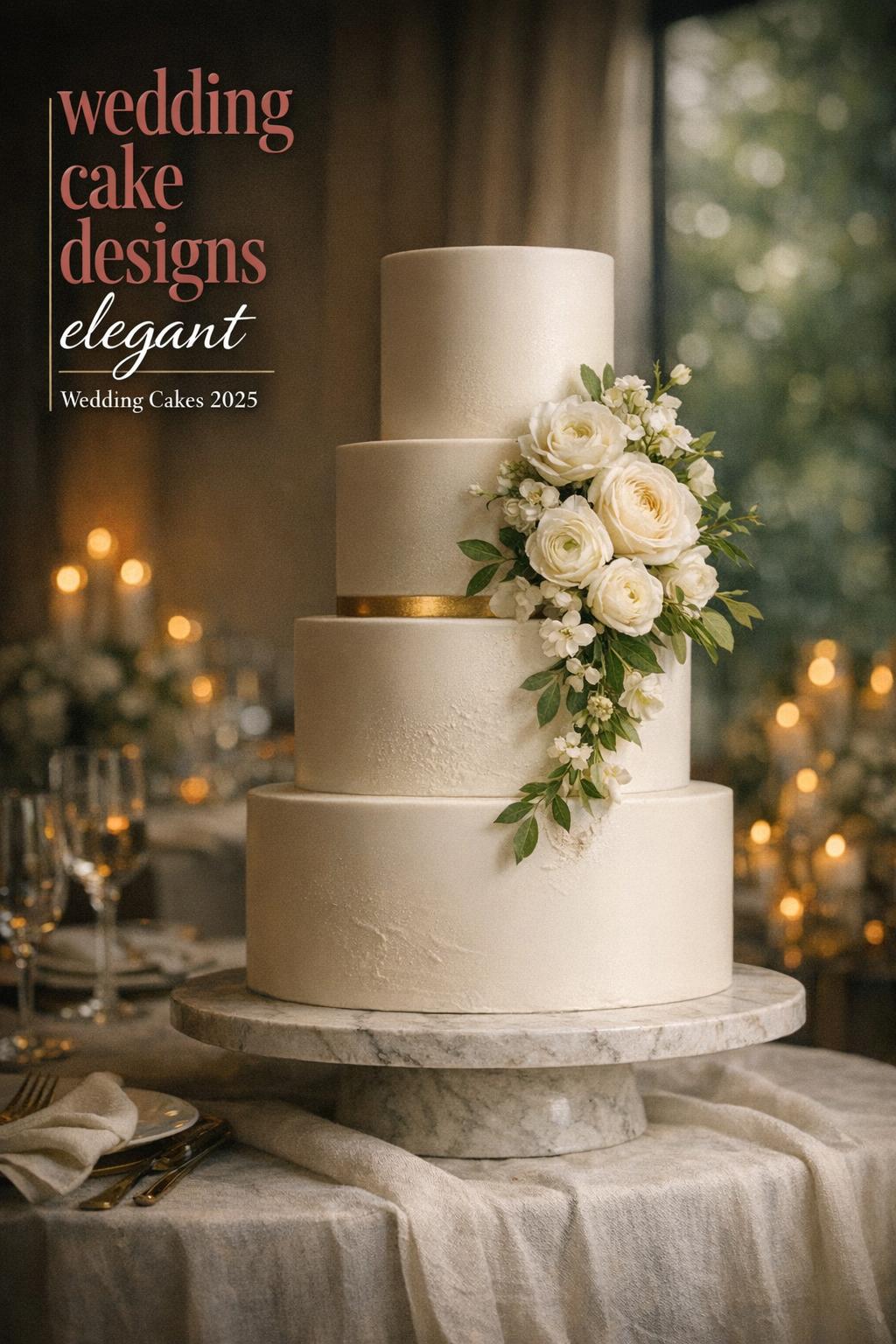
FAQ
What makes a cake design elegant?
An elegant cake is defined by balanced proportions, a high-quality finish (smooth fondant or refined buttercream), and tasteful, restrained details such as subtle texture, composed florals, delicate lace/ruffles, or controlled metallic accents.
How many tiers should an elegant wedding cake have?
Elegant wedding cakes commonly use a classic tiered silhouette, but the “right” number of tiers depends on your visual goal and reception setting; a smaller number of well-proportioned tiers with a flawless finish often reads more refined than adding tiers just for height.
What textures are best for elegant wedding cakes?
Textured buttercream, lace-like detailing, delicate ruffles, and marble-inspired finishes are popular choices because they add dimension without relying on bold color, and they tend to photograph beautifully under reception lighting.
Can a minimalist cake still feel like a wedding elegant cake?
Yes—minimalist sculptural cakes can feel deeply elegant when the silhouette is intentional, the lines are clean, and the finish is immaculate; a single restrained accent (a small floral detail or subtle metallic highlight) can complete the look without breaking the minimal mood.
How do I combine florals with an elegant cake without making it look busy?
Choose one floral moment—such as a composed cluster or a controlled cascade—and keep the rest of the cake calm; limiting the palette to classic wedding tones like white, ivory, blush, or other pastels helps the florals feel curated rather than crowded.
Are geode and metallic accents considered elegant or too trendy?
Geode and metallic accents can be elegant when used as a single, controlled statement within a calm palette, especially alongside classic tier proportions; the key is restraint so the luxe detail feels like punctuation rather than the entire design.
Should I choose buttercream or fondant for a cake wedding elegant look?
Buttercream is ideal for soft, romantic texture and floral-forward styles, while fondant supports ultra-smooth finishes and crisp, modern lines; both can look elegant, so the best choice depends on whether your design priority is tactile texture or architectural smoothness.
How can I make sure my cake looks good in photos?
Prioritize finish quality and texture, keep details consistent with one main motif, and consider where the cake will sit in the venue lighting; white-on-white textures, composed florals, and subtle metallic accents tend to read clearly in both wide shots and close-ups.
How do I describe my vision to a baker or studio without overwhelming them?
Bring a small set of inspiration images that share one clear theme (classic textured white, floral elegance, lace/ruffles, geode/metallics, or minimalist sculptural) and explain the mood you want—romantic, modern luxe, or timeless—so the designer can translate your preferences into a cohesive, elegant plan.