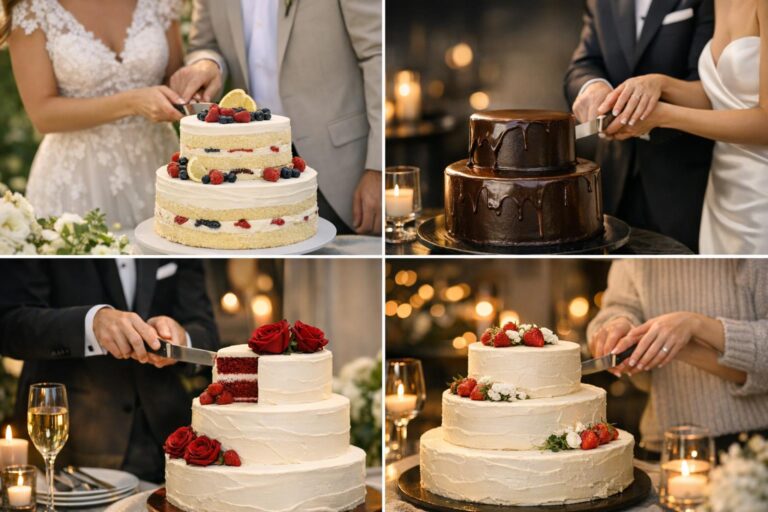
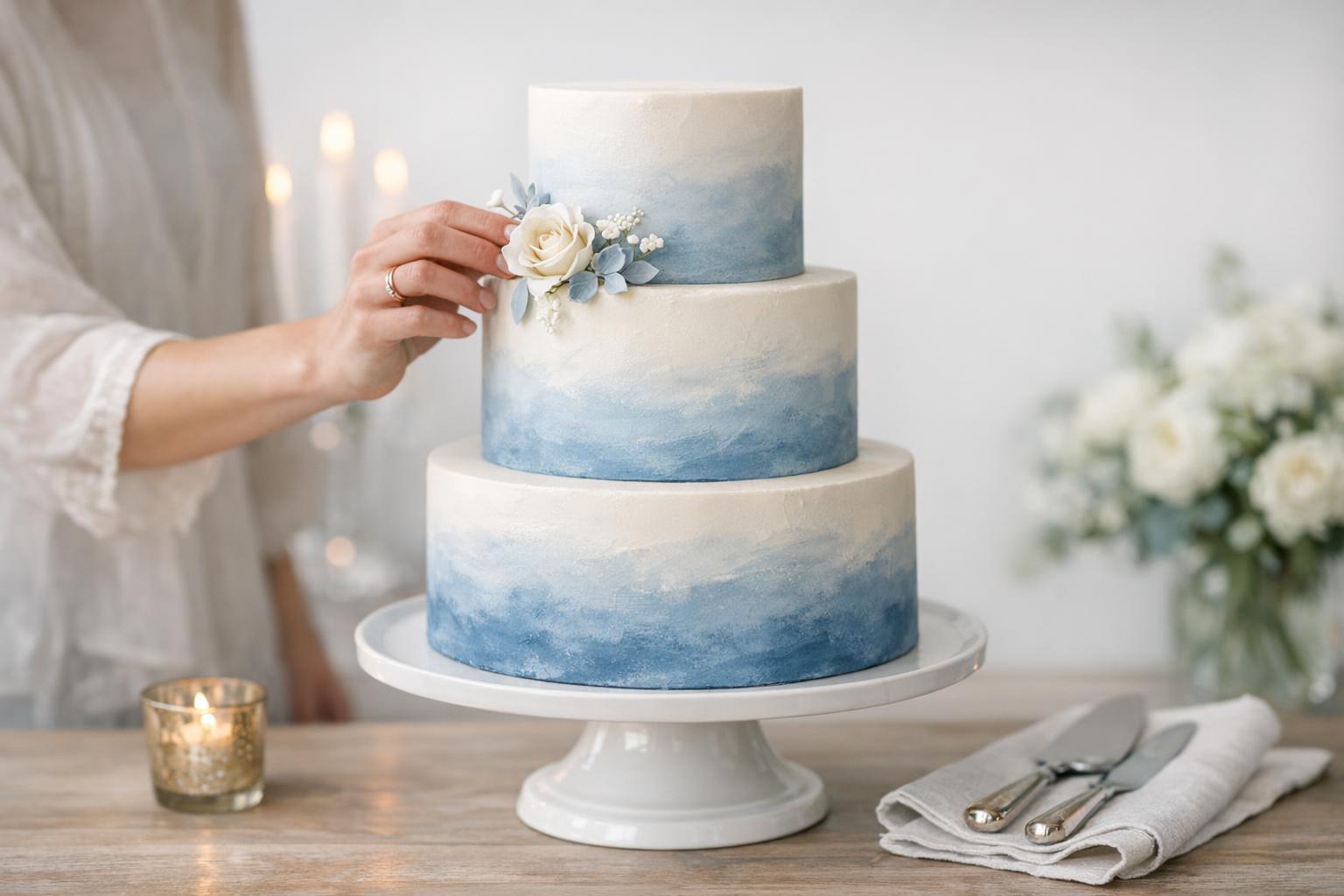
A Stylist’s Guide to a Blue Wedding Cake That Photographs Well
The moment you choose a blue wedding cake, you’re doing more than picking a dessert—you’re setting a mood. Blue can feel coastal and airy, regal and formal, soft and romantic, or modern and graphic depending on the shade and finish. But that range is also the challenge: the same color that looks dreamy in a photo can turn unexpectedly bold under reception lighting, or clash with florals, bridesmaid dresses, and table linens if the tone isn’t coordinated.
Couples often find themselves stuck between two fears: a cake that feels “too themed” and cartoonish, or a cake that’s so subtle it reads as plain white once it’s cut and served. Add in practical constraints—venue temperature, frosting stability, delivery timelines, and whether you want fresh flowers or painted details—and your cake decision can suddenly feel like a styling puzzle with real stakes.
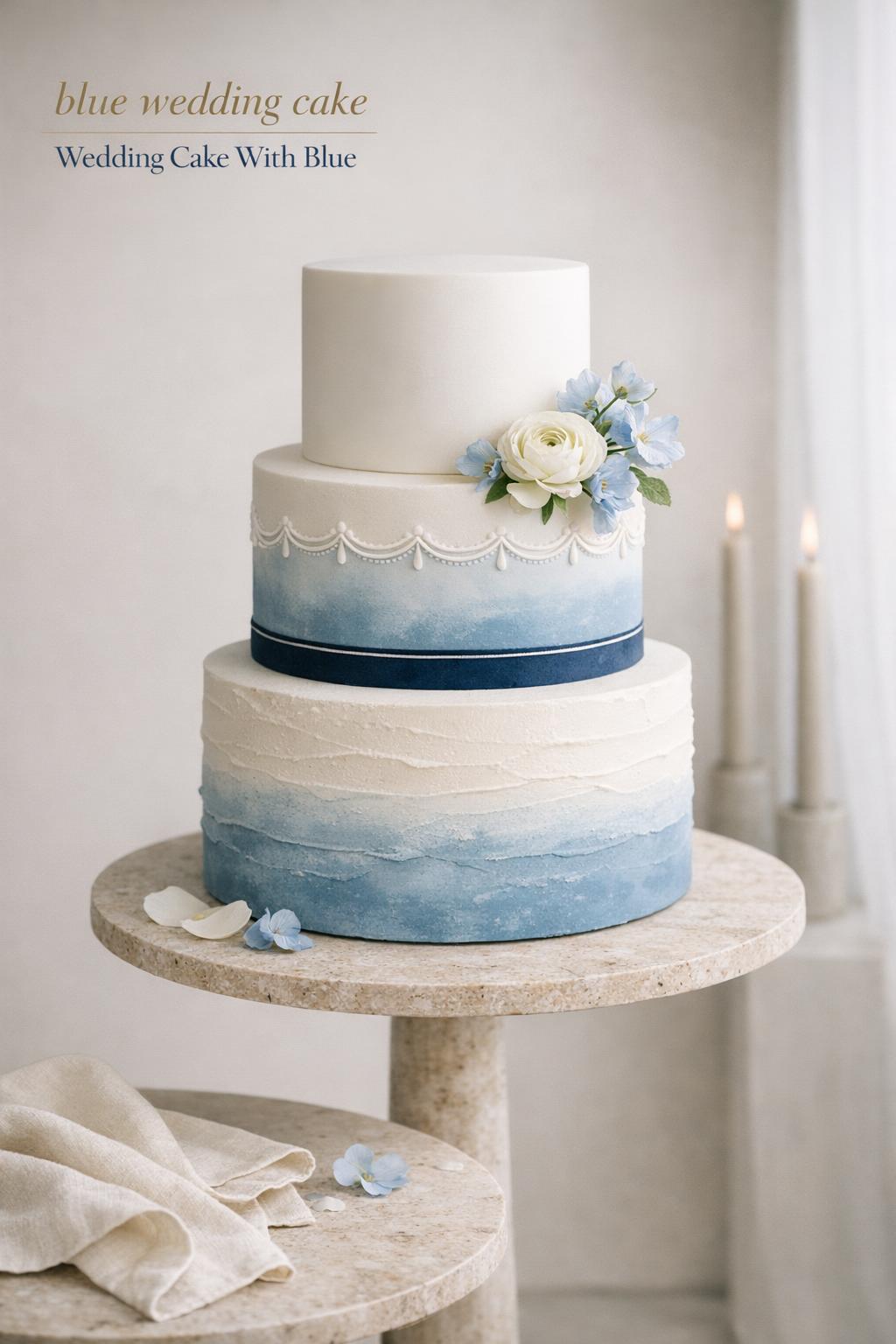
This guide solves that puzzle with a wedding-stylist approach. You’ll learn how to choose the right shade of blue, how to balance color with texture, and how to match a wedding cake with blue to your venue and overall aesthetic. You’ll also find practical “outfit-style” solutions—think of them as complete looks—for everything from dusty blue wedding cakes in a romantic garden setting to a crisp, modern blue wedding cake for a city reception.
Understanding the styling challenge of a blue wedding cake
Blue is a powerful color in wedding design because it can behave like a neutral or like a statement, depending on saturation. A whisper-soft dusty blue theme wedding cake can read as timeless and calming. A vivid cobalt or deep navy can feel dramatic—beautiful, but harder to integrate if the rest of the décor leans delicate. That “volume control” is why couples often struggle: you’re not just picking a color, you’re choosing how loudly the cake speaks in the room.
Turn wedding inspiration into a plan you can actually follow.
Zarellea brings your guest list, budget, vendors, and day-of details into one shared space — so no beautiful idea gets lost in the shuffle.
There’s also the reality of lighting and photography. Natural daylight in an outdoor ceremony space can make pale blue look almost white. Warm reception lighting can shift some blues toward green or gray, especially when paired with ivory linens. If you’re planning those intimate candlelit tables, you’ll want a blue that still reads blue when the sun goes down.
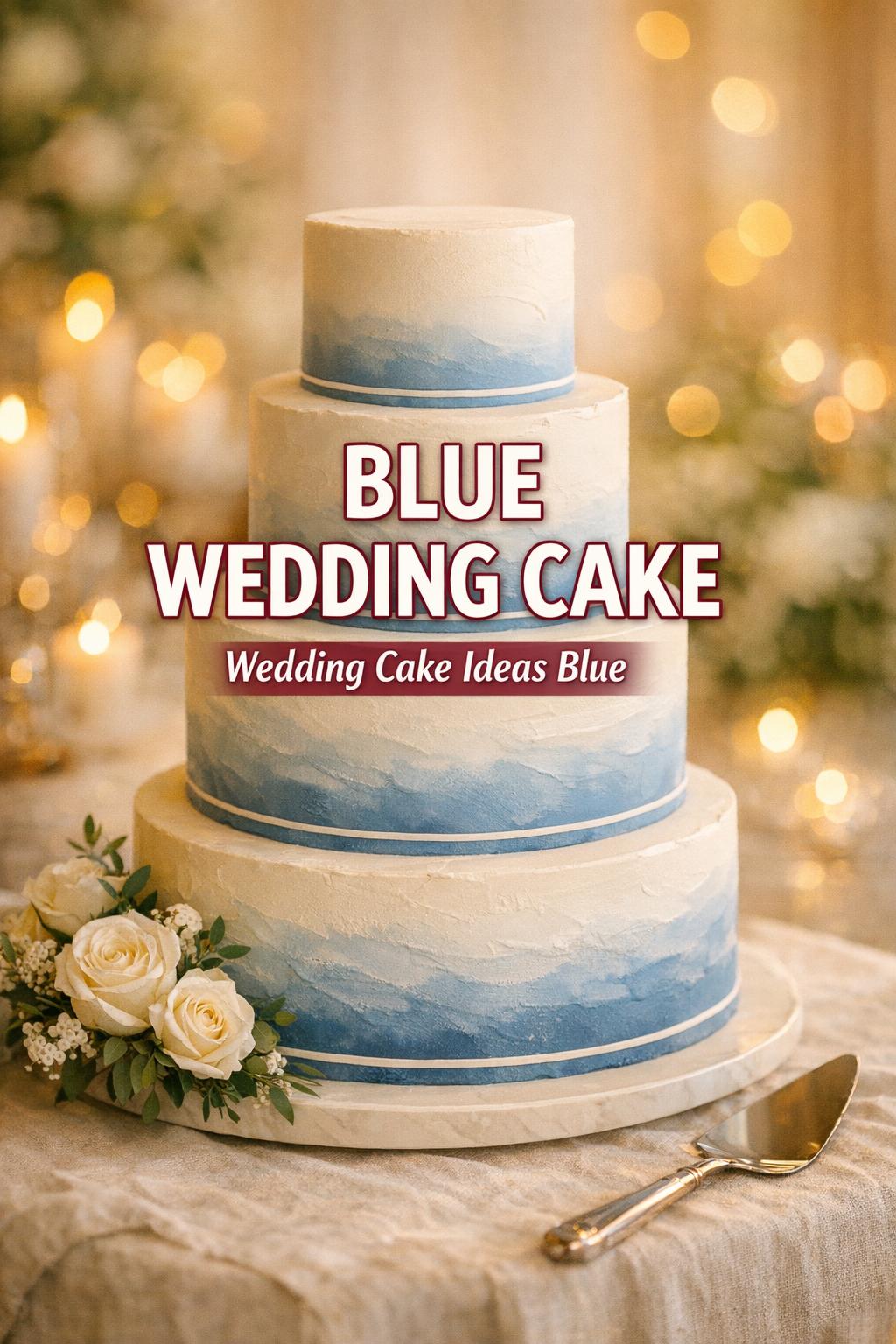
Finally, cakes are not flat swatches. Frosting texture, metallic accents, sugar flowers, and tier height change how color is perceived. A smooth finish makes color look bolder; textured buttercream can soften it. This is why “wedding cake ideas blue” should always include not just shade choices, but finish choices too.
Key dressing principles—translated into cake styling logic
A Problem-Solving Fashion Guide usually starts with fabric, proportion, and versatility. For cakes, the parallel principles are shade, scale, and cohesion. When you apply these three, you get a blue wedding cake that feels intentional—never accidental.
Principle 1: Choose a “base neutral” so blue has a place to land
In outfit styling, a bold color looks best grounded by neutrals. On a cake, the same idea applies: white, ivory, or very pale blue gives the eye a resting point. This is why a wedding cake with blue often looks more elevated when blue appears as an accent (brushstrokes, piping, florals) rather than covering every tier in a single flat shade.
Principle 2: Control saturation like you’d control a statement piece
Think of saturation the way you’d think about a bright blazer: it can be the hero, but then everything else should be quieter. If you want a deep blue wedding cake, simplify the décor around it—clean lines, minimal competing colors, and fewer mixed florals. If your wedding décor is already layered (patterned linens, colorful flowers, varied centerpiece heights), dusty blue wedding cakes tend to blend more smoothly.
Principle 3: Use texture the way you’d use fabric
Matte, textured buttercream feels romantic and soft—like a chiffon dress. Smooth fondant can feel architectural and sleek—like satin. Blue amplifies these signals. A dusty blue theme wedding cake in textured buttercream reads airy and vintage; a smooth navy cake reads formal and modern. Neither is “better,” but each solves a different styling problem.
Principle 4: Repeat blue elsewhere—subtly—so the cake doesn’t feel random
The most common reason a blue wedding cake feels out of place is that it’s the only blue element in the entire wedding. You don’t need to overwhelm the design, but a soft echo matters: a ribbon on the bouquet wrap, blue in the stationery, blue taper candles, or a hint of blue in the tablescape. This is the same “repeat your accent color” trick stylists use to make an outfit look finished.
Shade decisions: from airy dusty blue to dramatic navy
Before you choose piping patterns or flowers, decide what blue should feel like. This is the emotional decision point: are you aiming for serene romance, coastal freshness, moody elegance, or modern contrast? Once you name the feeling, the shade becomes much easier.
Dusty blue wedding cakes for soft romance
Dusty blue wedding cakes solve a very specific problem: you want color, but you don’t want the cake to steal attention from the couple. Dusty blue is gentle and photograph-friendly, especially with white or ivory details. It works beautifully in garden weddings, spring celebrations, and classic ballroom receptions where you want the cake to look refined rather than trendy.
A dusty blue theme wedding cake for cohesive, calm styling
If your overall design is built around calming tones—soft whites, pale greens, muted florals—a dusty blue theme wedding cake becomes a natural extension of the palette. The styling win here is harmony: the cake supports the room rather than competing with it. This is especially useful when your venue already brings visual character (historic architecture, ornate interiors, dramatic landscaping), because the cake can look elegant without fighting the setting.
Mid-tone blue for modern-but-warm weddings
A clearer mid-tone blue can be the “sweet spot” when you want the cake to read distinctly blue in photos but still feel approachable. It pairs well with clean décor and minimalist florals. If you’re drawn to wedding cake ideas blue that feel fresh and current without leaning too bold, mid-tone blue often delivers that balance.
Deep navy for formal drama (with guardrails)
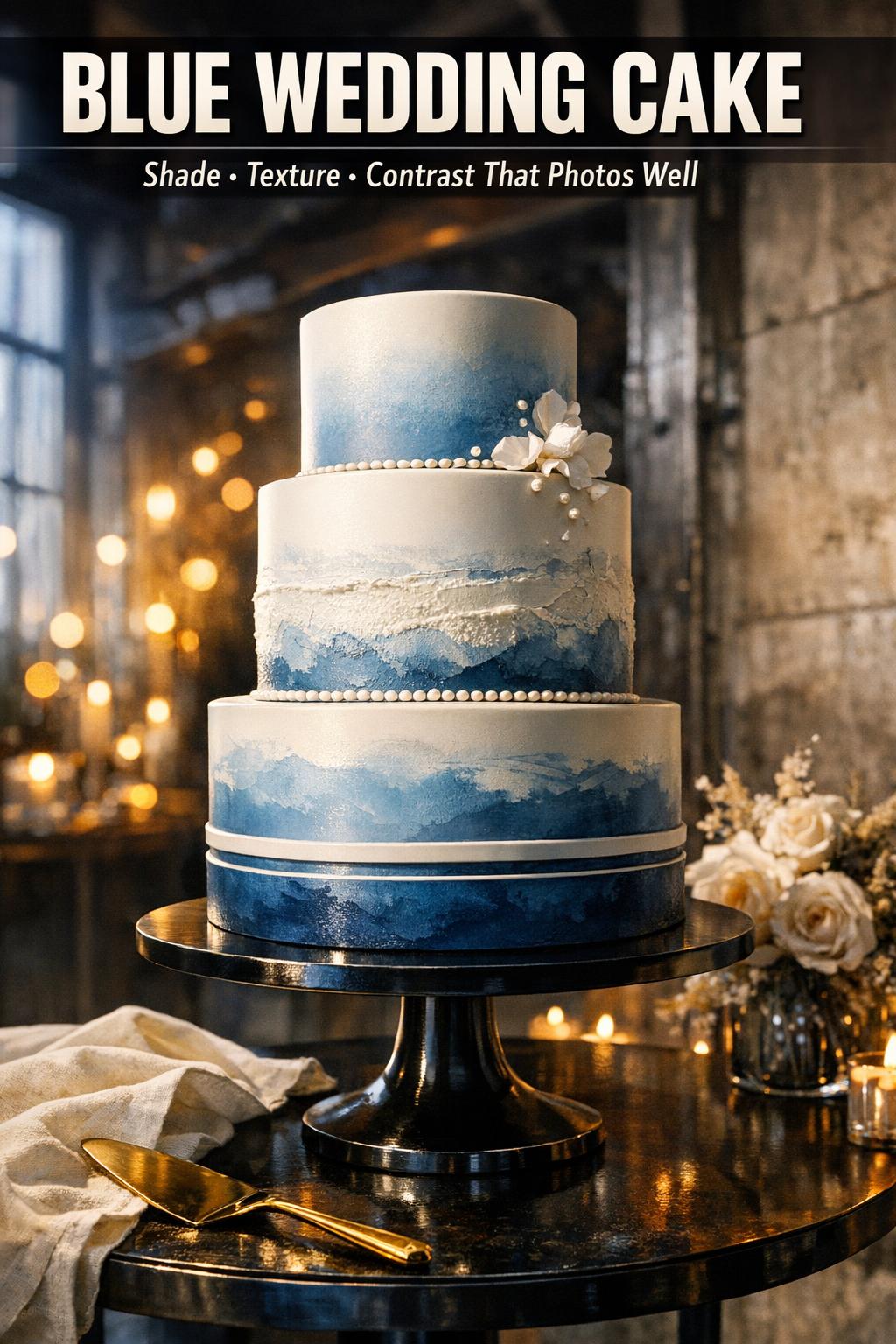
Deep navy can look stunning, especially for evening receptions. The guardrail is contrast: without lighter elements, very dark cakes can photograph as nearly black. If you love navy, consider balancing it with white tiers, crisp piping, or light floral details so the shape and craftsmanship remain visible from across the room.
Outfit solutions—complete “looks” for a wedding cake with blue
Instead of thinking in isolated features (a shade here, a flower there), style your cake the way you’d style a full outfit: base, accent, texture, and finishing details. These solutions are designed to help you choose a blue wedding cake that makes sense for your venue, your schedule, and the feeling you want when guests turn toward the cake table.
Outfit solution: The airy garden look (dusty blue + soft white)
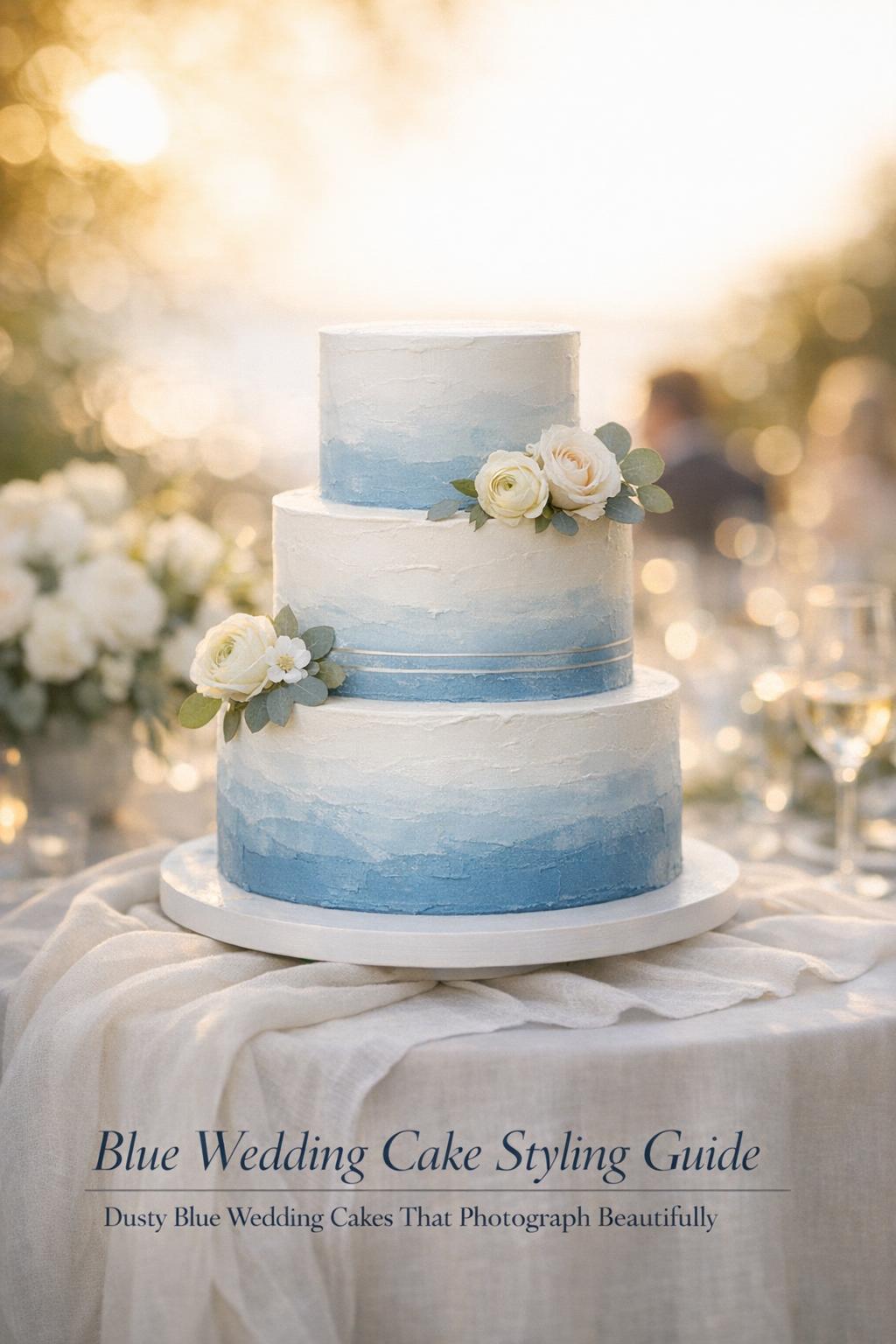
This is the solution for couples who want romance without fuss. Picture a late-afternoon ceremony, a breeze through trees, and a reception that feels gentle and luminous. Use dusty blue as a wash—either on one tier or as watercolor-like movement—then keep the rest white or ivory. The styling logic is the same as pairing a soft blue dress with nude shoes: the blue reads as intentional, but it never dominates.
- Base: white or ivory tiers as the “neutral foundation”
- Blue: dusty blue brushwork, soft ombré, or delicate piping
- Finish: textured buttercream to keep the mood romantic
- Best for: garden weddings, daytime receptions, classic romantic themes
This approach also solves a practical problem: subtle blue details tend to be easier to coordinate with florals and bridesmaid dresses because they don’t require an exact shade match to look cohesive.
Outfit solution: The coastal clean look (blue accents + crisp lines)
If your wedding day includes bright natural light—especially near water—or you’re planning a breezy, modern celebration, focus on clean structure and controlled accents. Think of it like a white linen outfit with a single blue scarf: fresh, confident, never cluttered. A wedding cake with blue works beautifully here when blue is applied in defined lines, neat piping, or minimal painted detail.
The key is restraint. Too many decorative elements can make a coastal-inspired cake feel busy. Instead, let the negative space (white frosting) do the elegant work.
Outfit solution: The romantic evening look (deep blue + luminous contrast)
For an evening reception—especially one with candlelight—deep blue can feel like a velvet backdrop. The cake becomes a centerpiece, the way a dramatic gown changes the energy of a room. The styling challenge is keeping details visible under warm light, so build in contrast: light piping, white tiers, or brighter accents that make the silhouette and edges read clearly.
If you’re choosing a bold blue wedding cake, place it intentionally: a well-lit cake table, a backdrop that doesn’t compete, and a plan for photos. In real-world weddings, the “wow” is often lost when the cake is tucked into a dim corner where the color flattens.
Outfit solution: The modern gallery look (graphic blue + minimalist décor)
This solution is for couples who love contemporary design. Use blue as a graphic element—clean blocks, intentional brushstrokes, or structured banding—then keep everything else pared back. The cake reads like modern art, but only if the rest of the styling supports it: a simple stand, minimal flowers, and uncluttered tablescape choices.
The trade-off is that modern cakes show imperfections more clearly. If you want ultra-clean edges, you’ll need a baker whose finishing work matches your vision. When it’s done well, the payoff is a blue wedding cake that looks effortlessly editorial in photos.
Outfit solution: The vintage softness look (dusty blue theme wedding cake with delicate detail)
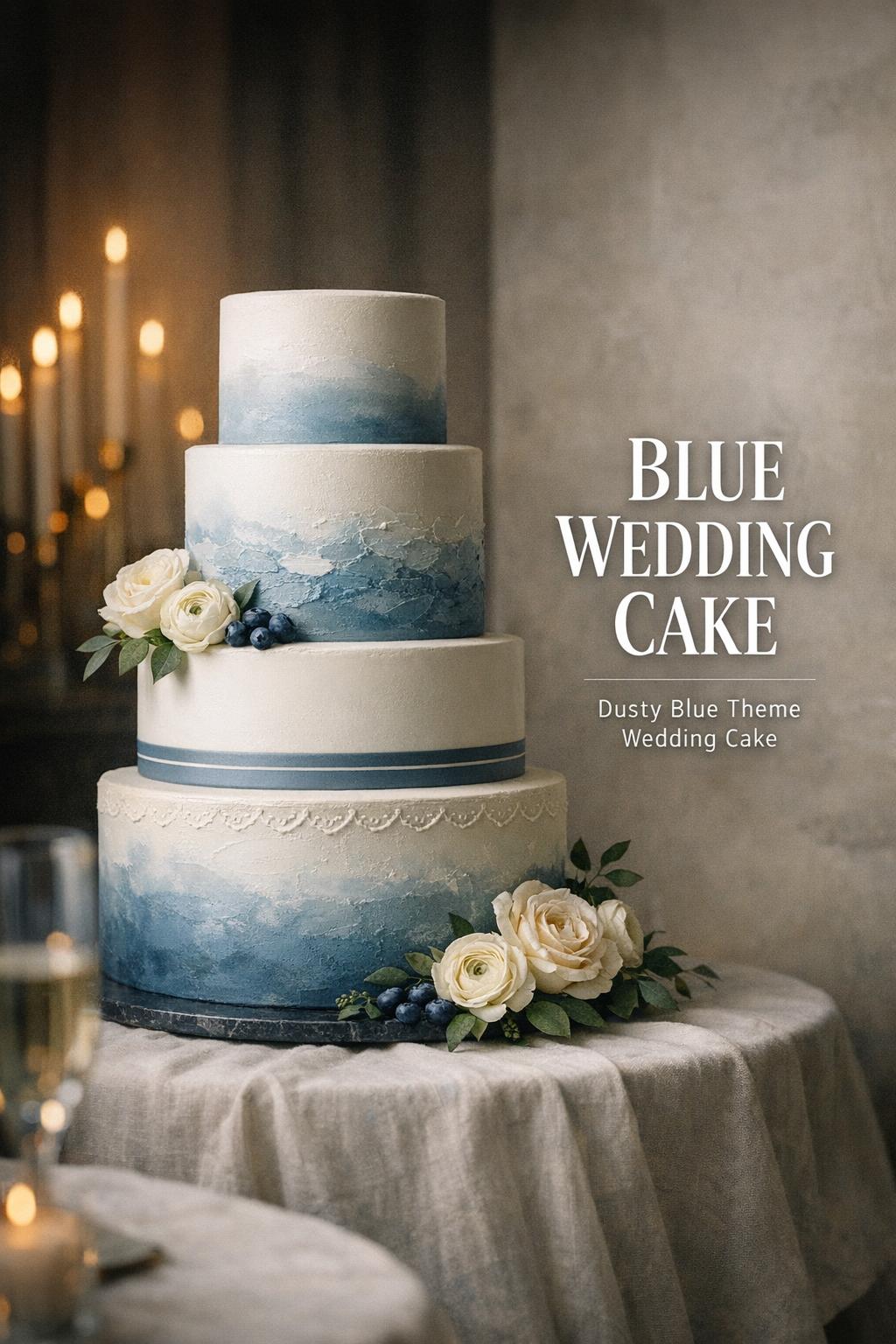
Vintage-inspired styling is all about softness—nothing harsh, nothing overly glossy. Dusty blue wedding cakes shine here because they naturally feel “worn-in” in the best way, like heirloom silk. Add delicate piping, gentle ruffles, or subtle texture to evoke a romantic past without feeling costume-like. The cake becomes part of the storytelling: a nod to tradition, but still unmistakably yours.
This is also a practical win if you’re blending families and traditions and want a design that feels universally appealing. Dusty blue tends to be a crowd-pleaser: distinctive enough to feel special, soft enough to feel classic.
How to match wedding cake ideas blue to your venue and season
A cake doesn’t exist in isolation; it lives inside a venue with its own light, temperature, and color story. Matching your blue wedding cake to your setting is how you avoid that “pretty cake, wrong room” feeling.
Outdoor daytime weddings: protect subtle blues from washing out
Outdoor daylight makes everything look lighter. If you’re choosing a pale or dusty blue theme wedding cake, you may want slightly stronger blue accents than you think you need so the camera can capture the tone. Texture also helps—soft ridges and painterly strokes create shadows that keep the color readable even in bright sun.
Indoor ballrooms: balance formality with warmth
Ballrooms often have warm lighting and reflective surfaces. A wedding cake with blue can feel especially elegant here when you keep the palette controlled: blue plus white/ivory, with minimal additional colors. If the room already has gold-toned fixtures or warm walls, avoid choosing a blue that turns muddy under yellow light—test the shade in similar lighting if possible.
Industrial or urban spaces: let blue soften the edges
In modern city venues—brick walls, concrete floors, metal beams—blue can add romance without forcing a fully “rustic” or “glam” direction. Mid-tone or dusty blue wedding cakes often bring a calming softness to those sharper architectural lines, especially when paired with clean, minimal décor.
Seasonal mood: choose blue that feels right for the calendar
Even if you’re not planning a seasonal theme, guests feel seasonality in lighting, flowers, and wardrobe. Softer blues tend to feel natural in spring and summer. Deeper blues often feel right for late fall and winter evenings. The goal isn’t rules—it’s avoiding the subtle disconnect of an icy, stark blue at a warm, candlelit celebration, or a very dark navy in a bright midday garden.
Practical planning details that keep a blue wedding cake beautiful all day
Beyond aesthetics, your cake has to survive the timeline: delivery, setup, photos, cutting, and service. A blue wedding cake can be just as dependable as any other cake, but blue introduces a planning nuance—color visibility is sensitive to smudges, condensation, and texture changes. A little preparation keeps the design crisp.
Plan the cake table like a “styling set”
Where the cake sits matters. A bright window behind the cake can make blue read washed out; a dark corner can make navy disappear. Choose a spot with flattering light and enough space so guests can admire details. If you’re investing in wedding cake ideas blue with painted accents or delicate piping, you want those details visible, not lost.
Decide how blue will appear after the cake is cut
Couples sometimes forget that most guests see the cake as a slice on a plate, not as a tall centerpiece. If the entire “blue moment” is only on the exterior, consider whether you want a small echo of blue in the slice presentation—perhaps through decoration choices that carry onto served portions. The goal is consistency: guests should still feel the theme when they’re seated.
Give yourself time for a calm setup
Cakes are delicate, and colored details can be easy to mark during handling. A smooth schedule—clear delivery window, a stable table, and minimal last-minute rearranging—protects the finish. This is especially true for a wedding cake with blue accents where any scuff may be more visible than it would be on an all-white cake.
Tips for making dusty blue wedding cakes look intentional (not accidental)
Dusty blue is romantic, but it can drift into “grayish” if the surrounding elements don’t support it. The fix is thoughtful repetition and contrast. Make sure there’s at least one other moment of softness in the wedding styling—airy florals, gentle linens, or delicate stationery—so dusty blue feels like part of a designed world.
Another reliable trick is to pair dusty blue with a clean, light neutral. If your whites lean creamy, keep the blue slightly muted; if your whites are crisp, you can use a slightly clearer dusty blue so the cake doesn’t look dull by comparison. Your cake should feel like it belongs in the same “light temperature” as the rest of the wedding.
- If your décor is busy, keep the blue softer and the cake texture simple.
- If your décor is minimal, you can add texture (ruffles, soft ridges) to bring dimension to the blue.
- If you’re unsure, choose a white base with dusty blue accents; it’s the most forgiving option.
Common mistakes with a wedding cake with blue (and what to do instead)
Mistake: Trying to match every blue exactly
This happens because couples want cohesion, but exact matching across different materials (fabric, paper, frosting) can be nearly impossible. Instead, aim for harmony: choose one “lead blue” and allow supporting blues to be slightly lighter or dustier. This makes the overall palette feel richer and less stressful to execute.
Mistake: Using blue everywhere on the cake with no visual rest
When every tier is fully saturated, the cake can feel heavy and one-dimensional. Instead, give blue a framework: white tiers, negative space, or lighter detailing. This is the same reason stylists break up a bold color with neutrals—it keeps the eye moving and makes the whole look feel refined.
Mistake: Forgetting the venue lighting
A blue that looks perfect in a bright tasting room can shift dramatically under warm reception lighting. Instead, plan for the actual setting: ask for photos of similar designs in similar lighting, or choose a blue approach that’s resilient—dusty blue accents on a white base tend to hold up beautifully across environments.
Mistake: Overcomplicating the design when your timeline is tight
Intricate blue details can be stunning, but the more complex the finish, the more sensitive it can be to transport, setup, and last-minute changes. If your schedule is packed, choose wedding cake ideas blue that are elegant but streamlined—like minimal brushwork or structured piping—so you’re not troubleshooting at the last minute.
Bringing it all together: a calm, romantic decision framework
The best blue wedding cake is the one that makes sense for your day—your light, your venue, your pace, and your taste. Start by naming the mood you want (soft and romantic, modern and graphic, formal and dramatic). Then choose a shade family (dusty blue wedding cakes for gentleness, mid-tone blue for clarity, deep blue for evening drama). Finally, decide on texture and contrast so blue reads beautifully in real life, not just in your imagination.
When you treat your cake like a styling decision—balanced, intentional, and connected to the rest of your wedding—you’ll end up with a wedding cake with blue that feels like it belongs to your story. And on the day itself, when you step back and see it waiting quietly in the glow of your reception, it won’t just look beautiful. It will feel like you.
FAQ
How do I choose the right shade for a blue wedding cake?
Start with the feeling you want the cake to create: dusty blue wedding cakes read soft and romantic, mid-tone blue reads clean and modern, and deep navy reads dramatic and formal; then test how that shade looks with your venue lighting and your main neutral (white vs. ivory) so the blue doesn’t shift unexpectedly.
What’s the easiest way to style a wedding cake with blue so it doesn’t clash?
Use a neutral base (white or ivory) and add blue as an accent—like brushstrokes, piping, or a single tier—then repeat a small hint of blue elsewhere in the wedding (stationery, candles, or linens) so the cake feels connected rather than random.
Are dusty blue wedding cakes better for photos than darker blue cakes?
Dusty blue theme wedding cake designs are often more forgiving in varied lighting because they pair well with white and show texture easily, while darker blues can look nearly black in dim venues unless you build in contrast and place the cake in good light.
How can I make sure a blue wedding cake still looks “wedding” and not like a themed party cake?
Keep the design grounded in classic wedding cues—balanced tiers, clean lines, and intentional negative space—then use blue as a refined styling element rather than covering the entire cake in one loud shade; dusty blue wedding cakes with delicate texture are especially effective for a timeless look.
What if I love blue but my décor is already colorful?
Choose wedding cake ideas blue that are controlled and subtle, such as a white base with dusty blue accents, so the cake complements the overall room instead of competing; when décor is layered, softer blues typically integrate more smoothly than highly saturated ones.
Do I need to match the cake blue to bridesmaid dresses exactly?
No—exact matching across frosting and fabric can be difficult and can create stress; instead, aim for harmony by choosing one “lead” blue and allowing supporting blues to vary slightly in lightness or softness so everything feels cohesive.
What’s a safe choice if I’m nervous about committing to a fully blue cake?
A wedding cake with blue accents on a white or ivory base is the most adaptable option because it delivers the blue moment without overpowering the palette, and it’s easier to coordinate with florals, linens, and venue lighting than an all-over saturated blue finish.
How do I keep a blue wedding cake looking good throughout the reception?
Plan a stable, well-lit cake table location, minimize last-minute handling, and choose a design with enough contrast and texture to stay readable under changing light; smooth, highly saturated finishes can show marks more easily than textured or accent-based designs.