
Industrial Wedding Decor: Lighting, Greenery and Loft Layouts
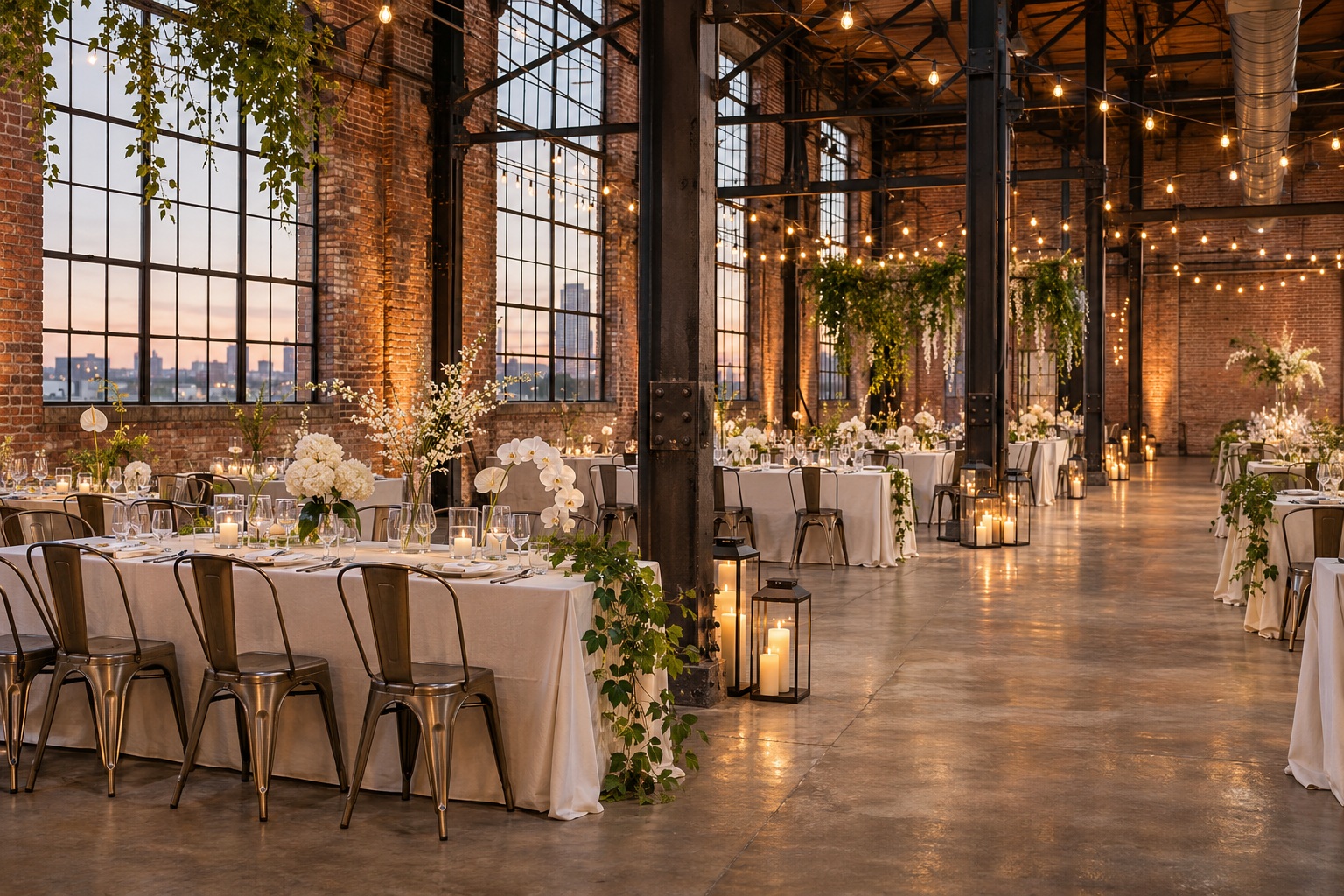
Industrial wedding decor works with brick, concrete, metal and large windows. Choose the view you want behind the ceremony, then plan seating and evening lighting. Flowers, linens and lounge furniture can soften the room while leaving its structure visible.
Finding the Right Industrial Venue
Warehouse, Loft, and Factory Spaces: What to Look For
The venue does a lot of heavy lifting in industrial wedding styling. Warehouses, lofts, and factory-style spaces often come with dramatic scale, architectural features, and built-in character; exactly what industrial wedding decor is designed to complement.
As you tour venues, pay attention to which features you’ll want to showcase rather than hide. Exposed brick can serve as a natural “feature wall” for ceremonies, head tables, or lounge areas. Concrete and metal elements add edge, especially when paired with warm lighting and greenery. Large windows can make the room feel airy and help photos look clean and bright.
- Architectural anchors: exposed brick, concrete, metal beams, visible piping, steel doors, large windows
- Flexible layout: open floor plan that allows you to create zones (ceremony, cocktail, dinner, dancing)
- Ceiling height: confirm approved supports and rigging before proposing hanging installations
- Built-in focal points: textured walls, industrial staircases, mezzanines, or dramatic entryways that can frame key moments
How to Assess Light, Sound, and Traffic Flow in Industrial Venues
Ask how the room operates with a full guest count. Discuss sound with the venue and entertainment supplier, check evening lighting and walk the route from entry through dinner to dancing. Fit decor to those operations.

Turn wedding inspiration into a plan you can actually follow.
Zarellea brings your guest list, budget, vendors, and day-of details into one shared space — so no beautiful idea gets lost in the shuffle.
Start with light. Note where daylight falls and how it changes; a venue that feels bright at noon might feel dramatically darker in the evening. Then consider sound: brick, concrete, and glass reflect noise, so a packed room can get loud. Finally, walk the path your guests will take; from entry to ceremony seating to cocktail to dinner; to identify pinch points where furniture placement or signage matters.
When you’re touring, take quick photos from guest-eye level facing the walls, ceiling, and windows. Later, those photos make it easier to decide where lighting needs to be layered, where greenery will pop, and which industrial features you want in the background of key photos.
Color Palettes and Textures for Industrial Weddings
Neutral Foundations with Metallic Accents
Industrial wedding decor typically starts with a neutral foundation; tones that naturally harmonize with brick, concrete, and metal; then adds metallic accents for definition. Neutrals help the venue’s architecture feel intentional, while metallic details create crisp contrast and a sense of occasion.
Metal accents can show up in small ways (flatware, candleholders, signage frames) or bold ways (statement light fixtures, copper-toned details, metal stands, or structural rentals). If you want industrial glam, keep your palette streamlined and let metallics and lighting add the drama.
- Neutral base ideas: warm whites, soft grays, charcoal tones, and earthy neutrals that echo concrete and brick
- Metallic accents: copper and other metal finishes to sharpen the look and highlight structure
- High-contrast styling: dark elements against bright linens (or vice versa) to create clean lines
Texture Play: Concrete, Wood, Brick, and Glass
Texture is the true language of industrial chic. Concrete and metal communicate “industrial” instantly, while wood and greenery soften the edges. Glass adds a modern, airy layer that keeps the look from becoming too heavy. The goal is to create a controlled mix; rough with smooth, matte with reflective, structural with organic.
Reclaimed wood is a natural partner for raw industrial venues because it adds warmth and history without looking overly formal. Brick already provides visual movement, so you can keep other elements clean and minimal. Concrete can be used as decor (like modern vessels or signage details), especially when balanced with warm light and soft floral shapes.
If your venue has multiple strong textures (brick walls plus concrete floors plus exposed metal), choose one to be the “hero” and let the others act as supporting cast. That makes your decor choices clearer and prevents the room from feeling busy.
Lighting, tables and focal points
Lighting That Turns Raw Spaces Romantic
Lighting is often the difference between an industrial venue feeling stark and feeling magical. Because warehouses and lofts can read cool or cavernous, warm light adds intimacy while highlighting architectural details like brick texture and metal beams.
String lights are a classic choice in industrial spaces because they soften high ceilings and create a celebratory canopy. You can also use lighting to define “rooms” within an open floor plan: a cozy glow over the dinner area, brighter task lighting at the bar, and a more dramatic look around statement walls or signage.
- Warm string lights to soften the room and visually lower the ceiling
- Statement fixtures or clustered lighting over key zones (head table, lounge, dance floor)
- Candles and small-scale glow on tables to create warmth against concrete and metal
- Light placed near brick walls to emphasize texture and depth in photos
Think in layers. A single lighting type can look flat in a large industrial venue. Combine overhead glow with tabletop warmth and a few focused moments (like a lit signage wall or an intentionally lit ceremony backdrop) to create dimension.
Centerpieces and Tablescapes in Industrial Settings
Industrial tablescapes work best when they echo the venue’s materials while introducing softness. Metal details, simple glass, and reclaimed wood tones sit naturally in an industrial space. Then you bring in the “wedding” layer: greenery, florals, candlelight, and carefully chosen linens.
If your venue already has visually strong surroundings (brick, beams, large windows), centerpieces don’t need to be oversized to be impactful. Focus on shape and contrast: organic greenery draping over clean-lined vessels, soft florals against a structured metal stand, or warm candlelight reflecting off subtle metallic accents.
- Low, modern centerpieces that let the architecture remain the star
- Reclaimed wood runners or accents paired with glass and metal details
- Mixed-height candle groupings for warmth and visual rhythm
- Simple place settings with metallic touches to reinforce the industrial theme
Greenery, Florals, and Green Walls in Gritty Spaces
Choose a few foliage placements and ask how each attaches. Visible beams and pipes are part of the architecture, not automatically approved fixing points.
Consider greenery installations where the venue feels most angular: along exposed brick, around industrial doorways, or near structural beams. Green walls or greenery-heavy backdrops can also become strong focal points for ceremonies or photos, especially when paired with warm lighting and clean signage.
If you’re unsure how much floral you need, prioritize impact zones: ceremony backdrop, head table, and one statement installation (like a greenery moment on a brick wall). Those areas appear repeatedly in photos and make the industrial space feel intentional.
Signage, Furniture, and Statement Pieces
Industrial wedding decor shines when you treat the venue like a design canvas and add a few bold statement elements rather than many small, unrelated items. Signage, furniture, and a handful of standout pieces can tie everything together; especially in a large space where small decor can get visually lost.
Industrial signage often looks best with simple typography and sturdy materials that mirror the venue: metal frames, concrete-inspired elements, or reclaimed wood. Furniture choices can lean modern-industrial (clean silhouettes, metal accents) or more eclectic (a curated mix that still fits the gritty setting). Repurposed materials; like copper accents and reclaimed pieces; can reinforce the industrial story while keeping things personal.
- Statement welcome signage and directional signs to improve flow in large venues
- Metal-framed seating charts or signage that complements exposed beams and pipes
- Furniture groupings that create “zones” within an open floor plan
- Repurposed or reclaimed accents for character, including copper-toned details
DIY vs. Rental: Budgeting Industrial Decor
Compare the complete installation cost
A visually interesting venue may still require substantial rental and installation work. Ask what is included in the booking, then compare complete setup costs before assuming the architecture will save money.
Quote the actual layout before assigning a budget label. A raw venue may need furniture, lighting or services that a more equipped room includes. Separate essentials from optional installations.
Before you buy or build anything, decide your top three “photo priorities” (for example: ceremony backdrop, head table, and one statement wall). Allocate the biggest portion of your decor budget to those areas first, then fill in the rest of the room with simpler repeats.
Quick DIYs for Impactful Details
DIY can work beautifully in industrial spaces, especially when it echoes the venue’s materials. Concrete-inspired details, reclaimed wood touches, and handmade signage can feel right at home in a warehouse or loft setting. The most successful DIYs are the ones that are repeatable and durable; details you can make in batches without adding day-of stress.
- Concrete-inspired signage or decor accents for a modern industrial look
- Reclaimed wood elements for warmth, especially for signs and small display moments
- Simple, handmade details that feel intentional against the industrial backdrop
- Repurposed accents (including copper-toned details) that add character without clutter
Choose DIY projects that can be completed weeks ahead and transported easily. If an item is fragile, heavy, or time-consuming to set up, it may be a better rental; especially in large industrial venues where setup time disappears quickly.
Lighting, Tech, and Photography Tips
Lighting Setups for Atmosphere
Industrial venues often need a lighting plan that goes beyond what’s built in. Even if the space has great windows, you’ll want consistent warmth from late afternoon through the evening. Layered lighting helps your decor read clearly, keeps guests comfortable, and supports flattering photos.
Use lighting to emphasize texture and depth; especially exposed brick and architectural features. Warm ambient glow can make concrete feel cozy rather than cold, while focused lighting can turn a simple backdrop into a statement moment. If you’re planning multiple zones (ceremony, cocktail, dinner, dancing), consider how the mood shifts and where you want the eye to land.
Decide early which parts of your venue should feel intimate versus energetic. Soft lighting and candles support dinner conversation; brighter, higher-energy lighting helps the dance floor feel alive. Industrial spaces respond well when each zone has a clear lighting identity.
Photo Angles and Venue Features to Highlight
Industrial wedding photography benefits from strong lines, texture, and contrast. Exposed brick, metal accents, and oversized windows can become striking backdrops, especially when your decor choices are cohesive and not overly busy. Plan for a few “anchor” scenes where the venue and decor work together: the ceremony framing, a styled seating chart moment, and one dramatic reception angle that captures lighting and architecture.
Consider sightlines when placing major decor. A beautiful installation only helps if guests and the camera can actually see it. In large warehouse spaces, placing key moments against textured walls or under statement lighting can make photos feel intentional and grounded instead of floating in an empty room.
Vendor and Shopping Guide
Rental Suppliers, Florists, and Lighting Experts
Industrial wedding decor often relies on a few categories of support: rentals to define the space, florals/greenery to soften it, and lighting to transform it. Even if your venue is visually strong, rentals can help you create zones and polish the guest experience, while professional lighting can make a dramatic difference in mood.
When you reach out to vendors, describe your venue’s core features (exposed brick, concrete floors, metal beams) and your preferred direction (industrial chic, industrial glam, or organic-meets-industrial). The clearer your material and mood references, the easier it is for vendors to recommend the right pieces.
Where to Find Reclaimed Materials and Unique Props
Ask the maker or supplier to check reclaimed pieces for their intended use. A found object should not become a seat, support or hanging frame solely because it fits the look.
Focus on items that add function as well as style: signage frameworks, display surfaces, lounge accents, or a few well-placed statement pieces. If you’re sourcing reclaimed materials yourself, prioritize safety, stability, and ease of setup so the day stays smooth.
Final Checklist and Timeline
Industrial wedding decor planning goes best when you treat the venue as the foundation, then layer decor in a logical order: define the concept, identify zones, solve lighting, then style surfaces and details. Use the timeline below as a practical guide you can adjust to your venue and vendor schedule.
8-Week Tasks
- Confirm your venue layout plan and identify focal zones (ceremony backdrop, head table, statement wall)
- Choose your industrial direction (industrial chic, industrial glam, organic meets industrial) and lock in your core materials (metal, reclaimed wood, concrete-inspired accents, glass)
- Create a lighting plan for each zone, including warm overhead elements and tabletop glow
- Decide what will be DIY vs. rented, based on setup time and transport practicality
4-Week Tasks
- Finalize decor quantities by zone (tablescapes, signage, lounge areas, ceremony elements)
- Confirm greenery and floral placement for high-impact areas first
- Do a walkthrough (in person or via your notes/photos) to check sightlines and traffic flow
- Complete any DIY pieces that can be finished early, labeled, and packed safely
Week-Of and Day-Of Tasks
- Pack decor by zone so setup is straightforward (ceremony bin, welcome area bin, table bins)
- Prioritize lighting setup early, then place major statement pieces, then finish with tabletop details
- Do a quick final check: signage visibility, guest flow, and whether key photo backdrops look complete
- Make sure your top three photo-priority zones are fully styled before guests arrive
Industrial venues can be large, and small items disappear visually. If you’re short on time, skip extra minor decor and put your energy into lighting and one or two statement moments. Those choices will define the atmosphere far more than dozens of small accents.
Approve the room after dark
Request a lighting demonstration with dinner and service areas marked out. Check tables, the bar, steps and signs separately. Before adding overhead decor, confirm approved supports and who installs and removes it. Ceiling height alone does not establish suitability.
For related planning decisions, see our guide to greenery installation and supplier checks.
FAQ
Will an industrial venue be too cold or sterile for guests?
It can feel that way if you rely only on the venue’s raw features, but industrial wedding decor is designed to add warmth through layered lighting, candles, greenery, and intentional furniture groupings that create cozy zones within the space.
How do I avoid an industrial wedding venue feeling dark?
Plan lighting in layers: warm overhead elements like string lights, focused lighting that highlights brick or key backdrops, and tabletop glow through candles; this combination keeps the room bright enough while still feeling romantic.
What are the easiest industrial wedding decor ideas to start with?
Start by highlighting exposed brick or structural metal, then add warmth with string lights and a few metallic accents, and soften the space with greenery on the ceremony backdrop, head table, and one statement wall or focal area.
How do I decorate exposed brick without making it look busy?
Use brick as a feature and keep added decor minimal and intentional; think one framed signage moment, a clean greenery installation, or warm lighting that emphasizes the texture; rather than many small pieces scattered across the wall.
Should I DIY industrial decor or rent it?
DIY works best for repeatable, durable details like simple signage or concrete-inspired accents you can finish early, while rentals are often better for large-scale items like statement lighting, furniture, and pieces that are heavy, fragile, or time-consuming to install.
How can I make an industrial tablescape feel elevated?
Use a restrained palette with consistent materials; glass and metal with warm candlelight; then add softness through greenery and floral shapes; in industrial spaces, thoughtful repetition and lighting often read more elevated than overly elaborate centerpieces.
What is “industrial chic” compared to “industrial glam”?
Industrial chic emphasizes refined simplicity; neutral palettes, clean lines, and greenery against raw materials; while industrial glam pushes more dramatic lighting and metallic accents to create a bolder, more polished contrast with the gritty venue backdrop.
How do I use greenery in industrial spaces without losing the industrial look?
Keep greenery placement architectural and intentional; framing entry points, outlining a focal wall, or anchoring the head table; so it reads as a designed contrast to concrete and metal rather than covering up the venue’s industrial character.



One Comment