Wedding Chair Decor: Fabric, Flowers, Signs and Practical Fit
Wedding chair decor should suit the actual chair and leave it comfortable to use. Borrow or inspect one of the chairs you will have, make a sample decoration and sit in it before producing a full set. Check the back, arms and moving parts as well as the view from the aisle.
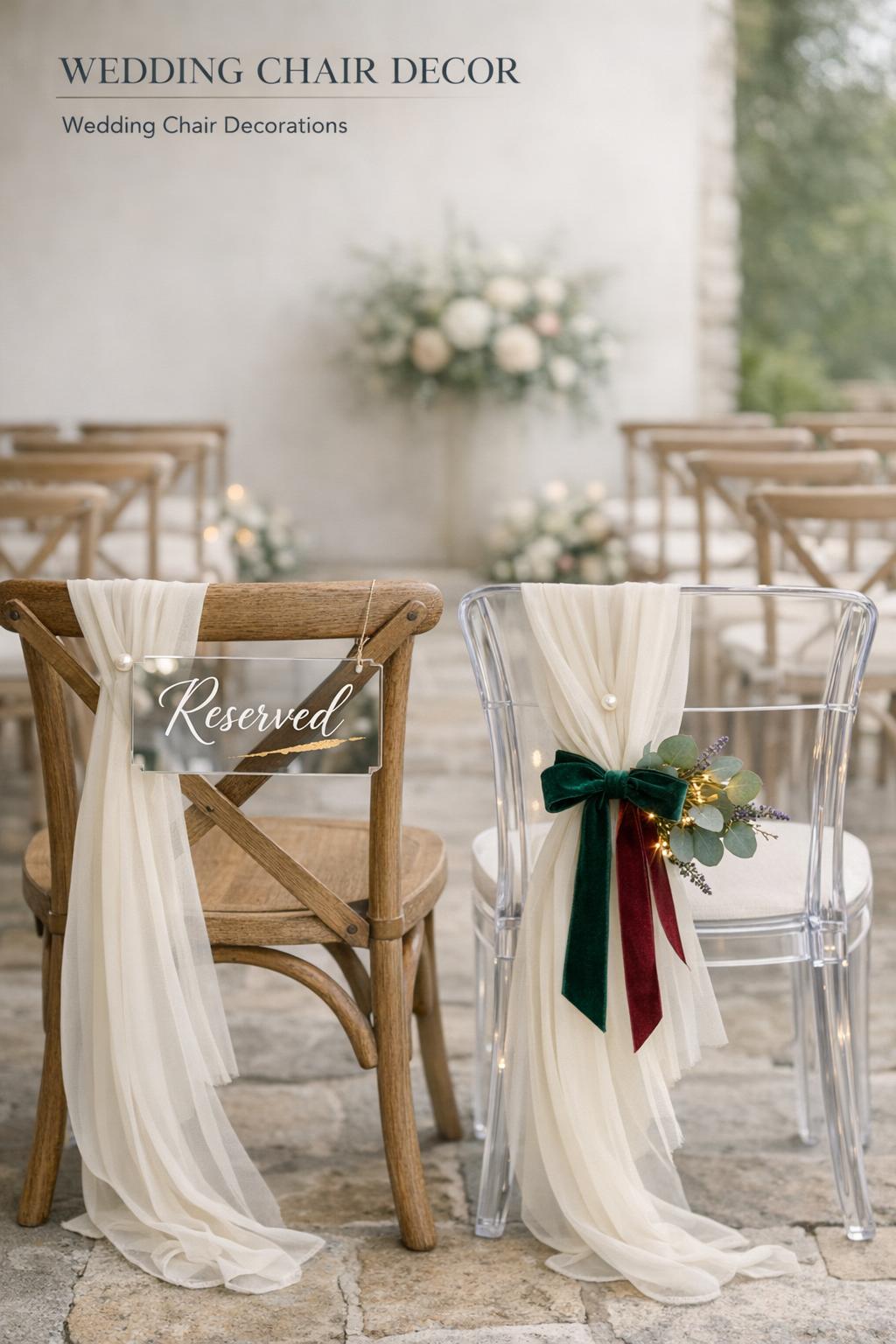
Decide which seats need decoration
The couple’s chairs, aisle-end seats and reserved ceremony places are useful starting points. Guest chairs can stay plain. Decorating every chair adds quantities, installation time and a removal task; decide whether the result is worth that work in your venue.
For the ceremony, view the decorated chair from the entrance and from seated guest positions. At the reception, test it pulled away from the table as well as tucked in. Fabric or flowers should not make getting seated awkward or take up the walking space.
Match the detail to the chair
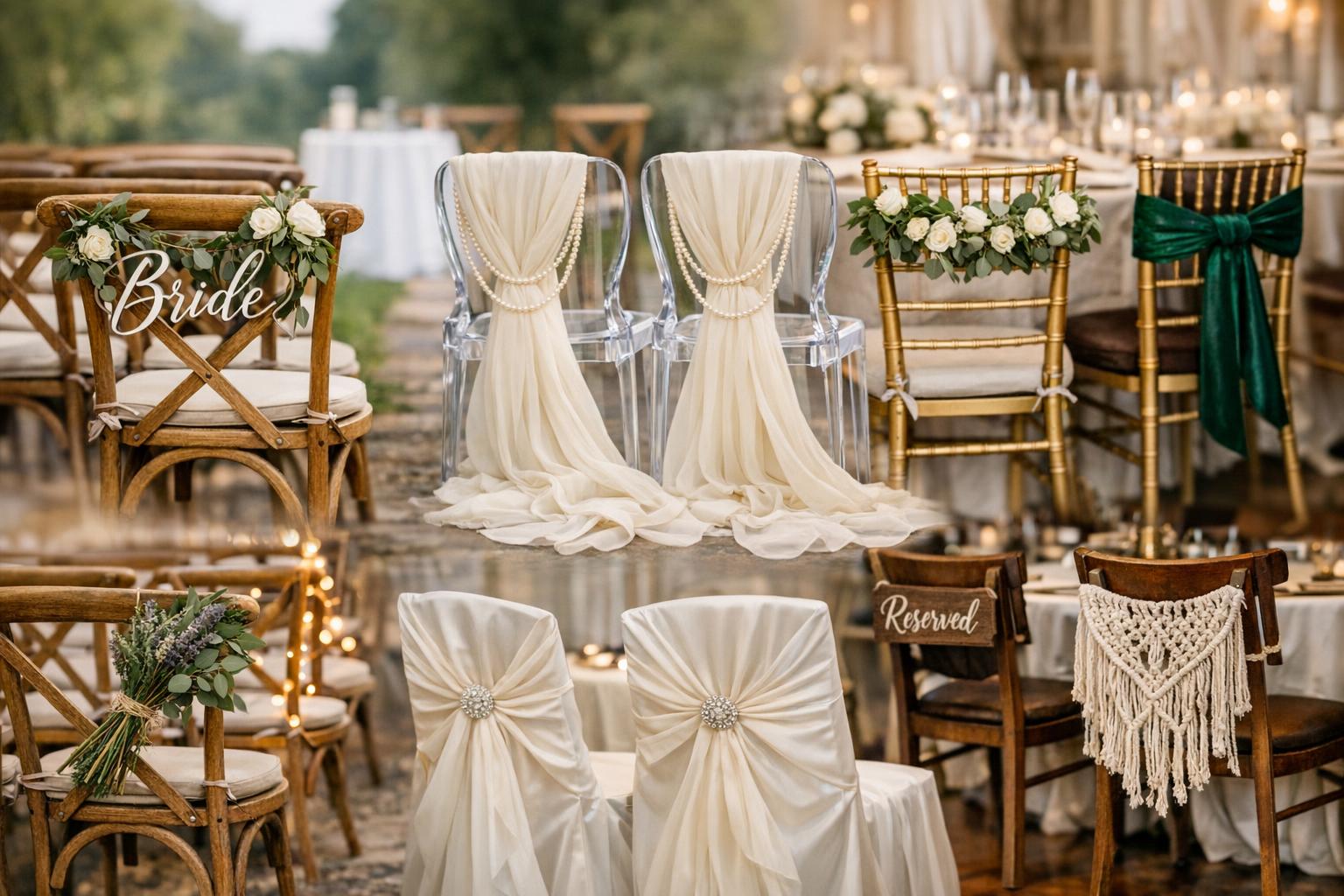
Chiavari, cross-back, wood folding and clear acrylic chairs offer different shapes. Ask the venue or rental supplier which attachments it permits on the exact model. A chair’s decorative rails are not permission to hang any weight from them.
Turn wedding inspiration into a plan you can actually follow.
Zarellea brings your guest list, budget, vendors, and day-of details into one shared space — so no beautiful idea gets lost in the shuffle.
A clear chair may suit a small sign or restrained floral detail if you want to keep its outline visible. Cross-back or wood seating can work with ribbon and foliage. Upholstered or velvet seating may need nothing added. Choose by the chair you have, rather than a general claim that a model can take any sash or decoration.
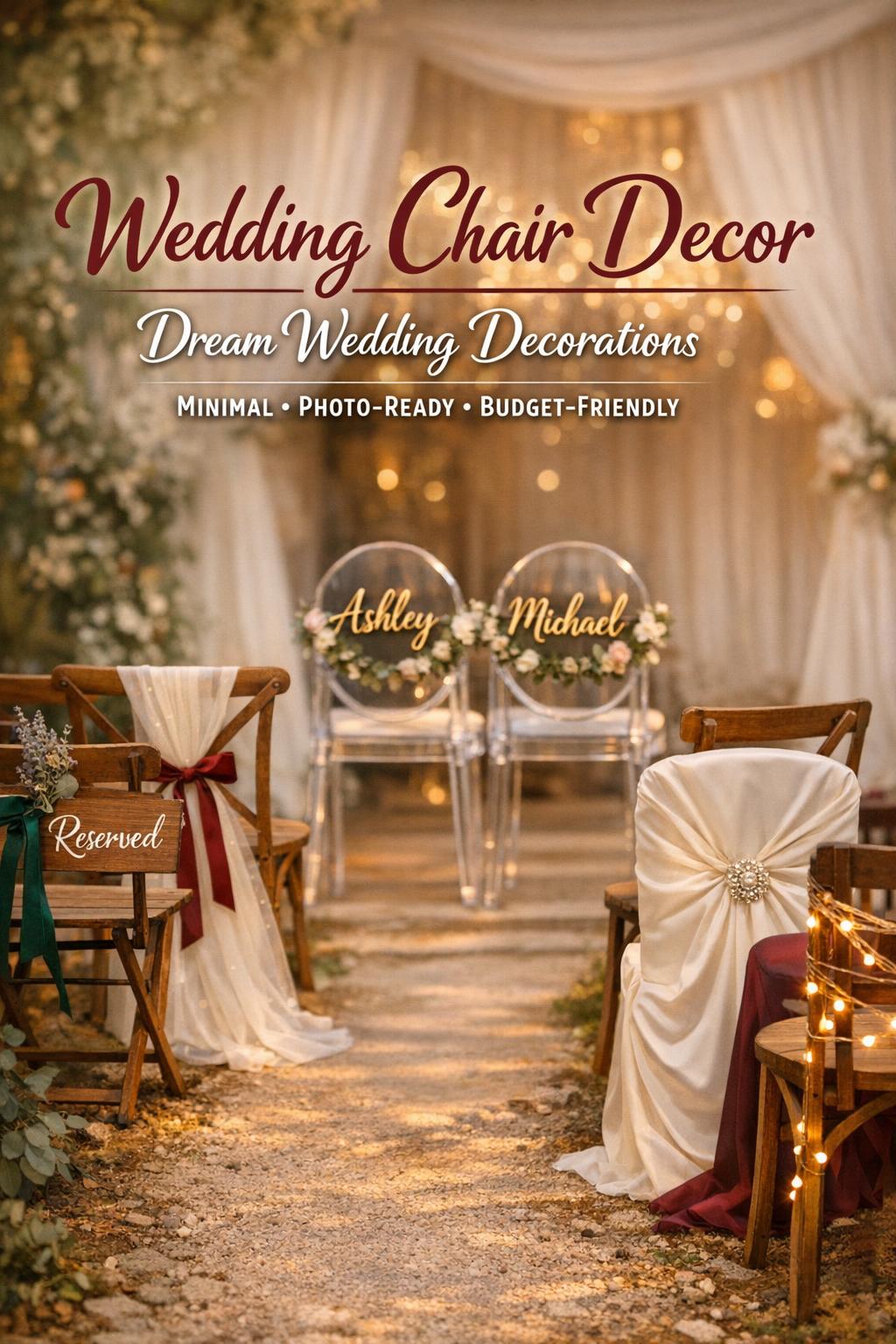
Fabric choices to compare
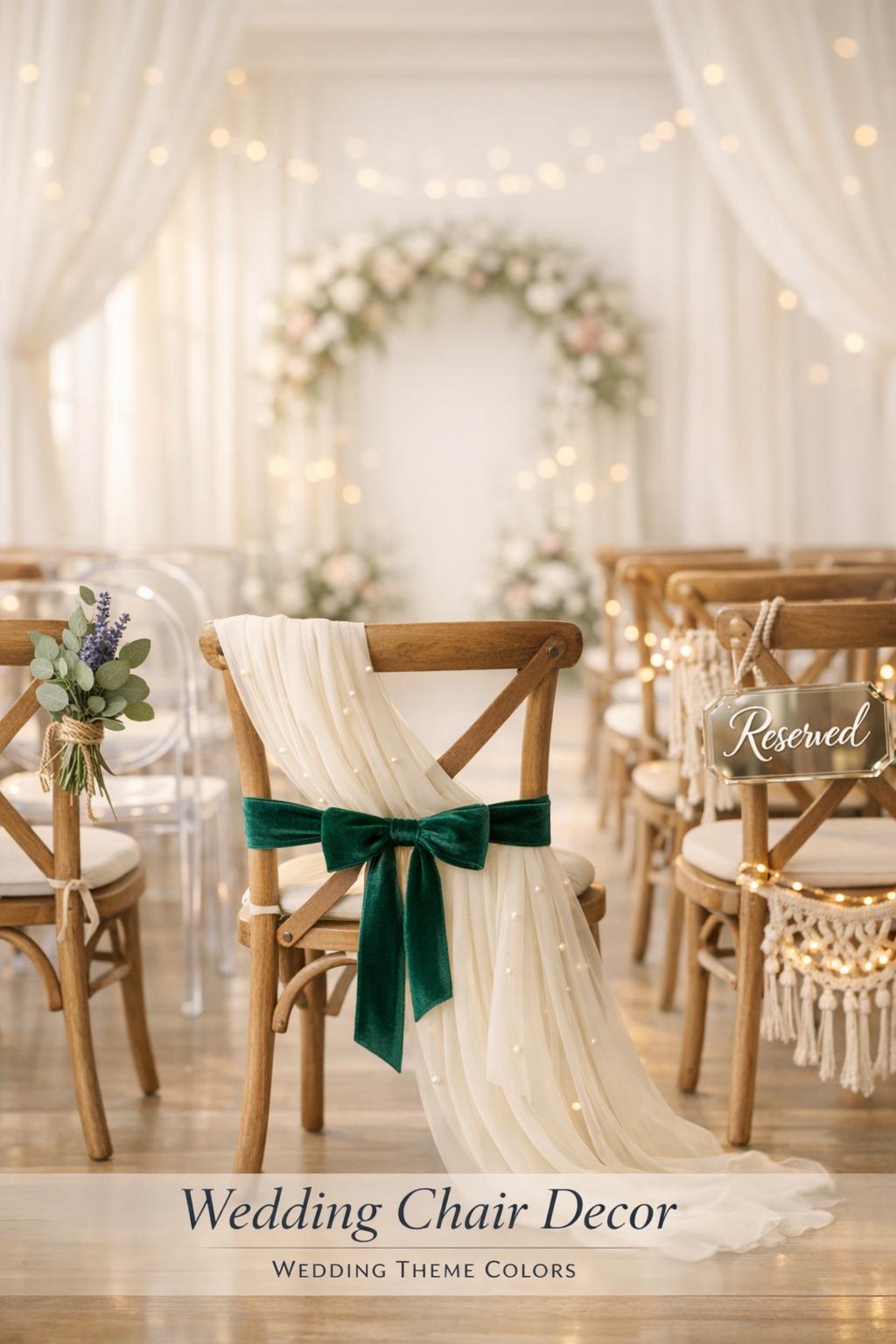
Chiffon, tulle or a ribbon bow
Soft fabric can add a color accent on selected chairs. Test the knot, length and position on the actual back. Keep tails away from feet, moving parts and the route behind the chair. A neat shorter tie is often easier to handle than a trailing sash.
Velvet ribbon or a twisted sash
Velvet offers a different texture from sheer fabric. Compare a narrow ribbon with a larger sash before committing. A twisted arrangement may need more preparation than a bow, so include the finished sample in the setup instructions.
Covers, lace and brooch-style accents
Use a cover designed for the chair’s dimensions and check the fit. Burlap with lace can support a rustic direction, while satin provides a smoother finish. Have the supplier approve any brooch-style fastener and check the finished chair for exposed or projecting parts.
For coordinated colors beyond neutral fabric, compare the pastel palette options with your actual chair finish.
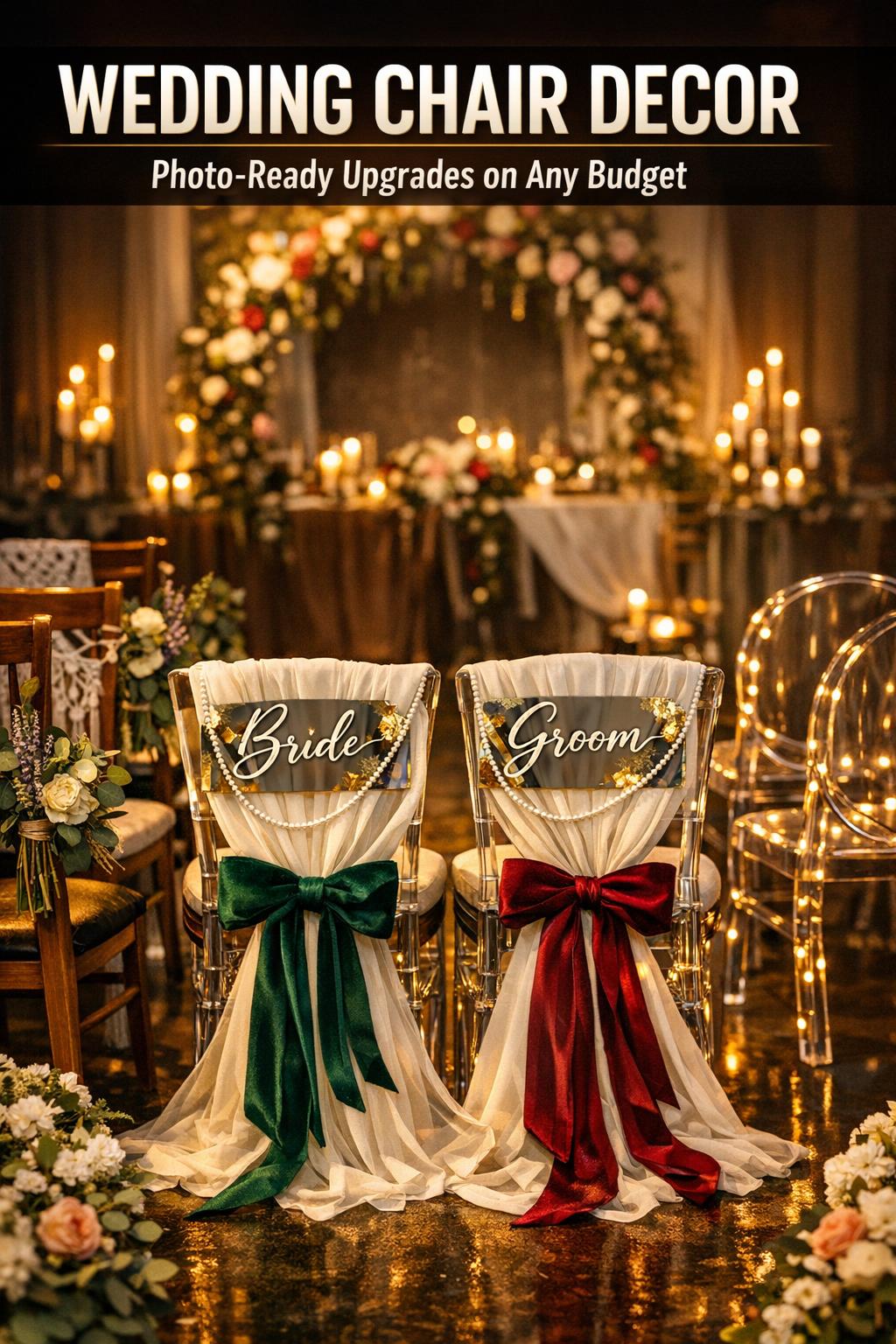
Flowers and foliage
A small bundle, a floral garland or a faux wreath provides different amounts of coverage. Ask the florist to specify the attachment, weight and position. Test the design while a person sits and leans back; an attractive arrangement should not occupy the space needed by the guest.
Fresh eucalyptus, lavender or other foliage can echo the table flowers, while a faux arrangement can be prepared earlier. Neither choice guarantees a lower cost. Price the complete set, including attachment, installation and removal.
Keep glass jars, ceramic tiles and potted plants on a suitable display or table unless the chair supplier and florist have specifically approved their use on seating. The styling idea does not establish that a particular chair can support it.
Signs with a clear job
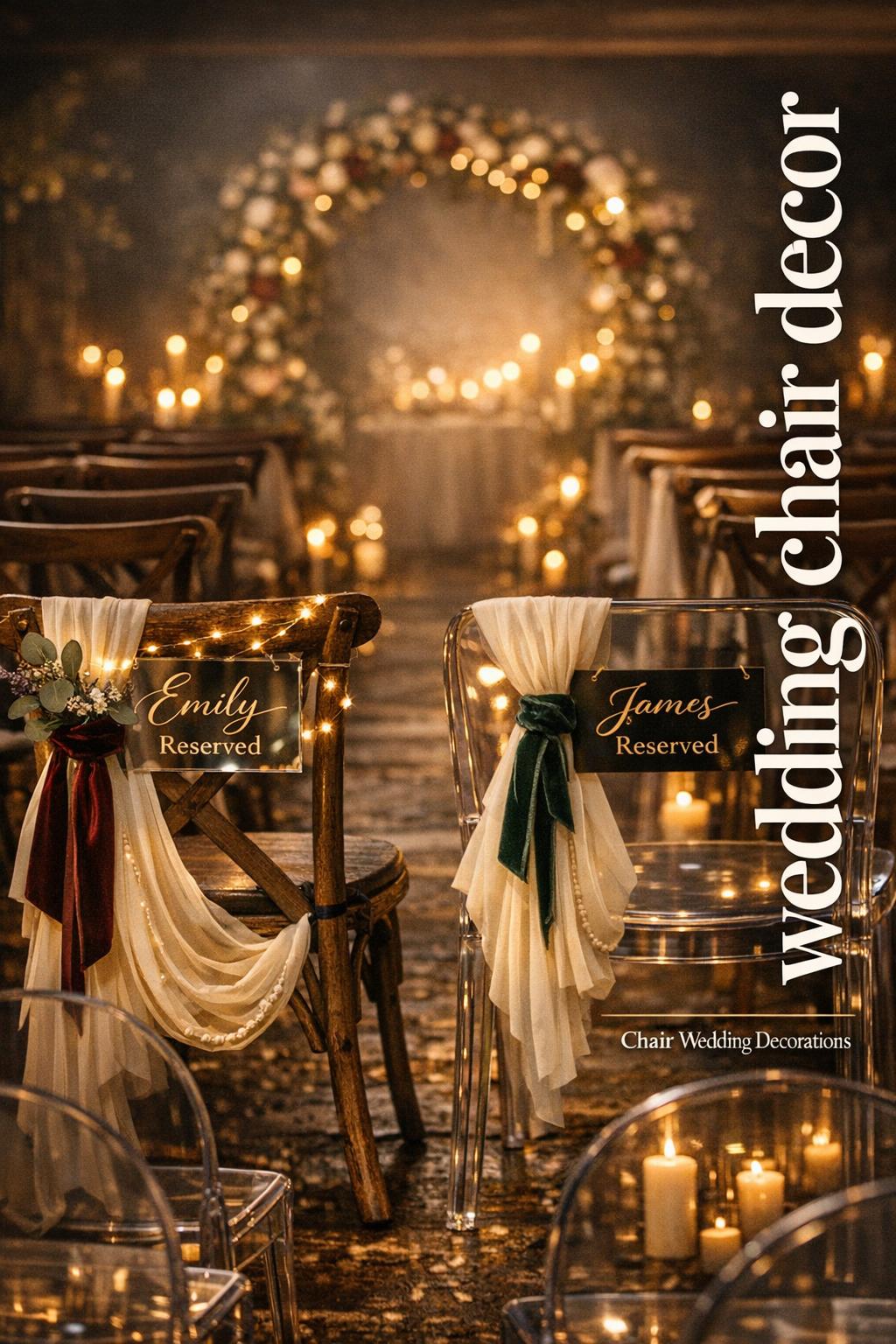
Reserved signs should identify the right seats without requiring guests to guess. Match the lettering to the other ceremony signs and test readability from the aisle. Confirm the final seating assignments before packing them.
The couple’s chairs can carry initials, names or another personal detail. Wood, mirror acrylic and paper offer different finishes, but check the sample under actual lighting. A reflective sign that is hard to read may need a different material or position.
If a name marker is also a keepsake, consider placing it at the table setting instead of adding weight or fragile material to the chair. This keeps the identification useful when chairs move.
Macramé and lighting details
Macramé can provide texture on a few selected backs. Check its size, attachment and loose ends in the same way as fabric. Connect it with the bohemian lounge and textile choices if that is your broader direction.
Treat fairy lights on seating as a question for the rental company and lighting supplier, including the power source and handling during chair movement. A separate illuminated backdrop may be more practical than individual powered decorations.
Turn the sample into an installation plan
Count chairs by use: reserved places, aisle ends, couple’s seats and any decorated guest seating. Time one complete installation and removal, then use those observations to plan the work. Include a labeled sample photograph and approved attachment materials.
Assign someone to check that signs face the right way, ties stay in place and chairs remain usable after placement. If chairs move from ceremony to reception, agree who handles decorations during the change.
Do we need identical decoration on every chair?
No. You can keep most chairs plain and use a repeated detail on selected seats. Connect those accents through the same fabric, flower or sign style.
What should we simplify if setup takes too long?
Reduce the number of decorated chairs or choose a simpler detail. Keep reserved-seat information clear. Avoid replacing a tested design with an untested attachment on the day.