Photo-Ready Wedding Cake Table Decorations, Styled Like a Vignette
Wedding cake table decorations that look intentional (not “last-minute”)
The cake table is one of those reception moments you feel before you even notice it: a small, glowing focal point where guests drift over for photos, a closer look at the piping, or that first quiet pause before the cake cutting. And yet, wedding cake table decorations are often planned late—after florals, linens, and seating charts have already claimed the budget and attention.
The challenge is rarely a lack of inspiration. It’s the opposite. You’ve seen romantic florals, glamorous metallic cake stands, vintage furniture displays, rustic greenery backdrops, and modern minimalist setups—and they all look beautiful in isolation. The hard part is making your own cake table feel cohesive with your wedding theme, practical for your venue, and realistic to set up on a busy day.
This problem-solving guide treats “cake table decorations wedding” planning like styling a complete look: you start with the anchor (the cake), build structure (stands, risers, backdrop), add softness (florals and foliage), then finish with atmosphere (lighting and tablescape textures). Along the way, you’ll find wedding cake table ideas organized by theme—glam, rustic, vintage, garden/whimsical, and modern—plus logistics, budgeting guidance, and common pitfalls to avoid.
Understanding the styling challenge: why cake tables are deceptively hard
A cake table is both décor and a service station. It needs to look like a styled vignette for photos while still functioning during the reception—especially around the cake cutting, when coordinators, caterers, and photographers tend to converge. That dual purpose is what makes styling tricky: you’re designing for beauty, movement, and timing all at once.
Turn wedding inspiration into a plan you can actually follow.
Zarellea brings your guest list, budget, vendors, and day-of details into one shared space — so no beautiful idea gets lost in the shuffle.
The most common reason cake tables feel “unfinished” is that couples decorate the tabletop but forget the frame. Without height variation (stands, risers, plinths, or display furniture) and a backdrop (greenery, an arch-like frame, or a simple styled background), the cake can look like it’s floating in a blank corner—even if your linens are gorgeous.
There’s also a coordination issue: the cake is often delivered separately from florals and rentals. If your event designer or planner isn’t aligning the setup workflow, the table can become a “we’ll fix it later” item. Later arrives, the reception starts, and the cake table ends up decorated with whatever is nearby—pretty, but not intentional.
Key “dressing” principles for an elegant cake table
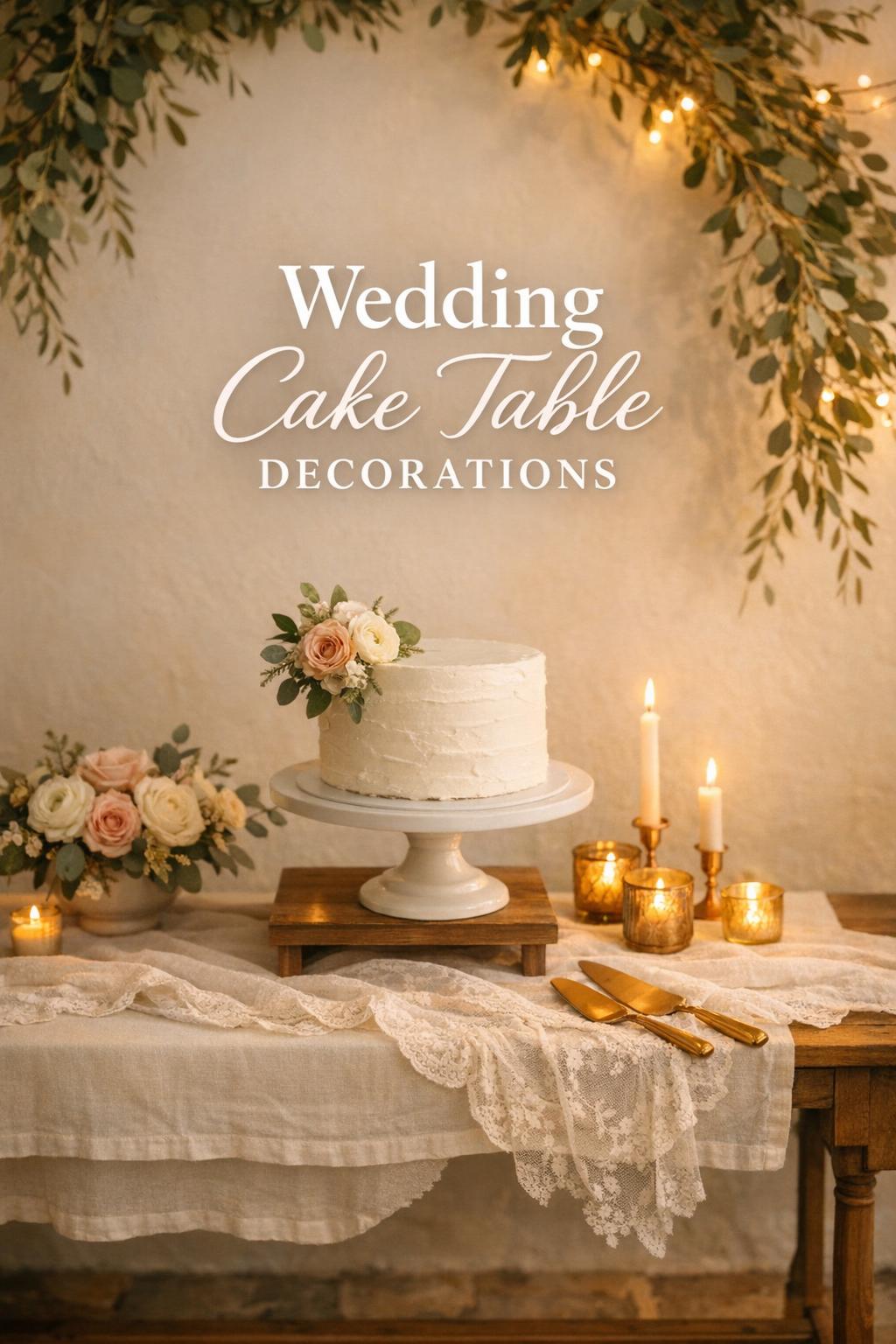
Think of the cake table as an outfit built around a statement piece. The cake is your centerpiece; everything else should either frame it, echo the theme, or improve the ambience. When couples try to add every idea at once, the table starts competing with itself—too many props, too many textures, and no clear focal point.
Principle 1: Build the silhouette with height variation
In styling terms, height variation is structure. A cake stand or riser elevates the cake, while additional display pieces (plinths, small side tables, or layered display furniture) create a composed shape. This is why real-wedding galleries so often show cakes on stands with surrounding elements at different heights: your eye reads it as designed, not placed.
Principle 2: Frame the focal point with florals and a backdrop
Florals and foliage do more than “decorate.” They connect the cake table to the rest of the reception design by repeating your color palette and wedding decor theme (romantic, rustic, vintage, modern, or glam). A backdrop—whether lush greenery or a clean, minimal surface—keeps the cake from visually blending into the room.
Principle 3: Keep the tabletop readable
An elegant cake table is not necessarily a full dessert table. If you’re styling both a cake and additional desserts, clarity matters. Too many small items can look busy, especially in photos. Choose a few supporting elements—like a floral arrangement, a candlelit moment, or a simple runner texture—then let the cake and stand do the heavy lifting.
Principle 4: Light it like a “moment,” not a hallway
Lighting is the finishing accessory. Candles, string lights, or subtle uplighting can turn even a simple cake display into a reception highlight. Without intentional lighting, the cake table can read flat—especially in dim venues—no matter how beautiful the florals are.
Start with your anchor: choosing the cake table focal point
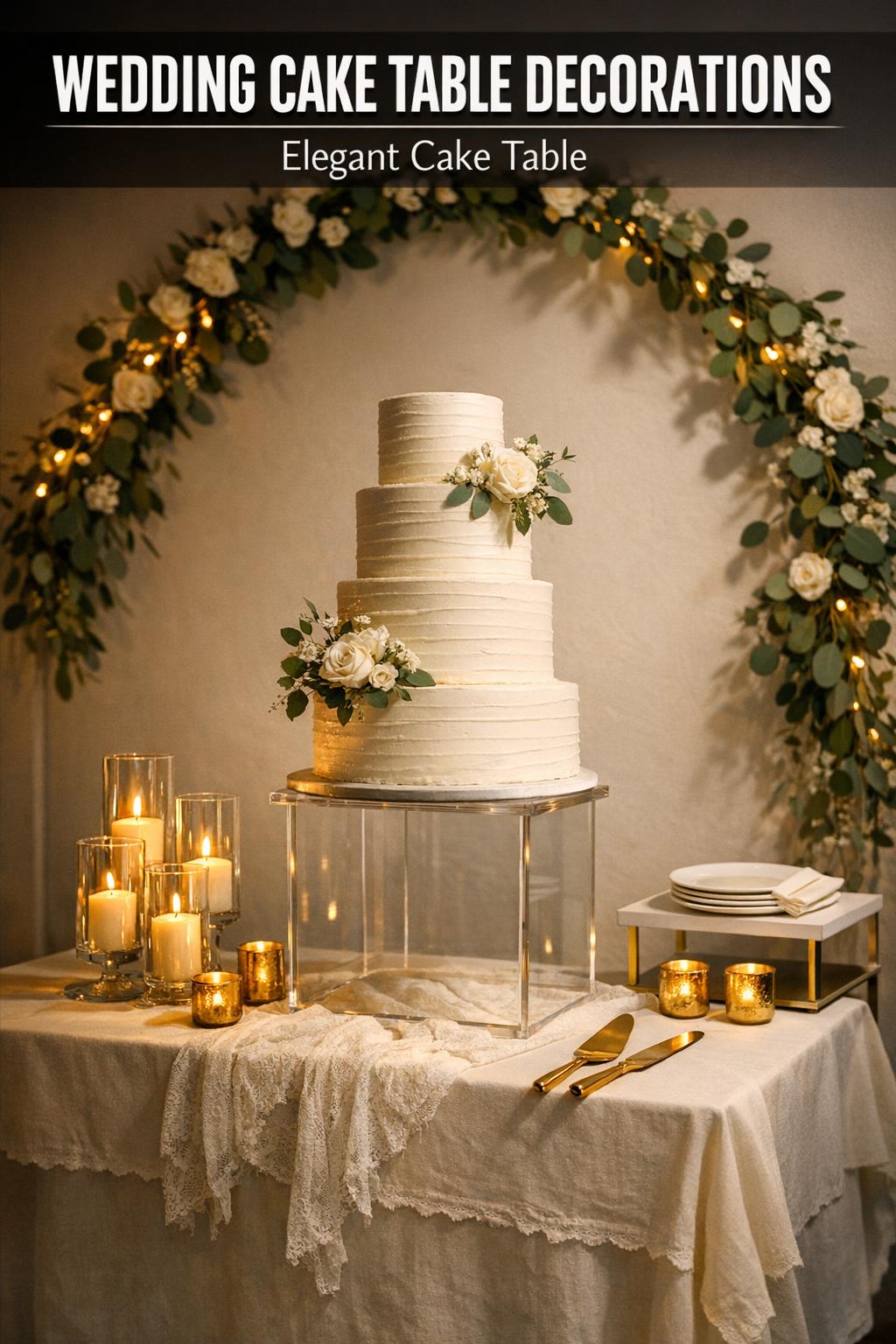
Before you decide on props or backdrops, define what the focal point actually is. In most setups, it’s the cake on a stand—clean, centered, and visible from a few steps away. In others, the focal point becomes a full wedding dessert table with the cake as the star, supported by dessert styling and layered displays.
If you’re working with an event designer, this is the moment to align on intention: do you want a quiet romantic corner, a glamorous statement, a rustic display that looks collected over time, or a modern minimalist tableau? If you’re DIY-ing, this decision protects you from overbuying props that don’t match the look you’re actually building.
- Cake-only focal point: best for minimalist, modern, or very formal receptions where you want clean lines and fewer items on the tabletop.
- Cake + supporting vignette: ideal when you want florals, a backdrop, and lighting to create a photo moment without managing multiple dessert platters.
- Full dessert table styling: great for whimsical or garden themes, where abundant visual detail feels intentional and celebratory.
Wedding cake table ideas by theme (so your décor choices feel cohesive)
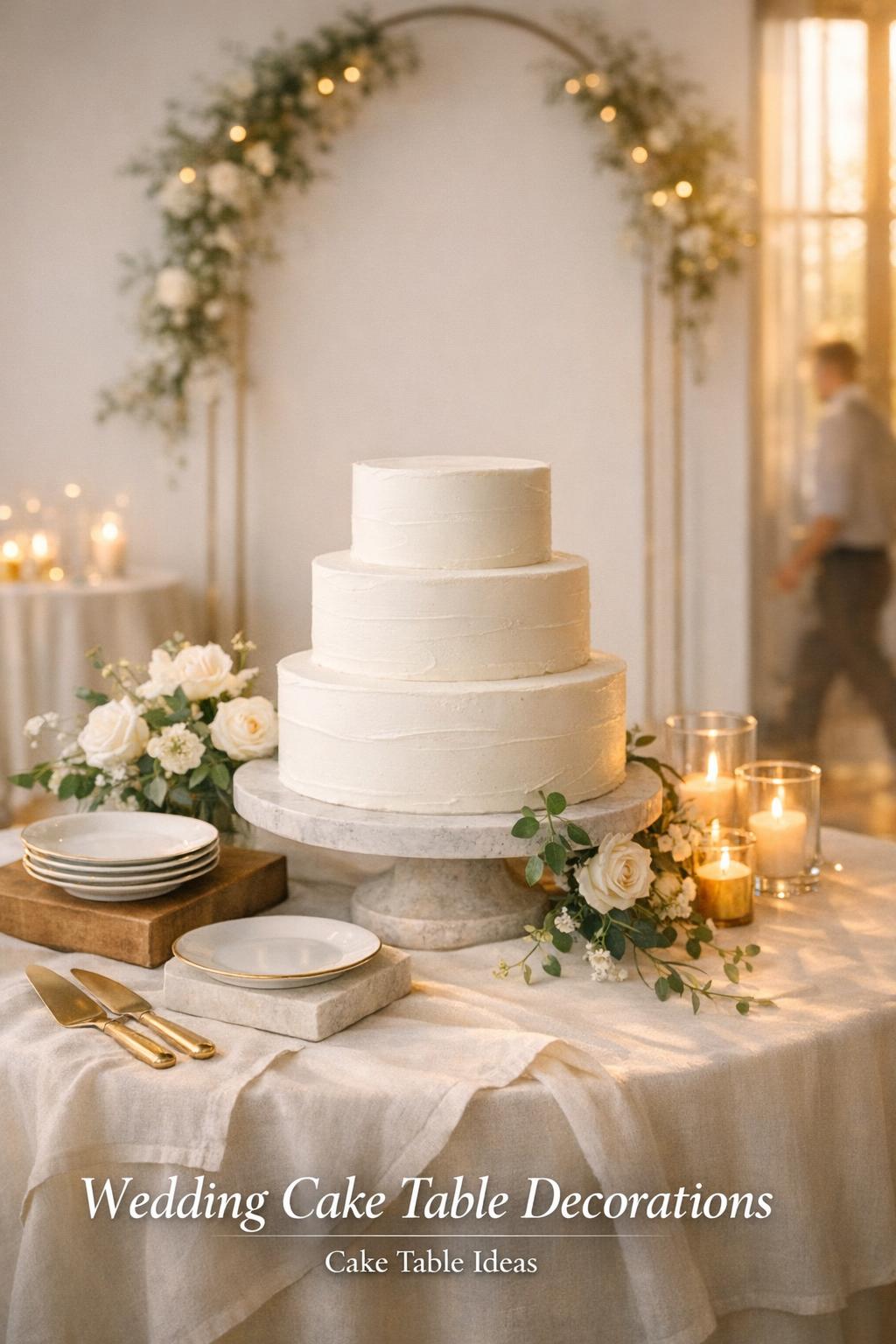
Theme alignment is the shortcut to a cake table that looks “meant to be there.” When the cake stand, backdrop, florals, and textures all speak the same design language, you can actually use fewer decorations—and still get a more striking result.
Outfit solution: glamorous cake table décor with metallic accents
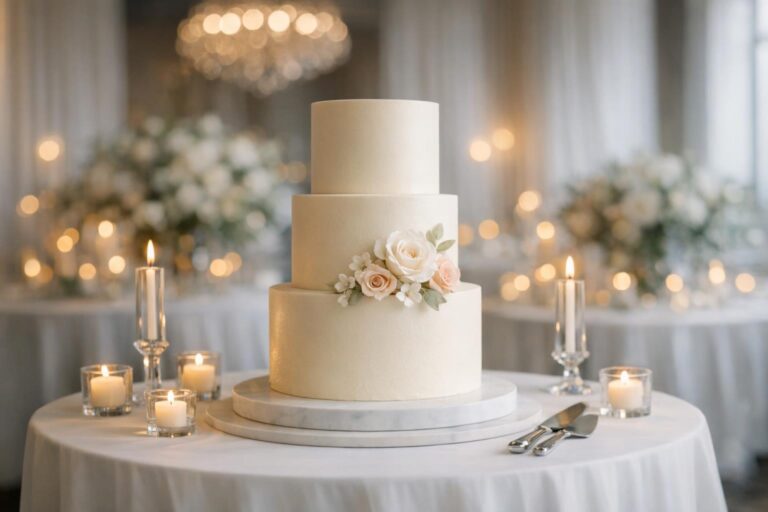
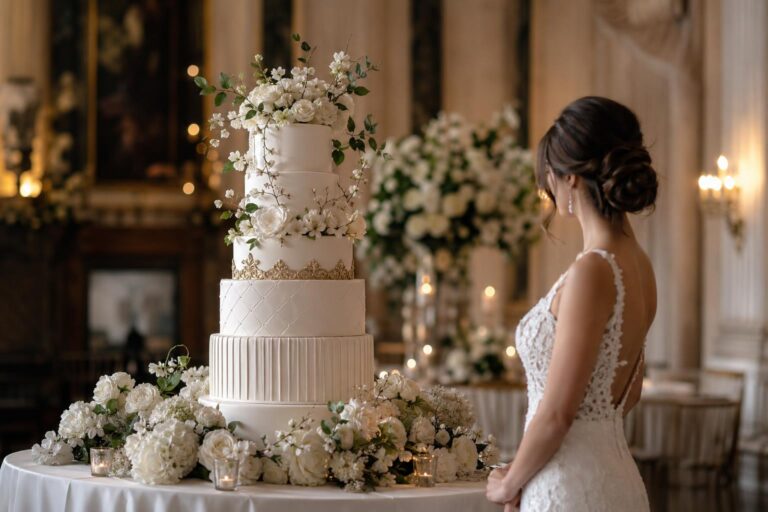
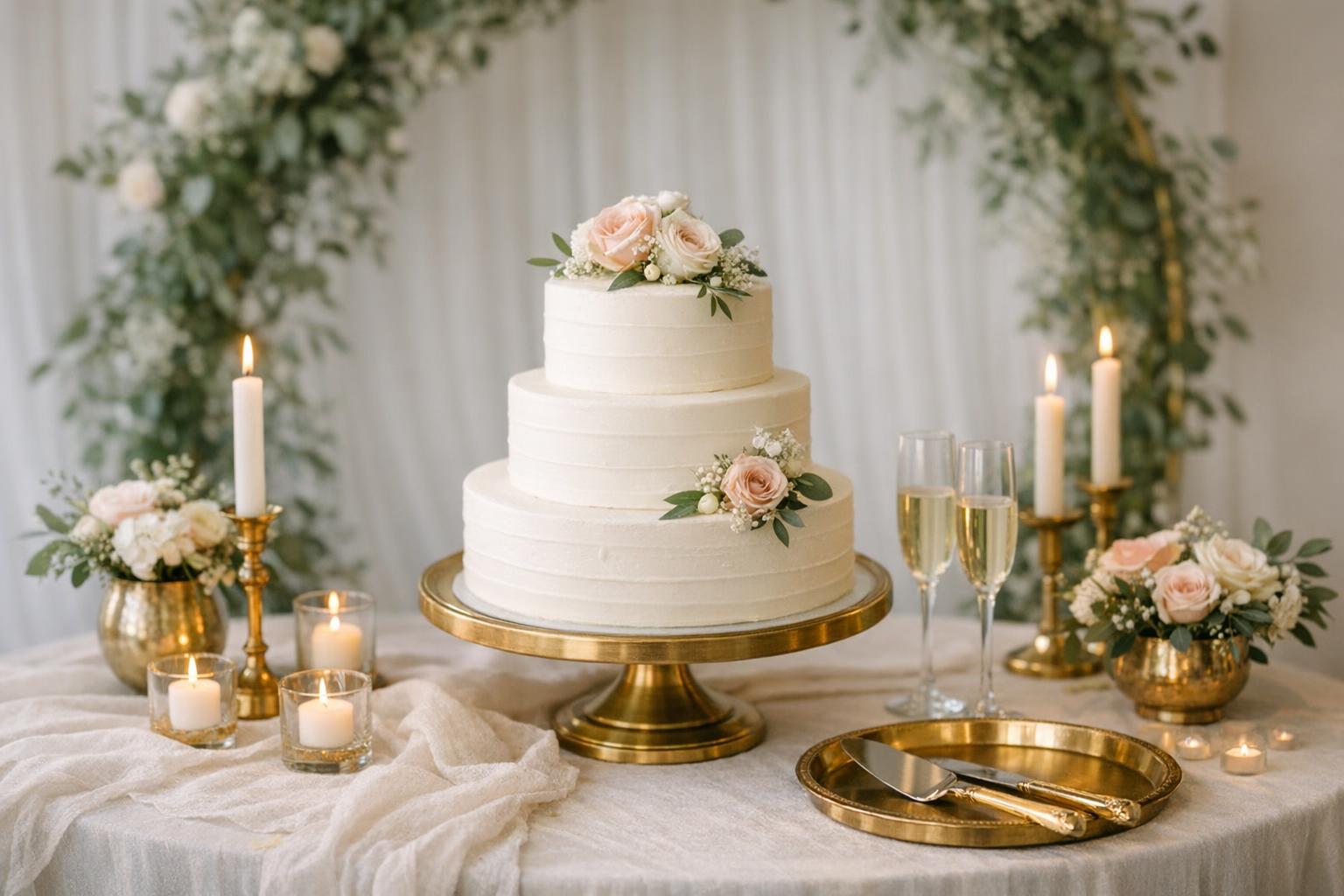
A glam cake table works when you want the reception to feel like evening light and polished detail—rich textures, metallic touches, and a sense of intentional shine. This is where metallic cake stands (often in gold tones) and crystal-like décor elements feel at home. The trick is restraint: one hero stand, one strong floral moment, and lighting that makes it glow.
- Choose a statement cake stand as the “jewelry” of the setup—metallic finishes read glamorous without needing extra props.
- Use florals with a bold shape rather than many small pieces, so the cake remains the main event.
- Add ambience with candlelight or uplighting to keep the table luminous in reception lighting.
Tip: If you’re aiming for an elegant cake table but your venue lighting is dim, prioritize lighting and a reflective stand before adding more tabletop items. Glam is often more about shine and contrast than “more stuff.”
Outfit solution: rustic & natural cake tables with wood and greenery
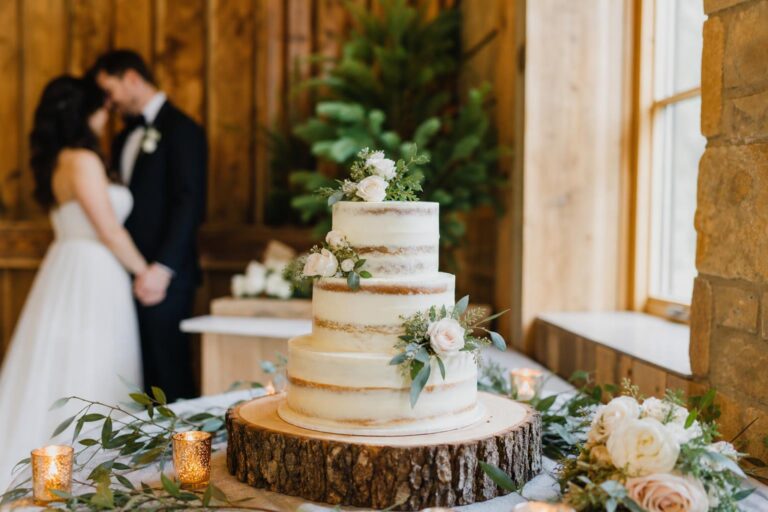
Rustic cake table ideas succeed when they feel grounded and easy—like the décor belongs to the venue rather than being “set on top” of it. Wood display furniture, greenery, and earthy tones create that natural, welcoming mood. Height variation is especially important here; rustic styling shines when it’s layered.
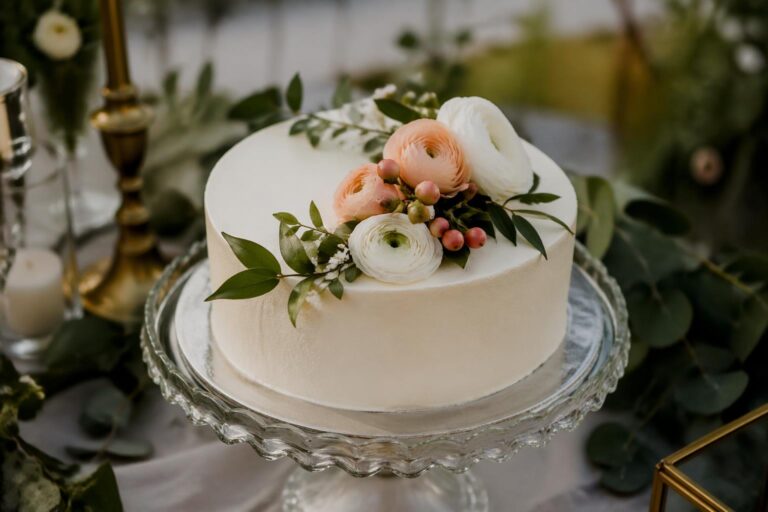
Use display furniture or risers to bring in texture, then soften with greenery and a floral arrangement that echoes your ceremony or reception florals. A rustic table can still be refined; the difference is that the materials feel organic and the shapes feel relaxed rather than perfectly symmetrical.
- Layer the cake on a stand, then add one secondary surface (like a small side table or a lower riser) for supporting décor.
- Frame the setup with foliage so the cake looks nestled into the scene.
- Keep props purposeful; too many “rustic objects” can turn charming into cluttered.
Outfit solution: vintage-inspired displays using antique furniture and lace textures
Vintage wedding cake table decorations are about romance with history: antique furniture, heirloom-like details, and soft textures such as lace runners. The cake table becomes a little story—something guests feel invited to step closer to, as if it has always belonged in the room.
The secret is to avoid making it look like a flea-market collection. Choose one strong vintage furniture piece (an antique-style side table or display piece) and keep the rest of the styling clean: a single lace runner, a thoughtful floral arrangement, and one or two props that feel meaningful rather than random.
Tip: Vintage looks best when your backdrop is calm. If the room is already visually busy, simplify your cake table styling so the antique textures can read clearly in photos.
Outfit solution: garden and whimsical cake tables with florals and soft palettes
Garden and whimsical styling is where wedding dessert table ideas and cake table décor overlap most naturally. Florals, vines, and soft color palettes create that “walk into a secret garden” feeling—especially at sunset receptions or venues with indoor-outdoor flow. In this theme, the cake table can handle more detail, because abundance is part of the aesthetic.
To keep it from feeling messy, use a clear frame: a greenery backdrop, an arch-like shape, or a defined tablescape surface. Then let florals and foliage do the storytelling—cascading around a cake stand, climbing upward toward the backdrop, and repeating the palette seen in bouquets and centerpieces.
- Use a floral installation or lush arrangement to create a “frame” around the cake.
- Add a runner texture that supports the softness of the theme (light linens or layered fabric feel romantic).
- Consider a few desserts only if you can keep consistent colors and styling.
Outfit solution: modern minimalist cake displays with clean lines
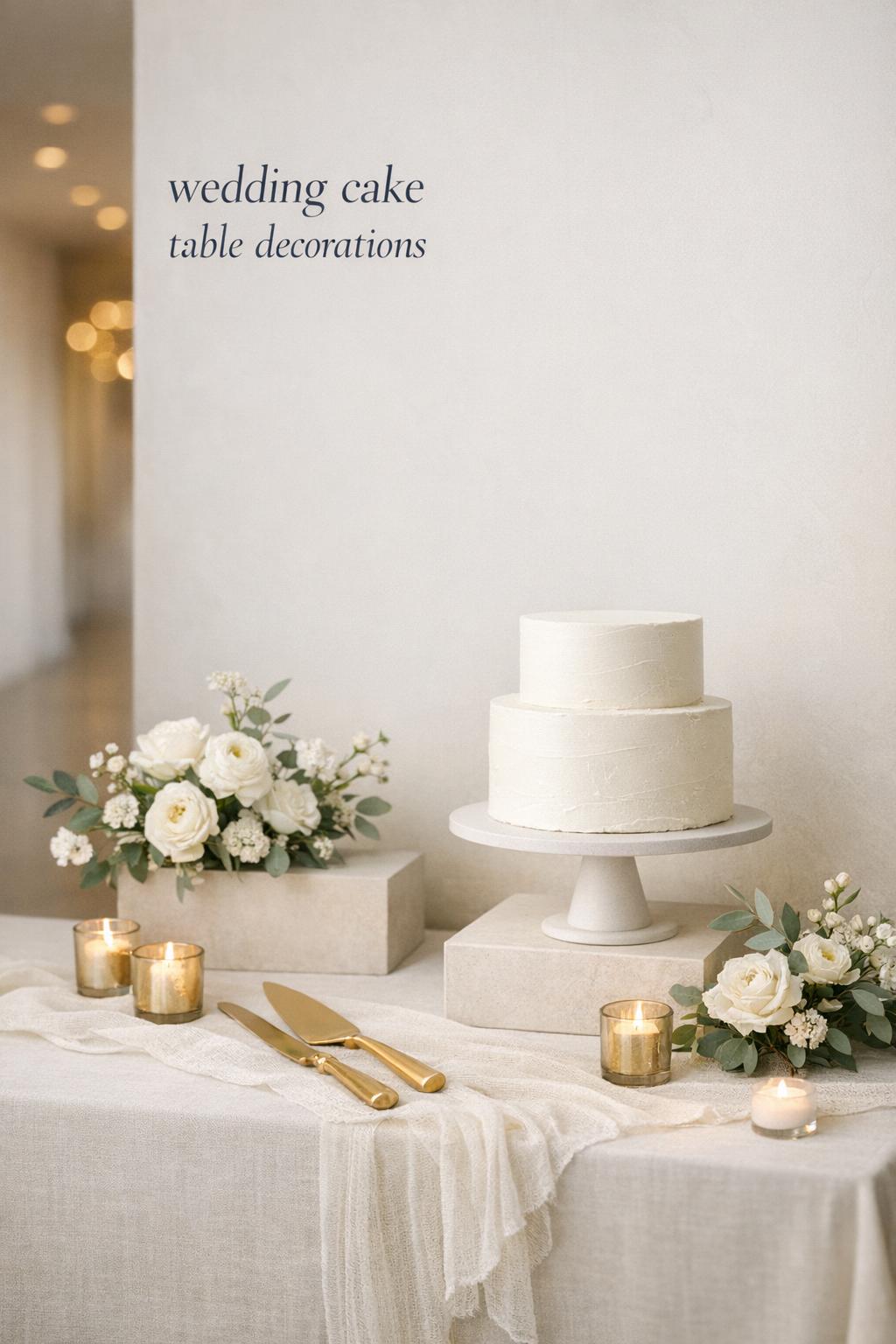
Modern minimalist wedding cake table ideas are deceptively demanding: fewer objects means every object has to be right. Clean lines, monochrome or tightly controlled color palettes, and a simple backdrop make the cake table feel gallery-like—quiet, intentional, and sophisticated.
In a minimalist setup, your stand matters more than ever. Your backdrop matters more than ever. And your tabletop needs to stay uncluttered. Instead of many props, focus on one architectural floral arrangement (or a restrained foliage moment), a crisp runner or linen texture, and lighting that keeps edges and details visible.
Tip: If you love minimalist styling but worry it will feel “bare” in the reception space, add ambience rather than objects. Candles or subtle uplighting can make a minimal cake table feel warm without adding visual noise.
The essential building blocks of wedding cake table decorations
If you’re stuck deciding what actually belongs on a cake table, return to the core elements that show up again and again in strong real-wedding styling: florals, stands/risers, backdrops, and lighting. These are the pieces that create a complete look across romantic, vintage, rustic, glam, and modern themes.
Florals and foliage: the soft frame that makes the cake look “placed”
Florals are the easiest way to connect the cake table to the rest of your wedding décor. Even when vendor credits and photographer names are the only text near an image, the visual story is consistent: a floral arrangement or greenery moment that echoes the wedding’s color palette and mood. This isn’t about adding flowers everywhere; it’s about placing them where they do the most work—at the base of the stand, to one side for asymmetry, or climbing toward a backdrop for height.
Practical note from experience: florals on a cake table should be planned with spacing in mind. If you crowd the cake, you limit access during the cake cutting, and the table starts to feel like a photoshoot set instead of a functional station. A good event designer will leave breathing room—especially in front of the cake.
Stands, risers, and display furniture: your structure and proportion
Cake stands and risers solve two problems at once: they elevate the cake for visibility and they add proportion to the scene. When couples search for cake display ideas, they’re often responding to a proportion issue—cakes can look small on wide tables, or disappear against a large room. A stand or plinth gives the cake a “stage,” while additional risers or a secondary surface create a balanced silhouette.
Display furniture—especially with rustic or vintage themes—lets you build layers without stuffing the tabletop. A side table, a ladder-style display, or an antique-inspired surface can create height and texture while keeping the cake area clear.
Backdrops and tablescapes: the frame behind and the texture beneath
Backdrops are the difference between “a cake on a table” and “a cake moment.” Greenery backdrops and arch-like frames naturally complement garden and rustic themes, while clean backdrops suit modern minimalism. The tablescape—the linens, runner, and textures—grounds everything. A lace runner leans vintage; a crisp linen feels modern; layered fabric can feel romantic and whimsical.
Tip: If your venue has a beautiful wall, architectural detail, or a naturally photogenic corner, treat that as your backdrop. When the environment does some of the work, you can simplify the décor and still get an elegant cake table.
Lighting and ambience: candles, string lights, and uplighting that flatter details
Lighting is often the most overlooked part of wedding cake table decorations, even though it’s one of the most visible in photos. Candles create romance and soften shadows; string lights can add whimsy; uplighting can define the cake table as a focal point within a larger reception space. The goal is not to make it bright—it’s to make it intentional.
Real-world planning note: decide early who is responsible for lighting at the cake table. Sometimes it’s the venue, sometimes it’s a rental team, sometimes it’s part of overall event design. If it’s “everyone,” it often becomes “no one.”
Color palettes and seasonal mood: keeping your cake table aligned with the day
Your cake table looks most believable when its palette feels like it belongs to the season and the rest of your décor. Many couples instinctively choose romantic staples—blush, ivory, gold tones, and greenery—because they photograph beautifully and work across themes from garden to glam. The key is to decide whether your palette is soft and blended, or high-contrast and defined, then let that guide your décor choices.
Spring and summer: lighter textures and airy romance
For spring and summer, an airy tablescape often feels right: lighter linens, soft florals, and a backdrop that doesn’t visually weigh down the cake. Garden and whimsical themes thrive here, especially when greenery and florals can echo what guests see outdoors or in ceremony arrangements.
Autumn and winter: deeper ambience and candlelit elegance
In autumn and winter, lighting and texture become your best friends. Candles and uplighting help the cake table glow against earlier sunsets and dimmer reception lighting. Richer textures—whether in linens, metallic accents, or vintage-inspired pieces—can make the cake table feel like an intimate destination within the room.
Mixing textures without clutter: velvet, linen, and metallic moments
Texture is what makes an elegant cake table feel layered even with minimal décor. A linen base with a metallic stand can read modern glam. Lace over a simple cloth reads vintage. The mistake is mixing too many “statement” textures at once—metallic stand, heavy runner, busy backdrop, and multiple props can compete. Choose one main statement texture, then support it with quieter materials.
Budgeting for the cake table: where to spend for the biggest visual return
Cake table décor can be as minimal or as elaborate as you want, but the smartest budgets follow a simple rule: spend where the eye lands first. For most cake tables, that’s the stand, the florals framing the cake, and the backdrop/lighting that turns it into a focal point.
If you’re trying to keep costs controlled, resist the temptation to buy lots of small props. A few well-chosen elements—often rented—create a stronger look than a tabletop crowded with miscellaneous décor. Rental vs. purchase is especially relevant for stands, risers, and display furniture: these are high-impact items you’re unlikely to reuse after the wedding.
- High-impact investments: cake stand or plinth, a clear backdrop plan, and one strong floral arrangement.
- Smart savings: fewer props, simpler linens when the stand is a statement, and using the venue’s best wall or corner as the “backdrop.”
- Worth considering as rentals: risers, display furniture, lighting elements that create ambience.
Tip: If you’re already paying for reception florals, ask your floral designer (or your event designer) to plan a cake table floral moment using the same palette and style. The cohesion often makes the entire reception feel more intentional without requiring additional categories of décor.
Venue considerations and logistics: making sure the cake table works on the day
The prettiest cake table in a photo can fail in real life if the placement and timing aren’t considered. Venue constraints—space, traffic flow, temperature, and lighting—shape what’s practical. You’re not only styling; you’re planning a moment that involves delivery, setup, photos, and service.
Placement: treat the cake table like a destination, not an afterthought
Place the cake table where guests can find it and where photos will look clean. That usually means away from heavy traffic (so it doesn’t become a coat-drop zone), but not hidden. Think about what will be behind it in photos: a cluttered service door will undermine even the most romantic florals. A calm wall, a curated corner, or a purposeful backdrop will elevate everything.
Cake cutting timing: plan for the “working” moment
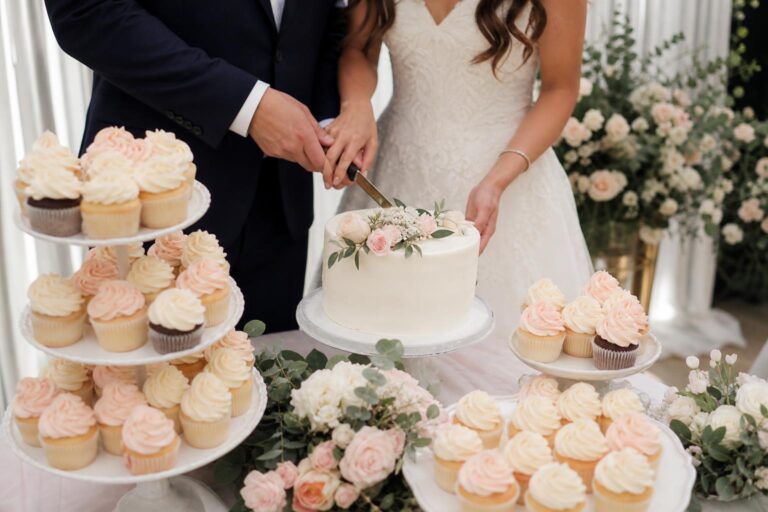
The cake cutting changes the energy around the table: you’ll have people gathered, cameras up, and often venue staff assisting. This is why tabletop clutter becomes a real issue—items can get moved or knocked as the cake is served. Keep the front edge of the table accessible and make sure any candles or lighting elements won’t interfere with service.
Delivery and setup workflow: who does what, and when
Even couples who love DIY décor are often happiest when the workflow is simple. The cake may arrive at a different time than florals, and rentals may already be in place. If you have a coordinator or event designer, ask them to confirm: who sets the stand, who places florals, who turns on lighting, and who checks the final look before guests enter. That one clear plan is often what separates “nice” from “magazine-worthy.”
Outfit-style recipes: practical “builds” for cake table decorations wedding planning
If you’re feeling overwhelmed by choices, use these “style recipes” the way you’d use a reliable outfit formula. Each one tells you what to prioritize and why it works, so you can adapt it to your venue and theme without starting from scratch.
Outfit solution: the romantic classic (florals + runner + candlelit glow)
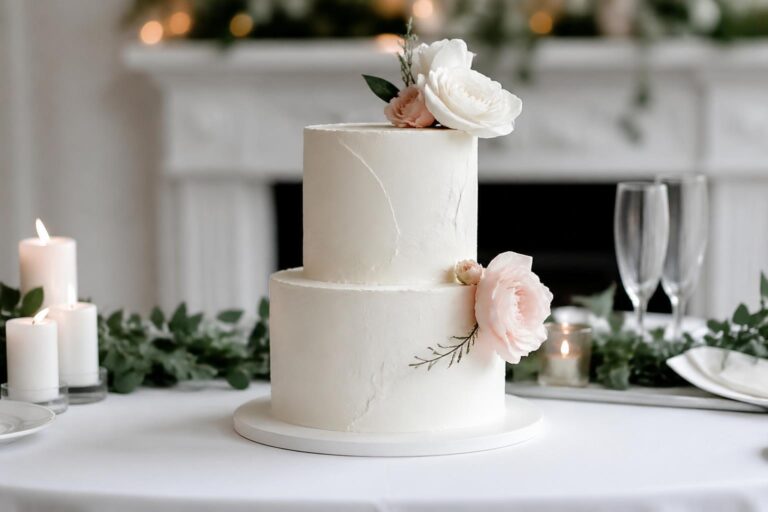
This formula suits romantic weddings where you want softness and warmth without a heavy theme. Start with a simple table linen and a runner texture that complements your reception tables. Place the cake on a stand, then add one floral arrangement that feels like it belongs to the bouquets. Finish with gentle lighting—candles or subtle ambience—to create that intimate, photo-ready glow.
Why it works: it repeats the wedding’s floral language, keeps the tabletop readable, and relies on lighting to create mood rather than adding more objects.
Outfit solution: the statement frame (backdrop + elevated stand + minimal tabletop)
Perfect for modern minimalist or polished glam receptions, this approach uses a strong backdrop and stand to do the visual work. Keep florals restrained—one clean arrangement or foliage accent—so the lines stay crisp. This is also a great solution when your venue space is tight, because most of the impact comes from vertical framing rather than a wide spread of décor.
Why it works: the backdrop defines the cake table as a focal point and keeps photos clean, while the elevated stand gives the cake presence across the room.
Outfit solution: the layered rustic display (display furniture + greenery + varied heights)
This is the formula behind many rustic cake table ideas: mix a main cake table with a secondary surface or display furniture to build height variation. Use greenery and florals to connect the layers. Keep props minimal and purposeful, so the scene feels like a collected vignette rather than a storage shelf.
Why it works: rustic themes look most authentic when they’re layered, and varying heights create depth that reads beautifully in photography.
Outfit solution: the whimsical dessert moment (cake + curated desserts + cohesive palette)
If you’re drawn to wedding dessert table ideas, this is the safest way to do it without chaos. Keep the palette tight and the styling consistent. Use risers to create levels, let the cake stay central, and repeat the same floral/foliage story across the display. Lighting matters here, because multiple items can cast busy shadows in photos if the area is too dark.
Why it works: it maintains a clear focal point (the cake) while still giving guests that abundant, celebratory spread that fits garden and whimsical themes.
Extra styling tips that make the cake table feel professionally finished
Small adjustments often create the biggest leap from “decorated” to “designed.” These are the details event designers and photographers tend to appreciate because they translate into cleaner images and calmer setup moments.
- Choose one hero element: either the cake stand, the floral arrangement, or the backdrop should be the “statement.” The rest supports it.
- Mind negative space: leaving space around the cake is what makes it feel important, and it keeps the table workable during the cake cutting.
- Keep the front edge clear: your coordinator and caterer will thank you, and it looks better in guest photos.
- Repeat, don’t reinvent: use the same color palette and décor theme cues already present in the reception.
- Light for faces and frosting: candlelight and uplighting should flatter both people and details, not create harsh shadows.
Tip: If you’re borrowing ideas from real-wedding galleries, pay attention to what you don’t see. The strongest cake table photos usually avoid random signage, extra décor items with no function, and overly crowded tabletops.
Common mistakes that quietly sabotage wedding cake table decorations
Most cake table issues aren’t about taste—they’re about timing, proportion, and coherence. Fixing these doesn’t require a bigger budget; it requires a clearer plan.
Mistake: decorating only the tabletop and ignoring the backdrop
This is why cakes sometimes look lost in photos. Without a backdrop or framing element, the cake table blends into the venue. Even simple greenery or a clean background strategy can immediately make the display feel intentional.
Mistake: too many props competing with the cake
When everything is “special,” nothing is. A cake table works best when the cake is the hero and props play supporting roles. If you’re adding multiple décor objects, remove half and see if the scene suddenly looks calmer and more elegant.
Mistake: mismatched theme cues (glam stand + rustic clutter + modern backdrop)
Theme alignment is what makes cake table styling look effortless. Mixing glam, rustic, vintage, and modern elements can work only when there’s a clear unifying thread—usually a consistent palette and consistent textures. Without that, the table feels like leftover décor from different plans.
Mistake: not planning for the cake cutting moment
Even a beautiful elegant cake table can become chaotic when service starts. If décor blocks access or candles and lighting crowd the work area, items get moved quickly—often without a chance to restyle. A functional layout protects your photos and your timeline.
Bringing it all together: your calm, confident plan for cake table ideas
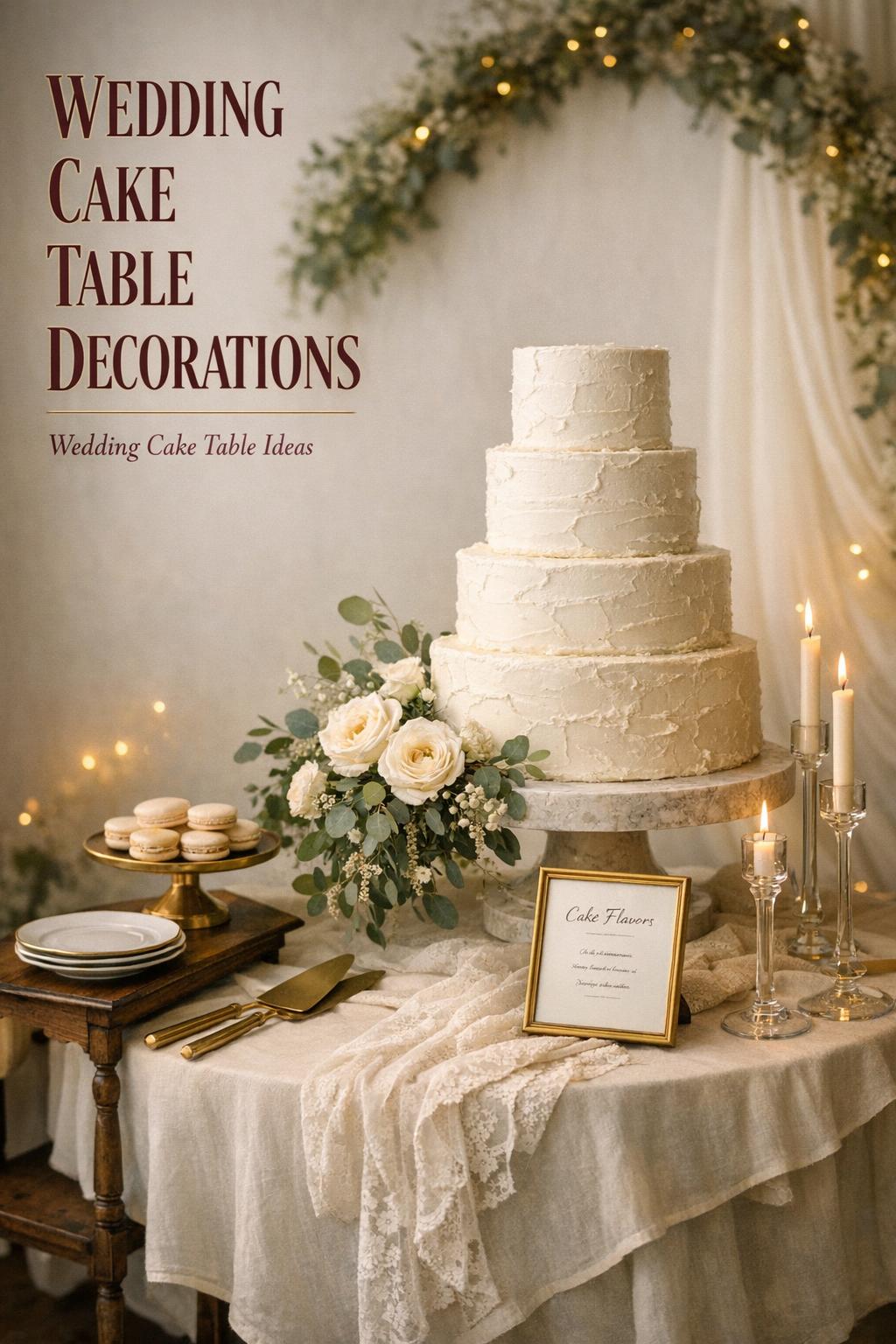
When wedding cake table decorations feel overwhelming, it’s usually because you’re trying to solve five decisions at once: theme, palette, height, backdrop, and lighting. Simplify the process by styling in layers. Start with the cake as the anchor, build structure with stands and risers, frame with florals and a backdrop, then finish with ambience. That approach works whether your dream is rustic and natural, vintage and romantic, garden-whimsical, glamorous, or modern minimalist.
Your cake table doesn’t need to be the biggest display at the reception—it just needs to feel like it belongs to your day. When it’s coherent, well-lit, and thoughtfully placed, guests will find it, photograph it, and remember it as part of the atmosphere you created.
FAQ
How do I decorate a wedding cake table with flowers without overcrowding it?
Use flowers as a frame rather than a blanket: place one intentional floral arrangement to the side or at the base of the cake stand, leave clear space in front for the cake cutting, and avoid surrounding the cake on all sides so the focal point stays clean and service remains easy.
What are the most important elements of wedding cake table decorations?
The most consistently effective elements are a cake stand or riser for height, florals or foliage to connect the table to your theme, a backdrop to frame the display, and lighting (candles, string lights, or uplighting) to create ambience and help the details photograph well.
How can I make an elegant cake table if my décor budget is limited?
Prioritize one high-impact piece (often the cake stand or a simple backdrop plan), add one strong floral moment that matches your wedding palette, and rely on ambience like candlelight rather than buying many small props that can make the table look cluttered.
Where should the cake table go at the reception for the best look and flow?
Choose a location that’s easy for guests to find but away from heavy traffic, and make sure the background behind the cake is visually calm; a clean wall, a curated corner, or a planned backdrop will keep photos looking intentional and prevent the table from becoming an accidental drop zone.
What are some reliable wedding cake table ideas for rustic weddings?
Rustic cake table styling works best with layered height using display furniture or risers, natural greenery and florals to soften the structure, and a restrained set of props so the scene feels collected and organic rather than crowded.
How do I make a modern minimalist cake table look finished, not bare?
Focus on structure and framing: use a clean-lined stand, keep the tabletop uncluttered, add a simple floral or foliage accent, and use lighting to create warmth; minimal setups rely on strong proportions and a clear backdrop to feel intentional.
Can I combine a cake table and a dessert table without it looking messy?
Yes, but keep one clear focal point (the cake), maintain a cohesive palette and theme across desserts and props, and use stands and risers to create organized levels; without those controls, dessert styling can quickly look busy in photos.
What lighting works best for cake table decorations during an evening reception?
Candles and uplighting are common choices for evening ambience because they create a warm focal point and help details stand out; the goal is soft, intentional light that flatters both the cake and the surrounding décor without crowding the service space.
What’s the biggest mistake couples make with wedding cake table decorations?
The most common mistake is decorating only the tabletop while ignoring height variation and a backdrop; without structure and framing, even pretty décor can feel like it’s floating in the room instead of reading as a designed focal point.