Pavlova Wedding Cake Looks: Centerpiece, Tower, or Minis
Pavlova wedding cake: two centerpieces, two very different wedding moods
You can feel it the moment dessert arrives: a hush, a lean-in, a little sparkle of anticipation. A pavlova wedding cake doesn’t just end the meal—it changes the atmosphere. One table gets a cloud-like meringue centerpiece crowned with fruit, another sees a more architectural display built in tiers, and suddenly the same dessert is telling two different love stories.
That’s why couples often talk about a “wedding pavlova” in the same breath as “tiered pavlova wedding cake” or “giant wedding pavlova.” From a distance, they sound like simple variations—bigger, smaller, stacked, not stacked. In reality, each style has its own visual language, serving rhythm, and set of practical considerations that matter on a real wedding day (especially when timing, refrigeration, and humidity are in play).
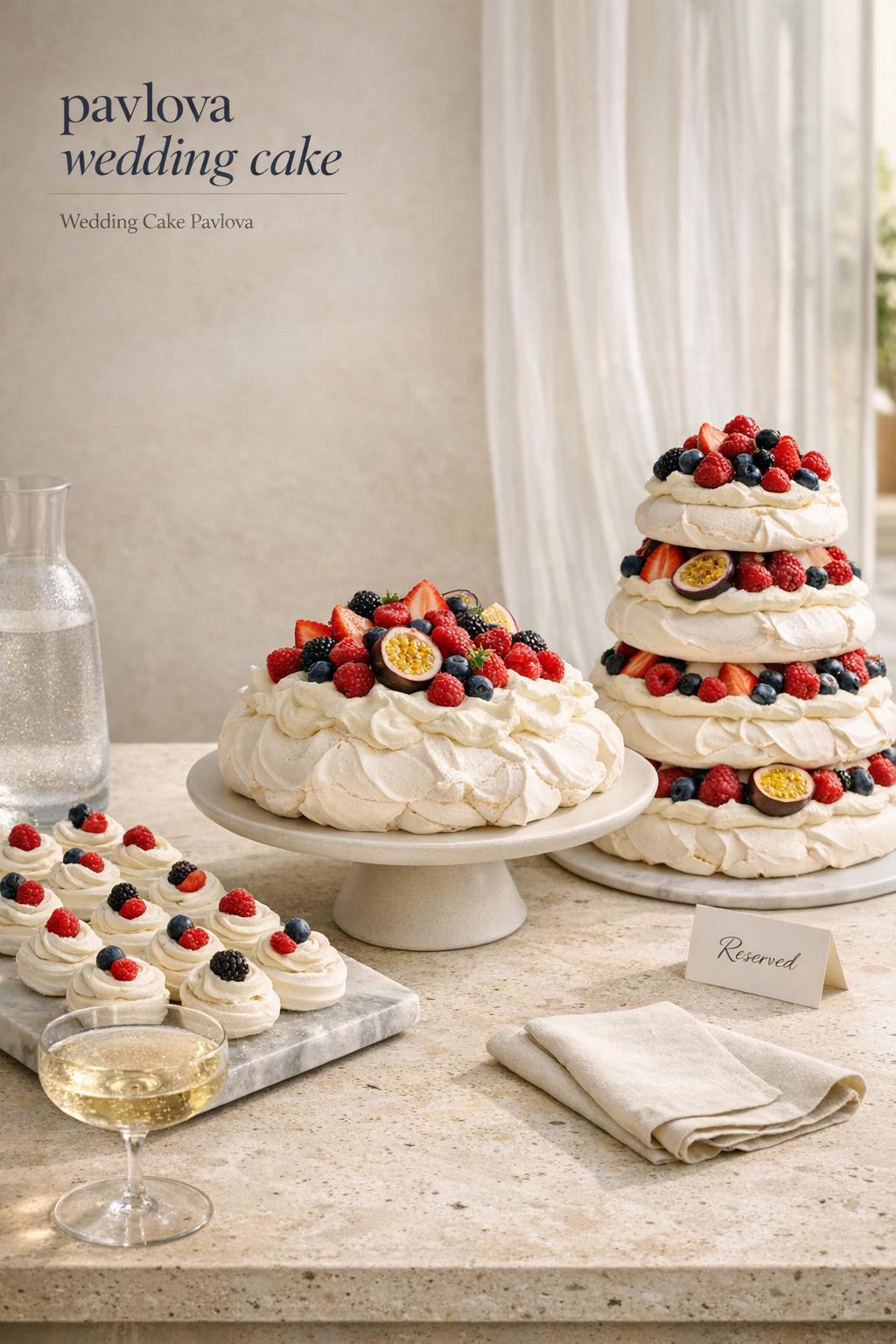
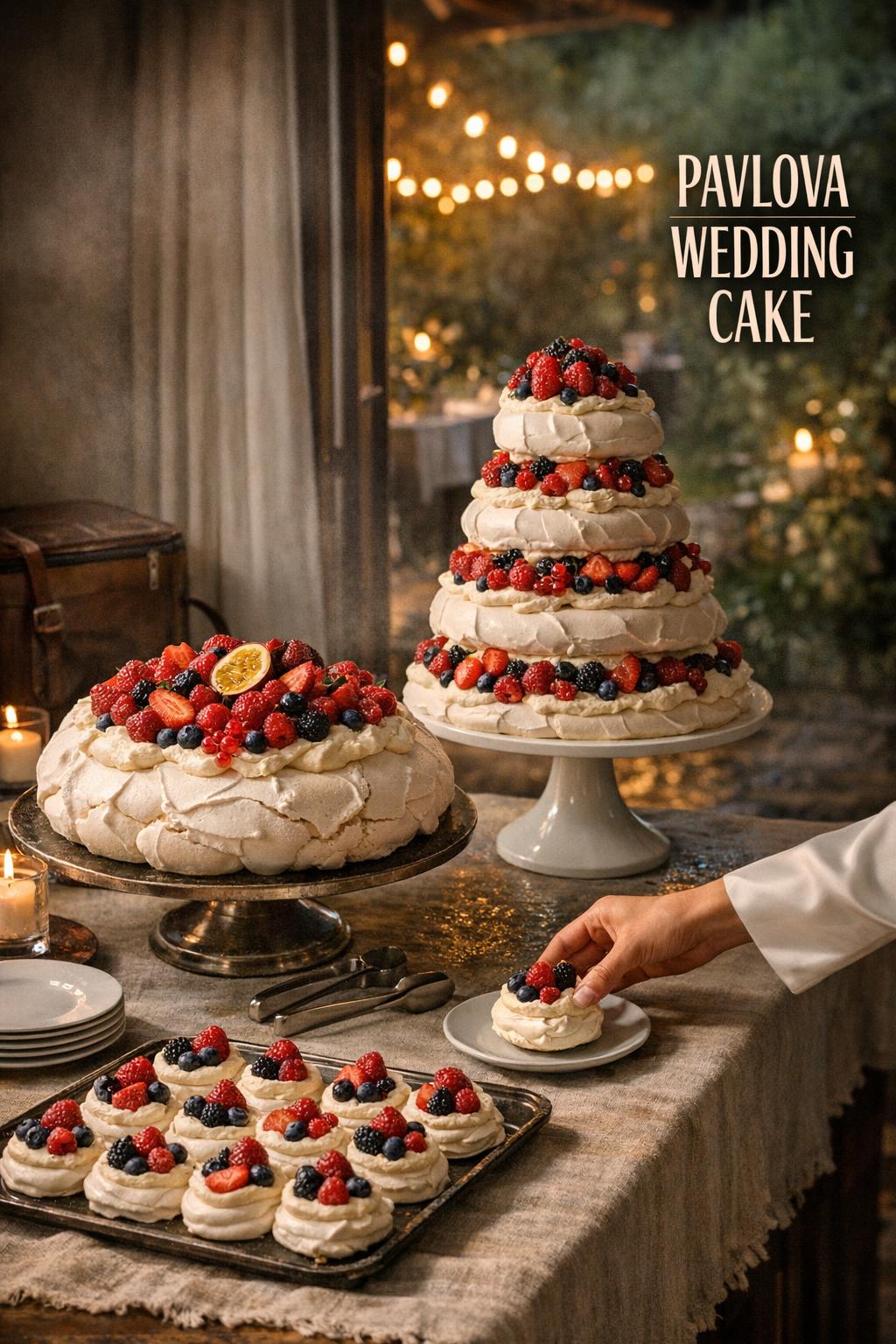
This comparison breaks down the main pavlova wedding cake styles you’ll see in modern US weddings: the single grand centerpiece, the tiered/stacked showpiece, and the mini or “pavlova nests” approach for dessert tables. You’ll learn what makes each one distinctive, how they read in different wedding aesthetics, and how to plan the details—toppings, presentation, stability, delivery, and on-site assembly—so your dessert looks as perfect at slice time as it did in your imagination.
Style overview: the classic wedding cake pavlova (single centerpiece)
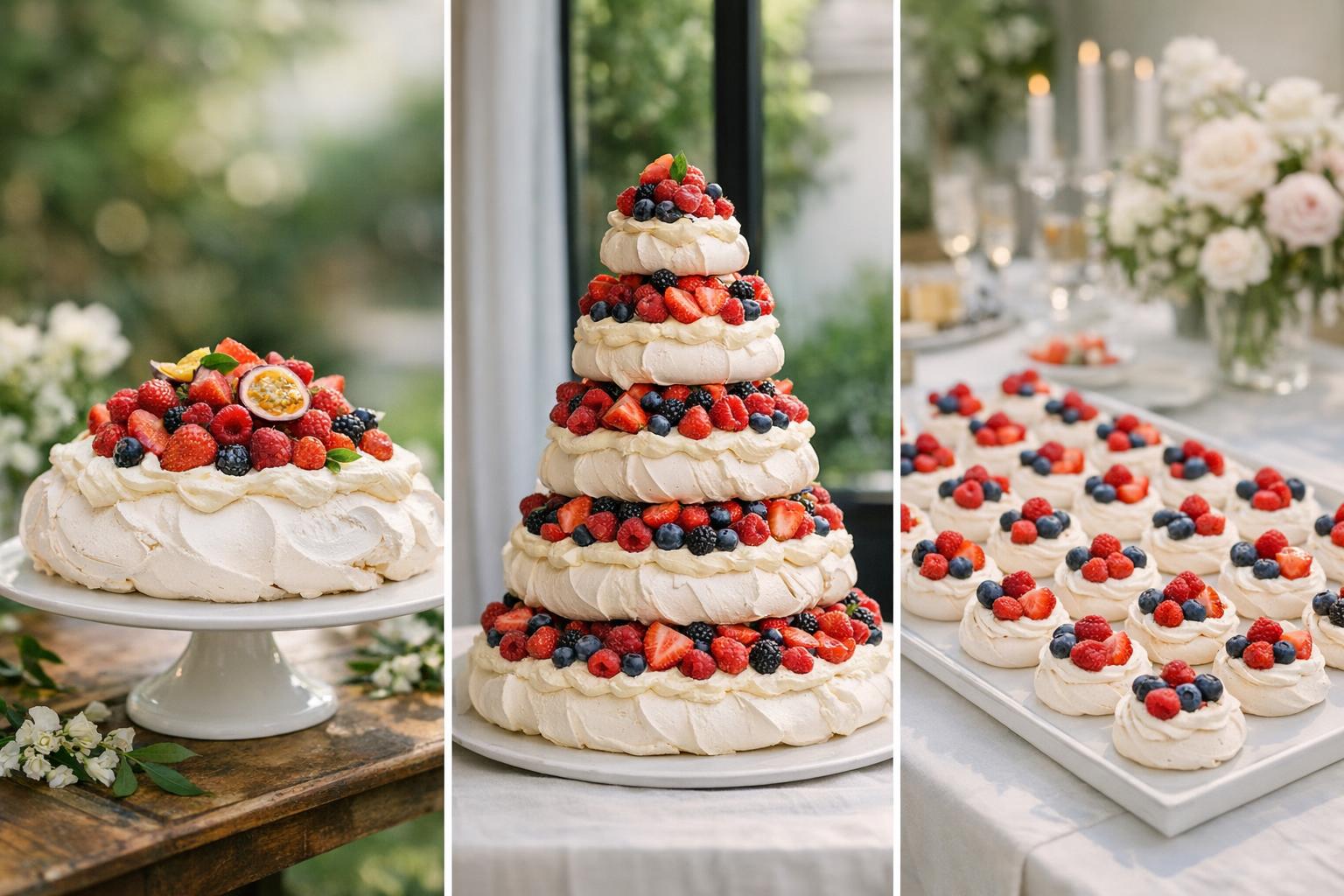
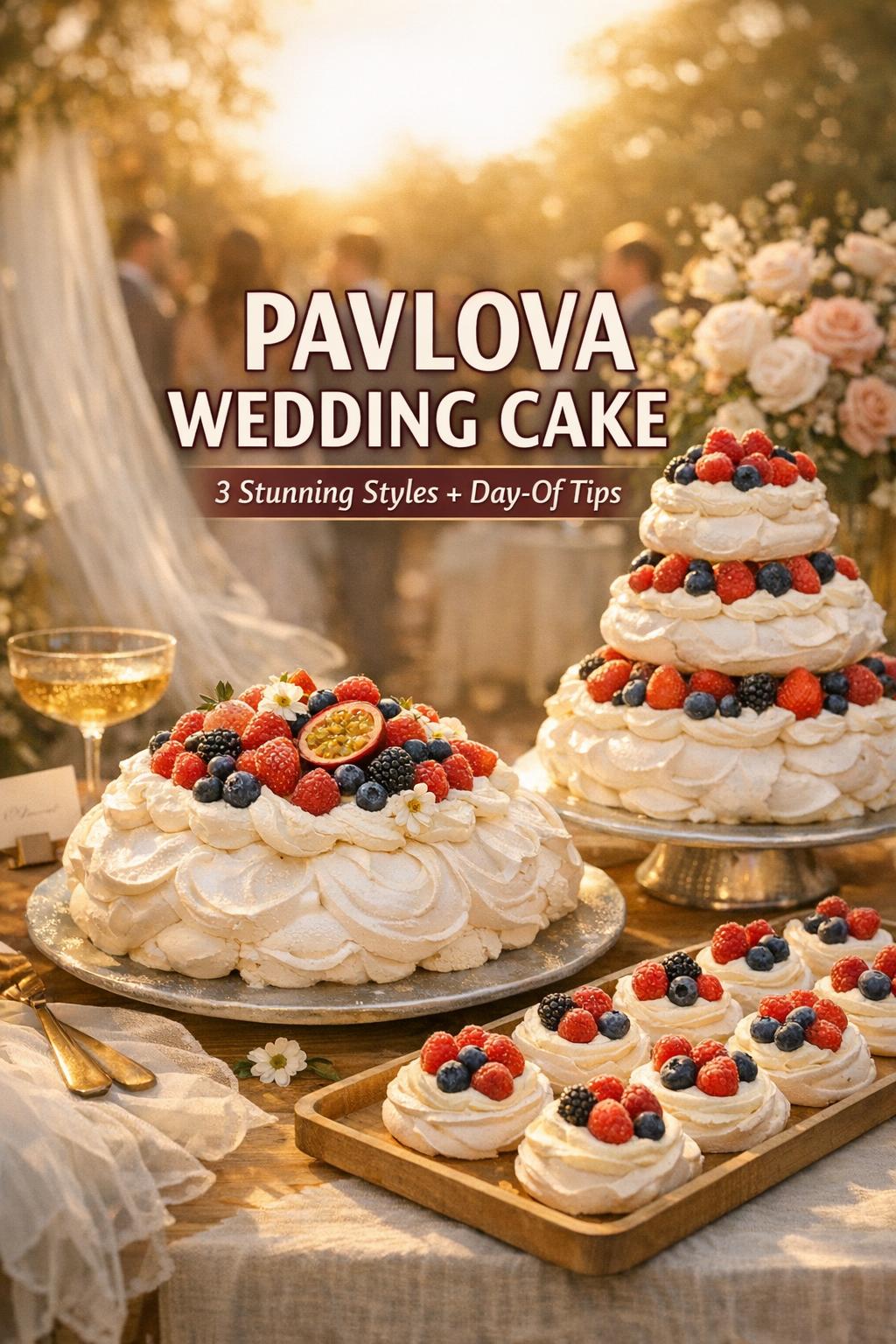
The classic wedding cake pavlova is a single, large pavlova designed to anchor the dessert moment the way a traditional cake would. It’s often described as a centerpiece dessert for a reason: the eye goes straight to it. Visually, it relies on contrast—bright fruit toppings against the pale meringue, and a sense of soft drama rather than sharp edges.
Turn wedding inspiration into a plan you can actually follow.
Zarellea brings your guest list, budget, vendors, and day-of details into one shared space — so no beautiful idea gets lost in the shuffle.
Defining characteristics include an elegant, round (or gently organic) silhouette, a light color story, and that “airy but intentional” mood that pairs naturally with romantic weddings. The texture experience is part of its identity: a crisp outer shell with a softer interior, finished with cream and fruit toppings like berries or passion fruit.
Because it’s one piece, this style tends to feel most like a true alternative wedding cake: it’s a focal point, it photographs well as a single object, and it supports a ceremonial “cut” moment—even though the serving usually benefits from a more practical plan behind the scenes.
Style overview: the tiered pavlova wedding cake (stacked/tower presentation)
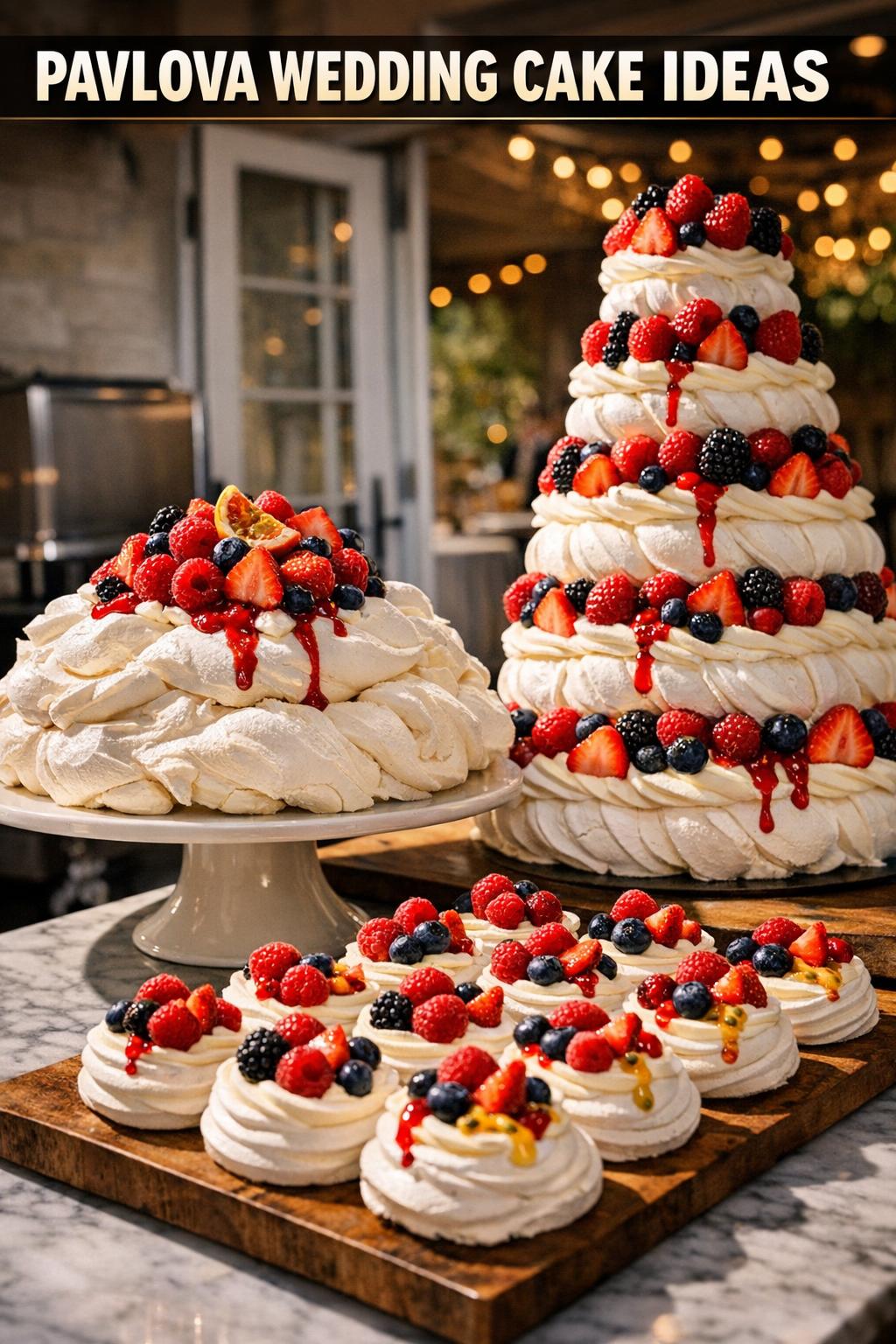
A tiered pavlova wedding cake takes the pavlova concept and leans into “wedding cake” architecture—height, tiers, and a layered silhouette. This is where pavlova becomes sculpture-like: stacked pavlovas or a tower format that reads from across the room and gives couples that dramatic, celebratory reveal.
Its defining characteristics are vertical proportion, a deliberate sense of structure, and a bolder presentation philosophy. While the palette still typically stays light (meringue naturally sets that tone), the fruit toppings can become more designed—think coordinated berry arrangements, mixed fruit patterns, or a consistent signature topping repeated across tiers for cohesion.
Because stacked formats add complexity, this style is more sensitive to wedding-day logistics. It can be breathtaking, but it demands planning around stability, transport, and on-site assembly timing so the “tower moment” happens at its best.
Style overview: mini pavlovas and dessert-table pavlova “nests”
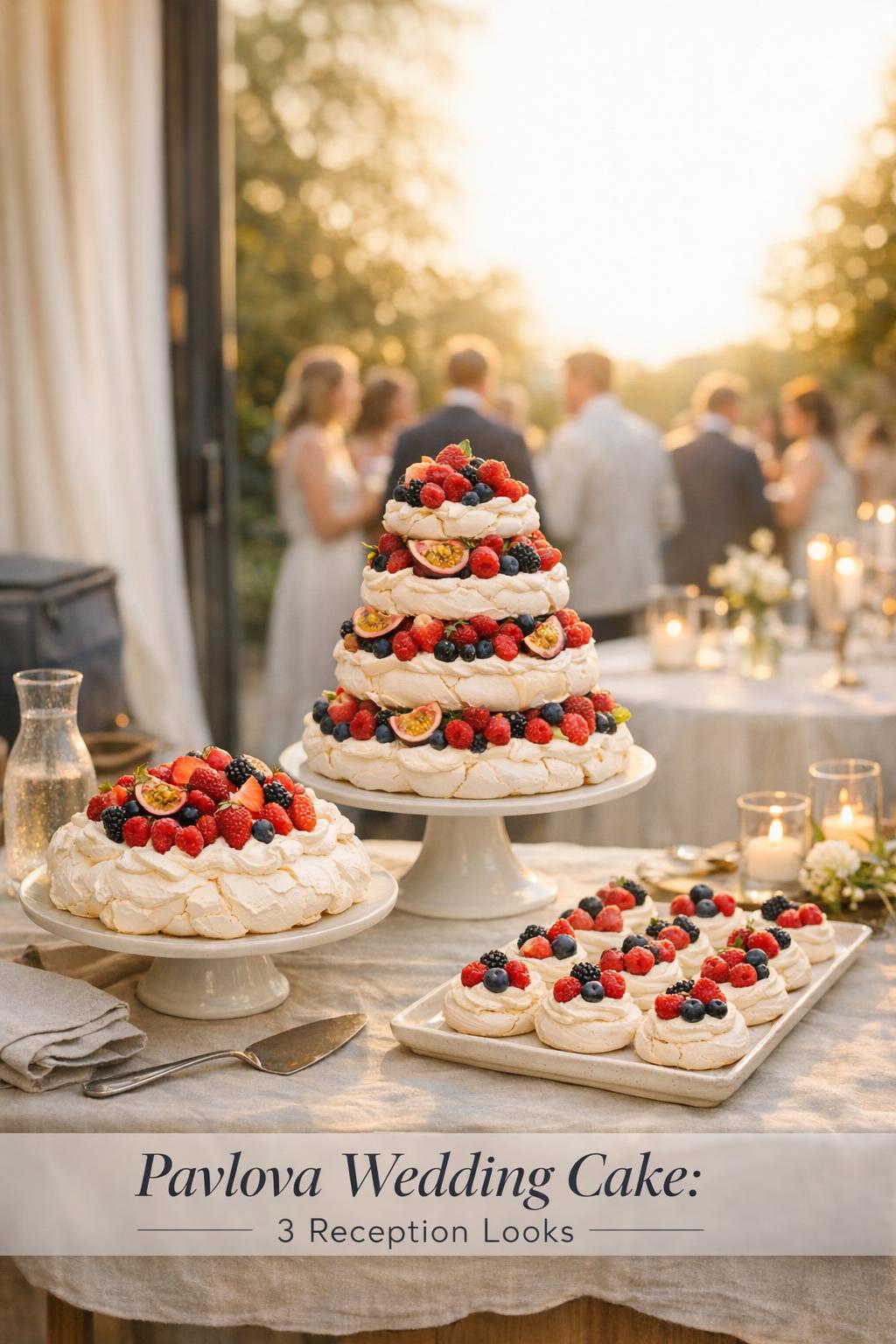
Mini pavlovas (sometimes described as individual pavlovas or pavlova nests) shift the focus from a single showpiece to guest experience and service flow. Instead of “everyone gathers for the cut,” the dessert becomes part of the rhythm of a reception: guests mingle, choose, and enjoy.
Defining characteristics include smaller scale, multiple identical silhouettes, and a presentation that often works best as a styled dessert table. The color palette can be more playful here—different fruit toppings, different seasonal pairings—because each piece is its own little moment.
This style is often chosen when couples want the pavlova flavor profile and meringue-based dessert feel without the risks that come with a giant centerpiece. It’s also a natural fit when the wedding planning priorities are speed of service, portion clarity, and flexibility for dietary needs.
Key differences that matter on a real wedding day
Silhouette and structure: soft centerpiece vs. architectural tiers
The single centerpiece wedding pavlova reads as romantic and effortless because it’s one continuous form—often a wide, low presence that feels abundant rather than engineered. A tiered pavlova wedding cake, by contrast, is about structure: you’re choosing height, separation between layers, and a more “designed” look. Mini pavlovas step away from both and create repetition, which can feel modern and curated—especially when aligned with the rest of the dessert table styling.
Formality and symbolism: “cake moment” vs. “dessert experience”
A giant wedding pavlova can carry the traditional cake symbolism—especially if you want a single photographed cutting moment. Tiered pavlovas heighten that symbolism with a more cake-like outline. Mini pavlovas trade ceremony for ease: they can still feel special, but the emphasis shifts to hospitality and flow, which many couples prefer for modern receptions.
Toppings and visual styling: one focal design vs. repeated motifs
With a single pavlova wedding cake, the fruit toppings function like a bouquet: one concentrated arrangement with berries, strawberries, raspberries, mixed berries, or passion fruit. A tiered pavlova needs a strategy that stays cohesive across levels—either repeating the same topping identity or designing each tier to look intentional as part of a set. Minis allow variety, but the styling challenge becomes keeping the table from feeling visually chaotic; repetition of a few flavors often looks more refined than offering every topping under the sun.
Logistics and risk: stability, refrigeration, and timing
All pavlovas are sensitive to conditions that affect texture—especially humidity and time spent assembled with cream and fruit. The more complex the structure, the more it pays to plan. A single centerpiece is easier to manage than a tower, and minis can be the least risky if you need flexibility. In practical terms, the question isn’t only “Which looks best?” but “Which will still look best at the exact moment we serve it?”
Visual style breakdown: how each pavlova style reads in your wedding aesthetic
Pavlova wedding cake ideas tend to get shared as a single trend, but the visual impact changes dramatically depending on format. Think of it like choosing between a statement bouquet, a floral installation, or scattered bud vases: same ingredients, different atmosphere.
Centerpiece pavlova: the “garden romance” effect
A classic wedding cake pavlova often feels like it belongs in a romantic garden setting—even in a ballroom—because the fruit toppings create that fresh-picked, seasonal mood. The overall outfit of the dessert is light: pale meringue, soft cream, and bright fruit. It suits couples who want an alternative wedding cake that feels intimate and expressive rather than traditional and formal.
Tiered pavlova: the “modern centerpiece” statement
A tiered pavlova wedding cake reads more modern and deliberately styled. It has a stronger line of sight from across the room, which makes it a natural fit for minimalist receptions where the dessert table is curated like a design vignette. Because the structure is part of the visual story, the toppings often work best when they’re controlled—coordinated berries or a signature fruit profile that looks intentional from top to bottom.
Mini pavlovas: the “dessert table couture” look
Minis shift the visual energy away from a single hero dessert and into a landscape of small, styled pieces. They look especially polished when the table design includes repeating shapes and a consistent palette—think rows of pavlova nests with berry pavlova variations in one area and passion fruit pavlova in another, rather than a scattered mix. The result is less of a single wow moment and more of a continuous, photogenic experience.
Comparison in practice: three “same wedding moment” examples
To choose confidently, it helps to imagine the same wedding scenario styled three ways. Below are side-by-side comparisons that focus on styling logic and planning consequences—not just what looks pretty online.
Example comparison: the cake-cutting moment after dinner
With a giant wedding pavlova, the couple can still have that classic “we did it” moment: you stand close, you slice together, and the room cheers. A tiered pavlova wedding cake amplifies the drama—more height, more presence, more of that traditional cake energy. Mini pavlovas take a different approach: you might skip the cutting moment or create a symbolic moment by plating a single “display pavlova” for photos while guests receive individual pavlovas for service.
Example comparison: a warm-weather reception with an indoor-outdoor flow
In conditions where humidity or temperature shifts are a concern, a single wedding pavlova can work beautifully if it’s brought out at the right time and handled with care. A stacked/tiered pavlova increases the complexity—more surfaces, more assembly, and often more time exposed—so timing and refrigeration become central to success. Mini pavlovas can be the most forgiving: you can keep them chilled longer, refresh the table in waves, and avoid putting the entire dessert plan at risk if one section needs adjusting.
Example comparison: a “dessert as décor” reception with a styled table
If your wedding styling vision includes a dessert table as part of the room design, mini pavlovas behave like décor elements: they can be arranged for symmetry, height variation, and a curated flow. A tiered pavlova becomes the table’s centerpiece, acting like a focal sculpture surrounded by smaller sweets. A single centerpiece pavlova can still work, but it tends to feel more “one moment” than “full installation,” unless it’s paired with complementary desserts and a deliberate presentation plan.
Toppings and seasonal pairings: how flavor choices change the aesthetic
Fruit toppings aren’t just flavor—they’re color palette, texture, and mood. For a pavlova wedding cake, toppings also function as a planning tool because different fruits and arrangements behave differently once assembled. Whether you’re inspired by a berry pavlova, drawn to passion fruit, or want mixed berries for a crowd-pleasing finish, your topping decisions should match your chosen format.
Berry-forward styling: strawberries, raspberries, and mixed berries
Berries are a common choice for wedding pavlova because they read as celebratory and photograph with strong contrast against meringue. Strawberries offer bold color and a classic feel; raspberries bring a softer, romantic texture; mixed berries create abundance and can support many wedding palettes without feeling overly themed. On a single centerpiece, berries can be arranged like a floral crown; on a tiered pavlova, repeating a berry motif across layers keeps the look cohesive; on minis, offering one or two berry options usually looks more refined than offering five.
Passion fruit and brighter fruit notes: a more modern, punchy direction
Passion fruit signals a slightly bolder mood—still romantic, but more contemporary and vibrant. It works especially well when you want your pavlova wedding cake ideas to feel less traditional and more “signature.” In a tiered format, passion fruit can unify the look as a consistent flavor identity; in minis, it can be a standout option that feels curated, especially if paired with a second choice like mixed berries.
Tip: design toppings like you design wedding florals
If you’re unsure how to make a wedding cake pavlova look intentional, borrow a floral framework: choose one “hero” fruit (like strawberries), one supporting element (like raspberries or mixed berries), and then keep the rest minimal so the composition reads cleanly. This approach is especially helpful for tiered pavlovas, where too many competing topping styles can make the overall silhouette feel busy rather than elegant.
Stability, shipping, and on-site assembly: the unglamorous details that protect the magic
Pavlova is a meringue-based dessert, and weddings are long events with moving parts. That’s not a reason to avoid a pavlova wedding cake—it’s a reason to plan it like a professional. The goal is simple: preserve texture, keep the presentation pristine, and make serving feel seamless.
Humidity and timing: choosing the right “reveal window”
Of all the practical considerations, humidity and timing tend to be the ones couples feel only when it’s too late. A pavlova centerpiece looks its best when it’s served soon after final assembly—especially once cream and fruit toppings are involved. If your reception includes outdoor time, or if you’re moving between spaces, treat the pavlova like a special reveal: keep it protected until close to service, then bring it out as part of the celebration.
Transport strategy: single centerpiece vs. tiered structure
A giant wedding pavlova can be easier to transport than a tiered pavlova wedding cake simply because it’s one unit, not a stacked structure. Tiered designs often benefit from on-site assembly—bringing components separately and stacking at the venue—so the dessert arrives intact and the structure is built close to the moment guests will see it. Mini pavlovas are generally the most flexible: they can be transported in batches, arranged on-site, and replaced or refreshed as needed.
Refrigeration planning: treat it like a timeline, not an afterthought
Refrigeration isn’t just about keeping things cold; it’s about controlling the pace of your wedding day dessert. Couples who love pavlova often envision a relaxed, romantic finale—yet that feeling is easiest to achieve when the behind-the-scenes plan is precise. Confirm where the pavlova will be kept at the venue, who will move it, and when final toppings and finishing touches will happen so the presentation and texture stay aligned.
Tips for a venue-ready pavlova plan
- Decide whether you want a ceremonial cut, a plated dessert, or a dessert-table experience before committing to a format.
- Confirm delivery timing and lead-time details with your vendor early; wedding pavlovas often require advance ordering windows.
- Plan for on-site assembly if you choose a tiered pavlova wedding cake to reduce transport risk.
- Assign one point person (planner, venue coordinator, or a trusted friend) to manage the “bring out and serve” moment so it doesn’t get delayed.
- Align toppings with service timing: a controlled, cohesive topping plan is easier to keep pristine under real wedding conditions.
Brand and vendor style spotlight: how real-world offerings shape your options
Shopping for a wedding pavlova in the US often means balancing romance with logistics. Some couples want a vendor who specializes in a wedding-size pavlova product with customization options; others want a bakery menu that includes a wedding pavlova as part of a wider dessert selection. Below is a style-focused look at recognizable vendor and product signals that appear across popular options.
The Golden Pavlova: product customization and wedding-size options
The Golden Pavlova presents the wedding pavlova as a dedicated product concept, emphasizing customization options, size choices, and delivery/ordering details. This style tends to appeal to couples who want a clear, transactional path—select a wedding-size pavlova, choose fruit toppings (like strawberry, raspberry, or mixed), and align the delivery plan with the wedding timeline. For a tiered pavlova wedding cake vision, this kind of customization mindset can be especially helpful, because it encourages decisions around size, servings, and presentation before you’re deep in wedding-week logistics.
Catalina’s Sweet Atelier: signature flavor identity and a styled finish
Catalina’s Sweet Atelier frames its offering as a signature wedding pavlova, including a strawberry-topped identity (“crocante de fresas”) with customization and serving notes. This kind of approach often suits couples who want the dessert to feel like a designed part of the wedding aesthetic—less “choose from endless options” and more “commit to a signature look that’s already cohesive.” A signature-style pavlova can be especially effective for a classic centerpiece wedding cake pavlova, where one strong, confident design reads most elegantly.
Piononos Inc.: menu-based wedding pavlova with distinctive ingredient cues
Piononos Inc. positions pavlovas as part of a broader bakery/restaurant menu, including a wedding pavlova option with pricing and notes that hint at distinctive flavors and fillings, such as walnut meringue, dulce de leche, and strawberry elements. From a style standpoint, this suggests a wedding pavlova that may feel richer and more dessert-menu driven—an option that can shine when your reception leans into a curated dining experience. If you love pavlova but want it to feel less “light and airy” and more like a signature finale, ingredient cues like these can influence your choice.
CakeBloom: variety, sizes, and dietary-friendly signaling
CakeBloom’s pavlovas category presentation emphasizes varieties, sizes, and purchase options, with an on-page signal that includes gluten-free context. For weddings, this style of offering can be helpful when you’re managing guest needs and want options that fit into a wider dessert plan. Minis and dessert-table formats often pair naturally with this approach, because variety can be presented in a controlled, visually consistent way.
A culinary authority reference point: Nigella Lawson’s “wedding pavlova” lens
Nigella Lawson’s wedding pavlova framing brings a different kind of value: it treats the pavlova as a true showpiece dessert with a recipe structure—ingredients, method, notes, and serving ideas. Even if you’re ordering from a vendor, this recipe-style lens can help you think like a planner: what elements are assembled when, how toppings and cream function as finishing details, and why the timing of the final presentation matters for both appearance and texture.
Choosing your pavlova format by wedding setting (a planner’s perspective)
Most couples don’t choose a pavlova wedding cake purely by taste—they choose it by the kind of evening they’re creating. Below are setting-based recommendations that connect the dessert style to the flow of the event.
For intimate weddings: lean into the single centerpiece
Smaller guest counts often benefit from a single wedding cake pavlova because the moment feels personal: guests can gather close, the dessert can be carried in like a celebration, and the serving plan can stay simple. If you want romance without fuss, this format gives you the emotional arc of a cake moment with the lighter, fruit-forward feel that makes pavlova special.
For large receptions: tiered or minis, depending on service style
With bigger weddings, the decision often comes down to service. If you want a dramatic reveal and you have strong coordination (a planner or venue team who can manage timing and assembly), a tiered pavlova wedding cake can be a true centerpiece. If your priority is smooth distribution—especially if the evening includes dancing, speeches, and a flexible timeline—mini pavlovas tend to keep dessert joyful instead of stressful.
For dessert-table weddings: minis plus one display pavlova
A hybrid approach often feels the most modern: a single giant wedding pavlova or display pavlova for photos and a symbolic cut, supported by mini pavlovas for guests. It gives you the best of both aesthetics—one show-stopping centerpiece and a practical service plan that doesn’t require perfect slicing in the spotlight.
Tiered pavlova wedding cake: common style mistakes (and how to avoid them)
A stacked pavlova can be unforgettable, but it’s also where couples can accidentally create stress. These aren’t “don’t do it” warnings—think of them as the details that separate a beautiful inspiration photo from a real wedding success.
Mistake: treating the tower like a traditional cake timeline
Traditional wedding cakes can sit out for display longer; pavlova generally benefits from a tighter “reveal window.” If you plan a tiered pavlova as though it can be staged early and admired for hours, you may lose the crispness and clean look that make it feel magical. Instead, plan a late assembly and a closer-to-service presentation moment.
Mistake: too many topping styles across tiers
Because each tier is visually distinct, it can be tempting to make every layer different—one berry pavlova tier, one passion fruit tier, one mixed fruit tier. The result can look busy rather than elevated. A more cohesive strategy is to choose one signature topping identity, then vary small details (like the way berries are arranged) so the tower reads as one design.
Mistake: not deciding who “owns” the last 30 minutes
The last stretch before dessert is when pavlova shines or struggles. If no one is clearly responsible for moving, assembling, and presenting the pavlova, it can end up sitting too long or being rushed. Assign ownership—vendor, planner, or venue coordinator—so the dessert arrives like a moment, not a scramble.
A recipe-style framework for couples hosting or supplementing a dessert table
Not every couple wants to bake for their wedding, but many couples do want to understand the logic of a wedding pavlova so they can plan it well—or create a small pavlova element for a bridal shower, rehearsal dinner, or a casual welcome event. Thinking in a recipe structure can be surprisingly calming: it reminds you that pavlova is a sequence, and your job is to protect the sequence with timing and conditions.
Use a simple framework: plan the meringue base (the pavlova itself) as the stable foundation, then treat cream and fruit toppings as finishing details that belong close to serving time. Whether you’re building one giant wedding pavlova or arranging mini pavlova nests, the same principle holds: the final look is last-minute beauty, not an early task to check off.
Tip: make your pavlova plan scalable, not complicated
If you’re supplementing a vendor order with additional minis, keep flavors consistent with the main pavlova so the dessert story feels unified. For example, if your centerpiece is strawberry-forward, keep mini options in the berry family rather than adding unrelated flavors. Guests will experience it as abundance and intention, not as a scattered assortment.
When to choose each pavlova style (and when not to)
Choose a single centerpiece wedding cake pavlova if…
This format is ideal when you want a romantic focal point, a clear cutting moment, and a simpler plan than a stacked tower. It’s also a strong choice when your wedding aesthetic leans garden, timeless, or softly modern, and you want fruit toppings like berries to act as your “decor.” It may not be the best fit if your venue can’t support refrigeration needs or if the dessert must sit out for a long time before service.
Choose a tiered pavlova wedding cake if…
Go tiered if you crave the drama of height and the visual presence of a traditional wedding cake silhouette, and you have the coordination to manage on-site assembly and precise timing. Tiered pavlovas are especially rewarding when you want a modern centerpiece look. It may not be ideal if your timeline is unpredictable, if transport is complex, or if you’re concerned about environmental conditions like humidity affecting the meringue-based dessert presentation.
Choose mini pavlovas if…
Mini pavlovas shine in receptions where guest flow matters: cocktail-style seating, dancing-forward timelines, or dessert-table weddings. They’re also helpful when dietary considerations (like gluten-free signaling) are part of your dessert planning, because individual portions can be managed and served more predictably. Minis may not satisfy couples who want a single, iconic cake-cutting photo unless you pair them with a display pavlova.
Quick planning checklists that keep pavlova effortless
Vendor conversation checklist (order and delivery)
- Confirm lead time and ordering window, including any wedding-specific timelines.
- Ask what size options and serving guidance are available for your guest count.
- Clarify whether the pavlova arrives fully assembled or requires on-site assembly.
- Discuss fruit toppings and whether the design can be kept cohesive across tiers or minis.
- Confirm delivery timing and who is responsible for placement at the venue.
Day-of coordination checklist (presentation and service)
- Decide the exact moment the pavlova will be brought out (close to service is usually best).
- Confirm refrigeration access and a designated holding area.
- Assign one person to cue the dessert moment with your planner or venue coordinator.
- Choose a cutting/serving approach that matches your format (centerpiece vs. tiered vs. minis).
- Plan lighting and placement so the pavlova photographs as the centerpiece it is.
Related desserts and alternatives when pavlova isn’t the right match
Sometimes the most confident choice is realizing that pavlova, while beautiful, doesn’t align with your venue conditions or service plan. If you love the idea of a non-traditional centerpiece dessert, alternatives like mousse towers or mini tarts can offer a similar “modern wedding dessert” energy with different handling needs. You can also keep pavlova in the wedding weekend in a lower-stakes way—like a dessert table accent—while choosing another centerpiece for the main reception.
The heart of the decision is the same: match the dessert’s structure and serving requirements to your real wedding timeline. When that match is right, pavlova feels effortless; when it isn’t, it can feel like one more thing to manage. Your goal is to protect your peace and your joy—because dessert should feel like celebration, not coordination.
FAQ
What is a pavlova wedding cake, exactly?
A pavlova wedding cake is a wedding dessert centerpiece built around pavlova, a meringue-based dessert typically finished with cream and fruit toppings such as berries or passion fruit, used as an alternative to a traditional wedding cake.
Is a wedding cake pavlova the same thing as a tiered pavlova wedding cake?
They’re related but not identical: a wedding cake pavlova often refers to a single large centerpiece pavlova, while a tiered pavlova wedding cake is a stacked or tower-style presentation designed to mimic the height and structure of a traditional tiered cake.
What toppings are most popular for a wedding pavlova?
Common wedding pavlova toppings include strawberries, raspberries, mixed berries, and passion fruit, usually paired with cream and arranged to create a centerpiece look that matches the wedding’s color palette and season.
How do couples handle pavlova stability at weddings?
Stability is usually managed through timing (bringing the pavlova out closer to serving), careful transport, refrigeration planning, and in some cases on-site assembly—especially for tiered formats that are more sensitive to movement and conditions like humidity.
Can a giant wedding pavlova still have a traditional cake-cutting moment?
Yes—many couples use a giant wedding pavlova as the centerpiece for a photographed cutting moment, then transition into a practical serving plan so guests receive portions efficiently while the dessert still looks and tastes its best.
Which pavlova format is easiest for guest service: single, tiered, or minis?
Mini pavlovas are often the easiest for guest service because portions are pre-defined, while a single large pavlova is simpler than tiered for handling; tiered pavlovas can be the most complex due to stacking, on-site assembly, and the need for precise timing.
Where can I order a wedding pavlova in the US?
Several vendors present wedding pavlova options, including The Golden Pavlova (wedding pavlova product with customization and delivery details), Catalina’s Sweet Atelier (a signature wedding pavlova offering), Piononos Inc. (menu-based wedding pavlova options), and CakeBloom (pavlova varieties and sizes with dietary-friendly signaling).
Is pavlova gluten-free for wedding guests?
Some pavlova offerings are presented with gluten-free context, but it’s important to confirm the specific product and handling with your vendor, especially for weddings where cross-contact and other dietary considerations matter.
How far in advance should we plan a wedding pavlova order?
Because vendors often require lead time and have specific delivery or ordering windows for wedding-size pavlovas, it’s best to discuss timing early during planning so size, toppings, and on-site logistics can be aligned well before the wedding day.