
Dresses in Winter: How to Stay Warm and Look Polished
The forecast says wind, the sidewalk is shining with sleet, and the easy answer seems to be jeans. Then you open your closet and see the dress you actually want to wear. Maybe it is a fluid printed midi that makes a gray morning feel less gray. Maybe it is a black slip dress saved for dinner. Maybe it is a summer favorite that has never had a fair chance after October. Dresses in winter are not a contradiction. They are a styling problem with a very satisfying solution.
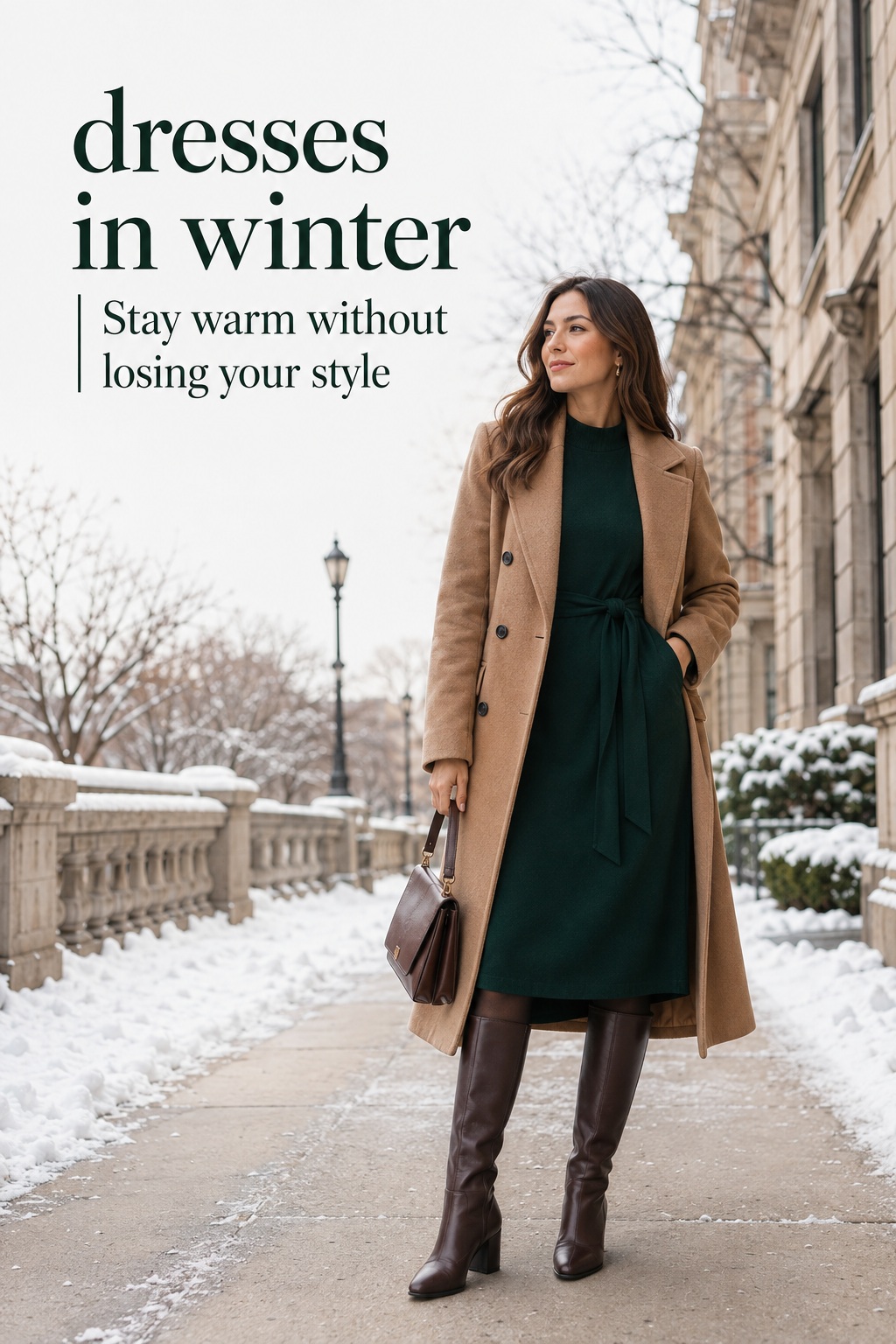
The most convincing cold-weather outfits do not rely on one heroic garment. They build warmth in quiet layers, keep the proportions intentional, and let the dress remain the central idea. A fine base layer can disappear under a fitted bodice. Opaque tights can turn a short hem into a practical one. A long coat can make a lightweight dress feel considered, while weather-ready boots take care of the walk between the car, the train, and the front door. Here is how to make the whole system work.
Why dresses in winter can feel effortless
A dress already solves part of the outfit. It gives you one continuous line from shoulder to hem, so you do not have to negotiate a top, waistband, and trouser shape before you have had coffee. That simplicity is especially useful in winter, when outerwear, scarves, gloves, and bags add visual weight. A dress gives all those practical pieces something clear to support.
The best winter dresses also create a stable center for changing temperatures. You may leave a heated apartment, stand on a cold platform, spend several hours indoors, and walk home through wet streets. A dress with a little room through the torso can hold a thin thermal layer. A midi length works with boots and keeps more of the leg protected. A knit or wool-blend fabric provides warmth without requiring the bulk of several sweaters.
Turn wedding inspiration into a plan you can actually follow.
Zarellea brings your guest list, budget, vendors, and day-of details into one shared space — so no beautiful idea gets lost in the shuffle.
Think in terms of the dress’s job. A sweater dress is a warm foundation. A cotton shirtdress is a layering shell. A slip dress is a smooth canvas for a turtleneck, cardigan, or jacket. A velvet or sequined dress is an occasion piece that needs strategic insulation rather than a pile of visible layers. Once you identify the job, the outfit stops feeling like a seasonal compromise and starts feeling like a deliberate look.
Fit matters more than a label such as winter or summer. A thin dress can work in January if it leaves enough space for a base layer and outer coat. A thick dress can feel uncomfortable if its sleeves fight with your coat or if the waist is so tight that nothing can be added underneath. Before buying another piece, try your existing dresses with the layers you already own. The right combination is often closer than you think.
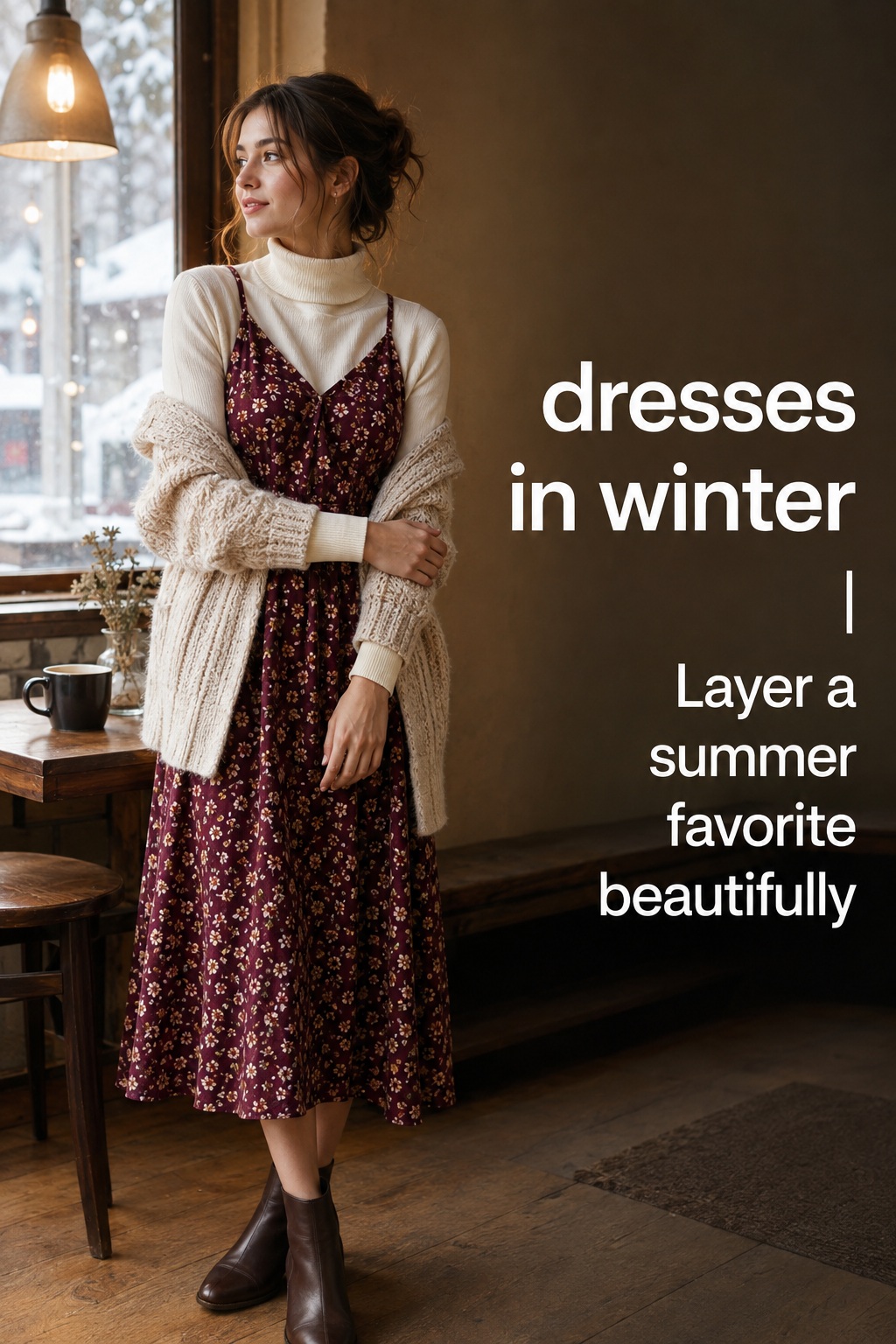
Build warmth underneath without adding bulk
Start with the layer closest to your skin. On a dry, moderately cold day, a lightweight long-sleeve tee or fitted mock neck may be enough. Choose a smooth fabric and a neckline that works with the dress. A crew neck under a square neckline can look purposeful. A thin turtleneck under a sleeveless dress creates a graphic line. Under a wrap or V-neck dress, a scoop-neck thermal usually keeps the neckline clean.
When the dress is fitted, avoid piling on several thick layers at the waist. One thin merino, silk, or technical base layer is more useful than a bulky cotton shirt that bunches every time you sit down. For a looser dress, you have more freedom. A crisp button-down, a fine-gauge turtleneck, or even a slim cardigan worn underneath can change the mood while adding coverage.
Tights are the quiet engine of many dresses in winter outfits. Opaque black tights are dependable, but they are not the only option. Deep brown, charcoal, burgundy, and navy can connect more naturally with a colorful dress. Fleece-lined tights are valuable for long outdoor stretches, especially when the dress hem is above the knee. If fleece feels too warm indoors, choose a regular opaque pair and add tall socks inside your boots for the commute.
Pay attention to the seam where the tights meet the dress. A short dress can handle a strong contrast, such as a cream knit with black tights. A midi dress often looks more polished when the leg and boot share a similar value, creating one uninterrupted column. With a printed dress, pull one dark color from the pattern into the tights or shoes. This small connection makes the outfit feel styled even when every item is practical.
For severe cold, add insulation at the places people notice least. A slip can prevent a dress from clinging to tights and can create another warm layer. Thermal shorts add comfort under a short or loose dress without changing the silhouette. Wool socks can be folded over the top of ankle boots, hidden beneath a midi hem, or worn visibly with a more casual look. The goal is not to make every layer visible. The goal is to make the visible layer easier to wear.
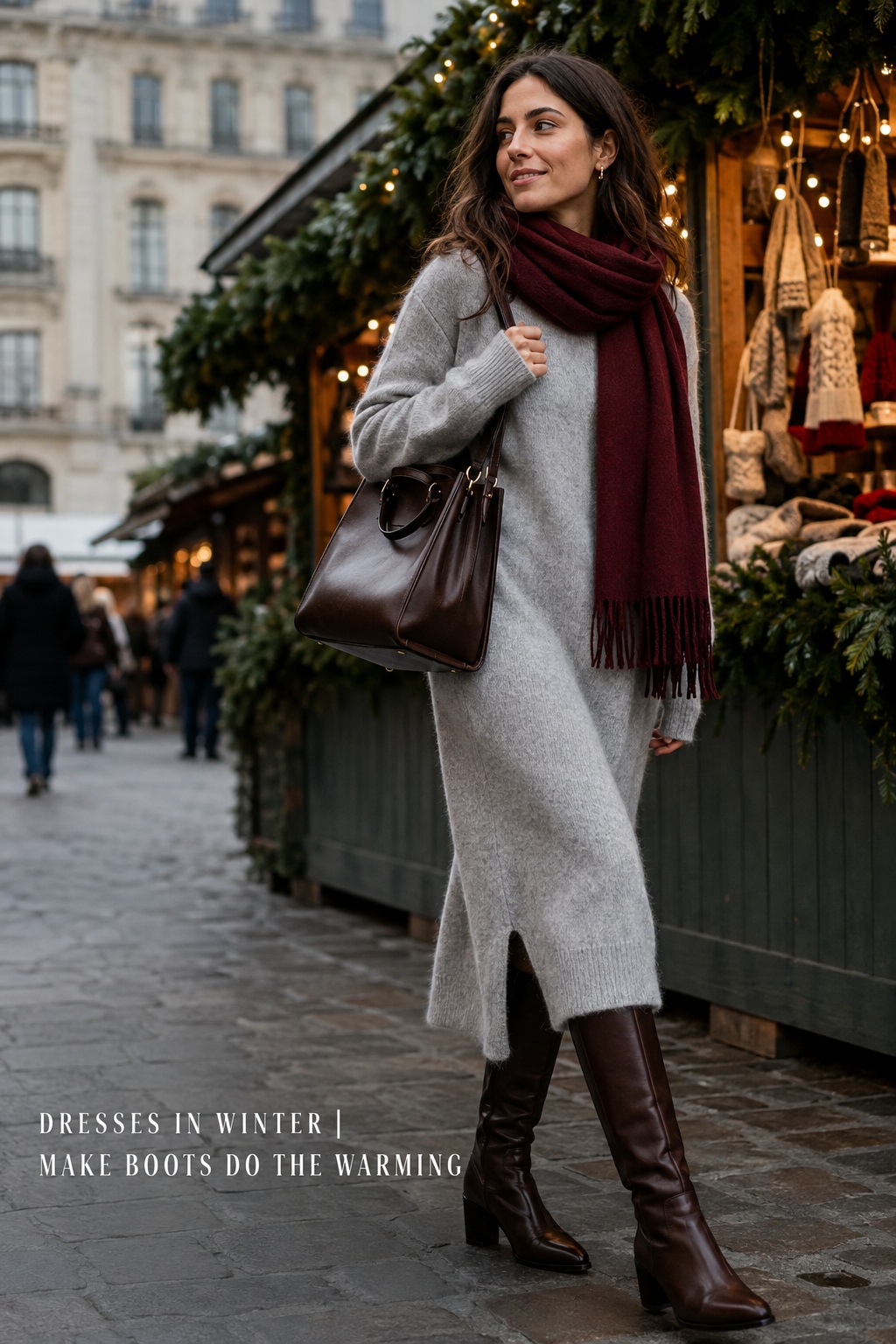
Use layers on top to change the dress’s personality
The layer on top determines whether a dress reads as office-ready, weekend casual, or evening-appropriate. A fine cardigan softens a printed dress and works well when you need a little warmth but not a full coat. Wear it open to preserve the dress line, button it for a more composed look, or fasten only the middle buttons so the waist stays visible. A belt can make the cardigan and dress feel like one outfit instead of two unrelated pieces.
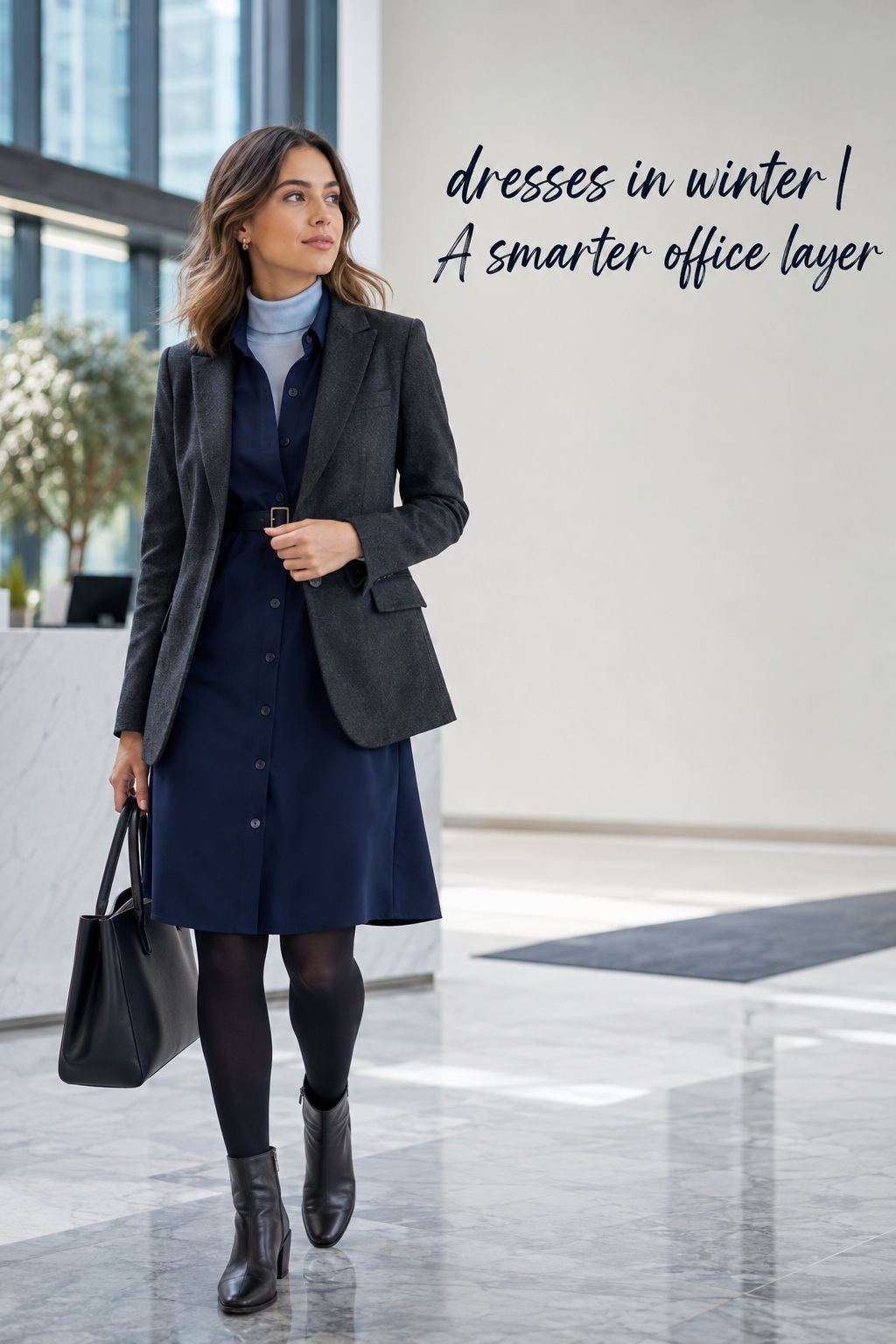
A blazer gives a fluid dress structure. Try a relaxed blazer over a slip dress with opaque tights and ankle boots. Over a knit midi, choose a blazer with enough room in the shoulders, then leave it open so the proportions do not become stiff. A cropped jacket highlights the waist of a fuller skirt, while a longer jacket creates a leaner line over a straight dress. Match the jacket’s visual weight to the dress. A delicate dress under a huge rigid jacket can look accidental unless the contrast is very intentional.
The sweater-over-dress idea works best when the dress can safely act like a skirt. A sleeveless midi with a defined waist is a natural candidate. Add a fine or medium-weight sweater, gently blouse the hem, and use a belt if the waist needs definition. This formula is especially useful for summer dresses with a print you love but a fabric that is too light to wear alone. Avoid forcing a bulky sweater over a dress with a lot of gathers at the bust or hips, since the extra volume can make sitting and movement uncomfortable.
For a more polished layered look, put a shirt or thin turtleneck under the dress. This works with sleeveless shift dresses, pinafore shapes, square-neck dresses, and some slip silhouettes. Keep the underlayer fitted and let only the collar, cuffs, or neckline show. A white shirt makes a dark dress feel crisp. A black mock neck makes a floral dress feel more graphic. A tonal layer, such as a gray knit beneath a charcoal dress, looks modern and lets texture do the work.
Outerwear should protect the outfit without swallowing it. A long wool coat is the easiest partner for a midi or maxi because the hem remains covered and the line stays continuous. A short puffer is practical with a shorter dress, but it benefits from a visible waist or a strong boot to keep the outfit grounded. A belted coat adds shape to a relaxed dress. A roomy, straight coat feels more editorial over a fitted dress. For wet weather, choose a water-resistant shell or a treated wool blend, then keep the dress itself away from puddles and slush.
Finish the look with boots, coats, and useful accessories
Boots are where warmth becomes visible style. Knee-high boots are excellent with midi dresses because they protect the lower leg and fill the space between hem and shoe. They also work under shorter dresses when you want a long, uninterrupted shape. Ankle boots are flexible with almost every length, especially when their color relates to the tights. Lug soles make a delicate dress feel more relaxed and offer useful traction. Sleek leather boots make the same dress feel more refined.
Choose the boot height according to the dress’s hem and the day’s movement. A midi that stops at the widest part of the calf may work better with a taller boot than with a low ankle boot, since the taller shaft avoids a visually awkward gap. A short dress can take a tall boot, a Chelsea boot, or a lace-up boot depending on the mood. A maxi dress needs a comfortable sole and a hem that clears the ground. If the dress trails when you walk, it is not a winter styling issue. It is an alteration issue.
Accessories can add warmth without making the outfit look overworked. A wool scarf introduces texture around the face, while a narrow scarf can preserve the clean line of a high-neck dress. Gloves are an opportunity to repeat a color from the print or echo the finish of a belt. A structured bag balances a soft knit dress. A relaxed shoulder bag works with a sweater dress and boots. Keep the number of statement elements limited. If the dress has sequins, let the coat and bag stay quiet. If the dress is simple, a textured scarf or sculptural earring can provide the interest.
Do not overlook the practical details. Check whether the coat sleeves allow the dress cuffs to move. Test the bag with the outerwear before leaving home, since thick coats can change the strap length. Carry a compact umbrella when rain is likely, and choose a coat with enough room to sit comfortably. For snow and ice, traction matters more than a perfect shoe pairing. You can always change into a dressier shoe once you arrive, but a slippery commute can ruin even the most beautiful outfit.
Reliable winter dress formulas for real plans
For a winter commute, start with a long-sleeve knit dress or a roomy printed midi. Add opaque or fleece-lined tights, wool socks, and boots with traction. Finish with a long coat, a scarf, and gloves. If the office is warm, choose a base layer that can be removed or a coat that can stay on the back of your chair. This formula is comfortable on the way in and still polished when you reach your desk.
For the office, try a simple dress with a thin turtleneck underneath, a tailored blazer, and knee-high boots. Keep the palette controlled, such as navy with chocolate brown, charcoal with burgundy, or black with cream. If your workplace is more relaxed, a cardigan and belt can replace the blazer. A midi hem usually feels professional, but the fabric and neckline matter just as much. Choose a dress that lets you sit, walk, and reach without constant adjustment.
For a casual weekend, wear a sweater dress with a short puffer, chunky socks, and lug-sole boots. Add a crossbody bag so your hands stay free. A denim jacket under a generous wool coat can create a useful middle layer if the temperatures are changeable. For a softer look, choose a jersey midi, a cardigan, and suede or smooth leather boots. The outfit should look easy because it is easy, not because it has ignored the weather.
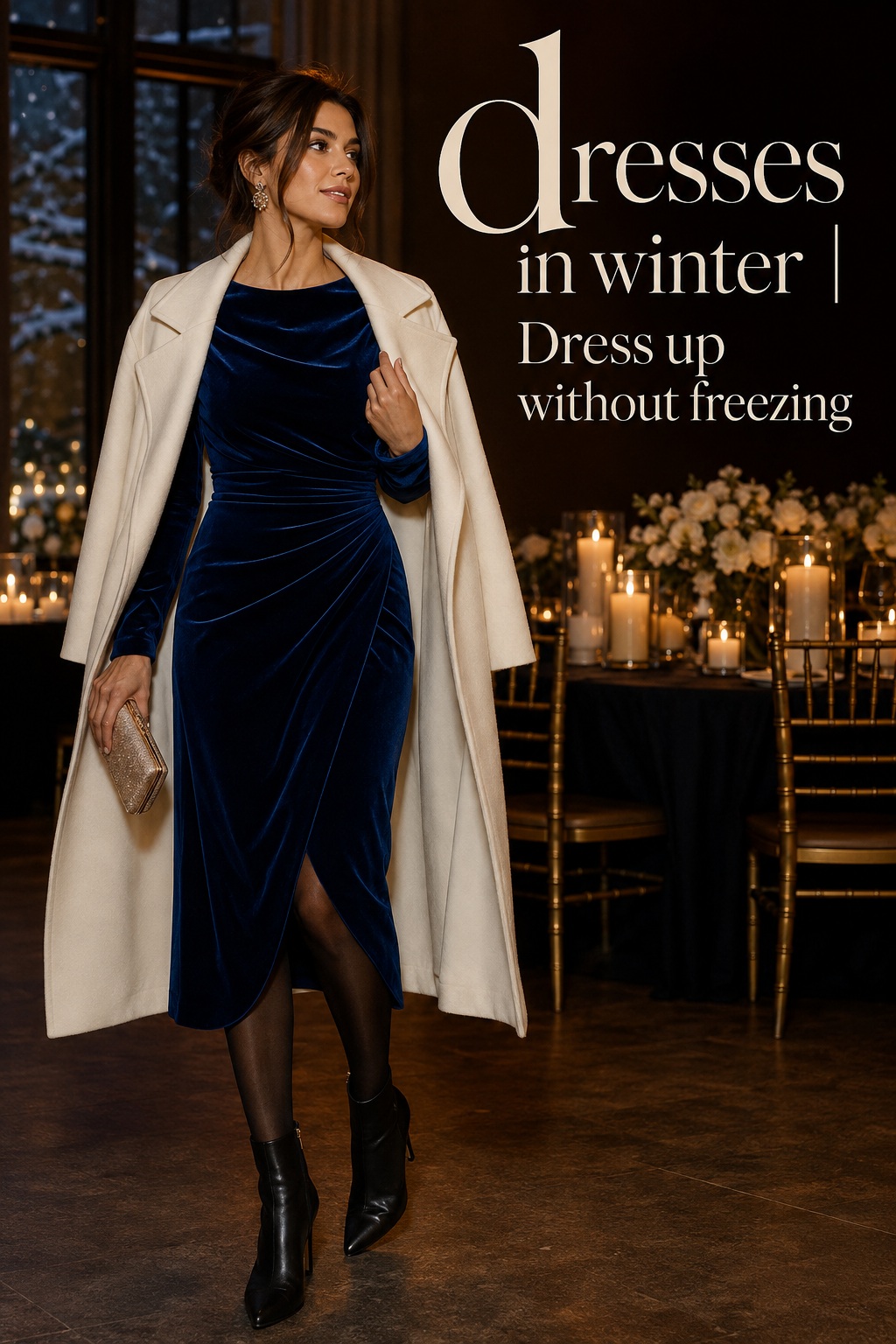
For a winter dinner or party, begin with a velvet, satin, or sequined dress and solve warmth around it. A slim thermal underlayer can work under an opaque fabric. Over the top, use a long tailored coat or a cropped faux-fur jacket. Sheer-looking tights with a warm lining can preserve the evening effect without leaving your legs unprotected. Keep the boots elegant and comfortable, then bring a second pair if the walk from the car or train will be long.
For travel, choose a wrinkle-resistant knit or jersey dress with a forgiving fit. Layer a fitted tee underneath, add a cardigan or overshirt, and wear supportive boots. A coat with secure pockets makes transit easier, while a scarf doubles as a blanket on the plane or train. Avoid a hem that drags, sleeves that catch on luggage, or a dress that requires delicate shapewear. The best travel outfit is the one you can keep wearing after you arrive.
Common mistakes and the small fixes that solve them
The first mistake is treating warmth as one thick layer. A huge sweater may feel warm indoors but leave your legs and neck exposed outdoors. Build from the skin outward, then choose outerwear that blocks wind and moisture. Several thin layers give you more control than one oversized piece and usually create a cleaner silhouette.
The second mistake is ignoring the indoor temperature. If you dress for the coldest five minutes of the day, you may spend the remaining hours overheated. Use removable layers, breathable fibers, and boots that can be loosened or changed. A dress is particularly useful here because the base garment remains presentable while the supporting layers come off.
The third mistake is choosing a coat by color alone. The coat must work with the dress’s length, sleeve volume, and neckline. Try the full outfit in front of a mirror before buying. If the sleeves pull, the shoulders feel tight, or the dress hem disappears in an awkward way, a beautiful color will not rescue the combination.
The fourth mistake is making every element compete. Winter already brings texture through wool, leather, knits, and weatherproof materials. If the dress is printed, keep the coat simple. If the boots are dramatic, let the dress carry a quieter pattern. If the coat is oversized, balance it with a visible waist or a straighter dress beneath. One clear idea is more memorable than five loud ones.
Finally, do not wait for a perfect new wardrobe. Start with one dress and test three versions: a casual version with boots and a cardigan, a polished version with a blazer and long coat, and an occasion version with refined boots and a textured outer layer. Photograph the combinations in daylight. The images will reveal which proportions feel intentional and which item is creating the friction.
FAQ
Can you wear dresses in winter without feeling cold?
Yes. Use a suitable base layer, warm tights, socks, weather-ready boots, and a coat that blocks wind. The colder the conditions, the more important it is to protect your legs, neck, hands, and feet rather than relying only on a thick dress.
What should you wear over a dress in winter?
Choose a cardigan, blazer, sweater, denim jacket, long wool coat, or puffer according to the dress and weather. A long coat is the easiest option for midi and maxi dresses, while a shorter puffer or jacket often works best with a shorter hem.
What tights are best for dresses in winter?
Opaque tights are the most versatile choice, while fleece-lined tights are better for extended time outdoors. Brown, charcoal, burgundy, and navy can look softer than black and help connect a colorful dress to the rest of the outfit.
Which boots look best with a winter dress?
Knee-high boots pair naturally with midi dresses, while ankle boots work across many dress lengths. Choose a lug sole for a casual, practical finish, or a sleek leather boot for a more polished outfit. Traction and comfort should guide the choice in snow or ice.
How do you winterize a summer dress?
Layer a fitted turtleneck, long-sleeve tee, shirt, or fine sweater underneath or over the dress. Add opaque tights, boots, and a warm coat. Dresses with a little room, a defined waist, and a midi length are usually the easiest to adapt.
Can you wear a slip dress in winter?
You can wear a slip dress in winter with a smooth base layer, opaque tights, boots, and a tailored coat. A thin turtleneck underneath creates a clean, modern look, while a blazer or cardigan adds warmth without hiding the slip dress’s shape.