Winter Wedding Dresses: A Smart Choice Guide
Winter wedding dresses have one job that a summer gown does not: they need to look beautiful while working with cold air, shorter daylight, changing indoor temperatures, and the practical reality of moving between a car, ceremony, portraits, and reception. That does not mean you have to choose a heavy long-sleeve gown. It means you should compare the whole outfit, not only the dress on the hanger.
The smartest choice depends on your venue, climate, ceremony timing, desired formality, and tolerance for extra layers. A structured satin gown may be perfect for a candlelit ballroom, while a lightweight dress with a tailored coat may work better for a city celebration with outdoor portraits. Use this guide to compare the main approaches and find the combination that keeps you warm, comfortable, and unmistakably bridal.
The real decision is warmth versus flexibility
Before you save dresses, decide whether warmth should be built into the gown or added as a removable layer. These are both valid strategies, but they create different experiences throughout the day. Built-in coverage gives you a consistent look and fewer pieces to manage. Detachable layers let you change the silhouette, reveal more of the dress indoors, and respond to weather.
Built-in warmth: sleeves, lining, and substantial fabric
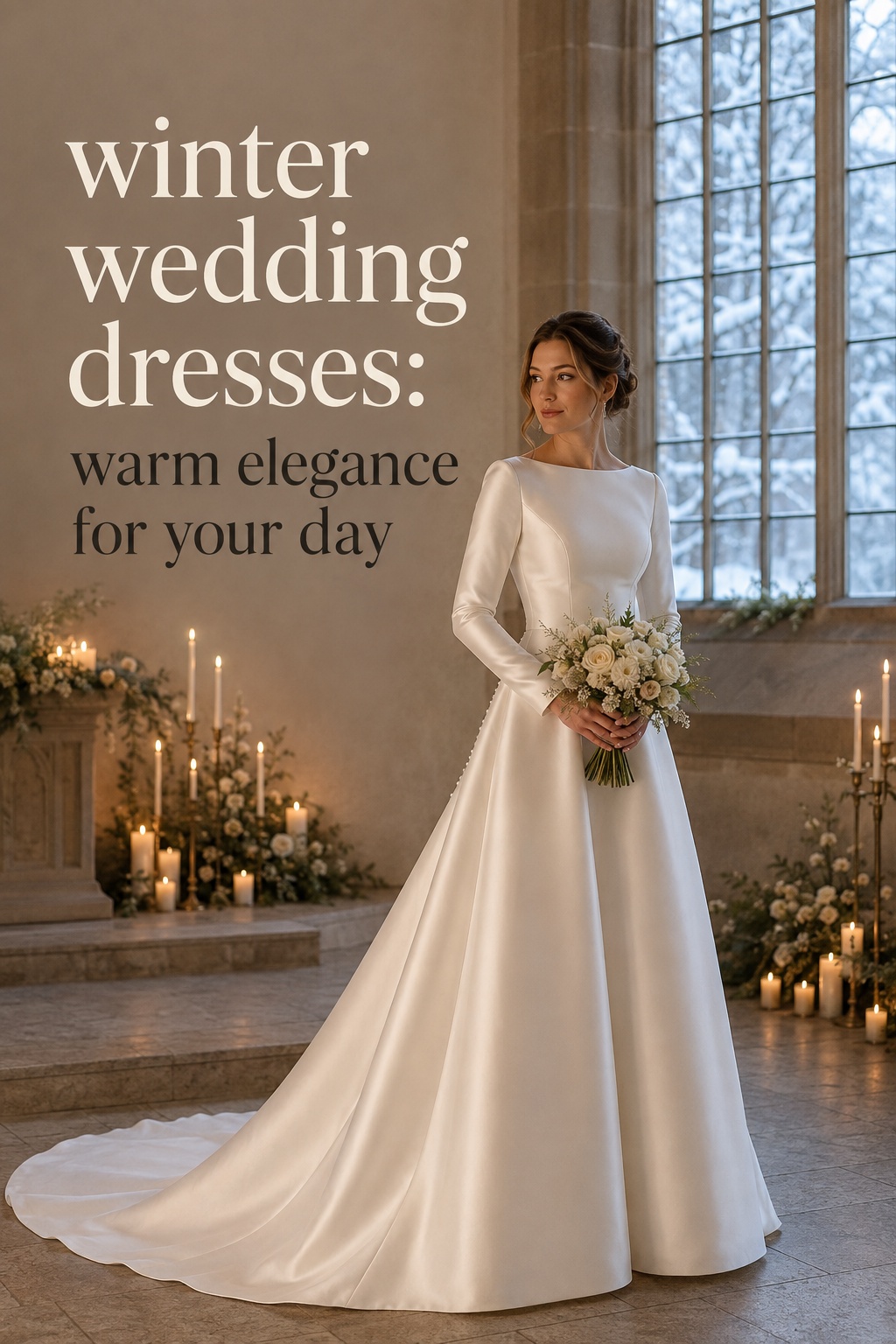
A gown with long sleeves, a higher neckline, a lined bodice, or a heavier skirt can feel intentional from the first step down the aisle. Stretch crepe, Mikado, satin, velvet details, brocade, and certain jacquards often have more body than lightweight summer chiffon. They also hold shape well in low winter light, which can make clean seams, pleats, and architectural skirts especially striking.
Turn wedding inspiration into a plan you can actually follow.
Zarellea brings your guest list, budget, vendors, and day-of details into one shared space — so no beautiful idea gets lost in the shuffle.
Built-in coverage is useful if your ceremony is in a drafty historic building, a mountain lodge, or a venue where you will spend meaningful time outside. It can also simplify portraits because there is no need to stop and adjust a wrap between locations. The trade-off is that one fixed level of coverage may feel too warm once you enter a heated reception. Ask your stylist how the gown will feel after several hours, not only during a five-minute try-on.
Removable warmth: capes, coats, wraps, and boleros
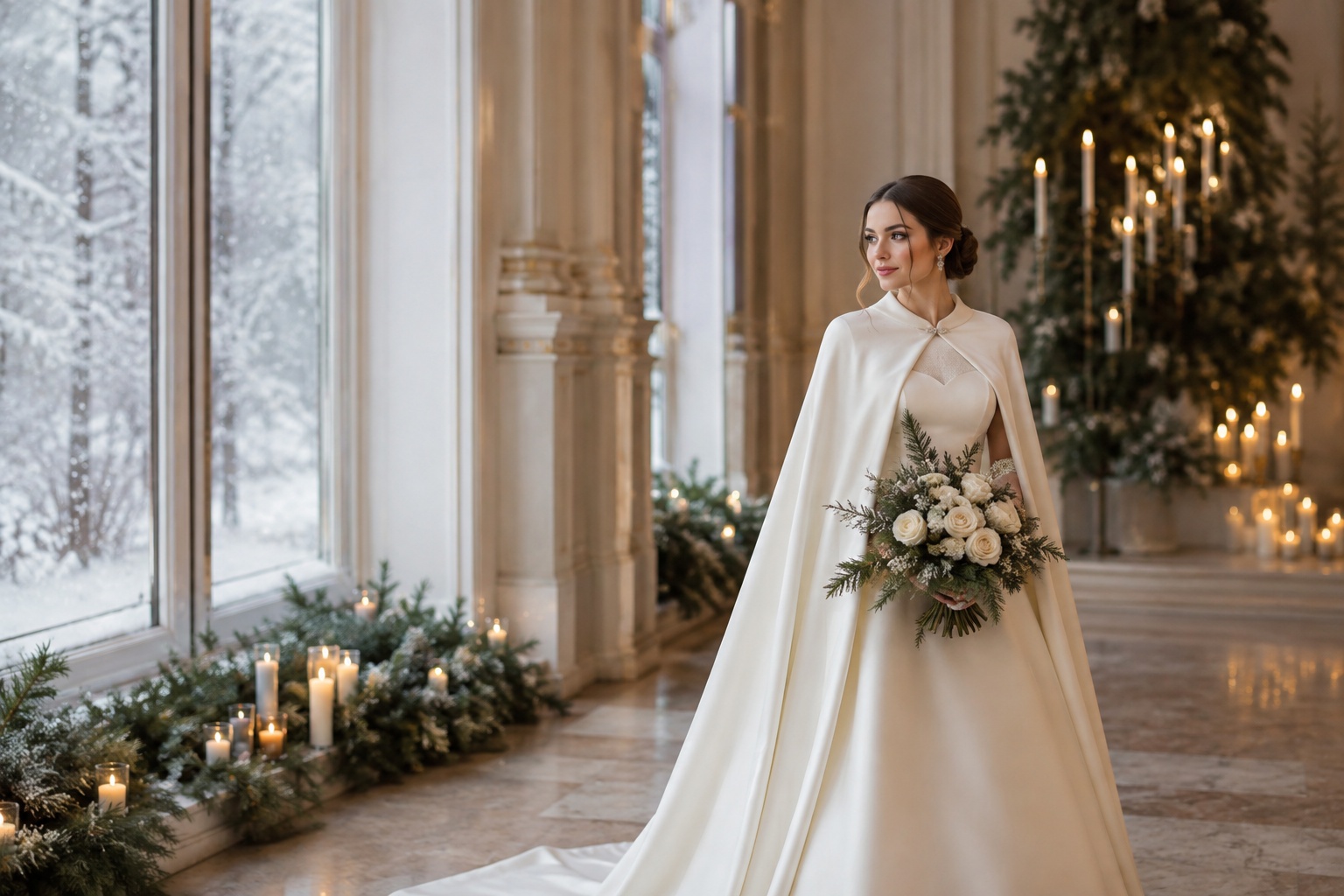
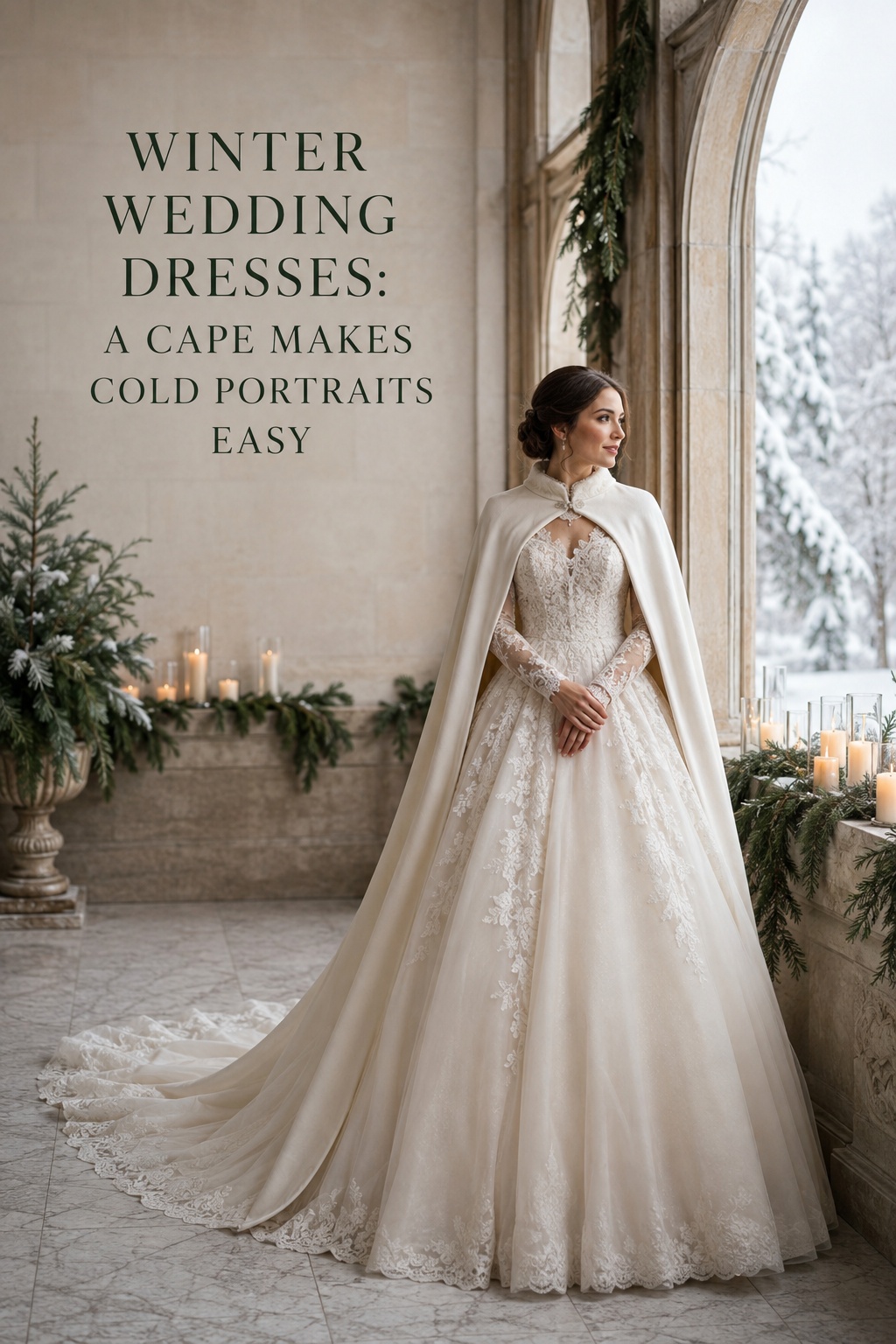
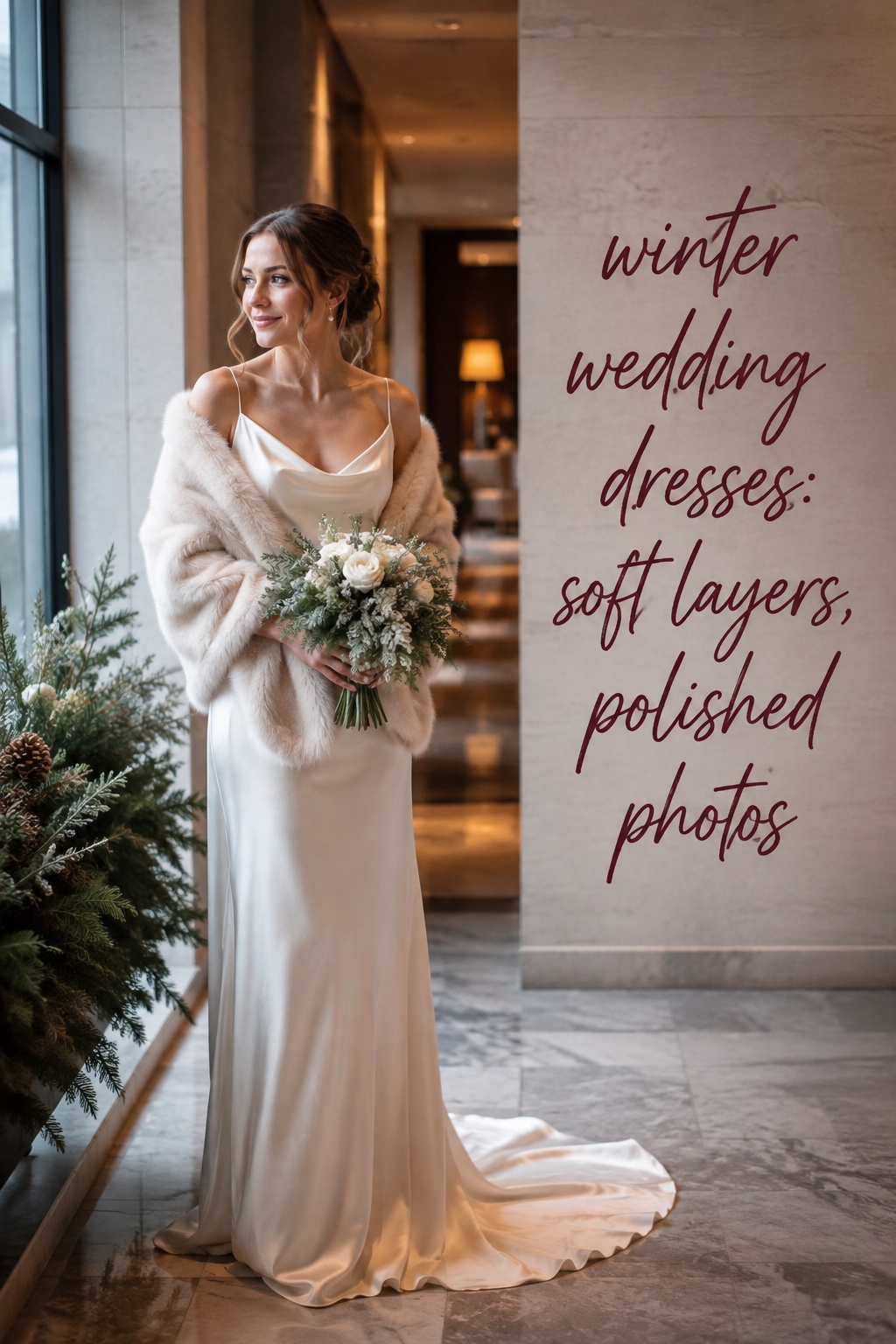
A detachable cape, faux-fur stole, wool coat, silk wrap, or fitted bolero gives you more control. You can wear the layer for the ceremony and outdoor photographs, then remove it for dancing and dinner. This approach is often the best compromise for brides who love a sleeveless, strapless, or low-back dress but do not want to shiver during the parts of the day that happen outside.
The layer must be chosen with the gown, not added at the last minute. Check where the neckline sits, whether the shoulder width allows movement, and whether the closure catches on lace or beadwork. A dramatic cape can hide the dress details you paid for, while a bulky coat may change the proportions of a fitted skirt. Bring the actual layer to a fitting and test walking, hugging, sitting, and holding your bouquet.
Compare four winter wedding dress approaches
There is no single best winter gown. The right answer is the one that solves your particular combination of temperature, formality, movement, and visual mood. Compare these four approaches before you choose a silhouette.
Option one: a structured gown for a formal indoor wedding
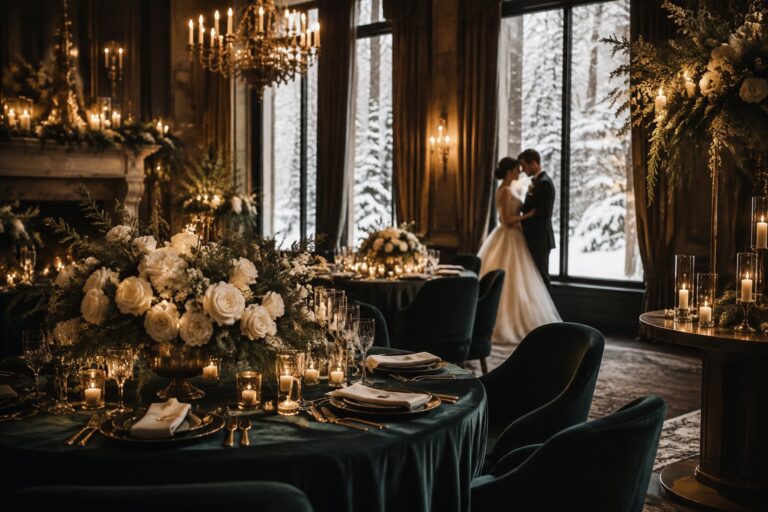
Choose satin, Mikado, heavy crepe, velvet accents, or another fabric with visible structure when your celebration takes place in a ballroom, grand hotel, historic estate, or candlelit hall. A ball gown or formal A-line creates scale, while a column or fit-and-flare silhouette can feel sleek and modern. These fabrics tend to photograph with depth and hold their shape through a long ceremony.
This option is strongest when you want the dress itself to carry the winter mood. Covered buttons, a square neckline, a high neck, crystal details, or subtle metallic thread can add seasonal richness without turning the outfit into a costume. Keep the rest of the look edited. If the fabric is reflective or heavily textured, choose one main accessory and let the gown remain the focal point.
Option two: a long-sleeve gown for reliable coverage
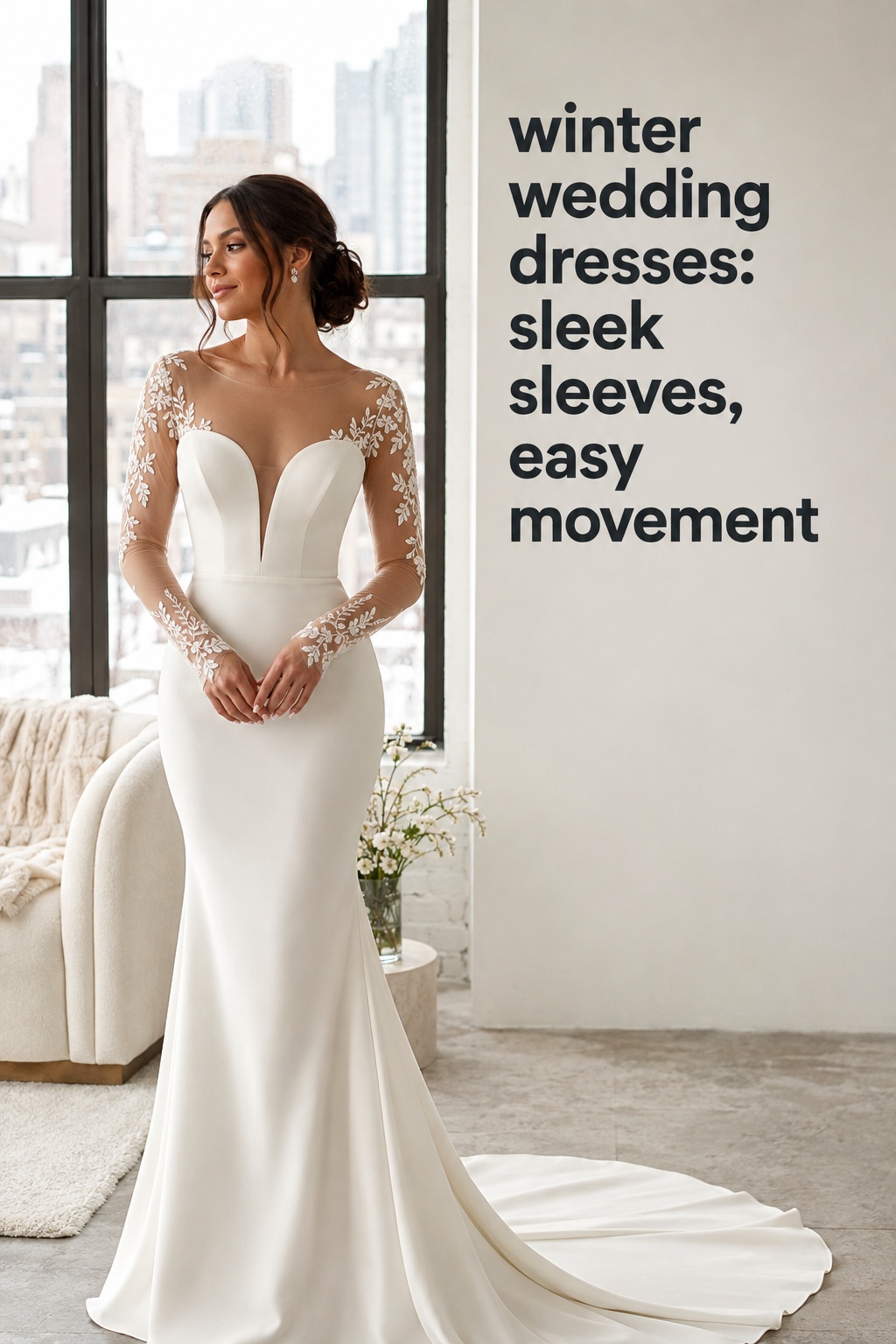
Long sleeves are a natural choice when you want a clear winter reference and dependable coverage. They can be made from opaque crepe, lined lace, illusion tulle, stretch mesh, or beaded fabric. The most comfortable sleeve is not always the thickest one. A lined sleeve may feel warmer, while an unlined lace sleeve may offer breathability in a heated room.
Pay attention to the wrist and underarm. You need enough room to lift your arms, hold your bouquet, and dance without the sleeve pulling across your shoulder. If you love an illusion sleeve, ask what underlayer will be used and whether it will photograph as the intended shade in your venue lighting. The visual effect should be tested under both warm indoor light and cool daylight.
Option three: a lighter gown with a strong outer layer
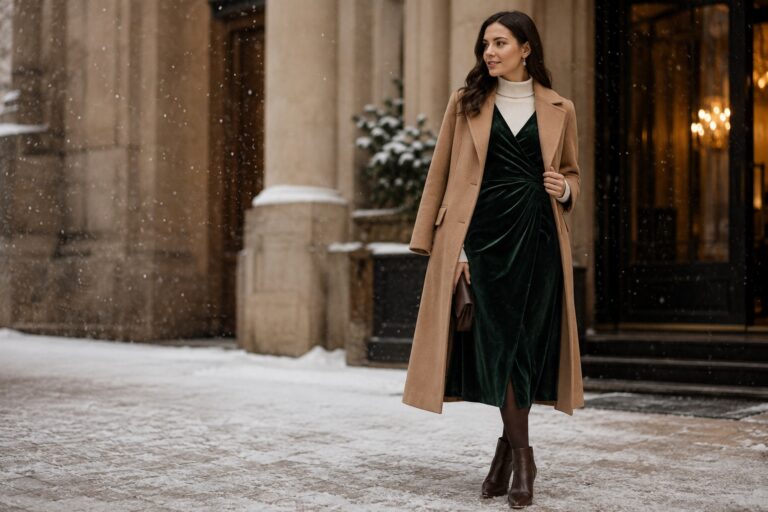
A lighter gown paired with a tailored coat, cape, or wrap works well when you want two distinct looks. It gives you freedom to choose a dress based on neckline, movement, and fit, then solve the cold-weather problem separately. A wool-blend coat can feel polished for a city wedding. A faux-fur stole can add softness to a classic gown. A satin cape can make a simple dress feel ceremony-ready.
The risk is treating the outer layer as an accessory rather than part of the outfit. Consider its color against the dress, its texture beside the bouquet, and the way it looks in full-length photographs. Make sure you have a safe place to store it after removal. If the layer is valuable, designate one person to carry it instead of leaving it on a chair or in the back of a car.
Option four: a ceremony gown plus a reception change
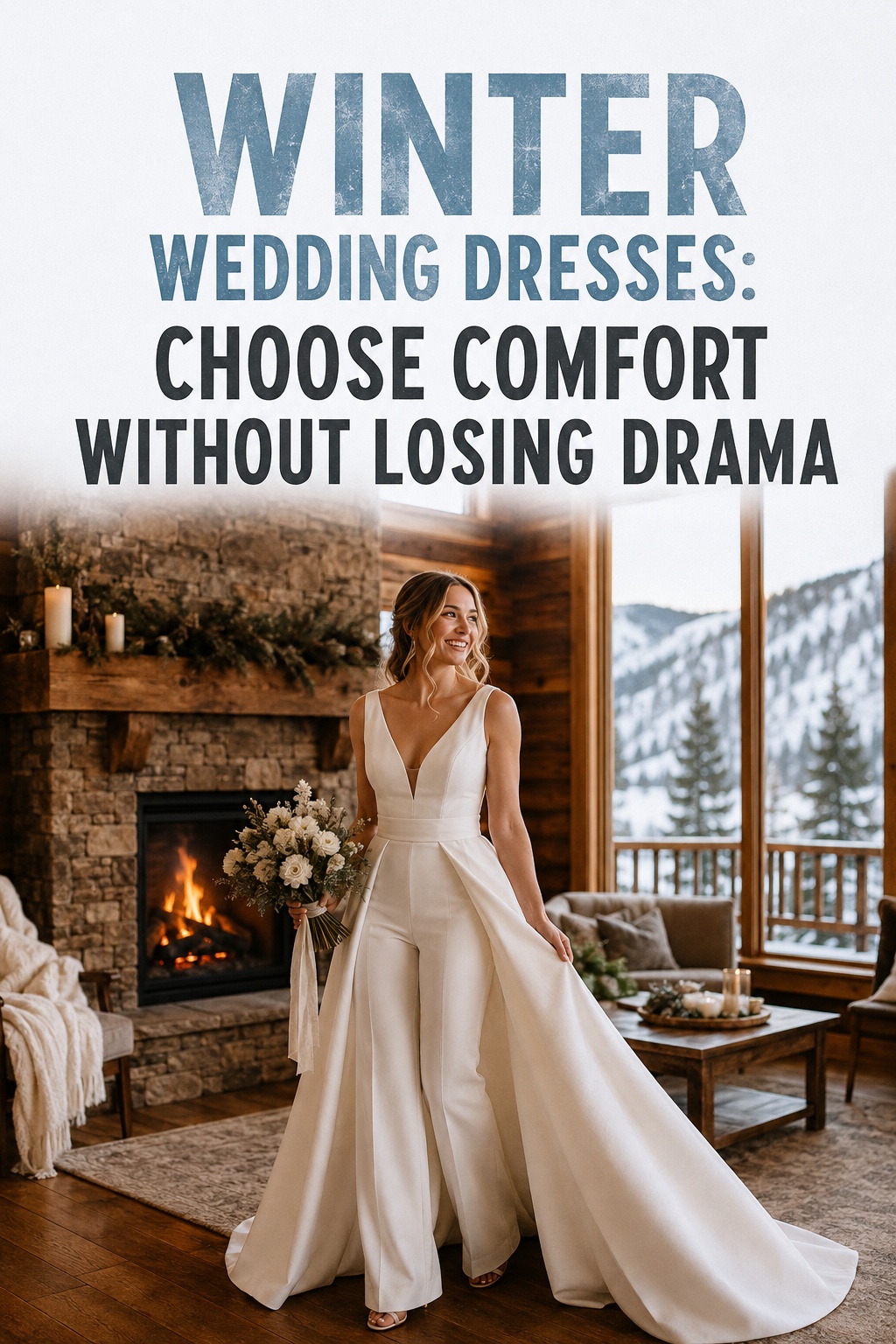
A two-look plan can be practical when the ceremony is cold, formal, or outdoors and the reception is designed for movement. Your first dress might be a long-sleeve gown with a train, while the second could be a shorter dress, a streamlined crepe look, or a jumpsuit. This is not necessary for every wedding, but it makes sense if you want a dramatic ceremony entrance without spending the entire evening managing a heavy skirt.
Budget for the complete change, including shoes, undergarments, alterations, steaming, and time. Ask your coordinator where the change will happen and how your photographs will be scheduled. A second look should reduce stress, not create a rushed gap between dinner and dancing. If a full change feels excessive, a detachable overskirt can create a similar transformation with less logistics.
Match the gown to your venue and winter climate
Winter in the United States does not describe one temperature. A January wedding in Vermont, a December celebration in Chicago, and a February ceremony in Southern California may all need different clothing strategies. Start with the actual conditions you expect, then decide how much winter styling you want to show.
Snowy or genuinely cold outdoor portraits
If outdoor portraits are important and temperatures will be low, prioritize a real insulating layer. A cape or coat should close securely at the neck and stay in place while you walk. Add warm, discreet base layers only after testing them under the dress. Fleece-lined shorts, thermal tights, or adhesive warmers may be useful, but check that they do not create visible lines or make the gown difficult to sit in.
Footwear matters more than many brides expect. Keep a practical pair of boots for travel and snowy paths, then change into formal shoes when you reach a clean indoor surface. If boots may appear in photographs, choose a pair that complements the gown instead of hiding it under a random winter shoe. A well-chosen boot can look modern and make walking safer.
Cold city wedding with indoor venues
For a city wedding, a fitted coat, cropped jacket, or clean cape can connect the dress to the architecture. A sleek crepe gown with a wool coat feels different from a romantic lace dress with faux fur, even if both are equally warm. Think about the route between locations, elevator rides, sidewalks, and the time you will spend waiting outside for transportation.
Use the venue as a styling cue. Art Deco interiors support satin, clean lines, and crystal. A historic church can handle lace, a high neck, or covered buttons. A modern gallery may suit a column dress, sculptural bow, or minimal cape. Winter does not require snowflakes or icy blue. Texture, shape, and light can communicate the season more subtly.
Mild winter or coastal celebration
In a mild climate, a fully lined gown with short sleeves, an off-the-shoulder neckline, or a lighter skirt may be more comfortable than a heavy winter fabric. You can suggest the season through long sleeves in lace, a rich ivory tone, pearl details, a velvet ribbon, or a removable wrap. The goal is to suit the weather you will actually experience, not to imitate a snowy editorial.
Humidity and wind still deserve attention. Test how the skirt moves, whether a veil tangles, and whether the fabric becomes transparent in strong daylight. If your ceremony is near water, ask about wind direction and the safest place for portraits. A gown that moves beautifully in a controlled studio may need extra bustle points or a more secure veil outdoors.
Mountain lodge or rustic winter venue
A mountain venue often benefits from tactile fabrics and practical layers. Mikado, crepe, lace, velvet accessories, and a substantial wrap can look at home beside wood, stone, and evergreen scenery. A simple A-line with a dramatic cape may be more functional than a very wide ball gown if you will navigate stairs, gravel, or a narrow aisle.
Ask about indoor heating and floor surfaces. You may move from a cold ceremony terrace into a warm room within minutes. Choose layers that can be removed quickly and a bustle that can be managed by someone who has practiced it. The best rustic winter look feels connected to the setting while still giving you a polished, intentional bridal silhouette.
Finish the decision with details that protect comfort
Once you have chosen a dress approach, the smaller decisions determine whether it works in real life. Winter comfort is a system that includes what touches your skin, what you wear under the gown, how you travel, and how the dress will be altered.
Choose the fabric by behavior, not only appearance
Ask how the fabric responds to cold, heat, movement, and photographs. Mikado and satin create structure and shine. Crepe moves cleanly and often feels smooth against the body. Velvet adds richness but may feel warm indoors. Lace can provide coverage without much weight, especially when used over a lined bodice. Chiffon can still work in winter when it is layered or paired with a substantial cover-up, but it should not be your only warmth strategy in a cold climate.
Request fabric swatches and hold them beside your venue colors, flowers, and outer layer. A bright white satin, warm ivory crepe, and soft champagne lining can read very differently under winter daylight. Do not make a final color decision from a phone photograph alone.
Plan undergarments and base layers early
Underlayers affect fit, warmth, opacity, and how the dress moves. Bring the bra, shapewear, tights, or thermal pieces you expect to wear to a fitting. A different layer can change the waist measurement enough to affect the zipper or buttons. If your dress has a low back or sheer panels, ask your bridal salon what options are compatible before ordering the gown.
Comfort also includes skin sensitivity. New hosiery, adhesive products, and textured linings should be tested before the wedding day. Put on the complete outfit and sit for at least fifteen minutes. If you are already thinking about an itchy seam or tight strap, solve it now.
Build the timeline around winter delays
- Six to nine months out: choose the dress direction, order swatches, and discuss cover-ups.
- Four to seven months out: place the gown order and confirm the alteration plan.
- Eight to ten weeks out: schedule fittings and test the complete winter outfit.
- Four weeks out: confirm shoes, boots, layers, veil, and transportation between locations.
- One week out: steam the gown, check the forecast, pack emergency supplies, and assign someone to manage the outer layer.
Add buffer time for shipping, weather, holiday closures, and crowded alteration appointments. If you are traveling to a winter destination, keep the gown with you rather than placing it in checked luggage. Ask your venue whether it has a safe, dry place for garment storage and whether a steamer is available.
Avoid the most common comparison mistakes
- Choosing a sleeve or fabric only because it looks seasonal, without testing how warm it feels.
- Buying a cover-up that hides the neckline, train, or back detail you want photographed.
- Forgetting that boots, tights, and a coat change the proportions of the outfit.
- Assuming an indoor venue will feel cool when it may be heavily heated.
- Waiting until the final fitting to decide how the dress will travel between locations.
- Adding too many winter details at once, such as fur, sparkle, velvet, crystals, and a dramatic veil.
A polished winter bridal outfit usually has one clear seasonal statement and enough restraint around it. That statement might be a velvet cape, a high-neck lace bodice, a deep architectural skirt, or a clean coat. Let that choice lead, then make the rest support it.
Use this final winter wedding dress decision checklist
Before you place the order, compare your favorite gown against the actual day you are planning. Take a photograph from the front, side, and back with the intended shoes and outer layer. Then answer these questions honestly:
- Will the dress feel comfortable in the coldest part of the day?
- Does the fabric suit the venue, lighting, and level of formality?
- Can you walk outside, sit, dance, and use the restroom without fighting the gown?
- Will the cover-up protect you without hiding the dress completely?
- Have you tested the full outfit with the exact undergarments and shoes?
- Do you have a safe plan for travel, weather delays, and garment storage?
- Is the winter detail intentional, or are you adding seasonal elements because you feel expected to?
The best winter wedding dresses are not defined by one sleeve length, fabric, or color. They work because the gown, layers, accessories, venue, and schedule agree with each other. Choose the approach that matches your climate and priorities, test it as a complete outfit, and leave enough room for movement. You will look more relaxed in every photograph when your dress is solving the day you are actually having.
FAQ
What are the warmest winter wedding dresses?
The warmest winter wedding dresses usually combine substantial fabric, lining, and coverage. Velvet details, Mikado, satin, heavy crepe, lined lace, and long sleeves can all help, but the full outfit matters more than the label on the fabric. Add a well-fitted cape or coat when you will spend significant time outdoors.
Do I need long sleeves for a winter wedding?
No. Long sleeves are one option, not a requirement. You can choose a sleeveless or strapless gown and wear a cape, wrap, bolero, or coat for the ceremony and portraits. Choose based on your climate, venue, comfort, and the look you want indoors.
Can chiffon work for winter wedding dresses?
Yes, especially when chiffon is layered, lined, or paired with a warm outer layer. It can be a good choice for a mild winter, a heated indoor venue, or a bride who wants a soft moving skirt. In genuinely cold conditions, do not rely on unlined chiffon alone for outdoor portraits.
What should I wear over a winter wedding dress?
Good options include a tailored coat, bridal cape, faux-fur stole, wool wrap, satin cape, or fitted bolero. Match the layer to the neckline, sleeve, fabric, and formality of the gown. Try the complete combination before the final fitting so you can check movement and proportions.
How can I stay warm in wedding photos?
Plan shorter outdoor sessions, wear the intended coat or cape, use discreet base layers, and keep warm boots available between locations. Hand warmers can help when tested safely in advance. Ask your photographer to group outdoor photographs so you are not repeatedly moving between warm and cold spaces.
When should I order a winter wedding dress?
For many made-to-order gowns, begin shopping six to nine months before the wedding. Start earlier if you need custom sizing, extensive alterations, a special cover-up, international shipping, or a wedding during a busy holiday season. Keep several weeks of buffer for final fittings and winter travel.