
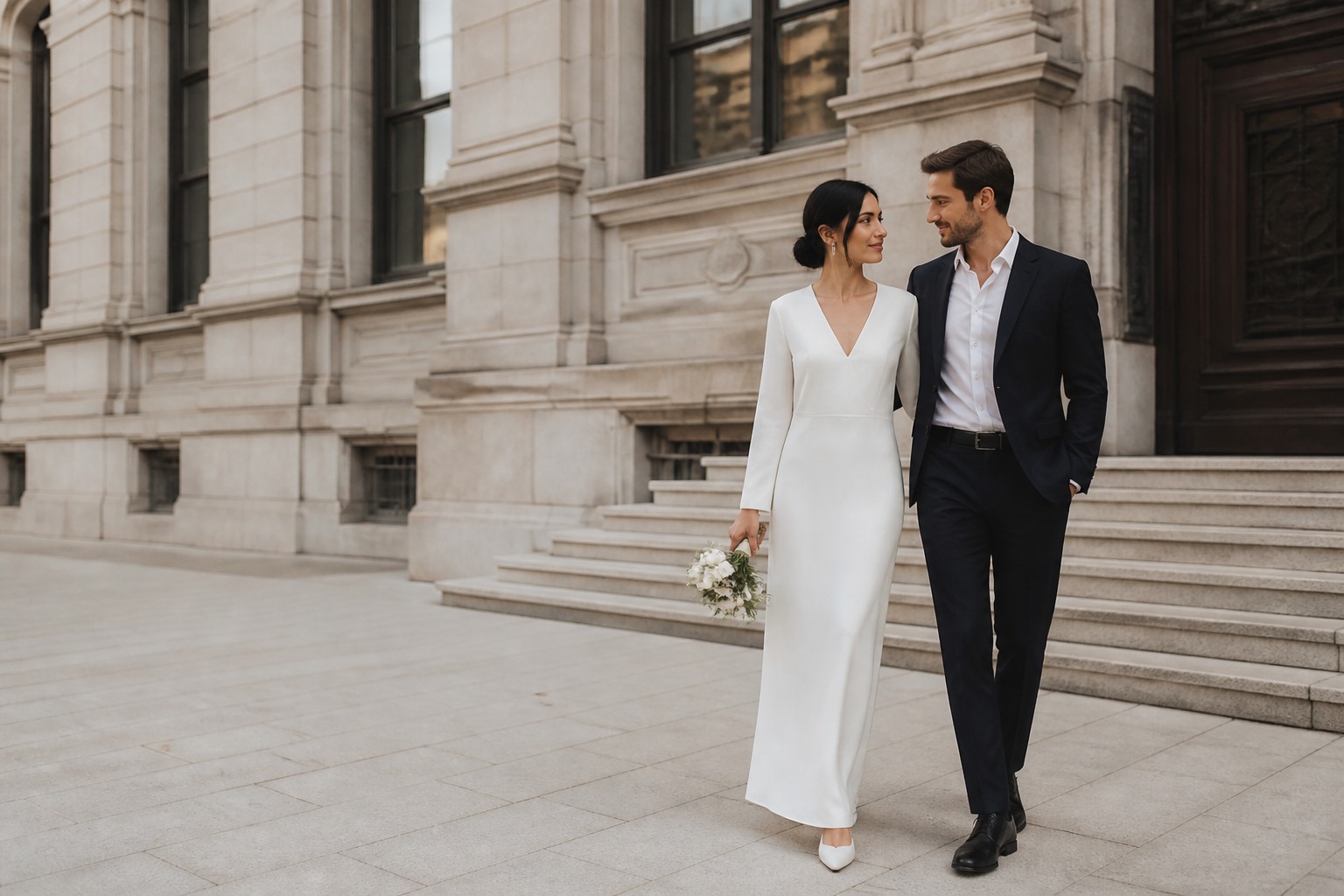
Wedding Civil Dresses: How to Choose Your Best Look
Choosing wedding civil dresses is less about making a smaller version of a grand ballroom gown and more about choosing the right relationship between ceremony, clothing and the rest of your day. A courthouse appointment may last less than an hour, yet you may walk several blocks, sit for paperwork, take close-up portraits, meet family for lunch and celebrate over dinner. Your outfit needs to look intentional in every one of those moments.
The most useful choice is usually one of four directions: a polished short or midi dress, a simple full-length dress, a jumpsuit, or a tailored set. All can feel bridal. The difference is how each one handles movement, formality, weather, photographs and future wear. Use the comparisons below to decide what serves your ceremony instead of shopping from a vague idea of what a civil bride is supposed to wear.
Start with the decision context
Before you compare necklines or fabrics, write down what the day actually includes. A city hall ceremony with two witnesses, a courthouse signing followed by a restaurant dinner, and an outdoor legal ceremony with twenty guests may all be called civil weddings, but they create different clothing requirements.
Turn wedding inspiration into a plan you can actually follow.
Zarellea brings your guest list, budget, vendors, and day-of details into one shared space — so no beautiful idea gets lost in the shuffle.
- Venue: Check stairs, narrow aisles, outdoor paths, temperature and any clothing guidance from the office. A dramatic train can be beautiful in photographs but awkward in a crowded hallway.
- Schedule: Note how long you will be dressed, whether you are traveling between locations and whether a second look is realistic. The best outfit is one you can wear from signing to celebration without constant repairs.
- Photography: Civil ceremonies often produce close, candid images. Prioritize a clean neckline, a well-finished hem, smooth underlayers and details that remain visible when you are seated.
- Personal style: Decide whether you feel most like yourself in a dress, trousers, a column shape, a soft A-line or something short and playful. Bridal does not have to mean unfamiliar.
- Afterlife: If you want to wear the piece again, look for a simple silhouette, a removable detail or a color that works with your existing wardrobe.
Compare four strong outfit directions
Short or midi wedding civil dresses
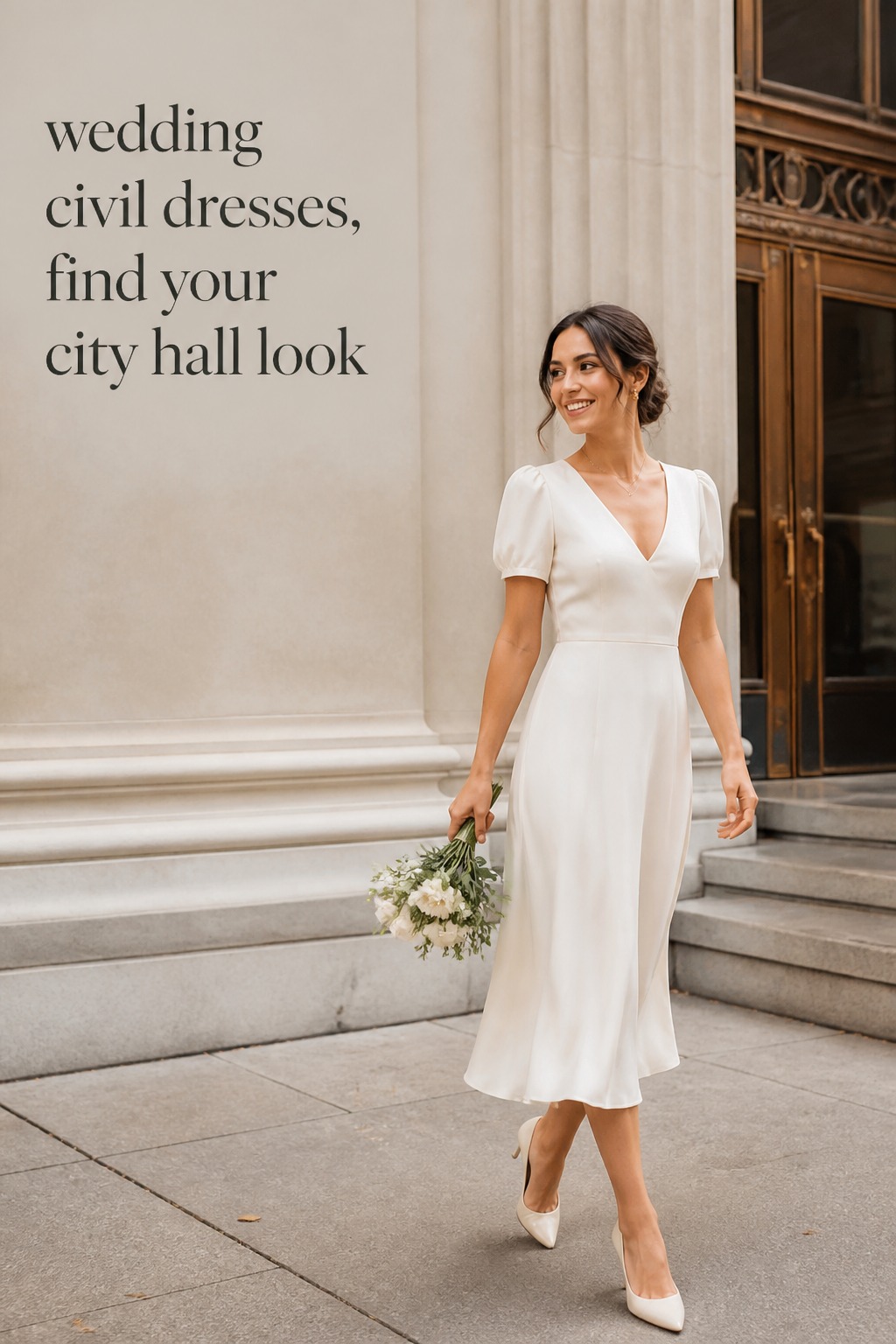
A short or midi dress is often the easiest answer for a daytime courthouse or city hall ceremony. It feels celebratory without needing a large room to balance it. A mini can look modern with a clean crepe fabric, structured shoulders or a long veil. A knee-length or tea-length hem can feel retro and romantic, especially with a high neckline, satin pumps or a small bow.
Choose this direction when you expect to walk, climb steps, sit for a while or continue straight to lunch. The trade-off is that a shorter hem puts more emphasis on shoes and legs, so schedule a hem check with the shoes you will actually wear. For colder weather, add a cropped jacket, long coat or elegant tights rather than forcing a summer shoe into the look.
Simple full-length wedding civil dresses
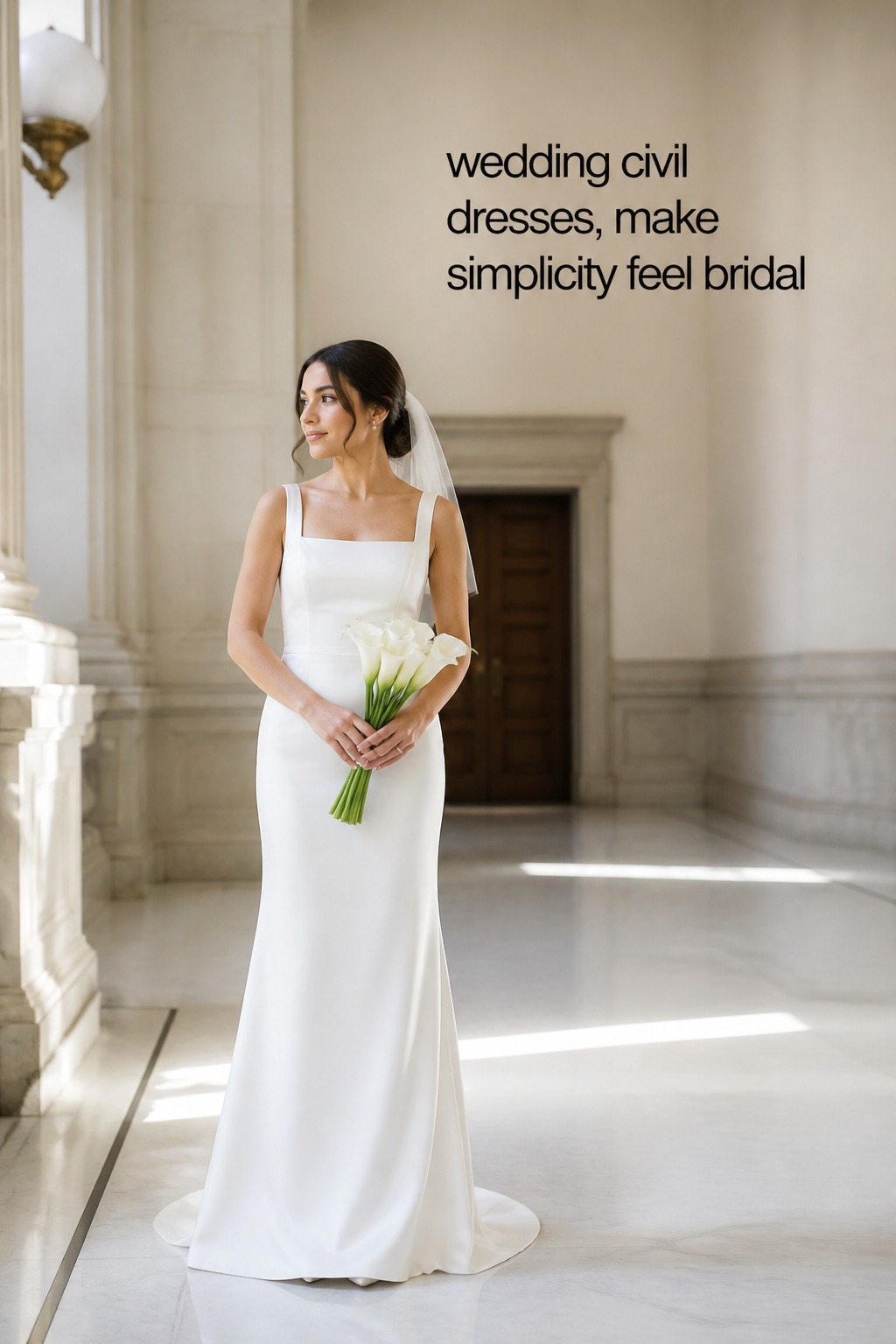
A full-length dress gives you the familiar emotional impact of bridalwear while keeping the shape controlled. A column gown in crepe or satin looks sleek in a civic building. An A-line creates a little more movement and can be especially comfortable when you want room through the hips. A soft sleeve, square neckline or open back adds personality without requiring heavy beadwork.
The practical question is not whether a long dress is too formal. It is whether the hem and volume suit your route. A sweep train can work if you have a car and a short schedule, while a train that requires bustling is more demanding. If you love length, ask for an uncomplicated hem, hidden bustle points and enough room to sit without pulling the bodice.
Civil ceremony jumpsuits
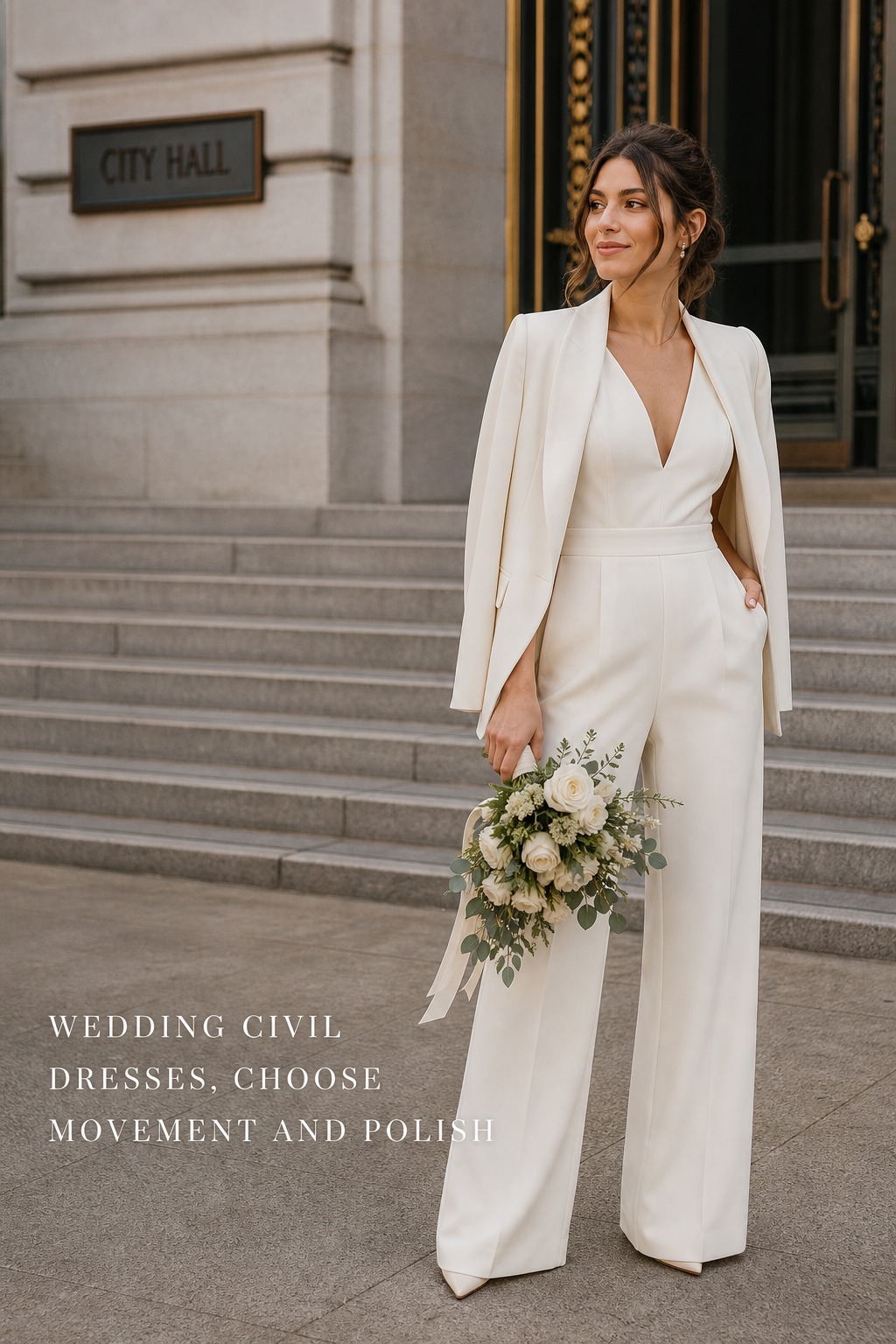
A jumpsuit is a strong choice for a modern bride who wants structure and movement. Wide-leg crepe trousers create the visual line of a gown, while a fitted bodice, halter neckline or tailored jacket makes the outfit feel clearly ceremonial. Jumpsuits are also useful when you want to move easily, keep your legs covered or avoid managing a skirt in an outdoor setting.
Fit is the central issue. Test the rise, waist, zipper and bathroom plan before committing. You should be able to sit, raise your arms for a hug and walk without the shoulder or crotch seams pulling. If the piece has a dramatic overskirt or cape, treat that as an optional layer so the base outfit remains comfortable after the ceremony.
Tailored suits and separates
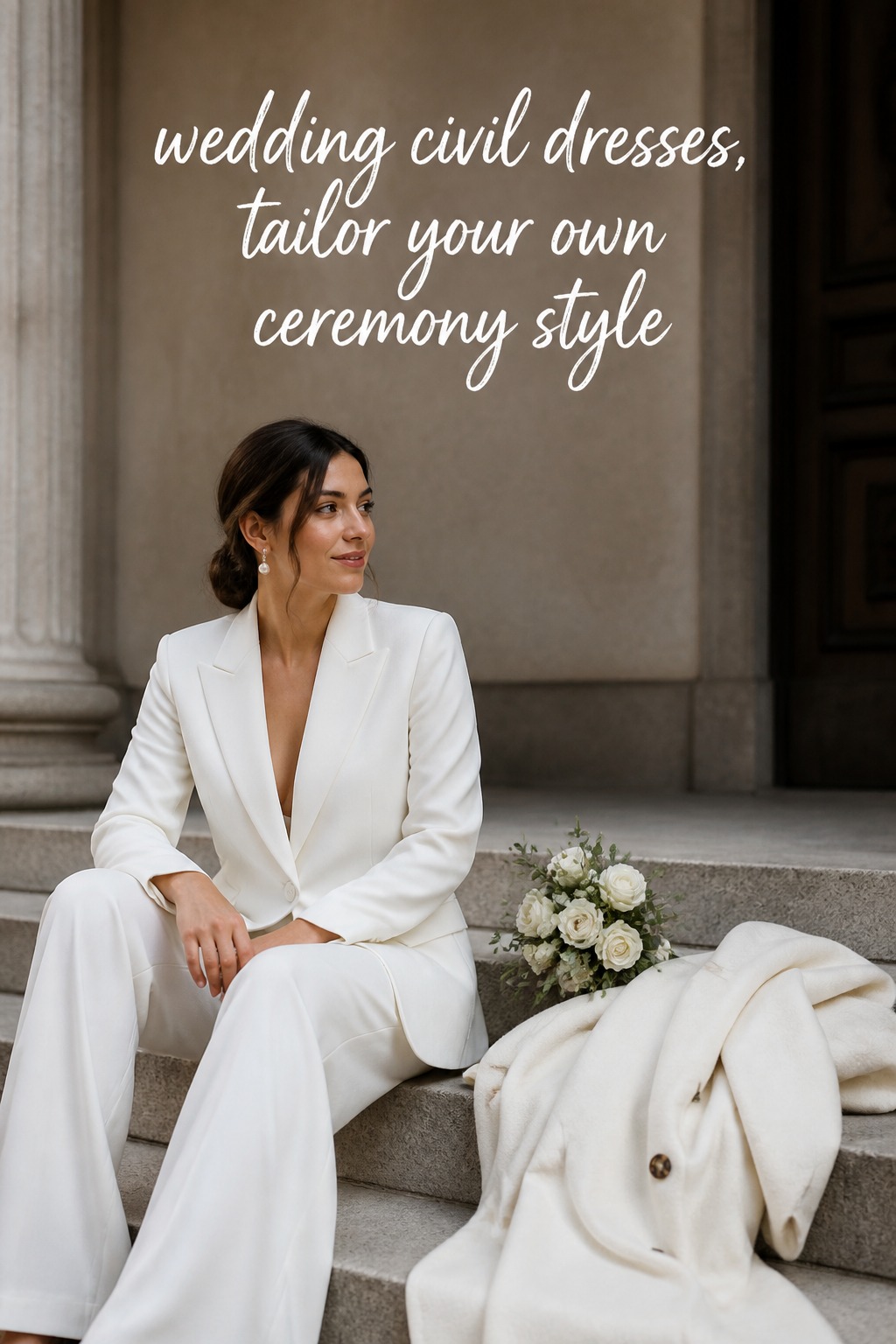
A white or ivory suit, a satin camisole with wide-leg trousers, or a matching jacket and skirt can feel fashion-forward without sacrificing bridal clarity. Separates are valuable when you want to rewear part of the look, build a second outfit, or create a ceremony layer that comes off for dinner. A sharp shoulder, pearl button, sculptural earring or short veil can supply the visual punctuation a dress would normally provide.
The trade-off is proportion. A cropped jacket may need a high-waisted trouser, while a long jacket works best with a narrow column underneath. Try the pieces together with your shoes and bouquet. You want a defined waist or a deliberate long line, not an accidental break at the widest part of the body.
Choose the best option for your situation
Once you understand the four categories, match them to the day you are planning. The goal is not to rank one option above another. It is to identify the choice that removes the most friction while still giving you the feeling you want when you see your photographs.
For a minimalist city hall ceremony
Start with a column midi, a clean mini, a slip-inspired dress or a tailored set. Look for one strong line rather than several competing details. A square neckline, sculptural sleeve or distinctive back can carry the design. Keep the accessories edited: pointed shoes, a compact bouquet, a neat headband and one meaningful piece of jewelry are often enough.
For an outdoor or garden civil ceremony
Prioritize fabric that moves and a hem that can handle the ground. A tea-length dress, relaxed A-line or wide-leg jumpsuit is easier on grass and gravel than a narrow floor-length skirt. Bring a layer that works with the temperature, and choose shoes with a stable heel or a polished flat. If you want a long veil, make sure it can be removed before walking through wind or uneven paths.
For a cold-weather courthouse appointment
Build the outfit around the outer layer instead of treating it as an afterthought. An ivory wool coat, satin-lined cape, velvet jacket or clean tailored overcoat can make a simple dress feel complete from the moment you leave home. Check the coat length against the hem and sleeves, and avoid a bulky layer that hides the neckline in every portrait. Closed-toe shoes and a warm, refined fabric can look just as bridal as bare shoulders and summer satin.
For a second look or a small budget
Consider a ready-to-wear white dress, a jumpsuit you can alter well, or separates that become useful after the wedding. Spend first on fit, not on a long list of decorative details. A strong tailor can improve the shoulder, bust, waist and hem, while removable sleeves, a belt, a bow or a veil can change the mood later. Compare the total cost of the garment, alterations, shoes, undergarments and outerwear before deciding what is affordable.
Use fit, fabric and styling to make the choice work
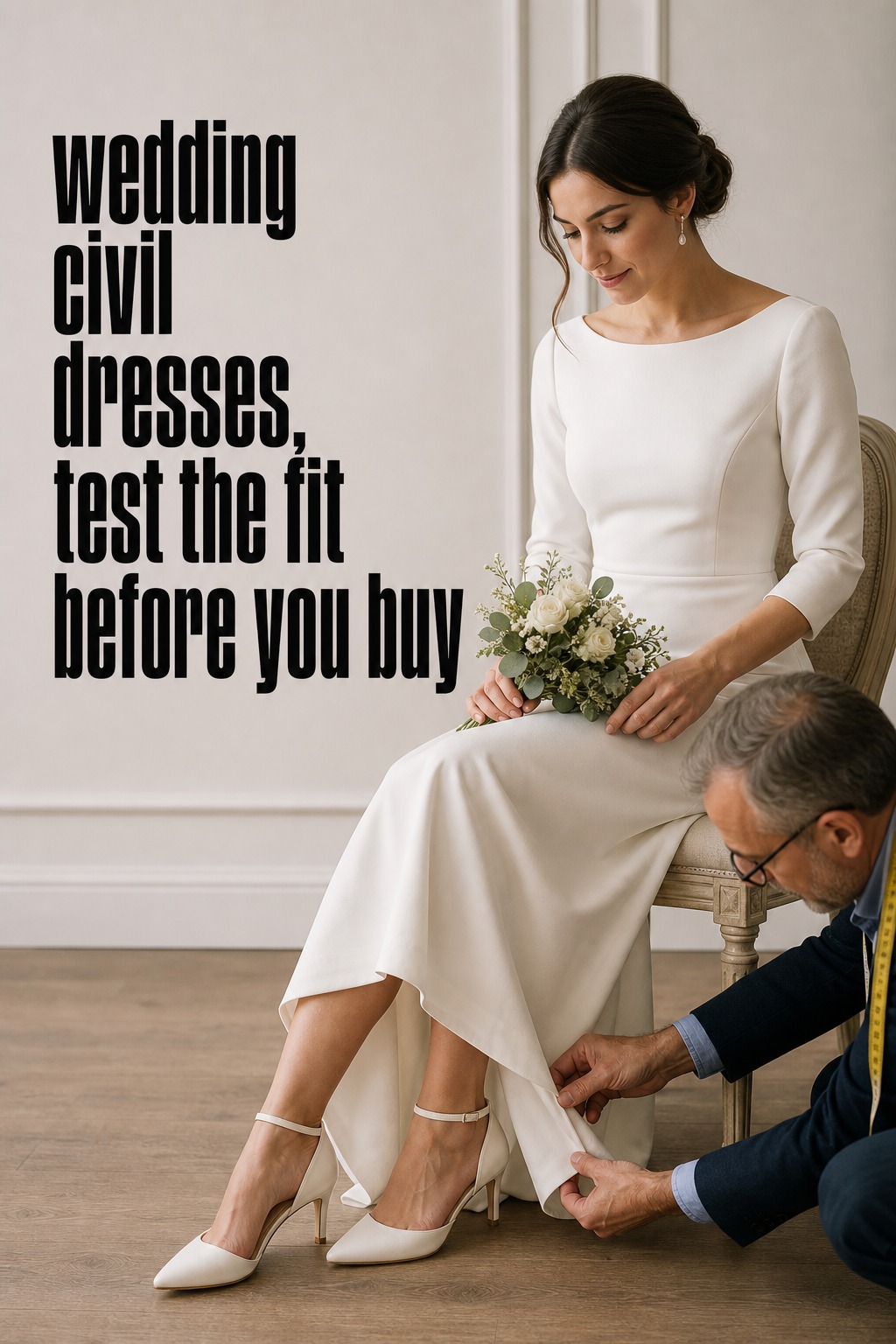
Fit is especially visible in civil ceremony photographs because the camera is often close and the setting is uncluttered. A dress should lie smoothly at the bust, allow a full breath and stay in place when you lift your bouquet. Sit on a firm chair, walk quickly, turn sideways, reach for a document and hug someone. Those small tests reveal more than standing still in a fitting room.
- Crepe: polished, relatively quiet and useful when you want a clean silhouette. Check how it photographs under strong daylight and whether it shows every seam.
- Satin: luminous and special, but more likely to reveal wrinkles or pull lines. Steam it immediately before dressing and bring a small emergency kit.
- Lace: adds romance and texture without needing a large skirt. Look at the scale of the pattern in close-up portraits and test whether it catches on jewelry.
- Wool, velvet and heavier suiting: excellent for cold weather and tailored looks. Balance the weight with a simple shoe and a lighter bouquet.
- Fluid materials: beautiful in motion, but they need secure underlayers and careful pressing. Walk outside before the final fitting if wind is part of the plan.
Accessories should solve a problem or clarify the mood. A short veil can make a simple outfit unmistakably bridal. A cape or jacket can provide coverage and create a second photograph. A belt can define a waist, while earrings draw attention to a neckline. Choose the shoes early because they determine the hem and influence how confidently you move.
Trade-offs and mistakes to avoid
The most common mistake is shopping for the ceremony image without planning the actual day. A beautiful dress that needs constant lifting, a bodice that restricts breathing, or a suit that wrinkles before the vows will distract you from the moment. Bring your intended undergarments, shoes and layer to the fitting, then photograph the outfit from the front, side and seated position.
- Do not assume a courthouse means casual. Your outfit can be simple and still have excellent construction.
- Do not choose a train that you cannot bustle or carry comfortably. Ask who will help you and practice the exact method.
- Do not leave alterations until the last week. Schedule enough time for a second fitting and a movement test.
- Do not let a trend replace your own point of view. Borrow a halter, bow, cape or suit idea only if it feels like you.
- Do not forget the paperwork moment. Sleeves, bracelets and rings should not make it difficult to sign, exchange documents or hold hands.
- Do not judge rewearability only by color. A familiar neckline, useful fabric and comfortable fit matter more than whether a garment is technically white.
A simple final review before you buy
Make a short decision sheet with five answers: where you will get married, how you will travel, what happens after the signing, how much movement you need, and which detail makes the outfit feel bridal to you. Then compare two or three finalists using the same criteria. The strongest choice will usually be the one that looks beautiful while you are walking, sitting, laughing and getting ready for the next part of the day.
Whether you choose a midi, a full-length gown, a jumpsuit or a tailored set, the result should feel considered rather than scaled down. Civil ceremonies give you permission to be precise. You can choose a single excellent fabric, a memorable neckline, a useful layer or a pair of shoes you will wear again. That clarity is what makes wedding civil dresses feel modern, personal and completely worthy of the occasion.
Wedding civil dresses FAQ
Can I wear a short dress for a civil wedding?
Yes. A mini, knee-length or midi dress can be beautifully bridal for a courthouse or city hall ceremony. Choose a polished fabric, strong fit and accessories that make the occasion clear, then check the hem for walking, sitting and photographs.
Are jumpsuits appropriate for a civil ceremony?
Absolutely. A white or ivory jumpsuit can look formal when it has good tailoring, a refined fabric and intentional accessories. Test the bathroom plan, sitting comfort and shoulder movement before the final alteration.
Do wedding civil dresses have to be white?
No. White and ivory are traditional, but a civil ceremony can suit soft blush, pale blue, champagne or a bolder color if that reflects your style. A white accessory, veil or bouquet can preserve a bridal feeling when the outfit is not white.
What shoes work best with a courthouse wedding dress?
Choose shoes you can walk and stand in confidently. Pointed flats, low block heels, polished pumps, sleek boots and refined sandals can all work. Match the shoe to the hem and test it on the surfaces you expect at the venue.
Should I wear a veil with a civil wedding dress?
A veil is optional, but it can make a simple dress feel instantly ceremonial. Try a short veil, birdcage, shoulder-length style or bow if a cathedral length feels impractical. Choose a length that does not compete with the dress or obstruct your movement.
How far in advance should I alter my civil wedding outfit?
Plan the first fitting several weeks before the ceremony and leave time for at least one follow-up. Bring final shoes, undergarments and any layer. The last appointment should confirm movement, fastening, hem length and steaming rather than introduce major changes.
Can I rewear my civil ceremony outfit?
Yes. Separates, jumpsuits, simple dresses, tailored jackets and shorter hems are especially easy to style again. Even a formal gown may become more versatile if it has a removable overskirt, sleeves, cape or belt.
What should I bring to a civil wedding dress fitting?
Bring the shoes, undergarments, jewelry and outer layer you expect to use. If you plan to wear a veil, cape or jacket, bring that too. Take a few minutes to practice sitting, walking, turning, hugging and holding a bouquet. A fitting is not only about the still image in the mirror. It is also a test of how the outfit behaves when you perform the small actions that make a civil ceremony feel real.
What is the most versatile silhouette for a civil ceremony?
A simple column or A-line silhouette is usually the easiest to adapt. It can look polished with a veil for the ceremony, pared back with earrings for portraits, and finished with a jacket or belt for dinner. That does not make it the universal best choice. If trousers, a short hem or a dramatic shape better reflects your style, versatility should mean that the outfit works for your life, not that it resembles everyone else’s wardrobe.
How can I make a simple civil dress look more special?
Use one memorable detail rather than adding decoration everywhere. A sculptural earring, a short veil, a textured bouquet, a satin shoe, an elegant coat or a distinctive back can give a clean dress a strong point of view. Keep the detail visible in the photographs and make sure it does not interfere with signing documents, holding hands or moving through the venue.
FAQ
Can a civil wedding outfit be colorful?
Yes. Soft color or a saturated shade can be a confident bridal choice. Repeat the color in a bouquet ribbon, shoe or jewelry detail if you want the look to feel cohesive.
What should I wear over my dress in winter?
Choose a polished coat, cape or tailored jacket that fits over the bodice without crushing it. Confirm the sleeve and hem relationship in photographs before the day.
Are flats suitable with wedding civil dresses?
Flats are suitable when they look intentional and support the hem. Pointed flats, embellished slippers or clean leather styles can feel just as finished as heels.
How do I keep satin from wrinkling?
Steam the garment close to dressing time, transport it on a proper hanger and avoid sitting in it before the ceremony. Ask your tailor about the safest pressing method.
What detail makes a courthouse look feel bridal?
A veil, bouquet, special fabric, pearl jewelry, elegant tailoring or a beautiful back can make the outfit feel ceremonial without adding a large train or heavy embellishment.
