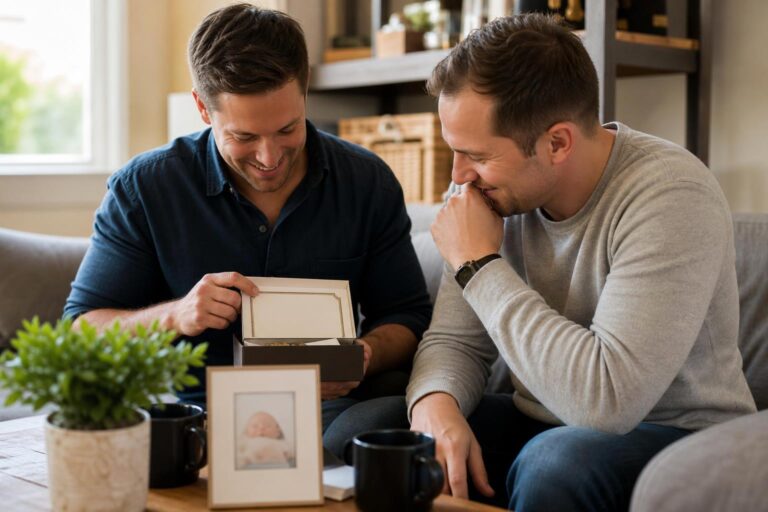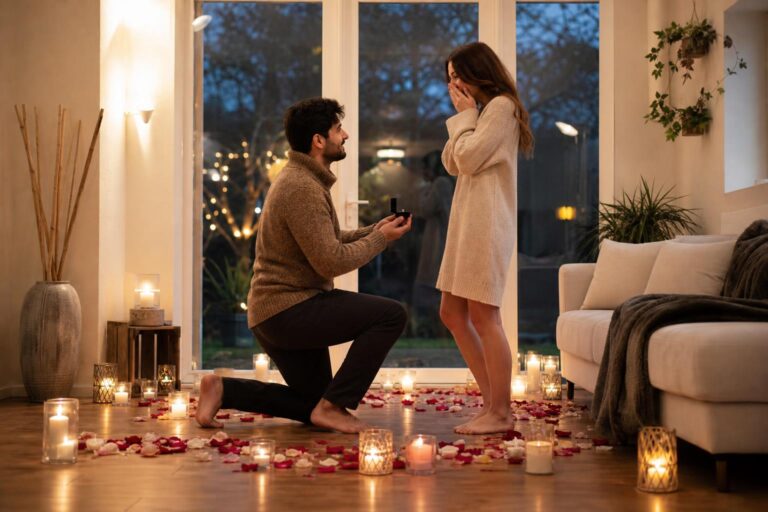
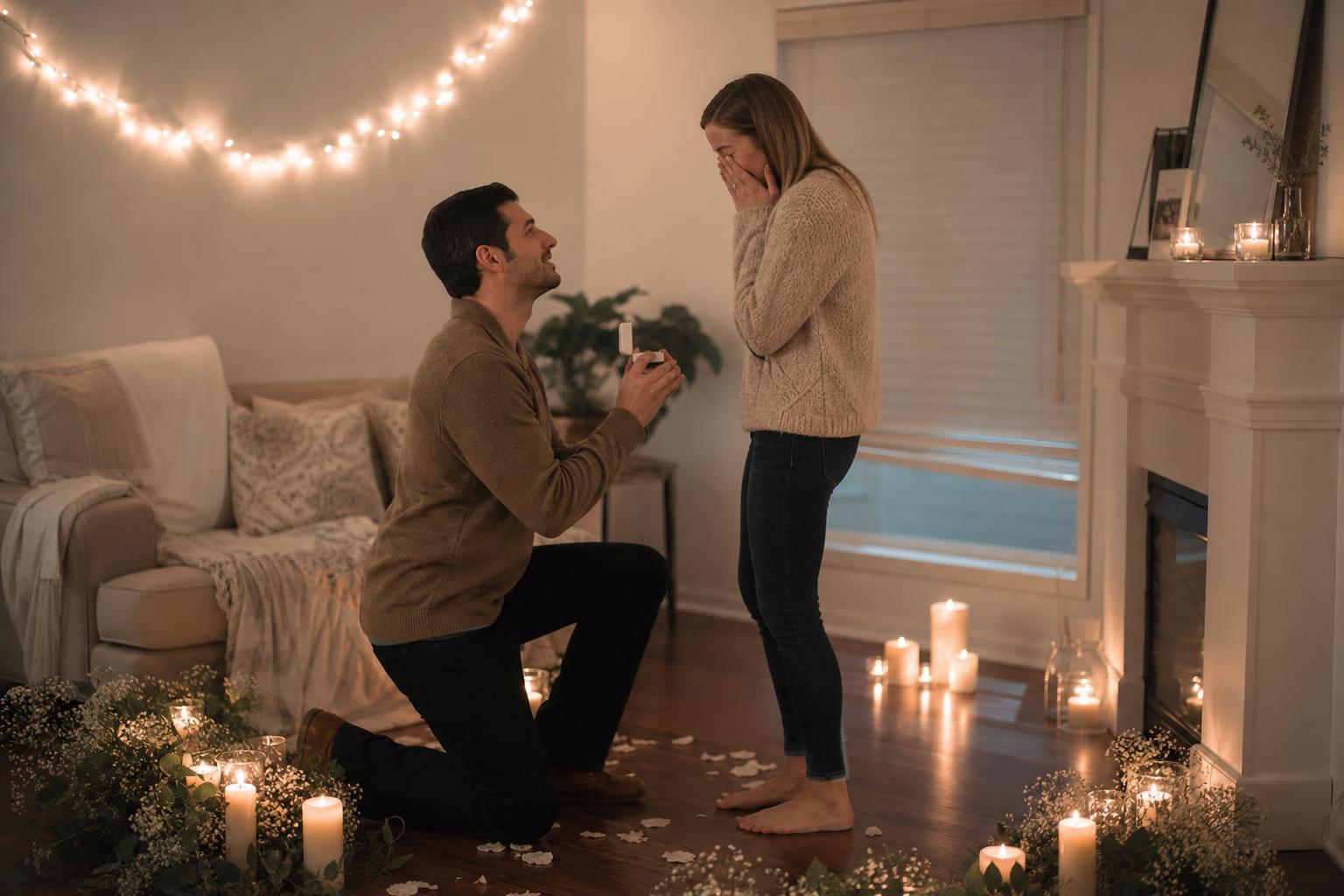
Simple Proposal Ideas at Home for a Romantic, Chic Night
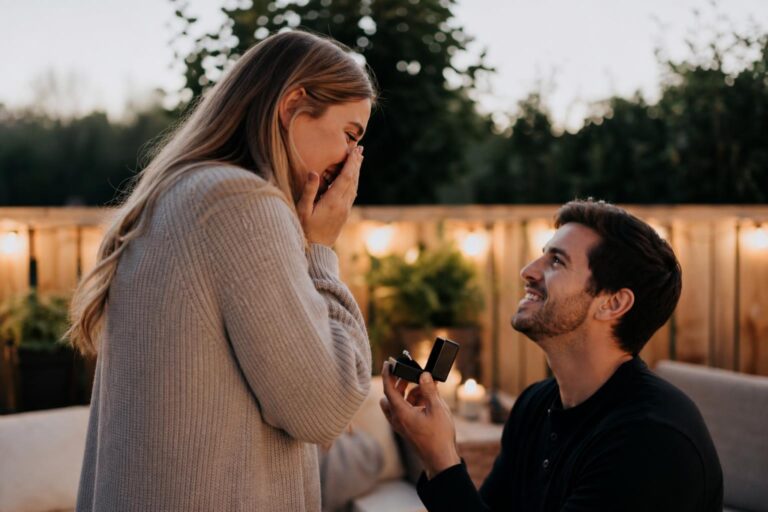
Some of the most memorable proposals do not happen under a spotlight or across a crowded restaurant. They happen at home, where the lighting can be softened, the music can feel personal, and every corner already carries part of a shared history. That is why simple proposal ideas at home continue to feel so appealing: they turn an everyday setting into something intimate, deliberate, and deeply emotional.
The beauty of an at-home proposal is not extravagance. It is atmosphere. A kitchen can become a place of nostalgia if it recalls favorite meals together. A living room can feel cinematic with candles, photos, and a carefully chosen song. A bedroom can hold the quiet romance of breakfast in bed and a handwritten letter. The home setting gives couples control over timing, privacy, and mood in a way few outside locations can match.
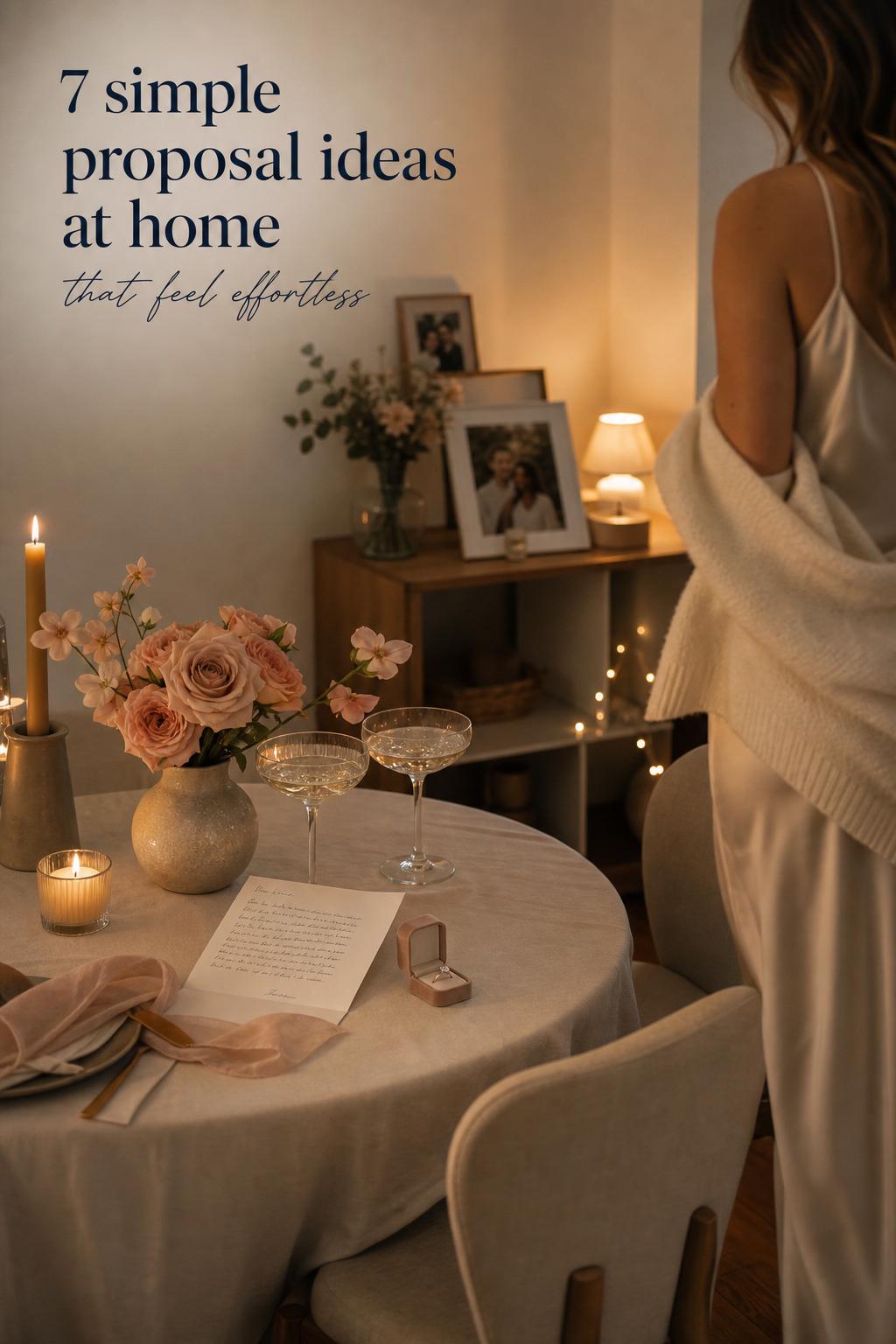
This guide approaches at-home engagement ideas the way a stylist and planner would: by looking at the visual mood, the emotional tone, and the practical details that make a proposal feel effortless rather than rushed. You will find meaningful ideas, a planning framework, décor and lighting guidance, speech advice, and realistic tips for shaping a proposal that feels beautiful without losing its sincerity.
Why an at-home proposal feels so personal
Home is more than a backdrop. It already holds your routines, your private jokes, your photos, your favorite takeout order, your coffee mugs, your weekend habits, and the quiet rhythm of your relationship. That built-in familiarity is what gives an at-home proposal its emotional advantage. Instead of borrowing romance from a public venue, you create it from a place that already means something.
Turn wedding inspiration into a plan you can actually follow.
Zarellea brings your guest list, budget, vendors, and day-of details into one shared space — so no beautiful idea gets lost in the shuffle.
That intimacy is one reason wedding and proposal publications like Vogue, The Knot, Zola, OneFabDay, Hitched, Paired, Greenvelope, and marriage-focused advice platforms continue to return to this format. The setting is flexible enough for a nostalgic first-date recreation, simple enough for a letter-and-ring reveal, and elegant enough for a candlelit dinner that feels beautifully styled. Planner Stefanie Cove has been associated with the idea that mood, timing, and personal touches matter as much as the grand gesture itself, and that principle translates especially well at home.
There is also a practical benefit. You can control the room, the sound, the reveal point, and the pace of the evening. That matters more than many people expect. Even the most romantic idea can feel less polished if the room is cluttered, the speech is improvised without thought, or the timing interrupts a stressful day. At home, thoughtful simplicity usually wins.
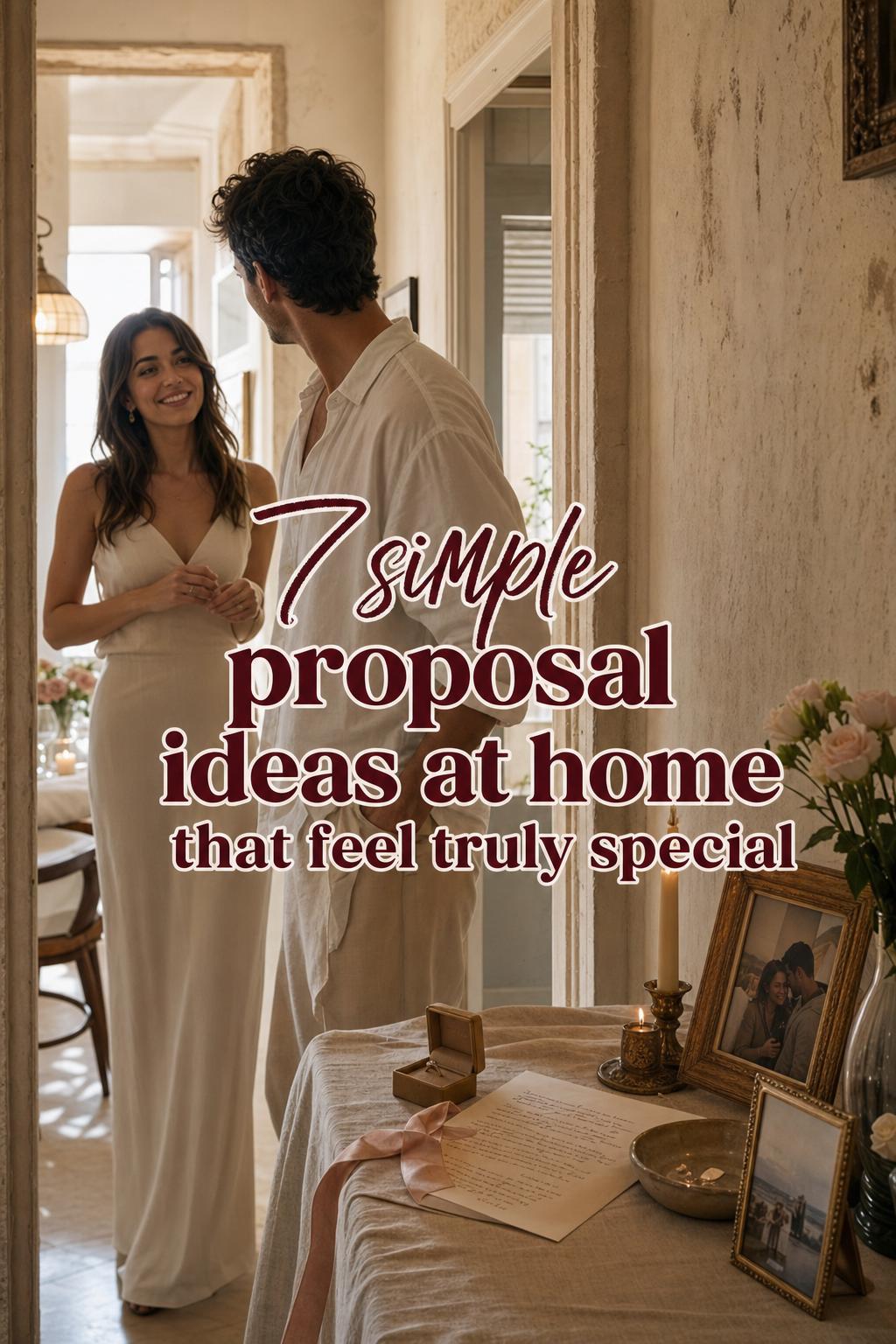
What defines this at-home proposal aesthetic?
The visual identity of a beautiful home proposal is built around warmth, intention, and emotional clarity. Rather than trying to make your home look like a ballroom, the goal is to refine what is already there. Think soft lighting, a controlled color palette, meaningful objects, and one focal moment where the proposal itself becomes the center of the room.
The strongest color stories tend to be gentle and romantic: candlelight gold, creamy neutrals, soft whites, muted blush tones, and natural home textures. The fabrics and materials that support this mood are equally understated: linen napkins, smooth paper for a letter, framed photographs, simple table settings, and subtle décor that does not compete with the ring or the speech. Candles and mood lighting appear again and again because they flatter ordinary rooms and make the space feel more intimate almost instantly.
Silhouette matters in a room just as it does in fashion. A long dining table can create a dramatic reveal line. A hallway filled with photos can become a visual memory lane. A bed tray with breakfast items and a letter gives the morning a soft, romantic shape. In proposal terms, silhouette simply means how the moment unfolds visually from entry to reveal.
- Core mood: intimate, calm, personal, softly styled
- Key visual elements: candles, lighting, music, photos, letters, familiar rooms
- Strong supporting details: puzzles, scavenger hunts, portraits, video messages, invitations or stationery cues
- Best rooms: kitchen, living room, bedroom, dining area, hallway with space for a reveal
- What weakens the look: too much clutter, too many unrelated props, harsh overhead lighting, or a setup that feels generic rather than personal
The most convincing at-home proposal aesthetic always feels connected to the couple. It should look like your relationship, only elevated.
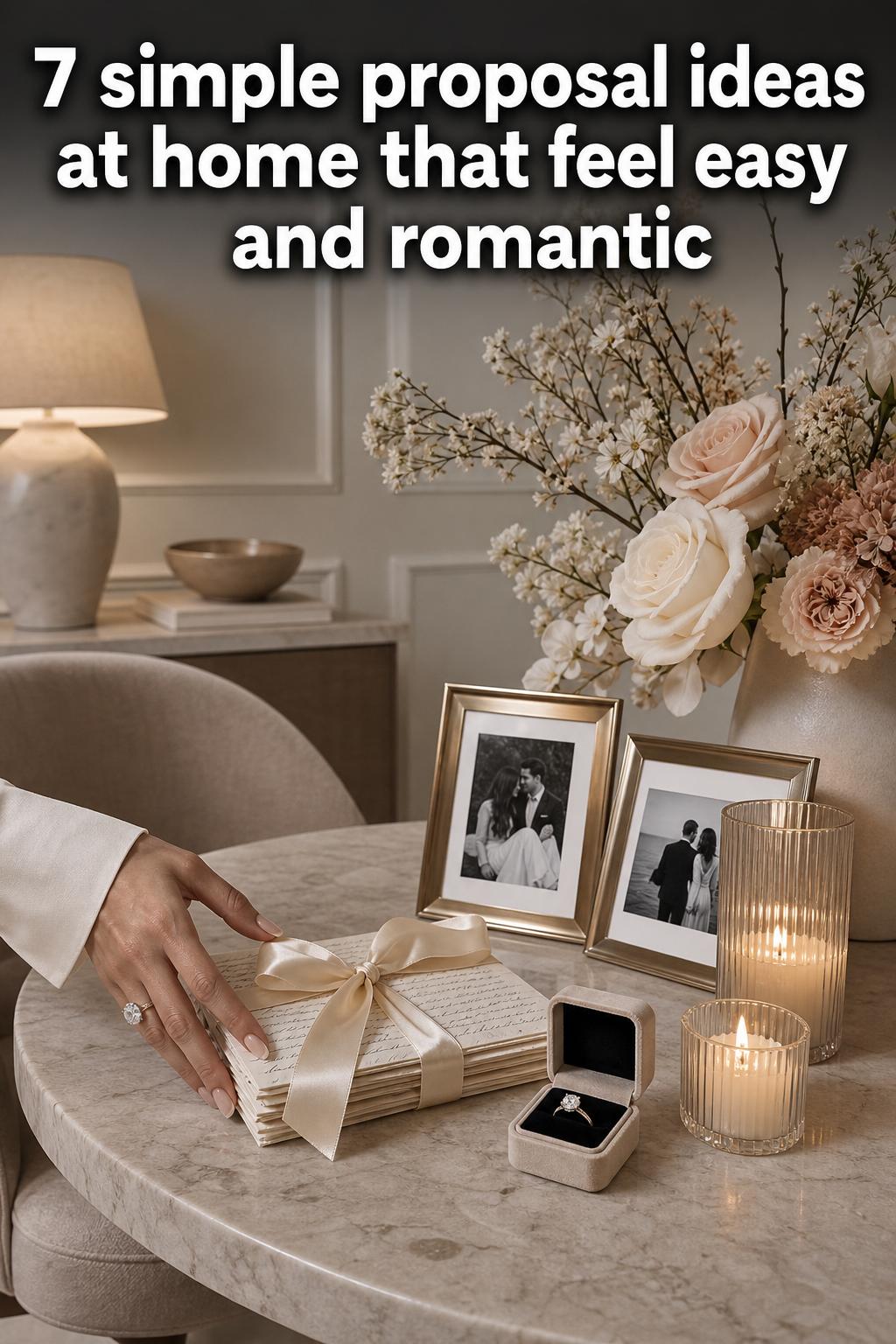
A romantic edit of simple proposal ideas at home
Not every home proposal needs to be elaborate. In fact, the strongest ideas often rely on one emotional theme and a few well-chosen details. The variations below all belong to the same visual world of intimacy and personalization, but each creates a slightly different atmosphere, from quiet and minimal to playful and interactive.
Look: breakfast in bed with a quiet morning reveal
This version has a soft, unhurried silhouette. It feels gentle rather than theatrical, which is exactly why it works so well for couples who value privacy and calm. The emotional effect comes from turning an ordinary morning into a meaningful one, without the pressure of dressing up or leaving home.
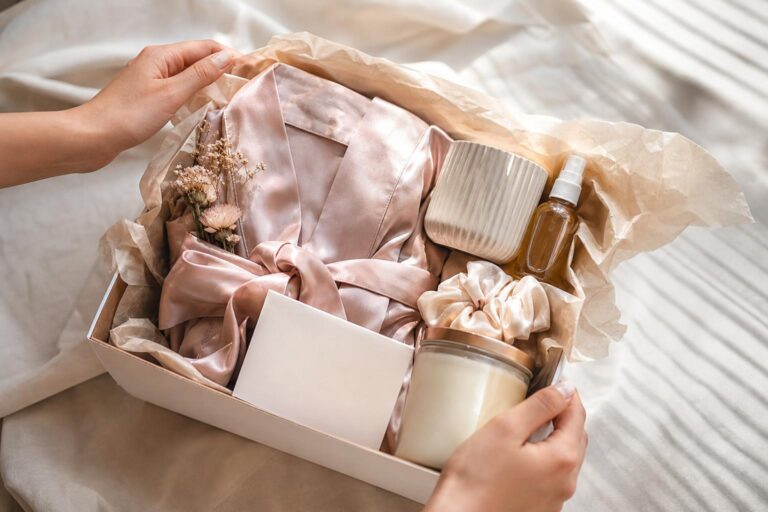
A breakfast tray becomes the visual anchor here. Fresh coffee, pastries, fruit, or a favorite homemade breakfast create a sense of care, while a handwritten letter adds emotional weight. The bedroom setting supports the mood naturally, especially if the space is tidy and the lighting is soft. A ring box can be revealed after the letter, or placed nearby as the final detail. This is one of the easiest at-home engagement ideas because it depends more on intention than décor volume.
Why it works: the proposal feels believable inside the rhythm of real life. The styling lesson is to keep the setup clean and warm. Too many decorative additions can make the scene feel staged, while a well-composed tray, a good letter, and a quiet moment can feel deeply romantic on their own.
Look: memory lane through the hallway or living room
This idea creates movement and emotional build-up. Instead of one static reveal, the proposal unfolds gradually as your partner walks through shared memories. Visually, it has more narrative shape than the breakfast idea, which makes it ideal for couples who love photos, milestones, and sentimental details.
Printed photographs, small notes, and meaningful dates can be arranged along a hallway, across shelves, or around the living room. The mood works best when the space is softly lit with candles or warm lamps instead of bright ceiling lights. You can end the walk at a final focal point, such as a framed message, a favorite song playing in the background, or a simple setup where you deliver your speech and reveal the engagement ring. This idea connects directly with the personalization themes often seen across The Knot, Hitched, and other wedding publications that emphasize recreating moments and reflecting on the relationship’s history.
The key is editing. Use enough photos to tell the story, but not so many that the emotional line becomes cluttered. A memory lane should feel curated, not chaotic.
Look: personal letter and photo mosaic
There is a more artistic mood to this approach. It feels reflective, intimate, and slightly more styled, especially when the photos are arranged with care. The proposal becomes less about spectacle and more about emotional composition.
A photo mosaic can be laid out on a wall, tabletop, or floor in a clean shape that draws the eye inward. Around it, keep décor minimal: candles, perhaps a favorite song, and a comfortable place to sit together afterward. The letter carries the emotional center. It can speak about milestones, growth, and what home has meant to both of you. Once the letter is read, the ring reveal becomes a natural continuation rather than a sudden shift.
This is especially useful for someone who feels more confident writing than speaking off the cuff. It also prevents one common mistake with at-home proposals: relying on décor to do the emotional work. Here, the words and the memories carry the meaning, and the styling simply supports them.
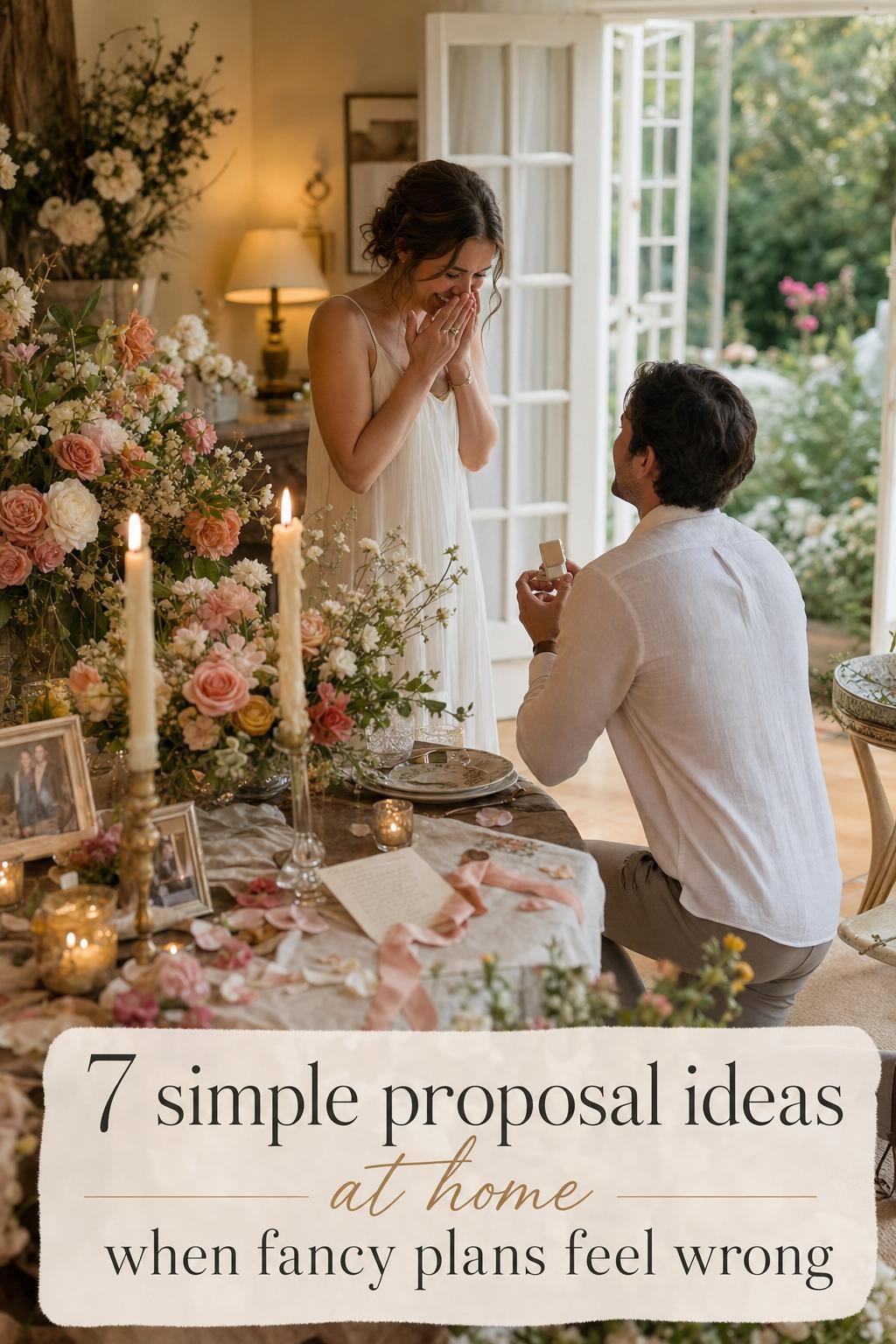
Style tip: let one emotional device lead the whole proposal
The most elegant home proposals usually revolve around one clear storytelling device: breakfast, a letter, a puzzle, a recreated date, or a photo trail. Once that element is chosen, everything else should support it through lighting, music, and pacing. Mixing too many ideas at once can make the moment feel busy instead of romantic.
Look: puzzle reveal with a playful finish
This interpretation has a lighter, interactive energy. It suits couples whose relationship includes games, humor, or small traditions around puzzles and shared activities. The atmosphere can still be romantic, but the shape of the moment feels more playful than formal.
The puzzle itself becomes the reveal mechanism, whether it spells out the proposal or leads to the ring. To keep the aesthetic cohesive, the surrounding setting should remain simple: a clear coffee table, candles or low lighting, and perhaps a drink or dessert to make the scene feel intentional rather than improvised. The ring reveal lands best once the final piece is in place. This kind of interactive concept appears across several home proposal roundups because it creates anticipation in a very natural way.
How to recreate the look: focus on comfort and pacing. If the puzzle is too difficult or too long, the emotion may stall. The best version feels familiar and manageable, with the proposal arriving before the activity loses momentum.
Look: recreate your first date in the kitchen or dining area
This idea has a nostalgic, cinematic quality. It turns home into a set for a story only the two of you understand, which is why it can feel more moving than a generic romantic dinner. Visually, the appeal comes from contrast: the ordinary familiarity of home layered with details from an early chapter of your relationship.
If your first date involved a favorite meal, the kitchen becomes especially meaningful. If it centered around a simple dinner, the dining area can be styled with candles, music, and small references to that original evening. The palette here should stay warm and restrained so the references stand out. Think clean table linens, glassware, photos from that era, or a handwritten menu-style note. This is one of the strongest intimate home proposal ideas because nostalgia gives the setup a built-in emotional structure.
The practical lesson is to recreate the feeling, not every exact detail. A proposal works better when it feels like an elegant echo of the first date rather than a rigid reenactment.
Look: candlelit dinner with a polished reveal
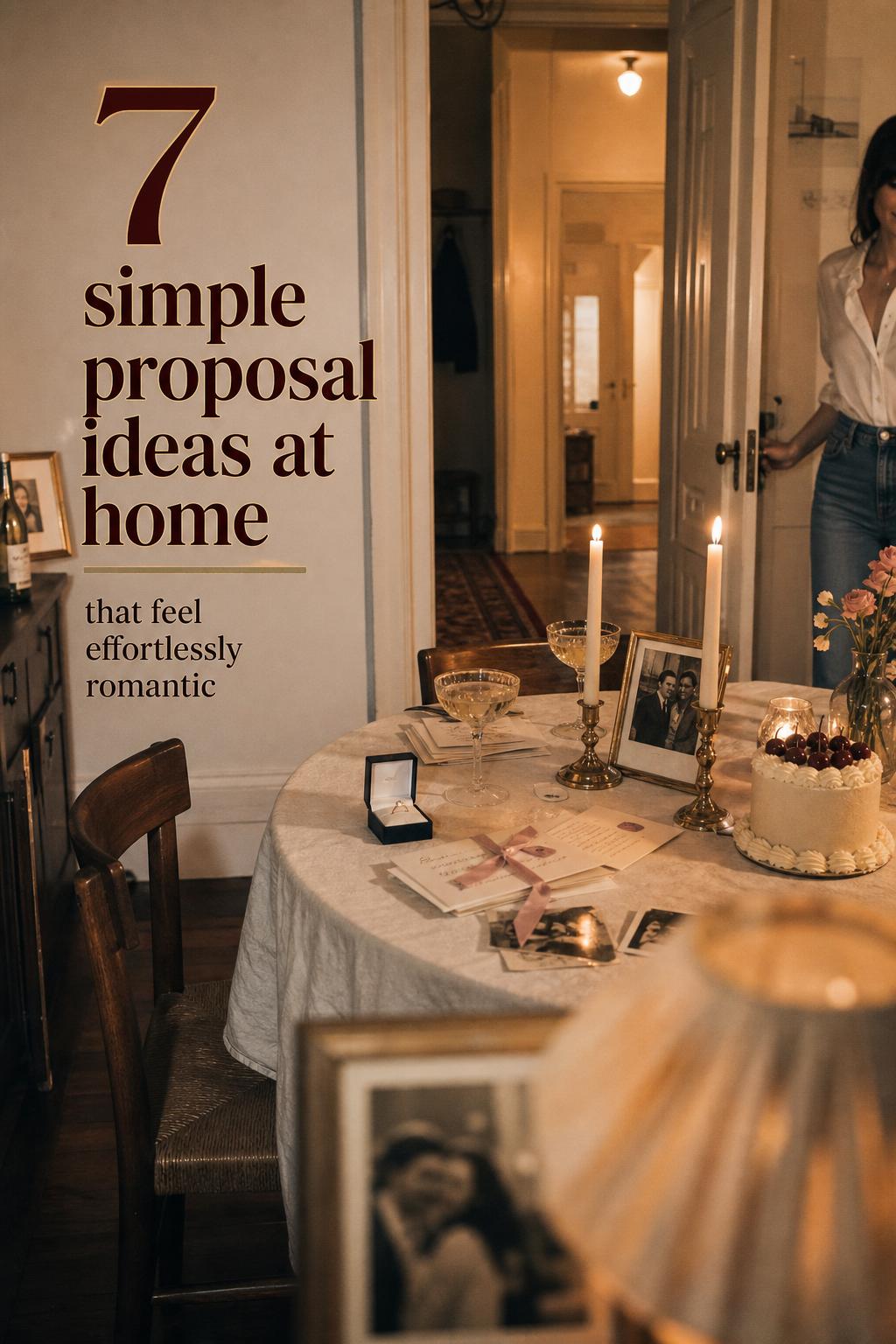
For couples who want something timeless, this is the most classic silhouette of all. The evening is anchored by a dining setup, controlled lighting, and a sense of occasion. It feels polished, but it does not have to feel complicated.
A candlelit dinner can be built around a homemade meal, a favorite restaurant order, or delivery from a meaningful place, much like the practical convenience suggested in settings where services such as DoorDash or UberEats can help preserve the surprise. The table should feel edited rather than overloaded. Candles, a clean centerpiece, and simple place settings are enough. Music matters here more than people often realize. Soft background music shapes the atmosphere and gives the room continuity while you move into the speech and ring reveal.
What to avoid: harsh overhead lighting, visible packaging, or trying to over-decorate the table with too many unrelated romantic props. The elegance comes from restraint.
How to recreate this aesthetic with pieces you already have
One reason at-home proposals are so appealing is that they rarely require a full production. Most couples can create the right mood using rooms, objects, and routines they already know well. The goal is not to buy your way into romance, but to refine the setting so the emotional moment has space to breathe.
- Start with one room that already feels calm and meaningful.
- Remove clutter before adding décor.
- Use photos, letters, music, or a favorite meal as the personal layer.
- Add candles or warm lighting to shift the atmosphere.
- Create one clear reveal point for the speech and ring.
This is also where brands and services can support the experience without taking over it. Greenvelope-style stationery cues can inspire a printed note or invitation feel. Zola and The Knot often frame ideas in a way that combines emotional intimacy with practical execution. 77 Diamonds brings a jewelry-focused perspective that reminds proposers not to let the ring logistics feel disconnected from the setting. The best result is a proposal where products and props support the story rather than overshadowing it.
Look: scavenger hunt with a romantic final room
This version brings more movement and anticipation into the home. It works especially well for couples who enjoy interactive moments, games, or surprises with a playful edge. Compared with a dinner proposal, the visual mood is more dynamic, with the final reveal carrying the most polish.
Each clue can point to a meaningful object, shared joke, or memory in a different part of the house. The final room should feel distinct from the rest, with stronger mood lighting, candles, music, and perhaps photographs or a letter waiting there. That contrast is what makes the ending feel special. Paired and Zola both lean into scavenger-hunt and interactive at-home engagement ideas because they let a proposal unfold like a story.
The styling insight is to save your strongest visual moment for the end. If every room is equally decorated, the final reveal can lose impact. Build softly, then finish with intention.
Look: video message or portrait-inspired reveal
This idea has a contemporary, layered mood. It blends memory, technology, and visual storytelling in a way that feels intimate without being overly public. For couples who have many digital memories or long-distance chapters in their history, it can be especially meaningful.
A short video montage, recorded message, or portrait-based setup can be presented in the living room with soft lighting and a clean background. The room should feel calm and focused, almost like a private screening. If portraits or framed images are involved, keep the arrangement balanced and minimal so the emotional center remains clear. This idea connects naturally to the broader content trend around videos, interactive reveals, and creative personalization.
Why it works: it gives structure to the moment and can help a nervous proposer move into the speech more naturally. The transition from watching shared memories to speaking from the heart often feels smoother than starting cold.
The planning framework that makes any home proposal feel intentional
Beautiful proposals rarely happen by accident. Even the simplest ones benefit from a quiet framework. A good at-home proposal does not need to be complicated, but it should have emotional logic: an idea, a setting, a moment, and a reveal.
- Choose the core idea: breakfast, letter, dinner, puzzle, scavenger hunt, or first-date recreation.
- Select the room: bedroom, kitchen, living room, dining area, or hallway.
- Build the mood: candles, music, and warm lighting.
- Prepare the personal layer: photos, notes, invitations, portraits, or memory cues.
- Plan the speech: short, sincere, and grounded in your relationship.
- Decide on the reveal point: after the meal, at the end of the memory trail, or after a letter or puzzle.
- Walk through the timing once before the day arrives.
This kind of step-by-step plan is often what separates a proposal that feels seamless from one that feels improvised. Publications that cover how to propose at home repeatedly emphasize the same pillars: mood, location, speech, and timing. Those foundations matter more than chasing a dramatic concept.
Lighting, music, and décor: the details that shape the mood
In home proposals, ambiance does most of the visual work. Lighting changes the room first. Music changes the emotional temperature second. Décor then supports both. If you get those three elements right, even a very simple proposal can feel elevated and memorable.
Candles remain one of the most effective details because they soften a familiar space and create instant intimacy. Warm lamps or indirect light are equally helpful if open flame is impractical. The common mistake is relying on bright overhead fixtures, which flatten the atmosphere and make the room feel ordinary. Softness is what transforms the setting.
Music should feel emotionally aligned with the relationship rather than generically romantic. A favorite song, a playlist tied to shared memories, or a subtle instrumental background can all work. What matters is continuity. Music can carry the room through nerves, transitions, and pauses in a way silence sometimes cannot.
Décor should follow the same principle as good styling: keep one focal point and avoid visual competition. Candles, framed photos, a clean tablescape, a letter on beautiful paper, or a path of memory cues are often enough. The moment should feel curated, not crowded.
Choosing the right moment and writing the speech
A proposal can be beautifully decorated and still feel emotionally unclear if the timing is off. The right moment usually comes when your partner is relaxed, present, and not distracted by work, travel stress, or a hectic schedule. At home, this often means choosing a familiar window of calm: weekend morning, a favorite date night, or an evening that already feels special.
The speech does not need to be long. In fact, shorter often feels more sincere. A strong proposal speech usually includes three things: what your relationship has meant to you, what you love about the life you have built together, and why you want to take this next step. If you are nervous, writing it down first can help even if you do not read it aloud. The personal letter approach is especially useful for people who want emotional clarity without losing composure.
One subtle but important detail: pause before the ring reveal. That brief moment lets the words land. It also gives the proposal shape, rather than making it feel rushed from speech to ring in one breath.
Budget, tools, and where to invest
Many home proposals are appealing precisely because they can be adapted across budgets. The most important investments are not always the most expensive ones. In many cases, the ring, the letter, and the atmosphere matter more than buying a large volume of décor.
A low-key budget with strong emotional impact
A handwritten letter, printed photos, music, and candlelight can create a beautiful proposal with minimal cost. Breakfast in bed, a memory lane using existing photos, or a recreated date night at home all work especially well in this range. The lesson here is that thoughtfulness scales better than ornament.
A mid-range setup with polished details
This level might include a more styled dinner, special stationery touches inspired by brands like Greenvelope, professional-looking photo printing, or a fuller room setup with layered candles and décor. It is often the sweet spot for couples who want the proposal to feel elevated but still intimate.
A higher-touch version with brand and service support
Some proposers may also consider a photographer, planner guidance in the spirit of expert-led mood building, or a luxury ring experience connected to brands such as 77 Diamonds. While not necessary, these additions can be worthwhile if documentation and styling are especially important to you. The trade-off is that more moving parts require more coordination, and the proposal may feel less spontaneous if over-produced.
Common mistakes that make a home proposal feel less special
At-home proposals are forgiving, but they still benefit from restraint and preparation. The strongest ideas are often simple, yet carefully edited.
- Using too many unrelated props instead of one clear concept
- Leaving clutter visible in the proposal space
- Depending on harsh overhead lighting
- Choosing an idea that does not fit your relationship style
- Making the setup more elaborate than the words
- Forgetting to plan the transition into the actual question
Another common issue is copying an idea exactly without adapting it. A scavenger hunt is charming for some couples and tiring for others. A candlelit dinner may feel timeless to one partner and overly formal to another. The proposal should feel consistent with your relationship’s natural tone. That is what keeps it from feeling performative.
A note on personalization and trust in the moment
The reason personalization appears across nearly every thoughtful proposal guide is simple: it creates emotional credibility. A photo from an early trip, a note that references a hard season you navigated together, a meal tied to your first date, or a song that belongs to your story will always feel more convincing than generic romance. That does not mean every proposal needs to be highly elaborate. It means the details should feel chosen, not borrowed.
If you are deciding between several ideas, choose the one that allows you to be most present. A proposal should not feel like you are managing a production. It should feel like you are creating space for a meaningful question in a setting that already feels like yours.
FAQ
How do I make a simple proposal at home feel special?
Focus on three things: a personal idea, a calm setting, and a sincere speech. Warm lighting, music, candles, photos, or a handwritten letter can elevate the moment, but the proposal feels most special when the details reflect your actual relationship rather than a generic romantic scene.
What is the easiest at-home proposal idea to plan?
Breakfast in bed or a candlelit dinner are usually the easiest because they rely on routines you already know how to create. A tidy room, a favorite meal, soft lighting, and a short speech can be enough to make the proposal feel memorable without requiring a complicated setup.
Should I write a proposal speech in advance?
Yes, even if you do not plan to read it word for word. Writing your thoughts first helps you clarify what you want to say and keeps the moment from feeling rushed. If speaking makes you nervous, a personal letter can also become part of the proposal itself.
Which room in the house works best for a proposal?
The best room is the one that feels most comfortable, private, and easy to style. Bedrooms suit soft morning proposals, kitchens and dining areas are strong for date recreations or dinners, and living rooms work well for photo displays, video messages, or a more polished evening reveal.
Are candles necessary for an at-home proposal?
No, but they are helpful because they soften the room and create intimacy quickly. If candles are not practical, warm lamps or other gentle lighting can create a similar effect. The goal is to avoid harsh overhead lighting that makes the space feel too ordinary.
How can I include memories in the proposal without making it feel cluttered?
Choose one format and edit carefully. A short photo trail, a small memory lane, or a curated mosaic usually feels more elegant than displaying every photo you have. The strongest memory-based proposals tell a focused story rather than trying to include everything.
Is a puzzle or scavenger hunt proposal too casual?
Not at all, as long as it fits your relationship and leads to a meaningful final moment. Interactive ideas work best for couples who enjoy games, surprises, or playful traditions. The key is to keep the activity manageable and make sure the final reveal still feels emotionally clear and romantic.
Can I use takeout or delivery for a proposal dinner?
Yes. A proposal dinner does not have to be homemade to feel thoughtful. Ordering from a favorite place through a service like DoorDash or UberEats can actually reduce stress and help you focus on the atmosphere, timing, and speech, which are often the more important parts of the experience.
How much décor is too much for a home proposal?
If the décor distracts from the proposal itself, it is probably too much. One clear concept supported by candles, photos, music, or stationery-style details is usually enough. A room feels more romantic when it is edited and intentional rather than overloaded with decorations.
What matters most in a successful at-home proposal?
The most important principle is alignment. The idea, the setting, the mood, and your words should all feel true to your relationship. Once that foundation is in place, even a very simple proposal at home can feel elegant, emotional, and unforgettable.