Engagement Party Centerpieces for an Intimate, Polished Table
Engagement party centerpieces that set the mood beautifully
Some of the most memorable engagement parties do not rely on grand décor everywhere. Instead, the atmosphere often comes together through the table itself: the candle glow, the flowers, the vessels, the low arrangement that allows guests to laugh, toast, and actually see one another. That is why engagement party centerpieces matter so much. They shape the mood at eye level, connect the color palette to the rest of the celebration, and quietly guide how romantic, modern, rustic, or polished the party feels.
Unlike wedding reception décor, engagement party centerpieces usually need to do more than look beautiful in photos. They often sit in smaller venues, shared dining spaces, garden party settings, and at home celebrations where comfort and conversation matter just as much as visual impact. A centerpiece that is too tall can block sightlines. One that is too sparse can disappear into the table. The best choices balance tablescape style, ambiance, and practical use.
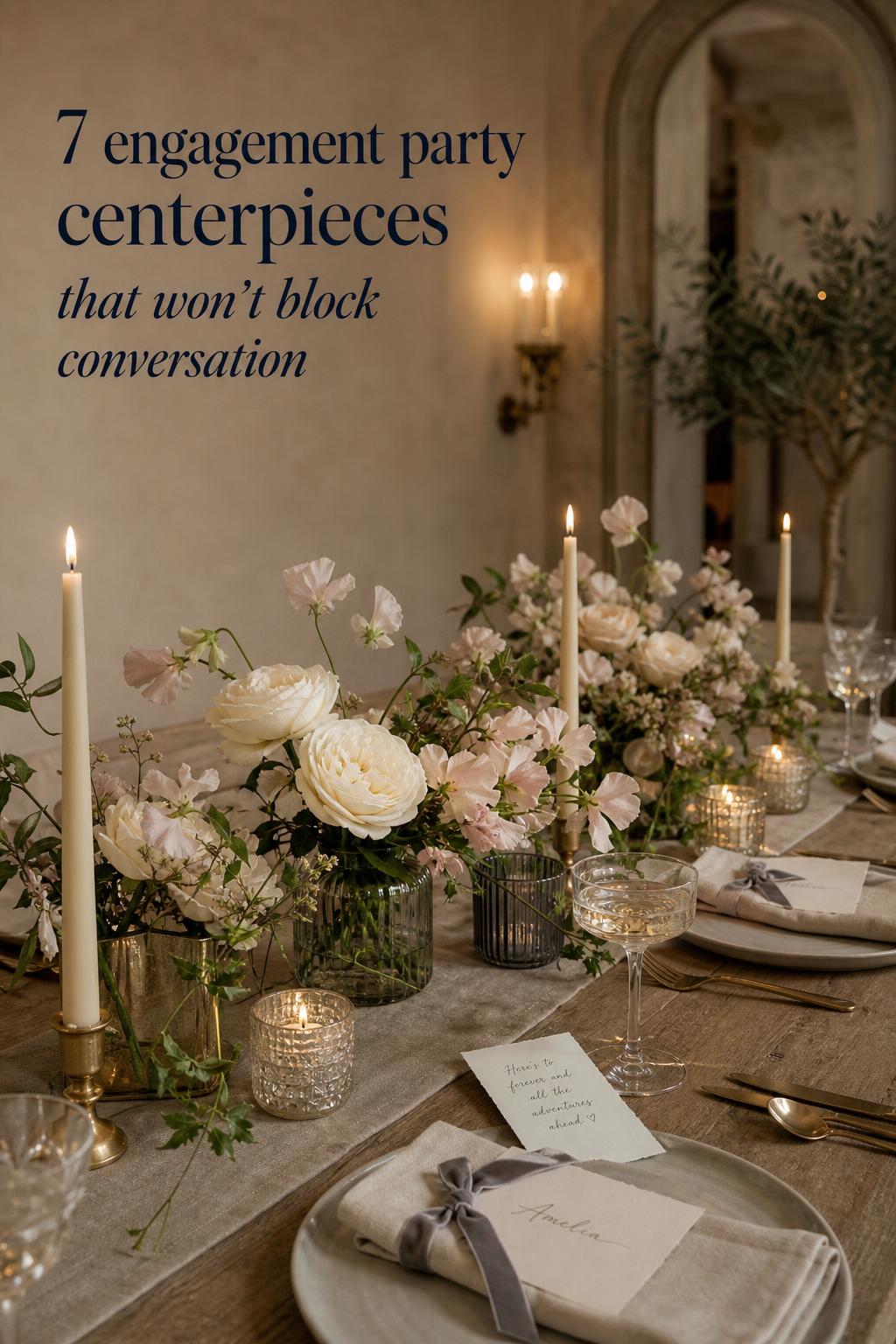
This guide explores the visual identity behind successful centerpiece styling, then moves through different centerpiece looks that all belong to the same romantic engagement-party world. You will see floral centerpieces, non-floral ideas, budget-friendly approaches, statement pieces, and thoughtful ways to adapt the design to your venue, your guests, and your overall engagement celebration.
What defines this aesthetic?
The most appealing engagement party centerpieces share a clear decorative language. They feel intimate rather than overly formal, curated rather than crowded, and photo-friendly without overwhelming the table. Whether the style leans garden, glam, modern, or rustic, the visual formula usually begins with one central idea: a focal point that supports the mood while preserving ease around the table.
Turn wedding inspiration into a plan you can actually follow.
Zarellea brings your guest list, budget, vendors, and day-of details into one shared space — so no beautiful idea gets lost in the shuffle.
Color palette is one of the strongest defining features. Soft florals, greenery, glass vessels, candles, crystal vessels, and low-profile bowls appear often because they bring romance without making the table feel heavy. Even stronger statement choices, including neon signs used as centerpiece-like focal points, work best when their color and lighting tie back to the overall engagement party décor. The mood should feel coherent, not as though the centerpiece belongs to a different event.
Texture matters just as much as color. Fresh flowers create softness, candles add warmth, geometric vessels bring modern structure, and greenery or moss-like elements can ground a table visually. The common silhouette is either low and spread out or carefully elevated in a way that avoids blocking conversation. In practical terms, that means centerpieces are not just decorative objects. They are part of how guests interact with the party.
- Core visual ingredients: flowers, candles, greenery, vessels, bowls, crystal containers, signage, and decorative accents
- Common style moods: romantic, garden-inspired, modern, rustic, glam, and minimalist
- Most useful silhouette principle: keep the centerpiece low-profile or thoughtfully placed so sightlines stay open
- Best styling mindset: connect the centerpiece to your theme, your table décor, and the emotional tone of the celebration
Why the table deserves more attention than many couples expect
An engagement party is often more conversational than a wedding reception. Guests may be meeting each other for the first time, parents and friends may be sharing stories, and the couple is usually moving from table to table rather than staying in one place. In that setting, centerpieces influence the entire rhythm of the room. They affect what guests notice first, how formal the table feels, and whether the table encourages lingering.
This is also why the strongest editorial guidance across wedding and décor brands like The Knot, Casolia, Yeah Weddings, Yellowpop, and Engagement Experts tends to circle back to practicality. A beautiful centerpiece is only successful if it supports the experience of the event. Height, visibility, lighting, and budget all become part of the design decision. That blend of beauty and usability is what makes engagement party centerpieces feel truly considered.
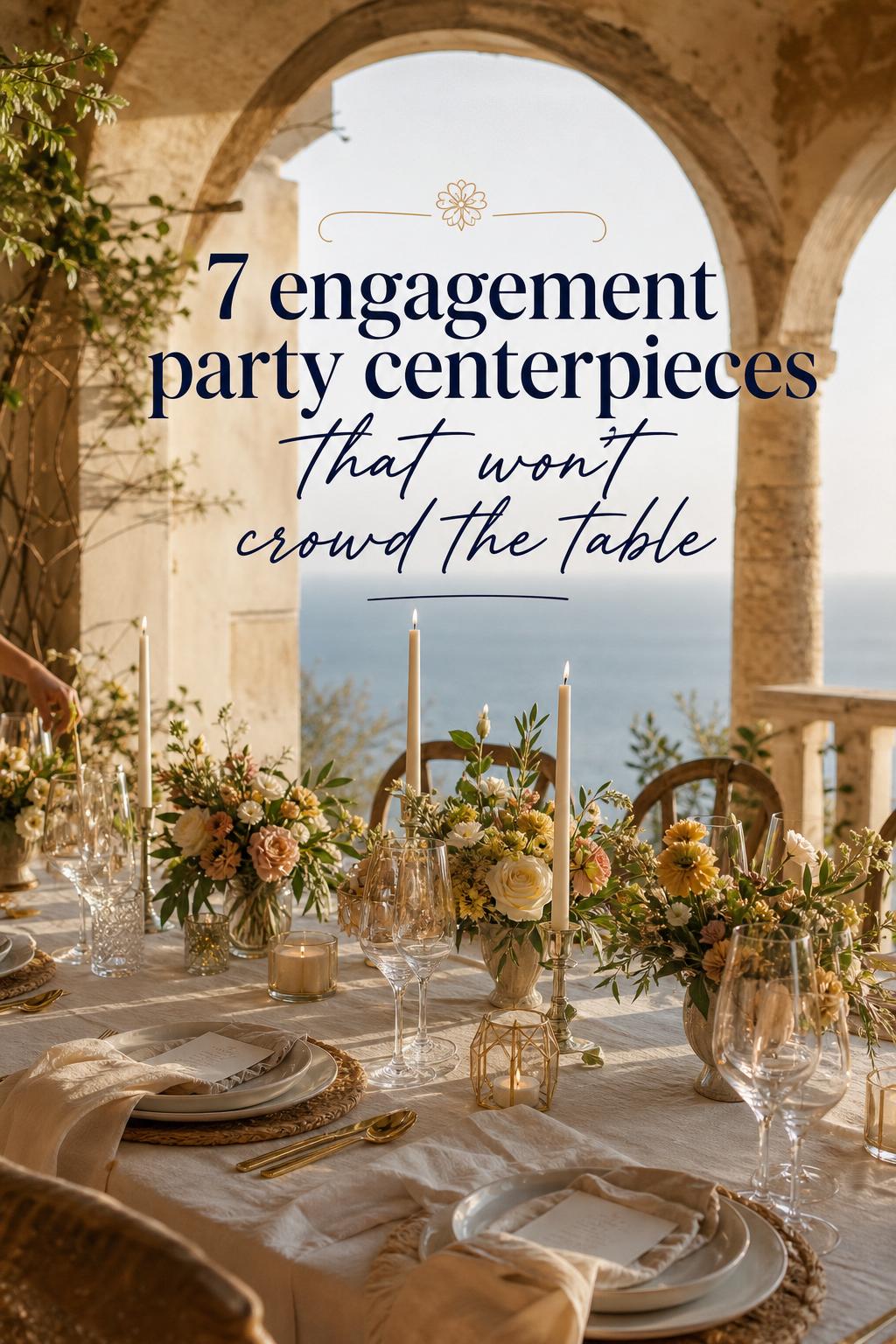
A romantic floral tablescape with low candlelight
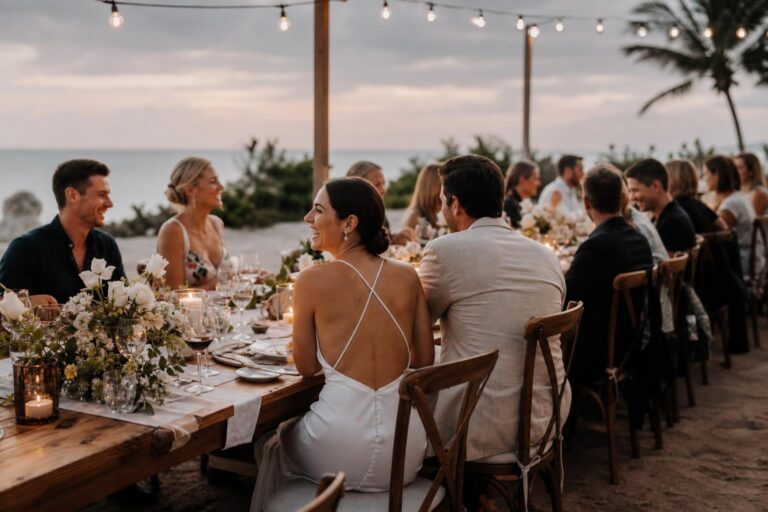
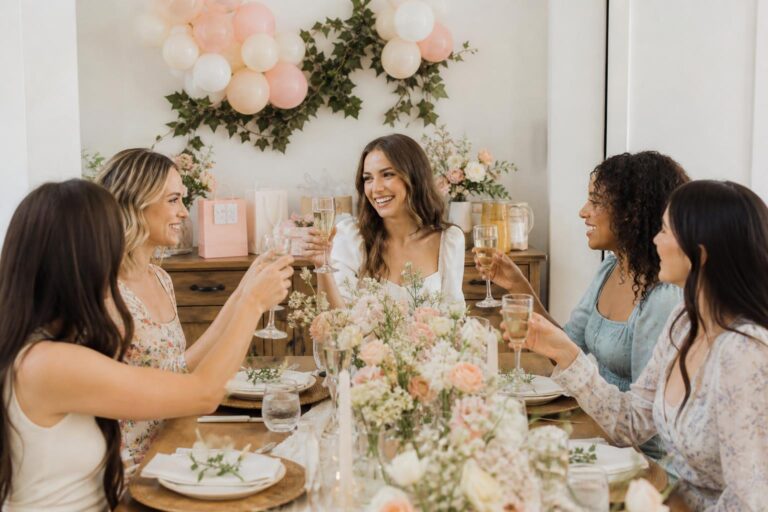
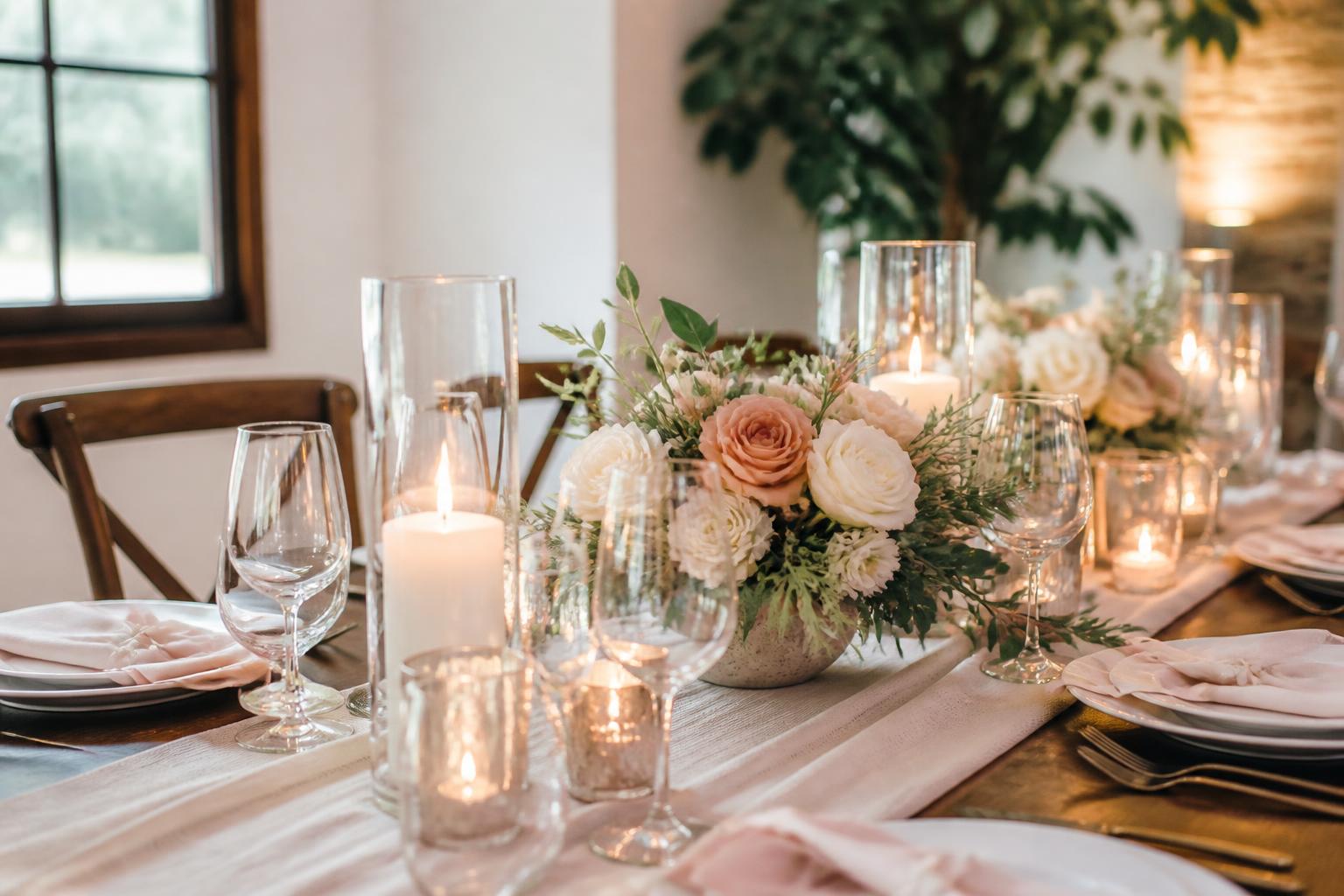
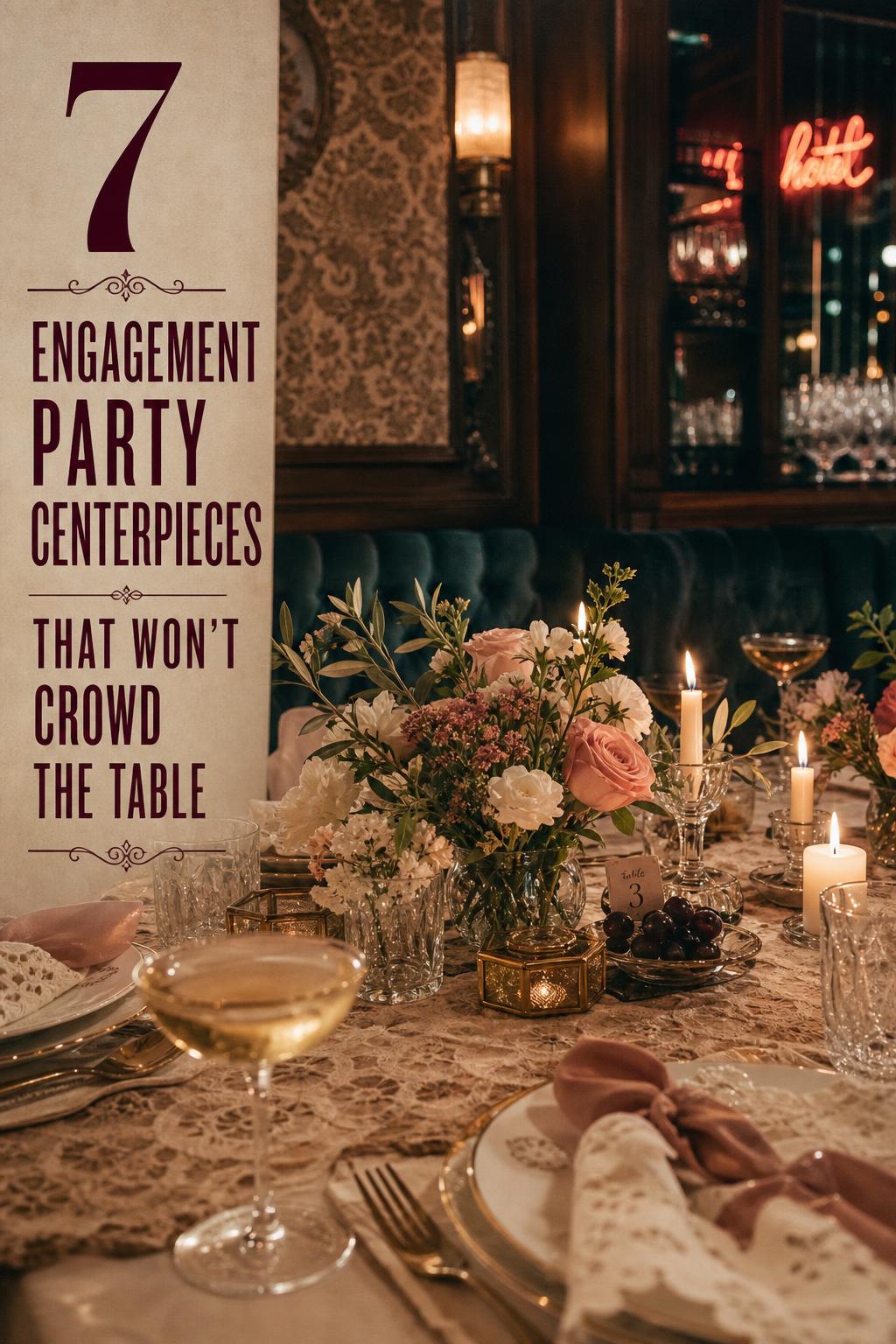
This look carries the classic engagement-party mood many couples picture first: soft florals arranged low across the center of the table, with votives or candles adding a warm, flattering glow. The silhouette feels open and inviting rather than towering, which makes it especially effective for dinner-style gatherings where guests will be seated for a while. Visually, it reads romantic and wedding-adjacent without feeling too formal for an engagement celebration.
The palette works best when it stays cohesive. Flowers and seasonal blooms can be selected to echo the invitation colors or the larger theme, while greenery softens the arrangement and helps the centerpiece blend naturally into the tablescape. Glass or crystal vessels keep the look airy. Candles and votives create depth without introducing visual clutter, and they help the floral arrangement feel fuller even when the budget is modest.
Why it works: this style succeeds because it respects conversation. The arrangement stays visible, but never intrusive. If you want the centerpiece to feel elevated rather than generic, vary texture within the same palette instead of adding too many unrelated accent colors. That is often the difference between a timeless romantic table and one that feels busy.
Tip: keep floral romance from looking overly formal
If your engagement party is at home, in a casual venue, or in a garden party setting, avoid making the flowers too stiff or symmetrical. A slightly looser arrangement tends to suit the spirit of an engagement better than something that feels like a wedding reception replica.
A garden party centerpiece with greenery and seasonal softness
Garden party centerpieces feel airy, natural, and quietly celebratory. The mood is less about polished formality and more about layered freshness. This style fits especially well for daytime engagement parties, spring and summer gatherings, and venues where the setting already contributes part of the visual story. It creates a sense of ease while still feeling special enough for a milestone event.
Greens and seasonal blooms are the visual anchor here. Instead of relying on a dense arrangement, the centerpiece can use lighter floral placement and more breathing room between elements. Vessels should feel easy rather than ornate, and the color palette should support the setting rather than compete with it. This is one of the easiest styles to make feel expensive without necessarily increasing the budget, because freshness and restraint do much of the work.
Best for: outdoor celebrations, patio dinners, brunch gatherings, and garden-themed engagement parties. The styling lesson is to let the venue and centerpiece speak the same language. If the backdrop is already lush or scenic, a lighter centerpiece often feels more refined than one that tries to dominate the table.
- Best visual elements: greenery, soft flowers, clear vessels, and subtle candlelight
- Color direction: nature-led palettes that feel soft and cohesive
- What to avoid: oversized arrangements that block the openness garden styling depends on
A modern minimalist table with geometric vessels
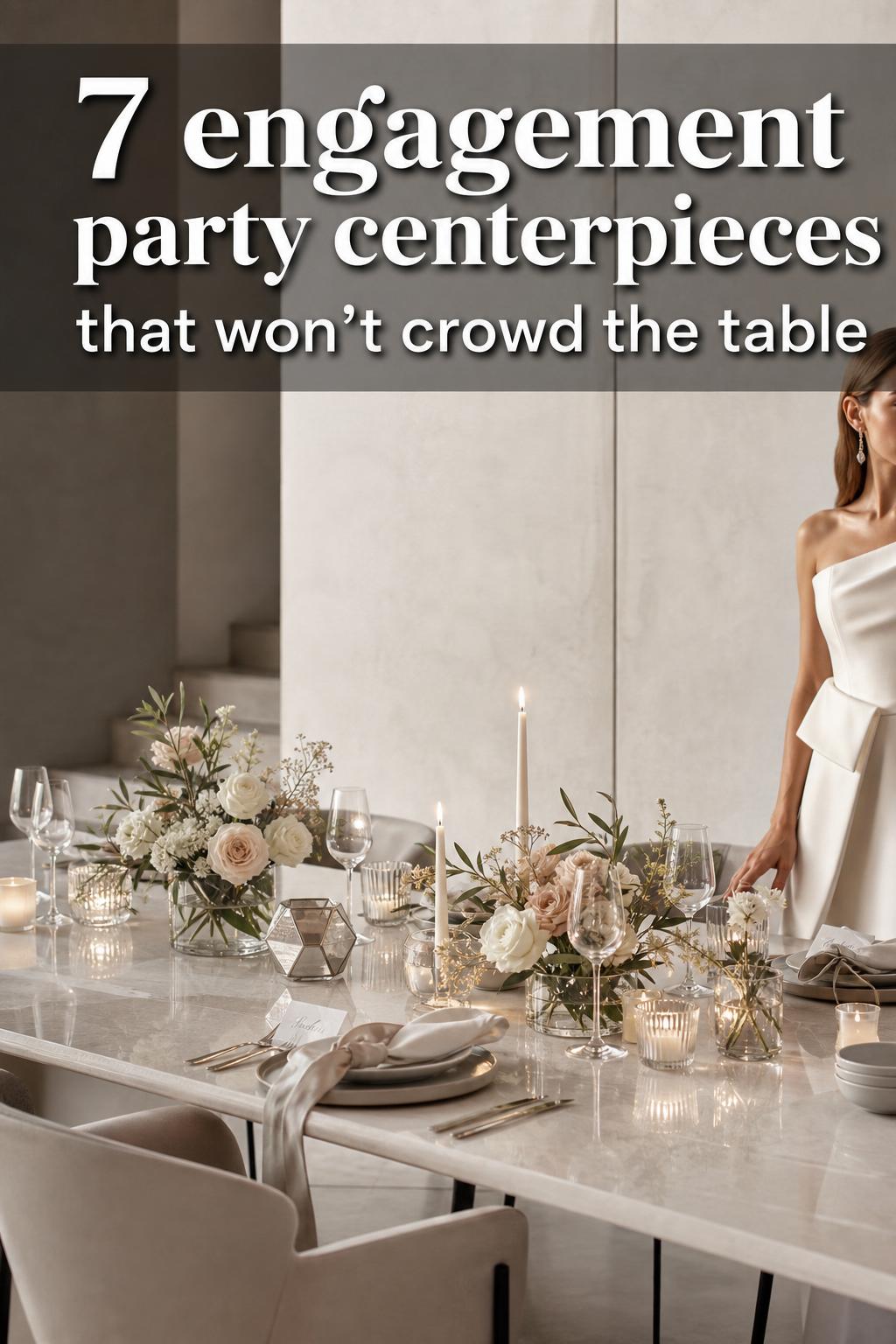
For couples drawn to a cleaner aesthetic, a modern centerpiece can still feel romantic if the lines stay simple and the table retains some softness. This version is about shape and proportion more than abundance. The visual impression is crisp, intentional, and slightly architectural, making it a strong choice for contemporary venues or couples who prefer a restrained approach to engagement party décor.
Geometric vessels, simple florals, greenery, and a controlled palette give this look its character. Rather than layering many types of décor, it depends on carefully chosen centerpiece elements that feel edited. Candles can still be used, but they should support the structure rather than introduce a competing style. The most successful modern tablescape usually repeats forms or materials so the centerpiece feels designed, not random.
How to recreate the look: start with one vessel shape and repeat it across the table, then add either flowers or greenery in a disciplined way. The aesthetic effect comes from consistency. If you add too many decorative accents, the table can quickly lose the minimalist mood and look undecided.
A candlelit non-floral centerpiece with warmth and texture
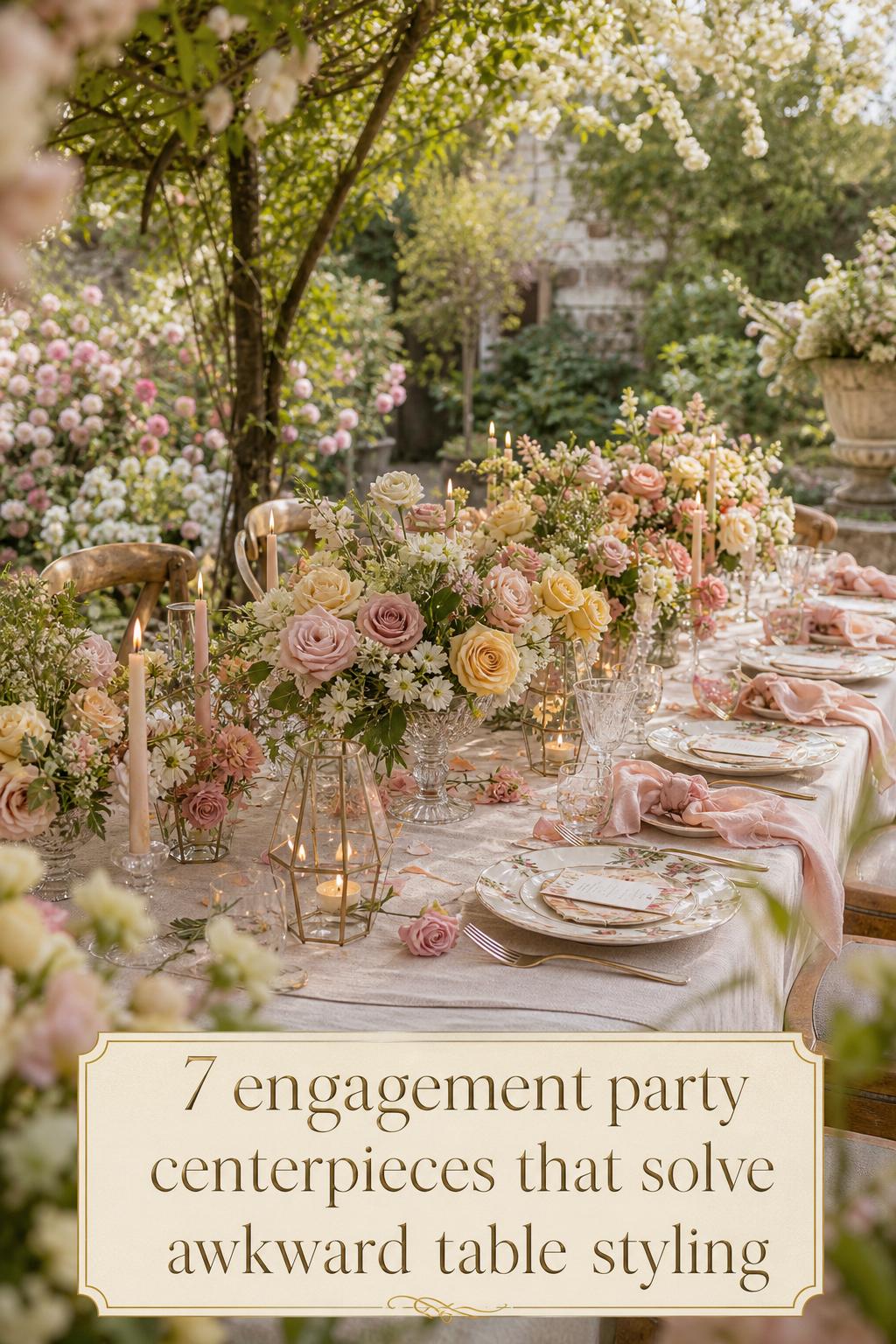
Not every engagement party centerpiece needs flowers to feel complete. A candle-centered arrangement can create one of the most intimate and flattering atmospheres, especially for evening celebrations, indoor dinners, or modern-rustic settings. This look is less about color and more about glow, texture, and rhythm along the table.
Candles, votives, vessels, and greenery can carry the entire tablescape when arranged with care. The low profile is especially useful for preserving sightlines, and the repetition of light makes even a simple table feel considered. This is also one of the most practical non-floral centerpiece ideas for couples who want décor that is easy to source and less dependent on specific blooms.
The practical lesson here is balance. Without some variation in height, a candlelit centerpiece can feel flat. Without enough restraint, it can feel cluttered. Aim for a gentle rise and fall across the table using different candle sizes or vessel shapes while keeping the arrangement low enough for comfortable conversation.
Style tip: texture replaces color when the palette is quiet
When you rely on candlelight and neutral décor, texture becomes the design language. Glass, crystal vessels, matte containers, and greenery give the table dimension so it does not fade into the background.
A rustic centerpiece that feels refined rather than theme-heavy
Rustic engagement party centerpieces work best when they feel softened and edited. The mood should suggest warmth, charm, and natural materials, but still leave room for elegance. This interpretation avoids anything overly literal and instead leans into a relaxed table with grounded texture, gentle florals, and a welcoming, informal silhouette.
Bowls, greenery, seasonal produce-inspired accents, candles, and simple floral notes all sit comfortably within this style world. A low-profile centerpiece is particularly effective here because rustic styling can quickly feel visually heavy if every element competes for space. The more polished version of rustic décor keeps the color palette contained and uses texture as its main point of interest.
What to avoid: too many novelty details at once. If the table includes rustic vessels, greenery, and candlelight, that is often enough. Adding unrelated glam pieces or overly bright colors can break the mood and make the centerpiece feel less intentional.
A glam centerpiece with crystal vessels and polished contrast
Glam engagement party centerpieces thrive on light reflection, cleaner finishes, and a stronger sense of occasion. The silhouette can still stay low enough for conversation, but the visual identity is more polished and high-impact. This style suits formal dinners, evening engagement celebrations, and venues where the décor needs a touch of sparkle to match the atmosphere.
Crystal vessels, candles, florals, and a more defined color palette create the mood. Unlike rustic or garden styling, glam centerpieces benefit from precision. The arrangement should feel composed, and the supporting table décor should not dilute the finish. Even with a richer look, visibility still matters. If the florals become too tall or the arrangement too dense, the table can start to feel more staged than welcoming.
Why it works: the shine and structure give the engagement party a more elevated identity, but it remains wearable in real life because the central styling principle is still practical proportion. In other words, glam should come from finish and material, not from making the table hard to use.
A statement focal point with neon signage energy
For couples who want their engagement party décor to feel more contemporary and high-impact, a statement centerpiece can move beyond the traditional arrangement. Yellowpop-style LED neon signs are often used as larger focal points rather than literal centerpieces, but in the language of event design they can function like a centerpiece in spirit: they direct attention, shape ambiance, and create a memorable visual anchor for the room.
This idea works best when the sign is integrated into the table scene or placed so it visually frames the centerpiece area. Florals, greenery, candles, and textiles then soften the lighting effect and connect the sign back to the engagement celebration. The mood is modern, photo-friendly, and playful without losing the romantic context.
The styling insight is to treat signage as one voice in the décor, not the whole conversation. If the neon element is bright, the rest of the tablescape should stay edited. Too many competing statement pieces can make the party feel more like a commercial installation than a personal milestone.
Where this look works best
Modern venues, city celebrations, evening parties, and engagement events where photos and ambiance are a major priority. It is less suited to very intimate dining tables where the sign would overpower conversation.
A budget-friendly centerpiece that still feels beautifully intentional
Budget-friendly engagement party centerpieces do not need to look minimal in a disappointing way. The strongest affordable tables often succeed because they focus on one or two elements and repeat them thoughtfully. Rather than trying to imitate an expensive event with too many small pieces, they create atmosphere through consistency, a limited palette, and practical scale.
Flowers can still be part of the design, but they often work best when combined with candles, greenery, or simple vessels that help fill out the table. Product-forward inspiration from marketplaces like Etsy and retailers like Walmart can also be useful for finding engagement-themed centerpieces, handmade décor, acrylic details, wood signs, or giftable table accents. The key is selection. Budget décor looks strongest when every element supports the same mood.
How to make it look more polished: choose fewer centerpiece components and repeat them. Matching vessels or a disciplined color palette will usually make a table look more expensive than a wider mix of unrelated bargain finds. If you are buying rather than renting, consider whether the centerpiece pieces can also transition into home décor after the engagement party. That kind of reuse adds practical value to the spend.
- Smart budget priorities: candles, greenery, simple flowers, repeated vessels
- Helpful shopping sources: Etsy for handmade customization, Walmart for accessible décor options, and editorial idea hubs like The Knot or Casolia for visual direction
- Biggest mistake: spreading the budget across too many styles instead of building one cohesive tablescape
How to build the centerpiece around your theme instead of forcing a trend
The most convincing engagement party centerpieces do not start with a random object that looked pretty online. They begin with the event’s emotional tone. Is the celebration garden-inspired and airy, modern and city-focused, classic and candlelit, or rustic with a softer edge? Once that mood is clear, the centerpiece can express it through palette, materials, and silhouette.
Garden themes usually support greenery and seasonal blooms. Glam works naturally with crystal vessels and polished candlelight. Rustic asks for texture and warmth. Modern styling benefits from geometric forms, low-profile arrangements, and cleaner lines. The closer your centerpiece aligns with the rest of the décor, the less you need to decorate elsewhere to make the party feel finished.
Color palette guide for engagement tables
A strong color palette does not have to be complex. It simply needs to feel consistent with your venue, your table décor, and the type of ambiance you want guests to experience. Soft and romantic palettes tend to flatter floral centerpieces, while sharper contrasts can support modern or statement-driven looks. What matters is avoiding a palette that fights the mood of the event.
- For romantic tables: soft florals, greenery, candlelight, and gentle tonal variation
- For modern tables: controlled color choices with more emphasis on form and material
- For glam tables: refined contrast, crystal detail, and light-reflective finishes
- For rustic tables: grounded tones, natural texture, and subtle seasonal influence
The sightline rule that changes everything
Among all centerpiece decisions, height is often the one couples notice too late. A tall arrangement can look dramatic in a photo, yet create friction once guests are seated. At an engagement party, where conversation is a central part of the evening, visibility across the table matters more than many people expect. This is why low-profile arrangements appear so often in successful centerpiece guidance.
The smartest approach is to assess how the table will actually be used. A dinner setup usually benefits from lower floral centerpieces, candles, bowls, or textural arrangements that stay beneath the line of sight. A statement piece can still work in the room, but it often belongs behind the table or off to the side rather than directly between guests. In practice, the best centerpiece height is the one that allows the table to function beautifully from the first toast to the final conversation.
How to source your centerpiece style with confidence
Many couples gather inspiration from editorial and shopping sources at the same time, which is often the most realistic way to plan. The Knot and Yeah Weddings are especially useful for broad ideas around floral centerpieces, non-floral table décor, ambiance, and practical setup. Casolia offers image-led inspiration and product-forward styling angles, while Yellowpop introduces statement-driven décor ideas that can reshape the room visually. Etsy and Walmart can be practical places to source actual centerpiece pieces once the direction is clear.
The important part is translating inspiration into a single design story. One couple might love The Knot’s romantic floral tablescape, Casolia’s modern vessels, and a Yellowpop sign, but all three only work together if the palette and mood connect. Sourcing becomes easier when you decide which element is leading: the flowers, the lighting, the vessel style, or the engagement-themed décor accent.
Practical sourcing checklist
- Choose the overall mood first: garden, glam, rustic, modern, or romantic classic
- Decide whether the centerpiece is floral, non-floral, or hybrid
- Confirm how much table space is available and how much conversation the event will involve
- Select vessels and supporting décor before adding too many accent pieces
- Use one retail or marketplace source for fills and one editorial source for styling direction when helpful
Three centerpiece blueprints couples can actually use
The intimate dinner blueprint
Picture a smaller engagement celebration with family and close friends gathered around one long table. A low floral centerpiece with greenery, candles, and clear vessels creates romance without interrupting conversation. This is the safest and often most elegant route for couples who want a timeless tablescape that suits nearly any venue.
The modern city blueprint
In a sleek venue or loft-like setting, a geometric centerpiece with restrained florals, candlelight, and a contemporary sign element can create a cleaner, more editorial mood. The visual success depends on discipline. Fewer pieces, stronger lines, and one controlled color story usually look more convincing than a crowded table full of unrelated décor moments.
The relaxed garden blueprint
For an outdoor lunch, patio dinner, or garden engagement party, seasonal blooms and greenery arranged with softness allow the venue to stay part of the story. The centerpiece should feel integrated rather than imposed. Light vessels and low candle accents help the table feel finished without competing with the natural setting.
Common styling mistakes that make centerpieces feel less beautiful
The most common mistake is choosing a centerpiece for its photo appeal alone. Tall floral arrangements, overly themed objects, or too many statement accents can look exciting in isolation but awkward once they are placed on a real table with food, glassware, and seated guests. Engagement party décor works best when it serves the event, not just the image.
Another frequent issue is mixing too many aesthetics at once. A rustic bowl, glam crystal vessels, modern neon signage, and bright handmade product pieces might all be attractive individually, but they rarely feel convincing together without a very clear plan. The more intimate the event, the more obvious inconsistency becomes. A cohesive centerpiece usually comes from repeating one mood through every decision.
Finally, couples sometimes underestimate how much vessels and proportion affect the result. Flowers alone do not create a strong tablescape. The container, spacing, visibility, and supporting light all matter. If something feels off, it is often not the bloom choice but the structure around it.
A final note on choosing centerpieces that feel personal
The most successful engagement party centerpieces are not necessarily the largest, most expensive, or most trend-driven. They are the ones that feel aligned with the couple, the venue, and the kind of evening being created. A soft floral tablescape, a candlelit non-floral arrangement, a modern geometric setup, or a statement sign can all work beautifully when the styling logic stays clear.
Start with the mood you want guests to feel, then let the centerpiece express that mood through color palette, texture, and scale. Once those pieces are working together, even simple table décor can feel deeply romantic, polished, and memorable.
FAQ
How tall should engagement party centerpieces be?
For most engagement parties, lower centerpieces are the most practical choice because they preserve sightlines and make conversation easier. If you want a taller statement element, it usually works better as a room focal point rather than something placed directly between seated guests.
What are the best budget-friendly engagement party centerpieces?
Budget-friendly centerpieces often rely on repeated vessels, candles, greenery, and a smaller amount of flowers rather than large floral arrangements alone. Handmade or ready-made décor from Etsy and Walmart can also help, as long as you keep the style cohesive and avoid mixing too many unrelated pieces.
Are floral centerpieces still the best option for an engagement party?
Floral centerpieces remain one of the most reliable options because they suit the romantic tone of an engagement celebration and adapt well to many themes. That said, non-floral or hybrid centerpieces with candles, vessels, greenery, or statement décor can be just as successful when they fit the venue and overall ambiance.
Can non-floral centerpieces still feel elegant?
Yes, especially when the table uses strong texture, warm lighting, and thoughtful vessels. Candlelit centerpieces, geometric containers, crystal accents, and greenery can create a polished look without relying heavily on flowers, particularly for modern or evening engagement parties.
How do I match my centerpiece to my engagement party theme?
Begin with the mood of the celebration rather than a single object. Garden themes usually work well with seasonal blooms and greenery, glam themes suit crystal vessels and polished candlelight, rustic styles rely on warmth and texture, and modern parties benefit from clean lines and restrained décor.
Can neon signs work with engagement party centerpieces?
They can, but usually as a focal point that complements the centerpiece rather than replaces the table entirely. A Yellowpop-style neon sign works best when the surrounding florals, candles, or greenery soften the effect and connect the lighting back to the romantic atmosphere of the event.
Where can I find engagement centerpiece ideas and products?
Editorial sources like The Knot, Casolia, Yeah Weddings, Yellowpop, and Engagement Experts are useful for visual direction and planning ideas. For actual products, Etsy and Walmart can be practical starting points, especially if you already know whether you want floral, handmade, modern, or engagement-themed décor.
Should centerpieces match the wedding décor exactly?
Not exactly, but they should feel related. An engagement party centerpiece often works best when it hints at the couple’s broader style through color palette, flowers, or ambiance without feeling like a smaller copy of the wedding reception.
Can centerpieces double as gifts or keepsakes?
They can, especially when you choose product-based or handmade décor that guests or the couple can reuse after the event. This approach is particularly helpful for budget-conscious planning because it gives the centerpiece a longer life beyond the party itself.