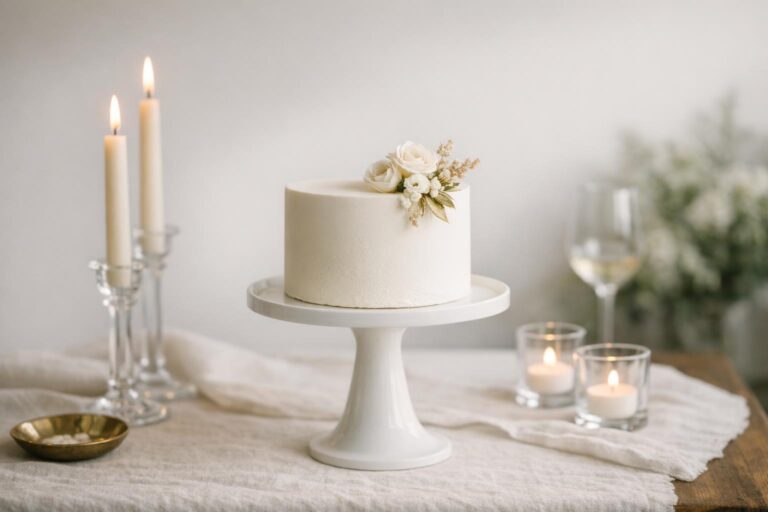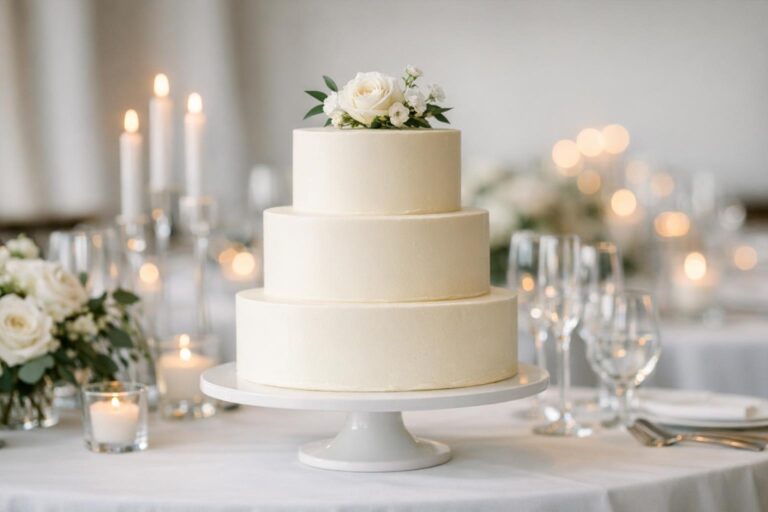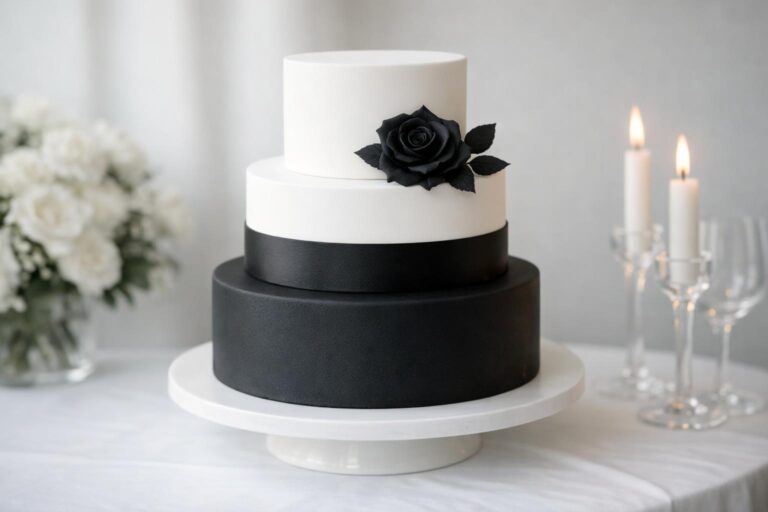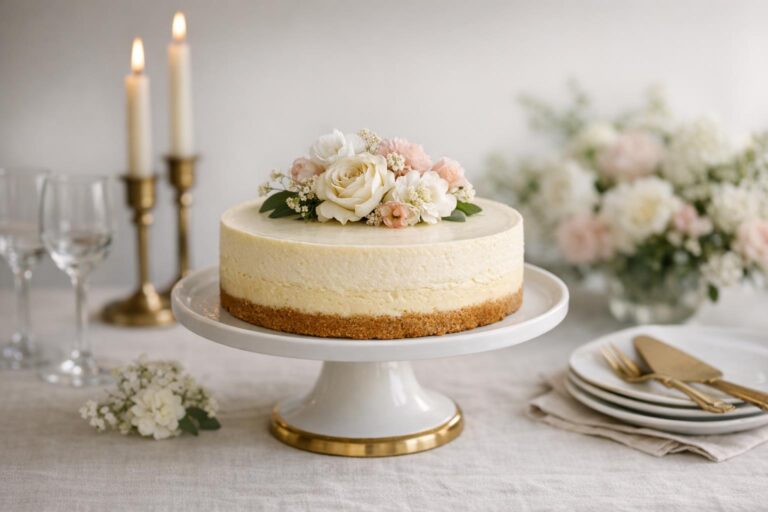
Why Lace Wedding Cake Designs Feel Timeless and Romantic
The quiet romance of a lace wedding cake
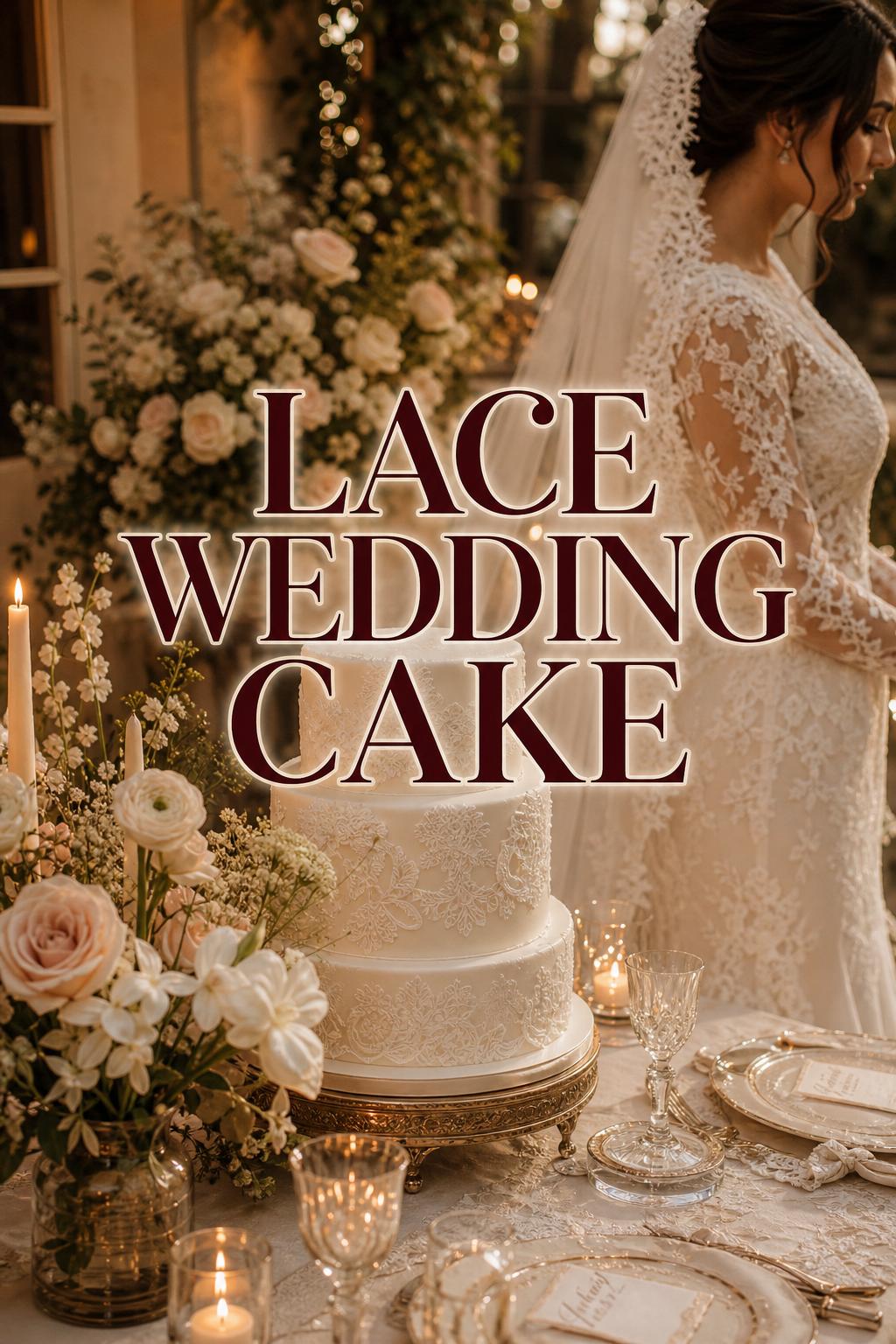
Some wedding details announce themselves the moment guests walk into the room. Others reveal their beauty more slowly, in the soft glow of candlelight, during the pause before the first slice, or in the way delicate texture echoes the bride’s gown and the feeling of the day. A lace wedding cake belongs to that second kind of beauty. It is graceful rather than loud, detailed rather than busy, and deeply tied to the romantic atmosphere many couples hope to create.
Choosing a lace wedding cake is not simply about selecting a pattern for icing. It is about deciding how you want refinement, softness, and timelessness to appear at your reception. Whether your celebration leans classic, vintage, garden-inspired, or quietly luxurious, lace-inspired cake design can help the dessert table feel connected to the larger wedding story. The charm lies in its versatility: lace can feel formal, delicate, old-world, modern, or deeply personal depending on how it is interpreted.
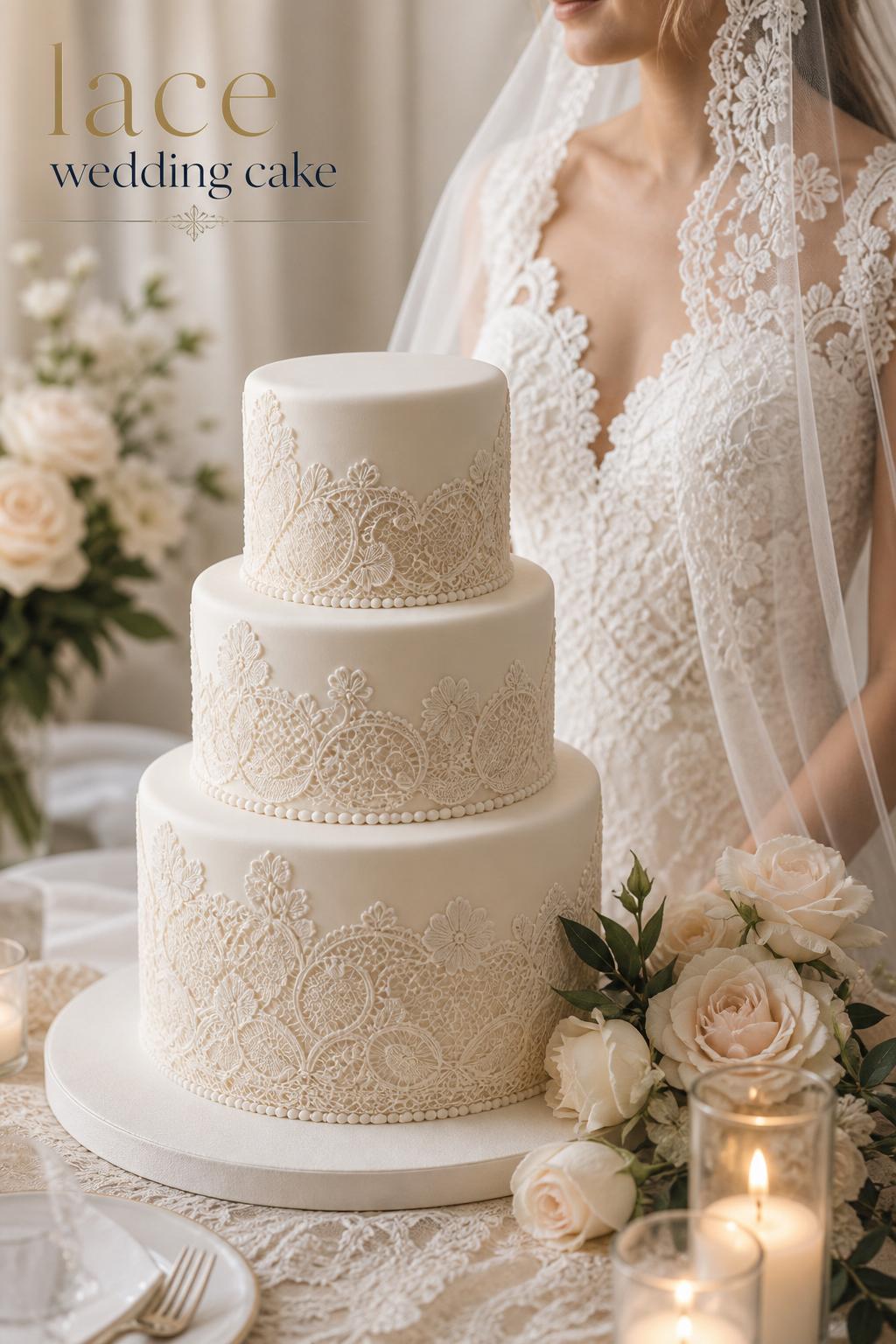
For couples planning a wedding with intention, this style offers something especially meaningful. It can mirror the texture of a bridal veil, recall heirloom fabric from a family gown, soften a sleek reception design, or add romance to a minimalist setting. The result is a cake that feels less like a separate decoration and more like part of the emotional landscape of the day.
Why lace details feel so at home at a wedding
Lace has long carried emotional weight in wedding design because it suggests tenderness, craftsmanship, and memory. Even when translated into sugar or icing, it keeps those associations. On a cake, lace-like detailing introduces a sense of intimacy. Guests recognize the softness of the motif even if they cannot immediately identify why it feels so fitting.
Turn wedding inspiration into a plan you can actually follow.
Zarellea brings your guest list, budget, vendors, and day-of details into one shared space — so no beautiful idea gets lost in the shuffle.
That emotional connection matters. Weddings are full of visual choices, but the most memorable ones are usually the details that support the mood of the day. A lace wedding cake works so well because it does more than decorate tiers. It can reinforce a ceremony style, complement the bridal fashion direction, and bring a gentle romantic rhythm to the reception design.
This is also why lace remains appealing across very different wedding aesthetics. In one setting, it may feel antique and vintage. In another, it may read as elegant texture against a clean white cake. In a garden wedding, it can soften floral design. In a formal ballroom, it can contribute to a polished, couture-like look. The idea stays the same, but the interpretation changes beautifully.
Reading the style before you choose the pattern
One of the most helpful ways to approach cake design is to begin with atmosphere, not decoration. Before selecting lace motifs, couples should consider the feeling they want the cake to carry. Do you want it to look airy and feminine, structured and refined, old-fashioned and sentimental, or understated and modern? The answer helps guide every later decision, from the scale of the pattern to the finish of the frosting.
A large, highly detailed lace treatment can become the focal point of the dessert display and suit a formal reception where the cake plays a central visual role. A more restrained approach, such as a single band of lace-like piping or texture on one tier, may work better in a minimalist design scheme where subtlety is the goal. Neither approach is more beautiful than the other; the success lies in how well it aligns with the full wedding vision.
This is where thoughtful decision-making matters. Couples often fall in love with a detail in isolation, but the stronger choice is the one that belongs naturally with the venue, flowers, tablescape, attire, and lighting. Lace should feel integrated, not added at the last minute.
A simple way to define your direction
Before meeting with a cake designer or finalizing inspiration, it helps to describe your wedding in three words. Words such as romantic, vintage, airy, classic, formal, intimate, soft, elegant, or modern can immediately clarify whether your lace should be intricate, subtle, bold, or barely there. This small exercise often prevents choices that look beautiful in photos but feel disconnected in real life.
How a lace wedding cake complements the bridal look
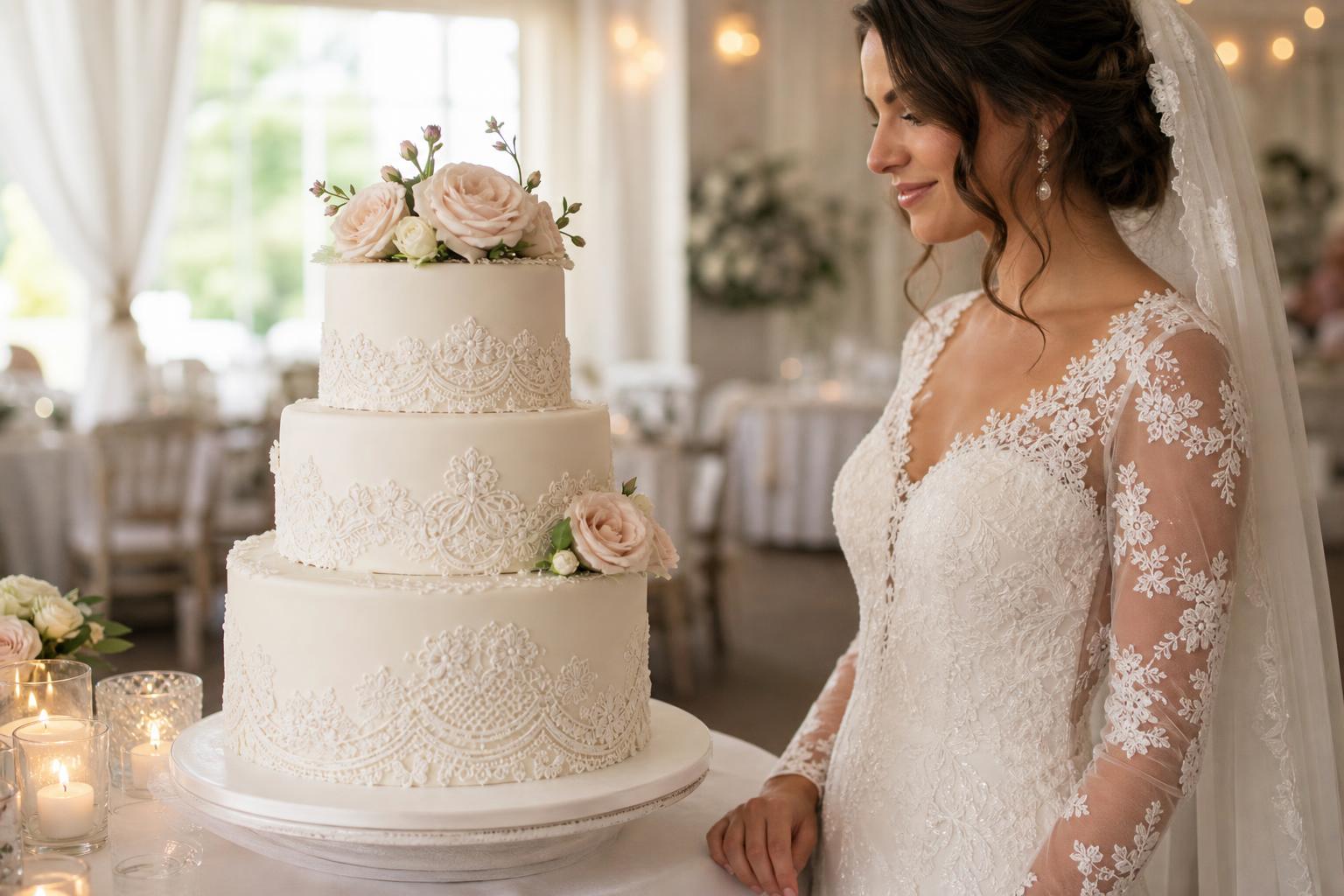
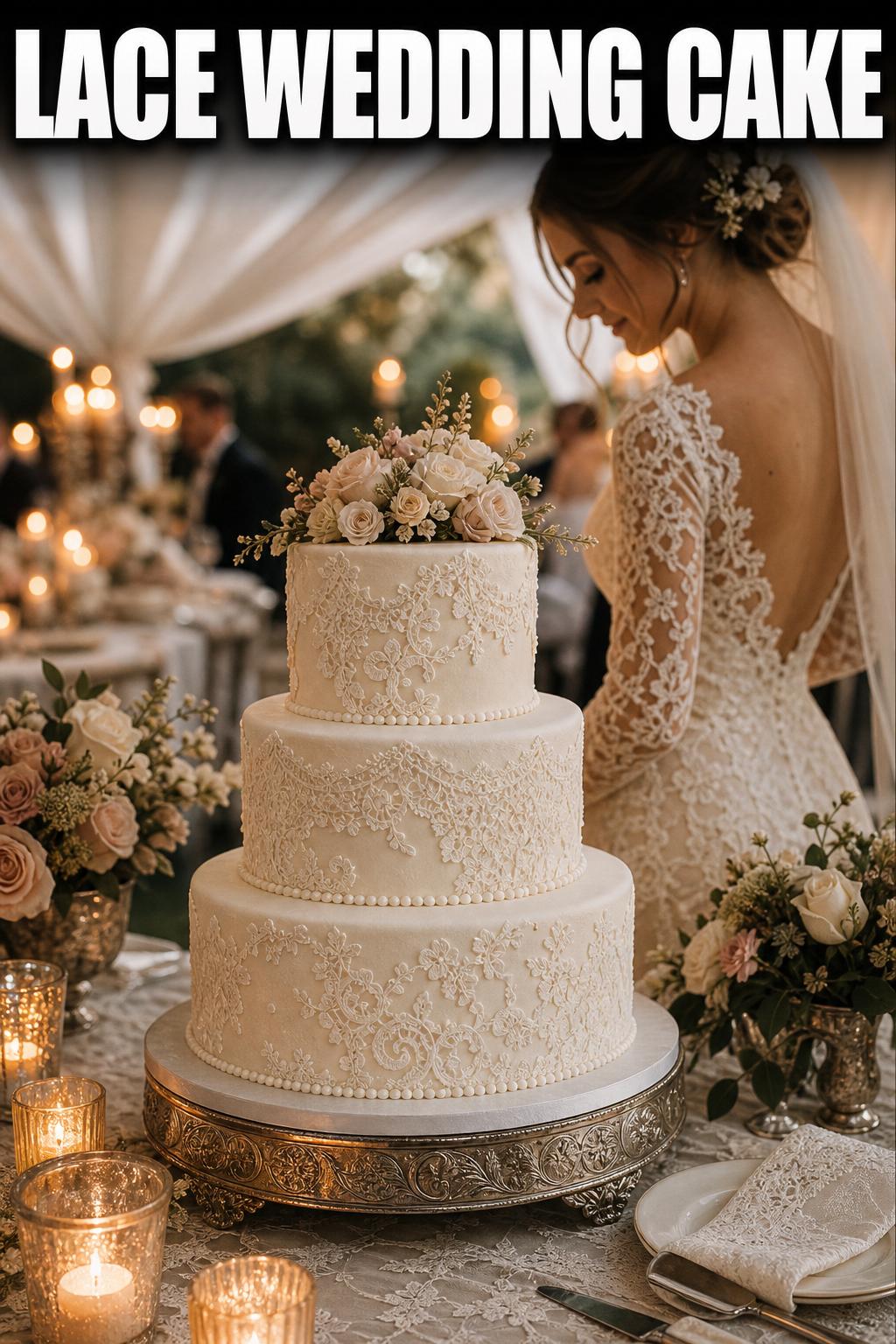
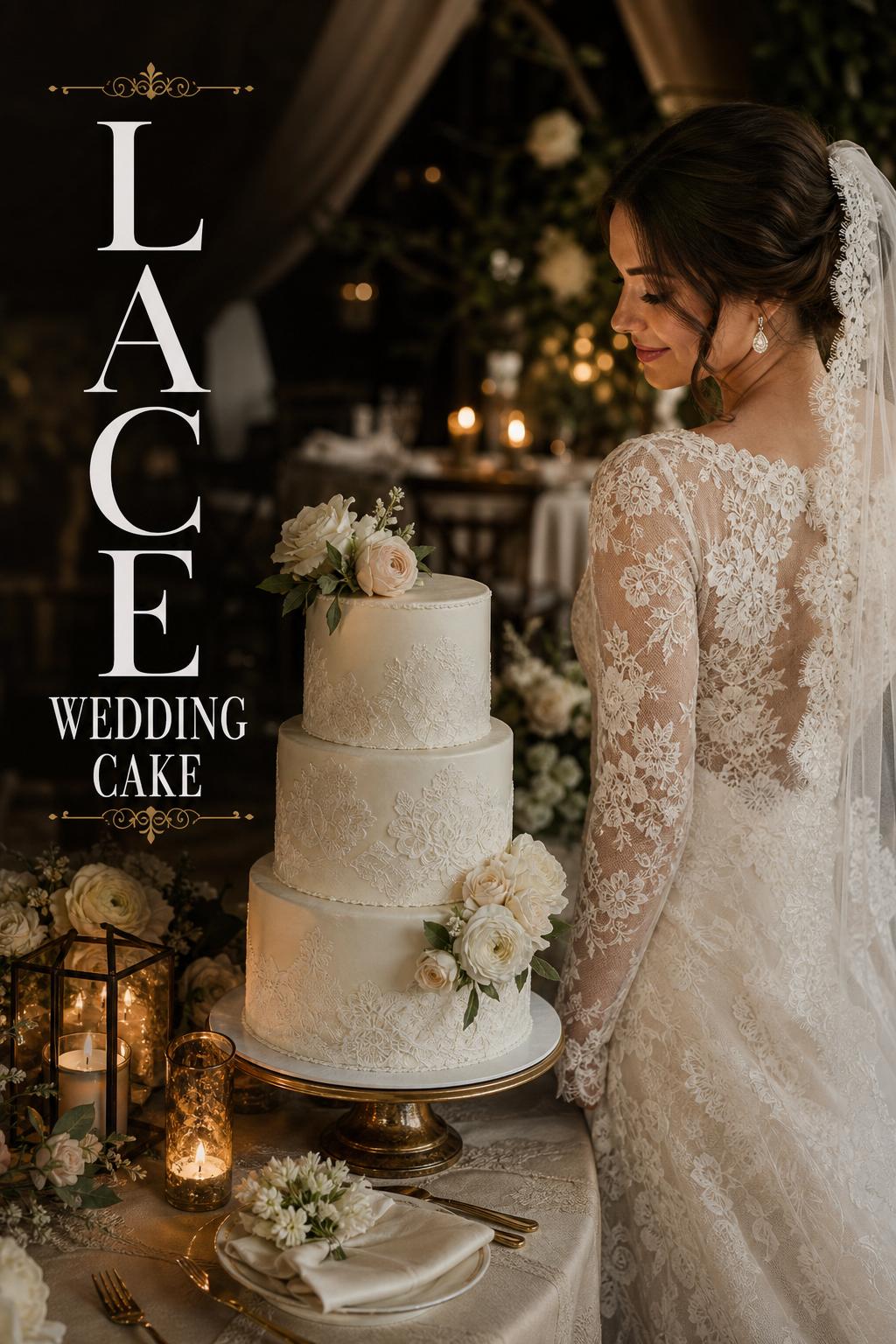
One of the most poetic reasons to choose this cake style is the natural connection it can have to the bride’s attire. When a gown includes lace sleeves, floral appliqué, delicate embroidery, or a textured veil, the cake can quietly repeat that language. This creates visual harmony throughout the celebration without feeling overly matched.
The key is interpretation rather than duplication. A literal copy of dress details may feel too rigid, while a cake that borrows the spirit of the lace often feels more refined. For example, a gown with soft romantic lace might inspire gently trailing detail across the tiers. A more structured lace pattern on the dress might lead to a cleaner, more symmetrical cake treatment. The goal is resonance, not repetition.
This same idea can extend beyond the dress. A lace-edged veil, embroidered ceremony linens, vintage handkerchiefs, or family textile heirlooms can all influence the cake’s tone. These references make the cake feel deeply personal, especially for couples who want the reception design to carry emotional memory as well as style.
Tip: let one detail lead
If several wedding elements include texture, choose one leading source of inspiration for the cake. That might be the gown, the veil, or a specific décor fabric. Too many competing references can make design decisions harder and lead to a cake that feels visually crowded. A clear lead detail keeps the result elegant.
Different wedding moods that suit lace beautifully
The appeal of lace is its ability to shift with the setting. It does not belong to one single wedding style. Instead, it acts like a romantic language that can be spoken in different accents depending on the celebration.
- For a classic wedding, lace can appear in symmetrical detailing, soft white tiers, and an overall polished finish.
- For a vintage celebration, the same idea may feel more nostalgic, with an antique mood and a slightly more ornamental approach.
- For a garden wedding, lace can soften the cake and relate beautifully to floral surroundings and gentle outdoor light.
- For a modern reception, lace can become a subtle textural contrast on an otherwise clean, streamlined design.
- For a luxury wedding, intricate lace work can create a couture-like effect, especially when the cake is treated as a visual centerpiece.
What makes these interpretations successful is not the label attached to the wedding, but the consistency of the visual choices. A lace wedding cake should feel at ease in its environment. In some settings that means abundant texture and formality. In others it means restraint and softness.
Texture, scale, and balance: what makes the design feel elegant
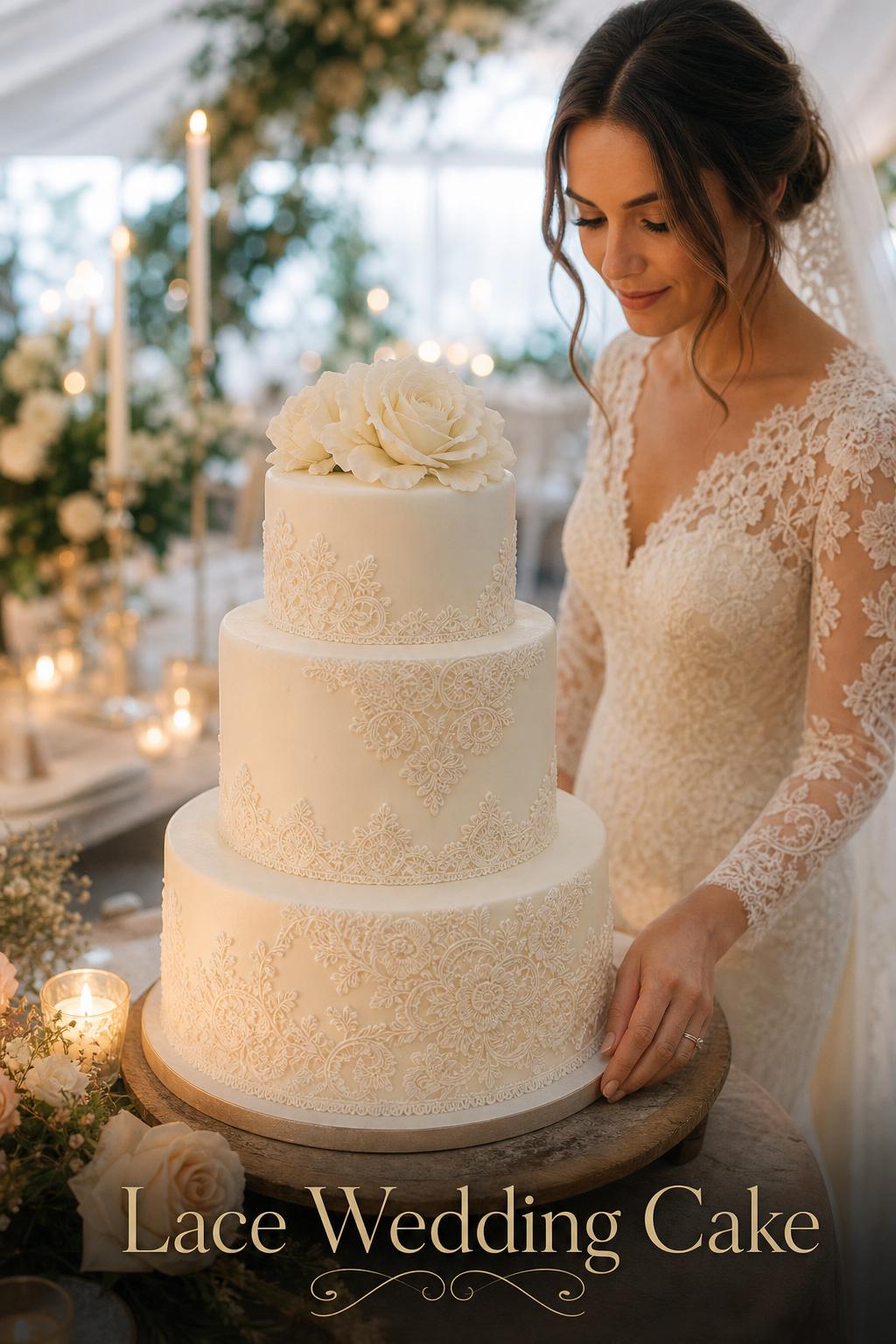
Lace is inherently detailed, which is why balance matters so much. When the pattern is too dense, the cake can begin to feel heavy. When it is too faint, the effect may disappear in the room. The best lace cake designs understand scale. They allow the eye to rest between decorative areas and use contrast thoughtfully.
On a larger cake, this may mean concentrating lace on selected tiers rather than covering every surface equally. On a smaller cake, it often means choosing a pattern with enough clarity to be appreciated without overwhelming the form. Space is part of the design. Smooth areas can make textured ones feel even more special.
Couples sometimes assume that more detail automatically means more beauty, but that is rarely true. Elegance often comes from editing. A carefully placed lace border, a panel effect, or a soft wrap of texture may create more impact than an entirely covered cake. The eye tends to remember the composition as much as the craftsmanship.
What to consider when viewing cake inspiration
- Notice whether the lace pattern looks delicate from a distance, not only in close-up photos.
- Pay attention to how much smooth space remains between decorated sections.
- Consider whether the scale suits the number of tiers.
- Think about the lighting at your venue, since subtle details may read differently in dim reception spaces.
- Ask yourself whether the cake still feels connected to the rest of the celebration, not just beautiful on its own.
When lace feels timeless and when it may not be the best fit
A lace wedding cake often feels timeless because it draws on a familiar wedding language of softness and detail. That said, not every reception benefits from it. A very stark industrial setting with a highly architectural design direction may call for a different dessert style unless lace is used with exceptional restraint. Likewise, if the overall celebration is intentionally bold, graphic, or highly unconventional, traditional lace motifs may feel out of step.
This does not mean couples need to avoid lace in modern or unexpected spaces. It simply means they should adapt it. In a cleaner design environment, lace may work better as texture rather than ornament. In a more eclectic wedding, it may need to appear in a quieter way so it does not compete with stronger visual elements.
The most confident design choices come from understanding both the beauty and the limits of a style. Lace is powerful, but it is strongest when it supports the wedding story rather than trying to define it all by itself.
Venue context changes everything
A cake never exists in isolation. It lives in a room, under certain lighting, beside flowers, linens, tableware, and the movement of guests. That is why venue context should shape the final design. A lace wedding cake displayed in a ballroom may benefit from a more refined and formal presentation, while the same concept in a garden tent may feel best with softer, more organic styling.
In intimate indoor settings, delicate detail can feel especially moving because guests experience it at close range. In larger spaces, the pattern may need more visual clarity to read well from a distance. This is not about making the design louder; it is about making sure the craftsmanship can be appreciated in the environment where it will actually be seen.
Even practical elements matter here. If the cake sits near direct sunlight, highly subtle texture may become harder to see in photos. If the reception is in dim evening light, stronger contrast or strategic placement can help the lace remain visible and elegant. Design is always partly visual and partly situational.
Tip: think about the cake table as part of the composition
The table, backdrop, and surrounding décor should support the lace effect instead of competing with it. If the cake itself is richly detailed, a calmer presentation often feels more elevated. If the cake is subtle, the styling around it can gently frame the detail so it does not disappear.
Softly romantic, vintage, or modern: interpreting lace in your own way
Not every couple dreams of the same version of romance, which is why this cake style can be so useful. It allows for interpretation. One lace wedding cake may feel like a whisper of old-world elegance, while another feels contemporary and clean. What changes is not the core idea but the way it is expressed.
For a softly romantic celebration, lace tends to work best when the design feels light and graceful. The detail should invite a second look rather than dominate the whole cake. For a vintage mood, the lace can carry more nostalgia and visible ornament, especially if the wedding overall leans into heirloom-inspired styling. For a modern reception, simplicity becomes the key. The lace may appear as a textural accent that adds warmth to a minimal silhouette.
This flexibility is part of the style’s lasting appeal. Couples do not have to adopt a single traditional interpretation. They can use lace to support the exact atmosphere they are creating, whether that atmosphere is grand, quiet, editorial, sentimental, or intimate.
Practical planning notes couples often overlook
Romantic details deserve practical support. During wedding planning, it is easy to focus on how a cake looks in inspiration images and forget the realities of event flow. But the most successful cake decisions usually account for timing, display, room conditions, and how the design will photograph throughout the celebration.
For example, a cake with subtle lace texture should be placed where guests and the photographer can actually appreciate it. A highly detailed design may need a cleaner surrounding setup so the work does not get visually lost. If the cake cutting happens late in the evening, lighting becomes especially important because fine texture can disappear in dark corners of a reception space.
These considerations do not reduce the romance of the cake. They protect it. A thoughtful cake is one that looks beautiful not only in concept, but in the real pace and conditions of a wedding day.
Tips for making the design work on the day
- Choose a display area where guests can see the cake before the room becomes crowded.
- Consider the lighting around the cake table, especially if detail is delicate.
- Coordinate the cake’s visual style with nearby décor rather than treating it as a separate element.
- Make sure the pattern scale suits the size of the cake and the size of the room.
- Think through photographs from both close range and wider reception shots.
The emotional value of detail
At a wedding, detail matters because memory often attaches itself to the smallest things. A couple may not remember every logistical decision years later, but they often remember how the room felt, how the dress moved, and how certain objects seemed to hold the spirit of the day. A lace wedding cake can become one of those objects. It can quietly gather together the tenderness of the ceremony, the elegance of the attire, and the intimacy of the celebration.
This is especially true when the design reflects something personal. A bride may choose lace-inspired detailing because it recalls her gown, a cherished textile, or the softness she wants guests to feel as they enter the reception. Even if no one names that connection out loud, people often sense when a design choice carries meaning. The wedding feels more cohesive, more intentional, and more emotionally real.
Beautiful weddings are not built from isolated trends. They come from details that belong to the couple’s vision. That is what gives this cake style its staying power.
How to decide if this is your cake style
A lace wedding cake is an especially strong choice for couples who want the reception to feel refined, romantic, and connected to bridal texture. It suits those who appreciate softness, craftsmanship, and details that unfold gently rather than demand attention. It also works well for couples who want their cake to feel visually tied to attire, décor, or a sentimental design language running through the day.
It may be less suitable if your wedding style is intentionally stark, heavily graphic, or centered on very bold statement elements that leave little room for subtle texture. In those cases, lace can still work, but it often needs to be simplified dramatically so the result feels coherent.
The best test is simple: imagine the cake in your reception space, near your flowers, under your lighting, with your wedding attire in mind. If it feels like part of the same story, you are likely on the right path. If it feels like a beautiful object borrowed from another wedding, keep refining.
A gentle decision checklist
- Does lace reflect the mood of your wedding day?
- Does it connect naturally to your gown, veil, or décor?
- Will the detail be visible in your venue and lighting conditions?
- Does the scale feel balanced for your cake size?
- Does the design still feel like you, not just like an attractive idea?
Bringing romance and restraint into the same design
The loveliest lace wedding cakes often hold two qualities at once: romance and restraint. They are decorative, but not crowded. Soft, but not vague. Detailed, but still calm. That balance is what makes them feel elevated and enduring rather than overly styled.
For many couples, this is the ideal place to land. Weddings are emotional, beautiful, and full of symbolism, but they are also real events experienced over many hours. A cake that blends tenderness with thoughtful design can support both truths. It looks lovely in photographs, feels appropriate in the room, and contributes to the larger atmosphere without needing to overpower it.
When chosen well, lace does more than decorate dessert. It gives shape to a feeling: softness, ceremony, intimacy, and the quiet kind of elegance that never needs to raise its voice.
Final thoughts on choosing a lace wedding cake
There is something deeply bridal about lace, and that quality translates beautifully to cake design when it is handled with care. Whether your wedding feels grand and classic or intimate and softly romantic, a lace wedding cake can help anchor the reception in beauty that feels thoughtful and emotionally resonant.
The most memorable choice is rarely the most elaborate one. It is the one that belongs to your day. If the lace echoes your style, suits your venue, supports your atmosphere, and feels true to the story you are telling together, it will do exactly what a wedding cake should do: become part of a moment guests remember not only as beautiful, but as unmistakably yours.
FAQ
What is a lace wedding cake?
A lace wedding cake is a wedding cake designed with delicate, lace-inspired texture or patterning that reflects the softness and romance often associated with bridal fashion and elegant wedding décor.
Does a lace wedding cake only suit vintage weddings?
No. While lace can feel beautiful in a vintage setting, it also works well for classic, garden, softly romantic, minimalist, and even modern weddings when the detailing is adapted to match the overall atmosphere.
How can a lace wedding cake coordinate with a bridal gown?
The cake can reflect the spirit of the gown’s texture, such as lace, appliqué, or embroidered detail, without copying it exactly. This creates visual harmony between the bridal look and the reception design.
Is a highly detailed lace cake always the best choice?
Not always. A highly detailed cake can be stunning, but elegance often comes from balance. In some weddings, a more subtle lace treatment feels more refined and works better with the venue, lighting, and décor.
What wedding venues work best with a lace wedding cake?
This style works especially well in venues that support romance and texture, such as classic reception spaces, intimate indoor settings, garden weddings, and formal celebrations, though it can also be adapted for cleaner modern venues with a restrained approach.
How do I know if lace is the right cake style for my wedding?
It is a strong fit if your wedding style includes softness, elegance, bridal texture, or romantic detail and if the cake feels connected to your gown, décor, and venue rather than standing apart from them.
Can a lace wedding cake work for a modern reception?
Yes. In a modern reception, lace usually works best as subtle texture or a refined accent on a clean design, allowing the cake to feel current while still adding warmth and softness.
What is the biggest mistake couples make with this cake style?
One of the most common mistakes is choosing a lace design only because it looks beautiful in isolation, without considering scale, venue lighting, surrounding décor, and whether it truly fits the mood of the wedding.
Should the cake table styling be simple or decorative with a lace wedding cake?
That depends on the cake itself, but in many cases a richly detailed lace cake benefits from a calmer table setup so the design remains the focal point and the delicate work can be appreciated clearly.