

Small Wedding Decor: Layout, Tables and Personal Details
Small wedding decor needs to fit the meal, the guest list and the room. Place tables, chairs and service routes on a floor plan before selecting centerpieces. Focus decoration on the ceremony view and the tables guests will use, leaving room to sit, move and talk comfortably.
Setting a Realistic Budget for Small-Wedding Decor
Budget-friendly wedding decor ideas start with allocating money to what guests actually experience up close. Because small weddings concentrate attention, it often pays to invest in fewer, better elements; especially on the table and in the ceremony backdrop; while using smart, simple choices elsewhere.
Use “zones” to decide where money goes
Instead of budgeting by “decor categories” alone, budget by the areas guests will see and photograph most. In many small weddings, this is a short list: ceremony focal point, dining tables, and lighting that transforms the space. If you’re working with a larger venue, draping or partitions may become a priority because they physically define intimacy.
- Ceremony focal point: arch or backdrop alternatives, aisle markers, statement florals or greenery
- Reception tables: linens, compact centerpieces, place settings, place cards, candles
- Lighting: string lights, lanterns, candles, or uplighting to define areas
- Signage and small details: DIY signage, menus, escort cards, bar signs
- Lounge or gathering area: seating clusters for conversation, especially helpful in small receptions
Budget tiers (use as a planning framework)
Budgets vary widely, but you can still plan in tiers. A lower tier tends to lean on DIY wedding decor, minimal rentals, and repeating a few strong design choices. A mid-range tier often adds upgraded linens, more layered lighting, and fuller tablescapes. A higher tier may include more custom fabrication, statement installations, and expanded floral work.
Turn wedding inspiration into a plan you can actually follow.
Zarellea brings your guest list, budget, vendors, and day-of details into one shared space — so no beautiful idea gets lost in the shuffle.
If you’re trying to decide whether to spend on more flowers or better lighting, remember that lighting changes the entire room; flowers often shine most when they’re supported by intentional candlelight and a cohesive palette.
Venue-First Design: Making Any Space Feel Intimate
One of the most common small-wedding challenges is not decorating a tiny space; it’s making a big space feel intimate for a small guest list. The solution is spatial design: define where people gather, create visual boundaries, and build one or two focal points that draw attention inward.
Use lighting to define areas (and shrink the room visually)
Use venue lighting to define dining while keeping routes and service points visible. Darkening unused corners should not make the guest route harder to navigate. Ask the venue which settings are available.
Tips for budget-friendly lighting that looks intentional
- Use candles (or similar table-level glow) to make each table feel like its own “scene.”
- Add string lights or lantern-style lighting to soften empty corners and create warmth.
- Use uplighting strategically where you want the eye to go: behind the couple’s seats, near a backdrop, or around the dining zone.
Zoning with drapery and partitions
Drapery and partitions help “resize” a venue by closing off unused space and creating a room-within-a-room effect. This is especially helpful when you have a small guest count in a ballroom, warehouse, or open-plan venue. Even simple fabric treatments can act as a soft wall, creating boundaries without feeling heavy.
If you’re using draping, treat it as part of the design; tie it into your palette and add texture so it looks intentional in photos, not like an afterthought.
Seating layouts that encourage conversation
Compare a shared long table with grouped rounds using actual chair sizes and the service layout. A long table can look intimate, but guests at opposite ends will not share one conversation. Seat people with that limitation in mind.
- Long estate tables: naturally intimate, visually striking, and great for a cohesive tablescape
- Grouped rounds: keep groups close and allow for a central focal point
- One shared focal axis: position tables so guests face a feature like a sweetheart setup, fireplace, or backdrop
Core Decor Elements for Small Weddings
Most small wedding reception decor falls into a few core elements that deliver maximum impact: tablescapes, a ceremony focal point, and lighting. Once these are handled, the rest; signage, favors, small vignettes; can be scaled to your budget and style.
Tablescapes that wow in small rooms
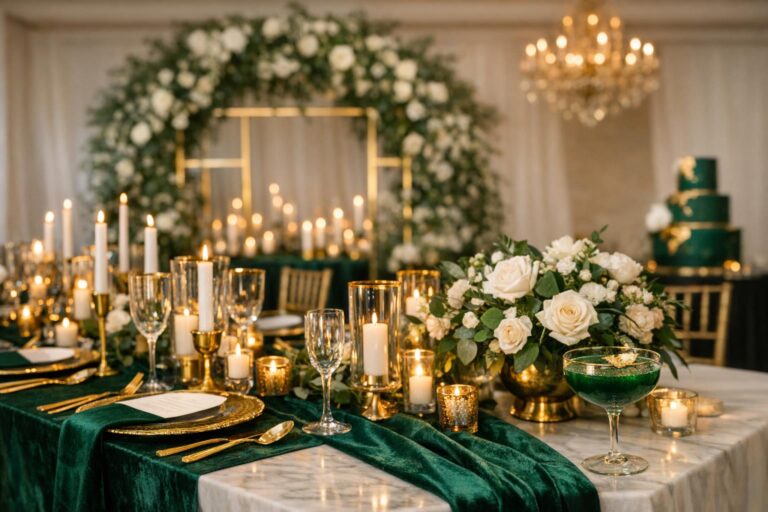
A small wedding tablescape is where intimacy becomes visible. Guests spend the most time at the table, and in a micro setting they’re close to every choice: linen texture, place setting contrast, flowers, candles, and place cards. With fewer tables to decorate, you can go all out with the styling; or go minimalist with clean lines and a tight palette.
Ideas that scale beautifully for smaller guest counts
- Compact centerpieces: low arrangements or greenery that keep sightlines open and conversation easy
- Calla lily centerpieces: a minimalist floral choice that reads clean and modern
- White palette focus: a crisp, cohesive look that feels intentional and photographic
- Textural layers: napkins, runners, and simple florals that add depth without clutter
- Individual sweet treats: treats per guest double as decor and dessert presentation
In a small room, repetition is your friend. Repeat one or two materials (like greenery and candles, or a white palette with subtle texture) across every table so the space looks cohesive and “finished” from every angle.
Go all out; strategically; on one signature table moment
If your budget can’t support upgrading everything, pick one table moment to elevate. For example: a single long estate table with a fuller runner, layered candles, and personalized place cards can look more luxurious than trying to decorate multiple tables at a lower impact level. This approach is especially effective for micro weddings where there may only be one or two dining tables.
Intimate ceremony backdrops (arches and alternatives)
Your ceremony focal point is the anchor for your wedding photos and the emotional center of the day. Intimate ceremony backdrop ideas often work better than oversized installations because they fit the scale of a small group. Minimalist wedding arches, floral backdrops, greenery circles, and floating backdrops can all create a strong focal point without overpowering the setting.
- Minimalist wedding arch: clean lines, open space, and intentional shape
- Floral backdrops and archways: a classic focal point that reads clearly in photos
- Floating backdrops: creates dimension and a “designed” look even in simple venues
- Greenery aisle markers: small, repeated accents that guide the eye toward the ceremony focal point
If your ceremony and reception are in the same venue, choose a backdrop concept that can transition. A minimal arch or floating backdrop can often be repositioned behind the couple’s seats or near the dining area so you reuse the most photogenic piece of decor.
Lighting that transforms (even on a budget)
Lighting ideas for small weddings are less about spectacle and more about mood control. Ambient lighting helps guests relax, makes tables feel “set,” and adds depth to photos. This is also one of the most effective ways to make a large venue feel intimate with a small guest list.
Start by deciding where you want the brightest focus: the ceremony focal point, the dining tables, or the lounge area. Then add layers so there aren’t any visually dead zones. Even a simple approach; table glow plus a few defined areas; can create a boutique, intimate wedding decor feel.
Food and Beverage as Decor: High Impact, Guest-Forward Ideas
In small weddings, food and drink aren’t just logistics; they’re a design tool. Presentation becomes part of the room’s visual story, and interactive service styles can heighten intimacy by making guests feel cared for and connected.
Hire a food truck for a small wedding dinner
Confirm parking, access, service speed and where guests will wait with the venue and caterer. Treat a food truck as a catering choice with a visual presence, rather than a substitute for the dining and service plan.
Hire a private chef or tableside service for an elevated intimate feel
If your goal is a highly personal evening, a private chef or tableside service leans into the strengths of a small wedding: attention to detail and guest experience. It can also reduce the need for extra decor because the service itself becomes the “event” in the room.
Customize your small wedding drinks
Customized drinks add personality and double as a design detail; especially when paired with a simple bar sign that matches your palette. In an intimate reception, guests notice and remember these small, specific choices, and they help your wedding feel unique without requiring a major decor spend.
Offer individual sweet treats as edible decor
Individual sweet treats can act as place-setting accents, dessert displays, or favors; while also adding color and texture to the tablescape. Because they’re portioned per guest, they naturally scale to small weddings and reduce the need for elaborate dessert installations.
DIY details to price before committing
Price one finished DIY item, including its vessel, printing, tools and transport. Multiply by the quantity needed and add a realistic assembly plan. An under-$50 label is not useful without a defined quantity and current prices.
DIY projects that look polished in intimate venues
- DIY signage and details: welcome signs, bar menus, and seating cards that match your palette
- Personalized small wedding place cards: a meaningful detail that also enhances each place setting
- Compact centerpieces to price: compact florals or greenery paired with candles for depth
- Lighting and ambiance on a budget: small clusters of warm light to define the dining zone
Rent vs. buy: a practical approach for small-wedding decor
Some decor is worth renting because it’s bulky, hard to transport, or only useful for one day; while other items are simple enough to buy (or DIY) without stress. The most helpful approach is to decide based on setup time, storage/transport, and how strongly the item contributes to your focal areas (ceremony, tables, lighting).
If setup time is tight, prioritize rentals for pieces that arrive ready to place (like larger items that define zones), and DIY the items you can prep early (like place cards and small signage).
Signage, Personalization, and Favors That Double as Decor
Personalization is where intimate wedding decor becomes unmistakably “yours.” In small weddings, guests can actually read the signage, see the place cards, and connect with sentimental details; so these touches carry more emotional and visual weight than they might in a large ballroom event.
Include family heirlooms (and make them part of the design)
Family heirlooms can bring warmth and authenticity to a small wedding. Use them with intention: a framed photo, an heirloom textile incorporated into the table, or a meaningful object displayed as part of a vignette. In an intimate setting, these details become conversation starters rather than background decor.
Consider a table of remembrance
A table of remembrance is a thoughtful way to honor loved ones and can be styled to fit seamlessly into your overall look. Kept simple and cohesive; aligned with your palette and textures; it can feel integrated rather than separate, adding meaning without cluttering the room.
Personalize place cards for an elevated, intimate tablescape
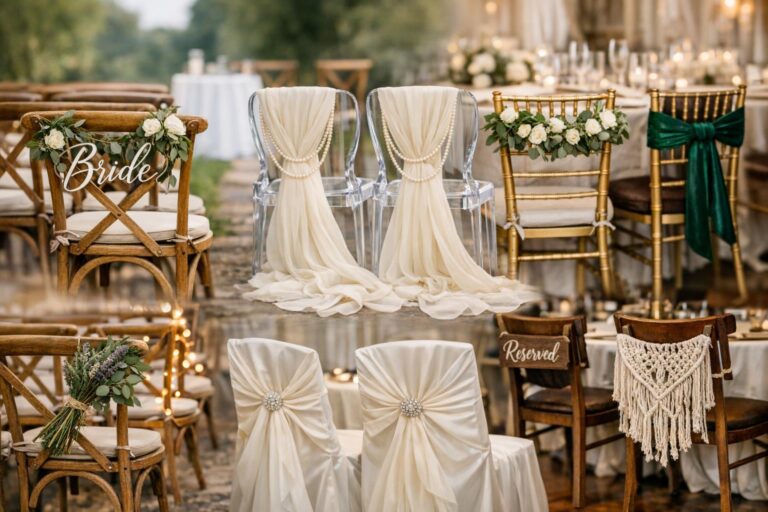
Personalized small wedding place cards are a high-impact detail because every guest interacts with them. They can be minimalist and clean or expressive and decorative, but the key is consistency: match your typography, color palette, and materials to the rest of the table styling so the whole setting reads as one design.
Hand out personal small wedding favors (especially edible ones)
In a small group, favors feel more like gifts. Edible favors and individual sweet treats can serve multiple roles at once: part of the tablescape, part of dessert, and a take-home detail. This is one of the easiest ways to add richness to the guest experience without building additional decor installations.
Small-Wedding Formats That Influence Decor Choices
Small wedding ideas often include format shifts that change how you decorate. When the structure changes, decor priorities change too; sometimes in your favor, because you can concentrate resources on fewer moments.
Intimate garden dinner
An intimate garden dinner naturally provides atmosphere, so your decor can focus on table styling, lighting, and small touches like place cards and sweet treats. The goal is to keep things cohesive and comfortable, letting the setting do part of the work while you refine the details guests experience up close.
Unique small wedding reception venue
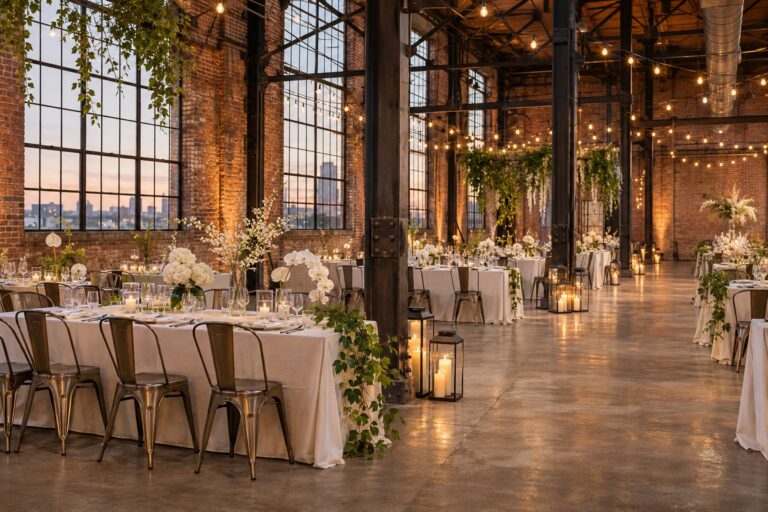
A unique venue can reduce the amount of decor you need; if you highlight what’s already there. In these spaces, choose decor that complements the venue rather than competing with it: a minimalist arch, a restrained palette, and lighting that emphasizes architectural texture can be more effective than adding lots of separate decor pieces.
Private vow ceremony
A private vow ceremony allows you to design a quieter, more personal moment with a simple but meaningful backdrop. Because the guest experience is different, you can shift decor attention toward the reception table experience and lounge comfort while keeping the vow space minimal, intentional, and photogenic.
Small destination wedding weekend
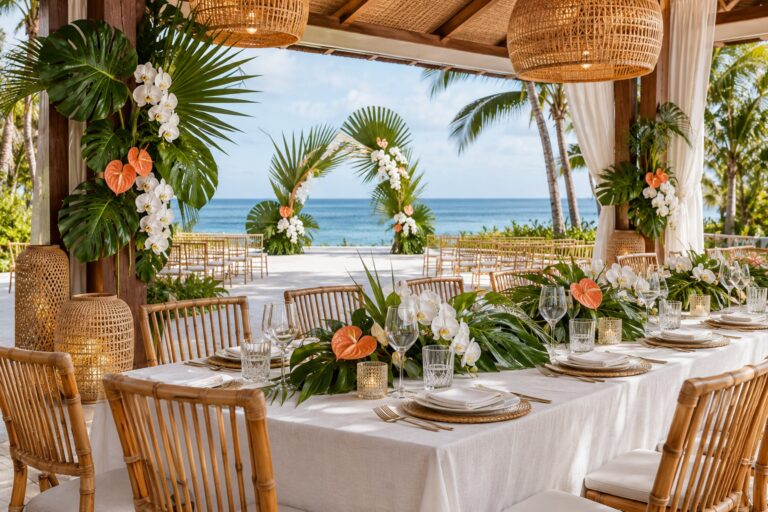
A small destination wedding weekend often benefits from decor that’s portable, compact, and easy to set up across multiple moments. Focus on a consistent palette, repeatable signage, and a few statement elements that can move from ceremony to dinner; so your overall look stays cohesive throughout the weekend’s events.
A final decor coordination checklist
Use this checklist for final details after the venue and suppliers are confirmed. Follow their ordering deadlines instead of treating four weeks as a universal booking timetable.
Week 4: Define the plan (vibe, palette, and zones)
- Choose your overall style direction (minimalist, garden dinner, lounge-forward, etc.).
- Decide your main palette (including whether you’re using a white palette focus).
- Map the venue into zones: ceremony focal point, dining, lounge, and any remembrance area.
Week 3: Lock your focal points (backdrop and lighting)
- Select your intimate ceremony backdrop (minimal arch, floral backdrop, floating backdrop).
- Decide how you’ll define intimacy in the space (lighting, draping, partitions).
- Identify any decor you want to reuse from ceremony to reception.
Week 2: Design the tablescape (and choose one “wow” upgrade)
- Choose centerpieces (compact or minimalist options like calla lilies).
- Decide on place card style and any personalization.
- Plan candle/ambient lighting at table level for depth.
Week 1: Final details (signage, favors, remembrance, setup plan)
- Complete DIY signage and any printed details.
- Finalize favors (including edible favors or individual sweet treats).
- Style heirlooms and a table of remembrance (if included) so it matches your palette.
- Create a simple setup checklist by zone so nothing is forgotten on the day.
Test one place at the table
Set out a chair, plate, full glassware, napkin and centerpiece on the actual table. Add shared dishes if the meal requires them. Sit down and check the view of the person opposite, access to the glass and room to pull the chair out. Scale decoration to this test.
For related planning decisions, see our guide to an entrance that keeps arrivals moving.
FAQ
How do I make a large venue feel intimate with a small guest list?
Use spatial design to shrink the room visually: define a smaller “event footprint” with lighting, drapery or partitions, and a concentrated seating plan that keeps tables close together; then create one clear focal point (like a ceremony backdrop or sweetheart area) so attention stays centered.
What small wedding decor elements have the biggest impact?
The highest-impact elements are the ceremony focal point (arch, floral or floating backdrop), the tablescape (linens, compact centerpieces, candles, place cards), and layered lighting that creates warmth and defines zones.
What are some budget-friendly wedding decor ideas that still feel elevated?
Price compact centerpieces, place cards and signs by quantity. Compare complete costs before choosing DIY, rented or purchased items.
Is minimalist wedding decor a good fit for a micro wedding?
Yes; minimalist decor often looks especially intentional in small spaces because clean lines and a restrained palette (such as a white palette focus with simple greenery or calla lilies) keep the room from feeling crowded while still photographing beautifully.
What seating layout works best for intimate wedding decor?
Layouts that encourage conversation and closeness work best, such as long estate tables or tightly grouped rounds; the key is to avoid spreading guests across the venue and instead use zoning (and a lounge area if needed) to create a cohesive footprint.
How can I use lighting ideas for small weddings without overcomplicating setup?
Keep it layered but simple: prioritize table-level glow for every table, add one additional lighting layer to define the main area (such as string lights or lantern-style lighting), and use accent lighting only where you want a focal point.
What are the best personalization ideas that also function as decor?
Personalized place cards, meaningful heirlooms integrated into the design, a cohesive table of remembrance, customized drink signage, and small favors (especially edible ones) add personality while also enhancing the look of the tables and gathering areas.
Should I rent or buy decor for a small wedding?
Rent items that are bulky, time-consuming to set up, or critical to zoning the space (like partitions or larger focal pieces), and buy or DIY smaller items you can prepare early, such as signage, place cards, and compact centerpiece components.
How do I keep small wedding decor from looking cluttered?
Choose one or two hero moments (often the ceremony backdrop and tablescape), repeat a limited set of colors and materials throughout, keep centerpieces compact to preserve sightlines, and rely on lighting and texture rather than adding many separate decorative objects.

2 Comments