
Moody Wedding Decor: Dark Palettes and a Usable Lighting Plan
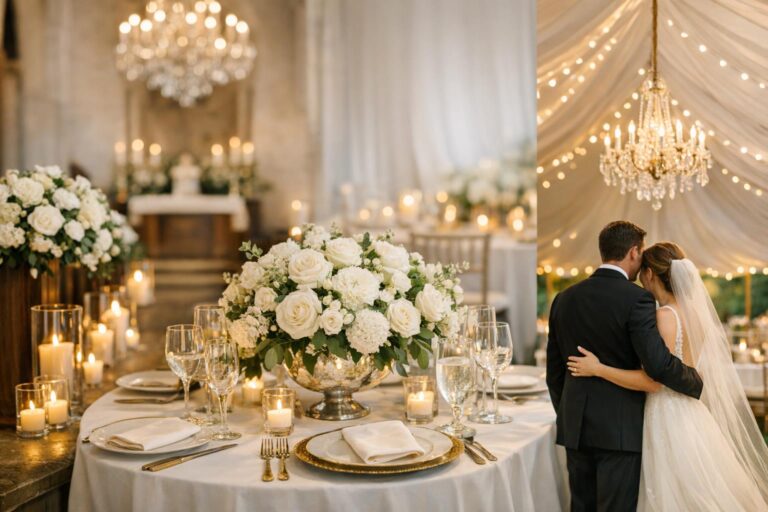
Moody wedding decor works best when you can still see the people, the meal and the route through the room. Choose the dark colors you love, then plan the lighting around what guests and staff need to do. A candlelit reference photograph does not show whether someone can read a menu from their seat.
Burgundy flowers, charcoal linens, velvet and warm metallic details offer several ways into this style. You can use a few of them in an otherwise light room or carry the palette through the whole reception.

Choose a dark anchor and a contrasting surface
Burgundy with charcoal and brass suggests a warm, formal dinner. Navy and emerald can give you a deeper jewel-toned room. Dusty rose and ivory soften charcoal, while deep blue, forest green and champagne can suit a twilight garden direction.
Treat these as design alternatives rather than rules for a particular season. Compare the chosen materials with the actual walls, floor and chairs. Keep a light surface somewhere useful, such as an ivory menu or a pale floral accent, if the main tablecloth is dark.
Turn wedding inspiration into a plan you can actually follow.
Zarellea brings your guest list, budget, vendors, and day-of details into one shared space — so no beautiful idea gets lost in the shuffle.
For a more focused jewel-tone scheme, the emerald green and gold guide compares large green textiles with smaller metallic details.
Separate ambient, task and accent lighting
Begin with enough general light to navigate the room. Check entrances, steps and the route to restrooms with the venue team. Then look at the dining tables: guests need to read menus, see their plates and recognize people opposite them.
Use decorative light to emphasize the ceremony backdrop, flowers or a lounge area after those needs are covered. Uplighting, existing chandeliers and strands of small lights have different effects, so ask the lighting supplier to demonstrate the proposed combination. Discuss facial lighting during speeches with the photographer.

A dark ceiling drape can change the room substantially. Have a professional installer and the venue approve the support, placement and lighting arrangement. Avoid treating an overhead installation as a small DIY addition to a table-decor plan.
Decide how candlelight will be used
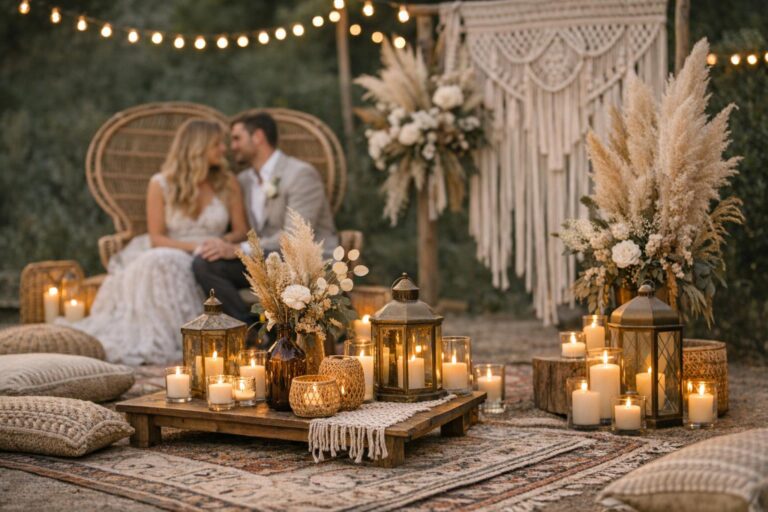
Ask the venue which candle types and placements it permits before booking holders. Battery-operated candles are worth sampling in the same glass or metallic vessels you intend to use.
The U.S. Fire Administration’s candle guidance recommends stable holders and keeping lit candles at least 12 inches from materials that can burn. It also suggests battery-operated alternatives. These household recommendations do not replace your venue’s event rules; have the venue and florist review the complete arrangement.
A photograph showing candles nestled in fabric or greenery is not a placement instruction. Build a permitted layout with clear responsibilities for lighting, monitoring and extinguishing flames if they are used.

Give each table a clear composition
Try a charcoal velvet runner with dusty-rose satin napkins, or burgundy flowers in a simple vessel on a dark cloth. A black taper in a brass holder is a different emphasis from a large floral arrangement. Compare those options as complete settings rather than adding every idea together.
Glass vessels and metallic pieces provide reflective details, but still need to leave room for the meal. Test the centerpiece from seated height and check the view across the table. For a botanical interpretation, a glass vessel with greenery can connect the table to a garden-style backdrop.
Use the same approved materials across tables where you want continuity. Variation in arrangement height can be deliberate, provided it has been checked against sightlines and service needs.
Frame the ceremony and one additional gathering area
Deep drapery with greenery or a dark-toned floral frame can define the ceremony. Check the couple’s position against it so flowers, fabric and faces remain distinct. A naturally detailed historic room may need fewer additions than a plain ballroom.
At the reception, choose whether the next focal area is the head table, cake display or lounge. Keep the bar’s service space clear. For outdoors, have the lighting team plan practical illumination after sunset and agree an alternative layout with the venue.

Make dark stationery usable
Black envelopes, burgundy paper and metallic accents can establish the style before the event. Day-of paper needs a separate reading check. Print a place card and menu at final size and try them under the expected table lighting.
Reflective lettering can change with viewing angle. Use a clearly readable main text and keep a metallic treatment for an accent if the sample is difficult to read. Place a seating chart where guests can pause without backing into a service route.
Compare complete quotes
Ask for lighting, drapery, floral, rental and labor costs separately. Include delivery, installation and removal. Decide which part of the room matters most before reducing quantities; a simpler table may leave room in the budget for the practical lighting the venue needs.

Before signing off, walk the guest route and sit at the sample table with the lights set for dinner. Keep the dark palette where it contributes to the design and adjust any area that is difficult to use.