Vintage Wedding Dresses: How to Choose an Original
If you’re considering vintage wedding dresses, I’d start by deciding how much of the appeal belongs to one particular dress. Your grandmother’s gown might matter even if you’d never choose its sleeves from a rack. A photograph of a scalloped neckline could send you in a different direction, toward any dress with that edge and a fit you enjoy. Tell the shop which of those you’re looking for before they pull dresses.
For an original, I would give condition the same attention as fit. A slightly loose waist invites a conversation with a dressmaker. A split under the arm changes the questions you need to ask, especially if the fabric around it is weak. If you’d need to alter the gown, find out what the work would touch before you buy it.
Decide what makes the dress vintage to you
If you’re drawn to a detail, give that detail a name
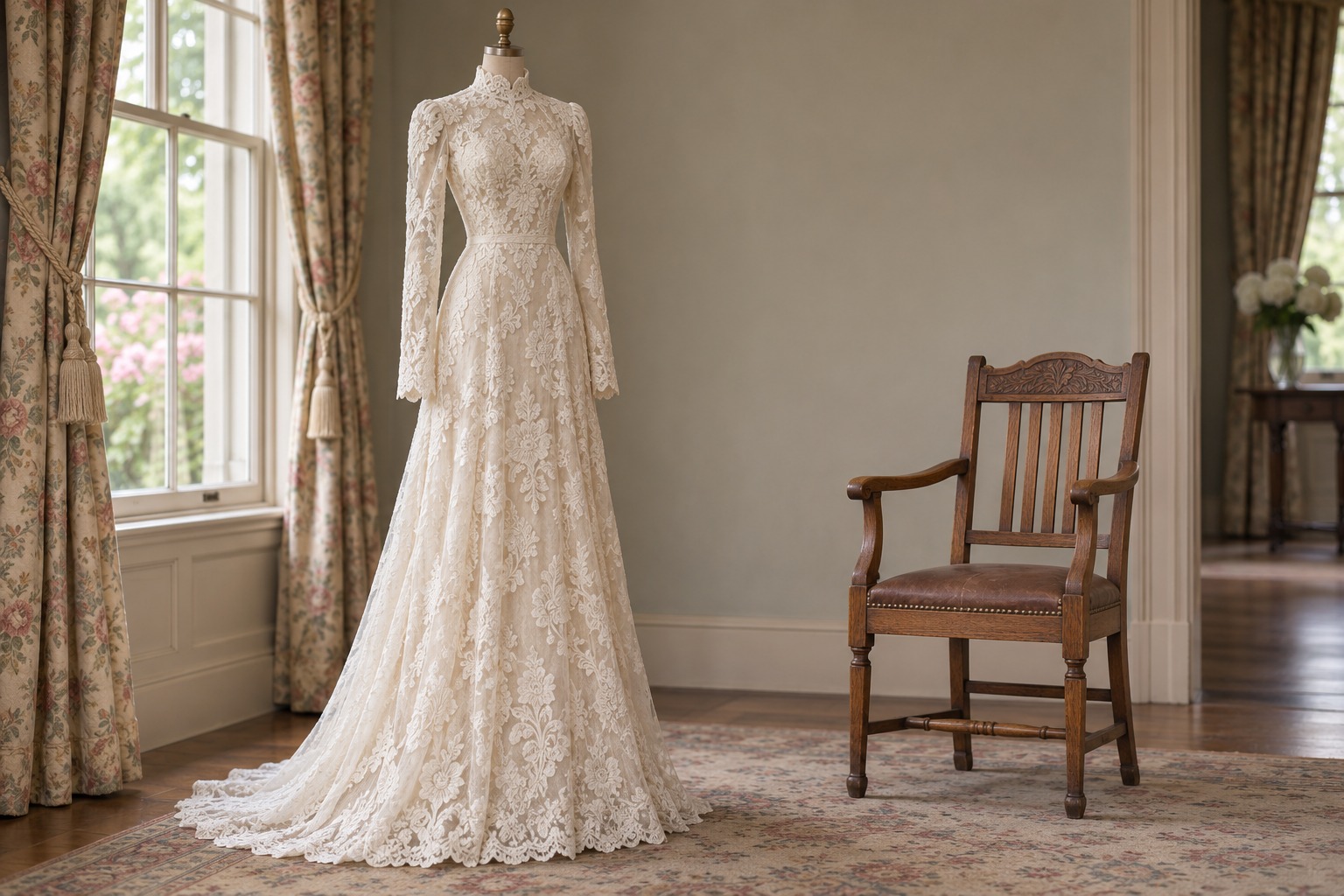
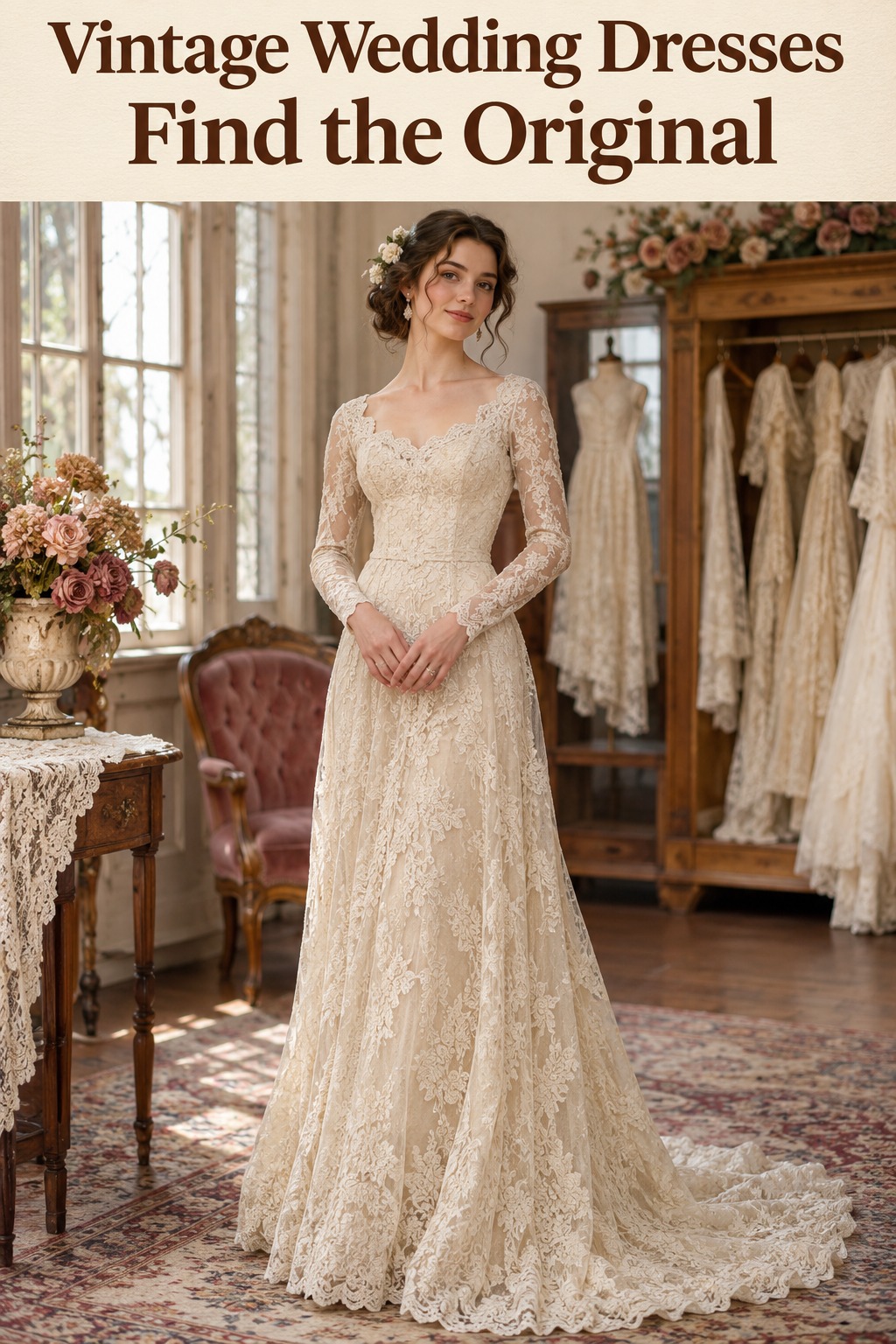
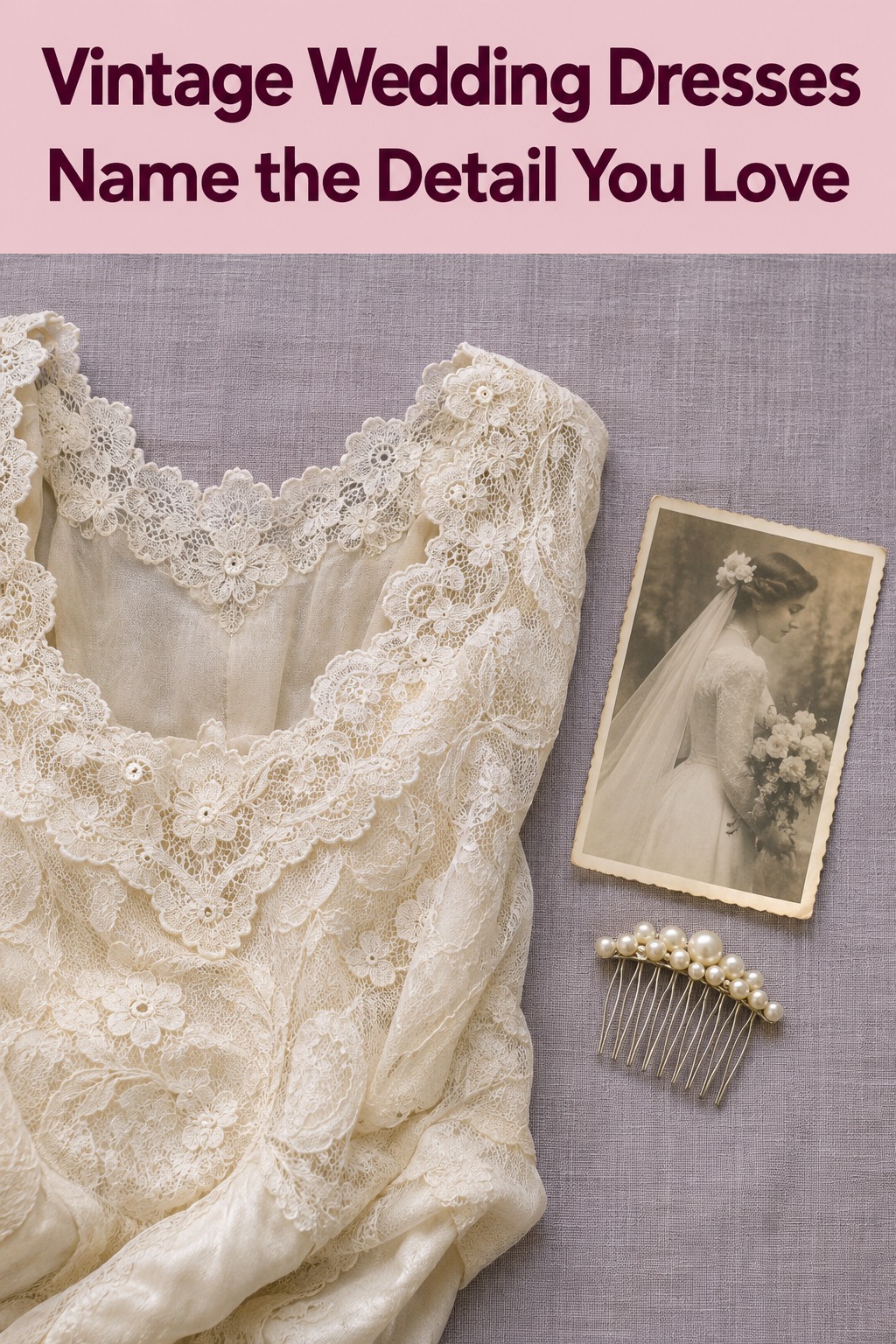
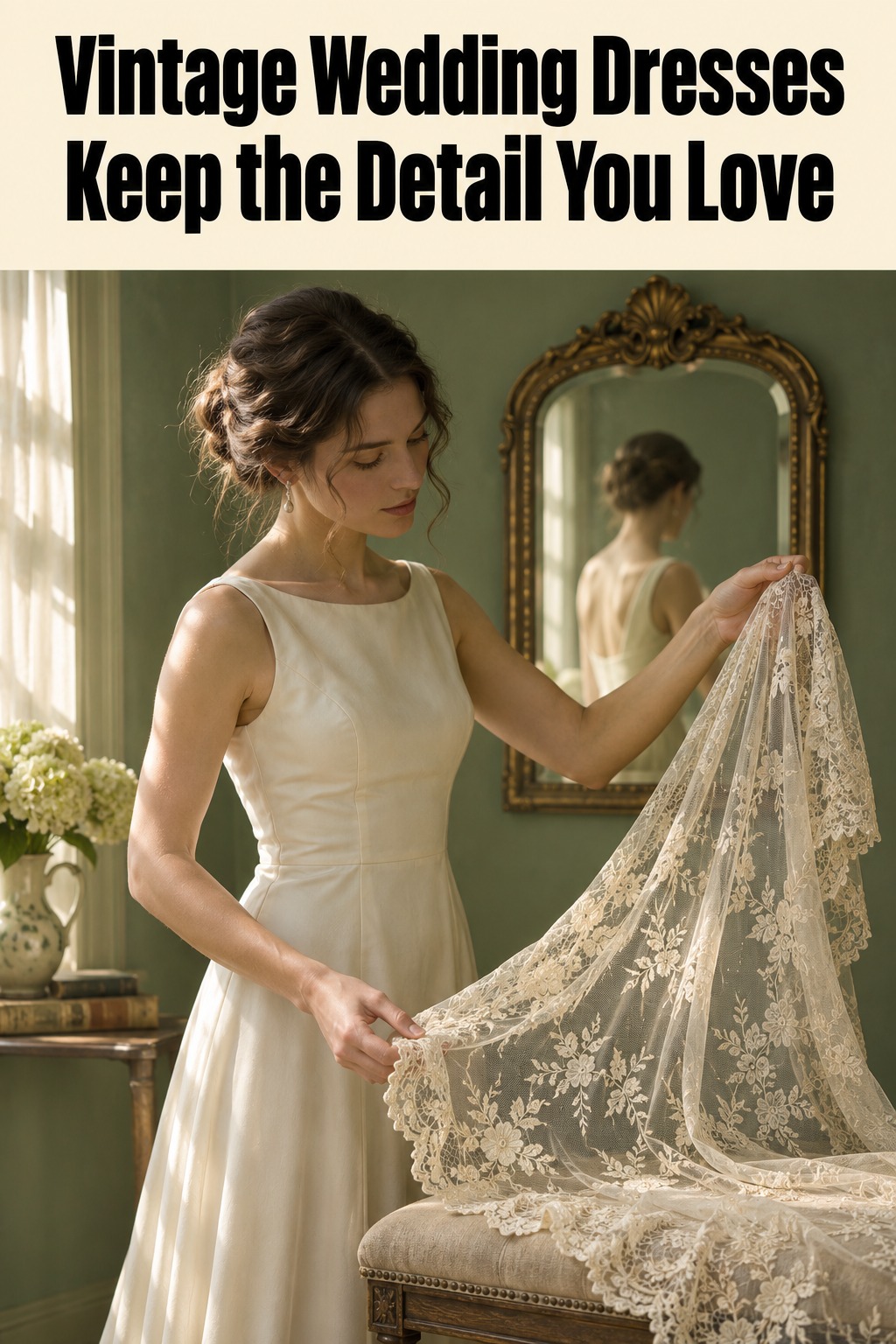
Pull up a picture you keep returning to and describe the part you would notice if the rest of the dress were plain. Maybe the neckline follows the scalloped edge of the lace. You might prefer the corner where a fitted sleeve ends in a point over the hand. A low satin cowl might be what you want to show when you turn. A high lace collar draws the eye up toward your face.
Write one sentence you can read out to a seller or a consultant. "I’d like a narrow ivory gown with a soft cowl at the back" gives them something to look for. If you want a specific period, keep the date in the brief and ask the seller what supports it. If you love the sweep of a skirt in a picture, ask for a standing view so you can tell whether the shape comes from the dress or the way someone arranged it for that frame.
Turn wedding inspiration into a plan you can actually follow.
Zarellea brings your guest list, budget, vendors, and day-of details into one shared space — so no beautiful idea gets lost in the shuffle.
If you want an original, ask how it was dated
A dated photograph, an original receipt or an identifiable label can give you somewhere to start. An estimate is useful when the seller explains what informed it. A seller might say a family saved the dress with a labeled wedding photograph, or that the decade was estimated from construction and the label. Ask whether the dress was substantially remade after the date being given. A bodice and skirt may have different histories.
Read the individual description even if the search category says vintage. A recently made dress can show motifs you associate with an earlier era. A used contemporary gown can have one owner and a completely documented wedding date. A restyled original can combine period lace with a new lining. If age matters to you, find out which parts of the piece you are buying carry that history.
If it’s a family gown, agree on what can change
Ask whoever has been looking after the dress what they would want to keep intact. Perhaps the hem was a grandmother’s handiwork, or the veil has been worn by several people. Write down which changes everyone is comfortable with before the first consultation. You can ask whether a detachable piece could be worn with another outfit if the family wants the gown kept as it is. Take a full-length photo and a close-up of any detail the family wants to keep.
Ask for fit and condition evidence
Compare measurements you know how to take
Measure a non-stretch dress you own that sits comfortably at the shoulders and waist. Follow the same method as the seller if you’re comparing measurements. A number taken straight across a dress laid flat can describe half a circumference, but curved seams and a shaped bodice affect where the tape sits. Ask for a picture of the tape in place if the fit is close or if there’s a difference between the seller’s chart and a photo. Shops such as Vintage Vixen show bust and waist measurements alongside size labels on individual listings.
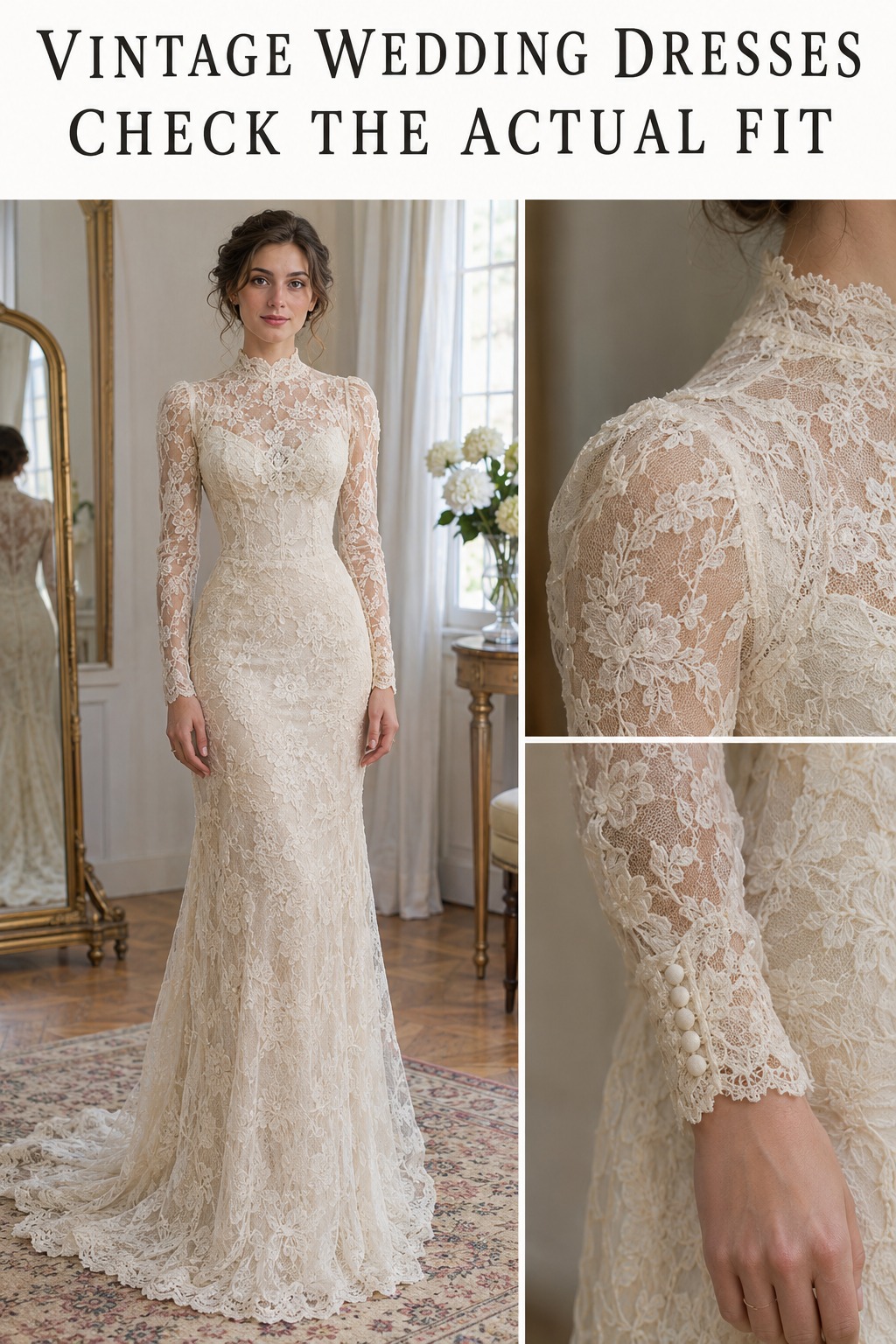
If you’re looking at a sleeved gown, ask for shoulder width, the upper sleeve measurement and the cuff opening. For a high waist or a fitted bodice, ask for shoulder-to-waist length and where the seller started the tape. If the waist seam is lower on your body than it was designed to sit, a number that looks right on paper may describe a different part of your body. Ask for front and back lengths separately when the hem and train are important to you.
Wear the undergarments you plan to wear with the gown when you take your own measurements, if you already have them. For a fitted bodice, ask a dressmaker how much room you need for that cut and fabric. If a seller says there is room to let it out, ask for a picture of the fabric inside the seam and whether the area has been altered before. If you need that extra room to wear the dress, send the seam photo to your dressmaker before you buy.
Ask for daylight photos of places that go under strain
A useful set shows the dress front and back with the lining visible where it can be lifted comfortably. Ask for closer views of the underarms, the seam at the waist, the zipper or buttons and the area around any mark mentioned in the listing. An old heel mark under a train may be easy to accept. A tear radiating out from a closure needs a different conversation because that area has to take strain each time the dress goes on.
Ask what the seller means by "excellent for its age" if you see it in a description. They may be using a grading convention, so request a plain-language description of marks, holes, previous repairs and odors. If there is a repair, ask to see it from both sides when that is possible. Ask for a ruler in the close-up and a wider photo that shows where the repair sits on the gown.
Set up the return before the parcel arrives
Put the seller’s return deadline on your calendar. Check when the clock starts, what condition the dress must be in and when the seller needs you to ship it. A fitting two weeks after delivery gives you little to work with if the decision is due earlier. Ask whether trying the dress on indoors with your usual undergarments is permitted, and line up a consultation inside that window if a fit decision depends on one.
For an in-person purchase, ask if you can take pictures of the inside seams or come back with a dressmaker. If you can only see the dress once, decide beforehand which uncertainty would make you leave it. A return policy can help you when the shape turns out to be wrong. A final sale puts more weight on the measurements, condition evidence and a repair quote you can get before paying.
Tools for checking a vintage dress
Measure a dress you already wear
Put a scale beside a detail
Take your fitting notes with you
Put the before and after photos together
Inspect the dress before committing to alterations
Check it off the body first
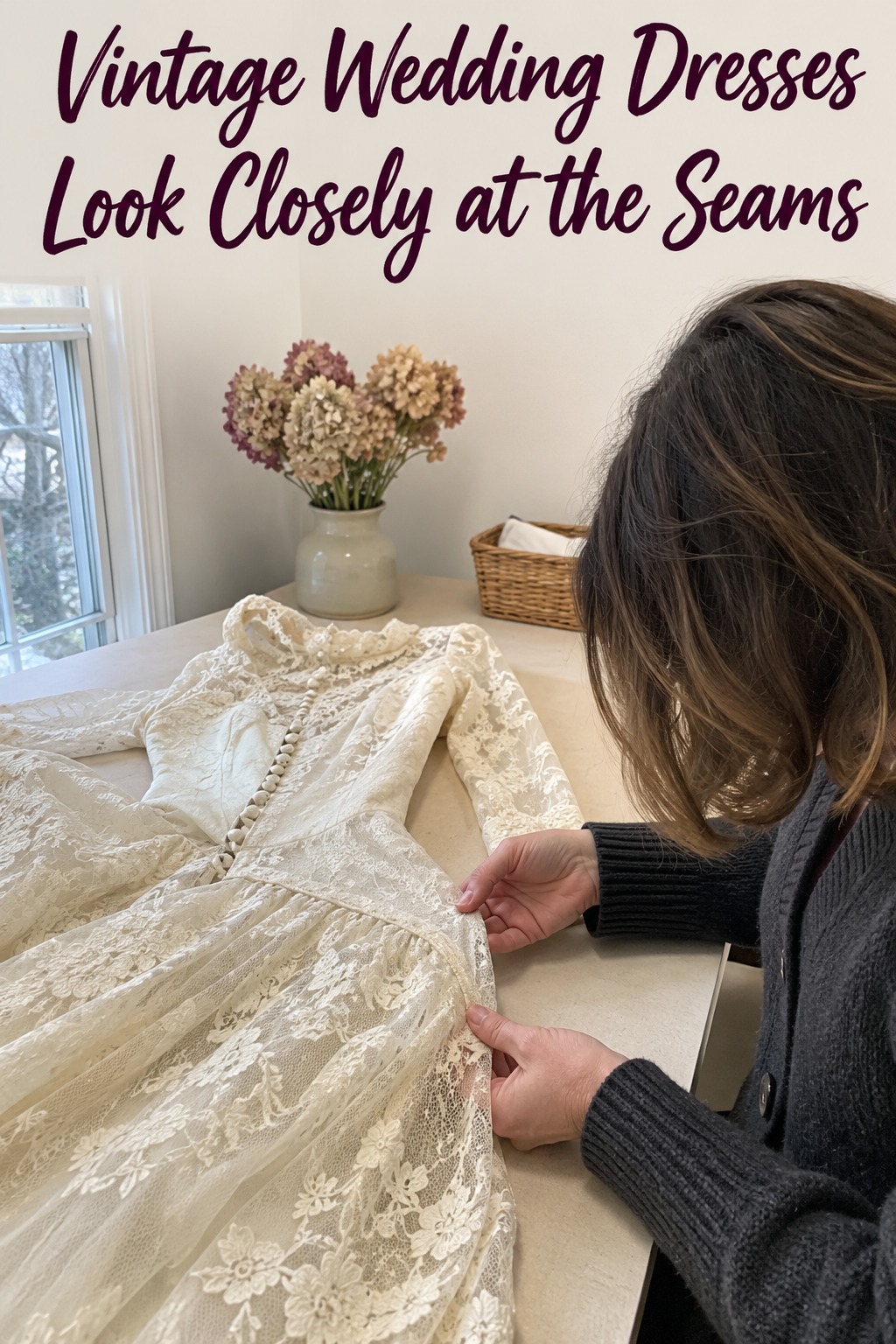
Set aside enough time to open the parcel on a clean, dry surface with good light. Follow any handling instructions from the seller. Take pictures of the garment as received, then look at the areas you asked about. Start with the closures and the fabric immediately around them. Support the weight of the gown while looking at the lining or an edge. If the dress arrives with loose pieces, keep them with the record of what came in the parcel.
Ask for help if you find a brittle section, a split or a stain in one of the areas that has to hold the dress together. Keep the dress supported while you arrange an assessment. The Victoria and Albert Museum’s guidance on vintage wedding dresses and veils describes when to consult a textile conservator and when a dressmaker may be able to alter a gown in good condition. Ask these specialists about the particular fabric and construction in front of them. Send a photo with your first message and ask whether they need to see the dress in person.
Try on a sound dress with someone to help
If the garment looks sound enough to try on, pick a clean space and have a helper take some of its weight as you step in. If a fastening stops moving easily, leave it where it is and let your dressmaker see the gap. Once the dress is on, look at the side seams and waist from the side. Sit down gently if the condition permits and see how the lining and outer layer settle around the hips. For long sleeves, bring your arms forward as if holding flowers at waist height. Notice whether the sleeve pulls under your arm when you reach forward.
Make a separate note of changes you’d like for appearance and things the dress needs to be wearable. Suppose you would prefer a shorter train and you discover a weakened closure. Ask for the assessment of the closure first. Agree on what it would take to support the gown comfortably, then decide whether trimming the train is still worth doing. If you are borrowing the dress, include the owner in the decision about anything being removed.
Ask for a specific alteration proposal
Bring the pictures and your list to a dressmaker who works with vintage clothing. Ask them to show you where they would work, which original material stays and what the finished area might look like. If a sleeve needs more room, ask whether the work would use fabric already in the seams or require an insert. If a damaged area has to be supported first, ask who should do that and in what order the work would happen. Give them the actual wedding date and the return deadline if either affects your choice.
I would prefer a small, reversible change when the existing shape is part of the reason to buy the gown. Shortening an underlayer may be a different decision from cutting through an ornate lace border. Ask whether an adjustment can be undone and whether old seams or their stitching would leave visible lines. If the proposed work would change the one feature you kept coming back to, reopen the search before you put money into it.
Plan around what the dress can handle
Plan who will help you dress
Decide how and when the dress will be put on and who knows how to help with it. Try that routine once after alterations if the specialist approves. Ask how the piece should travel, where it can wait and how to support it between uses. If you keep a family record, save a photograph of the dress before work, another after the fitting and the alteration notes. If the gown goes back to a relative, those notes explain what was done and who worked on it.
A ceremony and one indoor portrait may be a good use for a garment you love but would rather handle sparingly. Check that the outfit change is plausible and that the garment has an appropriate place to go afterward. If the dress has vulnerable material a specialist advises against wearing, the portrait can include a family photograph of it instead. If you want to show the original piece itself, ask the conservator about a suitable arrangement before displaying it.
Keep a fallback that still feels like your choice
Suppose the lace neckline is what made you stop looking, and your dressmaker finds damage at both shoulders. Ask the consultant for a contemporary dress with a similar neckline before you ask anyone to salvage the lace. Look at both necklines at face height and give yourself permission to prefer the new one. If you prefer a vintage gown because of its materials, wait for another original in sounder condition if your timeline allows it.
When provenance is the point, you can have a clean-lined modern dress and carry the story through one intact accessory whose owner is comfortable lending it. If the condition is uncertain, use a photograph or ask a dressmaker about recreating the detail in new fabric. Explain the choice to the person whose dress it was, if you can. They may care more about seeing the old photograph at your wedding than about the dress being worn.
Editor’s take
I’d look for an original if I cared about the history of the garment and could get an honest condition assessment before committing. I would accept a little color variation where it belongs to the dress and where I could live with it in daylight. I’d take a narrow fit at a stressed seam more seriously, particularly if the return period would expire before a dressmaker could see it. Start by writing down the one feature you’d want to keep even if all the other details changed. If the piece’s history is the feature, give yourself time and get the specialist appointment. If it’s a scalloped neckline, you have a better search term than the name of a decade.
Sources and methodology
The condition and alteration guidance draws on museum textile conservation advice. Retail collections and individual vintage listings informed the distinctions among originals, redesigns and contemporary gowns with period details. The examples are hypothetical, and the buying and styling recommendations are editorial judgments based on that research.
FAQ
How can I tell if a wedding dress is actually vintage?
Ask what supports the date and whether the seller sees the date as documented or estimated. Request a picture of any label, and ask if the garment has been remade with newer pieces. If you are buying it for a family story or a particular designer, give that evidence more weight than the category it appeared in.
Can a vintage wedding dress be made bigger?
A dressmaker needs to see where you need room, how much fabric there is inside the relevant seams and whether that fabric is sound. An insert might be possible where the seam has little extra. Ask to see where the new work would appear before you agree to it.
Is discoloration a reason to pass on an older bridal gown?
Look at the location, how it reads in daylight and what the textile is like in that area. If you would buy only on the assumption that a mark will disappear, get an assessment first. Ask a textile conservator about treatment when the area is fragile or the material is uncertain.
What should I ask before buying online?
Ask for actual garment measurements, daylight photos of areas under strain, the basis for the date and the return deadline in writing. If the dress has been repaired, request a clear description and a close view. Compare the measurements with a similar garment that fits you and ask a dressmaker to review close calls.
Can I wear an heirloom veil with a new wedding dress?
Yes, when the owner is comfortable lending it and the veil is in condition to wear. Check the attachment and where it would sit in your hair before settling on your hairstyle. For an older or fragile veil, get specialist advice before trying to attach it to a new comb or clean it.
How early should I book an assessment?
Book before buying if the purchase depends on a repair. If you already own the gown, schedule an assessment before organizing other parts of the outfit around it. For an online purchase with a return window, check the dressmaker’s availability before you place the order and aim to leave enough time to pack and send it back if needed.