Hairstyles for Weddings Bridesmaid: A Simple Style Guide
Choosing a wedding hairstyle as a bridesmaid can feel like a tiny decision with a surprisingly long list of consequences. You want to look polished in the group photos, feel like yourself, and avoid spending the ceremony tugging at pins or sweeping hair away from your face. The best place to begin is not with a trend or a saved photo. It is with the way you want your hair to feel and behave from the first look to the last dance.
This guide gives you a practical way to narrow the options. Start with your comfort, the details of your dress, and the setting of the wedding. Then choose a style family, adapt it to your own hair, and give your stylist a clear brief. You can coordinate beautifully with the other bridesmaids without asking every person to wear an identical version of the same look.
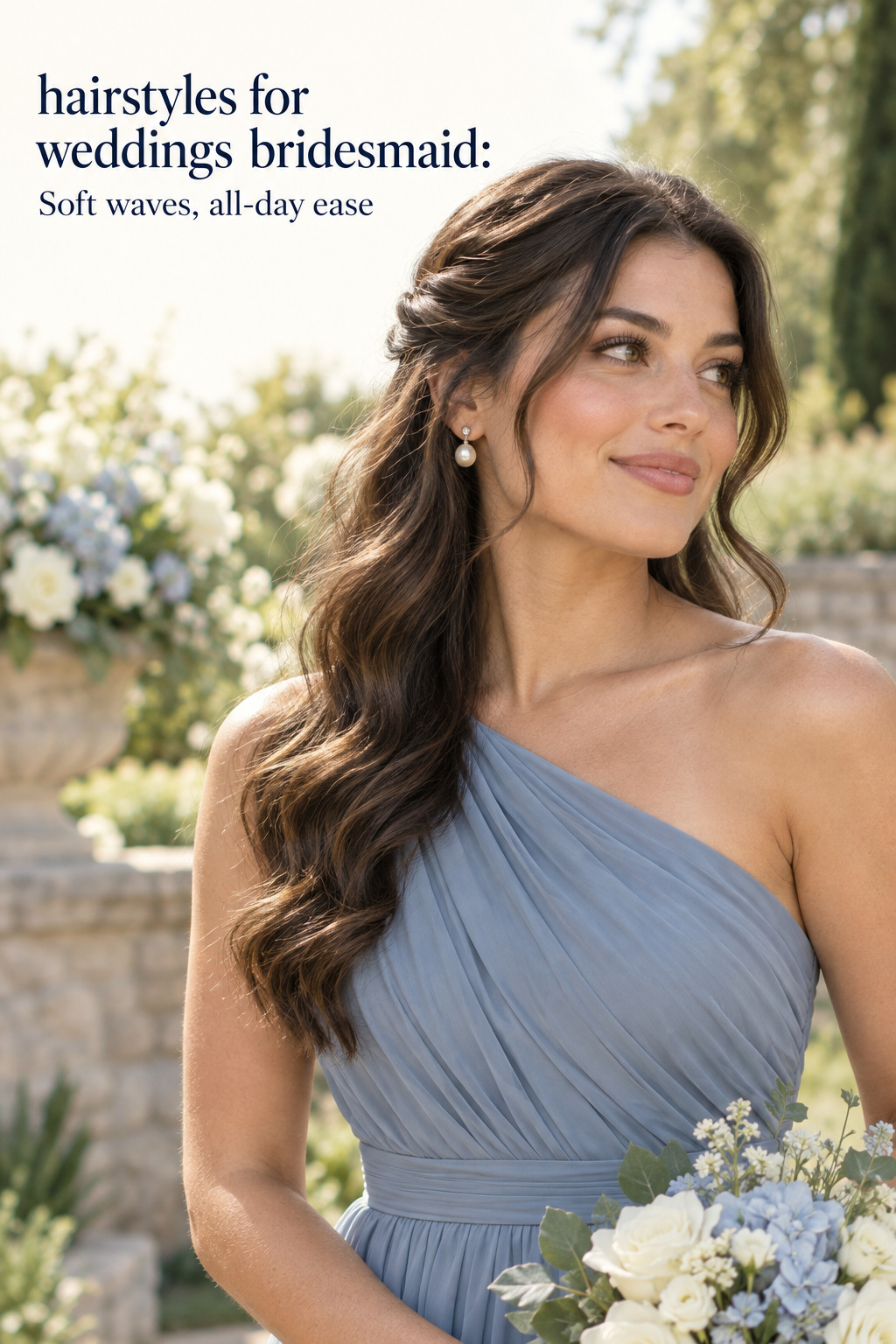
Why the right hairstyle starts with how you want to feel
A reference photo can show you an attractive shape, but it cannot tell you whether you will like that shape on your own head for several hours. Before you choose a polished bun, a soft wave, or a braided detail, picture the parts of the day that matter to you. Do you want your face and earrings fully visible? Do you feel most like yourself with movement around your shoulders? Does loose hair make you warm, or do you dislike the sensation of pins pulling at your scalp? These answers are more useful than trying to copy a photograph exactly.
Think of the hairstyle as part of the complete outfit rather than a separate decoration. The dress, neckline, jewelry, makeup, bouquet, and hair all share the same frame in portraits. A detailed bodice might already provide a focal point, while a simple dress can leave more room for a braid, sculpted shape, or accessory. That does not mean every element has to match. It means you should decide which detail you most want people to notice.
Turn wedding inspiration into a plan you can actually follow.
Zarellea brings your guest list, budget, vendors, and day-of details into one shared space — so no beautiful idea gets lost in the shuffle.
Comfort also affects confidence. If you routinely wear your hair in a loose natural shape, a tightly slicked style may feel unfamiliar even if it looks elegant in a reference image. If you prefer your hair away from your face, a loose style that needs constant adjustment is unlikely to become more enjoyable just because the occasion is formal. A wedding is a good time to dress up your usual preferences, not erase them.
One helpful prompt is to finish this sentence: “I want my hair to feel…” Words such as airy, secure, soft, sleek, romantic, natural, or defined give the stylist a starting point. You can then describe what you want to avoid, such as a heavy crown, visible pins, tightness at the temples, or curls that cover a dress detail. Clear boundaries make the inspiration photos easier to interpret.
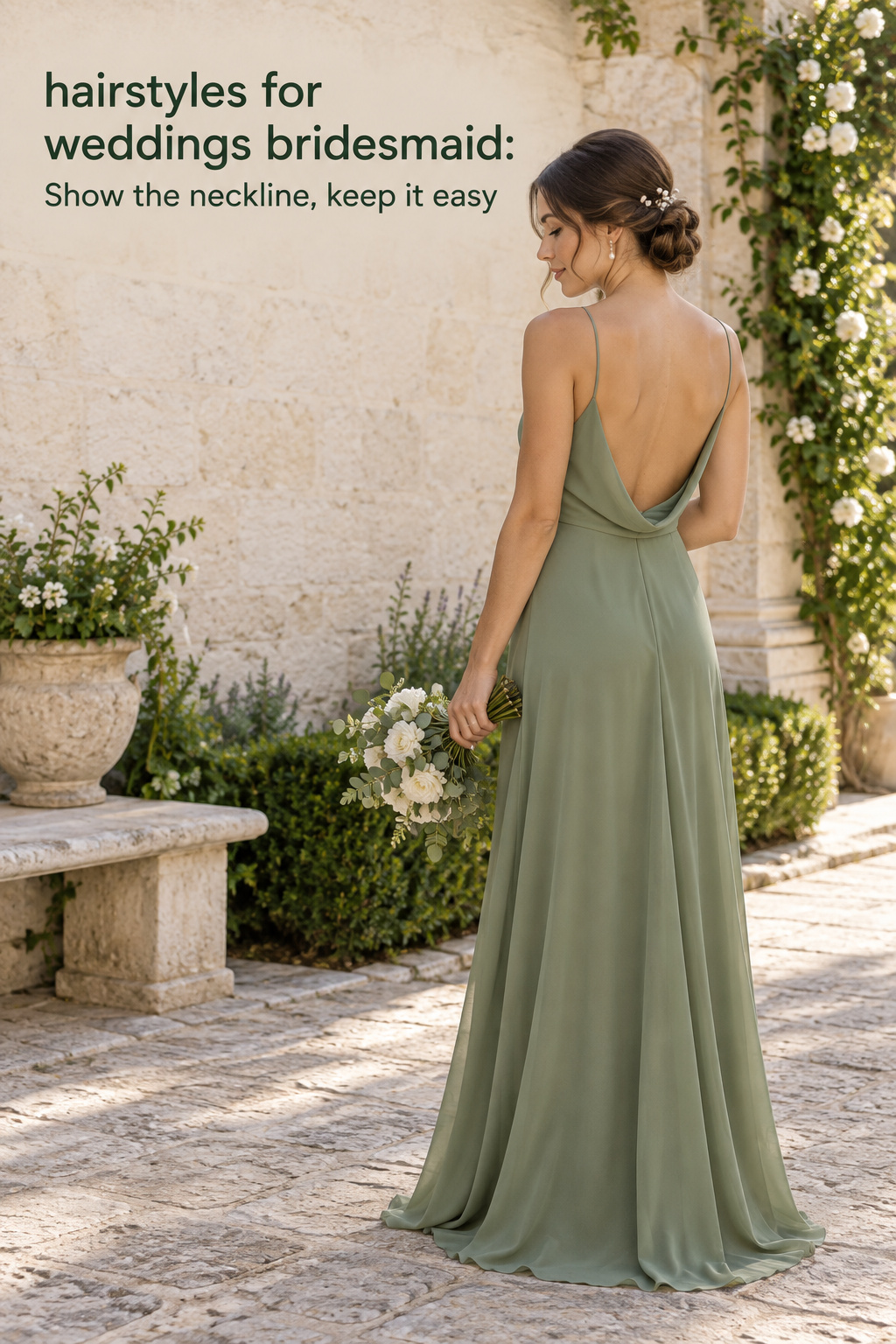
Four principles for matching hair to a bridesmaid dress
Notice the neckline and back. A high neck, halter, or delicate shoulder strap may feel more balanced when some hair is lifted or swept aside. An open back can be a reason to pin the hair up for portraits, or simply to keep it from covering a detail you love. A lower neckline can work with hair down, half-up, or gathered loosely. Treat these as visual options, not strict rules. The Knot’s neckline and hairstyle guide also recommends considering the whole dress and your natural hair before settling on a look.
Give the outfit one clear focal point. If the dress has beading, lace, a statement sleeve, or an architectural neckline, a clean shape can let those features read clearly. If the dress is simple, texture in the hair or one small accessory can add interest without making the look busy. The aim is not to make the hair plain. It is to choose detail at a scale that works beside the clothing.
Plan around how you move. Think about walking outdoors, hugging guests, taking portraits, sitting through dinner, and dancing. If you dislike hair against your neck, choose a shape that lifts the lengths. If you want to keep your hair down, ask for a way to secure the front sections or have a few discreet pins ready. A style that survives your normal gestures will usually feel more natural than one that only works when you stand still.
Work with your own texture. Straight, wavy, curly, coily, fine, thick, and layered hair each behave differently. A style family can stay consistent while its details change to suit the person wearing it. For example, a “soft pulled-back look” could mean a twist on one person, a braid on another, or a curl-defined pinned shape on someone else. Who What Wear’s stylist-led bridesmaid guide makes the same distinction between a shared direction and identical styling for every texture.
These principles also help when your group is wearing different dress necklines. Rather than trying to make every photograph look uniform, agree on a level of polish, one accessory choice, or a general silhouette. The result can feel connected while allowing each bridesmaid to choose a version that suits her own hair and comfort.
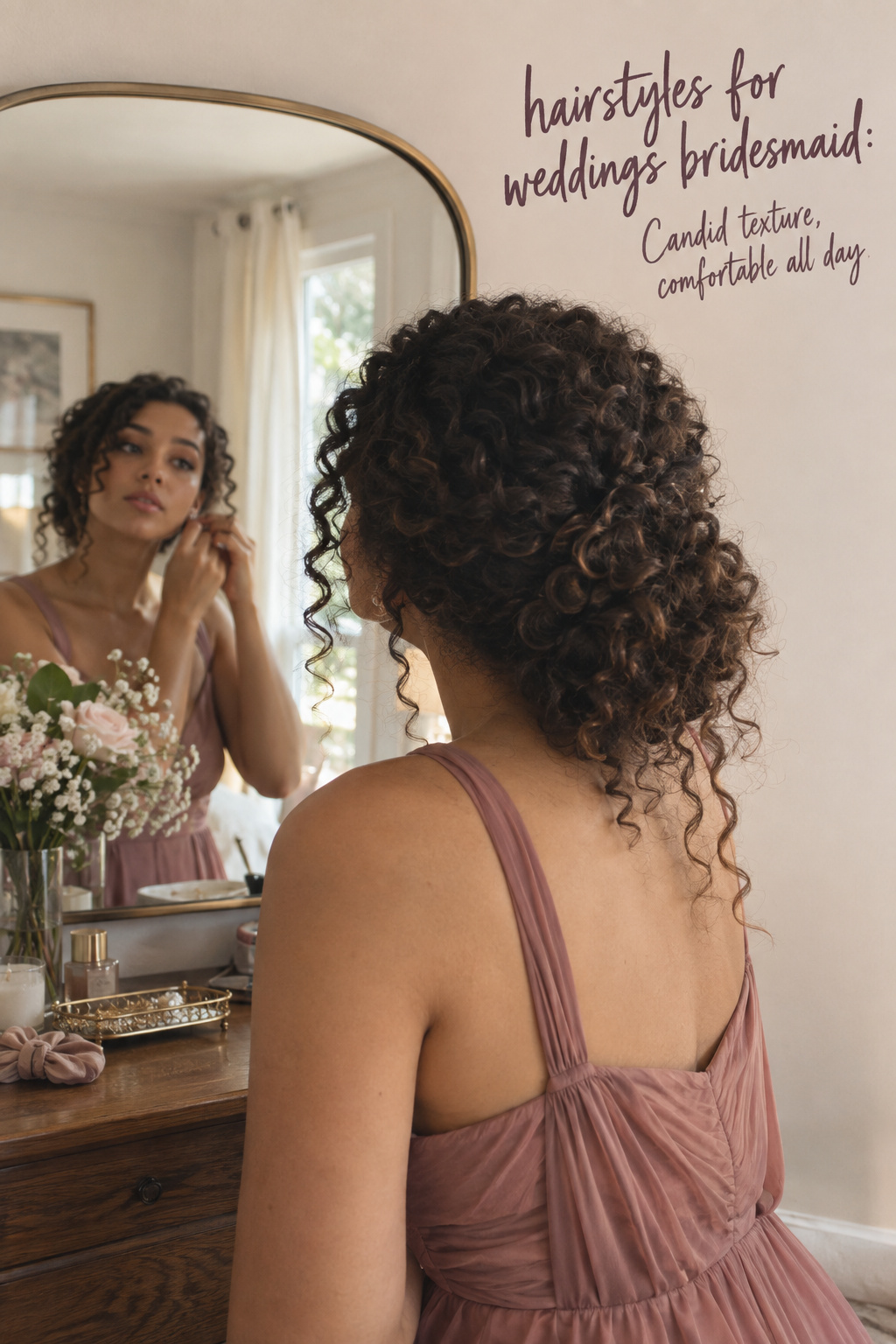
Five style directions that work for a full wedding day
Soft waves with a controlled front. This direction keeps visible movement through the lengths while gathering, twisting, or pinning one or both front sections. It can suit someone who wants her hair down but does not want strands repeatedly falling forward. Ask the stylist to keep the wave pattern close to the way your hair naturally moves. The front can be tucked behind the ear, pinned with a small clip, or drawn into a subtle twist. If you wear earrings, take a photo with the hair in place to see whether they remain visible.
A low gathered shape. A low bun, tucked twist, or relaxed chignon can feel polished without reading as severe. The finish may be smooth and close to the head, softly textured, or shaped with a few pieces around the face. This direction is useful when you want the back or neckline of the dress to show, or when loose lengths would bother you. If you are sensitive to tension, tell the stylist before the pins go in. A lower placement can still feel secure without pulling hard at the temples.
A braid as the detail. A braid can be the main structure, a small crown-like accent, or a detail that feeds into a bun or half-up shape. It adds visible texture and can help gather sections without relying on a large accessory. For a softer look, keep the braid relaxed and allow the natural surface of the hair to show. For a sharper finish, keep the part and edges clean. Bring a reference that shows the braid from the side or back as well as the front, because those views are often what guests and photographers will see.
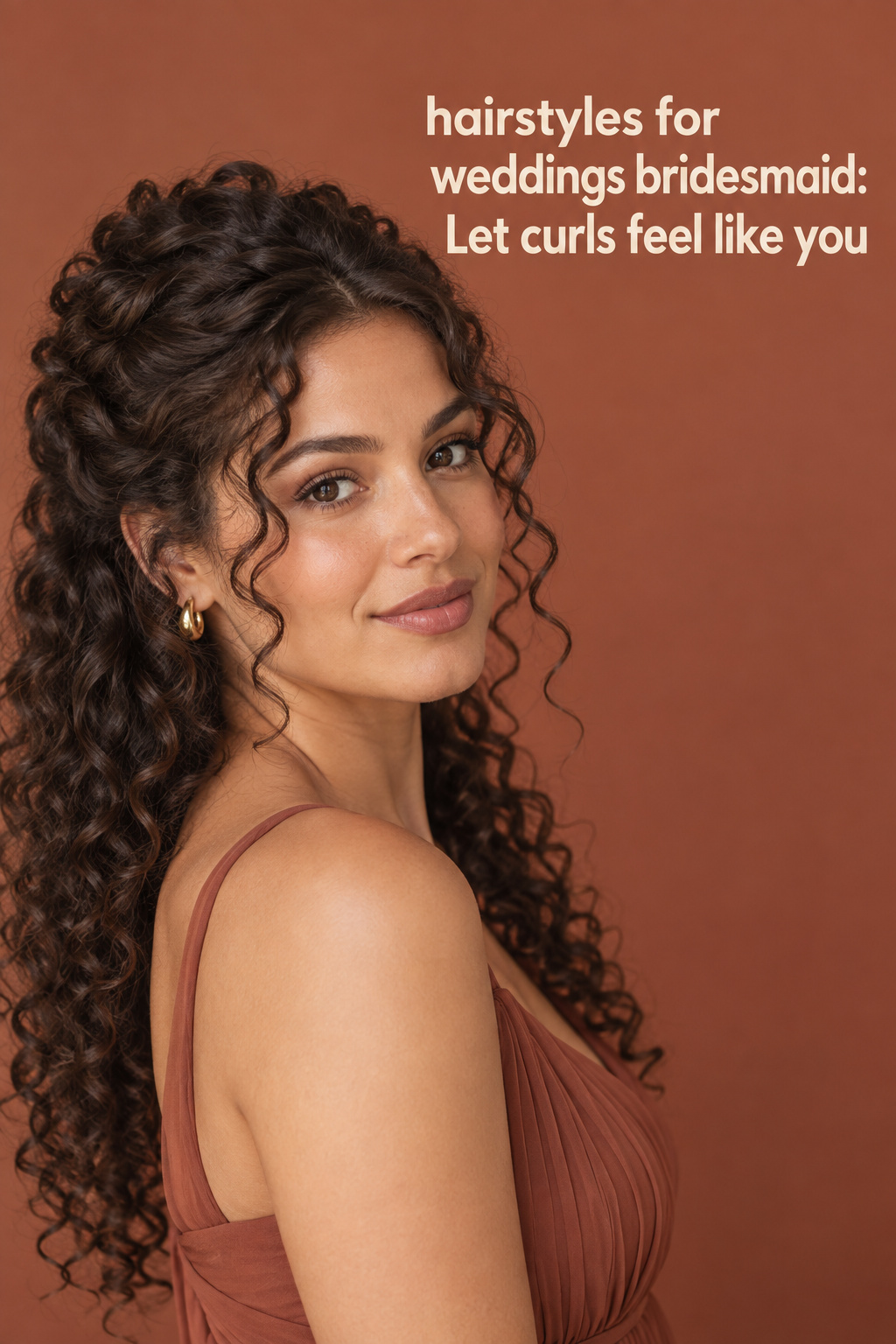
Natural texture with intentional framing. You do not have to change your curl pattern to make a style feel formal. Defined curls, coils, or waves can be shaped away from the face, gathered at the nape, or left loose with a deliberate part and one accessory. The useful conversation is about the finish you want: more definition, more volume, a particular shape, or a few controlled pieces around the face. If a stylist will be working with your hair, share your usual routine and ask what preparation makes the appointment easiest for both of you.
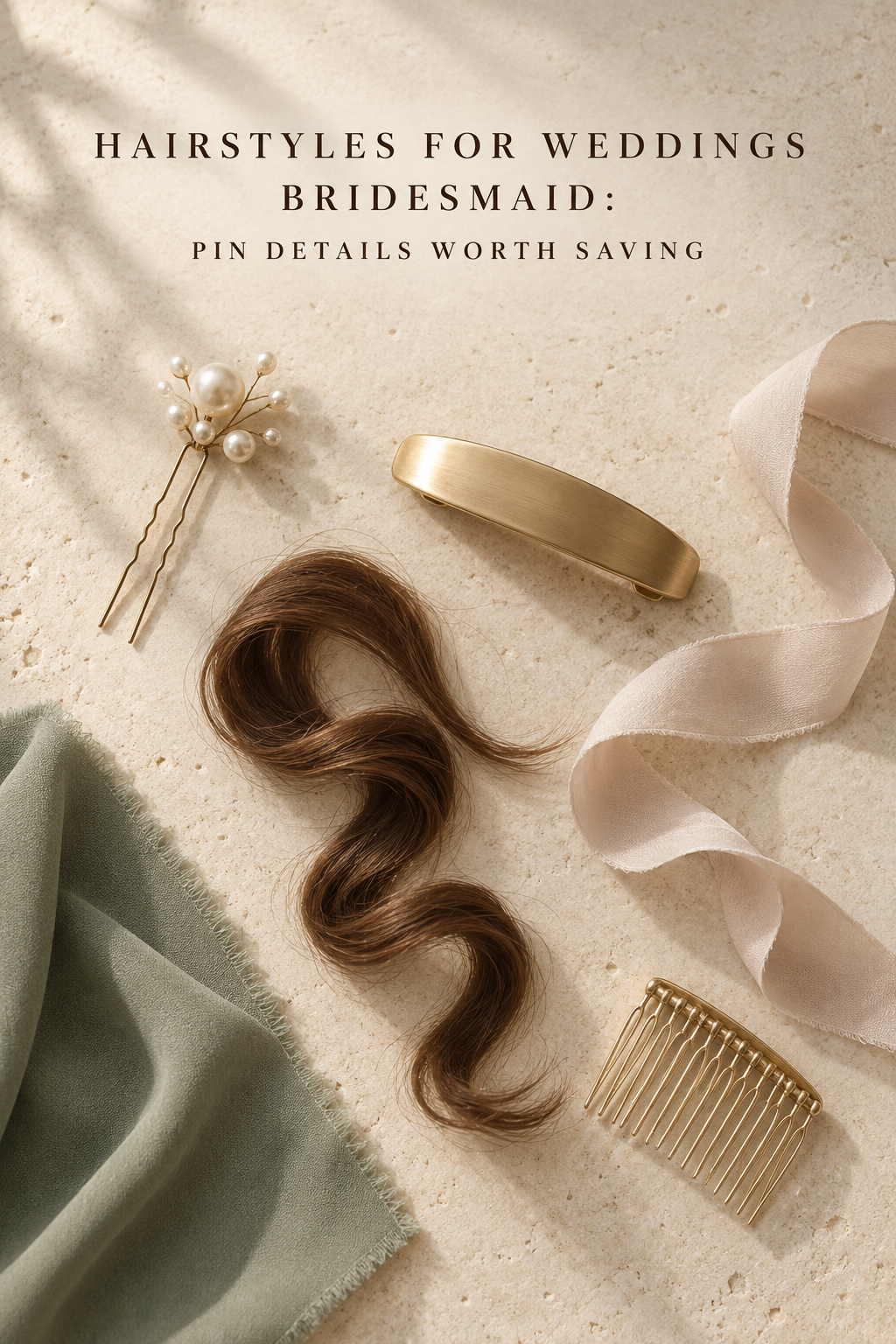
A simple polished shape with one accent. A smooth blowout, a clean twist, or a restrained half-up detail can look special when paired with one considered accent: a pearl pin, a small barrette, a ribbon, or a discreet floral detail. This direction works well when the dress or jewelry already has a lot to say. Choose an accent that sits securely and does not snag delicate fabric. If the wedding has a specific color palette, a subtle accessory can echo it without asking everyone to wear matching jewelry.
Use these directions as starting points, not as a checklist that every person must complete. A style may be adjusted for hair density, length, layers, glasses, a fringe, or how much time is available. A reference image is most useful when you can say what you like about it: the amount of volume, the visible texture, the placement, or how open the face looks. The stylist can then recreate that quality in a way that makes sense for your hair.
Coordinate the group with one shared cue
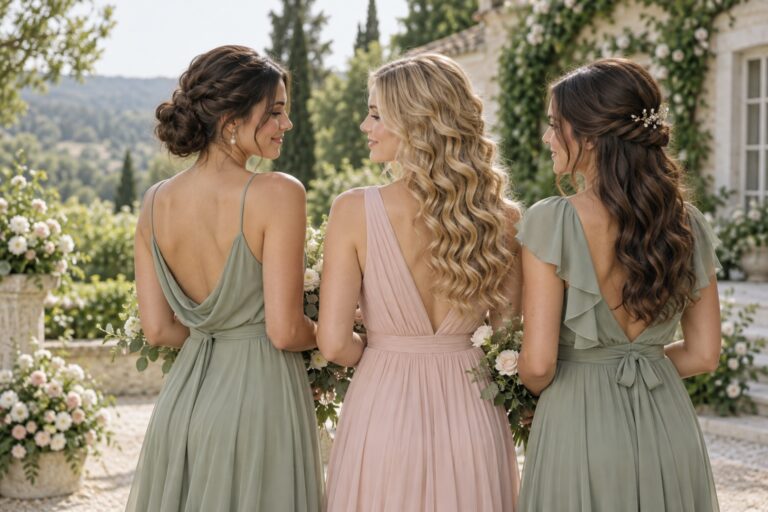
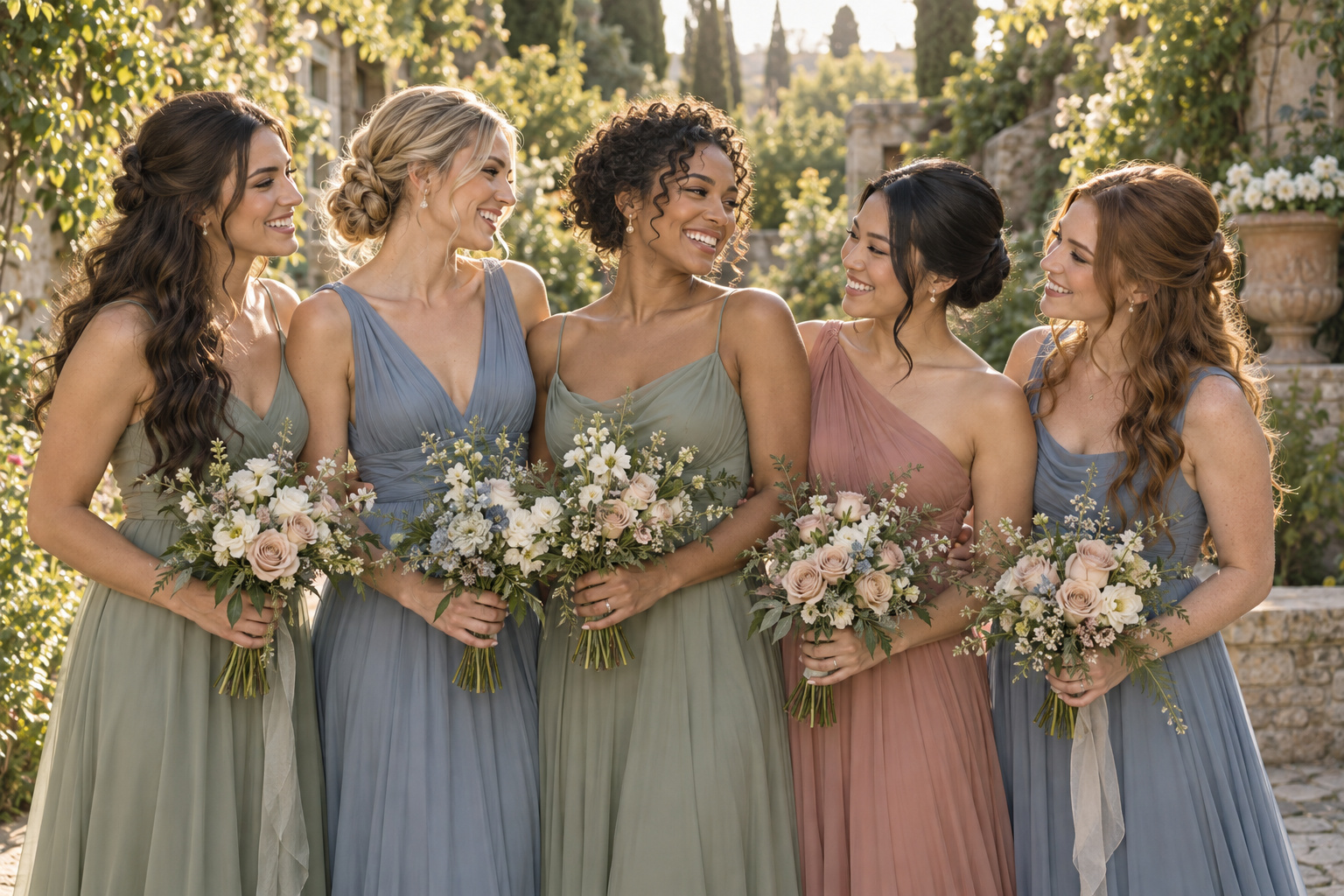
When bridesmaids have different hair textures, lengths, or preferences, a single exact hairstyle can create more stress than cohesion. Instead, pick one shared cue and let the finish vary. The cue might be “hair off the face,” “soft movement,” “a low and polished silhouette,” or “one small gold accessory.” Each person can interpret that cue according to her own hair, while the photographs still feel connected.
For example, a group wearing varied necklines could agree on a soft, pulled-back direction. One bridesmaid might choose a low bun, another a pinned curl shape, and another a half-up twist. The common thread is the open face and gentle finish rather than the exact arrangement of every strand. If the group has varied natural textures, choose wording that describes the overall impression instead of a method that only works on one texture.
It helps to be specific about what is optional. Decide whether accessories are required or simply welcome, whether everyone should show their ears, and whether the goal is a smooth or textured finish. Avoid asking friends to change their natural texture, buy new hairpieces, or use tools they do not normally use unless that is genuinely their preference and the cost or time has been discussed. A relaxed direction is easier to follow than a long list of tiny requirements.
Ask the bride or planner for the wedding’s practical details before making the final choice. An outdoor ceremony, a covered reception, a long gap between events, or a change of outfit may all affect what feels comfortable. If the schedule is tight, let the stylist know how many people are getting ready and whether some bridesmaids will be doing their own hair. This is a planning detail, not a test of how committed anyone is to the wedding.
How to prepare a clear brief for your stylist
Start a small reference folder with two or three images, not twenty. Choose one image for the front, one for the side or back, and one that shows a similar hair texture or length to yours. Add a short note beside each image explaining the feature you want to borrow. “I like the loose shape at the nape” is more actionable than “make it look like this.” If the image has extensions, a different hair density, or a dramatic accessory, mention that you are using it for general direction.
Bring or photograph the dress neckline, earrings, hair accessory, and any garment detail that should remain visible. You may not need to wear the full outfit at a trial. Clear photos can still help your stylist understand the proportions. If you plan to wear a hairpiece, bring the actual piece when possible, so the stylist can test its weight, placement, and attachment. If you will remove it after the ceremony, ask to see how the style looks both with and without it.
During a trial or practice session, notice how the style feels after you move around. Turn your head, look down, raise your arms, and sit back in a chair. If the wedding includes outdoor portraits, mention the likely setting and ask how to secure the look without making it feel stiff. Do not assume you need a professional trial for every hairstyle. A simple test at home, a quick appointment, or a conversation with the person styling you may be enough, depending on the complexity of the look.
Before the wedding, confirm the appointment time, the expected preparation, and what tools or accessories you should bring. Ask the stylist how they prefer the hair to be washed and dried, because preferences can vary by texture and technique. Do not rely on generic rules about washing the night before. If you have a product allergy, scalp sensitivity, or a hairstyle that tends to loosen, mention it early so the plan can be adjusted.
A small touch-up pouch can include a few pins that match your hair, a comb, and any product your stylist recommends for your specific finish. Keep the kit simple. The goal is to make one quick adjustment possible, not to spend the reception maintaining every strand. If you will be outdoors or dancing, ask a trusted person to hold the pouch rather than carrying it in a dress pocket that may show in photos.
Mistakes that make a pretty style harder to wear
Choosing by the photo alone. A picture may show a beautiful hairstyle without showing how it was built, how heavy it feels, or whether the wearer has similar hair. Identify the one or two details you like, then adapt the idea. This keeps inspiration useful without turning it into a promise that your hair will behave exactly the same way.
Leaving the dress out of the conversation. A hairstyle can cover a back detail, compete with a high neckline, or hide earrings you carefully chose. Take a look at the complete outfit before the final decision. Sometimes a small change in parting, height, or where the hair is pinned makes the whole look feel more balanced.
Using a group photo as a uniformity test. Coordination does not require identical curls, buns, or parts. A repeated accessory or shared level of polish can create enough connection. Let people keep the elements that make the hairstyle feel comfortable and familiar, especially if the group includes different textures or cuts.
Waiting until the morning to mention a concern. If you dislike tight styles, have a sensitive scalp, wear glasses, or know that a clip tends to slip, say so before styling begins. It is easier to plan placement and tension at the start than to rebuild a finished look. You can also ask for a mirror check while the style is still being pinned.
Adding too many finishing details. A tiara-style comb, statement earrings, a detailed neckline, and a large floral clip may all be lovely separately, but together they can crowd the face. Choose the detail you want to lead and let the others support it. If you are unsure, take a quick photo in natural light. The camera often makes competing details easier to spot.
FAQ
How should a bridesmaid choose a wedding hairstyle?
Start with comfort, then consider the dress neckline and how much movement or control you want. Choose a style family that works with your natural texture, and bring a few reference photos that show the front and back. A good choice should feel like a dressed-up version of you rather than a copy of someone else’s hair.
Do all bridesmaids need to wear the same hairstyle?
No. A shared direction can make the group feel cohesive while each person adapts the shape to her own hair and preferences. Agree on one cue, such as soft texture, a low silhouette, or hair away from the face, and allow different finishes within that idea.
What hairstyle works well with a detailed bridesmaid dress?
A simple or softly shaped hairstyle can give an embellished neckline, sleeve, or back detail room to show. You can still add interest with texture or one small accessory. Try the complete outfit together so you can see whether the dress or the hair should be the main focal point.
Can bridesmaids wear their natural curls or texture?
Yes. Natural curls, coils, and waves can be worn loose, gathered, braided, or shaped away from the face. Tell the stylist the finish you want and what your normal routine looks like. That makes it easier to plan a style that respects your texture instead of changing it unnecessarily.
What should I bring to a bridesmaid hair trial?
Bring a few reference images, a photo of the dress neckline and back, and any accessory you plan to wear. Share concerns about comfort, scalp sensitivity, natural texture, or styles that usually loosen. If you expect to remove an accessory later, ask to check how the hairstyle looks with and without it.
How can bridesmaid hairstyles look coordinated in photos?
Choose a common visual cue such as a polished finish, a similar accessory, or a shared face-framing direction. The exact hairstyle can vary. Keeping one element consistent helps the group look considered while allowing each bridesmaid to feel comfortable in her own version.