Mother of the Bride Hairstyles Over 50: 2026 Guide
Mother of the bride hairstyles over 50 are moving toward softer texture, intentional volume, and personal polish. The most successful look is not necessarily the newest cut or the most elaborate updo. It is the style that works with your natural density, your dress, your face-framing preferences, and the amount of movement your wedding day will require.
That matters because a mother of the bride may move through a long morning of photographs, a ceremony, a receiving line, dinner, hugs, and dancing. Your hair should still feel like you at the end of that schedule. The ideas below explain what is changing, how to read the strongest trends, and how to turn inspiration into a reliable salon plan.
What is changing in mother of the bride hairstyles over 50
The old assumption that a woman over 50 should choose only a short, stiff, or heavily sprayed style is fading. Current wedding hair is more individual. A silver pixie, a shoulder-length bob, a long half-up style, a braided crown, or a low chignon can all look appropriate when the shape is intentional and the finish suits the wedding.
Softness is replacing stiffness
Softness does not mean that the hairstyle has to be loose or fragile. It can mean a gently curved fringe, a few controlled tendrils, a textured crown, or a bun with visible movement instead of a perfectly smooth shell. Soft edges keep a formal style from feeling severe, especially when the dress has a high neckline, satin surface, or strong tailoring.
Turn wedding inspiration into a plan you can actually follow.
Zarellea brings your guest list, budget, vendors, and day-of details into one shared space — so no beautiful idea gets lost in the shuffle.
Ask your stylist to show you the difference between polished texture and undone texture. Polished texture has a clear shape, controlled flyaways, and a finish that will photograph well. Undone texture can look beautiful in a fashion image but may not provide enough support for a full day. The goal is softness with architecture underneath.
Volume is becoming more strategic
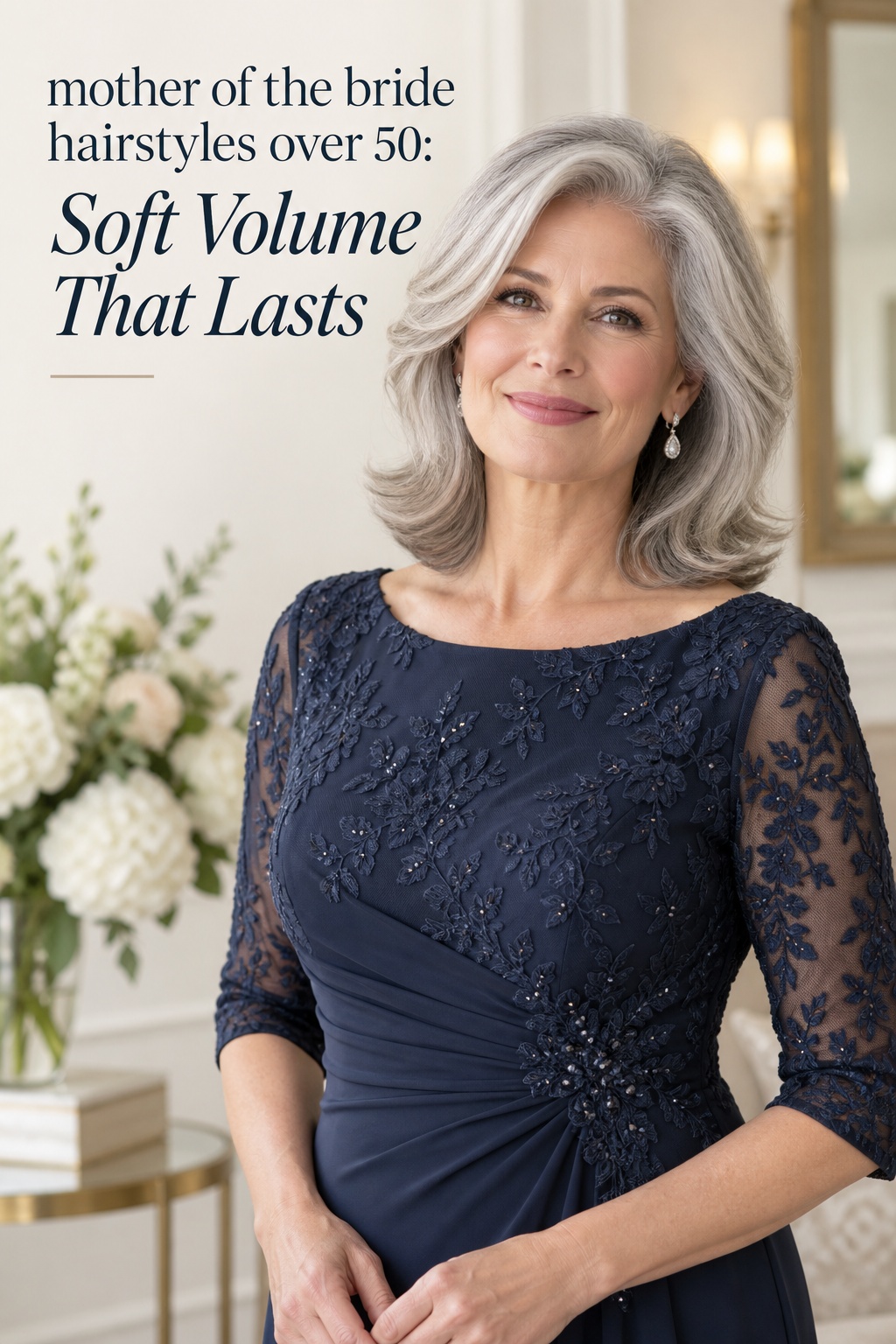
Hair density can change with age, but volume does not have to mean height everywhere. A little lift at the crown can balance a low bun. A rounded bob can make fine ends look fuller. Padding hidden inside a chignon can create a confident silhouette without requiring the hair to do all the work. Root powder, texturizing spray, a small hairpiece, or a discreet extension can be useful tools when they match the texture and color of your own hair.
Volume should support the face, not compete with it. If your dress has a dramatic shoulder or an ornate neckline, a controlled shape may be more elegant than a large halo of curls. If the dress is clean and simple, a textured bun or softly lifted crown can add the visual interest that jewelry might otherwise provide.
Gray and silver hair are part of the design
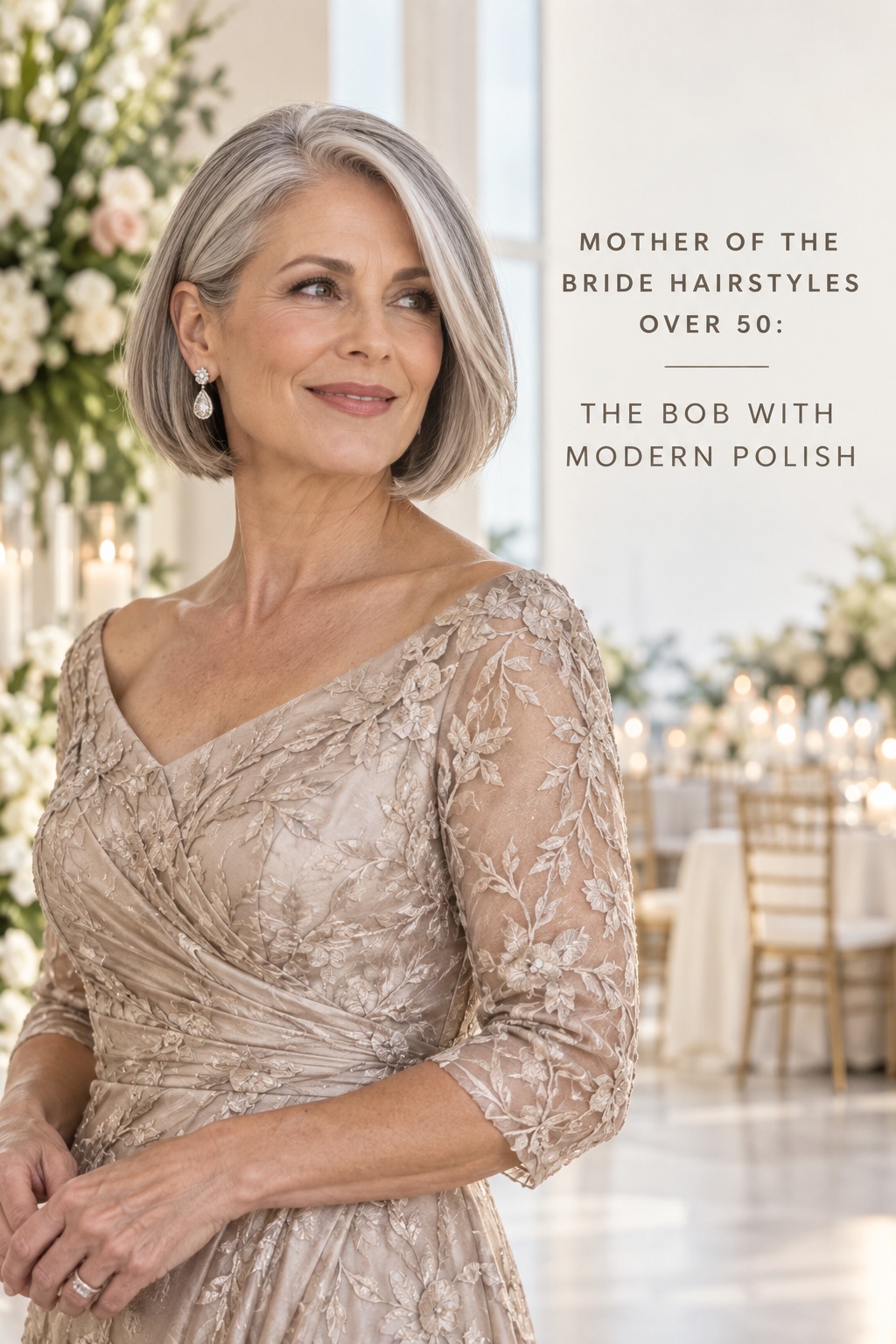
Natural gray or silver hair can make braids, twists, and sculptural shapes especially visible because the tonal variation creates dimension. A silver bob with a deep side part can look architectural. A low bun can show the contrast between darker roots and pale lengths. A crown braid can become the main detail, so you may need fewer accessories.
Do not change your color simply because the wedding is formal. Instead, tell the stylist whether you want your natural tones emphasized, blended, or softened for the photographs. Bring a photo taken in daylight and explain how much maintenance you want before the event. The best color decision is the one that still feels familiar when the celebration is over.
Match the style to length, density, and texture
A reference photo is only useful when you understand what makes it possible. Before choosing a style, identify the length you have now, how much hair is available at the crown and sides, and whether your texture is straight, wavy, curly, coily, fine, coarse, or a mixture. This does not limit your options. It helps your stylist adapt the idea honestly.
Short hair: shape, direction, and finish do the work
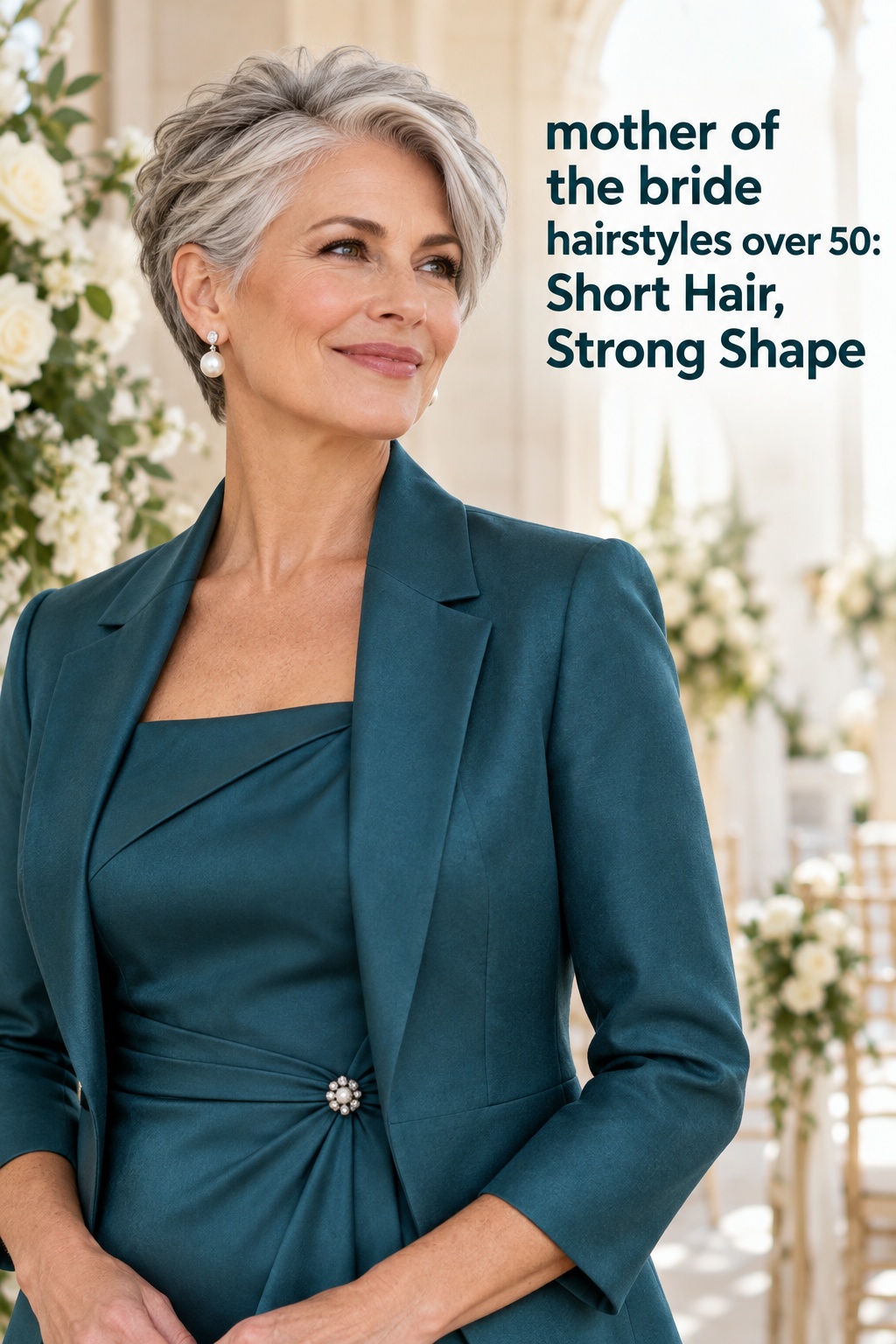
Short hair can look completely wedding-ready without being transformed into an updo. A polished pixie with a defined side part frames the eyes and leaves room for earrings. A softly waved crop adds movement without needing length. A textured bob can be tucked behind one ear, swept away from the face, or finished with a small comb.
For fine short hair, ask about a finish that creates separation rather than a heavy layer of shine product. A lightweight texturizing spray can add grip, while a small amount of paste can define the ends. For coarse or curly short hair, the shape of the cut matters even more than the product. Bring the stylist a photo of your hair at its natural texture so the wedding plan does not depend on a finish you never wear.
Medium length: the most flexible middle ground
Shoulder-length and collarbone hair can support many of the most adaptable mother of the bride hairstyles over 50. A half-up twist reveals the face while leaving movement around the shoulders. A small low bun can look elegant even when the ends do not reach far past the nape. Loose curls, a tucked side, or a jeweled clip can turn a familiar cut into a celebration look.
Be careful with the point where the hair ends. If the hem of a bob sits directly at the widest part of the jaw, extra volume may emphasize that line. A slightly angled shape, a side part, or soft movement through the ends can create better balance. If you wear glasses, keep enough hair away from the temples that the frames do not compete with the style.
Long hair: movement is beautiful when it has support
Long hair gives you the option of loose waves, a side ponytail, a half-up arrangement, or a more substantial bun. It also carries more weight, which means a look that seems secure in the salon may loosen after several hours. Ask how the style will be anchored, where the pins will sit, and what the plan is if you need to remove a veil-like comb or hat after the ceremony.
Loose curls do not have to be tight ringlets. A brushed wave with a clean part can feel elegant and current, especially with a dress that has a detailed neckline. If your hair is fine, a little backcombing or hidden support may be necessary. If your hair is thick, the stylist may need to remove weight at the interior or use a partial updo so the shape remains comfortable.
Fine, thinning, or fragile hair: choose a shape that works with reality
Fine hair often looks best when the style has a clear silhouette and does not ask the strands to support excessive length. A textured low bun, a crown braid with a little padding, a lifted bob, or a half-up twist can create the impression of fullness without requiring a large amount of hair. A stylist can use a small filler piece or clip-in support if you want more structure, but it should be tested in advance.
Fragile hair also needs a gentle preparation plan. Avoid a last-minute dramatic cut, aggressive teasing, or a new chemical service right before the wedding. Ask whether the hair should be washed the day before, how much heat will be used, and which products can be removed easily. Comfort and hair health are part of a successful formal style.
Interpret the strongest trends for the wedding setting
Trends are most useful when they give you a direction rather than a rule. The same braided crown can feel romantic at a garden ceremony, polished in a ballroom, or too decorative at a modern city venue. Use the wedding setting, the time of day, and the level of formality to decide how much detail your hair should carry.
Textured low chignon for formal evenings
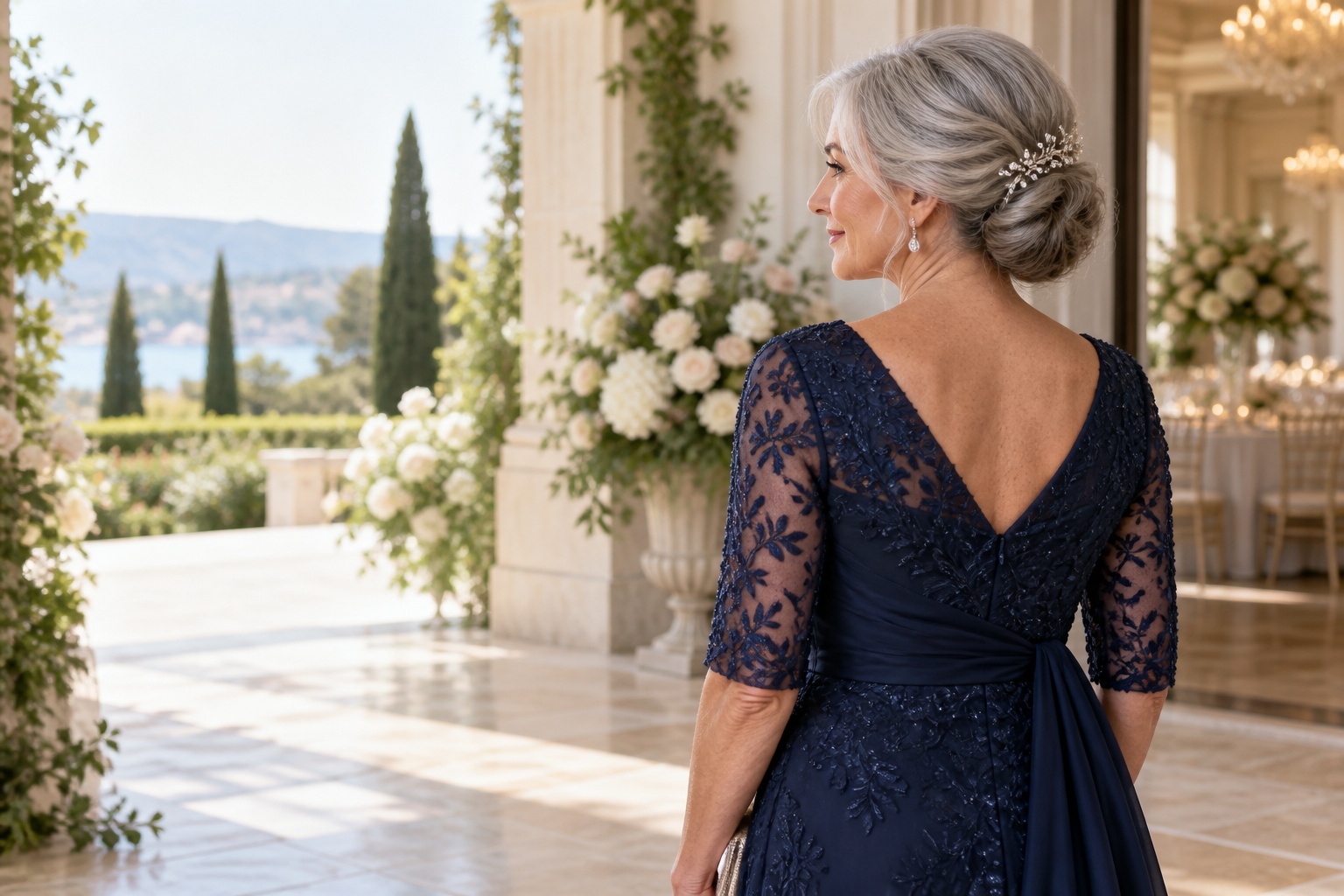
A textured low chignon is one of the safest formal choices because it keeps the neck open, works with many dress shapes, and can be adjusted from sleek to soft. A clean part and smooth sides suit a structured gown. A softly lifted crown and loose face-framing pieces suit chiffon, lace, or a dress with gentle draping.
Ask for the bun to sit where it will not rub against a collar or the back of a necklace. If you plan to wear statement earrings, keep the side sections controlled. If your hair is fine, test the amount of padding before the event so the bun does not feel too large or unfamiliar.
Crown braid for gardens and outdoor ceremonies
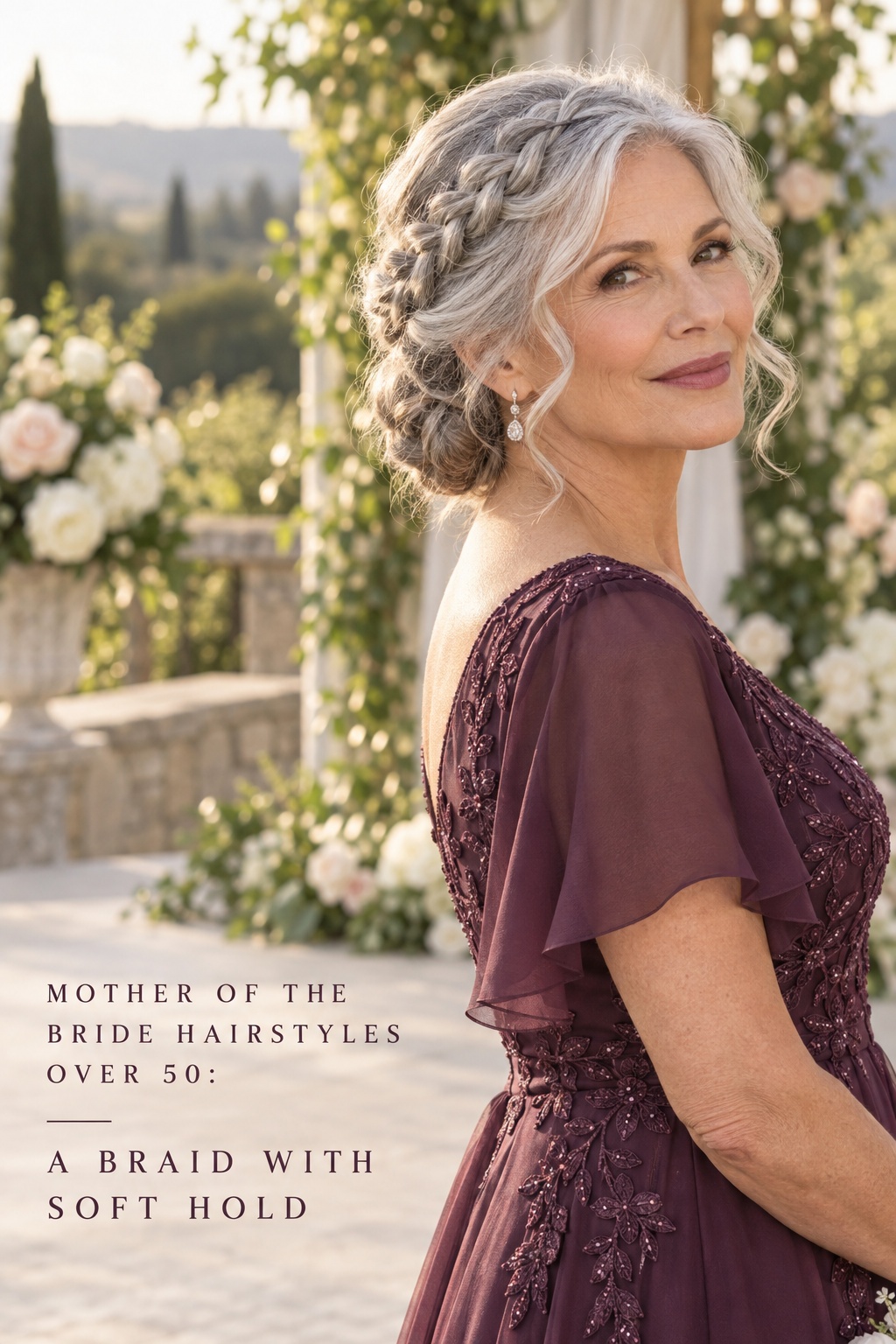
A crown braid can frame the face and keep hair away from the neck, which is useful in warm weather. It works especially well with natural waves, silver hair, or a dress with a simple neckline. The braid does not need to be tight or perfectly symmetrical. A relaxed but intentional pattern can feel more modern.
Test the tension carefully. A braid that feels secure for ten minutes may become uncomfortable after several hours. Ask for hidden pins at the pressure points and make sure the style will tolerate wind. If your hair is short or very fine, a partial braid, twist, or braided detail may be more realistic than a full crown.
Half-up hair when you want movement and visibility
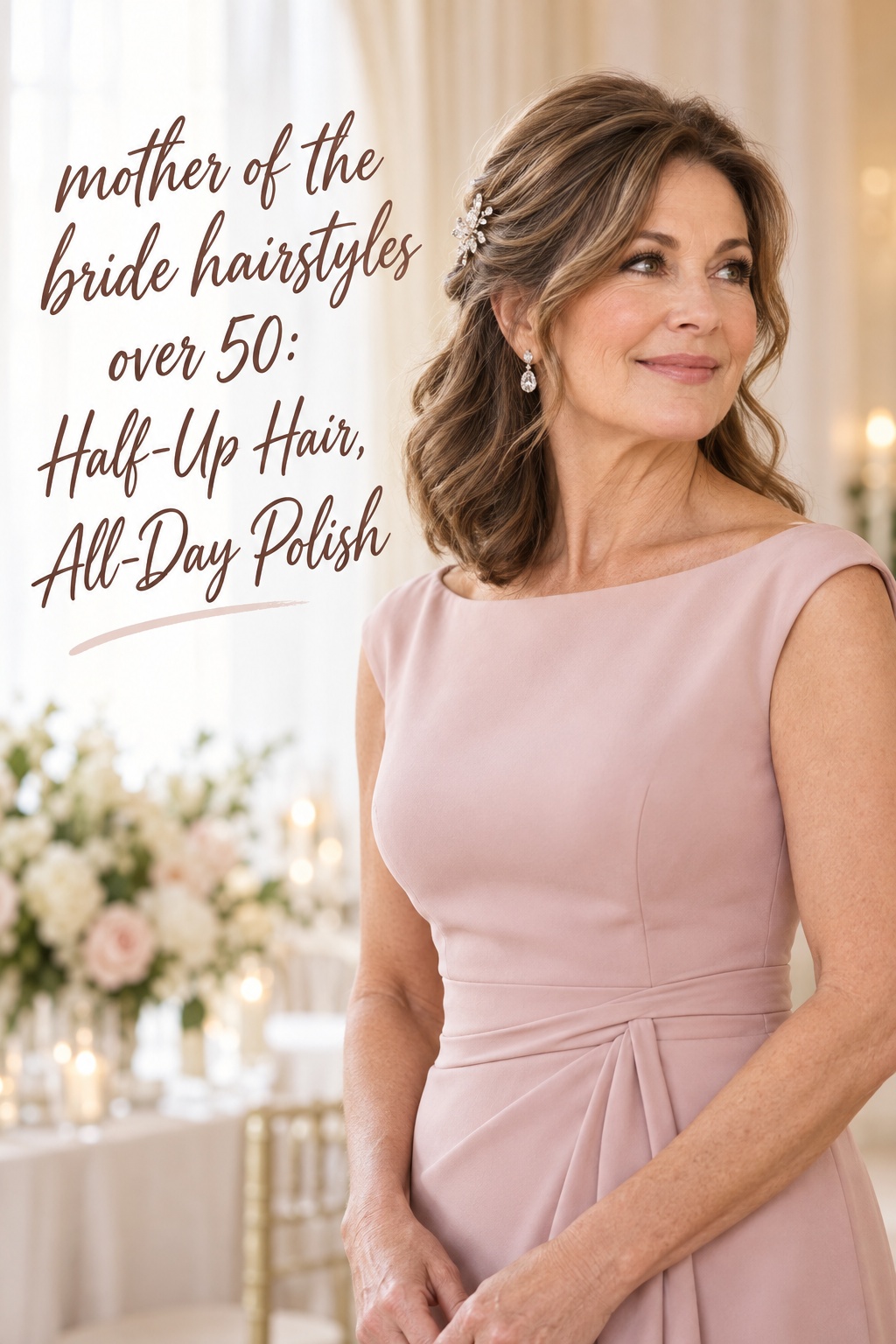
Half-up hair is a strong compromise for a mother of the bride who wants to keep some length visible but also wants the face and earrings to stay clear. The upper section can be twisted, braided, or secured with a small comb. The lower section can be softly waved, curled, or left smooth.
The most important decision is how much hair the top section can hold. If the crown is fine, a small twist with discreet support may look better than a wide pullback. If the hair is dense, the stylist may need to remove weight from the top so the arrangement does not feel heavy. Loose waves should be brushed into a continuous shape rather than left as separate curls.
Polished down styles for modern city weddings
A smooth bob, a side-swept blowout, or brushed waves can be perfect for a courthouse, restaurant, gallery, or city hotel wedding. These styles feel current because they show the haircut instead of hiding it. They also work well when the dress is tailored, the jewelry is geometric, or the overall look is intentionally minimal.
Down styles need a weather plan. Humidity, rain, wind, and a busy dance floor can all change the finish. Ask the stylist to show you where the style can be secured without turning it into a full updo. A small barrette, a tucked side, or a flexible spray can preserve the shape while keeping the style recognizable.
French twists and sculptural shapes for clean elegance
A French twist creates height and a long vertical line, which can be beautiful with a bateau neckline, a high collar, or a narrow silhouette. It is a classic choice, but it does not have to look dated. A slightly softened front, visible texture in the twist, or a clean modern part can change the impression.
Because the shape is structured, ask whether it will work with your hair density and length. Very fine hair may need internal support. Very thick hair may need to be shaped in sections. Wear the earrings and any hair accessory during the trial so the stylist can keep the proportions balanced.
Make the hairstyle work with the whole outfit and schedule
A hairstyle should complete the outfit, not compete with it. Bring a photo of your dress, the neckline, the fabric, the color, and the accessories to your trial. The goal is not exact matching. It is balance. A detailed dress may need a quieter hair shape, while a simple dress can support texture, a braid, or a beautiful comb.
Use the neckline as a practical guide
A high neckline often benefits from an updo, a tucked side, or a controlled bob so the upper body does not look crowded. An open neckline can support hair worn down or a half-up style that leaves movement around the shoulders. An off-the-shoulder dress may look balanced with a low bun or softly swept hair, while a one-shoulder dress may call for a side part that echoes the asymmetry.
These are starting points, not rules. Your comfort matters more than a styling formula. If you always wear your hair down and feel most like yourself that way, a brushed wave may be better than an updo chosen only because it exposes the neckline.
Plan for glasses, earrings, and face-framing detail
Glasses are part of the look, so wear them at the trial. The temples should not catch on loose sections or press against a braid. A side part, tucked side, or softly lifted crown can keep the frames visible without making them the only focal point. If you will switch to contacts for part of the day, test the hairstyle with both versions of your face.
Use earrings to decide how much hair should surround the face. Statement earrings usually benefit from a clear side or an updo. Small pearls, diamonds, or simple drops can work with waves or tendrils. Bring the actual pieces if possible. A hairstyle that looks balanced with a small stud may feel crowded once a long earring is added.
Book the trial for a decision, not only a photograph
A useful trial answers practical questions. Can you turn your head comfortably? Can you sit in a chair with the style against the back? Does the shape still look good from the side and back? Can you imagine wearing it for eight hours? Does it hold after a short walk outside? Take photos in daylight and indoor light, then look at them the next day.
- Bring clean reference photos that show the front, side, and back.
- Bring your dress photo, neckline information, glasses, earrings, and hair accessory.
- Tell the stylist how your hair behaves in humidity, wind, and heat.
- Ask what to wash, dry, and avoid before the wedding morning.
- Confirm the appointment length and whether touch-up products or pins will be supplied.
- Ask for a small emergency kit with pins, spray, a comb, and a way to smooth flyaways.
Mistakes that make a beautiful style unreliable
The most common mistake is choosing a reference photo without checking whether the hair has the same length, density, or texture. The second is changing too much at the last minute. A new cut, color, extension, or chemical treatment may look exciting, but it can also create a problem your stylist has no time to solve.
Another mistake is ignoring the entire schedule. If you will be outdoors before the ceremony, if the reception is in a warm room, or if you plan to dance, say so. The stylist can alter the amount of support, the product choice, and the placement of loose pieces. Finally, do not let the style become so formal that you no longer recognize yourself. The best mother of the bride hairstyles over 50 look special because they reveal the wearer, not because they disguise her.
FAQ
What is the most flattering mother of the bride hairstyle over 50?
The most flattering style is the one that balances your face, hair density, dress neckline, and personal comfort. A textured low bun, polished bob, half-up twist, soft waves, or short side-parted style can all work beautifully when the shape is adapted to you.
What hairstyle is best for fine hair over 50?
Choose a shape that does not depend on excessive length or weight. A lifted bob, textured low bun, small chignon, crown braid with discreet support, or controlled half-up twist can create fullness. Test any padding or hairpiece during the trial.
Can a mother of the bride wear her hair long after 50?
Yes. Long hair can look elegant in brushed waves, a half-up style, a side ponytail, or a supported bun. The important questions are whether the length feels healthy, whether it suits your personal style, and whether the stylist can secure it comfortably for the full day.
Should gray hair be styled differently for a wedding?
Gray hair does not require a special category, but its texture and tonal variation can affect the finish. Braids, twists, polished bobs, and low buns can show silver dimension beautifully. Discuss shine, flyaways, and color emphasis with your stylist during the trial.
How early should I have a mother of the bride hair trial?
Schedule the trial several weeks to a few months before the wedding, depending on how much planning and change you expect. This leaves time to adjust the cut, order an accessory, test a hairpiece, or choose a different direction without pressure.
What should I do if I wear glasses?
Wear your glasses at the trial and check the temples, ears, and side sections for comfort. A tucked side, soft lift, or controlled part can keep frames clear. Choose earrings and hair accessories with the glasses so the final proportions are realistic.
How can I make my wedding hairstyle last all day?
Use a tested style, follow the stylist’s preparation instructions, and match the amount of support to your hair density and the weather. Secure anchor points, avoid heavy products that collapse the shape, and keep a small emergency kit with pins, spray, and a comb.