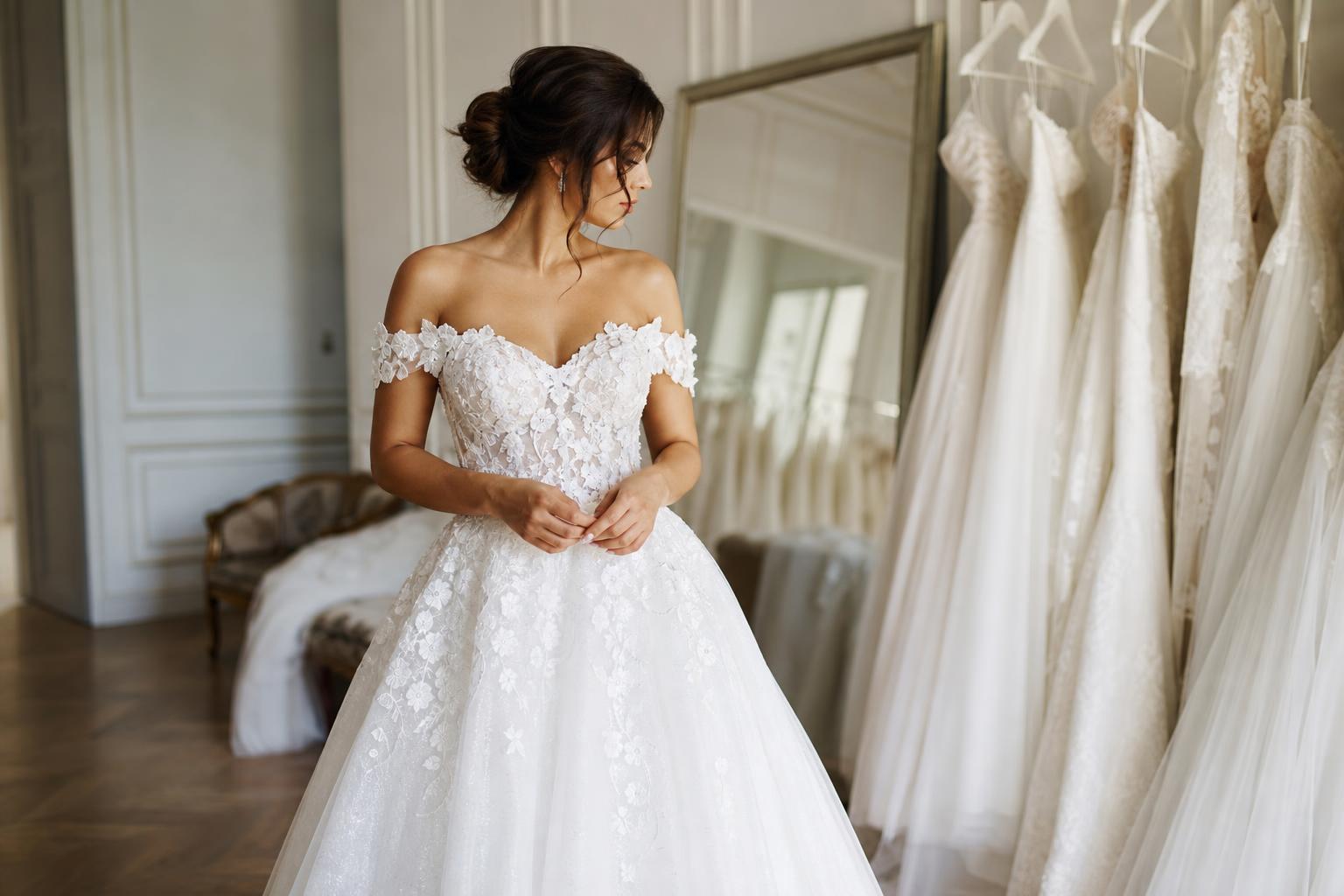
White Bridal Dresses for Every Wedding Setting
There is a particular clarity to white bridal dresses that makes them feel both ceremonial and deeply personal. In one gown, a bride may want tradition, softness, structure, movement, and a sense that the entire wedding vision comes together the moment she steps into the aisle. In the U.S. bridal market, that is exactly why white remains such an enduring choice: it can lean classic or modern, couture or budget-conscious, minimalist or richly embellished, while still anchoring the day with a distinctly bridal presence.
From New York showrooms like Kleinfeld to nationwide retailers such as David’s Bridal and Macy’s, from the broad online range at ASOS and JJ’s House to boutique and couture perspectives from Muse Bridal, Couture Candy, The Dress Outlet, Stillwhite, and BLINI in Los Angeles, white bridal dresses are presented through a few themes again and again: silhouette, fabric, fit, budget, and shopping experience. Understanding those themes makes the difference between admiring dresses online and choosing a gown that actually works for your venue, season, comfort, and wedding style.
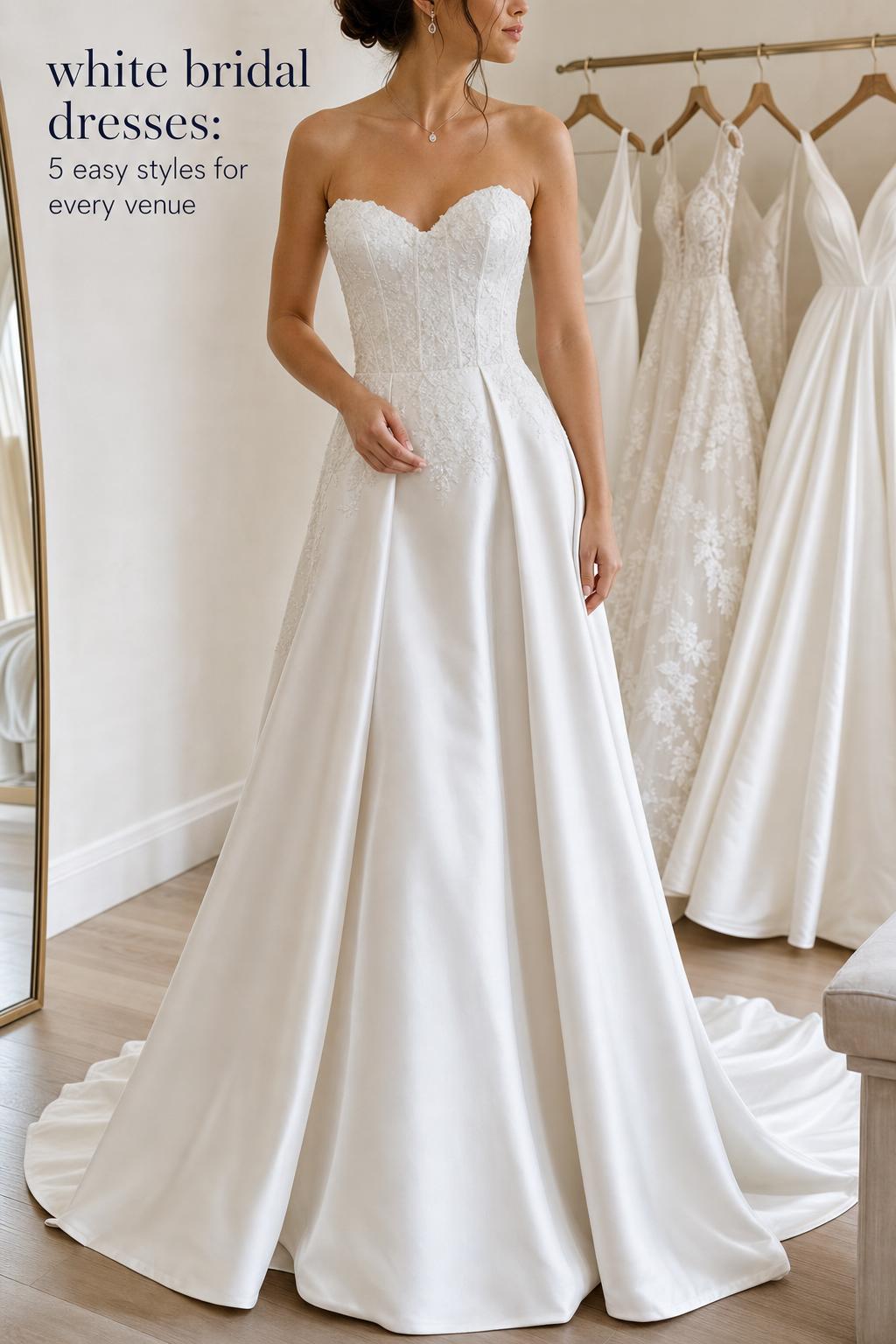
This guide is designed to help you make that decision with confidence. Rather than treating the dress as a separate fashion purchase, it connects white gowns to the real wedding context: where you will wear it, how you will move in it, what you may need to alter, and how to choose a style that feels cohesive from ceremony to photographs to the final hour of the reception.
Why white still feels relevant
White bridal dresses carry a traditional association, but modern bridal fashion has made that tradition more flexible. Retailers and bridal boutiques consistently present white alongside tone discussions such as bright white and ivory, which tells you something important: “white” in bridal shopping is rarely a single visual effect. It is a category that includes different levels of brightness, texture, sheen, and styling mood.
Turn wedding inspiration into a plan you can actually follow.
Zarellea brings your guest list, budget, vendors, and day-of details into one shared space — so no beautiful idea gets lost in the shuffle.
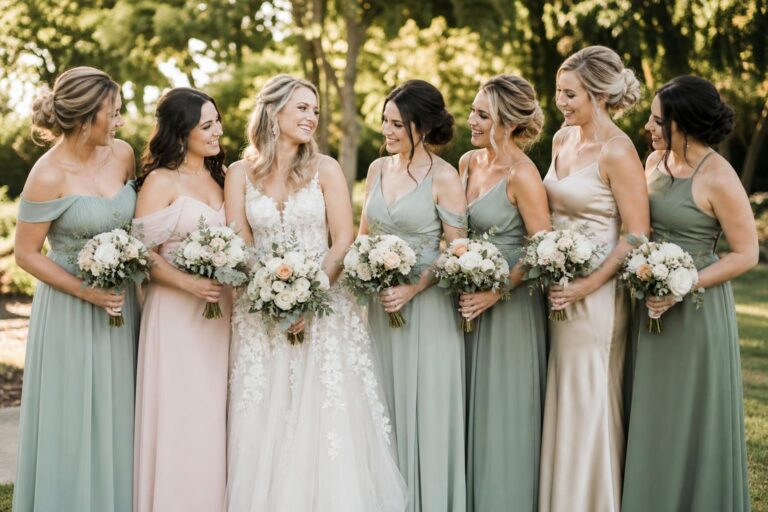
This matters because a dress does not exist in isolation. A bright white satin gown can read very differently in a city ballroom than a lace-and-tulle gown in natural outdoor light. Some brides are drawn to the clean look of modern white gowns, while others want the softness that lace, embroidery, or layered tulle can bring. The core decision is not simply whether to wear white, but what kind of white supports the wedding atmosphere you want.
Best for: couples deciding between a traditional bridal look and a more current, fashion-forward interpretation. This is especially helpful if your wedding style sits somewhere between formal and personal, such as a classic ceremony followed by a more relaxed reception.
Why it works: white gives structure to the bridal look. It photographs with clear contrast, reads immediately as bridal across a wide range of silhouettes, and pairs naturally with both minimalist styling and ornate embellishment.
How to make it work: compare tone and texture together, not separately. A white gown in satin, silk-inspired fabric, lace, or hand-beaded tulle will each create a different visual effect. If you are also considering ivory, make that comparison under similar lighting conditions and with your venue style in mind.
Budget tip: if your priority is the overall bridal impact rather than a specific luxury fabrication, focus your budget on silhouette and fit first. A well-fitted gown in a simpler fabric often feels more elevated than a heavily detailed dress that does not sit correctly through the bodice or waist.
Common mistake to avoid: choosing a white tone purely from product photos. White can appear warmer, cooler, softer, or brighter depending on fabric and lighting, so a tone that looks ideal online may feel different in person or in your venue.
Real-life styling tip: if your wedding includes both indoor and outdoor moments, ask to view or compare fabrics with both direct and softer lighting in mind. Smooth satin and heavily beaded surfaces can reflect light very differently from lace and tulle.
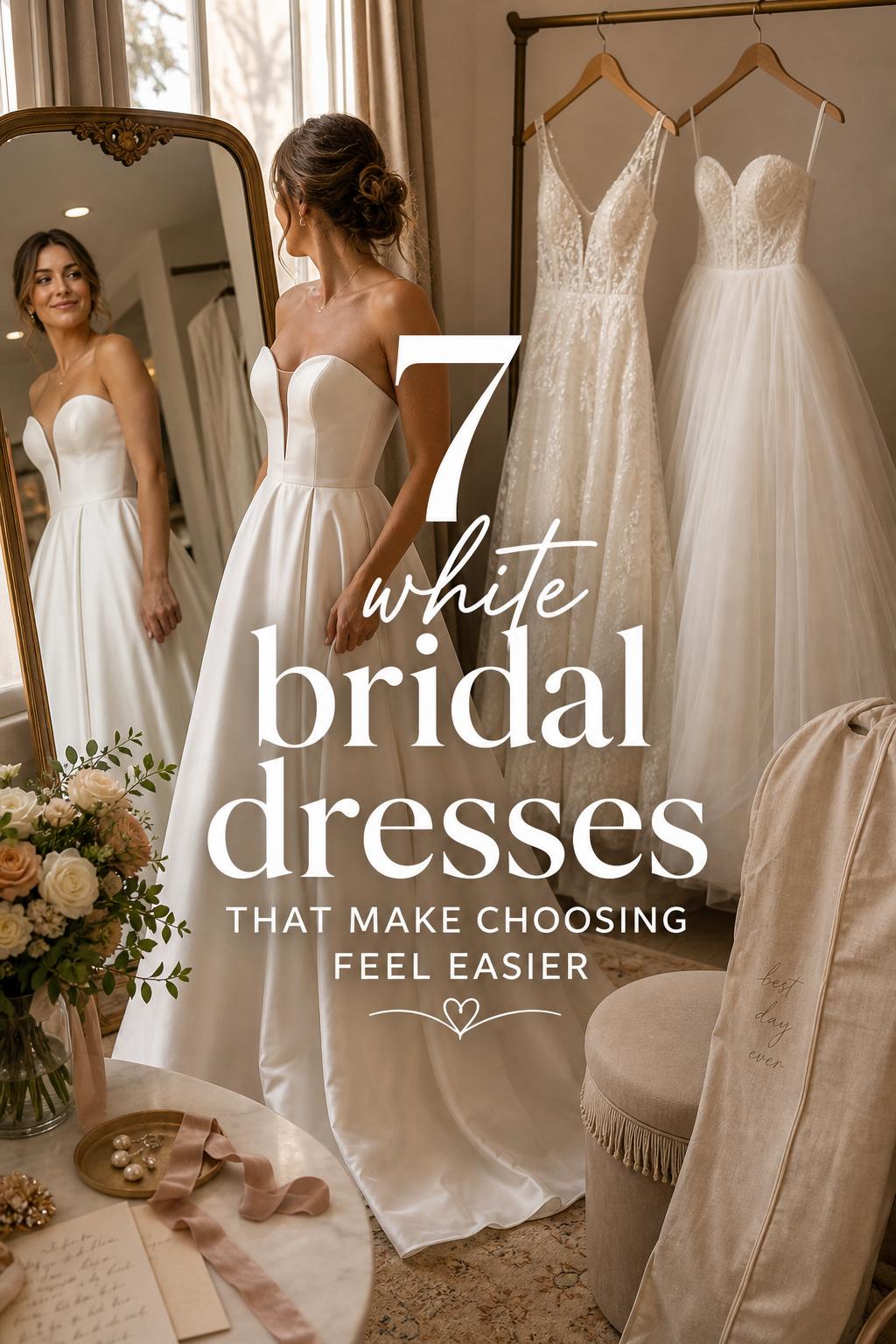
Choosing your silhouette before you fall for the details
One of the clearest patterns across bridal retailers is how they organize white wedding dresses by silhouette. That is not just a shopping convenience. It reflects how most brides narrow their options successfully. Before deciding on neckline, sleeves, lace pattern, or beading, it helps to identify the general dress shape that supports your comfort, venue, and the way you want to move through the day.
A-line white bridal dresses
A-line gowns remain one of the most versatile options in bridal fashion. They typically offer shape through the bodice with a skirt that opens gradually, which gives movement without the full volume of a ballgown. Major retailers and boutiques repeatedly feature A-line white dresses because they sit comfortably between formal and easy to wear.
Best for: brides who want a balanced silhouette for church ceremonies, garden weddings, hotel ballrooms, or mixed indoor-outdoor events. It is also practical for couples who want their ceremony and reception in one long day without a dress change.
Why it works: the shape creates definition without feeling restrictive. It also adapts well to lace, satin, tulle, and beading, so you can shift the look from romantic to minimalist without changing the overall structure.
How to make it work: if your venue is formal, lean into satin, silk-inspired finishes, or embellished bodices. If your wedding is softer and more organic, lace and tulle can make the same silhouette feel lighter and more relaxed.
Budget tip: A-line gowns are widely available across price tiers, including affordable collections from retailers such as JJ’s House, ASOS, and The Dress Outlet, so this silhouette often gives you the broadest shopping flexibility.
Common mistake to avoid: assuming all A-line dresses feel the same. The amount of skirt volume, fabric weight, and embellishment placement can completely change how easy the dress is to wear for several hours.
Real-life styling tip: walk, sit, and turn fully when trying on an A-line gown. A dress can look effortless when standing still but feel bulky if the skirt layers are heavier than expected.
Ballgown white dresses for a dramatic aisle moment
Ballgowns are one of the most recognizable categories in white bridal dresses and remain a centerpiece at retailers like Kleinfeld and David’s Bridal. They bring instant volume and a ceremonial presence that many brides still associate with the classic wedding image.
Best for: grand venues, traditional ceremonies, and weddings where the dress is meant to make a formal visual statement from the first look through the processional. Ballgowns also suit cooler seasons, where the fullness of the skirt feels more natural in the overall styling.
Why it works: the silhouette creates scale. In a large room, long aisle, or formal setting, it holds its own in photographs and balances well with architectural surroundings.
How to make it work: consider the venue width, seating layout, and dance floor plan before committing. A dramatic skirt looks striking, but it should still allow comfortable movement through rows, entrances, and reception spaces.
- Choose structured satin or similar fabric if you want a cleaner, more modern effect.
- Choose layered tulle if you want softness and lighter visual volume.
- Choose lace or beaded detailing if your wedding style is more ornate or vintage-inspired.
Budget tip: if you love the impact of a ballgown but want to control cost, prioritize a strong silhouette over dense embellishment. Volume often creates enough presence on its own.
Common mistake to avoid: selecting a ballgown for a very compact venue without thinking about scale. In small spaces, too much skirt can feel awkward rather than elegant.
Real-life styling tip: during fittings, practice walking through a narrow doorway and sitting down. These are simple tests, but they quickly reveal whether the dress is manageable for your actual wedding day rhythm.
Mermaid and trumpet gowns for a sculpted look
Mermaid and trumpet silhouettes are repeatedly highlighted across bridal collections because they bring a more body-conscious shape to white wedding gowns. These gowns fit closely through the body and flare lower down, creating a defined outline that feels glamorous and intentional.
Best for: formal evening weddings, modern venue settings, and brides who want the dress to feel fashion-led rather than purely traditional. They can also work beautifully in couture contexts, where custom fit is part of the appeal, as suggested by atelier-focused brands like BLINI.
Why it works: a close fit creates visual precision. In smooth satin, hand-beaded tulle, or lace with contouring detail, this shape can look especially refined in photographs.
How to make it work: be realistic about movement. This silhouette can feel spectacular for the ceremony and portraits, but your comfort during stairs, sitting, and dancing matters just as much as the first impression.
Budget tip: if you choose a fitted silhouette, reserve part of your budget for alterations. Precise tailoring is more noticeable in mermaid and trumpet gowns, so fit should not be treated as an afterthought.
Common mistake to avoid: buying too small in the hope of a tighter line. A close-fitting silhouette should still allow natural posture, walking, and breathing throughout a long event.
Real-life styling tip: try sitting for at least a few minutes in any fitted gown. Brides often focus on standing photos, but dinner, transportation, and ceremony seating can become uncomfortable if the lower body is too restricted.
Sheath and column styles for modern simplicity
Sheath and column gowns appear less dramatically than ballgowns, but they are an important part of the white bridal dress landscape, especially on marketplaces and fashion-forward retail sites. Their appeal lies in clean lines and a more understated relationship to the body.
Best for: city weddings, contemporary venues, warm-weather celebrations, and brides who prefer minimalism over volume. They also suit intimate weddings where the atmosphere is more refined than theatrical.
Why it works: the silhouette feels light, easy to move in, and less dependent on dramatic styling. It can also make premium-looking fabric and restrained embellishment stand out more clearly.
How to make it work: because the shape is simple, fabric quality, drape, and exact fit become more important. A column dress in satin, silk-inspired fabric, or lace needs to fall cleanly to look polished.
Budget tip: this silhouette can be cost-effective because it often requires less volume and fewer structural layers, but do not cut corners on alterations if the gown has a sleek, uninterrupted line.
Common mistake to avoid: choosing a minimal silhouette without considering underlayers, support, or seam placement. Simpler gowns tend to show fit issues more clearly.
Real-life styling tip: stand near natural light when trying on a sleek white gown. It is one of the easiest ways to see whether the fabric hangs smoothly or catches in areas you would want adjusted.
Fabric changes everything: lace, satin, tulle, and beading in real wedding settings
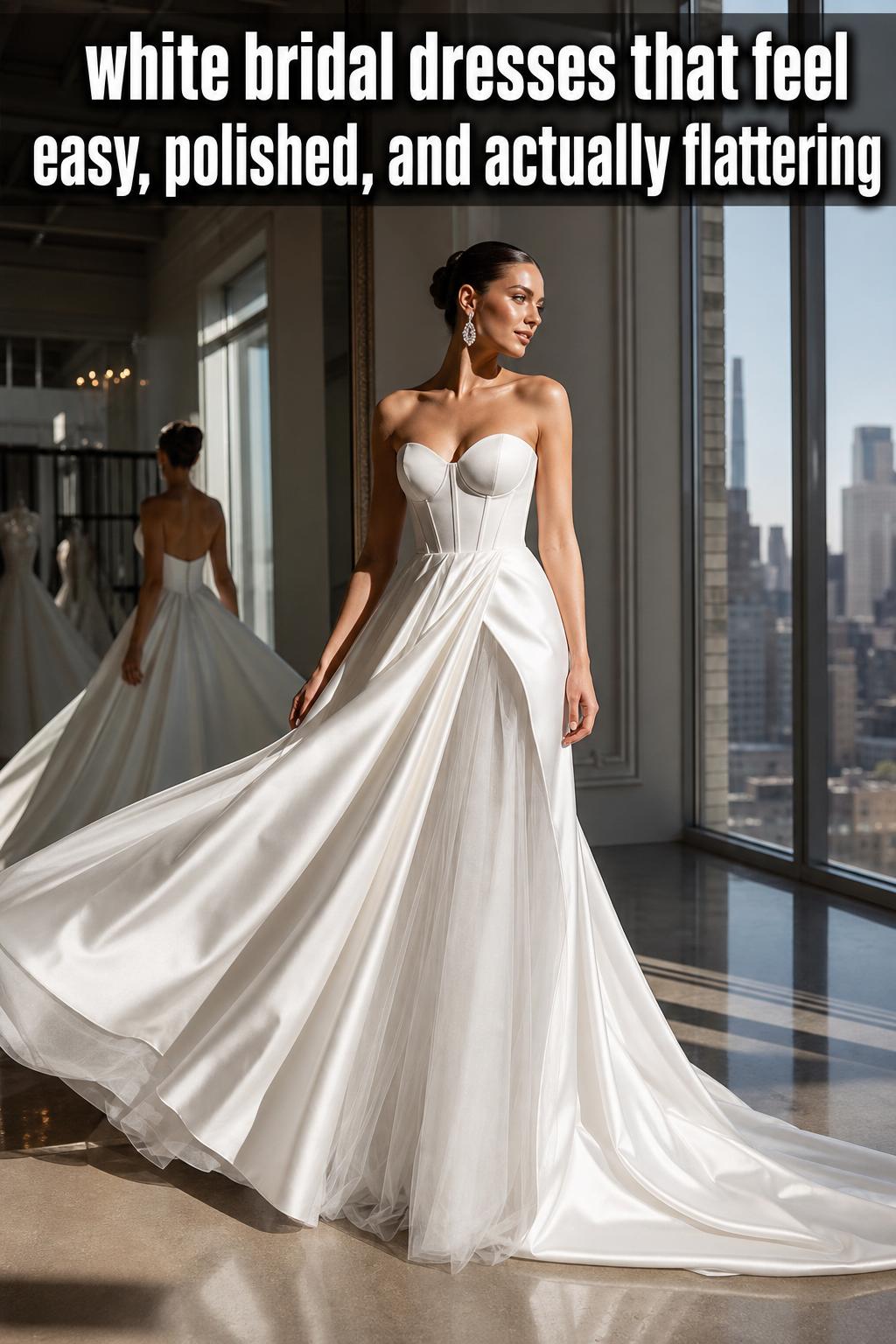
Many brides first react to a gown emotionally through its fabric before they can describe the shape. Bridal retailers consistently group white dresses by materials and embellishments because texture determines how the dress feels, photographs, and fits the tone of the event. Lace, satin, tulle, and beading are not just style notes; they influence the dress’s weight, formality, movement, and maintenance.
Lace and embroidery for softness and detail
Lace is one of the strongest recurring details across white wedding dress collections. It can make a gown feel traditional, romantic, vintage-inspired, or even contemporary depending on how it is placed. Embroidery adds similar depth by creating visible pattern and texture.
Best for: romantic venues, traditional ceremonies, and weddings where detail matters in close-up photography. Lace also suits brides who want visual interest without relying entirely on sparkle.
Why it works: lace softens white. It breaks up solid color with pattern, which can make the gown feel dimensional and less stark, especially if you are deciding between a brighter white and an ivory-leaning look.
How to make it work: pay attention to placement. Lace concentrated at the bodice creates a different effect than lace throughout the skirt or along sleeves and neckline.
Budget tip: if all-over lace is beyond budget, look for strategic lace panels or bodice detail instead. You will still get the texture and bridal character without paying for continuous coverage.
Common mistake to avoid: layering too many decorative elements at once. Lace, beading, dramatic sleeves, and a full skirt can compete unless one feature clearly leads the design.
Real-life styling tip: ask yourself where your closest photos will be taken. If your photographer will capture a lot of portrait and ceremony detail shots, lace placement near the neckline, sleeves, or waist can have more visual impact than lace hidden in lower skirt layers.
Beading and sequins for a more formal finish
Beading appears often in bridal collections from couture-leaning boutiques and editorial-retail hybrids like Couture Candy, and it is also referenced in showroom-driven experiences such as Kleinfeld and BLINI. In white bridal dresses, beading can shift a gown from soft romance to sharper evening glamour.
Best for: evening weddings, ballroom settings, and brides who want their dress to catch light in a noticeable way. It can also help a simpler silhouette feel more elevated without adding more volume.
Why it works: beading adds texture and reflection. On white fabric, that reflective detail can create depth without changing the core color story.
How to make it work: use embellishment strategically. A beaded bodice, neckline, or back detail often gives enough impact without making the entire gown heavy.
Budget tip: focus embellishment where it will actually be seen, especially near the upper body. You may not need extensive beading below the knee to achieve the same photographed effect.
Common mistake to avoid: forgetting weight. Heavy beading can affect comfort, support needs, and the way the dress hangs over time.
Real-life styling tip: lift the gown on the hanger before trying it on. Even a quick sense of weight can tell you whether the dress is realistic for a long ceremony and full reception.
Satin, tulle, and organza for mood and movement
Satin and silk-inspired fabrics are often linked to modern white gowns, while tulle and organza usually appear in dresses that need softness or volume. Across major category pages, these fabrics are used to create distinct bridal moods without changing the core silhouette family.
Best for: satin in formal, sleek, or minimalist weddings; tulle and organza in romantic, airy, or more visually layered ceremonies. Satin also feels especially at home in city venues, while tulle often suits garden or traditional settings.
Why it works: smooth fabrics emphasize structure, while airy fabrics emphasize motion. That distinction is useful if you are trying to decide whether your dress should feel architectural or soft in photographs.
- Choose satin when you want clean lines, shine, and a more contemporary bridal mood.
- Choose tulle when you want layered fullness and a lighter visual finish.
- Choose organza when you want shape with a slightly crisp, airy effect.
Budget tip: a simpler satin gown can look high impact without extensive embellishment, while layered tulle can create drama without requiring dense decorative work throughout the dress.
Common mistake to avoid: choosing a fabric solely for appearance without thinking about venue conditions. A sweeping layered skirt may feel less practical in tight indoor layouts, while very smooth structured fabric may show fit issues more clearly.
Real-life styling tip: if your ceremony and reception happen in different environments, think about the fabric during transition moments too. The dress should still feel manageable in transport, changing temperatures, and extended wear.
Where you shop shapes what you find
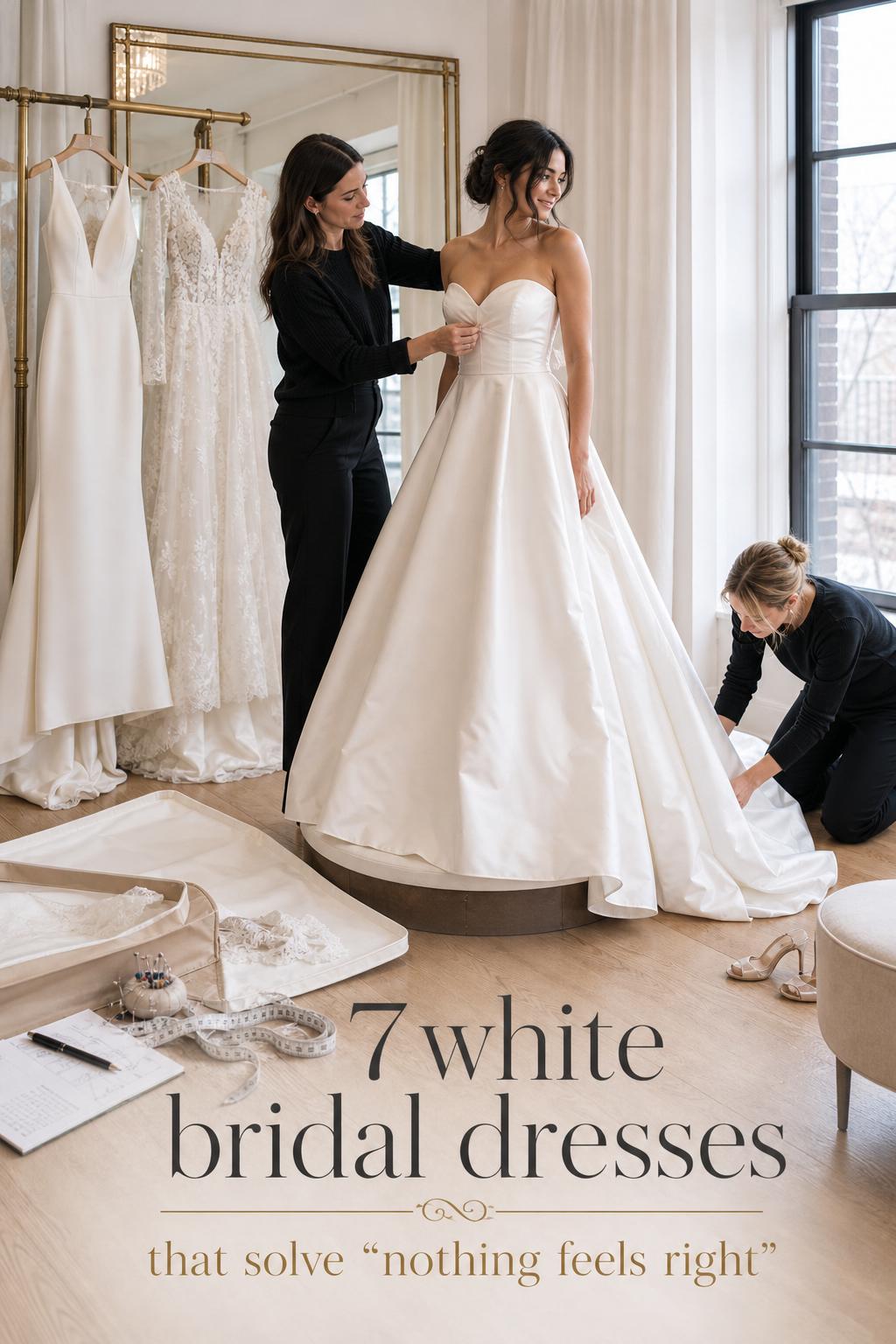
White bridal dresses are not presented the same way everywhere, and shopping strategy matters. Some brides want a showroom experience, some want broad retail comparison, some need affordable options, and others are open to pre-owned or couture paths. Understanding the strengths of each type of seller can save time and reduce decision fatigue.
Showroom and brand-driven retailers
Kleinfeld represents the showroom model well, especially with its New York identity and appointment-focused customer journey. This kind of shopping experience usually emphasizes curation, silhouette exploration, designer context, and in-person guidance.
Best for: brides who want support narrowing options, those interested in trying multiple gown personalities in one visit, and anyone who values appointments as part of the decision process.
How to make it work: arrive with flexibility. It helps to know whether you are drawn to A-line, ballgown, mermaid, strapless, lace, or beaded details, but keep room to be surprised by what suits you in person.
Nationwide retailers and broad online catalogs
David’s Bridal, Macy’s, ASOS, JJ’s House, Muse Bridal, The Dress Outlet, and Couture Candy each reflect a broad-access shopping model, though with different strengths. Some emphasize nationwide convenience, some offer strong filtering by neckline and silhouette, some skew budget-friendly, and others lean more editorial or designer-curated.
Best for: brides comparing silhouettes, tones, length options, and price bands quickly. This route also helps couples who are planning on a timeline and need to see what is broadly available rather than relying only on one boutique’s inventory.
Why it works: these retailers usually make it easier to compare categories such as lace wedding dresses, satin gowns, short and long styles, sleeve options, and embellishments in one place.
Common mistake to avoid: treating filters as a substitute for fit evaluation. A dress may meet all your preferred attributes on paper and still not support the kind of movement or shape you want.
Pre-owned and resale options
Stillwhite introduces a different perspective into the white bridal dress market: pre-owned designer gowns, price comparison, and condition-based buying. This can be a practical route for brides who want access to designer labels while keeping the budget grounded.
Best for: brides open to second-hand shopping, couples balancing style and budget, and those who value the resale and sustainability side of bridal fashion.
How to make it work: review listing details carefully, especially designer attribution, condition notes, and whether alterations may affect fit. With pre-owned shopping, the dress’s history matters almost as much as the original design.
Budget tip: build in costs beyond the purchase price, including possible tailoring, cleaning, steaming, and preservation if needed.
Real-life styling tip: ask yourself whether you are buying the exact dress you want or buying because the price is compelling. In resale shopping, clarity prevents expensive compromise.
Couture and atelier routes
BLINI’s Los Angeles atelier perspective highlights another path: couture white bridal dresses built around materials like Italian silk satin, Chantilly lace, hand-beaded tulle, and custom fit. This is less about broad selection and more about craftsmanship and tailoring.
Best for: brides who know they want a more bespoke outcome, are focused on fabric quality and construction, or need customization built into the process rather than added later through standard alterations.
Why it works: couture emphasizes fit and fabrication as the defining features of the gown, which can be especially meaningful for brides who want their dress to feel highly individual.
Common mistake to avoid: pursuing couture for the idea of exclusivity alone. This path works best when you also value the process, timing, and decision-making involved in a more custom approach.
Regional bridal style in the U.S.
White bridal dresses are sold nationally, but bridal culture is not identical across the country. The U.S. market includes distinct shopping hubs and style expectations, and even a simple awareness of those differences can help you choose a gown that feels aligned with your setting rather than disconnected from it.
New York: structured choice and showroom energy
New York is strongly associated with showroom shopping and broad silhouette exploration, with Kleinfeld as the clearest example in this category. Brides shopping in or inspired by New York often have access to a wide mix of classic ballgowns, A-line dresses, modern white gowns, and designer-led perspectives in one market.
Best for: formal city weddings, hotel venues, and brides who want strong contrast between timeless bridal elements and fashion-aware styling.
Practical note: if your venue has architectural detail and a grand entry, a more structured satin gown, a dramatic ballgown, or a sculpted mermaid silhouette can hold up especially well visually.
Los Angeles and the West Coast: polish with ease
Los Angeles appears in the bridal conversation through atelier and couture associations such as BLINI, but the broader West Coast aesthetic also supports a more fluid approach to white bridal dresses. The mood often leans toward clean silhouettes, luxurious fabric, and detail that feels intentional rather than overworked.
Best for: modern weddings, outdoor-to-indoor transitions, and brides who want a gown that feels refined without looking overly heavy.
Practical note: if your wedding includes movement between ceremony and reception spaces, consider a dress whose structure remains elegant while still allowing comfortable mobility.
Dallas and Southern traditions: volume, ceremony, and presence
Southern bridal traditions are mentioned as an underused but important regional lens, and they often support gowns with stronger ceremonial presence. In settings where the wedding style is more formal or family-centered, white dresses with volume, lace, and clearly bridal structure often feel especially appropriate.
Best for: traditional ceremonies, larger guest counts, and venues where the bridal entrance is a central moment of the day.
Practical note: if you are leaning toward a fuller silhouette, think through reception comfort early. A gown that feels right for the ceremony may need careful bustle planning or movement testing before the reception begins.
How to shop with a clear plan instead of scrolling endlessly
The most successful bridal shopping usually looks less romantic from the outside than people expect. It is often a process of narrowing categories, testing assumptions, and comparing trade-offs honestly. White bridal dresses can feel emotionally loaded, so a simple framework helps keep the decision grounded.
- Start with silhouette first, because shape influences comfort and venue suitability.
- Then choose fabric direction: lace, satin, tulle, beading, or a mix.
- Set a real budget that includes alterations, not just the dress price.
- Decide whether you need a showroom experience, broad online comparison, resale access, or couture customization.
- Think about the full wedding day, including walking, sitting, dancing, and transportation.
Best for: any bride feeling overwhelmed by too many saved images or too many categories online.
Why it works: the process reduces emotional overreaction to random details and helps you compare dresses based on how they will function on your wedding day.
Common mistake to avoid: starting with embellishment or neckline before understanding what silhouette makes sense for your event. It is easier to add romance or simplicity within the right shape than to force the wrong shape to work.
Real-life styling tip: after each appointment or online review session, write down what you liked in practical language, not just emotional language. For example, “I liked the support in the bodice,” “the satin looked clean in photos,” or “the skirt felt too wide for my venue.” That kind of note leads to better decisions than “I liked this one best today.”
Budgeting for white bridal dresses without losing the look you want
One of the most useful lessons from the current bridal market is that white wedding gowns exist at many price levels, from broad-access retailers and marketplaces to couture ateliers. A bigger budget can buy more customization, fabric refinement, or designer positioning, but it does not automatically guarantee the best dress for your wedding.
Best for: couples trying to balance the dress with the rest of the wedding budget, especially when venue, photography, or guest experience also carry high importance.
Why it works: budgeting by priority prevents overspending on decorative details that may not matter as much as fit, comfort, or silhouette.
How to make it work: decide what matters most to you from the beginning. For one bride, that may be a designer label from a retailer or Stillwhite. For another, it may be a clean satin gown from David’s Bridal or Macy’s that leaves room in the budget for alterations and styling. For another, it may be a couture process through BLINI because fit and fabrication are the core priorities.
- Invest first in the shape and fit of the gown.
- Spend next on the fabric or detail that defines the look most clearly.
- Keep a separate amount for alterations, care, and possible steaming or cleaning.
- Consider resale or affordable retailers if a designer look matters more than buying new from a boutique.
Common mistake to avoid: comparing only dress price tags across different retail types. A lower-priced gown may still need substantial alteration, while a more expensive option may arrive closer to your desired fit and finish.
Alterations, fit, and the reality of wearing the dress all day
Nearly every serious bridal purchase eventually becomes a fit conversation. Retail pages often mention sizing, tailoring, or customization because the gown that looks right on a screen or hanger still has to perform over many hours. White bridal dresses are especially unforgiving of poor fit when they are made in satin, close-fitting silhouettes, or simple unbroken lines.
Best for: brides who already know they are deciding between two dresses that look equally appealing but fit very differently.
Why it works: prioritizing fit changes the way the entire dress reads. A properly altered A-line feels lighter, a mermaid silhouette looks sharper, and a simple sheath appears more polished.
How to make it work: evaluate dresses in motion. Lift your arms, sit, walk, and turn. A bridal gown is not just a still image for portraits; it has to survive a full sequence of events.
Common mistake to avoid: assuming the dress only needs to look good for the ceremony. Receptions, transportation, and long seated periods reveal fit problems quickly.
Real-life styling tip: if a gown already feels difficult before alterations, do not assume tailoring will solve every issue. Alterations refine a dress; they do not always transform a fundamentally impractical choice into an easy one.
After the aisle: care, cleaning, and preservation
Bridal shopping often ends emotionally at “yes,” but practical planning should continue into aftercare. Care and preservation are under-discussed compared with silhouettes and designers, yet they directly affect whether a white gown keeps its structure, detail, and brightness after the event.
Best for: any bride purchasing a gown with meaningful fabric, embellishment, or resale value, including pre-owned designer dresses from marketplaces like Stillwhite or couture gowns with hand-finished detail.
Why it works: white fabric and decorative surfaces can show wear quickly, so early care planning protects both the appearance and long-term condition of the dress.
How to make it work: plan for steaming, cleaning, and storage from the beginning rather than after the wedding, when details are easier to overlook. If your dress includes lace, beading, tulle, or couture-level materials, those factors should guide the kind of professional care you arrange.
Budget tip: if preserving the gown matters to you, include aftercare in your original dress budget. It is easier to reserve funds early than to treat preservation as an optional extra later.
Common mistake to avoid: delaying care after the wedding. The longer a gown sits without attention, the harder it can be to maintain its best condition.
Real-life styling tip: save a written note of your gown’s key materials and details when you purchase it. Knowing whether the dress includes satin, lace, hand-beaded tulle, or delicate embroidery makes later care discussions more precise.
Bringing the whole wedding vision together
The most memorable white bridal dresses rarely succeed because they follow one trend or come from one retailer alone. They work because the bride has matched silhouette, fabric, and level of detail to the mood of the wedding itself. A New York ballroom may call for satin structure or a dramatic ballgown. A Los Angeles celebration may suit a cleaner line with couture-level fabric. A traditional Southern ceremony may feel complete only when the gown carries a little more volume and visible bridal presence.
That is the reassuring part of bridal shopping: there is no single correct version of white. There is only the version that supports your day most convincingly. Whether you find it at Kleinfeld, David’s Bridal, Macy’s, ASOS, JJ’s House, Muse Bridal, The Dress Outlet, Couture Candy, Stillwhite, or through a couture atelier like BLINI, the right choice is the one that feels coherent in motion, in photographs, in your venue, and in your own sense of self when the ceremony begins.
When you evaluate white bridal dresses through that lens, the process becomes less about chasing the most dramatic image and more about choosing a gown that carries the day beautifully from first step to final dance.
FAQ
What is the difference between white and ivory wedding dresses?
White and ivory are often discussed together because bridal color is more nuanced than it first appears. White usually reads brighter and cleaner, while ivory tends to feel softer. The best choice depends on the look you want, the fabric, and how the gown appears in your venue lighting rather than the color label alone.
Which silhouette is best for white bridal dresses?
There is no single best silhouette for every bride. A-line works well for many wedding types because it balances structure and ease, ballgowns suit more formal and dramatic settings, mermaid and trumpet gowns create a sculpted effect, and sheath or column styles support a cleaner, more modern mood. The right choice depends on venue, comfort, and how you want the dress to move.
Are lace white wedding dresses better than satin gowns?
Lace and satin serve different purposes rather than one being better than the other. Lace adds visible texture and softness, which can suit romantic or traditional weddings. Satin gives a smoother, more structured finish that often feels modern and polished. Your decision should come down to the atmosphere of the wedding and how much detail you want the fabric itself to provide.
Where can I shop for white bridal dresses in the U.S.?
Brides in the U.S. can shop through showrooms, nationwide retailers, online fashion platforms, boutiques, resale marketplaces, and couture ateliers. Examples include Kleinfeld in New York, David’s Bridal, Macy’s, ASOS, JJ’s House, Muse Bridal, The Dress Outlet, Couture Candy, Stillwhite, and BLINI in Los Angeles. The best place to shop depends on whether you want appointments, broad comparison, budget options, resale, or customization.
Are affordable white bridal dresses worth considering?
Yes, especially if your priorities are silhouette, timing, and practicality. Affordable options can work very well when the fit is strong and the gown suits your venue and style. What matters most is not simply the price tag, but whether the dress gives you the shape, comfort, and finish you need once alterations and styling are considered.
Should I consider a pre-owned white wedding dress?
If you are comfortable reviewing condition, alterations, and designer details carefully, a pre-owned white wedding dress can be a smart option. Marketplaces like Stillwhite can offer access to designer gowns and a wider price range. Just make sure you account for any additional cleaning, tailoring, or preservation costs before deciding.
How important are alterations for white bridal dresses?
Alterations are often essential because fit strongly affects how a white gown looks, especially in satin, sleek silhouettes, or fitted mermaid shapes. Even a beautiful dress can feel underwhelming if the bodice, waist, or hem are not right. It is wise to include alterations in your budget from the start and judge dresses based on both design and realistic fit potential.
What fabric is best for a modern white bridal look?
Satin and other smooth, structured fabrics are often associated with a more modern white bridal look because they emphasize line and shape. That said, a modern effect can also come from a clean silhouette in lace or a restrained beaded dress. The overall styling matters as much as the fabric category.
How do I choose between a showroom, online retailer, and couture atelier?
Choose a showroom if you want guided appointments and in-person comparison, an online retailer if you want broad filtering across styles and price bands, and a couture atelier if custom fit and fabric craftsmanship are your top priorities. The right route depends on your budget, timeline, and how much support or customization you want during the process.
How should I care for my white wedding gown after the wedding?
Plan for cleaning, steaming, and storage soon after the event, especially if the gown includes lace, beading, tulle, satin, or couture-level materials. Prompt aftercare helps protect the fabric and preserves the look of the dress more effectively than waiting. If long-term preservation matters to you, include it in your dress planning early rather than treating it as an afterthought.