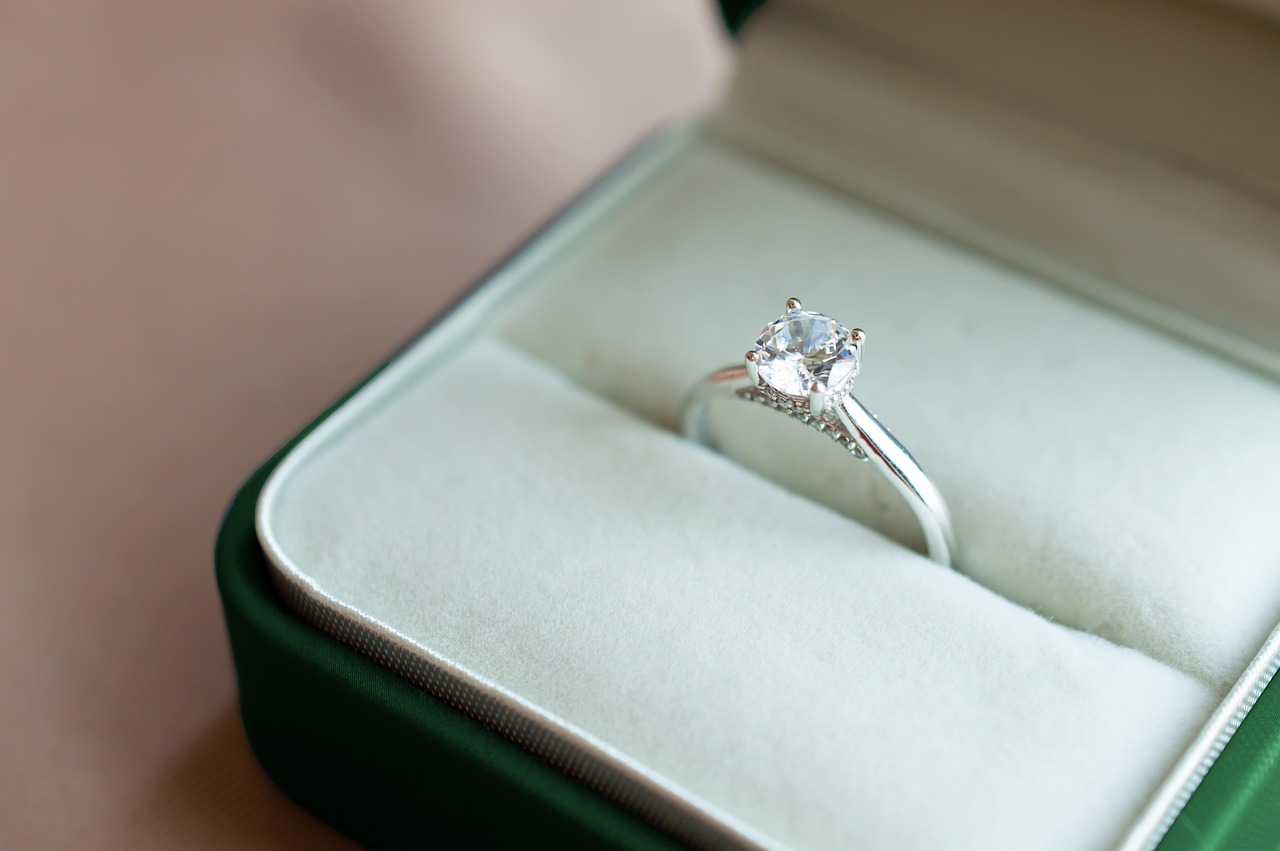
Twist Engagement Rings: Styles, Stones, and How to Choose Your Perfect Twist
Twist engagement rings are a favorite for shoppers who want a classic symbol of commitment with a more dynamic, sculpted look. Instead of a straight shank, the band appears to intertwine, swirl, or spiral as it approaches the center stone—creating a sense of movement and a distinctive silhouette from multiple angles. Whether you’re browsing ready-to-ship styles or considering a custom twist engagement ring, understanding the variations in twist design, stone options, and practical wearability can help you choose a ring you’ll love long-term.
This guide breaks down the most popular twisted engagement ring styles, how pavé and double-row twists change the look, what to consider when choosing metals like 14K or 18K gold (including rose gold) and platinum, and how to evaluate center stone options such as natural diamonds or lab-grown diamonds. You’ll also find a buyer’s checklist, customization roadmap, and care tips tailored to twisted bands.
What Is a Twist Engagement Ring?
A twist engagement ring (also called a twisted band engagement ring) is defined by a band that curves and overlaps in a twisting motion rather than staying straight. The twist often frames the center stone, guiding the eye toward it and adding visual interest even when the ring is viewed from the side.
You may also see similar terms like spiral engagement ring or swirl engagement ring. While different brands may use these names slightly differently, they all point to a motion-inspired design where the shank appears to wrap, weave, or rotate as it approaches the center setting.
Why Twist Rings Stay Popular
Twist designs strike a balance: they feel more unique than a plain solitaire shank, but they’re still timeless enough to wear daily. Many shoppers also like that a twist can add elegance without relying on a large center stone, because the band itself contributes to the overall presence and sparkle—especially in pavé twist band engagement ring styles.
- Added dimension: The twist creates curves and highlights that look different in various lighting.
- Flattering framing: The band can visually “lead” into the center stone.
- Style range: From minimal tight twists to dramatic swirl or halo-forward designs.
- Customization-friendly: Twist density, pavé placement, and metal choice can be adjusted to personal taste.
Popular Twist Engagement Ring Styles
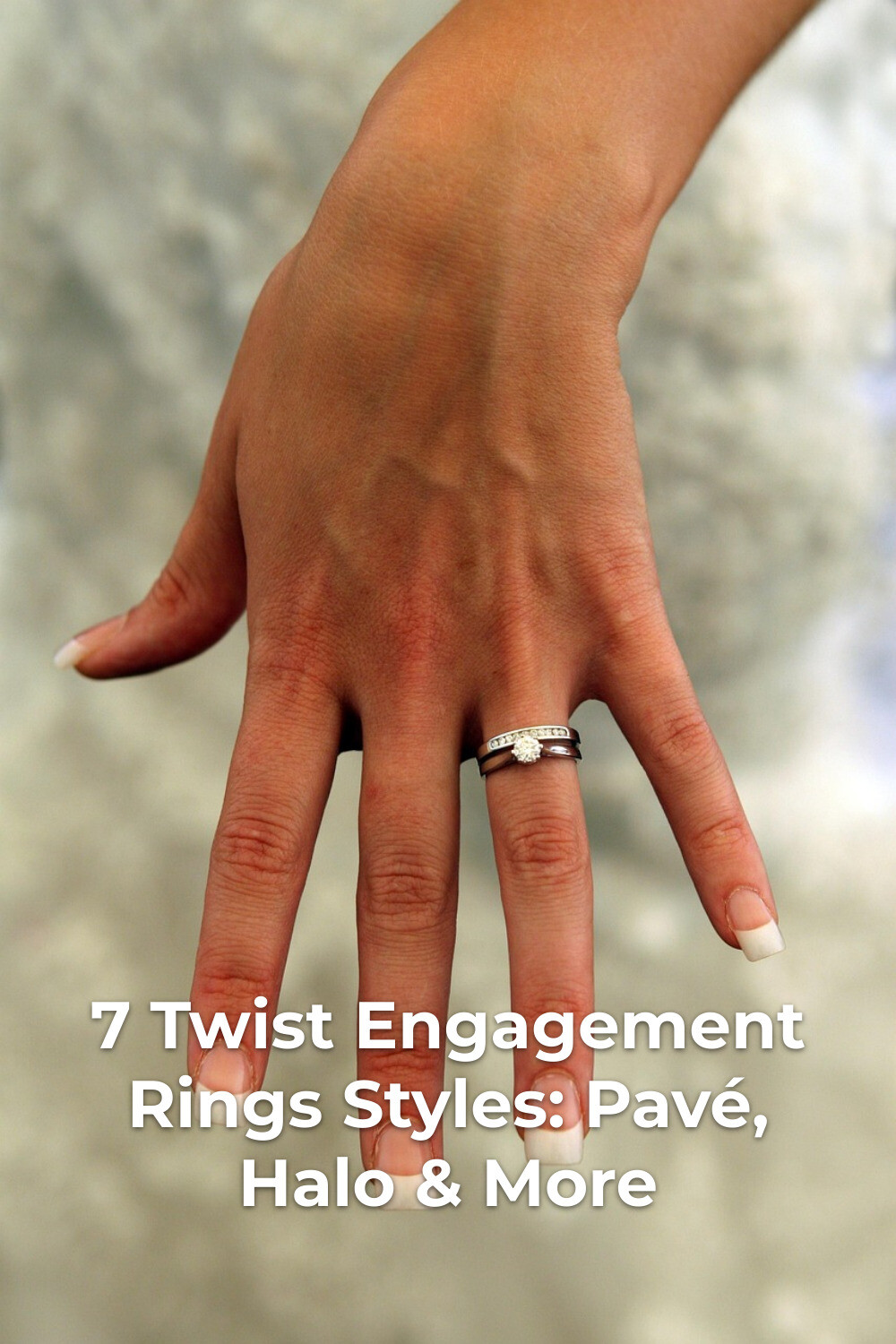
Twist engagement rings aren’t one single look. They span everything from subtle shank movement to bold, sculptural spirals, and the right choice depends on your preferred level of detail, your center stone, and how you plan to stack a wedding band.
Tight Twist vs. Loose Twist
The simplest way to describe twist variation is by “tight” versus “loose.” A tight twist engagement ring has a more compact, closely wrapped look near the center stone; a loose twist has more negative space and a more sweeping curve. Both can feel elegant, but the visual impact is different: tight twists read as refined and continuous, while loose twists feel more airy and sculptural.
Tip: If you want the center stone to dominate, consider a tighter twist with clean metal lines. If you want the band to be part of the statement, a looser spiral or swirl profile can add drama even before you add pavé accents.
Diamond Twist Solitaire Styles
A diamond twist solitaire engagement ring usually keeps the focus on a single center stone, but uses the twist band to create interest on the shoulders. Some designs add accent diamonds along one or both sides of the twist, while others keep the shank smooth and polished. This style is popular because it can feel both classic and distinctive at the same time.
In product catalogs and collections, you’ll often see twist solitaires offered with multiple metal options and center stone compatibility. This flexibility makes the twist solitaire a strong choice if you’re still deciding between center shapes or between lab-grown vs. natural diamonds.
Double-Row and Pavé Twist Designs
A double-row twist engagement ring typically features two parallel lines—often both diamond-set—flowing in a twisting motion. A pavé twist engagement ring uses small diamonds set along the band to add continuous sparkle, sometimes in a single row, and sometimes in a more elaborate two-row configuration. The result is a brighter, more detailed look that can complement both minimalist and more ornate center settings.
- Single-row pavé twist: More delicate sparkle; the twist reads clearly without overwhelming the center stone.
- Double-row pavé twist: More symmetry and brilliance; ideal if you want the band to feel as prominent as the center.
- Mixed finish twist: Some designs emphasize the twist through polished metal edges framing pavé-set sections.
Tip: When comparing pavé twist bands, look closely at where the diamond rows stop and start along the twist. The transitions affect how smooth the ring feels against adjacent fingers and how well it stacks with other bands.
Spiral and Swirl Rings (Including Halo Looks)
A spiral engagement ring leans into the motion effect: the shank seems to wrap or rotate as it approaches the center. A swirl engagement ring often emphasizes a sweeping curve that “cradles” the center setting. These styles can be especially striking when paired with a halo, where the center stone is framed by a surrounding circle of smaller diamonds and the band continues the fluid theme.
In swirl diamond halo styles, the twist isn’t just decorative—it becomes part of the ring’s architecture, visually connecting the halo and the shank so the design feels cohesive from top view to side view.

Center Stone Choices: Shape, Size, and Compatibility
Twist engagement rings appear across many product pages with variant options for center stones. While the twist design is the signature, the ring’s overall personality changes significantly depending on the center stone shape and how the twist frames it.
Oval Twist Engagement Rings (Including Rose Gold Favorites)
An oval twist engagement ring is a popular combination because the elongated center stone pairs naturally with curved lines. Many shoppers gravitate toward an oval twist engagement ring in rose gold for a warm, romantic look where the metal color and the soft curves reinforce each other.
If you’re considering rose gold, pay attention to how the twist crosses near the center stone. Some twists create a gentle “X” effect under the head, while others split into two flowing shoulders that meet the setting more subtly.
Round Centers in Spiral Settings
A round center stone paired with a spiral or twist shank can feel especially balanced: the circle of the center complements the motion of the band. Many spiral engagement ring styles highlight the round stone with a clean, shiny shank or with small accent diamonds that follow the curve.
Tip: If you’re drawn to a spiral look, ask to see top and side angles (or 360° views if available). The most satisfying spiral designs look intentional from every perspective, not just from directly above.
Matching the Twist to the Center Setting
Some twist rings have a more sculpted twist that “frames” the setting, while others keep the twist on the shoulders and let the center head stand more independently. When you compare options, look for center-stone compatibility details and setting profiles. This matters because the twist’s geometry can influence how high the center sits and how easily the ring stacks with a wedding band.
- More open twist: Can make the ring feel airy and modern, especially with minimal accents.
- More intertwined twist: Often reads as romantic and intricate, especially with pavé diamonds.
- Halo + swirl: Creates a continuous, high-impact design with sparkle distributed across the ring.
Natural Diamonds vs. Lab-Grown Diamonds in Twist Rings
Many twist engagement ring listings offer both natural diamonds and lab-grown diamonds as center stone options, and sometimes even for the smaller accent stones in pavé sections. The key takeaway is that you can often choose the same twist design and decide which diamond type fits your priorities for budget, sourcing preferences, and availability.
When browsing twist rings with different stone types, focus on clear documentation and consistent details across variants. Because twist designs can include multiple accent diamonds, you’ll also want clarity on what is included in the price: center stone only, band diamonds, or a complete ring with a set center.
Tip: If you’re comparing lab-grown vs. natural diamond twist ring options in the same design, keep the design constant while you compare quotes. That way, you’re evaluating the stone choice without accidentally changing the band style, pavé coverage, or metal.
Metal Options for Twisted Band Engagement Rings
Twist engagement rings are offered across common fine-jewelry metals, including 14K gold, 18K gold, platinum, and rose gold. Because twist designs emphasize curves and edges, metal choice influences both the color aesthetic and how the ring’s contours stand out in everyday lighting.
14K Gold vs. 18K Gold for Twist Designs
Both 14K and 18K gold are widely used in twist rings, often with options for yellow, white, or rose tones depending on the brand. If you’re choosing between a 14K gold twist ring and an 18K white gold twist ring, think about the look you want from the metal itself: a twist band showcases surface shine, and the metal color can either contrast with the diamonds or blend into a softer overall effect.
Twisted bands also draw attention to craftsmanship—how smoothly the curves transition and how crisp the edges appear. If you can view multiple photos or angles, watch how the light travels along the twist; that “flow” is a big part of what makes the design feel high-end.
Platinum Twist Rings
A platinum twist ring offers a cool-toned, premium feel that pairs well with diamond-heavy designs like pavé twist bands and halo-forward swirls. Because the twist has more geometry than a plain shank, a bright, neutral metal can emphasize the design lines while keeping the overall look cohesive with the stones.
Rose Gold Twist Rings
Rose gold is especially popular in twist engagement rings because it can make the intertwined design feel warmer and more romantic. A rose gold twist band with an oval center diamond is a frequently featured combination in retail listings, in part because the elongated shape and the soft metal tone work beautifully with the band’s curves.
Tip: If you love rose gold but want a brighter, higher-contrast look, consider a twist design where diamonds line the band (pavé twist) so the sparkle remains crisp against the warmer metal tone.
How to Choose the Right Twist for Your Finger
Twist rings can be incredibly flattering, but the “best” twist depends on scale and comfort. Because a twist engagement ring adds movement and sometimes width along the finger, it’s worth thinking about how the band will look and feel in daily wear, not just in a single photo.
Finger Proportions, Scale, and Ring Sizing
Fit is always important, but twist designs make it even more noticeable when sizing is off because the band’s pattern can shift on the finger. If possible, use a ring sizing guide and confirm how the ring feels across the widest part of your finger. The twist’s high points and diamond-set areas may feel different than a smooth shank.
- Prefer a sleek look: Choose a tighter twist with less height and fewer protruding edges.
- Want more presence: Consider a double-row twist engagement ring or a swirl design that broadens near the center.
- Like a balanced silhouette: Pair a moderate twist with a center stone that visually matches the band’s flow (oval for elongation or round for symmetry).
Lifestyle Considerations
A durable engagement ring isn’t only about the center stone—it’s also about whether the design suits your daily routine. Twist rings with pavé diamonds and intricate crossings may require more mindful wear than a smooth solitaire band, especially if you frequently wear gloves or handle fabrics that could catch on raised details.
Tip: If you’re active or hard on your hands, look for a twist design with smoother transitions and a profile that doesn’t feel overly “sharp” at the crossover points. A clean twist solitaire can deliver the signature look with fewer snag-prone details.
How Twist Rings Pair With Wedding Bands
One of the biggest practical questions with twisted band engagement rings is stacking. Because the shank curves and sometimes widens near the center, the wedding band may not sit perfectly flush without a shaped or curved option.
If a flush fit matters to you, pay special attention to the engagement ring’s profile and how the twist meets the center setting. Some swirl and spiral designs leave space that a straight band can tuck into, while others create a gap by design. Neither is “wrong”—it’s about what look you prefer and what feels comfortable.
- For a seamless stack: Consider pairing with a curved band designed to follow the twist’s contour.
- For a modern look: Embrace a small gap and choose a straight band with a simple finish.
- For extra sparkle: Match pavé density between the engagement ring and the wedding band so they look intentional together.
Customization: Designing a Custom Twist Engagement Ring
Many shoppers explore twist engagement rings through curated collections, but twist designs are also popular in custom work because small changes in the twist can dramatically change the look. Customization can range from selecting metal and center stone options to changing the twist “tightness,” adding pavé diamonds, or shifting to a double-row twist.
A typical custom design process often includes an initial consultation to define the style, then design development (such as CAD), refinement of details like twist density and stone placement, selection of materials, and a production timeline with lead times. Many brands also offer engraving options and different policies for shipping, returns, and aftercare—details you should confirm early in the process.
What to Decide Before You Request a Custom Quote
Because twist rings involve multiple design variables, you’ll get faster, more accurate guidance when you define a few preferences up front. Even if you’re still exploring, having a baseline vision helps a jeweler recommend the most suitable twist structure.
- Twist style: tight twist, loose twist, spiral, or swirl
- Band detail: polished metal, pavé twist, or double-row pavé
- Center stone: shape preference (such as oval or round) and whether you want lab-grown vs. natural
- Metal: 14K or 18K gold, platinum, and whether you prefer rose gold
- Practical needs: comfort, stacking preference, and day-to-day wear considerations
Tip: Ask to see the same twist design rendered or shown in different metals. Twist bands reflect light differently than straight bands, and seeing multiple variants can make your decision far easier than choosing based on one photo.
Before-You-Buy Checklist for Twist Engagement Rings
Twist rings come with extra details—curves, crossover points, pavé diamonds—that are worth checking carefully before you commit. Use this checklist whether you’re buying online, visiting a retailer, or commissioning a custom piece.
- Center stone compatibility: Confirm what shapes and sizes the setting supports and what’s included in the listed configuration.
- Metal options: Verify available metals (14K/18K gold, platinum, rose gold) and whether the price changes by metal.
- Pavé details: Ask how far the pavé goes along the twist and whether it’s single-row or double-row.
- Ring sizing and resizing: Check whether the twist design affects resizing options or timeline.
- Engraving options: If engraving is important, confirm character limits and whether it changes lead time.
- Shipping and returns: Review the return window and any exceptions for customized rings.
- Warranty/care plans: Ask what aftercare is offered, especially if the ring has pavé stones.
Care and Maintenance Tips for Twisted Bands
Twist engagement rings can be worn daily, but their shape and (often) diamond accents mean maintenance matters. The main goal is preserving the crispness of the twist and keeping pavé areas clean so the ring continues to sparkle as intended.
Daily Wear Tips
Tip: If your twist ring includes pavé diamonds or a swirl halo, be mindful of fabrics and surfaces that can catch on raised details. A quick habit of removing the ring during higher-impact tasks can reduce unnecessary wear and keep the twist profile looking sharp.
Cleaning and Upkeep
Twist designs have curves where residue can collect, especially near pavé rows and under the center setting. Follow the care guidance provided by the seller, and consider periodic professional checks to ensure accent stones remain secure. If your retailer offers a care plan, confirm what inspections or servicing are included.
Price Guide: What Influences Cost in Twist Engagement Rings?
Prices for twist engagement rings vary widely because the design can be simple or highly intricate, and because listings may include different center stone options. In general, cost is influenced by the chosen metal, whether the twist includes pavé diamonds (and whether it’s single- or double-row), and whether the ring is sold as a semi-mount or as a complete ring with a center diamond included.
Customization can also change pricing depending on how complex the twist structure is and how many design revisions are involved. To compare quotes fairly, focus on like-for-like details: metal type, pavé coverage, center stone type, and what services are included (such as engraving, lead time expectations, and aftercare).
Tip: How to Compare Quotes Across Jewelers
Tip: When comparing different retailers or designers, write down a “spec snapshot” for each option: twist style (tight/loose/double-row), metal (14K/18K/platinum/rose gold), center stone type (lab-grown vs natural), and any included services (sizing, engraving, shipping/returns, warranty). This keeps the decision grounded in real differences instead of aesthetics alone.
Where to Buy Twist Engagement Rings and What to Look For
You’ll find twist engagement rings across major retailers, brand catalogs, and custom jewelers. Some shops focus on ready-to-purchase styles with defined specs and variants; others emphasize made-to-order flexibility and the ability to tailor the twist density, pavé arrangement, and center setting to your preferences.
Regardless of where you buy, prioritize clarity and trust signals: transparent product specifications, clear options for metal and center stone, and straightforward policies for shipping, returns, lead times, and care. Twist rings are design-forward pieces, so detailed photography and multiple angles are especially valuable when buying online.
- Retail product pages: Often provide concrete specs, metal variants, sizing options, and add-on protection or care plans.
- Brand catalogs: Typically showcase signature twist motifs, with variants for metal and center size.
- Custom jewelers: Emphasize design flexibility, consultation, and tailored twist structures.

FAQ
Are twist engagement rings comfortable for everyday wear?
They can be very comfortable, but it depends on the specific twist profile and any pavé details. Smoother twists with polished edges tend to feel more seamless, while intricate double-row pavé designs may feel more textured, so it’s important to confirm fit and comfort with proper sizing.
Do twist engagement rings stack well with wedding bands?
Some do, and some create a gap depending on how the twist meets the center setting. If a flush fit matters, consider a curved or contoured wedding band that follows the twist; if you like a modern look, a small gap with a straight band can be intentional and attractive.
What’s the difference between a twist, spiral, and swirl engagement ring?
These terms are often used interchangeably, but generally “twist” refers to an intertwined band look, “spiral” emphasizes a rotating wrap effect, and “swirl” highlights sweeping curves that cradle the center stone. Exact naming varies by brand, so compare photos and side views to understand the profile.
How does the price vary with twist density and pavé diamonds?
More intricate twists and higher diamond coverage (such as pavé twist bands or double-row twists) typically increase cost because there are more design details and more stones involved. Pricing also changes based on metal choice and whether the listing includes a center stone or only the setting.
Can I choose lab-grown diamonds for a twist engagement ring?
Many twist ring styles are offered with lab-grown or natural diamond options, sometimes both for the center stone and for pavé accents. Confirm exactly which stones are included in the price and whether the design is identical across the lab-grown and natural variants.
What metal is best for a rose gold twist engagement ring with an oval center?
Rose gold is a common and popular choice for oval twist designs because it complements the ring’s soft curves and creates a warm overall look. When choosing between gold options, focus on which tone you prefer and confirm the exact metal karat offered for the setting.
Should I choose a tight twist or a loose twist design?
A tight twist tends to look refined and keeps attention on the center stone, while a loose twist feels more sculptural and makes the band a bigger part of the statement. Your choice should reflect how bold you want the band to look and whether you plan to pair it with a wedding band.
What should I confirm before ordering a custom twist engagement ring?
Confirm the twist style (tight, loose, double-row, spiral, or swirl), the metal, whether you want pavé diamonds, and the center stone type and shape. Also review lead times, engraving options, sizing policies, and shipping/returns so there are no surprises once production begins.
Leave a Reply