
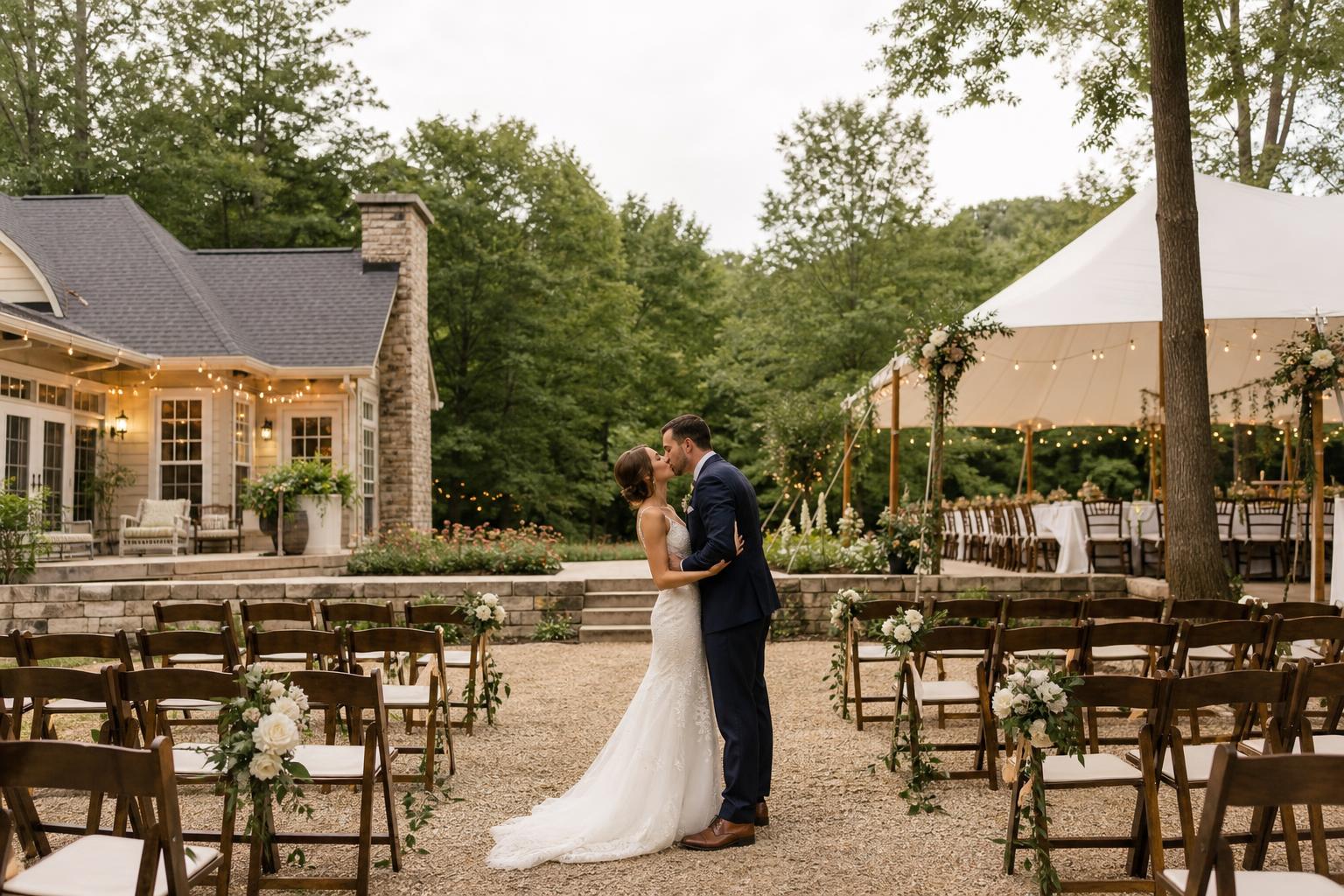
Backyard Wedding Checklist for a Chic At-Home Celebration
There is something especially magnetic about a backyard wedding. It promises intimacy, familiarity, and a kind of beauty that feels lived in rather than staged. Yet that same charm often creates confusion: couples imagine a garden wedding, an at-home wedding, a micro-wedding, or a more traditional reception under one umbrella, when in reality these wedding directions behave very differently once guest count, rentals, power, restrooms, weather, and flow enter the picture. A thoughtful backyard wedding checklist is not just about tasks. It is about choosing the right version of backyard celebration for the life you actually want to host.
Some couples are drawn to the soft romance of a private garden ceremony with a small guest list and candlelit dinner tables. Others picture a fuller home-venue celebration with a tent, dancing, catering stations, lighting, and the energy of a classic wedding day brought into a personal setting. Both can be beautiful. Both can also feel visually and emotionally inconsistent if the style of the wedding does not match the realities of the property, the budget, or the guest experience.
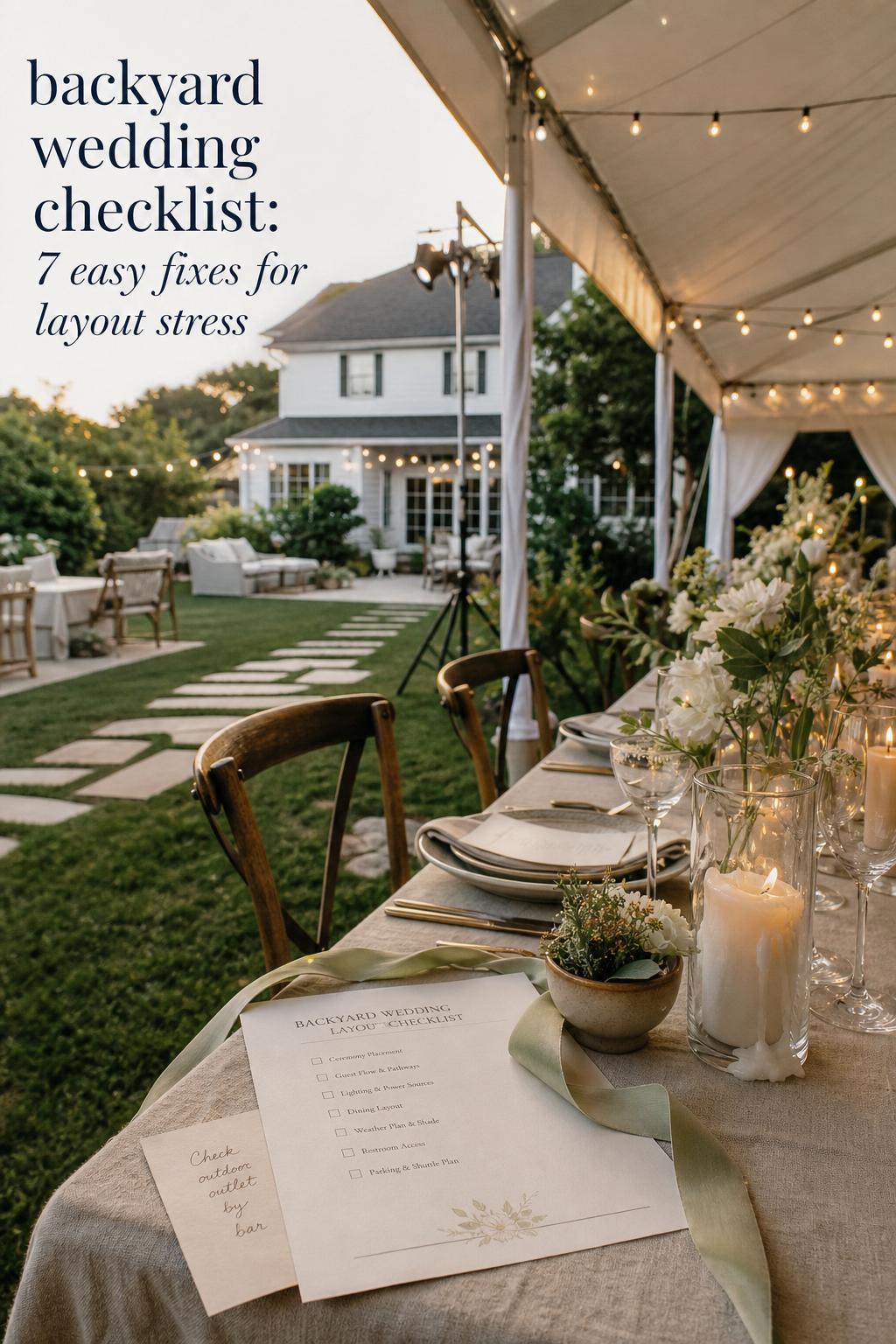
This guide explores the two wedding directions most often folded into the same conversation: the intimate micro-style backyard wedding and the full-scale home-venue backyard wedding. Along the way, you will find practical planning insight on guest flow, parking, power, tents, lighting, restrooms, catering kitchens, vendors, climate, permits, HOA considerations, and cleanup, so the atmosphere you imagine can hold up beautifully in real life.
Two backyard wedding directions couples often confuse
The phrase backyard wedding sounds simple, but it often describes two very different experiences. One leans intimate, small in scale, and emotionally quiet. The other uses a private home or garden almost like a custom venue, with layered logistics and a larger production footprint. Understanding that difference changes everything from budget expectations to décor choices.

Turn wedding inspiration into a plan you can actually follow.
Zarellea brings your guest list, budget, vendors, and day-of details into one shared space — so no beautiful idea gets lost in the shuffle.
This is where many couples get stuck. They borrow the romance of a small private-garden vision, then invite a guest count that requires rented restrooms, a tent, parking management, power planning, and a structured site map. Or they assume an at-home wedding will be automatically budget-friendly, only to realize that creating a temporary venue means bringing in what a traditional venue already includes.
Writers and wedding voices across the space, from Jennie LaVanchy at microWED collective to planning perspectives featured by The Knot, David’s Bridal, Kennedy Blue, The Bash, and Los Angeles Times contributor Beth Helmstetter-Boyer, tend to circle the same truth: backyard weddings are not one aesthetic or one budget category. They are a planning model, and the style that fits best depends on scale, comfort expectations, and how much infrastructure the day requires.
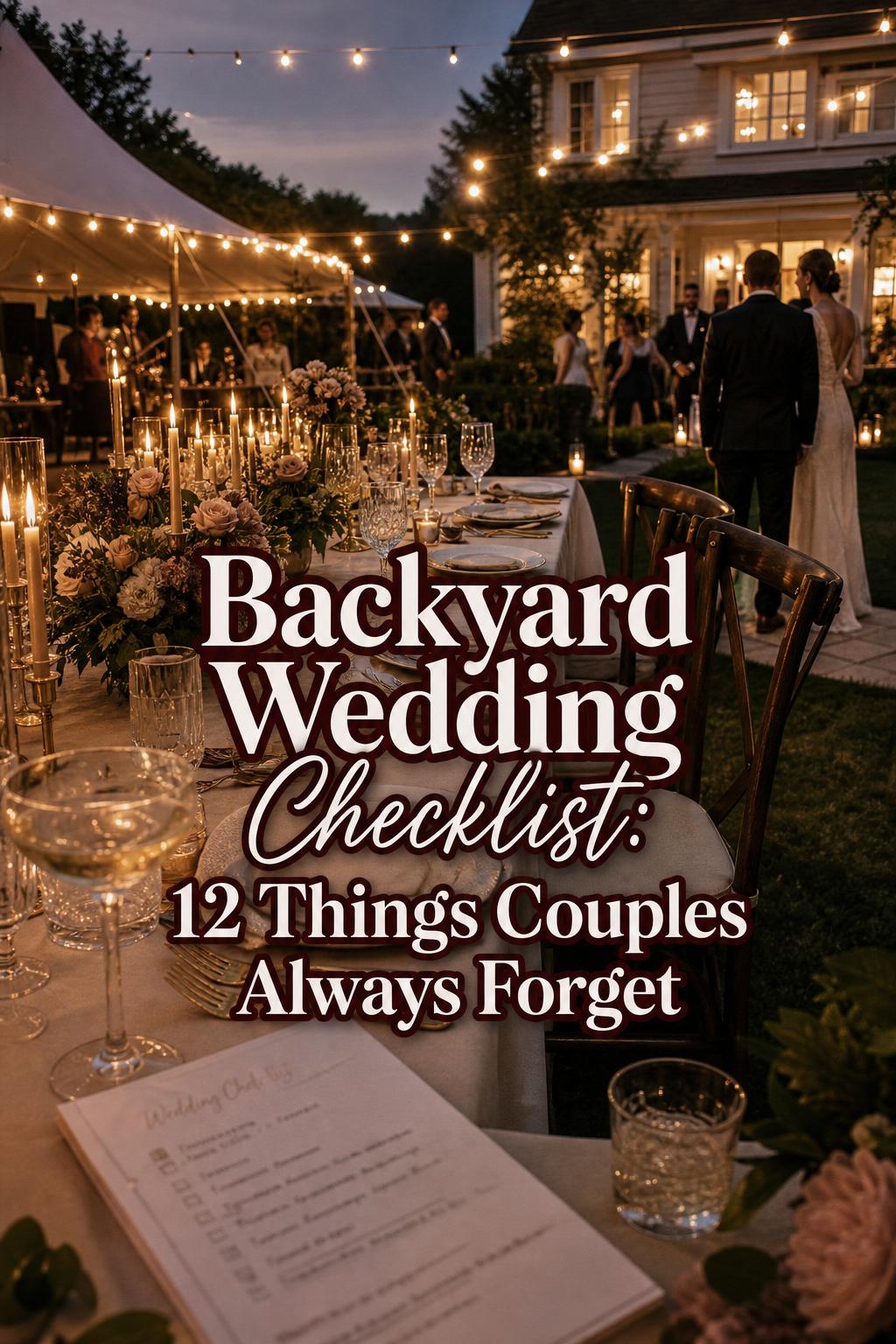
Style overview: the intimate micro-style backyard wedding
This version of a backyard wedding feels close, personal, and naturally emotional. It often overlaps with the micro-wedding trend and sits somewhere between an elopement and a traditional wedding, though it is not exactly either. The defining characteristic is not simply location. It is scale. The event is designed to work with the property rather than transform the property into a full event venue.
Visually, this style tends to feel softer and less engineered. The ceremony may unfold in a private garden or a meaningful backyard corner with an intentional but restrained setup. The dining area often feels gathered rather than grand, and the overall mood is intimate instead of expansive. Because the space is allowed to remain itself, the styling can feel emotionally layered without becoming visually heavy.
Its common venue types are true backyards, family homes, and private gardens. The color palette often follows the setting instead of trying to overpower it. Florals usually support atmosphere rather than dominate it. Tables, chairs, centerpieces, and lighting still matter, but they are chosen to reinforce closeness and ease. In photography, the mood usually reads warm, tender, and personal.
Formality can vary, but this style usually feels more relaxed than a full-scale home-venue wedding. Guest dress code often follows that cue. Even when the styling is elegant, the experience tends to feel like being invited into a beautifully prepared home rather than into a fully built event environment.
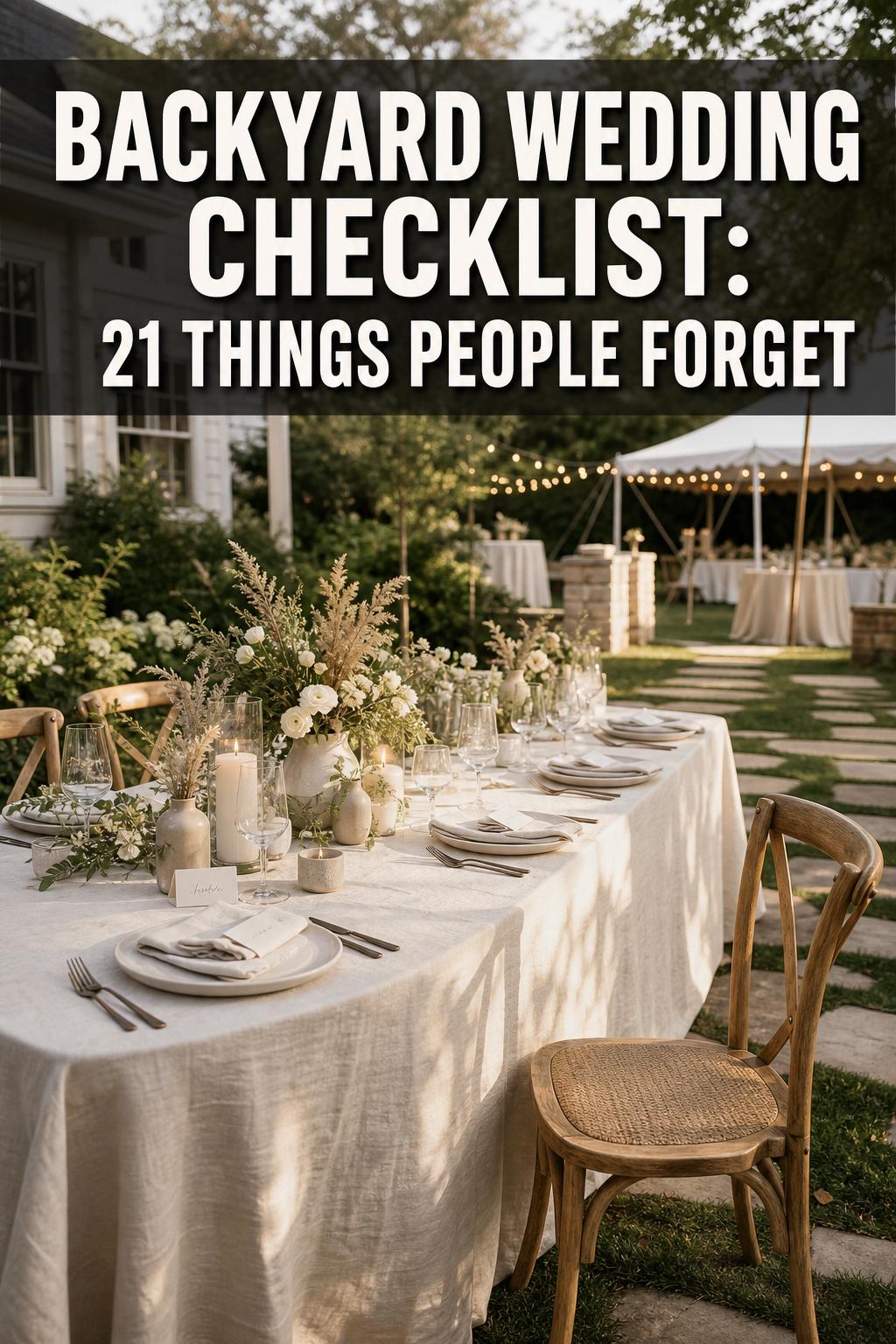
What gives this style its emotional atmosphere
The emotional center of the intimate backyard wedding is access. Guests feel close to the couple, close to the family story, and close to the setting itself. There is less visual distance between ceremony and celebration. That often makes the wedding feel sincere on arrival, especially when the guest list is intentionally small enough to keep movement, seating, service, and conversation easy.
Where this version usually works best
- Smaller guest counts that fit naturally within the space
- Private gardens or backyards with existing charm
- Couples who prefer intimacy over large-scale production
- Micro-wedding planning where guest experience is highly personal
- Homes with a useful indoor fallback or at least a credible Plan B
Style overview: the full-scale home-venue backyard wedding
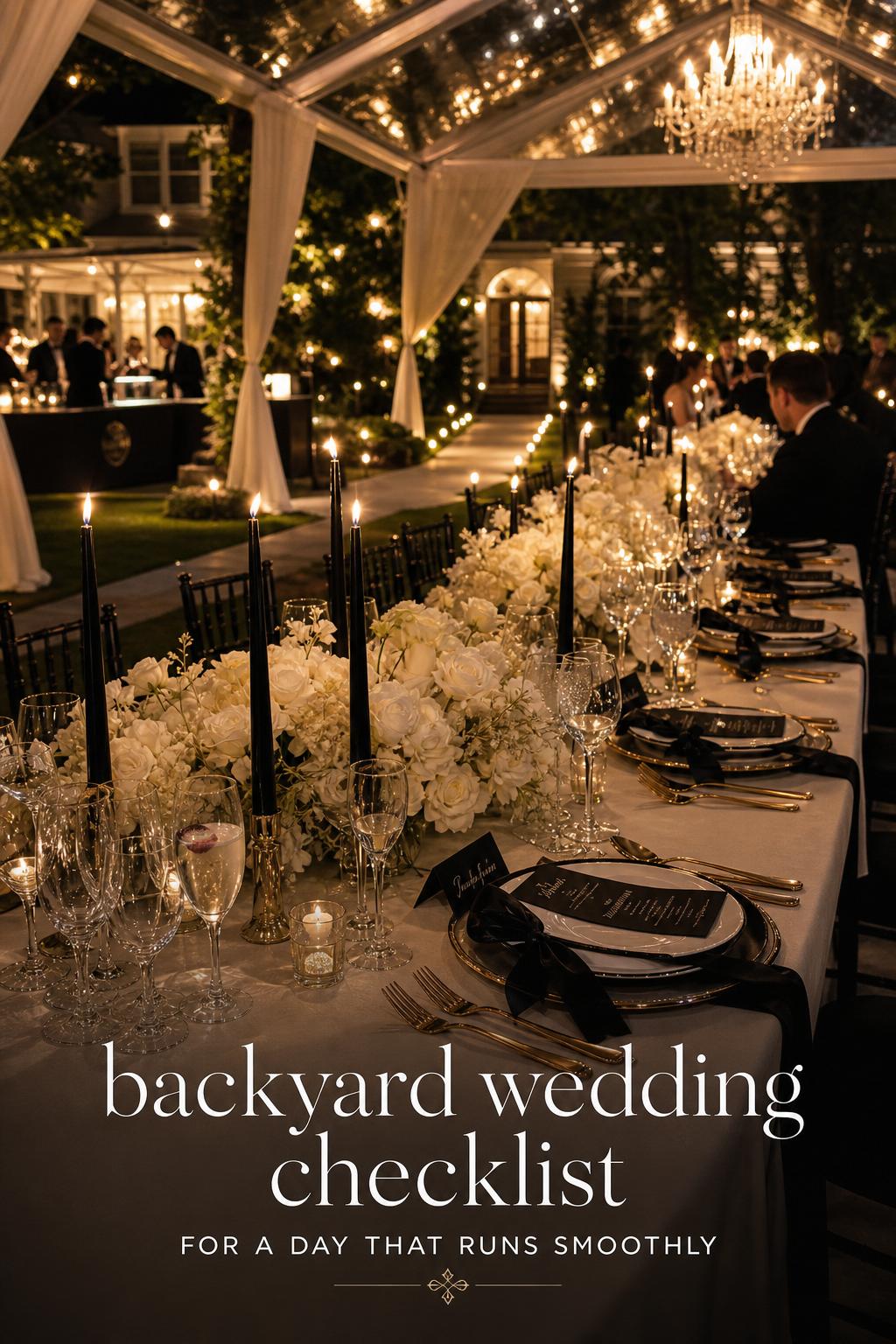
This style keeps the emotional appeal of an at-home wedding but behaves much more like a traditional venue event. It typically requires zoning the property into ceremony, cocktail hour, dining, dance floor, service, restroom, and arrival areas. It also asks for more vendor coordination and more infrastructure, including tents, lighting, sound, power distribution, temporary kitchen support, and often portable restrooms or restroom trailers.
Visually, it feels more structured and more composed. The décor has to do more work because it is not simply accenting a home environment; it is helping build one cohesive celebration across multiple functional zones. Guest flow becomes a design issue as much as a logistical one. If guests do not know where to arrive, mingle, dine, or dance, the wedding can quickly feel fragmented.
The photography mood here is often more expansive. Wide shots matter. Lighting quality matters. A tent or covered structure can shape the whole look of the reception. Tables and centerpieces need to read clearly within a larger visual field. This style can feel spectacular, but it also reveals inconsistencies more easily than the smaller micro-style version.
Formality usually rises with production scale. A larger guest list, a more defined bar and catering setup, a lighting plan, DJ or sound equipment, and an intentional reception flow all push the wedding toward a more classic hosted-event feeling. It still carries the romance of home, but it asks the home to perform like a venue.
What creates the polished atmosphere
The polished feeling comes from control: mapped guest flow, layered lighting, a clear cocktail hour transition, functioning power, comfortable restrooms, and enough structure that guests feel taken care of rather than left to navigate a property on their own. This is why site readiness matters so much. A beautiful backyard is not automatically a ready event space.
Where this version usually works best
- Properties with enough room for multiple zones
- Couples who want the warmth of home with a more traditional wedding format
- Guest counts that justify rentals, staffing, and a stronger logistics plan
- Backyards that can support vendor access, parking strategy, and service areas
- Weddings with budget flexibility for infrastructure and contingency planning
The emotional difference between these styles
The intimate micro-style backyard wedding feels like a gathering that happens to be a wedding. The full-scale home-venue backyard wedding feels like a wedding built inside a personal setting. That distinction may sound subtle, but it changes how the day lives in memory.
Guests experience the intimate version as closeness. The ceremony often feels quieter. Transitions are gentler. Conversation is part of the atmosphere. Even the décor tends to behave differently because it supports the emotional texture of the space rather than trying to define every inch of it.
The full-scale version creates more event energy. Arrival, cocktail hour, dining, and dancing are often more segmented. The lighting and tenting choices shape the mood more decisively. Photography can feel more editorial because there is greater emphasis on layout, lighting, and formal reception composition.
Neither is inherently better. One is more intimate and forgiving. The other can feel more dramatic and complete, but only when the logistics are strong enough to support that level of hosting.
A backyard wedding checklist begins with style logic, not décor
Before tables, string lights, centerpieces, or color palettes, a backyard wedding checklist should start with a feasibility conversation. This is the point where style and planning meet. If the property cannot comfortably support your guest count, service needs, and weather backup, the wedding style you prefer may need to shift.
Los Angeles Times planning coverage and guidance echoed across The Backyard Pros, Beautiful Weddings LLC, Giggster, and other wedding planning sources all point back to the same core pillars: guest count, budget, parking, restrooms, lighting, power, weather backup, catering setup, and cleanup. These are not separate from aesthetics. They are what protect the aesthetic from falling apart on the day.
The planning pillars that shape the atmosphere
- Guest list and space capacity
- Budget basics and rental reality
- Guest flow from arrival to departure
- Parking and transportation logistics
- Plan B for weather, tents, or indoor fallback
- Lighting, sound, and power needs
- Restroom comfort and accessibility
- Catering kitchen support and service flow
- Vendor coordination and setup timing
- Post-wedding cleanup and waste management
When these foundations are stable, your wedding style reads as intentional. When they are missing, even beautiful décor can feel disconnected because guests experience the gaps more strongly than the visuals.
Key differences that affect real wedding decisions
Guest count and space behavior
The intimate version depends on restraint. Keeping the guest list aligned with the actual scale of the property preserves both comfort and mood. The full-scale version accepts a larger hosting footprint, but that immediately increases the need for tents, seating plans, parking management, service lanes, and restroom solutions. As guest count rises, the wedding shifts from home gathering to private venue build.
Budget expectations
One of the most persistent misconceptions is that a backyard wedding is always budget-friendly. It can be, especially in the smaller micro-style format. But once the wedding requires rentals, lighting, sound, portable restrooms, generator support, and a catering kitchen, the budget logic changes. Retail and planning brands like David’s Bridal and Kennedy Blue often frame backyard weddings as flexible and idea-rich, which is true, but flexibility is not the same as automatic savings.
Lighting and visual balance
In a smaller wedding, lighting often works as atmosphere. In a larger one, it also works as infrastructure. Paths, dining areas, restrooms, service zones, and dance spaces all need enough light to function. Thoughtful lighting can make a backyard feel romantic; insufficient lighting can make it feel unfinished or unsafe, no matter how beautiful the florals are.
Restrooms and guest comfort
For a very small guest count, an existing home restroom setup may feel manageable depending on flow. For a larger event, restroom trailers or portable restroom solutions become part of the guest experience. This is one of the clearest differences between an intimate gathering and a full-scale reception. Comfort becomes visible when it is missing.
Decor density and styling pressure
The intimate style can rely on the emotional resonance of the setting. The full-scale version asks décor to unify wider spaces and transitions. That does not always mean more décor, but it does mean more deliberate design decisions. Negative space, pathways, and visual anchors become more important because the wedding is spread across multiple zones.
Venue pairing notes: what kind of backyard supports which style
A true garden-like property naturally supports an intimate wedding because the environment already contributes beauty, texture, and mood. A more open suburban yard may require stronger planning and more rented elements to feel cohesive, especially if the guest list is larger. Coastal, desert, humid, and urban-adjacent backyards also behave differently because comfort, shade, wind, or noise considerations can quickly shape the day.
This is where region-specific thinking matters. Climate-adjusted planning is not separate from style. A desert backyard may need shade structures and careful comfort planning. A humid or subtropical setting may make airflow and evening comfort part of the core design. A coastal setting may influence tenting and weather backup choices. Even a beautifully styled setup can feel off if the climate reality was ignored.
Best venue pairing for the intimate micro-style
This style shines in properties with natural personality: a private garden, a layered backyard with mature landscaping, or a home where the ceremony and dinner can unfold without major construction of space. It is especially compelling when the property already has a quiet corner for vows and a comfortable transition into dinner.
Best venue pairing for the full-scale home-venue style
This version needs operational space as much as visual charm. That means room for guests to arrive, circulate, dine, and dance without service areas colliding with social areas. It also benefits from vendor access, a sensible place for catering support, and enough distance or planning to manage neighbor concerns around parking and noise.
What often goes wrong in backyard weddings
Most backyard wedding problems are not styling problems on the surface. They are mismatch problems. The mood the couple wants and the infrastructure the property can support are not aligned. A romantic image can disguise a difficult site.
- Inviting more guests than the property can comfortably host
- Assuming home restrooms and home power are enough for a larger event
- Not mapping guest flow between ceremony, cocktail hour, dining, and dancing
- Forgetting parking strategy or neighbor communication
- Relying on weather optimism instead of a clear Plan B
- Underestimating cleanup and waste management
- Creating a décor vision that ignores the functional zones of the space
- Using a backyard with no credible indoor-outdoor transition plan
These issues affect guest experience immediately. A wedding can still photograph beautifully in tight frames, but the lived atmosphere may feel strained. The strongest backyard weddings are the ones where the logistics disappear into the romance because they were considered early.
Visual style breakdown in real wedding moments
Ceremony setup
An intimate backyard ceremony often uses a naturally meaningful spot and lets the environment carry part of the emotional weight. Seating may be simple, and the aisle moment feels embedded in the setting. A full-scale backyard ceremony needs stronger spatial definition. Guests need a clearer sense of arrival and orientation, especially when the ceremony is one zone within a larger event map.
Cocktail hour flow
In a smaller wedding, cocktail hour can feel fluid and conversational, almost like a graceful pause. In a larger home-venue setup, it must operate as a transition system. Where guests stand, how they move, where service happens, and how they eventually shift toward dinner all affect the rhythm of the evening. This is why flow mapping matters so much in bigger backyard weddings.
Reception tablescape
The intimate version often feels gathered and personal. Tables, centerpieces, and candles can create emotional closeness quickly because the visual field is small. In the full-scale version, the tablescape needs to hold its own under broader lighting and wider photography angles. Visual balance becomes more important than density alone.
Lighting mood
For an intimate wedding, lighting may simply soften the evening and add warmth. For a larger event, lighting also directs attention and defines territory. Paths, dining, lounge areas, and practical zones all need support. The best backyard lighting plans feel romantic without leaving guests to navigate darkness.
Fashion and guest dress code feel
A smaller backyard wedding often invites styling that feels gentle, personal, and less rigidly formal. A larger, tented, or more structured home-venue wedding tends to support a clearer dress code because the environment itself feels more hosted and event-driven. The important point is harmony. If the wedding feels highly built and polished, an overly casual guest atmosphere can create visual disconnect. If the wedding is deeply intimate and relaxed, too much formal structure can feel emotionally out of step.
Wedding photography mood: which style ages more gracefully
Both styles can age beautifully in photos, but they age differently. The intimate micro-style often feels timeless because the images depend on emotion, proximity, and setting rather than on a larger production reveal. The photographs tend to focus on faces, gestures, family context, and quiet atmosphere.
The full-scale version can create stunning images when the tenting, lighting, tables, and zones are all cohesive. It often delivers the kind of sweeping reception imagery couples associate with more traditional venue weddings. But because it depends more heavily on production, visual inconsistencies can become more obvious over time if the styling, structure, and logistics were not unified.
If timelessness is a top priority, cohesion matters more than scale. A smaller wedding that feels fully resolved usually ages better than a larger one that looked ambitious but unfinished.
Budget reality: where each backyard wedding style tends to spend more
The intimate backyard wedding usually spends selectively. Budget pressure tends to center on meaningful details, quality dinner service, lighting atmosphere, tables and chairs, and perhaps modest décor accents that support the setting. Because the footprint is smaller, couples may have more room to prioritize emotional impact over infrastructure.
The full-scale home-venue wedding often spends less on the location itself but more on everything that makes the location function like a venue. That can include tents, restroom trailers, power support, audio setup, service staff, parking logistics, portable kitchen needs, and cleanup coordination. This is the version where the phrase budget-friendly needs to be handled carefully.
Budget areas couples commonly underestimate
- Tent or weather backup planning
- Lighting beyond decorative string lights
- Portable restrooms or restroom trailers
- Power distribution or generator needs
- Catering support space and service logistics
- Trash, cleanup, and post-event reset
- Parking plans or local shuttle arrangements
Warehouse-style sources such as Costco and Sam’s Club may support certain budget decisions, but they do not replace the operational pieces of hosting. Savings are most meaningful when they are applied after the infrastructure has been honestly assessed.
Example comparison: ceremony styling
Imagine the same family property interpreted in two ways. In the intimate version, the ceremony takes place beneath a garden edge or in a shaded section of the yard where the existing landscape creates enough natural atmosphere. Seating is kept close. The emotional effect is immediacy. Guests feel as though they are witnessing something personal rather than attending a formal outdoor production.
In the full-scale version, the ceremony area needs stronger definition because it is part of a larger event system. There may be clearer aisles, more deliberate seating structure, and a stronger visual marker for where vows begin and where the next phase of the event will move. The atmosphere can still feel romantic, but it reads more formally and more visibly designed.
Example comparison: reception atmosphere
The intimate reception often feels like a dinner party elevated into a wedding memory. Guests settle quickly. Conversation has room to breathe. Lighting wraps the space rather than trying to command it. If the weather cooperates and the guest count is right, the entire evening can feel almost effortless.
The full-scale backyard reception delivers a different kind of satisfaction. It offers progression: cocktail hour, dinner, toasts, dancing, and a more obvious event arc. But that richer reception atmosphere depends on stronger planning. Power, sound, restrooms, circulation, and cleanup all become part of what makes the reception feel polished rather than improvised.
Example comparison: intimate wedding interpretation
If your instinct is intimacy, the micro-style backyard wedding usually honors that feeling more honestly. It allows the home or private garden to remain central. The wedding feels held by the property rather than built on top of it. This is especially meaningful for couples who want their marriage celebration to feel relational rather than performative.
If your instinct is intimacy but your guest list and expectations are growing, the full-scale version may be the better fit because it gives that larger celebration the structure it needs. In that case, trying to imitate a tiny garden atmosphere without the necessary logistics can create strain. Sometimes the more elegant choice is to admit the wedding is becoming a true hosted event and design for that reality.
Localized planning notes that change the whole experience
One of the most overlooked parts of a backyard wedding checklist is jurisdiction. Permit requirements, city or county rules, street parking limitations, noise ordinances, and HOA restrictions can alter both style and schedule. A wedding that feels beautifully relaxed on paper may need a much more structured plan once local limitations are understood.
Neighbor relations matter too. In a traditional venue, arrivals, sound, and departure are built into the site’s purpose. At home, those same event behaviors take place within a residential rhythm. Communicating clearly, keeping parking organized, and planning movement thoughtfully can protect both atmosphere and goodwill.
Tips for local and neighborhood planning
- Check city, county, and HOA considerations early, not after invitations are sent
- Think about curbside arrival and where guests will actually leave their cars
- Use a mapped arrival plan so parking does not overwhelm the property
- Factor noise limits into the reception timeline and sound setup
- Consider how vendors, catering, and rentals will access the space without disrupting guest flow
The style personality match
The intimate micro-style backyard wedding suits couples who care most about closeness, emotional immediacy, and a celebration that feels naturally rooted in family or home. It is ideal for those who would rather reduce scale than force a backyard to perform beyond its comfort.
The full-scale home-venue backyard wedding suits couples who love the sentiment of home but still want the layered experience of a traditional reception. It works best for those who are willing to plan deeply, bring in the right vendors, and treat the property as an event site with real operational needs.
If you feel torn between the two, ask yourself which memory matters more: a deeply personal gathering that feels almost private, or a fuller hosted celebration with the emotional symbolism of home behind it. The answer usually reveals the right direction.
When to choose each style
Choose the intimate micro-style backyard wedding if
- You want a small guest list and personal atmosphere
- Your property is beautiful but limited in event infrastructure
- You prefer emotional closeness over a large reception arc
- You want the setting to feel organic rather than heavily transformed
- You are working toward a more selective budget approach
Choose the full-scale home-venue backyard wedding if
- You want ceremony, cocktail hour, dinner, and dancing in one home-based setting
- Your guest count requires more structure and service planning
- You are comfortable investing in tents, lighting, restrooms, and coordination
- You want the atmosphere of home with the completeness of a traditional wedding day
- You have a realistic Plan B for weather and site limitations
Can you combine these styles successfully?
Yes, but one style should remain dominant. The most successful hybrid backyard weddings borrow the emotional softness of the intimate version while respecting the operational discipline of the full-scale version. That means the wedding may feel personal and garden-led in mood, while still using mapped guest flow, thoughtful lighting, catering support, restroom planning, and a proper weather backup.
Where visual conflict usually happens is when the couple wants the appearance of spontaneity without acknowledging the scale of the event. A larger guest count with minimal logistics rarely feels effortlessly romantic. It feels underplanned. Cohesion comes from honesty: let the wedding be intimate if it is intimate, and let it be a fully hosted home-venue celebration if that is what it needs to be.
A practical backyard wedding checklist by planning phase
Four to six months out
- Define whether your wedding is intimate micro-style or full-scale home-venue style
- Set a realistic guest count based on space capacity
- Build the initial budget around infrastructure, not only décor
- Assess permits, city or county rules, street parking, and HOA considerations
- Identify major vendors, including catering, rentals, lighting, and restrooms if needed
- Outline your Plan B for weather, tenting, or indoor fallback
Two to three months out
- Map guest flow from arrival through departure
- Confirm parking and transportation strategy
- Plan power, sound, and lighting zones
- Finalize whether a catering kitchen area or service setup is required
- Review guest comfort needs, including shade, heating, cooling, or mosquito management as appropriate
- Begin neighbor communication if your event footprint will be noticeable
One month out
- Confirm tables, chairs, centerpieces, and layout
- Finalize restroom plans and wayfinding
- Review ceremony, cocktail hour, and reception timing
- Check vendor access, setup windows, and service flow
- Refine your menu and dining plan in relation to the site
- Clarify who is handling end-of-night cleanup
Week of the wedding
- Walk the property with the full site map in mind
- Confirm backup weather decisions and tent timing
- Test lighting and power assumptions
- Make sure pathways, restrooms, and service areas are clear
- Assign someone to oversee vendor arrivals and guest questions
Day of the wedding
- Keep arrival and parking communication simple
- Protect the guest flow between ceremony and cocktail hour
- Monitor comfort, restrooms, lighting transitions, and weather changes
- Use the Plan B early if conditions warrant it
- Make sure cleanup responsibility is already assigned before the celebration begins
What makes a backyard wedding feel expensive in the best way
Luxury in a backyard setting rarely comes from excess alone. It comes from cohesion. Lighting that feels intentional, seating that fits the scale of the space, a tablescape that looks resolved rather than crowded, and service logistics that never force guests to wonder what happens next all create a more elevated feeling than random abundance.
In both backyard wedding styles, quality often shows up as calm. The event feels settled. The transitions make sense. The restrooms are comfortable. The catering setup is invisible to guests. The space glows instead of simply being decorated. That is what separates a romantic private celebration from a chaotic one, regardless of budget level.
Tips for a more elevated backyard atmosphere
- Prioritize lighting quality over decorative volume
- Let the property guide the layout instead of fighting it
- Choose a guest count that allows the space to breathe
- Use rentals and vendors to solve comfort first, then style
- Make sure every visible area has a purpose in the overall flow
Final thought: the right backyard wedding is the one your property can truly hold
The real difference between backyard wedding styles is not simply size. It is emotional architecture. The intimate micro-style backyard wedding feels soft, personal, and quietly unforgettable because it works with the setting’s natural scale. The full-scale home-venue backyard wedding feels expansive, celebratory, and deeply special when the logistics are strong enough to support that vision.
If you are deciding between them, look beyond inspiration images and ask what kind of experience you want your guests to have, what kind of memory you want to keep, and what your home or garden can honestly sustain. A cohesive wedding always feels more beautiful than an overreached one. And when a backyard wedding is planned with clarity, comfort, and intention, it can feel every bit as moving as the most polished traditional venue celebration.
FAQ
Is a backyard wedding really budget-friendly?
It can be, especially if you keep the guest list small and use the property in a natural way. But once you need tents, lighting, sound, portable restrooms, catering support, power planning, and cleanup coordination, a backyard wedding can become more complex and less automatically affordable than many couples expect.
How do I know if my backyard is large enough for a wedding?
The best measure is not only square footage but how well the space can handle guest flow, seating, dining, service areas, restrooms, and a weather backup. If the property cannot comfortably support those functions without feeling crowded or confusing, it is usually a sign to reduce guest count or shift to a more intimate wedding format.
Do I need a tent for a backyard wedding?
A tent is most important when your event size, climate, or lack of indoor fallback makes weather a real risk. Even if you hope not to use it, a credible Plan B matters because outdoor weddings are heavily shaped by comfort and changing conditions. In larger backyard weddings, tenting often supports both weather planning and overall reception structure.
When should I rent portable restrooms or restroom trailers?
Once your guest count or event duration begins to put pressure on home bathroom access, restroom rentals become part of good hosting. They are especially helpful in full-scale home-venue weddings where guest comfort, lines, and traffic inside the house could otherwise disrupt the atmosphere and the flow of the day.
What are the most overlooked parts of a backyard wedding checklist?
Parking, neighbor communication, power needs, cleanup, and guest flow are often underestimated. Couples also commonly overlook local permit issues, HOA restrictions, and the need for a proper catering kitchen or service area when the wedding grows beyond a very small gathering.
How should I handle parking for a backyard wedding?
Start planning parking early because it shapes the first and last impression of the day. Guests need a clear arrival plan, and nearby streets or neighborhood conditions may not support informal overflow. Larger events often benefit from a mapped parking strategy or a simple transportation solution so the property itself stays calm and accessible.
What if I want an intimate backyard wedding but have a larger guest list?
That usually means you are moving toward a full-scale home-venue wedding, even if you still want the mood to feel personal. The most successful approach is to preserve intimate styling cues while accepting the logistics of a larger hosted event, rather than trying to force a small-scale atmosphere onto a guest count the property cannot naturally hold.
Do I need to think about permits or HOA rules for a backyard wedding?
Yes, especially if your wedding involves parking impacts, amplified sound, tents, or a noticeable event footprint. City, county, and HOA considerations can influence timing, noise, access, and setup decisions, so it is much safer to review them early than to discover restrictions late in the planning process.
What matters more for a backyard wedding: décor or logistics?
Logistics come first because they protect the atmosphere you are trying to create. Beautiful décor can enhance a backyard, but guest comfort, lighting, restrooms, power, weather backup, and flow are what make the event feel seamless. In the strongest backyard weddings, the logistics are so well handled that the style feels effortless.