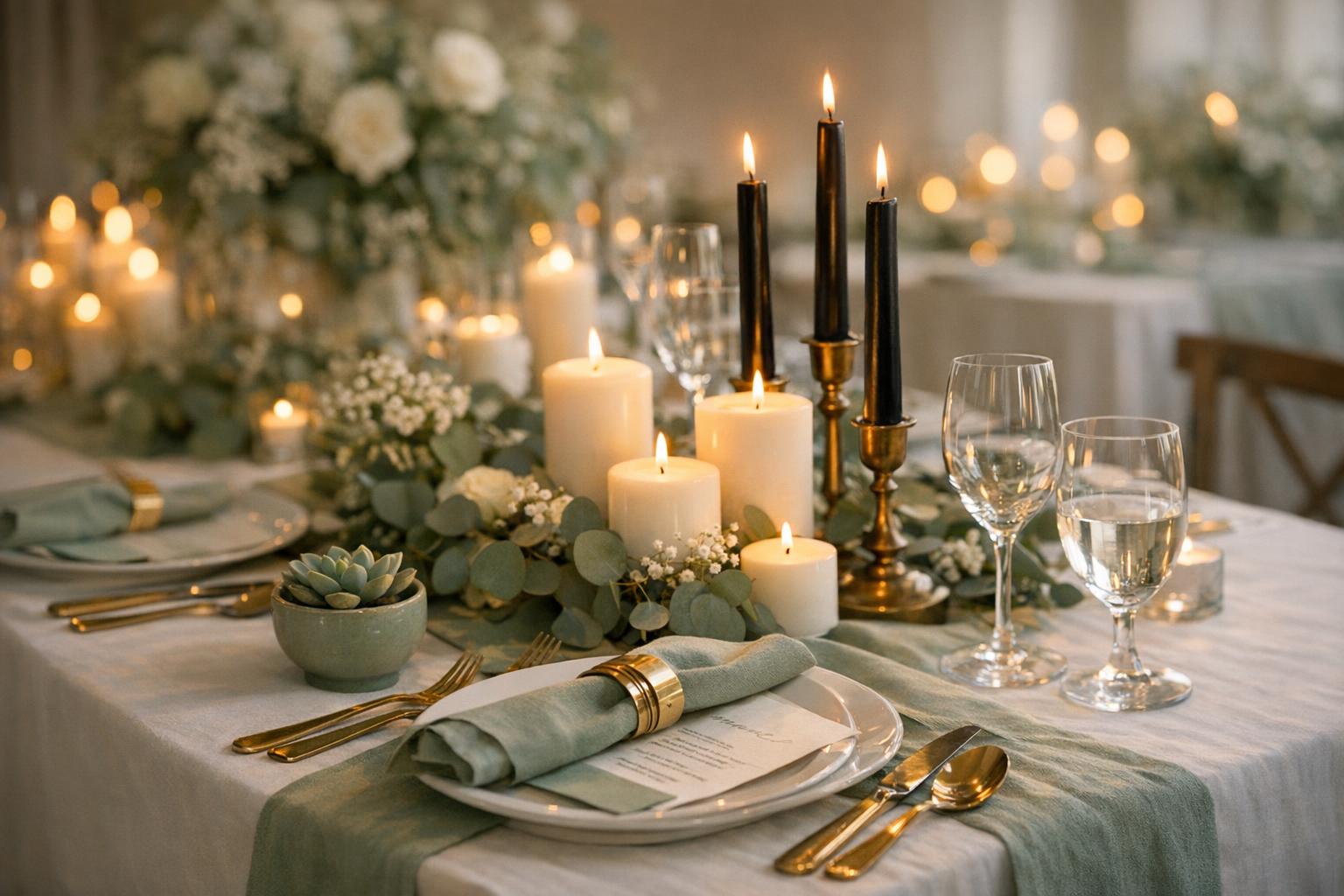
Sage Wedding Table Decor: A Complete Guide to Dreamy Sage Green Tablescapes
Sage wedding table decor has become a go-to choice for couples who want a calm, romantic look that still feels modern and intentional. Sage green sits in that sweet spot between “color” and “neutral,” which makes it incredibly flexible across venues, seasons, and formality levels. The best sage tablescapes don’t rely on one big centerpiece alone; they’re built from a few core elements—linens, greenery, candlelight, tableware, and small accents—that work together to create a cohesive, photo-ready table from every angle.
This guide walks you through sage green wedding table setting ideas you can actually use: centerpiece concepts, runner and napkin styling, candle and lighting approaches, dinnerware pairings, botanical accents like eucalyptus and herbs, and the small details that make the whole table feel finished. You’ll also find practical budgeting guidance, DIY-friendly options, venue considerations, and a planning timeline so your sage decor feels effortless on the wedding day.
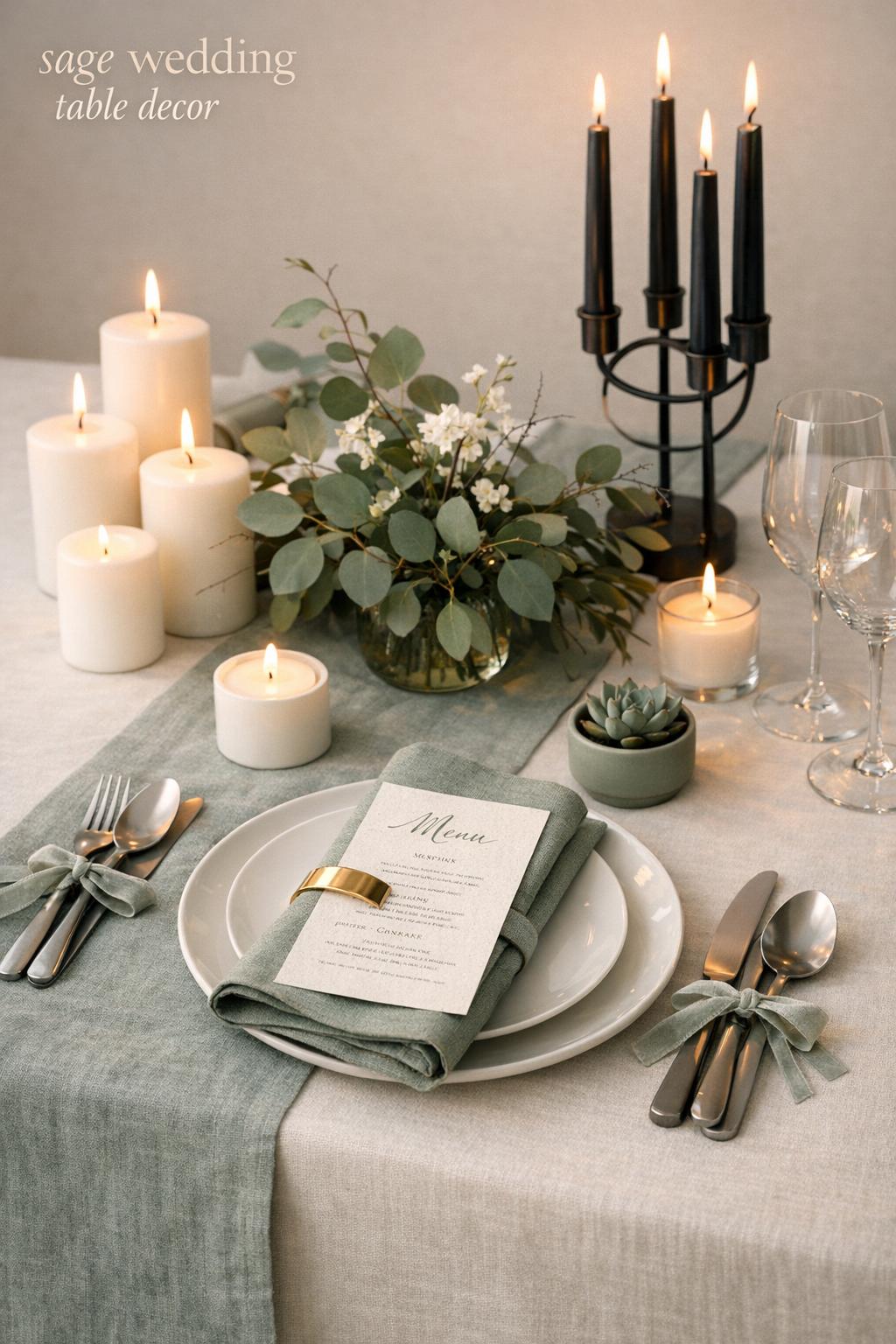
Sage Color Theory for Weddings (And Why It Works So Well on Tables)
Sage reads as soft and grounded, which is why it pairs so naturally with classic wedding tones like ivory and white and also plays well with metallic accents like gold. On a reception table, sage has a unique advantage: it can show up in large areas (like table runners or linens) without overpowering the place settings, and it can also appear in small touches (like napkin rings or menus in sage ink) to tie the look together.
Because tables are typically viewed under mixed lighting—daylight for outdoor celebrations, warm ambient light indoors, and candlelight later in the evening—sage can shift from airy to moody depending on what surrounds it. That’s a benefit when you plan for it: use lighter neutrals (ivory, white porcelain) to keep the palette bright, and lean into deeper contrast (black taper candles, darker green vines) to add evening drama.
Tips: If your tables feel “flat” in a mock-up, the fix is usually contrast and texture. Add one darker green element (like vines) or one crisp element (like white candles or white rose garland), and introduce a tactile material (wood, jute, ceramic) to create dimension without abandoning the sage palette.
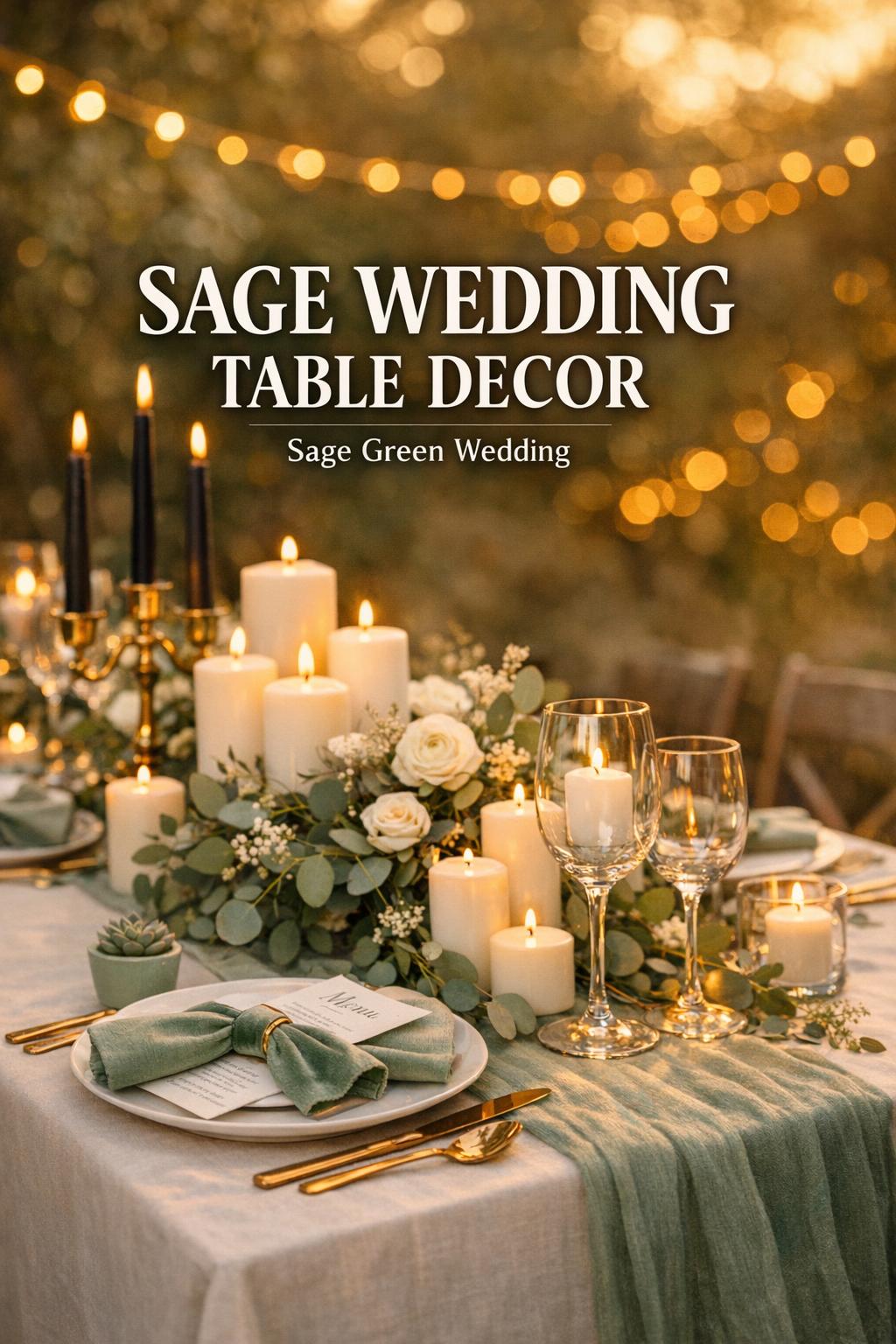
Core Sage Table Decor Elements
Sage Green Centerpieces (Hero Ideas)
Sage green wedding centerpieces ideas range from minimal (a few eucalyptus stems in bud vases) to lush (garlands with candle clusters). The most successful centerpieces share two traits: they keep conversation clear across the table, and they repeat the sage tone across multiple materials (greenery, ribbon, ceramics, printed paper) so it feels intentional rather than accidental.
- Bud vase clusters: Use several small bud vases spread down the center for an airy look that still feels designed.
- Eucalyptus stem centerpiece with white candles: Pair simple eucalyptus with clean white candles for an elegant, calm focal point.
- Sage and ivory floral centerpiece: Keep the base palette soft and wedding-classic by anchoring sage with ivory tones.
- Eucalyptus and sage candle holders: Make candlelight the “centerpiece” and let sage show up in holders and greenery around them.
- Dark green vines down the table: Add depth and movement; it’s especially effective on long rectangular tables.
- White rose garland: A crisp, romantic way to brighten sage-heavy tables and add a refined finish.
- Miniature crates: A rustic element that pairs naturally with sage; great for grounding a centerpiece visually.
- Miniature gardens: A whimsical, organic concept that leans into greenery and natural textures.
- Seasonal touches: Adjust small accents through the year so sage remains consistent while the details feel timely.
- Subtle florals: Keep blooms restrained and let greenery and candlelight do the heavy lifting.
Tips: Build centerpieces in layers. Start with a runner/garland base (sage fabric or greenery), add a repeating structure (bud vases or candle holders), then finish with one standout element (a candelabra, a white rose garland segment, or a small ceramic piece) so the table doesn’t look like a single continuous line.
Sage Table Runners, Linens, and Napkin Details
Linens are where sage makes the biggest visual impact. A sage green table runner can instantly set the theme, especially when paired with neutral tablecloths. If you’d rather keep the tabletop light, use sage in napkins and small accessories for a subtler approach. Layering textiles—like sage cotton runners and linen napkins—creates depth without needing more “stuff” on the table.
- Sage green cotton table runners: A clean foundation that works across rustic and refined styles.
- Runner + natural jute accents: A grounded, organic mix that reinforces a nature-forward vibe.
- Sage green table runners with white lace accents: A romantic option that reads soft and detailed in photos.
- Layered linen napkins in sage green: Adds texture and a tailored look without changing your place settings.
- Sage napkin rings: A small detail that can tie together mismatched dinnerware or mixed centerpiece styles.
- Sage green velvet ribbon on cutlery: A micro-accent that feels elevated, especially at place settings.
Tips: If you’re mixing multiple sage textiles (runner + napkins + ribbons), keep the undertone consistent. The easiest way to avoid a “mismatched green” look is to choose one hero textile (usually the runner) and then pick napkins and ribbons that sit close to it rather than trying to use three different shades.
Sage Dinnerware and Glassware
Tableware choices can either amplify sage or keep it as a gentle accent. Minimalist white porcelain with sage napkin rings is a classic combination that looks clean and timeless. If you want the color to feel more immersive, incorporate a sage dinnerware set or mix sage-toned pieces with neutral plates so the table still feels bright and wedding-appropriate.
- Minimalist white porcelain + sage napkin rings: Crisp, simple, and flexible across venues.
- Sage dinnerware set: A bold but controlled way to commit to the palette.
- Mix-and-match approach: Keep plates neutral and bring sage in through side plates, chargers, or coordinated accessories.
Tips: If you’re using sage dinnerware, keep the centerpiece palette lighter (white candles, ivory elements) so the table doesn’t become too dark or monotone. If you’re using white porcelain, you can afford more greenery and deeper accents down the center.
Candlelight and Lighting with Sage
Candles are one of the most effective ways to make sage tables feel “dreamy,” especially for evening receptions. White candles create a fresh, romantic look alongside eucalyptus and soft linens. For more contrast and modern edge, black taper candles can be a striking choice when paired with sage greenery and lighter tableware.
- White candles with eucalyptus stems: Clean, classic, and easy to repeat across many tables.
- Long candelabras: A dramatic vertical element that elevates a sage palette instantly.
- Eucalyptus and sage candle holders: A cohesive way to bring the palette into the lighting itself.
- Black taper candles: Adds depth and definition, especially when everything else is soft and muted.
Tips: Use candle groupings instead of a single candle per table. A repeated cluster (in matching holders) reads intentional and luxurious. If you’re using tall candle elements like candelabras, balance them with low greenery (like vines) so the table looks designed at both eye level and camera level.
Foliage, Greenery, and Botanical Accents
Greenery is the backbone of most sage green table décor. Eucalyptus is a frequent choice because it naturally supports the sage theme—whether used as stems in vases or layered down a runner. For added personality, botanical accents can extend beyond greenery garlands: potted succulents and herb-like styling details can work as both decor and take-home favors.
- Eucalyptus stems: Great for centerpieces and for repeating the sage tone across the table.
- Darker green vines: Adds contrast and a more dimensional green story.
- Potted succulents in sage ceramic pots: Doubles as decor and favors with a cohesive look.
- Dried lavender and sage bundles: A tactile, rustic-leaning accent that also feels intentional and styled.
Tips: Keep botanical elements consistent across the room. If one table has eucalyptus stems and another has vine-heavy garlands, connect the look by repeating one common element (for example, the same candle holders, the same napkin rings, or the same menu design in sage ink) so the overall space feels cohesive.
Small Details and Favors That Pull the Table Together
The most memorable sage wedding ideas often live in the small details guests touch: napkin rings, menus, place settings, and favors. These pieces are also where you can incorporate sustainability and DIY-friendly choices without changing the overall design plan. Recycled paper menus printed in sage ink, for example, reinforce the palette while adding a thoughtful texture.
- Recycled paper menus printed in sage ink: Simple, cohesive, and aligned with a natural aesthetic.
- Mason jars wrapped in sage green ribbon: A straightforward centerpiece vessel that can feel rustic or polished depending on the styling.
- Sage green napkin rings: A small investment that makes place settings look complete.
- Gold and sage napkin rings: A refined twist that bridges sage with metallic accents.
- Potted succulent favors: Decor that becomes a guest takeaway, reducing waste and doubling utility.
Tips: If you’re trying to keep costs under control, prioritize the details guests notice first: what’s directly at their seat (napkin styling, menu/place card, a small favor) and what’s in their direct line of sight (a repeated runner and candles). You can keep florals simpler if the tables still feel finished up close.
Textures and Finishes That Elevate Sage
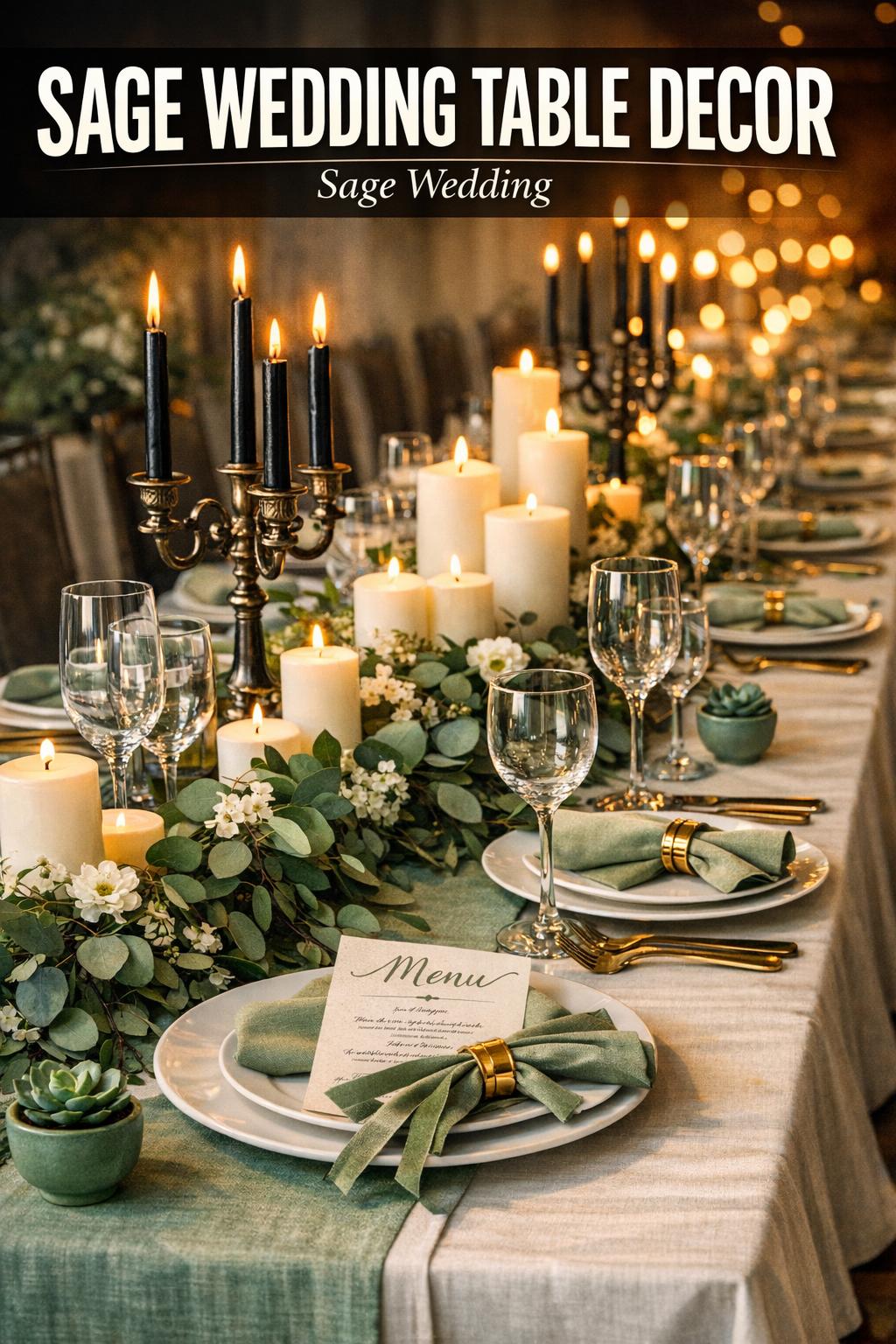
Materials That Pair Well With Sage
Sage becomes more sophisticated when it’s supported by texture. Natural materials like wood and jute emphasize the earthy side of sage and work well with casual, rustic, or garden-inspired weddings. Ceramics (especially sage-toned pots for succulents) keep the look grounded and cohesive. Metallic accents—particularly gold—add polish and a sense of occasion, even when the rest of the table leans minimal.
- Wood elements: Use as bases (like miniature crates) or subtle tabletop texture.
- Jute accents: Pair with sage cotton runners for a natural, tactile look.
- Ceramic details: Sage ceramic pots help distribute color beyond linens.
- Gold accents: Tie in with sage through napkin rings or small hardware-like details.
Tips: Choose one primary texture and one accent finish. For example, “sage cotton + jute” for a natural look or “sage linen + gold” for a more formal finish. Too many textures at once can make sage feel messy rather than serene.
Seasonal Variations (Spring, Summer, Fall, Winter)
Sage is adaptable across seasons because it’s rooted in greenery and neutral pairings. The key is to keep sage as the consistent thread and then shift the supporting elements—like the type of greenery density, whether you feature dried bundles, or how much candlelight you incorporate—to match the mood of the season.
- Spring: Keep the table bright with white candles, airy bud vases, and light linens.
- Summer: Lean into fresh greenery runners and eucalyptus stems for an abundant, garden-forward feel.
- Fall: Introduce deeper greens with vines and add texture through dried lavender and sage bundles.
- Winter: Emphasize candlelight—candelabras, grouped tapers—and keep place settings crisp with white porcelain and sage accents.
Tips: If your venue lighting changes dramatically from day to night, test your centerpiece concept under both brighter and dimmer conditions. A design that feels perfect at noon may need more candle presence to feel equally special after sunset.
Color Pairings: Sage With Ivory, White, Blush, and Gold
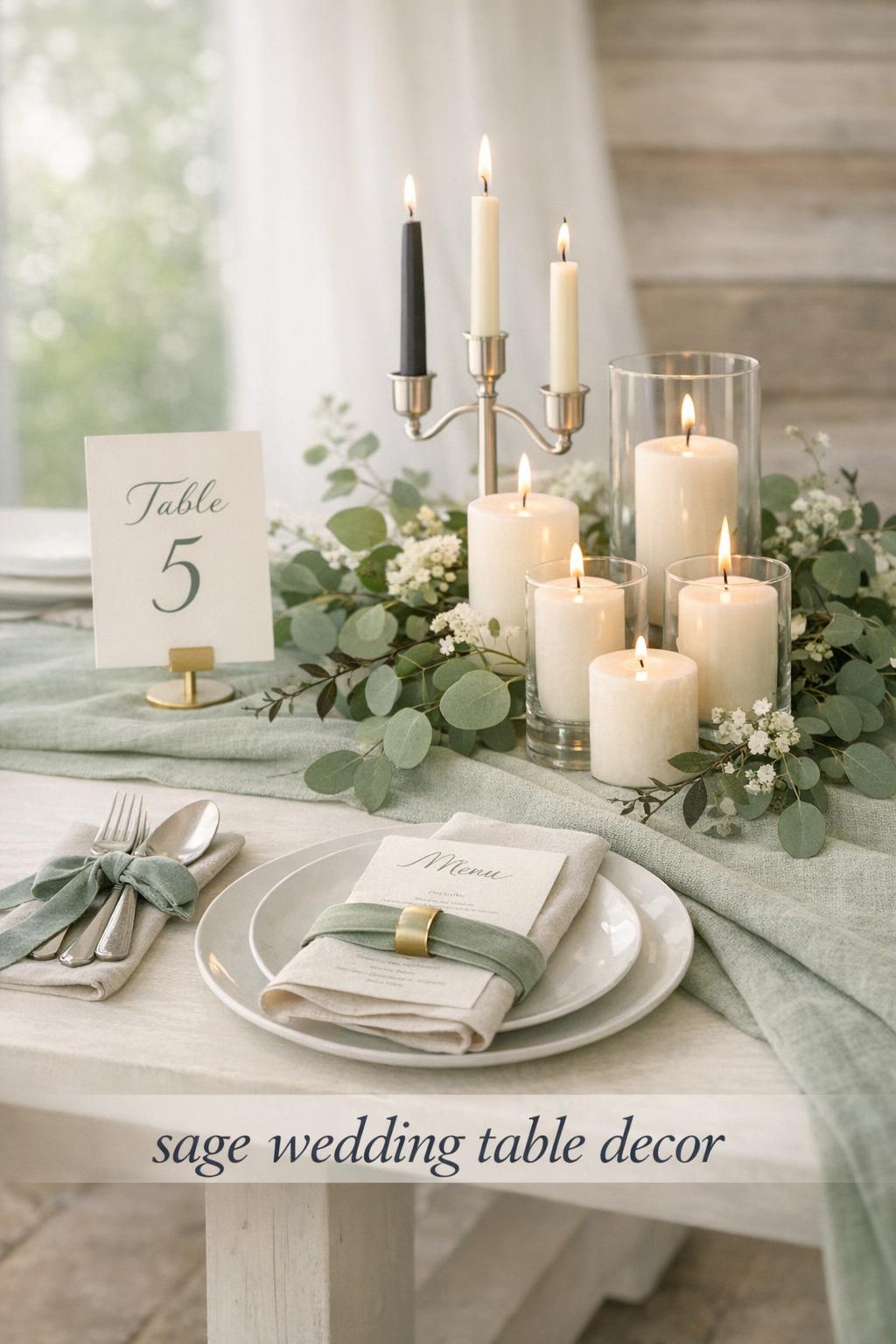
Pairing sage well is less about adding lots of colors and more about choosing the right companions. Sage and ivory is a classic wedding pairing that keeps the whole table soft and romantic. Sage and white feels fresh and clean, especially with minimalist porcelain and white candles. Gold with sage brings a formal edge without sacrificing the calmness sage is known for. If you want a gentler, romantic variation, a sage-and-blush direction can keep the look warm while staying muted.
- Sage + ivory: Use sage runners with ivory-toned centerpiece accents or sage and ivory floral centerpieces to keep it timeless.
- Sage + white: Build a crisp base with white porcelain and white candles, then layer in sage napkins, rings, or greenery.
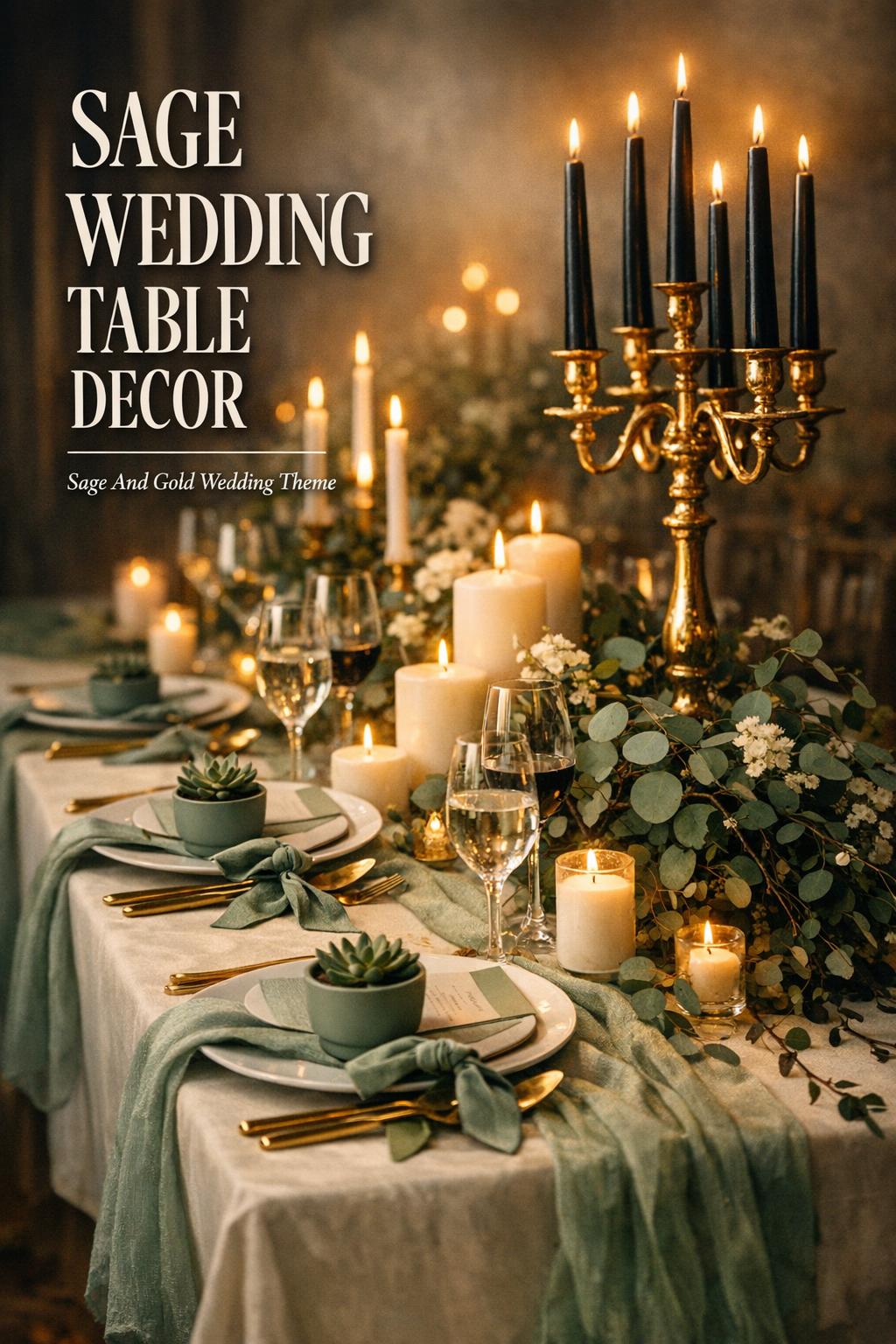
- Sage + gold: Add gold and sage napkin rings or other small metallic accents to elevate the table instantly.
- Sage + blush: Keep blush minimal and let sage stay dominant; use blush as a soft supporting accent rather than the main event.
Tips: Avoid adding too many competing greens. If you’re using eucalyptus as your main greenery, keep other greens either darker (for contrast, like vines) or minimal. That keeps the palette intentional rather than like a collection of unrelated greens.
Budgeting and Planning Sage Decor (Without Guesswork)
Budget Tiers and an Itemized Approach
Most tablescapes can be planned more calmly when you assign each table a “stack” of essentials: linen foundation, centerpiece structure, candles/holders, place setting accent, and paper goods. While exact totals vary widely by choice and sourcing, you can still budget intelligently by deciding which category will be your hero spend (often florals/greenery or candles/holders) and which categories can be simplified (for example, choosing minimalist porcelain and letting napkin rings carry the sage color).
- Foundation (runner/linen): Decide if sage is the runner, the napkin, or both—this controls how much fabric you need.
- Centerpiece structure: Bud vases, mason jars, ceramic pots, miniature crates, or a garland base.
- Candle plan: White candles for classic romance, black taper candles for contrast, or long candelabras for drama.
- Place setting accents: Sage napkin rings, gold and sage napkin rings, velvet ribbon on cutlery.
- Paper goods: Recycled paper menus printed in sage ink for a cohesive, tactile finish.
- Favors (optional): Potted succulent favors that also function as decor.
Tips: To avoid overspending, prototype one full place setting and one centerpiece early. Seeing the “complete table moment” makes it much easier to cut what isn’t pulling its weight and invest in what actually changes the look (often runners, candle groupings, and a consistent greenery choice like eucalyptus).
DIY vs. Professional Styling
Sage table decorations often lend themselves to DIY because many impactful elements are repeatable: napkin rings, menus, ribbon-tied cutlery, and simple bud vase arrangements. Professional styling can be especially helpful when you want large-scale greenery installation, consistent floral quality across many tables, or dramatic statements like long candelabras integrated with florals.
- DIY-friendly: Recycled paper menus in sage ink, sage ribbon details, mason jar centerpieces, bud vase groupings, napkin ring styling.
- Consider a pro: Complex greenery runs down long tables, large floral centerpieces, or extensive candle/holder coordination across the room.
Tips: Even if you DIY, keep the design rules professional: repeat the same vessels, keep your greenery choice consistent, and plan spacing. Consistency is what makes “simple” look “elevated.”
Practical Implementation: A Planning Timeline and Sourcing Checklist
A Simple Timeline (6–8 Months Out, 3–4 Weeks Out, Week Of)
Planning sage green wedding decor for tables is smoother when you treat it like a system rather than a list of random purchases. Start by deciding where sage will appear in the biggest areas (runner/linen or greenery) and then lock in your repeating pieces (napkin rings, candle holders, menus) so you’re not scrambling to match tones later.
- 6–8 months out: Choose your sage palette direction (sage + ivory, sage + white, sage + gold) and decide your centerpiece style (bud vases, candle clusters, garland/vines, candelabras).
- 3–4 weeks out: Finalize quantities (tables, place settings, candle groupings) and do one full mock-up with your runner, napkin, menu, and centerpiece.
- Week of: Confirm setup responsibilities, pack table items by table count, and ensure repeating details (rings, ribbon, menus) are consistent and ready.
Tips: The mock-up is where you catch mismatched sage tones, overcrowded centerpieces, or paper goods that disappear against your linens. Do it early enough that you can swap one element (like runner shade or napkin ring finish) without redoing the entire plan.
Vendor and Material Sourcing Checklist (What to Ask For)
A sage tablescape comes together faster when you source by category: textiles, florals/greenery, tabletop rentals, and paper goods. If you’re working with vendors, be clear about the sage look you’re aiming for—soft and airy with white candles and porcelain, or deeper and more dramatic with darker vines and black tapers—so they can match the tone across items.
- Florist/greenery: Eucalyptus stems, garland-style greenery, darker vine accents, and options for sage and ivory floral centerpieces.
- Rental house/tabletop: Candelabras, candle holders, porcelain tableware options, and any sage-toned dinnerware you want to include.
- Stationery/printer: Recycled paper menus printed in sage ink and coordinated place cards if desired.
- Decor sourcing: Sage napkin rings, gold and sage napkin rings, velvet ribbon for cutlery, vessels like bud vases or mason jars.
Tips: Keep one “control sample” of sage (a napkin, a ribbon, or a runner swatch) and use it to compare everything else you buy or rent. This single step prevents a lot of last-minute tone mismatch.
Venue-Specific Styling: Making Sage Work Anywhere
Sage is flexible enough to fit rustic, garden, and formal spaces, but the table plan should respond to your venue’s structure and lighting. The same runner and centerpiece can read very differently in a bright garden setting versus a dim ballroom. Use the venue to decide whether you need more brightness (white porcelain, white candles, lighter linens) or more definition (black tapers, darker vines, gold accents).
Rustic and Natural Spaces (Barn, Lodge, Wood-Heavy Rooms)
In rustic venues, sage looks especially at home when paired with wood and tactile details. Miniature crates can anchor centerpieces, and jute accents can make sage runners feel intentional rather than overly polished. Keep the tables from skewing too casual by repeating one refined element—like consistent candle holders or crisp menus in sage ink.
Garden and Outdoor Venues (Bright Light, Natural Green Surroundings)
Outdoor settings can make sage blend into the surrounding landscape, so it helps to add crisp contrast. White candles, minimalist white porcelain, and airy bud vase clusters keep sage visible and wedding-forward. Darker green vines can also add definition down the center of the table so the design reads clearly in photos.
Ballrooms and Formal Indoor Venues (Warm Lighting, High Drama Potential)
Formal spaces are where sage can lean more glamorous. Long candelabras make an immediate statement, and gold accents (like gold and sage napkin rings) elevate the palette without making it loud. If the room is dim, candle groupings and brighter tabletop choices help sage stay soft and romantic rather than murky.
Tips: For indoor venues, plan for the “late-night” look. Sage looks especially dreamy when candlelight becomes a major player—so don’t treat candles as an afterthought. Make them part of your main design from the start.
Real-World Tablescape Recipes (Mix-and-Match Blueprints)
If you want to move from inspiration to execution, start with a recipe: a foundation choice, a centerpiece approach, and two or three repeating details. These blueprints keep decisions simple while still giving you a layered, complete look.
Recipe 1: The Soft Classic (Sage + Ivory)
Start with a sage table runner over a neutral base. Use sage and ivory floral centerpieces or subtle florals supported by eucalyptus, then add white candles for a bright, romantic finish. Keep place settings timeless with minimalist white porcelain, and bring sage back in with napkin rings and menus printed in sage ink.
Recipe 2: The Modern Contrast (Sage + White + Black Tapers)
Choose a clean sage runner and a greenery-led center, such as eucalyptus stems and darker green vines. Add black taper candles to create definition and an updated edge. Keep the rest streamlined—white porcelain and a simple napkin styling—so the contrast feels intentional rather than heavy.
Recipe 3: The Elevated Romantic (Sage + Gold)
Use sage in your textiles (runner and/or napkins), then add gold accents at the place setting with gold and sage napkin rings. Make candlelight a feature with candelabras or coordinated candle holders, and keep florals and greenery controlled so the gold reads as refined and not crowded.
Recipe 4: The Natural & Sustainable (Sage + Jute + Recycled Paper)
Pair sage green cotton table runners with natural jute accents. Use mason jars wrapped in sage ribbon or bud vases for centerpieces, and incorporate dried lavender and sage bundles for texture. Finish each place setting with recycled paper menus printed in sage ink, and consider potted succulent favors in sage ceramic pots to reduce one-time-use decor.
Tips: Stick to one recipe across the room, or use two recipes that share the same repeating pieces (like identical menus and napkin rings). That’s how you get variety without making the design feel disjointed.
Photo-Ready Details: What to Ask Your Photographer to Capture
Sage tablescapes shine when their layers are photographed with intention. Because sage can be subtle, close-up shots help show texture—linen napkin folds, ribbon on cutlery, the ink tone on menus, and the interplay between greenery and candlelight. Wider shots are just as important for showing how runners, vines, and repeated candle groupings create a consistent look across the reception.
- A single complete place setting showing napkin rings, menu paper texture, and cutlery ribbon detail
- A straight-on table runner shot that captures greenery density and candle spacing
- A candlelight close-up (especially if using black taper candles or candelabras)
- A wide room shot that shows repetition across tables for a cohesive sage theme
Tips: If you’re using subtle florals or greenery-led designs, ask for photos that include hands or guest interaction (a menu being picked up, a napkin being unfolded). Those moments highlight the small details that often get missed in standard room shots.
FAQ
What colors pair best with sage for weddings?
Sage pairs especially well with ivory and white for a soft, classic look, and it also works beautifully with gold accents for a more elevated, formal finish. For added depth, darker green vines can provide contrast while keeping the palette cohesive.
What are the easiest sage green wedding table setting ideas to execute?
The simplest approach is a sage table runner, eucalyptus stems in bud vases, and white candles, finished with sage napkin rings and recycled paper menus printed in sage ink. These elements repeat easily across tables and still look intentional and complete.
How do I keep sage wedding table decor from looking one-note?
Add contrast and texture: pair sage with crisp white porcelain or white candles, introduce a deeper green element like vines, and use tactile materials such as linen, cotton, jute, ceramic, or a small metallic accent like gold to create dimension.
Can sage decor work with a modern wedding theme?
Yes—keep the forms clean and streamlined with minimalist white porcelain, simple eucalyptus stem centerpieces, and structured candle styling like black taper candles or coordinated candle holders. A restrained palette and consistent repetition are what make sage feel modern.
What are popular sage wedding table centerpieces?
Popular options include eucalyptus stem centerpieces with white candles, bud vase clusters, greenery runs with darker vines, sage and ivory floral centerpieces, white rose garlands, and candle-focused designs using eucalyptus and sage candle holders or long candelabras.
How can I incorporate sage into place settings without changing my plates?
Use sage through napkin styling and accessories: layered sage linen napkins, sage napkin rings, or sage green velvet ribbon on cutlery. Add a cohesive finishing touch with menus printed in sage ink to reinforce the palette at every seat.
Are there sage table decor options that also work as favors?
Potted succulent favors in sage ceramic pots are a popular choice because they act as decor during the reception and can be taken home by guests afterward, creating a cohesive table look while doubling as a practical takeaway.
What’s a simple way to make sage tables feel more formal?
Introduce structured candlelight and refined finishes: long candelabras or coordinated candle holders, plus gold accents such as gold and sage napkin rings. Keeping florals and greenery controlled and consistent also helps the table read more formal.
Leave a Reply