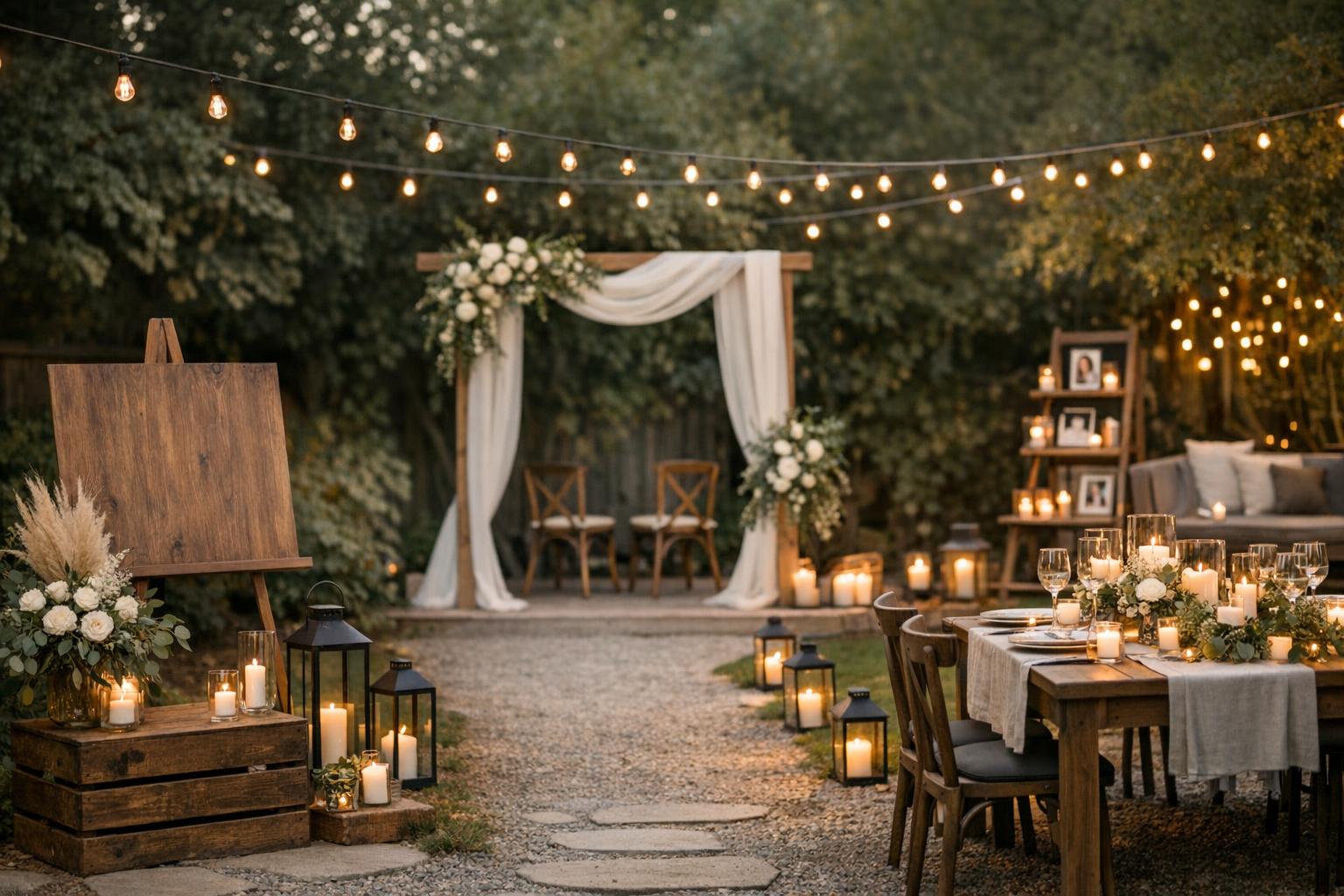
Home Decor for Wedding: A Complete Guide to Style Your Space for Your Big Day and Beyond
Planning home decor for wedding celebrations is equal parts creativity and strategy: you’re not just “decorating,” you’re transforming familiar rooms (or a backyard) into a ceremony and reception setting that feels intentional, photogenic, and comfortable for guests. The best results come from combining a clear decor vision with smart budgeting, a few high-impact focal points (like a ceremony backdrop, lighting, and signage), and personal touches you’ll actually want to keep once the day is over.
This guide walks you through defining your wedding decor ideas, sourcing what you need (buy vs. rent vs. DIY), styling core elements like centerpieces and tablescapes, and choosing themes—from modern minimalist to rustic chic to glamorous gold and white. You’ll also find beginner-to-moderate DIY wedding decor ideas, tips for photo-ready spaces, and practical guidance for turning wedding décor into lasting home decor after the vows.
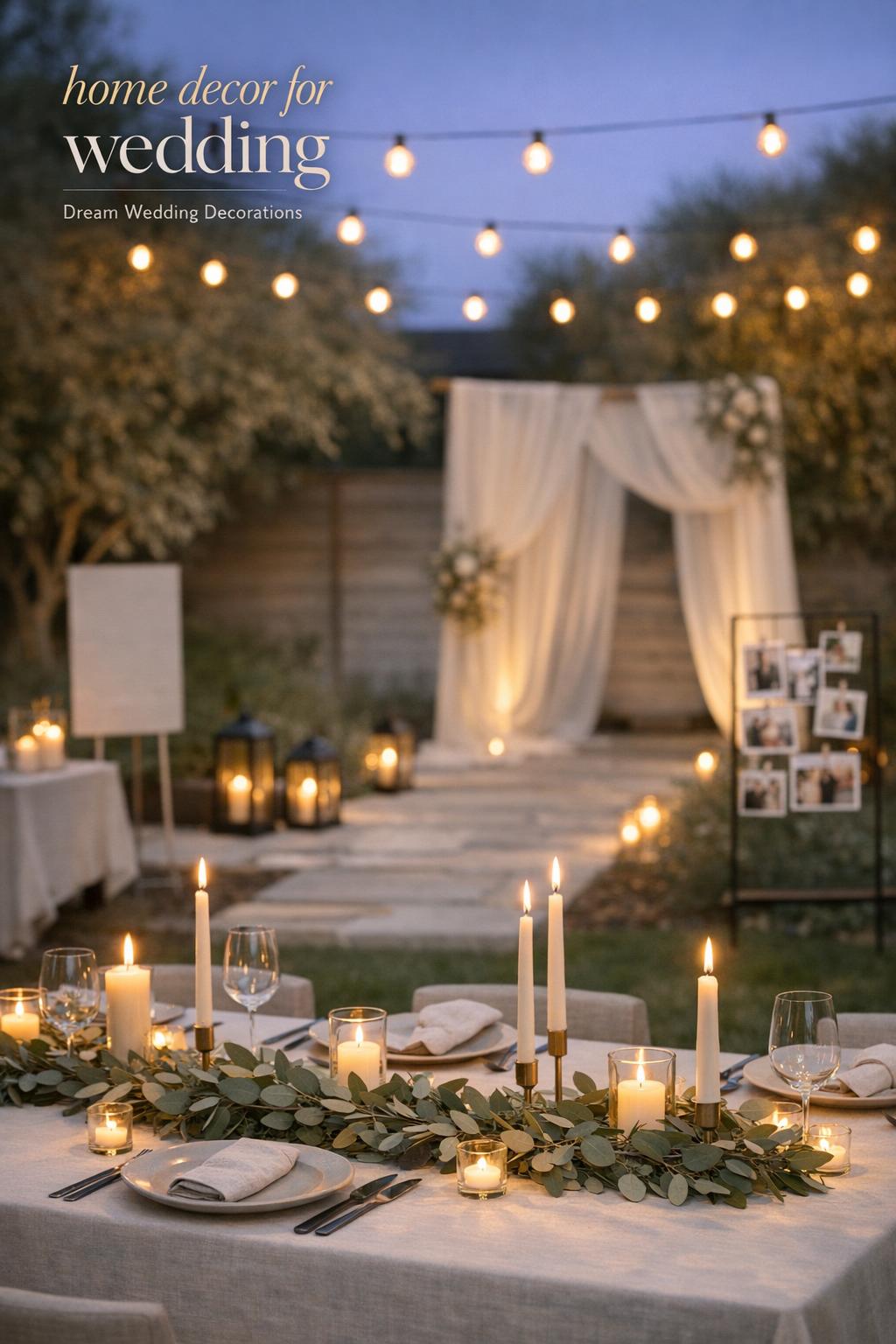
Define Your Wedding Decor Vision
Before you shop or DIY anything, decide how you want your home wedding decor to feel. Most decor stress comes from buying pieces that are pretty on their own but don’t work together in the actual space. A clear direction—theme, palette, and ambiance—keeps every choice aligned, from welcome signs to reception decor lighting.
Clarify themes, color palettes, and ambiance
Start with three decisions: your overall style (for example, modern romantic, rustic, or glam), your color palette (two to three main colors plus one metallic or neutral), and your ambiance (soft candlelight, bright and airy, or moody with layered lighting). Then let those decisions guide every decor category—signage, tablescape ideas, ceremony backdrop, and photo displays—so the day looks cohesive even if you mix DIY and store-bought items.
Create a mood board (digital or physical)
A mood board helps you see the whole wedding decor plan at once. Include examples of centerpieces, lighting for weddings (string lights, candles, lanterns), signage styles, and a ceremony arch or backdrop that fits your space. Keep it practical: prioritize visuals that resemble your home’s layout—living room corners, a backyard fence line, or a dining table length—so your “inspiration” translates into an achievable setup.
Tip: Add at least one photo of the actual area you’ll decorate (your entryway, patio, or living room). When you compare your space photo to your inspiration images, you’ll instantly spot what needs simplifying—fewer colors, fewer decor materials, or a more portable ceremony backdrop.
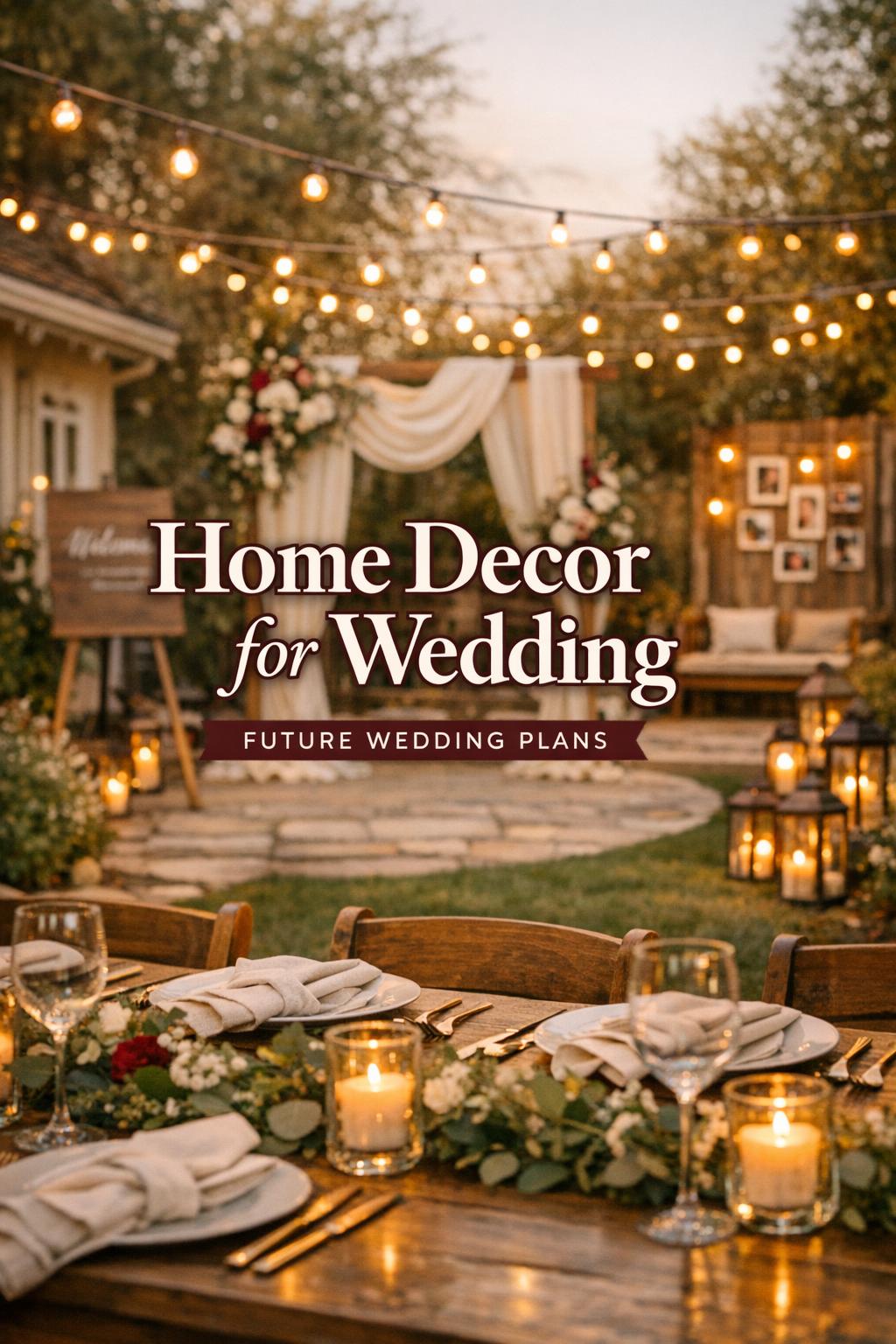
Budgeting and Sourcing for Home-Wedding Decor
Home weddings can be budget-friendly, but they can also quietly grow expensive if you buy one-off items without a plan. The simplest way to keep control is to budget by zone, then decide what to buy, rent, and DIY based on impact and reuse value.
Budget breakdown by area (ceremony, reception, photos, and home display)
Divide your decor budget into four areas: the ceremony space (where all eyes go), reception decor (tables, seating, and food/drink areas), photo-ready decor (a backdrop and a couple of styled “moments”), and post-wedding home display (pieces you’ll keep, like framed prints or personalized keepsakes). This approach prevents you from overspending on small table accents while neglecting the entry and ceremony focal point.
- Ceremony: backdrop/arch, aisle markers, a small statement arrangement, and seating cues
- Reception: centerpieces, table runners, candles/lanterns, place cards/table numbers, and a cohesive tablescape
- Photos: a dedicated backdrop area plus smaller vignettes (entry, card/gift table, dessert area)
- Home-after: framed prints, personalized signs, or custom pieces you’ll display later
Where to buy vs. rent vs. DIY
A strong home decor for wedding plan usually combines three sourcing paths. Buying works best for versatile items like candle holders, lanterns, picture frames, and string lights that can become everyday decor. Renting is often the smartest route for large statement pieces you won’t store easily, like certain backdrop structures or specialty items. DIY wedding decor ideas are ideal when you want customization (like signs) or when simple projects can create a high-end look without a high-end price.
Tip: If an item is both bulky and single-use, avoid buying it unless it’s truly essential to your theme. Put that budget into lighting and a ceremony backdrop instead—those elements consistently change how the whole space feels.
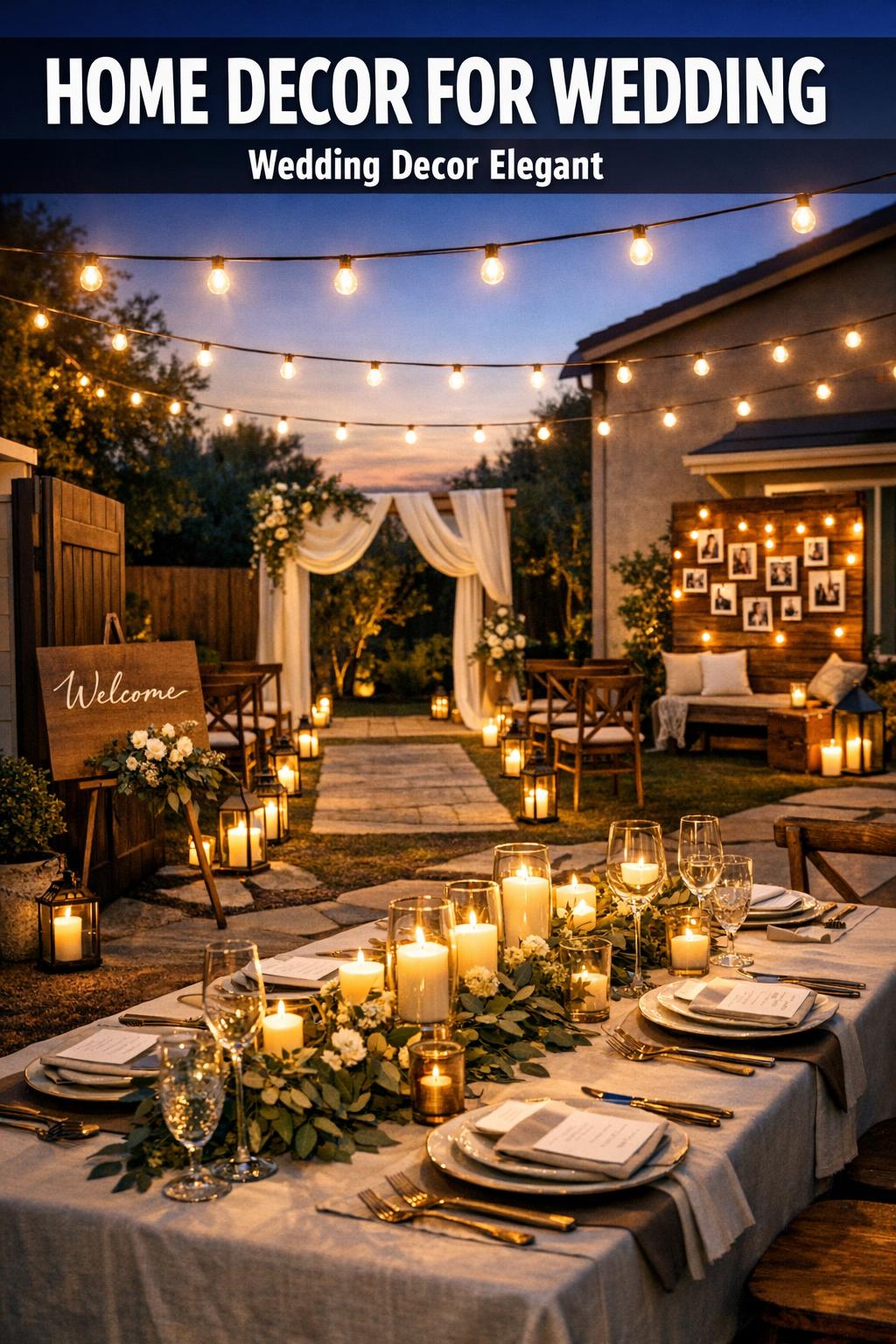
Core Decor Elements for a Home Wedding
Whether you’re decorating a living room, a backyard, or both, the same core categories show up in the most successful home wedding ideas and decor plans: signage and welcome moments, centerpieces and tablescapes, lighting, backdrops, and personal touches. Think of these as your “decor framework”—once they’re decided, everything else is a supporting detail.
Signage and welcome displays
Wedding signs do more than look pretty—they guide guests through a home space that isn’t built like a traditional venue. A welcome sign at the entry sets the tone instantly, while smaller signs can quietly direct flow (ceremony here, reception there, card table, dessert area). Personalized wedding signs are also one of the easiest decor elements to repurpose at home afterward.
- Welcome sign at the entry (name/date or a simple greeting)
- Directional signs for ceremony and reception areas, especially for backyard weddings
- Seating cues or table numbers for smooth guest movement
- Menu or bar sign near food and drinks
Tip: Keep sign styles consistent. If one piece is modern minimalist (clean typography), don’t mix it with multiple ornate styles. Consistency reads “intentional” even if you’re using affordable wedding décor ideas.
Centerpieces and tablescapes
Centerpieces and tablescape ideas are the heart of wedding reception decor, especially in a home setting where guests spend more time seated and close to details. You don’t need complex arrangements on every surface; focus on repetition and rhythm—similar heights, repeated materials (like glass plus greenery), and a unified palette. Even simple centerpieces can feel elevated when paired with coordinated table runners and candlelight.
For wedding centerpieces for home, aim for practical proportions. Tall items can block conversation in tighter dining areas, while low arrangements paired with candles or lanterns can look full without feeling crowded. If you’re hosting indoors, consider how close tables are to walkways and doors; keep decor compact enough for guests to move comfortably.
Lighting (candles, string lights, ambient glow)
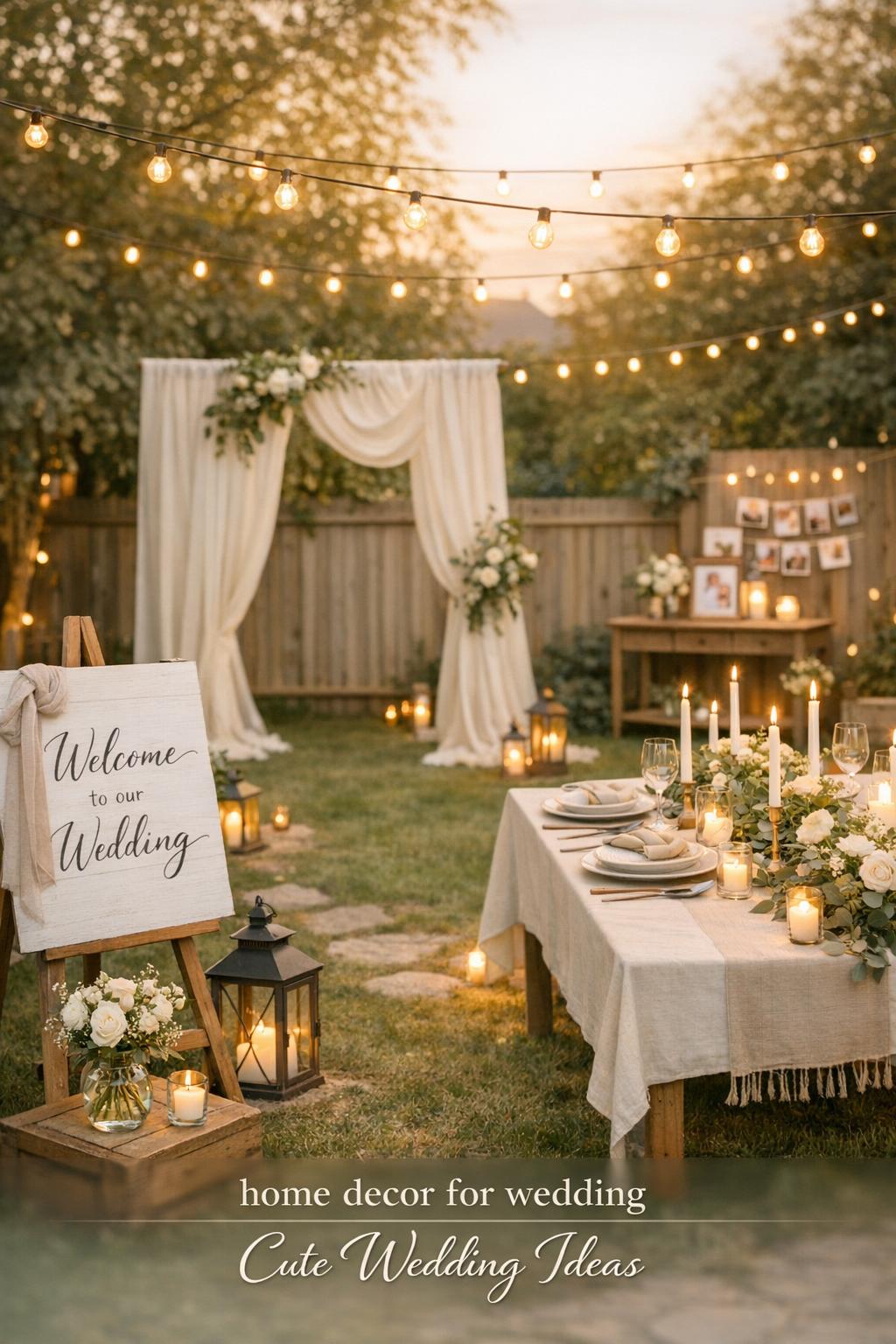
Lighting for weddings is one of the fastest ways to make a home feel like an event space. String lights can define a backyard perimeter or patio ceiling, lanterns and candle holders add warmth to tables, and layered lighting creates a romantic atmosphere without relying on major construction or permanent changes. The key is to use lighting in multiple places so it feels immersive, not isolated.
- String lights to create a “ceiling” effect outdoors or to outline a gathering area
- Lanterns near the entry, along a path, or around the ceremony space
- Candle holders on tables for soft, even glow
- Small clusters of light sources instead of a single bright focal point
Tip: Use lighting to guide attention. Brighter or denser lighting near the ceremony backdrop and reception tables helps guests instinctively understand where the main moments happen.
Backdrops and ceremony arches (portable options for home spaces)
A ceremony backdrop is the centerpiece of your home wedding decor because it anchors the vows and frames photos. In a living room, it might be a styled wall with draping, framed prints, or a curated display. In a backyard, it could be an arch with florals or greenery, positioned against a fence or garden area. The best home-friendly backdrops are portable, stable, and designed to look good from multiple angles.
If your space is small, simplicity wins. A clean backdrop with intentional lighting and a few strong decorative elements will look more polished than an overfilled arch that competes with the room’s existing features.
Personal touches (photos, heirlooms, monograms)
Personalized wedding decor turns a home wedding into a meaningful experience. Consider incorporating photos (in frames or a gallery-style display), printed keepsakes, or custom signs with names and dates. These touches also help bridge the wedding-to-home transition: after the celebration, the same frames and printed pieces can become part of your everyday decor instead of living in storage.
Tip: Choose a limited number of personal elements and give them space. A single well-styled photo display can feel more “heartwarming” than dozens of scattered items.
Color and Theme Playbooks (By Style)
Themes make decision-making easier. Instead of reinventing your look for every purchase or DIY, pick a style playbook and repeat its cues across signage, lighting, centerpieces, and the ceremony backdrop. Below are four popular approaches that translate well to home wedding decor.
Modern Minimalist
Modern minimalist wedding decor focuses on clean lines, intentional negative space, and a restrained palette. In a home environment, this style is especially effective because it doesn’t fight your existing architecture or furniture. Keep table decor low and streamlined, use simple candle holders, and choose signage with clean typography. Let one area—often the ceremony backdrop—carry most of the visual impact.
Tips: Limit yourself to a few repeated materials (for example, glass, neutral linens, and greenery). A minimalist theme looks best when every piece appears chosen on purpose, not added “just in case.”
Rustic Chic
Rustic wedding decor at home is all about warmth and texture. Think natural elements, a comfortable glow from lanterns, and signage that feels handcrafted. This style pairs beautifully with backyard wedding decor because it connects naturally to outdoor surroundings, but it can also work indoors when balanced—use a few rustic accents rather than turning every surface into a themed display.
Tips: Use lighting to keep rustic chic from feeling heavy. Candlelight and string lights create a romantic atmosphere and make natural materials feel more polished.
Glamorous Gold and White
Glam wedding decor often relies on contrast and shine—bright whites with gold accents, reflective surfaces, and elevated-looking details. In a home, you can create glam without going overboard by repeating gold details in small, consistent ways: a gold-accented centerpiece element, matching candle holders, and coordinated frames for a photo display. The goal is a cohesive glow, not visual clutter.
Tip: Keep glam grounded with a consistent base color so the metallic accents feel intentional. Concentrate your most reflective details around the reception tables and the photo-ready backdrop.
Coastal/Nautical
Coastal wedding ideas translate well to home weddings because they naturally fit airy spaces and outdoor settings. This style works best when you focus on a calm palette and light-enhancing decor choices. Use relaxed textures, simple table styling, and soft lighting to keep the mood breezy and romantic. For signage and printed keepsakes, choose designs that feel clean and bright rather than overly themed.
Tip: In a coastal look, less is more. A few well-placed accents, repeated through the ceremony and reception areas, will feel refined and photo-friendly.
Decor for Indoor Home Venues vs. Outdoor/Home Gardens
Indoor wedding decor and backyard wedding decor share the same core components, but the practical approach changes. Indoors, you’re working with walls, ceilings, and tighter flow. Outdoors, you’re working with weather readiness, lighting visibility, and how to define “rooms” in open space. Planning with those realities in mind prevents last-minute fixes on the wedding day.
Practical considerations (space, safety, and weather readiness)
Indoors, focus on layout and movement: guests should be able to enter, find seating, and transition between ceremony and reception areas without confusion. Outdoors, focus on stability and clear zones: define the ceremony area, dining area, and photo area using lighting, signage, and consistent decor elements. For both, prioritize safety with candle placement and keep walkways clear of trip hazards.
- Indoor: use signage and lighting to guide guests through separate “moments” within one home
- Outdoor: use string lights and lanterns to define boundaries and create a welcoming atmosphere
- Both: choose decor that stays secure when bumped and doesn’t overcrowd key paths
Seasonal adjustments
Seasonal changes affect how your wedding decorations look and function. In warmer conditions, a backyard setting benefits from extra ambient lighting as the evening progresses, while indoor spaces may need decor that doesn’t overwhelm a smaller area. Plan for flexibility: portable lighting, a backdrop that can move slightly, and decor that still looks cohesive if you adjust your setup.
Tip: Choose at least one decor “anchor” that will look good in any lighting—your ceremony backdrop or a main tablescape—and build everything else to support it.
Step-by-Step DIY Projects (Beginner to Moderate)
DIY wedding decor is popular for a reason: it’s budget-conscious, personal, and adaptable to a home space. The most effective DIYs are the ones guests notice immediately—centerpieces, signage, and backdrop enhancements—without requiring specialized tools or days of complex crafting.
DIY centerpiece ideas (simple, scalable, and cohesive)
A successful DIY centerpiece is repeatable across multiple tables and easy to assemble close to the event. Aim for a simple formula you can replicate: one main vessel or focal item, one supporting element, and one lighting element. This creates a finished tablescape without needing elaborate floral design skills.
- Clustered candles in matching candle holders with a low surrounding accent
- Lantern centerpiece with a small accent arrangement beside it
- Framed table number paired with a small decorative element and a candle
Tips: Keep heights consistent across tables so the room looks unified, and build one “test table” early to confirm scale and spacing in your actual dining area.
DIY signage and chalkboard-style menus
DIY wedding signs are ideal for home weddings because they help guests navigate nontraditional spaces while adding personality. Keep wording short, readable, and consistent. A welcome sign, a simple menu sign, and table numbers often cover everything you need without turning signage into a major project.
Tip: If you’re mixing personalized wedding signs with printed pieces, use one design direction (similar fonts and spacing) so the full signage set looks intentional.
Fabric draping and ceiling treatments
Ceiling draping ideas for weddings can dramatically change a home environment by softening hard edges and creating a “special occasion” feel. In a backyard, draping paired with string lights can create an overhead focal point. Indoors, draping can help frame a ceremony area or photo spot without permanent changes. Keep the design simple and symmetrical so it photographs well and feels balanced.
Tips: Treat draping as a highlight, not an everywhere element. Use it over the ceremony area or a primary table setup, and coordinate nearby lighting so the fabric reads softly in photos.
Photo-Ready Decor: Capturing the Moment
Home weddings benefit from thoughtfully placed photo moments because your rooms and yard will appear in countless pictures. You don’t need a dozen decorated corners; you need a few purposeful, photogenic wedding spaces that look good from multiple angles and in different lighting conditions.
Tips for creating photogenic spaces
Start with your ceremony backdrop, then add one secondary photo area near the reception—often near a decorated wall or a styled corner with lighting and a personal element. Keep backgrounds clean by removing distracting everyday items from the frame area. Use lighting to add depth: layered candlelight at tables and a brighter, flattering glow around the backdrop.
Tips: Place your most important decor where it naturally catches attention—entry, ceremony, reception table area—and repeat the same materials (lanterns, candles, frames) so every photo feels connected to the same story.
Gallery displays and wall accents
A gallery-style display is a powerful way to blend wedding decor photos, sentimental moments, and home-friendly styling. Use frames and printed keepsakes to create a heartwarming focal point that also becomes a post-wedding home decor feature. This can work as a dedicated photo moment or as part of your welcome area, especially for intimate home wedding celebrations.
Personalization that feels elevated (not cluttered)
Personalized wedding decor—custom signs, framed prints, or pieces that include names, dates, or vows—can instantly make a home wedding feel intentional. The key is restraint: choose a few pieces and style them like you would in your home, with space around them and consistent finishes. When personalization is treated as decor (not just information), it looks more refined and photographs beautifully.
Long-Term Use: Translating Wedding Decor Into Home Decor
One of the best parts of planning home decor for wedding celebrations is choosing pieces you’ll want to live with afterward. Instead of treating decor as disposable, make a plan for what will become part of your everyday space: frames, lanterns, candle holders, and personalized keepsakes can easily transition into your living room, entryway, or bedroom.
Storage and repurposing ideas
As you gather wedding decorations, think ahead to storage and reuse. Smaller items like candle holders, string lights, signs, and frames are easier to store and more likely to be reused. Larger items like arches and oversized backdrops need a realistic plan—either a clear home use afterward or a decision to rent instead of buy.
- Keep versatile decor together by category (signage, lighting, table decor) so post-wedding sorting is easy
- Choose containers that protect fragile items like glass candle holders and frames
- Label personalized pieces you plan to display so they don’t end up buried in storage
Post-wedding display ideas (frames, keepsakes, plaques)
Decor that carries meaning doesn’t have to disappear after the wedding. Consider turning a welcome sign into entryway decor, using framed prints in a hallway, or styling a shelf with candle holders and a small memento display. This “ceremony to living room” approach helps your wedding decor choices feel worthwhile and keeps the celebration present in subtle, home-friendly ways.
Tip: If you’re deciding between two decor options, choose the one you can imagine in your home a month later. That single habit naturally leads to more affordable wedding décor ideas because you avoid purely single-use items.
Vendor and Resource Toolkit (What to Look For)
Even with DIY plans, most couples still source a mix of wedding essentials and decor pieces from retailers, handmade shops, and custom creators. The goal is to build a reliable “toolkit” of sources: one place for broad basics, one place for personalized items, and a plan for any specialty pieces you don’t want to keep.
Retail basics vs. handmade personalization
Retailers are helpful for gathering core categories quickly—lighting, candle holders, lanterns, frames, garlands, and signage stands—especially when you need multiple items to match. Handmade and custom shops are ideal when you want personalized wedding signs or keepsakes with names and dates. Combining both approaches keeps your decor cohesive while still feeling personal and one-of-a-kind.
Printable planning templates (checklists, timelines, and mood boards)
Home weddings move fast, and decor is often one of the last things assembled. A simple checklist and timeline keep you from scrambling: list each decor zone (entry, ceremony, reception tables, photo area), assign what’s needed, and schedule setup in manageable steps. Even a basic mood-board printout can help friends or family support setup without needing constant direction.
Tip: Build your decor plan around setup order: start with the ceremony backdrop and lighting, then place signage, then finish tablescapes. This sequence ensures the most important visual areas are completed first.
Pulling It All Together: A Simple Home Wedding Decor Plan
If you want a straightforward way to execute wedding decor ideas at home, treat your plan like a series of repeatable choices. Decide the style, choose a limited palette, pick your core decor elements, and repeat them across the space. This is how home wedding decor looks cohesive even when it’s built from a combination of DIY projects, affordable finds, and a few personalized statement pieces.
- Choose one theme playbook and stick to it
- Create one “hero” moment (ceremony backdrop) and two supporting moments (entry + reception tables)
- Repeat 2–3 decor materials across all zones (for example: frames, lanterns, and candles)
- Use signage to guide guests through a home layout
- Prioritize lighting to elevate the entire space
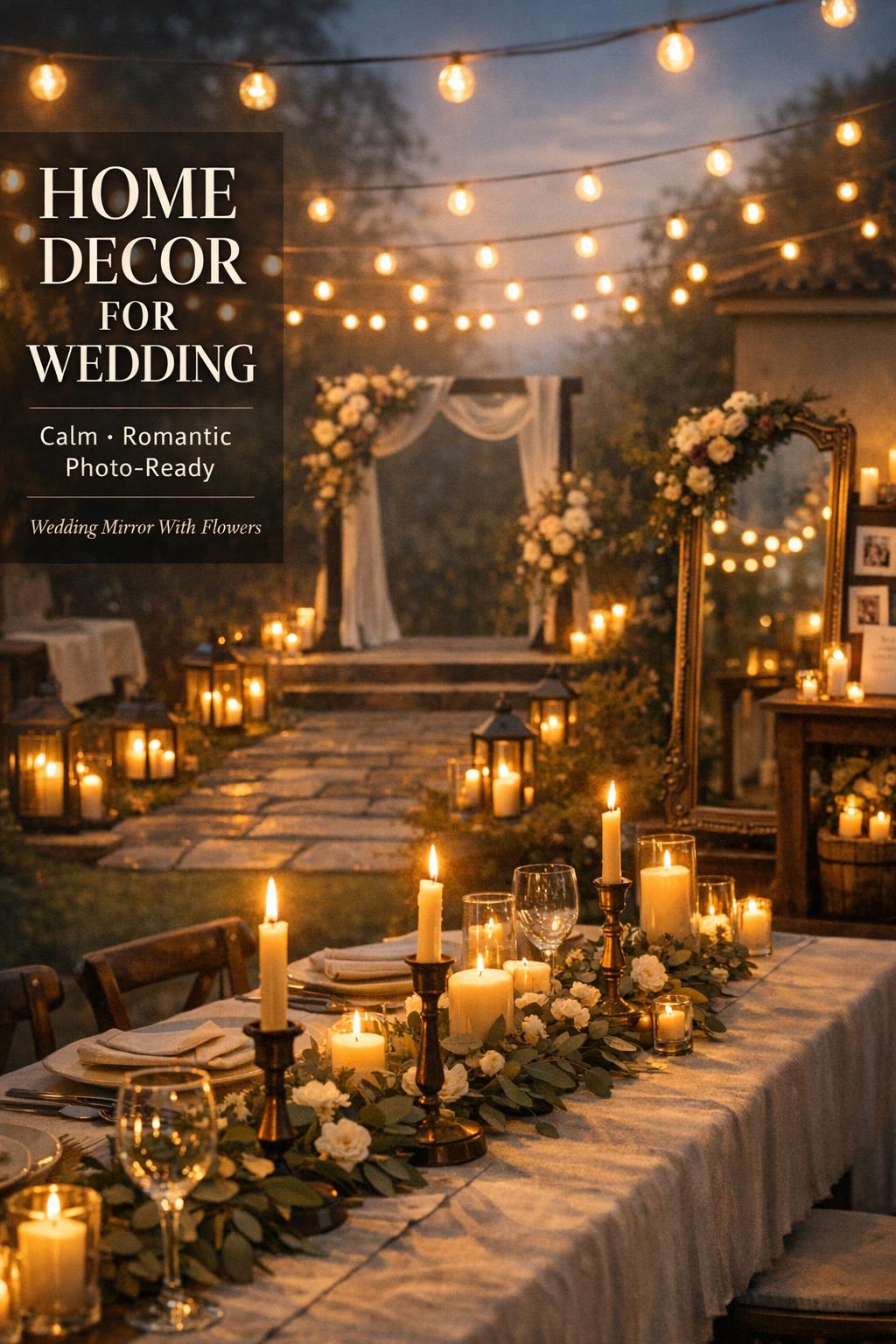
With these foundations in place, you can add finishing touches—personal photos, a thoughtful gallery display, or a few custom signs—without losing the calm, romantic atmosphere that makes home weddings feel unforgettable.
FAQ
How far in advance should I plan home decor for wedding celebrations?
Start by defining your theme, color palette, and key decor zones first, then source core items like lighting, signage, and centerpiece basics early so you’re not rushing; save smaller details and DIY assembly for closer to the date when you can test everything in your actual space.
What are the most important decor pieces for a home wedding?
Focus on a ceremony backdrop, lighting (string lights, candles, lanterns), clear signage (especially a welcome sign), and cohesive centerpieces/tablescapes, because these elements define the atmosphere, guide guests through a home layout, and show up in the most photos.
How do I decorate for a backyard wedding at home without it feeling empty?
Use lighting and repeated decor elements to create “rooms” outdoors: define the ceremony area with a backdrop or arch, outline gathering spaces with string lights or lanterns, and carry the same materials (like candles and frames) onto reception tables so the space feels intentionally styled.
Should I buy, rent, or DIY wedding decor for my home?
A balanced mix works best: buy versatile pieces you can reuse as home decor (frames, candle holders, lanterns, string lights), DIY items that benefit from personalization (signage and simple centerpieces), and consider renting bulky statement pieces you won’t want to store long-term.
What DIY wedding decor ideas are easiest for beginners?
Begin with repeatable centerpieces that use simple formulas (candles plus one supporting accent), DIY signage like a welcome sign or menu sign, and basic backdrop enhancements such as simple draping paired with well-placed lighting for a polished look.
How can I make my home wedding decor look cohesive on a budget?
Choose one theme and a limited color palette, then repeat a few decor materials across every zone—such as matching candle holders, lanterns, and frames—so the overall look feels intentional even if individual items are affordable.
What decor details help most with photos in a home setting?
Prioritize a clean, well-lit ceremony backdrop, add one secondary photo moment (like a gallery display with frames and printed keepsakes), and remove everyday clutter from the background so photos focus on the celebration rather than the room.
What wedding decor items have the best “home-after-use” value?
Items like framed prints, picture frames, lanterns, candle holders, string lights, and personalized keepsakes or signs typically transition well into everyday home decor, making them practical choices for both the wedding day and long-term display.
How do I plan décor on a tight timeline?
Choose a simple theme, focus on the highest-impact zones (entry, ceremony backdrop, reception tables), buy the basics in coordinated categories, and limit DIY to a few projects like signage and easy centerpieces that you can assemble quickly and repeat across the space.
Leave a Reply