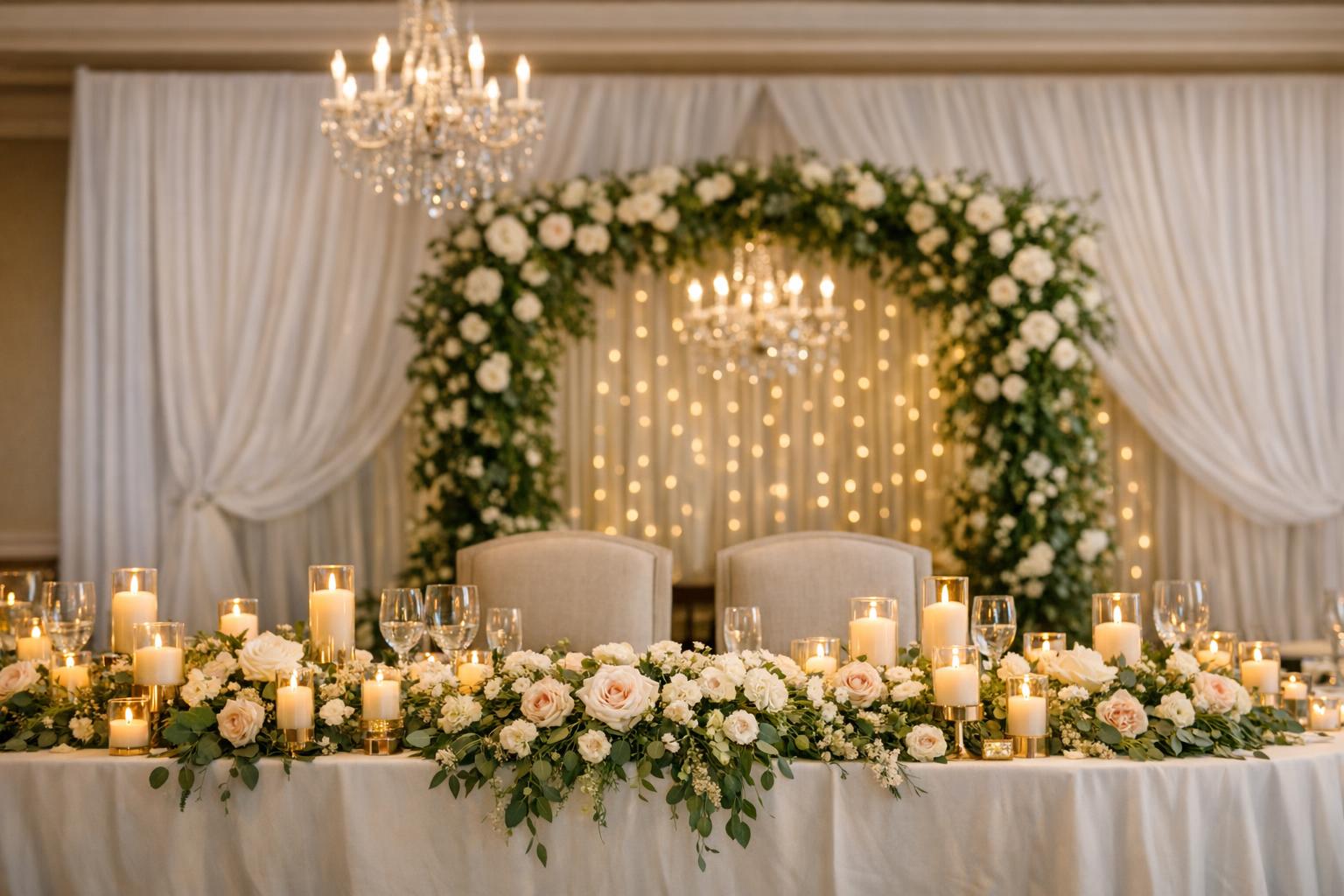
Wedding Head Table Decor: The Complete Guide to Stunning, Photo-Ready Tables
Wedding head table decor sets the visual tone of the reception because it naturally becomes a focal point for guests, speeches, and a large share of photography. Whether you’re planning a traditional head table, a sweetheart table, or a more modern configuration, the goal is the same: create a cohesive, comfortable, photo-ready setting that fits your venue, guest count, and overall design style.
This guide brings together the most-used head table ideas—florals and greenery, candles and fairy lights, luxurious linens and runners, and statement backdrops—then adds the practical planning pieces couples often need: layout decision-making, decor “playbooks,” budgeting by approach (DIY versus professional), venue coordination, and a step-by-step setup checklist.
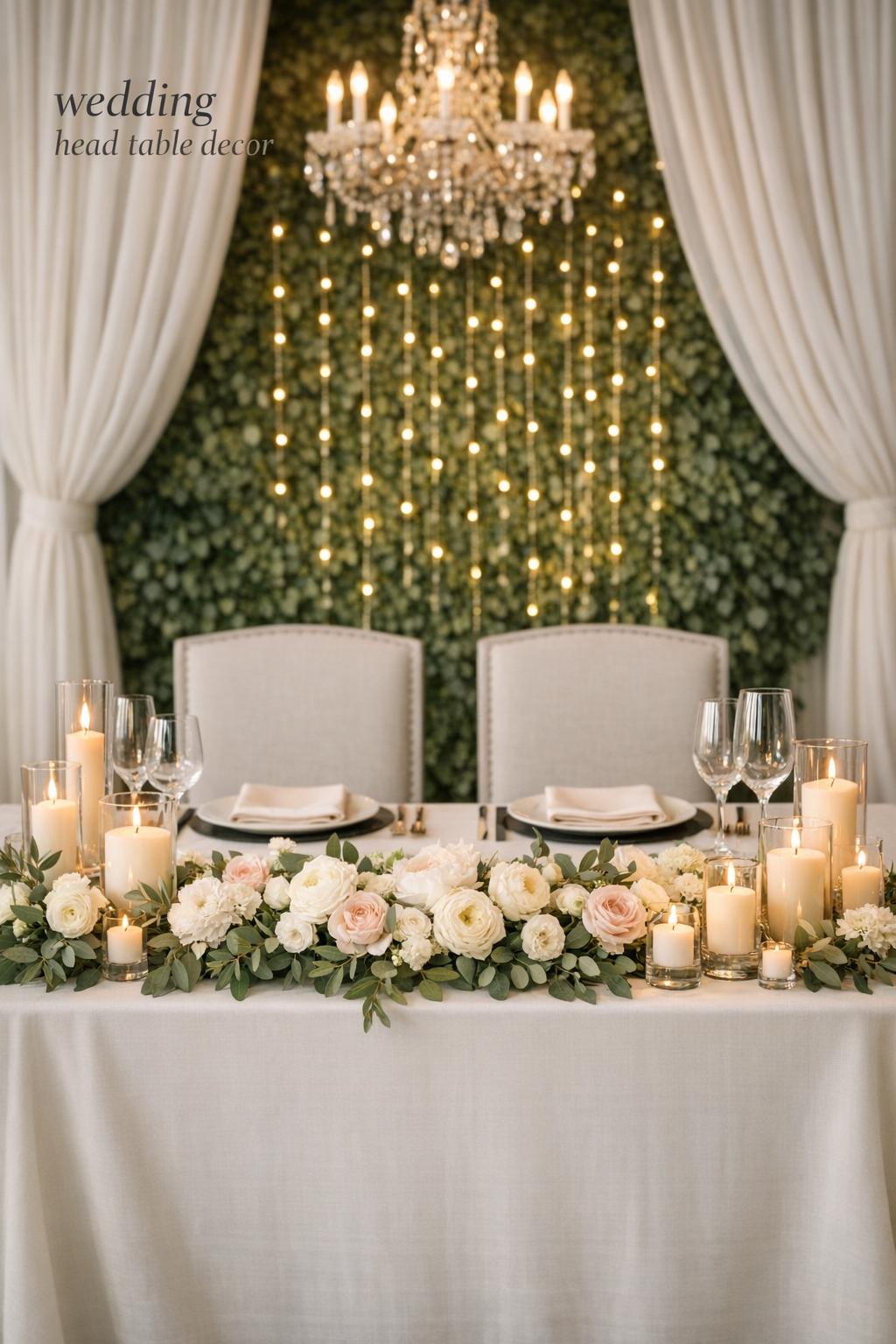
Why the Head Table Matters
Impact on photos and guest sightlines
The head table isn’t just where you sit—it’s a built-in stage. It’s frequently the background during toasts and the visual anchor in wide reception shots. A thoughtfully planned head table layout and backdrop can improve sightlines for guests, keep the couple visible without distractions, and make the space feel intentionally designed rather than simply “set.”
From a practical standpoint, head table decor can either help or hurt photography and comfort. Low, lengthwise decor (like floral runners, garlands, and candle clusters) keeps faces visible during speeches, while overly tall centerpieces placed in front of seated people can block sightlines and pull attention away from the couple. Backdrops—whether greenery, draping, or a framed structure—can create a clean focal area that feels finished in photos.
Tips: Before choosing decor, stand (or imagine standing) at key vantage points: the dance floor, the main guest tables, and where a photographer would frame toasts. If you can’t clearly see the couple, your decor may need to be lower on the tabletop or moved upward into a backdrop behind the table.
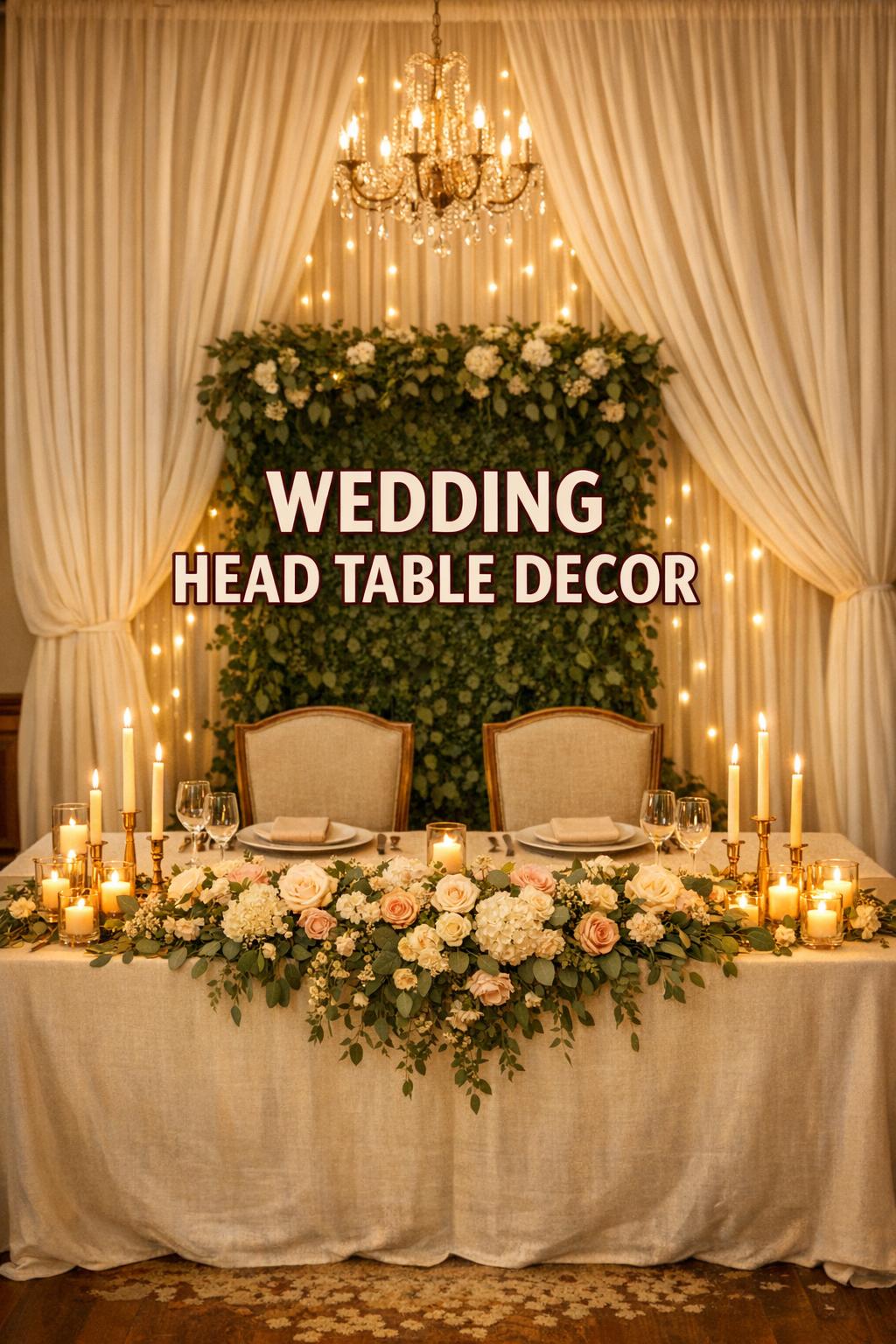
Design Principles for Head Table Decor
Scale, balance, and focal points
Successful head table decor usually follows a few simple principles: a clear focal point, balanced scale, and a repeated rhythm down the table length. The focal point can be the couple’s seats, a dramatic backdrop, or an overhead element like a chandelier or hanging greenery moment. Balance comes from distributing visual weight—if you have a large feature behind the couple, the tabletop can be simpler and more refined; if the backdrop is minimal, the tabletop runner, florals, and candles can do more of the work.
Long tables benefit from continuous design elements (a floral cascade runner, greenery garland, or repeated candle groupings) that tie the full length together. Shorter configurations or sweetheart tables can lean into a single “moment” (a concentrated floral spread, a draped backdrop, or a statement chair pairing) rather than trying to fill space that isn’t there.
Color palettes that pair with venue and florals
Color works best when it supports the venue and your core floral/greenery choices rather than competing with them. Neutral palettes and greenery-led designs are popular because they layer easily: soft neutrals can feel rustic vintage, minimal luxe, or modern garden depending on the materials you add (lace versus sleek linen; warm candlelight versus crisp, clean drape lines).
If you’re using abundant florals, keep linens and backdrop tones calmer so the flowers remain the statement. If you’re going floral-light, upgrade texture—luxurious table linens and runners, mirrored surfaces, and soft draping—to create visual richness without relying on large arrangements.
Lighting considerations (candles, fairy lights, and glow)
Lighting is one of the fastest ways to elevate wedding head table decor. Candlelight creates instant mood, fairy lights add sparkle, and light curtains or draped backdrops can soften the background behind you. The strongest approach is usually layered lighting: combine tabletop glow (candles) with background glow (fairy light curtain, subtle backdrop lighting) so the head table reads clearly in photos.
Tips: Aim for lighting that enhances faces during toasts. Keep bright points of light (like dense fairy lights) behind or around the couple rather than directly at eye level where they can distract in photos. If the venue has restrictions around open flame, plan for the look you want using permitted candle styles and focus on fairy light curtains or warm-toned backdrop lighting to maintain the mood.
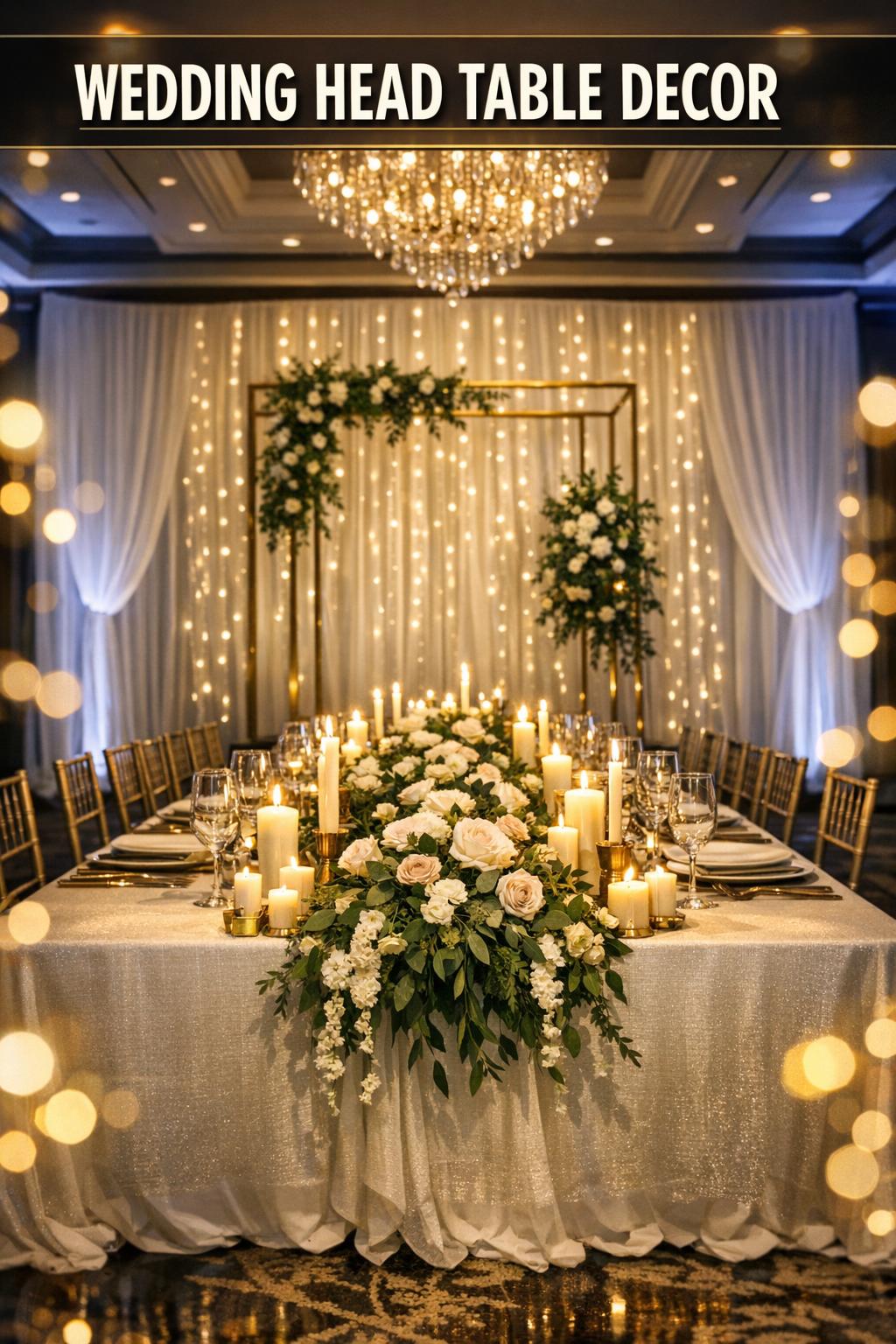
Layouts and Configurations
Traditional long head table
A traditional head table is a long table facing the room, typically used to seat the couple and selected people (often the wedding party). It can create a strong “front of room” feeling and makes it easy for guests to find the couple during key moments. Decor-wise, this format is ideal for lengthwise designs: garlands, floral runners, candle groupings, and repeated place-setting details.
This layout often pairs well with a defined backdrop. Because multiple people are seated, tabletop decor should usually stay low and long rather than tall and blocking, and chairs can be decorated selectively to highlight the couple’s seats without overwhelming everyone else’s.
Sweetheart table vs. head table (how to choose)
The sweetheart table is an intimate alternative: a small table for just the couple. It’s popular for modern receptions because it emphasizes the couple as a focal point, reduces seating complexity, and creates a clean canvas for decor. If you want a dramatic backdrop moment—like elegant draped backdrops, a greenery wall, or a framed arbor—sweetheart tables let you concentrate the budget and design impact on a smaller footprint.
A head table can feel more communal and traditional, and it often helps if you want your closest people nearby for speeches and transitions. The tradeoff is that a longer table can require more cohesive decor planning to avoid looking sparse or mismatched.
- Choose a traditional head table if you want a classic reception structure, prefer a “shared” front-of-room moment, and like long, continuous tabletop decor.
- Choose a sweetheart table if you want flexibility in seating, a stronger visual focus on the couple, and a concentrated, photo-framing backdrop moment.
- If you’re torn, consider a hybrid approach: a sweetheart table with adjacent family seating or an intimate table alternative that keeps key people nearby without committing to a full-length head table.
Tips: Think about comfort and movement. If you anticipate frequent visits from guests, a sweetheart table can make it easier to stand, greet, and return without coordinating a row of seated people. If you want your wedding party immediately present during toasts, the head table can make those moments feel more unified.
Alternative layouts for small venues or garden settings
Not every venue supports a single long head table facing the room. Alternative layouts can solve space, sightline, and styling challenges while still delivering a strong focal point. Semi-circle head tables can soften the feel and create a more inclusive look. Elevated head tables (on a stage or slightly raised area) can improve visibility. King’s table layouts can emphasize the couple at the center of a longer communal table.
Outdoor and destination-style settings often benefit from nature-inspired approaches that integrate greenery, garden romance styling, and overhead or framed features like a hanging tree effect or “tree tent” feeling. These ideas can bring a sense of place to your head table decor, especially when the backdrop is naturally scenic.
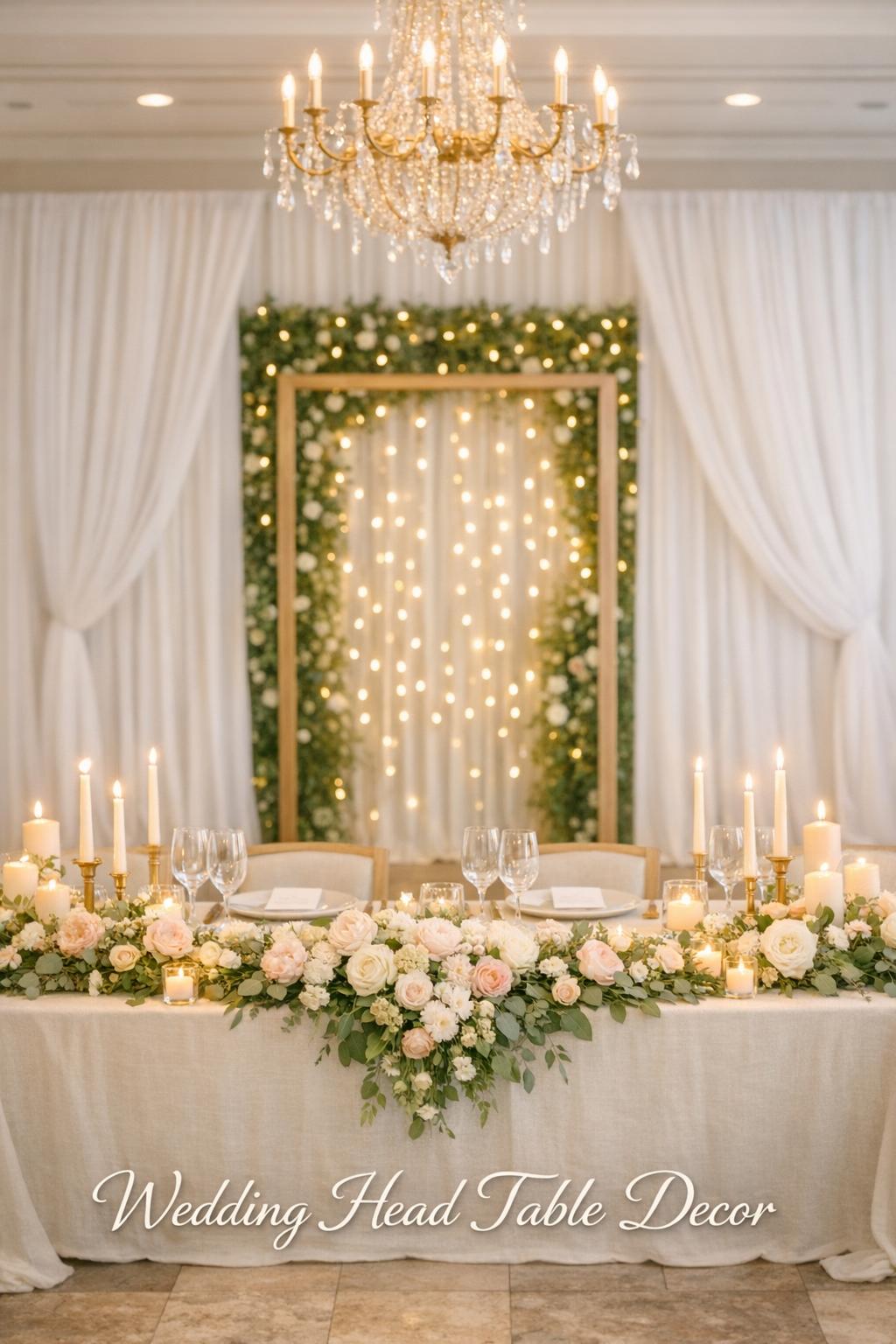
Core Decor Elements (By Category)
Florals and greenery: garlands, runners, and statement arrangements
Florals and greenery are the most recognizable building blocks of head table styling. You can choose abundant, garden-inspired designs that feel lush and layered, or go fresh and simple with greenery-led looks. A popular approach is a garland head table design—using a continuous greenery base—then adding florals selectively for color and dimension.
Floral runners and greenery runners create a strong “centerline” down the table, tying every place setting together. For a more dramatic look, a floral cascade runner can flow over the table edge or concentrate near the couple’s seats to make the center feel special without needing tall arrangements.
- Eucalyptus garland with white roses for a classic, clean look that still feels romantic.
- Fresh & simple greenery for a modern, approachable style that layers well with candles.
- Luxe garden-inspired abundance when you want full, statement-level florals across the length.
- Modern garden chic using greenery plus structured, intentional arrangement placement.
- A concentrated floral spread at the couple’s seats for a sweetheart table or center emphasis.
Tips: If you’re unsure how much floral coverage you need, decide whether your head table’s “wow” comes from the tabletop (runner and arrangements) or from the backdrop (drapery, greenery wall, arbor). Pick one primary hero element and let the other support it.
Textiles and textures: linens, runners, and layered materials
Linens are often the difference between “nice” and “finished.” Luxurious table linens and runners can instantly elevate a head table, even if you keep florals minimal. Runners create a strong line for the camera and help a long table read as cohesive. For couples who want simple wedding head table ideas, textiles are an efficient way to add depth without complexity.
Texture-forward options include vintage lace table runners, soft neutral linens, and drapery that ties the head table to the wider reception design. Rustic vintage meets soft neutrals is a common direction that feels warm and approachable, while minimal luxe leans on cleaner lines and subtle, high-impact surfaces.
Tips: If your tabletop decor is intentionally low for sightlines, prioritize texture. A runner plus coordinated napkins and a refined linen choice can carry the design even when florals are restrained.
Lighting: candles, crystal holders, and delicate fairy lights
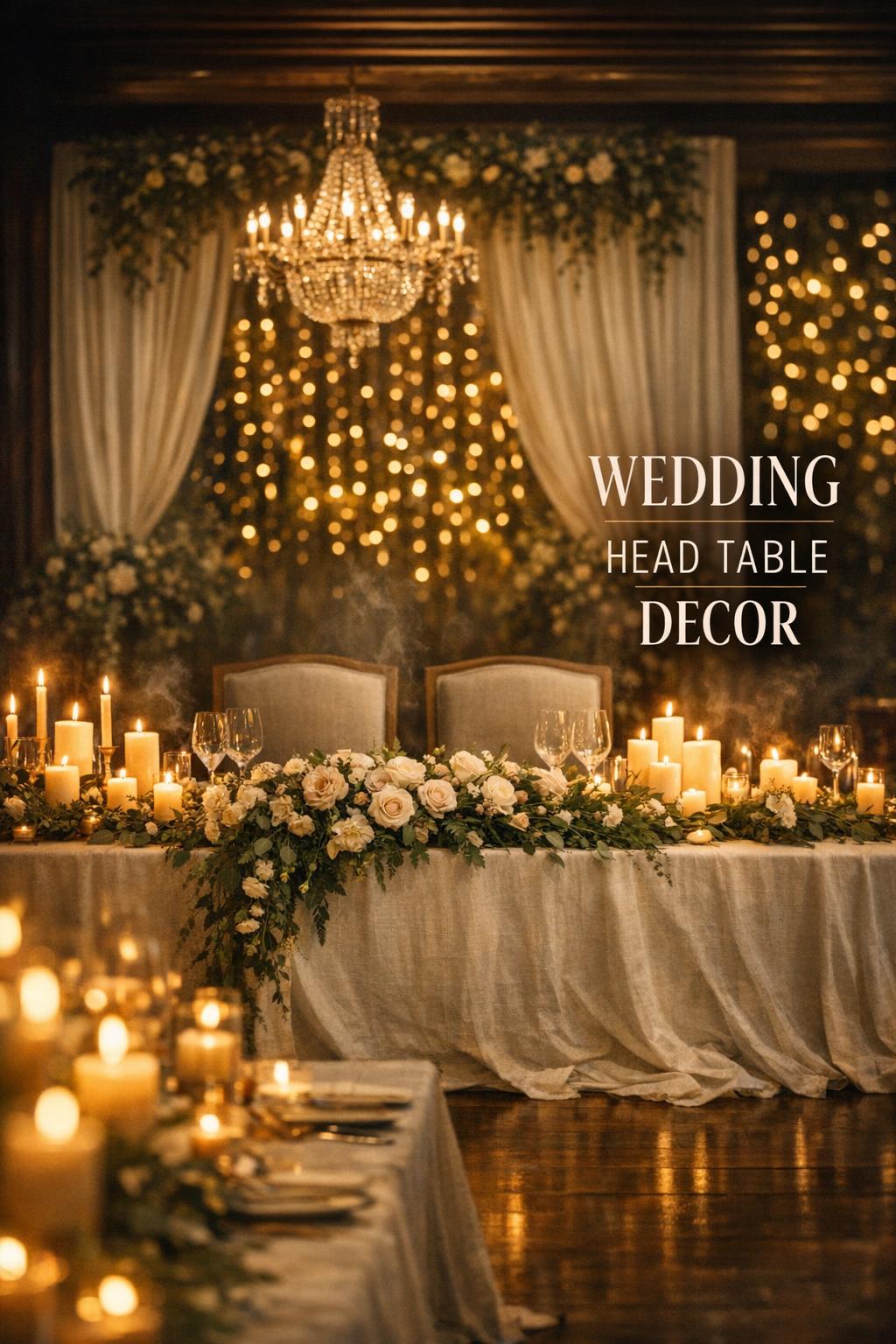
Candles and fairy lights show up across many head table centerpiece ideas because they create immediate atmosphere. Candlelit grandeur can be as simple as repeating candle groupings down the table or as ornate as mixing heights with crystal candle holders for a classic glam effect. Fairy light curtains and delicate fairy lights can serve as both background and ambiance, especially when paired with drapery.
Tips for candlelight and sparkle
Tips: To keep the look cohesive, choose one primary “sparkle language.” Crystal candle holders create a refined, glamorous feel, while softer fairy lights read more romantic and whimsical. You can mix both, but anchor the design with one dominant style so the head table doesn’t feel visually split.
Backdrops and backings: draping, greenery walls, and framed focal points
A backdrop for the head table can do as much visual work as the tabletop. Elegant draped backdrops soften the room, conceal distractions, and frame the couple. Greenery walls and garden-inspired backdrops can emphasize nature-forward themes. For a destination wedding vibe or outdoor-inspired look, a hanging tree concept or “tree tent” feeling can create an immersive focal area.
Backdrops are also where personalization can live. Whether it’s a monogram-style focal point or a designed feature that reflects your theme, a backdrop helps the head table feel intentionally placed rather than simply positioned.
Centerpieces that span the full table length
Head table centerpieces aren’t limited to one arrangement. Many of the most effective looks treat the entire table as the centerpiece: floral cascade runners, garden-inspired traditions with greenery and blooms, and candle-focused lines that create consistent glow from end to end. Overhead focal points—like a grand chandelier focus—can also anchor the scene above, allowing the tabletop to stay clean and guest-friendly.
If you’re working with a long farmhouse tradition table, spanning elements are especially important. A continuous runner (greenery, floral, or textured fabric) plus repeated lighting creates a polished look that reads well from across the room.
12 Head Table Ideas You Can Mix and Match
Use the ideas below as modular building blocks. You can combine one tabletop concept, one lighting concept, and one backdrop concept to create a complete wedding head table decor plan without overcomplicating your design.
- Candlelit Grandeur: Line the table with clustered candles to create warm, romantic glow.
- Floral Cascade Runner: A lush runner that visually connects every seat and adds movement.
- Fresh & Simple Greenery: Greenery-led garland that looks clean and modern with minimal flowers.
- Eucalyptus Garland with White Roses: A classic romantic pairing that reads elegant and timeless.
- Elegant Greenery with White Draping: Combine simple tabletop greenery with a bright, clean fabric backdrop.
- Fairy Light Curtains: Use a light curtain behind the table for sparkle and depth in photos.
- Delicate Fairy Lights on the Table: Add subtle twinkle around garlands or along the table edge.
- Crystal Candle Holders: A classic glam element that adds refined shine and height variation.
- Vintage Lace Table Runners: A rustic vintage texture that pairs well with soft neutrals.
- Mirrored Table Tops: Add reflection for a high-impact look even with fewer florals.
- Garden Arbor or Framed Feature: Create a defined “stage” behind the couple without needing heavy draping.
- Hanging Tree / “Tree Tent” Moment: Nature-inspired overhead styling for outdoor or destination-feel receptions.
Tips: If you love multiple ideas, choose one “hero” feature (for example, draped backdrops or a floral runner) and keep the supporting elements simpler. Most head tables look best when they feel intentional rather than packed with every possible detail.
Theme-Builders: 4 Head Table Design Playbooks
These playbooks are complete, ready-to-implement approaches. Each one includes a recommended layout direction, tabletop recipe, backdrop concept, and finishing touches you can hand to a florist, planner, or DIY team.
Playbook 1: Modern Garden
Modern garden is fresh, intentional, and greenery-forward without feeling overly wild. It’s ideal if you want the room to feel airy while still showcasing florals and organic texture.
- Layout: Traditional long head table or sweetheart table with nearby family seating for a modern approach.
- Tabletop: Fresh & simple greenery garland with a selective floral spread focused near the couple.
- Lighting: Candles repeated in small clusters to create a consistent line of glow.
- Backdrop: Garden-inspired focal element such as an arbor or greenery feature to frame photos.
- Finishing touches: Keep linens refined and neutral to let greenery read clean and contemporary.
Tips: Modern garden looks strongest when the greenery is consistent down the full length of the table. If you’re using more floral color, place it in a few intentional “beats” rather than scattering small blooms everywhere.
Playbook 2: Classic Glam
Classic glam is about sparkle, structure, and elevated lighting. This style works especially well when you want the head table to feel like the centerpiece of the entire reception.
- Layout: Traditional head table for a strong front-of-room focal point.
- Tabletop: Floral runner or structured statement arrangements, balanced so sightlines stay clear.
- Lighting: Crystal candle holders paired with a candlelit design rhythm down the table.
- Backdrop: Elegant draped backdrops, optionally paired with a chandelier-like focal feeling overhead.
- Finishing touches: Luxurious table linens and runners to add richness even before florals are placed.
Tips: Glam can get busy quickly. Keep the backdrop strong and the tabletop refined, or keep the tabletop dramatic and the backdrop cleaner—avoid pushing both to maximum intensity at the same time.
Playbook 3: Rustic Vintage
Rustic vintage combines warmth, softness, and nostalgic texture. It’s an approachable look that photographs beautifully when you emphasize layered materials and romantic lighting.
- Layout: Long farmhouse tradition head table or an intimate table alternative for a cozy feel.
- Tabletop: Vintage lace table runner with greenery accents and a gentle floral spread.
- Lighting: Candles to create a warm, inviting glow (and optional delicate fairy lights for added softness).
- Backdrop: Drapery or a garden-inspired backing that complements the venue without looking too formal.
- Finishing touches: Soft neutrals that keep the palette calm and cohesive.
Tips: Rustic vintage is one of the easiest styles to keep cohesive. Repeat one or two textures—lace and greenery, for instance—across the full table so the design reads intentional rather than collected.
Playbook 4: Minimal Luxe
Minimal luxe is clean, edited, and high-impact through materials rather than volume. It’s ideal if you want simple wedding head table ideas that still feel elevated and “designed.”
- Layout: Sweetheart table (for a sharp focal moment) or a streamlined head table with restrained tabletop decor.
- Tabletop: A refined runner plus low floral accents or a single concentrated floral spread.
- Lighting: A limited number of candle groupings placed with symmetry and intention.
- Backdrop: Clean drapery lines or a minimalist framed backing that keeps attention on the couple.
- Finishing touches: Consider mirrored table tops for reflection and visual depth without added clutter.
Tips: Minimal luxe only works if the details are consistent. Keep candle holders, linens, and the runner style aligned so the simplicity reads deliberate rather than unfinished.
Practical Considerations (Budget, Venue, and Photography)
Budget tiers by approach (rental vs DIY vs floral-forward)
Instead of thinking in strict dollar amounts, it’s often more helpful to think in budget tiers by approach, because head table decor can scale up or down based on materials and labor. Floral-forward designs (like full-length floral cascade runners or abundant statement arrangements) typically require more professional handling and coordination. Rental-forward designs lean on linens, runners, candle holders, and backdrop structures. DIY-forward designs focus on manageable projects like fairy light curtains, simple greenery runs, and personalized details.
The biggest budget drivers are usually: how long the table is, how dense the florals are, whether you’re installing a backdrop, and whether lighting involves many individual pieces. If your budget is tight, concentrate impact where it’s most visible—often behind the couple (backdrop) and at the center of the table (a focused floral spread and candle cluster).
Venue approvals, safety, and logistics (space, power, and sightlines)
Head table decor touches multiple parts of the room: floor space (table placement and guest flow), vertical space (backdrops and overhead elements), and power needs (especially for fairy light curtains). Before committing to a design, confirm what the venue allows for backdrops and drapery, and clarify any limitations around candle use. Logistics matter just as much as design: if the head table is placed where guests and vendors need to pass frequently, oversized decor can become a frustration.
Also plan for comfort and function. The couple should be able to stand, sit, and move behind chairs without snagging a backdrop or bumping tall decor. For longer head tables, keep the centerline clear enough that people can comfortably see each other and interact during dinner.
Tips: Ask your venue early about two items that can change your entire plan: whether open-flame candles are permitted and what attachments (if any) are allowed for draping and backdrops. Those answers determine whether you’ll lean on candlelight or fairy lights, and whether your backdrop is freestanding or integrated into the room.
Photography-friendly styling tips (especially during toasts)
Photography-friendly head tables are designed to frame faces and expressions. Keep the tallest elements behind the couple (backdrop) rather than in front of them (tabletop). For tabletop decor, use low arrangements, garlands, and candles that create atmosphere without interrupting sightlines. A clean backdrop is also helpful: it minimizes visual clutter and makes your photos look more timeless.
If you’re using fairy light curtains, treat them as a soft background rather than a spotlight. Pair them with draping or greenery so the backdrop has structure, and position the brightest points of light so they don’t appear to “sprout” directly from heads in photographs.
Step-By-Step Installation Checklist
Two-week pre-event tasks
- Confirm your final head table layout (traditional head table, sweetheart table, or alternative configuration).
- Finalize the tabletop plan: runner/garland choice, candle plan, and whether you’re doing a floral spread or full runner.
- Confirm backdrop details: drapery, greenery wall, framed arbor, or fairy light curtain.
- Align responsibilities: identify who is providing florals, who is installing the backdrop, and who is placing candles and decor.
- Re-check sightlines: ensure tabletop decor will stay low enough for toasts and conversation.
- Confirm venue rules that affect execution (candles and backdrop approvals) and any power needs for lighting.
On-the-day setup flow
- Place tables and chairs first to lock in spacing and guest flow.
- Install backdrop elements next (drapery, greenery, fairy light curtains) so you can center the head table accurately.
- Add linens and runners, then place any mirrored table tops if you’re using them.
- Lay greenery garlands and floral runner pieces; focus the most dramatic coverage near the couple if you want a focal “moment.”
- Place candles and candle holders last so they stay clean and evenly spaced.
- Do a quick “toast view” check from the guest area and a “camera view” check from the dance floor area.
Tips: If you’re combining multiple decor layers (runner + greenery + candles + accents), keep a clear order of operations. The most common setup issue is having to move candles repeatedly to fit garlands, which wastes time and can make spacing feel accidental.
DIY vs Professional Decor: Pros, Cons, and When to Hire
Quick DIY ideas that look high-end
DIY head table decor can look elevated when you choose projects with big visual payoff and predictable setup. Light-based projects and textile upgrades are especially effective because they change the room’s mood quickly and don’t require specialized floral mechanics.
- Create a fairy light curtain backdrop for instant glow behind the couple.
- Use delicate fairy lights on the table edge or woven lightly around greenery for subtle sparkle.
- Upgrade with luxurious linens and a statement runner to make the table feel premium without extra florals.
- Add a focused floral spread (rather than a full runner) so you get impact with fewer pieces.
- Use chair decor selectively to highlight the couple’s seats without needing to style every chair.
When to hire florists or specialty vendors
Professional support is most valuable when the design involves complex installation, high-visibility floral mechanics, or layered backdrops. Full floral runners, elevated garden arbor moments, and large-scale drapery are easier to execute cleanly with experienced hands, especially when timing is tight and the head table is central to the reception’s visual plan.
If you’re planning an elevated head table, a semi-circle setup, or a destination-style head table concept that leans heavily on nature-inspired styling, a professional can help ensure the final result is stable, balanced, and cohesive from every angle guests will see.
Tips: If you’re trying to decide, separate your plan into two layers: “must look perfect” elements (usually the backdrop and the couple’s focal area) and “can be simple” elements (often the outer edges of the table). Hire out the high-risk, high-visibility layer and DIY the rest.
Inspiration Gallery: 12 Real-World Head Table Concepts (With Quick Notes)
Use these concepts as a menu of head table centerpiece ideas and backdrop pairings. Each one can be adapted to a traditional head table or a sweetheart table depending on your seating plan.
- Candlelit Grandeur + Neutral Linens: A warm, romantic head table that relies on glow rather than heavy florals.
- Floral Cascade Runner + Minimal Backdrop: Let the table carry the statement; keep the background clean for photos.
- Greenery Garland + White Draping: A crisp pairing that photographs cleanly and fits many venues.
- Eucalyptus + White Roses + Crystal Candle Holders: Romantic florals with a polished, classic glam sparkle.
- Fairy Light Curtain + Soft Drapery: A layered backdrop that adds depth and hides room distractions.
- Vintage Lace Runner + Candle Clusters: Rustic vintage meets soft neutrals with approachable warmth.
- Mirrored Table Top + Low Floral Accents: Reflection adds impact; decor stays low for sightlines.
- Garden Arbor Frame + Concentrated Floral Spread: A strong focal point around the couple without requiring a full wall backdrop.
- Long Farmhouse Tradition + Repeated Greenery Rhythm: A continuous line that makes the full table feel intentional.
- Modern Garden Chic + Selective Florals: Greenery-forward with intentional floral placement for a clean, designed look.
- Rustic Garden Romance + Warm Lighting: Nature-inspired styling that feels soft and welcoming.
- Hanging Tree / “Tree Tent” + Simple Tabletop: Overhead drama with restrained tabletop elements to keep balance.
Tips: If you want your head table to look cohesive in wide room photos, repeat one element in at least three places—for example: greenery on the table, greenery in the backdrop, and greenery in a nearby feature. Repetition reads as intentional design.
FAQ
Do we need a head table at all?
No—many couples choose sweetheart table alternatives or more flexible seating approaches, especially if they want a smaller focal setup or prefer to sit with family. What matters is having a clear focal area for the couple that supports sightlines and photographs well, whether that’s a traditional head table or an intimate table option.
Who typically sits at the head table?
A traditional head table often includes the couple and selected people such as the wedding party, but modern approaches vary widely. Some couples choose a sweetheart table for just the two of them, or mix formats by seating family nearby while keeping the couple as the visual focal point.
Sweetheart table vs head table: which is better for decor?
A sweetheart table concentrates the decor budget into a smaller footprint and often makes it easier to create a dramatic backdrop moment. A traditional head table offers a classic look and works beautifully with long, continuous elements like garlands, floral runners, and candle rhythms, but it usually requires more coordination to keep the full length cohesive.
Are candles allowed at most venues?
Policies vary, so you’ll need venue approval before building a candle plan into your design. If candles are restricted, you can still achieve a romantic look by emphasizing fairy light curtains, delicate fairy lights, and layered textures through linens, runners, and backdrop draping.
How far in advance should head table decor decisions be finalized?
Finalize early enough to confirm the layout, backdrop approach, and responsibilities for setup, because those decisions affect rentals, florals, and lighting plans. A solid checkpoint is at least two weeks before the event so you can confirm venue approvals, sightlines, and the final install plan without last-minute changes.
What are the easiest high-impact head table decor upgrades?
High-impact upgrades tend to be lighting and textiles: a fairy light curtain or elegant draped backdrop behind the couple, plus luxurious table linens and a strong runner. Add a greenery garland and candle groupings to complete the look without relying on heavy florals.
How do we keep head table decor from blocking views during speeches?
Keep tabletop elements low and lengthwise—garlands, runners, and candle clusters—then place height behind the couple using a backdrop, draping, or a framed arbor. Do a sightline check from guest seating areas and the dance floor vantage point to confirm faces remain visible.
What decor works best for a long farmhouse-style head table?
Long tables look best with spanning elements that create continuity, such as a greenery garland head table design, a floral runner, or repeated candle groupings. Pair that with a simple, clean backdrop so the full length of the table reads cohesive in wide reception photos.
What’s a practical way to personalize the head table without overdecorating?
Focus personalization into one controlled area—most often the backdrop or the couple’s seats—so the message or styling moment is clear and photo-friendly. Keep the rest of the tabletop consistent with runners, greenery, and lighting so the design still feels cohesive rather than crowded.
Leave a Reply