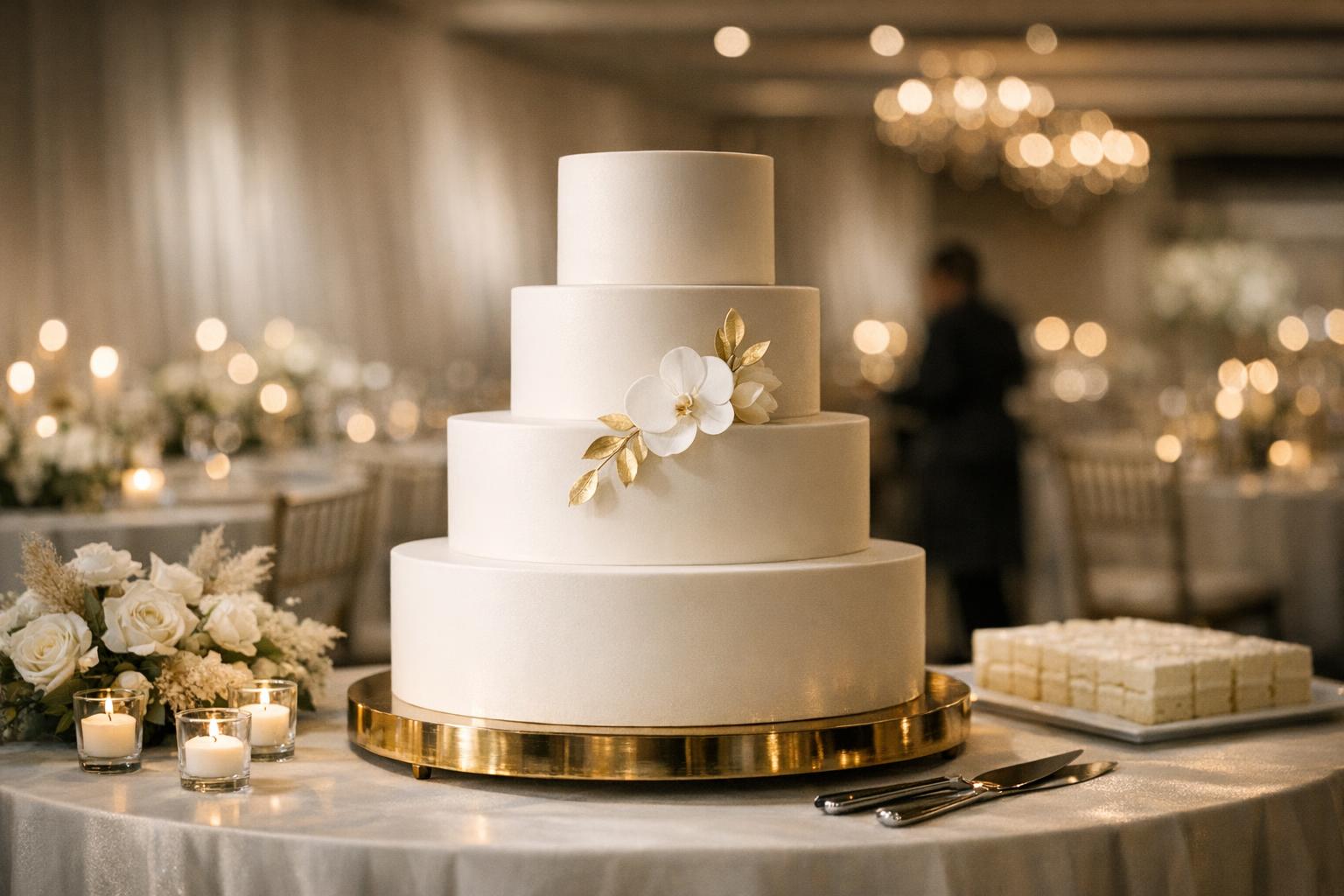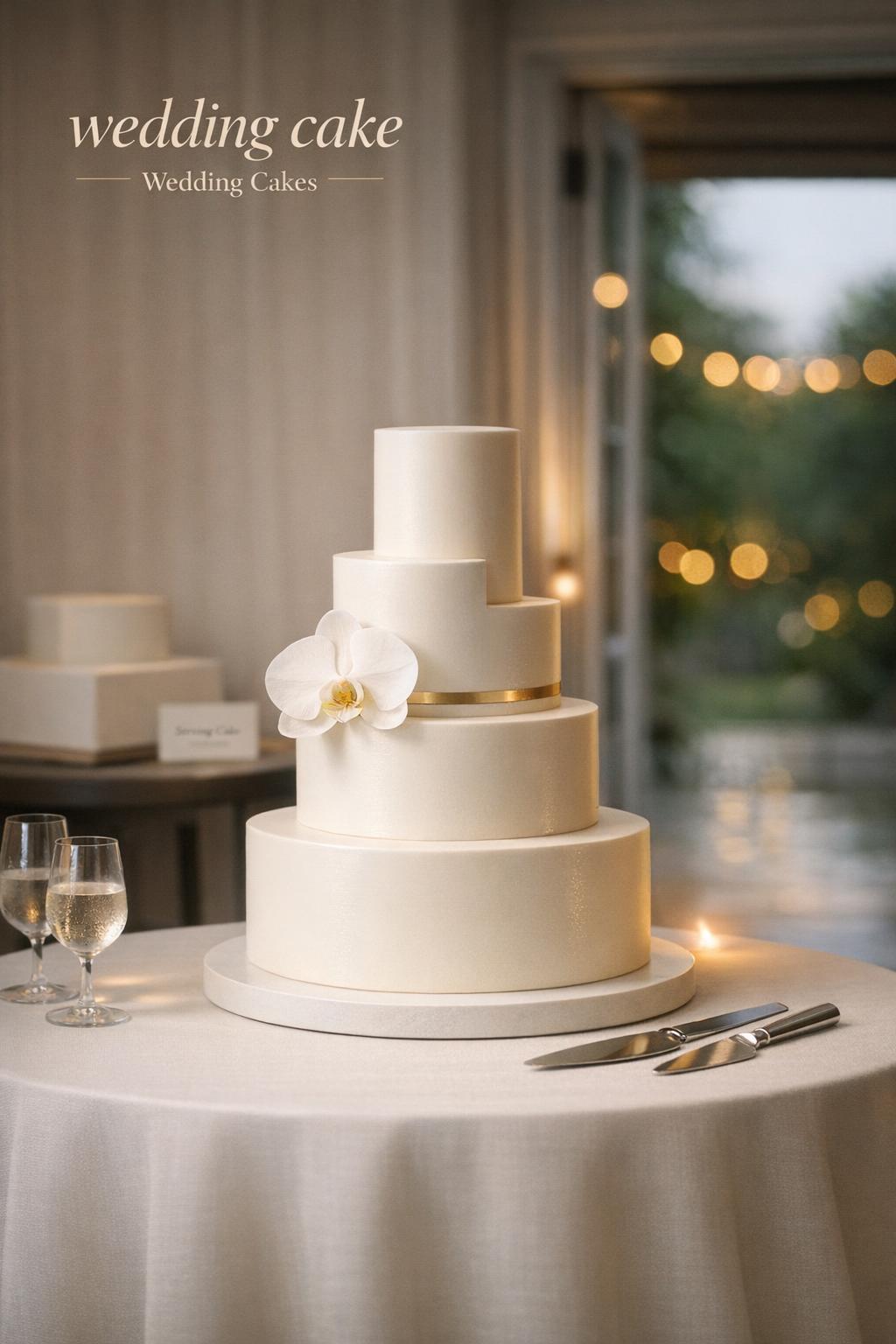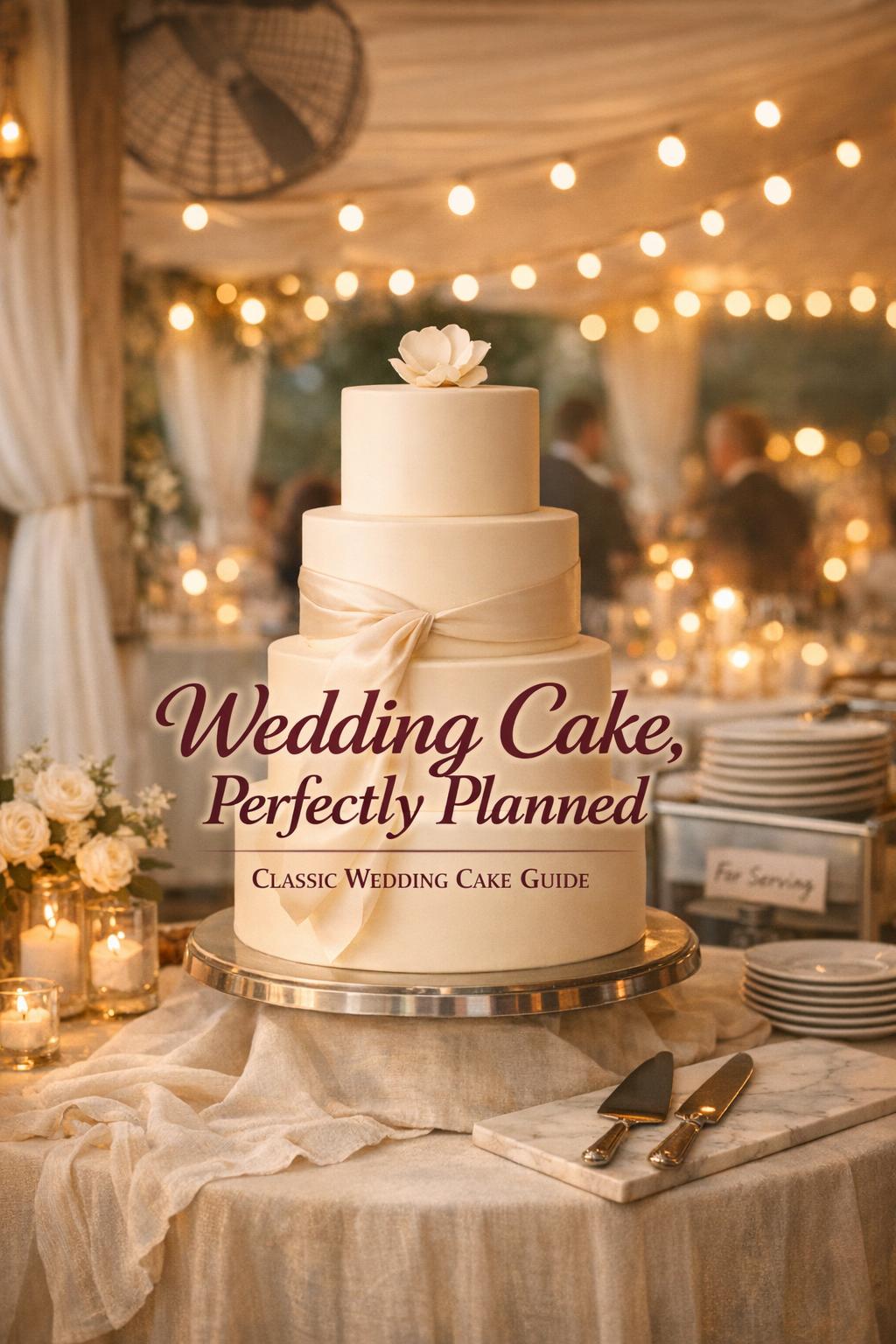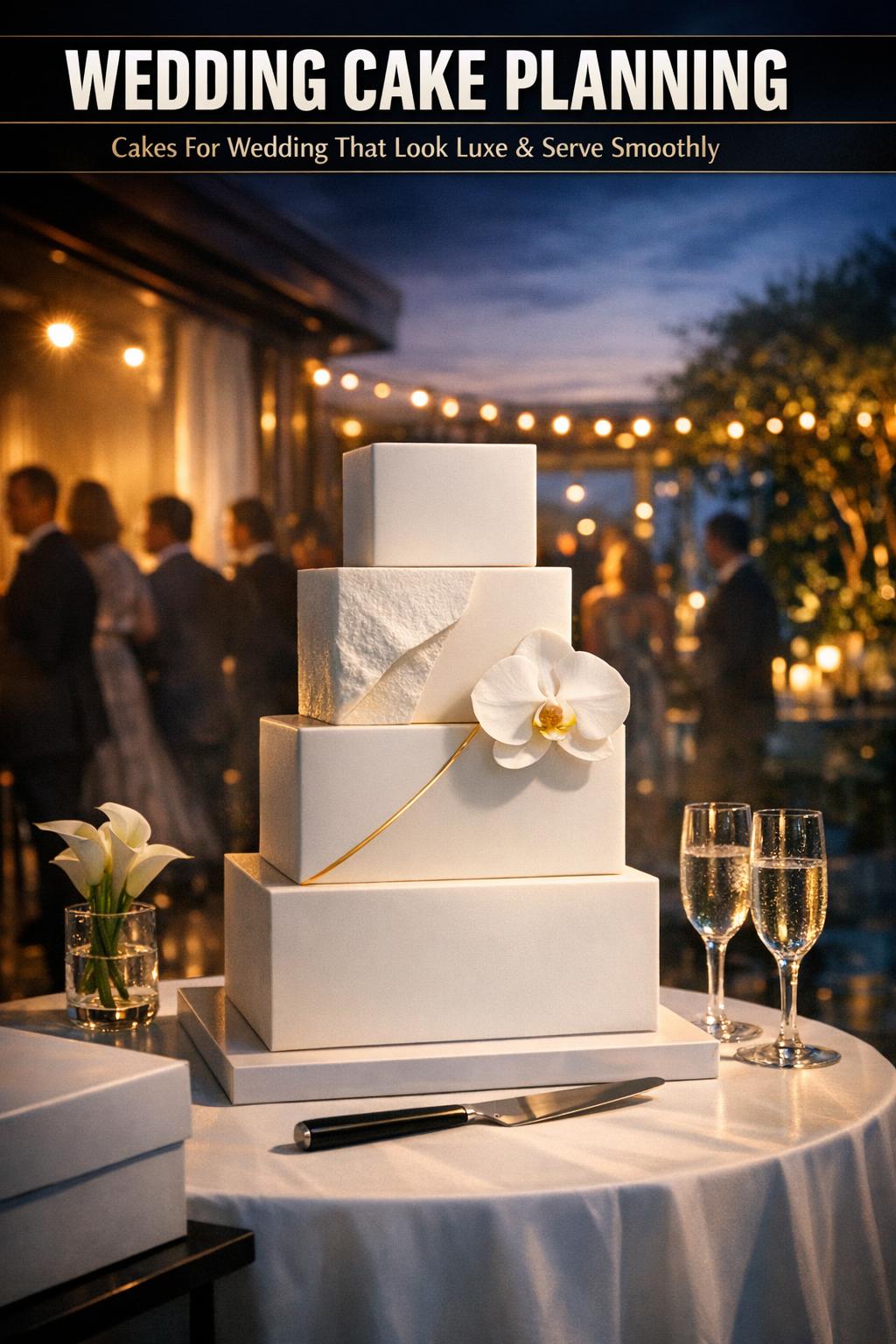
Category: Wedding Cake

  • Wedding Sheet Cake Ideas With an Editorial, Photo-Ready Finish

    Wedding Sheet Cake Ideas With an Editorial, Photo-Ready Finish

    Wedding sheet cake ideas that feel intentional (not like an afterthought)

    The moment a wedding dessert table has to serve a real crowd, the conversation gets practical fast: portions, timing, transport, and a plan for slicing that won’t stall the reception. This is exactly where wedding sheet cake ideas shine. A sheet cake for wedding celebrations can be scaled for large guest counts, styled to match everything from modern minimalism to rustic romance, and presented in a way that still feels ceremonial—especially when you treat the rectangle cake format as a design canvas, not just a convenience.

    Below, you’ll find wedding sheet cakes and sheet cake designs organized by aesthetic (geometric, watercolor, rustic, bold color, classic florals) plus the real-world decisions that make those looks land: buttercream piping choices, edible florals (including fresh vs. sugar flowers), and venue logistics like delivery, refrigeration, and cutting. The goal is to help you choose a direction that looks beautiful in photos, serves smoothly during the event, and stays true to your wedding style.
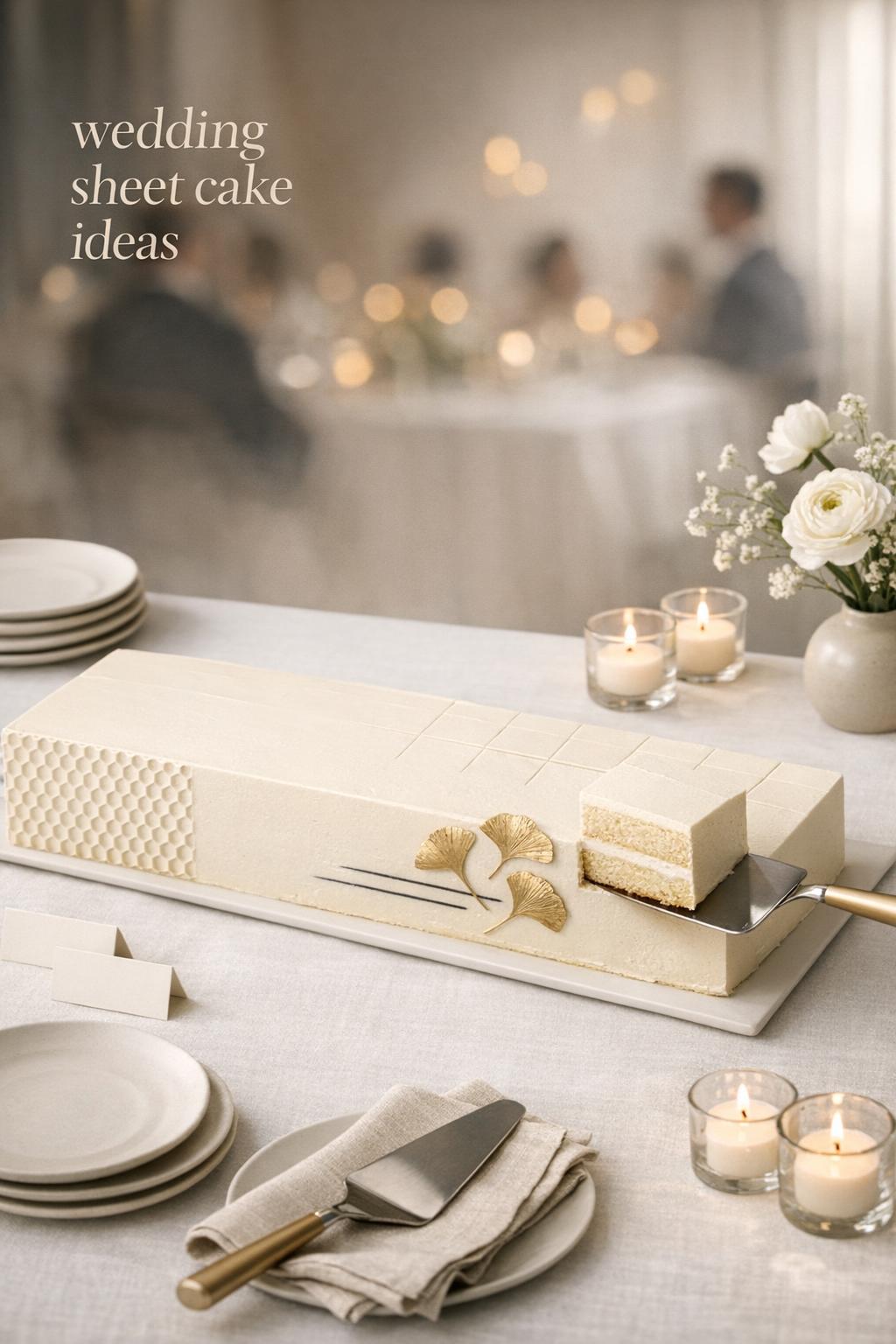
    modern minimalist wedding dessert table with long ivory sheet cake centerpiece, wedding sheet cake ideas text overlay
    A long ivory wedding sheet cake anchors a minimalist dessert table with soft candlelight and muted gold accents.

    First, what a sheet cake is—and why it works so well for weddings

    A sheet cake is a cake baked in a large, flat pan and finished as a single surface—often rectangular—making it inherently suited to events and large gatherings. For weddings, that “big surface” is more than a serving solution: it’s a clean stage for frosting textures, piping, floral placement, and color palettes that read clearly across a room.

    Couples often consider wedding sheet cakes for three overlapping reasons. First, serving efficiency: a large-format cake is designed for portioning. Second, presentation flexibility: sheet cake designs can be minimalist and modern, painterly and romantic, or richly maximalist depending on your decor. Third, production practicality: a rectangle cake is typically easier to transport and stage than tall, stacked structures, especially when the venue has tight load-in windows or limited refrigeration.

    One of the most overlooked advantages is how a sheet cake changes the guest experience. Instead of waiting for a dramatic tiered cake to be cut in the middle of the dance floor, a long wedding sheet cake can be sliced with speed and consistency. That means guests actually get dessert while the party is still lively—and the couple gets a dessert moment that feels seamless instead of logistically stressful.
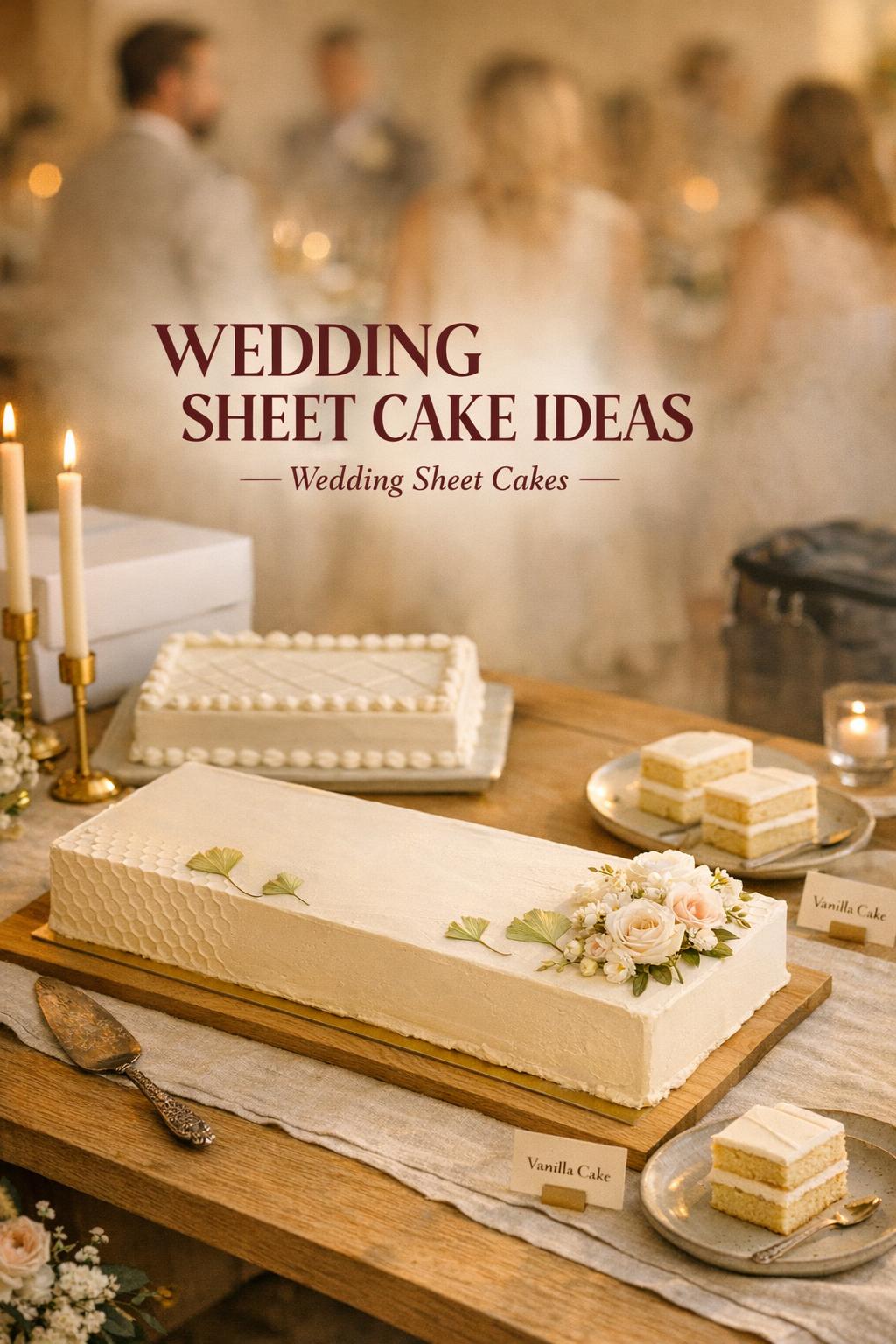
    Wedding sheet cake ideas shown on an elegant ivory sheet cake dessert table in warm golden-hour reception light
    An editorial golden-hour reception scene highlights an elegant ivory sheet cake with ginkgo accents on a curated dessert table.

    The design mindset: treating the rectangle cake like a runway, not a backup plan

    The most striking sheet cake wedding cakes ideas start with a shift in how you picture “wedding cake.” A long or large-format sheet doesn’t need to imitate tiers to feel special. In fact, its strongest looks embrace what the format does best: long lines, negative space, and pattern repetition. Think of it like design for a tablescape—your cake becomes part of the visual rhythm alongside linens, florals, and candles.

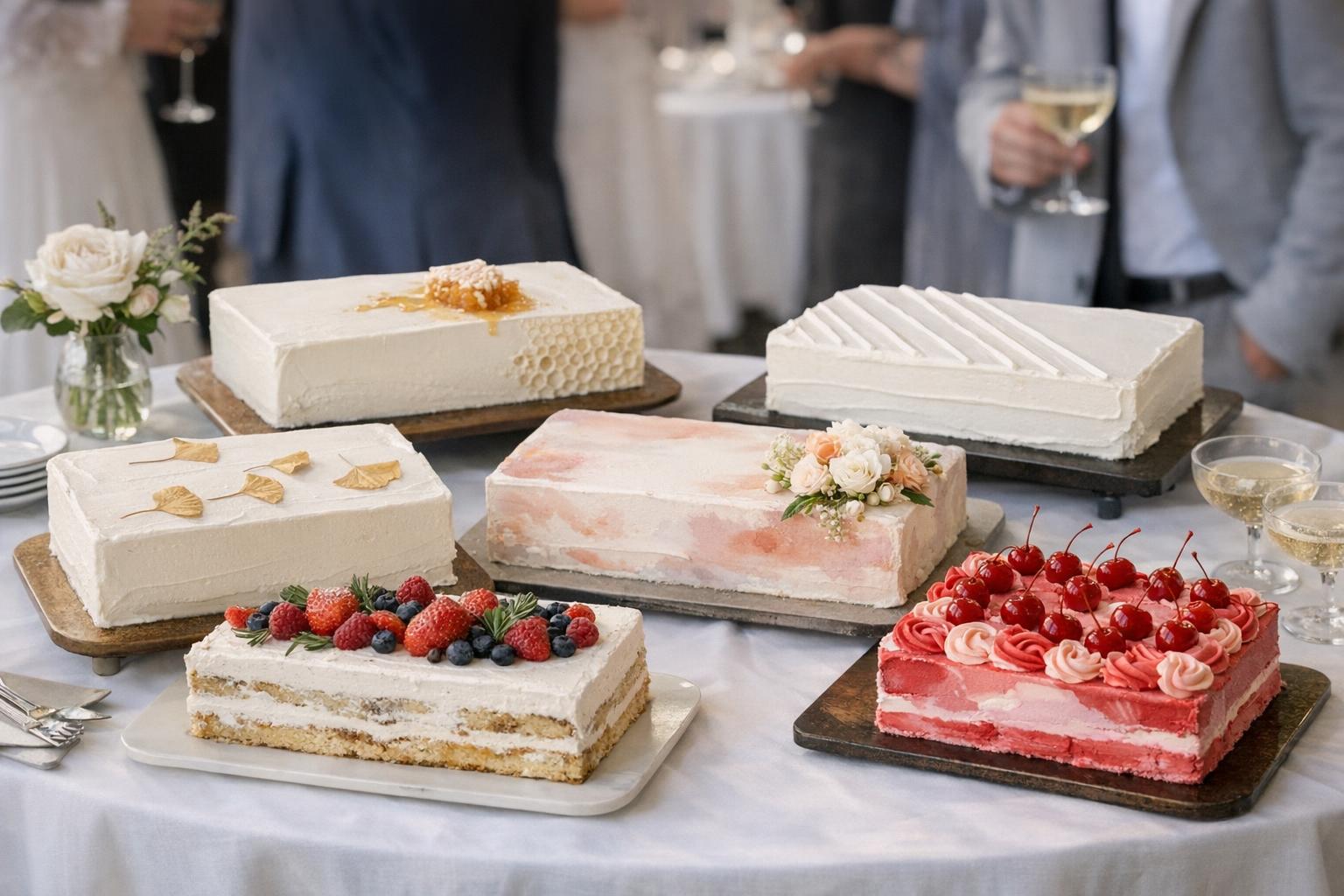
    Two design principles tend to matter most with wedding sheet cakes. The first is scale: bolder piping and larger floral groupings read better from a distance, while tiny details can disappear on a big surface. The second is flow: because the cake is long and rectangular, motifs like ginkgo branches, rosette trims, geometric linework, or watercolor washes can travel across the cake in a way that feels modern and editorial.
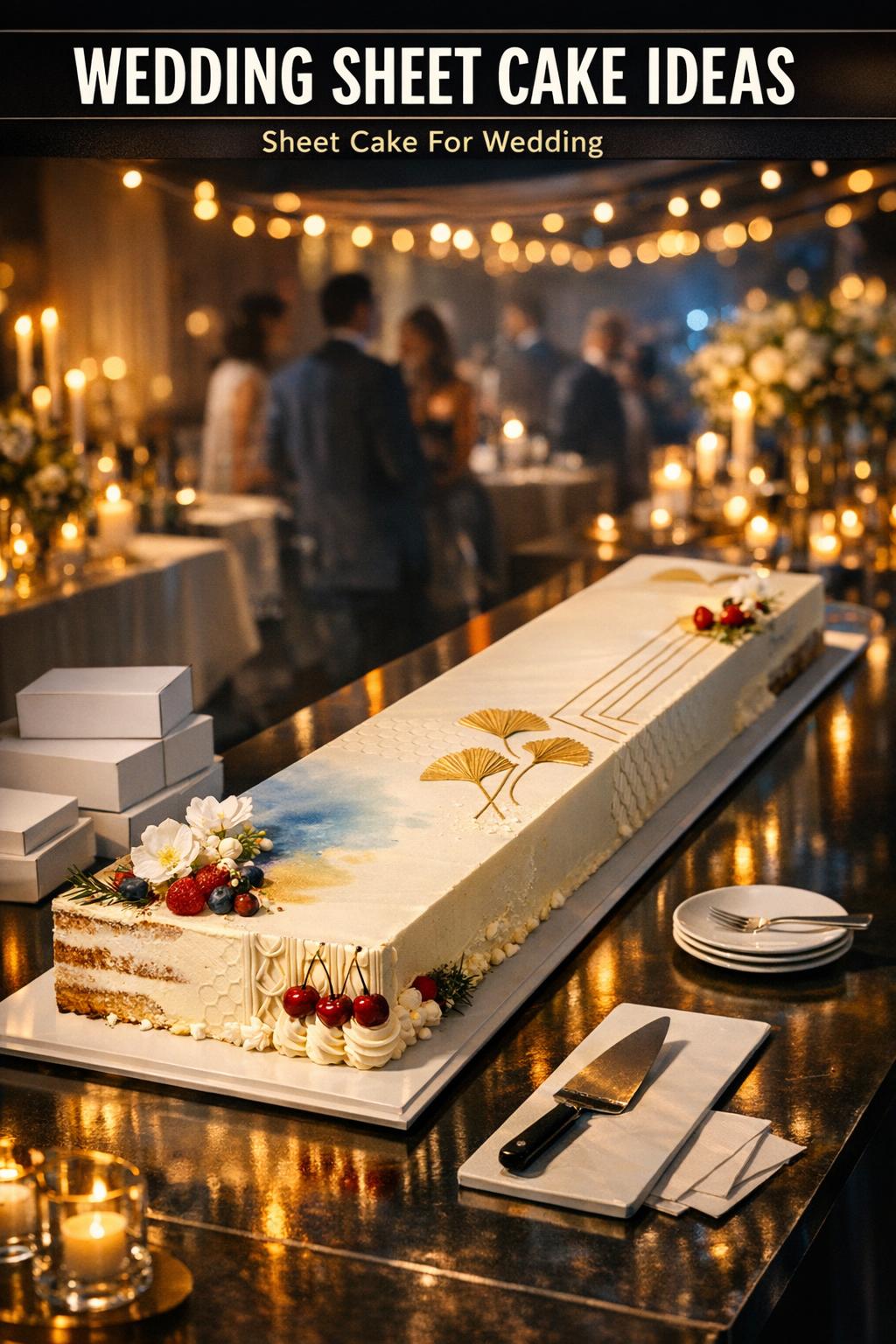
    Wedding sheet cake ideas featuring an elegant white frosted cake with floral details on a rustic dessert table
    An elegant white wedding sheet cake with delicate floral accents makes a timeless centerpiece for the dessert table.

    Modern minimalism with botanical details

    Minimalism is one of the easiest aesthetics to translate into a sheet cake for wedding settings because the format naturally emphasizes clean edges and broad frosting surfaces. The key is to avoid “blank” and aim for “intentional”: a controlled palette, a confident piping choice, and a botanical element that feels curated rather than sprinkled on.

    Botanical minimalism with ginkgo and honeycomb texture

    A botanical minimalist cake becomes memorable when it pairs a restrained layout with a texture that catches light. One elegant direction is a ginkgo motif combined with a honeycomb-style surface pattern. On a long wedding sheet cake, the honeycomb texture can create subtle depth across the frosting, while ginkgo-inspired placement gives the eye a focal path from one end of the rectangle cake to the other.

    This style works particularly well for modern venues and pared-back decor because it doesn’t compete with the room. It also photographs cleanly: the pattern reads as craft, and the botanical element reads as design.

    Rosette-trimmed minimalism (a quiet nod to tradition)

    If you want a minimalist sheet cake that still feels “wedding,” a rosette-trimmed edge is a smart compromise. Rosette piping brings a classic signal—floral, romantic, familiar—without forcing the entire cake into a traditional look. On a rectangle cake, rosettes can frame the perimeter in a way that feels architectural, almost like a tailored hemline.

    In practice, rosette trimming also helps with durability. Edges take the most wear during transport and setup, and a piped border can disguise tiny imperfections while making the finish look deliberate.

    Geometric sheet cake designs for modern venues

    Geometric sheet cake designs are ideal when your wedding style leans contemporary: clean lines, structured decor, and a palette that’s intentional rather than overly blended. Geometric design reads especially well on a sheet cake because the surface is flat and wide—perfect for linework, blocks of color, and repeated patterns that can extend along the cake’s length.

    To keep geometric styling from feeling cold, consider pairing it with a soft frosting finish or a single floral moment. The point isn’t to add “more,” but to balance precision with a touch of warmth.

    • Use clean piping styles to create lines, borders, or repeating shapes that look intentional on a large surface.
    • Let negative space be part of the design; minimal geometric piping often looks more expensive than an overfilled layout.
    • Keep the palette tight so the geometry stays crisp rather than visually noisy.

    A practical note: geometric details are easiest to appreciate when the cake is displayed at a comfortable viewing height and lit well. If your venue lighting is dim, opt for higher-contrast shapes or slightly thicker linework so the design doesn’t disappear during the reception.

    Watercolor and floral sheets: soft romance with a painterly finish

    Watercolor sheet cake design is the answer when you want romance without the heaviness of dense piping. A watercolor wash can create atmosphere—think airy color transitions that echo your bouquet, bridesmaid dresses, or invitation suite—while still leaving plenty of room for a clean, modern presentation.

    Watercolor washes that match your color palette

    Watercolor styling is less about a perfect “picture” and more about a mood. The best results come from choosing one primary hue and letting it fade into lighter tones, rather than trying to force too many colors into the same area. On wedding sheet cakes, this approach keeps the surface looking spacious, which is part of the watercolor appeal.

    Because watercolor designs are inherently soft, they pair well with minimal piping—just enough to frame the cake or define the edges—so the painterly effect stays the main character.

    Edible florals: when to go fresh and when to choose sugar flowers

    Florals can elevate a watercolor sheet from “pretty” to “wedding centerpiece,” but the choice between fresh flowers and sugar flowers matters. Fresh flowers bring realism and can echo your wedding florals closely, while sugar flowers offer control over size, color, and placement—especially helpful when the cake needs to be finished ahead of time or transported over a longer distance.

    From an execution standpoint, sugar flowers can be placed with precision to complement the watercolor flow, while fresh flowers often create a more organic cluster. Either way, the most refined look tends to come from restraint: a few thoughtfully placed blooms (or floral groupings) rather than covering the entire rectangle cake surface.

    Rustic and naked sheet cake wedding cakes ideas

    Rustic sheet cake styling—especially naked or semi-naked finishes—works when your wedding leans warm, seasonal, and tactile. The appeal is that it feels relaxed while still curated: you can see hints of cake beneath the frosting, and the decoration style often leans into fruits, herbs, and natural tones.

    A naked or semi-naked rectangle cake also feels at home in venues with wood, stone, or outdoor settings. But rustic doesn’t mean unplanned. Because the finish is intentionally less covered, the surface needs to look clean and confident. Smudged frosting can read as messy instead of rustic, so it’s worth being clear about the difference during a cake consultation.

    Rustic styling with fruits, herbs, and seasonal cues

    Rustic sheet cake designs often shine when they echo what guests see around them: the season, the venue, and the overall wedding decor. Fruit accents can add color and freshness, and herbs can give that understated, editorial “grown” look that pairs well with natural linens and candlelight.

    One reason this style stays popular is that it’s forgiving in a good way. Small irregularities in texture look intentional, and the overall effect can feel abundant without relying on heavy piping.

    Bold color and maximalist sheets that steal the spotlight

    Not every wedding cake needs to whisper. Bold color sheet cake styling—think dramatic blues, saturated palettes, and statement motifs—turns the sheet format into a showpiece. This is where “large surface area” becomes a creative advantage: you can build an immersive look across the entire cake rather than stacking height.

    Bold blue maximalism (high impact, high confidence)

    A deep blue palette reads instantly dramatic, especially on a long wedding sheet cake displayed on a central dessert table. The trick is to keep the finish polished: bold color amplifies every texture and edge. Pair it with deliberate piping styles—clean borders, structured patterns, or confident swirls—so the maximalism feels designed rather than chaotic.

    This look is particularly effective when your wedding design already includes strong color moments. Instead of trying to match everything, the cake can act as the anchor statement that ties the room together.

    Funky piping with cherries (playful without losing elegance)

    Funky piping introduces a modern, playful energy—especially when paired with a simple, recognizable garnish like cherries. On wedding sheet cakes, this combination can feel fresh because it’s not overly formal, yet it still reads as intentional when the piping has a consistent rhythm across the rectangle cake.

    If you’re choosing this direction, the design decision is really about balance: let the piping do the visual work, and treat the cherries as punctuation rather than covering the cake. That keeps the look stylish instead of novelty.
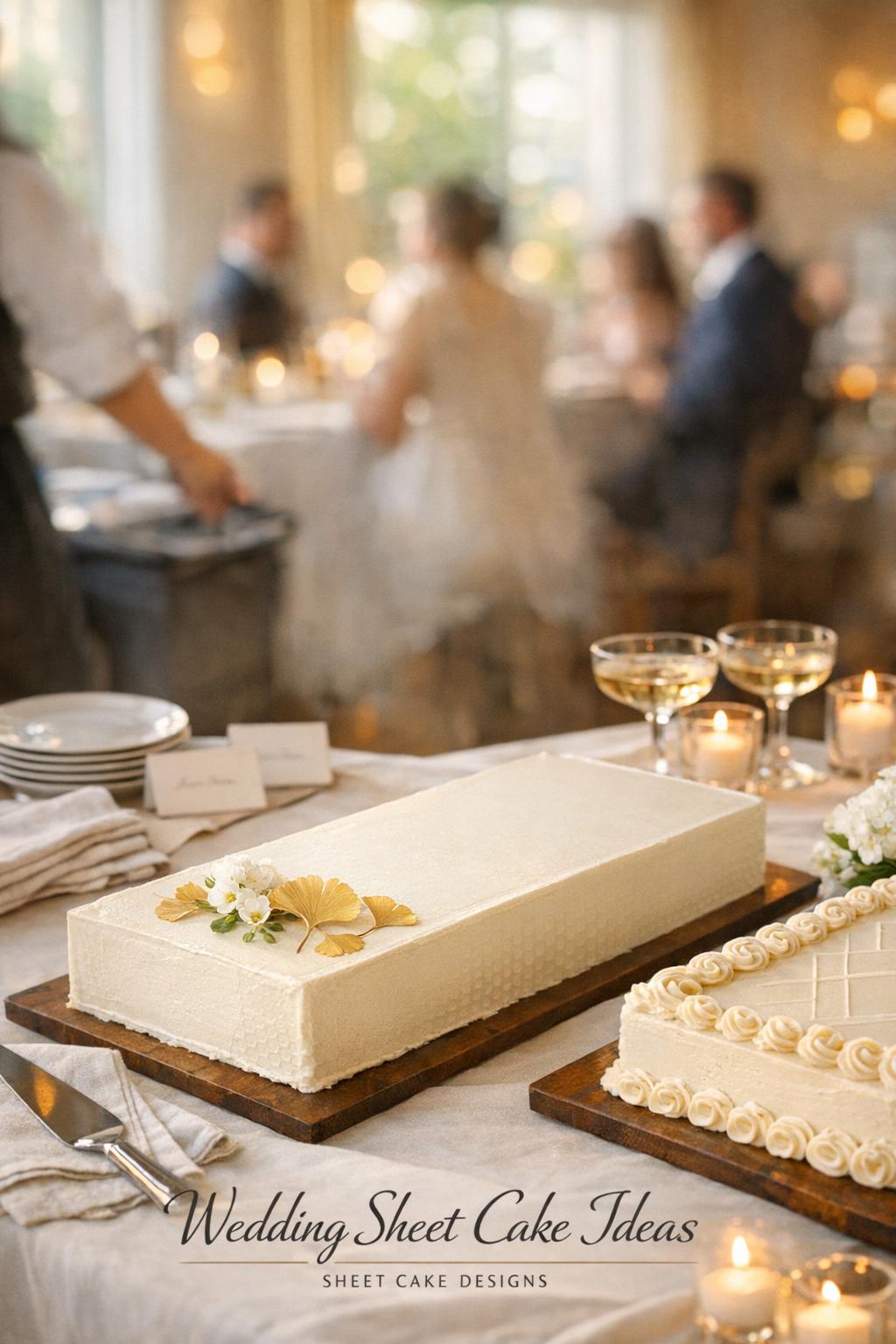
    Wedding sheet cake ideas displayed on an elegant dessert table in golden-hour reception light with minimalist buttercream and ginkgo accents
    Minimalist wedding sheet cakes with ginkgo details glow in soft golden-hour light on a refined reception dessert table.

    Citrus and harvest-inspired ideas for seasonal weddings

    Seasonal styling is one of the most natural ways to make a sheet cake for wedding events feel integrated with the day. When the cake’s flavors and visuals echo the season, it becomes part of the experience rather than a separate dessert moment.

    Citrus chiffon with edible florals

    A citrus chiffon direction suggests lightness—both in flavor and appearance. Paired with edible florals, it creates a bright, celebratory look that’s especially fitting for airy, daytime weddings or venues filled with natural light. Visually, citrus-inspired palettes can keep a sheet cake feeling fresh and modern, and edible florals reinforce the “garden” feeling without requiring heavy piping.

    Design-wise, this idea benefits from restraint: a clean frosting base, a few floral accents, and perhaps a subtle texture that catches the light without overwhelming the citrus story.

    Autumn harvest cake with homemade jam energy

    An autumn harvest approach leans into warmth and comfort—exactly what guests crave at fall weddings. The “homemade jam” note reads as cozy and seasonal, and it pairs naturally with rustic or semi-naked finishes. Even when executed in a refined way, harvest styling tends to feel generous, which is a lovely match for weddings built around family-style dinners, candlelit receptions, and textured decor.

    Because sheet cakes are often served to large guest lists, harvest-inspired flavors can feel especially appropriate: familiar, crowd-pleasing, and easy to portion without losing their appeal.

    Flavor and frosting decisions that hold up in the real world

    Inspiration photos can make any cake look effortless, but wedding service is a stress test: time out of refrigeration, movement during delivery, and the reality of slicing dozens (or hundreds) of portions quickly. When planning wedding sheet cake ideas, it helps to choose flavor pairings and frosting types with that day-of reality in mind.

    Buttercream is a central player in many sheet cake designs because it supports piping styles, textures, and a wide range of finishes—from smooth minimalism to rustic swipes. Fondant, by contrast, tends to create a sleek surface that can suit geometric design, but it’s a different aesthetic and workflow. The best approach is the one that matches your desired look and the production plan your baker is comfortable executing at scale.

    When you’re discussing flavors and fillings, consider how they’ll behave across a large-format sheet. The more a cake relies on delicate structure, the more important it is that transport and setup are coordinated. A sheet cake can absolutely be refined and elegant—it just benefits from choices that are stable enough for a full wedding timeline.

    Decoration techniques: what actually creates the “wedding” finish

    The detail that most clearly separates a casual sheet cake from a wedding-ready one is finishing: the edge work, the consistency of the frosting surface, and the confidence of the decorative motif. These techniques aren’t just aesthetic—they’re functional. A well-finished cake resists looking tired under warm lights and holds up visually after slicing begins.

    Buttercream piping styles that read beautifully on a large surface

    Piping is one of the most versatile tools for sheet cake designs because it scales. Rosettes can frame edges or create clustered moments. Lattice and ruffle-style piping can add movement and dimension without needing flowers at all. The key is repetition: on a rectangle cake, repeating a motif builds polish. Random piping can look unfinished, especially when the cake is long and guests see it from multiple angles.

    • Use rosette piping when you want romance and structure at the same time (especially strong for borders).
    • Choose lattice patterns for a tailored, graphic finish that complements geometric styling.
    • Use ruffle textures when you want softness and movement without relying on florals.

    If you’re planning a long wedding sheet cake, ask your baker how the design will be spaced across the length. A motif that looks perfect in the center can feel sparse at the ends unless it’s planned as a full composition.

    Fresh flowers vs. sugar flowers: a practical decision disguised as a style choice

    Fresh flowers can tie your cake into the rest of the wedding florals seamlessly, while sugar flowers can be engineered to look perfect from every angle and placed exactly where the design needs them. The most important factor is workflow: if the cake needs to be delivered early, sugar flowers can reduce last-minute handling. If a florist is already on-site for setup, fresh flower placement can be coordinated at the venue for a cohesive look.

    Edible florals (when used) add another layer: they can keep the overall design feeling delicate and intentional, especially on watercolor or citrus-inspired cakes. The common thread is restraint and placement—using florals to guide the eye, not overwhelm the surface.

    Luxury finishes: gold leaf, edible paper, and texture

    For couples who want a more elevated look without piling on decoration, finishing elements like gold leaf, edible paper, and controlled textures can do a lot of work. These details tend to look best when they’re used to emphasize a design choice you’ve already made—highlighting geometric lines, adding shimmer to a minimalist surface, or giving a watercolor wash a more editorial edge.

    Because sheet cakes are often viewed from a few feet away on a dessert table, reflective or dimensional accents can help the cake “read” as special in the room, not just up close.

    Serving, delivery, and venue logistics: the part no one wants to talk about (but should)

    Wedding sheet cakes are popular in part because they can simplify service—but only if you plan for the reality of a large, frosted rectangle cake moving through real spaces: venue doors, elevators, warm kitchens, and tight timelines. The earlier you align baker, venue, and whoever is coordinating setup, the smoother everything feels on the day.

    Start with display. A long wedding sheet cake needs a stable table, enough clearance for slicing, and lighting that flatters the design. Then consider refrigeration. Even if your venue can refrigerate the cake, you’ll want clarity on when it comes out and where it sits before cutting. Lastly, plan cutting and serving. A sheet cake is often chosen for portion efficiency, but that only happens if the slicing plan is organized and the tools are ready.

    Tips for smooth service with wedding sheet cakes

    These are the small decisions that experienced teams make early—and that couples often wish they’d asked about sooner.

    • Assign ownership: decide whether the venue staff, caterer, or another team member is responsible for cutting and serving.
    • Protect the design: if the cake has fresh flowers, plan who places them and when, so the cake isn’t handled repeatedly.
    • Choose a display plan that suits the style: minimalist and geometric cakes benefit from uncluttered tables; rustic styles can handle more surrounding decor.
    • Build in time for setup: large-format cakes need careful placement to keep edges clean and surfaces unmarked.

    One more reality check: sheet cake for wedding service can be wonderfully efficient, but it still needs a moment. If a “cake cutting” photo matters to you, consider staging a small ceremonial cut at the display while the bulk of slices are served from the kitchen. You get the tradition, and guests get dessert on time.

    Choosing your sheet cake team: what to ask in a consultation

    Even when you’re not commissioning an elaborate tiered cake, you’re still hiring a cake designer and pastry team to execute a centerpiece dessert for a major event. The consultation is where you protect your vision and your timeline. It’s also where you confirm whether a particular sheet cake design is realistic at your guest count and within your venue constraints.

    Bring visual references for the style category you want—geometric, watercolor, rustic/naked, bold maximalism, classic florals—and then talk through how it will be executed on a rectangle cake. A design that looks stunning on a small surface may need bolder piping, larger florals, or more negative space when scaled to a long wedding sheet cake.

    • Ask how the cake will be transported and delivered, and what the venue needs to provide.
    • Clarify decoration responsibilities, especially if fresh flowers are involved and a florist is coordinating the rest of the wedding florals.
    • Discuss frosting choices (buttercream vs. other finishes) in relation to the look you want and the day-of setup conditions.
    • Confirm the cutting plan: who cuts, where it happens, and how portions will be served efficiently.

    If your wedding includes a photographer capturing detail shots, remember that sheet cake designs photograph best when the display area is styled intentionally—clean cake server, tidy table edges, and a few decor elements that echo your overall wedding aesthetic. It’s a small staging step that makes the cake look like a feature, not a catering item.

    How to build a cohesive “cake moment” with a sheet cake

    The most successful sheet cake wedding cakes ideas don’t treat the cake as a standalone object. They design the “cake moment”: where it sits, what surrounds it, and how guests approach it. This matters more with a rectangle cake because it’s often displayed horizontally, which invites guests to view it from different sides.

    For minimalist and geometric cakes, keep the surroundings clean. Let the piping styles and negative space feel intentional. For watercolor and floral cakes, mirror the palette in nearby florals so the cake looks like part of the same visual story. For rustic and naked cakes, texture is your ally—layered linens and warm lighting can make the cake look even more inviting. For bold maximalism, give the cake breathing room; strong color needs space to look confident rather than crowded.

    If you’re debating between a single long wedding sheet cake and multiple smaller sheets, think about guest flow. Multiple cakes can reduce lines at serving time, but a single long cake can look dramatic as a centerpiece. There’s no universal “right answer”—the best choice is the one that matches your venue layout and how you want dessert to feel in the timeline of the night.

    Common mistakes that make wedding sheet cakes look less elevated

    Wedding sheet cakes can look as refined as any traditional wedding cake, but a few predictable missteps tend to undermine the final effect. These aren’t about taste—they’re about planning and scale.

    • Overcrowding the surface: too many motifs (piping, florals, textures, multiple colors) can make a large sheet look busy rather than designed.
    • Choosing details that don’t scale: tiny piping patterns can vanish on a long sheet cake, especially in dim venue lighting.
    • Last-minute floral placement without a plan: fresh flowers can look stunning, but only when placement is intentional and coordinated.
    • Ignoring the cutting strategy: the best-looking cake can still create a service bottleneck if the slicing plan isn’t set.

    The fix is usually simple: pick one primary design category (geometric, watercolor/floral, rustic/naked, bold/maximalist, classic florals), then choose supporting details that reinforce it—like rosette piping for romance, edible florals for softness, or a clean honeycomb texture for minimalist depth.

    Tips for matching sheet cake designs to wedding settings

    Sheet cake designs become more convincing when they respond to the setting. A few small adjustments—often in scale, palette, or finish—can make the cake feel like it belongs in the room.

    Tips for modern indoor venues

    Lean into geometric sheet cake styling or botanical minimalism. Clean piping styles and controlled textures (like honeycomb patterning) read crisp under indoor lighting and pair naturally with modern decor. If you want florals, keep them as a single, sculptural moment rather than scattered accents.

    Tips for rustic spaces and outdoor-adjacent receptions

    Rustic and naked or semi-naked sheet cakes tend to look most natural in these environments. Choose fruits, herbs, or a soft floral approach that mirrors the season. If the cake may sit out longer before cutting, favor finishes that still look attractive as the reception unfolds, and make sure the display table is stable and protected from heavy traffic.

    Tips for bold, fashion-forward weddings

    Consider bold blue maximalism or funky piping with cherries for a confident, editorial feel. In these settings, the cake can act like a design piece. Keep the surrounding decor simpler so the color and piping remain the focal point, and ensure the cake’s edges and finish are especially clean because bold palettes highlight imperfections.
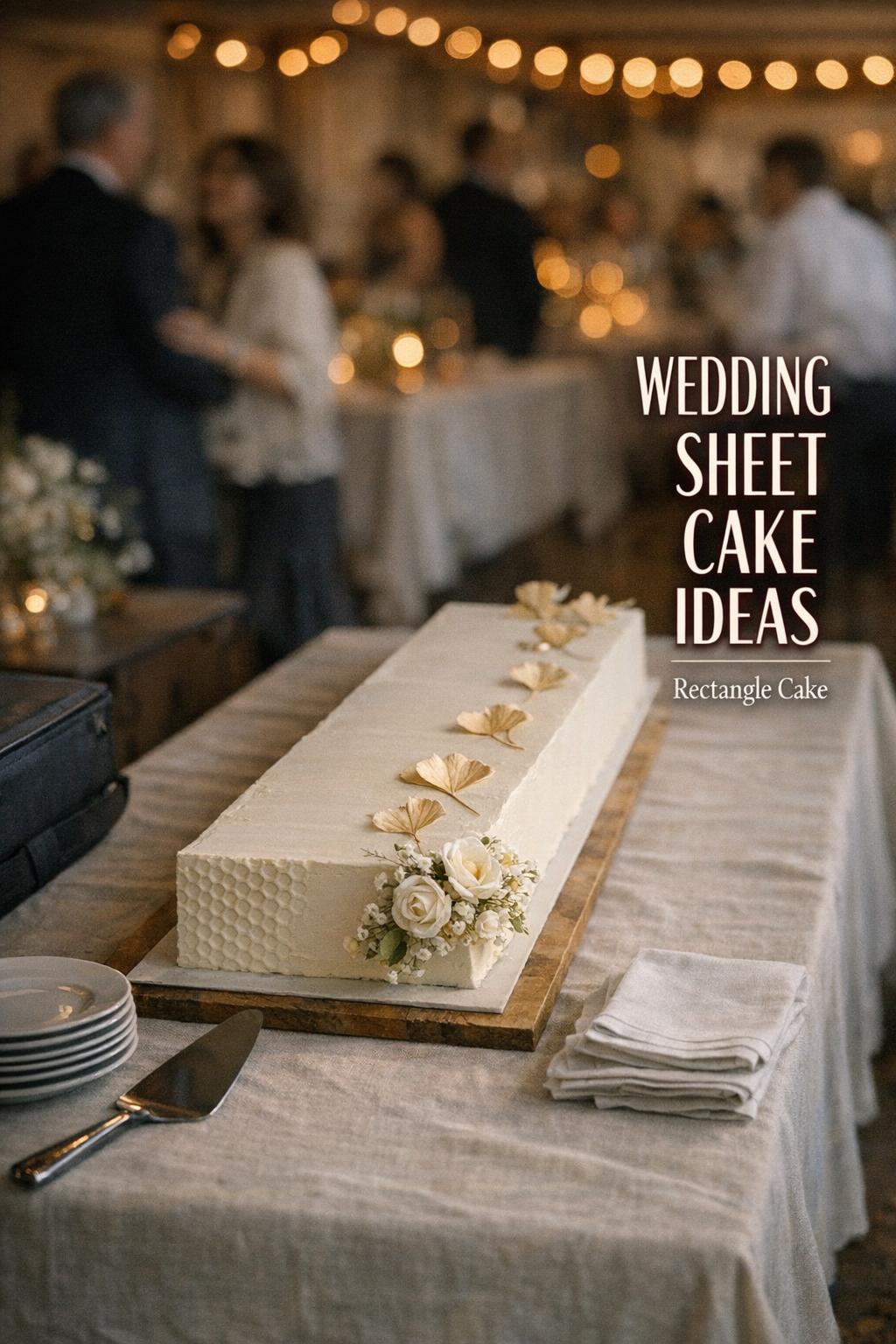
    Wedding sheet cake ideas with minimalist runway rectangle cake on linen dessert table, warm reception bokeh and elegant details
    A pristine runway-style rectangle sheet cake brings practical elegance to a linen-draped wedding dessert table under warm reception glow.

    FAQ

    How many servings are in a sheet cake for a wedding?

    Sheet cakes are commonly used for large gatherings because they’re designed to be portioned efficiently, but the exact serving count depends on the cake’s dimensions and how the venue or catering team slices it; your baker should confirm servings based on the specific sheet cake size you’re ordering and the portion style you want for your reception.

    Can a wedding sheet cake look as elegant as a traditional wedding cake?

    Yes—elegance comes from finish and design choices, not height; refined buttercream work, controlled piping styles (like rosette trims or clean geometric lines), intentional negative space, and well-planned floral or edible floral placement can make wedding sheet cakes look fully wedding-appropriate.

    What are the most popular sheet cake designs for weddings?

    Common categories include geometric sheet cake styling, watercolor sheet cake design with florals, rustic and naked or semi-naked finishes, bold color and maximalist looks (including dramatic blues), and classic elegant floral approaches built around buttercream piping and curated flower moments.

    Is buttercream or fondant better for a wedding sheet cake?

    Buttercream is often chosen for wedding sheet cake ideas because it supports a wide range of textures and piping styles, while fondant can create a sleek, smooth surface that suits certain modern looks like geometric designs; the better choice depends on the style you want and how your baker plans to execute and transport the cake.

    Should I use fresh flowers, sugar flowers, or edible florals on wedding sheet cakes?

    Fresh flowers can coordinate closely with your wedding florals, sugar flowers offer precise control and can be placed ahead of time, and edible florals can add a delicate, romantic finish—especially on watercolor or citrus-inspired cakes; the best option depends on your timeline, who will place the flowers (baker vs. florist), and how much on-site handling you want.

    How do I keep a long wedding sheet cake from looking too plain?

    Focus on one strong design element that carries across the rectangle cake—such as a honeycomb texture with botanical accents, a rosette-trimmed border, a watercolor wash with a small floral cluster, or confident geometric linework—because repetition and scale are what make large-format sheet cakes feel intentional rather than empty.

    What should I plan for when it comes to delivery and setup at the venue?

    Confirm who is delivering, where the cake will be stored (including refrigeration), when it will be placed on the display table, and who is responsible for any final decor like fresh flowers; large wedding sheet cakes benefit from a clear setup plan because the flat, finished surface can be marked if it’s moved or handled too many times.

    How do we handle the cake-cutting moment with a sheet cake?

    If you want a traditional photo moment, you can stage a ceremonial cut at the display while organizing the bulk of slicing and serving as a streamlined process elsewhere; this approach keeps the celebration feeling classic while still taking advantage of the sheet cake format’s efficiency for guests.
  • Design Notes for an Autumn Wedding Cake in Warm Fall Light

    Design Notes for an Autumn Wedding Cake in Warm Fall Light

    Autumn wedding cake decisions start earlier than you think

    The first real decision about an autumn wedding cake often happens long before you taste anything: you picture the room. Fall light tends to be warmer, venues lean into wood, stone, candlelight, and textured florals, and suddenly a stark, bright-white cake can feel visually disconnected—or it can look intentionally modern if everything else is moody and minimal. That “does it belong here?” question is where great fall wedding cake choices begin: not with a trend, but with the setting and the way your celebration will actually look in photos from cocktail hour through the last slice.

    This guide is built around practical, real-world planning: how to choose a wedding fall cake that reads as autumnal without feeling themed, how to think through fall wedding cake decorations so they’re beautiful and workable, and how to turn “I want something fall” into clear design direction you can communicate to a baker. Along the way, you’ll find fall wedding cake ideas for autumn that work across different styles, from romantic to refined, and you’ll see how to make those ideas feel cohesive rather than crowded.

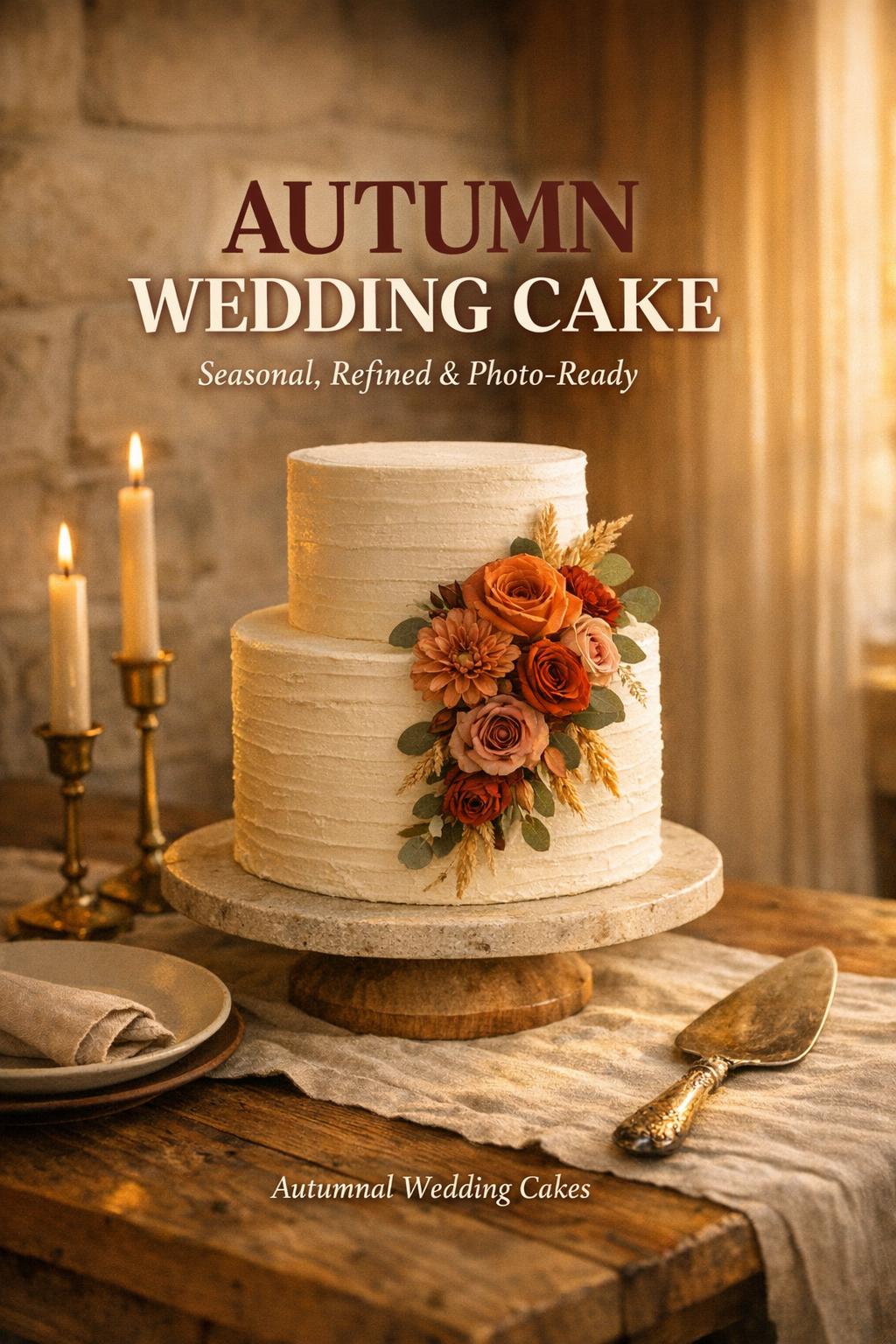
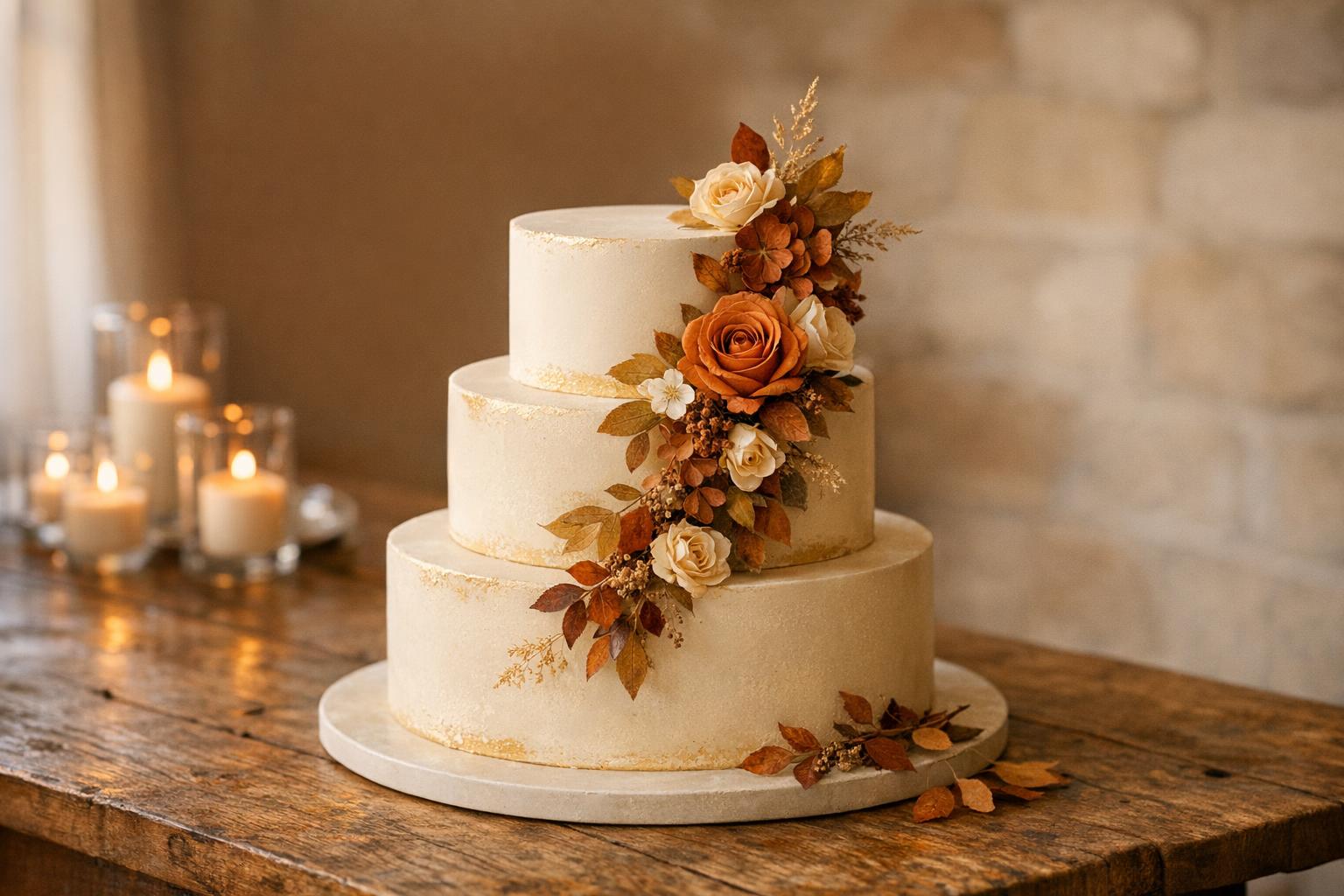
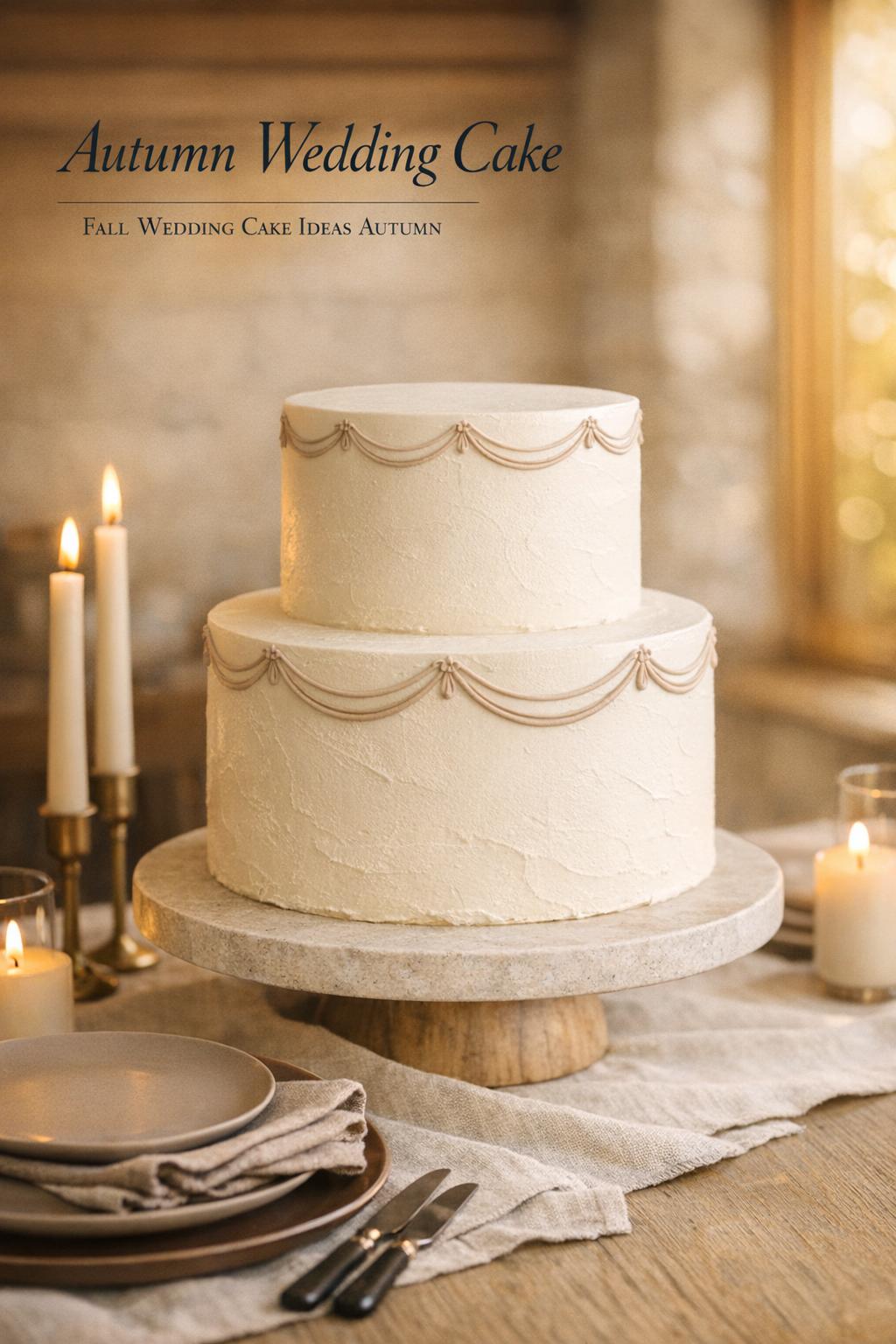
    Autumn wedding cake on a minimalist stand with ivory buttercream, warm neutral tablescape and taper candles in fall light
    A refined autumn wedding cake in ivory buttercream sits on a minimalist stand amid warm linens, ceramics, and candlelight.

    Start with the atmosphere: what “autumnal” should mean for your day

    “Autumnal wedding cakes” can mean a lot of different things, and that’s both the opportunity and the trap. If you don’t define what autumn feels like to you, you may end up with a cake that checks seasonal boxes but doesn’t match your overall design. A stronger approach is to translate autumn into a few clear cues you can carry across stationery, florals, tables, and the cake.

    Think in terms of mood rather than motifs. Do you want a crisp, harvest-inspired vibe? Something romantic and candlelit? Or a clean, contemporary look with just a whisper of fall? Once you choose the mood, your fall wedding cake can support it through color depth, texture, and finishing details—without relying on literal seasonal icons.

    A simple definition that helps: “seasonal” vs. “themed”

    A seasonal autumn wedding cake feels like it belongs in fall because of its palette, texture, and overall tone. A themed cake is more literal: the decorations signal fall in an unmistakable way. Neither is “wrong,” but most couples feel more confident with a seasonal approach because it ages well in photos and doesn’t compete with everything else. If you do want a themed wedding fall cake, you can still keep it elevated by limiting the “storytelling” to one focal element rather than decorating every tier.

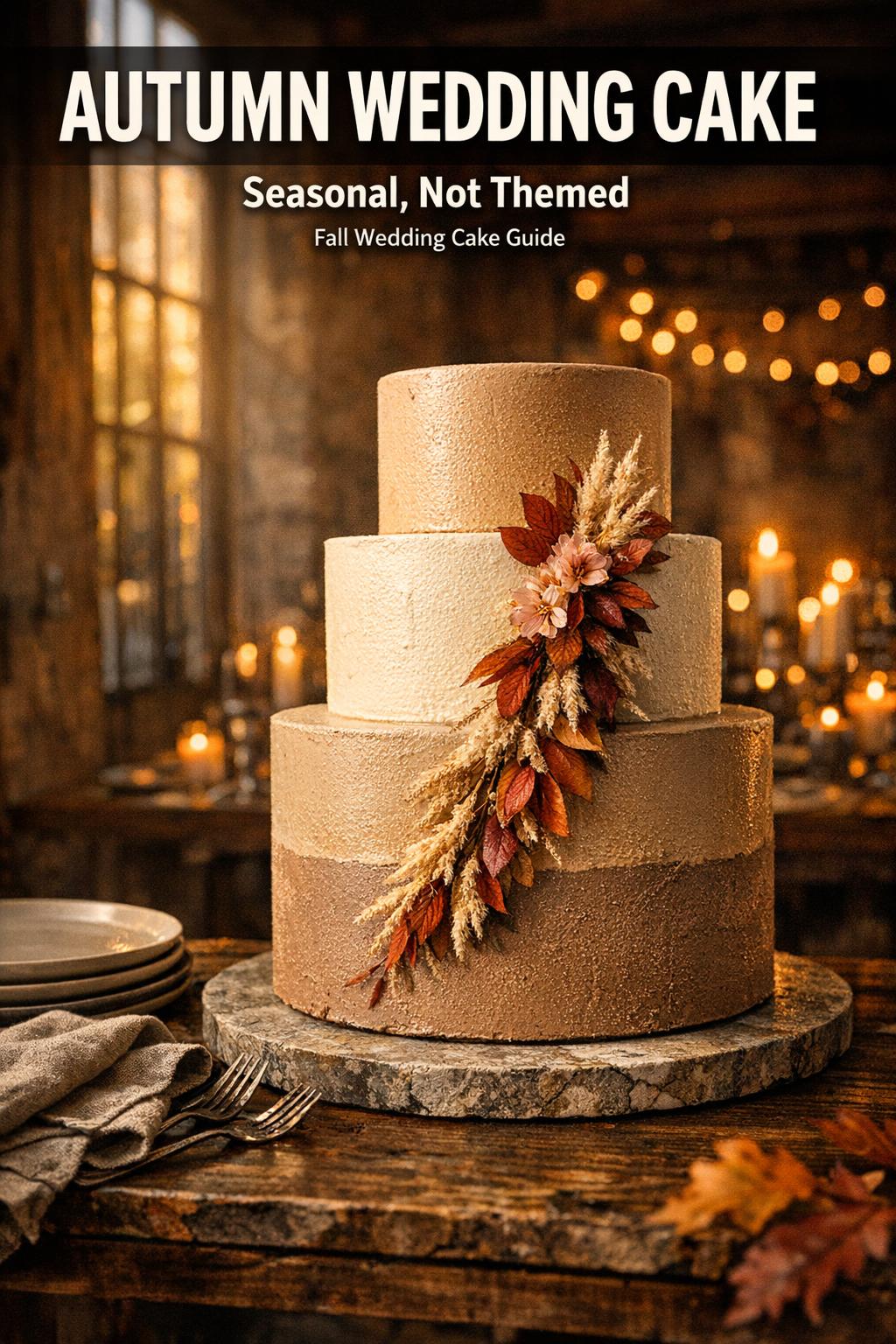
    Autumn wedding cake on wood pedestal with muted florals, candlelight, and warm golden-hour venue corner styling
    An elegant autumn wedding cake sits on a natural pedestal amid muted seasonal florals, linen, and warm candlelit glow.

    Fall wedding cake ideas autumn couples actually use (and why they work)

    Here’s the most useful lens for fall wedding cake ideas autumn planners can apply: each idea should accomplish at least one job. It can anchor the room visually, echo floral textures, support a more formal dress code, or add a cozy softness to a modern space. When an idea does a job, it feels intentional instead of decorative.

    Textural finishes that read “fall” without shouting

    Fall is a season of texture—knits, wool, suede, dried grasses, bark, and layered leaves. On an autumn wedding cake, texture can do the same work as color: it sets the tone immediately. A smooth finish can look elegant and modern, but a more tactile surface can feel warmer and more “autumnal,” especially in candlelight.

    One of the easiest ways to keep fall wedding cake decorations refined is to commit to one primary texture and let it be the statement. If everything is textured—multiple finishes, multiple patterns, multiple focal points—the cake can read busy, particularly when surrounded by detailed florals and place settings.

    Warm neutrals, deep tones, and the “in-between” palette

    Not every fall wedding cake needs to be dark or saturated. Some of the most polished autumnal wedding cakes sit in the in-between: warm neutrals with depth. That approach is especially useful for daytime weddings or venues with lots of natural light, where very dark colors can look heavy. If your overall design is already rich—dramatic florals, darker linens, lots of candles—a lighter cake can create contrast and make the dessert table feel lifted rather than dense.

    If your décor is minimal, deeper tones can help the cake feel like a focal point without requiring elaborate decorations. The key is balance: one strong tonal direction, not an assortment of competing shades.

    Minimalist fall wedding cake decorations for modern venues

    Modern venues often come with clean architecture and intentional negative space. In that context, the most effective fall wedding cake decorations are usually restrained: a single cascading element, a subtle edge detail, or a small cluster placed with purpose. Minimalism doesn’t mean plain—it means each choice is visible enough to matter.

    A good rule: if your cake will be photographed from across the room during key moments, you want one detail that reads at a distance. If it’s going to be photographed mostly up close on a styled dessert table, you can lean into finer, more delicate finishing.

    Autumn wedding cake with rustic buttercream, seasonal flowers, and warm fall colors on a wooden table
    A rustic autumn wedding cake adorned with seasonal blooms and warm fall hues brings effortless elegance to the celebration.

    How to choose a fall wedding cake style that matches your wedding, not just the season

    Many couples get stuck because they search “autumn wedding cake” and see a wide spread of looks. The way out is to connect your cake design to your wedding style. When those two are aligned, the cake looks effortless rather than appended at the end of planning.

    Romantic celebrations: soft structure, gentle movement

    For romantic weddings, the cake typically works best when it has a sense of softness—either in the silhouette (gentle lines) or in the finishing (subtle texture). In fall, romantic doesn’t have to mean pale. A richer palette can still feel tender if the overall composition is light-handed and the decorations are placed with restraint rather than symmetry for symmetry’s sake.

    Classic and formal: refinement over novelty

    If your dress code is formal, treat the cake like part of the “architecture” of the event. That usually means clean lines, consistent detailing, and a sense that the cake belongs with the rest of the tablescape. An autumnal wedding cake in a formal setting can still nod to the season, but it should do it through tonal choices and subtle decoration rather than playful or overly literal elements.

    Rustic and outdoorsy: warmth, texture, and practicality

    Rustic weddings are where fall wedding cake ideas autumn couples love can shine—because the environment already supports cozy textures and organic styling. The practical note is important here: outdoor and semi-outdoor venues introduce variables like wind, uneven ground, and temperature shifts as the sun sets. Those realities should influence your decoration choices so the cake remains stable and polished from setup to cutting.

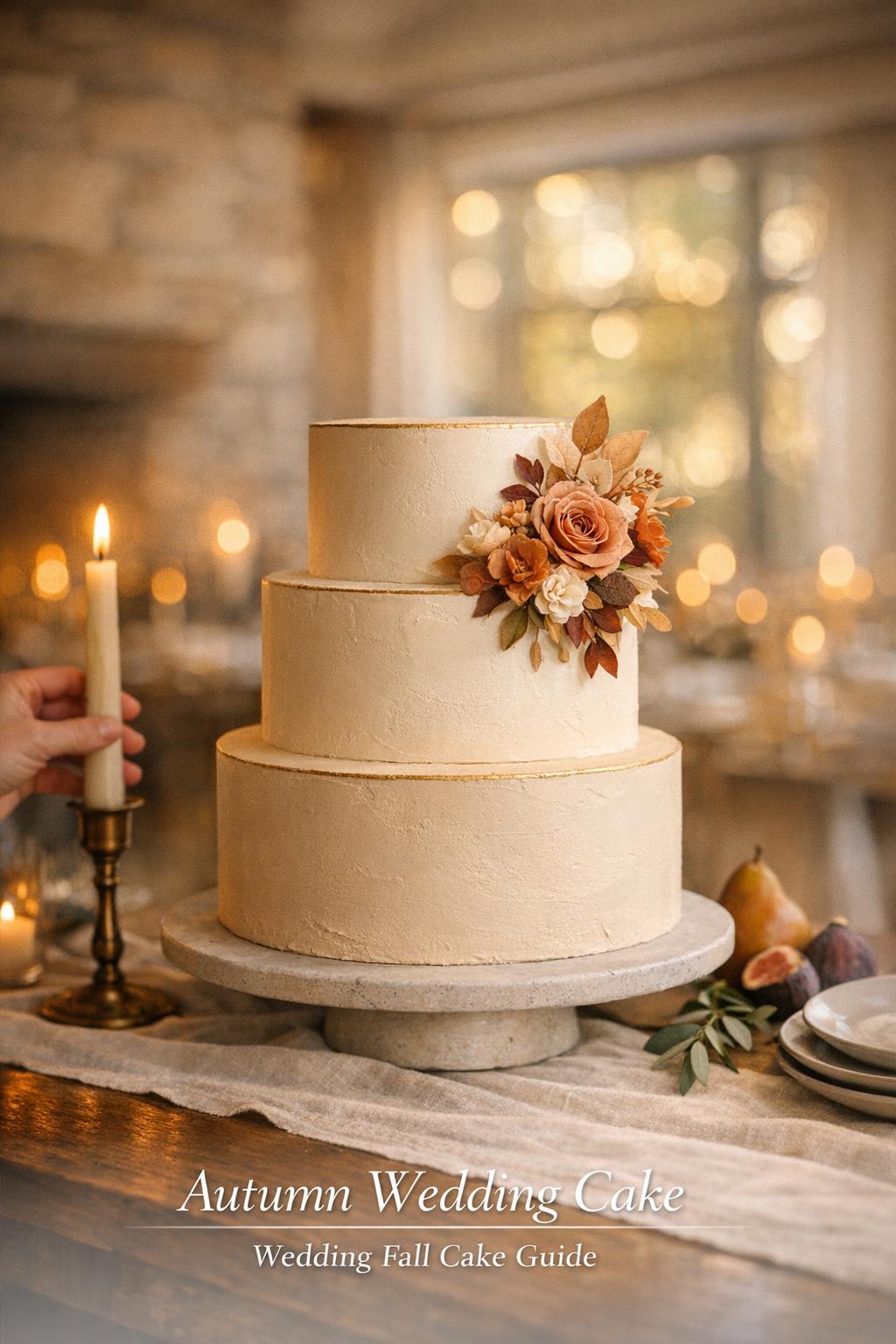
    Autumn wedding cake with muted sugar flowers on a ceramic stand in a candlelit reception space, golden hour light
    A refined autumn wedding cake in warm ivory and taupe is styled with muted florals and candlelight for an elegant reception moment.

    Seasonal realism: planning your autumn wedding cake around weather and timing

    Fall can be mild, warm, rainy, or unexpectedly chilly, sometimes all in the same week. Your wedding fall cake needs to hold up under the conditions of your day, especially if it will be displayed for hours before cutting.

    Daytime vs. evening receptions

    In daytime light, details look sharper and colors read more literally. In evening light, texture and contrast often become the story. That difference should guide how bold your fall wedding cake decorations are. If your reception is mostly at night, small high-contrast elements can photograph better than subtle tonal detailing that disappears in low light.

    Indoor climate control is part of the design brief

    Even if your venue is indoors, the cake may spend time in transitional spaces during delivery and setup. Ask direct questions about where the cake will be held and when it will be placed on display. An autumn wedding cake that is designed beautifully can still suffer if it’s placed too early in a warm room or too close to direct sunlight. These logistics aren’t glamorous, but they’re often the difference between a cake that looks pristine in photos and one that looks tired by cutting time.

    Tips: how to communicate your fall wedding cake vision to a baker

    A baker can only execute what they understand, and “fall” is not a complete brief. The strongest consultations come from translating inspiration into decisions: what you want to repeat, what you want to avoid, and what matters most in person versus in photographs.

    • Bring 3–5 images that share a common thread (color depth, texture, silhouette), not a random mix of everything you like.
    • Name your non-negotiables: for example, “minimal decoration,” “warm neutrals,” or “a single statement detail.”
    • Identify your venue lighting: bright daytime, mixed lighting, candlelit evening, or outdoors at sunset.
    • Decide what you want guests to notice first: the height, the texture, or the decorations.
    • Ask how the cake will be transported and assembled on-site, then adjust the design if needed.

    Tip: If you’re torn between two directions, choose the one that matches your tablescape. Cakes rarely live alone; they sit beside florals, signage, and desserts. The cake that harmonizes with those elements nearly always looks more expensive and more “right,” even if it’s simpler.

    Fall wedding cake decorations: creating impact with restraint

    Decorations are where an autumn wedding cake can either become unforgettable or look cluttered. The best fall wedding cake decorations tend to follow one of two strategies: a single hero detail, or a controlled repetition of one small element. Both approaches keep the design legible.

    The “one hero detail” approach

    A hero detail is the feature you’d describe in one sentence. It might be a dramatic sweep, a bold tonal choice, or a specific decorative placement that creates movement. The advantage is clarity: the cake photographs well from far away and doesn’t need extra styling to feel complete. The limitation is that the hero detail must be chosen carefully—if it doesn’t match the rest of the wedding, it can feel like an isolated statement.

    The “controlled repetition” approach

    Controlled repetition is quieter but extremely effective for autumnal wedding cakes: the same type of detail appears in a few places, consistent in scale and spacing. This reads refined, especially in formal settings. It also plays well with busy rooms because the cake doesn’t compete for attention; it complements.

    Tip: When you’re tempted to add “just one more” decorative element, pause and consider the dessert table as a whole. If the table already includes signage, candles, florals, and multiple desserts, the cake may need fewer decorations, not more.

    Making an autumn wedding cake feel personal without getting literal

    Personal doesn’t have to mean novelty. It can mean the cake reflects your shared taste—your home style, the mood you want for guests, and the way you celebrate. In fall, it’s easy to default to obvious cues, but there are more nuanced ways to make a wedding fall cake feel like you.

    Consider where your guests will spend the most time. If it’s a long cocktail hour with warm lighting and conversation, a cake that feels cozy and welcoming will match the pacing of the night. If your celebration is high-energy and modern, a cleaner, bolder cake can match that tempo. Either way, the personal element often comes from consistency—your cake speaking the same visual language as everything else.

    Common missteps with autumnal wedding cakes (and how to avoid them)

    Most cake regrets don’t come from “bad taste”; they come from misalignment between design, venue, and logistics. A few predictable mistakes show up again and again, and they’re easy to sidestep once you know what to watch for.

    • Doing too many ideas at once: multiple textures, multiple decorative styles, and multiple palettes competing on one cake.
    • Forgetting lighting: subtle details that vanish in evening receptions or look harsh in bright daylight.
    • Over-decorating the back: decorations placed all around can look messy unless they’re executed with extreme precision.
    • Ignoring setup realities: designs that look perfect in a studio photo but are difficult to assemble quickly on-site.
    • Choosing a style that doesn’t match the tablescape: the cake feels like an add-on rather than part of the room.

    Tip: If you’re unsure whether a cake is “too much,” ask yourself if you can describe it simply. If it takes multiple sentences to explain what’s happening, it may be visually overloaded. The most memorable fall wedding cake designs are often the clearest.

    Context matters: tailoring fall wedding cake ideas autumn couples choose to your venue

    One of the fastest ways to elevate an autumn wedding cake is to design it for the venue rather than for a generic fall mood board. The same cake can feel dramatically different depending on what surrounds it—materials, ceiling height, table size, and even how guests move through the space.

    Historic spaces and warm interiors

    If your venue has warm interiors—wood tones, stone, or vintage lighting—your cake can either blend in beautifully or disappear. This is where contrast helps. A wedding fall cake with a clean silhouette can look especially elegant in a richly textured room because it creates a visual pause. Alternatively, if you want the cake to feel deeply integrated, you can echo the venue’s warmth through your finish and palette, then rely on a strong silhouette or height to keep it from getting lost.

    Bright, airy venues

    In bright spaces, autumnal wedding cakes often look best when they add depth without heaviness. Too-dark tones can feel intense in full daylight, while soft warmth reads inviting and seasonal. If your venue is mostly white and glass, a fall wedding cake can become the main warmth in the room—especially if your florals are also restrained.

    Outdoor and tented weddings

    Outdoor and tented fall weddings can be magical, but cakes need extra planning. Wind and shifting temperatures are real. A practical approach is to keep the structure straightforward, then focus your fall wedding cake decorations on a detail that won’t be fragile during setup. Plan where the cake table will sit so it’s protected and visible, and confirm the timing for when the cake is placed out.

    Tips: a quick decision framework for choosing your autumn wedding cake

    If you want to move from inspiration to a confident decision, use a simple framework: decide your mood, decide your level of decoration, then decide what the cake must do in the room. This keeps your choices focused and prevents last-minute add-ons that dilute the design.

    • Mood: cozy, romantic, dramatic, minimal, or classic.
    • Decoration level: one hero detail, controlled repetition, or intentionally simple.
    • Job to do: be the focal point, complement the florals, add warmth, or add contrast.
    • Photo priority: distance shots during cutting, or close-up dessert-table photography.
    • Logistics: indoor vs. outdoor display time, setup constraints, and timing.

    Tip: Bring this framework to your consultation and ask the baker to reflect it back to you in plain language. If they can summarize your plan clearly, you’re aligned; if not, refine before you commit.

    How to keep your fall wedding cake looking intentional in photos

    A cake is photographed in context: behind it might be a busy reception room, beside it might be candles and signage, and above it might be a floral installation or nothing at all. The easiest way to make an autumn wedding cake look expensive in photos is to simplify what’s around it and let the cake have a clean visual boundary.

    Consider the cake table itself. If the cake has detailed fall wedding cake decorations, keep the table styling lighter so the cake stays readable. If the cake is minimal, you can add a bit more around it—just keep the styling consistent with your chosen mood. A wedding fall cake doesn’t need a crowded stage; it needs a flattering one.

    Pulling it together: a cohesive autumnal wedding cake plan

    The most successful autumnal wedding cakes aren’t necessarily the most intricate; they’re the most coherent. They make one clear statement, they respect the venue, and they hold up to real timing and real weather. Once you’ve defined your mood and decoration strategy, your remaining choices become easier: you’re no longer collecting fall wedding cake ideas for autumn—you’re editing them into a single design that fits your day.

    Above all, treat the autumn wedding cake as part of your event design rather than an isolated purchase. When your cake echoes the room and the atmosphere you’re creating, it reads immediately as “meant to be there,” which is exactly the effect most couples are looking for when they imagine a fall wedding cake.

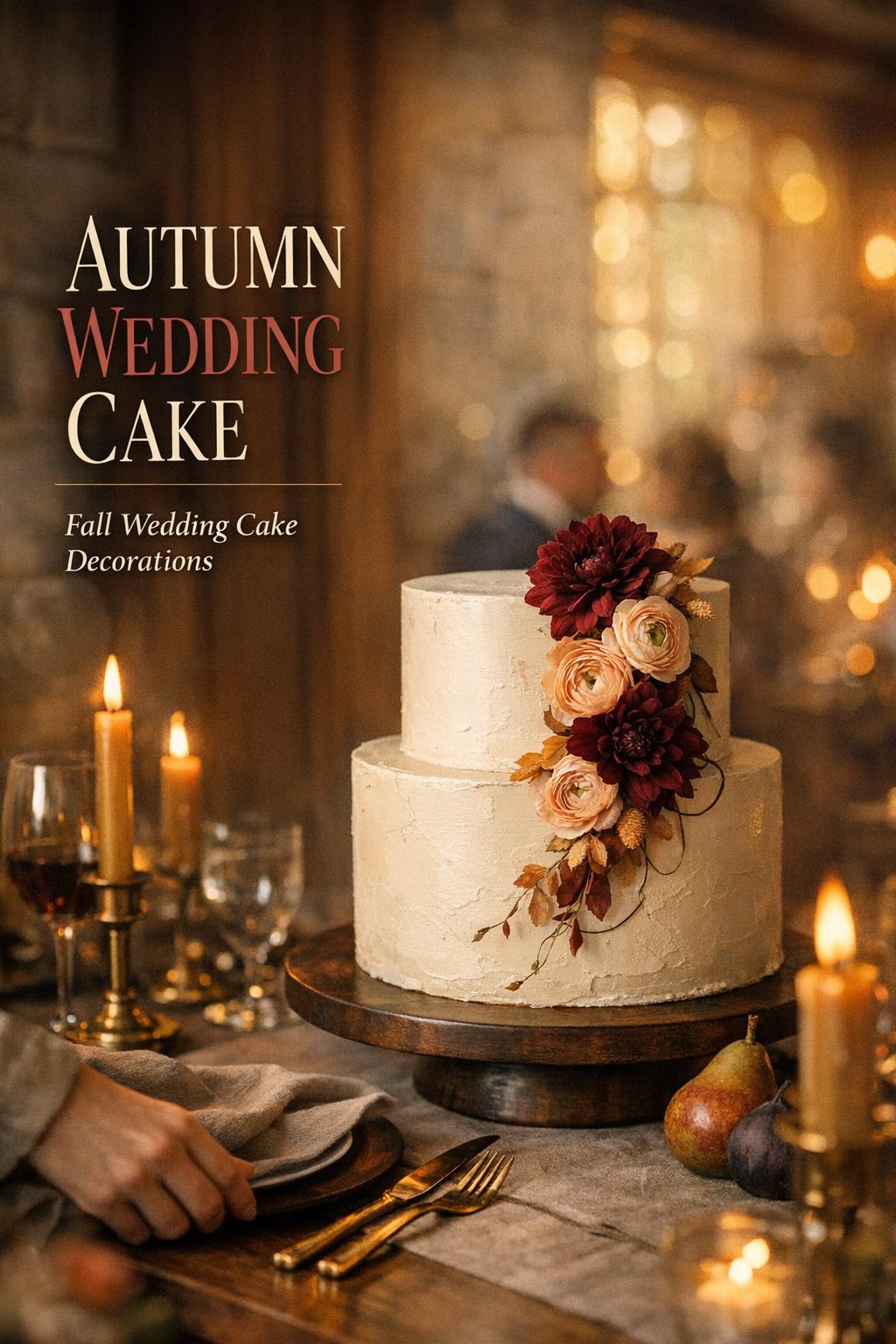
    Autumn wedding cake with burgundy dahlias on a moody reception table in warm candlelight, elegant fall decor
    A minimalist autumn wedding cake with burgundy dahlias glows in soft window light and candlelit reception ambiance.

    FAQ

    What makes an autumn wedding cake look “autumnal” without being overly themed?

    An autumnal look usually comes through mood and finish—warmth, depth, and texture—rather than literal seasonal symbols; focusing on one strong design cue (like a textural finish or a restrained decorative placement) helps the cake feel seasonal while still looking timeless.

    How do I choose between bold fall wedding cake decorations and a minimalist style?

    Base the choice on your venue and tablescape: if the room is already visually rich, minimalist fall wedding cake decorations tend to photograph better and feel more refined; if the space is clean and modern, a single bold “hero detail” can give the cake enough presence without adding clutter.

    Are there fall wedding cake ideas autumn couples can use in both indoor and outdoor settings?

    Yes—ideas built around clear silhouettes and controlled, durable decoration translate best; outdoor and tented settings add variables like wind and temperature shifts, so designs that rely on one intentional statement rather than many delicate elements are typically easier to execute well.

    How far in advance should I finalize my wedding fall cake design?

    Finalize once your venue, lighting plan, and overall décor direction are set, because those factors determine whether your cake needs contrast, warmth, or simplicity; trying to lock a design before those decisions often leads to changes later that can complicate execution.

    What’s the easiest way to avoid a cluttered-looking autumn wedding cake?

    Choose one primary idea—either a hero detail or a single repeated element—and let everything else support it; if you find you need multiple sentences to describe the design, that’s a strong sign it may be visually overloaded.

    How do I make sure my fall wedding cake shows up well in photos?

    Match the scale of your key detail to how the cake will be photographed: if it will be captured from across the room during the cutting, make sure there’s a clear feature that reads at a distance; if it will be styled for close-ups, prioritize refined texture and intentional placement, and keep the cake table décor from competing.

    What should I bring to a cake consultation if I want an autumn wedding cake?

    Bring a small set of images with a shared thread, plus a plain-language list of non-negotiables (like “minimal decoration” or “warm neutrals”) and a note about your venue lighting and setup timing, so your baker can translate “fall” into a specific, executable plan.

    How do I keep an autumn wedding cake from feeling too dark for a daytime wedding?

    In bright daylight, lighter warm tones and subtle texture often read more naturally seasonal than very dark colors; you can still keep the cake “fall” by leaning into depth through finish and contrast rather than relying on heavy saturation.

  • Raspberry Cake Wedding: Minimalist Looks, Big Flavor Moments

    Raspberry Cake Wedding: Minimalist Looks, Big Flavor Moments

    Raspberry cake wedding decisions start earlier than you think

    The first time most couples truly “meet” their cake is not on the tasting table—it’s in a photo. A tiered slice caught in a real-wedding gallery, a close-up of a glossy filling, a casual table cake that looks effortless but intentional. That’s why planning a raspberry cake wedding often begins with one specific question: do you want raspberry to be a bright supporting note, or the main character of the day? Either approach can feel wedding-appropriate, but the choices you make next—tiering, finishes, fillings, and even how berries show up visually—will determine whether the result reads classic, modern, or quietly non-traditional.

    This guide focuses on how raspberry works in a wedding context: flavor pairings like raspberry-lemon and almond-raspberry, styling ideas from traditional tiers to a raspberry table cake, and how to approach tastings and consultations so you get a “wedding cake raspberry” profile that tastes intentional, slices well, and looks right in photos. Along the way, you’ll see how recognizable vendors and concepts show up across the U.S. market—Raspberry’s N’ Creme for custom wedding cakes, Fig & Bloom Cakes for a casual table cake approach, product-style offerings like Eston’s Bakery’s Raspberry Royale Cake and Sugar & Slice on Main’s Raspberry Wedding Cake, and designer-forward options like Elisabeth Valentijn’s The Raspberry Cake and Miri Nadler Cakes on Goldbelly—plus a nod to how venues such as Hyatt’s Royal Palms in the Phoenix area sometimes present raspberry among their formal wedding cake options.

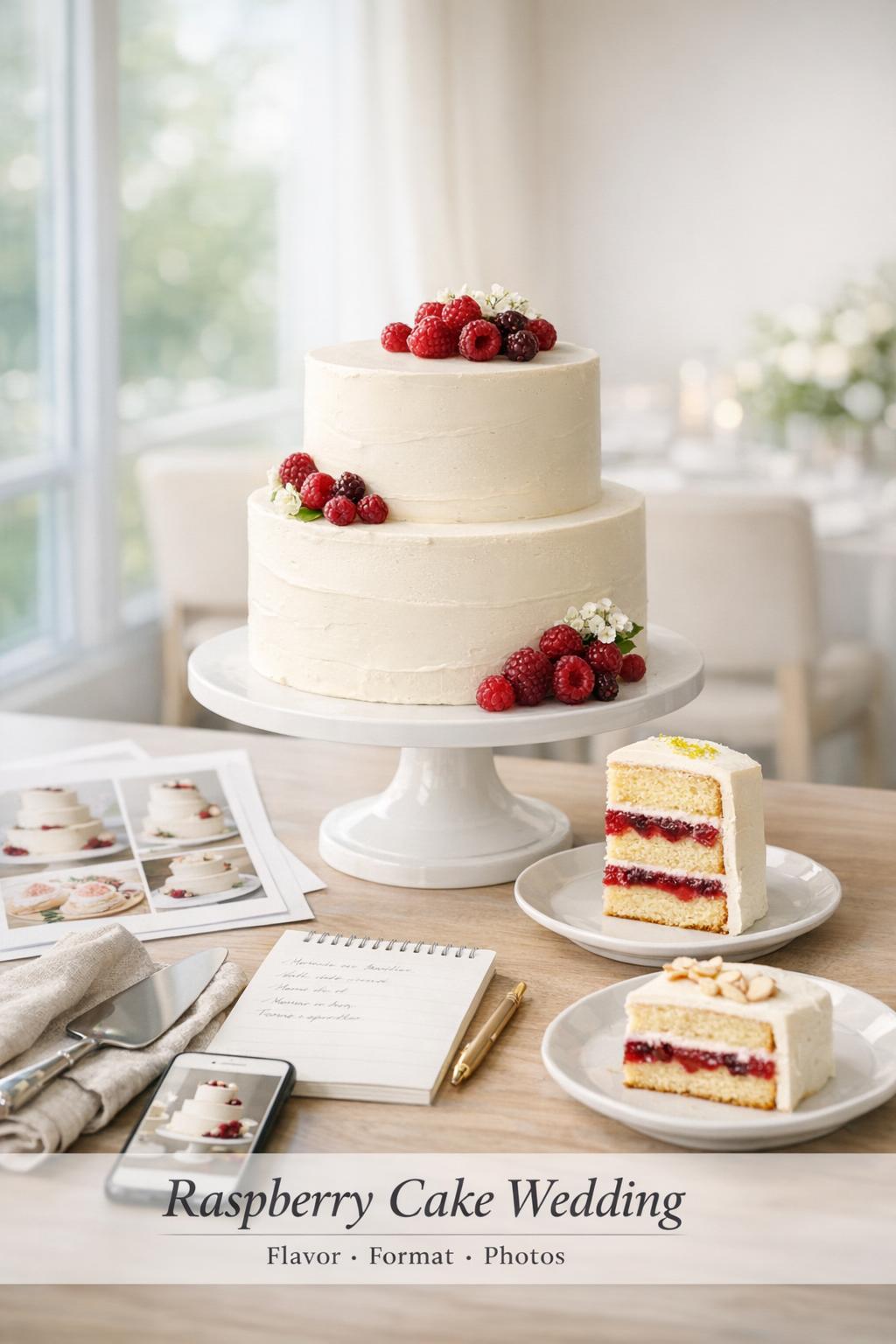
    Raspberry cake wedding consultation table with tiered sample, modern dessert cake, and plated raspberry filling slice by window light
    A refined raspberry cake wedding setup pairs a classic tiered sample with a modern table cake and a perfectly sliced tasting plate in soft window light.

    Why raspberry reads “wedding” (even when the cake is simple)

    Raspberry is one of the rare flavors that can shift moods without changing its identity. In a traditional tiered wedding cake, raspberry filling can feel formal and clean—especially when paired with classic cake bases and restrained decoration. In a more relaxed “Raspberry Wedding” vibe, raspberry can feel charming and slightly nostalgic, particularly when it appears as visible fruit accents or when the cake is presented as a table cake rather than a tall tiered centerpiece.

    There’s also an inherent clarity to raspberry as a flavor note. Even when it’s used as a filling rather than baked into the layers, it announces itself quickly. That matters for weddings because guests tend to take a bite while standing, talking, or moving; a wedding cake flavor that registers fast can be a quiet advantage.

    Where raspberry sits on the flavor spectrum

    In most wedding cake contexts, raspberry is treated as a fruit-forward filling or accent rather than a heavy base flavor. That positioning makes it flexible: it can add brightness to vanilla and richness to almond, or act as the crisp “edge” in a raspberry-lemon combination. This is why “raspberry-filled wedding cake” is such a persistent request—it lets couples keep a familiar cake base while upgrading the overall impression.

    Color, mood, and the visual idea of wedding cake berries

    Even when you don’t place raspberries on the outside, the concept of wedding cake berries influences styling. Couples often want a cake that looks composed in photos; a raspberry note gives you a built-in color story to echo in details like ribbons, blooms, or table styling. If you do add fresh berry accents, keep the design intentional: a few strategically placed berries can read editorial, while too many can look busy—especially on a tiered cake where clean lines are part of the luxury signal.

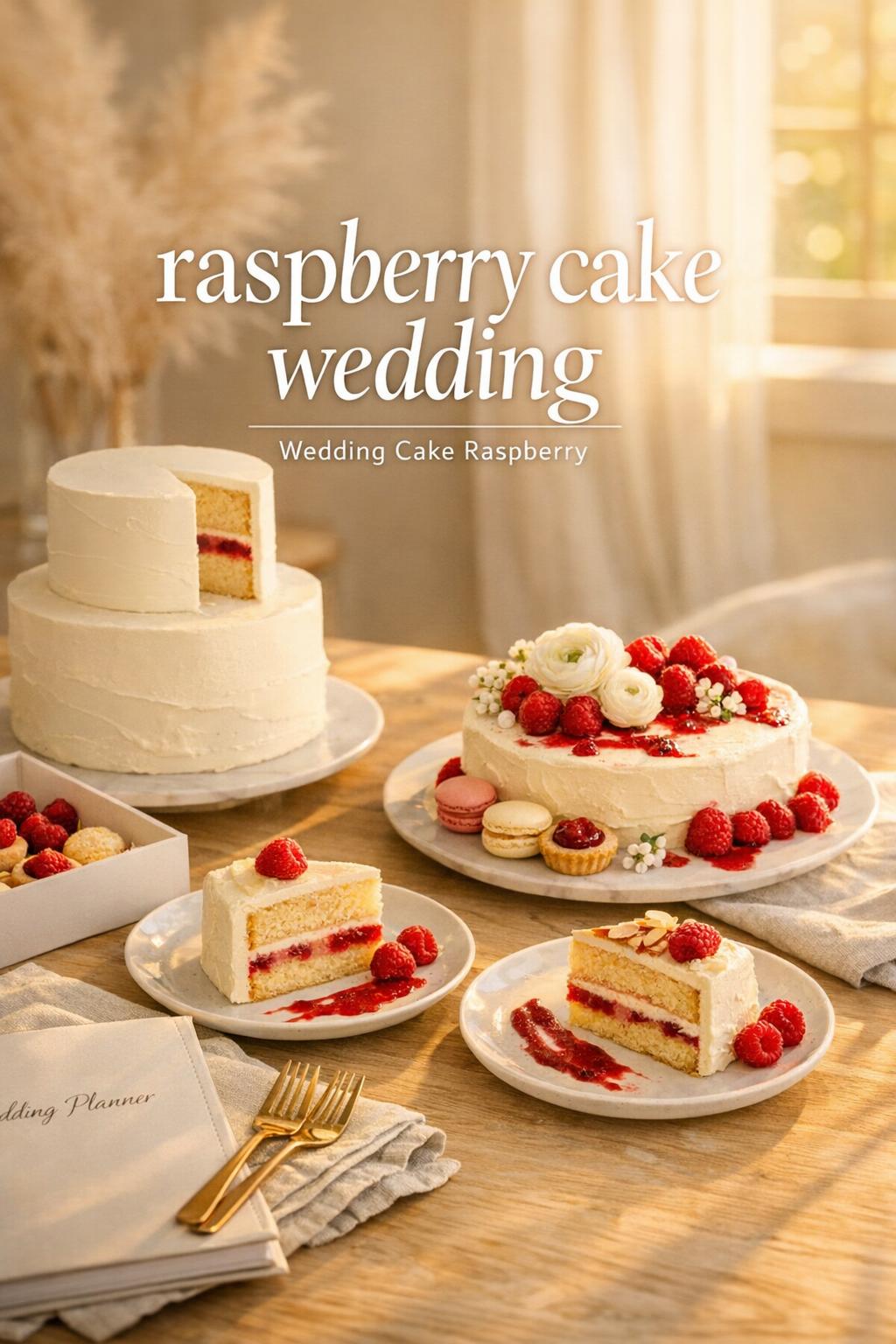
    Raspberry cake wedding tasting setup with tiered white cake slice, modern table cake, macarons, and golden-hour bakery consult table.
    A golden-hour bakery consultation scene showcases an elegant raspberry-forward wedding cake tasting with refined dessert accents.

    Flavor directions that keep raspberry from tasting like an afterthought

    Raspberry can be used as a thin flavor accent or as a clear, defined filling layer. The difference matters. In a wedding setting, you want raspberry to show up with purpose—either as a distinct layer guests can identify (“this is the raspberry one”) or as part of a pairing where it’s meant to blend (raspberry-lemon, almond-raspberry). The best results come from choosing your direction early and then aligning cake, filling, and finish to match.

    Classic vanilla cake with raspberry filling

    This is the workhorse combination for a reason. Vanilla keeps the cake familiar and broadly appealing, while raspberry filling adds a fruit-forward lift. Many bakery-style wedding cake pages emphasize flavors and fillings as the foundation for customization, and vanilla with raspberry is often the easiest to adapt to different designs—from minimal frosting finishes to more decorative looks—without the flavor profile fighting the visual concept.

    Tip: If you’re planning a multi-tier cake and want consistency across tiers, consider keeping the cake base consistent and varying the raspberry intensity by tier (subtle in one, more pronounced in another) during your tasting and consultation. That way, guests with different preferences can still enjoy the overall cake.

    Raspberry-lemon wedding cake: bright, photo-friendly, and assertive

    Raspberry-lemon is a headline pairing because it’s both distinct and celebratory. A real wedding feature like The Knot’s “tiered raspberry-lemon wedding cake” highlights how the pairing can feel classic while still being memorable. Lemon pushes the overall impression toward crisp and fresh, which can be helpful when you want the cake to feel light at the end of a long event.

    Tip: Raspberry-lemon works best when the tartness feels controlled. In tastings, pay attention to whether the lemon note reads as balanced or dominates. The goal is a cohesive pairing, not a flavor tug-of-war.

    Almond-raspberry: the “wedding cake” pairing that feels designed

    Almond-raspberry often reads as intentionally “wedding,” partly because almond brings a distinct aromatic richness that feels more special than plain vanilla while still being widely liked. A product like “The Wedding Cake” from Miri Nadler Cakes on Goldbelly explicitly leans into this identity, pairing almond and raspberry with floral decoration to signal ceremony and craft. If you want a cake that tastes like a deliberate choice rather than a safe default, almond-raspberry is a strong direction.

    Raspberry as the signature: “the raspberry cake” approach

    Some couples don’t want raspberry to be a mere filling; they want it to be the concept. That’s where signature-style products come in—such as Elisabeth Valentijn’s “The Raspberry Cake” or White Flower Cake Shop’s “Celebration Raspberry Love Cake.” These offerings tend to communicate a clear identity: raspberry isn’t hidden; it’s framed as the primary experience, suitable for celebrations (including weddings) where the cake itself is part of the story.

    Choosing a signature raspberry cake can simplify planning because many design and flavor decisions are already integrated. The trade-off is flexibility: the more signature the product, the more you’ll want to confirm what can and cannot change, especially if you’re coordinating with a specific wedding aesthetic.

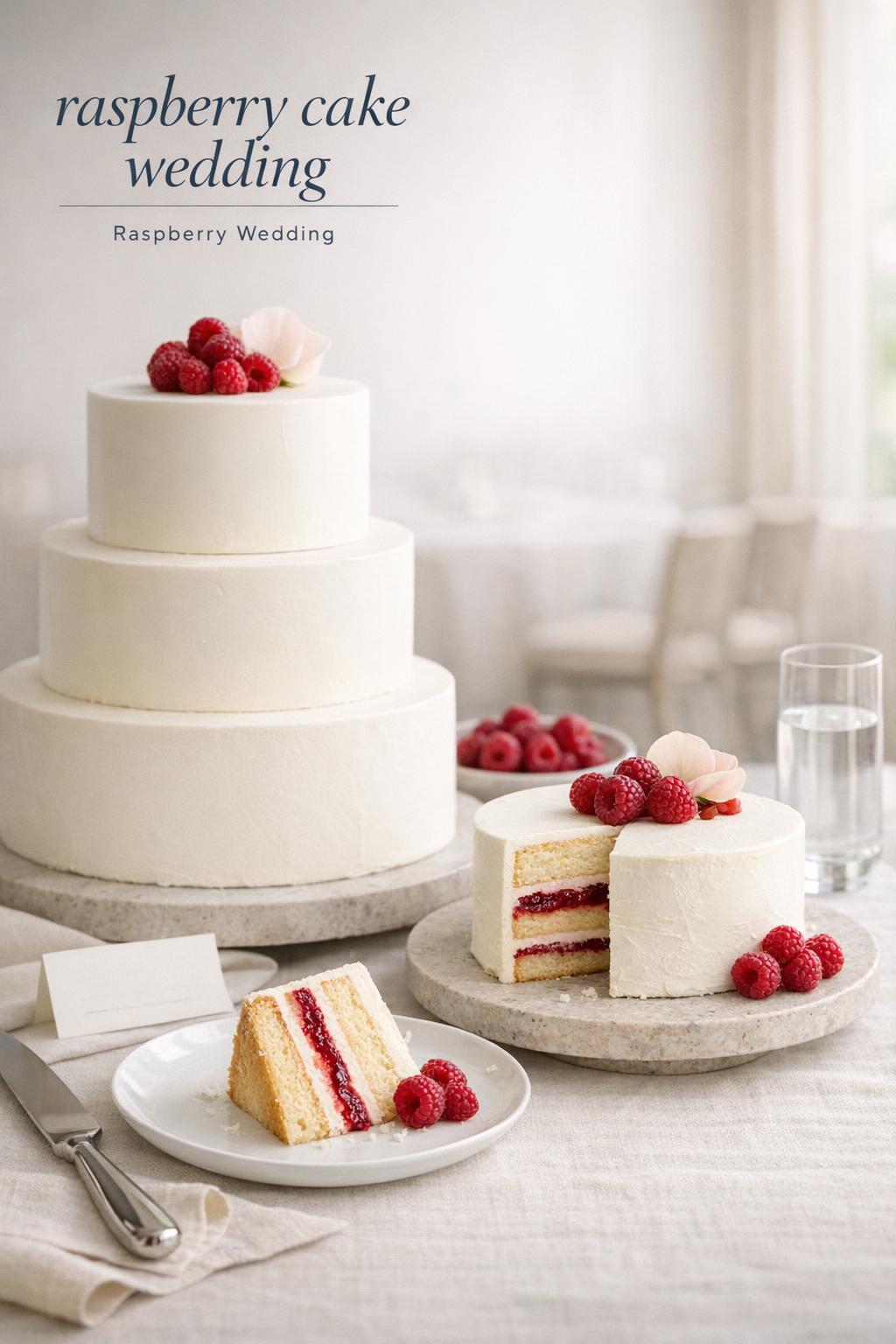
    Raspberry cake wedding centerpiece with fresh raspberries and white frosting on an elegant tiered cake display
    A beautifully frosted tiered raspberry cake brings a fresh, romantic centerpiece to an elegant wedding dessert table.

    Presentation: tiered statement or raspberry table cake?

    In wedding planning, cake “style” is not just about how it looks—it’s about how it functions. A tall tiered cake creates a formal focal point and fits traditional cake-cutting moments. A table cake, on the other hand, can feel relaxed and modern while still being beautiful, especially when the flavor is strong enough to stand on its own. Fig & Bloom Cakes’ “Raspberry Table Cake” underscores this shift: couples who are open to a casual, non-traditional wedding cake can treat the cake as part of the table rather than a staged centerpiece.

    When a tiered raspberry cake is the right move

    Choose tiering when you want ceremony and structure: a defined cake-cutting moment, a visual anchor for the reception, and a design that reads instantly as “wedding cake.” Raspberry works well here because it adds personality to a format that can otherwise feel standard. A “tiered raspberry lemon wedding cake” approach is particularly effective because the pairing feels bright and celebratory while still aligning with traditional formality.

    When a raspberry table cake feels more honest

    Go the table-cake route when the wedding itself is intentionally less formal, or when you want guests to experience the cake more like a dessert than a ceremonial object. Table cakes can also be a smart choice if you care deeply about flavor and texture and want a cake that’s presented at peak freshness without the logistical complexity of multiple tiers.

    Tip: If you love the idea of a table cake but still want a classic wedding moment, consider a small formal cake for cutting plus a larger raspberry table cake for serving. Keep the flavors aligned so the experience feels cohesive.

    Design and customization: how bakers translate “raspberry” into a wedding look

    The most helpful wedding cake vendors don’t start with decoration—they start with the couple’s priorities: flavor, serving needs, and style direction. Bakery pages that emphasize custom designs and consultation (such as Raspberry’s N’ Creme) tend to frame design as a collaboration: you select flavors, fillings, and finishes, then translate those choices into a cake that fits the wedding’s overall aesthetic.

    What “custom design” can realistically mean

    Custom can refer to the cake’s shape and tiering, the look of the finish, the placement of decorations, and the way raspberry appears (as a filling, as a flavor note, or as visible wedding cake berries). The key is to define what you actually need customized. If you primarily care about the taste—say, a specific raspberry filling—then you can keep the visuals simpler and allocate your budget and decision energy accordingly.

    • Flavor customization: choosing raspberry as a filling, then pairing it with vanilla, lemon, almond, or another compatible base direction.
    • Finish customization: selecting a coating or buttercream style that matches your wedding vibe, from clean and minimal to more decorative.
    • Presentation customization: choosing tiered, single-tier, or table cake formats based on how formal the reception will feel.
    • Decor customization: deciding whether raspberries show up visibly, and if so, where and how sparingly.

    Edible raspberry décor without making the cake look busy

    Visible raspberries can be gorgeous, but they require restraint. Think of berries as punctuation, not wallpaper. If you’re inspired by floral decoration—like the floral-decorated almond-raspberry wedding cake aesthetic—use berries to echo the palette and rhythm of the flowers. If you’re going for minimalism, a few berries can create a deliberate contrast against a clean finish.

    Tip: In your consultation, ask the baker to show you two approaches: one with berries as a focal accent and one with berries as a subtle detail. Seeing both helps you decide what photographs best for your venue lighting and reception style.

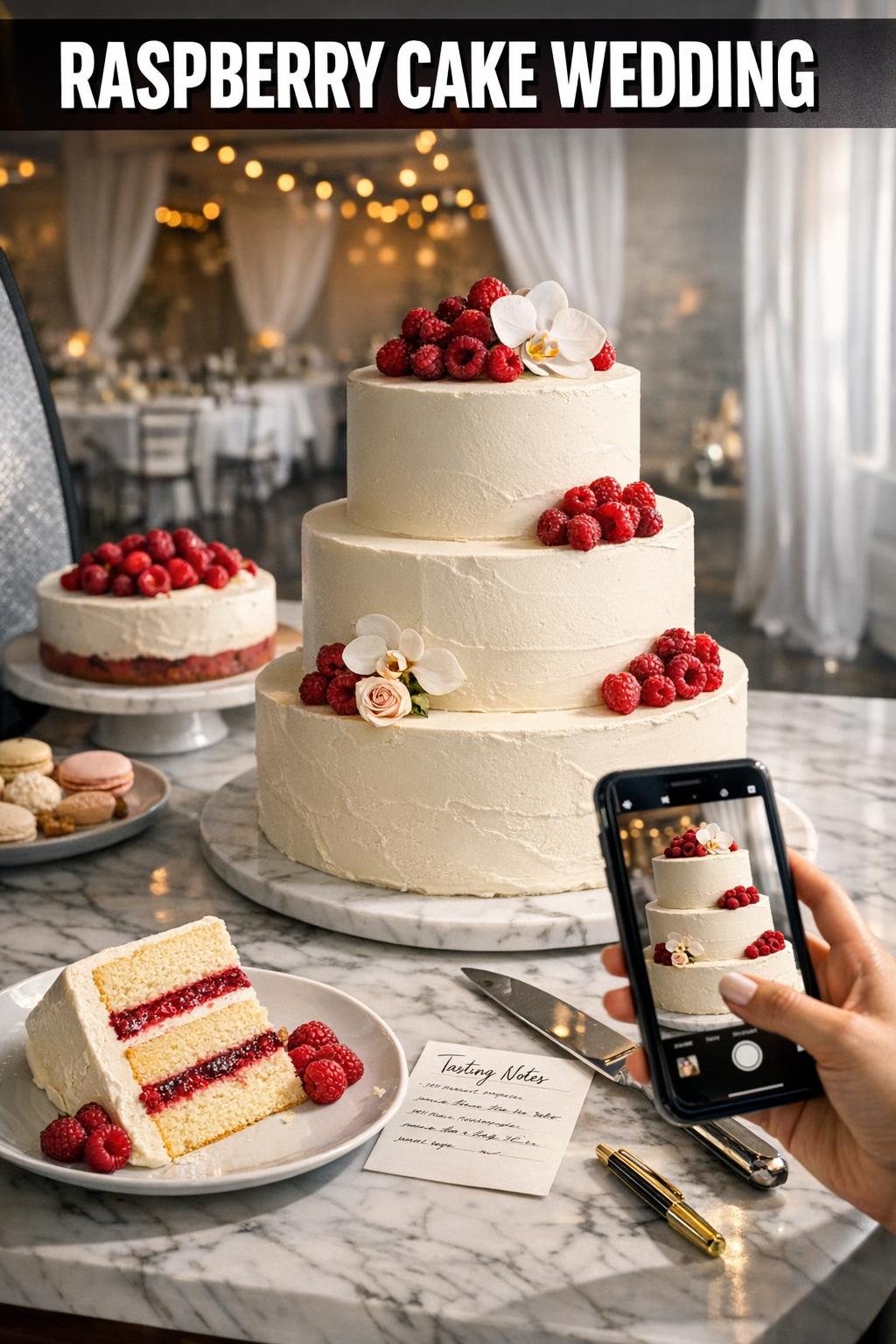
    Raspberry cake wedding consultation table with tiered cake, sliced raspberry filling, mood board, and tasting notes in window light
    A bright bakery consultation scene showcases an elegant raspberry cake wedding design with tasting slices, notes, and inspiration details.

    Tastings and consultations: how to get the raspberry flavor you pictured

    A tasting is not just “do we like this?” It’s where you confirm how the raspberry behaves with the cake base and the finish. Vendors that explicitly structure a tasting and consultation process (again, Raspberry’s N’ Creme is an example of this kind of approach) typically guide couples through decisions that affect the final experience: sweetness level, fruit intensity, and how the filling and coating interact.

    How to taste like a decision-maker, not just a dessert fan

    In a wedding context, you’re choosing a dessert that must hold up through timelines, slicing, and serving. During tasting, move beyond first impressions and focus on the full bite: cake, filling, and coating together. Raspberry can be vivid on its own but muted when paired with a rich finish; the only way to know is to taste the complete construction.

    • Take notes on the raspberry intensity: does it read as fresh and clear, or does it blend into sweetness?
    • Compare pairings: raspberry-lemon versus vanilla-raspberry versus almond-raspberry, and decide what best matches your event mood.
    • Consider guest appeal: a distinctive pairing can be memorable, but you may want one crowd-pleasing option if you’re serving many guests.
    • Ask about the consultation flow: when do you lock flavors, and when do you finalize design details?

    A practical “raspberry cake wedding” timeline mindset

    Even without diving into rigid timelines, it’s worth treating cake decisions as a series of checkpoints: decide your style (tiered vs table cake), confirm flavor direction (raspberry filling, raspberry-lemon, almond-raspberry), then finalize design and serving needs. This prevents the common issue where couples pick a beautiful design first and only later realize the chosen raspberry profile doesn’t match the finish or the formality of the cake.

    Vendor spotlight: recognizable raspberry-forward offerings and what they signal

    One reason raspberry is so popular in U.S. weddings is that it appears across vendor types: local bakery custom programs, designer-forward signature products, and venue packages. Reading those offerings as “signals” can help you find what you need faster—especially if you’re balancing convenience with customization.

    Raspberry’s N’ Creme: custom wedding cakes built around flavor and design choices

    Raspberry’s N’ Creme presents the clearest example of a bakery approach that centers wedding cakes, flavors (including raspberry), custom designs, and a tasting and consultation process. This is a strong fit if you want to shape the final cake around your wedding details: tier count, filling choice, and a finish that aligns with your aesthetic. It’s also a good model if you want the planning experience to feel guided rather than transactional.

    Fig & Bloom Cakes: the raspberry table cake as a non-traditional wedding move

    Fig & Bloom Cakes highlights a raspberry table cake concept that speaks directly to couples choosing a casual or non-traditional wedding format. This style can look intentional and modern, especially when the rest of the wedding avoids overly formal cues. If your reception is more about conversation than ceremony, a table cake can feel like the right cultural “fit.”

    Eston’s Bakery and Sugar & Slice on Main: product-style raspberry cakes that simplify ordering

    Product pages such as Eston’s Bakery’s Raspberry Royale Cake and Sugar & Slice on Main’s Raspberry Wedding Cake reflect a more straightforward purchase model. These are useful reference points if you want a defined cake option with a clear flavor identity and less back-and-forth. The benefit is simplicity; the limitation is that you’ll want to confirm how far customization can go, especially if you need a specific tiering plan or a design tailored to your wedding style.

    White Flower Cake Shop and Elisabeth Valentijn: signature raspberry cakes with a point of view

    White Flower Cake Shop’s “Celebration Raspberry Love Cake” and Elisabeth Valentijn’s “The Raspberry Cake” represent a more branded, signature direction. These offerings can be ideal when you want the cake to feel like an intentional feature—something guests remember—without designing every detail from scratch. For a Raspberry Wedding concept where dessert is part of the event identity, this approach can feel particularly aligned.

    Miri Nadler Cakes on Goldbelly: almond-raspberry with floral decoration

    Goldbelly’s listing for Miri Nadler Cakes features “The Wedding Cake” with floral decoration and an almond & raspberry profile. This is a useful reference if you’re drawn to an elegant, decorative finish and want a pairing that reads as designed rather than improvised. It also illustrates how wedding cake berries and floral styling can be framed as part of an intentional, cohesive concept.

    Hyatt Royal Palms (Phoenix area): when the venue sets the cake framework

    Some couples plan weddings in venues where cake is part of the package framework. Hyatt’s Royal Palms wedding packages in the Phoenix area include formal wedding cake options where raspberry appears among flavor choices. This approach can reduce planning complexity because the venue provides a structured set of options; the trade-off is that you may be working within a defined menu rather than building a fully bespoke raspberry cake from the ground up.

    Real-wedding inspiration, translated into decisions you can actually make

    Real-wedding cake photos can be inspiring, but they can also be misleading if you don’t translate them into practical choices. The Knot’s feature of a tiered raspberry-lemon wedding cake is a good example of an idea that’s both visually clear and easy to communicate to a vendor: tiered structure, a specific pairing, and a flavor profile that’s recognizable. The key is to turn a photo into a brief that includes flavor, format, and finish—not just “I like this.”

    A photo-to-consultation checklist (so you don’t lose the point)

    • Name the pairing: “raspberry-lemon,” “almond-raspberry,” or “vanilla cake with raspberry filling.”
    • Name the format: tiered cake, single tier, or raspberry table cake.
    • Name the mood: classic wedding, casual/non-traditional, or signature/designer-forward.
    • Identify the décor role: do you want visible wedding cake berries, floral decoration, or a clean finish?

    Tip: Bring two inspiration images: one that shows the overall silhouette (tiers, height, spacing) and one close-up that shows the finish (smooth frosting vs textured) and any berry accents. Vendors can usually interpret that faster than a large collage.

    A venue-specific reality check: heat, timing, and the cake’s moment

    Wedding cakes don’t exist in a vacuum. They sit in venues, wait through timelines, and get photographed under lighting you can’t always control. If you’re marrying at a resort venue where cake is part of a package—such as a Royal Palms-style setting in the Phoenix area—your questions should include how cake options are handled on the day: when the cake is set out, when it’s cut, and how it’s stored beforehand. Raspberry fillings and wedding cake berries can be stunning, but they also demand you plan the cake’s “moment” so it looks and tastes like it should.

    Even if you’re not in a desert climate, the takeaway is the same: ask your venue and baker how they coordinate. The most common cake disappointments come from mismatched expectations—couples envision a pristine finish and bright raspberry, but the day-of plan doesn’t protect those details. A short planning conversation can prevent that.

    Dietary considerations: keeping raspberry at the center without overpromising

    Many couples want everyone to enjoy dessert, which means thinking through dietary needs early. While not every vendor offers every option, the concept of dairy-free or vegan raspberry cake comes up naturally because raspberry is a strong, fruit-forward note that can carry a dessert experience even when other ingredients change. The key is to treat dietary requests as part of the flavor brief, not an afterthought.

    How to talk about vegan or dairy-free raspberry cake in a consultation

    Be specific about what matters most: is it the raspberry filling intensity, the overall sweetness, or the finish and presentation? A vendor can often help you choose a version that still tastes like a raspberry cake wedding moment rather than a compromise. The most helpful approach is to taste the dietary version alongside the standard version if possible, then decide whether you want one universal cake or multiple dessert options.

    Tip: If your wedding plan includes a single cake for everyone, prioritize a raspberry-forward profile that remains identifiable even when the cake base or coating differs. Raspberry’s clarity is an advantage here—use it.

    Common mistakes couples make with wedding cake raspberry flavors

    Raspberry is familiar enough that couples sometimes assume it will “just work.” In practice, the most successful raspberry wedding cake choices are the ones where the couple makes a few deliberate decisions early. Here are the issues that come up most often and how to avoid them.

    Mistake: choosing design first and realizing later the flavor doesn’t match the mood

    A highly formal, smooth-finished tiered cake reads classic; a bright, punchy raspberry profile (like raspberry-lemon) reads energetic. That can be a great combination, but it needs to be intentional. If your wedding tone is soft and traditional, you may prefer a quieter vanilla-raspberry or almond-raspberry profile. Align the flavor “voice” with the visual message.

    Mistake: treating fresh berries as decoration without a plan

    Wedding cake berries can look editorial, but only when they’re placed with restraint and purpose. Too many raspberries can overwhelm the design and distract from key details like tier spacing or floral elements. Decide whether berries are an accent, a border, or a focal cluster—and keep it consistent across tiers.

    Mistake: not clarifying what “raspberry cake” means to you

    To one person, raspberry cake means vanilla layers with raspberry filling. To another, it means a signature raspberry-forward cake like “The Raspberry Cake” or a “Raspberry Royale Cake.” These are very different experiences. Use the exact phrasing you want—raspberry filling, raspberry-lemon pairing, almond-raspberry—so your baker can match your expectation.

    Pulling it together: a practical decision path for a raspberry cake wedding

    If you’re feeling overwhelmed by options, simplify the process by deciding in layers: style first, then flavor pairing, then decoration. This keeps you from making a gorgeous but impractical choice, or from picking a flavor you love that doesn’t align with your overall wedding presentation.

    • Choose the format: tiered cake for tradition, or a raspberry table cake for a casual/non-traditional feel.
    • Choose the pairing: vanilla with raspberry filling for broad appeal; raspberry-lemon for brightness; almond-raspberry for a designed, elegant profile.
    • Choose the visual approach: clean finish, floral decoration, or subtle wedding cake berries as accents.
    • Choose the planning model: custom design with tasting and consultation (a bakery model like Raspberry’s N’ Creme) versus a signature/product approach (like The Raspberry Cake, Celebration Raspberry Love Cake, Raspberry Royale Cake, or a Raspberry Wedding Cake product listing).
    • Confirm the venue workflow: especially if cake is tied into a venue package like a Hyatt Royal Palms-style offering.

    The best “raspberry cake wedding” outcomes are the ones where the cake feels like part of the event design, not a separate decision made late in planning. When flavor, format, and styling are aligned, raspberry becomes what it should be: a confident, celebratory note that feels unmistakably wedding-appropriate.

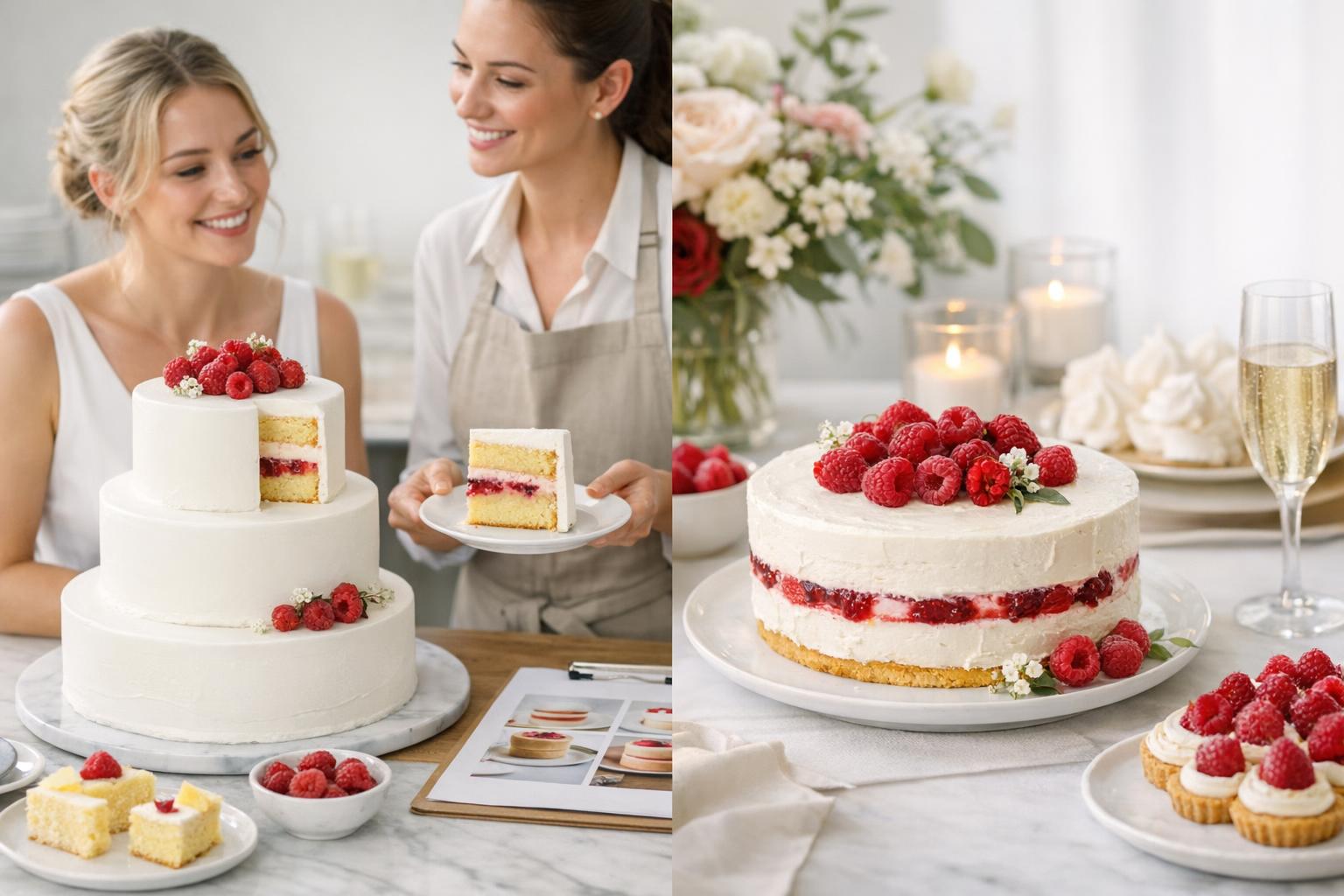
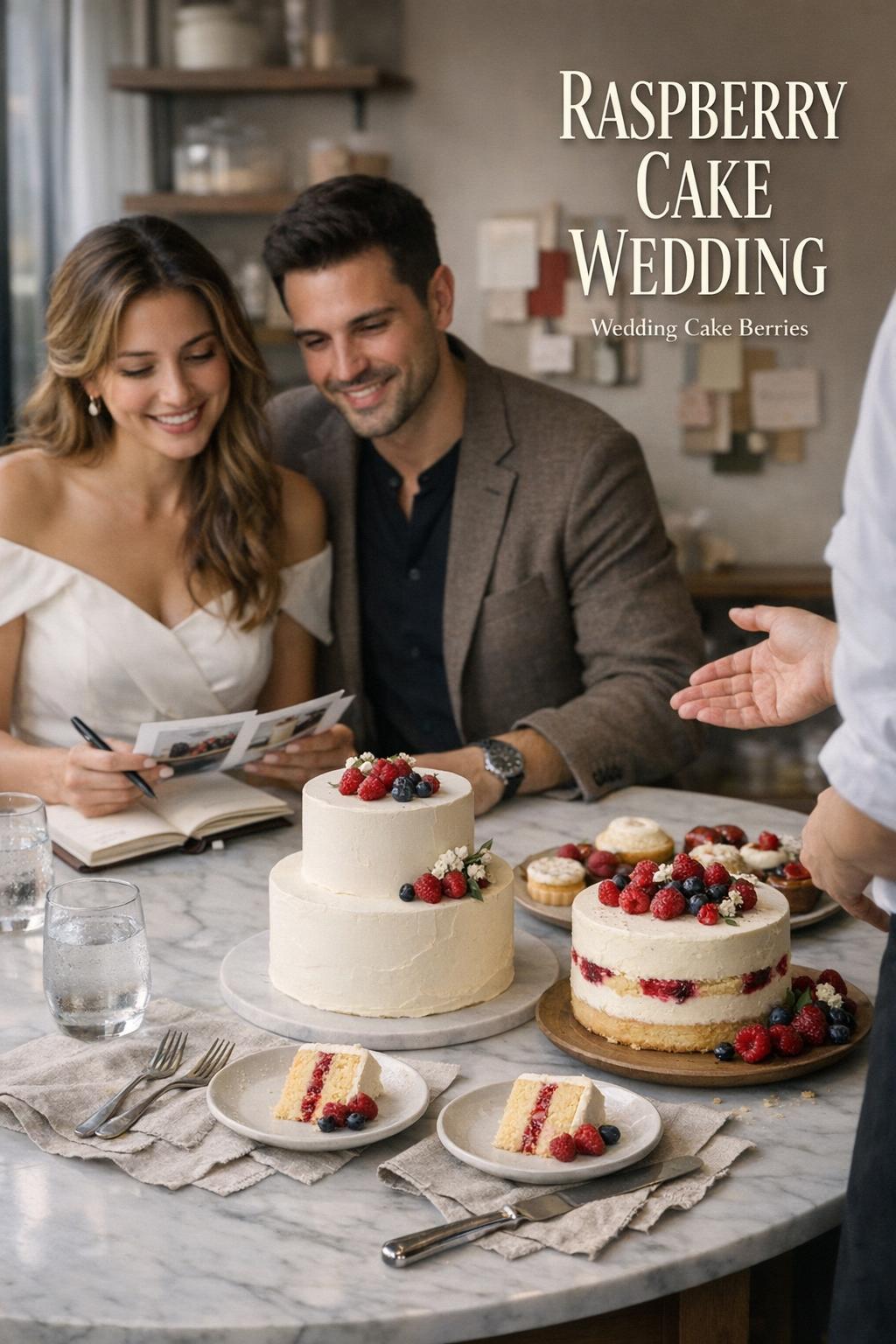
    Raspberry cake wedding tasting with bride, partner, and pastry chef comparing two cakes in a sunlit bakery consultation
    A bride and partner review cake inspiration as a pastry chef presents two raspberry-filled wedding cake options in a light-filled bakery.

    FAQ

    What does “raspberry cake wedding” usually mean: raspberry cake layers or raspberry filling?

    In many wedding contexts it most commonly means a wedding cake with raspberry as a filling or featured flavor note rather than fully raspberry-flavored layers, which is why phrases like “raspberry filling” and “raspberry-filled wedding cake” show up so often; the best approach is to clarify whether you want a distinct raspberry layer, a pairing like raspberry-lemon or almond-raspberry, or a signature “raspberry cake” product with a defined profile.

    Is raspberry-lemon a good pairing for a tiered wedding cake?

    Yes—raspberry-lemon is a well-known wedding pairing that works especially well in a tiered format because it feels bright and celebratory while still fitting a classic silhouette, as shown in real-wedding inspiration where a tiered raspberry-lemon wedding cake is featured as both a flavor and design idea.

    What’s the difference between a traditional tiered cake and a raspberry table cake?

    A traditional tiered cake is designed to be a formal focal point with a classic cake-cutting moment, while a raspberry table cake is a more casual, non-traditional presentation (highlighted by offerings like a “Raspberry Table Cake”) that treats the cake as part of the table experience rather than a staged centerpiece.

    How do I choose between vanilla-raspberry, raspberry-lemon, and almond-raspberry?

    Vanilla with raspberry filling is the most broadly familiar and easy to match with many designs, raspberry-lemon is brighter and more assertive, and almond-raspberry tends to feel especially “wedding” and designed; during a tasting and consultation, evaluate the full bite (cake, filling, and finish together) and choose the pairing that matches your wedding’s formality and overall mood.

    Should I use fresh wedding cake berries as decoration?

    You can, but it works best when berries are used with restraint and a clear plan—either as a subtle accent or a deliberate focal cluster—so the cake doesn’t look visually busy, especially on tiered cakes where clean lines and balanced spacing are part of the design.

    What should I expect in a tasting and consultation for a wedding cake raspberry flavor?

    A structured tasting and consultation typically helps you confirm the flavor direction (raspberry filling intensity and pairings), make decisions about design and presentation, and align those choices with how the cake will be served at the wedding, which is particularly helpful when you’re planning a custom cake rather than selecting a standard product option.

    Are there signature raspberry cake options if I don’t want to customize everything?

    Yes—some vendors present signature products where raspberry is central, such as White Flower Cake Shop’s “Celebration Raspberry Love Cake” and Elisabeth Valentijn’s “The Raspberry Cake,” and there are also product-style offerings like Eston’s Bakery’s “Raspberry Royale Cake” or a “Raspberry Wedding Cake” listing, which can simplify ordering if you’re comfortable with fewer customization choices.

    How do venue wedding packages affect raspberry cake choices?

    When cake is part of a venue package—such as Hyatt’s Royal Palms wedding packages in the Phoenix area—raspberry may be offered among structured flavor options, which can reduce planning effort but may limit how far you can customize flavor pairings, design details, or presentation compared with a fully bespoke bakery consultation.

    When cake is part of a venue package—such as Hyatt’s Royal Palms wedding packages in the Phoenix area—raspberry may be offered among structured flavor options, which can reduce planning effort but may limit how far you can customize flavor pairings, design details, or presentation compared with a fully bespoke bakery consultation.

    Can I request a vegan or dairy-free raspberry wedding cake?

    Many couples do explore dairy-free or vegan raspberry cake options because raspberry is a strong, fruit-forward note that can remain identifiable even when other ingredients change; the most reliable approach is to discuss the exact raspberry profile you want during consultation and, if possible, taste the dietary version alongside a standard version to confirm the overall balance.

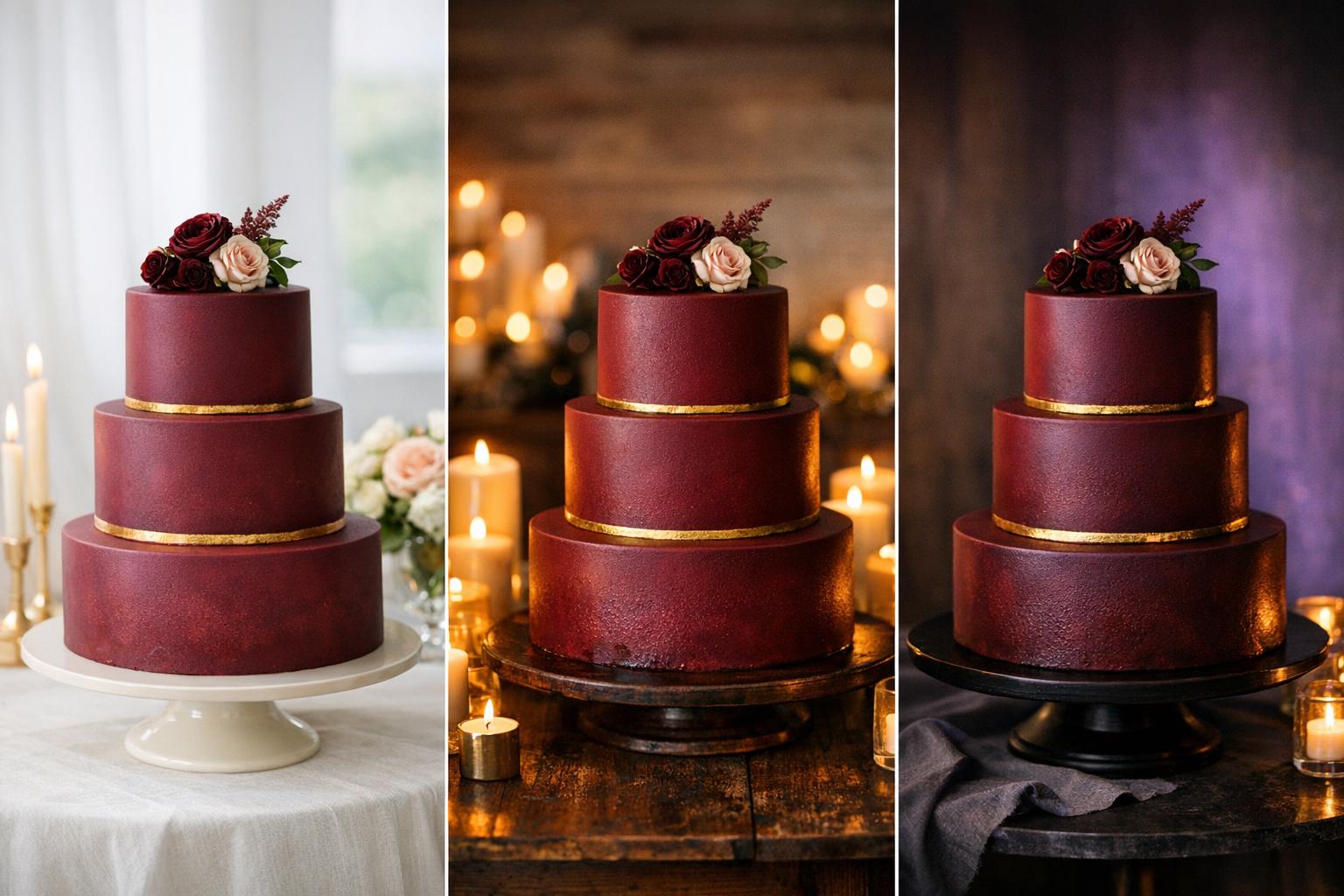
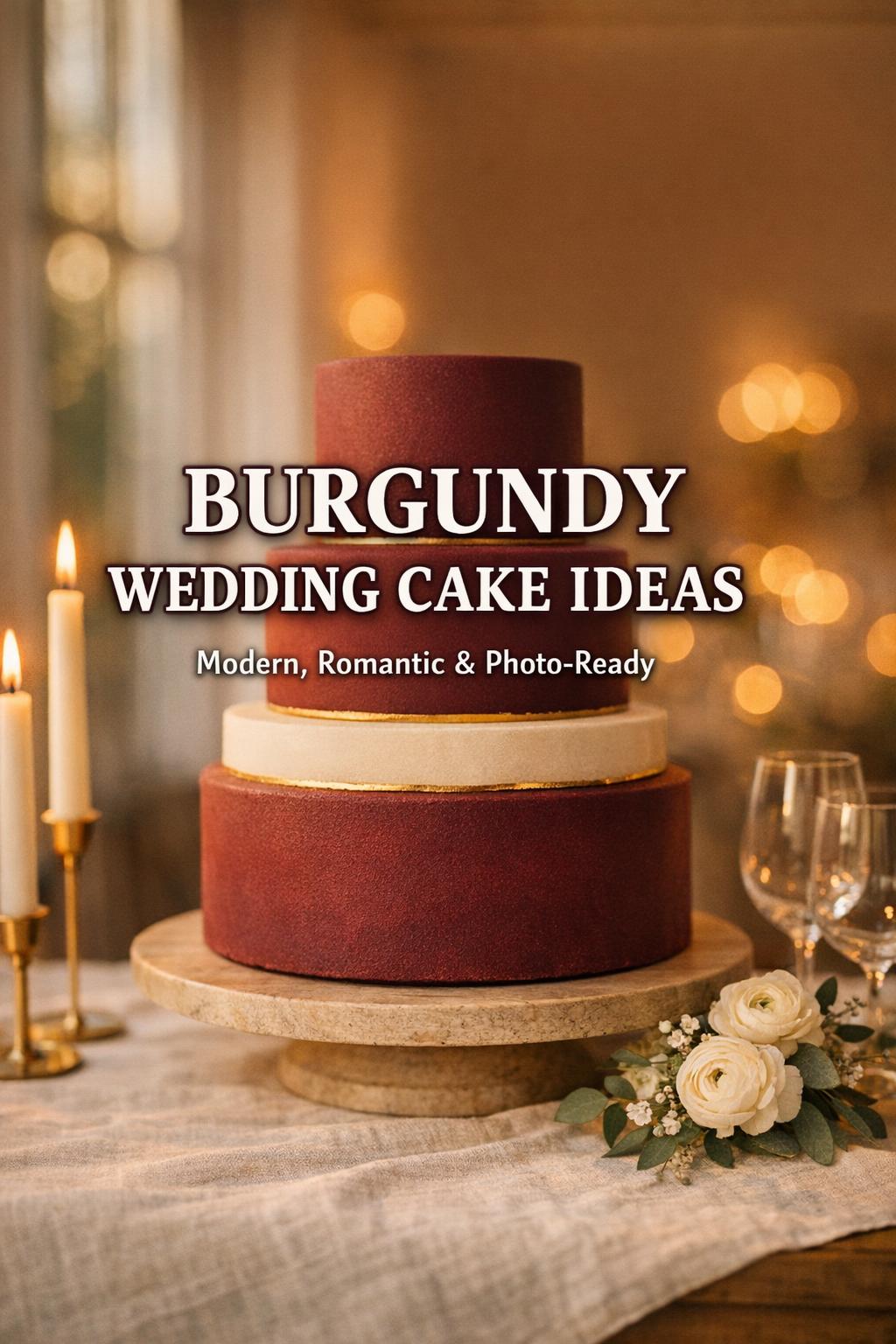
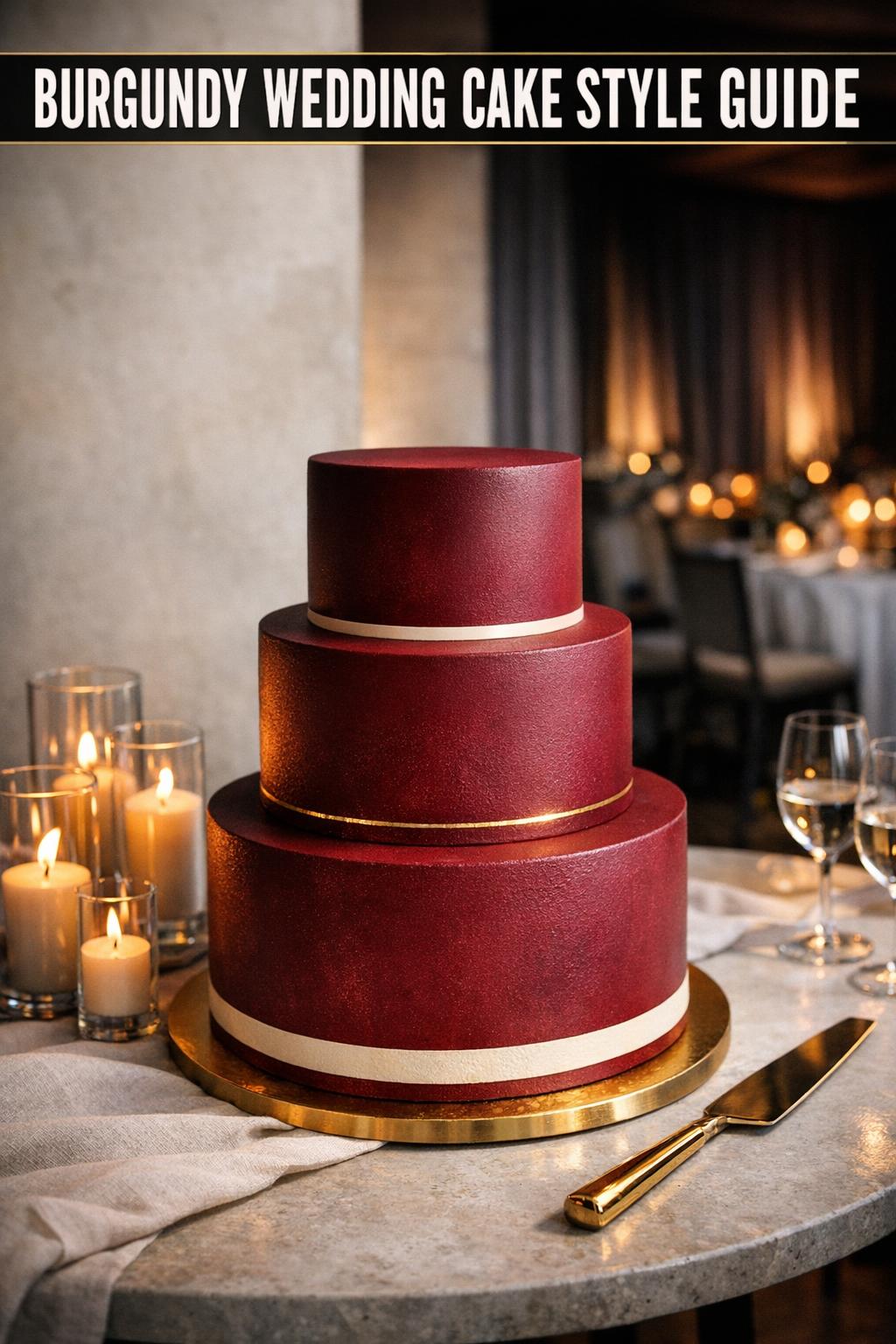
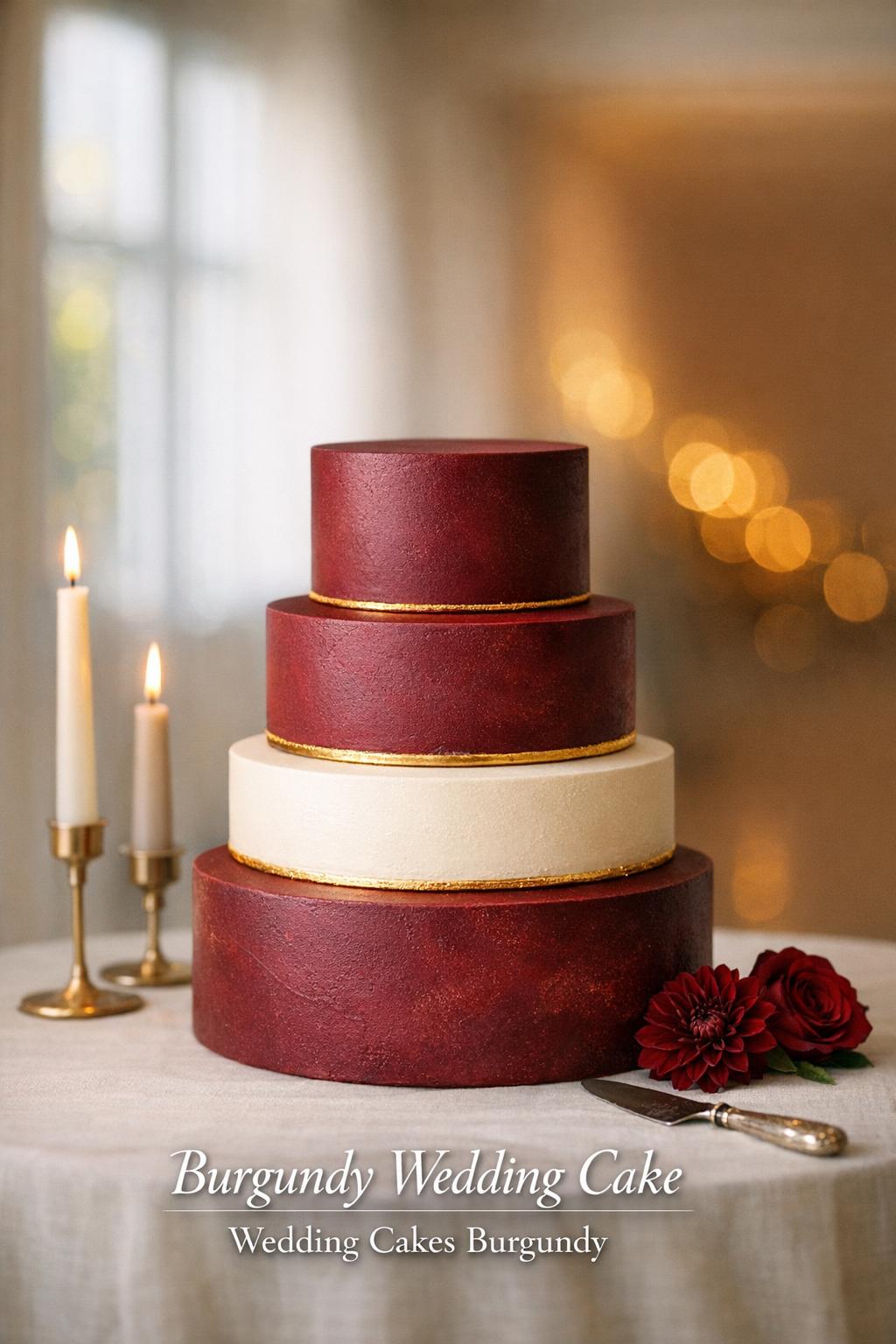
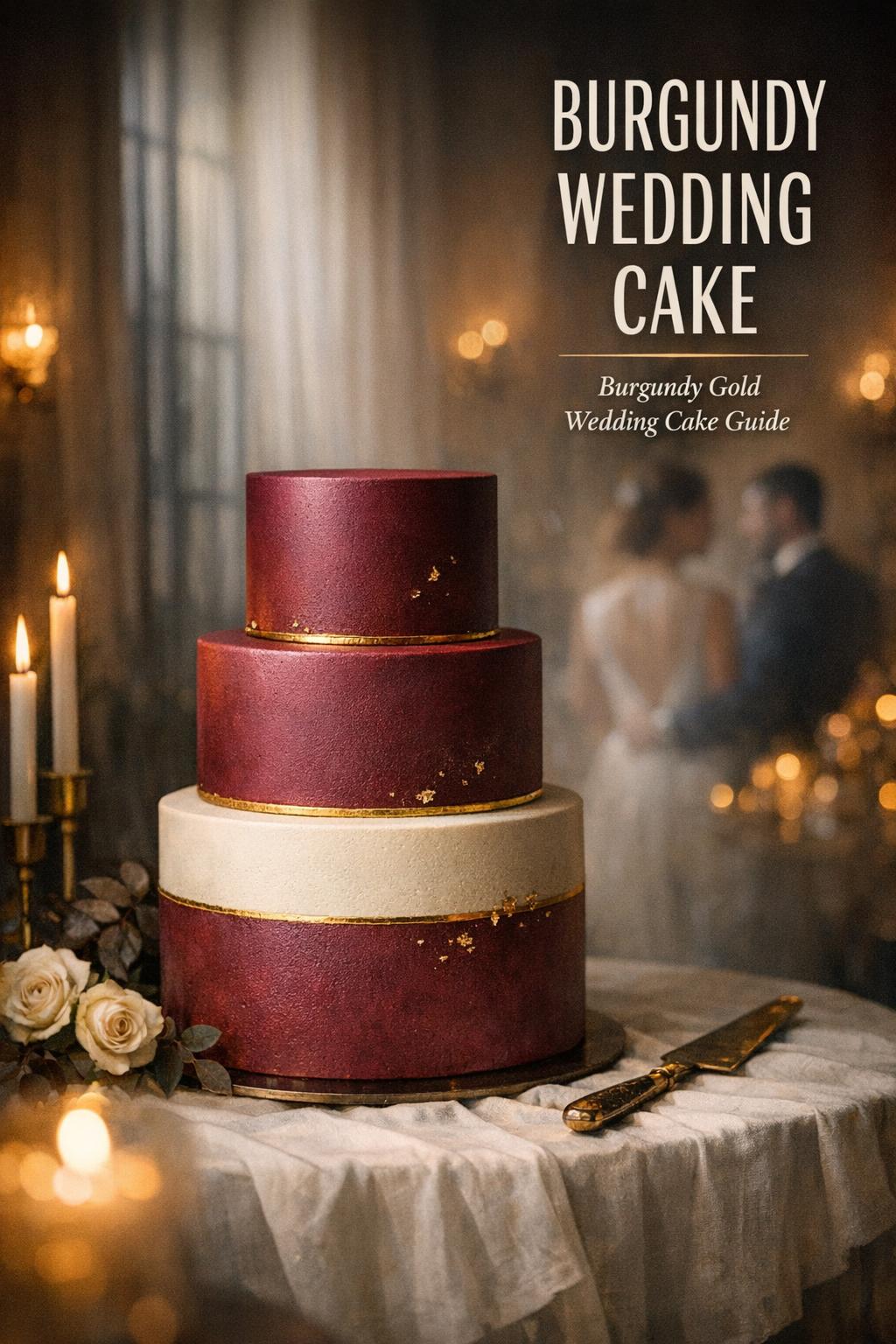
  • How to Style a Burgundy Wedding Cake for Every Light

    How to Style a Burgundy Wedding Cake for Every Light

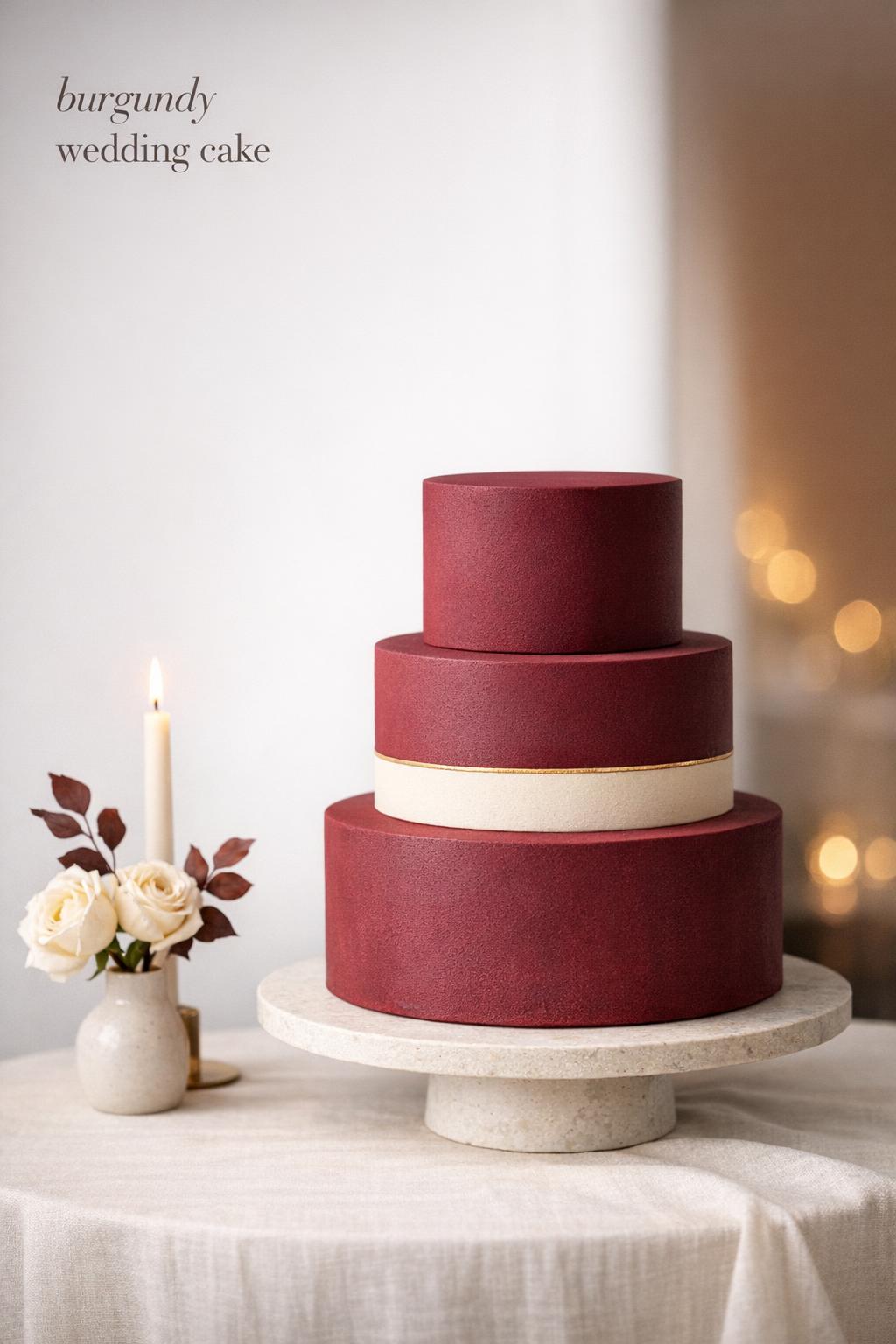
    Burgundy wedding cake: the color choice that can carry an entire reception

    There’s a moment in almost every wedding planning process when the design board starts to look a little too “pretty” and not quite intentional enough. Burgundy is often the color that fixes that. A burgundy wedding cake doesn’t just match a palette—it anchors the room, photographs like a dream under warm reception lighting, and gives you a strong visual through-line from florals to tablescape to attire. Done well, it feels classic and modern at once: romantic without being overly sweet, dramatic without being heavy.

    This guide takes an editorial approach to wedding cake burgundy choices—how to make the color look expensive, how to keep it from reading too dark or too “holiday,” and how to coordinate it with textures, finishes, and accents (including the ever-popular burgundy gold wedding cake look). You’ll also find practical decision points couples run into in real life—venue lighting, seasonal considerations, and how bold color behaves on camera—so your burgundy cake wedding plan holds up from the first consultation to the last slice.

    Burgundy wedding cake in a minimalist luxury reception vignette with ivory linen, candlelight, and sparse florals
    A modern three-tier burgundy wedding cake stands in a minimalist reception vignette with ivory linen, candlelight, and soft florals.

    What “burgundy” really means on a cake (and why it can look different in photos)

    Burgundy is a deep red family that can lean wine, berry, plum, or brown depending on how it’s mixed and how it’s lit. On a cake, that nuance matters more than people expect. The same shade can look velvety and rich in daylight, then read nearly black under dim or colored uplighting. That’s why it’s helpful to think beyond “the color” and consider finish (matte vs. glossy), surface texture (smooth vs. textured), and what’s sitting next to it (white flowers, gold accents, dark greenery).

    In a reception space with warm lighting, burgundy tends to intensify and skew deeper. In cooler daylight, it can look brighter and more red-forward. If your venue transitions from daylight cocktail hour to evening reception, ask your baker how the chosen burgundy will behave across both conditions. This is one of the key reasons wedding cakes burgundy designs often look best with deliberate contrast—light elements that keep the color looking intentional rather than “too dark.”

    Tip: decide on “your burgundy” before you decide on a design

    Bring a consistent reference—fabric swatch, stationery, or a printed color chip—so the shade doesn’t drift. In practice, couples often approve a cake design and only later realize their burgundy reads more purple or more brown than they imagined. Settling the undertone first makes every later choice (white balance, gold tone, floral color) easier and more cohesive.

    Burgundy wedding cake on a minimalist reception cake table with ivory accents, taper candles, and white florals in golden-hour light
    A modern burgundy wedding cake glows in golden-hour light, styled with ivory accents, taper candles, and airy white florals.

    Where a burgundy wedding cake fits best: mood, venue, and season

    Burgundy is versatile, but it has a particular strength: it can look formal even in relaxed spaces. In a rustic venue, burgundy adds polish. In a ballroom, it adds depth and a hint of drama. In a modern, minimalist room, it becomes a sculptural focal point—especially if the rest of the palette is restrained.

    Seasonally, burgundy is most often associated with fall and winter, but it can absolutely work year-round when you tune the supporting palette. In warmer months, it’s usually more successful when used as an accent (a burgundy tier among lighter tiers, burgundy florals, or painterly burgundy detail). In colder months, a full burgundy cake can feel intentional and cozy, particularly with textures that look lush rather than flat.

    Venue-specific considerations that matter more than inspiration photos

    In real weddings, the cake rarely sits in the same pristine lighting as a styled shoot. Consider the background wall color, whether the cake table is near a window, and whether the cake will be photographed beside candles. A deep shade like burgundy benefits from breathing room—lighter linens, a clean backdrop, or a cake stand that lifts it into better light. If your venue has dark wood walls or a dim corner, a fully burgundy cake can disappear; contrast elements help it read clearly in photos.

    • Bright, airy venues: burgundy reads crisp and romantic; consider matte finishes to keep it looking modern.
    • Dim, moody venues: add white or ivory elements (tiers, florals, or negative space) so the color doesn’t look nearly black.
    • Outdoor weddings: account for shifting sun and shade; burgundy can look very different between ceremony and reception time.

    Design language: making burgundy feel elevated instead of heavy

    Because burgundy is so saturated, the design choices around it have outsized impact. The most refined burgundy wedding cake looks typically rely on one of two strategies: either the color is the statement and the design stays minimal, or the color is used in controlled placements so the details can shine without visual overload. The goal is to avoid “too much of a good thing,” where the cake reads dense and blocky rather than editorial and intentional.

    Minimalist burgundy: strong color, clean silhouette

    A clean silhouette—smooth tiers, sharp edges, minimal adornment—lets burgundy feel modern. This approach works especially well if the rest of the wedding design has structure: tailored attire, streamlined florals, or contemporary stationery. The visual logic is simple: a bold color needs a calm shape to look expensive. If you’re collecting burgundy wedding cake ideas and keep saving images that feel “quiet but dramatic,” this is usually what you’re responding to.

    Textured burgundy: depth without extra décor

    Texture can make the color feel dimensional and romantic without piling on accessories. Even subtle texture—soft ripples, a tonal pattern, or a velvety finish—keeps burgundy from looking like a flat paint swatch. For a burgundy cake wedding, texture is also practical: it can hide minor imperfections that stand out more on dark colors, especially under strong lighting.

    Controlled placement: burgundy as an accent color

    If you love burgundy but worry a fully burgundy cake will feel too bold, treat it like lipstick: place it with intention. A single burgundy tier, an ombré fade into ivory, or a painterly burgundy brush detail gives you the color story without dominating the dessert table. This strategy also coordinates easily with bridal party attire and florals, because you’re matching an accent rather than committing the entire cake to a dark tone.

    Elegant burgundy wedding cake with floral details on a decorated table at a romantic reception
    An elegant burgundy wedding cake with delicate floral accents creates a romantic centerpiece for the celebration.

    The burgundy and gold pairing: how to get the “burgundy gold wedding cake” look right

    A burgundy gold wedding cake is popular for a reason: gold brings light back into a deep color palette and instantly signals celebration. But gold can also look costume-like if the tone clashes with your burgundy or if the finish is too shiny for the setting. The difference between “luxurious” and “loud” often comes down to restraint and consistency.

    Gold works best when it supports a design idea rather than being sprinkled on as an afterthought. It can define edges, highlight a textured pattern, or create a focal moment where tiers meet. If the cake already has a lot going on—strong color, heavy florals, multiple textures—gold is most effective as a thin thread that ties elements together, not as a second headline.

    Tip: keep the gold tone consistent with the rest of your wedding

    If your room leans warm (candlelight, warm wood, warm-toned florals), a warmer gold tends to look natural. If your aesthetic is cooler or more modern, a softer, less yellow gold often feels more cohesive. The practical takeaway: match the cake’s gold accents to the metal tone you’re already using in your decor so the cake doesn’t look like it came from a different design plan.

    • For a subtle effect: fine gold detailing that catches light in photos without reading as “metallic overload.”
    • For a formal reception: structured gold lines or carefully placed accents that mirror clean table settings.
    • For a romantic look: gold used to frame florals or emphasize soft texture, keeping the overall feel gentle.
    Burgundy wedding cake on an elegant reception cake table with ivory accents, candlelight, and bright window bokeh.
    A modern burgundy wedding cake with subtle ivory accents sits elegantly on a linen-draped table in warm candlelit window light.

    Choosing a supporting palette that makes burgundy look intentional

    Burgundy rarely stands alone; it’s part of a palette. The supporting colors you choose will determine whether the cake feels romantic, modern, vintage, or moody. If your goal is a timeless look, you typically want at least one light neutral to create contrast. If your goal is a dramatic, intimate atmosphere, you may choose deeper supporting tones—but then you need to be careful about the cake blending into the room.

    Many wedding cake burgundy designs look most balanced when burgundy is paired with a neutral base and a few carefully chosen accents. That balance is also practical: it keeps the cake from overwhelming the dessert table and makes it easier to coordinate with changing flowers or linens if plans shift late in the process.

    Tip: plan contrast like a stylist, not like a paint chart

    Think in terms of light and dark blocks, not just “matching colors.” If the cake is dark, give it a lighter frame—ivory tiers, lighter florals, or a pale tablecloth. If your palette is already deep and moody, consider adding negative space in the design so the cake doesn’t become a solid dark pillar in photos.

    Florals, greenery, and garnish: the fastest way to change the vibe

    Florals and greenery can make the same burgundy cake feel wildly different. The scale of the arrangement matters: a small cluster can feel modern and controlled, while cascading florals can feel romantic and abundant. Because burgundy is strong, florals are often most effective when they introduce either softness (lighter blooms) or structure (clean placements) rather than competing for attention.

    Practical note from real receptions: cakes are often photographed close-up, and dark colors can make details harder to distinguish. Florals placed at tier seams, along an edge, or at a focal point help the camera find shape and dimension—especially in evening light.

    How to avoid the “too much” effect

    If your cake already includes a full burgundy exterior, keep floral colors either tonal (deep reds, berries) or clearly contrasting (ivory). Mixing too many mid-tones around a dark cake can look muddy in photos. If you want a more layered palette, place the complexity in the tablescape and keep the cake styling simple, so the overall wedding design feels curated rather than crowded.

    • Modern approach: a few intentional blooms or greenery placed asymmetrically.
    • Romantic approach: fuller clusters that soften the geometry of the tiers.
    • Venue-friendly approach: keep florals on the cake minimal and coordinate larger arrangements on the table around it.

    Finish and texture: the quiet details guests may not name, but they notice

    Once you choose the shade, the finish is what makes it feel editorial. A matte burgundy can look velvety and modern; a slight sheen can read richer and more traditional. Texture can also affect how “dark” the cake reads—textured surfaces catch light and reveal dimension, while perfectly smooth surfaces can look deeper and more dramatic.

    If you’re leaning toward wedding cakes burgundy designs with strong color coverage, this is where you can make the cake feel more customized without adding clutter. Even small decisions—like whether edges are sharp or softly rounded—change the personality of the cake.

    Tip: choose a finish that matches the formality of the day

    For a black-tie or very formal evening, structured tiers and refined detailing help burgundy look intentional rather than casual. For a relaxed celebration, softer edges or a more organic texture can feel welcoming. The point isn’t that one is better—it’s that the finish should echo the way the day feels, so the cake looks like it belongs in your venue and schedule.

    A cake table moment: styling around a burgundy cake so it photographs well

    In practice, the cake table is where a burgundy wedding cake either shines or struggles. Couples often choose an incredible design and then place it against a dark curtain, beside a cluttered DJ setup, or under a spotlight that creates harsh glare. A deep red cake deserves a clean, intentional frame.

    Think like an editor: what’s behind it, what’s beside it, and what will be in the background of photos when guests crowd around? The goal is to create a small “set” where the cake is the hero. This is especially important if you’re aiming for a burgundy gold wedding cake, because metallic accents need the right light to look warm and refined instead of brassy.

    Simple styling choices that make a big difference

    • Use a lighter linen or runner to create contrast under the cake.
    • Keep signage minimal and coordinated so it doesn’t fight the color.
    • Place candles strategically, but avoid crowding the cake where wax or heat becomes an issue.
    • Ask the venue to avoid colored lighting directly on the cake, which can distort burgundy into an unintended shade.

    If you’re planning a dessert display, consider giving the cake its own visual space. Burgundy is powerful; it doesn’t need a dozen competing desserts to be noticed. A little negative space reads as confidence—and confidence is what makes bold color look sophisticated.

    Common mistakes with a burgundy cake wedding plan (and how to fix them)

    Burgundy is forgiving in some ways—small smudges don’t always show the way they do on bright white—but it’s less forgiving in others. When it goes wrong, it often goes wrong because of contrast, lighting, or over-decoration. Most issues are preventable once you know what to look for.

    Mistake: choosing a shade that clashes with your other burgundy elements

    Not all burgundies are the same, and it’s easy to end up with multiple versions across attire, florals, and cake. Fix it by selecting one primary reference and letting other elements flex slightly around it. In real weddings, it’s more important that the overall look feels intentional than that every burgundy is identical.

    Mistake: going “full burgundy” without giving it light to play against

    A fully burgundy cake against a dark backdrop can lose its shape. Fix it with a lighter cake stand, a lighter table linen, or even a simple backdrop adjustment. If you love dramatic styling, you can still do it—just build in a deliberate highlight so the cake’s silhouette reads clearly.

    Mistake: adding too many statement details at once

    Burgundy plus heavy florals plus gold plus texture plus multiple tiers can tip into visual noise. Fix it by choosing one “lead” detail and letting the rest support it. For example, if you want a burgundy gold wedding cake, keep the florals more restrained, or keep the texture subtle so the gold has room to sparkle.

    Making burgundy feel personal: ideas that still look timeless

    The best burgundy wedding cake ideas aren’t only about decoration; they’re about storytelling. Burgundy often shows up because it connects to a couple’s style—wine-country romance, autumn warmth, a formal evening palette, or a love of rich color in fashion. You can translate that into the cake without relying on anything overly trendy.

    One way to keep the look personal and still timeless is to echo small design cues from elsewhere in the wedding. If your stationery uses a particular line weight or border style, you can mirror that in subtle detailing. If your reception has a strong candlelit mood, opt for finishes that read softly in warm light. The goal is cohesion: the cake looks like it was designed for your wedding, not chosen from a generic catalog.

    Tip: build your design around one clear “reason”

    When couples are deciding between wedding cake burgundy options, the easiest way to choose is to name the reason you want burgundy in the first place. Is it to add romance? To look formal? To match a fall palette? Once you name that reason, it becomes easier to decide whether you need a minimalist cake, a textured cake, a burgundy accent tier, or a burgundy gold wedding cake moment.

    How to talk to your baker so “burgundy” doesn’t become guesswork

    Ordering a burgundy cake wedding centerpiece is different from ordering a pale, neutral cake because the color itself is the star. That means you’ll get the best result by being specific about shade, finish, and how the cake will be displayed. Share photos you love, but also explain what you love about them—“I like how this burgundy looks matte and not too red,” or “I want the gold to be subtle, not shiny.” That kind of direction helps your baker translate inspiration into something that fits your venue and timeline.

    • Bring one consistent color reference for burgundy (not ten different screenshots).
    • Describe your venue lighting and the cake’s placement (near windows, under spotlights, in a dark corner).
    • Decide whether burgundy is the main color or an accent.
    • If you want gold, specify the tone and where it should appear (edges, seams, focal accents).

    Also be realistic about how many design elements you’re asking to combine. Burgundy is already a strong choice, which is why many of the most successful wedding cakes burgundy designs are edited rather than overloaded. If you’re torn, ask for two sketches: one minimalist and one more embellished. Seeing the contrast on paper often makes the right answer obvious.

    Real-life timeline notes: when color decisions should be finalized

    Deep colors create more dependencies than most couples expect: florals, linens, signage, and lighting all affect how burgundy reads. In the real world, you’ll feel calmer if you finalize your burgundy direction before you lock in the smaller décor items. That doesn’t mean every detail must be decided early, but the shade and the overall cake approach (full coverage vs. accent; burgundy + gold vs. burgundy + neutrals) are foundational.

    If your wedding is in a season where lighting changes quickly—late fall afternoons, for example—consider how the cake will look during key photo moments. A burgundy wedding cake can look remarkably different between bright afternoon and evening candlelight. Planning the cake table placement and the finishing accents with that in mind keeps the final look consistent in your gallery.

    Burgundy wedding cake on a moody reception table with gold seam detail, candles, and soft ballroom bokeh with text overlay
    A modern burgundy wedding cake with delicate gold accents glows on a candlelit reception table in a moody ballroom setting.

    FAQ

    How do I keep a burgundy wedding cake from looking too dark at my reception?

    Build in contrast around the cake: use a lighter table linen or backdrop, add lighter florals or negative space in the design, and avoid placing the cake in a dim corner or under colored lighting that can deepen burgundy toward near-black in photos.

    What’s the easiest way to make a wedding cake burgundy design look more modern?

    Choose a clean silhouette and minimal decoration, letting the burgundy be the statement; matte or softly textured finishes often read more contemporary than overly glossy surfaces, especially in bright venues.

    How can I incorporate gold without making the cake look overdone?

    For a burgundy gold wedding cake, use gold as a supporting accent—thin detailing, edge highlights, or a single focal area—while keeping either florals or texture more restrained so the overall design stays edited and cohesive.

    Should burgundy be the main cake color or just an accent?

    If you want the cake to anchor the room and your venue has enough light and contrast, a full burgundy exterior can be striking; if you’re unsure about lighting or prefer a lighter look, use burgundy as an accent tier or painterly detail to keep the palette present without dominating.

    Why does burgundy look different in my inspiration photos compared to real life?

    Burgundy shifts with lighting and camera settings—warm indoor lighting can make it look deeper and moodier, while daylight can make it appear brighter—so it helps to choose a specific reference shade and plan the cake table styling to control the background and contrast.

    How do I coordinate wedding cakes burgundy styles with the rest of my decor?

    Pick one primary burgundy reference and let other elements align to it, then repeat supporting cues—like a consistent metal tone for gold accents and a consistent level of contrast—so the cake looks like a natural extension of the tablescape and florals.

    What’s the best way to style the cake table for a burgundy cake wedding?

    Give the cake visual space, choose a lighter linen or stand for contrast, keep surrounding signage and decor minimal, and avoid harsh spotlights or colored uplighting that can distort the burgundy and flatten the cake’s details in photographs.

    How can I choose between different burgundy wedding cake ideas if I’m overwhelmed?

    Decide the single “reason” you want burgundy—romance, formality, seasonal warmth, or dramatic impact—then select a design approach that supports that goal, such as minimalist tiers for a modern feel or controlled burgundy placement for a lighter, more flexible look.

  • A Modern Wedding Cake Guide for a Calm, Luxe Reception

    A Modern Wedding Cake Guide for a Calm, Luxe Reception

    The wedding cake decision that quietly shapes the whole reception

    A wedding cake is one of the few reception details that lives in two worlds at once: it’s a design centerpiece and a served dessert with real constraints like timing, temperature, slicing, and transport. Couples often feel the pressure to make it “the moment,” yet the best wedding cakes are the ones that fit the day’s rhythm—how the room looks when you walk in, how dinner service flows, and how guests actually eat at a late-night celebration. Whether you want a classic wedding cake that feels timeless or you’re collecting unique wedding cakes for inspiration, a smart plan keeps the cake beautiful, stable, and genuinely enjoyable.

    This guide focuses on the decisions that matter most—style, structure, size, ordering steps, and practical tips—so your wedding cake ideas translate into something that holds up in real life, not just in photos.

    Modern wedding cake on minimalist table in a luxurious reception setting with soft daylight and warm uplight
    A modern architectural wedding cake sits on a minimalist linen-draped table, softly lit in a calm, luxurious reception space.

    Start with the “why”: what role will the cake play in your day?

    Before you pick flavors or scroll through cakes for wedding inspiration, decide what the cake is meant to do. Some couples want a showpiece that anchors the room; others want a dessert that tastes incredible and serves efficiently. A wedding cake can also be more symbolic than functional—cut for photos, then supplemented with other desserts for guests.

    It helps to name the priority in plain language: “We want a statement cake,” “We want the best-tasting cake,” or “We want a classic look, minimal stress.” This single sentence becomes your filter for every choice—tier count, decorations, and even delivery timing.

    A practical way to define your cake’s job

    Imagine the reception timeline. If the cake cutting happens early, your cake needs to be easy to access, well-lit, and ready before guests sit down. If it’s a late-night moment, you’ll want a design that stays stable for hours and a plan for slicing so the dance floor doesn’t pause for too long. Both are valid; the “right” wedding cake is the one aligned with how your celebration actually unfolds.

    Modern wedding cake on linen table with candles and string lights at golden-hour reception, perfectly planned setup
    A modern wedding cake glows in warm golden-hour light, styled with candles, florals, and a discreet service station for smooth slicing.

    Classic wedding cake vs. unique wedding cakes: choosing a design direction that lasts

    The most common regret isn’t choosing something “too simple” or “too bold.” It’s choosing a look that doesn’t match the venue, attire, or overall tone once everything comes together. A classic wedding cake typically leans on symmetry, balanced proportions, and restrained detailing. Unique wedding cakes may lean into unexpected shapes, dramatic textures, or distinctive decorative concepts. Neither is inherently better—each just asks different things of the room, the lighting, and even the cake’s construction.

    What makes a classic wedding cake feel timeless

    A classic wedding cake reads “timeless” because it’s visually calm: clean lines, consistent finish, and a clear focal point. It tends to photograph well from multiple angles and remains flattering in different lighting conditions. If your reception space is already visually rich—draping, florals, ornate architecture—a classic wedding cake can keep the overall scene cohesive rather than competing for attention.

    What makes unique wedding cakes work in real life

    Unique wedding cakes usually succeed when they still respect structure. A bold concept needs a stable foundation and a deliberate plan for where decoration is concentrated. If the design has heavy embellishment, strong color contrast, or asymmetry, it often looks best when the cake table is intentionally styled and placed where guests can see it. The “unique” part should feel intentional, not accidental—like a creative choice that fits your event rather than a trend pasted on top.

    Elegant wedding cake with white frosting and floral details on a reception table
    An elegant wedding cake with delicate floral details stands beautifully on the reception table.

    Wedding cake ideas that translate from inspiration to execution

    It’s easy to collect wedding cake ideas, but more challenging to turn them into a final design that works with your guest count, venue conditions, and serving plan. Instead of searching for a single perfect photo, build a small “decision set”: shape, finish, and one standout detail. When those three are clear, everything else becomes editing.

    A simple “three-choice” framework for deciding

    • Shape: decide the overall silhouette (for example, tall and tiered vs. low and wide) so the cake has a clear presence.
    • Finish: choose the surface look you’re drawn to most (smooth and refined vs. textured and dimensional).
    • Signature detail: pick one feature to emphasize (a topper moment, a decorative accent, or a bold design element) rather than stacking multiple competing ideas.

    This approach is especially helpful when you’re torn between a classic wedding cake and more unique wedding cakes. You can keep the silhouette classic while adding one unexpected detail, or you can go sculptural while keeping the finish minimal so it still feels elevated and wedding-appropriate.

    How size, tiers, and serving plans affect everything (including cost and stress)

    Couples often talk about a wedding cake as if it’s only a design decision, but size determines logistics. More tiers can create a dramatic look without requiring an enormous footprint, while a smaller display cake can deliver the visual moment without committing your entire dessert plan to one item.

    Display cake vs. serving cake: a calm, modern approach

    One practical strategy is to have a beautiful display cake for the cutting moment, paired with additional cake portions prepared for efficient service. This can reduce pressure on the main cake’s structure and simplify slicing. It also gives you flexibility if your venue has limited refrigeration space or if the cake needs to hold for a long window before it’s served.

    Tips: match the cake plan to how your venue actually functions

    Ask where the cake will be stored before it’s presented, who is responsible for moving it, and when it will be cut. A wedding cake that looks effortless on a styled table can become stressful if it’s placed near a doorway, direct sun, or a high-traffic bar line. When you align the cake plan with venue workflow, your photos look better and your team stays relaxed.

    Wedding cake on elegant reception table in bright golden-hour ballroom, with soft bokeh and calm modern styling
    A refined tiered wedding cake glows in golden-hour light on a minimalist reception table, framed by soft, airy bokeh.

    Flavor and texture: why “crowd-pleasing” doesn’t have to mean boring

    Wedding cakes are served to a wide range of guests—people who love dessert and people who only take two bites. That’s why the most successful flavors tend to be balanced, with a clear main note and a texture that stays pleasant even if the cake sits for a bit before service. A cake can be memorable without being polarizing, especially when you prioritize freshness, moisture, and clean flavor definition.

    Think beyond “what sounds interesting” and consider “what stays delicious at room temperature,” “what pairs well after dinner,” and “what won’t clash with other desserts.” If you’re offering additional sweets, your wedding cake can be the reliable anchor while other options bring playful variety.

    Tips: choose flavors with the reception timeline in mind

    If your cake cutting is late, pick flavors and fillings that hold their texture without becoming messy. If the venue is warm or the cake will be displayed for hours, stability matters as much as taste. A beautiful cake that’s difficult to slice or serve cleanly can undercut the guest experience, even if it photographs perfectly.

    Design details that matter more than you think: proportion, placement, and lighting

    A wedding cake is essentially a small piece of architecture. Proportion is what makes it feel expensive and intentional: the relationship between tier heights, the width of each layer, and the amount of negative space around decoration. Many cakes for wedding inspiration look stunning because the proportions are disciplined, not because the idea is complicated.

    Cake table styling is part of the design (even if you keep it minimal)

    The cake table creates context. A classic wedding cake can look elevated on a simple, uncluttered table with thoughtful lighting. Unique wedding cakes benefit from breathing room so their shape and texture read clearly. If the cake is pushed against a wall, it often photographs flat; if it’s placed where guests circulate, it becomes a visual moment throughout the night.

    Tips: treat lighting as a cake ingredient

    If your reception is dim or candlelit, ask for a small dedicated light on the cake table. Soft light helps texture show up in photos and keeps white finishes from looking gray. This is one of those practical decisions that feels minor during planning but has an outsized impact on how your wedding cake reads in the room.

    Working with a baker: what to bring, what to ask, and how to avoid miscommunication

    Most cake disappointments come from mismatched expectations. Couples share a photo, a baker hears a general direction, and the final cake misses the details the couple cared about—like the finish, the shade of color, or the scale of decoration. The smoothest process is collaborative: you bring clear references and priorities; the baker brings realism about what will hold up structurally and what will still taste great.

    Bring references that show the “non-negotiables”

    Instead of bringing ten unrelated wedding cake ideas, bring two or three images that share a common thread, and then say what you like about them in words. Is it the height? The simplicity? The texture? The way the decoration is concentrated at the base or the top? This turns vague inspiration into a clear brief.

    Questions that protect both design and service

    • How will the cake be transported and assembled on-site, if needed?
    • How long can the cake sit in the venue environment before it’s cut?
    • Who is responsible for cutting, plating, and serving?
    • What design elements are most sensitive to heat, humidity, or handling?
    • If we want a specific look, what trade-offs affect flavor, texture, or stability?

    These questions are less about being picky and more about building trust. They help you understand what’s realistic, and they help your baker deliver a cake that performs well from setup to the final slice.

    Venue realities: indoor ballrooms, outdoor gardens, and everything in between

    The most overlooked part of choosing wedding cakes is environment. Temperature, humidity, sun exposure, and setup time all affect how a cake holds its shape and finish. A design that’s effortless in a climate-controlled space can become fragile outdoors, especially if it’s displayed for a long period before serving.

    Outdoor receptions: plan for stability first, aesthetics second

    For an outdoor celebration, assume the cake will be exposed to more variables—warm air, direct light, and people moving around it. In that setting, a simpler finish and a sturdier structure reduce risk. If you love unique wedding cakes with intricate detail, consider shifting the uniqueness to shape or a single focal detail rather than fragile, high-maintenance decoration.

    Indoor receptions: don’t let comfort make you careless

    Even indoors, cake placement can be tricky. Near a dance floor, the cake can be bumped. Near a kitchen door, it can be exposed to heat and traffic. The best indoor cake plan is still intentional: a protected location, a stable table, and a timeline for setup that avoids last-minute rushing.

    The cutting moment: how to make it feel natural, not performative

    Some couples love a big, announced cake cutting. Others prefer a quieter moment that doesn’t interrupt the evening. Either approach can feel elegant—what matters is that it’s planned so it doesn’t create confusion for guests or staff. If your wedding cake is a major design element, a brief spotlight moment makes sense. If you’re prioritizing dancing and conversation, a quick, well-timed cut can keep energy high.

    Tips: decide who cues what

    Assign one person—planner, coordinator, or a trusted friend—to cue the photographer, the DJ or band, and the catering team. That small coordination step prevents the classic problem of a beautiful cake-cutting photo without the right angle or lighting, or a delay where guests are watching you wait for plates and a knife.

    Common mistakes with cakes for wedding celebrations (and how to sidestep them)

    Most wedding cake issues aren’t dramatic disasters; they’re small misalignments that create stress. They’re also avoidable when you plan for the less glamorous parts: timing, placement, and service. A little realism protects your budget and your mood.

    • Choosing a design without considering the room: a cake that looks huge online can feel small in a large venue, and vice versa.
    • Overloading the design with too many details: more elements don’t automatically create a more refined cake.
    • Not planning service: if no one is clearly responsible for slicing and serving, cake can arrive late or look messy on plates.
    • Ignoring environment: outdoor heat and long display times can challenge even a well-made cake.
    • Under-communicating priorities: your baker can’t guess which detail matters most unless you say it plainly.

    When you avoid these pitfalls, both classic wedding cake styles and more unique wedding cakes feel easier to pull off—because the day is set up to support the cake, not test it.

    Pulling the whole look together: aligning the wedding cake with your celebration style

    The strongest wedding cake ideas feel like they belong to the event. That doesn’t require matching everything perfectly; it requires a shared point of view. If your overall styling is understated, a classic wedding cake with refined proportion reinforces that calm elegance. If your event is more fashion-forward, unique wedding cakes can become a design centerpiece—especially if you keep the rest of the dessert presentation clean and intentional.

    A helpful mental check is to picture three photos: the cake alone on its table, the cake with the couple during cutting, and the cake in the background of candid guest shots. A successful cake looks good in all three contexts—not just in a close-up.

    A realistic example of editing your inspiration

    Say you love a tall, classic wedding cake silhouette but keep saving photos of unique wedding cakes with dramatic texture. A balanced solution might be a traditional tiered shape with a single textured tier or a concentrated decorative treatment on one section, leaving the rest clean. You get the “wow” detail without making the cake harder to serve or more fragile in transport.

    Final pre-wedding checklist: the calm details that protect the cake

    In the final week, the wedding cake becomes less about inspiration and more about execution. This is where you confirm the operational details that make the day feel effortless.

    • Confirm delivery window, setup location, and venue contact person.
    • Confirm whether on-site assembly is required and who provides the table and linens.
    • Confirm cutting tools, plating plan, and whether the caterer will serve the cake.
    • Confirm timing for cake cutting and any announcement or music cue.
    • Confirm how the cake will be stored before it’s displayed.

    This checklist also helps if you’re blending approaches—like a small display cake plus additional servings—because it ensures everyone understands what’s being presented and what’s being served.

    Modern tiered wedding cake on elegant reception table with candles, golden-hour light, and “Wedding Cake Ideas” text overlay
    A modern tiered wedding cake glows in soft golden-hour light on a refined reception table, styled with candles and minimal florals.

    FAQ

    How do I choose between a classic wedding cake and more unique wedding cakes?

    Start by deciding what you want the cake to do in the reception: be a visual centerpiece, a crowd-pleasing dessert, or both. A classic wedding cake is usually the safest choice for varied lighting and venues, while unique wedding cakes work best when you also plan for structure, display space, and a controlled environment.

    What should I bring to a wedding cake consultation?

    Bring two or three reference images that share a consistent style, plus a short list of priorities in words (for example: “tall silhouette,” “smooth finish,” “one bold detail”). Clear priorities reduce miscommunication and help your baker recommend design choices that will hold up through transport and service.

    How do I make sure my wedding cake still looks good at the time it’s served?

    Focus on placement and timeline: keep the cake away from direct sun, heat sources, and heavy foot traffic, and confirm how it will be stored before display. If the cake will sit out for a long time, choose a design and serving plan that prioritize stability so the finish and structure remain clean through the night.

    What’s the best way to handle cakes for wedding receptions with tight schedules?

    Decide in advance who cues the cutting moment and who is responsible for slicing and serving, then align that plan with your reception timeline. A clear handoff between coordinator, photographer, and catering team keeps the cake moment smooth and prevents delays that can disrupt dinner service or dancing.

    Can I have wedding cake ideas that look dramatic without making service complicated?

    Yes—choose a strong silhouette and one signature detail, then keep the rest of the design edited and clean. This approach can create a high-impact look while maintaining practical benefits like easier slicing, fewer fragile elements, and a calmer setup process.

    What’s a common mistake couples make when selecting a wedding cake?

    A frequent issue is choosing a design based on photos without considering venue realities like heat, humidity, storage space, and traffic flow. When you plan for environment and service—where the cake sits, how long it sits, and who serves it—you dramatically reduce stress and improve the guest experience.

    How do I keep my wedding cake from competing with the rest of the décor?

    Use proportion and context: if the room is visually rich, a classic wedding cake with a refined finish often feels more cohesive; if the décor is minimal, unique wedding cakes can become the focal point. In either case, give the cake table enough space and thoughtful lighting so the design reads clearly without feeling cluttered.