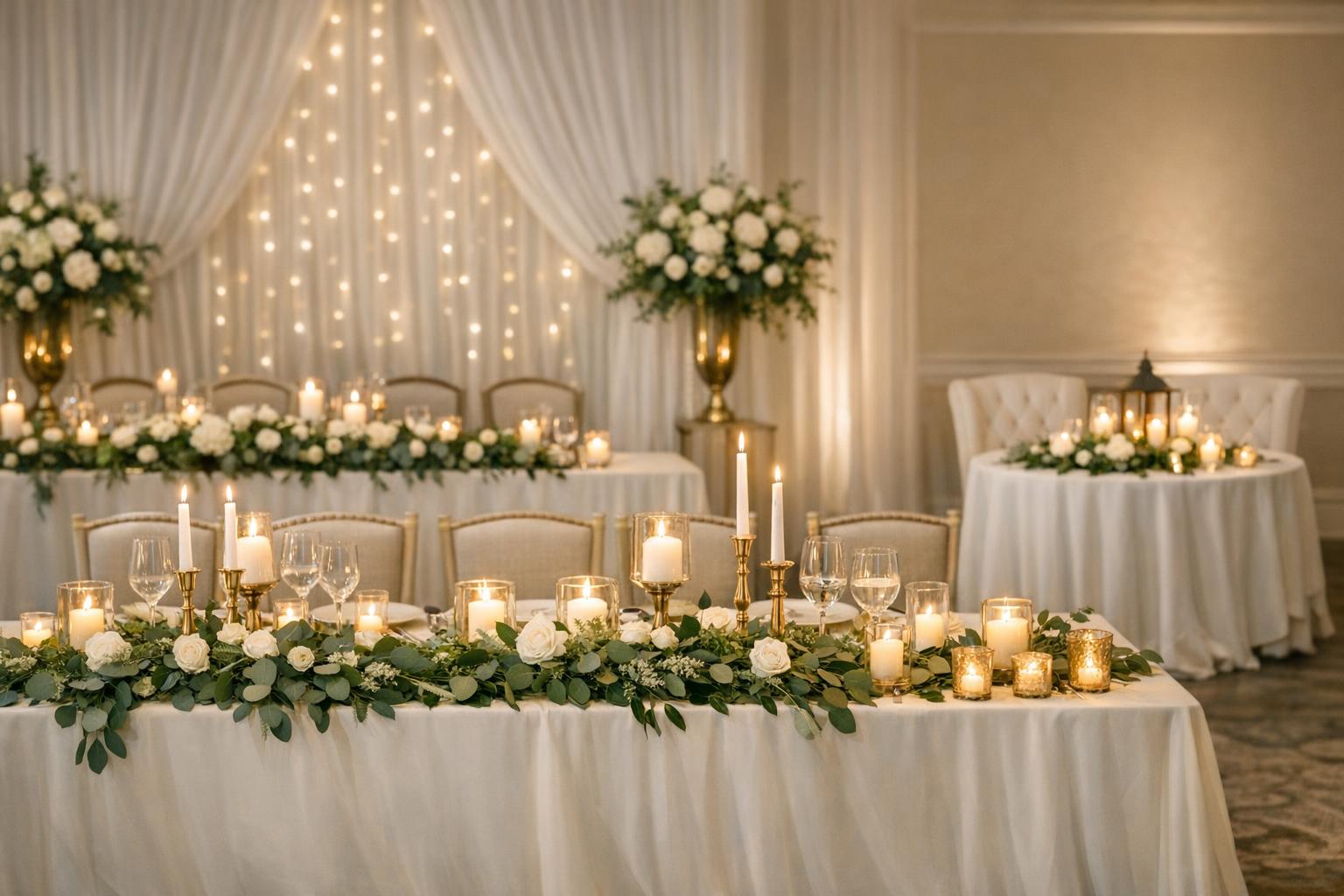
Head table wedding decorations: where the whole reception style gets decided
There’s a moment in nearly every reception where the room’s styling suddenly makes sense: guests find their seats, glance toward the couple, and the head table becomes the visual “summary” of the day. That’s why head table wedding decorations can’t be treated like an afterthought or just “a bigger centerpiece.” The head table (or sweetheart table) is where florals, greenery, draping, lighting, textures, and color palettes all collide—plus it’s the backdrop for toasts, photos, and long stretches of seated time.
In practice, the best wedding head tables aren’t the ones with the most stuff; they’re the ones with a clear visual narrative. The strongest designs usually pick a primary anchor (like a floral garland or fabric backdrop), then layer supporting elements (candles, lanterns, table runner choices, metallic accents, or subtle signage) to reinforce one mood: romantic, modern minimalist, rustic garden, or luxe glam. This guide walks through head table decor ideas you can actually implement, plus sourcing approaches (from florists and rental companies to shopping sources like Ling’s Moment and Walmart), budgeting trade-offs, and wedding head table set up ideas that make the day-of feel calm instead of chaotic.
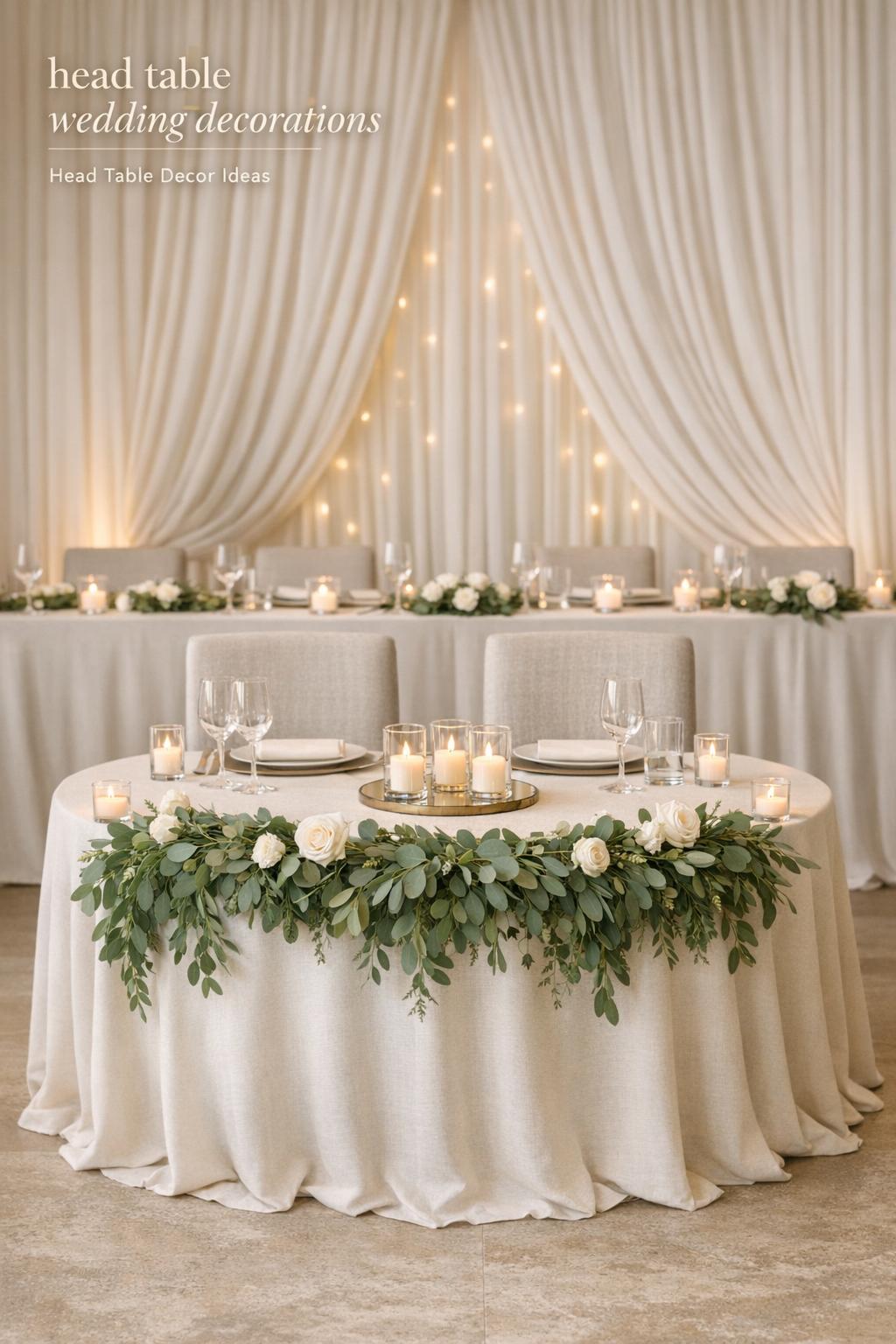
Start with the format: head table vs sweetheart table, and why it changes everything
Before you choose a backdrop or order a greenery runner, define what “head table” means for your reception. The Knot-style planning guidance around formats matters here: a rectangular head table for the couple and wedding party behaves differently than a sweetheart table for two, and both photograph differently than curved shapes like oval or circular options. The format affects sightlines, how a florist builds florals/greenery, and whether draping or uplighting reads as intentional or overwhelming.
Rectangular head table: classic, social, and decor-heavy by nature
A rectangular head table naturally invites a longer design: garlands, swags, or repeated centerpiece moments spaced across the full length. It’s also where “Head Table Decorations Wedding” searches tend to land because the styling has to cover a larger footprint. The most common success pattern is to commit to one continuous element—often a floral garland paired with candles—then echo your wedding color palette through smaller touches like linen coordination, metallic accents, or consistent vessel styles.
Sweetheart table vs head table: intimacy changes scale and layering
A sweetheart table decor plan can be more sculptural and less repetitive: one strong centerpiece, a concentrated candle cluster, and a backdrop that frames two chairs rather than a full row. Because the surface area is smaller, it’s easier to go “luxe” without runaway costs—think a tighter, more dramatic floral moment or a richer drape. This is also where overdoing tabletop items becomes a practical issue: the couple actually has to eat, turn, and talk, so height, width, and candle placement matter more than people expect.
Oval or circular options: soft lines that love symmetry
Oval or circular formats tend to look best when the decor is balanced from multiple angles. Instead of a “front-only” design, focus on all-around styling: low florals, evenly distributed votives, and lighting that feels ambient rather than directional. These shapes can also reduce the need for a massive backdrop, because the table itself becomes a focal shape—especially when your color palette is cohesive and your draping is used strategically rather than everywhere.
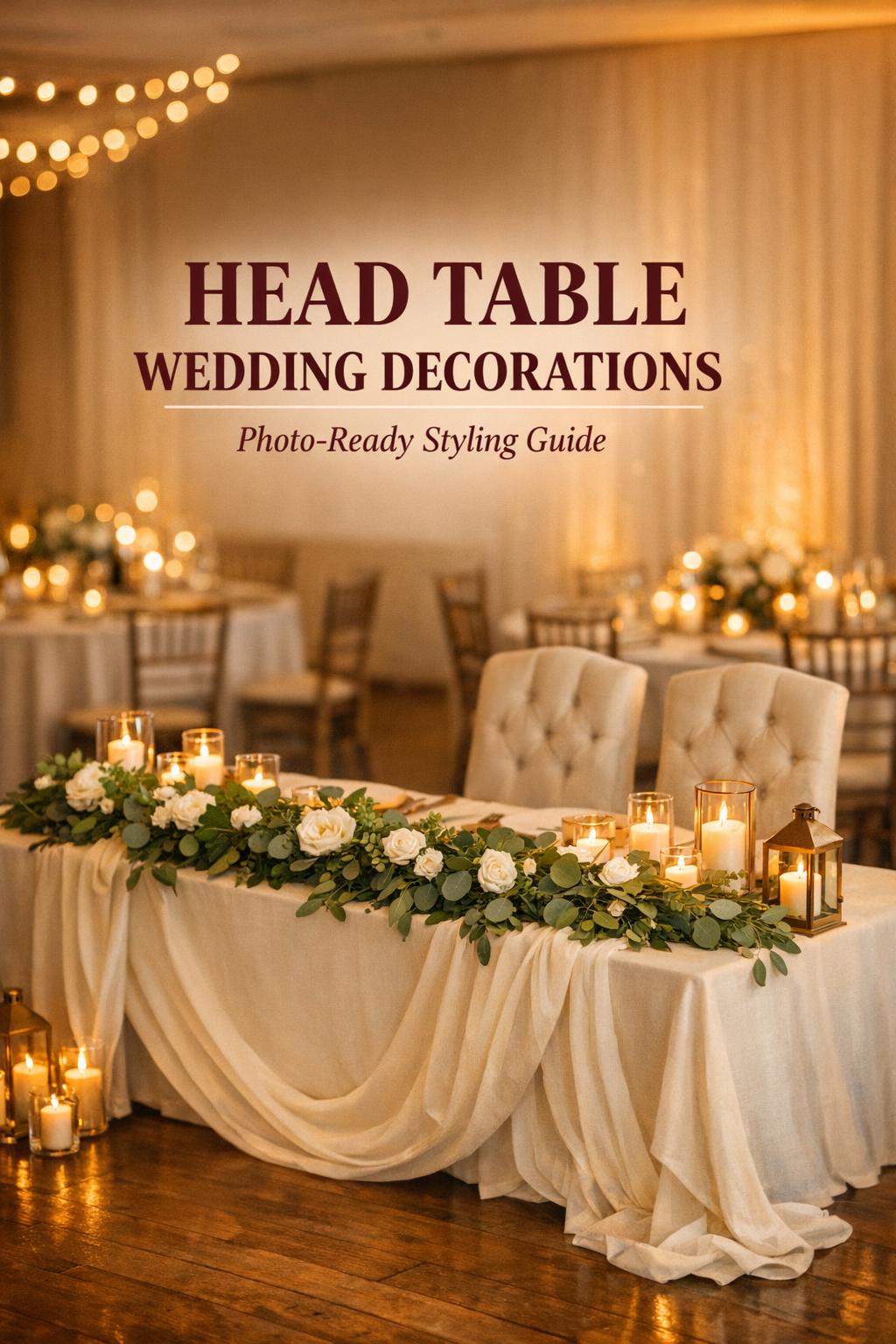
Choose your anchor first: the one element guests will remember
If you’re stuck in inspiration overload from Pinterest boards, simplify the decision: pick your anchor. Anchors are the “read from across the room” elements—typically florals/greenery, a backdrop with draping, or lighting (candles and string lights) used in a bold way. Once you commit to an anchor, everything else becomes supporting cast, and your head table decor ideas start to feel coherent instead of crowded.
- Floral/greenery anchor: a head table garland, greenery runner, or cascading floral design that spans the table edge.
- Backdrop/draping anchor: fabric draping, a metallic or velvet-style look, or a framed focal point behind the couple.
- Lighting anchor: candles, lanterns, fairy lights, and/or uplighting behind the head table that sets the mood first.
Tip: If you’re working with a venue coordinator or an event designer, talk anchors before you talk details. It’s easier for vendors—especially your florist and rental company—to price, source, and execute when the “main character” is clear.
Florals and greenery: the timeless backbone of wedding head tables
Florals and greenery show up across nearly every top-performing approach for a reason: they’re flexible, they bridge styles (rustic, glam, modern), and they read beautifully in photos. Whether you’re using fresh-looking arrangements through a florist or sourcing faux elements and pre-made pieces, a “greenery wedding head table” concept tends to look elevated when it has intentional movement—gentle asymmetry, subtle cascade, or a runner that isn’t perfectly uniform.
Garlands and swags: one decision that can style the whole table
A garland is one of the most efficient head table wedding decorations because it spans distance and instantly signals “focal moment.” Product-forward collections like Ling’s Moment emphasize head table floral garlands and swags because they create that continuous look with predictable dimensions and color palette options. A swag can also be used to soften the front edge of a sweetheart table or to create a cascading effect at the center.
Tip: Decide early whether you want the garland to sit flat as a runner or drape over the front edge. Front-edge styling is more visible to guests and cameras, but it can interfere with legroom and comfort if it hangs too low or becomes a snag point during seating.
Greenery runner + candle rhythm: the easiest way to look “designed”
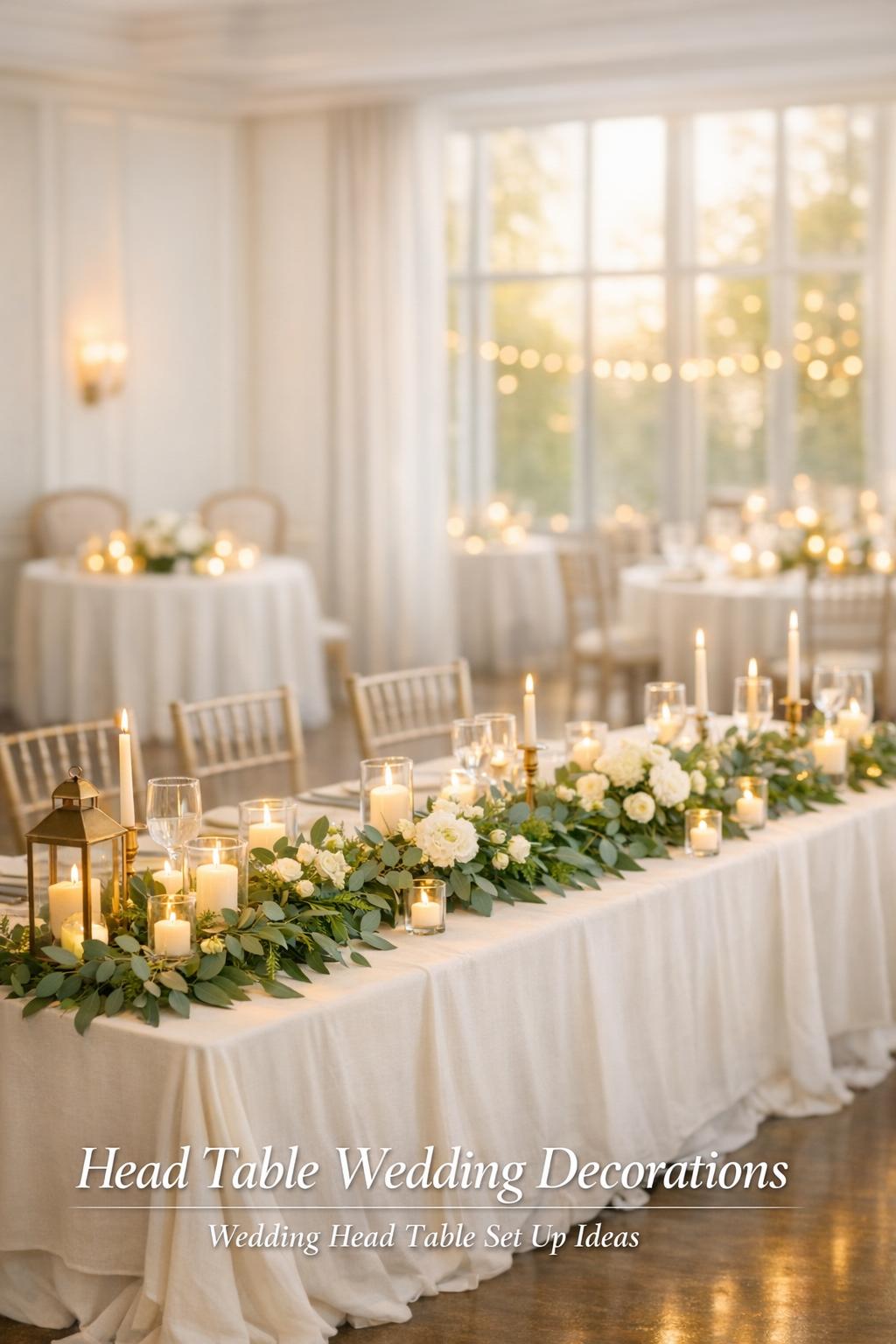
One of the most reliable wedding head table set up ideas is pairing a greenery runner with a consistent candle pattern. This works because greenery adds texture and depth, while candles bring warm highlights that make the table feel intentional even before guests notice smaller accents. Keep the candle heights varied enough for dimension, but not so tall that they block faces during toasts and conversation.
Centerpieces at a head table: when they help, and when they get in the way
Head table centerpieces are popular (and easy to shop for through large retailer category pages like Walmart), but they’re not automatically the best choice at the head table. At a long rectangular table, repeated centerpieces can feel formal and structured. At a sweetheart table, a single centerpiece can be a sculptural moment. The limitation is practical: tall or wide pieces can block the couple in photos, complicate place settings, and create awkward gaps for microphones during speeches.
Tip: If you love the idea of a standout centerpiece, consider keeping the tabletop lower and shifting “height” to the backdrop. That gives you drama without sacrificing comfort or sightlines.
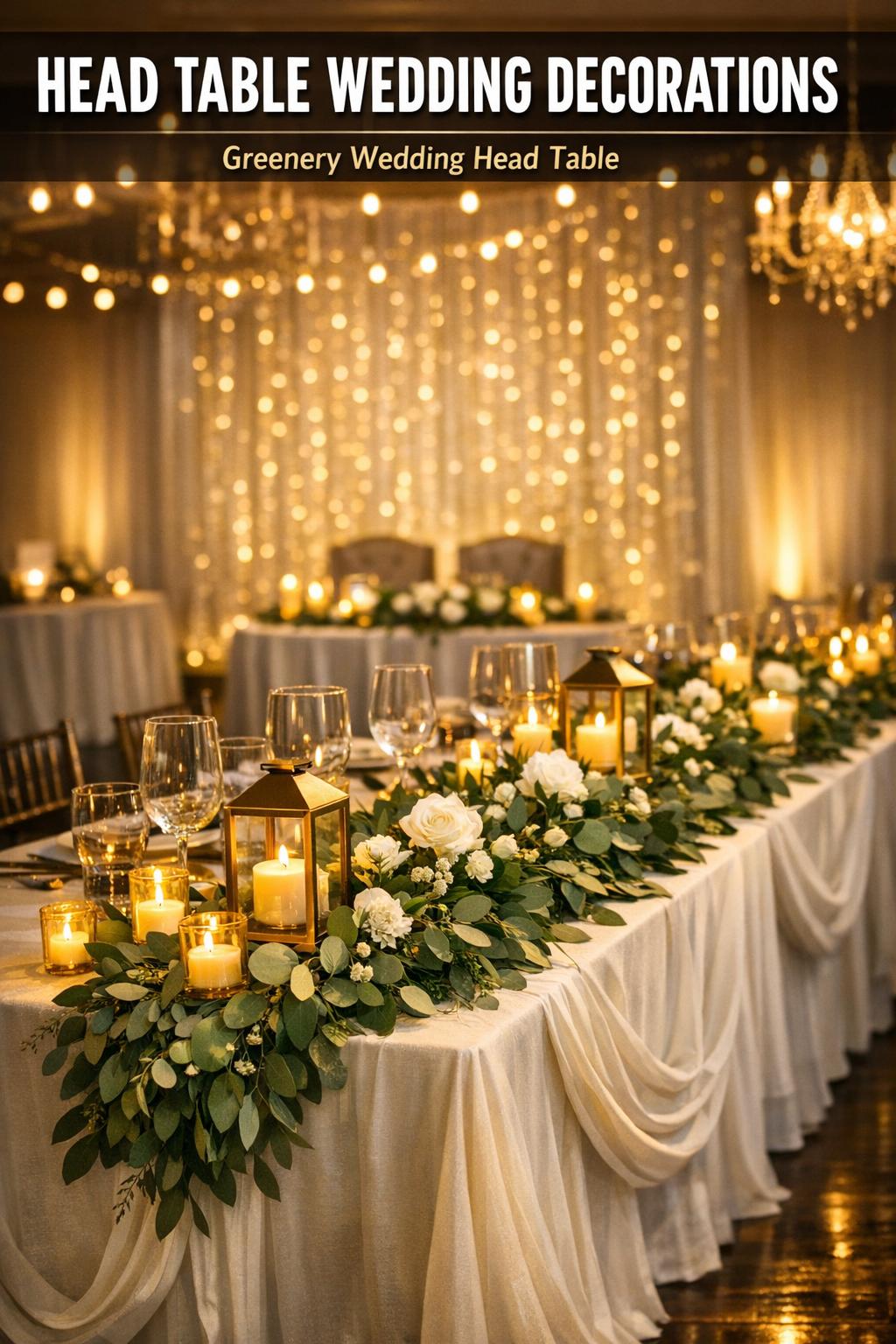
Backdrops and draping: the frame that makes photos look finished
Backdrops and draping are the fastest way to make wedding head tables feel like a destination inside the room. Venue-led guidance (like what you’d expect from a reception-focused blog such as Emerson Fields) often highlights backdrops, fabric draping, and romantic lighting because they transform plain walls into a deliberate scene. Backdrops also solve a common issue: the head table can look beautiful up close, but flat from across the room without a vertical element.
Fabric draping: soft, romantic, and surprisingly technical
Draping works when it behaves like good tailoring: clean attachment points, intentional folds, and enough volume to look luxurious. The trade-off is that draping can look limp if the fabric is too thin or if it’s underlit. If you’re aiming for a glam head table, draping can do the heavy lifting—especially when paired with metallic accents on the table (think gold-toned details) or a consistent color palette that feels like a “story.”
Glam framing: velvet or metallic-style backdrops without clutter
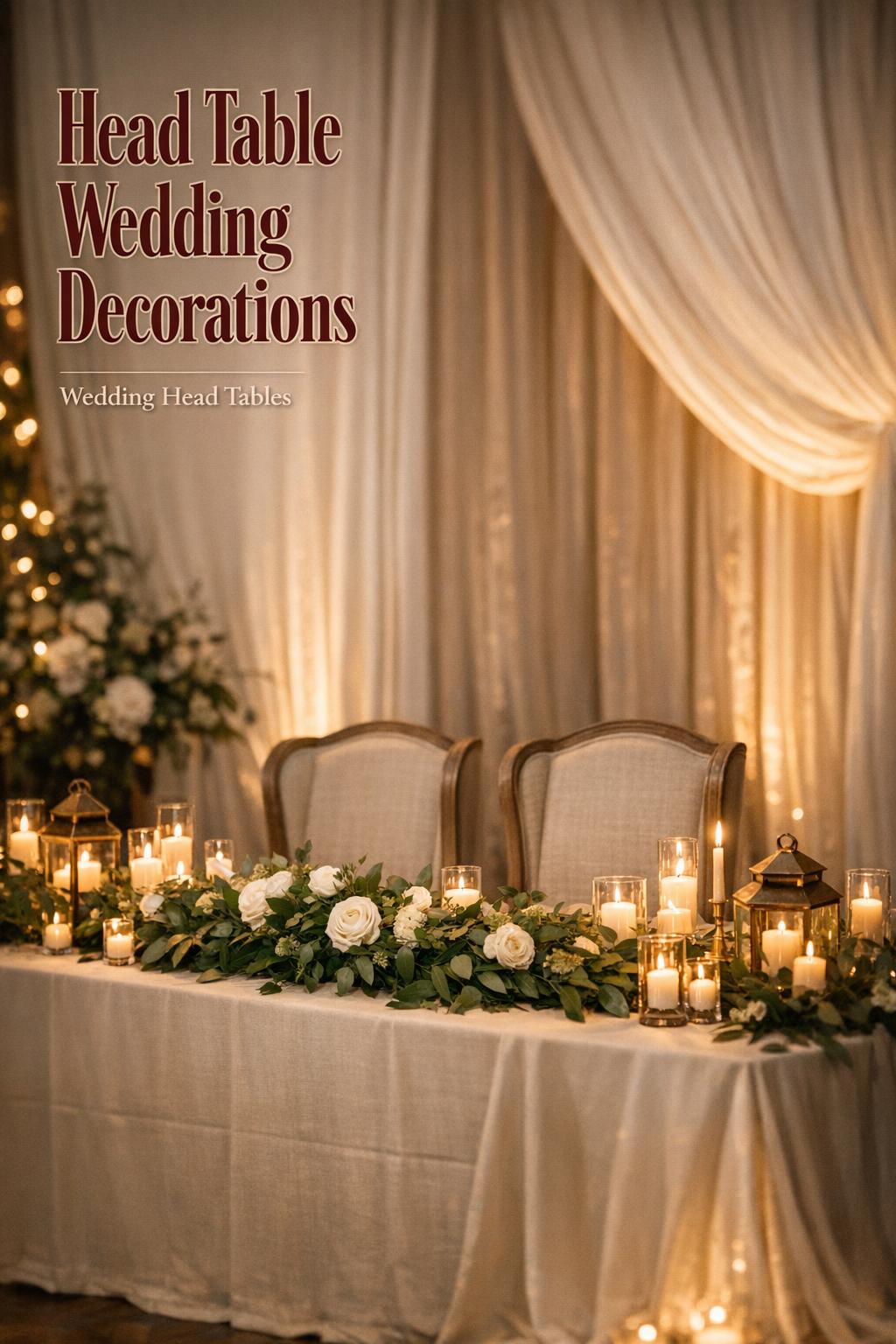
Luxe glam head table decor ideas often rely on a strong frame behind the couple rather than piling objects onto the table. A rich-looking backdrop (whether fabric-forward or metallic-inspired) allows you to keep the tabletop refined: a low floral line, a few lanterns, and coordinated linens. The key is restraint—glam reads best when there’s negative space for shine and light to play.
Modern minimalist framing: crisp lines, geometric accents, and calm styling
Modern minimalist head table decor leans on clean shapes and edited details: geometric vessels, glass, and minimal florals. This style can look expensive even with fewer items, but it’s less forgiving if anything feels mismatched. If you’re mixing materials—glass plus metallics, for example—repeat them consistently so the look feels curated rather than accidental.
Lighting and atmosphere: the difference between “decor” and “ambience”
Lighting is often treated like a reception-wide concern, but the head table needs its own lighting logic. A head table is photographed, watched during speeches, and used for hours; the lighting has to flatter faces, highlight key decor, and support the mood. Core lighting entities show up again and again—candles, lanterns, string lights (including fairy lights), and uplighting behind the head table—because they’re effective, scalable, and easy to coordinate with a venue.
Candles, lanterns, and fairy lights: a layered glow that feels intentional
Candles and lanterns add warmth at table level, while string lights add sparkle and depth behind the couple. The best results come from layering: a base of votives, a few taller lanterns for variation, and a soft line of lights in the background. This is one of the most budget-flexible head table decorations wedding couples can choose: you can scale the count up or down without changing the overall concept.
Uplighting behind the head table: subtle control over the entire mood
Uplighting is the quiet workhorse of head table decor. It turns draping into a feature, separates the couple from the background, and can make simple greenery look dimensional. The limitation is coordination: you’ll want to confirm with the venue (or whoever controls the lighting plan) where uplights can be placed, how cables will be managed, and whether the intensity will compete with candles and other warm sources.
Tip: If you’re unsure where to spend, consider investing in lighting consistency. Even a modest floral line can look elevated when the backdrop is softly lit and the table glow is warm and even.
Textures and materials: how “small” items create a high-end finish
Beyond florals and backdrops, the most memorable head table decor ideas often hinge on texture: natural elements for rustic garden looks, reflective surfaces for glam, and clean materials for modern styling. Inspiration-focused sources commonly point to distinctive materials—moss runners, brass terrariums, and mirror plates—because they change how light hits the table and how the decor photographs.
Rustic garden textures: wood accents, moss runners, and natural depth
Rustic garden styling is at its best when it feels layered rather than themed. A moss runner can add a grounded, natural base under candles or small floral clusters, while wood accents keep the look warm and tactile. Pair these with greenery so the design reads as cohesive and living—not like a collection of random “rustic” objects.
Reflective glam: mirrors and metallic accents that amplify candlelight
Mirror plates and metallic accents (often gold-toned in glam palettes) amplify light and make the head table sparkle without adding bulk. A reflective base under candles can double the impact of the same number of flames, which is useful if you’re balancing a budget or keeping the tabletop clear for comfort.
Statement details: brass terrariums and curated focal pieces
Distinctive pieces like brass terrariums work best as punctuation, not as a repeating motif across every inch of the table. Use one or two moments to create visual “beats,” then let greenery or a simple runner connect everything. This keeps the head table feeling editorial rather than crowded.
Color palettes and theme consistency: make the head table match the “story”
Color palette decisions are where many wedding head tables succeed or fall apart. The head table should look like it belongs to the same event as the rest of the reception: linens, florals, metallic accents, and backdrops all need to speak to the same mood. Product-driven styling collections often organize decor around palettes (Ling’s Moment highlights color palette coordination and linen pairing), which is a useful mental model even if you’re working fully custom with a florist.
Seasonal palette thinking without locking yourself into clichés
Seasonal palettes are a practical way to keep decisions consistent: spring tends to support lighter floral colors, summer can handle stronger contrast with metallic accents, autumn often leans into warmer tones, and winter can look dramatic with deeper shades and a strong lighting plan. The point isn’t to follow rules; it’s to ensure your florals, draping, and tabletop accents feel like one intentional set of choices.
Palette-to-material pairing: why it matters
Materials interpret color differently. Greenery reads more vibrant against crisp linens; metallic accents shift warmer or cooler depending on surrounding tones; mirrors bounce whatever colors are nearby. If your head table centerpiece elements feel “off,” it’s often not the flowers—it’s the palette-to-material combination fighting itself.
Tip: Before finalizing anything, view your palette choices next to the actual linens or a linen swatch. Linens take up a lot of visual space, and they’re the easiest place for a color mismatch to become obvious.
Head table decor ideas that feel distinctive (without becoming impractical)
“Unique” doesn’t have to mean complicated. The most effective distinctive head table wedding decorations usually do one unexpected thing—an unusual texture, a bolder lighting approach, or a backdrop treatment—and keep everything else refined. Below are ideas you can adapt across rustic, glam, greenery-forward, and modern aesthetics, with an eye on comfort and day-of setup.
A greenery-forward table with intentional negative space
For a greenery wedding head table that looks elevated, avoid overfilling the runner. Instead, place greenery in a continuous but airy line, then add clusters of votives in small groupings. The negative space becomes part of the design, which reads more modern and less “stuffed.” This approach is especially strong on sweetheart table decor, where clutter is the enemy.
Candle “constellation” styling with mirrors underneath
Use mirror plates as a base for votives and a few taller candles to create a constellation effect: points of light spread across the table rather than one dense cluster. It’s a glam-leaning look that can still pair with rustic garden elements if you keep the florals simple and let the lighting do the work.
Draping that starts behind the chairs and continues to the table edge
Rather than treating draping as a separate “background,” visually connect it to the tabletop by letting the fabric echo the table lines. This can be as subtle as matching drape tone to linens, or as bold as framing the couple so the backdrop feels like part of the tablescape. It’s a venue-friendly strategy because it reads beautifully even in simpler rooms.
Terrarium moments as accent pieces, not a theme
Brass terrariums can be an elegant way to add structure among soft florals and greenery. The key is treating them as accents: one at center with candles nearby, or two flanking the couple on a sweetheart table. Too many terrariums can make the table feel like a display case instead of a place to sit and celebrate.
Moss runner + lantern mix for rustic garden with polish
A moss runner immediately signals natural texture, but lanterns are what keep it from looking flat. Use lanterns to vary height, then tuck greenery around their bases so the transition feels organic. This is one of those head table decor ideas that can look high-end with modest materials if the spacing feels intentional.
Sourcing your decor: florists, rental companies, and smart shopping choices
Once you know your format and anchor, sourcing becomes simpler. Most couples land in a hybrid approach: a florist handles florals and greenery, a rental company provides bigger pieces (like backdrop structures, lanterns, and sometimes draping), and shopping sources fill in repeatable items like candles or smaller centerpiece components. This is also where brand ecosystems show up in real decisions: The Knot functions as an industry resource for format guidance and vendor coordination; retailers like Walmart can help with accessible head table centerpieces and accessories; and specialized decor catalogs like Ling’s Moment support coordinated palette-based head table decor products like garlands and swags.
Working with a florist: what to ask so the head table doesn’t feel disconnected
Florals are often planned around bouquets and guest tables first, then scaled to the head table late in the process. That’s how you end up with a beautiful room—and a head table that looks oddly sparse or mismatched. Bring the head table into the floral conversation early and describe the anchor (garland, runner, or cascade), the table format (rectangular vs sweetheart), and any backdrop lighting so the florist can design with the full scene in mind.
Rental company coordination: the hidden key to smooth setup
Rental companies are often the glue between vision and execution, especially for backdrops, lanterns, and draping structures. The practical advantage is consistency: rentals arrive in known quantities, and setup teams often understand venue rules about attachment points and timing. The limitation is availability—popular pieces book up, and substitutions can change the look. If your head table concept depends on a specific backdrop shape or drape color, confirm it early and have a backup that still supports your palette.
Online vs in-store: a realistic approach for head table accessories
Shopping sources can cover candles, basic vases, and some centerpiece pieces, but the head table is also the area where mismatched finishes are most noticeable. If you’re buying pieces online, keep your material story tight: pick one metallic family, one glass style, and one candle look. If you’re ordering coordinated decor (like garlands tied to a specific palette), shopping from a specialized collection can reduce the risk of “almost matching” greens and florals.
Tip: When mixing sources—say, a Ling’s Moment garland with candles from Walmart—test them together under warm indoor lighting. Color temperature changes how greenery and metallics read, and what looked perfect in daylight can shift in a reception room.
Budgeting and trade-offs: where the money shows (and where it doesn’t)
Budget conversations around head table wedding decorations get easier when you separate “impact spend” from “support spend.” Impact spend goes to your anchor: a floral garland, a well-executed drape, or a lighting plan with uplighting and layered candles. Support spend fills in the scene: votives, small decor accents, and linen upgrades. The best budgets aren’t necessarily bigger; they’re simply aligned with what guests will actually notice from across the room and in photos.
- If photos are your priority: prioritize backdrop/draping and uplighting so the scene behind the couple looks finished.
- If the room feels large: prioritize scale—long garlands, repeated candle rhythm, or a backdrop that adds height.
- If your venue is already visually strong: keep the head table minimal and let the space carry the look; focus on palette consistency and refined lighting.
- If comfort is your concern: keep tabletop pieces low and shift drama upward to draping or lighting.
Tip: If you’re choosing between “more florals” and “better lighting,” many couples are surprised how far lighting goes. Candles, lanterns, and uplighting can make simple greenery feel richer and more dimensional, while also creating a romantic atmosphere that guests feel even if they don’t consciously notice why.
Wedding head table set up ideas: a calm, vendor-friendly plan
The day-of experience is where even great head table decor ideas can unravel. Setups often happen under time pressure, with multiple teams moving through the same area: venue staff, florist, rental delivery, and sometimes a planner coordinating all of it. A good setup plan protects the anchor first (backdrop/draping, then florals/greenery), then layers in lighting and tabletop details last so you’re not moving fragile items around repeatedly.
A practical order of operations that prevents rework
- Confirm table placement and the exact head table format (rectangular, sweetheart, oval) with the venue before decor arrives.
- Install backdrop structures and draping first, including any uplighting behind the head table.
- Set linens and any table runner elements so florals and candles don’t need to be moved later.
- Place major florals/greenery (garlands, swags, centerpieces) and check sightlines from the guest perspective.
- Add candles, lanterns, fairy lights, and reflective accents last so they stay clean and aligned.
Common head table mistakes (and how to avoid them)
The most common issues aren’t about taste—they’re about scale, spacing, and coordination. Overcrowding the tabletop makes dining awkward and can block faces in photos. Under-scaling a backdrop can make draping look like an afterthought. Mixing too many materials (multiple metallic tones, inconsistent glass styles) can make the table look busy rather than styled. The fix is almost always the same: return to your anchor, simplify the supporting pieces, and make sure lighting and palette are consistent.
Tip: Do a quick “toast test.” Stand where speeches will happen and look back at the head table. If the couple’s faces disappear behind tall centerpieces or lanterns, adjust height immediately—before guests arrive and before wax drips, greenery sheds, or items get bumped.
A few curated styling scenarios you can borrow (and adapt)
Sometimes it’s easier to plan from a scenario than from a list of objects. These examples show how core entities—florals/greenery, draping/backdrops, lighting, textures, and color palettes—work together in a real, buildable way. Treat them as frameworks for your own wedding head tables, not rigid recipes.
The “greenery + glow” sweetheart table for intimate receptions
Start with a greenery runner (airy, not dense), then create a candle rhythm with mostly low votives and a couple of lanterns for height. Add a simple draped backdrop with soft uplighting behind the head table so the couple is framed in photos. This setup stays comfortable for dining and conversation while still reading as a focal moment.
The “garden chic” rectangular head table for a wedding party lineup
Use a long garland or a series of connected swags across the full table length, then punctuate it with repeating candle clusters. Keep centerpieces lower and more frequent rather than tall and dramatic, so the wedding party can see each other. If you want a distinctive detail, weave in a moss runner section under a candle cluster to add natural texture without changing the entire style.
The “luxe frame” head table that leans glam without being heavy
Make the backdrop the main investment: draping with a rich look and consistent lighting. Keep the table refined with a low floral line, mirrored accents under candles, and minimal extra objects. The glam effect comes from reflection and glow, not from adding more decor.
Quick checklists for confident decisions
The head table decor checklist (what you’re really choosing)
- Format: head table vs sweetheart table; rectangular vs oval/circular
- Anchor: florals/greenery, backdrop/draping, or lighting
- Tabletop plan: garland/runner, centerpieces (if any), candle/lantern layout
- Backdrop plan: draping style, scale, and what’s being lit
- Lighting plan: candles, fairy lights, and uplighting behind the head table
- Palette plan: how linens, florals, and metallic accents connect
Vendor coordination checklist (keep it simple and specific)
- Confirm who is responsible for setup and teardown of draping/backdrops.
- Share the exact head table format and dimensions with the florist and rental company.
- Confirm candle policy and placement rules with the venue.
- Align delivery windows so backdrop and lighting are installed before florals are placed.
- Assign one person (planner, coordinator, or trusted friend) to do a final sightline check before guests enter.
FAQ
What is the most impactful head table decor element?
The most impactful element is usually the anchor that reads from across the room: a floral/greenery garland, a backdrop with draping, or a lighting plan that layers candles with uplighting behind the head table. If you’re torn, choose the anchor that best supports your photos and the room’s existing features, then keep the rest of the tabletop edited and consistent.
Sweetheart table vs head table: which is easier to decorate?
A sweetheart table is typically easier because the scale is smaller and you can concentrate impact into fewer pieces, but it’s also less forgiving of clutter since the couple needs comfort and space to dine. A traditional head table gives you more surface area for garlands, candles, and repeated decor, yet it requires more coordination to keep the design cohesive across the full length.
How do you decorate a greenery wedding head table without making it look messy?
Focus on one continuous greenery element (a runner, garland, or swag) and keep the rest of the tabletop pattern consistent—especially candles and lanterns. Leave intentional negative space so the greenery looks designed rather than piled on, and avoid mixing too many extra textures unless they repeat in a controlled way across the table.
Do wedding head tables need a backdrop?
A backdrop isn’t required, but it often makes the head table look finished in photos and helps the couple stand out visually during toasts. If your venue already has a strong background, you may be able to skip a backdrop and instead rely on florals/greenery and candles; if the wall behind you is plain, adding draping and uplighting behind the head table can dramatically improve the overall scene.
What head table formats work best for small venues?
Sweetheart tables and compact rectangular head tables usually work best in small venues because they reduce visual and physical crowding. In tight rooms, keep centerpieces low, push dramatic elements into a backdrop or lighting, and use a cohesive color palette so the head table reads as intentional without requiring a large footprint.
Where can I source head table decor if I’m mixing DIY and professional help?
A common approach is to have a florist handle florals and greenery, use a rental company for structural pieces like backdrops, draping, and lanterns, and then purchase repeatable accessories like candles or simple centerpiece items through retailers. For coordinated decor pieces like garlands and palette-based items, specialized collections such as Ling’s Moment can simplify matching, while large retailers like Walmart can be practical for basics.
What are the most common head table setup problems on the wedding day?
The most common problems are installing tabletop items before draping or lighting is finished (which causes rework), choosing decor that blocks faces in photos, and mixing too many finishes so the table looks busy. A calm setup plan typically installs backdrops and uplighting first, places linens and runners next, then adds florals/greenery, and finishes with candles and reflective accents.
How can I keep head table decorations wedding guests notice, but still make the table comfortable?
Keep the tabletop low and breathable—use a runner or garland plus a consistent candle pattern, and avoid oversized centerpieces that intrude on place settings. If you want drama, move it upward with a backdrop and lighting rather than adding more items where the couple needs to eat, turn, and interact comfortably.
Leave a Reply