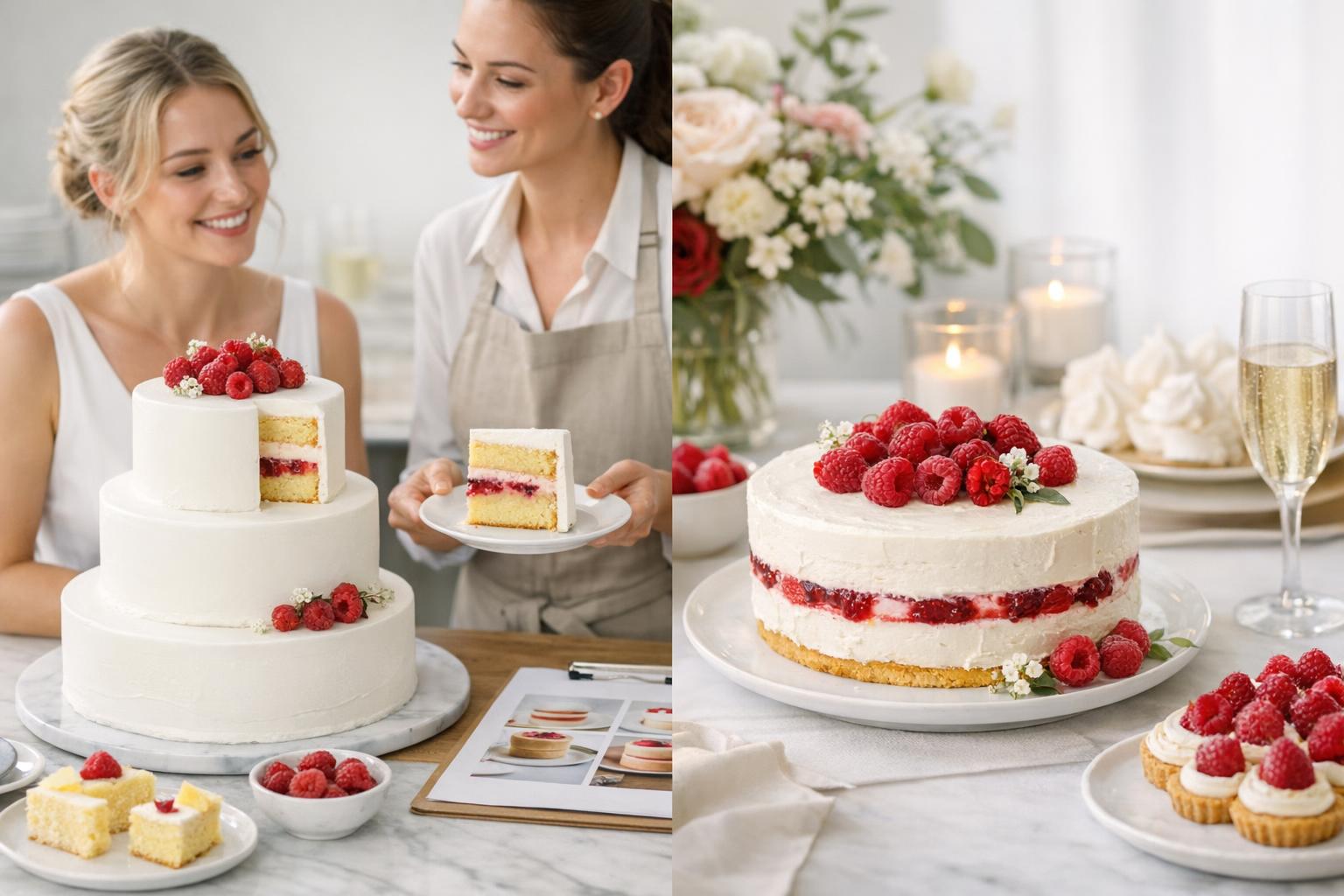
Raspberry cake wedding decisions start earlier than you think
The first time most couples truly “meet” their cake is not on the tasting table—it’s in a photo. A tiered slice caught in a real-wedding gallery, a close-up of a glossy filling, a casual table cake that looks effortless but intentional. That’s why planning a raspberry cake wedding often begins with one specific question: do you want raspberry to be a bright supporting note, or the main character of the day? Either approach can feel wedding-appropriate, but the choices you make next—tiering, finishes, fillings, and even how berries show up visually—will determine whether the result reads classic, modern, or quietly non-traditional.
This guide focuses on how raspberry works in a wedding context: flavor pairings like raspberry-lemon and almond-raspberry, styling ideas from traditional tiers to a raspberry table cake, and how to approach tastings and consultations so you get a “wedding cake raspberry” profile that tastes intentional, slices well, and looks right in photos. Along the way, you’ll see how recognizable vendors and concepts show up across the U.S. market—Raspberry’s N’ Creme for custom wedding cakes, Fig & Bloom Cakes for a casual table cake approach, product-style offerings like Eston’s Bakery’s Raspberry Royale Cake and Sugar & Slice on Main’s Raspberry Wedding Cake, and designer-forward options like Elisabeth Valentijn’s The Raspberry Cake and Miri Nadler Cakes on Goldbelly—plus a nod to how venues such as Hyatt’s Royal Palms in the Phoenix area sometimes present raspberry among their formal wedding cake options.
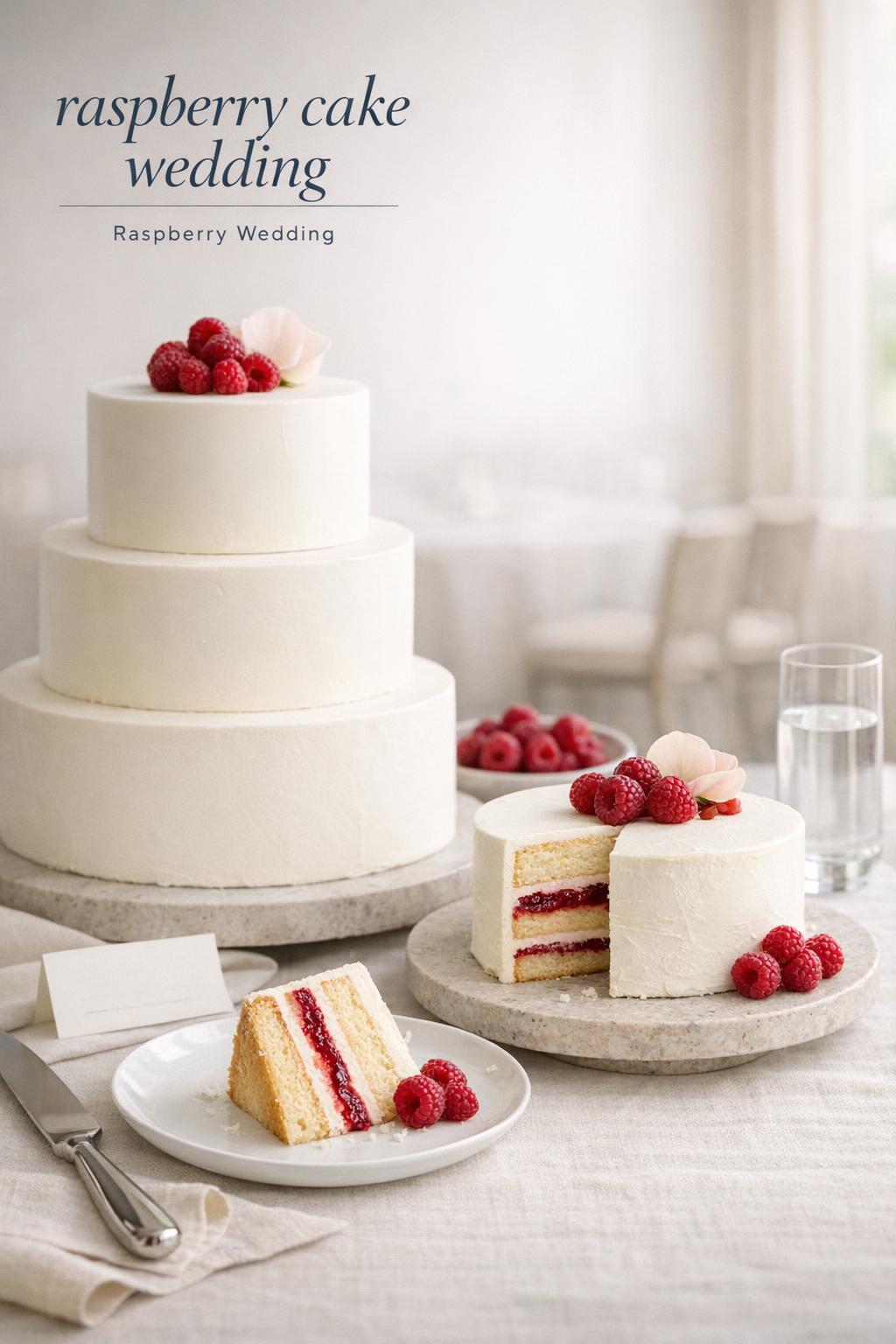
Why raspberry reads “wedding” (even when the cake is simple)
Raspberry is one of the rare flavors that can shift moods without changing its identity. In a traditional tiered wedding cake, raspberry filling can feel formal and clean—especially when paired with classic cake bases and restrained decoration. In a more relaxed “Raspberry Wedding” vibe, raspberry can feel charming and slightly nostalgic, particularly when it appears as visible fruit accents or when the cake is presented as a table cake rather than a tall tiered centerpiece.
There’s also an inherent clarity to raspberry as a flavor note. Even when it’s used as a filling rather than baked into the layers, it announces itself quickly. That matters for weddings because guests tend to take a bite while standing, talking, or moving; a wedding cake flavor that registers fast can be a quiet advantage.
Where raspberry sits on the flavor spectrum
In most wedding cake contexts, raspberry is treated as a fruit-forward filling or accent rather than a heavy base flavor. That positioning makes it flexible: it can add brightness to vanilla and richness to almond, or act as the crisp “edge” in a raspberry-lemon combination. This is why “raspberry-filled wedding cake” is such a persistent request—it lets couples keep a familiar cake base while upgrading the overall impression.
Color, mood, and the visual idea of wedding cake berries
Even when you don’t place raspberries on the outside, the concept of wedding cake berries influences styling. Couples often want a cake that looks composed in photos; a raspberry note gives you a built-in color story to echo in details like ribbons, blooms, or table styling. If you do add fresh berry accents, keep the design intentional: a few strategically placed berries can read editorial, while too many can look busy—especially on a tiered cake where clean lines are part of the luxury signal.
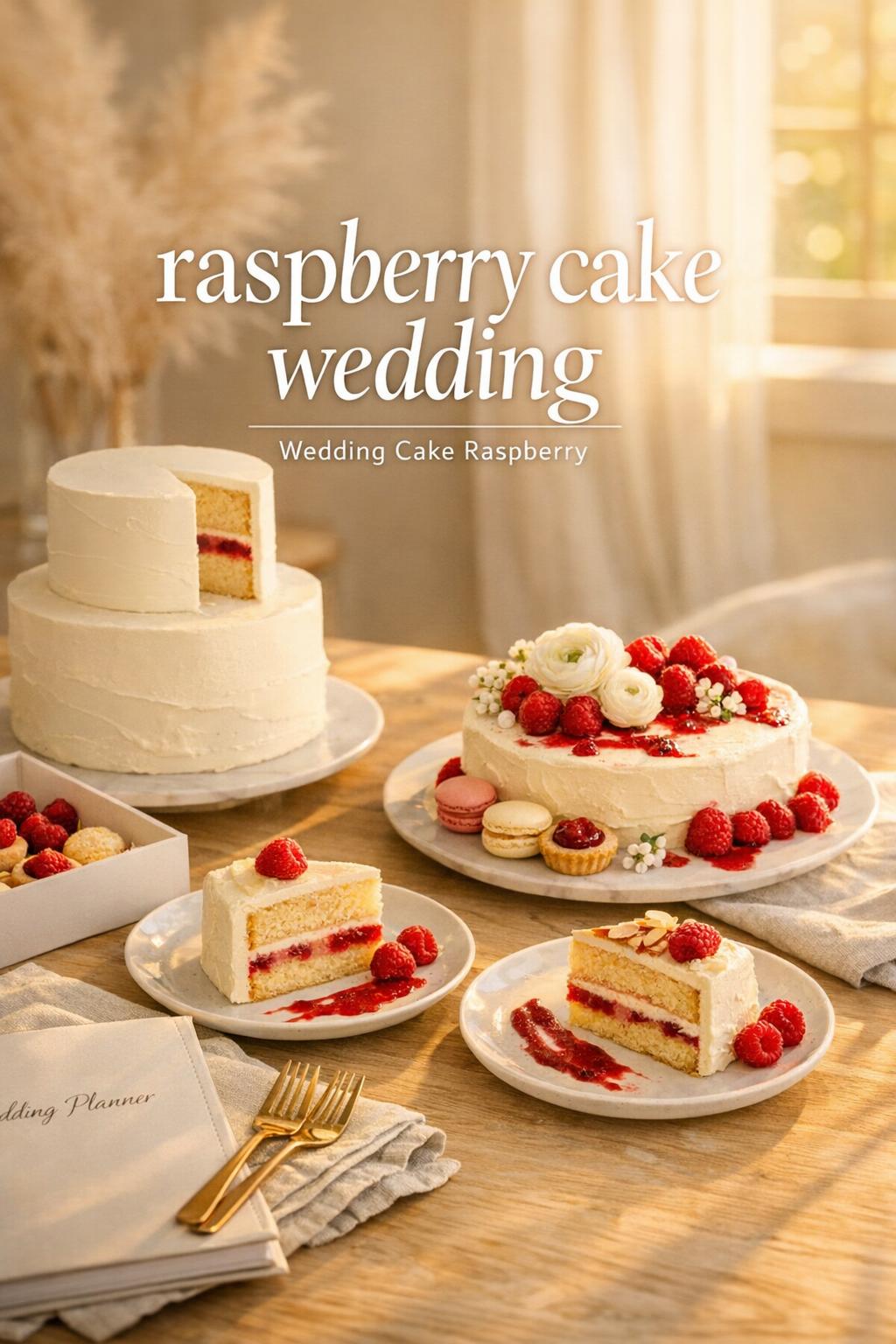
Flavor directions that keep raspberry from tasting like an afterthought
Raspberry can be used as a thin flavor accent or as a clear, defined filling layer. The difference matters. In a wedding setting, you want raspberry to show up with purpose—either as a distinct layer guests can identify (“this is the raspberry one”) or as part of a pairing where it’s meant to blend (raspberry-lemon, almond-raspberry). The best results come from choosing your direction early and then aligning cake, filling, and finish to match.
Classic vanilla cake with raspberry filling
This is the workhorse combination for a reason. Vanilla keeps the cake familiar and broadly appealing, while raspberry filling adds a fruit-forward lift. Many bakery-style wedding cake pages emphasize flavors and fillings as the foundation for customization, and vanilla with raspberry is often the easiest to adapt to different designs—from minimal frosting finishes to more decorative looks—without the flavor profile fighting the visual concept.
Tip: If you’re planning a multi-tier cake and want consistency across tiers, consider keeping the cake base consistent and varying the raspberry intensity by tier (subtle in one, more pronounced in another) during your tasting and consultation. That way, guests with different preferences can still enjoy the overall cake.
Raspberry-lemon wedding cake: bright, photo-friendly, and assertive
Raspberry-lemon is a headline pairing because it’s both distinct and celebratory. A real wedding feature like The Knot’s “tiered raspberry-lemon wedding cake” highlights how the pairing can feel classic while still being memorable. Lemon pushes the overall impression toward crisp and fresh, which can be helpful when you want the cake to feel light at the end of a long event.
Tip: Raspberry-lemon works best when the tartness feels controlled. In tastings, pay attention to whether the lemon note reads as balanced or dominates. The goal is a cohesive pairing, not a flavor tug-of-war.
Almond-raspberry: the “wedding cake” pairing that feels designed
Almond-raspberry often reads as intentionally “wedding,” partly because almond brings a distinct aromatic richness that feels more special than plain vanilla while still being widely liked. A product like “The Wedding Cake” from Miri Nadler Cakes on Goldbelly explicitly leans into this identity, pairing almond and raspberry with floral decoration to signal ceremony and craft. If you want a cake that tastes like a deliberate choice rather than a safe default, almond-raspberry is a strong direction.
Raspberry as the signature: “the raspberry cake” approach
Some couples don’t want raspberry to be a mere filling; they want it to be the concept. That’s where signature-style products come in—such as Elisabeth Valentijn’s “The Raspberry Cake” or White Flower Cake Shop’s “Celebration Raspberry Love Cake.” These offerings tend to communicate a clear identity: raspberry isn’t hidden; it’s framed as the primary experience, suitable for celebrations (including weddings) where the cake itself is part of the story.
Choosing a signature raspberry cake can simplify planning because many design and flavor decisions are already integrated. The trade-off is flexibility: the more signature the product, the more you’ll want to confirm what can and cannot change, especially if you’re coordinating with a specific wedding aesthetic.
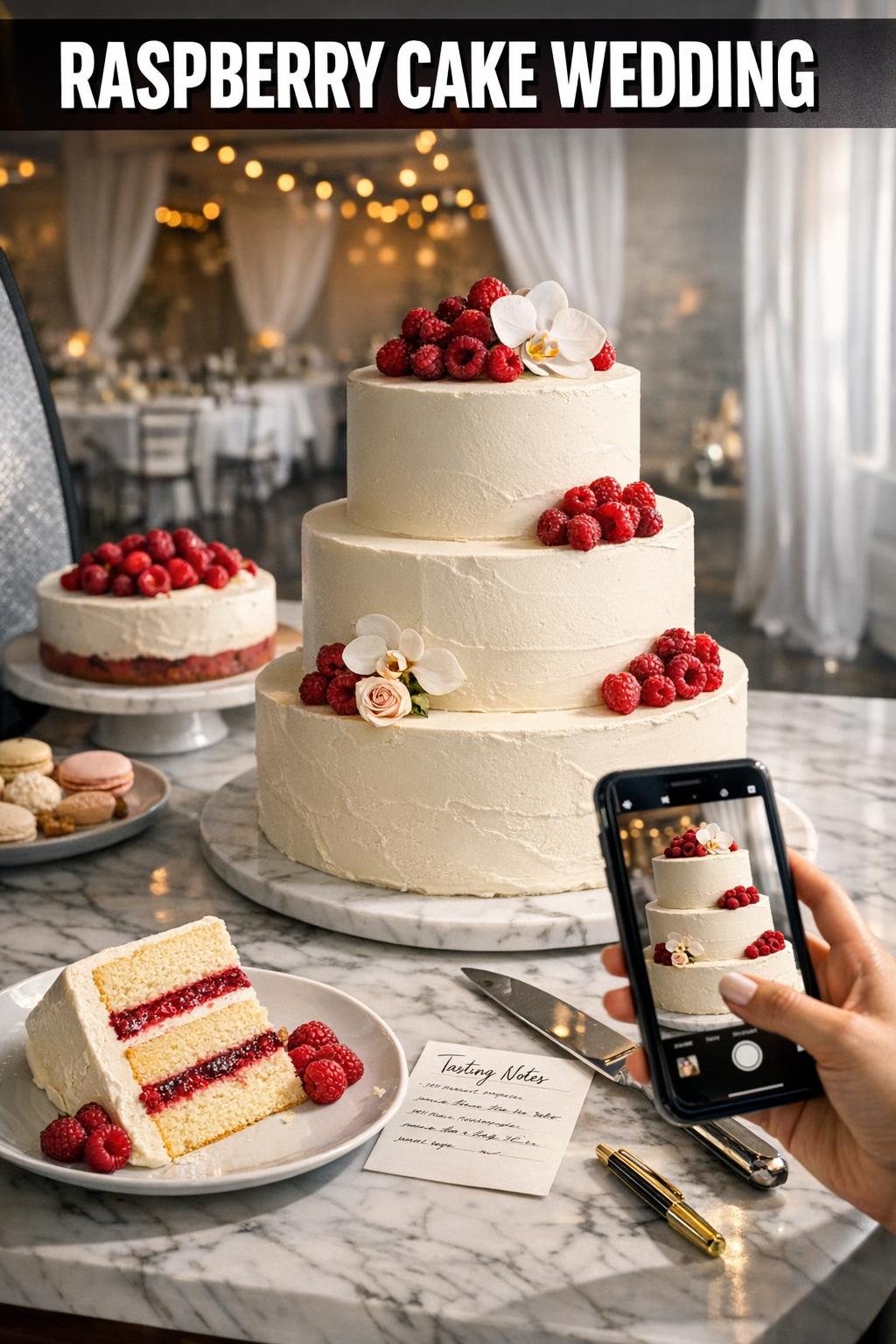
Presentation: tiered statement or raspberry table cake?
In wedding planning, cake “style” is not just about how it looks—it’s about how it functions. A tall tiered cake creates a formal focal point and fits traditional cake-cutting moments. A table cake, on the other hand, can feel relaxed and modern while still being beautiful, especially when the flavor is strong enough to stand on its own. Fig & Bloom Cakes’ “Raspberry Table Cake” underscores this shift: couples who are open to a casual, non-traditional wedding cake can treat the cake as part of the table rather than a staged centerpiece.
When a tiered raspberry cake is the right move
Choose tiering when you want ceremony and structure: a defined cake-cutting moment, a visual anchor for the reception, and a design that reads instantly as “wedding cake.” Raspberry works well here because it adds personality to a format that can otherwise feel standard. A “tiered raspberry lemon wedding cake” approach is particularly effective because the pairing feels bright and celebratory while still aligning with traditional formality.
When a raspberry table cake feels more honest
Go the table-cake route when the wedding itself is intentionally less formal, or when you want guests to experience the cake more like a dessert than a ceremonial object. Table cakes can also be a smart choice if you care deeply about flavor and texture and want a cake that’s presented at peak freshness without the logistical complexity of multiple tiers.
Tip: If you love the idea of a table cake but still want a classic wedding moment, consider a small formal cake for cutting plus a larger raspberry table cake for serving. Keep the flavors aligned so the experience feels cohesive.
Design and customization: how bakers translate “raspberry” into a wedding look
The most helpful wedding cake vendors don’t start with decoration—they start with the couple’s priorities: flavor, serving needs, and style direction. Bakery pages that emphasize custom designs and consultation (such as Raspberry’s N’ Creme) tend to frame design as a collaboration: you select flavors, fillings, and finishes, then translate those choices into a cake that fits the wedding’s overall aesthetic.
What “custom design” can realistically mean
Custom can refer to the cake’s shape and tiering, the look of the finish, the placement of decorations, and the way raspberry appears (as a filling, as a flavor note, or as visible wedding cake berries). The key is to define what you actually need customized. If you primarily care about the taste—say, a specific raspberry filling—then you can keep the visuals simpler and allocate your budget and decision energy accordingly.
- Flavor customization: choosing raspberry as a filling, then pairing it with vanilla, lemon, almond, or another compatible base direction.
- Finish customization: selecting a coating or buttercream style that matches your wedding vibe, from clean and minimal to more decorative.
- Presentation customization: choosing tiered, single-tier, or table cake formats based on how formal the reception will feel.
- Decor customization: deciding whether raspberries show up visibly, and if so, where and how sparingly.
Edible raspberry décor without making the cake look busy
Visible raspberries can be gorgeous, but they require restraint. Think of berries as punctuation, not wallpaper. If you’re inspired by floral decoration—like the floral-decorated almond-raspberry wedding cake aesthetic—use berries to echo the palette and rhythm of the flowers. If you’re going for minimalism, a few berries can create a deliberate contrast against a clean finish.
Tip: In your consultation, ask the baker to show you two approaches: one with berries as a focal accent and one with berries as a subtle detail. Seeing both helps you decide what photographs best for your venue lighting and reception style.
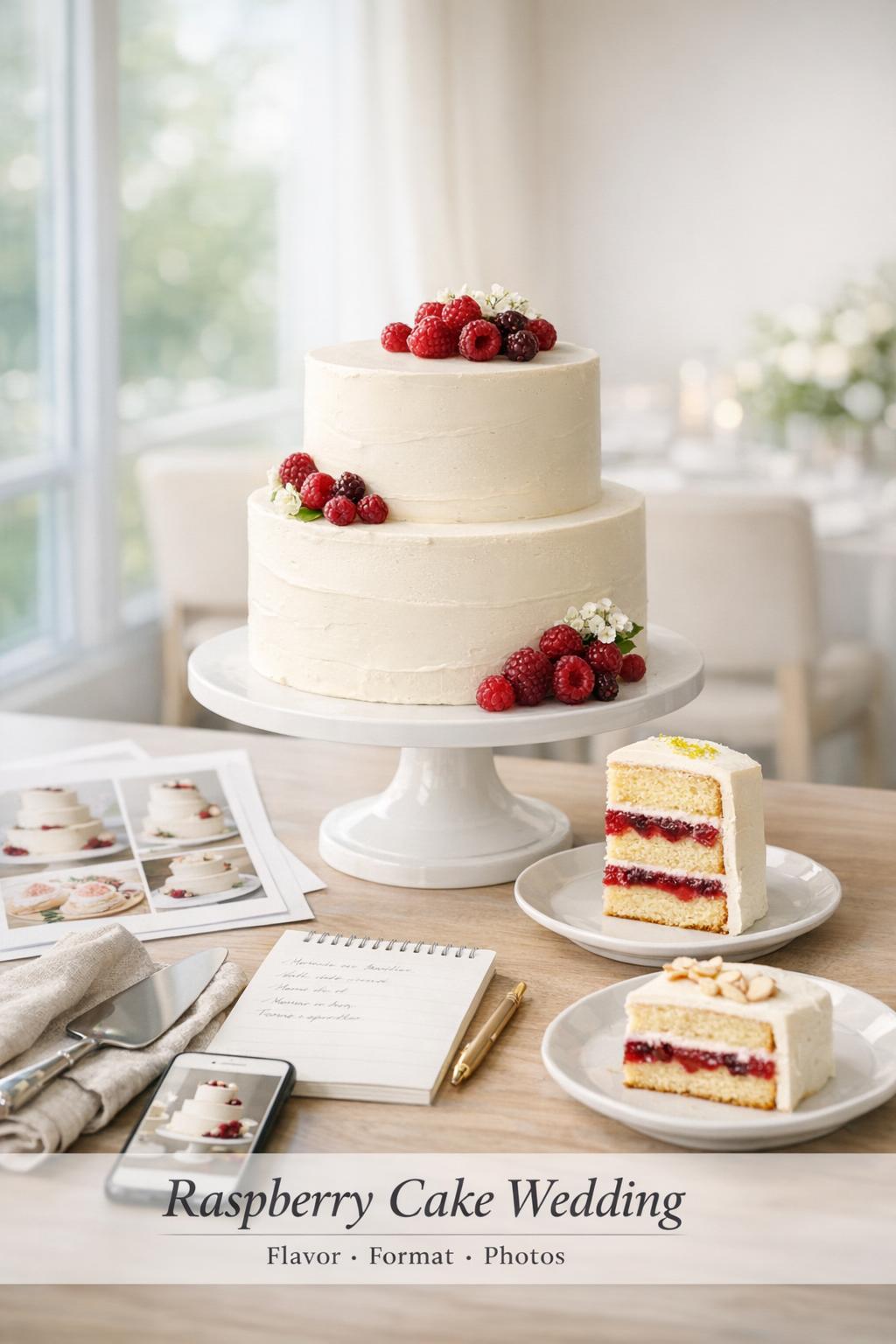
Tastings and consultations: how to get the raspberry flavor you pictured
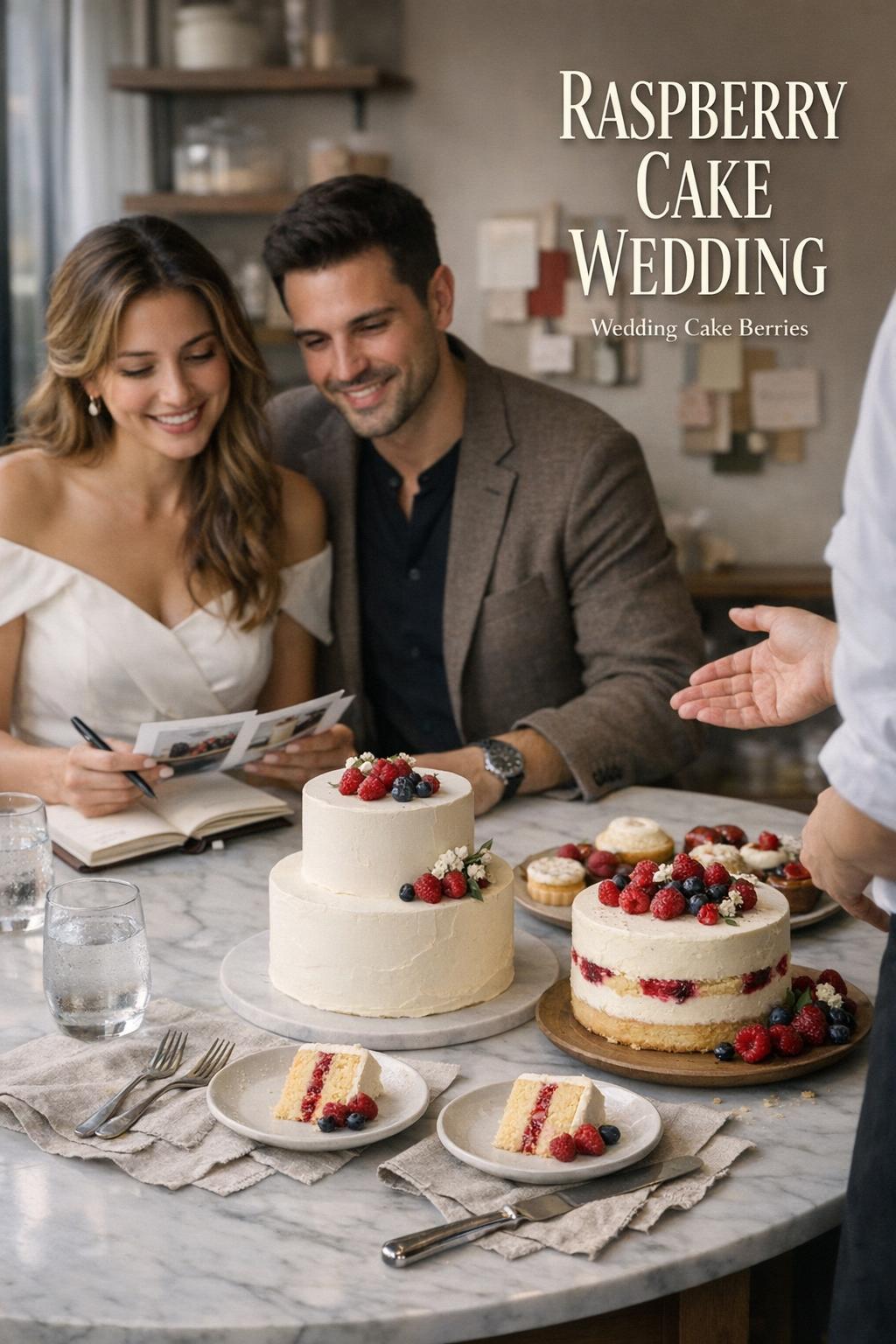
A tasting is not just “do we like this?” It’s where you confirm how the raspberry behaves with the cake base and the finish. Vendors that explicitly structure a tasting and consultation process (again, Raspberry’s N’ Creme is an example of this kind of approach) typically guide couples through decisions that affect the final experience: sweetness level, fruit intensity, and how the filling and coating interact.
How to taste like a decision-maker, not just a dessert fan
In a wedding context, you’re choosing a dessert that must hold up through timelines, slicing, and serving. During tasting, move beyond first impressions and focus on the full bite: cake, filling, and coating together. Raspberry can be vivid on its own but muted when paired with a rich finish; the only way to know is to taste the complete construction.
- Take notes on the raspberry intensity: does it read as fresh and clear, or does it blend into sweetness?
- Compare pairings: raspberry-lemon versus vanilla-raspberry versus almond-raspberry, and decide what best matches your event mood.
- Consider guest appeal: a distinctive pairing can be memorable, but you may want one crowd-pleasing option if you’re serving many guests.
- Ask about the consultation flow: when do you lock flavors, and when do you finalize design details?
A practical “raspberry cake wedding” timeline mindset
Even without diving into rigid timelines, it’s worth treating cake decisions as a series of checkpoints: decide your style (tiered vs table cake), confirm flavor direction (raspberry filling, raspberry-lemon, almond-raspberry), then finalize design and serving needs. This prevents the common issue where couples pick a beautiful design first and only later realize the chosen raspberry profile doesn’t match the finish or the formality of the cake.
Vendor spotlight: recognizable raspberry-forward offerings and what they signal
One reason raspberry is so popular in U.S. weddings is that it appears across vendor types: local bakery custom programs, designer-forward signature products, and venue packages. Reading those offerings as “signals” can help you find what you need faster—especially if you’re balancing convenience with customization.
Raspberry’s N’ Creme: custom wedding cakes built around flavor and design choices
Raspberry’s N’ Creme presents the clearest example of a bakery approach that centers wedding cakes, flavors (including raspberry), custom designs, and a tasting and consultation process. This is a strong fit if you want to shape the final cake around your wedding details: tier count, filling choice, and a finish that aligns with your aesthetic. It’s also a good model if you want the planning experience to feel guided rather than transactional.
Fig & Bloom Cakes: the raspberry table cake as a non-traditional wedding move
Fig & Bloom Cakes highlights a raspberry table cake concept that speaks directly to couples choosing a casual or non-traditional wedding format. This style can look intentional and modern, especially when the rest of the wedding avoids overly formal cues. If your reception is more about conversation than ceremony, a table cake can feel like the right cultural “fit.”
Eston’s Bakery and Sugar & Slice on Main: product-style raspberry cakes that simplify ordering
Product pages such as Eston’s Bakery’s Raspberry Royale Cake and Sugar & Slice on Main’s Raspberry Wedding Cake reflect a more straightforward purchase model. These are useful reference points if you want a defined cake option with a clear flavor identity and less back-and-forth. The benefit is simplicity; the limitation is that you’ll want to confirm how far customization can go, especially if you need a specific tiering plan or a design tailored to your wedding style.
White Flower Cake Shop and Elisabeth Valentijn: signature raspberry cakes with a point of view
White Flower Cake Shop’s “Celebration Raspberry Love Cake” and Elisabeth Valentijn’s “The Raspberry Cake” represent a more branded, signature direction. These offerings can be ideal when you want the cake to feel like an intentional feature—something guests remember—without designing every detail from scratch. For a Raspberry Wedding concept where dessert is part of the event identity, this approach can feel particularly aligned.
Miri Nadler Cakes on Goldbelly: almond-raspberry with floral decoration
Goldbelly’s listing for Miri Nadler Cakes features “The Wedding Cake” with floral decoration and an almond & raspberry profile. This is a useful reference if you’re drawn to an elegant, decorative finish and want a pairing that reads as designed rather than improvised. It also illustrates how wedding cake berries and floral styling can be framed as part of an intentional, cohesive concept.
Hyatt Royal Palms (Phoenix area): when the venue sets the cake framework
Some couples plan weddings in venues where cake is part of the package framework. Hyatt’s Royal Palms wedding packages in the Phoenix area include formal wedding cake options where raspberry appears among flavor choices. This approach can reduce planning complexity because the venue provides a structured set of options; the trade-off is that you may be working within a defined menu rather than building a fully bespoke raspberry cake from the ground up.
Real-wedding inspiration, translated into decisions you can actually make
Real-wedding cake photos can be inspiring, but they can also be misleading if you don’t translate them into practical choices. The Knot’s feature of a tiered raspberry-lemon wedding cake is a good example of an idea that’s both visually clear and easy to communicate to a vendor: tiered structure, a specific pairing, and a flavor profile that’s recognizable. The key is to turn a photo into a brief that includes flavor, format, and finish—not just “I like this.”
A photo-to-consultation checklist (so you don’t lose the point)
- Name the pairing: “raspberry-lemon,” “almond-raspberry,” or “vanilla cake with raspberry filling.”
- Name the format: tiered cake, single tier, or raspberry table cake.
- Name the mood: classic wedding, casual/non-traditional, or signature/designer-forward.
- Identify the décor role: do you want visible wedding cake berries, floral decoration, or a clean finish?
Tip: Bring two inspiration images: one that shows the overall silhouette (tiers, height, spacing) and one close-up that shows the finish (smooth frosting vs textured) and any berry accents. Vendors can usually interpret that faster than a large collage.
A venue-specific reality check: heat, timing, and the cake’s moment
Wedding cakes don’t exist in a vacuum. They sit in venues, wait through timelines, and get photographed under lighting you can’t always control. If you’re marrying at a resort venue where cake is part of a package—such as a Royal Palms-style setting in the Phoenix area—your questions should include how cake options are handled on the day: when the cake is set out, when it’s cut, and how it’s stored beforehand. Raspberry fillings and wedding cake berries can be stunning, but they also demand you plan the cake’s “moment” so it looks and tastes like it should.
Even if you’re not in a desert climate, the takeaway is the same: ask your venue and baker how they coordinate. The most common cake disappointments come from mismatched expectations—couples envision a pristine finish and bright raspberry, but the day-of plan doesn’t protect those details. A short planning conversation can prevent that.
Dietary considerations: keeping raspberry at the center without overpromising
Many couples want everyone to enjoy dessert, which means thinking through dietary needs early. While not every vendor offers every option, the concept of dairy-free or vegan raspberry cake comes up naturally because raspberry is a strong, fruit-forward note that can carry a dessert experience even when other ingredients change. The key is to treat dietary requests as part of the flavor brief, not an afterthought.
How to talk about vegan or dairy-free raspberry cake in a consultation
Be specific about what matters most: is it the raspberry filling intensity, the overall sweetness, or the finish and presentation? A vendor can often help you choose a version that still tastes like a raspberry cake wedding moment rather than a compromise. The most helpful approach is to taste the dietary version alongside the standard version if possible, then decide whether you want one universal cake or multiple dessert options.
Tip: If your wedding plan includes a single cake for everyone, prioritize a raspberry-forward profile that remains identifiable even when the cake base or coating differs. Raspberry’s clarity is an advantage here—use it.
Common mistakes couples make with wedding cake raspberry flavors
Raspberry is familiar enough that couples sometimes assume it will “just work.” In practice, the most successful raspberry wedding cake choices are the ones where the couple makes a few deliberate decisions early. Here are the issues that come up most often and how to avoid them.
Mistake: choosing design first and realizing later the flavor doesn’t match the mood
A highly formal, smooth-finished tiered cake reads classic; a bright, punchy raspberry profile (like raspberry-lemon) reads energetic. That can be a great combination, but it needs to be intentional. If your wedding tone is soft and traditional, you may prefer a quieter vanilla-raspberry or almond-raspberry profile. Align the flavor “voice” with the visual message.
Mistake: treating fresh berries as decoration without a plan
Wedding cake berries can look editorial, but only when they’re placed with restraint and purpose. Too many raspberries can overwhelm the design and distract from key details like tier spacing or floral elements. Decide whether berries are an accent, a border, or a focal cluster—and keep it consistent across tiers.
Mistake: not clarifying what “raspberry cake” means to you
To one person, raspberry cake means vanilla layers with raspberry filling. To another, it means a signature raspberry-forward cake like “The Raspberry Cake” or a “Raspberry Royale Cake.” These are very different experiences. Use the exact phrasing you want—raspberry filling, raspberry-lemon pairing, almond-raspberry—so your baker can match your expectation.
Pulling it together: a practical decision path for a raspberry cake wedding
If you’re feeling overwhelmed by options, simplify the process by deciding in layers: style first, then flavor pairing, then decoration. This keeps you from making a gorgeous but impractical choice, or from picking a flavor you love that doesn’t align with your overall wedding presentation.
- Choose the format: tiered cake for tradition, or a raspberry table cake for a casual/non-traditional feel.
- Choose the pairing: vanilla with raspberry filling for broad appeal; raspberry-lemon for brightness; almond-raspberry for a designed, elegant profile.
- Choose the visual approach: clean finish, floral decoration, or subtle wedding cake berries as accents.
- Choose the planning model: custom design with tasting and consultation (a bakery model like Raspberry’s N’ Creme) versus a signature/product approach (like The Raspberry Cake, Celebration Raspberry Love Cake, Raspberry Royale Cake, or a Raspberry Wedding Cake product listing).
- Confirm the venue workflow: especially if cake is tied into a venue package like a Hyatt Royal Palms-style offering.
The best “raspberry cake wedding” outcomes are the ones where the cake feels like part of the event design, not a separate decision made late in planning. When flavor, format, and styling are aligned, raspberry becomes what it should be: a confident, celebratory note that feels unmistakably wedding-appropriate.
FAQ
What does “raspberry cake wedding” usually mean: raspberry cake layers or raspberry filling?
In many wedding contexts it most commonly means a wedding cake with raspberry as a filling or featured flavor note rather than fully raspberry-flavored layers, which is why phrases like “raspberry filling” and “raspberry-filled wedding cake” show up so often; the best approach is to clarify whether you want a distinct raspberry layer, a pairing like raspberry-lemon or almond-raspberry, or a signature “raspberry cake” product with a defined profile.
Is raspberry-lemon a good pairing for a tiered wedding cake?
Yes—raspberry-lemon is a well-known wedding pairing that works especially well in a tiered format because it feels bright and celebratory while still fitting a classic silhouette, as shown in real-wedding inspiration where a tiered raspberry-lemon wedding cake is featured as both a flavor and design idea.
What’s the difference between a traditional tiered cake and a raspberry table cake?
A traditional tiered cake is designed to be a formal focal point with a classic cake-cutting moment, while a raspberry table cake is a more casual, non-traditional presentation (highlighted by offerings like a “Raspberry Table Cake”) that treats the cake as part of the table experience rather than a staged centerpiece.
How do I choose between vanilla-raspberry, raspberry-lemon, and almond-raspberry?
Vanilla with raspberry filling is the most broadly familiar and easy to match with many designs, raspberry-lemon is brighter and more assertive, and almond-raspberry tends to feel especially “wedding” and designed; during a tasting and consultation, evaluate the full bite (cake, filling, and finish together) and choose the pairing that matches your wedding’s formality and overall mood.
Should I use fresh wedding cake berries as decoration?
You can, but it works best when berries are used with restraint and a clear plan—either as a subtle accent or a deliberate focal cluster—so the cake doesn’t look visually busy, especially on tiered cakes where clean lines and balanced spacing are part of the design.
What should I expect in a tasting and consultation for a wedding cake raspberry flavor?
A structured tasting and consultation typically helps you confirm the flavor direction (raspberry filling intensity and pairings), make decisions about design and presentation, and align those choices with how the cake will be served at the wedding, which is particularly helpful when you’re planning a custom cake rather than selecting a standard product option.
Are there signature raspberry cake options if I don’t want to customize everything?
Yes—some vendors present signature products where raspberry is central, such as White Flower Cake Shop’s “Celebration Raspberry Love Cake” and Elisabeth Valentijn’s “The Raspberry Cake,” and there are also product-style offerings like Eston’s Bakery’s “Raspberry Royale Cake” or a “Raspberry Wedding Cake” listing, which can simplify ordering if you’re comfortable with fewer customization choices.
How do venue wedding packages affect raspberry cake choices?
When cake is part of a venue package—such as Hyatt’s Royal Palms wedding packages in the Phoenix area—raspberry may be offered among structured flavor options, which can reduce planning effort but may limit how far you can customize flavor pairings, design details, or presentation compared with a fully bespoke bakery consultation.
When cake is part of a venue package—such as Hyatt’s Royal Palms wedding packages in the Phoenix area—raspberry may be offered among structured flavor options, which can reduce planning effort but may limit how far you can customize flavor pairings, design details, or presentation compared with a fully bespoke bakery consultation.
Can I request a vegan or dairy-free raspberry wedding cake?
Many couples do explore dairy-free or vegan raspberry cake options because raspberry is a strong, fruit-forward note that can remain identifiable even when other ingredients change; the most reliable approach is to discuss the exact raspberry profile you want during consultation and, if possible, taste the dietary version alongside a standard version to confirm the overall balance.
Leave a Reply