4 tier wedding cake style showdown: classic elegance vs modern statement
The moment a four-tier cake is wheeled into a reception space, the room reads it like a headline. A 4 tier wedding cake doesn’t just sit on a table—it sets a tone for the celebration, from the first camera flash to the final bite saved for later. And because it’s such a visible centerpiece, couples often find themselves comparing aesthetics that look similar in photos but feel very different in real life once you consider finish, structure, and how the cake will live through an actual wedding day.
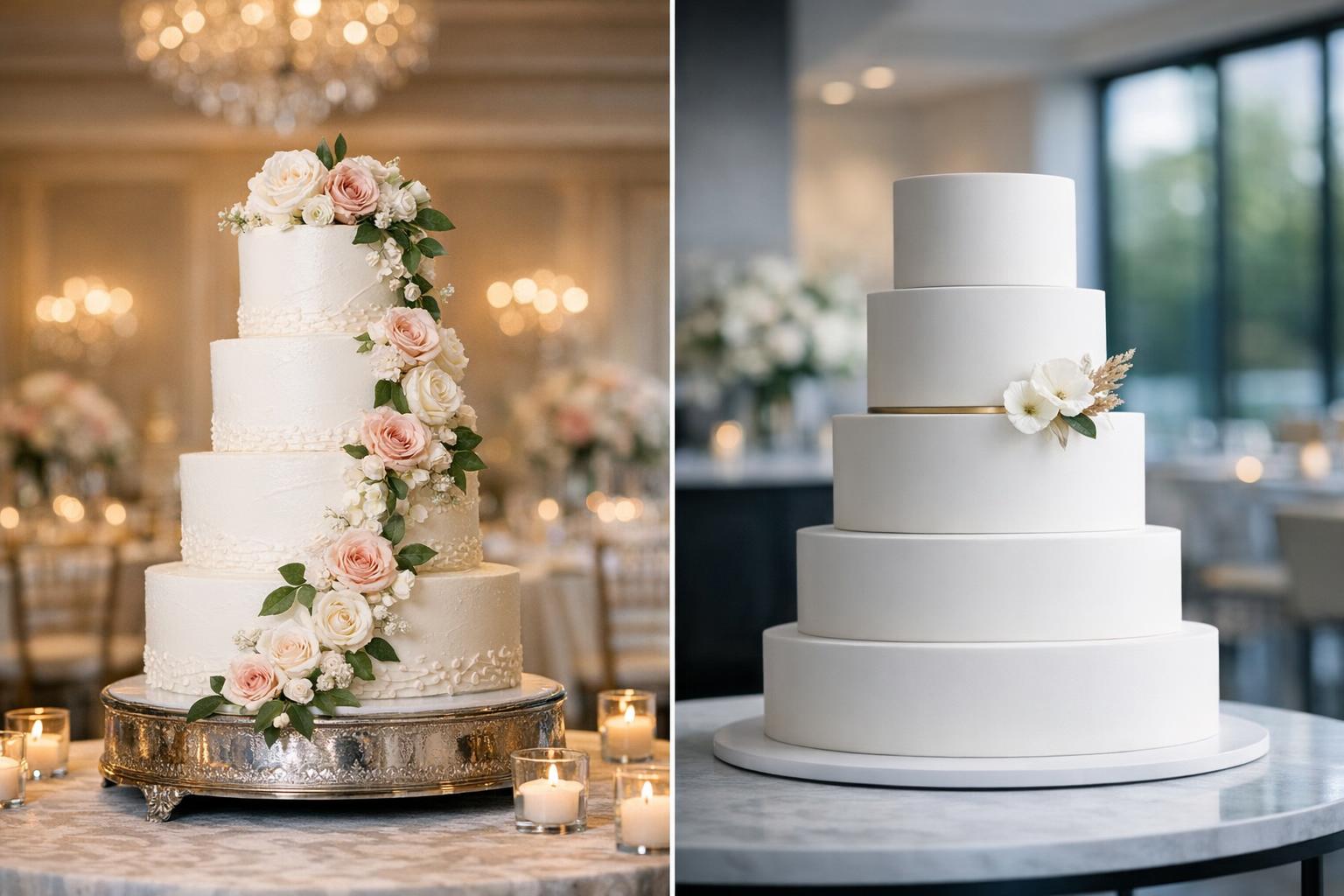
The two most-discussed directions tend to be “classic romantic” and “modern minimal.” Both can be timeless, both can be luxurious, and both can become unforgettable wedding cake inspiration—but they prioritize different details. The classic approach often leans toward an elegant white wedding cake presence, layered textures, florals (often sugar flowers), and decorative technique like piping. The modern approach leans toward clean lines, restrained color, and intentional negative space, letting proportion and finish do the talking.
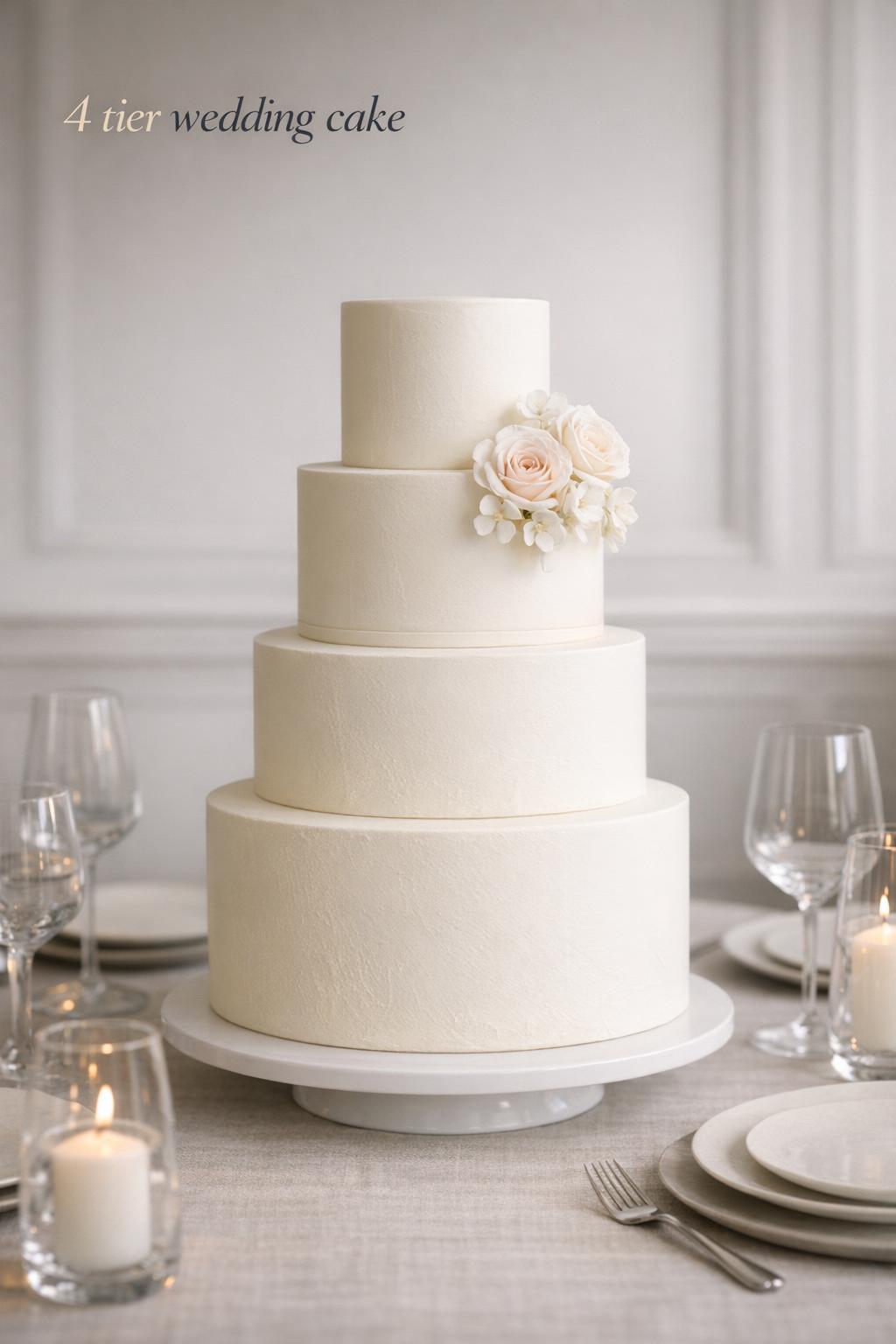
In this comparison and style breakdown, you’ll learn how these aesthetics differ in silhouette and structure, how to choose flavors and fillings by tier without losing cohesion, what to ask a baker when ordering a 4 layer wedding cake at this scale, and how pricing, delivery, and stability realities can nudge you toward one style or the other. Along the way, you’ll see practical planning cues drawn from the kinds of offerings and guidance you’ll encounter from established bakeries and resources such as AK’s Cakes and Cupcakes, Mia’s Brooklyn Bakery (Brooklyn, NY), Cindyrella Cakes, FoodVoyageur, All Things Cake Shop, and Circo’s Pastry Shop, plus sizing and pricing references often discussed in wedding cake guides like Cake Obsession, Everything Lulu, and Sensitively Sweet.
Style overview: classic romantic (the elegant white wedding cake tradition)
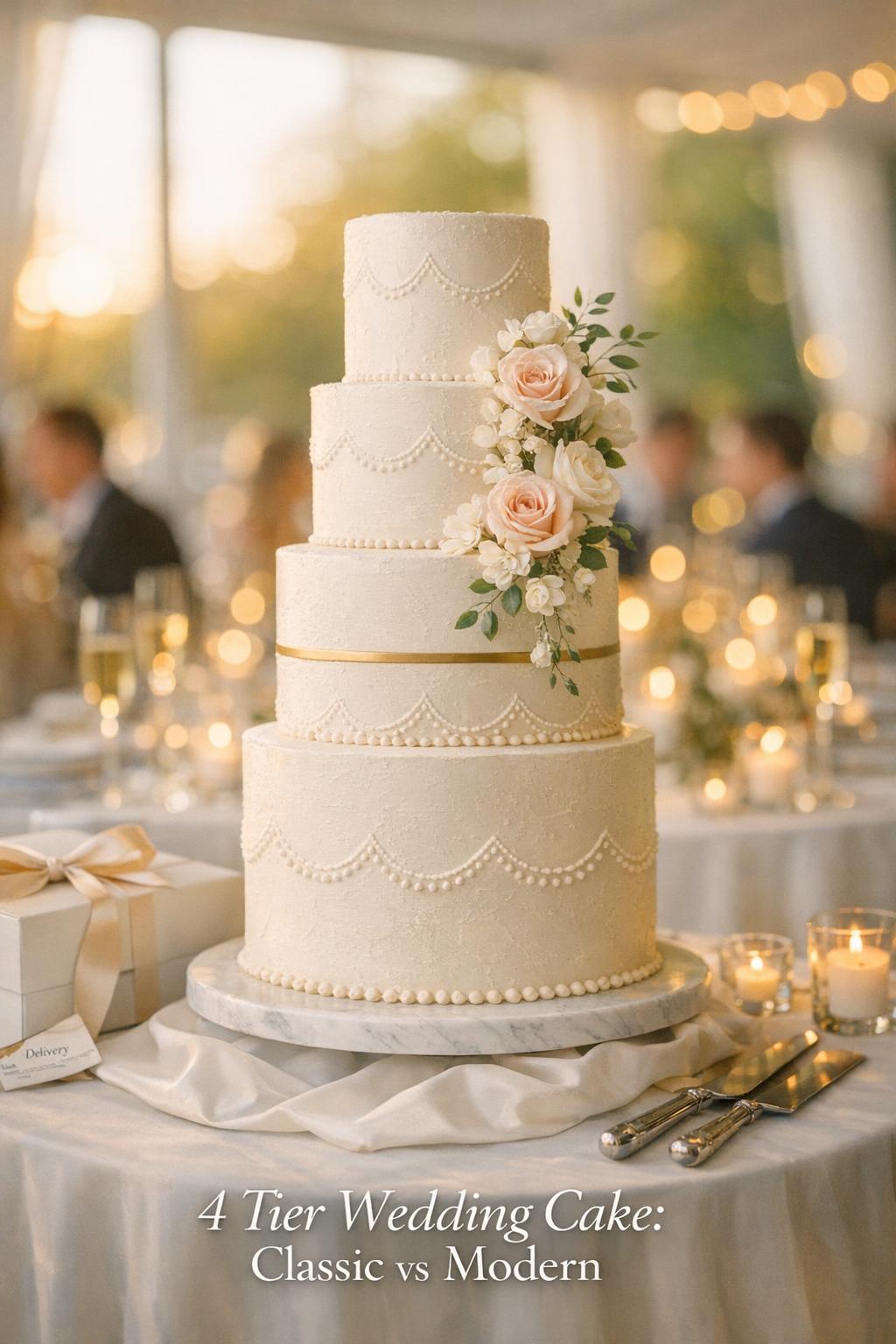
Classic romantic styling is what many couples picture when they imagine a wedding cake before they’ve seen a single mood board: a bright, elegant white wedding cake silhouette, softly refined finishing, and a sense of celebration that feels formal without being severe. On a 4 tier wedding cake, this style is about harmony—each tier relates to the next through repeated motifs like delicate piping, florals, or gentle texture.
Defining characteristics often include floral elements (frequently sugar flowers), traditional tiered symmetry, and decoration that invites a closer look—especially wedding cake with piping details that catch light in photographs. The overall mood is romantic and reassuring, designed to feel right at home in a ceremony-to-reception timeline where guests expect a classic wedding centerpiece.
- Silhouette: balanced tiers with a “stacked” sense of ceremony
- Color palette: most often white or soft neutrals, with subtle accent tones
- Textures and finishes: buttercream textures, fondant finishes, piping, and floral detailing
- Aesthetic mood: formal, romantic, traditional, and photo-friendly from every angle
Style overview: modern minimal (clean lines, intentional restraint)
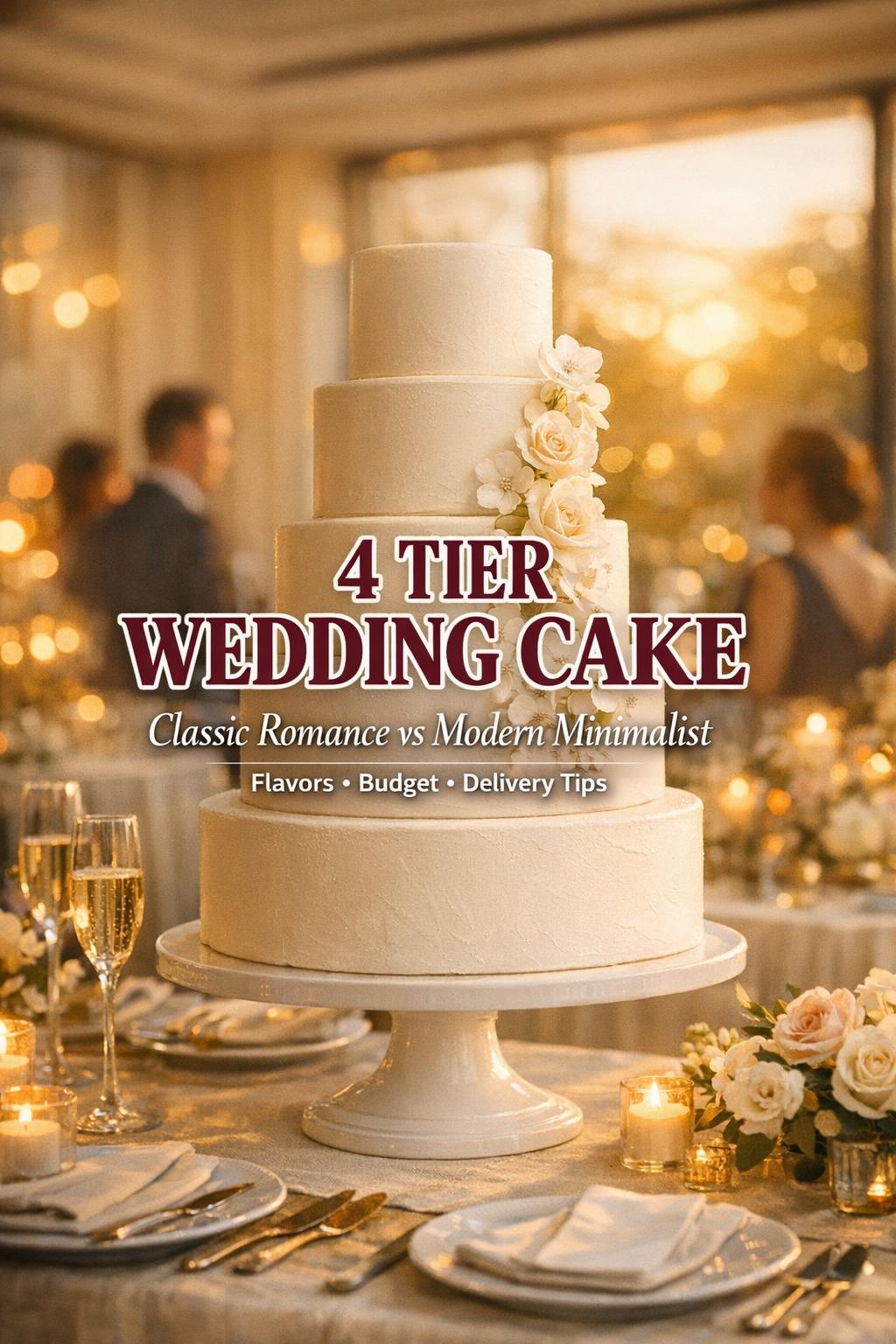
Modern minimal styling treats a four-tier cake like sculpture. Instead of using decoration as the main storytelling device, this look relies on proportion, finish, and subtle technique—think crisp edges, controlled texture, or a single focal detail that repeats in a restrained way across tiers. In the world of 4 tier wedding cake ideas, this is often the style that looks “simple” online yet can be deceptively exacting in execution.
Because modern minimal designs can appear uncluttered, they can highlight the quality of the finish—whether that’s buttercream texture or a smooth fondant look—more intensely than a highly embellished cake. It’s a style that pairs naturally with contemporary weddings, modern venues, or couples who want their dessert moment to feel refined rather than ornate.
- Silhouette: strong tier geometry; emphasis on clean vertical lines
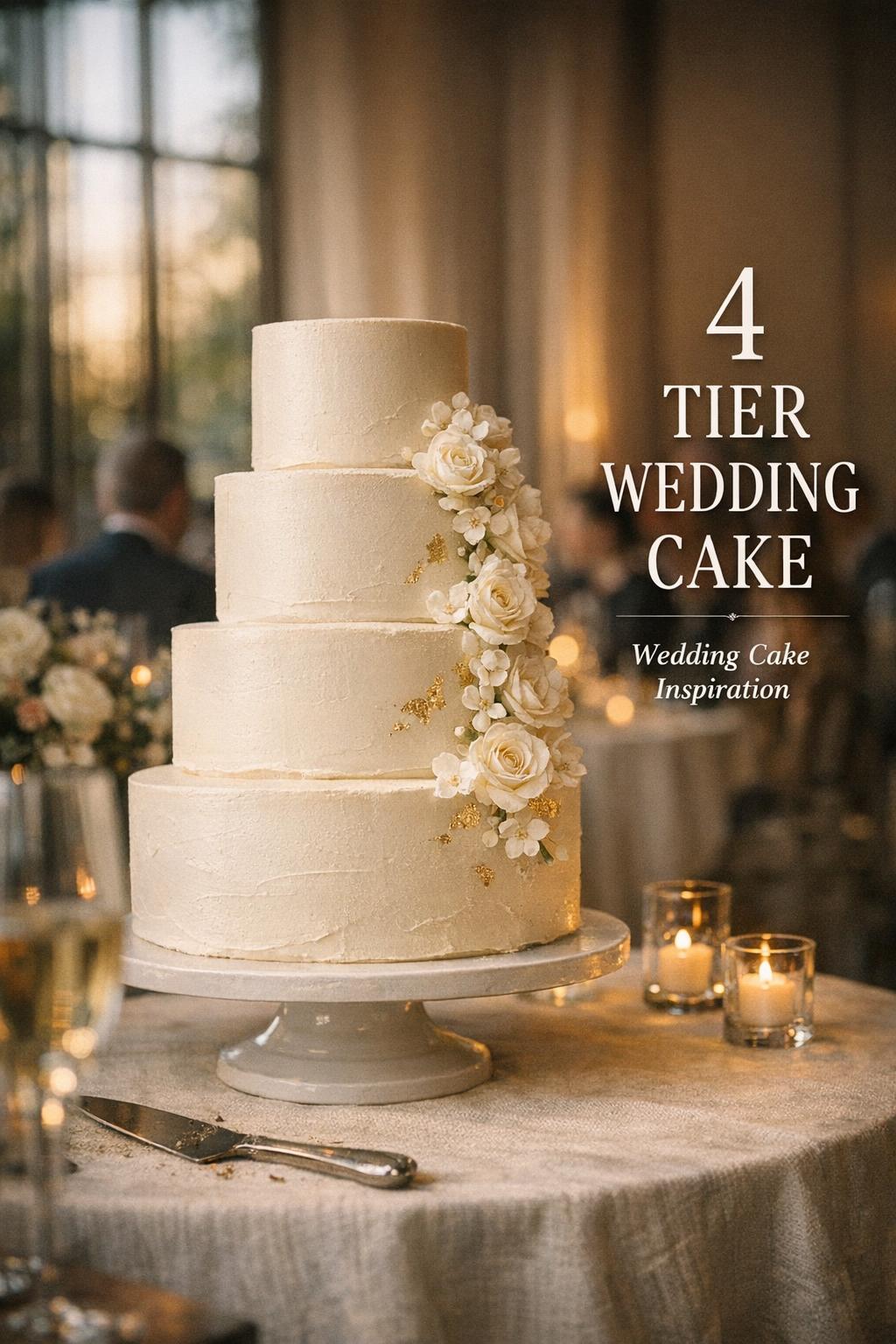
- Color palette: often monochrome (commonly white), sometimes with restrained metallic accents
- Textures and finishes: smooth fondant or deliberate buttercream texture; minimal piping used with intention
- Aesthetic mood: modern, editorial, calm, and quietly luxurious
Why these two styles get confused (especially online)
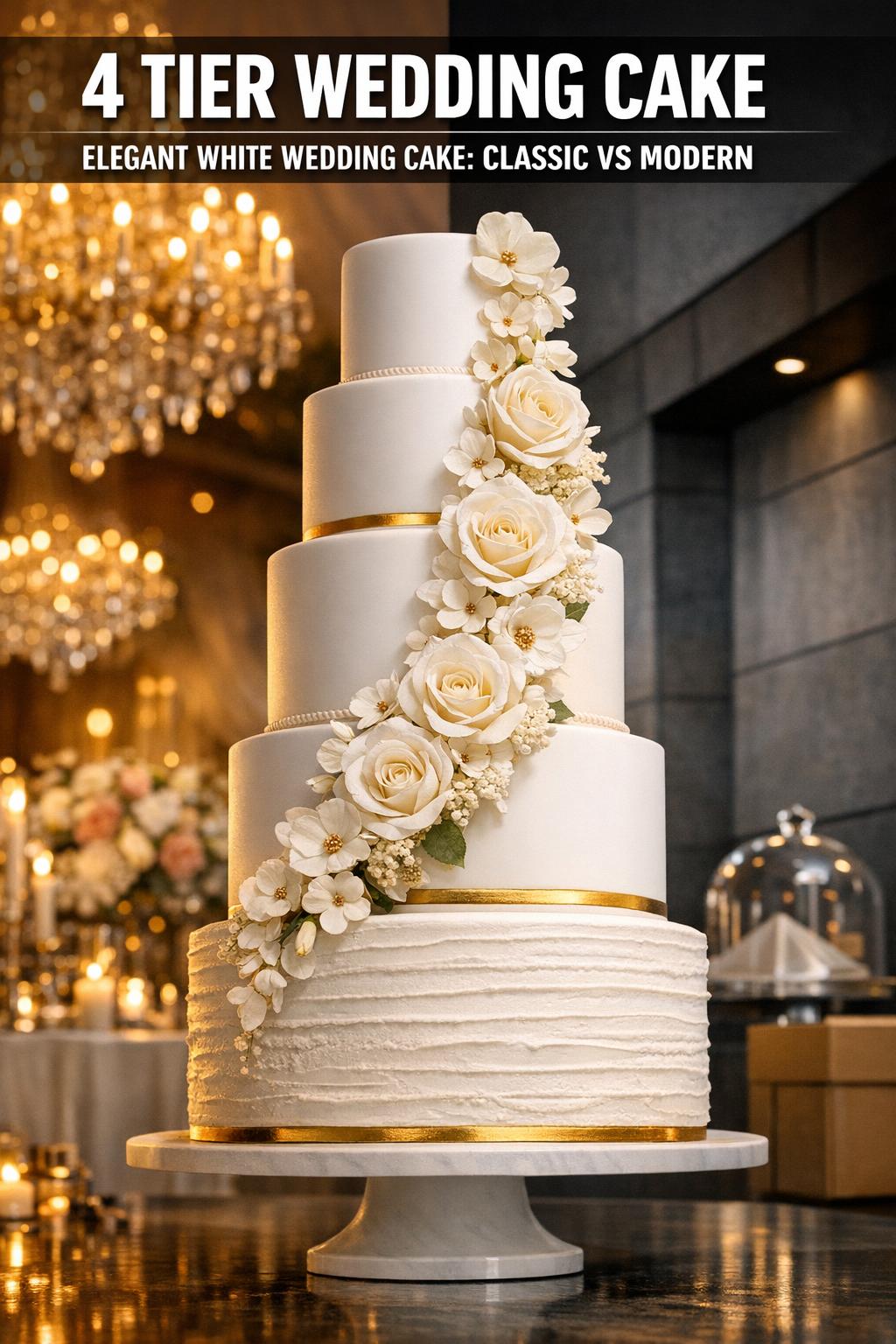
In photos, both classic romantic and modern minimal cakes can show up as “white four-tier cake” at first glance, which is why couples often treat them as interchangeable during early planning. Add to that the reality that many bakery product pages and galleries highlight the overall silhouette first—four tiers, elegant presence, wedding-ready styling—before you notice the finer distinctions like piping density, floral realism, or how texture is distributed across tiers.
The difference becomes clear when you zoom in mentally and ask: what is doing the work here—ornament or finish? Classic romantic styling typically uses decorative elements (piping, sugar flowers, layered motifs) to create richness. Modern minimal styling uses restraint so the surface and shape feel like the statement. Both can be formal; they simply speak in different voices.
Key differences that matter on a real wedding day
Silhouette and structure: “softly detailed” vs “architecturally clean”
A 4 layer wedding cake is inherently tall enough that structure and stability can’t be an afterthought. Classic romantic cakes often incorporate more surface detail—piping, florals, or layered textures—that visually softens the stacked tiers. Modern minimal designs put more emphasis on clean edges and uninterrupted surfaces, which can make any slight shift or unevenness more noticeable. In practical terms, that means modern minimal cakes often require especially precise execution during setup and delivery to preserve the intended crisp look.
Decoration philosophy: piping and florals vs texture and negative space
Classic romantic styling frequently centers wedding cake with piping: borders, delicate patterns, or tier-to-tier repetition that reads as celebratory and traditional. Florals—especially sugar flowers—can add dimension and romance, often used to cascade or cluster for a balanced focal point. Modern minimal styling may still use florals or metallic accents, but typically as a single focal gesture rather than a full narrative across the cake.
Formality and mood: ballroom romance vs contemporary calm
Both styles can feel formal, but they signal it differently. The classic romantic cake says “wedding” immediately—ideal for couples who want that traditional reassurance. The modern minimal cake feels more like a design decision—ideal for couples whose wedding aesthetic is clean, curated, and intentionally restrained. If your day includes a very classic ceremony and a highly modern reception space, it’s worth deciding which part of the day you want the cake to echo.
Pricing sensitivity: detail density can shift the budget
Budgeting for a 4 tier wedding cake often hinges on what’s added beyond the base tiers: premium flavors, extensive sugar flowers, metallic accents, or other decorative add-ons. Pricing guidance for weddings frequently discusses tier-based frameworks and add-ons, and this is where style affects cost. A classic romantic cake with abundant sugar flowers and extensive piping may naturally increase labor and decorative complexity, while a modern minimal cake may keep decoration restrained but demand high-precision finishing. Either way, the “simple vs elaborate” question doesn’t always map cleanly to cost—what matters is technique, time, and the add-ons you choose.
Visual style breakdown: how each look reads from across the room (and up close)
Layering approach across tiers
Classic romantic cakes often “layer” their story: one tier might carry a piped motif, another might carry a floral cluster, and another might showcase a softer buttercream texture—each tier contributing to a fuller visual rhythm. Modern minimal cakes tend to keep the tiers consistent, letting the stacked geometry feel intentional and serene. If you love variety, classic romantic will feel more expressive; if you love cohesion, modern minimal will feel more aligned.
Proportions and balance
With four tiers, proportion becomes a design language. Classic styling often uses decoration to guide the eye upward or to create gentle transitions between tier sizes. Modern minimal styling uses the tier steps themselves—clean edges, repeated spacing, and controlled texture—to create that vertical journey. In both cases, a stable, well-supported build matters because a tall cake visually amplifies any lean or wobble.
Finish choices: fondant vs buttercream textures
Both aesthetics can be executed in fondant or buttercream, and both can incorporate texture. Classic romantic looks often benefit from buttercream textures and piped detail that feel soft and celebratory. Modern minimal looks often emphasize a refined finish—either flawlessly smooth or deliberately textured in a controlled way. The key is consistency: a modern minimal cake usually looks best when the finish is uniform across tiers, while a classic romantic cake can intentionally vary tier-to-tier without looking “busy,” because the style embraces decorative richness.
Design directions within each style (choose the one that matches your wedding atmosphere)
Once you pick a “family” of style—classic romantic or modern minimal—you still have room to personalize. Couples browsing wedding cake inspiration often feel overwhelmed by endless photo grids, so it helps to anchor your decision to a few clear design directions that translate well to four tiers.
Classic romantic variations: florals, piping, and soft grandeur
Classic romantic doesn’t mean one-note. Some couples want a quiet, elegant white wedding cake with just a whisper of piping; others want a floral statement that feels like a garden moment brought indoors. If you’re drawn to romantic styling, the most important decision is how much ornament you want and where you want the eye to land—top tier, mid tiers, or a cascading focal point.
- Wedding cake with piping as the hero: repeated borders, delicate patterns, and a clean, traditional rhythm across tiers
- Sugar flowers as the hero: floral clusters that create depth and softness on a tall silhouette
- Texture-led romance: buttercream textures that add movement without overwhelming the cake
- Metallic accents as a finishing note: subtle metallic touches that lift the cake into an evening-reception mood
Modern minimal variations: crisp, calm, and intentional
Modern minimal styling shines when each detail is deliberate. Rather than decorating every tier, you choose one “signature” element—finish, texture, a restrained floral placement, or metallic accents—and keep it consistent. This is especially impactful on a 4 tier wedding cake because height gives your restraint room to breathe.
- Monochrome minimal: a clean, cohesive look that reads modern in almost any reception setting
- Textured buttercream minimal: controlled buttercream textures for dimension without ornament overload
- Minimal floral placement: a single floral cluster (often sugar flowers) used like a focal accessory
- Understated metallic accents: a small amount of metallic detail to echo modern décor without turning ornate
Flavors and fillings by tier: building a cohesive “flavor architecture”
One of the quiet advantages of a 4 tier wedding cake is that it can hold multiple flavors without looking like a patchwork decision. Many bakery offerings highlight customization—flavors, design options, and service details—because a four-tier cake often needs to satisfy different guest preferences while still feeling like one wedding statement. The goal is to make variety feel intentional.
How classic romantic styling often pairs with flavor planning
Classic romantic cakes tend to feel “generous,” and that can extend to flavor variety. If your design includes florals, piping, and traditional finishing, multiple crowd-pleasing flavor choices can feel aligned with the welcoming, celebratory mood. Couples often choose a signature flavor for the top tier—something that feels special—and keep the remaining tiers broadly appealing.
How modern minimal styling often pairs with flavor planning
Modern minimal cakes often aim for cohesion in every detail, including the way the cake is described on menus or signage. That doesn’t mean you must choose only one flavor, but it does mean the flavor lineup often benefits from a consistent “family” of profiles—so the experience feels curated rather than eclectic. If your cake presentation is sleek and restrained, a thoughtful, streamlined flavor plan can reinforce that calm, modern mood.
Dietary considerations: planning without compromising the centerpiece feel
Dietary needs can be part of a four-tier plan, especially when bakeries offer customization and tier-based options. If you’re considering allergen-friendly directions (often discussed as part of broader wedding cake planning), the key is to align those choices with service logistics: how slices will be cut, how tiers will be labeled, and how the cake moment stays smooth and joyful instead of stressful.
The unglamorous truth: tall-cake structure, supports, and delivery matter
A four-tier cake is tall enough that “how it stands up” is part of the design. Many couples fall in love with photos, then realize later that a 4 tier wedding cake requires serious stability, careful transport, and often on-site setup. This is why so many bakery pages and guides pair design talk with delivery/setup notes: the best-looking cake is the one that arrives looking like it did in the portfolio.
Supports and internal structure: what to ask without feeling intimidated
Even if you don’t want a technical deep dive, it’s fair to ask your baker how the cake will be supported and assembled. The concept of internal supports and dowels is commonly associated with tier stability for tall cakes. A confident answer should reassure you that the cake will hold its shape through display and cutting, and that the bakery has a reliable plan for transport and assembly.
Transport and on-site setup: where style and logistics collide
Modern minimal cakes can be less forgiving if a finish is disturbed in transit, because the whole point is clean, uninterrupted surface. Classic romantic cakes can sometimes disguise tiny imperfections with florals, piping, or texture—though they introduce their own fragility if sugar flowers are intricate. In either case, delivery and setup become part of the style decision: choose the aesthetic that fits your venue timeline and your comfort level with on-site assembly.
Tips to choose your direction quickly (without losing the romance)
When couples feel stuck between classic romantic and modern minimal, it’s often because they’re trying to decide in the abstract. The easier approach is to imagine one specific moment: the cake cutting. Picture the lighting, the music, the way guests gather, and the photographs that will live on. Now ask which style feels like it belongs in that scene.
- If you want the cake to feel like a tradition: lean classic romantic, especially an elegant white wedding cake with piping and floral detail.
- If you want the cake to feel like part of a curated design story: lean modern minimal, with a clean finish and controlled accents.
- If your venue is unpredictable or timelines are tight: prioritize a style your baker can confidently deliver and assemble.
- If you love multiple design details: classic romantic gives you permission to layer texture, florals, and piping without feeling “too much.”
Comparing how each style works with real wedding settings
Formal receptions and classic venues
In a formal reception, classic romantic styling often feels immediately at home. A 4 tier wedding cake with piping reads clearly from across the room, and sugar flowers can echo floral design elsewhere in the wedding. Modern minimal can also work beautifully in formal settings, but it tends to feel more like contemporary elegance than traditional romance—ideal if you want the room to feel polished and modern rather than vintage-inspired.
Modern spaces and minimalist décor
Modern minimal cakes align naturally with clean spaces, where the cake can feel like an intentional design object. A monochrome, refined finish can mirror modern décor choices and keep the visual field calm. Classic romantic can still work in modern spaces, but it becomes more of a contrast piece—romance placed inside modern architecture—which can be stunning if that’s the story you want your day to tell.
Outdoor celebrations and weather-sensitive moments
Outdoor weddings add practical considerations that can influence style choices. A tall cake needs stability, and finishing choices matter because the cake has to look composed through the display period before cutting. If you’re planning outdoors, the most helpful approach is to discuss venue conditions and timing with your baker early—especially around delivery, setup, and how the cake will be protected while still looking like your chosen inspiration.
Where “4 tier wedding cake ideas” turn into an order: choosing a baker with confidence
Scrolling wedding cake inspiration is the easy part; translating it into a real cake is where couples need steady guidance. Many couples begin by browsing product pages and galleries from bakeries—AK’s Cakes and Cupcakes, Mia’s Brooklyn Bakery in Brooklyn, NY, Cindyrella Cakes, FoodVoyageur, Circo’s Pastry Shop—or exploring broader wedding cake hubs like All Things Cake Shop. These sources often show what a bakery actually produces, not just what’s trending.
Because a four-tier cake is both a product and a service (design + execution + delivery/setup), your decision should be based on more than a single image. Style compatibility matters, but so does the bakery’s clarity around customization, lead times, and what happens on the wedding day.
Questions that reveal whether a baker is the right match
You don’t need to speak like a pastry professional to ask smart questions. You only need to ask the questions that connect style to logistics—because that’s where tall cakes succeed or fail.
- Can we customize flavors by tier, and how do you keep the overall cake cohesive?
- How will the cake be delivered and set up, and is on-site assembly included?
- What internal supports will be used to keep the tiers stable during display and cutting?
- Which finishes do you recommend for our wedding setting: fondant, buttercream textures, or a mix?
- How does pricing change with add-ons like sugar flowers, metallic accents, or detailed piping?
Tips for reading a portfolio like a planner
When comparing bakery photos or product listings, look for consistency rather than perfection. A bakery that repeatedly executes clean finishes (for modern minimal) or consistently detailed piping and florals (for classic romantic) is signaling reliability. It’s also helpful to notice whether the images show full-tier height and real event settings, because tall cakes are a different challenge than smaller tiered cakes.
Pricing and budgeting: comparing what drives cost in each style
A four-tier cake is a meaningful line item in many wedding budgets, so couples often look for clear pricing frameworks and serving guidance. Wedding cake pricing discussions commonly tie cost to tier count, serving needs, and add-ons such as premium flavors and decorative complexity. This is why resources like Cake Obsession, Everything Lulu, and Sensitively Sweet are often consulted alongside bakery product pages: couples want both inspiration and a reality check.
Classic romantic: where budget can expand
In classic romantic styling, cost frequently rises with the density of decoration. Sugar flowers, extensive piping, and layered design motifs can be labor-intensive. If you want a romantic look but need to manage budget, a useful approach is to choose one high-impact feature—either piping or florals—and keep the rest of the design clean and cohesive.
Modern minimal: where budget can surprise you
Modern minimal styling can look simple but may require extremely controlled finishing. A smooth, consistent surface across four tiers leaves little room for error, especially after transport and setup. If your heart is set on a modern minimal cake, ask your baker how they protect the finish during delivery and whether the chosen technique is something they do frequently.
Serving and sizing conversations: making “four tiers” feel practical
Couples usually come to the phrase “four-tier” for one of two reasons: they love the look, or they need the servings. Serving and sizing guidance is a recurring theme in wedding cake planning resources, and it’s worth treating it as part of your design decision rather than a separate math problem. A 4 tier wedding cake can be planned to fit your guest count while still preserving the silhouette you love.
In practical conversations with your baker, you’ll typically discuss serving expectations for the reception, how formal the cutting service will be, and whether the cake is the primary dessert or part of a dessert table. These details can influence how the tiers are sized and how much cake you truly need—especially if you want a tall visual moment but your guest count is more intimate.
Outfit-style comparisons, translated into cake aesthetics (for couples who think in “vibes”)
Some couples make decisions more easily when they think of cake style the way they think about fashion: silhouette, texture, and finishing details. If you’re the kind of bride or couple who feels style before you can explain it, these comparisons can help you decide between classic romantic and modern minimal without overthinking.
Example comparison: “classic ceremony” energy
Classic romantic approaches this like a formal look with heritage details: an elegant white wedding cake presence, intentional piping, and sugar flowers that feel like a bouquet echo. Modern minimal approaches the same moment like a clean, refined statement: smooth finish, restrained accents, and a calm silhouette that lets the height do the talking.
Example comparison: “reception spotlight” energy
Classic romantic turns the cake cutting into a celebratory, traditional focal point: guests recognize the style immediately, and photographs capture detail from multiple angles. Modern minimal turns it into a design moment: the cake reads as intentional and contemporary, especially when the room décor is sleek and the lighting is dramatic.
Example comparison: “intimate wedding, big centerpiece” energy
For smaller weddings, a 4 layer wedding cake can feel like a grand gesture. Classic romantic can make the moment feel lush and generous, even when the guest list is intimate. Modern minimal can make the moment feel elevated and editorial—like a quiet luxury statement—while still letting you keep the overall décor restrained.
Common mistakes couples make with four-tier cakes (and how to avoid them)
Most four-tier disappointments aren’t about taste—they’re about communication and logistics. Because a 4 tier wedding cake involves design, structure, and timing, small assumptions can create stress close to the wedding day. A calm planning approach is to identify what matters most: silhouette, finish, flavor variety, or budget transparency.
- Choosing inspiration without naming the finish: “white cake” can mean smooth fondant, textured buttercream, or piped detail—be specific.
- Overloading every tier with a different motif: four tiers need a unifying thread; too many ideas can look busy.
- Forgetting delivery and setup details: tall cakes often need careful transport and on-site assembly.
- Not discussing add-ons early: sugar flowers, metallic accents, and detailed piping can change pricing and timelines.
- Leaving servings and slicing vague: serving expectations influence tier sizing and the overall plan.
Tips for blending the styles (if you love both)
You don’t always have to pick a single side. Some of the most personal wedding cake inspiration comes from blending: a modern minimal base with one romantic detail, or a classic romantic silhouette edited down to feel more contemporary. The key is to keep the blend intentional so it reads as a design choice, not a compromise.
A reliable way to blend is to start with a modern minimal finish—clean, cohesive tiers—then add one classic romantic focal point, such as controlled piping on a single tier or a restrained sugar-flower placement that echoes your bouquet. Alternatively, start with a classic romantic framework, then simplify: choose an elegant white wedding cake palette, keep piping delicate rather than dense, and let texture stay consistent across tiers.
Pulling it all together: a calm planning checklist for a 4 tier wedding cake
Once you’ve chosen your style direction, the remaining work is about clarity. Bakeries and wedding cake guides often emphasize customization, sizing, and pricing because these are the details that protect your experience. A four-tier cake should feel joyful to order—not like a complicated project you have to manage alone.
- Decide your primary aesthetic: classic romantic or modern minimal.
- Choose your finish vocabulary: fondant, buttercream textures, piping, sugar flowers, metallic accents.
- Outline flavor choices by tier and confirm how they’ll be communicated for service.
- Confirm delivery/setup plan and internal support approach for tier stability.
- Review pricing drivers: tier framework, premium flavors, decorative add-ons, and service details.
FAQ
How is a 4 tier wedding cake different from a smaller tiered wedding cake?
A four-tier cake is tall enough that structure, internal supports, transport, and on-site setup become central to the design, not just behind-the-scenes details, which is why many bakeries pair design options with delivery/setup planning for this size.
What does “4 layer wedding cake” usually mean compared to “4 tier”?
In wedding planning conversations, “4 tier” typically refers to four stacked cake tiers, while “4 layer” is sometimes used casually to describe the same idea; when ordering, it’s best to confirm you mean a four-tier, stacked wedding cake and discuss tier sizing and servings with your baker.
Are sugar flowers better than fresh flowers on a four-tier cake?
Sugar flowers are a common decorative element in four-tier design ideas because they’re crafted to suit the cake’s scale and can be placed precisely for balance, while fresh flowers may require extra coordination and careful placement; your baker can advise based on the design and setup plan.
Does a wedding cake with piping work with modern minimal style?
Yes—piping can be used in a modern minimal way when it’s restrained and intentional, such as a subtle border or repeated small detail, rather than dense patterning across every tier.
What should I ask a baker about supports and stability for a tall cake?
Ask how the tiers will be supported and assembled, whether dowels or other internal supports are used for tier stability, and how delivery and on-site setup will protect the cake’s finish and alignment throughout the reception.
Why can a modern minimal four-tier cake sometimes cost as much as an ornate one?
Modern minimal designs can require highly precise finishing across large, visible surfaces, and on a four-tier cake that precision must hold through transport and setup, while ornate designs may cost more due to labor-intensive add-ons like sugar flowers and detailed piping.
Where can I look for realistic four-tier cake inspiration that reflects what bakeries actually sell?
Browsing established bakery product pages and wedding cake hubs can help you see what’s commonly offered and customizable, including examples from AK’s Cakes and Cupcakes, Mia’s Brooklyn Bakery, Cindyrella Cakes, FoodVoyageur, All Things Cake Shop, and Circo’s Pastry Shop, alongside longer-form idea roundups like WithLoveLive.
How do pricing guides fit into planning a 4 tier wedding cake?
Pricing and sizing guides help you understand how tier count, servings, flavors, and decorative add-ons influence the overall budget, which is why couples often reference resources focused on wedding cake sizing and pricing frameworks alongside bakery consultations.
What’s the most practical way to choose flavors for four tiers?
Choose a cohesive set of flavors that feels intentional across tiers—often a “signature” choice for the top tier and crowd-pleasers for the remaining tiers—then confirm with your baker how those flavors will be organized and served during the reception.
Leave a Reply