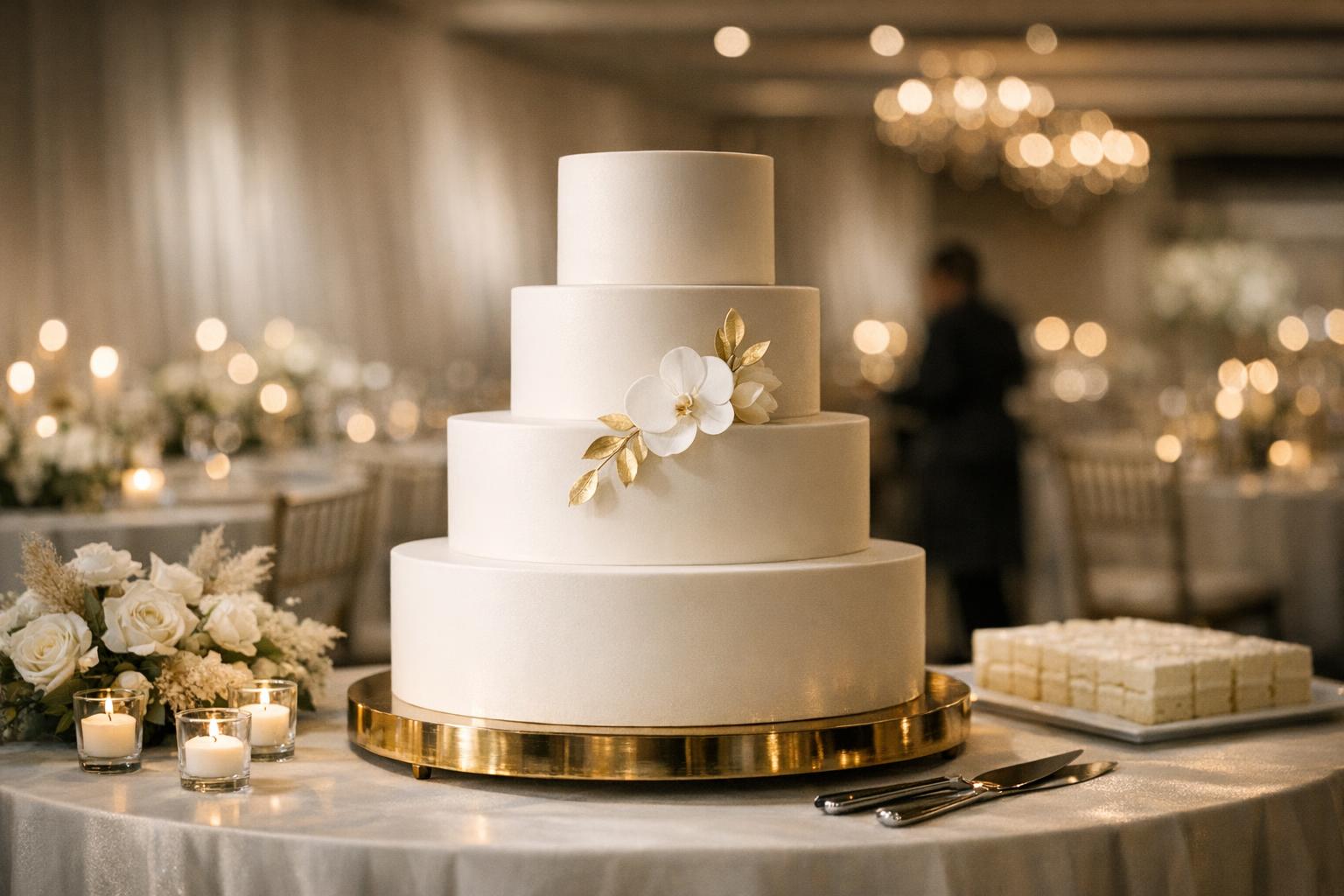
The wedding cake decision that quietly shapes the whole reception
A wedding cake is one of the few reception details that lives in two worlds at once: it’s a design centerpiece and a served dessert with real constraints like timing, temperature, slicing, and transport. Couples often feel the pressure to make it “the moment,” yet the best wedding cakes are the ones that fit the day’s rhythm—how the room looks when you walk in, how dinner service flows, and how guests actually eat at a late-night celebration. Whether you want a classic wedding cake that feels timeless or you’re collecting unique wedding cakes for inspiration, a smart plan keeps the cake beautiful, stable, and genuinely enjoyable.
This guide focuses on the decisions that matter most—style, structure, size, ordering steps, and practical tips—so your wedding cake ideas translate into something that holds up in real life, not just in photos.
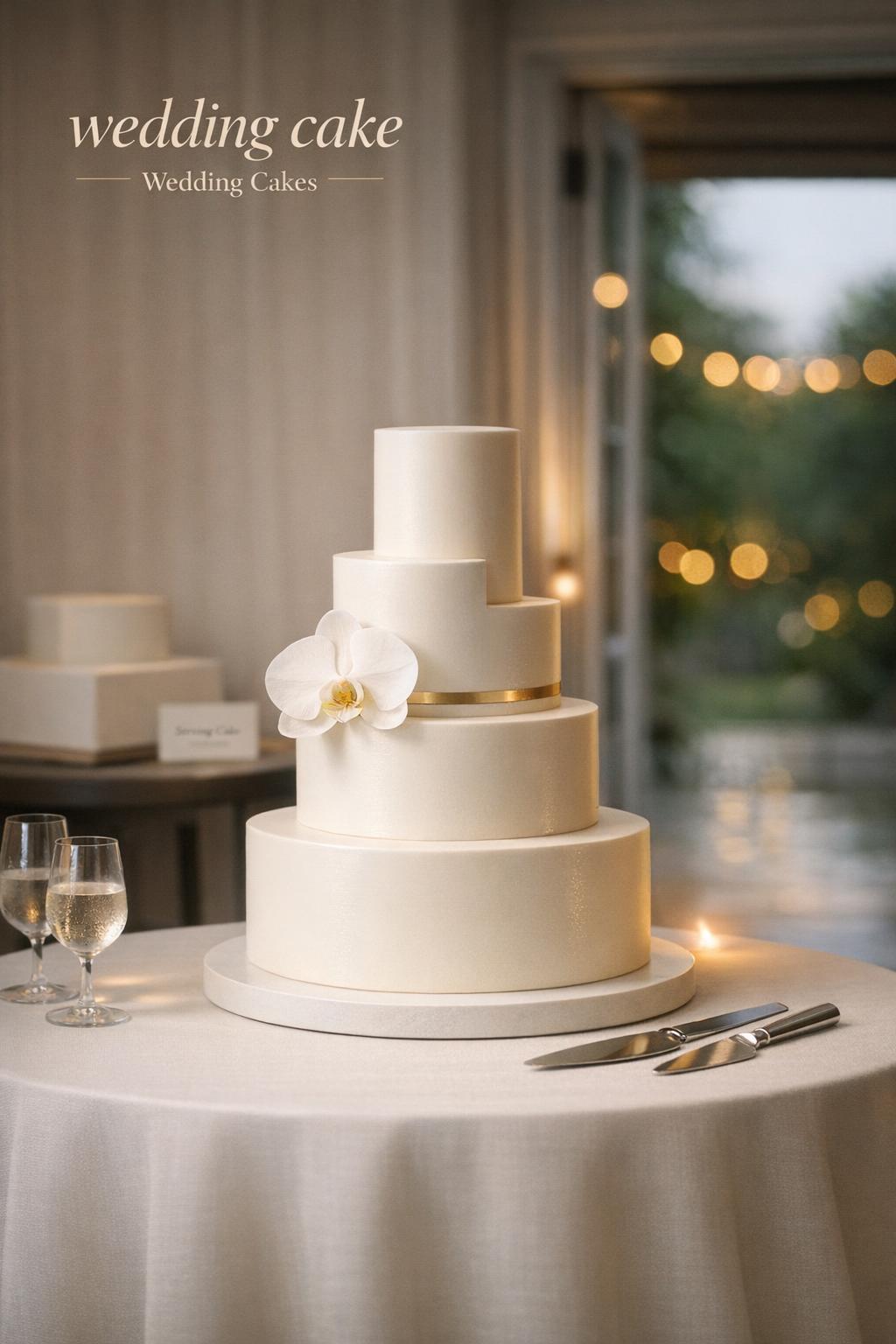
Start with the “why”: what role will the cake play in your day?
Before you pick flavors or scroll through cakes for wedding inspiration, decide what the cake is meant to do. Some couples want a showpiece that anchors the room; others want a dessert that tastes incredible and serves efficiently. A wedding cake can also be more symbolic than functional—cut for photos, then supplemented with other desserts for guests.
It helps to name the priority in plain language: “We want a statement cake,” “We want the best-tasting cake,” or “We want a classic look, minimal stress.” This single sentence becomes your filter for every choice—tier count, decorations, and even delivery timing.
A practical way to define your cake’s job
Imagine the reception timeline. If the cake cutting happens early, your cake needs to be easy to access, well-lit, and ready before guests sit down. If it’s a late-night moment, you’ll want a design that stays stable for hours and a plan for slicing so the dance floor doesn’t pause for too long. Both are valid; the “right” wedding cake is the one aligned with how your celebration actually unfolds.
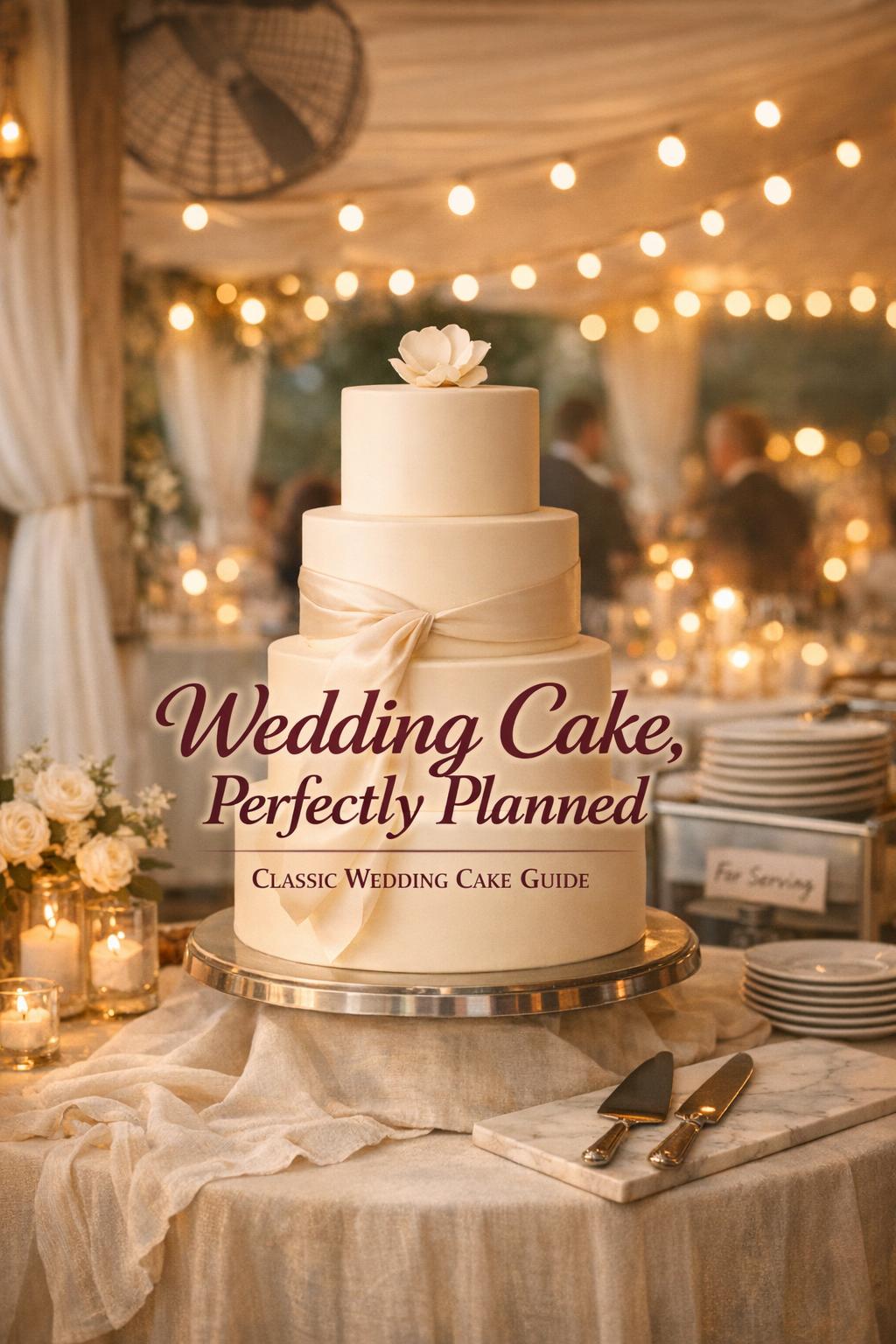
Classic wedding cake vs. unique wedding cakes: choosing a design direction that lasts
The most common regret isn’t choosing something “too simple” or “too bold.” It’s choosing a look that doesn’t match the venue, attire, or overall tone once everything comes together. A classic wedding cake typically leans on symmetry, balanced proportions, and restrained detailing. Unique wedding cakes may lean into unexpected shapes, dramatic textures, or distinctive decorative concepts. Neither is inherently better—each just asks different things of the room, the lighting, and even the cake’s construction.
What makes a classic wedding cake feel timeless
A classic wedding cake reads “timeless” because it’s visually calm: clean lines, consistent finish, and a clear focal point. It tends to photograph well from multiple angles and remains flattering in different lighting conditions. If your reception space is already visually rich—draping, florals, ornate architecture—a classic wedding cake can keep the overall scene cohesive rather than competing for attention.
What makes unique wedding cakes work in real life
Unique wedding cakes usually succeed when they still respect structure. A bold concept needs a stable foundation and a deliberate plan for where decoration is concentrated. If the design has heavy embellishment, strong color contrast, or asymmetry, it often looks best when the cake table is intentionally styled and placed where guests can see it. The “unique” part should feel intentional, not accidental—like a creative choice that fits your event rather than a trend pasted on top.
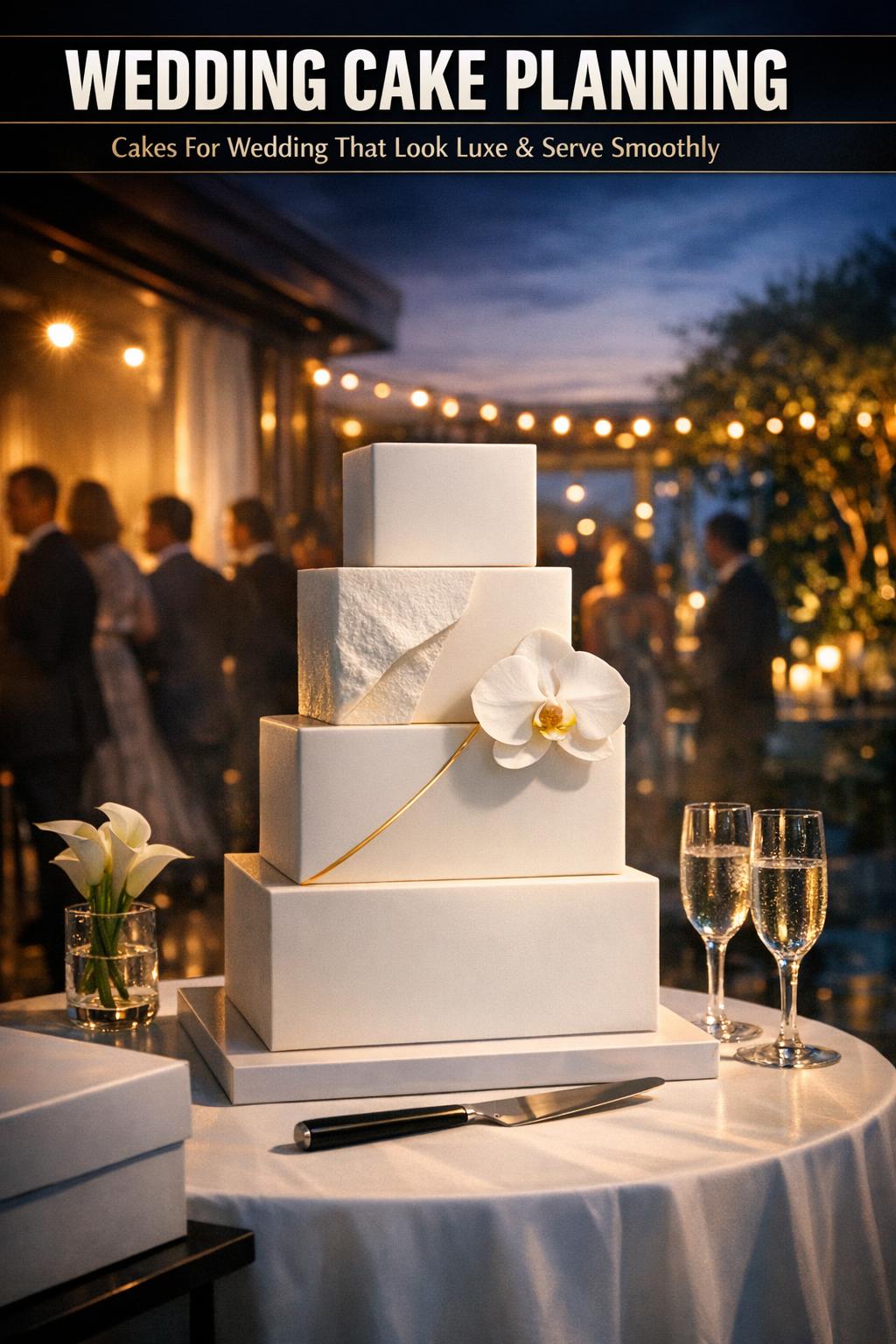
Wedding cake ideas that translate from inspiration to execution
It’s easy to collect wedding cake ideas, but more challenging to turn them into a final design that works with your guest count, venue conditions, and serving plan. Instead of searching for a single perfect photo, build a small “decision set”: shape, finish, and one standout detail. When those three are clear, everything else becomes editing.
A simple “three-choice” framework for deciding
- Shape: decide the overall silhouette (for example, tall and tiered vs. low and wide) so the cake has a clear presence.
- Finish: choose the surface look you’re drawn to most (smooth and refined vs. textured and dimensional).
- Signature detail: pick one feature to emphasize (a topper moment, a decorative accent, or a bold design element) rather than stacking multiple competing ideas.
This approach is especially helpful when you’re torn between a classic wedding cake and more unique wedding cakes. You can keep the silhouette classic while adding one unexpected detail, or you can go sculptural while keeping the finish minimal so it still feels elevated and wedding-appropriate.
How size, tiers, and serving plans affect everything (including cost and stress)
Couples often talk about a wedding cake as if it’s only a design decision, but size determines logistics. More tiers can create a dramatic look without requiring an enormous footprint, while a smaller display cake can deliver the visual moment without committing your entire dessert plan to one item.
Display cake vs. serving cake: a calm, modern approach
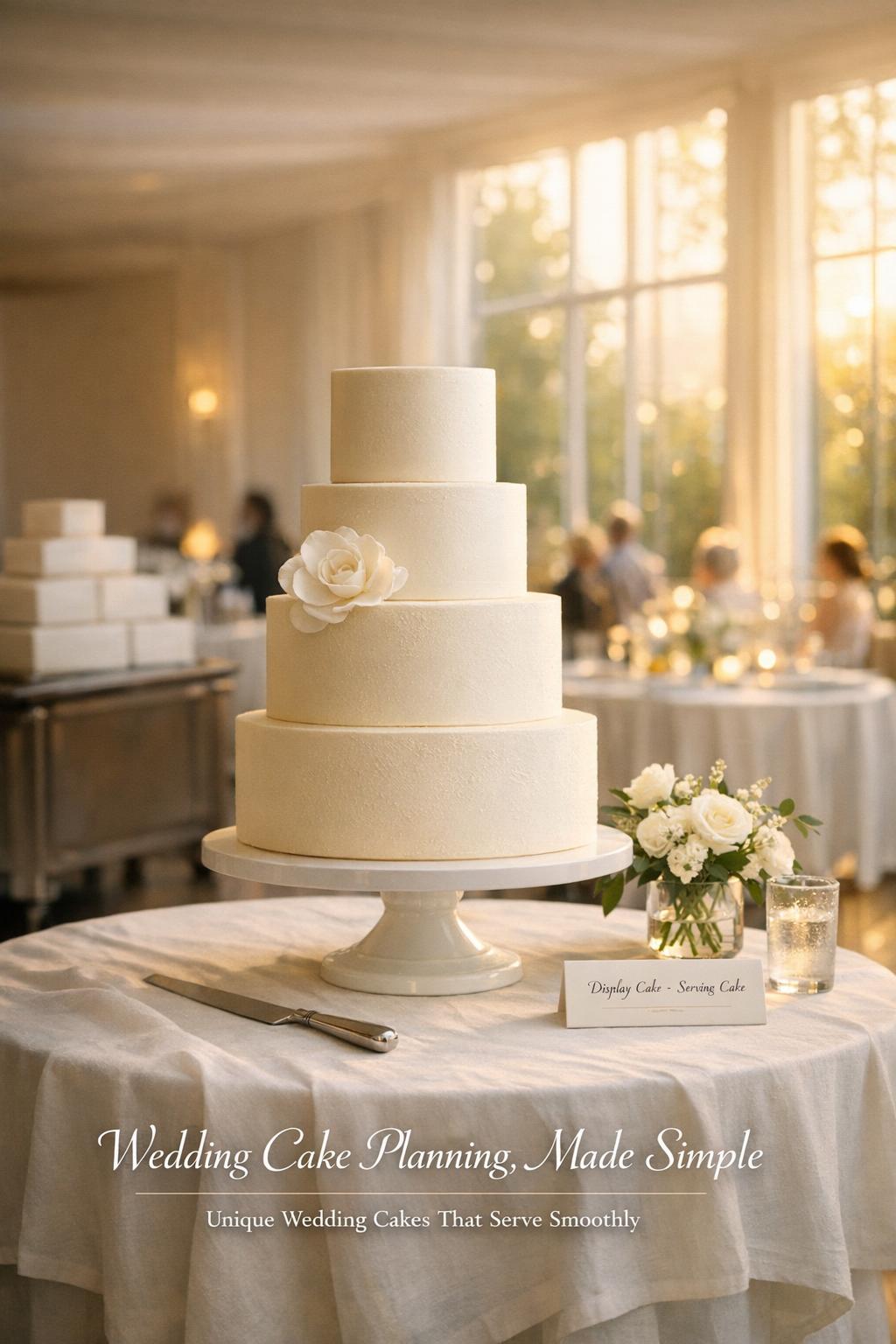
One practical strategy is to have a beautiful display cake for the cutting moment, paired with additional cake portions prepared for efficient service. This can reduce pressure on the main cake’s structure and simplify slicing. It also gives you flexibility if your venue has limited refrigeration space or if the cake needs to hold for a long window before it’s served.
Tips: match the cake plan to how your venue actually functions
Ask where the cake will be stored before it’s presented, who is responsible for moving it, and when it will be cut. A wedding cake that looks effortless on a styled table can become stressful if it’s placed near a doorway, direct sun, or a high-traffic bar line. When you align the cake plan with venue workflow, your photos look better and your team stays relaxed.
Flavor and texture: why “crowd-pleasing” doesn’t have to mean boring
Wedding cakes are served to a wide range of guests—people who love dessert and people who only take two bites. That’s why the most successful flavors tend to be balanced, with a clear main note and a texture that stays pleasant even if the cake sits for a bit before service. A cake can be memorable without being polarizing, especially when you prioritize freshness, moisture, and clean flavor definition.
Think beyond “what sounds interesting” and consider “what stays delicious at room temperature,” “what pairs well after dinner,” and “what won’t clash with other desserts.” If you’re offering additional sweets, your wedding cake can be the reliable anchor while other options bring playful variety.
Tips: choose flavors with the reception timeline in mind
If your cake cutting is late, pick flavors and fillings that hold their texture without becoming messy. If the venue is warm or the cake will be displayed for hours, stability matters as much as taste. A beautiful cake that’s difficult to slice or serve cleanly can undercut the guest experience, even if it photographs perfectly.
Design details that matter more than you think: proportion, placement, and lighting
A wedding cake is essentially a small piece of architecture. Proportion is what makes it feel expensive and intentional: the relationship between tier heights, the width of each layer, and the amount of negative space around decoration. Many cakes for wedding inspiration look stunning because the proportions are disciplined, not because the idea is complicated.
Cake table styling is part of the design (even if you keep it minimal)
The cake table creates context. A classic wedding cake can look elevated on a simple, uncluttered table with thoughtful lighting. Unique wedding cakes benefit from breathing room so their shape and texture read clearly. If the cake is pushed against a wall, it often photographs flat; if it’s placed where guests circulate, it becomes a visual moment throughout the night.
Tips: treat lighting as a cake ingredient
If your reception is dim or candlelit, ask for a small dedicated light on the cake table. Soft light helps texture show up in photos and keeps white finishes from looking gray. This is one of those practical decisions that feels minor during planning but has an outsized impact on how your wedding cake reads in the room.
Working with a baker: what to bring, what to ask, and how to avoid miscommunication
Most cake disappointments come from mismatched expectations. Couples share a photo, a baker hears a general direction, and the final cake misses the details the couple cared about—like the finish, the shade of color, or the scale of decoration. The smoothest process is collaborative: you bring clear references and priorities; the baker brings realism about what will hold up structurally and what will still taste great.
Bring references that show the “non-negotiables”
Instead of bringing ten unrelated wedding cake ideas, bring two or three images that share a common thread, and then say what you like about them in words. Is it the height? The simplicity? The texture? The way the decoration is concentrated at the base or the top? This turns vague inspiration into a clear brief.
Questions that protect both design and service
- How will the cake be transported and assembled on-site, if needed?
- How long can the cake sit in the venue environment before it’s cut?
- Who is responsible for cutting, plating, and serving?
- What design elements are most sensitive to heat, humidity, or handling?
- If we want a specific look, what trade-offs affect flavor, texture, or stability?
These questions are less about being picky and more about building trust. They help you understand what’s realistic, and they help your baker deliver a cake that performs well from setup to the final slice.
Venue realities: indoor ballrooms, outdoor gardens, and everything in between
The most overlooked part of choosing wedding cakes is environment. Temperature, humidity, sun exposure, and setup time all affect how a cake holds its shape and finish. A design that’s effortless in a climate-controlled space can become fragile outdoors, especially if it’s displayed for a long period before serving.
Outdoor receptions: plan for stability first, aesthetics second
For an outdoor celebration, assume the cake will be exposed to more variables—warm air, direct light, and people moving around it. In that setting, a simpler finish and a sturdier structure reduce risk. If you love unique wedding cakes with intricate detail, consider shifting the uniqueness to shape or a single focal detail rather than fragile, high-maintenance decoration.
Indoor receptions: don’t let comfort make you careless
Even indoors, cake placement can be tricky. Near a dance floor, the cake can be bumped. Near a kitchen door, it can be exposed to heat and traffic. The best indoor cake plan is still intentional: a protected location, a stable table, and a timeline for setup that avoids last-minute rushing.
The cutting moment: how to make it feel natural, not performative
Some couples love a big, announced cake cutting. Others prefer a quieter moment that doesn’t interrupt the evening. Either approach can feel elegant—what matters is that it’s planned so it doesn’t create confusion for guests or staff. If your wedding cake is a major design element, a brief spotlight moment makes sense. If you’re prioritizing dancing and conversation, a quick, well-timed cut can keep energy high.
Tips: decide who cues what
Assign one person—planner, coordinator, or a trusted friend—to cue the photographer, the DJ or band, and the catering team. That small coordination step prevents the classic problem of a beautiful cake-cutting photo without the right angle or lighting, or a delay where guests are watching you wait for plates and a knife.
Common mistakes with cakes for wedding celebrations (and how to sidestep them)
Most wedding cake issues aren’t dramatic disasters; they’re small misalignments that create stress. They’re also avoidable when you plan for the less glamorous parts: timing, placement, and service. A little realism protects your budget and your mood.
- Choosing a design without considering the room: a cake that looks huge online can feel small in a large venue, and vice versa.
- Overloading the design with too many details: more elements don’t automatically create a more refined cake.
- Not planning service: if no one is clearly responsible for slicing and serving, cake can arrive late or look messy on plates.
- Ignoring environment: outdoor heat and long display times can challenge even a well-made cake.
- Under-communicating priorities: your baker can’t guess which detail matters most unless you say it plainly.
When you avoid these pitfalls, both classic wedding cake styles and more unique wedding cakes feel easier to pull off—because the day is set up to support the cake, not test it.
Pulling the whole look together: aligning the wedding cake with your celebration style
The strongest wedding cake ideas feel like they belong to the event. That doesn’t require matching everything perfectly; it requires a shared point of view. If your overall styling is understated, a classic wedding cake with refined proportion reinforces that calm elegance. If your event is more fashion-forward, unique wedding cakes can become a design centerpiece—especially if you keep the rest of the dessert presentation clean and intentional.
A helpful mental check is to picture three photos: the cake alone on its table, the cake with the couple during cutting, and the cake in the background of candid guest shots. A successful cake looks good in all three contexts—not just in a close-up.
A realistic example of editing your inspiration
Say you love a tall, classic wedding cake silhouette but keep saving photos of unique wedding cakes with dramatic texture. A balanced solution might be a traditional tiered shape with a single textured tier or a concentrated decorative treatment on one section, leaving the rest clean. You get the “wow” detail without making the cake harder to serve or more fragile in transport.
Final pre-wedding checklist: the calm details that protect the cake
In the final week, the wedding cake becomes less about inspiration and more about execution. This is where you confirm the operational details that make the day feel effortless.
- Confirm delivery window, setup location, and venue contact person.
- Confirm whether on-site assembly is required and who provides the table and linens.
- Confirm cutting tools, plating plan, and whether the caterer will serve the cake.
- Confirm timing for cake cutting and any announcement or music cue.
- Confirm how the cake will be stored before it’s displayed.
This checklist also helps if you’re blending approaches—like a small display cake plus additional servings—because it ensures everyone understands what’s being presented and what’s being served.
FAQ
How do I choose between a classic wedding cake and more unique wedding cakes?
Start by deciding what you want the cake to do in the reception: be a visual centerpiece, a crowd-pleasing dessert, or both. A classic wedding cake is usually the safest choice for varied lighting and venues, while unique wedding cakes work best when you also plan for structure, display space, and a controlled environment.
What should I bring to a wedding cake consultation?
Bring two or three reference images that share a consistent style, plus a short list of priorities in words (for example: “tall silhouette,” “smooth finish,” “one bold detail”). Clear priorities reduce miscommunication and help your baker recommend design choices that will hold up through transport and service.
How do I make sure my wedding cake still looks good at the time it’s served?
Focus on placement and timeline: keep the cake away from direct sun, heat sources, and heavy foot traffic, and confirm how it will be stored before display. If the cake will sit out for a long time, choose a design and serving plan that prioritize stability so the finish and structure remain clean through the night.
What’s the best way to handle cakes for wedding receptions with tight schedules?
Decide in advance who cues the cutting moment and who is responsible for slicing and serving, then align that plan with your reception timeline. A clear handoff between coordinator, photographer, and catering team keeps the cake moment smooth and prevents delays that can disrupt dinner service or dancing.
Can I have wedding cake ideas that look dramatic without making service complicated?
Yes—choose a strong silhouette and one signature detail, then keep the rest of the design edited and clean. This approach can create a high-impact look while maintaining practical benefits like easier slicing, fewer fragile elements, and a calmer setup process.
What’s a common mistake couples make when selecting a wedding cake?
A frequent issue is choosing a design based on photos without considering venue realities like heat, humidity, storage space, and traffic flow. When you plan for environment and service—where the cake sits, how long it sits, and who serves it—you dramatically reduce stress and improve the guest experience.
How do I keep my wedding cake from competing with the rest of the décor?
Use proportion and context: if the room is visually rich, a classic wedding cake with a refined finish often feels more cohesive; if the décor is minimal, unique wedding cakes can become the focal point. In either case, give the cake table enough space and thoughtful lighting so the design reads clearly without feeling cluttered.
Leave a Reply