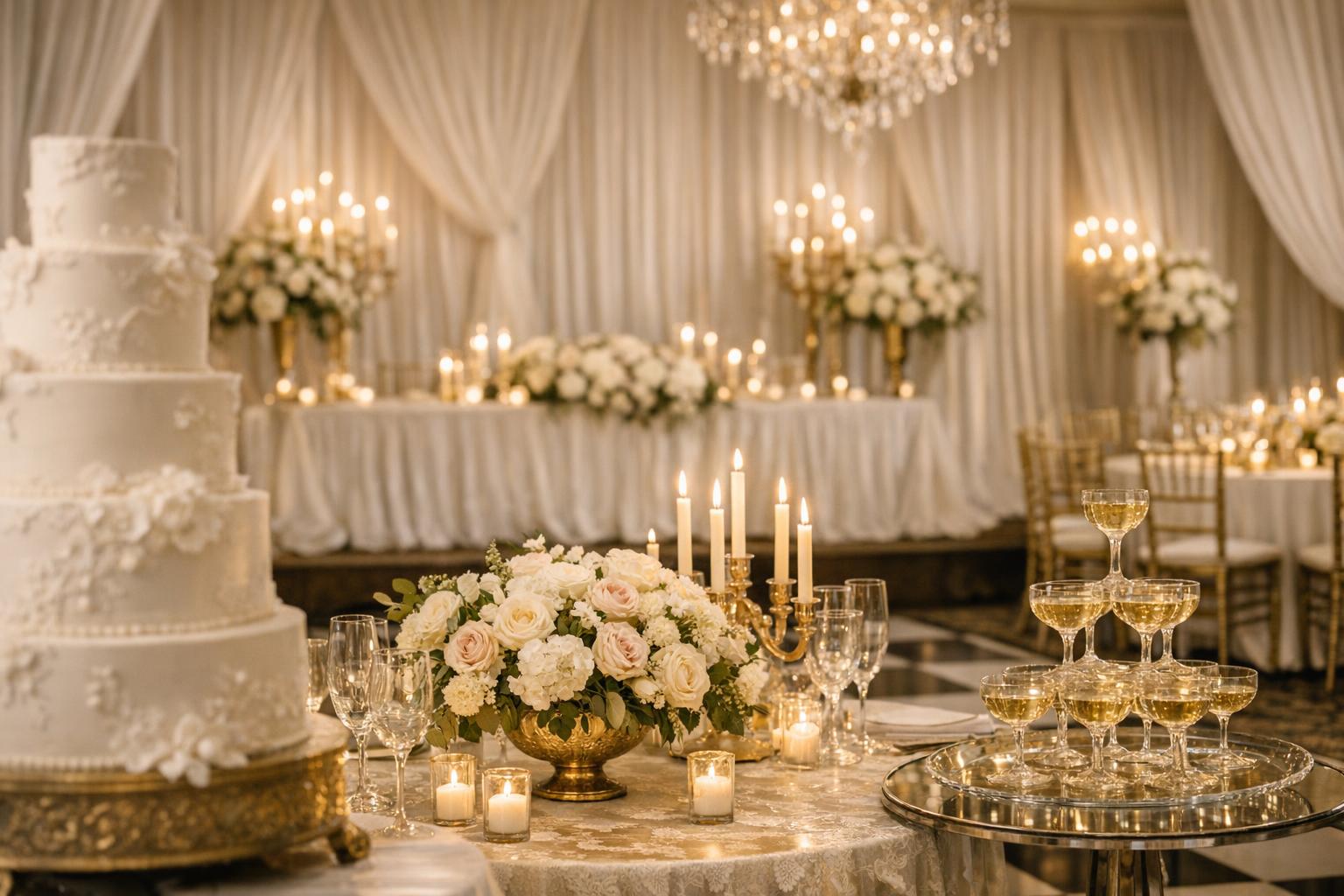
Traditional Wedding Decor: The Ultimate Guide to Timeless Elegance in the U.S.
Traditional wedding decor endures because it’s built on a few reliable ingredients—classic color palettes, refined textures, candlelit ambiance, and thoughtful personalization that feels elevated rather than trendy. Whether you’re hosting a formal ballroom reception, styling a historic venue, or building warmth under a tent, timeless decor choices create a celebration that looks intentional in photos and feels welcoming in the room.
This guide gathers the most consistently loved ideas for traditional wedding decor and organizes them into clear, practical categories: color and texture, centerpieces and tablescapes, lighting and draping, monograms and heirloom details, venue styling, and planning considerations like budgets and timelines. Use it as a menu—choose a few “anchors” (like chandeliers or an ivory-and-gold palette), then layer supporting details that fit your venue and priorities.
What Makes Decor Truly Timeless
Defining traditional wedding decor
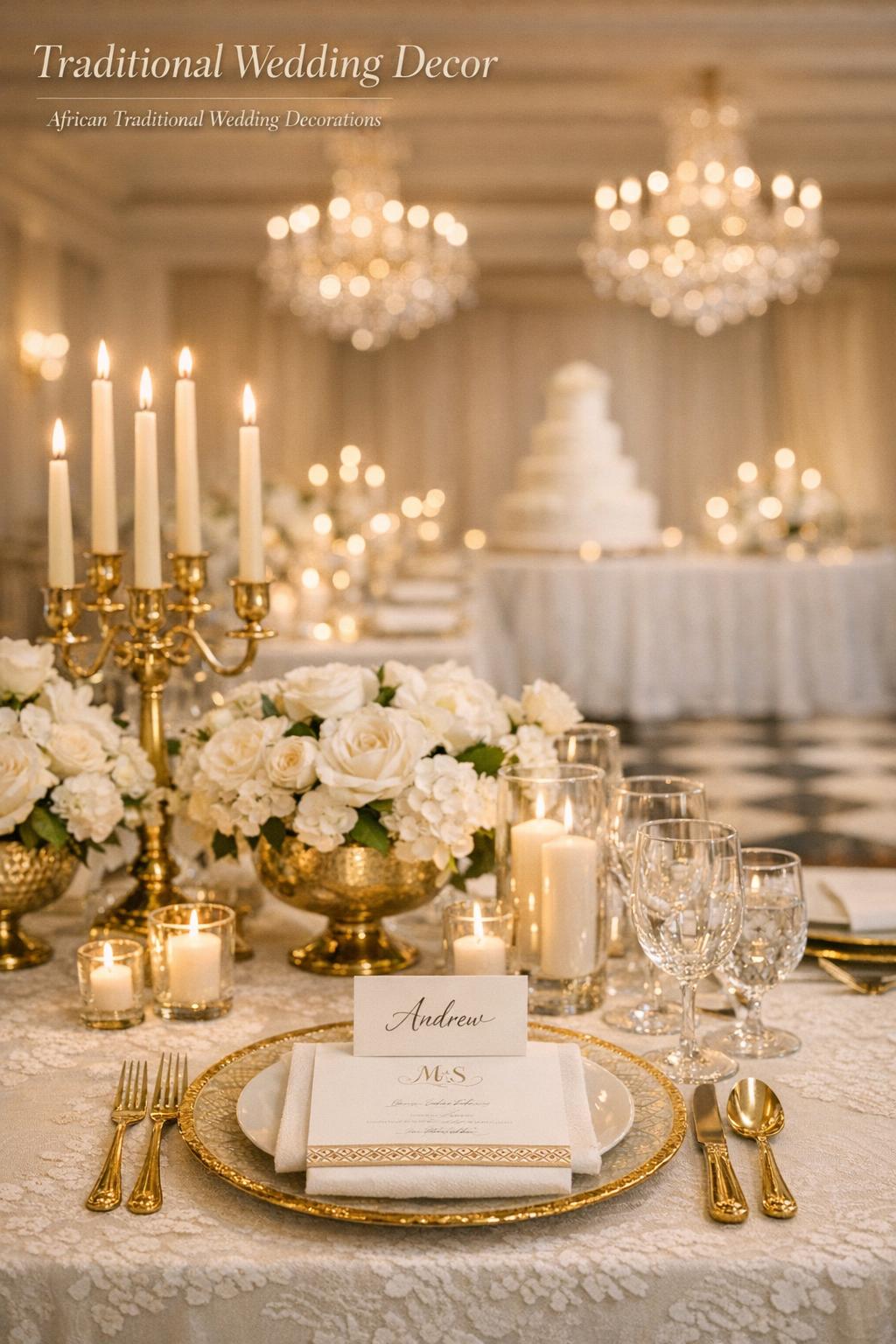
Traditional decor leans into elegance and structure: classic hues, balanced layouts, formal textures, and a sense of symmetry. It often includes familiar “signature” elements—candlelight, crystal accents, tailored linens, floral-forward centerpieces, and refined stationery or calligraphy—used in a cohesive way that feels polished rather than themed.
Core elements that endure: color, texture, and lighting
The most timeless rooms are designed in layers. Color establishes the foundation, texture adds richness, and lighting sets the mood. Traditional wedding decor tends to favor soft neutrals and warm metallics, tactile fabrics (think linen, lace-inspired details, or velvet-like depth), and gentle illumination from chandeliers, candles, and subtle washes that flatter faces and make spaces feel romantic.
Tips: Choose “anchor” details first
To avoid overbuying or mixing too many styles, commit to two or three anchor details that signal “classic” immediately—such as an ivory/champagne/gold palette, crystal or candlelight, and monogrammed touches. Once those anchors are set, every other decision (linens, centerpiece vessels, signage style, even dessert presentation) becomes simpler and more consistent.
Popular Color Palettes and Textures
Ivory, champagne, and gold
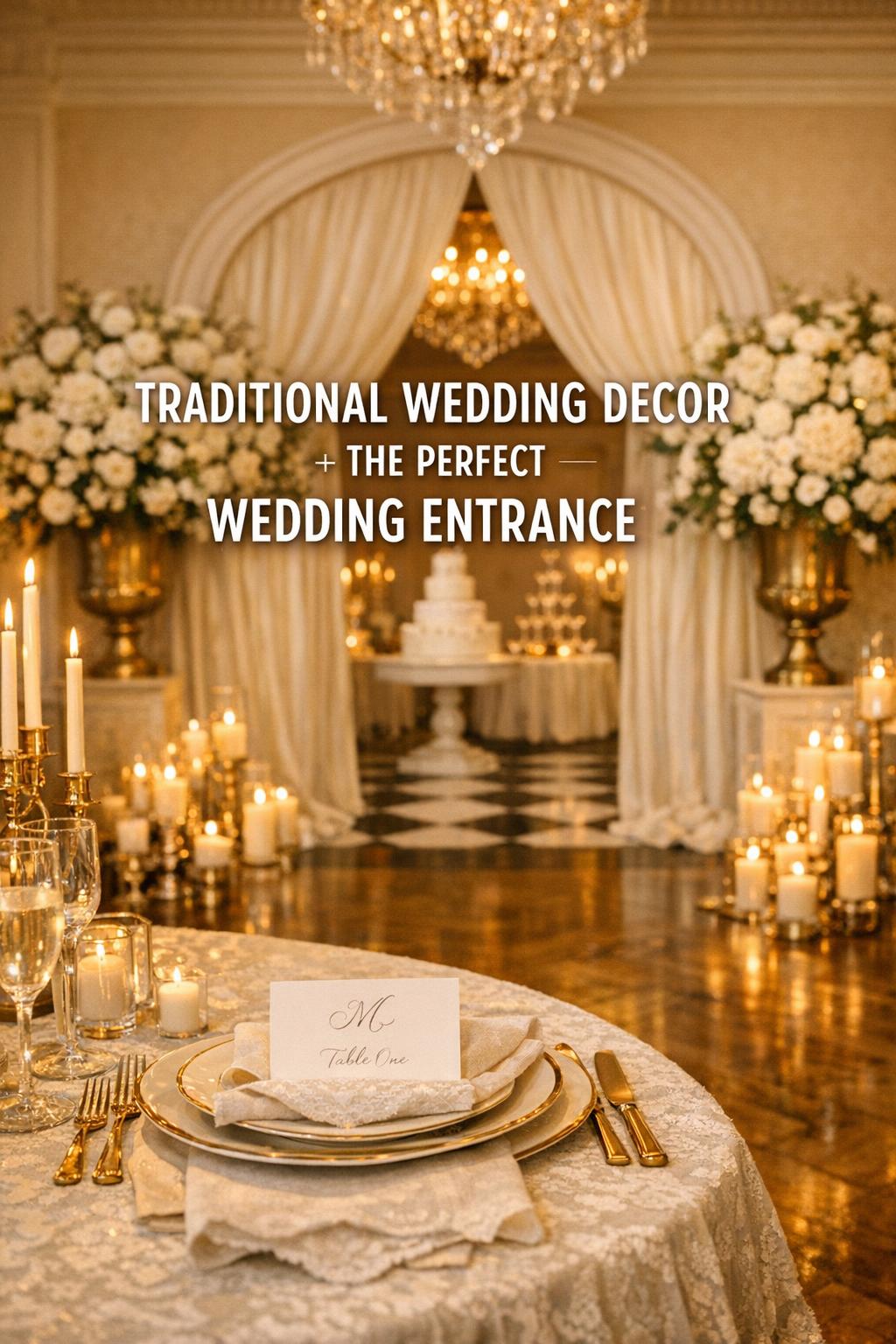
Ivory and gold wedding decor is a classic for a reason: it reads formal, photographs beautifully, and adapts to nearly every venue style. Champagne tones soften bright whites, while gold introduces warmth and celebration. This palette pairs naturally with candlelight, crystal accents, and traditional floral choices, creating a look that feels luxurious without needing bold color.
- Use ivory or champagne as the base (linens, draping, or florals) and gold as a highlight (flatware, frames, candleholders, or monogram details).
- Keep metals consistent: if gold is the lead, repeat it across the room so it feels intentional.
- Build dimension by mixing finishes—matte, brushed, and polished—in small doses rather than relying on one uniform shine.
White-on-white, cream, and warm metallics
White-on-white decor is a timeless approach that can look either minimal or grand depending on scale. Cream and warm metallics help prevent a flat look and add depth without changing the classic feeling. If your venue has ornate architecture, this palette lets the space shine; if your venue is simple, it creates a clean canvas for dramatic lighting or floral volume.
Textures that elevate a traditional palette
Texture is the fastest way to make neutrals feel expensive and intentional. Traditional wedding decor often includes a mix of smooth and tactile surfaces—structured linens, lace-like details, glassware sparkle, and polished or antique-inspired accents. Even when you keep colors restrained, layering textures creates visual interest at every distance: across the room, at each table, and in close-up photos.
Tips: Let one texture do the “talking”
If you’re using dramatic draping or an especially ornate centerpiece style, keep other textures more restrained. Traditional design feels timeless when it’s edited: one statement texture (like ceiling fabric or crystal) supported by simpler linens and consistent metal finishes.
Classic Centerpieces and Tablescapes
Floral-forward centerpieces
Elegant wedding centerpieces often start with florals because they instantly communicate romance and formality. Traditional arrangements tend to prioritize symmetry, fullness, and a balanced silhouette—whether low and lush or tall and architectural. For a timeless effect, focus on proportion: centerpieces should feel scaled to the table and the room, never so small they disappear or so large they block conversation.
To keep floral designs classic, choose vessels that read refined—clear glass, porcelain-inspired shapes, or vintage-style pieces. You can also repeat a single floral “recipe” across the room for cohesion, then vary height or candle placement so the design feels curated rather than identical.
Non-floral focal pieces: candles, crystals, and vintage vessels
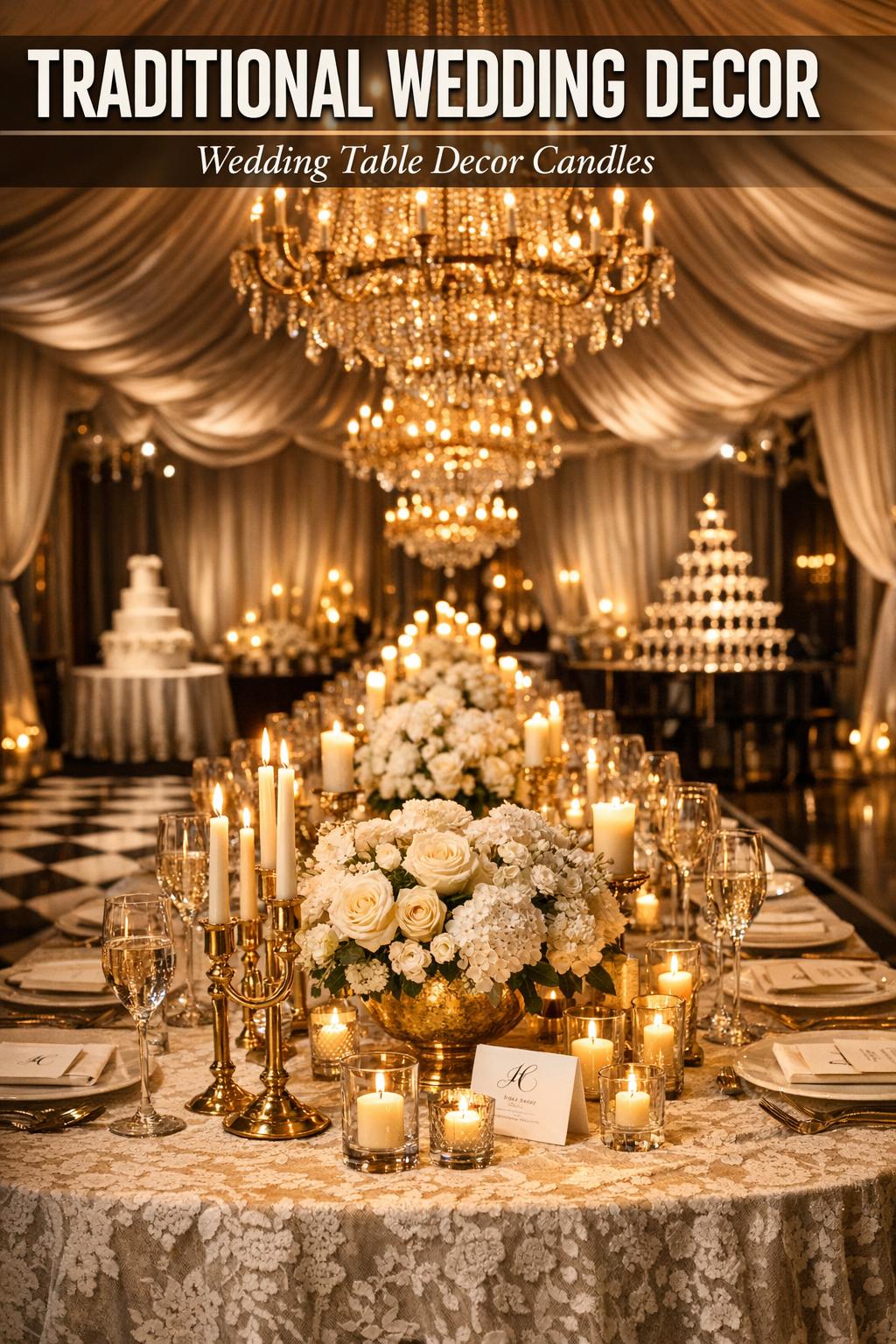
Traditional wedding decor doesn’t require every table to be flower-heavy. Non-floral focal pieces can create an equally formal effect, especially when paired with thoughtful lighting. Candelabras, clusters of tapered candles, crystal accents, and vintage-inspired vessels all deliver that classic, candlelit ambiance associated with traditional receptions.
- Candelabras as centerpieces for instant height and tradition.
- Mixed candle groupings (tapers and pillars) to create a layered glow.
- Crystal accents to catch light and add a refined sparkle.
- Vintage-inspired containers to echo heirloom style without feeling overly themed.
Tablescape design: linens, place settings, and calligraphy
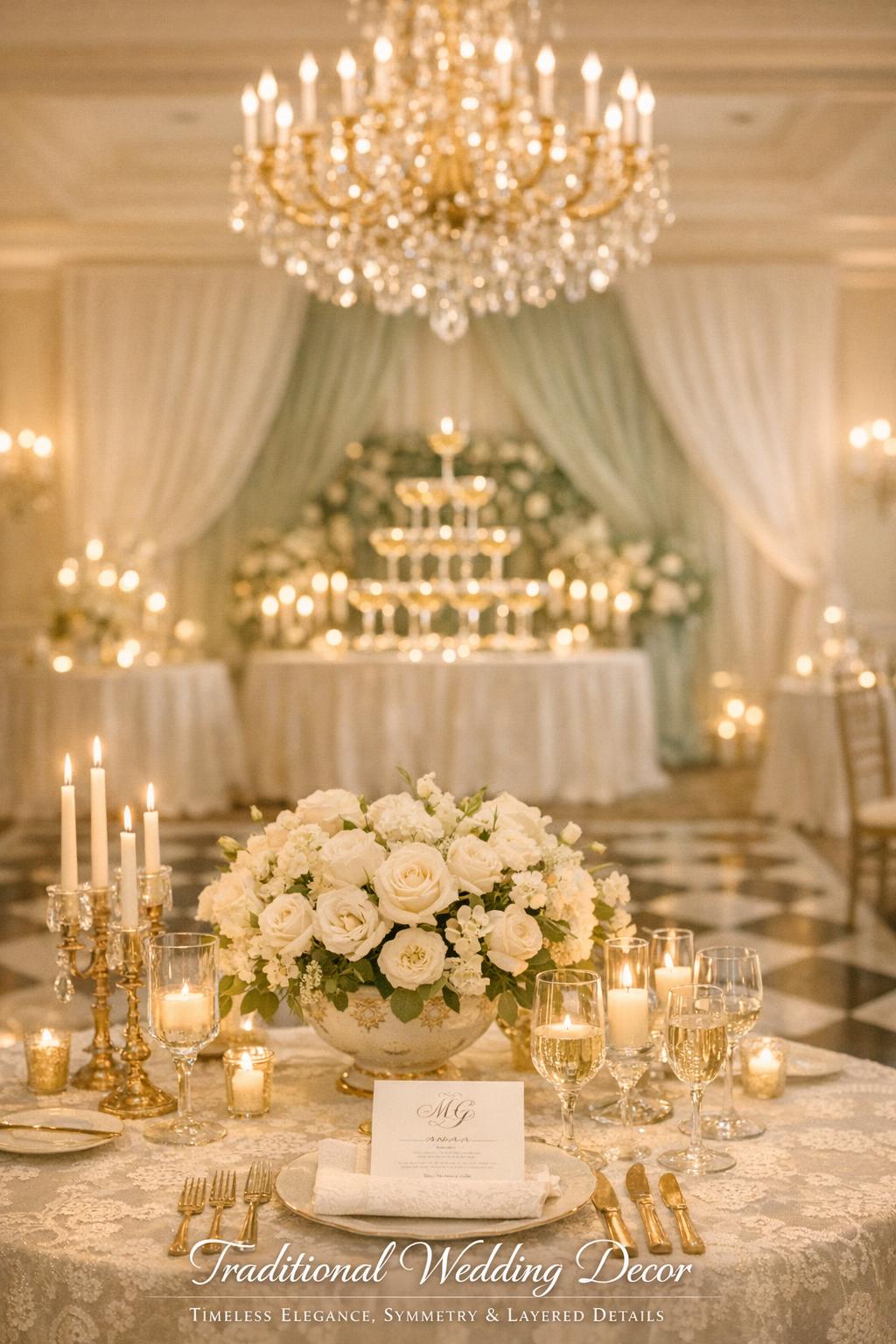
A sophisticated wedding tablescape is where traditional decor becomes tangible for guests. Crisp linens or softly textured cloths set the base, while classic place settings and glassware build shine and structure. Calligraphy place cards and well-designed signage bring a formal note that feels personal, especially when the typography is consistent with invitations and menus.
For a refined look, repeat key motifs: a consistent font style across paper goods, a recurring monogram mark, and a steady metal finish in flatware and candleholders. When these details match, even simple tables feel elevated.
Tips: Balance scale and sightlines
If you love tall centerpieces, offset them with lower elements (like scattered votives or low greenery) so each table has layers without becoming visually heavy. If your guest list includes many tables, a mixed approach—some tall, some low—keeps the room dynamic while staying within a traditional framework.
Lighting That Defines Mood
Chandeliers, candlelight, and soft washes
Lighting is one of the most recognizable signatures of classic wedding ideas. Chandeliers bring instant formality—whether they’re part of the venue’s architecture or added to a tented reception. Candlelight adds romance and depth, and soft lighting washes help the entire space feel warm rather than stark.
For traditional wedding decor, aim for layered lighting: overhead glow for grandeur, table-level candles for intimacy, and gentle ambient light that ties the room together. This layered approach makes décor feel cohesive from the first look to the final dance.
Draping and uplighting for warmth and depth
Draping is a powerful way to transform a venue while staying within a classic aesthetic. Wall draping can soften hard edges or cover distracting backgrounds. Ceiling installations add drama and romance, especially when paired with chandeliers or carefully placed lighting. Uplighting can add warmth and dimension, making neutrals feel rich rather than plain.
- Wall draping to refine the perimeter of the room and create a clean backdrop for photos.
- Ceiling fabric installations to add a formal, immersive feel.
- Lighting integration (chandeliers, pin spots, soft washes) to bring out texture in drape and florals.
- Early planning for logistics, including installation time and venue constraints.
Tips: Treat lighting as decor, not an afterthought
Many traditional details—crystal, metallics, glassware, and candles—depend on light to look their best. If you’re investing in any reflective elements, plan lighting early so those pieces actually sparkle. Even modest adjustments to lighting placement can shift a room from “nice” to “grand” without changing your core design.
Personalization Within a Timeless Framework
Monograms, family heirlooms, and refined signage
Monogram decor is one of the most traditional ways to personalize a wedding without making it feel trendy. A monogram can appear on dance floors, signage, stationery, napkins, or subtle table details. The key is restraint: repeat the same monogram mark a few times in meaningful locations rather than placing it everywhere.
Family heirlooms also fit beautifully into traditional wedding decor. Vintage frames, meaningful objects, or inherited pieces can be incorporated as accents in welcome areas, lounge moments, or tablescape styling. When heirloom elements are paired with consistent colors and refined materials, they feel intentional and elevated.
Ceremony and reception flow with classic cues
Traditional weddings often feel seamless because the decor supports a clear flow: a composed ceremony setting, a welcoming transition, and a reception layout that feels structured and easy to navigate. Classic cues—coordinated signage, consistent floral styling, and repeated candlelight—help guests feel oriented while reinforcing the overall design.
Tips: Personal doesn’t have to mean casual
If you want the warmth of personal touches but prefer a formal look, focus on quality and consistency. A simple escort display with refined calligraphy and a cohesive palette can feel more traditional than something elaborate that introduces new colors, fonts, or materials.
Venue and Space Considerations
Adapting traditional decor to different venue types
Traditional venue styling starts by respecting the architecture. In a historic mansion, you may need only a few classic elements—florals, candlelight, and refined linens—to complement the character already present. In a ballroom, the scale often asks for statement lighting, fuller centerpieces, and a layout that feels formal. In a tented reception, traditional decor can be created through draping, chandeliers, and layered tablescapes that make the space feel intentionally designed.
The venue type should guide where you spend: in ornate spaces, over-decorating can compete with the room; in simpler spaces, lighting and fabric transformations can do the most work. A timeless approach is less about adding more and more, and more about placing the right “classic” elements where guests will see and feel them.
Traditional reception layouts and sightlines
Traditional reception layouts are often structured for clarity and formality—centered focal points, balanced table groupings, and intentional pathways. Sightlines matter: guests should be able to see key moments (entrances, toasts, first dance) and navigate easily. Decor choices like tall centerpieces, large installations, or draping should support—not obstruct—the way the room functions.
- Identify the room’s “hero” areas: head table, dance floor, entry, and bar.
- Place the most classic statement details where they’ll be photographed and experienced most.
- Keep pathways clear and ensure tall designs don’t block guest interaction.
Tips: Use the venue’s built-in elegance
If your venue already has classic features—chandeliers, grand staircases, formal landscaping, ornate trim—treat those as part of your decor plan. Traditional wedding decor looks strongest when it feels in conversation with the space, not layered on top of it with competing styles.
Signature Traditional Decor Ideas (Pick-and-Choose Menu)
If you’re building a traditional look from scratch, these are the most recognizable, time-tested elements. You don’t need all of them—select the ones that match your venue and priorities, then repeat them in small ways for consistency.
- Crystal chandeliers (venue-installed or added) to establish formal ambiance.
- Candlelit tables with tapers, votives, or candelabras for a classic glow.
- Monogram details on signage, dance floor moments, or stationery.
- A checkered dance floor for a classic reception statement that feels celebratory.
- Traditional reception layouts that emphasize symmetry and clear guest flow.
- Tiered white wedding cakes as a timeless focal point for dessert.
- Champagne towers as a classic, festive moment that doubles as decor.
- Calligraphy place cards and refined paper goods to elevate the tablescape.
- Garden-inspired decor cues (natural, romantic styling) within a polished palette.
- Vintage-inspired accents like antique-style vessels or framed details for warmth.
Tips: Repeat, don’t reinvent
Traditional design feels cohesive when the same cues appear throughout the day. If you’re using gold accents, keep them consistent across candleholders, flatware, signage frames, and any monogram moment. If your look is candlelit and romantic, echo that warmth from cocktail hour through the reception rather than changing mood mid-event.
Real-World Inspiration: How Traditional Decor Shifts from Classic to Dramatic
Elegant, garden-inspired décor with refined tableware details
One timeless direction is a garden-inspired approach that still reads formal: delicate motifs, elevated tableware, and curated tablescapes that feel intentional. This style can lean classic without being heavy—especially when the palette stays soft and the details are chosen with care. The result is a room that feels sophisticated, with close-up details that reward guests at the table.
Classic-to-dramatic draping transformations
Draping allows you to keep traditional fundamentals (soft neutrals, candlelight, crystal accents) while increasing the drama of the space. Wall draping can make a ballroom feel more tailored; ceiling fabric can make a tent feel like a formal room. When lighting is integrated thoughtfully, draping becomes more than fabric—it becomes atmosphere.
High-impact tablescapes: minimalist to maximalist within a traditional framework
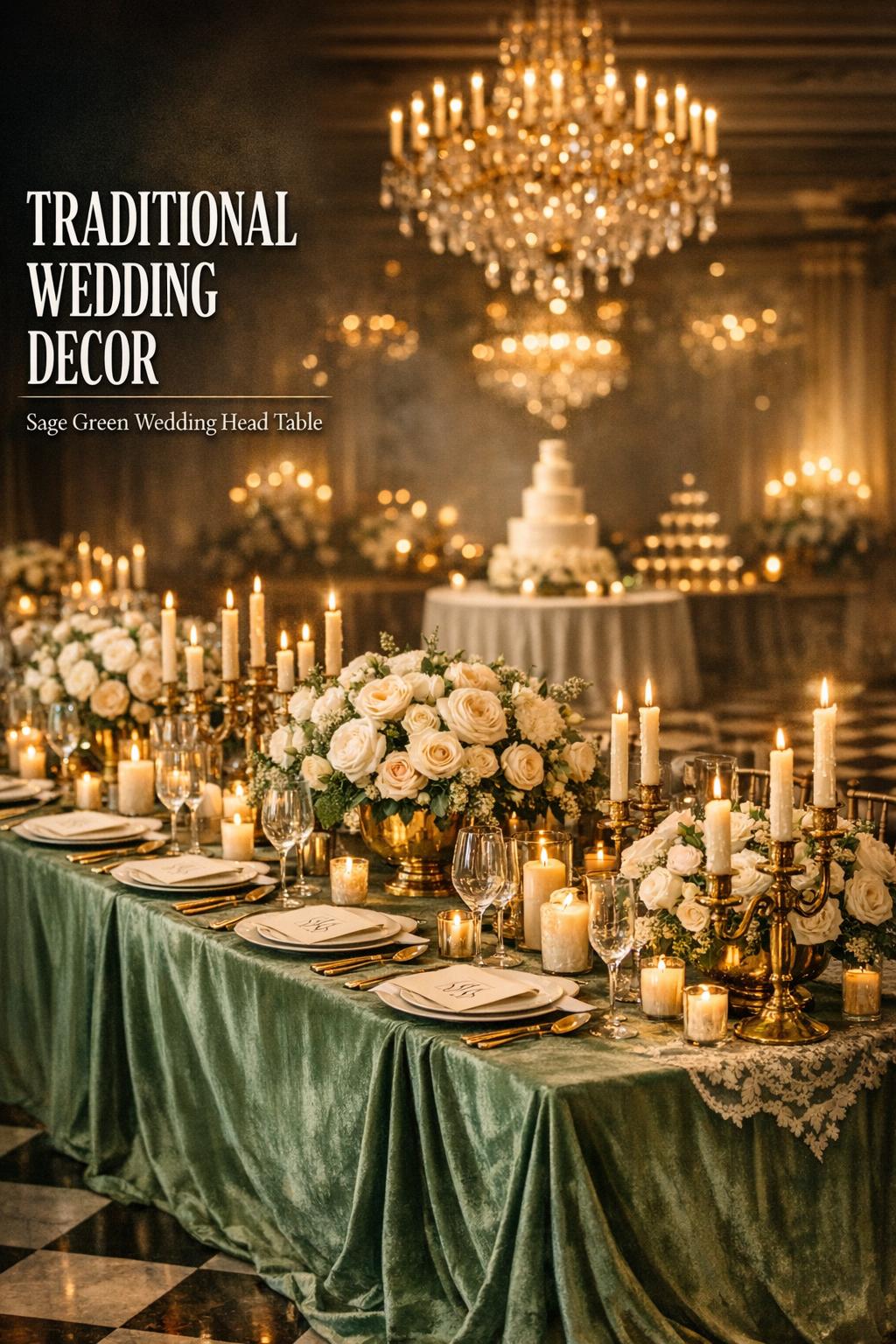
Traditional tablescapes can be tailored to your personality by adjusting scale. A minimal classic tablescape might focus on pristine linens, refined place settings, and candlelight with small floral accents. A maximalist classic tablescape might layer florals, crystals, and mixed candle heights for a lush effect. Both can read timeless if the palette is consistent and the materials feel elevated.
Budget, Timelines, and Vendor Coordination
Where traditional decor typically delivers the most impact
Traditional wedding decor often looks most “expensive” when a few key areas are prioritized: lighting (especially chandeliers and candlelight), tablescapes guests experience up close, and one or two signature moments like a dramatic draping installation, a monogram detail, or a statement dance floor. When those areas are cohesive, the entire event feels elevated—even if other zones are simpler.
Practical timeline: a phased approach
A traditional look benefits from early decisions because many classic elements require coordination—lighting, draping, centerpieces, rentals, paper goods, and venue rules. The clearest approach is to plan in phases so design choices are locked before production details begin.
- 120 days out: confirm your overall design direction (palette, level of formality, key anchors like chandeliers, draping, monogram), and begin shortlisting key vendors tied to decor.
- 90 days out: finalize centerpiece approach and tablescape components (linens, place settings, candles, paper goods style) so rentals and quantities can be confirmed.
- 60 days out: confirm lighting and any draped venue decor ideas with installation needs, venue constraints, and timing.
- 30 days out: finalize decor placement plans for ceremony, cocktail hour, and reception; confirm delivery windows and setup responsibilities.
- Install/test window: walk through key moments (lighting levels, sightlines, signage placement) so the design performs well in real conditions.
Vendor coordination tips for a classic, seamless result
Traditional reception styling often involves multiple partners—floral design, rentals, lighting, stationery, and sometimes draping specialists. Coordination keeps the final room cohesive: the candleholders should match the metal in flatware, the paper goods should reflect the overall tone, and the lighting should enhance florals and crystal rather than flatten them.
Tips: Share one clear design reference set (palette notes, textures, and a few must-have classic elements) with every vendor. Confirm who is responsible for setup of each category—candles, place cards, signage, dessert styling—so no detail is assumed and missed. A traditional look relies on completeness: when the small details are finished, the whole room reads as intentional.
Sustainable Approaches to Traditional Wedding Decor
Timeless decor naturally supports a more sustainable mindset because it favors reusable, long-lasting pieces over novelty. Traditional elements like candleholders, crystal accents, classic linens, and vintage-inspired vessels can be sourced with reusability in mind, and many details can be selected to reduce waste while maintaining a formal aesthetic.
Reusable decor that still feels formal
Traditional decor thrives on items that can be used again: neutral linens, classic candleholders, sturdy signage frames, and monogram elements that can become keepsakes. When your core palette is ivory, champagne, white-on-white, and warm metallics, items are easier to repurpose across events or keep for future home use.
Upcycled and vintage-inspired pieces as timeless accents
Antique decorative pieces and vintage-inspired wedding decor can create a sense of history without requiring constant new purchases. Thoughtfully chosen vintage vessels or framed details blend naturally into a traditional look, especially when balanced with clean linens and consistent metals.
Tips: Make sustainability invisible (in the best way)
The most elegant sustainable approach is one guests don’t notice as a separate “theme.” Choose classic pieces with longevity, minimize one-time-use decor where possible, and focus spending on timeless anchors—lighting, refined tablescapes, and a cohesive palette—so the overall experience feels elevated and complete.
Resources and Next Steps
Your traditional wedding decor checklist (starter version)
Use this starter checklist to ensure you cover the classic categories that make a traditional wedding feel complete. You can expand it based on your venue and how dramatic you want the transformation to be.
- Palette: ivory/champagne/gold or white-on-white with warm metallic accents
- Linens: base linen choice plus one texture accent (runner, overlay, or napkin)
- Centerpieces: floral-forward, candle-forward, or a mixed plan with consistent vessels
- Candlelight plan: tapers, votives, candelabras, and responsibilities for setup
- Lighting: chandeliers, soft washes, and any uplighting to add depth
- Draping: wall or ceiling installations where the venue needs refinement or drama
- Paper goods: calligraphy place cards, menus, and signage style consistency
- Personalization: monogram placements and any heirloom details
- Reception moments: dance floor statement, cake presentation, champagne tower (if desired)
Tips: Build a “starter moodboard” before shopping
Before you commit to rentals or décor purchases, assemble a simple reference set: your palette, one or two texture notes, your lighting direction (candlelit, chandelier-forward, draped and dramatic), and two tablescape images worth emulating in spirit. This helps every choice—vessels, linens, signage, and dessert styling—align with the same traditional story.
FAQ
What is traditional wedding decor?
Traditional wedding decor is a timeless, formal-leaning style built around classic color palettes (often ivory, champagne, white, and warm metallics), refined textures, balanced layouts, and mood-setting lighting like chandeliers and candlelight, with elegant details such as monograms and calligraphy.
What colors are most popular for a traditional wedding aesthetic?
Traditional weddings commonly use ivory, champagne, and gold, as well as white-on-white and cream paired with warm metallics, because these combinations look elegant across venues and photograph with a soft, classic finish.
How can I make traditional wedding decor feel more dramatic without losing the classic look?
Add drama through scale and atmosphere rather than new themes—ceiling or wall draping, chandelier moments, layered candlelight, and lighting washes can transform a venue while keeping your palette and materials classic.
What are the most timeless centerpiece ideas?
Timeless centerpieces include floral-forward arrangements in refined vessels, candle-forward designs with candelabras or grouped tapers, and mixed designs that combine candles, crystal accents, and subtle florals for a balanced, elegant tablescape.
How do I incorporate monograms without overdoing it?
Choose one monogram design and repeat it in a few high-impact places—such as a key sign, a dance floor moment, or select paper goods—so it feels intentional and classic rather than scattered across every surface.
How far in advance should I plan my decor?
Start early by confirming your palette and anchor elements first, then finalize centerpieces and tablescapes well before the final month so lighting, draping, rentals, and setup responsibilities can be coordinated smoothly.
Can traditional wedding decor be sustainable?
Yes—traditional decor often relies on reusable, long-lasting pieces like classic linens, candleholders, crystal accents, and vintage-inspired items, making it well-suited to reducing waste while maintaining a formal, timeless look.
What decor choices make the biggest impact for guests?
The most noticeable elements tend to be lighting (chandeliers and candlelight), cohesive tablescapes (linens, place settings, and centerpieces), and one signature moment like draping, a monogram feature, or a statement dance floor that anchors the room.
How do I adapt traditional decor to different venues like ballrooms, historic spaces, or tents?
Let the venue guide your emphasis: ornate venues often need fewer additions beyond florals and candlelight, ballrooms typically benefit from statement lighting and structured layouts, and tents often rely on draping plus chandeliers and layered tablescapes to create a formal, finished atmosphere.
Leave a Reply