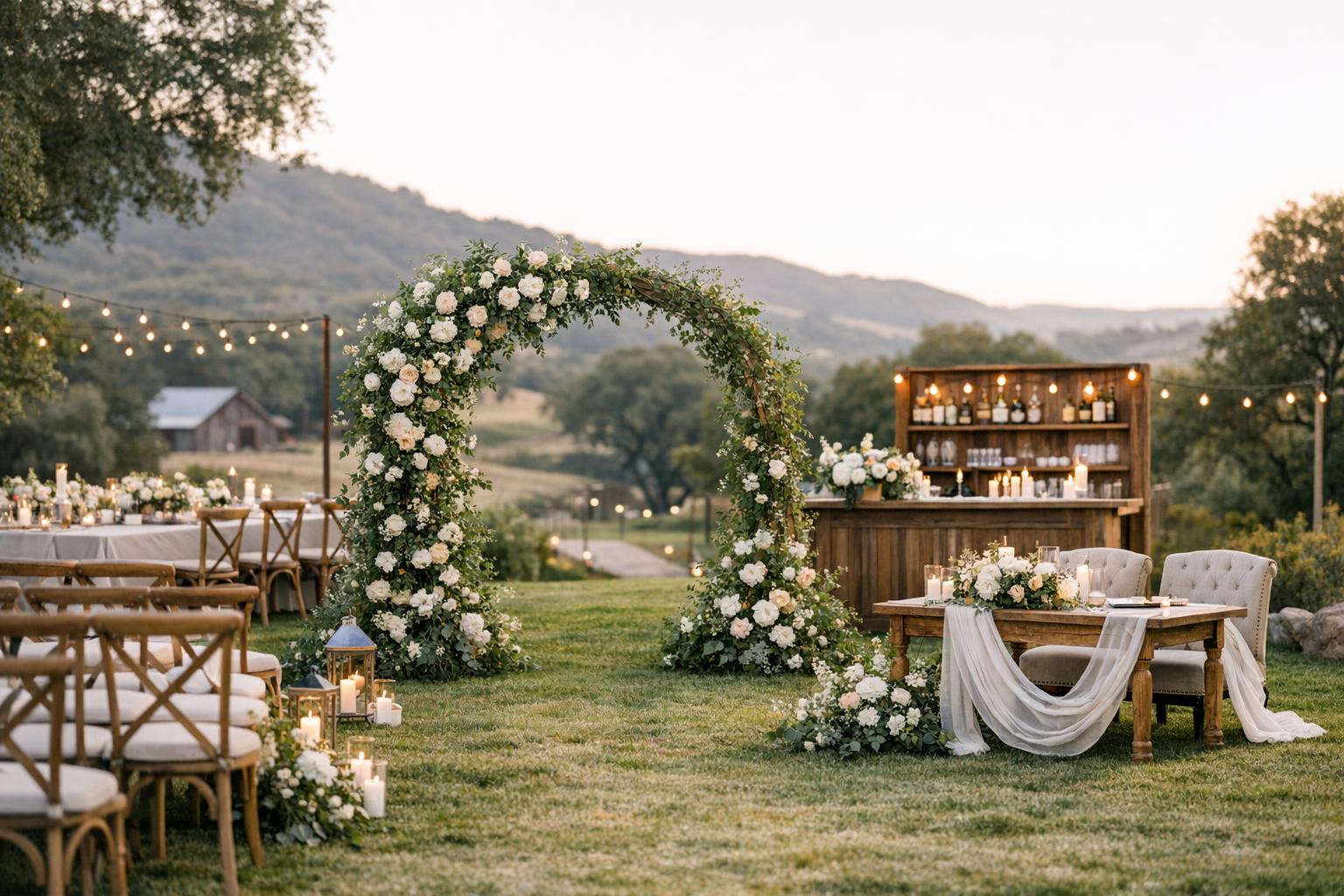
Outdoor Wedding Decorations: A Complete Guide to Styling Your Ceremony and Reception Outside
Outdoor wedding decorations can transform an open-air space into a ceremony and reception that feels intentional, welcoming, and unforgettable. The challenge is that “outdoor” can mean anything from a backyard to a wide-open field, and the best decorative choices are the ones that work with your setting rather than fighting it. This guide focuses on practical, flexible ideas you can adapt to your location, style, and budget—so your outdoor wedding looks cohesive from the moment guests arrive to the final send-off.
Because outdoor celebrations come with variables you don’t face indoors—light changes, wind, uneven ground, and weather—this article emphasizes décor approaches that are easy to install, easy to secure, and visually impactful at multiple distances (close-up for photos and far away for guest sightlines). You’ll find multiple individual ideas for ceremony décor, reception styling, table details, lighting, signage, florals, and finishing touches, along with tips to keep everything looking polished outside.
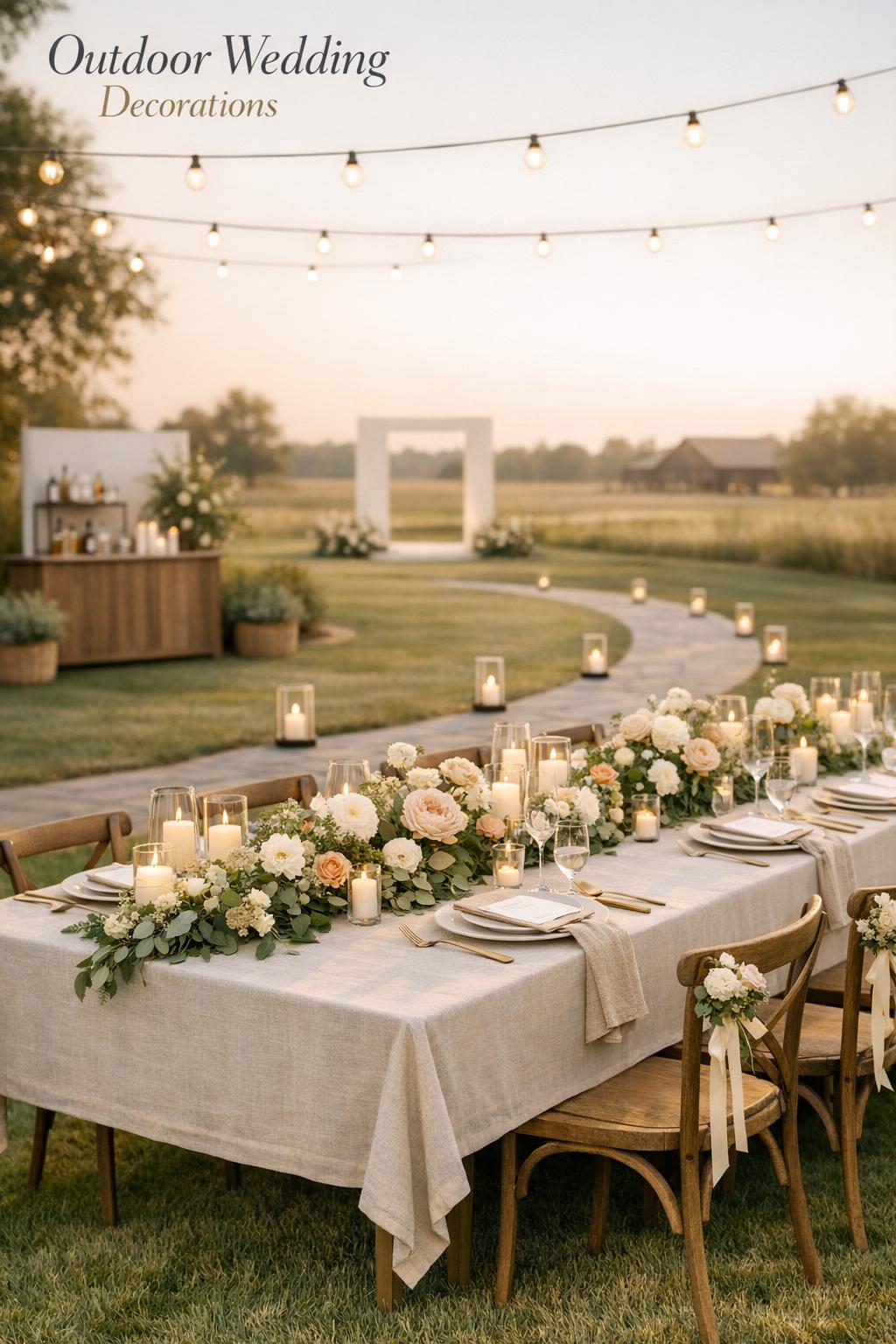
Start With the Space: How to Plan Decorations Around an Outdoor Venue
Before choosing specific pieces, decide how you want guests to move through the space. Outdoor décor works best when it supports a clear flow: arrival, ceremony seating, cocktail area, reception, and exits. When your décor is planned in “zones,” it feels more immersive and requires fewer items because each area is designed to make a statement.
Map your key zones
Most outdoor weddings benefit from a simple layout plan. Even a rough sketch helps you identify where decorations will matter most—especially places guests will see repeatedly or where photos will be taken.
- Arrival and welcome point
- Ceremony focal point (altar, arch, or backdrop)
- Aisle and seating area
- Cocktail hour zone
- Reception dining zone
- Dancing and lounge area
- Restrooms and pathways
- Exit and send-off spot
Work with what the outdoors already gives you
Outdoor spaces often have built-in “decor,” such as trees, water features, fences, barns, gardens, or skyline views. The easiest way to elevate an outdoor wedding is to frame these features rather than cover them up. Choose décor that draws attention to the best angles and gently disguises anything distracting.
Tips: Walk the venue at the same time of day as your ceremony and reception. Take photos facing multiple directions so you can see where the sun falls and which backdrops look best on camera. Those photos will guide where you spend your decorating budget for maximum impact.
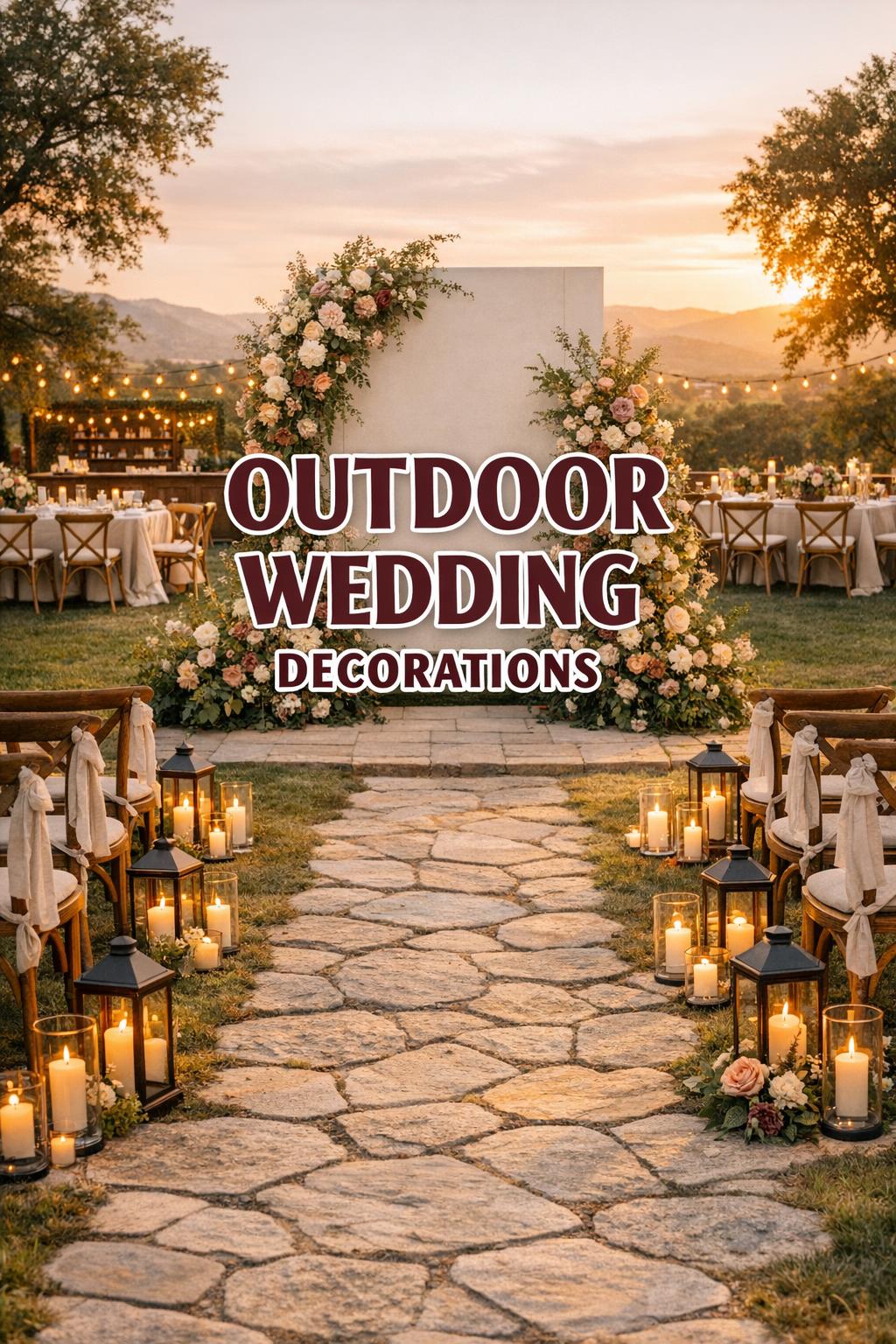
Ceremony Decorations That Create a Focal Point
In an outdoor ceremony, the focal point is everything. Without walls, guests need a clear visual anchor. A strong focal area makes the ceremony feel intentional and helps your photos look framed rather than “floating” in a wide landscape.
Arches, arbors, and backdrops
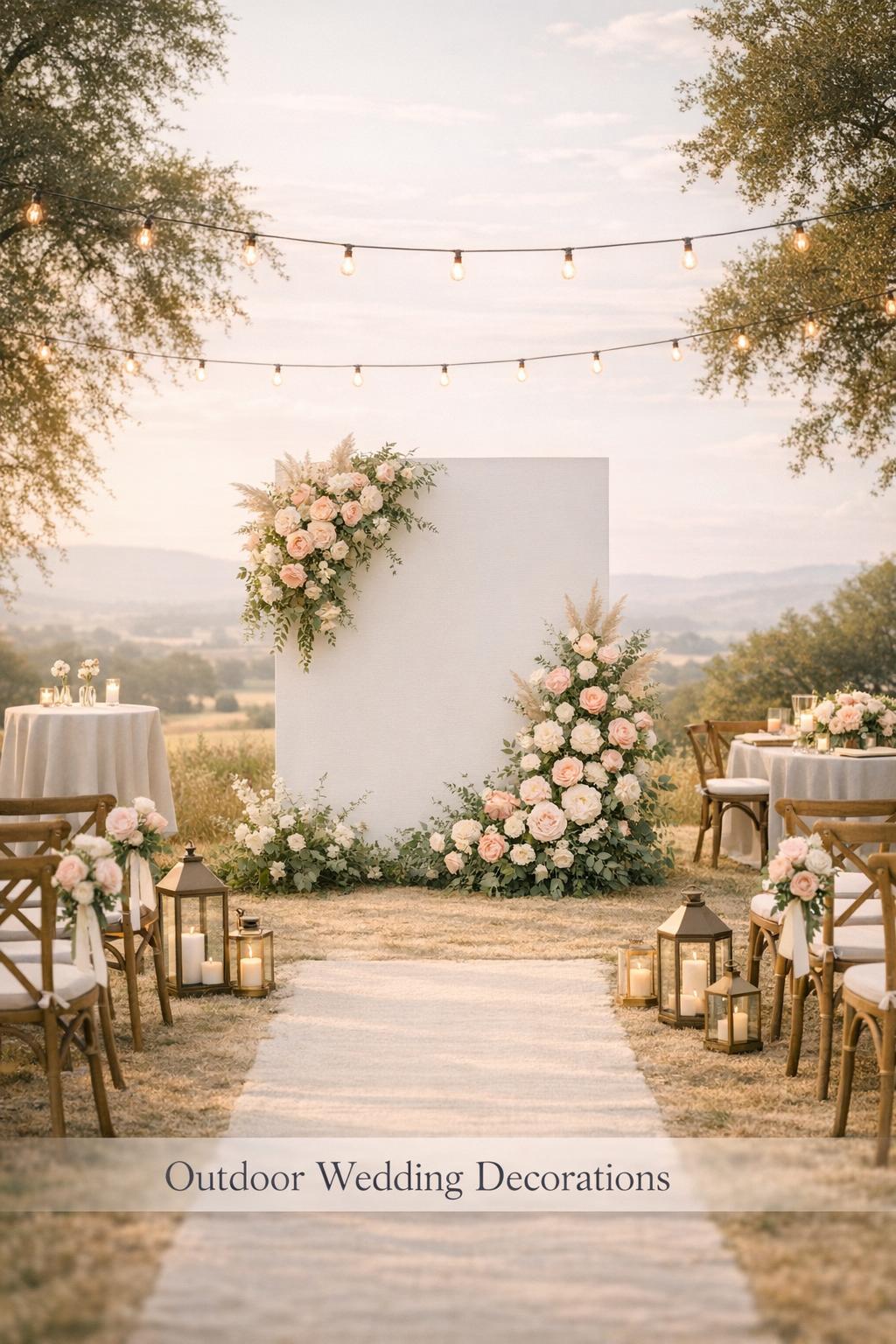
An arch or backdrop signals where the ceremony happens and creates a photo-ready frame. The best option depends on your setting: a simple structure can look elegant in a dramatic landscape, while a more detailed design can add romance to a plain lawn or backyard.
- Minimal arch with fabric draping for movement
- Floral clusters placed asymmetrically for a modern look
- Greenery-forward design for an organic, outdoor feel
- Freestanding panels for a clean silhouette against nature
- Grounded installations (arrangements at the base) for stability outdoors
Aisle décor that reads from a distance
Outdoor aisles can disappear visually, especially on grass or sand. Aisle décor helps guests understand where to look and improves the overall composition of ceremony photos.
- Markers on every other chair for a streamlined look
- Grouped arrangements at the aisle entrance and midway points
- Lantern-style accents along the aisle for evening ceremonies
- Petals or natural elements in a defined line for subtle guidance
Tips: If wind is likely, prioritize heavier décor near the ground and avoid lightweight items that can blow into the aisle. If you love delicate details (like small ribbons), use them sparingly and anchor them securely.
Ceremony seating and small styling touches
Seating is an opportunity to make outdoor ceremonies feel comfortable and cohesive. Think of décor as both style and function: guests should feel welcomed, protected from sun if needed, and oriented toward the ceremony focal point.
- Reserved-row signs or simple chair accents for immediate family
- Programs displayed in a basket or on a small welcome table
- Umbrella basket or fan display for warm-weather ceremonies
- A grounded “ceremony moment” vignette near the entrance
Reception Decorations That Feel Elevated Outdoors
Outdoor receptions are memorable because they feel open and expansive—but that same openness can make décor look sparse if it’s not scaled properly. Focus on a few large, high-impact elements and then layer in smaller details at tables and key gathering points.
Define the dining area
Whether you’re using a tent, a patio, or an open lawn, your dining area should feel “contained” so it reads as a deliberate event space. Defining the edges helps guests feel oriented and encourages a warm, intimate atmosphere.
- Perimeter lighting to outline the reception footprint
- A central feature (like a dance floor or statement table placement)
- Lounge groupings that create “rooms” outdoors
- Consistent table linens or runners to unify mixed furniture
Statement installations for outdoor impact
Outdoor spaces benefit from décor that can be seen across a distance. A statement installation gives your reception an unmistakable focal point and can double as a photo backdrop.
- A decorated entry to the reception area
- A feature behind the sweetheart table or head table
- A styled bar front or bar backdrop
- A dedicated photo moment area with coordinated styling
Tips: Choose one main “wow” moment for the reception and place it where most guests will see it. In outdoor layouts, a statement piece tucked in a corner can be missed, so prioritize visibility and lighting.
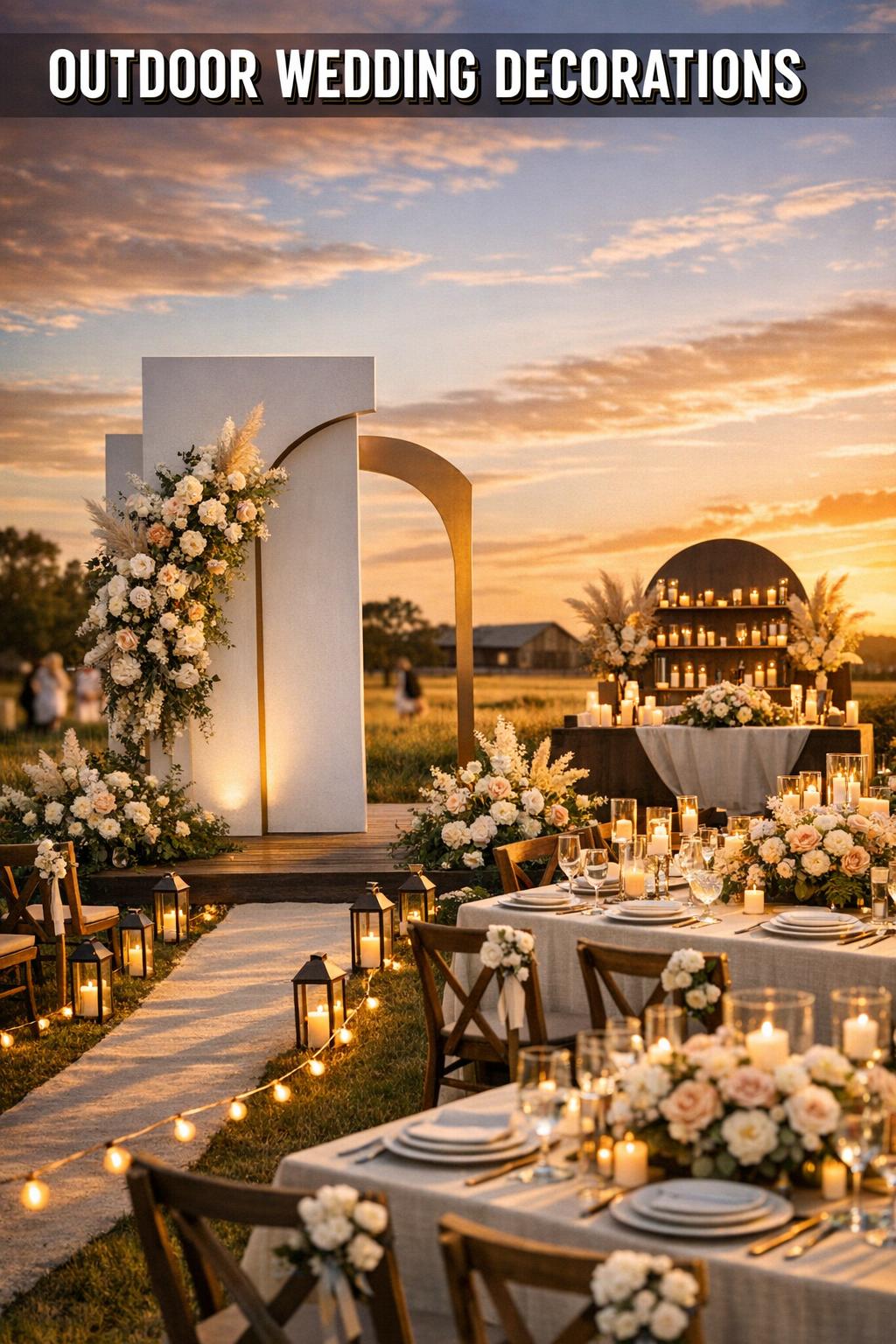
Table Decorations for Outdoor Weddings
Tables are where guests spend a lot of time, so table décor carries a lot of the design weight. Outdoors, the best table designs balance beauty with stability—nothing should topple easily, and guests should still be able to talk across the table comfortably.
Centerpieces that work outside
Outdoor centerpieces should be proportionate and secure. Very tall or very light arrangements can become a hassle in wind. Consider designs that are either low and lush or substantial enough to stay put.
- Low arrangements that keep sightlines open
- Compote-style centerpieces with a sturdy base
- Bud vases grouped together for flexible styling
- Greenery runners with occasional floral accents
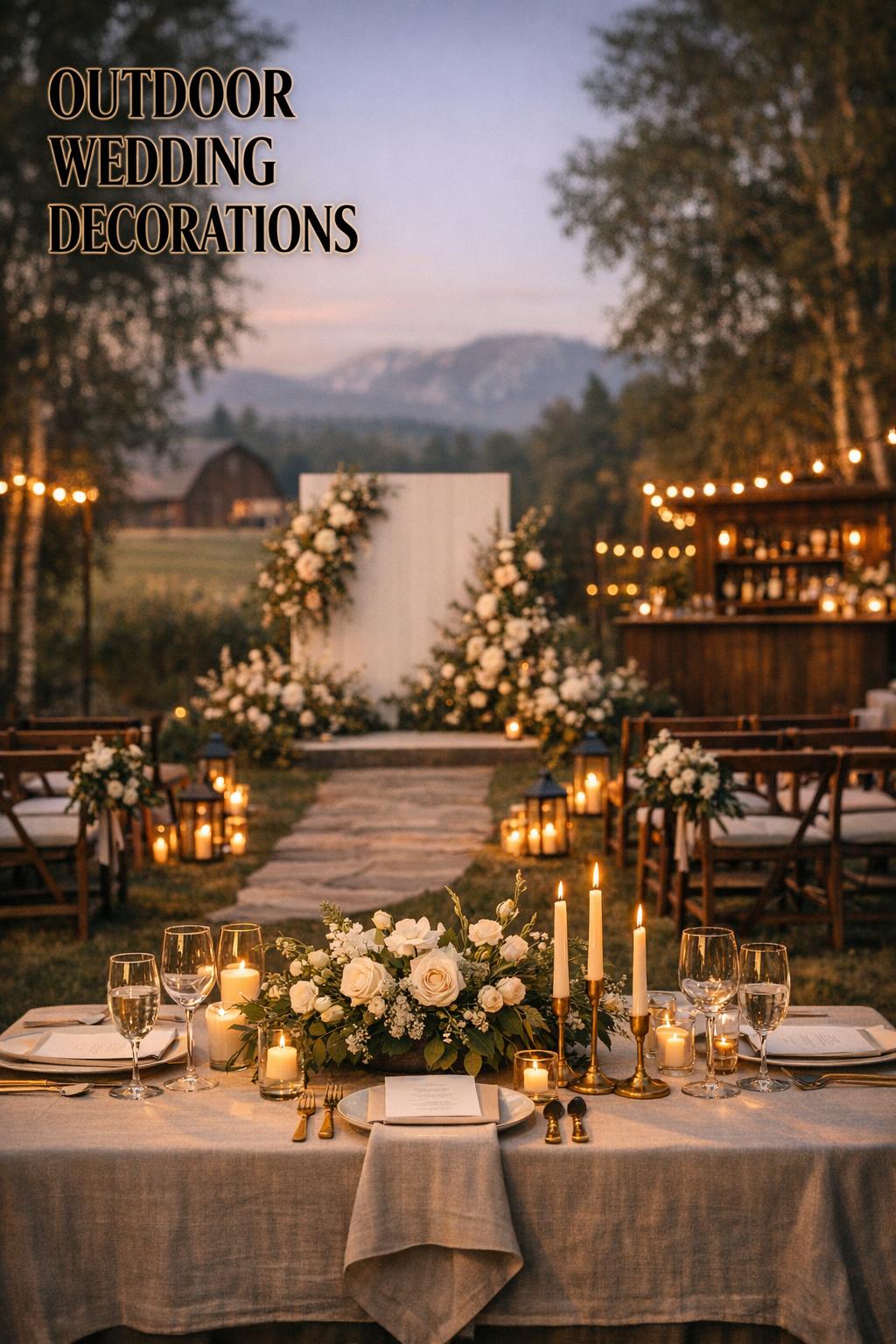
- Lanterns paired with grounded florals for evening events
Linens, runners, and place settings
In outdoor settings, linens and place settings do more than add color—they help define the level of formality. Clean, consistent table styling also makes open-air dining feel curated rather than casual.
- Table runners for a layered look without full linen coverage
- Place cards that won’t blow away (heavier stock or holders)
- Napkins that add contrast and texture
- Simple menus placed at each setting or displayed once per table
Tips: If you’re expecting any breeze, plan for discreet weights or holders for paper goods. Outdoor weddings are beautiful, but lightweight stationery can become clutter quickly if it’s not secured.
Small details that make tables feel finished
When the venue is open air, “finished” styling often comes from small repeating details. Even modest additions can look elevated when they’re consistent across every table.
- Uniform candle groupings (real or enclosed)
- Consistent table numbers with a sturdy base
- Texture elements like woven chargers or simple accents
- Coordinated glassware or a single signature color detail
Lighting Ideas That Transform Outdoor Weddings After Sunset
Lighting is one of the most important outdoor wedding decorations because it changes everything after dark. Outdoors, lighting isn’t just decorative—it’s what makes the celebration feel warm, safe, and camera-ready.
Overhead lighting for ambiance
Overhead lighting can define the reception area and create that iconic outdoor glow. It also helps guests feel like they’re in a dedicated venue space, not just an open field.
- String lights to create a canopy effect
- Light strands outlining dining and dance zones
- Mixed lighting layers for depth rather than one bright source
Pathway and perimeter lighting
Guests should be able to navigate easily once the sun goes down. Pathway lighting also helps your décor feel intentional from one zone to the next, especially between ceremony and reception locations.
- Lantern-style accents along key walkways
- Lighting at steps, uneven ground, or transitions
- Gentle perimeter lighting to define boundaries
Tips: Don’t rely on a single lighting type. Layering soft overhead lighting with grounded pathway lights creates both romance and functionality, and it helps your photographer capture better images throughout the evening.
Entrance, Welcome, and Signage Decorations
Outdoor weddings often involve more walking and more “in-between” moments than indoor venues. Thoughtful entrance décor and signage make the experience smoother for guests and help your event feel well-organized.
Welcome area décor
A welcome moment is a simple way to set the tone. It can be minimal, but it should look deliberate and be placed where guests naturally pause.
- A welcome sign anchored so it won’t tip
- A small table with ceremony programs or essentials
- A cohesive arrangement that matches your overall style
Directional signs that look good and work well
Clear directions reduce confusion, especially in larger outdoor spaces. The key is to keep signage readable at a glance and consistent with your décor style.
- Ceremony and reception arrows at key intersections
- Restroom signs placed early, not only at the destination
- Parking guidance at the entry point
Tips: If you’re using multiple signs, keep the design consistent (same colors, fonts, and materials). Outdoors, mismatched signage can look cluttered quickly because there are fewer architectural elements to visually “contain” it.
Decorating the Bar, Food, and Drink Areas Outdoors
The bar and food areas naturally attract guests, which makes them a smart place to invest in décor. Outdoor setups often look better with a clear “destination” feel—something that signals where to line up and where to gather.
Bar décor that doubles as a photo moment
A styled bar front or backdrop can become one of the most photographed spots of the night. Even a simple bar looks elevated with a cohesive background element.
- A backdrop behind the bar area to define the space
- Simple floral or greenery accents placed at corners
- A signature drink sign anchored on an easel or stand
Food station styling
Outdoor food stations benefit from clear labels and decorative touches that still prioritize function. Guests should be able to see what’s offered without crowding, and the station should look neat even when it’s busy.
- Station signs with simple, readable wording
- Defined entry and exit points for lines
- Small arrangements placed where they won’t interfere with service
Lounge and Comfort Details That Make Outdoor Weddings Feel Thoughtful
Outdoor weddings are memorable when they’re comfortable. Comfort-focused décor isn’t just practical—it’s a visual signal that you planned for the environment. When done well, these details also add charm and personality.
Create lounge “rooms” outdoors
Lounge groupings help fill wide-open spaces and encourage guests to relax. They also help define areas near the dance floor or cocktail hour zone.
- Seating arranged in small conversation clusters
- Side tables for drinks to prevent clutter
- Soft lighting nearby to keep the area inviting after dark
Comfort stations that look like décor
Comfort stations can be styled to match your wedding design so they don’t feel like an afterthought. Placed thoughtfully, they become part of the overall visual experience.
- Warm-weather station with fans or water
- Cool-evening station with blankets
- Simple basket or tray setups that look tidy and intentional
Tips: Place comfort items where guests will use them, not where they look best. For example, blankets are most effective near seating and after sunset areas, while fans belong at the ceremony entry before guests sit down.
Weather-Ready Decorating: Keep Outdoor Décor Beautiful and Secure
Outdoor décor needs to be attractive and stable. Wind, sun, and unexpected weather can affect everything from paper goods to floral placement. Planning for these variables helps your décor stay intact and prevents last-minute scrambling.
Wind-friendly decoration choices
Wind is one of the biggest challenges outdoors because it can turn small décor into distractions. Choose items that are either heavy enough to stay put or designed to be secured discreetly.
- Heavier vessels for centerpieces and aisle décor
- Low arrangements over tall, top-heavy pieces
- Signage on sturdy stands rather than lightweight frames
- Tabletop items that won’t slide easily
Sun and heat considerations
Direct sun can change how colors photograph and can impact delicate items. Plan décor placement with shade and timing in mind, especially for ceremony focal points and any display that needs to look fresh for hours.
Tips: If you’re using delicate decorative elements, position them in shade when possible or reserve them for later in the day. Even small adjustments—like shifting a display a few feet—can help items hold up better.
Rain plan décor that still looks intentional
Even if you don’t expect rain, having a plan protects your décor investment. The goal is to ensure that, if you need to move locations, your key decorative moments still come through—especially the ceremony focal point and reception lighting.
- Prioritize portable focal décor for the ceremony
- Choose signage that can be moved quickly
- Use defined zones that can shift under cover if needed
Budget-Friendly Outdoor Wedding Decoration Ideas
Outdoor weddings can be decorated beautifully at many budget levels. The most effective approach is to choose a few high-impact areas to emphasize and keep everything else cohesive and simple. This prevents the common issue of spreading décor too thin across a large space.
Focus on the biggest visual moments first
If you’re prioritizing budget, invest in décor that appears in the most photos and draws the most attention. These choices set the tone for the entire event.
- Ceremony focal point (arch, backdrop, or framing element)
- Reception lighting (especially overhead and perimeter)
- Tabletop consistency (repeat a simple centerpiece style)
- One statement installation (bar, sweetheart table, or photo area)
Repeat a few elements for a cohesive look
Repetition makes outdoor décor look intentional. Instead of many different décor styles, choose a small set of elements and repeat them across zones so the event feels unified.
Tips: Repeating one centerpiece approach—like grouped bud vases or greenery runners—can look elevated and curated without requiring a different design for every table. Consistency reads as “designed,” especially in open spaces.
Finishing Touches: Photo Backdrops, Exits, and Memorable Details
Finishing touches are what guests remember: the moment they walk in, the cozy glow after sunset, and the final send-off. These details don’t have to be elaborate, but they should feel purposeful and aligned with the rest of your décor.
Simple outdoor photo moments
A photo moment gives guests a destination and helps capture your wedding style in a single frame. Outdoors, it’s especially helpful because it creates a defined backdrop and flattering lighting zone.
- A coordinated backdrop that matches your ceremony/reception style
- Soft lighting so photos look good after dark
- Grounded décor around the base for stability
Exit and send-off styling
The send-off is often the last photo sequence of the day, so it’s worth a little planning. Choose an exit location with enough space and a clear background, and add simple décor that frames the moment.
Tips: Keep send-off décor minimal and secure. Outdoor settings can get dark quickly, so ensure the area is well-lit and easy for guests to navigate.
FAQ
What are the most important outdoor wedding decorations to prioritize?
Prioritize a strong ceremony focal point, reception lighting for after sunset, and consistent table décor, then add one statement feature such as a bar backdrop or sweetheart table display to make the space feel intentional.
How do I keep outdoor wedding décor from blowing away in the wind?
Use heavier vessels, opt for low and grounded arrangements, secure signage on sturdy stands, and avoid lightweight paper items unless they’re anchored with holders or discreet weights.
What decorations make an outdoor ceremony look more “finished”?
An arch or backdrop, clear aisle definition (such as chair markers or lanterns), and a small welcome moment at the ceremony entry help the ceremony area feel designed rather than simply placed in a landscape.
How do I make an outdoor reception feel cozy at night?
Layer overhead lighting with pathway or perimeter lighting, define the dining and lounge zones, and add warm accents like lantern-style décor near key gathering areas to create an intimate glow.
What’s the easiest way to decorate outdoor wedding tables?
Choose a repeatable centerpiece style like low arrangements, grouped bud vases, or a greenery runner with small accents, then keep paper goods and table numbers secure and consistent across every table.
Do I need signage for an outdoor wedding?
Signage is highly useful outdoors because guests may need directions between zones; a welcome sign plus a few clear directional signs for ceremony, reception, restrooms, and parking can prevent confusion and improve flow.
How can I decorate an outdoor wedding on a budget without it looking sparse?
Focus on a few high-impact areas—ceremony focal point, lighting, and consistent tables—then repeat simple elements throughout the space so it feels cohesive rather than thinly decorated.
What outdoor wedding decorations help with guest comfort?
Comfort-focused décor like fans, water, or blankets displayed neatly in baskets, plus lounge seating groupings and well-lit pathways, supports the guest experience while still looking intentional.
Leave a Reply