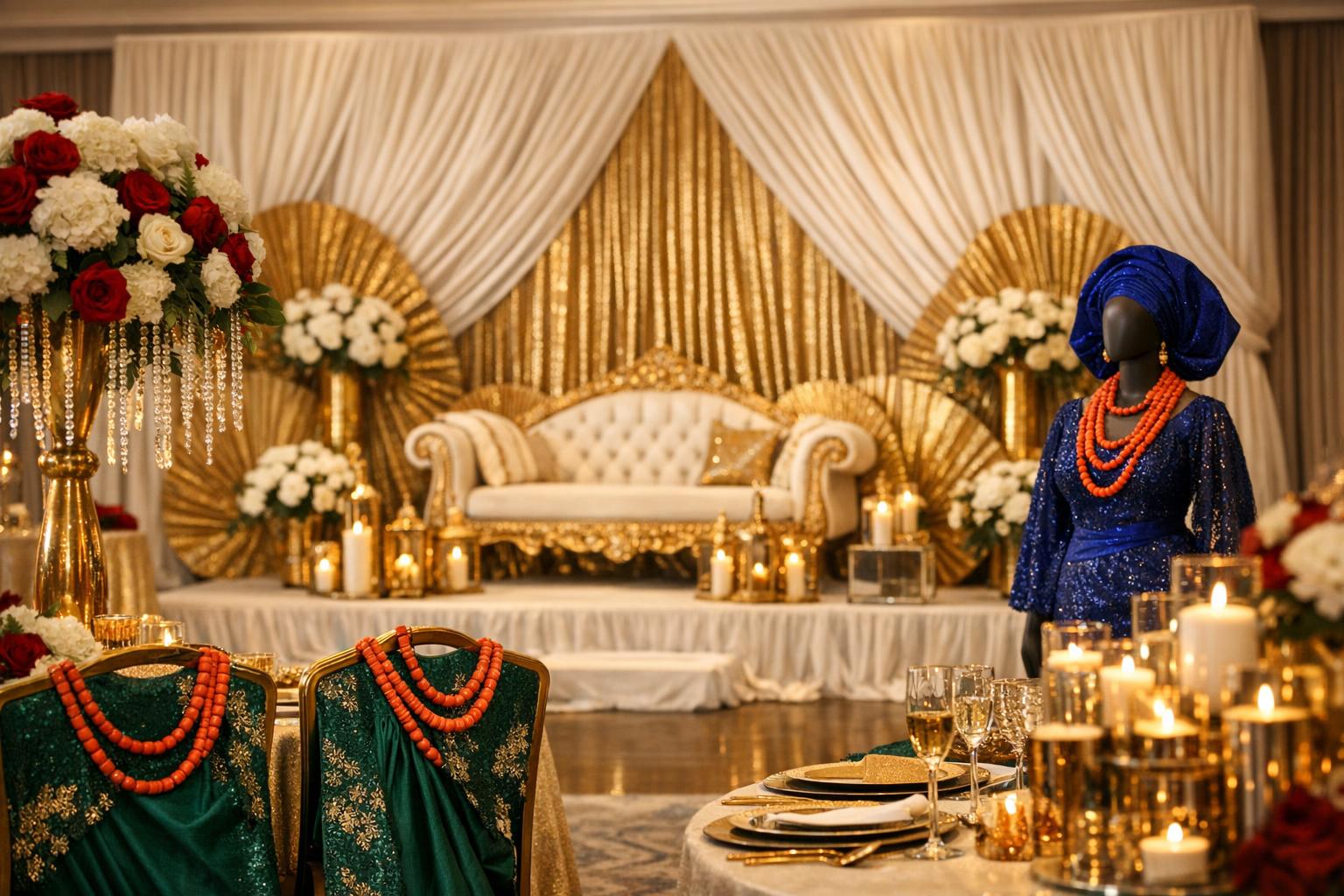
Nigerian Wedding Decor in the US: A Comprehensive Guide to Tradition, Style, and Budget
Nigerian wedding decor is more than a beautiful backdrop for photos—it’s a visual language that signals celebration, heritage, and the personality of the couple. In the U.S., many couples want decor that feels unmistakably Nigerian while still working in American venues and across a multi-event weekend (traditional engagement, ceremony, and reception). This guide brings the most requested ideas together—traditional motifs like gele, beads, and aso-ebi-inspired styling—plus practical planning guidance for sourcing, budgeting, and creating a cohesive look from start to finish.
Whether you’re planning a fully traditional celebration, a fusion wedding, or a modern Nigerian wedding with cultural touches, the goal is the same: build an intentional decor story. You’ll find theme frameworks, color palette direction, vendor and rental strategies, and DIY/hybrid approaches that help you get a high-impact result without losing the cultural heart of the day.
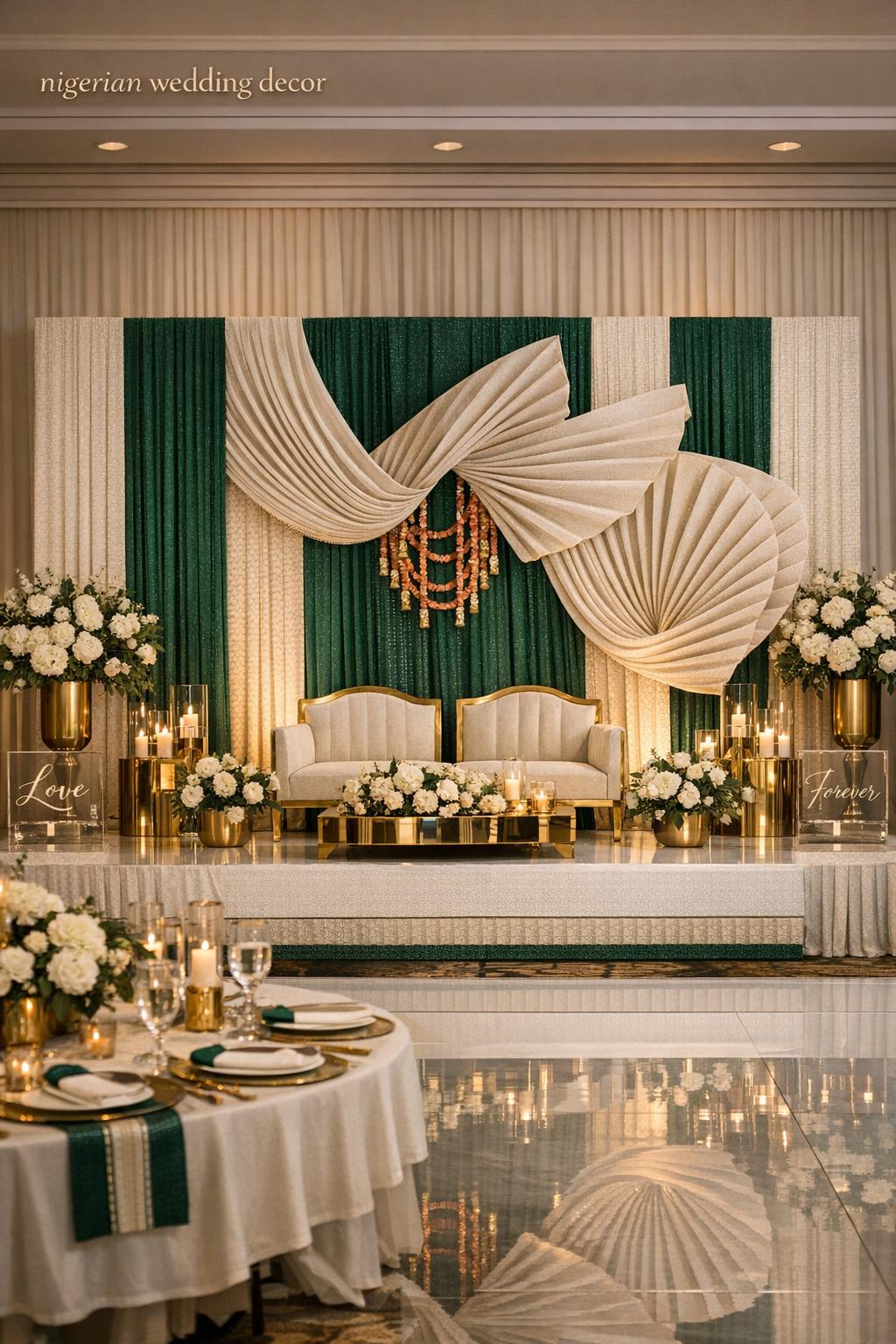
Understanding Nigerian Wedding Decor: Traditions, Motifs, and a Modern Twist
The most memorable Nigerian weddings tend to feel layered: color, fabric, texture, and symbolic details all work together. Across many Nigerian wedding styles, a few decor cues show up again and again—sometimes front and center, sometimes subtly woven into place settings, signage, and backdrops. In a U.S. context, these details often become the “bridge” between tradition and a venue that wasn’t designed with Nigerian ceremonies in mind.
Common motifs and styling anchors include gele-inspired forms and patterns, beadwork cues (including coral accents), and fabric-driven decor that nods to aso-ebi and traditional textiles. These elements can show up in draping, table design, stage/backdrop styling, and ceremony details. Modern Nigerian wedding styling often pairs those cues with clean layouts, intentional lighting, and balanced floral design so the decor reads as both cultural and contemporary.
Tip: Start by choosing two “cultural anchors” you’ll repeat throughout the weekend (for example, bead accents + a fabric motif). Repetition is what makes the decor feel cohesive across multiple events, even if each event has its own vibe.
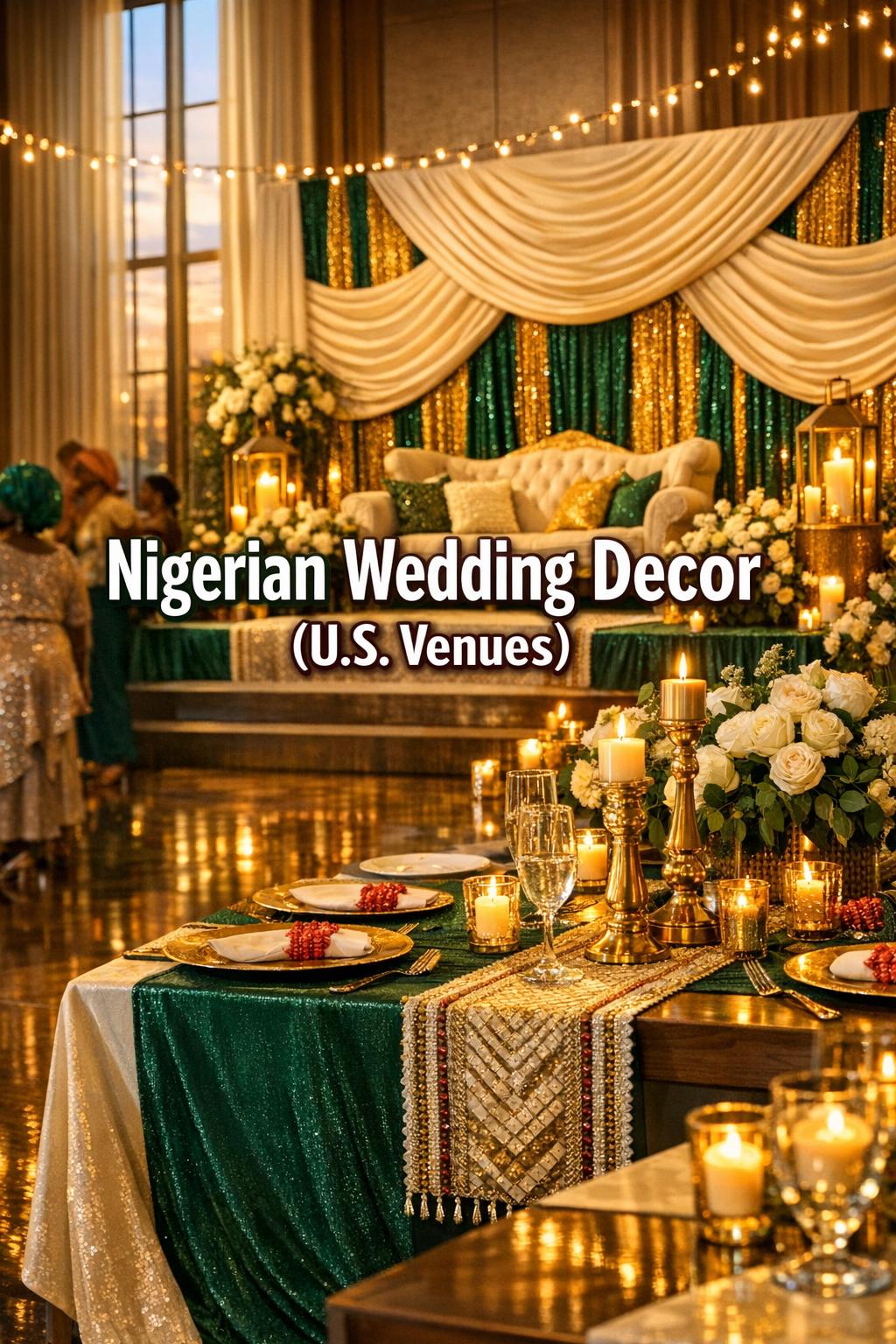
Nigerian Decor Themes You Can Use in the US
If you’re overwhelmed by options, pick a theme framework first. A strong theme simplifies decisions about backdrops, centerpieces, linens, signage, and even how attire (gele, beads, aso-ebi) visually relates to the room. The themes below are designed to translate well in U.S. venues while keeping the decor rooted in Nigerian aesthetics.
Royal Beads and Coral Accents
This theme leans into regal styling cues through beadwork and coral-inspired accents. The room can feel royal without becoming heavy—think structured symmetry, glossy details, and intentional metallic touches. It’s especially effective for stages/backdrops and sweetheart table moments where the camera naturally focuses.
- Use bead-like textures in charger plates, napkin rings, or chair accessories to echo traditional bead styling
- Bring coral accents into florals, candles, or runner details so it reads as an intentional motif rather than a random color
- Pair with warm metallic details for a polished, celebratory feel
Tip: Keep coral accents consistent in tone across items. If your coral leans warm or muted in one element and neon in another, the theme can feel disconnected.
Aso-oke Luxe: Modern Fabric-Driven Decor
Fabric-forward decor is one of the most recognizable ways to create Nigerian wedding styling in a U.S. venue. Aso-oke-inspired texture and pattern can be translated through draping, runner panels, stage skirting, and statement installations. The fabric becomes the visual signature that ties your ceremony to your reception—especially helpful if you’re hosting events in different venues.
- Create a focal backdrop using fabric panels layered with clean, modern framing
- Use fabric runner strips across guest tables for a repeated motif that reads clearly in photos
- Echo the same fabric in small moments (guestbook table, signage base, or aisle details) for continuity
Tip: If you’re mixing patterns, limit it to one “hero” fabric pattern plus one supporting solid. That balance keeps the room lively but not chaotic.
Gele-Inspired Backdrops and Accessories
Gele is iconic in Nigerian wedding fashion, and it can inspire decor without copying a headwrap literally. Think in terms of folds, pleats, sculptural volume, and repeating motifs. In a U.S. ballroom or event space, gele-inspired shapes can turn standard staging into something culturally specific.
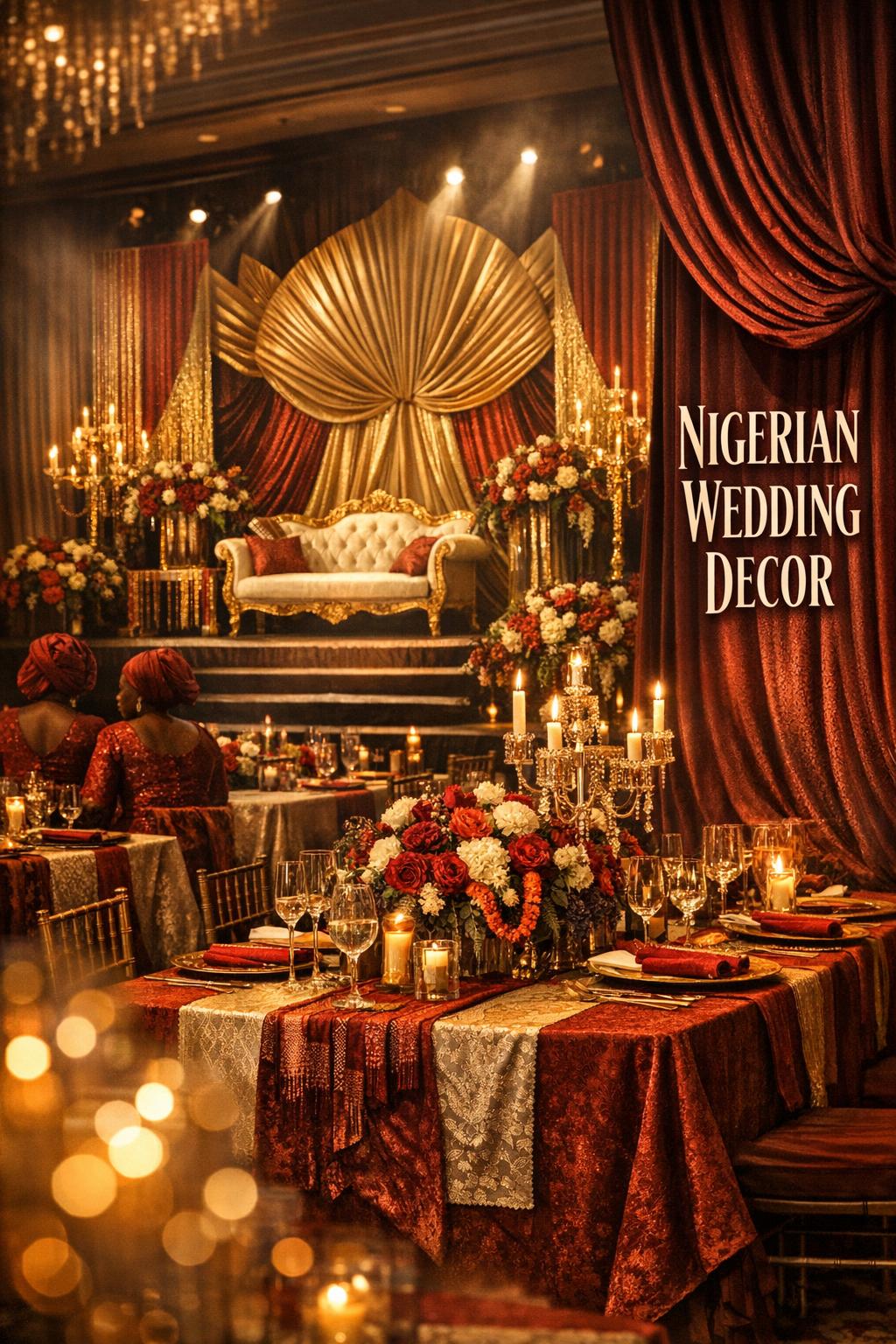
- Use pleated draping or fan-like folds on your main stage/backdrop to mimic sculptural gele forms
- Repeat the motif in smaller doses with table runners, chair sashes, or signage borders
- Coordinate backdrop tones with gele colors so the couple visually “belongs” to the scene
Tip: If guests will wear strong aso-ebi colors, keep the backdrop slightly calmer or more structured so photos don’t become visually overwhelming.
Floral Fusion with Cultural Motifs
Floral-forward weddings are common in the U.S., and floral fusion is a practical way to blend Nigerian cultural cues with modern venue styling. The key is to integrate cultural motifs—beads, fabric textures, metallic accents, and ceremony-specific details—into a floral plan rather than treating them as separate “cultural add-ons.”
For example, the floral concept can be modern and airy, while the structural elements—stage design, linens, and pattern accents—carry the Nigerian identity. This approach works especially well for couples who want a contemporary look but still want guests to instantly recognize the wedding as Nigerian in spirit and presentation.
Tip: Decide where culture shows up most clearly: stage/backdrop, table design, or ceremony details. Pick one primary area for strong cultural expression, then weave lighter echoes everywhere else.
Beaded Centerpieces and Ceremony Details
If you want tradition to appear in a refined, modern way, consider beaded centerpieces and small ceremony details. This is also useful when venue rules limit heavy installation work. You can still achieve Nigerian wedding decor impact by building a repeated set of signature details that guests encounter up close: centerpieces, place settings, signage, and ceremonial focal points.
- Use beaded textures as part of centerpiece bases or table accessories to suggest traditional bead styling
- Pair beaded elements with clean typography on signage for a modern-cultural blend
- Use lighting strategically to highlight reflective details so the decor reads well at night
Tip: If you’re relying on smaller details for impact, increase repetition: the same accent on every table can create a stronger impression than one elaborate focal point and nothing else.
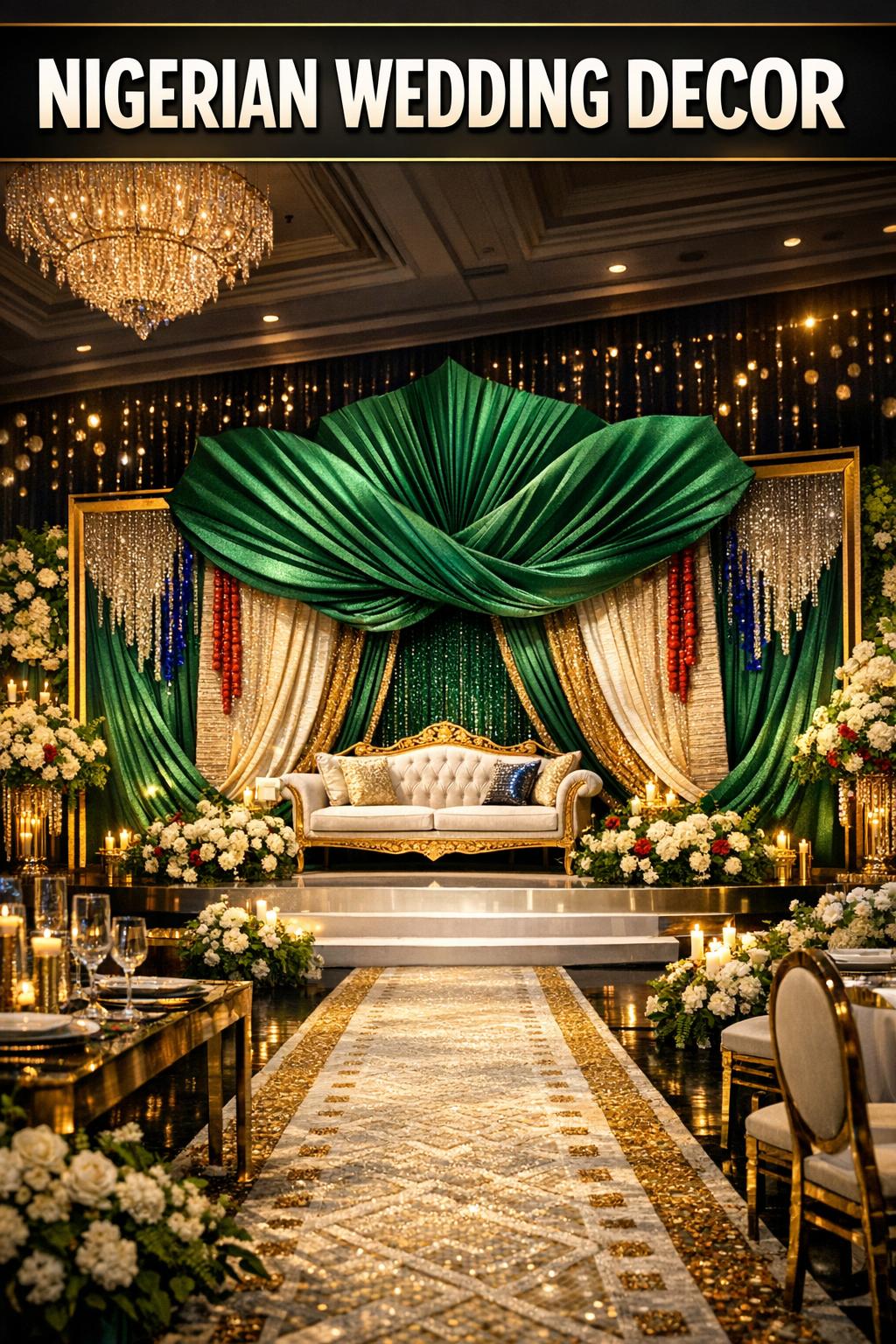
Color Palettes and Mood Boards for a Nigerian Wedding in the US
Color is often the first thing people remember about Nigerian weddings. In the U.S., color decisions also affect vendor sourcing, linen availability, and how attire (especially gele and aso-ebi) reads in photos. A practical approach is to choose a primary palette, then define “supporting neutrals” and “metallic accents” to keep the design consistent across events.
Below are adaptable palette directions that align with popular Nigerian wedding styling while still feeling polished in U.S. venues.
- Gold + Red: Bold, celebratory, and classic for a high-energy reception look; works well with regal stage styling
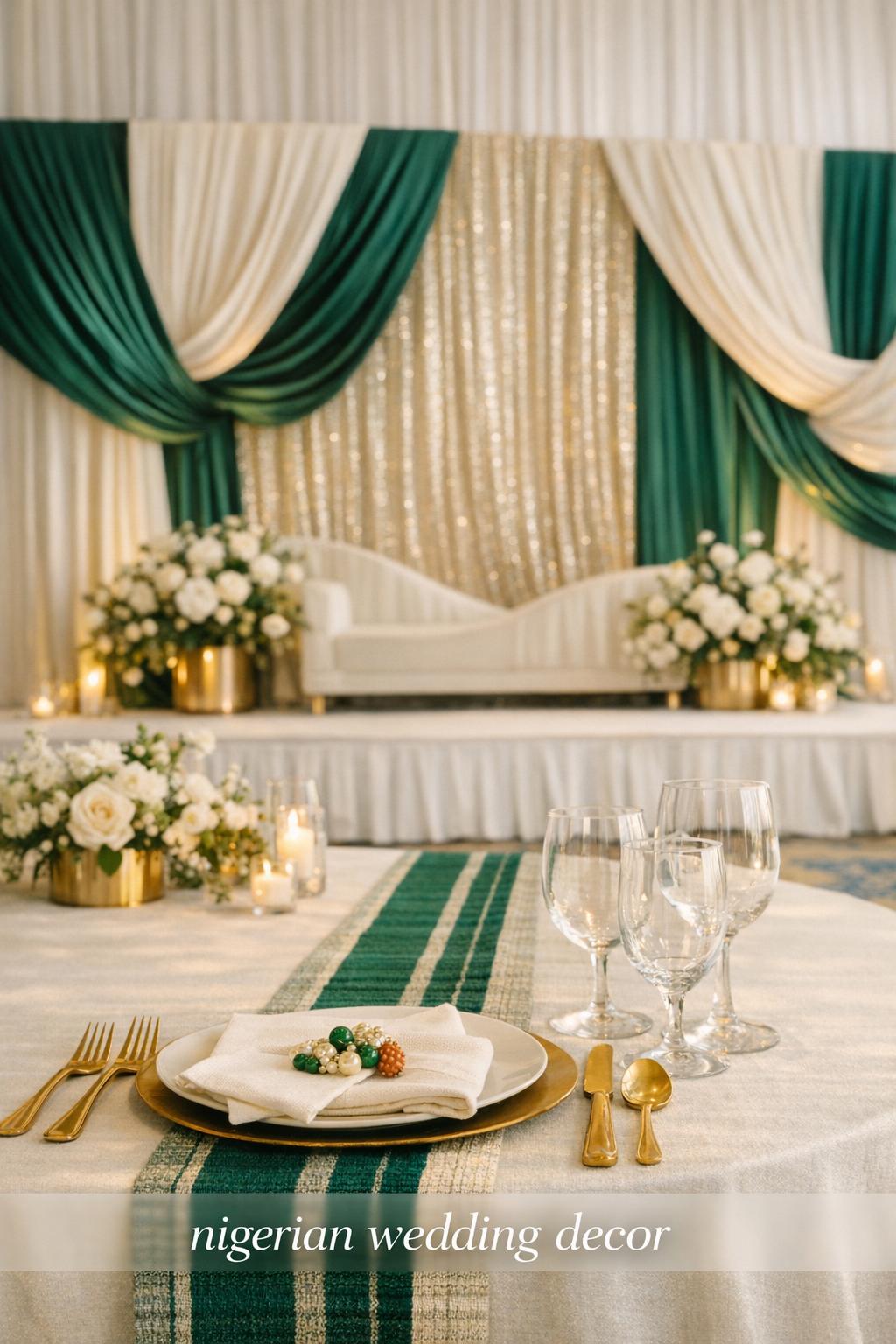
- Emerald + Ivory: Rich and elegant, with a clean base that pairs beautifully with patterned fabrics and bead details
- Cobalt + Cream: Striking and modern, especially effective for clean backdrops with sculptural draping
To turn a palette into a mood board, assign each color a job. For example: one is the hero (most visible in draping or linens), one is support (seen in florals or smaller textiles), and one is a highlight (metallic accents, signage details, or chair accents). This keeps the room from feeling like every color is competing for attention.
Tips for palette planning: If you’re doing multiple events, allow one shared accent color to repeat across the weekend so it feels like one story. Then give each event its own “lead” color so each day still feels distinct.
Budgeting for Nigerian Wedding Decor in the US
Budgeting is where many Nigerian wedding decor plans either become achievable—or stressful. The U.S. market adds complexity: rental systems, labor and setup expectations, and venue constraints can influence cost and execution. A strong budget plan starts by prioritizing what guests will notice most (stage/backdrop, table design, lighting, and key ceremony moments), then allocating funds to support details that reinforce your theme.
Instead of trying to do everything at maximum scale, focus on “high-visibility zones.” Nigerian weddings are photographed heavily, and visual impact often comes from a few dominant areas that define the aesthetic.
Sample Budget Breakdown by Event Type (Engagement, Traditional Ceremony, Western Ceremony, Reception)
Many U.S.-based Nigerian weddings include multiple events, each with different decor needs. A practical way to plan is to treat decor as a set of reusable design assets (palette, fabric motif, signage style) and then decide what scales up or down per event. Engagement and traditional events may lean heavily on cultural motifs and fabric-driven styling, while a Western ceremony may prioritize clean ceremony design and photography-friendly layout. The reception usually demands the most intensive room transformation—especially stage/backdrop, guest tables, and lighting—so it often becomes the primary decor spend.
- Engagement event: Focus on a signature backdrop, a styled welcome/entry moment, and cohesive table styling that establishes your palette
- Traditional ceremony: Prioritize cultural anchors (fabric motifs, beads/coral accents, ceremonial focal points) and clear sightlines for the main moments
- Western ceremony: Keep it refined—ceremony backdrop, aisle or altar styling, and a clean palette that complements attire
- Reception: Allocate most to the stage/backdrop, lighting, guest table design, and a consistent “glam” finish across the room
Tip: If your budget is tight, reuse design components across events—especially signage bases, fabric panels, or repeated accent pieces—so your decor looks intentional rather than “scaled down.”
Tip: When comparing options, ask vendors to show what changes if you reduce guest-table complexity but keep the stage/backdrop strong (or vice versa). This helps you choose the best “impact per dollar” approach for your priorities.
Sourcing Vendors and Rentals in the US
For Nigerian wedding decor in the U.S., sourcing usually falls into three lanes: Nigerian-focused decor vendors, general event rental houses, and hybrid teams that combine cultural expertise with mainstream production. Many couples also source select decor items across borders or through diaspora networks—especially fabric-driven elements and culturally specific accents—then rely on local U.S. rentals for foundational pieces like tables, chairs, linens, and standard staging.
A practical strategy is to separate your decor into categories: cultural anchors (beads, fabric motifs, gele-inspired design elements), structural rentals (staging, tables, chairs, draping systems), and finishing details (centerpieces, signage styling, lighting cues). Once you categorize, it becomes easier to decide which pieces must come from a Nigerian-experienced team and which can come from any reputable rental provider.
Vendor Evaluation Checklist
- Ask for examples of traditional Nigerian wedding decor and modern/fusion Nigerian wedding styling
- Confirm whether they handle design only, rentals only, or full service (design + rentals + setup + breakdown)
- Request a clear list of what is included: delivery, setup time, strike time, labor, and contingency planning
- Discuss how they coordinate with your venue and other vendors so installs don’t conflict
- Clarify your color palette, fabric motifs, and “must-have” cultural elements before approving the final plan
Tip: Bring a simple one-page brief to vendor calls: your event list (engagement/traditional/ceremony/reception), your palette, two cultural anchors (like beads + fabric), and three priority areas (like stage, tables, entry). You’ll get faster, more accurate proposals.
Sample US-Based Nigerian Decor Vendor Categories (and What to Ask)
Not every couple needs the same vendor mix. Some prefer a dedicated Nigerian wedding decorator who understands cultural styling deeply; others build a team: a general production company for rentals and a cultural stylist for the Nigerian motifs. When you’re evaluating options, focus on fit: can they execute your theme and keep it cohesive across multiple events?
- Nigerian wedding decorators (diaspora-focused): Ask how they approach traditional engagement decor, stage/backdrop styling, and fabric integration
- Event rental houses: Ask what inventory colors and finishes they reliably carry that match your palette, and what’s the lead time
- Hybrid planners/stylists: Ask how they manage vendor coordination and maintain consistency across events
Tip: If you’re sourcing culturally specific items separately, confirm who is responsible for integrating them on the day. Clear ownership prevents last-minute confusion during setup.
Making Decor Cohesive Across Multiple Nigerian Wedding Events
One of the most common challenges for Nigerian weddings—especially in the U.S.—is cohesion across events. The decor can accidentally feel like separate weddings if the engagement, traditional ceremony, Western ceremony, and reception each have a different palette, signage style, and backdrop approach. Cohesion doesn’t mean everything looks identical; it means guests can see the same design “signature” throughout.
A reliable method is to define a “decor system”: a shared palette rule, a shared motif (fabric or bead cue), and shared typography/signage styling. Then you assign each event one feature moment that differentiates it. That might be a unique stage design for the reception, a more ceremonial focal point for the traditional event, or a clean, minimal altar moment for the Western ceremony.
- Shared elements to repeat: one accent color, one motif (fabric folds or beaded detail), one signage look
- Elements to vary per event: backdrop scale, floral density, lighting intensity, and table styling complexity
- Practical cohesion tool: a single mood board with “must-repeat” visuals and a second mood board for each event
Tip: If you’re using aso-ebi colors, treat them as part of the decor environment. Ask your decorator how the room palette will look once guests arrive in coordinated attire, not just when the room is empty.
Real-World Nigerian Weddings in the US: Case-Style Decor Blueprints
Couples often learn best through examples. Below are three “case-style” blueprints you can adapt, whether you’re planning a large Nigerian wedding reception or an intimate cultural celebration. These are not meant as rigid templates—they show how to translate Nigerian wedding styling into U.S. venues using consistent anchors.
Blueprint 1: Traditional-Forward Weekend (Cultural Anchors First)
This approach places traditional decor cues at the center: fabric-driven staging, strong color identity, and ceremonial focal points that feel unmistakably Nigerian. The U.S. venue becomes a canvas for cultural design rather than the other way around. The key is to choose a hero backdrop concept and repeat its motif in smaller moments so it feels cohesive and immersive.
Tips: Keep your palette bold but controlled, and ensure your backdrop is designed with photography in mind—clear focal framing around the couple helps your cultural styling read in every angle.
Blueprint 2: Fusion Wedding (Modern Florals + Nigerian Motifs)
Fusion styling often uses modern floral design as the “base language” and Nigerian motifs as the signature accent. The room can look contemporary to a broad audience while still communicating Nigerian identity through fabric textures, bead and coral-inspired accents, and gele-inspired backdrop structure. This is especially effective if you want a clean ceremony design and a more dramatic cultural moment at the reception.
Tips: Decide exactly where Nigerian identity will be most visible (often the stage/backdrop and table details). When the primary identity zones are strong, you can keep other areas minimal without losing cultural presence.
Blueprint 3: Modern Nigerian Minimal (Clean Lines, Strong Accents)
This blueprint is ideal if you prefer a modern venue look but still want Nigerian wedding decor to feel intentional. Instead of filling the room with many patterns, you choose one or two strong cultural cues—like a fabric motif on the backdrop and beaded tabletop accents—then keep everything else clean. The result is contemporary, photo-friendly, and still rooted in recognizable Nigerian styling.
Tips: Minimal does not mean empty. Use repetition, intentional lighting, and a strong backdrop composition so the design still feels celebratory and complete.
DIY and Hybrid Decor Ideas for Diaspora Weddings
DIY and hybrid plans are common for diaspora weddings in the U.S., especially when couples want cultural specificity without paying for full custom builds everywhere. The most successful approach is usually “hybrid”: professionals handle structural installs (stage/backdrop, draping, lighting coordination) while the couple or family contributes curated cultural details that add authenticity.
DIY works best when it’s focused and repeatable. Instead of attempting large installations, choose projects you can assemble in advance, transport safely, and deploy quickly on the day. This keeps stress low and results consistent.
- Create a repeated tabletop accent set: beaded textures, coordinated runner strips, and consistent signage styling
- Design a simple entry moment: a clean welcome sign framed with your fabric motif and a small styled table
- Build cohesion with a “motif kit” you can reuse across events (fabric panels, accent pieces, and consistent color details)
Tip: Before committing to DIY, ask your venue about setup windows and rules. If setup time is short, choose decor you can place quickly rather than items that require assembly or complex positioning.
Tip: If multiple family members are helping, assign ownership by area (entry, guest tables, sweetheart table) and do a simple walkthrough plan so everyone knows what “finished” looks like.
Practical Planning Tips to Keep Nigerian Wedding Decor on Track
Even the best decor ideas fall apart without a practical plan. Nigerian weddings often include more than one event, more wardrobe changes, and more high-impact moments than a single-day celebration. That means your decor plan should be clear, documented, and easy for vendors to execute.
- Decide your two cultural anchors early (examples include beads/coral accents and fabric motifs)
- Choose one primary palette plus neutrals and metallic accents so everything stays coordinated
- Identify your three highest-visibility areas (often stage/backdrop, guest tables, and entry)
- Keep a single reference folder for inspiration, approvals, and changes so nothing gets lost
- Confirm responsibilities for sourcing, transport, setup, and breakdown—especially if you’re mixing vendors and DIY items
Tip: If you need to cut costs late in the process, reduce the number of unique design moments, not the quality of your main focal points. A smaller number of strong, repeated statements usually looks more luxurious than many underpowered ideas.
Quick-Start Checklist and Resources
If you’re starting from scratch, use this quick-start checklist to move from inspiration to execution. The goal is to make decisions in the right order: theme, palette, anchors, priorities, then sourcing.
- Choose your wedding style direction: traditional-forward, fusion, or modern Nigerian minimal
- Select a palette and define neutrals + metallic accents
- Pick two cultural anchors (gele-inspired forms, beads/coral accents, fabric motifs, or aso-ebi-inspired styling)
- List your events and decide what decor will repeat versus what will be unique
- Prioritize three high-visibility areas and assign budget emphasis accordingly
- Decide your sourcing plan: Nigerian-focused decorator, rentals + cultural stylist, or hybrid DIY
- Create a one-page decor brief to share with vendors (palette, anchors, priorities, event list)
Tip: Keep your mood board practical. Alongside inspiration images, add short notes: “this is for the stage,” “this is the table accent,” “this is the fabric motif.” Clear labels prevent misinterpretation when multiple people are involved.
Conclusion: Crafting a Nigerian-Wedding-Dedicated Decor Experience in the US
The strongest Nigerian wedding decor plans in the U.S. balance cultural identity with clear design structure. When you choose a theme framework, build a controlled palette, and repeat a few cultural anchors—gele-inspired forms, bead and coral accents, and fabric-driven styling—you create a cohesive environment that feels both traditional and modern. Add practical sourcing and budgeting decisions, and your decor becomes not just beautiful, but executable across a full wedding weekend.
Use this guide as a blueprint: define your anchors, focus on high-visibility zones, and choose vendors and rentals that can deliver your vision with clarity. With thoughtful planning, your wedding spaces can reflect celebration, heritage, and your personal style—without losing what makes a Nigerian wedding unmistakably Nigerian.
FAQ
Do I need to use aso-ebi for decor?
No—aso-ebi is not required for decor, but it can influence the overall look of the room because coordinated guest attire becomes part of the visual environment; if you do have aso-ebi, you can echo its colors or fabric motifs in backdrops, runners, or accents to create cohesion.
How far in advance should Nigerian wedding decor be finalized?
Finalize your core decisions early enough to support vendor sourcing and rentals: lock in your theme, palette, and two cultural anchors first, then confirm high-visibility areas like stage/backdrop and guest table styling so your vendor team can align inventory, labor, and setup plans without last-minute changes.
What are common US import considerations for Nigerian decor items?
If you plan to bring in culturally specific items or fabrics from outside the U.S., build extra time into your schedule and clearly assign responsibility for receiving, storing, transporting, and integrating those items during setup so the decor team isn’t waiting on missing pieces on event day.
How can I make my Nigerian wedding decor feel cohesive across multiple events?
Create a “decor system” by repeating one accent color, one motif (such as fabric texture or beaded detail), and one signage style across all events, then vary scale and intensity per day so each event feels distinct while still part of the same wedding story.
What are the most important areas to prioritize if my decor budget is limited?
Prioritize high-visibility zones that define the room in photos and guest experience—typically the main stage/backdrop, guest table design, and entry/welcome moment—then reinforce your theme with repeated smaller accents rather than trying to build many separate focal points.
How do I choose between a Nigerian-focused decorator and a general event rental company?
If cultural specificity is your top priority, a Nigerian-focused decorator may better understand traditional motifs and how to translate them into staging and room styling; if your venue needs are complex, a hybrid approach often works well, using a rental company for structural items and a cultural stylist or Nigerian decorator for the signature elements.
What color palettes work best for a Nigerian wedding reception decor look in the US?
Bold, defined palettes tend to translate well—options like gold + red, emerald + ivory, or cobalt + cream can feel distinctly celebratory while still polished in U.S. venues, especially when you assign each color a clear role (hero, support, highlight) and keep neutrals consistent.
Can I do DIY Nigerian wedding decor without it looking mismatched?
Yes—DIY looks most cohesive when it’s focused on repeatable details (like consistent tabletop accents and a simple entry moment) and when professionals handle complex installs such as staging/backdrops or large-scale draping, with one shared mood board guiding both DIY pieces and vendor work.
Leave a Reply