Potted Plants Wedding Decor: The Complete Guide to Greenery for Your Big Day
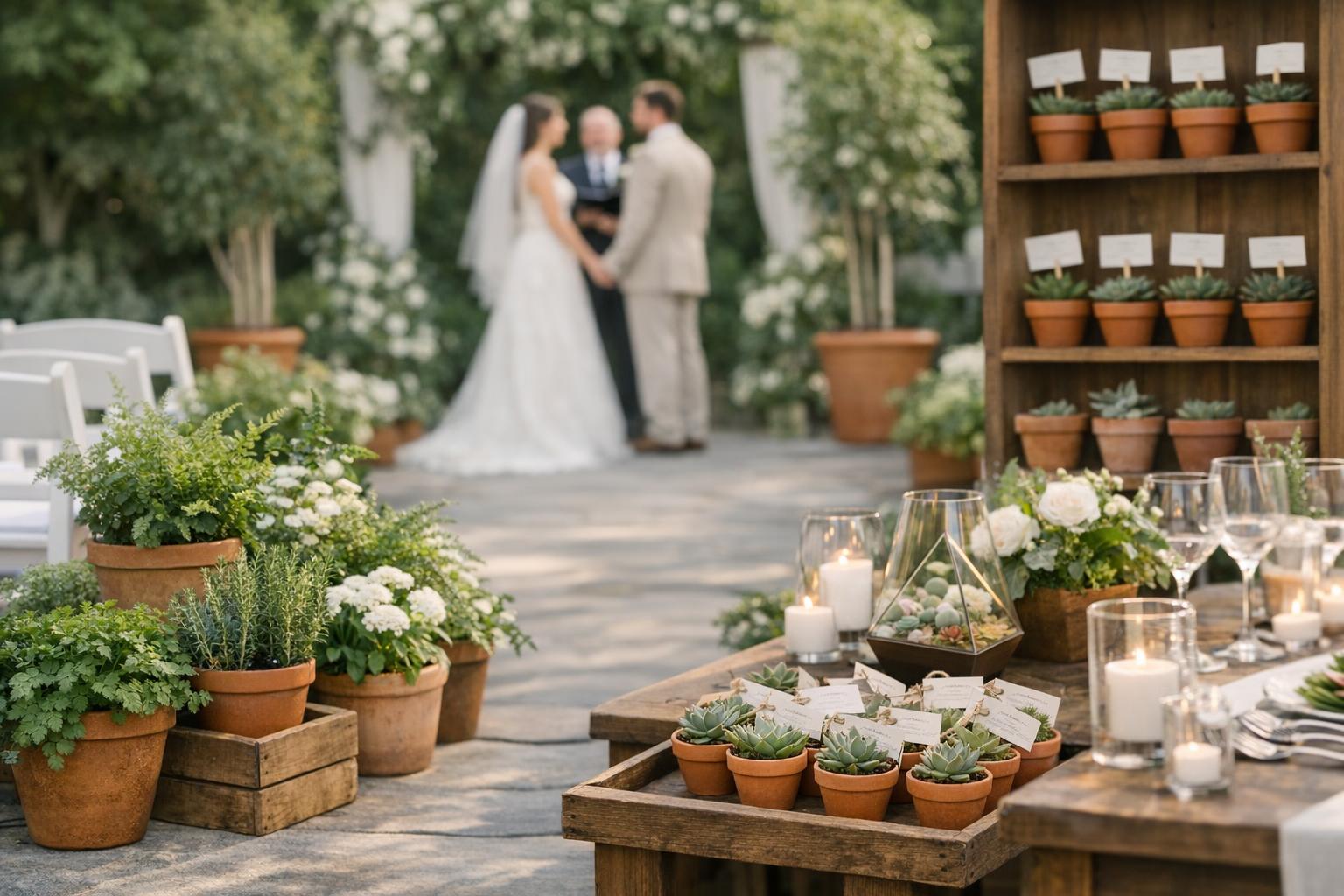
Potted plants wedding decor is one of the most versatile ways to bring living greenery into your celebration—without limiting yourself to one-day florals. From plant-lined aisles and statement entryway planters to potted plant centerpieces and mini potted plant wedding favors, live plants can shape the mood of the entire event while leaving you with keepsakes you can reuse, gift, or replant afterward.
This guide pulls together the most popular, proven ways couples use potted plants across ceremony and reception spaces, plus practical advice on seasonality, styling, care, logistics, and budget choices (including rental vs. purchase). If you’re aiming for garden vibes, a clean modern look with geometric planters, or a rustic feel with terracotta vessels, you’ll find ideas you can actually execute—without overcomplicating your wedding day.
Why Choose Potted Plants for Wedding Decor
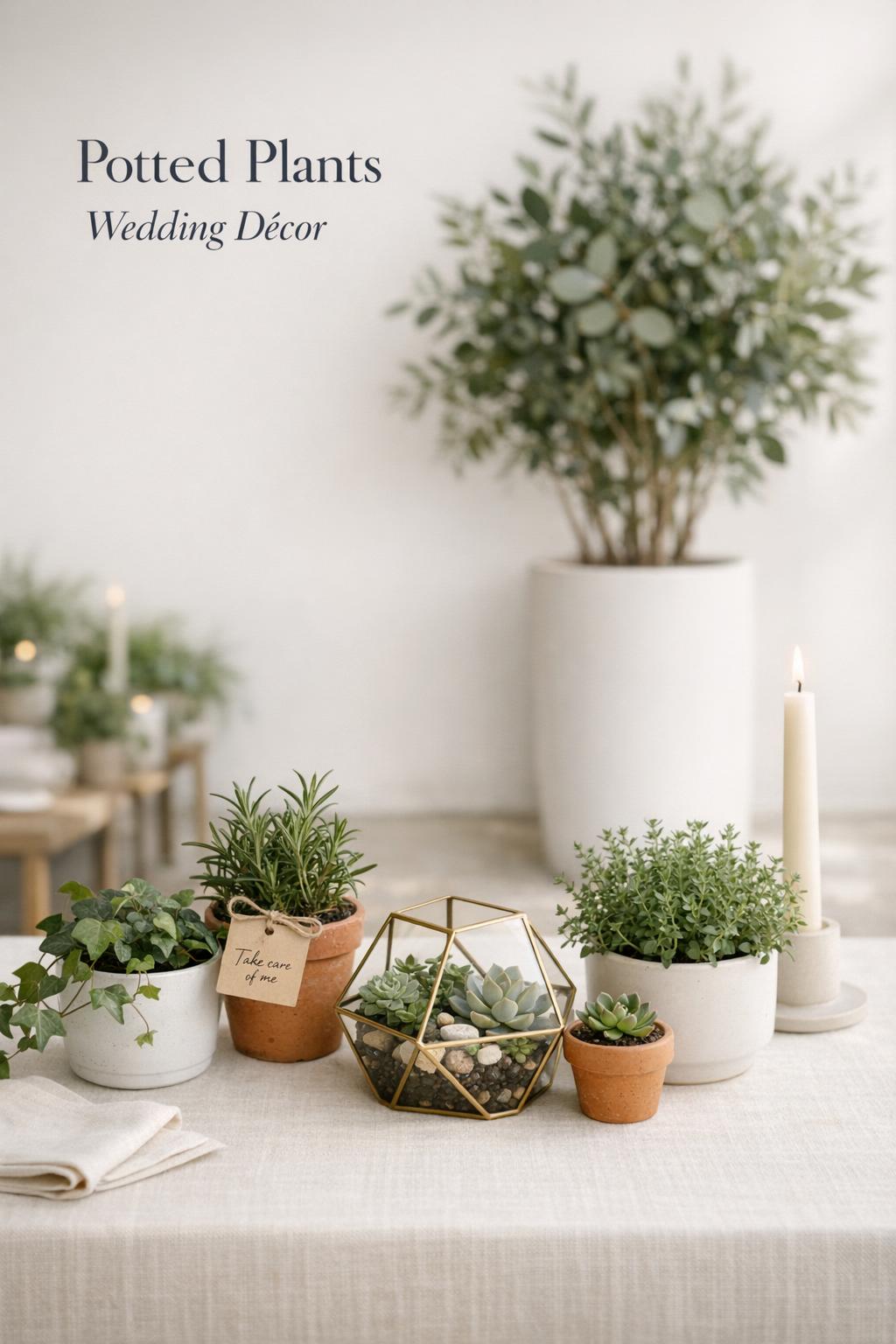
Live plants bring an immediate sense of freshness and texture that reads beautifully in photos and in-person. Unlike cut arrangements, potted plants can last beyond the wedding, which supports a sustainability-forward approach and can improve your cost-per-use when you repurpose them as home décor, garden plantings, or gifts.
Potted plants also give you range. You can go bold with tall statement planters at the ceremony entrance, keep things low and lush for tablescapes, or use petite plants for place settings and favors. Many couples also like the sensory element: herbs like rosemary and lavender add fragrance, while succulents and cacti add sculptural structure with minimal fuss.
Tips: If you’re choosing between cut flowers and plants, consider what matters most: if you want maximum reuse and greenery-heavy styling across multiple areas (entryways, aisles, lounge corners, and tables), potted plants can do that efficiently. If you want highly specific blooms in a tight palette for one focal moment, you can still pair plants with traditional floral accents.
Season-by-Season Plant Picks
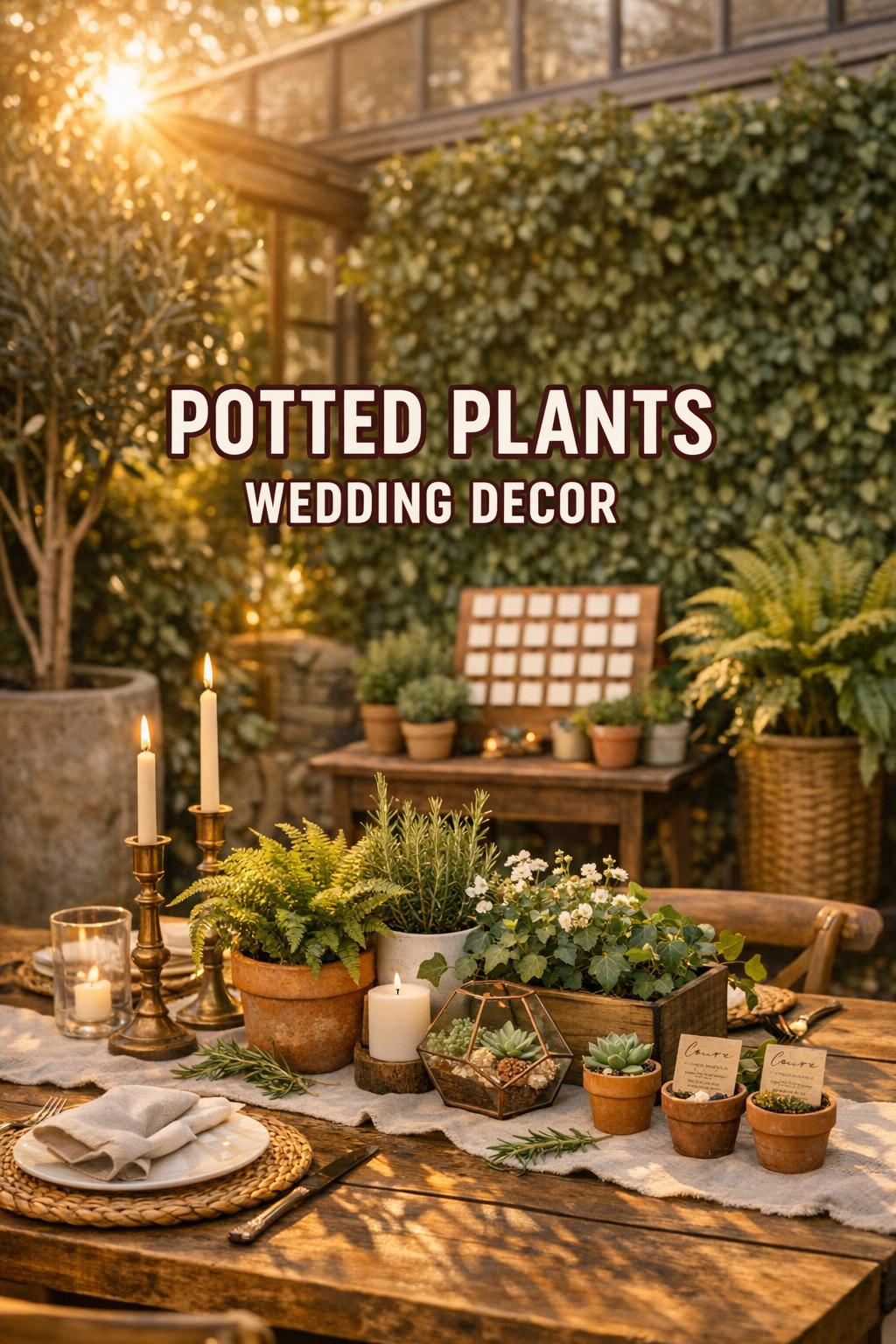
One of the biggest missed opportunities in plant wedding ideas is planning around season and setting. Your venue (indoor vs. outdoor), the length of time plants will sit in sun or shade, and the look you’re trying to achieve all influence which plants feel easy and reliable for the day.
Spring Classics
Spring styling often leans romantic and fresh, making it a natural fit for soft, garden-inspired plants and herbs. If your vision includes lush greens and gentle color, spring is a great time to work in potted herbs alongside classic floral-forward looks.
Tips: When using herbs in spring, treat them as both décor and sensory detail—place them where guests will pass close by, such as entryways, aisle accents, and escort card tables.
Summer Brights
Summer is ideal for hardy, sun-friendly options and vibrant textures. Succulents are popular for summer weddings because they’re easy to style in clusters and they hold up well through long event days. Lavender is another favorite for garden vibes, while geraniums can bring cheerful color when you want plant décor that reads immediately “in season.”
Fall Warmth
Fall palettes tend to favor warm tones and layered texture. Mums can bring seasonal color, while eucalyptus can add a muted green that complements rustic, modern, or botanical themes. Potted plants can reinforce the cozy feel of fall when arranged in groups at key visual moments: ceremony focal points, bar fronts, and lounge areas.
Winter Whites and Silvery Greens
For winter, a clean palette with white and soft silvery green reads elegant and intentional. White hydrangea and silver dollar eucalyptus work well when you want a refined look that still feels natural and full. Winter weddings can also benefit from potted plants in indoor spaces where temperature and light are more stable throughout the day.
Centerpieces and Tablescape Ideas
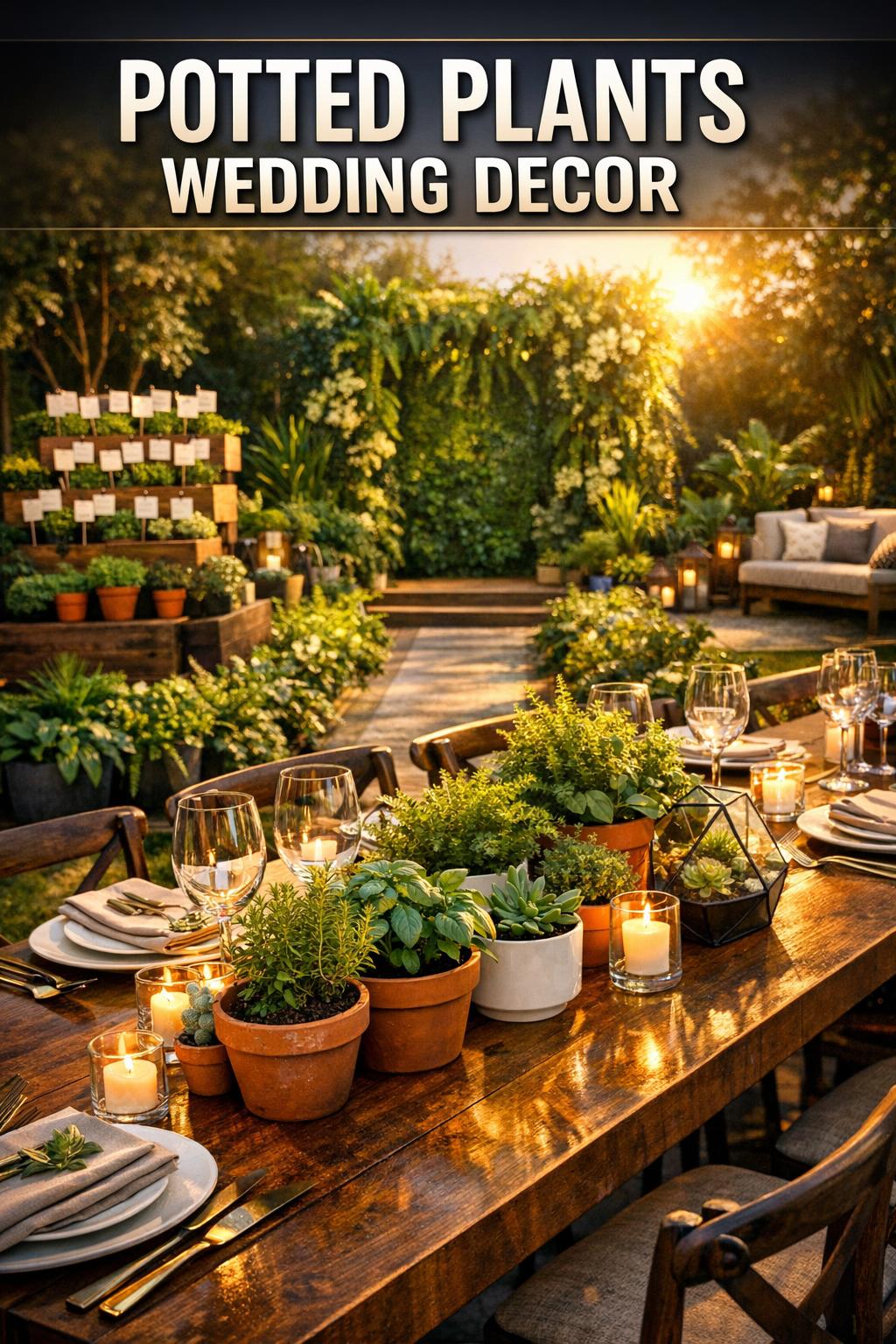
Potted plant centerpieces can be styled to fit nearly any reception vibe: minimalist, romantic, rustic, modern, or full “secret garden.” The key is balancing the look with guest comfort—especially sightlines and table space—so your living centerpieces feel lush without blocking conversation.
Low, Lush Centerpieces with Mixed-Height Planters
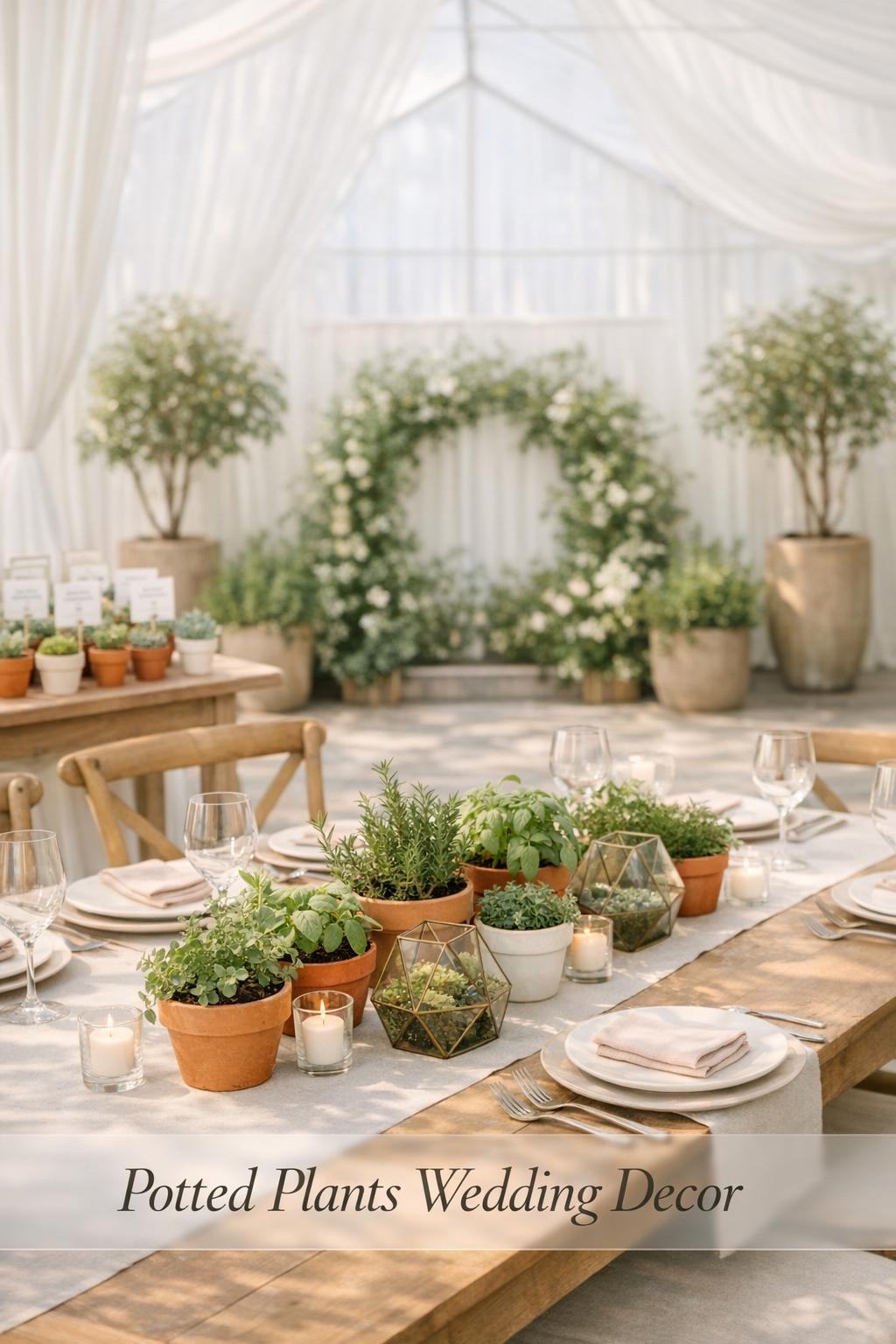
For a full, layered look, group several small to medium planters together rather than relying on one large pot. Mixing heights creates visual depth while keeping the overall profile low. This approach is especially effective for greenery wedding decor where texture is the star.
Tips: Build your cluster around a “hero” plant in the center, then surround it with smaller pots. If you’re using mixed vessels, keep one unifying detail consistent—such as all terracotta, all white ceramic, or a shared neutral tone—so the arrangement looks curated rather than random.
Glass Terrariums and Geometric Planters
Terrarium centerpieces and geometric planters lean modern and clean, making them a strong match for contemporary venues. They also photograph well because the structure of the container adds shape even when the plants are simple. If you like a styled, design-forward tablescape, this is an easy way to make greenery look intentional.
Herb Pots at Each Place Setting
Potted herbs can function as both décor and guest keepsakes. A small herb pot at each place setting introduces fragrance and reinforces a garden theme without requiring a complex centerpiece. It’s also a natural way to combine table styling with mini potted plant wedding favors.
Terracotta Vessels for Rustic Garden Vibes
Terracotta planters for weddings are a go-to for couples who want warmth, texture, and a relaxed garden feel. They pair well with herbs, lavender, and other greenery-forward arrangements. Terracotta also works across multiple areas of the day, so you can repeat it at the ceremony entrance, along the aisle, and on reception tables for cohesion.
Mini Cactus and Succulent Groupings
Mini cactus and succulent groupings are popular because they’re compact, graphic, and easy to cluster. They can look playful or elevated depending on the containers you use—simple pots for a casual feel, or sleek vessels for a modern tablescape.
- Cluster three to five small succulents per table for a simple, repeatable look.
- Mix leaf shapes and tones for texture while keeping the pot style consistent.
- Use a small tag or label if you want the plants to double as favors.
Aisle and Ceremony Decor with Potted Plants
Ceremony spaces are where planters make an immediate impact. Potted plants can frame entrances, define walkways, and create an altar focal point that feels abundant. If you’re looking for aisle decor with plants that can be reused at the reception, this is one of the smartest zones to prioritize.
Potted Plant-Lined Aisles
A plant-lined ceremony aisle can feel like stepping into a garden—especially when you repeat the same planter style and plant type for a cohesive border. This approach works beautifully for outdoor spaces but can also transform a plain indoor aisle into a green pathway.
Tips: Keep crowd flow in mind. Space pots so guests and wedding party can pass comfortably, and avoid narrow pinch points near the front rows. If your venue uses chairs placed close together, choose slimmer pots or place them at intervals rather than continuously.
Entryway Statement Planters
Entryways are prime real estate for potted plants wedding decor because they set the tone the moment guests arrive. A pair of statement planters can provide symmetry and drama without requiring a huge floral installation. If your venue has a doorway, gate, or path into the ceremony, planters make the transition feel purposeful.
Altar and Ceremony Focal Planters
Instead of relying solely on cut flowers at the altar, use larger planters to anchor the focal point. This is especially effective for a botanical wedding decor style where you want lush greenery and layered texture. You can cluster planters at the base of an arbor or create a living frame around the ceremony spot.
Ceremony Backdrops with Living Greenery
If you love the look of a garden wall but want something more flexible, build a ceremony backdrop using potted plants grouped tightly together. This approach can lean romantic and wild, or structured and symmetrical, depending on your pot choice and plant shapes.
Tips: Think in layers. Place taller plants at the back and lower plants in front to create depth. If you’re working in a smaller space, keep the tallest plants slightly off to the sides so the couple remains the visual center.
Planters as Aisle Accents, Not Full Borders
Not every ceremony needs a fully lined aisle. If you want the look with fewer pieces, place planters at key “beats”: the aisle entrance, mid-aisle, and near the altar. This gives you the greenery moment in photos while using fewer pots and simplifying set-up.
Reception Decor Beyond the Table
Live plants can do much more than centerpieces. They can guide guests through the space, add dimension to blank walls, and bring a cohesive “green thread” from ceremony to cocktail hour to reception. This is where potted plants shine as flexible décor you can move and repurpose across the day.
Escort Card and Table Plan Displays
Use potted plants to frame your escort card display or table plan so the area feels styled rather than purely functional. You can cluster planters at the base of the display, or weave smaller pots throughout if you want a garden-inspired look that feels immersive.
Bar and Drink Station Greenery
Bars and drink stations are natural focal points. A few well-placed planters can make the space feel intentional—especially in venues with lots of hard surfaces. Herbs are particularly fitting here because they reinforce the idea of freshness and can complement a garden vibe.
Dance-Floor and Lounge Accents
Planters can define zones, especially if your reception space is open-plan. Place medium or tall planters near lounge seating, at the corners of the dance floor, or along transitions between areas. This creates structure and softness without needing additional décor pieces.
Photo Props and Styled Corners
Potted plants can be used as photo props and to build styled corners—whether that’s a small “garden moment” near a window, a cluster beside a seating vignette, or a lush frame around a sign. This approach is especially effective when you want your space to feel layered and photo-ready throughout, not just at the ceremony altar.
Favors and Guest Keepsakes with Living Plants
If you love the idea of sending guests home with something lasting, potted plant wedding favors are one of the most natural choices. They can be decorative, practical, and aligned with a sustainability-minded celebration—especially when you include a simple tag or note to help guests care for them afterward.
Mini Herb Pots as Favors
Mini herb pots are a classic option because they’re functional and fragrant. They also fit a wide range of wedding styles—from rustic terracotta to clean modern ceramics—depending on how you present them.
Tips: Keep favors easy to carry. If guests will be traveling, consider smaller pots and simple packaging that protects the plant while still looking presentable on a favor table.
Succulent Party Favors with Care Cards
Succulent favors are popular because they’re compact and generally easy for guests to keep alive. Pair them with a small care card so guests know what to do when they get home. Even a minimal note makes the favor feel thoughtful and reduces the chance plants get abandoned.
Place Setting + Favor Combos
One of the simplest ways to streamline décor is to make each place setting part of the overall design. A small potted plant at each seat can serve as a name marker (with a label) and a take-home favor, which reduces the need for extra tabletop décor.
- Add a small tag for guest names so the plant doubles as a place card.
- Use consistent pot styles to keep the tablescape cohesive.
- Choose plants that fit your wedding vibe: herbs for garden themes, succulents for modern looks.
Pots, Vessels, and Styling: Making Plants Look Intentional
The container matters as much as the plant. When couples feel like potted plants look “too casual,” it’s usually a vessel issue, not a plant issue. The right pot style, color, and texture can shift the entire impression—from relaxed backyard garden to elevated modern botanical.
Terracotta vs. Ceramic Planters
Terracotta planters for weddings read warm, earthy, and classic—perfect for rustic, Mediterranean, and garden vibes. Glazed or smooth ceramic pots can feel cleaner and more modern, and they’re especially effective when you want a limited color palette with consistent shapes.
Tips: If you’re mixing vessel types, set a rule you’ll follow everywhere—such as one shared color family or one shared finish—so the overall décor feels cohesive across tables, ceremony areas, and entryways.
Wood Boxes, Simple Planters, and Natural Texture
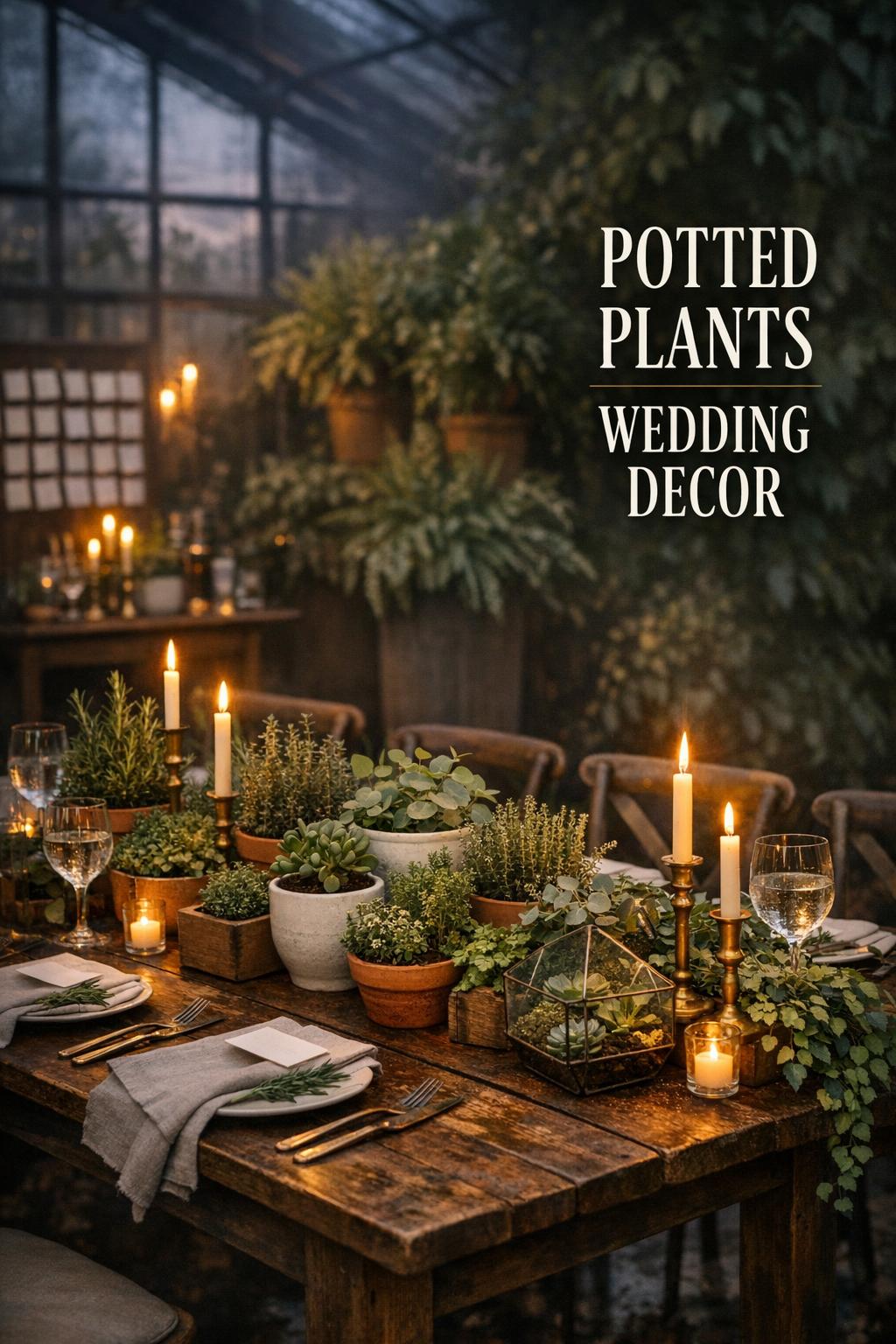
Wood boxes and simple planters can amplify a nature-forward style, especially when paired with lavender or herbs. These containers are also useful when you want to group multiple plants into a single “piece” that’s easy to move and set up.
Glass, Terrariums, and Geometric Shapes
Glass terrariums and geometric containers work well when you want structure and a design edge. They fit modern venues and minimalist décor approaches, and they can elevate small plants by giving them a sculptural frame.
Labeling and Signage Integrated with Planters
Planters can do double duty as décor and signage anchors. Use potted plants to support small labels for herbs, table numbers nestled into greenery, or a styled frame around a welcome sign. This approach makes functional elements look designed rather than added on at the last minute.
Care, Longevity, and Logistics for Wedding Day Plants
Plants are living décor, so a little planning goes a long way. The goal is not perfection—it’s reliability. When you plan for watering, shade, transport, and timing, your plants will look fresh from first look through the last dance.
Plant Care During the Day: Water, Shade, and Weather
Think about what your plants will experience from set-up through teardown. Outdoor ceremonies can involve direct sun, wind, or temperature shifts, while indoor venues can be dry or warm under lights. Even hardy plants benefit from staying out of harsh conditions until close to guest arrival.
Tips: Assign plant responsibility to a specific person (planner, coordinator, or trusted helper) so basic checks don’t get lost in the rush. A quick look for drooping or overly dry soil can prevent plants from looking tired in key photos.
Transport and Setup Considerations
Moving planters is often the most challenging part of live plant décor. Plan for weight, stability, and how pieces will be carried into the venue. Grouping plants into trays or boxes can speed set-up, and repeating the same pot size can simplify loading and staging.
- Map where each plant cluster will go: entry, aisle, altar, tables, and lounge areas.
- Stagger set-up so delicate placements happen last, closer to guest arrival.
- Plan where plants will be stored before the event and where they’ll go after teardown.
Post-Wedding Outcomes: Reuse, Gifting, and Repurposing
One of the biggest advantages of potted plants is what happens after the wedding. You can gift plants to guests and the wedding party, repurpose them as home décor, or plant them. Planning the “after” in advance helps you avoid end-of-night chaos and ensures the plants actually live on.
Tips: Decide ahead of time which plants are keepsakes and which are meant to be taken. If you’re using plants as favors, place them where guests naturally exit or clearly label them so they don’t get left behind.
Budget and ROI: Cost vs. Cut Flowers
For many couples, the appeal of plants for wedding decor is that they can be used more than once. While your exact cost depends on plant size, quantity, and vessel choice, potted plants can offer strong value when they serve multiple functions—ceremony styling, reception décor, and post-wedding reuse.
Rental vs. Purchase Options
Some couples prefer renting planters or plant décor elements, especially for large statement pieces or when they don’t want to transport everything afterward. Others purchase plants specifically to keep, gift, or plant. Your best choice depends on how much you want to manage logistics and what your post-wedding plan is for the greenery.
Tips: If you’re on the fence, split the strategy: rent or source larger statement planters for entryways and focal points, and purchase smaller pieces that can become favors or home plants.
Budgeting by Decor Zone
Budgeting is easier when you plan by area instead of buying plants “as you go.” Ceremony entrances and altar planters usually deliver the biggest visual impact. Aisle accents can scale up or down depending on how full you want the border. Reception tables can use clusters of smaller plants or place-setting herbs for an efficient, repeatable approach.
- Ceremony: prioritize entryways, aisle moments, and altar focal planters.
- Reception: decide whether plants are primarily centerpieces or supporting accents around the room.
- Favors: choose a size guests will actually take home easily.
Real-Wedding Style Inspiration: How to Create a “Secret Garden” Look
If you’re drawn to a secret garden, fairy-tale feeling, focus on abundance and layered greens. The look is less about perfect symmetry and more about immersive texture—think mossy accents, trailing vines, and clusters of potted plants that make the space feel like it’s been growing there all along.
To echo that mood in a practical way, use potted plants as the foundation and then build moments around them: a lush ceremony focal area, a greenery-framed entry, and reception tables that feel alive with layered plant textures. This style also pairs naturally with urns or larger containers where you want a strong garden statement without relying on cut florals alone.
Tips: If you want the secret garden effect without overwhelming the space, concentrate the densest plant groupings in two or three photo-priority locations: the ceremony focal point, a statement entry, and one reception feature (like the bar or escort card display). Repeating a few plant types throughout helps the whole event feel cohesive.
DIY-Friendly Potted Plant Wedding Decor Ideas
Potted plants are naturally DIY-friendly because they’re modular: you can assemble clusters, move them around, and build bigger moments from smaller pieces. If you’re doing DIY potted plant wedding decor, aim for repeatable recipes rather than reinventing each arrangement.
Simple Centerpiece “Recipes” You Can Repeat
A repeatable centerpiece formula keeps your décor consistent and reduces last-minute stress. For example, choose one main pot style and build each table from a small set of plant types: a fuller plant, a trailing plant, and a compact accent plant. This approach fits everything from modern terrariums to rustic terracotta clusters.
Terrariums as Decor Accents
Terrariums can act as a centerpiece alternative or as supporting accents on welcome tables, cocktail tables, and lounge surfaces. Their clean structure makes them easy to place without needing additional styling pieces to make them feel finished.
Rosemary Aisle Decor and Herb Moments
Herbs like rosemary are popular in plant wedding ideas because they’re fragrant and instantly evoke a garden atmosphere. Use potted herbs along the aisle, near signage, or around the ceremony entrance for a sensory layer guests will notice as they move through the space.
Lavender in Wood Boxes
Lavender in wood boxes creates an easy, transportable décor piece that can be used at multiple moments: ceremony entryways, altar corners, or as part of reception styling. Wood and lavender together reinforce a rustic garden vibe without requiring intricate design work.
Quick-Start Planning Checklist + Vendor Considerations
A successful plant-forward wedding comes down to timing, placement, and responsibility. Instead of focusing only on which plants you love, plan how many you need, where they’ll go, and who will move them as the day transitions from ceremony to reception.
8-Week Planning Checklist
- Week 8: Decide your overall plant style (garden, modern, rustic terracotta, secret garden) and primary zones (ceremony, aisle, tables, favors).
- Week 7: Choose vessel style(s) and confirm how many tables and ceremony areas need décor.
- Week 6: Sketch a simple placement plan for entryways, aisle accents, altar planters, escort card area, bar, and lounge corners.
- Week 5: Decide what will be kept, gifted, or repurposed after the wedding.
- Week 4: Assign who will handle day-of plant checks and who will manage end-of-night distribution.
- Week 3: Finalize quantities and confirm transport and storage plans.
- Week 2: Prepare labels or simple tags for favors and any planter-integrated signage.
- Week 1: Confirm set-up timing and make sure your plants are staged for easy placement.
Working with Vendors, Rentals, and Venues
If you’re buying plants, coordinate with your décor team so vessel sizes and plant quantities match your layout. If you’re renting planters or using larger statement pieces, ensure delivery and pickup timing aligns with your venue access windows. Venues can also have practical constraints around walkways and placement, so it’s smart to confirm where planters can safely sit—especially along aisles and near high-traffic areas.
Tips: Bring your placement plan to venue walkthroughs. Even a simple diagram helps you confirm aisle width, entryway space, and where a ceremony backdrop of potted plants could fit without crowding.
FAQ
Can potted plants be reused after the wedding?
Yes—reusability is one of the main benefits of potted plants wedding decor. You can keep key pieces for home décor, gift plants to guests or the wedding party, or repurpose ceremony planters throughout your home and garden after the event.
Which plants work best for outdoor ceremonies?
Outdoor ceremonies often benefit from hardier options that handle longer event days, such as succulents, along with sturdy greenery-forward planters used as aisle accents and focal points. The best choice depends on sun and shade at your venue, so plan placement to avoid harsh conditions for extended periods.
What are the easiest potted plant centerpieces to execute?
The easiest approach is to create low clusters of small to medium planters with mixed heights, using consistent pot styles for a cohesive look. Succulent groupings, herb pots, and terrarium-style accents are also popular because they’re simple to place and don’t require complex arranging.
Are mini potted plant wedding favors practical for guests?
They can be very practical when you keep them small, easy to carry, and clearly labeled for guests to take. Succulents and mini herb pots are common choices, and adding a simple care note helps guests feel confident about keeping the plant alive.
How do I make potted plants look elevated instead of casual?
Focus on vessel choice and repetition: terracotta for warm rustic garden vibes, ceramic for a cleaner modern look, or glass terrariums and geometric planters for structured contemporary style. Keeping containers consistent (or unified by color/texture) makes the overall décor feel designed and intentional.
How can I use potted plants for aisle decor without lining the entire aisle?
Place planters at key moments instead of a full border, such as at the aisle entrance, a few points down the aisle, and near the altar. This creates strong visual impact in photos and guest experience while using fewer pieces and simplifying setup.
Do potted plants require special venue considerations?
They can, mainly around safety and flow: planters shouldn’t block walkways, narrow aisles, or high-traffic zones like entrances and dance floors. It’s wise to confirm placement rules with your venue so your planters enhance the space without creating congestion.
Should I rent or purchase planters and plants?
Renting can simplify logistics for larger statement planters and reduce what you need to transport afterward, while purchasing makes sense if you want to reuse, gift, or repurpose the plants after the wedding. Many couples combine both approaches by renting big focal pieces and buying smaller items for tables and favors.
Leave a Reply