Boho Wedding Decorations: The Ultimate Guide to a Dreamy, Natural Look
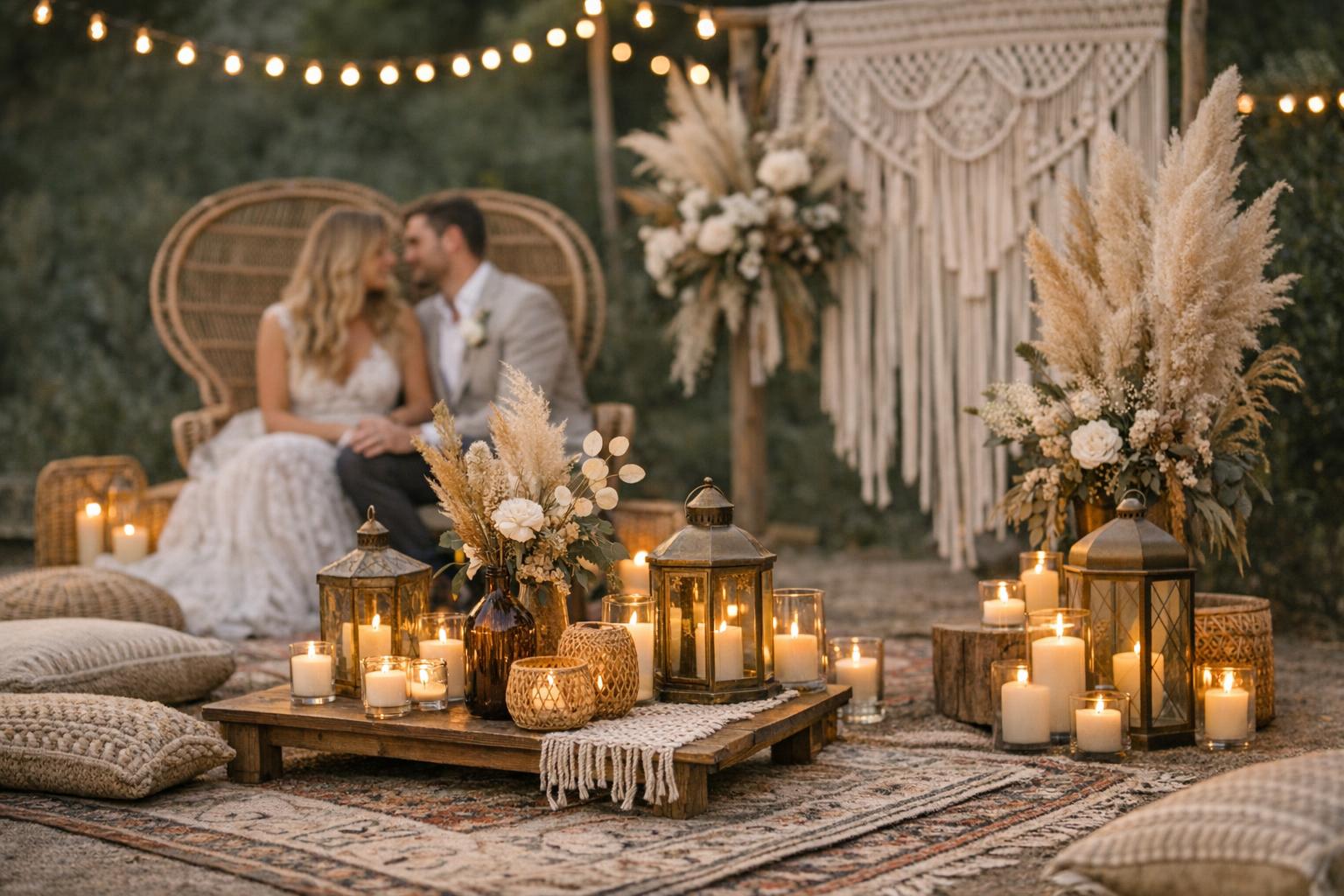
Boho wedding decorations are all about creating an effortlessly curated space that feels warm, natural, and personal—layered textures, organic materials, and mood-setting light that makes everything look and feel romantic. Done well, boho wedding decor doesn’t look “themed” so much as it looks lived-in and intentional: pampas grass and dried florals alongside greenery, macramé and textiles alongside wood and wicker, and a color story that ties it all together from the ceremony backdrop to the reception tablescape.
This guide breaks the look into practical building blocks you can mix and match for your venue and budget. You’ll find signature elements (pampas grass, macramé, layered textiles, lighting), venue-driven ideas (rustic barn, beach/coastal, garden/outdoor), a DIY vs. hire decision framework, sustainability-minded approaches like reusing and renting, and a vendor checklist to keep your vision consistent.
What Defines Boho Wedding Decor in 2026
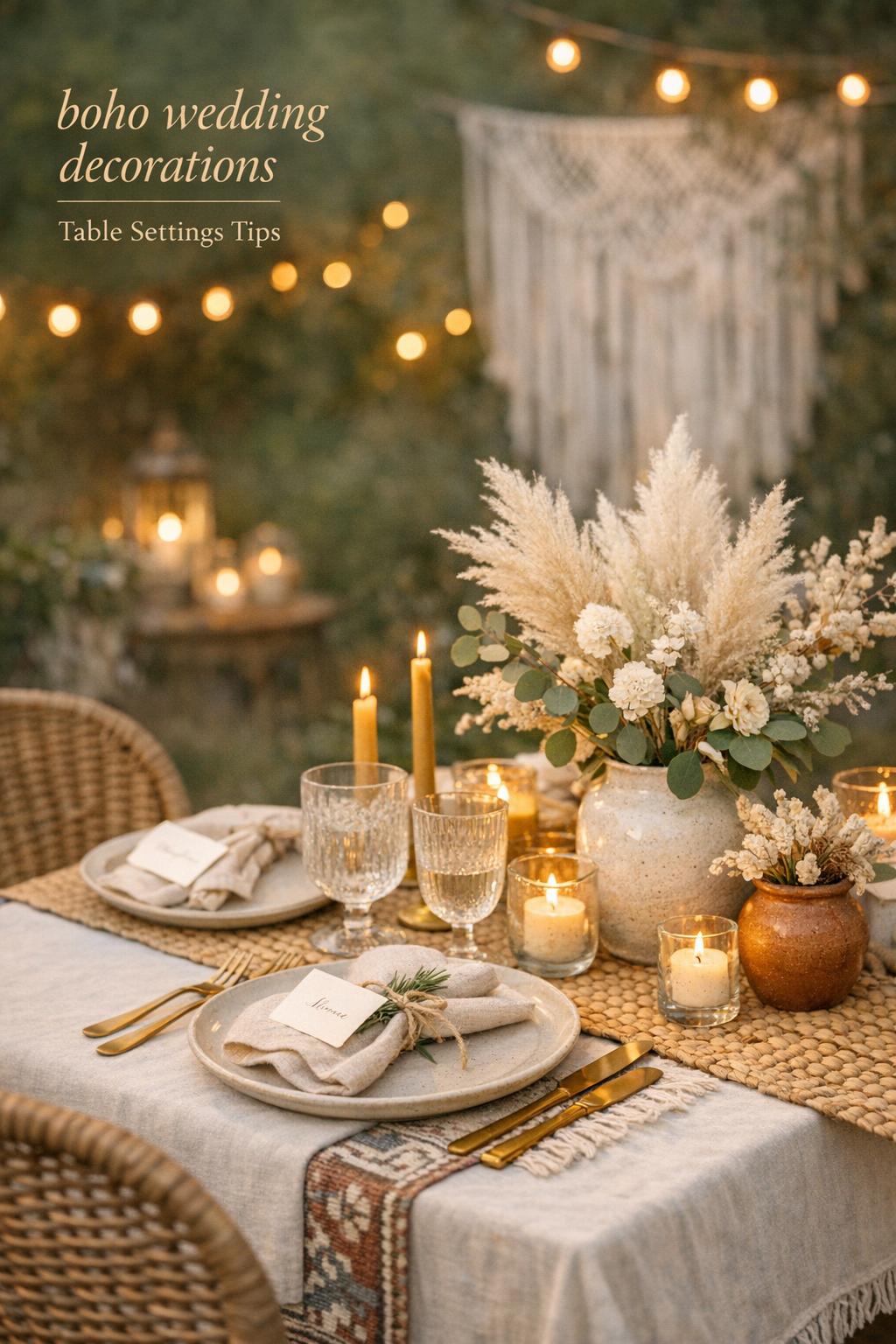
Modern boho wedding decor blends “earthy wedding decor” with artisanal detail. Think natural textures (wood, rattan, greenery), soft-to-structured textiles (woven runners, rugs, macramé), and styling that feels eclectic but cohesive. The most recognizable bohemian wedding ideas rely on layering—multiple materials and finishes working together—rather than a single statement piece doing all the work.
In 2026-style boho, couples often aim for a dreamy, airy look that photographs well: pampas grass and fluffy accents, warm ambient lighting, and a clear color palette (soft neutrals with earthy tones, or richer accents that still feel grounded). Instead of matching everything perfectly, the goal is to coordinate through repeated textures and tones.
Tip: Before buying or renting anything, choose three “anchors” that you will repeat throughout the day: one texture (like macramé or woven textiles), one natural element (like greenery or wood), and one lighting style (like lanterns or string lights). These anchors make mixed pieces feel intentional.
Signature Boho Decor Elements
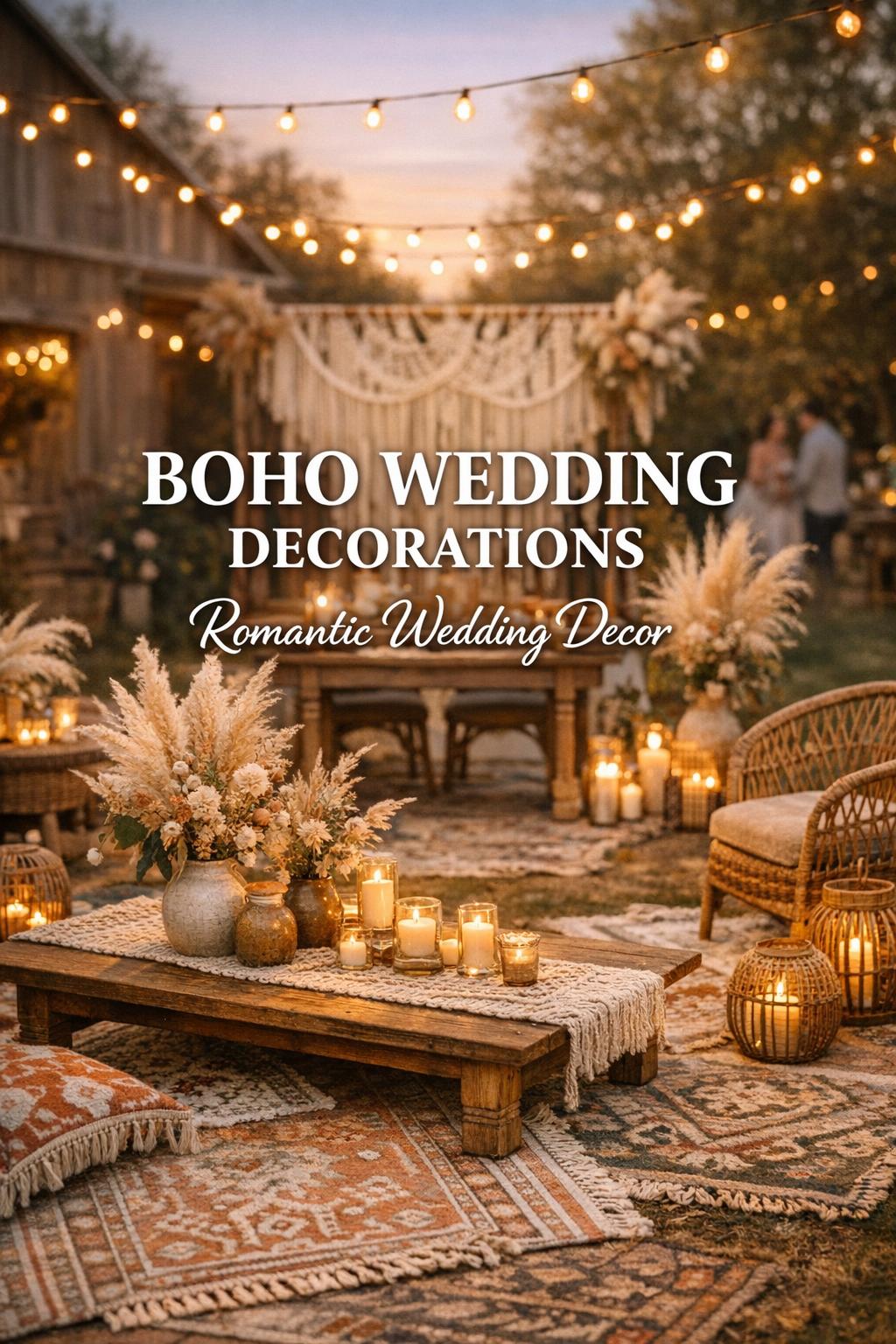
Boho wedding decorations become much easier to plan when you treat them like a toolkit. You don’t need every trend—just a few signature elements repeated thoughtfully across the ceremony, cocktail hour, and reception.
Pampas Grass and Fluffy Accents
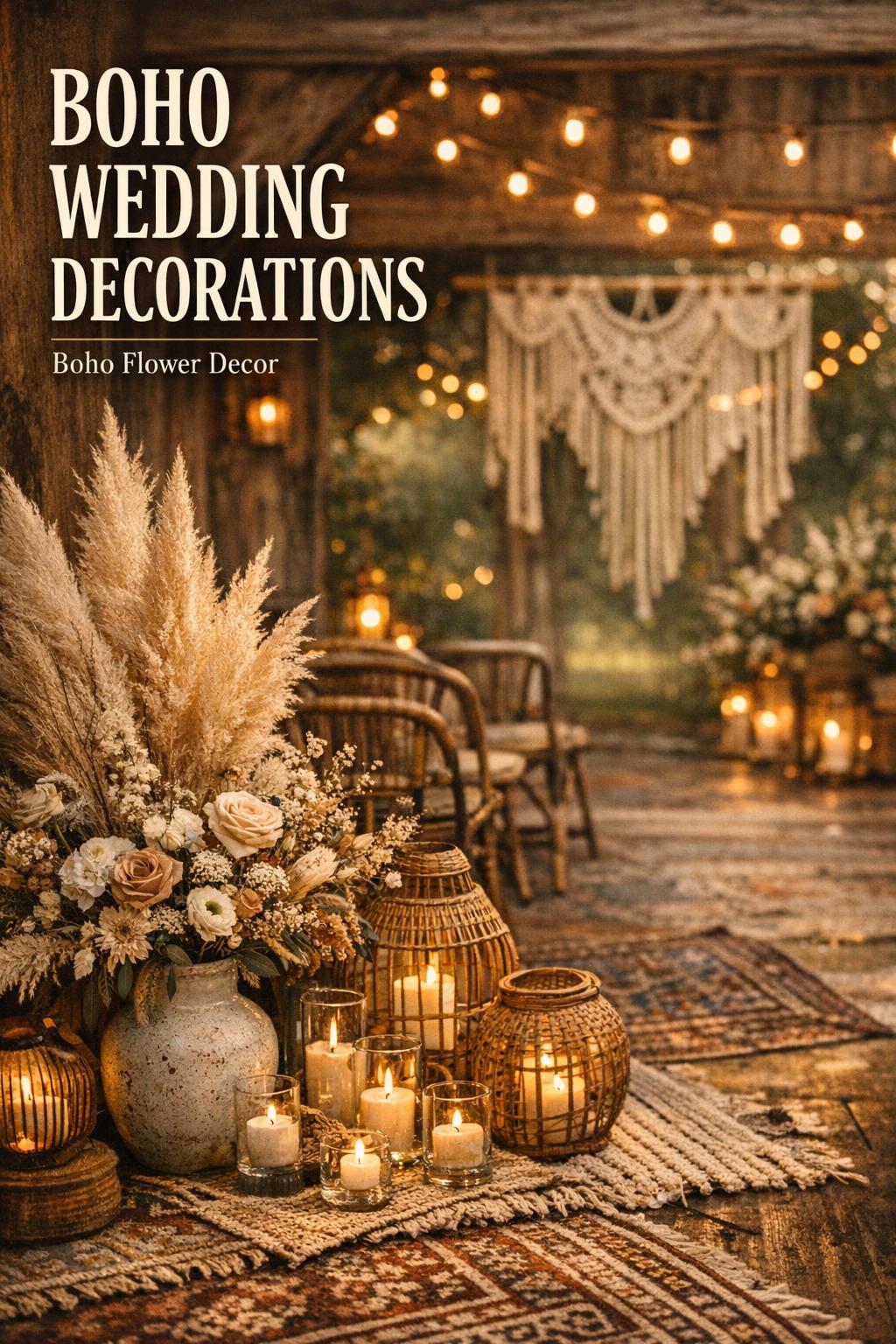
Pampas grass wedding decor is one of the clearest shortcuts to a boho look because it adds height, softness, and movement. It works as a focal feature (like an altar installation) or as a repeating accent (on aisle markers, welcome areas, and reception displays). Pampas pairs naturally with dried flower decor and with greenery for a balanced mix of airy and lush.
Use pampas in areas where it can be appreciated up close and photographed from multiple angles. For example, an altar arrangement that frames the couple, or a ceremony aisle “meadow” effect that creates depth from the start of the aisle to the focal point.
- Altar focal: A pampas grass altar decor moment with a grounded base and asymmetrical volume for a relaxed shape.
- Aisle details: Low clusters that echo the altar’s textures without competing with it.
- Reception accents: Pampas as supporting texture in centerpieces or on display areas where you want soft volume.
Tip: Keep pampas and other fluffy accents consistent in tone (for example, creamy neutrals) so the overall look stays cohesive even if you mix different shapes and sizes.
Macramé, Textiles, and Layered Textures
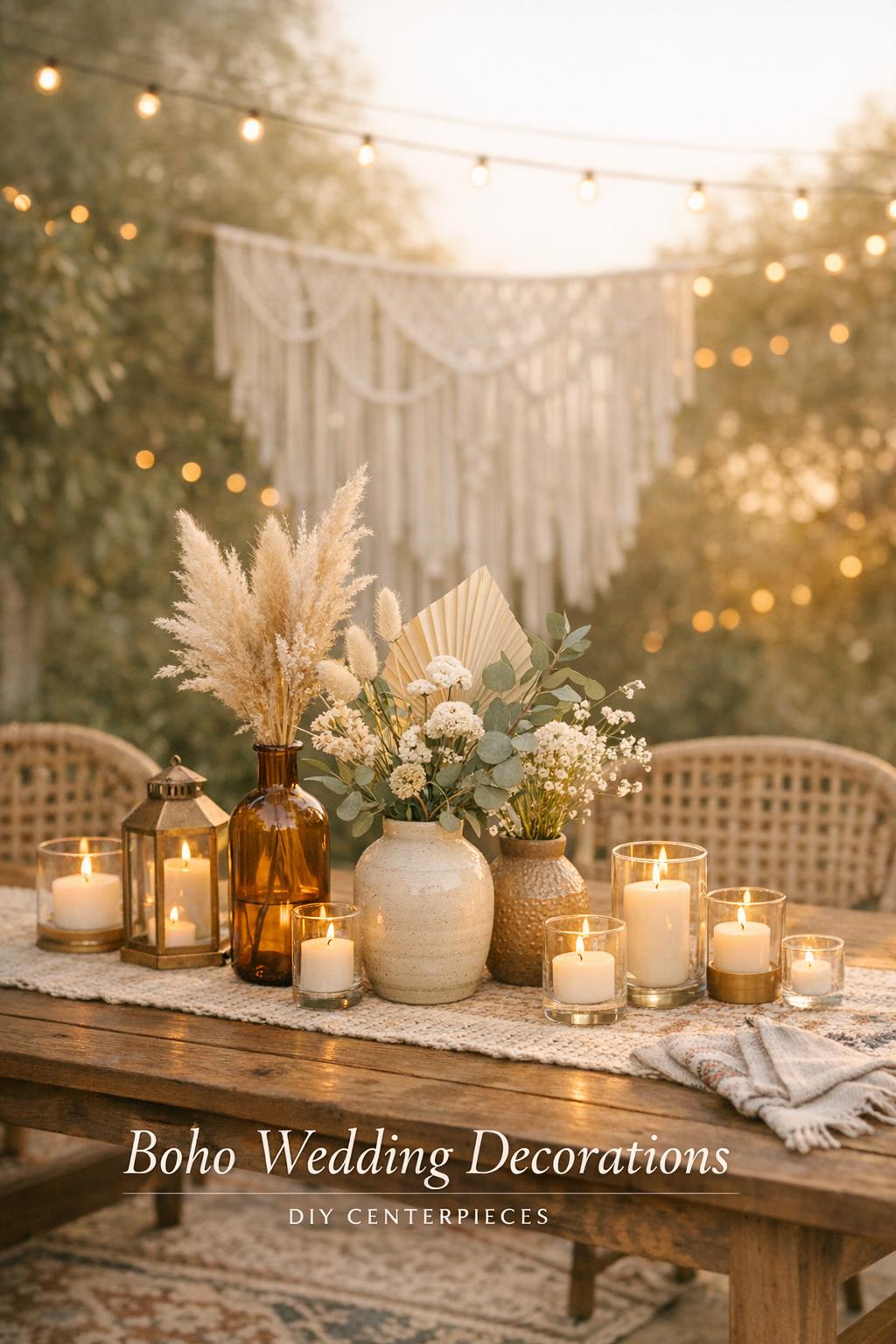
Macramé and textiles are foundational to boho wedding decor because they create instant depth and a handmade feel. A macramé boho wedding backdrop can define the ceremony space even in a simple venue, while woven runners and layered linens turn an ordinary table into a boho wedding reception tablescape.
Layering is where boho styling shines. Instead of choosing one fabric and repeating it everywhere, combine textures that share a similar “weight” and mood: woven plus gauzy, tactile plus soft. This layered approach also supports an eclectic wedding decorations vibe without looking chaotic.
- Ceremony backdrop: A macramé backdrop behind the altar area, paired with natural elements like greenery or dried accents.
- Table layers: Base linen + textured runner + small textile accents that echo the ceremony details.
- Lounge or seating zones: Textiles that make the space feel welcoming and styled, especially outdoors.
Tips for texture balance: If you go heavy on macramé and woven details, keep florals and accessories more natural and simple. If you go bold with florals or metallic accents, use textiles as a grounding layer rather than the star.
Natural Elements: Wood, Wicker, and Greens
Natural wedding decor is at the heart of boho: wood tones, wicker or rattan textures, and greenery that brings life to the space. These elements help boho wedding decorations feel organic and venue-friendly—especially in outdoor settings where the surroundings become part of the design.
Greens can be used as lush framing (around a ceremony focal) or as a repeating detail (on tables, signage areas, and entry moments). Wood and wicker add warmth and structure, making the overall look feel grounded even when you use airy textiles and dried florals.
- Wood touches: Natural wood textures integrated into display areas and focal points.
- Wicker/rattan: Seating and accent pieces that soften modern spaces and complement rustic venues.
- Greenery: A unifying thread that can connect ceremony and reception styling.
Tip: If your venue already has strong natural wood features (barn beams, rustic interiors), lean into softer textiles and greenery rather than adding more wood. If your venue is modern or minimal, wood and wicker can provide instant warmth.
Lighting That Feels Ethereal
Boho lighting ideas are often what turns “pretty decor” into a full atmosphere. Warm wedding lighting—candles, string lights, lanterns—adds glow, creates depth in photos, and makes the space feel intimate. Lighting also helps your boho decor work across transitions, especially from daylight ceremonies to evening receptions.
Instead of scattering random light sources, decide where you need the most impact: the ceremony focal, the dining area, and any photo-worthy setups like a sweetheart table or lounge zone. Then repeat the same lighting style so the venue reads as one cohesive environment.
- Overhead glow: String lights for ambient warmth in reception areas.
- Grounded warmth: Lanterns and candle clusters for pathways, entry moments, and tables.
- Focal lighting: A concentrated warm glow at key photo areas to highlight textures like pampas and macramé.
Tip: Choose warm-toned lighting to complement earthy wedding colors and natural textures. A consistent warmth makes mixed materials—wood, textiles, greenery—look harmonious.
Color Stories for Boho
A boho color palette works best when it supports texture. Many couples lean into soft neutrals with earthy accents for a calm, airy aesthetic, while others prefer richer tones that still feel natural and grounded. Either approach can look bohemian if you keep the palette intentional and repeat it across materials: linens, florals, signage styling, and key decor moments.
The simplest approach is to choose a base of neutrals and add a limited set of accent shades. The more eclectic the textures and objects you use, the more important it becomes to keep the palette tight so the final look feels curated.
- Soft neutral boho: Creamy tones with earthy accents for an airy, dreamy feel.
- Earthy boho: Grounded tones paired with greenery and natural materials.
- Eclectic boho: A defined set of bolder accents layered into the same natural-texture foundation.
Tips for choosing a palette: Pull your palette from three places: the venue surroundings (wood, sand, garden greens), the textures you love (macramé, woven textiles), and one standout floral/dried element you want to feature.
DIY vs. Hire: Planning Your Boho Decor on a Budget
DIY boho wedding decor on a budget is appealing because many signature elements are buildable: macramé backdrops, layered textiles, simple signage styling, and small pampas or dried accents. At the same time, some items are easier to rent or hire out—especially pieces that require scale, structure, or a lot of setup time.
A practical framework is to DIY the “repeatable details” and hire or rent the “high-impact infrastructure.” Repeatable details include tabletop textiles, smaller decor clusters, and simple entry moments. High-impact infrastructure includes large ceremony installations, extensive lighting coverage, or any focal moment that must look perfect from multiple angles.
- Best to DIY: Layered table textures, small decor vignettes, simple boho signage styling, and personal touches that don’t require heavy transport.
- Best to rent: Lounge pieces, larger furniture elements, and consistent sets of decor items (like lantern groupings) that would be costly to buy in quantity.
- Best to hire: Major ceremony focal installations and anything that needs professional-level setup and teardown coordination.
Tip: If you’re torn between DIY and hiring, ask one question: “Will I be upset if this looks slightly imperfect in photos?” If the answer is yes, that’s a strong sign it belongs in the hire/rental category.
Venue-Driven Boho Decor: Ideas by Setting
Boho wedding decorations should respond to the setting rather than fight it. The most successful boho spaces look like they belong there—rustic venues get softened with textiles, beaches get warmed with natural texture, and gardens get styled with layered details and intentional lighting.
Rustic Barn Boho
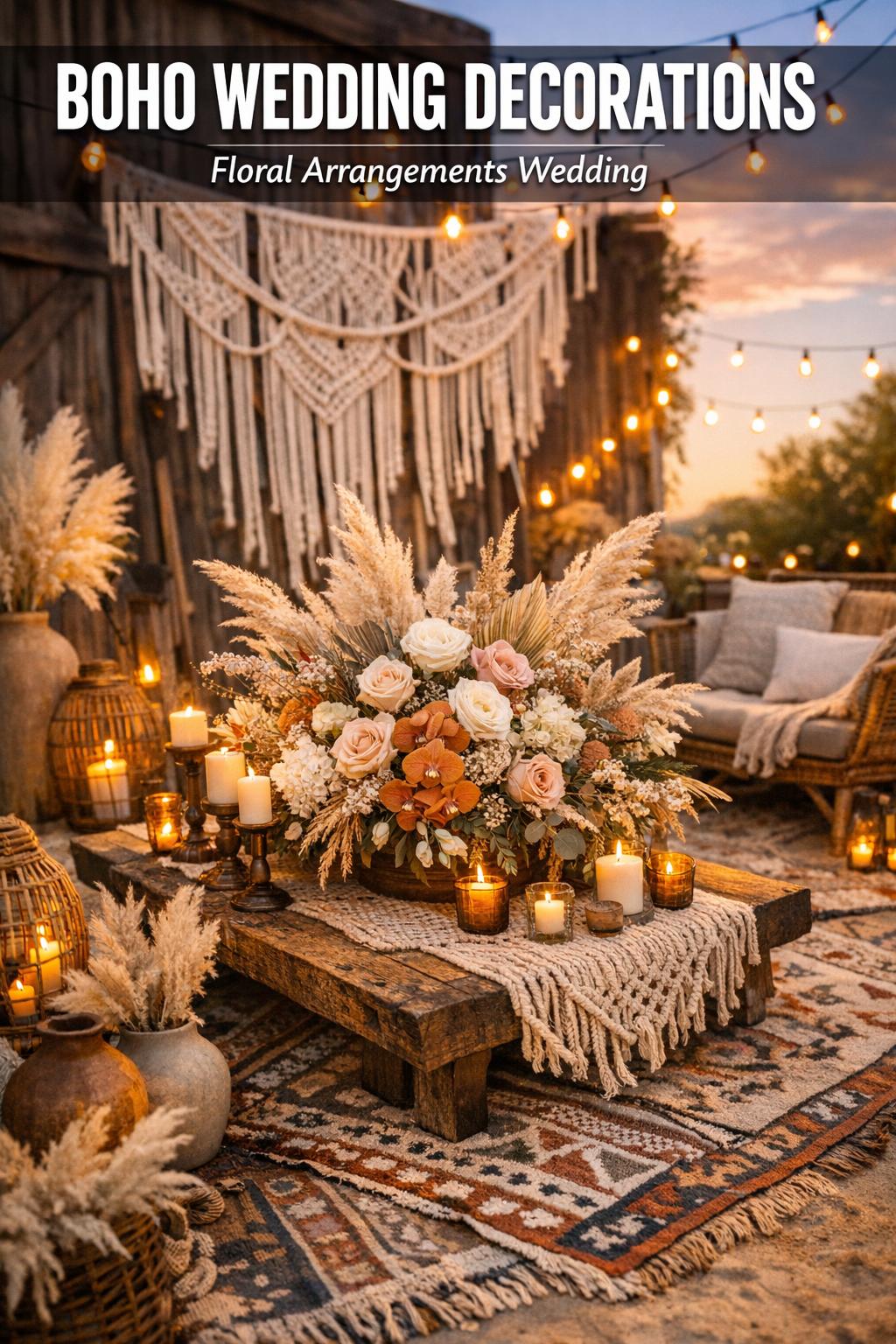
Rustic boho wedding decor is a natural pairing because barn venues already provide wood texture and architectural warmth. The key is to balance those strong structural features with softness: layered textiles, greenery, and airy accents like pampas grass. This creates a rustic-chic wedding decor blend that feels elevated rather than heavy.
Focus on creating a few photo-focused vignettes: a ceremony focal that contrasts with the wood backdrop, an entry or welcome moment, and a reception tablescape that brings texture to the dining space without competing with the venue’s character.
- Ceremony: A macramé or textile-based backdrop with greenery and pampas to soften barn lines.
- Aisle: Low, natural clusters that keep sightlines open while adding romantic texture.
- Reception: Woven runners, natural accents, and warm lighting that highlights wood tones.
Tips for barn venues: Use textiles to “absorb” the visual weight of wood. If your space feels dark, lean into warm lighting and lighter neutrals to keep the mood airy.
Beach or Coastal Boho
Beach boho wedding decor is most successful when it stays light and natural: airy fabrics, driftwood-like textures, and boho staples such as pampas grass used thoughtfully. Coastal settings already bring a strong visual identity, so the goal is to complement it with natural wedding decor rather than overwhelm it.
Think in layers that move well in an open-air environment: textiles that drape, natural elements that echo the shoreline, and warm lighting that makes evening receptions feel intimate after sunset.
- Ceremony focal: A simple boho altar moment with pampas and natural textures that won’t feel too heavy.
- Color story: Soft neutrals and earthy tones that harmonize with sand and sky.
- Reception mood: Lanterns and warm lighting to bring glow to a wide-open space.
Tip: Keep coastal boho decor streamlined. Choose one hero texture (like pampas) and one hero textile (like a woven or gauzy layer), then repeat them consistently.
Garden or Outdoor Boho
Garden boho wedding decor shines when you treat nature as your backdrop and add just enough styling to feel intentional. Outdoor settings benefit from layered textures that define spaces: a ceremony zone with a clear focal point, a reception area with warm lighting, and small decor moments that guide guests through the venue.
Because natural light changes throughout the day, outdoor boho setups should be planned for how they’ll look at different times—daylight softness for the ceremony and warm glow for evening. This is where lighting and textiles work together to maintain the mood.
- Define the altar: Use a macramé or textile element plus greenery to frame the ceremony space.
- Layer the tables: Woven runners and natural accents for a boho wedding reception tablescape that fits the setting.
- Plan the glow: String lights, lanterns, and candles to carry the look into nighttime.
Tips for outdoor styling: Choose decor that reads well from a distance (clear focal shapes, repeated textures) and also has up-close detail (woven layers, artisanal elements) for photos and guest experience.
Mood Boards and Visual Planning: Templates You Can Build
Boho wedding decor comes together faster when you plan visually. A boho wedding mood board helps you test whether your textures, colors, and focal ideas feel cohesive before you spend money or commit to rentals. You don’t need complicated software—just a consistent way to collect and compare.
Create a simple set of “templates” for your own planning: one board for your overall aesthetic, and smaller boards for each zone (ceremony, cocktail hour, reception). For each board, include examples of your chosen palette, textiles, lighting, and a few signature elements like pampas grass or macramé.
- Overall mood board: Your color story, three anchor textures, and the emotional tone (dreamy, earthy, romantic, eclectic).
- Ceremony board: Altar focal, aisle styling, and key photo angles.
- Reception board: Tablescape layers, lighting plan, and any lounge area inspiration.
- Detail board: Small moments like signage styling and decor vignettes.
Tip: Limit each board to a manageable set of images or references. Boho is naturally eclectic; a tight selection keeps the final plan cohesive rather than scattered.
Photo-Focused Inspiration: Decor Moments That Always Work
Many boho wedding ideas show up again and again for a reason: they create strong focal points, photograph beautifully, and can be adapted for different venues. Instead of trying to decorate every inch, prioritize a few high-impact moments and support them with repeated textures elsewhere.
The Ceremony Focal (Your “Anchor” Photo)
Your ceremony focal is the most viewed and photographed decor moment of the day. This is where boho wedding decorations like pampas grass, greenery, and macramé backdrops can work together in a single, cohesive installation. Even a simple structure can feel elevated when the textures are layered intentionally.
Tip: If you have one place to concentrate budget or rental resources, make it the ceremony focal. It sets the tone immediately and continues to pay off in photos.
The Reception Tablescape (Texture Over “Stuff”)
A boho wedding reception tablescape is less about piling on decor and more about building texture. Start with linens, add a woven runner or layered textile, then bring in natural elements—greens, dried accents, or a small pampas touch. When your tables have depth, the entire room looks styled even if you keep accessories minimal.
Tips for a cohesive tablescape: Repeat the same runner texture on most tables, keep the color story consistent, and use a few matching elements (like lanterns or candle clusters) to unify the room.
Lighting Vignettes (Warm Pools of Glow)
Lighting vignettes—small clusters of lanterns, candles, or string-light zones—create pockets of warmth that feel romantic and “boho” without needing excessive decor. They also help transition the look from day to night, especially in outdoor receptions.
The “Global Vibe” Layer (Eclectic, But Intentional)
Boho decor often includes an eclectic layer—patterns, artisanal textures, and unexpected pairings that create a collected look. The key is to add this “global vibe” through a few repeating motifs rather than mixing everything at once. When your palette and anchor textures are consistent, this eclectic layer feels curated.
Tip: If you’re unsure whether a detail fits, check it against your anchors. If it matches your palette, complements your textiles, and doesn’t introduce a competing style, it likely belongs.
Vendor Guide: Questions to Ask for Boho Decor
Boho wedding decor relies on coordination across florals, rentals, and setup logistics. Whether you’re working with a florist, a rental company, or a coordinator, clear questions help protect your vision and prevent mismatched textures or last-minute surprises.
- About the overall look: “How will you help keep the palette and textures consistent across ceremony and reception?”
- About focal points: “What are your recommendations for a ceremony focal using pampas, greenery, and/or a macramé backdrop?”
- About sourcing: “Which elements are best to rent versus buy for this style?”
- About setup: “What is your setup and teardown plan, and what time access do you need?”
- About substitutions: “If a specific texture or item isn’t available, what are your approved alternates?”
- About photos: “Which decor moments do you consider most photo-impactful for boho styling?”
Tip: Bring a simple one-page reference to every vendor conversation: your color story, three anchor textures, and two or three must-have decor moments (like pampas altar styling or warm lantern lighting). This keeps every decision aligned.
Sustainability and Longevity in Boho Decor
Boho wedding decorations are naturally well-suited to sustainability because many elements can be reused, repurposed, or rented. Textiles, lanterns, wicker accents, and certain natural-look decor pieces often have a long life beyond the wedding day when chosen thoughtfully.
Start by identifying what you want to keep and reuse (items that fit your home style or could be used for future gatherings), what you can rent (large items or sets), and what can be repurposed within the wedding itself (ceremony elements that move to the reception).
- Reuse-friendly pieces: Textiles, woven runners, lantern-style decor, and certain accent pieces that can become home decor.
- Rental-friendly pieces: Larger furniture and lounge elements, consistent sets of decor accents, and major styling components.
- Repurpose within the event: Ceremony focal elements that can move behind the sweetheart table or into a reception display area.
Tip: When you buy decor, choose pieces that look intentional in everyday life: neutral textiles, classic lantern shapes, and natural textures that can live on a shelf or wall after the wedding.
Final Checklist: Boho Decor Timeline and Budget Tips
A boho look is easiest to execute when you plan it as a series of zones and priorities rather than a long shopping list. The goal is to secure the big “anchors” early (palette, focal plan, lighting approach), then fill in repeatable details as you refine your layout and guest experience.
- Start with your anchors: Choose your boho color palette, three core textures (like macramé, woven textiles, greenery), and your lighting style.
- Define your zones: Ceremony focal, aisle, entry/welcome, reception tablescape, and at least one photo-worthy vignette.
- Decide DIY vs. hire: DIY repeatable details; rent or hire high-impact infrastructure.
- Plan repurposing: Identify which ceremony elements can move to the reception for maximum impact.
- Keep it cohesive: Repeat the same few elements across multiple areas instead of introducing new ones in every zone.
Budget tips that protect the boho look: Spend where guests and photos will notice most (ceremony focal, lighting, and tablescape textures). Save by simplifying the number of decor zones, choosing repeatable accents, and focusing on layered textiles and natural elements instead of many separate statement items.
FAQ
What are the must-have elements for boho wedding decorations?
The most recognizable boho wedding decorations usually include layered textiles (like woven runners or rugs), a natural element (greenery, wood, or wicker), and mood-setting warm lighting, often supported by signature accents like pampas grass and macramé for a soft, artisanal feel.
How do I create a pampas grass altar decor look without overdoing it?
Choose one pampas-forward focal point at the altar and keep the rest of the ceremony details lighter and lower, repeating pampas only as a subtle accent in aisle clusters or reception vignettes so the overall look stays airy and intentional.
What’s the easiest DIY boho wedding decor project that still looks high-impact?
Layering textiles on reception tables is one of the simplest high-impact DIY approaches: a base linen plus a woven or textured runner immediately creates depth, and it pairs naturally with greenery, dried accents, and warm lighting.
How do I choose boho wedding color palettes that feel cohesive, not messy?
Pick a base of soft neutrals and limit yourself to a small set of earthy or bolder accent tones, then repeat those tones across textiles, florals, and decor moments so the eclectic textures read as curated instead of chaotic.
What boho wedding décor ideas work best for outdoor venues?
For outdoor settings, focus on a clear ceremony focal (often using macramé, greenery, and pampas), layered textures on tables, and warm lighting like lanterns or string lights to keep the atmosphere consistent from daylight into evening.
Should I DIY my macramé boho wedding backdrop or hire someone?
DIY can work well if you’re comfortable with the time and want a personal touch, but if the backdrop is your main ceremony focal and you want it to look consistently polished in photos, hiring or renting can reduce risk and setup stress.
How can I keep boho wedding decor on a budget without losing the style?
Prioritize a few high-impact zones (ceremony focal, tablescape textures, and lighting) and simplify everything else by repeating the same anchor textures and colors, using rentals for large items, and DIYing smaller, repeatable details.
Can pampas grass be reused after the wedding?
Many couples choose pampas and other natural-texture accents specifically because they can be kept as home decor or reused for future gatherings, especially when they’re selected in neutral tones that suit a variety of spaces.
What questions should I ask vendors to get the boho look right?
Ask how they’ll keep your palette and textures consistent across ceremony and reception, what they recommend for your focal moments (like pampas and macramé styling), what’s best to rent versus buy, and how they handle setup timing, teardown, and substitutions if an item isn’t available.
Leave a Reply