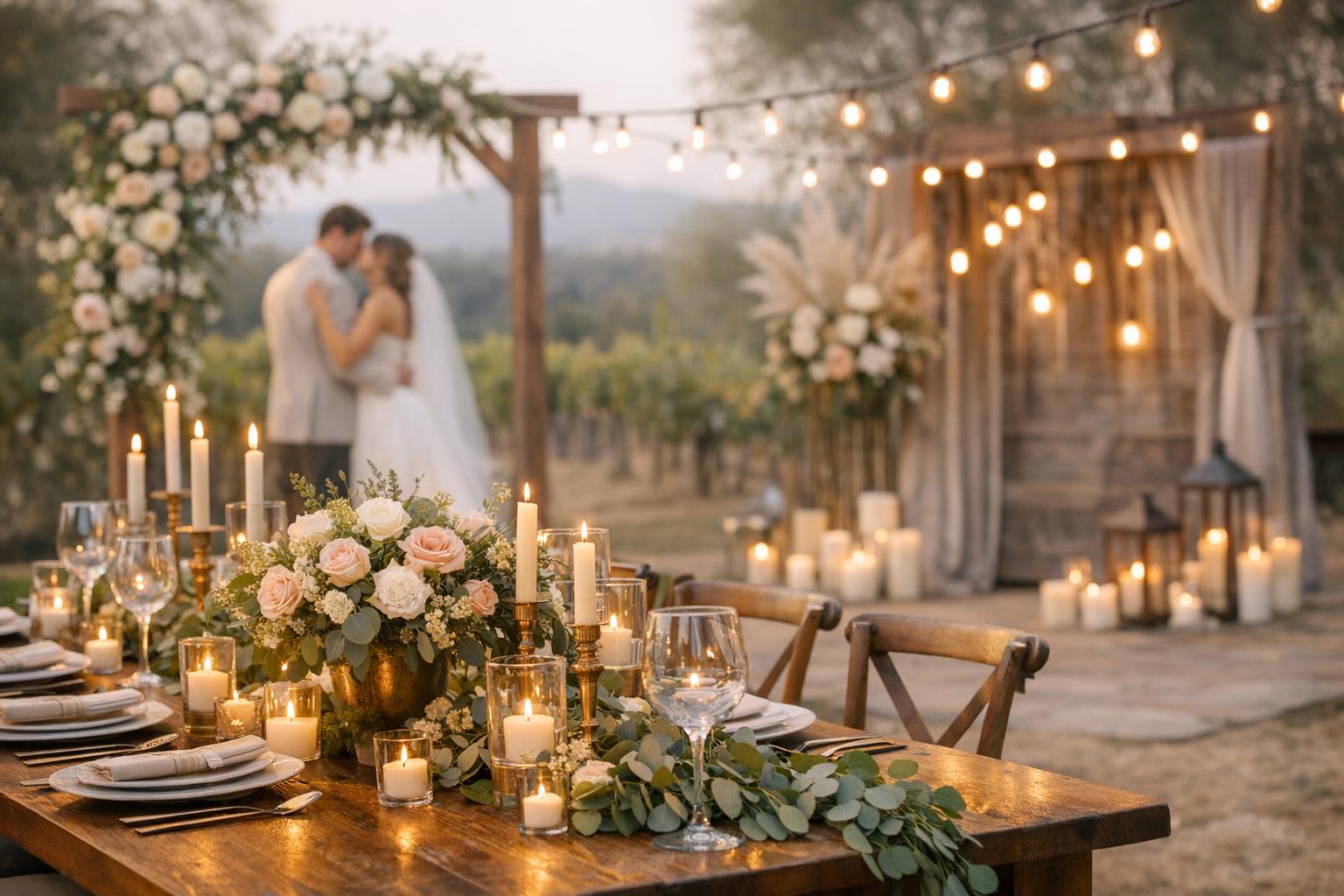
Wedding Decoration Ideas: The Ultimate Guide to Creating Memorable, Beautiful Venues
When you search for wedding decoration ideas, you’re usually trying to solve two things at once: how to make the day feel visually special, and how to pull the look together in a way that works for your venue, season, budget, and timeline. The most successful wedding decor doesn’t rely on one “wow” detail alone—it’s a set of coordinated choices across centerpieces, lighting, florals and greenery, tablescapes, and photo-ready moments that shape how guests experience the celebration.
This guide organizes wedding decor ideas into clear categories so you can move from inspiration to execution. You’ll find centerpiece and tablescape concepts, lighting ideas for wedding receptions, greenery and floral focal points, texture and color palette guidance, DIY vs. rental decision-making, and venue-specific approaches—from outdoor gardens to urban lofts to rustic barns. Throughout, the goal is a cohesive, guest-friendly design that also photographs beautifully.
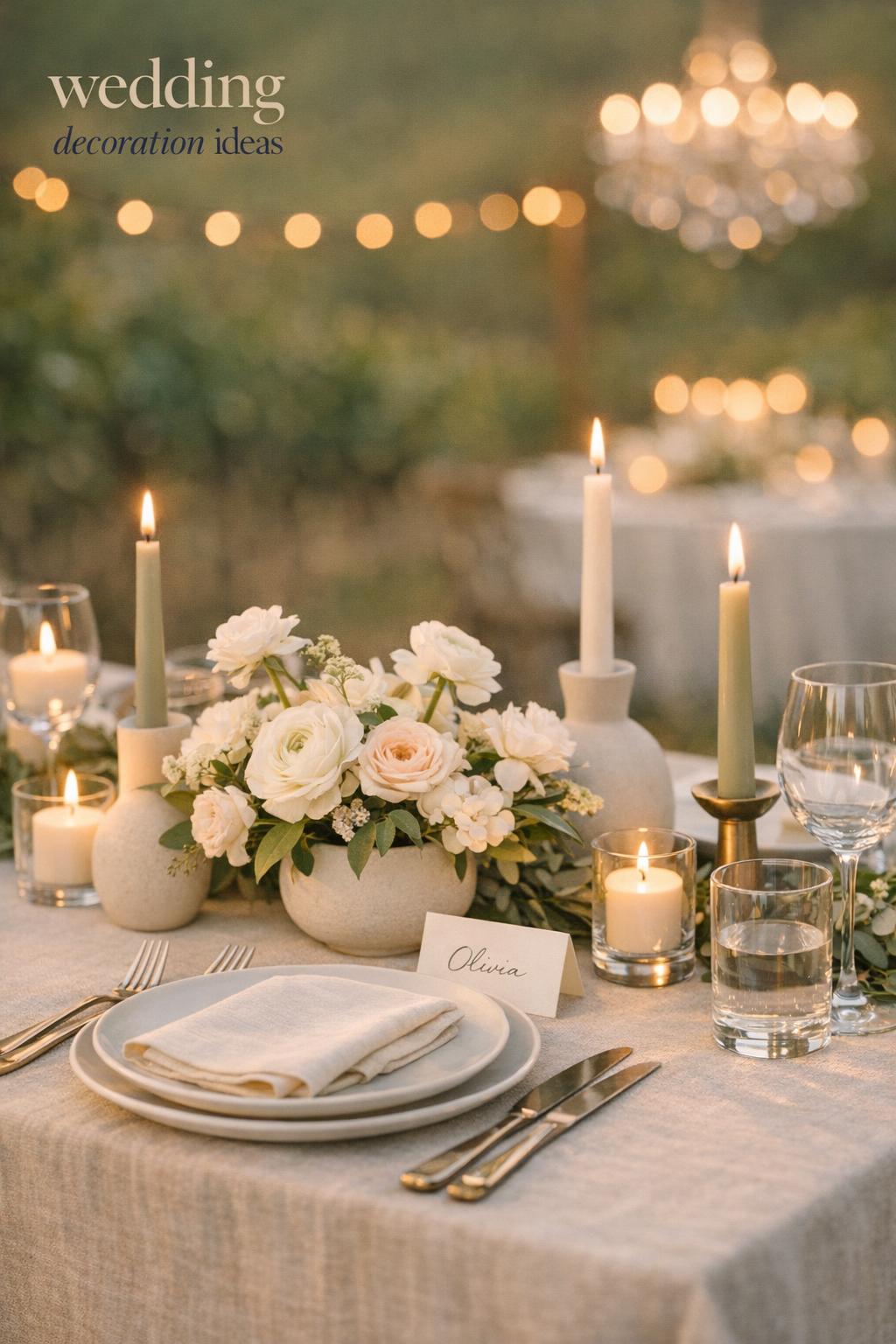
Quick-start: Define your wedding decor vibe
Before you pick individual decor items, define the “vibe” you want guests to feel when they walk into your ceremony and reception. Many wedding decor challenges—like centerpieces feeling mismatched or lighting looking harsh in photos—happen when decisions are made in isolation. A quick, intentional plan helps every detail feel connected.
How to choose a theme and color palette
Start with a short description of your style (romantic, glam, rustic, modern, minimalist, or a blend) and choose a color palette that will carry through florals, linens, lighting, and signage. Color is more than “what looks pretty”—it affects how textures read on camera and how the space feels once the lights dim at dinner.
- Pick 2–3 core colors and 1–2 neutrals to anchor the room
- Decide where your “metal” or accent tone appears (glassware, candleholders, chargers, signage details)
- Choose a primary texture direction (soft and romantic, airy and minimal, or layered and tactile)
- Keep one consistent element across spaces (a recurring greenery, a linen tone, or a lighting style)
Tip: If you feel stuck, choose your tablescape first. Once you know your linens, napkins, and centerpiece approach, it becomes easier to select coordinated signage, photo backdrop styling, and accent decor that won’t compete.
Aligning decor with venue and season
Venue and season should guide your decor choices as much as personal taste. An outdoor ceremony may need weather-ready designs, while a ballroom may benefit from scale and lighting that fills vertical space. Seasonal wedding decor can be as simple as adjusting textures (lighter in warm months, richer in cooler months) and selecting greenery and florals that feel natural for the time of year.
Tip: Make a quick list of “fixed” venue features you can’t change (ceiling height, wall color, window light, existing chandeliers, or garden landscaping). Your best wedding decoration ideas will complement these features instead of fighting them.
Core decor categories that define a wedding
Most weddings are remembered visually through a few core design categories: the tables (centerpieces and tablescapes), the overall mood (lighting and ambiance), the natural elements (florals and greenery), and the moments guests interact with (signage, backdrops, photo-ready accents). If you cover these categories thoughtfully, your decor will feel complete—even if you keep the budget under control.
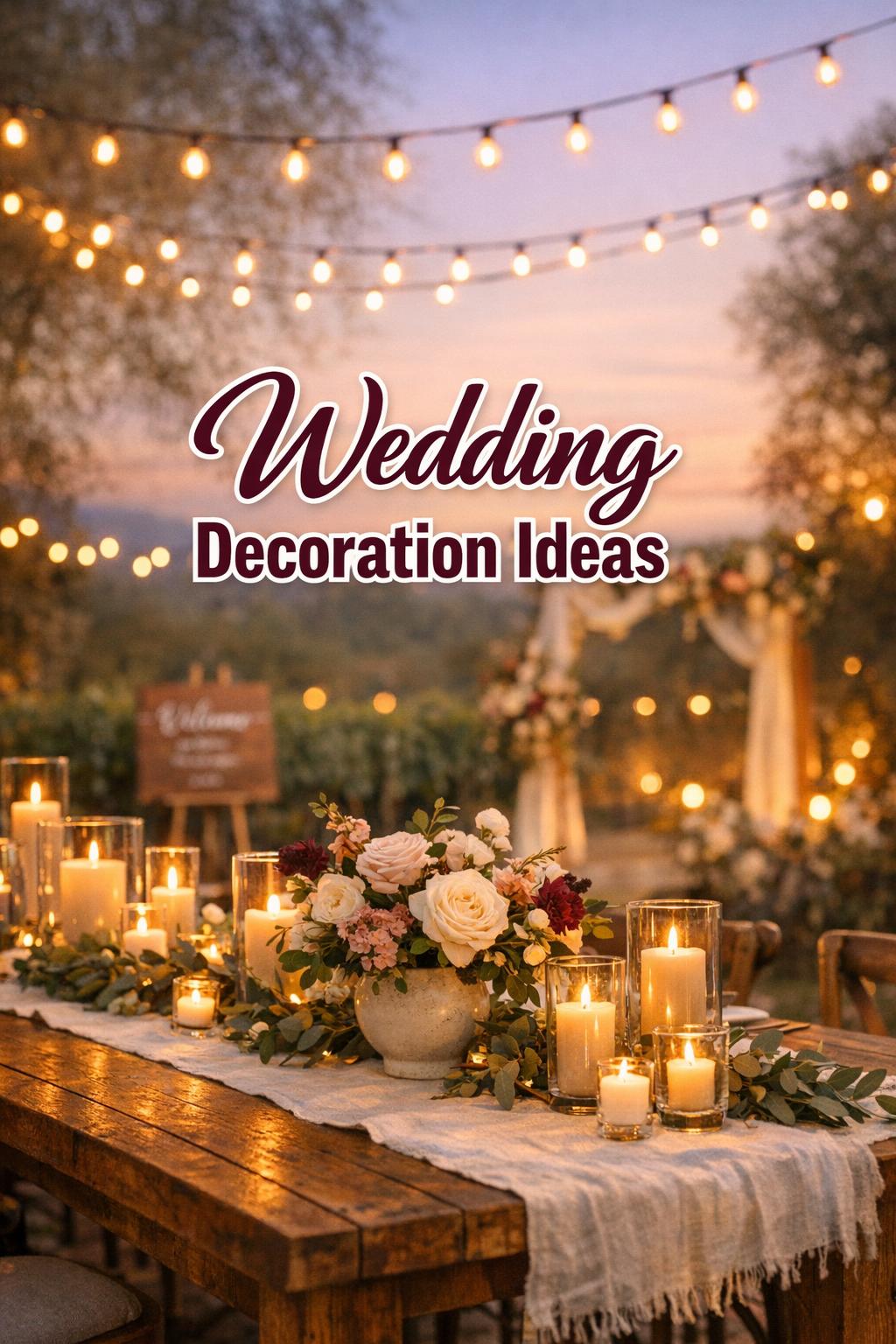
Centerpieces that anchor the tables
Centerpieces are the visual anchor of the reception because guests spend so much time at their tables. The most effective centerpiece ideas balance scale, texture, and visibility: they should feel intentional without blocking conversation. You can go classic (floral arrangements), modern (minimal compositions), or hybrid (greenery plus candles) as long as the look fits your overall tablescape.
- Low floral clusters: A compact arrangement that keeps sight lines open and makes room for place settings and glassware
- Statement vases: One sculptural vase with a focused floral moment can read modern and clean
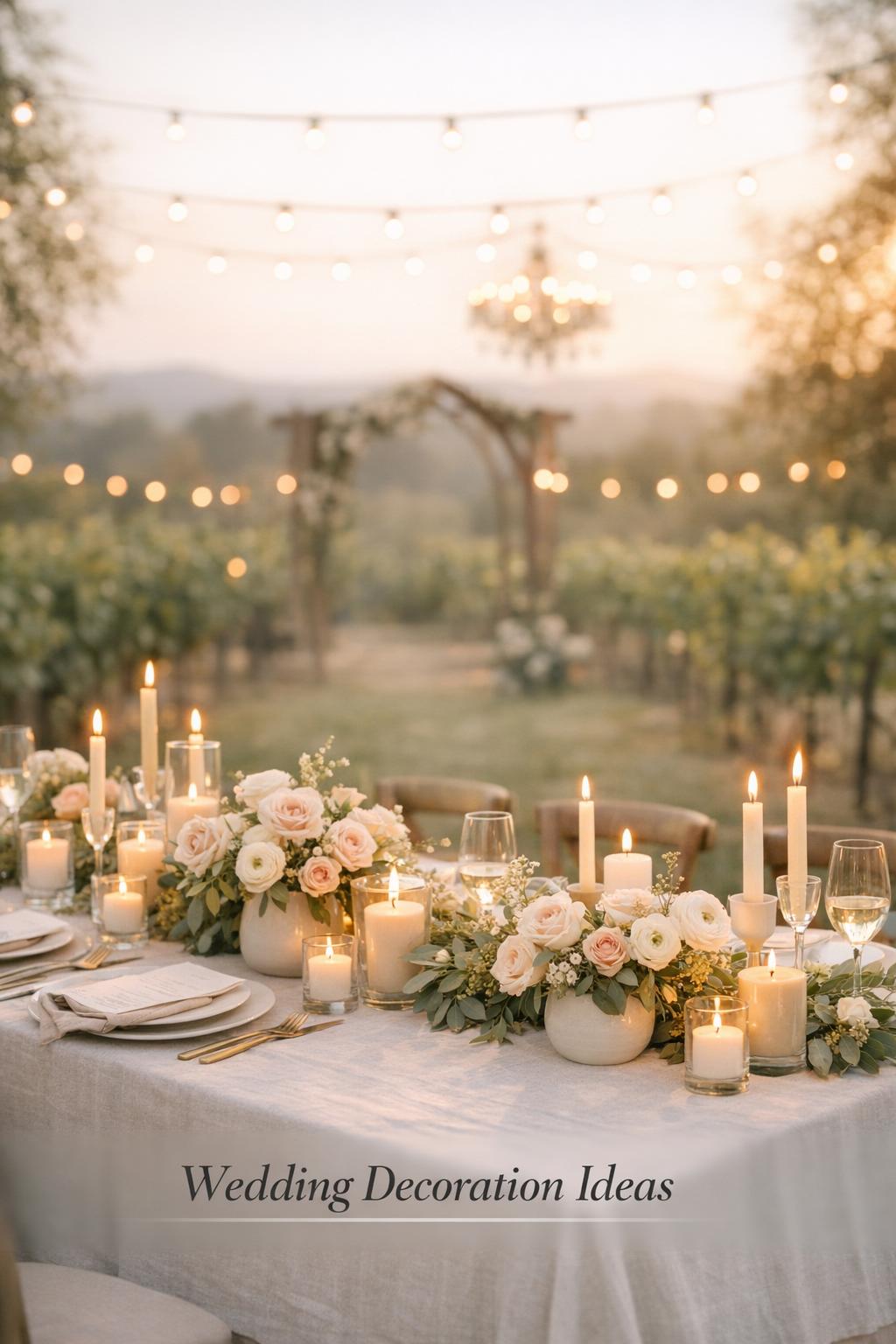
- Greenery garland runner: A continuous line of greenery ties long tables together and supports a romantic or rustic look
- Mixed-height candle groupings: Create glow and dimension without overwhelming the table footprint
- Hybrid centerpiece: A small floral piece paired with candles and textured accents for layered interest
Think like a tablescape designer: centerpieces aren’t separate from the place setting. They interact with linens, napkins, glassware, and any table accents. If your centerpiece is visually complex, simplify the linens and napkin treatment. If your linens are dramatic or heavily textured, keep the centerpiece shape more restrained.
Tip: Decide early whether your centerpieces need to be “camera-forward” from multiple angles. If your photographer will capture long, wide reception shots, a repeating pattern (garland plus candles, or consistent vase silhouettes) often reads more polished than a different centerpiece on every table.
Lighting that transforms mood
Lighting is one of the fastest ways to elevate wedding decor because it changes how everything looks: florals, skin tones, table textures, and the entire room’s atmosphere. Lighting ideas for wedding receptions typically fall into two layers—functional light (so guests can see comfortably) and mood light (so the room feels warm and intentional).
- String or bistro lights: A classic way to create a welcoming canopy effect, especially for outdoor or tented spaces
- Uplighting: Adds depth by washing walls with color or warm tones that match your palette
- Chandeliers or statement fixtures: Useful for creating a focal point and “finishing” a large venue
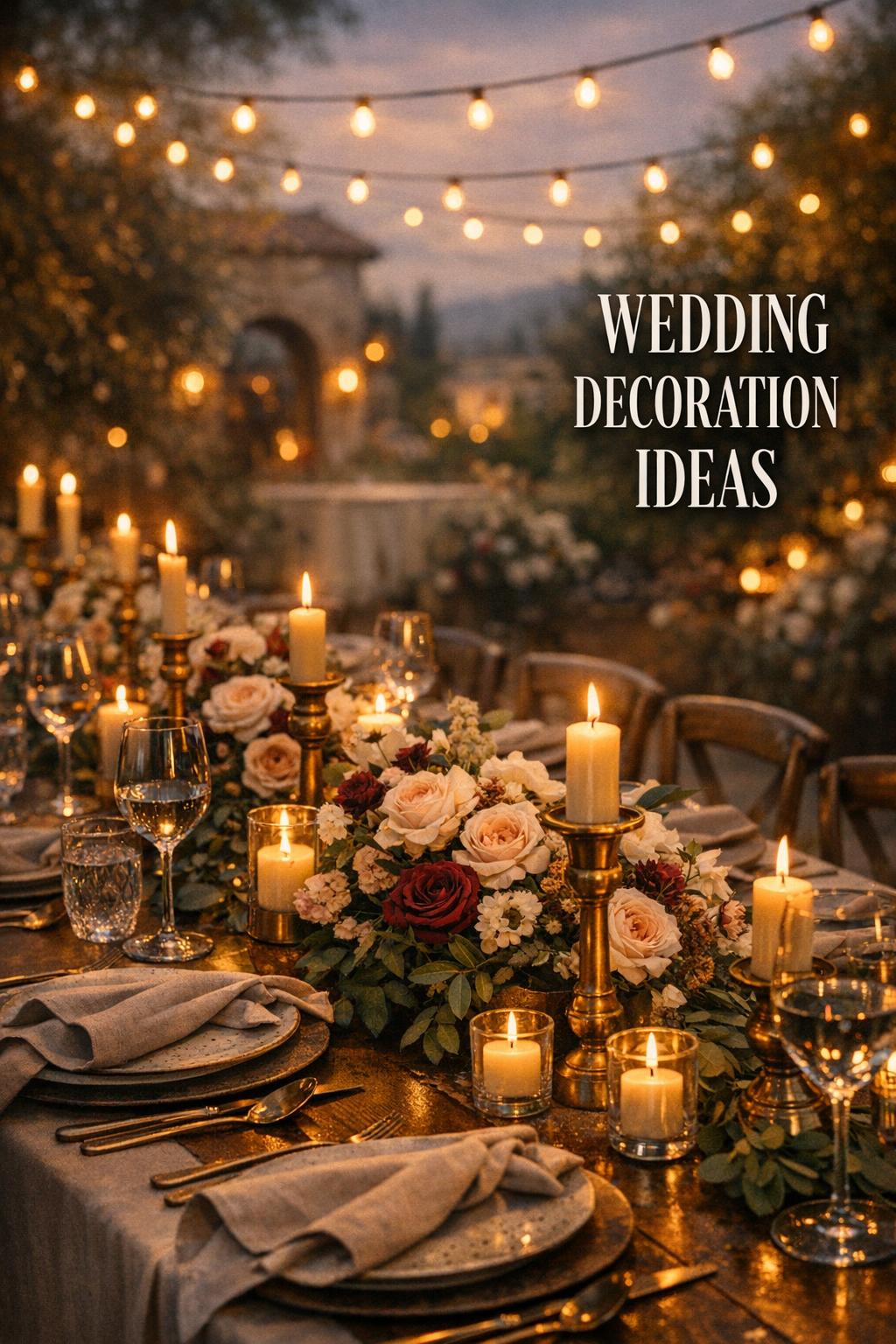
- Candlelight: Adds intimate glow at table level and pairs well with greenery and textured linens
- Pin-spotting for centerpieces: Highlights floral focal points and improves visual clarity in dim rooms
Lighting should support guest comfort. If the space gets too dim, menus and place cards become hard to read and faces can look shadowed in photos. If the space is too bright, the room can feel flat and less celebratory. Aim for warm, balanced light that makes your tablescape and florals look vivid while keeping the vibe inviting.
Tip: Walk your venue at the same time of day as your event, if possible. Natural light shifts dramatically, and your decor choices (especially color palette and glassware) may look different during golden hour versus after sunset.
Florals, greenery, and natural texture
Florals and greenery are often the most emotionally expressive decor element. They can be lush and romantic, airy and minimal, or structured and modern. Greenery wedding décor is also a versatile way to add scale—especially when used in garlands, arches, and overhead installations. Even when florals are limited, greenery can provide fullness and cohesion.
- Ceremony arch or focal arrangement: A single “big moment” that frames the vows and anchors photos
- Greenery garlands: Ideal for tables, stair rails, entry moments, or as a base layer for candles
- Floral focal points: Concentrate blooms where eyes naturally go—sweetheart table, escort card display, or ceremony backdrop
- Greenery ceiling installations: A dramatic way to use vertical space and make a reception feel immersive
- Grounded arrangements: Clusters at the base of signage or along an aisle to guide guests visually
Natural texture isn’t only about flowers. Pair greenery with textured linens, layered glassware, and warm lighting for depth. If your style is minimalist, keep the floral shapes intentional and repeat the same tones across spaces. If your style is rustic, lean into organic shapes and tactile materials without letting it become visually cluttered.
Tip: If you’re choosing between more florals or better lighting, remember that lighting affects everything in the room. A well-lit space can make simpler floral designs feel more elevated, while poor lighting can diminish even elaborate arrangements.
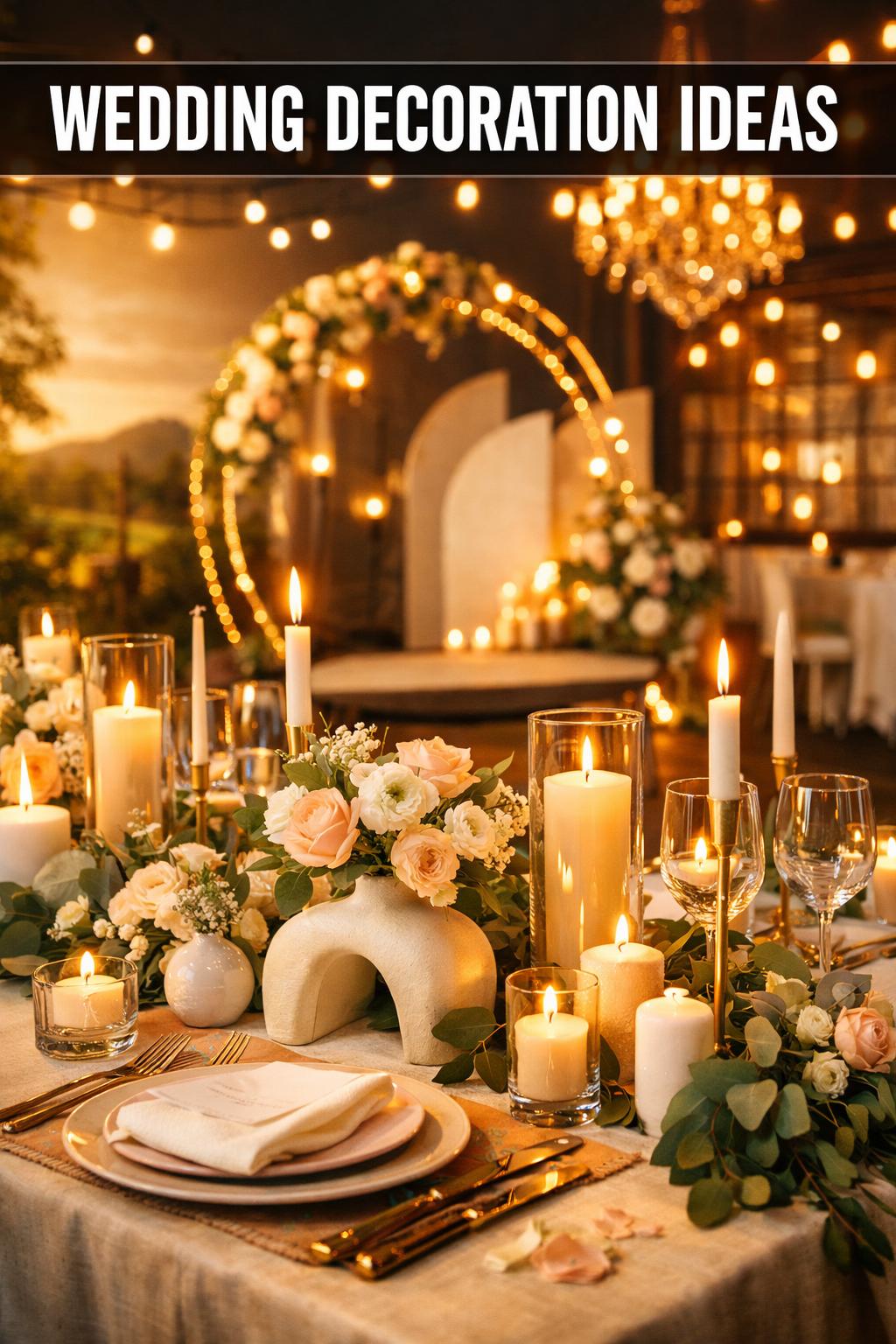
Tablescapes and textiles
Tablescape ideas are about composition: how the tabletop reads as a complete, balanced scene. Textiles—linens, runners, napkins, chair details—create the foundation. Then, details like colorful glassware, name cards, and napkin folds provide the finishing touch. When done well, tablescapes look “effortless,” but they’re actually the result of controlled repetition and intentional contrast.
- Linens: Choose a base tone that complements your centerpiece colors rather than competing
- Runners: Use a runner to define the center line and support garlands or candle groupings
- Napkin treatment: A consistent fold, wrap, or placement adds polish without a large cost
- Colorful glassware: Adds personality and can act as a subtle “color palette” amplifier
- Name cards: A small detail that signals care and elevates each place setting
Texture and color palettes matter here more than almost anywhere else because the table is photographed repeatedly. If your overall design includes many patterns, simplify the napkin and name card look. If your overall design is understated, a bolder napkin fold or textured runner can add dimension.
Tip: Keep guest comfort in mind. A beautifully layered table still needs room for plates, water glasses, and shared items. The best tablescapes balance style with usability.
Unique moments: memorable photo-ready accents
Beyond tables and lighting, weddings benefit from “moments”—small areas designed for guest interaction and photos. These can be as simple as a thoughtfully styled sign or as bold as a full photo booth backdrop. These accents help the day feel personal and give your decor story additional chapters outside the dining area.
- Photo booth backdrops: A dedicated photo area encourages guest engagement and captures your decor style
- Signage moments: Welcome signs, directional signs, and seating displays that feel consistent with your palette
- Guest-book corner: A styled surface with lighting and a small floral or greenery touch for polish
- Entry statement: A first impression moment using texture, greenery, or lighting to set the tone
- “Feature wall” styling: A decorative focal point that supports portraits and candid photos
These wedding decor ideas work best when they repeat the same visual language as your tables—similar greens, a consistent metal tone, or matching candlelight. The goal is for everything to feel like part of one event rather than separate design experiments.
Tip: Place photo-ready accents where guests naturally gather—near the entry, bar, or dance floor—so the decor gets used and photographed without forcing traffic.
DIY vs. rental: budget and practicality
Many couples mix DIY wedding decor ideas with rentals or professional services. The best approach depends on your schedule, your venue rules, your storage and transport options, and how precise the final look needs to be. A smart plan can keep costs grounded while still delivering high impact.
When to DIY and when to rent
DIY can be rewarding, but it comes with hidden demands: time, materials, trial runs, and setup logistics. Rentals simplify the process and often provide consistent quality and scale—especially for lighting and large decor pieces. Use decision criteria that reflect your real constraints.
- DIY works well for: small, repeatable items like simple table accents, basic signage, or consistent napkin treatments
- Renting works well for: lighting, large installations, and items where consistency and volume matter
- Consider DIY if: you have adequate time for prototypes and a plan for transport and setup
- Consider renting if: you want a polished look with fewer day-of tasks and fewer items to store
- Hybrid approach: rent the “big structure” pieces and DIY the personal details
Tip: If your venue has strict setup windows, renting can reduce stress. Many decor ideas require more time than expected once you factor in placement, spacing, and alignment across the room.
Step-by-step DIY decor ideas (with checklists)
If you enjoy hands-on projects, choose DIY decor ideas that are visually effective but operationally simple. The goal is to create repeatable pieces that look consistent across the venue, not one-off items that are hard to replicate. Below are practical projects that pair well with many themes and venue styles.
DIY idea: greenery-and-candle table runner look
This approach builds a cohesive tablescape with a simple formula: a central line of greenery with repeating candle clusters. It works in rustic, romantic, and even modern settings depending on your candleholders and linens.
- Materials: greenery garland(s), candleholders in a consistent finish, candles in a consistent color tone
- Prep steps: test one full table layout at home; photograph it in both bright and dim light
- Setup steps: place greenery first, then candles in repeating clusters; keep spacing consistent across tables
- Day-of check: confirm sight lines and ensure there’s enough space for plates and glassware
Tip: Consistency is what makes DIY look professional. Use the same candleholder style and repeat the same spacing rules on every table.
DIY idea: napkin folds and name card styling
Table setting enhancements can create a “designed” look without major expense. A consistent napkin fold and neatly placed name cards help every place setting feel intentional, especially in photos of the tables before guests sit down.
- Materials: napkins, name cards, pens/printing method, optional simple tie or wrap
- Prep steps: choose one fold and practice until it’s repeatable; assemble a sample place setting
- Setup steps: fold napkins assembly-line style; place name cards in one consistent location (on the napkin or above the plate)
- Quality check: scan the room for alignment and consistency before guests enter
Tip: If you’re using colorful glassware or textured linens, keep name cards clean and legible so the place settings don’t feel visually crowded.
DIY idea: simple signage moments
Wedding signage ideas can be as minimal as a welcome sign and a few directional signs, as long as the style matches your palette and tablescape. The key is cohesion—matching fonts, tones, and materials across all signs.
- Materials: sign boards or frames, consistent typography style, stands or easels
- Prep steps: create one visual standard (same color palette and layout rules for every sign)
- Placement: use signage to reduce guest confusion at entry points and transitions
- Styling: add a small greenery or floral touch to tie signage into the overall decor
Tip: Signs are most effective when they’re easy to read quickly and placed where guests naturally pause.
Seasonal and venue-specific wedding decoration ideas
Venue type heavily influences which decor ideas will look natural and which will feel forced. A great decor plan responds to architecture, ceiling height, and the surrounding environment. This section focuses on adapting the same core categories—centerpieces, lighting, florals/greenery, and photo moments—to different spaces.
Outdoor garden and vineyard ideas
Outdoor wedding decor ideas often work best when they highlight what the location already offers—greenery, open sky, natural textures—while using lighting to define the celebration as the sun goes down. Outdoor settings can also benefit from clear “zones,” such as an obvious ceremony focal point and a reception dining area that feels anchored.
- Use lighting to create structure: string lights or warm overhead lighting can define the reception footprint
- Choose wind-friendly pieces: stable centerpieces and secure placements reduce day-of disruption
- Lean into natural palettes: greenery and soft textures can blend beautifully with garden surroundings
- Create a photo-ready ceremony focal point: an arch or arranged backdrop frames the vows and photos
- Prioritize guest experience: clear signage and thoughtfully lit walkways help guests navigate comfortably
Tip: Outdoor environments change quickly. Build your design so it looks good in daylight and also in evening light. A tablescape that looks perfect at noon may need added candlelight or uplighting to feel equally intentional after dark.
Urban loft and ballroom concepts
Modern wedding decor ideas often shine in lofts and ballrooms because these venues support dramatic lighting and clean, architectural styling. Large interiors can swallow small decor, so scale matters: statement fixtures, focal installations, and strong tablescape repetition help fill the space without clutter.
- Emphasize lighting design: uplighting and focused lighting can make walls and architectural lines feel intentional
- Go bold with a focal point: a standout backdrop, sweetheart table moment, or overhead feature can anchor the room
- Use consistent tablescape repetition: repeating vases, candles, and linens reads polished in wide room photos
- Play with texture: balance sleek surfaces with soft linens or layered glassware for warmth
- Keep signage and accents cohesive: modern spaces look best when details follow one clean visual system
Tip: In big indoor venues, decide early whether the “wow” moment is overhead (lighting or greenery ceiling installations) or at eye level (a backdrop wall or a strong table design). Trying to do everything at once can make the room feel busy rather than elevated.
Beach, barn, and rustic venues
Rustic wedding decor ideas often focus on warmth, texture, and an easy sense of welcome. Barn venues typically offer strong wood tones and high ceilings that work beautifully with string lighting and greenery. Beach settings call for simplified pieces that feel natural and not overworked, with a focus on airy textures and clear visual lines.
- Rustic texture layering: combine greenery, warm lighting, and tactile linens for depth
- Ceiling and overhead opportunities: string lights and hanging greenery can fill vertical space in barns
- Keep centerpieces practical: designs that don’t block conversation support the laid-back feel
- Use photo moments thoughtfully: a backdrop or signage corner can add polish without changing the venue’s natural charm
- Stay consistent: rustic can still look refined when colors and materials repeat across the venue
Tip: “Rustic” looks best when it’s curated. Choose a few repeated materials—greenery, candlelight, and a consistent table detail—and let the venue’s character do the rest.
Eco-friendly and sustainable decor
Sustainable wedding decor is often about practical choices: reusing items across ceremony and reception, choosing rentals when possible, and selecting decor pieces that can be repurposed after the wedding. Eco-friendly wedding ideas can still feel elevated when the design is cohesive and well-lit.
Reuse, rentals, and upcycling
A simple sustainability strategy is to avoid single-use items where possible and design with “second life” in mind. Many wedding decor elements can move from ceremony to reception with minimal adjustments, especially if you build your plan around flexible focal points and repeatable table designs.
- Reuse ceremony focal pieces: move a ceremony arch or focal florals to frame the sweetheart table or entry
- Choose rentals for large-impact items: lighting and major decor pieces can be rented rather than purchased
- Prioritize reusable accents: candleholders, vases, and signage frames can be reused or passed on
- Keep decor versatile: items that work in multiple areas reduce overall quantity and waste
Tip: Sustainability improves when your design is streamlined. A few strong focal points and consistent tablescapes often create a more refined look than dozens of small, disposable items.
Local sourcing and floral sustainability
Seasonal wedding flowers and locally sourced florals can support a more sustainable approach, especially when paired with greenery and reusable decor elements like candleholders and vases. A season-forward mindset also helps the design feel natural rather than forced, which tends to look better in photos and in the space.
Tip: If you want to reduce waste without sacrificing style, focus on greenery-based designs and candlelight, then add floral focal points in a few key locations rather than spreading blooms thinly everywhere.
Visual planning tools and checklists
Great wedding decor looks effortless on the day because it’s planned visually ahead of time. Even a simple mood board and a short coordination checklist can prevent common issues like mismatched tones, overcrowded tables, or decor arriving without a clear placement plan.
Mood board template and color-experiment guide
Build a mood board that includes at least one image each for ceremony, tablescape, lighting mood, florals/greenery, and a photo-backdrop moment. Keep the board limited so it reflects your real plan, not every idea you’ve ever liked.
- Ceremony: your focal point (arch, arrangement, or backdrop concept)
- Reception tables: centerpiece style, linens, napkin treatment, glassware vibe
- Lighting: the main lighting layer (string lights, uplighting, candlelight, fixtures)
- Accents: signage approach and one photo-ready moment
- Color palette: a simple swatch set that matches across all images
Tip: If two images look beautiful individually but clash side-by-side, trust the side-by-side test. Cohesion matters more than collecting “perfect” standalone ideas.
Vendor coordination checklist
Whether you’re working with a planner, a florist, a rental company, or doing it yourself, coordination is what turns decor ideas into a finished room. A basic checklist helps you communicate expectations and avoid last-minute confusion about responsibilities and timing.
- Document what goes where (ceremony focal points, table decor, signage, photo-backdrop location)
- Confirm setup timing and venue rules for installations, candles, and hanging elements
- Assign who places smaller items (name cards, napkins, table accents, signage)
- Clarify breakdown responsibilities and what items need to be packed and removed
- Plan a quick final walkthrough before guests enter to align tables and lighting
Tip: If you’re using hanging greenery or any overhead decor, confirm how it will be installed and when. Overhead designs can be transformative, but they require clear planning.
Real-world inspiration gallery (described setups)
Use these mini “gallery” descriptions to visualize how wedding decoration ideas come together as complete designs. Each concept combines centerpieces, lighting, textures, and a photo-ready moment, so you can picture the full experience rather than isolated decor pieces.
Romantic candlelit greenery tablescape
Long tables use a greenery runner as the base, with repeating candle clusters for warm glow. Centerpieces stay low and airy to keep conversation open. Lighting leans warm and soft so the table texture reads richly in photos. A simple signage moment at the entry repeats the same greenery for cohesion.
Modern minimal tables with statement lighting
Tables are anchored by sculptural vases and restrained floral focal points, paired with clean linens and a consistent napkin fold. The room’s transformation comes from lighting—uplighting on walls and a clear overhead lighting plan. A sleek photo backdrop echoes the same palette and materials to keep the design intentional.
Rustic barn glow with hanging greenery
String lighting creates an inviting canopy, while hanging greenery adds dramatic depth overhead. Tables are textural but not cluttered: simple greenery, candlelight, and consistent table accents. A photo booth backdrop uses natural materials and greenery to match the venue, with signage that feels warm and easy to read.
Outdoor garden dinner with defined zones
The ceremony area features a clear focal arrangement for photos, then the reception dining zone is defined with overhead lighting and repeated tablescape elements. Greenery-based designs connect seamlessly to the environment, while candles and subtle uplighting ensure the space stays warm after sunset. A guest-book corner is softly lit for evening use.
Resources and next steps
Once you’ve selected your core direction, the next step is to translate inspiration into a practical plan: decide your centerpiece formula, choose a lighting approach, pick 1–2 floral focal points, and outline your tablescape components. From there, determine which parts you’ll DIY and which you’ll rent or delegate, and build a simple checklist for setup and placement.
Tip: If you want the biggest visual return without overcomplicating the plan, prioritize (1) lighting that flatters the space, (2) a consistent tablescape formula, and (3) one memorable photo-ready moment, such as a backdrop or a strong ceremony focal point.
FAQ
What are the most versatile wedding decor ideas?
The most versatile wedding decor ideas are those that work across themes and venues, such as greenery garlands with candle clusters, low centerpieces that preserve sight lines, warm ambient lighting, consistent linens and napkin treatments, and a simple photo-ready backdrop or signage moment that repeats your color palette.
How early should decor planning start?
Decor planning should begin once you have your venue and season, because those two factors influence scale, lighting needs, and which decor elements will feel natural in the space; starting early also gives you time to test tablescape ideas and decide what to DIY versus rent.
How do I estimate my decor budget?
Estimate your decor budget by listing the core categories first—centerpieces/tablescapes, lighting, florals/greenery focal points, and photo-ready accents—then deciding which items you’ll rent and which you’ll DIY; focusing spend on lighting and a few focal points often creates more impact than spreading money thinly across many small items.
How do I choose wedding centerpiece ideas that don’t block conversation?
Choose centerpieces that are either low and compact or designed with open space so guests can see across the table, and test your centerpiece footprint with your place settings so there’s room for plates, glassware, and shared items while still achieving a balanced, photo-friendly tablescape.
What are the best lighting ideas for a wedding reception?
Strong reception lighting plans usually combine a warm ambient layer (such as string lights, chandeliers, or candlelight) with targeted enhancements like uplighting or focused lighting that highlights centerpieces and focal points, creating a space that feels inviting and photographs well without being too dim for guests.
What are simple DIY wedding decoration ideas that still look polished?
Polished DIY wedding decoration ideas tend to be repeatable and consistent, such as greenery-and-candle runner layouts, uniform napkin folds with neatly placed name cards, and cohesive signage moments; the key is to prototype one full setup and then replicate it with the same spacing and materials throughout the venue.
How can I make my wedding decor feel cohesive across ceremony and reception?
To keep decor cohesive, repeat a few signature elements—your color palette, a consistent greenery or floral style, and a unified lighting mood—then carry those elements into both the ceremony focal point and the reception tablescape, including signage and any photo backdrop areas.
What are sustainable wedding decor ideas that still feel elevated?
Sustainable wedding decor ideas that still look elevated include renting large-impact pieces like lighting, reusing ceremony focal decor in the reception, building tablescapes around reusable items such as candleholders and vases, and focusing florals into a few key focal points supported by greenery for fullness and cohesion.
Leave a Reply